The Light-Bending Crystal
How L-Alaninium Oxalate Could Revolutionize Tomorrow's Tech
The Invisible Shield That Could Protect Our Future
Imagine a material that thickens like molasses when hit by a laser beam. A crystal so perceptive it instantly reshapes light itself.
This isn't science fiction—it's the reality of L-alaninium oxalate (LAO), an unassuming organic crystal that belongs to the cutting-edge field of nonlinear optics (NLO). When most materials respond predictably to light (double the intensity, double the effect), LAO defies expectations. At high light intensities—like those in laser systems or futuristic optical computers—it exhibits third-order nonlinear effects: self-focusing, reverse saturable absorption, and instant light manipulation 2 5 .
Why does this matter? In an era of increasingly powerful lasers—from medical devices to defense systems—we need "optical guardians" that can protect sensors and human eyes from irreversible damage. LAO's unique molecular architecture, built from the amino acid L-alanine and oxalic acid, positions it as a prime candidate for next-gen photonic technologies. Researchers who grew LAO crystals to record sizes (40×15×8 mm³) observed something remarkable: they don't just transmit light; they converse with it 1 6 .
Decoding the Magic: What Makes LAO Special
The Nonlinear Optical Effect Demystified
Light-matter interactions follow hierarchies:
- First-order: Normal refraction/reflection (e.g., eyeglasses bending light)
- Second-order: Frequency doubling (e.g., green laser pointers converting infrared light)
- Third-order: Intensity-dependent changes (e.g., materials that "self-darken" against bright lasers)
LAO specializes in third-order effects. Its electrons form a delocalized π-system that distorts dramatically under intense light, creating temporary lenses or filters within the crystal itself 6 .
The Amino Acid Advantage
Unlike inorganic crystals (like quartz), LAO leverages chirality—a molecular "handedness" inherent in L-alanine. This creates a non-centrosymmetric structure (P2₁2₁2₁ space group) essential for asymmetric electron movement under light exposure. Hydrogen bonds between alaninium cations and oxalate anions form a "charge-transfer highway," enabling rapid electron shifts that amplify nonlinear responses 4 6 .
Table 1: LAO's Structural Blueprint
| Property | Value | Significance |
|---|---|---|
| Crystal System | Orthorhombic | Asymmetric structure enables NLO effects |
| Space Group | P2₁2₁2₁ | Non-centrosymmetric (critical for NLO) |
| Unit Cell Volume | 803.15 ų | Compact packing enhances stability |
| Density | 1.37 g/cm³ | Lightweight for photonic integration |
| Transparency Range | 300–2500 nm | Broadband usability from UV to IR |
Molecular Structure
LAO's unique arrangement of L-alanine and oxalic acid creates a chiral environment essential for nonlinear optical effects.
Optical Properties
With a broad transparency range from UV to IR, LAO is versatile for various photonic applications.
Growing the Future: The Art of Crystal Crafting
LAO crystals are born through slow evaporation solution growth. Researchers dissolve L-alanine and oxalic acid in equimolar ratios in water, then patiently evaporate the solution at 30°C. Over three weeks, molecules self-assemble into centimeter-sized crystals with near-perfect optical quality 1 6 .
This method's elegance lies in its simplicity:
- Supersaturation: As water evaporates, molecules crowd together
- Nucleation: Seed crystals form on microscopic imperfections
- Layering: Ions align via hydrogen bonds into stacked sheets
The result? A crystal that melts only above 196°C—unusually robust for an organic material—ensuring stability in real-world devices 6 .
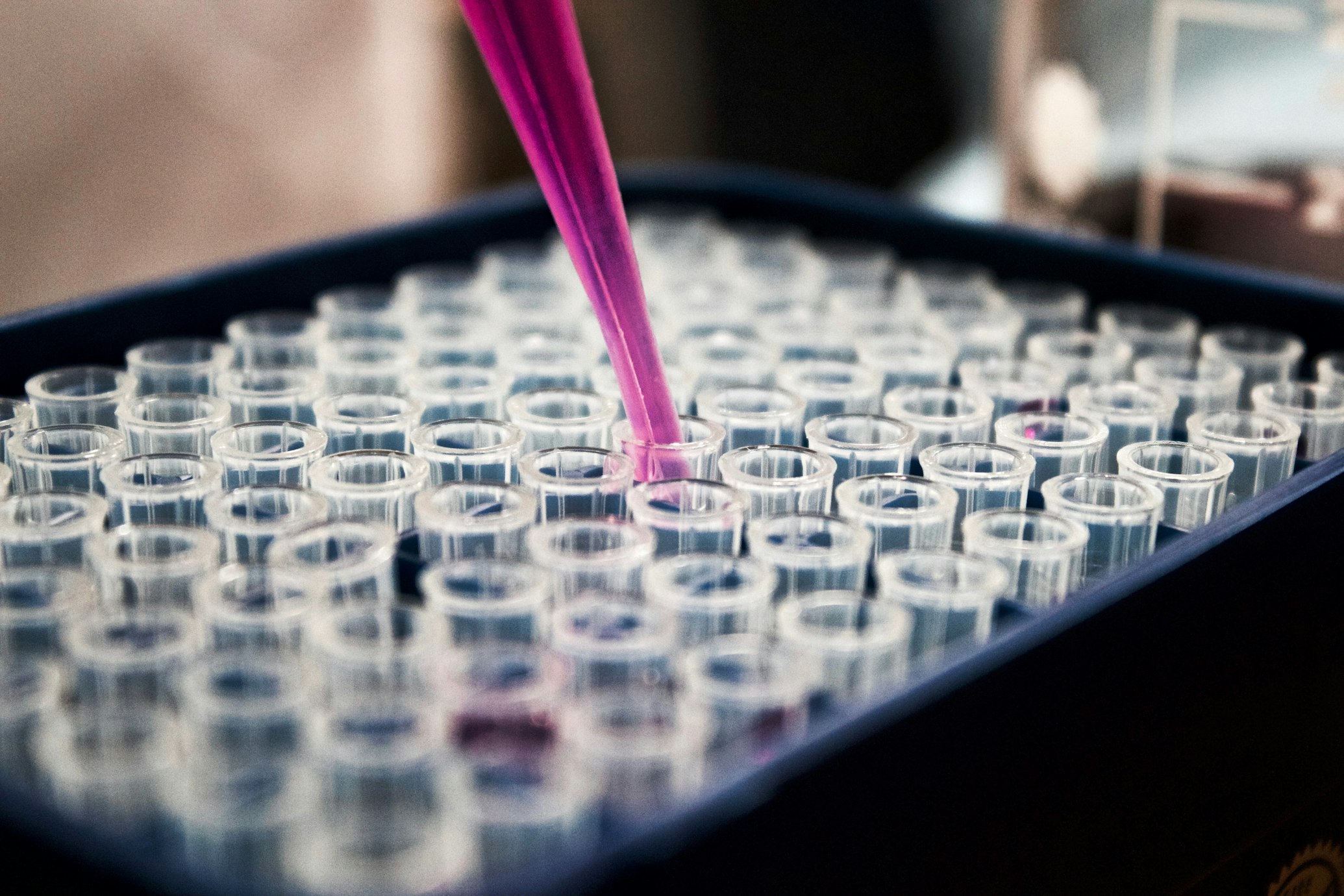
Growth Setup
Precise temperature control is crucial for high-quality crystal formation.

Molecular Alignment
Hydrogen bonds guide the self-assembly process during crystal growth.

Final Crystal
Record-sized LAO crystals (40×15×8 mm³) with exceptional optical quality.
The Z-Scan Breakthrough: Measuring the Invisible
The Experiment That Revealed LAO's Superpower
To quantify LAO's third-order effects, researchers employed the Z-scan technique—a laser-based method that probes material responses to varying light intensities 2 5 .
Step-by-Step Methodology
- Laser Setup: A focused Nd:YAG laser beam (wavelength: 532 nm) passes through a thin LAO crystal
- Motion Control: The crystal moves along the beam's axis (the "Z-direction")
- Intensity Gradient: Light intensity peaks at the beam's focal point
- Detection: Sensors measure transmittance changes through:
- An open aperture (revealing absorption effects)
- A closed aperture (revealing refraction effects)
Table 2: Core Findings from Z-Scan Experiments
| Parameter | Value | Implication |
|---|---|---|
| Nonlinear absorption coefficient (β) | 2.1×10⁻¹¹ m/W | Reverse saturable absorption |
| Nonlinear refractive index (n₂) | -4.3×10⁻¹⁹ m²/W | Self-defocusing effect |
| Third-order susceptibility (χ⁽³⁾) | 1.8×10⁻²¹ m²/V² | Competitive with top organic NLO materials |
| Optical limiting threshold | 0.35 J/cm² | Effective laser protection |
Why These Results Matter
Reverse Saturable Absorption
LAO darkens under bright light—like photochromic sunglasses but instantaneously. This makes it ideal for optical limiters in laser safety systems 2 .
Self-Defocusing
The crystal creates a "diverging lens" effect at high intensities, spreading out dangerous laser beams 5 .
Rapid Response
Changes occur in picoseconds—faster than retinal damage can occur.
From Lab to Life: Tomorrow's Applications
Optical Guardians
LAO's RSA enables automatic laser power limiters. Integrated into sensors or goggles, they could:
- Protect pilots from laser dazzle attacks
- Shield surgeons during laser-based procedures
- Safeguard quantum computing optical components 2
Photonics Revolution
With ultrafast switching capabilities, LAO might drive:
- Optical transistors: Replacing electrons with light in computers
- Holographic displays: Creating 3D projections via light shaping
- Quantum encryption: Manipulating photon states for unbreakable codes 5
The Road Ahead
Current challenges include enhancing LAO's nonlinear coefficients via metal doping and extending its lifespan under cyclic laser exposure. Teams are already exploring LAO-polymer composites for flexible photonic fabrics 6 .
A Crystal with a Voice
L-Alaninium oxalate represents more than a lab curiosity—it's a testament to nature's ingenuity. By harnessing the geometry of amino acids and the electron mobility of oxalate ions, scientists have sculpted a material that challenges how we control light. As research advances, this "smart crystal" may soon transition from controlled Z-scan experiments to the invisible shields guarding our brightest technologies. In the silent dialogue between light and matter, LAO speaks with transformative eloquence.
"In the dance of photons and electrons, materials like LAO choreograph revolutions."