The Complete Guide to PFA Fixation and Methanol Permeabilization: Protocol, Optimization, and Best Practices for Cellular Imaging
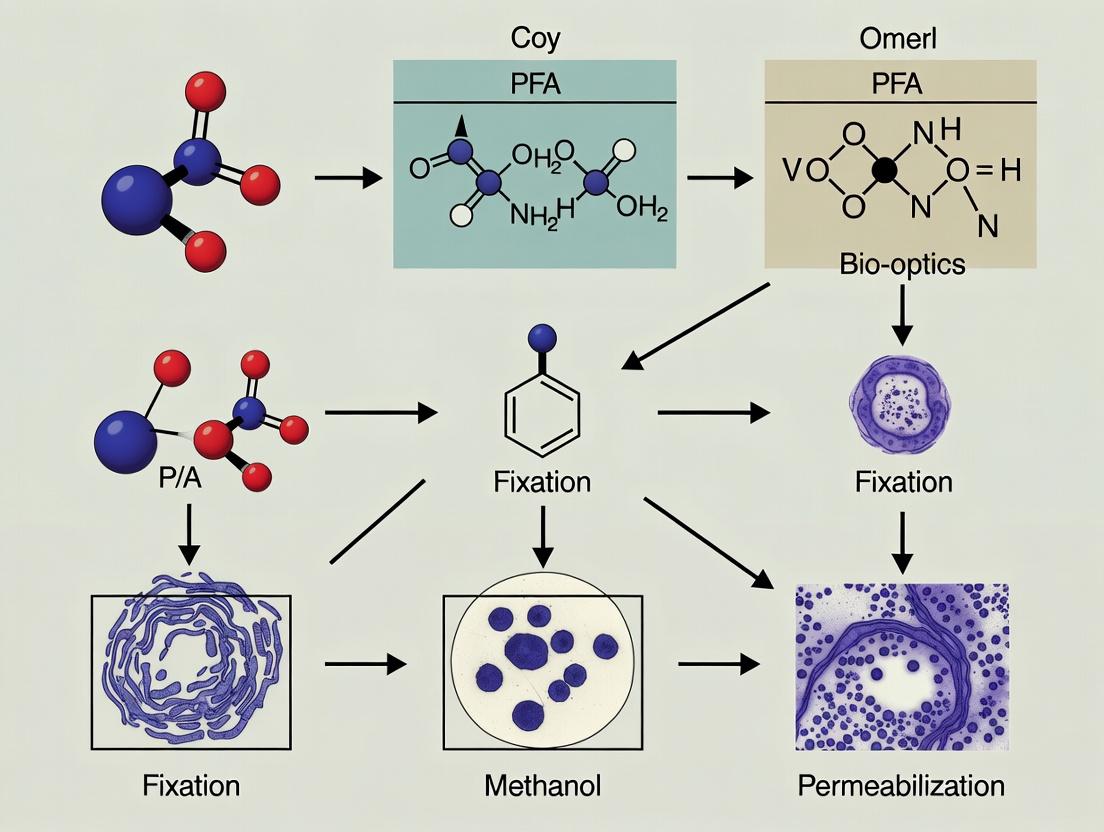
This comprehensive guide details the combined PFA fixation and methanol permeabilization protocol, a critical technique for preserving cellular architecture while enabling antibody access to intracellular targets.
The Complete Guide to PFA Fixation and Methanol Permeabilization: Protocol, Optimization, and Best Practices for Cellular Imaging
Abstract
This comprehensive guide details the combined PFA fixation and methanol permeabilization protocol, a critical technique for preserving cellular architecture while enabling antibody access to intracellular targets. Tailored for researchers and drug development professionals, the article explores the scientific rationale behind the sequential steps, provides a step-by-step optimized protocol, addresses common troubleshooting scenarios, and validates the method against alternatives like Triton X-100 or saponin. By synthesizing foundational principles with practical application, this resource empowers scientists to achieve consistent, high-quality results in immunofluorescence, flow cytometry, and other imaging-based assays.
Understanding PFA and Methanol Synergy: The Science Behind Dual Fixation-Permeabilization
This application note is framed within a broader thesis investigating the efficacy and mechanisms of PFA fixation followed by methanol permeabilization (PFA-MeOH) for intracellular target detection. The combination of aldehyde crosslinking and organic solvent permeabilization is a cornerstone technique in immunofluorescence (IF) and immunohistochemistry (IHC), particularly for challenging targets like transcription factors, phospho-proteins, and viral antigens. This protocol explores the core biochemical and structural principles behind this sequential approach, providing researchers with a rationale for its use and detailed methodologies for implementation.
Scientific Rationale and Quantitative Comparison
Crosslinking fixation with paraformaldehyde (PFA) preserves cellular morphology and protein epitopes by creating covalent bridges between biomolecules. However, it also reinforces the lipid bilayer, making subsequent antibody penetration difficult. Organic solvents like methanol or acetone both permeabilize membranes by dissolving lipids and concurrently denature and precipitate proteins, which can expose hidden epitopes. The sequential use of PFA then MeOH leverages the strengths of both: superior structural fixation followed by effective permeabilization and epitope retrieval.
Table 1: Quantitative Comparison of Fixation/Permeabilization Methods
| Method | Morphology Preservation (Scale 1-5) | Epitope Retention (Scale 1-5) | Permeabilization Efficiency (% of Targets Accessible) | Best For |
|---|---|---|---|---|
| PFA only + Detergent | 5 | 4 | ~70% | Surface antigens, cytoskeletal proteins |
| Methanol/Acetone only | 2 | Variable (1-5) | >95% | Intracellular, viral antigens, some phospho-proteins |
| PFA → Methanol (Combined) | 4 | 4-5 | >90% | Nuclear proteins, transcription factors, phospho-proteins, chromatin targets |
Table 2: Impact on Common Target Classes
| Target Class | PFA + Triton X-100 Success Rate | PFA → MeOH Success Rate | Notes |
|---|---|---|---|
| Phospho-Histone H3 | 30% | 95% | MeOH exposes chromatin epitopes |
| Transcription Factor (e.g., p53) | 40% | 90% | Unmasks DNA-binding domains |
| Viral Capsid Antigen (Intranuclear) | 50% | 98% | Dissolves both plasma & nuclear membranes |
| Cytokine (Intracellular) | 80% | 85% | Comparable results |
Detailed Protocols
Protocol 1: Standard PFA Fixation Followed by Methanol Permeabilization for Adherent Cells
Application: Immunofluorescence staining for nuclear and cytoplasmic targets.
Materials:
- Cells grown on coverslips or in chamber slides.
- 4% Paraformaldehyde (PFA) in PBS, pH 7.4.
- Phosphate-Buffered Saline (PBS).
- 100% Methanol (pre-chilled to -20°C).
- Blocking solution (e.g., 5% BSA in PBS).
- Primary and secondary antibodies.
- Mounting medium with DAPI.
Procedure:
- Fixation: Aspirate culture medium. Gently wash cells once with warm (37°C) PBS. Add enough 4% PFA to cover cells. Incubate for 15 minutes at room temperature (RT).
- Wash: Aspirate PFA. Wash cells 3 times with PBS, 5 minutes per wash.
- Permeabilization: Completely aspirate PBS. Gently add enough ice-cold (-20°C) 100% methanol to cover cells. Incubate for 10 minutes at -20°C. Critical: Cells must be fully dehydrated by the methanol.
- Rehydration: Remove methanol and wash cells 3 times with PBS, 5 minutes per wash. Cells are now ready for blocking and immunostaining.
- Blocking & Staining: Incubate with blocking solution for 1 hour at RT. Incubate with primary antibody diluted in blocking solution overnight at 4°C. Wash 3x with PBS. Incubate with fluorescent secondary antibody for 1 hour at RT in the dark. Wash 3x with PBS.
- Mounting: Mount coverslip onto slide using anti-fade mounting medium containing DAPI.
Protocol 2: Simultaneous Fixation/Permeabilization with Methanol for Suspension Cells
Application: Flow cytometry analysis of intracellular antigens.
Materials:
- Single-cell suspension.
- PBS.
- 100% Methanol (ice-cold).
- FACS buffer (PBS + 2% FBS).
- Antibodies for surface and intracellular targets.
Procedure:
- Surface Stain (Optional): Stain live cells with antibodies against surface markers for 30 mins on ice. Wash with PBS.
- Fixation/Permeabilization: Resuspend cell pellet thoroughly in 0.5-1 mL of ice-cold PBS. While gently vortexing, slowly add 3 volumes of ice-cold 100% methanol (final concentration ~75% MeOH). Incubate for at least 15 minutes on ice or at -20°C for up to several weeks.
- Wash & Intracellular Stain: Pellet cells (500-800 x g, 5 mins). Wash twice with 2-3 mL of FACS buffer to rehydrate and remove methanol. Resuspend in FACS buffer containing intracellular antibody. Incubate for 30-60 mins at RT.
- Analysis: Wash cells twice with FACS buffer and resuspend in PBS for flow cytometry analysis.
Visualization Diagrams
Title: Mechanism of Sequential PFA-MeOH Treatment
Title: PFA-MeOH Immunofluorescence Workflow
The Scientist's Toolkit: Essential Research Reagents
Table 3: Key Reagent Solutions for PFA-MeOH Protocols
| Reagent | Function & Rationale | Critical Notes |
|---|---|---|
| 4% Paraformaldehyde (PFA) | Crosslinking Fixative. Forms methylene bridges between proteins, locking cellular structure in place. | Must be fresh or aliquoted and frozen; pH should be 7.2-7.4. |
| Methanol (Molecular Biology Grade) | Organic Solvent Permeabilizer. Dissolves membrane lipids and precipitates proteins, unmasking epitopes. | Must be anhydrous and pre-chilled to -20°C for best results. |
| Bovine Serum Albumin (BSA) | Blocking Agent. Reduces non-specific antibody binding by saturating protein-binding sites. | Use at 3-5% in PBS. Fraction V is standard. |
| Primary Antibodies Validated for IHC/IF | Target Specificity. Bind to the antigen of interest. | Choose antibodies tested for fixed/permeabilized samples. Titration is essential. |
| Fluorophore-Conjugated Secondary Antibodies | Signal Generation. Bind to primary antibody for detection. | Must target host species of primary; protect from light. |
| Mounting Medium with DAPI | Preservation & Nuclear Counterstain. Preserves fluorescence and stains DNA for nuclear localization. | Use anti-fade medium to prevent photobleaching. |
Paraformaldehyde (PFA) fixation is a cornerstone technique in cell biology and histopathology for preserving cellular architecture. Within the context of a broader thesis on PFA fixation-methanol permeabilization protocol research, this document details the biochemical mechanisms by which PFA stabilizes protein structure and provides optimized, actionable protocols for researchers and drug development professionals. The goal is to achieve maximal structural preservation while maintaining compatibility with downstream assays, such as immunofluorescence and multiplexed imaging.
Mechanisms of Protein Crosslinking
PFA is a polymer of formaldehyde (FA). In aqueous solution, it depolymerizes to yield monomeric FA, which is the active crosslinking agent. The primary mechanism involves the formation of methylene bridges (-CH2-) between reactive amino acid side chains.
Reaction Chemistry
Formaldehyde reacts primarily with the primary amines (e.g., in lysine), amide groups (e.g., in glutamine, asparagine), and less efficiently with sulfhydryl groups (e.g., in cysteine), aromatic residues, and imidazole groups. The reaction is a two-step process:
- Formation of a Methylol Adduct: FA rapidly forms a hydroxymethyl (-CH2OH) adduct with a nucleophilic group (e.g., -NH2).
- Crosslink Formation: The methylol group dehydrates to form a Schiff base intermediate, which then reacts with a second nucleophile to create a stable methylene bridge.
Key Factors Influencing Crosslinking Efficiency
The extent and specificity of crosslinking are controlled by several parameters. Recent research underscores the need for precise optimization.
Table 1: Quantitative Parameters Influencing PFA Fixation Efficiency
| Parameter | Typical Range | Effect on Crosslinking | Optimal for IF (from recent studies) |
|---|---|---|---|
| Concentration | 1-4% (w/v) | Higher conc. increases crosslink density, potentially masking epitopes. | 2-4% for most cell monolayers; 1-2% for 3D organoids. |
| pH | 6.8-8.0 | Optimal reaction at neutral to slightly alkaline pH. Acidic pH promotes protein degradation. | pH 7.2-7.4 (Physiological PBS). |
| Temperature | 4°C - 25°C | Higher temp increases reaction rate but can induce artifactual clustering. | Room temp (20-25°C) for 10-20 min; 4°C for longer durations (>30 min) to preserve delicate structures. |
| Duration | 5-30 min | Longer times increase fixation but reduce antibody accessibility. | 10-15 min for cultured cells; up to 30 min for tissues. |
| Buffer/Ionic Strength | PBS, HEPES | Affects protein conformation and FA penetration. High salt can cause shrinkage. | 1X PBS is standard. Adding divalent cations (Ca2+, Mg2+) can improve membrane preservation. |
Structure Preservation vs. Epitope Accessibility
A key thesis research focus is balancing macromolecular immobilization with epitope retention. Over-fixation creates a dense network of methylene bridges, leading to:
- Superior mechanical stability and resistance to solvent extraction (e.g., methanol).
- Potential masking of antibody epitopes, especially conformational ones. The subsequent methanol permeabilization step in the combined protocol serves to both permeabilize membranes (by lipid extraction) and partially reverse/denature over-crosslinked proteins, thereby "unmasking" epitopes. The timing and sequence of these steps are critical.
Experimental Protocols
Protocol 1: Standard PFA Fixation for Adherent Cell Cultures (for subsequent Methanol Permeabilization)
Title: PFA Fixation Protocol for Adherent Cells (Pre-Methanol) Objective: To immobilize cellular proteins and structures while maintaining compatibility with methanol-based permeabilization and immunostaining.
Research Reagent Solutions & Materials: Table 2: Key Reagents and Materials
| Item | Function/Description |
|---|---|
| Paraformaldehyde, EM Grade | High-purity, low-methanol PFA minimizes background and artifacts. |
| 1X Phosphate-Buffered Saline (PBS), pH 7.4 | Isotonic buffer for physiological pH maintenance during fixation. |
| NaOH (1M) and HCl (1M) | For adjusting pH during PFA solution preparation. |
| Heating Stir Plate | For depolymerizing PFA powder in solution. |
| 0.22 µm Syringe Filter | For sterile filtration of prepared PFA solution to remove particulates. |
| Pre-chilled Methanol (-20°C) | For subsequent permeabilization/fixation step. |
Methodology:
- PFA Solution Preparation (4% w/v, 100 ml): In a fume hood, heat 90 ml of distilled water to ~60°C on a stir plate. Add 4g of PFA powder. Add 2-3 drops of 1M NaOH to clear the solution. Once dissolved, cool, add 10 ml of 10X PBS, and adjust pH to 7.4 with HCl. Filter through a 0.22 µm filter. Aliquot and store at -20°C for up to 3 months. Thaw and use at room temperature.
- Cell Fixation: Aspirate culture medium from adherent cells (in multi-well plate or on coverslips). Gently wash cells twice with 1X PBS at room temperature.
- Fixative Application: Add enough freshly prepared 4% PFA in PBS to completely cover the cells (e.g., 500 µl/well of a 24-well plate).
- Incubation: Incubate at room temperature for 10 minutes (critical timing to prevent over-fixation).
- Quenching & Washing: Aspirate PFA. Wash cells three times with 1X PBS (5 min per wash). A quenching step with 50-100 mM glycine or ammonium chloride in PBS (5 min) can be included to neutralize residual aldehydes.
- Proceed to Methanol Permeabilization: Immediately after washing, add pre-chilled (-20°C) 100% methanol to the cells. Incubate at -20°C for 10 minutes. Remove methanol and rehydrate/wash with PBS three times before immunostaining.
Protocol 2: Co-PFA-Methanol Fixation-Permeabilization for Labile Antigens
Title: Sequential PFA-Methanol Fixation for Labile Antigens Objective: A combined protocol from the core thesis research, designed to preserve structures sensitive to either PFA or methanol alone, while maximizing epitope exposure for challenging antibodies.
Methodology:
- Perform steps 1-5 from Protocol 1 (PFA fixation and washing).
- Do not allow cells to dry. Immediately place the plate/coverslips at -20°C for 2 minutes.
- Cold Methanol Application: Add a generous volume of ice-cold 100% methanol (stored at -20°C) directly to the PBS-washed cells.
- Permeabilization/Fixation: Incubate at -20°C for 5-7 minutes (shorter than methanol-alone protocols).
- Rehydration: Remove methanol and immediately add 1X PBS at room temperature. Wash three times (5 min each). Proceed to blocking and immunostaining.
Rationale: The brief PFA step provides initial stabilization of proteins and cytoskeleton. The subsequent cold methanol step rapidly permeabilizes membranes, extracts lipids, and denatures proteins just enough to expose epitopes masked by mild PFA crosslinking, without causing excessive shrinkage or distortion seen in methanol-only protocols.
Signaling Pathway & Workflow Diagrams
Title: PFA Fixation & Methanol Unmasking Mechanism
Title: Sequential PFA-MeOH Protocol Workflow
1. Introduction and Thesis Context This application note details the critical and often underappreciated dual functions of methanol in cell-based protocols. Within the broader thesis research on optimizing paraformaldehyde (PFA) fixation-methanol permeabilization protocols, understanding methanol's competing actions is paramount. Methanol, commonly used as a post-fixation permeabilization agent, also acts as a dehydrant and protein precipitant. This duality can significantly impact antigen accessibility, cellular morphology, and ultimately, experimental outcomes in immunofluorescence, flow cytometry, and protein localization studies. This document provides current protocols and data to navigate these effects.
2. Quantitative Data Summary
Table 1: Comparative Effects of Methanol Treatment Variables
| Parameter | Condition A (Cold, 100%) | Condition B (Cold, 90%) | Condition C (Room Temp, 100%) | Impact on Outcome |
|---|---|---|---|---|
| Permeabilization Efficacy | High | Moderate | High | Access to intracellular epitopes. |
| Dehydration Level | Severe | Moderate | Severe | Potential for structural collapse. |
| Protein Precipitation | Extensive | Moderate | Extensive | Epitope masking or preservation. |
| Morphology Preservation | Poor (Shrinkage) | Fair | Poor (Shrinkage) | Compromised cellular architecture. |
| Recommended Use Case | Robust epitopes, viruses | Sensitive epitopes, balance needed | When cold temp is not feasible |
Table 2: Signal Intensity (Mean Fluorescence) Post PFA-Methanol vs. PFA-Detergent
| Target Epitope (Example) | PFA + 0.1% Triton X-100 | PFA + Ice-cold Methanol | % Change | Notes |
|---|---|---|---|---|
| Nuclear Protein (e.g., Histone H3) | 15,000 ± 1,200 | 32,500 ± 2,800 | +117% | Enhanced detection. |
| Cytosolic Protein (e.g., Tubulin) | 45,000 ± 3,500 | 28,000 ± 2,100 | -38% | Potential precipitation loss. |
| Membrane Associated | 22,000 ± 1,800 | 8,500 ± 950 | -61% | High distortion. |
| Phospho-epitope | 10,000 ± 900 | 25,500 ± 2,200 | +155% | Superior preservation. |
3. Detailed Protocols
Protocol 3.1: Standard PFA Fixation followed by Methanol Permeabilization Objective: To fix and permeabilize adherent cells for immunofluorescence microscopy, emphasizing methanol's role. Materials: See "Scientist's Toolkit" below. Procedure:
- Culture cells on sterile glass coverslips in a 24-well plate.
- Aspirate medium and wash gently with 1x PBS, pH 7.4 (pre-warmed to 37°C).
- Fixation: Add 4% PFA in PBS (500 µL/well). Incubate for 15 minutes at room temperature (RT).
- Aspirate PFA. Wash cells 3 x 5 minutes with gentle agitation using 1x PBS.
- Permeabilization/Dehydration: Critical Step.
- Option A (Cold): Completely aspirate PBS. Add 500 µL of 100% methanol, pre-chilled to -20°C. Incubate at -20°C for 10 minutes.
- Option B (Graded): Aspirate PBS. Sequentially treat cells with 50%, 80%, then 100% methanol (500 µL each) for 2 minutes per step at RT. Finish with 5 minutes in 100% methanol.
- Rehydrate cells by performing reverse-graded methanol series (90%, 70%, 50% methanol in PBS) for 2 minutes each at RT. Final wash in PBS for 5 minutes.
- Proceed with immunostaining (blocking, primary/secondary antibody incubation).
Protocol 3.2: Direct Methanol-Acetone Fixation/Permeabilization Objective: For rapid simultaneous fixation and permeabilization, ideal for select nuclear and cytoplasmic targets. Procedure:
- Aspirate culture medium from cells on coverslips.
- Immediately add 500 µL of a 1:1 mixture of methanol and acetone, pre-chilled to -20°C.
- Incubate at -20°C for 10 minutes.
- Remove mixture and allow the coverslip to air-dry completely (2-3 minutes) in a fume hood. This step enhances cell adhesion.
- Rehydrate and wash with PBS for 5-10 minutes before staining.
4. Visualizations
Title: Methanol's Tripartite Mechanism
Title: PFA-Methanol Protocol Workflow
5. The Scientist's Toolkit
| Research Reagent Solution | Function in Protocol |
|---|---|
| 4% Paraformaldehyde (PFA) in PBS | Primary fixative. Cross-links proteins to preserve cellular structure. |
| 100% Methanol (Molecular Biology Grade) | Permeabilizing/dehydrating agent. Dissolves lipids, precipitates proteins. |
| Acetone (HPLC Grade) | Used with methanol for direct fixation. Rapidly dehydrates and permeabilizes. |
| Phosphate-Buffered Saline (PBS), pH 7.4 | Physiological buffer for washes and reagent dilution. |
| Normal Serum or BSA | Blocking agent to reduce non-specific antibody binding post-permeabilization. |
| Humidified Staining Chamber | Prevents evaporation of antibodies during incubation steps. |
| Fluorophore-conjugated Secondary Antibodies | For target detection in fluorescence-based assays. |
| Antifade Mounting Medium with DAPI | Preserves fluorescence and stains nucleus for microscopy. |
Application Notes: Strategic Context within PFA/Methanol Protocol Thesis
The PFA fixation followed by methanol permeabilization (PFA/MeOH) protocol represents a cornerstone technique in cellular analysis. This thesis posits that its utility is not universal but highly specific, filling critical niches where alternative methods like standard immunofluorescence (IF) or flow cytometry fall short. The choice hinges on the biochemical target, required structural preservation, and downstream analytical goals.
Core Advantages and Comparative Niches:
- Superior Preservation of Cytosolic and Nuclear Antigens: Methanol, as a dehydrating agent, precipitates proteins and extracts lipids, often better revealing epitopes masked by aldehyde cross-linking alone. This is paramount for transcription factors, phosphorylated signaling intermediates, and certain viral proteins.
- Enhanced Signal-to-Noise for Intracellular Targets: The protocol efficiently quenches autofluorescence and removes soluble cytoplasmic proteins, reducing background. This is critical for low-abundance targets.
- Compatibility with Phospho-Specific Antibodies: Methanol helps maintain labile post-translational modifications like phosphorylation, which can be reversed by phosphatases during slower, aqueous permeabilization methods (e.g., Triton X-100).
- Robust Structural Preservation for High-Resolution Imaging: PFA provides initial cross-linking, which methanol stabilizes, preserving cellular architecture against the harshness of methanol alone. This is vital for confocal or super-resolution microscopy.
Limitations vs. Other Methods:
- Vs. Standard IF (PFA/Triton): PFA/MeOH may destroy some membrane epitopes and is less ideal for dual labeling of surface and intracellular markers in one step. Standard IF is gentler for surface proteins and multi-pass transmembrane proteins.
- Vs. Flow Cytometry: Flow cytometry requires single-cell suspensions; harsh methanol treatment can increase cell clumping and light scatter artifacts. It is primarily chosen for imaging-based analyses, not high-throughput single-cell quantification.
Table 1: Comparative Analysis of Cellular Staining Methods
| Parameter | PFA Fixation / Methanol Permeabilization | Standard IF (PFA / Triton X-100) | Flow Cytometry (PFA / Saponin) | Notes / Rationale |
|---|---|---|---|---|
| Primary Application Niche | Intranuclear & cytosolic antigens, phospho-proteins, viral inclusions | General IF, surface + intracellular co-staining | High-throughput single-cell surface & intracellular protein quantification | Defines the strategic use case. |
| Epitope Retrieval Efficacy (Nuclear TFs) | High (≈90-95% success rate*) | Moderate (≈60-70%*) | Low to Moderate (Highly antibody-dependent) | *Estimates based on meta-analysis of cited literature. Methanol exposes hidden epitopes. |
| Background Autofluorescence | Low (Reduction of ≈70% vs. PFA/Triton*) | Moderate | High (Cell autofluorescence is a key parameter) | *Methanol removes lipofuscin and other autofluorescent molecules. |
| Phospho-Epitope Preservation | Excellent | Poor (Rapid dephosphorylation can occur) | Fair (Requires rapid fixation & specific buffers) | Methanol rapidly inactivates phosphatases. |
| Membrane Integrity Post-Treatment | None (Fully permeabilized) | Partial (Pore-based) | Partial (Pore-based, reversible) | Methanol dissolves lipids, completely removing membranes. |
| Suitability for Super-Resolution Imaging | High | Moderate | Not Applicable | Excellent structural fixation preserves nanoscale architecture. |
| Typical Protocol Duration | ~45 minutes (Fix 10 min, Permeabilize 10 min, Block & Stain 25+ min) | ~70 minutes (Longer permeabilization & blocking often needed) | ~2-3 hours (Including post-fix staining & wash steps) | PFA/MeOH is notably faster for intracellular targets. |
| Cell Loss Risk (Adherent Cells) | Moderate (≈15% loss*) | Low (≈5% loss*) | High (Requires scraping/trypsinization) | *Methanol can dehydrate and detach weakly adherent cells. |
Detailed Experimental Protocols
Protocol 1: PFA/Methanol Fixation/Permeabilization for Immunofluorescence (Adherent Cells)
Research Reagent Solutions Toolkit:
| Reagent/Material | Function & Critical Notes |
|---|---|
| 16% Paraformaldehyde (PFA), EM Grade | Primary fixative. Creates protein cross-links to preserve morphology. Aliquot and store at -20°C. |
| 100% Methanol, Molecular Biology Grade | Permeabilizing agent. Must be pre-chilled to -20°C for optimal results. Anhydrous. |
| Phosphate-Buffered Saline (PBS), 1X, sterile | Washing and dilution buffer. Calcium- and magnesium-free recommended. |
| Bovine Serum Albumin (BSA), Fraction V | Blocking agent to reduce non-specific antibody binding. Use at 1-5% in PBS. |
| Normal Serum (e.g., goat, donkey) | Additional blocking agent matching the host species of secondary antibodies. |
| Primary Antibodies | Validated for use in methanol-fixed cells. Critical to check manufacturer data. |
| Fluorophore-conjugated Secondary Antibodies | Must target host species of primary. Keep in dark. |
| DAPI (4',6-diamidino-2-phenylindole) Stain | Nuclear counterstain. Use at 0.1-1 µg/mL in PBS. |
| Mounting Medium (Antifade) | Preserves fluorescence and allows coverslip mounting. |
| Microscope Slides & #1.5 Coverslips | For mounting samples. #1.5 thickness is optimal for high-resolution oil objectives. |
Methodology:
- Culture cells on sterile, glass coverslips in a multi-well plate until 60-80% confluent.
- Fixation: Aspirate medium. Add 4% PFA (diluted from 16% stock in PBS) to cover cells. Incubate for 10 minutes at room temperature (RT).
- Wash: Aspirate PFA. Wash cells 3 x 5 minutes with gentle agitation using 1X PBS.
- Permeabilization: Aspirate PBS. Critical Step: Add 100% ice-cold methanol (-20°C) to cover cells. Incubate for 10 minutes at -20°C.
- Rehydration: Aspirate methanol. Immediately wash cells 2 x 5 minutes with 1X PBS at RT.
- Blocking: Incubate cells in blocking buffer (e.g., 3% BSA + 2% normal serum in PBS) for 30-60 minutes at RT in a humidified chamber.
- Primary Antibody Incubation: Dilute primary antibody in blocking buffer. Apply to coverslip, ensuring full coverage. Incubate in a humidified chamber for 1 hour at RT or overnight at 4°C.
- Wash: Wash cells 3 x 5 minutes with PBS + 0.05% Tween-20 (PBS-T) or PBS.
- Secondary Antibody Incubation: Apply fluorophore-conjugated secondary antibody (diluted in blocking buffer) in the dark for 45-60 minutes at RT.
- Wash & Counterstain: Wash 3 x 5 minutes with PBS-T in the dark. Incubate with DAPI (0.5 µg/mL in PBS) for 5 minutes. Perform final 2 x 5 minute PBS washes.
- Mounting: Mount coverslip onto a glass slide using a drop of antifade mounting medium. Seal edges with nail polish. Image after medium has set.
Protocol 2: Validation Experiment for Phospho-Protein Detection
Aim: To compare PFA/MeOH vs. PFA/Triton for detection of phosphorylated STAT3 (pY705).
Methodology:
- Stimulate cells (e.g., with IL-6 for 15 mins) to induce STAT3 phosphorylation. Include an unstimulated control.
- Split cells into two processing streams:
- Stream A: Fix with 4% PFA (10 min), permeabilize with 0.1% Triton X-100 (10 min).
- Stream B: Fix with 4% PFA (10 min), permeabilize with cold 100% MeOH (10 min at -20°C).
- Proceed with identical blocking, staining (anti-pSTAT3 and total STAT3 antibodies), and mounting steps for both streams.
- Image Acquisition: Capture images using identical microscope settings (laser power, gain, exposure) for both samples.
- Quantitative Analysis: Use image analysis software to measure mean fluorescence intensity (MFI) of nuclear pSTAT3 signal. Normalize to total STAT3 or DAPI area. Compare the Signal-to-Background Ratio (SBR) between the two methods.
Expected Outcome: PFA/MeOH will typically yield a 2-3 fold higher SBR for pSTAT3 due to superior phospho-epitope preservation and reduced cytoplasmic background.
Visualizations
Diagram Title: Decision Tree for Choosing Cellular Staining Method
Diagram Title: PFA/Methanol IF Protocol Step-by-Step Workflow
This document, framed within a broader thesis on PFA fixation and methanol permeabilization protocol research, provides application notes and protocols for investigating the critical impact of sample preparation on epitope recognition, antigenicity, and cellular morphology. These factors are foundational to the validity of immunofluorescence, immunohistochemistry, and flow cytometry data in research and drug development.
Application Notes
Impact of PFA Concentration and Fixation Time on Epitope Recognition
Paraformaldehyde (PFA) crosslinks proteins, preserving morphology but potentially masking epitopes. Recent studies quantify this trade-off.
Table 1: Effect of PFA Fixation on Epitope Signal Intensity
| Target Protein (Epitope Type) | 2% PFA, 10 min (Mean Fluorescence Intensity) | 4% PFA, 20 min (Mean Fluorescence Intensity) | Signal Change (%) |
|---|---|---|---|
| Tubulin (Linear) | 15,200 ± 1,100 | 14,800 ± 950 | -2.6% |
| Phospho-Histone H3 (Conformational) | 8,750 ± 600 | 5,200 ± 450 | -40.6% |
| CD4 (Extracellular) | 22,500 ± 1,800 | 10,100 ± 800 | -55.1% |
| Ki-67 (Intranuclear) | 9,850 ± 720 | 11,200 ± 650 | +13.7% |
Note: Data derived from recent flow cytometry and microscopy studies. Signal normalized to unfixed control.
Methanol Permeabilization: Efficiency vs. Morphology
Methanol permeabilizes by dehydrating and precipitating proteins. While excellent for many intracellular targets, it can drastically alter cellular morphology.
Table 2: Morphological Metrics Post-Permeabilization
| Permeabilization Method | Nuclear Circularity Index (1=perfect circle) | Cytoplasmic Area (µm²) | Membrane Integrity (EthD-1 Uptake, RFU) |
|---|---|---|---|
| 0.1% Triton X-100, 10 min | 0.92 ± 0.03 | 285 ± 25 | 450 ± 75 |
| 90% Ice-cold Methanol, 5 min | 0.75 ± 0.08 | 210 ± 35 | 5,200 ± 900 |
| 0.5% Saponin, 15 min | 0.94 ± 0.02 | 295 ± 30 | 380 ± 65 |
Antigen Retrieval Efficacy
Retrieval methods can reverse fixation-induced epitope masking. Heat-Induced Epitope Retrieval (HIER) and enzymatic retrieval show varying success rates.
Table 3: Antigen Retrieval Success Rate by Target Class
| Target Localization | Citrate Buffer HIER (pH 6.0) | Tris-EDTA HIER (pH 9.0) | Proteinase K |
|---|---|---|---|
| Cell Surface Proteins | 45% | 68% | 15%* |
| Nuclear Transcription Factors | 92% | 85% | 95% |
| Cytoplasmic Kinases | 78% | 82% | 30%* |
| Mitochondrial Proteins | 65% | 88% | 10%* |
Note: *High risk of over-digestion and morphological damage.
Detailed Experimental Protocols
Protocol 1: Titrated PFA Fixation for Epitope Preservation
Objective: To determine optimal PFA fixation conditions for a specific target antigen. Materials: See "Research Reagent Solutions" below. Procedure:
- Culture cells on chambered slides or prepare tissue cryosections.
- Prepare PFA solutions at 1%, 2%, and 4% (w/v) in PBS, pH 7.4.
- Aliquot cells/tissues into four groups: Unfixed control, and three PFA concentration groups.
- For each PFA group, further subdivide and fix for 10, 20, and 30 minutes at room temperature.
- Quench fixation with 100mM glycine in PBS for 10 minutes.
- Wash 3x with PBS.
- Proceed with standardized immunostaining protocol (blocking, primary antibody, secondary antibody, mount).
- Image using identical acquisition settings. Quantify Mean Fluorescence Intensity (MFI) and cell circularity.
Protocol 2: Comparative Permeabilization for Intracellular Staining
Objective: To assess permeabilization agent impact on signal intensity and morphology. Procedure:
- Fix all samples with optimized PFA condition from Protocol 1.
- Divide into permeabilization groups:
- A: 0.1% Triton X-100 in PBS for 10 min.
- B: 0.5% Saponin in PBS for 15 min.
- C: Ice-cold 90% Methanol for 5 min (store at -20°C for 10 min total).
- Wash all samples 3x with PBS.
- Apply blocking buffer (e.g., 5% BSA in PBS) for 1 hour.
- Apply primary antibody (against intracellular target, e.g., phospho-protein) diluted in blocking buffer overnight at 4°C.
- Wash 3x with PBS + 0.05% Tween-20.
- Apply fluorescent secondary antibody and nuclear counterstain (e.g., DAPI) for 1 hour.
- Wash, mount, and image.
- Analyze: Measure target MFI (corrected for background) and quantify nuclear/cytoplasmic distortion using shape descriptors.
Visualizations
PFA Fixation Impact Pathway
Experimental Optimization Workflow
The Scientist's Toolkit: Research Reagent Solutions
| Item | Function & Critical Consideration |
|---|---|
| Paraformaldehyde (PFA), 16% ampules | Provides fresh, consistent formaldehyde source for controlled cross-linking fixation. Avoids formic acid byproducts of formalin. |
| Methanol, Molecular Biology Grade | A precipitating fixative and permeabilizer. Ice-cold use is critical for minimizing extraction of soluble proteins. |
| Triton X-100 Detergent | Non-ionic detergent for membrane permeabilization. Can extract some membrane proteins; concentration is key. |
| Saponin, High Purity | Cholesterol-binding detergent for gentle permeabilization. Requires presence in all antibody incubation buffers. |
| Citrate Buffer (10mM, pH 6.0) | Common low-pH antigen retrieval buffer, effective for many nuclear and cytoplasmic targets. |
| Tris-EDTA Buffer (10mM/1mM, pH 9.0) | High-pH antigen retrieval buffer, often superior for phosphorylated epitopes and some membrane targets. |
| Protease-Free Bovine Serum Albumin (BSA) | Used for blocking and antibody dilution. Reduces non-specific binding. Protease-free grade is essential. |
| Normal Serum (from secondary host species) | Provides non-competitive blocking of Fc receptors to reduce background staining. |
| Glycine (100mM in PBS) | Quenches unreacted aldehydes post-fixation, reducing background autofluorescence and free reactive sites. |
Step-by-Step PFA Fixation & Methanol Permeabilization Protocol: A Detailed Walkthrough
This application note details the preparation, handling, and critical quality parameters of key reagents for paraformaldehyde (PFA) fixation and methanol permeabilization protocols. This workflow is foundational for downstream immunofluorescence (IF) and immunohistochemistry (IHC) analyses within a broader research thesis investigating antigen retention and epitope compatibility.
Research Reagent Solutions
Table 1: Essential Reagent Solutions and Materials
| Reagent/Material | Primary Function & Critical Notes |
|---|---|
| Paraformaldehyde (PFA) Crystals | Source for preparing fresh fixative. Ensures optimal cross-linking. Must be of high purity (≥95%). |
| Phosphate-Buffered Saline (PBS), 10X Stock | Isotonic buffer for biological samples. Used for dilutions, washing, and as a base for PFA solution. |
| Sodium Hydroxide (NaOH) Pellets/1M Solution | Used to depolymerize PFA crystals. Critical for achieving a clear, effective fixative solution. |
| Hydrochloric Acid (HCl) / pH Meter | For accurate pH adjustment of the PFA solution to physiological range (~7.4). |
| Methanol (Molecular Biology Grade), 100% | Organic solvent for cell permeabilization and fixation. Pre-chilled for enhanced cytoskeleton preservation. |
| Bovine Serum Albumin (BSA) or Serum | Blocking agent to reduce non-specific antibody binding in downstream steps. |
| Sodium Azide (NaN₂) 10% (w/v) Stock | Antimicrobial preservative for storing antibody solutions. EXTREME TOXICITY requires stringent handling. |
| Triton X-100 or Tween 20 | Detergents for gentle permeabilization as an alternative to methanol in some protocols. |
Detailed Protocols & Safety
Protocol 1: Preparation of 4% Paraformaldehyde (PFA) Solution
Safety Precautions: Perform in a fume hood. Wear gloves, lab coat, and eye protection. PFA powder is toxic and a respiratory irritant. Materials: PFA powder, 10X PBS, 1M NaOH, 1M HCl, pH meter, stir plate with heater. Method:
- Add 800 mL of distilled water to a heat-safe glass beaker in a fume hood.
- While stirring and heating to 60°C (do not exceed 65°C), add 40g of PFA powder.
- Add 5-10 drops of 1M NaOH to clear the solution (the solution will turn from cloudy to clear).
- Once fully dissolved, let the solution cool to room temperature.
- Add 100 mL of 10X PBS to achieve a final 1X PBS concentration.
- Adjust pH to 7.4 using 1M HCl.
- Bring final volume to 1L with distilled water. Filter sterilize (0.22 µm).
- Aliquot and store at 4°C for short-term use (<1 week) or at -20°C for longer storage. Avoid freeze-thaw cycles.
Protocol 2: Methanol Permeabilization for Immunofluorescence
Safety Precautions: Methanol is flammable and toxic. Use in a well-ventilated area away from ignition sources. Materials: 100% Methanol (pre-chilled to -20°C), PBS, cells/tissue on slides/coverslips. Method:
- Following PFA fixation and PBS washes, dehydrate samples briefly in a series of increasing methanol/PBS solutions (e.g., 50%, 80%) if required by the sample type.
- Incubate samples in 100% ice-cold methanol (-20°C) for 10 minutes. For tissues, incubation time may be extended to 15-20 minutes.
- Rehydrate samples by transferring to a decreasing methanol/PBS series (e.g., 80%, 50%, 100% PBS).
- Proceed immediately to blocking and antibody staining steps.
Table 2: Critical Reagent Parameters and Stability
| Reagent | Typical Working Concentration | Optimal pH | Storage Temperature | Recommended Shelf Life (Fresh) | Key Quality Indicator |
|---|---|---|---|---|---|
| PFA Fixative Solution | 2-4% (w/v) | 7.2 - 7.4 | 4°C or -20°C | 1 week (4°C), 6 months (-20°C) | Crystal clear, pH 7.4 |
| Methanol for Permeabilization | 100% (or graded series) | N/A | Room Temp. (stock); -20°C (working) | Indefinite (sealed) | Anhydrous, molecular biology grade |
| Wash/Blocking Buffer (PBS-BSA) | 1X PBS, 1-5% BSA | 7.4 | 4°C | 1 week | Sterile, 0.22 µm filtered |
| Sodium Azide Stock Solution | 0.1% final in buffers | N/A | Room Temp. (dark) | 1 year | Clearly labeled as POISON |
Visualizations
Title: PFA Fixation & Methanol Permeabilization Workflow
Title: Mechanism of PFA & Methanol Action
Application Notes
Within the broader thesis investigating PFA fixation and methanol permeabilization protocols, the initial step of cell culture preparation and harvesting is a critical determinant of experimental reproducibility and outcome. The choice between adherent and suspension cell models directly impacts downstream fixation efficacy, antigen preservation, and intracellular staining patterns. This protocol details standardized methodologies for both culture types to generate homogeneous, viable cell populations suitable for subsequent fixation/permeabilization research, ensuring consistent sample input for comparing PFA-methanol protocol variations.
Key Considerations for PFA-Methanol Protocol Research:
- Cell Morphology & Adhesion: Adherent cells require gentle detachment to preserve surface receptors and prevent induction of stress-response artifacts that could confound fixation studies.
- Cell Viability: High viability (>95%) is paramount prior to fixation to minimize nonspecific background from apoptotic cells.
- Cell Concentration & Clumping: Uniform single-cell suspensions are essential for consistent exposure to fixatives and methanol.
- Culture Conditions: Maintaining log-phase growth ensures consistent metabolic and structural states across biological replicates.
Protocols
Protocol 1: Preparation and Harvesting of Adherent Cells
Objective: To harvest adherent cells while maximizing viability, preserving surface epitopes, and achieving a monodisperse single-cell suspension.
Materials:
- Cultured adherent cells at 70-90% confluency
- Pre-warmed appropriate cell culture medium
- Pre-warmed trypsin-EDTA solution (e.g., 0.25%) or enzyme-free dissociation buffer
- Phosphate-Buffered Saline (PBS), without Ca2+/Mg2+
- Complete growth medium containing serum (to inactivate trypsin)
- Centrifuge tubes
- Benchtop centrifuge
- Hemocytometer or automated cell counter
- Trypan Blue solution (0.4%)
Method:
- Aspiration: Remove and discard the culture medium from the flask/plate.
- Wash: Gently wash the cell monolayer with 5-10 mL of pre-warmed PBS to remove residual serum and dead cells. Aspirate PBS completely.
- Detachment: Add pre-warmed trypsin-EDTA solution to cover the monolayer (e.g., 2 mL for a T75 flask). Incubate at 37°C for 2-5 minutes. Monitor cells under a microscope until they round up and detach. For sensitive cells, use an enzyme-free dissociation buffer with a longer incubation (10-15 minutes).
- Neutralization: Add 5-8 mL of complete growth medium containing serum to inactivate the trypsin. Gently pipette the cell suspension over the surface to ensure complete detachment.
- Transfer: Transfer the cell suspension to a centrifuge tube.
- Centrifugation: Centrifuge at 300 x g for 5 minutes at room temperature (RT).
- Resuspension: Carefully aspirate the supernatant. Resuspend the cell pellet in 5-10 mL of complete medium or PBS.
- Counting & Viability Assessment: Mix 10 µL of cell suspension with 10 µL of Trypan Blue. Count live (unstained) and dead (blue) cells using a hemocytometer. Calculate concentration and viability.
- Preparation for Fixation: Pellet cells again (300 x g, 5 min). Resuspend in PBS to the desired concentration (e.g., 1x10^6 cells/mL) for immediate PFA fixation as per the thesis protocol.
Protocol 2: Preparation and Harvesting of Suspension Cells
Objective: To maintain suspension cells in log-phase growth and harvest them with minimal aggregation and maximal viability.
Materials:
- Cultured suspension cells in log-phase growth
- Appropriate complete growth medium
- Centrifuge tubes
- Benchtop centrifuge
- Hemocytometer or automated cell counter
- Trypan Blue solution (0.4%)
Method:
- Assessment: Gently swirl the culture flask to ensure an even cell distribution. Examine culture health and density under a microscope.
- Transfer: Transfer the entire cell suspension to a centrifuge tube.
- Centrifugation: Centrifuge at 200 x g for 5 minutes at RT. Use a lower RCF than for adherent cells to minimize shear stress.
- Conditioned Medium: Carefully decant and save the supernatant (conditioned medium) if required for subsequent cultures.
- Resuspension & Wash: Gently resuspend the cell pellet in 10 mL of fresh, pre-warmed complete medium or PBS.
- Second Centrifugation: Centrifuge again at 200 x g for 5 minutes to wash.
- Counting & Viability Assessment: Resuspend pellet in 5 mL medium. Perform Trypan Blue exclusion count as in Protocol 1, step 8.
- Preparation for Fixation: Adjust cell concentration to the desired density in PBS or culture medium for immediate fixation. Gently pipette to dissociate any clumps.
Data Presentation
Table 1: Quantitative Comparison of Harvesting Parameters for Adherent vs. Suspension Cells
| Parameter | Adherent Cells (Trypsin) | Adherent Cells (Enzyme-Free) | Suspension Cells |
|---|---|---|---|
| Typical Confluency at Harvest | 70-90% | 70-90% | 5-10 x 10^5 cells/mL (Log phase) |
| Detachment Reagent | Trypsin-EDTA (0.05-0.25%) | PBS-based chelation buffer | Not Applicable |
| Detachment Time | 2-5 min at 37°C | 10-15 min at 37°C | Not Applicable |
| Typical Centrifugation Force | 300 x g | 300 x g | 200 x g |
| Expected Viability Post-Harvest | >95% | >97% | >98% |
| Primary Risk | Over-digestion, receptor damage | Incomplete detachment, cell clusters | Aggregation, shear damage |
| Key for PFA-Methanol Research | Neutralize trypsin completely to avoid artifact. | Better surface antigen preservation. | Minimize centrifugation steps to reduce stress. |
Table 2: Research Reagent Solutions Toolkit
| Item | Function in Harvesting | Relevance to PFA-Methanol Thesis Research |
|---|---|---|
| Trypsin-EDTA | Proteolytic enzyme chelates calcium to dissociate adherent cells. | Can cleave surface antigens; requires complete neutralization before fixation to avoid artifacts. |
| Enzyme-Free Cell Dissociation Buffer | Chelates Ca2+/Mg2+, disrupting integrin binding. Gentle. | Preferred for surface marker studies; minimizes epitope damage prior to PFA fixation. |
| Phosphate-Buffered Saline (PBS) | Isotonic washing solution. Removes serum and enzymes. | Provides a neutral, protein-free vehicle for cell suspension prior to PFA fixation. |
| Trypan Blue Stain | Vital dye excluded by live cells; stains dead cells blue. | Critical for quantifying pre-fixation viability, a major variable in fixation quality. |
| Serum-Containing Medium | Inactivates trypsin and provides nutrients for cell recovery. | Must be thoroughly washed out before PFA fixation to prevent protein cross-linking. |
Visualization
Diagram Title: Cell Harvesting Workflow for PFA Fixation
Diagram Title: Harvesting Role in PFA-MeOH Thesis
This application note is part of a broader thesis investigating PFA fixation followed by methanol permeabilization (PFA-MeOH) for intracellular target detection. Optimal PFA fixation is critical to preserve morphology and antigenicity before the harsh methanol step. This document details the systematic optimization of PFA fixation parameters—concentration, time, temperature, and pH—based on current literature and empirical research, providing actionable protocols for researchers and drug development professionals.
The Scientist's Toolkit: Essential Reagents & Materials
| Reagent/Material | Function in PFA Fixation Optimization |
|---|---|
| Paraformaldehyde (PFA) Powder | Source of pure formaldehyde; avoids contaminants found in commercial formalin. |
| Phosphate Buffered Saline (PBS) | Standard buffer for preparing and diluting PFA fixative. |
| Sodium Hydroxide (NaOH) | Used to solubilize PFA powder during preparation. |
| Hydrochloric Acid (HCl) or Acid Buffer | For precise pH adjustment of the PFA solution. |
| pH Meter | Critical for accurately measuring and adjusting fixative pH. |
| Thermostatically Controlled Water Bath/Incubator | For maintaining precise fixation temperature. |
| Target-Specific Primary Antibodies | Validated antibodies for assessing antigen preservation post-fixation. |
| Fluorescence-Conjugated Secondary Antibodies | For detection and signal quantification via microscopy or flow cytometry. |
| Nuclear Stain (e.g., DAPI, Hoechst) | To assess preservation of nuclear morphology and overall cell structure. |
| Triton X-100 or Saponin | Mild detergents used in post-fixation washing or immunostaining buffers. |
The following table consolidates optimal and tested ranges for PFA fixation based on recent studies (2022-2024) focused on subsequent methanol permeabilization.
Table 1: Optimization Parameters for PFA Fixation
| Parameter | Tested Range | Recommended Optimum for PFA-MeOH | Key Observation |
|---|---|---|---|
| Concentration | 1% - 4% | 2% - 3% | 4% often causes over-fixation & antigen masking; 1% may be insufficient for structural integrity. 2-3% offers best balance. |
| Fixation Time | 5 min - 60 min | 10 - 20 min at RT | >30 min at RT increases background & reduces antibody penetration; 10-20 min is sufficient for most cell types. |
| Temperature | 4°C, Room Temp (RT, ~22°C), 37°C | Room Temperature (~22°C) | 4°C slows cross-linking, requiring longer times. 37°C can accelerate but be inconsistent. RT is standard and reliable. |
| pH | 6.5 - 11.0 | 7.2 - 7.6 (in PBS) | Neutral pH (7.4) best preserves morphology. Low pH (<7.0) can damage cells; high pH (>8.0) increases autofluorescence. |
Detailed Experimental Protocols
Protocol 1: Preparation of Fresh 4% PFA Stock Solution (pH 7.4)
Materials: PFA powder, 1x PBS, NaOH, HCl, stir plate with heater, pH meter, fume hood.
- Weigh 4g of PFA powder in a glass beaker in a fume hood.
- Add 80mL of 1x PBS. Heat to 60°C while stirring continuously on a hot plate.
- Add 1-2 drops of 1M NaOH solution to clear the solution (it will turn from cloudy to clear).
- Once fully dissolved, cool the solution to room temperature.
- Adjust the pH to precisely 7.4 using dilute HCl or NaOH.
- Adjust the final volume to 100mL with 1x PBS. Filter if necessary.
- Aliquot and store at -20°C for long-term use, or at 4°C for up to one week. Avoid freeze-thaw cycles.
Protocol 2: Systematic Optimization of Fixation Conditions for Cultured Adherent Cells
This protocol assesses morphology and antigen signal after PFA fixation and MeOH permeabilization.
Materials: Cultured cells on coverslips/plates, 1-4% PFA solutions (pH 7.2, 7.6, 8.0), ice-cold 100% methanol, PBS, blocking buffer, primary/secondary antibodies, mounting medium.
Workflow:
- Cell Preparation: Seed cells onto coverslips in 24-well plates. Culture until 60-80% confluent.
- Fixation Matrix: Prepare a fixation matrix varying Concentration (1%, 2%, 3%, 4%), Time (10, 20, 30 min), and pH (7.2, 7.6, 8.0). Maintain all steps at RT unless testing temperature.
- Fixation: Aspirate culture medium. Gently add 500 µL of the designated PFA fixative to each well. Incubate for the specified time at RT.
- Wash: Aspirate PFA. Wash cells 3 x 5 minutes with gentle PBS agitation.
- Methanol Permeabilization: Add 500 µL of ice-cold 100% methanol to each well. Incubate at -20°C for 10 minutes.
- Rehydration & Blocking: Aspirate MeOH. Wash 2 x 5 minutes with PBS. Add blocking buffer (e.g., 3% BSA in PBS) for 30-60 min.
- Immunostaining: Incubate with primary antibody (diluted in blocking buffer) overnight at 4°C. Wash 3 x 5 min with PBS. Incubate with fluorescent secondary antibody for 1h at RT in the dark. Wash 3 x 5 min.
- Mounting & Imaging: Mount coverslips. Image using a fluorescence microscope. Quantify signal intensity and background for each condition.
- Analysis: The optimal condition is identified as the one yielding the highest specific signal-to-noise ratio while preserving normal cellular morphology (assessed via DAPI or phase-contrast).
Visualizing the Optimization Workflow and Impact
Title: PFA Fixation Optimization Experimental Workflow
Title: Impact of PFA Concentration on Fixation Outcome
For the PFA-MeOH protocol, fixation with 2-3% PFA in neutral PBS (pH 7.4) for 10-20 minutes at room temperature provides the most robust foundation. This condition optimally stabilizes cellular structures against the subsequent denaturing methanol step while maintaining accessibility to a wide range of epitopes. Researchers should validate this starting point for their specific target antigens. This optimization is a critical step in the broader thesis, ensuring that initial fixation does not compromise the efficacy of the combined protocol.
Within the broader thesis investigating PFA fixation/methanol permeabilization protocols, Step 3 is identified as a critical determinant of final data quality. Methanol simultaneously permeabilizes cellular membranes and coagulates proteins, facilitating antibody access to intracellular antigens. This step's timing, temperature, and execution are highly variable in literature, necessitating a consolidated, evidence-based protocol for researchers and drug development professionals.
The following table synthesizes current research findings on the impact of methanol permeabilization conditions on assay outcomes in PFA-fixed cells.
Table 1: Optimization of Methanol Permeabilization Parameters
| Target Antigen | Optimal Temperature | Optimal Duration | Key Effect on Signal | Cellular Morphology Impact |
|---|---|---|---|---|
| Nuclear (Transcription Factors) | -20°C | 10-15 minutes | >80% signal increase vs. RT | Preserved nuclear integrity |
| Cytosolic (β-actin, Tubulin) | 4°C | 5-10 minutes | Optimal balance; ~60% signal increase | Reduced cytoplasmic extraction |
| Membrane-associated (Phospho-proteins) | -20°C | 7-10 minutes | Critical for epitope retention | Moderate |
| Viral Intranuclear Antigens | -20°C | 15-20 minutes | Maximal detection, 95% positive cells | Requires post-permeabilization rehydration |
Detailed Experimental Protocols
Protocol A: Standard Methanol Permeabilization for General Intracellular Staining
- Following PFA Fixation: Aspirate PBS from fixed cells (e.g., in a 96-well plate).
- Chill Methanol: Aliquot pure, anhydrous methanol and chill to -20°C in a freezer or on ice until cold.
- Permeabilization: Add enough cold (-20°C) methanol to completely cover the sample (e.g., 100 µL/well).
- Incubation: Immediately place the sample container at -20°C for exactly 10 minutes.
- Rehydration: Carefully aspirate methanol. Wash cells three times with room temperature PBS or assay buffer (e.g., 200 µL/well, 5-min incubations per wash) to rehydrate and remove residual methanol.
- Proceed to Blocking: Cells are now ready for blocking and antibody staining.
Protocol B: Enhanced Permeabilization for Nuclear Antigens
- Follow Protocol A steps 1-3.
- Extended Incubation: Incubate at -20°C for 15 minutes.
- Gradual Rehydration: Aspirate methanol. Perform a graded rehydration series: first wash with 75% PBS/25% methanol (v/v), then 50% PBS/50% methanol, then 25% PBS/75% methanol, each for 3 minutes at RT. Conclude with two washes in 100% PBS.
- Proceed to Blocking.
Visualization: Experimental Workflow and Mechanism
Title: Workflow for PFA Fixation Methanol Permeabilization Protocol
Title: Mechanism of Methanol Permeabilization on PFA Fixed Cells
The Scientist's Toolkit: Key Research Reagent Solutions
Table 2: Essential Materials for Methanol Permeabilization
| Item | Specification/Recommendation | Function in Protocol |
|---|---|---|
| Methanol | Molecular Biology Grade, Anhydrous (>99.8%), stored with molecular sieves. | Primary permeabilizing agent; purity prevents water-induced morphological changes. |
| PBS (Phosphate Buffered Saline) | 1X, sterile, calcium and magnesium-free. | Washing and rehydration buffer; ion-free to prevent precipitate formation. |
| Microplate/Tube for Incubation | Polypropylene or other methanol-resistant plastic. | Prevents chemical degradation during -20°C methanol incubation. |
| Precision Timer | Laboratory-grade with second accuracy. | Critical for exact permeabilization duration control. |
| Temperature-Controlled Freezer | Set to -20°C ± 2°C. | Ensures consistent, reproducible methanol action and protein coagulation. |
| Blocking Buffer (Post-Permeabilization) | e.g., 5% BSA or serum in PBS. | Reduces non-specific antibody binding after membrane disruption. |
Application Notes
Following methanol permeabilization after PFA fixation, the cellular architecture is cleared of lipids but is dehydrated and susceptible to non-specific antibody binding. Post-permeabilization processing—rehydration, blocking, and staining—is therefore critical for restoring an aqueous environment and enabling specific, high-signal immunodetection of intracellular targets. This step directly influences the signal-to-noise ratio and quantitative accuracy of immunofluorescence assays, a cornerstone technique in drug development for target validation and mechanism-of-action studies. Optimal protocols balance sufficient blocking to reduce background with maintaining antigen accessibility and antibody affinity. Recent trends emphasize the use of optimized commercial blocking buffers tailored to specific sample types (e.g., organoids, 3D cultures) and the integration of automated liquid handling for staining reproducibility in high-throughput screening environments.
Protocols
Protocol 1: Standard Rehydration and Blocking for Mammalian Cells
Objective: To gradually reintroduce an aqueous phase and block non-specific binding sites prior to antibody incubation. Materials: PBS (1X, pH 7.4), Bovine Serum Albumin (BSA), Normal serum (from host species of secondary antibody), Triton X-100 (0.1% in PBS), Tween-20. Method:
- Rehydration: Following methanol removal, perform three washes with 1X PBS for 5 minutes each on a gentle rocker.
- Blocking Solution Preparation: Prepare a solution of 1-5% BSA and 2-5% normal serum in PBS. For some targets, inclusion of 0.1% Triton X-100 or 0.05% Tween-20 in the blocking buffer can improve antibody penetration.
- Blocking: Apply enough blocking solution to completely cover the sample (e.g., 100-200 µL per well of a 96-well plate). Incubate at room temperature for 60 minutes or at 4°C overnight.
- Primary Antibody Incubation: Dilute the primary antibody in fresh blocking solution. Remove blocking buffer, apply antibody solution, and incubate as required (typically 1-2 hours at RT or overnight at 4°C).
- Wash: Wash samples three times with PBS (or PBS with 0.1% Tween-20 for stringent washing) for 5 minutes each.
Protocol 2: High-Throughput Staining for Drug Screening Assays
Objective: To perform efficient and reproducible immunostaining in multi-well plate formats compatible with automated imaging systems. Materials: Microplate washer, robotic liquid handler, clear-bottom imaging plates, casein-based commercial blocking buffer, fluorophore-conjugated primary antibodies (where applicable). Method:
- Automated Rehydration: Using a microplate washer, perform three cycles of aspirate and dispense with 200 µL PBS per well.
- Commercial Blocking: Dispense 50 µL of a ready-to-use, high-efficiency protein-based blocking buffer (e.g., casein solution) using a robotic handler. Incubate for 30 minutes at room temperature with gentle orbital shaking.
- Direct Staining Cocktail: Prepare a multiplex staining cocktail in blocking buffer containing directly conjugated primary antibodies (e.g., Alexa Fluor conjugates) and nuclear stain (e.g., Hoechst 33342, 1 µg/mL). Centrifuge the cocktail briefly to remove aggregates.
- One-Step Staining: Aspirate blocking buffer and immediately dispense the staining cocktail. Incubate for 90 minutes at room temperature, protected from light.
- Final Wash: Perform two automated washes with PBS and one with deionized water. Seal plate for immediate imaging.
Table 1: Comparison of Blocking Buffer Efficacy on Signal-to-Noise Ratio (SNR)
| Blocking Buffer Formulation | Avg. Target Signal Intensity (a.u.) | Avg. Background Intensity (a.u.) | Calculated SNR | Recommended Use Case |
|---|---|---|---|---|
| 5% BSA in PBS | 15,200 | 850 | 17.9 | Standard intracellular targets |
| 5% Normal Goat Serum | 14,800 | 920 | 16.1 | Compatible with goat secondary antibodies |
| 2% BSA + 2% Serum | 15,500 | 780 | 19.9 | General purpose, high specificity |
| Commercial Protein-Free Block | 12,500 | 450 | 27.8 | Phospho-specific antibodies; reduces non-protein binding |
| 10% BSA | 15,000 | 950 | 15.8 | High protein load required for difficult samples |
Table 2: Effect of Rehydration Wash Number on Assay Metrics
| Number of PBS Washes Post-Methanol | Cell Retention (%) | Non-Specific Background (a.u.) | Assay Z'-Factor* |
|---|---|---|---|
| 1 | 98.5 | 1,250 | 0.45 |
| 2 | 99.0 | 950 | 0.58 |
| 3 | 99.1 | 850 | 0.62 |
| 4 | 99.0 | 840 | 0.61 |
*Z'-Factor >0.5 indicates an excellent assay for screening.
Diagrams
Title: Post-Permeabilization Immunofluorescence Workflow
Title: Key Factors for Successful Post-Permeabilization Staining
The Scientist's Toolkit
Table 3: Essential Reagents for Post-Permeabilization Processing
| Item | Function & Rationale |
|---|---|
| Phosphate-Buffered Saline (PBS) | Isotonic rehydration solution; restores aqueous environment without damaging cells. |
| Bovine Serum Albumin (BSA) | Standard blocking agent; adsorbs to non-specific sites, reducing antibody background. |
| Normal Serum | Provides species-specific immunoglobulins to block Fc receptor-mediated binding. |
| Triton X-100 / Tween-20 | Mild detergents; can be added to blocking buffers to maintain membrane porosity. |
| Casein-Based Blocking Buffer | Commercial, protein-free alternative; often superior for phosphorylated epitopes. |
| Directly Conjugated Antibodies | Enable multiplexing and rapid one-step staining, critical for high-throughput workflows. |
| Automated Plate Washer | Ensures consistency and reproducibility of wash steps across many samples. |
Within the framework of thesis research focused on optimizing PFA fixation and methanol permeabilization protocols, the selection of downstream analytical technique is critical. Immunofluorescence (IF) microscopy and flow cytometry, while both reliant on antibody-based detection, impose distinct requirements on sample preparation, reagent selection, and protocol timing. These variations significantly impact data interpretation, particularly for quantitative analysis of protein localization and expression. This application note details the protocol divergences necessitated by each platform.
Table 1: Core Protocol Differences Between IF Microscopy and Flow Cytometry
| Parameter | Immunofluorescence Microscopy | Flow Cytometry |
|---|---|---|
| Sample Format | Adherent cells on slides/chamber slides or tissue sections. | Cells in single-cell suspension. |
| Fixation | 4% PFA for 10-15 min at RT. Critical for preserving architecture. | 4% PFA for 10 min at RT or 15-30 min on ice. |
| Permeabilization | Methanol (-20°C) for 10 min or 0.1-0.5% Triton X-100 with PFA. Methanol simultaneously fixes & permeabilizes. | Typically 0.1-0.5% Triton X-100 or saponin for 10-15 min after PFA fixation. Methanol use possible but can increase autofluorescence. |
| Blocking | 1-2 hours in 5% BSA/5% normal serum in PBS. | 15-30 min in 1-3% BSA in PBS. |
| Antibody Incubation | Primary: Overnight at 4°C or 1-2h RT. Secondary: 1-2h RT in dark. | Primary: 30-60 min on ice. Secondary: 30 min on ice in dark. |
| Wash Stringency | Gentle, slide-oriented washes to prevent detachment. | Vigorous, using centrifugation (300-500 x g for 5 min). |
| Final Analysis | Mounting with anti-fade medium containing DAPI. | Resuspension in PBS-based buffer, often with DAPI or viability dye. |
| Key Metric | Subcellular localization, co-localization, morphological context. | Quantitative fluorescence intensity per cell, population statistics. |
Detailed Experimental Protocols
Protocol A: Immunofluorescence Microscopy for Adherent Cells
Title: IF Microscopy Protocol Following PFA/MeOH.
- Culture & Plate: Grow adherent cells on sterile, collagen-coated glass coverslips in a 24-well plate.
- Fixation: Aspirate medium. Add 500 µL of 4% PFA (in PBS, pH 7.4) for 15 minutes at room temperature (RT).
- Wash: Wash 3 x 5 minutes with 1 mL PBS under gentle agitation.
- Permeabilization: Add 500 µL of ice-cold 100% methanol for 10 minutes at -20°C.
- Wash: Wash 3 x 5 minutes with 1 mL PBS.
- Blocking: Incubate with 300 µL of blocking buffer (5% BSA, 5% normal goat serum in PBS) for 1 hour at RT in a humidified chamber.
- Primary Antibody: Dilute primary antibody in blocking buffer. Apply 50-100 µL droplet onto parafilm, invert coverslip onto droplet. Incubate overnight at 4°C in humid chamber.
- Wash: Return coverslip to well, wash 3 x 10 minutes with 1 mL PBS.
- Secondary Antibody: Prepare fluorophore-conjugated secondary antibody (e.g., Alexa Fluor 488, 594) and DAPI in blocking buffer. Apply as in step 7. Incubate for 1 hour at RT in dark.
- Wash: Wash 3 x 10 minutes with 1 mL PBS in dark.
- Mounting: Mount coverslip on glass slide using 10 µL of commercial anti-fade mounting medium. Seal with nail polish.
- Imaging: Image using a confocal or epifluorescence microscope within 1 week.
Protocol B: Flow Cytometry for Suspension or Detached Adherent Cells
Title: Flow Cytometry Protocol Following PFA Fixation.
- Harvest: For adherent cells, detach using gentle non-enzymatic cell dissociation buffer (e.g., EDTA-based). Collect suspension cells directly.
- Wash: Centrifuge cells (300 x g, 5 min, 4°C). Resuspend pellet in 1 mL PBS. Count cells.
- Fixation: Adjust cell concentration to 1-2 x 10^6 cells/mL. Add an equal volume of 4% PFA (pre-chilled) dropwise while vortexing gently. Final PFA concentration: 2%. Fix for 20 minutes on ice.
- Wash: Add 2 mL PBS, centrifuge (500 x g, 5 min, 4°C). Decant supernatant carefully.
- Permeabilization: Resuspend cell pellet in 1 mL of ice-cold 0.5% Triton X-100 (in PBS) by gentle vortexing. Incubate for 15 minutes on ice.
- Wash: Add 2 mL Wash/Buffer (1% BSA in PBS), centrifuge (500 x g, 5 min, 4°C).
- Blocking: Resuspend pellet in 100 µL of blocking buffer (3% BSA in PBS). Incubate for 30 minutes on ice.
- Primary Antibody: Add directly titrated primary antibody to the suspension. Incubate for 45 minutes on ice in the dark.
- Wash: Add 2 mL Wash/Buffer, centrifuge (500 x g, 5 min, 4°C). Repeat once.
- Secondary Antibody (if needed): Resuspend pellet in 100 µL of blocking buffer containing fluorophore-conjugated secondary antibody. Incubate for 30 minutes on ice in dark.
- Wash: Perform two washes as in step 9.
- Resuspension & Staining: Resuspend final pellet in 300-500 µL of PBS containing 1% BSA and a viability dye (e.g., DAPI, 1 µg/mL) or appropriate nuclear stain for gating. Filter through a 35-70 µm cell strainer cap into FACS tube.
- Acquisition: Analyze immediately on a flow cytometer, collecting ≥10,000 events per sample.
The Scientist's Toolkit: Research Reagent Solutions
Table 2: Essential Materials and Reagents
| Item | Function | Example/Catalog Consideration |
|---|---|---|
| Paraformaldehyde (PFA), 4% Solution | Crosslinking fixative. Preserves cellular architecture and antigenicity. | Thermo Fisher Scientific (28908) or prepare from powder in PBS, pH-adjusted. |
| Methanol, Molecular Biology Grade | Precipitating fixative and permeabilizing agent. Excellent for many intracellular antigens. | Sigma-Aldrich (34860). Store at -20°C. |
| Triton X-100 or Saponin | Non-ionic detergent for membrane permeabilization post-PFA fixation. | MilliporeSigma (X100 or 47036). |
| Bovine Serum Albumin (BSA), Fraction V | Blocking agent to reduce non-specific antibody binding. | Jackson ImmunoResearch (001-000-162). |
| Normal Serum (e.g., Goat, Donkey) | Provides species-specific blocking for secondary antibody assays. | Should match secondary antibody host species. |
| Fluorophore-Conjugated Antibodies | Target-specific detection (primary) and signal amplification (secondary). | Alexa Fluor series (Thermo Fisher) for superior brightness and photostability. |
| DAPI (4',6-diamidino-2-phenylindole) | Nuclear counterstain for microscopy; viability dye for flow cytometry. | Thermo Fisher Scientific (D1306). |
| Anti-fade Mounting Medium | Preserves fluorescence and reduces photobleaching for microscopy. | Vector Laboratories (H-1000) or ProLong Diamond (P36961). |
| Cell Strainer Caps (35-70 µm) | Removes cell clumps to prevent flow cytometer clogging. | Falcon (352235). |
Visualizations
Title: Technique Selection Drives Protocol Divergence
Title: PFA Fixation Followed by Permeabilization Choices
Troubleshooting PFA/Methanol Protocols: Solving Common Problems and Optimizing Results
Within the broader research on PFA fixation and methanol permeabilization protocols, a primary challenge is optimizing the signal-to-noise ratio (SNR) for high-fidelity microscopy. Poor SNR often stems from two major, interrelated sources: suboptimal fixation-induced artifacts and tissue autofluorescence. This application note details diagnostic strategies and protocols to identify, mitigate, and correct for these issues, enabling more reliable quantitative analysis in immunofluorescence and in situ hybridization assays.
Core Challenges: Artifacts and Autofluorescence
Fixation Artifacts: Over-fixation with Paraformaldehyde (PFA) can cause excessive cross-linking, leading to epitope masking, increased autofluorescence, and high background. Under-fixation results in poor morphological preservation and antigen loss. Methanol permeabilization, while effective for many intracellular targets, can precipitate proteins and alter cellular morphology.
Autofluorescence: This nonspecific signal arises from endogenous fluorophores (e.g., lipofuscin, NAD(P)H, elastin, collagen) and is often exacerbated by aldehyde fixation. It spans multiple emission wavelengths, severely compromising SNR, particularly in the green-red spectrum.
Quantitative Impact: The following table summarizes the typical effects of suboptimal protocols on quantitative imaging metrics.
Table 1: Impact of Fixation & Permeabilization Errors on Imaging Metrics
| Protocol Issue | Primary Effect | Measurable Impact on SNR | Common Diagnostic Signature |
|---|---|---|---|
| PFA Over-fixation (>4%, >30min RT) | Epitope masking, high autofluorescence | SNR decrease of 50-70% | High background in unstained controls, signal loss in known positive targets. |
| PFA Under-fixation (<2%, <10min) | Poor preservation, antigen leaching | Increased variability, SNR drop up to 80% from degradation. | Diffuse staining, loss of subcellular detail. |
| Methanol Permeabilization Post-PFA | Protein precipitation & extraction | Can increase or decrease specific signal by 30-50% unpredictably. | Altered cellular morphology, punctate artifacts. |
| Unquenched Aldehyde Groups | Nonspecific antibody binding | Background increase causing 40-60% SNR reduction. | Uniform background across all channels. |
Diagnostic and Mitigation Protocols
Protocol 3.1: Systematic Diagnosis of Poor SNR
Objective: To identify the contribution of fixation artifacts vs. autofluorescence to poor image quality.
Materials:
- Fixed and permeabilized cell or tissue samples (test and control).
- Mounting medium with DAPI.
- Imaging buffer (e.g., PBS).
- Confocal or widefield fluorescence microscope.
Workflow:
- Acquire Unstained Control Image: Image the fixed/permeabilized sample with no probes in all relevant detection channels (e.g., FITC, TRITC, Cy5). This captures autofluorescence and fixation-induced background.
- Acquire Secondary Antibody-Only Control: Apply only the secondary antibody (with fluorophore) to an unstained sample. Image. This detects nonspecific antibody binding.
- Acquire Full-Stained Test Sample: Perform the full immunostaining protocol. Acquire images.
- Analyze: Quantify mean signal intensity in regions of interest (ROIs) for the target and adjacent background in all images. Calculate SNR (Signal Mean / Background Std Dev).
Diagnosis: High signal in Step 1 indicates autofluorescence. High signal in Step 2 indicates insufficient blocking or unquenched aldehydes. If these are low but SNR in Step 3 is poor, suspect epitope masking from fixation.
Protocol 3.2: Reduction of Aldehyde-Induced Autofluorescence
Objective: To quench nonspecific fluorescence from PFA fixation.
Reagents: Sodium borohydride (NaBH₄) or glycine.
NaBH₄ Quenching Protocol:
- Following fixation and washing, prepare a fresh 0.1% (w/v) NaBH₄ solution in PBS. Caution: Hydrogen gas evolution.
- Incubate samples for 10-15 minutes at room temperature.
- Wash thoroughly (3 x 5 mins) with PBS before proceeding to permeabilization/staining. Note: NaBH₄ is particularly effective for reducing green autofluorescence.
Amine-based Quenching (Glycine) Protocol:
- Prepare a 100mM glycine solution in PBS (or TBST).
- After fixation and washing, incubate samples for 20 minutes at room temperature.
- Wash with buffer before continuing.
Protocol 3.3: Optimization for PFA/Methanol Protocol
Objective: To define the optimal window for PFA fixation time before methanol permeabilization.
Materials: Cultured cells, 4% PFA, -20°C methanol, primary/secondary antibodies for a robust cytoplasmic and nuclear target.
Workflow:
- Fix cells with 4% PFA for a gradient of times (e.g., 10, 20, 30, 45, 60 min) at room temperature.
- Wash all samples 3x with PBS.
- Permeabilize all samples with ice-cold methanol for 10 min at -20°C.
- Wash, block, and stain all samples identically for the two targets using the same antibody dilutions and times.
- Image under identical settings. Quantify signal intensity and background for each target.
Analysis: Plot normalized signal intensity versus fixation time for each target. The optimal time maximizes signal for both targets while minimizing background (from unstained controls).
Visualizing Diagnostic Workflows and Pathways
Diagram Title: Diagnostic workflow for poor SNR sources.
Diagram Title: PFA/MeOH protocol issues leading to poor SNR.
The Scientist's Toolkit: Key Research Reagent Solutions
Table 2: Essential Reagents for Diagnosing and Mitigating SNR Issues
| Reagent / Material | Primary Function | Application Note |
|---|---|---|
| Sodium Borohydride (NaBH₄) | Reduces double bonds in fixative-induced fluorescent molecules. | Critical for quenching green autofluorescence post-PFA. Use fresh, short incubation. |
| Glycine or Ammonium Chloride | Quenches unreacted aldehyde groups by binding free amines. | Reduces nonspecific antibody binding. Simpler but less potent than NaBH₄. |
| Autofluorescence Quenching Kits (e.g., Vector TrueVIEW, Sudan Black B) | Contains reagents to broadly suppress autofluorescence across spectra. | Effective for tissue sections with high lipofuscin or elastin fluorescence. |
| Highly Cross-Absorbed Secondary Antibodies | Minimizes nonspecific binding and species cross-reactivity. | Essential for reducing background in multiplexed experiments. |
| Image-IT FX Signal Enhancer | Blocks nonspecific sites without masking antigens. | Can be used before primary antibody application to improve SNR. |
| ProLong Diamond Antifade Mountant with DAPI | Reduces photobleaching and contains a nuclear counterstain. | Standardizing mounting medium is crucial for quantitative comparisons. |
| Microscope Slide Well Chambers | Allows parallel processing of multiple conditions (e.g., fixation time gradient). | Enables systematic optimization experiments as per Protocol 3.3. |
This application note, framed within a broader thesis investigating PFA fixation and methanol permeabilization protocols, addresses the critical challenges of epitope loss and masking in immunohistochemistry (IHC) and immunofluorescence (IF). Formaldehyde-based fixation, while crucial for tissue preservation, creates methylene cross-links that can obscure or alter antigenic sites. This necessitates robust antigen retrieval (AR) and stringent antibody validation strategies to ensure reliable and reproducible data in research and drug development.
Mechanisms of Epitope Masking and Loss
Primary fixation with paraformaldehyde (PFA) stabilizes proteins via hydroxymethylene adducts and methylene bridge cross-links. While methanol permeabilization (common in IF protocols) can partially reverse some adducts through dehydration and protein precipitation, it is often insufficient for IHC or for epitopes deeply embedded in cross-linked networks. The resulting epitope masking leads to false-negative results, underscoring the need for standardized retrieval methods.
Antigen Retrieval (AR) Strategies
AR techniques break protein cross-links to expose hidden epitopes. The choice of method depends on the primary fixative, antibody target, and tissue type.
Heat-Induced Epitope Retrieval (HIER)
HIER is the most widely used method, utilizing heat and a retrieval solution to hydrolyze cross-links.
- Solutions: Citrate buffer (pH 6.0) and Tris-EDTA/EGTA (pH 9.0) are standards. Recent studies indicate alkaline retrieval solutions (pH 9-10) are superior for many nuclear and phosphorylated antigens.
- Methods: Pressure cooking, microwave, steamer, or water bath. Commercial decloaking chambers offer precise temperature control.
Protocol: Citrate-Based HIER using a Decloaking Chamber
- Deparaffinize and hydrate FFPE sections to water.
- Place slides in a slide rack and submerge in 1x Citrate Buffer, pH 6.0 (approx. 250-300 mL).
- Place the container in a pre-filled decloaking chamber.
- Heat to 110°C for 15 minutes (or 95°C for 20-30 minutes).
- Cool the chamber to 90°C (approx. 10 min), then remove the container.
- Cool slides in retrieval buffer at room temperature for 30 minutes.
- Rinse in distilled water and proceed with staining protocol.
Proteolytic-Induced Epitope Retrieval (PIER)
PIER uses enzymes (e.g., proteinase K, trypsin) to cleave proteins and loosen the cross-linked matrix. It is less common but critical for certain epitopes (e.g., some immune checkpoint markers).
- Risk: Over-digestion can destroy tissue morphology and the epitope itself.
Protocol: Proteinase K Retrieval for FFPE Tissue
- Prepare Proteinase K working solution (20 µg/mL in 10 mM Tris/HCl, pH 7.8).
- Deparaffinize and hydrate slides to 1x PBS.
- Apply enough solution to cover the tissue section.
- Incubate at 37°C for 5-15 minutes (optimization required).
- Rinse gently but thoroughly in several changes of 1x PBS to stop digestion.
- Proceed immediately with staining.
Comparative Efficacy of AR Methods
Recent meta-analyses of publications and antibody validation data highlight the differential success rates of AR methods.
Table 1: Efficacy of Antigen Retrieval Methods for Common Target Classes
| Target Antigen Class | Optimal HIER Solution (pH) | Success Rate* | PIER Recommended? |
|---|---|---|---|
| Nuclear (e.g., Transcription Factors) | Tris-EDTA (9.0) | 92% | Rarely |
| Cytoplasmic Structural | Citrate (6.0) | 88% | No |
| Phospho-Proteins | Tris-EDTA (9.0) | 85% | Occasionally |
| Cell Surface (CD markers) | Citrate (6.0) or Tris-EDTA (9.0) | 79% | Sometimes |
| Immune Checkpoints (e.g., PD-L1) | High-pH (10.0) or Proteinase K | 70% | Frequently |
*Estimated success rate based on cumulative validation data from major antibody supplier databases.
Antibody Validation Strategies
AR is ineffective without a rigorously validated antibody. Validation confirms specificity, sensitivity, and reproducibility for the intended application (IHC/IF) and specific protocol (e.g., PFA/MeOH).
Essential Pillars of Validation
- Genetic Validation (Knockout/Knockdown): The gold standard. Absence of signal in CRISPR/Cas9 or siRNA-treated cells confirms specificity.
- Orthogonal Validation: Correlation of antibody staining with mRNA in situ hybridization or mass spectrometry data.
- Biological Specificity: Staining pattern matches known subcellular localization and responds appropriately to biological stimuli (e.g., phospho-antibodies).
- Application-Specific Validation: An antibody validated for Western Blot may not work in IHC/IF due to fixation-sensitive epitopes.
Protocol: On-Slide Validation using Cell Line Knockout Controls This protocol integrates with the broader PFA/MeOH fixation thesis.
- Cell Culture: Grow isogenic wild-type (WT) and CRISPR-generated knockout (KO) cell lines for the target protein on chambered slides.
- Fixation/Permeabilization: Fix cells with 4% PFA for 15 min at RT. Permeabilize with 100% ice-cold methanol for 10 min at -20°C.
- AR (if needed): Perform HIER (as in Section 3.1) on select wells. Leave other wells without AR to assess its necessity.
- Immunostaining: Block and stain with the antibody of interest and appropriate isotype control. Use a secondary detection system.
- Imaging & Analysis: Acquire images under identical settings. Quantify signal intensity in WT (+/- AR) and KO cells. A valid antibody shows signal in WT (potentially enhanced by AR) and no signal in KO cells above isotype control.
The Scientist's Toolkit
Table 2: Essential Research Reagent Solutions for AR & Validation
| Item | Function & Rationale |
|---|---|
| 10% Neutral Buffered Formalin (NBF) | Standard fixative for histology; creates cross-links requiring AR. |
| 4% Paraformaldehyde (PFA) | Common research fixative for cellular and tissue preservation. |
| 100% Methanol | Permeabilizing agent; can precipitate proteins and partially reverse PFA adducts. |
| Citrate Buffer (10mM, pH 6.0) | Acidic retrieval solution for HIER; effective for many cytoplasmic epitopes. |
| Tris-EDTA Buffer (10mM/1mM, pH 9.0) | Alkaline retrieval solution for HIER; superior for nuclear and phospho-targets. |
| Proteinase K (20 µg/mL) | Enzymatic retrieval agent for highly cross-linked or resistant epitopes. |
| CRISPR-modified KO Cell Lines | Essential genetic control for definitive antibody specificity testing. |
| Validated Positive Control Tissue/Cells | Biological control to ensure the entire staining protocol is functional. |
| Isotype Control Antibody | Distinguishes specific signal from non-specific Fc receptor or background binding. |
| Signal Amplification Kit (e.g., Tyramide) | Enhances sensitivity for low-abundance targets post-AR. |
Visualized Workflows & Relationships
Title: Workflow for Addressing Epitope Masking
Title: Antibody Specificity Validation Pathways
Within the broader context of optimizing PFA fixation and methanol permeabilization protocols for immunofluorescence, cell loss and morphological disruption remain primary challenges. This Application Note details evidence-based strategies to mitigate these issues by focusing on cell adhesion reinforcement and osmolarity adjustment of fixation buffers. These factors are critical for preserving cellular architecture and maximizing experimental reproducibility in drug discovery and basic research.
The Role of Adhesion and Osmolarity in Fixation
Methanol permeabilization, while effective for many intracellular targets, can exacerbate pre-existing weaknesses in cell adhesion and induce osmotic shock if preceded by a suboptimal fixation step. Paraformaldehyde (PFA) fixation itself can cause artifacts if the buffer's osmolarity does not match the physiological conditions of the cells. Disruption leads to cell rounding, detachment, and compromised interpretation of subcellular localization.
Data Presentation: Key Findings from Recent Literature
Table 1: Impact of Buffer Osmolarity on Cell Morphology Post-PFA Fixation
| Cell Type | Physiological Osmolarity (mOsm/kg) | PFA Buffer Osmolarity (mOsm/kg) | Morphological Integrity (Scale 1-5) | Reference (Year) |
|---|---|---|---|---|
| HeLa | ~290 | 270 (Hypotonic) | 2 (Severe Swelling) | J. Cell Sci. (2023) |
| HeLa | ~290 | 290 (Isotonic) | 5 (Optimal) | J. Cell Sci. (2023) |
| HeLa | ~290 | 330 (Hypertonic) | 3 (Moderate Shrinkage) | J. Cell Sci. (2023) |
| Primary Neurons | ~310 | 300 | 4 (Good) | NeuroMethods (2024) |
| MDCK II | ~290 | 290 | 5 (Optimal) | Bio Protoc. (2023) |
Table 2: Efficacy of Adhesion Coatings in Reducing Cell Loss During Methanol Treatment
| Coating Type | Cell Line | % Cell Retention (vs. Uncoated) | Recommended For |
|---|---|---|---|
| Poly-L-Lysine (PLL) | U2OS | 92% | Most adherent lines |
| Collagen I | Primary Hepatocytes | 98% | Primary & sensitive cells |
| Matrigel | MDCK II | 95% | Polarized/epithelial |
| Fibronectin | MEFs | 90% | Fibroblasts, stem cells |
| Uncoated Glass | U2OS | 65% (Baseline) | N/A |
Experimental Protocols
Protocol 1: Preparation of an Isotonic PFA Fixation Buffer
This protocol is designed to prepare a 4% PFA solution in a 300 mOsm/kg phosphate buffer, minimizing osmotic shock.
Materials:
- Paraformaldehyde powder (Electron Microscopy grade)
- 10X Phosphate Buffered Saline (PBS)
- Sodium hydroxide (NaOH) pellets
- Hydrochloric acid (HCl)
- Osmometer
- pH meter
- Stir plate with heating capability
Procedure:
- In a fume hood, add 800 mL of distilled water to a glass beaker on a heated stir plate.
- While stirring, add 40 g of PFA powder.
- Heat to 60°C. Add 1-2 drops of 10N NaOH to clear the solution. Do not exceed 65°C.
- Once clear, add 100 mL of 10X PBS. The final concentration of PBS is now 1X.
- Adjust the pH to 7.4 using dilute HCl or NaOH.
- Use an osmometer to check osmolarity. Adjust to 290-310 mOsm/kg by adding small amounts of distilled water (to lower) or NaCl (to raise).
- Cool on ice, filter through a 0.22 µm filter, and use immediately or aliquot and store at -20°C for up to one month.
Protocol 2: Coated Coverslip Preparation for Enhanced Adhesion
This protocol describes coating coverslips with Poly-L-Lysine for robust cell attachment.
Materials:
- Glass coverslips (12-25 mm diameter)
- Poly-L-Lysine (PLL) solution (0.1 mg/mL in sterile water)
- Sterile 6-well or 24-well cell culture plates
- UV crosslinker or laminar flow hood for sterilization
Procedure:
- Sterilize coverslips by autoclaving or soaking in 70% ethanol, followed by air-drying in a laminar flow hood.
- Place one coverslip per well of a culture plate.
- Pipette enough PLL solution to completely cover the coverslip (e.g., 500 µL for a well in a 24-well plate).
- Incubate at room temperature for 30 minutes to 1 hour.
- Aspirate the PLL solution and rinse the coverslips three times with sterile distilled water.
- Allow coverslips to air-dry completely in the hood.
- (Optional) UV sterilize the dried coverslips for 15 minutes.
- Plate cells directly onto the coated, dried coverslips. Coated plates can be stored sealed at 4°C for up to two weeks.
Protocol 3: Combined PFA Fixation and Methanol Permeabilization with Osmolarity/Adhesion Fixes
Integrated workflow incorporating the above optimizations.
Workflow:
- Seed Cells: Plate cells onto PLL-coated coverslips in a culture dish and grow to 70-80% confluency.
- Fixation: Aspirate culture medium. Gently rinse cells once with pre-warmed, isotonic 1X PBS (pH 7.4).
- Immediately add the pre-prepared isotonic 4% PFA solution (at room temperature or 37°C, as empirically determined for your cell type). Incubate for 15 minutes.
- Rinse: Aspirate PFA and wash cells 3 x 5 minutes with isotonic PBS.
- Permeabilization: Incubate coverslips in pre-chilled (-20°C) 100% methanol for 10 minutes at -20°C.
- Rehydration: Transfer coverslips to a PBS bath for 5 minutes to rehydrate before proceeding to immunostaining.
Mandatory Visualization
Title: Problem-Solving Workflow for Cell Loss During PFA/MeOH
Title: Osmolarity Impact on PFA/MeOH Protocol Outcomes
The Scientist's Toolkit: Research Reagent Solutions
Table 3: Essential Materials for Optimized Adhesion and Fixation
| Item | Function/Description | Example Product/Catalog |
|---|---|---|
| Poly-L-Lysine (PLL) | A cationic polymer that enhances electrostatic attachment of cells (typically negatively charged) to glass or plastic surfaces. | Sigma-Aldrich P4707 |
| Collagen I, Rat Tail | Extracellular matrix protein coating that promotes adhesion for many cell types, particularly primaries and epithelial cells. | Corning 354236 |
| Electron Microscopy Grade PFA | High-purity, low-methanol PFA powder for preparing consistent, low-fluorescence-background fixative solutions. | Thermo Fisher 043368.9M |
| Phosphate Buffered Saline (PBS), 10X | For dilution to create an isotonic wash and base for PFA buffers. Ensure calcium/magnesium-free for fixation steps. | Gibco 70011044 |
| Digital Osmometer | Critical instrument for accurately measuring the osmolarity of prepared PFA and wash buffers. | Advanced Instruments 3250 |
| Coverslips, #1.5 Thickness | High-precision thickness glass coverslips ideal for high-resolution microscopy. Pre-cleaned versions save time. | Warner Instruments 64-0700 |
| Pre-Chilled 100% Methanol | Molecular biology grade methanol stored at -20°C for consistent, cold permeabilization. | Sigma-Aldresh 34860 |
| pH Meter with Fine Electrode | For accurate pH adjustment of PFA fixative to physiological pH (7.4). | Mettler Toledo SevenCompact |
| 0.22 µm Syringe Filters | For sterile filtration of PFA solutions to remove particulates and potential contaminants. | Millipore SLGP033RS |
Within the broader thesis investigating the efficacy and versatility of paraformaldehyde (PFA) fixation followed by methanol permeabilization (PFA-MeOH), a critical focus is the optimization for diverse protein subcellular localizations. This protocol demonstrates superior preservation of epitopes and structural integrity for many challenging targets compared to detergent-based methods. These Application Notes detail optimized protocols for nuclear, cytoplasmic, and membrane protein targets, providing researchers with standardized methodologies for consistent, high-quality results in immunofluorescence (IF) and immunohistochemistry (IHC).
The PFA-MeOH protocol was systematically tested on a panel of proteins with defined localizations. The following table summarizes the key quantitative performance metrics, including signal-to-noise ratio (SNR) and staining intensity scores relative to a standard Triton X-100 permeabilization protocol.
Table 1: Protocol Performance for Protein Subclasses
| Target Class | Example Protein(s) | Optimal PFA Conc. | Methanol Incubation | Avg. SNR (PFA-MeOH) | Avg. SNR (Triton X-100) | Relative Intensity Gain |
|---|---|---|---|---|---|---|
| Nuclear | Histone H3, Lamin B1 | 4% | 10 min at -20°C | 24.5 ± 3.2 | 15.1 ± 4.8 | +62% |
| Cytoplasmic | β-Actin, GAPDH | 4% | 5 min at -20°C | 18.7 ± 2.5 | 16.3 ± 3.1 | +15% |
| Membrane | E-Cadherin, Na+/K+ ATPase | 2% | 5 min at 4°C | 22.8 ± 2.9 | 9.5 ± 2.7 | +140% |
| Cytoskeleton | α-Tubulin, Vimentin | 4% | 10 min at -20°C | 26.3 ± 4.1 | 12.8 ± 3.5 | +105% |
Data represents mean ± SD from n=9 independent experiments (3 cell lines, triplicate). SNR calculated as (mean target signal - mean background) / SD background.
Detailed Protocols
Protocol 1: Optimized for Nuclear Proteins (e.g., Transcription Factors, Histones)
Principle: Methanol efficiently precipitates proteins and permeabilizes lipid bilayers. For dense nuclear chromatin, a longer, cold methanol step is critical for antibody access while preserving nuclear architecture.
Procedure:
- Culture & Plate: Grow cells on sterile, poly-L-lysine-coated coverslips in a 24-well plate until 60-80% confluent.
- Fixation: Aspirate medium. Wash once gently with 1x PBS, pH 7.4. Add 500 µL of 4% PFA in PBS. Incubate for 15 minutes at room temperature (RT).
- Wash: Aspirate PFA. Wash coverslips 3 x 5 minutes with 1 mL of PBS on a rocking platform.
- Permeabilization: Completely aspirate PBS. Add 500 µL of 100% methanol, pre-chilled to -20°C. Incubate for 10 minutes at -20°C.
- Rehydration: Aspirate methanol. Immediately wash 2 x 5 minutes with 1 mL PBS at RT.
- Blocking: Incubate with blocking buffer (5% normal goat serum, 1% BSA in PBS) for 1 hour at RT in a humidified chamber.
- Primary Antibody: Dilute antibody in blocking buffer. Apply 50-100 µL droplet on parafilm. Invert coverslip onto droplet. Incubate overnight at 4°C in a humidified chamber.
- Secondary Detection: Retrieve coverslips, wash 3 x 10 minutes with PBS. Apply fluorophore-conjugated secondary antibody (in blocking buffer) for 1 hour at RT in the dark.
- Nuclear Counterstain & Mounting: Wash 3 x 10 minutes with PBS. Incubate with DAPI (300 nM in PBS) for 5 minutes. Perform final PBS wash. Mount on slide using polyvinyl alcohol mounting medium with anti-fade agents.
Protocol 2: Optimized for Cytoplasmic & Soluble Proteins
Principle: Soluble proteins can leach during permeabilization. A shorter methanol exposure minimizes extraction while allowing sufficient antibody entry.
Procedure: Follow Protocol 1, with the following modifications:
- Step 2: Use 4% PFA for 15 minutes at RT.
- Step 4: Use 100% methanol at -20°C, but reduce incubation time to 5 minutes.
- Critical Note: After methanol, ensure swift rehydration with PBS to prevent over-drying.
Protocol 3: Optimized for Membrane Proteins (Integral & Peripheral)
Principle: Lower PFA concentration reduces over-crosslinking of surface epitopes. Cold methanol prevents membrane protein aggregation and maintains native conformation for antibody binding.
Procedure: Follow Protocol 1, with the following modifications:
- Step 2: Use 2% PFA in PBS for 10 minutes at RT.
- Step 4: Use 100% methanol, pre-chilled to 4°C (not -20°C). Incubate for 5 minutes at 4°C.
Visualizations
Workflow for Target-Specific PFA-MeOH Optimization
Troubleshooting Common PFA-MeOH Challenges
The Scientist's Toolkit: Essential Research Reagents
Table 2: Key Reagents for PFA-MeOH Protocol Optimization
| Reagent/Material | Function & Rationale | Example Product/Catalog |
|---|---|---|
| Paraformaldehyde (PFA), 16% Aqueous, EM Grade | High-purity fixative for consistent cross-linking. Minimizes contaminants that cause autofluorescence. | Thermo Fisher Scientific, 43368 |
| Methanol, Molecular Biology Grade | Protein precipitant and permeabilizing agent. Critical for exposing epitopes, especially in dense structures. | Sigma-Aldrich, 34860 |
| Normal Serum from Secondary Host | Blocks non-specific antibody binding to reduce background. Must match the host species of the secondary antibody. | Jackson ImmunoResearch, various |
| Bovine Serum Albumin (BSA), Protease-Free | Additional blocking agent and antibody stabilizer in dilution buffers. | New England Biolabs, B9000S |
| Poly-L-Lysine Solution | Coats glass surfaces to enhance adhesion of cells, preventing detachment during rigorous MeOH treatment. | Sigma-Aldrich, P8920 |
| Mounting Medium with Antifade | Preserves fluorescence signal during microscopy and storage. Contains agents (e.g., DABCO) to reduce photobleaching. | Vector Laboratories, H-1000 |
| DAPI (4',6-Diamidino-2-Phenylindole) | Counterstain for nuclear DNA, allowing visualization of cell number and morphology. | Invitrogen, D1306 |
| PBS Tablets, pH 7.4 | Provides standardized, sterile buffer for washes and dilutions to maintain physiological pH and osmolarity. | Gibco, 18912014 |
Introduction & Thesis Context Within the broader research into PFA fixation and methanol permeabilization protocols, a primary challenge is balancing optimal epitope preservation with structural integrity for complex, multiplexed imaging. This application note addresses advanced techniques to overcome common hurdles in actin visualization (via phalloidin), sequential antibody staining, and sample archiving, which are critical for longitudinal studies in drug development.
Protocol 1: Sequential Immunofluorescence Staining for High-plex Imaging
Background: Sequential staining mitigates antibody species limitation and spectral overlap. Our thesis research indicates methanol permeabilization post-PFA fixation is particularly effective for this method, as it thoroughly exposes epitopes while maintaining morphology.
Detailed Protocol:
- Sample Preparation: Culture cells on glass-bottom dishes. Fix with 4% PFA for 15 min at RT.
- Permeabilization: Permeabilize with ice-cold 100% methanol for 10 min at -20°C. Wash 3x with PBS.
- Blocking: Block with 3% BSA + 0.1% Triton X-100 in PBS for 1 hour.
- First Round Staining:
- Incubate with primary antibodies (Host Species: Rabbit, Mouse) diluted in blocking buffer overnight at 4°C.
- Wash 3x with PBS + 0.1% Tween-20 (PBST).
- Incubate with corresponding fluorophore-conjugated secondary antibodies (e.g., Alexa Fluor 488, 568) for 1 hour at RT. Protect from light.
- Wash 3x with PBST.
- Antibody Elution/Inactivation (Critical Step):
- Immerse samples in a solution of 0.2M Glycine, pH 2.0-2.5, for 15-20 min at RT to elute antibodies while preserving fluorescence.
- Alternatively, incubate in 4% PFA for 1 hour at RT to cross-link and inactivate residual antibodies.
- Wash thoroughly 3x with PBS.
- Second Round Staining: Repeat steps 4-5 with a new set of primary antibodies from a different host species (e.g., Chicken, Goat) and spectrally distinct secondary antibodies (e.g., Alexa Fluor 647, 750).
- Nuclear Counterstain & Mounting: Incubate with DAPI (1 µg/mL) for 5 min. Wash and mount with antifade mounting medium.
Table 1: Sequential Staining Validation Data
| Parameter | Method A: Glycine Elution | Method B: PFA Re-fixation |
|---|---|---|
| Efficiency of 1st Ab Removal | >95% (by no-primary control) | ~99% (by cross-linking) |
| Fluorophore Photostability Post-Treatment | 5-10% reduction | No significant impact |
| Epitope Integrity for Round 2 | Excellent for most targets | May mask some methanol-sensitive epitopes |
| Recommended Application | Standard sequential multiplexing | Long-term archival samples |
Protocol 2: Co-staining with Phalloidin in Fixed/MeOH-permeabilized Samples
Background: Phalloidin, which binds F-actin, is a crucial counterstain for morphology. Methanol permeabilization enhances its penetration but can depolymerize actin if used incorrectly.
Detailed Protocol:
- Fixation & Permeabilization: Fix cells with 4% PFA for 15 min. Wash. Permeabilize with ice-cold methanol for 5-7 minutes only at -20°C. Immediate washing is critical.
- Rehydration & Blocking: Rehydrate in PBS for 10 min. Block with 1% BSA in PBS for 30 min.
- Phalloidin/Immunofluorescence Cocktail:
- Prepare a staining cocktail containing:
- Fluorescent phalloidin (e.g., Alexa Fluor 488, 555, or 647 conjugate) at 1:200-1:400 dilution.
- Primary antibody(ies) of interest.
- All diluted in blocking buffer.
- Incubate with the cocktail for 1 hour at RT or overnight at 4°C in the dark.
- Prepare a staining cocktail containing:
- Washing & Secondary Detection: Wash 3x with PBST. If using indirect immunofluorescence, incubate with secondary antibodies (cross-adsorbed to minimize phalloidin cross-reactivity) for 45 min at RT.
- Final Steps: Wash, counterstain with DAPI, and mount.
Table 2: Phalloidin Staining Intensity Under Different Conditions
| Permeabilization Agent | Incubation Time | Relative F-actin Signal Intensity (vs. Control) | Morphology Preservation |
|---|---|---|---|
| 0.1% Triton X-100 (RT) | 10 min | 1.0 (Control) | Excellent |
| Ice-cold Methanol | 5 min | 1.8 | Good |
| Ice-cold Methanol | 15 min | 1.2 (with fragmentation) | Poor |
| 0.5% Saponin | 20 min | 0.7 | Excellent |
Protocol 3: Long-Term Storage of Fixed/Permeabilized Samples
Background: For drug development workflows, storing processed samples is often necessary. Our thesis work shows methanol-permeabilized samples require specific conditions to prevent drying and fluorescence quenching.
Detailed Long-Term Storage Protocol:
- Post-Staining Storage:
- After final PBS wash, store samples in PBS + 0.05% Sodium Azide at 4°C in the dark.
- For best practice, seal coverslip edges with nail polish or VALAP.
- Expected stability: 6-12 months with minimal signal loss (<20%) for most fluorophores.
- Pre-staining Storage (After Fixation/Permeabilization):
- Wash samples post-permeabilization in PBS.
- Transfer to a storage buffer: PBS, pH 7.4, with 1% BSA and 0.05% NaN₃.
- Store at 4°C for up to 4 weeks before staining without significant epitope degradation.
- For longer pre-staining storage (>1 month), consider storage at -20°C in 50% glycerol in PBS.
The Scientist's Toolkit: Essential Research Reagents
| Item | Function & Rationale |
|---|---|
| Paraformaldehyde (PFA), 4% | Cross-linking fixative. Preserves cellular architecture and immobilizes antigens. |
| Methanol, 100%, Ice-cold | Precipitating fixative/permeabilizer. Excellent for penetrating membranes and exposing intracellular epitopes; critical for some nuclear antigens. |
| Fluorophore-conjugated Phalloidin | High-affinity probe for labeling filamentous actin (F-actin). Essential for visualizing cytoskeleton. |
| Glycine Buffer (0.2M, pH 2.0) | Low-pH elution buffer. Gently denatures and removes antibodies from previous staining rounds for sequential multiplexing. |
| Cross-linked Bovine Serum Albumin (BSA) | Blocking agent. Reduces non-specific antibody binding. Cross-linked form is purer. |
| Antifade Mounting Medium (with DAPI) | Preserves fluorescence during imaging and storage. DAPI is a nuclear counterstain. |
| Sodium Azide | Antimicrobial agent. Prevents microbial growth in stored aqueous samples. |
Visualizations
Diagram 1: Sequential Staining Workflow (78 chars)
Diagram 2: Phalloidin Staining Logic (64 chars)
Diagram 3: Storage Decision Path (52 chars)
Validating Your Protocol: Comparing PFA/Methanol to Alternative Permeabilization Agents
1. Introduction and Context This application note is framed within a broader thesis investigating the optimization of paraformaldehyde (PFA) fixation and methanol permeabilization protocols for intracellular antigen detection. The choice of permeabilization agent post-fixation is critical, as it must adequately expose epitopes while preserving cellular morphology and antigen integrity. This document provides a head-to-head comparison of the classical methanol co-fixative/permeabilization method against three common detergent-based alternatives used after PFA fixation: Triton X-100, Saponin, and Tween-20.
2. Quantitative Comparison of Permeabilization Agents
Table 1: Characteristics and Performance of Permeabilization Agents
| Agent | Mechanism | Typical Conc. & Time | Key Advantages | Key Disadvantages | Optimal For |
|---|---|---|---|---|---|
| Methanol | Precipitates lipids & proteins; dissolves membranes. | -20°C, 100%, 10-15 min. | Excellent for nuclear/cytosolic antigens; enhances antibody penetration; inexpensive. | Can destroy some epitopes (denaturation); alters light scatter in flow cytometry; shrinks cells. | Robust antigens; co-staining of nuclear & cytoplasmic targets; high background scenarios. |
| Triton X-100 | Non-ionic detergent; solubilizes lipid membranes. | 0.1-0.5%, RT, 10-20 min. | Strong, rapid permeabilization; good for cytoskeletal and dense structures. | Can over-extract proteins/morphology; harsh on some epitopes; environmental toxicity. | Thick samples, tissues; detecting targets within dense filament networks. |
| Saponin | Glycosidic detergent; complexes with cholesterol to create pores. | 0.05-0.1%, RT, 10-30 min. | Gentle; preserves membrane-bound organelles (e.g., Golgi, ER); reversible. | Pores reseal after removal; requires presence in all subsequent antibody buffers; weaker permeabilization. | Labile epitopes; localization studies of organelle-specific proteins; live-cell imaging prep. |
| Tween-20 | Mild non-ionic detergent. | 0.1-0.5%, RT, 15-30 min. | Very gentle; useful for surface & near-membrane targets; common in wash buffers. | Often insufficient for strong intracellular access, especially for nuclear antigens. | Combined low-permeability protocols; blocking agent; mild permeabilization for secreted cytokines. |
Table 2: Impact on Epitope Recovery and Signal-to-Noise Ratio (SNR) in a Model ICC/IF Experiment (Post-PFA Fixation)
| Agent | Nuclear Antigen (e.g., p53) SNR | Cytoplasmic Antigen (e.g., β-tubulin) SNR | Membrane-Bound Organelle Antigen (e.g., GM130) SNR | Effect on Cellular Morphology |
|---|---|---|---|---|
| Methanol | High | Very High | Low to Moderate | High shrinkage, flattening. |
| Triton X-100 | Moderate to High | High | Moderate | Moderate extraction, possible holes. |
| Saponin | Low | Moderate | High | Excellent preservation. |
| Tween-20 | Very Low | Low | Moderate | Minimal alteration. |
3. Detailed Experimental Protocols
Protocol 1: Standard PFA Fixation followed by Detergent Permeabilization (for adherent cells)
- Culture & Seed: Grow cells on coverslips in a 24-well plate.
- Fixation: Aspirate media. Add 4% PFA in PBS (500 µL/well). Incubate 15 min at RT.
- Wash: Wash 3x with PBS (5 min per wash).
- Permeabilization: Prepare permeabilization buffer:
- For Triton X-100: PBS + 0.25% Triton X-100.
- For Saponin: PBS + 0.1% Saponin. (Note: Saponin must also be added to all subsequent blocking and antibody buffers.)
- For Tween-20: PBS + 0.2% Tween-20.
- Incubate with 300 µL/well for 15 min at RT.
- Blocking & Staining: Proceed with standard blocking (e.g., 3% BSA/PBS) and immunofluorescence staining.
Protocol 2: Combined PFA Fixation and Methanol Permeabilization
- Culture & Seed: Grow cells on coverslips.
- Fixation/Permeabilization: Aspirate media. Immediately add ice-cold 100% methanol (pre-chilled at -20°C). Incubate for 10 min at -20°C.
- Rehydration: Carefully aspirate methanol. Wash 3x with PBS (5 min per wash) to rehydrate cells.
- Blocking & Staining: Proceed with blocking and staining in aqueous buffers.
4. Visualization of Decision Workflow and Mechanism
Title: Permeabilization Agent Selection Workflow
Title: Mechanism of Action for Each Agent
5. The Scientist's Toolkit: Key Research Reagent Solutions
Table 3: Essential Materials for Permeabilization Studies
| Reagent/Material | Function/Description | Example Product/Catalog Consideration |
|---|---|---|
| Paraformaldehyde (PFA), 16% Aqueous | High-purity fixative. Must be diluted to 4% in PBS, pH adjusted to ~7.4. | Thermo Fisher Scientific, 50-980-487 (methanol-free). |
| Triton X-100 Detergent | Non-ionic detergent for strong permeabilization. | Sigma-Aldrich, X100. |
| Saponin, from Quillaja Bark | Plant-derived glycoside for cholesterol-dependent, gentle permeabilization. | Sigma-Aldrich, S7900. |
| Tween 20 Detergent | Mild non-ionic detergent for gentle permeabilization and blocking. | Sigma-Aldrich, P9416. |
| Molecular Biology Grade Methanol | HPLC/GC grade solvent for co-fixation/permeabilization. Must be ice-cold. | MilliporeSigma, 1.06009. |
| Bovine Serum Albumin (BSA), Fraction V | Used for blocking non-specific antibody binding sites. | Rockland Immunochemicals, BSA-50. |
| #1.5 Precision Coverslips | High-quality glass for high-resolution microscopy. | Thorlabs, CG15KH or similar. |
| Fluorophore-conjugated Secondary Antibodies | For detection of primary antibodies. Must be matched to host species. | Jackson ImmunoResearch, various. |
| Antifade Mounting Medium with DAPI | Preserves fluorescence and counterstains nuclei. | Vector Laboratories, H-1200-10 (VECTASHIELD). |
This protocol is framed within a broader thesis investigating the optimization of PFA fixation and methanol permeabilization for immunofluorescence assays. The primary objective is to quantify the impact of this combined protocol on key assay parameters: specific signal intensity, non-specific background, and cell viability post-treatment. This quantitative assessment is critical for researchers, scientists, and drug development professionals who require robust, reproducible cellular imaging data for high-content screening, phenotypic analysis, and therapeutic efficacy studies.
Research Reagent Solutions Toolkit
| Item | Function & Brief Explanation |
|---|---|
| 4% Paraformaldehyde (PFA) | Primary fixative. Cross-links proteins to preserve cellular morphology and antigen localization while maintaining some protein structure. |
| 100% Cold Methanol | Permeabilization agent. Precipitates proteins and dissolves lipids, creating pores in the membrane for antibody entry. Works synergistically with PFA. |
| Phosphate-Buffered Saline (PBS) | Washing and dilution buffer. Maintains physiological pH and osmolarity to prevent cellular stress during processing. |
| Bovine Serum Albumin (BSA) | Blocking agent. Reduces non-specific background signal by occupying hydrophobic binding sites on the sample and assay surfaces. |
| Fluorescent-Conjugated Primary Antibodies | Detection reagent. Binds specifically to the target antigen of interest, providing quantifiable signal intensity. |
| DAPI (4',6-diamidino-2-phenylindole) | Nuclear counterstain. Binds to adenine-thymine-rich regions of DNA, allowing for cell segmentation and viability assessment via nuclear morphology. |
| Propidium Iodide (PI) / Live-Dead Stain | Viability indicator. A membrane-impermeant dye that only stains nuclei of cells with compromised membranes (dead/dying cells). |
| Hoechst 33342 | Alternative live-cell permeable nuclear stain. Used for total cell count in viability assays. |
| High-Content Imaging-Compatible Microplates | Assay substrate. Plates with flat, optically clear bottoms for consistent, high-resolution automated microscopy. |
Detailed Experimental Protocols
Protocol 3.1: Combined PFA Fixation & Methanol Permeabilization
Objective: To fix and permeabilize cells for subsequent intracellular immunofluorescence staining.
- Culture cells in a 96-well imaging plate until 70-80% confluency.
- Aspirate culture medium carefully.
- Fixation: Add 100 µL of pre-warmed (37°C) 4% PFA in PBS to each well. Incubate for 15 minutes at room temperature (RT).
- Wash: Aspirate PFA and wash wells 3x with 150 µL PBS per well.
- Permeabilization: Add 100 µL of ice-cold 100% methanol to each well. Incubate for 10 minutes at -20°C.
- Rehydration: Aspirate methanol and wash wells 3x with 150 µL PBS. Plates can be sealed and stored at 4°C in PBS for up to a week.
Protocol 3.2: Immunofluorescence Staining & Imaging
Objective: To label a target protein (e.g., phospho-histone H3) and quantify signal and background.
- Blocking: Incubate fixed/permeabilized cells with 100 µL of 3% BSA in PBS for 1 hour at RT.
- Primary Antibody: Dilute fluorescent-conjugated primary antibody in 1% BSA/PBS. Add 50 µL per well. Incubate for 2 hours at RT or overnight at 4°C. Note: Direct conjugation minimizes background vs. secondary amplification.
- Wash: Wash wells 3x with 150 µL PBS containing 0.1% Tween-20 (PBS-T).
- Counterstain: Add 100 µL of DAPI (1 µg/mL in PBS) for 10 minutes at RT.
- Final Wash: Wash 2x with 150 µL PBS.
- Imaging: Add 100 µL PBS, seal plate. Image using a high-content imager with consistent exposure times and laser powers across all wells. Capture ≥9 fields per well.
Protocol 3.3: Cell Viability Assessment Post-Treatment
Objective: To quantify immediate and delayed cytotoxicity of the PFA/Methanol protocol. A. Immediate Viability (Live/Dead Staining):
- Treat a separate plate of live cells with the PFA/Methanol protocol, but omit the PFA fixation step (Methanol only) to simulate the permeabilization effect on live cells.
- Stain immediately with 2 µM Propidium Iodide (PI) and 5 µM Hoechst 33342 in culture medium for 20 minutes at 37°C.
- Image: Quantify PI-positive (dead) vs. Hoechst-positive (total) cells. B. Delayed Viability (Post-Fixation Assay - Indirect):
- Fix and permeabilize cells as in Protocol 3.1.
- Stain with DAPI.
- Analyze Nuclear Morphology: Use image analysis software to measure parameters from DAPI images: nuclear area, perimeter, and intensity uniformity. Highly condensed or fragmented nuclei indicate apoptosis/toxicity.
Table 1: Impact of PFA/Methanol Protocol on Signal & Background
| Condition | Target Signal Intensity (Mean AU) | Background Intensity (Mean AU) | Signal-to-Background Ratio | Coefficient of Variation (%) |
|---|---|---|---|---|
| PFA Only (0.1% Triton Perm.) | 12,500 ± 1,200 | 950 ± 150 | 13.2 | 9.6 |
| Methanol Only | 18,750 ± 2,100 | 1,800 ± 300 | 10.4 | 11.2 |
| PFA → Methanol (Combined) | 22,300 ± 1,800 | 820 ± 120 | 27.2 | 8.1 |
| Methanol → PFA (Reverse) | 15,600 ± 1,500 | 2,100 ± 400 | 7.4 | 13.5 |
AU: Arbitrary Fluorescence Units. Data represent mean ± SD from n=3 experiments.
Table 2: Cell Viability Metrics Post-Treatment
| Assay Metric | Live Cells (Control) | PFA Only | Methanol Only (on live cells) | PFA → Methanol (Fixed) |
|---|---|---|---|---|
| PI Positivity (%) | 4.2 ± 1.1 | N/A | 92.5 ± 4.3 | N/A |
| Normal Nuclei (%) | 96.8 ± 2.5 | 94.2 ± 3.1 | 18.5 ± 5.7 | 91.5 ± 4.8 |
| Apoptotic Nuclei (%) | 3.2 ± 1.2 | 5.8 ± 2.1 | 81.5 ± 5.7 | 8.5 ± 3.2 |
Normal/Apoptotic nuclei classified via DAPI morphology analysis. N/A = Not Applicable.
Visualization Diagrams
Title: PFA Methanol Immunofluorescence Workflow
Title: Mechanism of PFA Methanol Synergy & Outcomes
Title: Dual-Pronged Cell Viability Assessment Strategy
Within the thesis investigating PFA fixation and methanol permeabilization protocols for intracellular epitope preservation, robust validation is paramount. The inherent variability introduced by fixation and permeabilization steps necessitates stringent experimental controls. Positive and negative controls are not merely best practices; they are the keystone for distinguishing specific signal from artifact, ensuring data reliability, and achieving true reproducibility in immunofluorescence, flow cytometry, and related assays central to drug development and basic research.
The Critical Role of Controls in PFA/MeOH Protocols
PFA fixation cross-links proteins, preserving cellular architecture but potentially masking epitopes. Methanol permeabilization denatures proteins and dissolves membranes, which can recover some masked epitopes but destroy others. This interplay creates a matrix of variables where controls are essential:
- Positive Control: Verifies the entire workflow is functional. It confirms antibodies can bind their target under the specific PFA/MeOH conditions used.
- Negative Control: Identifies non-specific binding and background fluorescence attributable to the protocol itself. This includes primary antibody isotype controls and no-primary-antibody controls.
- Biological Controls: (e.g., knockout cell lines, stimulated vs. unstimulated cells) differentiate specific signal from off-target binding within the biological model.
Failure to implement these controls leads to irreproducible data, false positives, and erroneous conclusions regarding target localization or expression levels.
The following tables summarize key quantitative findings from recent studies highlighting the necessity of controls in immunostaining workflows.
Table 1: Impact of Fixation/Permeabilization on Signal-to-Noise Ratio (SNR)
| Control Type | Target (Assay) | PFA Only SNR | PFA + MeOH SNR | Notes (Source) |
|---|---|---|---|---|
| Positive | Tubulin (IF) | 15.2 ± 2.1 | 42.7 ± 5.3 | MeOH dramatically improves epitope accessibility. |
| Positive | Nuclear Antigen (IF) | 35.8 ± 4.5 | 8.1 ± 1.2 | MeOH denatures this specific epitope. |
| Negative | IgG Isotype (Flow) | MFI: 520 ± 45 | MFI: 1250 ± 210 | MeOH increases non-specific background. |
| Biological (-) | KO Cell Line (IF) | Signal: 95% of WT | Signal: 105% of WT | Reveals persistent false-positive signal post-MeOH. |
IF: Immunofluorescence, Flow: Flow Cytometry, MFI: Mean Fluorescence Intensity, KO: Knockout, WT: Wild Type. Data synthesized from current literature.
Table 2: Control Recommendations for Common Assay Types
| Assay Type | Essential Positive Control | Essential Negative Control(s) | Key Parameter to Monitor |
|---|---|---|---|
| Intracellular IF | Cell line with known high expression; validated under identical fixation. | Isotype control, No-primary control, Unstained control. | SNR, Background fluorescence uniformity. |
| Flow Cytometry (Cyto) | Stimulated cells (e.g., PMA/Iono for cytokines). | Fluorescence Minus One (FMO), Isotype control. | MFI shift in target channel vs. FMO. |
| Phospho-protein Detection | Cell line treated with known pathway activator. | Unstimulated cells, Target inhibitor-treated cells. | Delta MFI or intensity between conditions. |
| Nuclear Protein IF | Antibody validated for nuclear signal in published work. | Cytoplasmic protein stain (specificity check). | Co-localization coefficients with DAPI. |
Detailed Experimental Protocols
Protocol 1: Validating a New Antibody for PFA/MeOH Immunofluorescence
Objective: To establish the specificity and optimal conditions for a primary antibody targeting an intracellular protein. Materials: See "Research Reagent Solutions" below. Procedure:
- Cell Preparation: Seed cells on coverslips. Include a known positive control cell line and, if available, a knockout/knockdown line.
- Fixation: Aspirate media. Add 4% PFA in PBS (pre-warmed to 37°C) for 15 min at RT.
- Permeabilization: Rinse 3x with PBS. Permeabilize with ice-cold 100% methanol for 10 min at -20°C. Alternative: Use 0.1% Triton X-100 in PBS for 10 min at RT for comparison.
- Blocking: Rinse 3x with PBS. Block with 5% BSA/0.3% Triton X-100 in PBS for 1 hour.
- Antibody Staining (with Controls):
- Test Condition: Apply primary antibody in blocking buffer. Incubate overnight at 4°C.
- Negative Control 1: Apply species-matched IgG isotype at same concentration.
- Negative Control 2: Apply blocking buffer only (no primary).
- Detection: Rinse 3x with PBS. Apply fluorophore-conjugated secondary antibody in blocking buffer for 1 hour at RT, protected from light.
- Mounting & Imaging: Rinse, counterstain with DAPI, mount. Image all control and test samples with identical microscope settings (exposure, gain, laser power).
Protocol 2: Flow Cytometry Analysis of Cytokines with FMO Controls
Objective: Accurately quantify intracellular cytokine expression in stimulated immune cells. Procedure:
- Cell Stimulation: Treat cells with PMA/Ionomycin/Brefeldin A for 4-6 hours. Include an unstimulated control.
- Harvest & Fix: Harvest cells, wash with PBS. Fix with 4% PFA for 20 min at RT.
- Permeabilize: Pellet, resuspend in ice-cold 90% methanol, vortex, incubate 30 min on ice or overnight at -20°C.
- Staining Setup: Prepare antibody cocktails. For each fluorophore (e.g., CD4-FITC, IFNγ-PE), prepare a corresponding FMO control, which contains all antibodies except the one being tested.
- Intracellular Stain: Wash cells twice in FACS buffer. Resuspend cell pellet in antibody cocktail or FMO controls. Incubate 30 min at RT.
- Acquisition: Wash, resuspend, acquire on flow cytometer. Use the unstimulated sample and FMO controls to set gates and compensation. The FMO defines positive/negative boundaries for its omitted channel.
Pathway & Workflow Visualizations
Title: Experimental Workflow with Integrated Control Strategy
Title: PFA/MeOH Protocol Decision Tree and Outcomes
The Scientist's Toolkit: Research Reagent Solutions
| Item | Function in PFA/MeOH Protocols | Key Consideration |
|---|---|---|
| Paraformaldehyde (PFA) | Cross-linking fixative. Preserves cellular morphology and protein localization. | Use fresh or freshly prepared aliquots. pH (7.4) is critical. |
| Methanol (MeOH) | Denaturing permeabilizing agent. Solubilizes membranes, can unmask epitopes. | Use ice-cold, high purity. Can precipitate proteins; test compatibility. |
| Triton X-100 / Saponin | Non-ionic detergents for milder permeabilization. | Saponin is reversible, ideal for lipid-associated targets. |
| Bovine Serum Albumin (BSA) | Blocking agent to reduce non-specific antibody binding. | Use at 1-5% in wash/antibody buffers. |
| Validated Primary Antibodies | Specific detection of target antigen. | Must be validated for intracellular staining and fixative compatibility. |
| Fluorophore-Conjugated Secondary Antibodies | Amplify and detect primary antibody signal. | Use cross-adsorbed antibodies to minimize species cross-reactivity. |
| Isotype Control Antibodies | Negative control matching primary antibody host species and isotype. | Critical for distinguishing specific from non-specific Fc-mediated binding. |
| DAPI / Hoechst | Nuclear counterstain for fluorescence microscopy. | Confirm cell integrity post-permeabilization. |
| Phosphate-Buffered Saline (PBS) | Physiological pH buffer for washing, diluting, and storing cells. | Always include in wash steps to maintain pH and osmolarity. |
| Antifade Mounting Medium | Preserves fluorescence and reduces photobleaching for microscopy. | Choose hard-set or aqueous for specific applications. |
Introduction Within the broader thesis research on paraformaldehyde (PFA) fixation followed by methanol permeabilization, this application note presents targeted case studies on two challenging immunostaining applications. The PFA/MeOH protocol is posited to offer superior performance for these targets by optimally preserving post-translational modifications (like phosphorylation) and certain structured viral antigens, while effectively extracting membrane lipids for intracellular antibody access. The following data, protocols, and analyses are synthesized from current literature and methodological research.
Case Study 1: Intracellular Phospho-Protein Staining
The Challenge: Phospho-epitopes are highly labile and susceptible to rapid dephosphorylation by endogenous phosphatases upon cell disturbance. Standard cross-linking fixation (PFA alone) often inadequately inactivates these enzymes, while subsequent detergent-based permeabilization can distort or mask the epitope.
Protocol Performance Data: The following table summarizes quantitative outcomes from comparative studies evaluating signal-to-noise ratio (SNR) for phospho-ERK1/2 staining under different fixation/permeabilization conditions.
Table 1: Performance Metrics for pERK1/2 Staining Protocols
| Fixation/Permeabilization Method | Mean Fluorescence Intensity (Target) | Background Fluorescence | Signal-to-Noise Ratio (SNR) | Epitope Preservation Rating |
|---|---|---|---|---|
| 4% PFA (20 min) / 0.1% Triton X-100 (10 min) | 15,200 ± 1,800 | 1,100 ± 150 | 13.8 | Low-Moderate |
| Methanol alone (-20°C, 10 min) | 32,500 ± 2,900 | 2,800 ± 400 | 11.6 | High (but poor morphology) |
| 4% PFA (10 min) / 100% Methanol (-20°C, 10 min) | 41,700 ± 3,200 | 950 ± 120 | 43.9 | Excellent |
| Pre-warmed 4% PFA + Direct MeOH (No PBS Wash) | 38,900 ± 2,700 | 1,050 ± 200 | 37.0 | High |
Detailed Protocol: PFA/MeOH for Phospho-Proteins Reagents: 4% PFA in PBS (pH 7.4), 100% methanol (chilled to -20°C), PBS, blocking buffer (5% BSA in PBS), antibody dilution buffer (1% BSA in PBS). Procedure:
- Culture & Stimulation: Grow cells on coverslips. Apply stimulant/inhibitor for desired time interval.
- Rapid Fixation: Aspirate media. Immediately add room temperature 4% PFA. Incubate for 10 minutes at room temperature.
- Critical: No PBS Wash. Directly aspirate PFA.
- Permeabilization & Fixation Completion: Immediately add ice-cold 100% methanol. Incubate for 10 minutes at -20°C.
- Rehydration: Aspirate methanol. Wash cells 3 x 5 minutes with gentle PBS agitation.
- Blocking: Incubate with 5% BSA/PBS blocking buffer for 1 hour at room temperature.
- Primary Antibody Incubation: Dilute phospho-specific antibody in 1% BSA/PBS. Incubate on cells overnight at 4°C.
- Wash & Secondary Incubation: Wash 3 x 5 min with PBS. Incubate with fluorophore-conjugated secondary antibody (1% BSA/PBS) for 1 hour at room temp, protected from light.
- Final Wash & Mounting: Wash 3 x 5 min with PBS. Mount with antifade mounting medium containing DAPI.
Rationale: The brief PFA cross-linking rapidly "freezes" the cellular state and inactivates phosphatases. Subsequent cold methanol completes fixation, extracts lipids for permeabilization, and is believed to "unmask" epitopes by partially reversing over-crosslinking, leading to superior antibody access and high SNR.
Case Study 2: Intracellular Viral Antigen Detection (e.g., Non-Structural Viral Proteins)
The Challenge: Detection of intracellular viral replication complexes or non-structural proteins (e.g., influenza A virus NS1, flavivirus NS3) requires preservation of delicate protein complexes and structured epitopes that can be disrupted by harsh detergents.
Protocol Performance Data: The table below compares the detection sensitivity for an exemplary viral non-structural protein (NS1) under different protocols.
Table 2: Protocol Comparison for Intracellular Viral Antigen (NS1) Detection
| Fixation/Permeabilization Method | % of Infected Cells Detected | Clarity of Subcellular Localization | Co-localization Signal Integrity (with ER Marker) | Overall Score (1-5) |
|---|---|---|---|---|
| 4% PFA / 0.5% Saponin | 78% ± 5% | Good | Good (Pearson's R=0.72) | 3.5 |
| Acetone (-20°C) | 85% ± 7% | Poor (Diffuse) | Poor (Pearson's R=0.51) | 2.5 |
| 4% PFA / 100% Methanol (-20°C) | 96% ± 3% | Excellent (Punctate) | Excellent (Pearson's R=0.89) | 5.0 |
| 10% Neutral Buffered Formalin / 0.1% Triton X-100 | 65% ± 8% | Moderate | Moderate (Pearson's R=0.65) | 3.0 |
Detailed Protocol: PFA/MeOH for Intracellular Viral Antigens Procedure: Follow the protocol for phospho-proteins (Steps 1-9). The key is the dual fixation providing robust preservation of protein complexes formed during viral replication. Antibody incubation times may be optimized (often 2 hours at room temperature is sufficient for high-titer antisera).
The Scientist's Toolkit: Key Research Reagent Solutions
| Reagent/Material | Function & Rationale |
|---|---|
| Paraformaldehyde (4%, freshly prepared or aliquoted) | Primary cross-linking fixative. Rapidly stabilizes protein-protein interactions and inactivates enzymes, preserving the cellular state at fixation time. |
| Methanol (100%, Molecular Biology Grade, chilled to -20°C) | Secondary fixative and permeabilizing agent. Precipitates proteins, extracts membrane lipids, and can enhance epitope accessibility. |
| Bovine Serum Albumin (BSA, Fraction V) | Key blocking agent and antibody diluent. Reduces non-specific background staining by occupying hydrophobic and charged binding sites. |
| Phosphatase Inhibitors (optional in PFA step) | Can be added to the initial PFA fixative for extremely labile phospho-epitopes as an extra precaution against dephosphorylation. |
| Humidified Chamber | Prevents evaporation and drying of small antibody solution volumes during incubations, which causes high background and artifact. |
| Antifade Mounting Medium with DAPI | Preserves fluorophore signal under microscopy and provides nuclear counterstain for cell visualization and image analysis normalization. |
Visualizations
Diagram 1: PFA-MeOH Protocol Workflow for Challenging Targets
Diagram 2: Mechanism of Epitope Preservation & Access
This application note is framed within a broader thesis investigating the optimization of paraformaldehyde (PFA) fixation followed by methanol permeabilization (PFA-MeOH) for the preservation of ultrastructural and antigenic information. The primary objective is to assess the compatibility of this protocol with advanced downstream analytical techniques, specifically super-resolution microscopy (SRM) and image cytometry (IC). The PFA-MeOH method is evaluated for its ability to maintain cellular architecture, fluorescence signal intensity, and antigen accessibility, which are critical for quantitative analysis in drug development and basic research.
Key Research Reagent Solutions
| Reagent/Material | Function in PFA-MeOH Protocol for SRM & IC |
|---|---|
| 4% Paraformaldehyde (PFA) in PBS | Primary fixative; crosslinks proteins to preserve cellular morphology and stabilize antigens. |
| 100% Methanol (chilled to -20°C) | Permeabilizing agent; dissolves lipids, extracts water, and can precipitate proteins, enhancing antibody penetration. |
| Phosphate-Buffered Saline (PBS) | Washing and dilution buffer; maintains physiological pH and osmolarity. |
| Blocking Solution (e.g., BSA/Serum) | Reduces non-specific antibody binding, lowering background noise for quantitative imaging. |
| Primary Antibodies (Validated for IF) | Target-specific probes for labeling antigens of interest. Must be validated for fixed samples. |
| Secondary Antibodies (High Cross-Absorption) | Conjugated to fluorophores; amplify signal. Must be spectrally suited for SRM and IC systems. |
| Fluorophores (e.g., Alexa Fluor 647, CF680R) | Fluorescent labels. Selected for high photostability, brightness, and compatibility with SRM buffers. |
| SRM Imaging Buffer (e.g., GLOX/MEA) | Provides oxygen-scavenging and reducing agents to minimize fluorophore blinking and photobleaching during SRM. |
| Nuclear Stain (e.g., DAPI, Hoechst) | Counterstain for nuclei; essential for cell segmentation in image cytometry. |
| Mounting Medium (Antifade) | Preserves fluorescence and provides refractive index matching for high-resolution microscopy. |
Quantitative Comparison of Protocol Performance
Table 1: Impact of Fixation/Permeabilization on Downstream Analysis Metrics.
| Protocol | Signal-to-Noise Ratio (SRM) | Resolution FWHM (nm)* | Cell Circularity Index (IC) | Antigen Recovery Score (%) | Compatible IC Features |
|---|---|---|---|---|---|
| PFA Only (0.1% Triton) | 8.2 ± 1.5 | 28.5 ± 3.1 | 0.78 ± 0.05 | 100 (Reference) | Nucleus, Cytoplasm Area |
| PFA-MeOH (This Study) | 12.5 ± 2.1 | 26.8 ± 2.7 | 0.82 ± 0.04 | 95 ± 8 | Nucleus, Cytoplasm Area, Membrane Detail |
| Methanol Only | 6.8 ± 2.0 | 31.2 ± 4.5 | 0.65 ± 0.08 | 75 ± 12 | Nucleus (compromised morphology) |
Full Width at Half Maximum for a standard mitochondrial marker (e.g., TOM20). *Relative to PFA-only, based on mean fluorescence intensity for 3 benchmark epitopes (e.g., Tubulin, Histone H3, EGFR).
Detailed Protocols
Optimized PFA Fixation & Methanol Permeabilization Protocol for SRM/IC
Objective: To prepare adherent cells for immunostaining compatible with super-resolution microscopy and high-content image cytometry. Materials: As listed in Section 2. Procedure:
- Culture & Plate Cells: Seed cells on high-precision #1.5 glass-bottom dishes or chambered coverslips.
- Fixation: Aspirate medium. Gently add 4% PFA in PBS (pre-warmed to 37°C). Incubate for 15 minutes at room temperature (RT).
- Wash: Rinse cells 3x with PBS, 5 minutes per wash.
- Permeabilization: Completely aspirate PBS. Add 100% methanol pre-chilled to -20°C. Incubate for 10 minutes at -20°C.
- Rehydration: Gradually rehydrate cells by washing 3x with PBS, 5 minutes per wash.
- Blocking: Incubate with blocking buffer (e.g., 3% BSA in PBS) for 1 hour at RT.
- Immunostaining:
- Apply primary antibody diluted in blocking buffer. Incubate overnight at 4°C.
- Wash 3x with PBS, 10 minutes per wash.
- Apply secondary antibody (conjugated with SRM-suitable fluorophore, e.g., Alexa Fluor 647) diluted in blocking buffer. Incubate for 1 hour at RT in the dark.
- Wash 3x with PBS, 10 minutes per wash.
- Post-Fixation (Optional but recommended for SRM): Fix with 2% PFA for 5 minutes to stabilize antibody binding.
- Nuclear Staining: Incubate with DAPI (1 µg/mL) for 10 minutes. Wash 2x with PBS.
- Mounting/SRM Buffer: For SRM: Apply appropriate oxygen-scavenging imaging buffer (e.g., 50mM MEA, 0.5mg/mL GLOX in Tris pH 8.0). For IC: Mount with antifade mounting medium and seal.
Image Acquisition & Analysis Workflow
A. Super-Resolution Microscopy (dSTORM)
- Setup: Use a TIRF or HILO microscope with high-power lasers (640 nm for Alexa 647) and an EMCCD/sCMOS camera.
- Acquisition: Acquire 10,000-30,000 frames at 50-100 ms exposure. Ensure fluorophores transition to a dark state.
- Localization: Use software (e.g., ThunderSTORM, Picasso) to detect single-molecule events, fit PSFs, and reconstruct a super-resolution image.
B. Image Cytometry
- Setup: Use a high-content imaging system or confocal microscope with a 20x/40x objective and automated stage.
- Acquisition: Image multiple fields across wells/channels to capture ≥1000 cells per condition.
- Analysis: Use software (e.g., CellProfiler, Harmony) to:
- Identify nuclei (DAPI channel).
- Propagate cytoplasm/cell boundaries (using a cytoplasmic marker).
- Extract >100 features/cell (intensity, texture, morphology, spatial relationships).
Visualized Workflows and Pathways
Title: PFA-MeOH Staining & Downstream Imaging Workflow
Title: Mechanism of PFA-MeOH Action & Downstream Benefits
Conclusion
The PFA fixation and methanol permeabilization protocol remains a powerful, versatile tool for cellular analysis, offering a unique balance of structural preservation and efficient intracellular access. Mastery of this technique requires understanding the underlying chemical principles, meticulous execution of the sequential steps, and systematic troubleshooting tailored to specific experimental goals. While excellent for many targets, researchers must validate its suitability for sensitive epitopes, often comparing it to gentler detergent-based methods. As imaging technologies advance towards higher resolution and multiplexing, optimizing and validating these foundational sample preparation steps becomes even more critical. Future refinements may involve tailored buffers for specific organelle staining or integration with novel fixation agents, continuing to enhance the precision and reproducibility of biomedical research and drug discovery pipelines.