Polymer Optical Fiber Sensing in Biomechanics: Advanced Technologies for Healthcare Monitoring and Rehabilitation
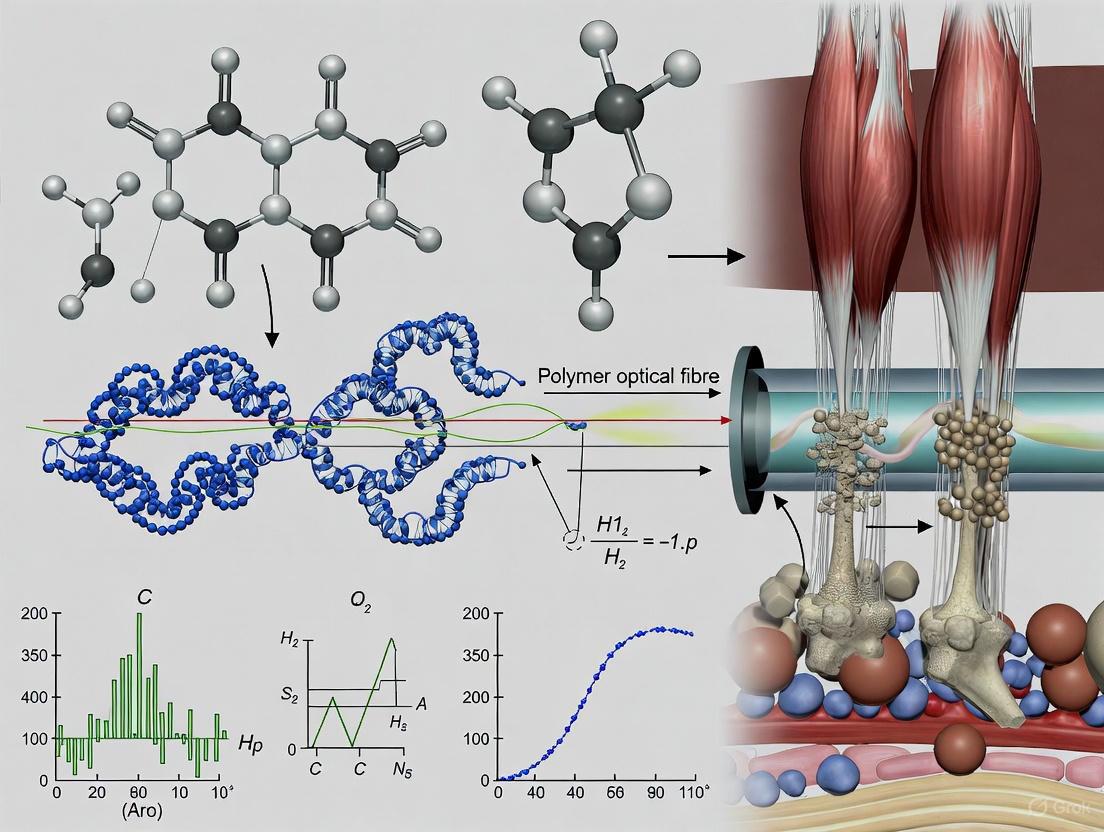
This comprehensive review explores the rapidly evolving field of polymer optical fiber (POF) sensing technology and its transformative applications in biomechanics and biomedical engineering.
Polymer Optical Fiber Sensing in Biomechanics: Advanced Technologies for Healthcare Monitoring and Rehabilitation
Abstract
This comprehensive review explores the rapidly evolving field of polymer optical fiber (POF) sensing technology and its transformative applications in biomechanics and biomedical engineering. Targeting researchers, scientists, and healthcare technology developers, the article systematically examines the fundamental principles of POF sensors, including Fiber Bragg Gratings (FBGs), intensity-based systems, and advanced sensing mechanisms. The content covers diverse biomedical applications from wearable robotics and gait analysis to physiological monitoring and chemical sensing. Through detailed analysis of performance optimization, validation methodologies, and comparative assessment with conventional sensing technologies, this article provides crucial insights for developing next-generation healthcare monitoring systems, rehabilitation devices, and clinical diagnostic tools that leverage the unique advantages of POF technology.
Fundamental Principles and Advantages of Polymer Optical Fiber Sensing Technology
Material Properties of Polymer Optical Fibers
Polymer Optical Fibers (POFs) are a class of optical fibers fabricated from high-transparency polymers, typically featuring a polymer core surrounded by a cladding made of a lower-refractive-index polymer material [1]. The fundamental working principle of POFs is based on total internal reflection, which allows them to transmit light through their core for both illumination and data transmission [2]. Their material composition grants them a unique set of mechanical and optical properties that distinguish them from traditional silica glass fibers.
Composition and Mechanical Characteristics
The most common materials for POFs are Polymethyl methacrylate (PMMA) for the core and fluorinated polymers for the cladding [1] [2]. Another high-performance material is amorphous fluoropolymer, commercially known as CYTOP, which is used to create Graded-Index POF (GI-POF) with superior transmission properties [3] [2]. The mechanical properties of POFs, including Young's modulus, strain, stress, and strength, are critically important for their performance and vary drastically depending on the POF type, such as step-index (SI-POF), microstructured POF (mPOF), multicore POF (MCPOF), or dye-doped POFs [4].
The table below summarizes the key characteristics of common POF materials.
Table 1: Key Material Properties and Characteristics of Polymer Optical Fibers
| Property | PMMA (Standard SI-POF) | CYTOP (GI-POF) | Comparison to Silica Glass Fiber |
|---|---|---|---|
| Core Material | Polymethyl methacrylate [2] | Amorphous fluoropolymer [3] | Silica glass |
| Refractive Index (Core) | 1.492 [1] | ~1.42 [2] | ~1.45 (core) |
| Typical Core Diameter | 0.98 mm / 0.735 mm / 1 mm [3] [2] | Smaller dimensions than PMMA POF [3] | 4-8 μm (SMF); 50/62.5 μm (MMF) [3] |
| Attenuation/Loss | ~1 dB/m @ 650 nm [2]; 0.15 dB/m @ 650 nm [3] | Low attenuation and scattering losses [3] | 0.2 dB/km @ 1550 nm [3] |
| Bandwidth | ~5 MHz·km @ 650 nm [2] | Enables Gigabit transmission speeds [2] | >10 GHz·km (SMF) |
| Primary Mechanical Advantages | High mechanical elasticity, high fracture toughness, high bending flexibility, ease of processing, vibration resistance, water resistance [1] [4] | High flexibility, reliability, and bending resistance [3] | High tensile strength, but intrinsically stiff and brittle [3] |
| Young's Modulus | ~3.2 GPa for PMMA [3] | Information Missing | ~70 GPa |
| Failure Strain | High failure strain [3] | Information Missing | Low failure strain |
Key Performance Advantages and Limitations
The material properties of POFs translate into several key operational advantages, particularly for sensing applications.
- Robustness and Flexibility: POFs are significantly more robust under bending, stretching, and vibration than silica fibers due to their high fracture toughness and elastic strain limit [2] [3] [1]. This makes them ideal for applications in dynamic environments.
- Ease of Handling and Installation: The large core diameter and high numerical aperture (NA) make POFs easy to align, connect, and install, requiring less precision than silica fibers [1] [3]. This also results in high coupling efficiency with light sources.
- Electromagnetic Immunity: Being dielectric, POFs are inherently immune to electromagnetic interference (EMI), making them suitable for use in electrically noisy environments [1].
- Limitations: The primary limitations of standard PMMA POFs are their high optical attenuation (limiting use to short-range applications) and lower bandwidth compared to silica fibers [1] [2]. However, perfluorinated GI-POFs like CYTOP have significantly improved performance in both bandwidth and attenuation [3] [2].
Biocompatibility and Biomedical Advantages
The intrinsic material properties of certain polymers make POFs exceptionally suitable for biomedical applications. Biocompatibility refers to the ability of a material to perform with an appropriate host response in a specific application, and several POF materials meet this requirement [3].
Inherent Biocompatibility of Polymer Materials
Many polymers used in POFs are known for their biocompatibility. PMMA is a widely used biomaterial. More importantly, several synthetic polymers—including poly(lactic acid) (PLA), poly(glycolic acid) (PGA), poly(lactic-co-glycolic acid) (PLGA), and poly(ethylene glycol) (PEG)—have been approved by the U.S. Food and Drug Administration (FDA) for medical applications [3]. These materials are not only biocompatible but also offer biodegradability, meaning they can be hydrolyzed or degraded into small, metabolizable molecules in a physiological environment, thus avoiding the need for surgical removal after implantation [3].
Advantages Over Silica Fibers in Medical Settings
The mechanical properties of POFs provide decisive advantages over silica fibers for in-vivo and wearable applications.
- Flexibility and Safety: POFs have a lower Young's modulus (~3.2 GPa for PMMA) and a higher failure strain than silica fibers, making them highly flexible and less prone to breakage inside the body, which minimizes the risk of tissue damage [3].
- Reduced Inflammatory Response: The mechanical and chemical properties of silica fibers can lead to issues like chronic inflammation and tissue damage when implanted. The more tissue-like flexibility and proven biocompatibility of certain polymer fibers help mitigate these adverse body reactions [3].
- Functionalization for Enhanced Biocompatibility: Research is exploring materials like hydrogels for optical fibers. Hydrogels have high water content that mimics the extracellular matrix, improving compatibility and softening the fiber-tissue interface [3].
Table 2: Overview of Biocompatible and Biodegradable Polymer Materials for POFs
| Material Category | Example Materials | Key Properties | Potential Biomedical Applications |
|---|---|---|---|
| Synthetic Polymers (FDA-Approved) | PLA, PGA, PLGA, PEG [3] | Biodegradable, biocompatible, tunable degradation rates [3] | Biosensing, drug delivery, tissue engineering, temporary implants [3] |
| Natural Materials | Silk, cellulose, agarose, proteins [3] | Superior biocompatibility, intrinsic biodegradability, nontoxicity [3] | Bio-integrated sensors, transient medical devices [3] |
| Hydrogels | Poly(ethylene glycol)-based, alginate-based [3] | High water content, tissue-like softness, self-healing properties, porous structure [3] | Mitigating tissue damage at the implant interface, soft robotics sensing [3] |
| Elastomers | Polydimethylsiloxane (PDMS) | High stretchability, flexibility | Wearable sensors, stretchable photonics |
Application Notes for Biomechanics Research
The combination of flexible, biocompatible, and sensing-capable POFs opens up significant opportunities in biomechanics research, which quantifies motion, forces, and control strategies to understand performance and injury [5].
Application 1: Human Motion and Gait Analysis
Objective: To quantitatively assess joint angles, spatiotemporal gait parameters, and muscle activity in real-world environments using wearable POF sensors. Background: Biomechanical analysis of human movement is essential for diagnosing movement disorders, optimizing athletic performance, and guiding rehabilitation [5]. Traditional motion capture systems are often limited to lab settings. POF sensors, particularly those based on fiber Bragg gratings (FBGs), can be integrated into textiles or flexible patches to create wearable, unobtrusive monitoring systems [1]. Protocol:
- Sensor Fabrication: Inscribe FBG arrays in a single, biocompatible POF (e.g., a medical-grade CYTOP or biodegradable PLA fiber). The gratings act as wavelength-specific reflection points sensitive to strain and temperature.
- System Calibration: Calibrate the wavelength shift of each FBG against known strain and temperature values in a controlled environment to establish a baseline [6].
- Sensor Placement: Securely attach the POF-FBG sensor to the skin or integrate it into a elastic sleeve/garment targeting the joint of interest (e.g., knee, hip, wrist). Ensure minimal slippage during movement.
- Data Acquisition: Use a portable interrogator unit to send broadband light through the POF and record the reflected Bragg wavelengths from each grating in real-time during the subject's activity (e.g., walking, running, squatting).
- Data Processing: Convert the recorded wavelength shifts into strain measurements. Use biomechanical models to translate strain data from multiple FBGs along the fiber into joint angle kinematics.
Workflow for POF-based Human Motion Analysis
Application 2: Plantar Pressure Mapping
Objective: To measure and map the pressure distribution on the plantar surface of the foot during standing and locomotion. Background: Altered plantar pressure is linked to various pathologies such as diabetic foot ulcers, gait disorders, and hallux limitus [5] [1]. POF-based sensors are ideal for this application due to their high elastic strain limit, flexibility, and resistance to repeated mechanical loading [1]. Protocol:
- Sensor Grid Construction: Create a grid of multiple intensity-based or FBG-based POF sensors. For intensity-based systems, configure the fibers such that pressure applied at specific points modulates the intensity of transmitted light.
- Insole Integration: Embed the POF sensor grid into the layers of a flexible, insole-shaped substrate, ensuring the sensing points are positioned at key anatomical landmarks (e.g., heel, metatarsal heads, hallux).
- Signal Conditioning: Connect the POF insole to a signal conditioning unit containing LEDs (light source) and photodetectors. For intensity-based systems, implement reference channels to compensate for intensity fluctuations unrelated to pressure.
- Data Collection: Subjects wear the instrumented insoles inside their shoes. Data is collected while the subject stands still, walks on a treadmill, or moves freely, streamed wirelessly to a data logger.
- Analysis and Mapping: Correlate the signal loss (intensity-based) or wavelength shift (FBG-based) from each sensing point with calibrated pressure values. Use software to generate a dynamic, color-coded pressure map of the foot.
Application 3: Monitoring of Biomechanical Forces in Rehabilitation
Objective: To monitor the forces and movements applied by a patient during rehabilitation exercises, either with a therapist or using a robotic device, to ensure adherence and measure progress. Background: Biomechanical analysis drives the development of targeted, evidence-based rehabilitation, including the use of wearables and robotic aids with "assist-as-needed" control strategies [5]. POF sensors can be integrated into these systems as safe, EMI-immune force and movement transducers. Protocol:
- Sensor Integration: Embed POF strain sensors (e.g., FBGs) within the structural components of a rehabilitation robot, a smart splint, or a resistance band at locations of expected mechanical stress.
- Establish Baseline: For "assist-as-needed" robots [5], record the sensor data corresponding to correct exercise form performed under a therapist's guidance to establish a patient-specific baseline.
- Real-Time Monitoring: During unsupervised or assisted exercise sessions, continuously monitor the sensor output. In robotic systems, the sensor data can be fed into a control algorithm that dynamically adjusts the level of assistance provided [5].
- Feedback and Progression: Provide auditory, visual, or haptic feedback to the patient based on the sensor data to correct movement patterns. Use the collected data to objectively track the patient's recovery and progressively adjust the difficulty of the exercises.
The Scientist's Toolkit: Research Reagent Solutions
Table 3: Essential Materials and Equipment for POF Sensing in Biomechanics
| Item Name | Function/Description | Example Use Case |
|---|---|---|
| Biocompatible POF | PMMA, CYTOP, or biodegradable (PLA, PLGA) optical fibers serving as the sensing element and light guide. | Core material for all biomedical POF sensors; biodegradable fibers for transient implants. |
| Fiber Bragg Grating (FBG) Inscription System | A laser-based system to inscribe periodic refractive index modulations (gratings) into the POF core. | Creating wavelength-specific sensing points in the fiber that are sensitive to strain and temperature. |
| Optical Interrogator | An instrument that emits light into the POF and precisely measures the spectrum of reflected (FBG) or transmitted light. | The main data acquisition unit for reading the sensor's output with high resolution. |
| Signal Conditioning Circuitry | Custom electronic circuits for amplifying and filtering the electrical signal from photodetectors. | Essential for improving the signal-to-noise ratio in intensity-based POF sensing systems. |
| Calibration Jigs | Mechanical fixtures (e.g., motorized translation stages, calibrated weights) for applying known strains or pressures to the POF sensor. | Used to establish the quantitative relationship between the measured optical signal and the physical parameter of interest. |
| Biocompatible Encapsulation | Medical-grade silicone, polydimethylsiloxane (PDMS), or hydrogel materials. | Protects the fiber, enhances mechanical coupling with tissue, and ensures biocompatibility for in-shoe or on-skin sensors. |
Polymer Optical Fiber (POF) sensing represents a transformative technology for biomechanics research, offering unique advantages for monitoring human movement and physiological signals. Unlike traditional silica fibers, POFs are characterized by their high flexibility, superior strain tolerance, and biocompatibility, making them ideally suited for integration into wearable devices and smart textiles [7] [8]. These sensors operate primarily on three distinct physical mechanisms: Fiber Bragg Gratings (FBGs), which detect shifts in reflected wavelength; intensity-based sensors, which measure changes in transmitted light power; and evanescent wave sensors, which exploit the interaction of light extending beyond the fiber core with the surrounding environment [7] [9] [10]. This document details the operating principles, applications, and experimental protocols for these key sensing mechanisms within the context of advanced biomechanics research.
Sensing Mechanisms and Performance Comparison
The following section delineates the fundamental principles and comparative performance of the three core sensing technologies.
Fiber Bragg Gratings (FBGs)
An FBG is a periodic modulation of the refractive index within the core of an optical fiber. It acts as a wavelength-specific mirror, reflecting a narrow band of light centered at the Bragg wavelength, λ_B, defined by λ_B = 2 * n_eff * Λ, where n_eff is the effective refractive index of the fiber core and Λ is the grating period [7]. When the fiber is subjected to mechanical strain (Δε) or temperature changes (ΔT), both n_eff and Λ are altered, leading to a measurable shift in the Bragg wavelength (Δλ_B) [7]. This relationship is the foundation for their use as precise quantitative sensors.
Intensity-Based Sensors
Intensity-modulated fiber optic sensors (IM-FOSs) represent a cost-effective and structurally simple alternative. Their operation relies on measuring variations in the intensity of light transmitted through or reflected from the fiber in response to an external stimulus [10]. These changes can be induced through several mechanisms, including:
- Macrobending: Light radiates out of the fiber due to bends exceeding a critical radius, causing power loss [10].
- Microbending: Small, periodic deformations of the fiber cause coupling of light from guided modes to radiation modes, attenuating the signal [10].
- Evanescent Field Coupling: In twisted-fiber configurations, pressure can frustrate total internal reflection, coupling light from an illuminating fiber to an adjacent receiving fiber, thus varying the measured intensity [9].
Evanescent Wave Sensors
During total internal reflection, a standing electromagnetic wave, known as an evanescent wave, is formed, with its intensity decaying exponentially with distance from the core-cladding interface [10]. The penetration depth (d_p) of this field determines its sensitivity to the surrounding medium. In POF sensors, this principle is harnessed by removing a portion of the cladding to enhance the interaction between the evanescent field and the external environment. Changes in the refractive index or the absorption characteristics of the surrounding medium (e.g., sweat on the skin) directly modulate the intensity or spectrum of the transmitted light, enabling biochemical sensing [11] [8].
Table 1: Comparative Analysis of Key POF Sensing Mechanisms in Biomechanics
| Sensing Mechanism | Measurand | Typical Sensitivity (POF) | Key Advantages | Common Biomechanics Applications |
|---|---|---|---|---|
| Fiber Bragg Grating (FBG) | Strain, Temperature | Tuneable via pre-strain [8] | Absolute wavelength encoding, Multiplexing capability, High accuracy | Kinematics analysis [12], Gait analysis [12], Respiration rate [12] |
| Intensity-Based (Macro/Microbending) | Pressure, Bending, Displacement | 432.21 nW/MPa (pressure) [9] | Simple, Low-cost, Robust | Smart textile integration [10], Breathing monitoring [12], Joint movement tracking [12] |
| Evanescent Wave | Refractive Index, Biochemical concentration | 2008.58 nm/RIU (in POF) [8] | Direct chemical/biomarker detection, Label-free | Sweat pH monitoring [12], Metabolite detection [11] |
Table 2: Performance Characteristics of Optical Fiber Sensing Technologies
| Parameter | FBG Sensors | Intensity-Based Sensors | Evanescent Wave Sensors |
|---|---|---|---|
| Principle | Wavelength shift [7] | Intensity variation [9] [10] | Evanescent field modulation [11] |
| Sensitivity | High (strain/temperature) [7] | Moderate [10] | Very High (refractive index) [8] |
| Multiplexing | Excellent [7] [13] | Good [10] | Challenging |
| Cost | High (interrogation) [7] | Low [9] [10] | Moderate |
| EMI Immunity | Excellent [7] [13] | Excellent [10] | Excellent |
The Scientist's Toolkit: Research Reagent Solutions
Table 3: Essential Materials and Equipment for POF Sensor Development
| Item | Function/Description | Example Use Case |
|---|---|---|
| Polymer Optical Fiber (POF) | Sensing element; typically made of materials like CYTOP or PMMA [8]. | The core medium for all sensor types; chosen for flexibility and biocompatibility. |
| FBG Interrogator | Measures and tracks the wavelength shifts from FBGs with high precision. | Essential for decoding strain and temperature data from POFBG sensors. |
| Optical Power Meter (e.g., Thorlabs PM100USB) | Measures the intensity of light output from the fiber. | Used to quantify signal changes in intensity-based and evanescent wave sensors [9]. |
| LED Light Source (e.g., 660 nm M660F1) | Provides incoherent light for intensity-based systems. | A stable, low-cost light source for sensors where coherence is not required [9]. |
| Side-Polishing Setup | Creates a sensing window by selectively removing the fiber cladding. | Enables the development of evanescent wave and surface plasmon resonance sensors [8]. |
| pH-Sensitive Hydrogel | A functional coating that expands/contracts with pH changes. | Coated on FBGs or evanescent wave sensors for sweat pH monitoring [7] [12]. |
Experimental Protocols and Methodologies
Protocol: Fabrication of a POF-Based Intensity Sensor for Pressure Monitoring
This protocol outlines the creation of a simple, high-pressure sensor using a twisted POF structure, suitable for monitoring external pressure in biomechanical setups [9].
Workflow: Fabrication of a Twisted POF Intensity Sensor
Materials:
- Two 1-meter lengths of commercial POF (e.g., Mitsubishi SK-40, core diameter ~980 µm) [9].
- LED light source (e.g., Thorlabs M660F1, 660 nm).
- Optical power meter (e.g., Thorlabs PM100USB with S151C photodetector).
- Mechanical setup for applying and controlling pressure.
- Silicone gel for sealing.
Procedure:
- Fiber Preparation: Cut two POFs to the desired length. Ensure end-faces are clean and properly cleaved for efficient light coupling.
- Sensor Fabrication: Select and create one of the following sensing structures in a designated section (e.g., between 49.5 cm and 50.5 cm) of the two POFs [9]:
- Twisted Configuration: Twist the two POFs together firmly for a defined number of turns.
- Twisted-Bend Configuration: After twisting, introduce a specific bend radius to the twisted section. This configuration typically offers higher sensitivity.
- Twisted-Helical Configuration: Form the twisted section into a helical coil. This configuration is known to enhance the sensing range.
- Integration: Protect the sensing region from ambient light using a black tube or by placing it within a dark pressure chamber. Use silicone gel to seal the chamber and prevent leakage while allowing pressure transmission.
- Optical Setup: Launch light from the LED source into the core of the first ("illuminating") POF. Connect the second ("receiving") POF to the optical power meter.
- Calibration and Measurement: Apply known pressures to the sensing region. Record the corresponding output from the optical power meter. As pressure increases, frustrated total internal reflection will cause a variation in the coupled intensity. Plot power output versus applied pressure to establish a calibration curve. The twisted-bend structure has demonstrated a sensitivity of approximately 432.21 nW/MPa [9].
Protocol: Functionalization of an Evanescent Wave POF Sensor for Sweat pH Monitoring
This protocol describes the development of a wearable sweat sensor by functionalizing a side-polished POF with a pH-responsive material [12] [8].
Workflow: Functionalization of a POF pH Sensor
Materials:
- Side-polished or etched POF.
- pH-sensitive hydrogel (e.g., poly(acrylic acid) or similar copolymer).
- Refractometer for system validation.
- Spectrometer or optical power meter for signal acquisition.
- Buffer solutions of known pH for calibration.
Procedure:
- Fiber Preparation: Create a sensing window on the POF using a side-polishing technique or chemical etching with a suitable agent like hydrofluoric acid. This process exposes the evanescent field to the external environment [7] [8].
- Sensor Functionalization: Apply a thin, uniform layer of the pH-sensitive hydrogel onto the exposed sensing window. The gel should adhere firmly to the fiber surface. Allow it to cure under controlled conditions.
- Integration: Embed the functionalized fiber into a wearable platform, such as a sweat-absorbent textile or a wristband, ensuring the sensing window is in direct contact with the skin or the collected sweat.
- Measurement and Data Acquisition:
- Connect one end of the POF to a broadband light source and the other to a spectrometer.
- As sweat contacts the hydrogel, the gel expands or contracts in response to pH changes, inducing mechanical stress on the fiber and modulating the evanescent field. This causes a shift in the transmission spectrum or a change in output intensity [7] [12].
- Calibrate the sensor by exposing it to standard buffer solutions and recording the spectral or intensity response. The subsequent measurement of an unknown sweat sample can then be correlated to its pH value.
Protocol: Multiplexed POFBG Sensor Array for Kinematic Analysis
This protocol covers the use of multiple POFBGs written into a single fiber to measure strain at different locations simultaneously, ideal for analyzing complex body movements [12] [8].
Workflow: Multiplexed POFBG Sensor System
Materials:
- Single-mode or few-mode POF suitable for FBG inscription (e.g., CYTOP).
- Femtosecond laser or UV laser system with phase mask for grating inscription [7].
- FBG interrogator.
- Elastic textile substrate (e.g., a sleeve or legging).
Procedure:
- Grating Inscription: Use a phase mask technique or a point-by-point femtosecond laser writing method to inscribe multiple FBGs at predefined locations along the POF. Each FBG is designed to reflect a unique Bragg wavelength at a reference state [7].
- Sensor Conditioning: Apply a specific pre-strain to the POF during integration. This pre-strain can be used to selectively tune the temperature and humidity sensitivity of the sensors, which is crucial for minimizing cross-sensitivity in biomechanical applications [8]. Perform thermal annealing to improve the stability and repeatability of the POFBGs.
- Textile Integration: Carefully embed the POFBG array into the smart textile garment, aligning each FBG with a specific anatomical landmark (e.g., over a joint like the knee or elbow). The fiber should be secured in a way that ensures strain is effectively transferred from the textile to the fiber during movement.
- Data Collection: Connect the POFBG array to an interrogator. As the body moves, the strain at each joint causes a proportional shift in the Bragg wavelength of the corresponding FBG. The interrogator tracks all wavelength shifts in real-time, demultiplexing the signals to provide synchronized, multi-point strain data for comprehensive kinematic analysis [12].
Polymer Optical Fibers (POFs) are increasingly becoming the material of choice in biomechanics research, particularly for applications requiring direct interaction with the human body. Their emergence addresses critical limitations posed by traditional Silica Optical Fibers (SOFs), especially in wearable sensing and robotic instrumentation. This document outlines the core mechanical advantages of POFs—specifically their superior flexibility, fracture toughness, and impact resistance—and provides a comparative analysis with silica fibers. Supported by quantitative data and detailed experimental protocols, this application note serves as a guide for researchers and scientists seeking to leverage POFs for robust, high-fidelity, and safe biomechanical sensing.
Comparative Analysis: POFs vs. Silica Fibers
The selection between POFs and SOFs is pivotal to the design and performance of a biomechanical sensor. The table below summarizes the key comparative advantages of POFs based on their material properties.
Table 1: Comparative Properties of Polymer and Silica Optical Fibers for Biomechanics
| Property | Polymer Optical Fiber (POF) | Silica Optical Fiber (SOF) | Implication for Biomechanics Research |
|---|---|---|---|
| Flexibility | High flexibility; lower Young's modulus (≈2-3 GPa) [14] [15] | Higher Young's modulus (≈70 GPa); more rigid [16] | Enables integration into soft, compliant textiles and wearable structures without hindering movement [14] [12]. |
| Fracture Toughness | High fracture toughness; high elastic strain limits [14] [15] | Brittle; prone to catastrophic failure [16] | Withstands repeated large strains and deformations in wearable robots and smart textiles, ensuring sensor longevity [14]. |
| Impact Resistance | High impact resistance; can withstand mechanical shock [14] [17] | Brittle; can break upon impact, risking glass punctures [14] | Essential for patient safety; eliminates risk of injury from broken fibers in wearable applications [14]. |
| Elongation at Break | Can exceed 10% strain before failure [15] [18] | Typically less than 1% strain before failure [16] | Allows for measurement of large deformations and is suitable for sensing in joints and muscles [14]. |
| Ease of Handling & Installation | Easy to cut, terminate, and install; low cost [16] | Requires specialized tools and trained professionals for installation [16] | Facilitates rapid prototyping and deployment of sensor systems, reducing development time and cost [16]. |
The following diagram illustrates the logical relationship between the core material properties of POFs and the resulting benefits for biomechanics applications.
Experimental Protocols for Characterizing POF Properties
To validate POF performance for specific biomechanics applications, standardized experimental characterization is essential. Below are detailed protocols for key mechanical tests.
Protocol: Large-Strain Tensile Testing for Sensor Validation
This protocol is used to characterize the elastic strain limit and tensile performance of a single-mode POF, which is critical for sensors intended to measure large deformations [15].
- Objective: To calibrate the phase shift as a function of applied displacement in a single-mode POF interferometer and validate its performance for large-strain measurements up to 10% nominal elongation [15].
- Materials and Equipment:
- Single-mode Polymethylmethacrylate (PMMA) POF
- Mach-Zehnder interferometer setup
- Motorized translation stage with force sensor
- Laser light source (632.8 nm wavelength)
- Photodetector and data acquisition system [15]
- Procedure:
- Step 1: Assemble the Mach-Zehnder interferometer, integrating the POF as the sensing arm.
- Step 2: Fix both ends of the POF sample to the translation stage, ensuring a known gauge length.
- Step 3: Apply a controlled displacement at a constant strain rate using the translation stage.
- Step 4: Simultaneously record the applied displacement/force from the translation stage and the corresponding phase shift from the interferometer's output.
- Step 5: Continue the test until fiber failure or the target strain (e.g., 10%) is reached.
- Step 6: Analyze the data to establish a calibration curve of phase shift versus applied strain [15].
- Expected Outcome: A linear relationship between phase shift and applied strain, confirming the POF's suitability for high-precision, large-strain sensing applications.
Protocol: Impact Resistance of Composite-Integrated POFs
This protocol assesses the enhancement of impact resistance when POFs are embedded into composite materials, simulating conditions in protective gear or exoskeletons [17].
- Objective: To evaluate the dynamic impact resistance of a 3D-printed continuous optical fiber-reinforced helicoidal Polylactic Acid (PLA) composite (COF-HP) using a Split Hopkinson Pressure Bar (SHPB) [17].
- Materials and Equipment:
- Self-developed multi-material continuous fiber 3D printer
- Polylactic Acid (PLA) filament
- Continuous Optical Fiber (COF)
- Split Hopkinson Pressure Bar (SHPB) apparatus
- High-speed camera
- Digital Image Correlation (DIC) software [17]
- Procedure:
- Step 1: Fabricate Specimens: Use the 3D printer to manufacture cylindrical COF-HP specimens with a defined helicoidal structure (e.g., 60° spiral angle). Control the printing path via modified G-CODE.
- Step 2: Compact Specimens (Optional): To reduce porosity, place printed specimens in a ring mold and heat in an oven at 70–80 °C. Apply a quasi-static compressive load to compact the specimen to a predefined height.
- Step 3: Perform Impact Test: Place the specimen between the incident and transmission bars of the SHPB. Subject the specimen to impact loading at high strain rates (e.g., 680 s⁻¹ and 890 s⁻¹).
- Step 4: Data Collection: Use strain gauges on the SHPB bars to record stress-strain data. Simultaneously, capture the deformation process using a high-speed camera.
- Step 5: Data Analysis: Analyze the stress-strain and energy absorption curves. Use DIC software to process high-speed footage for full-field strain distribution and damage evolution [17].
- Expected Outcome: The COF-reinforced specimens will exhibit higher maximum stress and improved energy absorption compared to pure PLA structures, demonstrating enhanced impact resistance.
The Scientist's Toolkit: Essential Research Reagents and Materials
Table 2: Key Materials for POF Sensor Development in Biomechanics
| Material/Reagent | Function in Research & Development | Exemplar Specifications |
|---|---|---|
| Single-mode PMMA POF | Core sensing element for high-precision, large-strain measurements in interferometric setups [15]. | Core diameter: ~1-100 µm; Cladding: Fluorinated polymer [19]. |
| Multimode PMMA POF | Used for intensity-based sensing, often in wearable textiles for monitoring parameters like breathing or gait [14] [12]. | Core diameter: 486 µm; Cladding diameter: 500 µm; NA: High [19]. |
| Polylactic Acid (PLA) | A common thermoplastic polymer used as a matrix for embedding and integrating POFs into 3D-printed structures and composites [17]. | Processing Temperature: 195-230 °C [17]. |
| Indium Tin Oxide (ITO) | A transparent conductive oxide used as an overlayer on POF-based Surface Plasmon Resonance (SPR) sensors to significantly enhance refractive index sensitivity [19]. | Optimal thickness: ~25 nm; Coated over a 40 nm Gold film [19]. |
| Gold (Au) Sputtering Target | Used to coat POFs to create a metal layer for exciting surface plasmons in SPR-based biosensors [19]. | High purity (99.99%); Thickness: 40-60 nm [19]. |
The distinct material properties of Polymer Optical Fibers—notably their high flexibility, fracture toughness, and impact resistance—make them uniquely suited for the demanding environment of biomechanics research. Their ability to undergo large strains, resist mechanical shock, and be safely integrated into wearable systems provides a significant advantage over traditional silica fibers. By following the standardized experimental protocols outlined in this document, researchers can reliably characterize these properties and develop next-generation sensing solutions for healthcare monitoring, rehabilitation robotics, and human movement analysis.
Electromagnetic Immunity and Safety Considerations for Biomedical Applications
The increasing integration of electronic systems and wireless technologies into healthcare has made electromagnetic interference (EMI) a critical challenge for biomedical device safety and reliability [20]. EMI can disrupt the normal operation of electronic devices, posing significant risks in biomedical applications where patient safety depends on accurate physiological monitoring and device functionality [20]. For polymer optical fiber (POF) sensors used in biomechanics research, understanding and addressing electromagnetic immunity is paramount for ensuring data integrity and patient safety in both clinical and research environments.
This application note examines the fundamental principles of electromagnetic immunity specific to POF sensing systems, provides validated experimental protocols for assessing EMI resistance, and outlines a comprehensive safety framework for deploying these sensors in electromagnetically complex healthcare settings. The content is specifically contextualized within a broader thesis on polymer optical fiber sensing in biomechanics research, addressing the unique requirements of researchers, scientists, and drug development professionals working at the intersection of medical sensing and electromagnetic compatibility.
Electromagnetic Interference in Biomedical Environments
Electromagnetic interference in healthcare settings originates from diverse sources including wireless communication systems, power lines, industrial equipment, and the medical devices themselves [20]. The proliferation of Internet of Things (IoT) devices, 5G technologies, and smart medical systems has significantly increased the complexity of the electromagnetic environment in clinical and research settings [20].
The consequences of EMI in biomedical applications are particularly severe. Active medical implants such as pacemakers, defibrillators, and insulin pumps can experience compromised functionality, creating direct threats to patient safety [20]. In research settings, EMI can corrupt sensitive physiological data collected during biomechanical studies, potentially leading to erroneous conclusions and compromised research outcomes. The healthcare sector consequently requires exceptionally high standards for electromagnetic compatibility, with specific regulatory requirements governing device immunity.
Shielding Effectiveness Metrics and Standards
Shielding effectiveness (SE) is the primary metric for evaluating EMI protection, defined as the logarithmic ratio of incident to transmitted electromagnetic power expressed in decibels (dB) [20]. The required level of shielding varies significantly based on the application and device criticality.
Table 1: Shielding Effectiveness Standards for Different Applications
| Application Context | Typical SE Requirement | Attenuation Level | Key Considerations |
|---|---|---|---|
| Commercial Electronics | 40-60 dB | 99.99-99.999% | Consumer device reliability |
| Industrial/Medical Equipment | 60-80 dB | 99.9999% | Patient-connected devices |
| Critical Medical/Military | 80-100+ dB | >99.99999% | Life-support systems |
| Polymer Optical Fiber Sensors | Inherent immunity | N/A | No conductive path for interference |
For conventional electronic medical devices, shielding materials must provide adequate protection across relevant frequency ranges. Traditional metallic shielding materials (copper, aluminum, nickel) offer high conductivity but present limitations including high density, corrosion susceptibility, and processing difficulties [20] [21]. Advanced polymer composites with carbon-based nanomaterials (graphene, carbon nanotubes, carbon foams) have emerged as promising alternatives, offering exceptional electrical conductivity, mechanical strength, and environmental sustainability while addressing weight and flexibility requirements [20] [21].
Electromagnetic Immunity of Polymer Optical Fiber Sensors
Fundamental Immunity Mechanisms
Polymer optical fiber sensors offer inherent electromagnetic immunity because they operate on optical rather than electronic principles [22]. Unlike conventional electronic sensors that rely on electrical currents through conductive paths susceptible to electromagnetic induction, POF sensors use light propagation through dielectric waveguide structures [22]. This fundamental operating principle provides natural resistance to electromagnetic interference, making them particularly valuable for biomechanics research in high-EMI environments.
The non-conductive nature of optical fibers means they do not act as antennas for electromagnetic waves and are unaffected by electromagnetic induction effects that plague electronic sensors [22]. This immunity extends across the entire electromagnetic spectrum, from extremely low frequencies to radio and microwave frequencies, ensuring reliable operation in diverse electromagnetic environments encountered in healthcare settings [22].
Comparative Advantages in Biomechanics Research
In biomechanics research applications, POF sensors provide significant advantages for monitoring physiological parameters in challenging electromagnetic environments:
- Patient Safety: Electrical isolation eliminates risk of electrical shock when monitoring human subjects [22]
- Signal Integrity: Immunity to EMI ensures accurate data collection during movement analysis in environments with wireless equipment [22]
- Miniaturization Potential: Small diameter fibers enable integration into wearable biomechanics monitoring systems without compromising immunity [22]
- Multiparameter Sensing: Capability to simultaneously monitor multiple physical parameters (pressure, temperature, strain) without cross-talk [22]
Table 2: POF Sensor Applications in Biomedical Monitoring
| Biomechanical Parameter | POF Sensing Mechanism | Research/Clinical Application | EMI Immunity Relevance |
|---|---|---|---|
| Pressure | Fiber Bragg Gratings (FBG) | Intracranial pressure monitoring | Critical in MRI environments |
| Temperature | Fabry-Pérot interferometry | Metabolic monitoring during activity | Unaffected by diathermy equipment |
| Strain | Intensity-based or FBG | Joint movement analysis | Reliable near electrosurgical units |
| Biochemical | Surface Plasmon Resonance | Metabolite detection in sweat | Immune to wireless telemetry interference |
Experimental Protocols for EMI Validation
EMI Immunity Testing for POF Sensing Systems
Objective: This protocol validates the electromagnetic immunity of polymer optical fiber sensors and their readout systems when subjected to standardized EMI exposure, simulating realistic healthcare environments.
Principle: POF sensors theoretically possess inherent EMI immunity, but complete sensing systems including optoelectronics, interconnections, and signal processing components may exhibit vulnerabilities. This test characterizes system-level performance under controlled EMI conditions.
Materials and Equipment:
- Polymer optical fiber sensors (750 μm diameter, refractive index 1.49 recommended) [23]
- Optical signal conditioning unit (interrogator) with digital output
- EMI test chamber meeting IEC 61000-4-3 standards
- Reference sensors for baseline measurement
- Signal recording system with time-synchronization capability
- Temperature and humidity monitoring equipment
Procedure:
- Baseline Establishment:
- Calibrate the POF sensor against reference standards under zero-EMI conditions
- Characterize normal performance parameters including sensitivity, linearity, and noise floor
- Record baseline data for a minimum of 30 minutes to establish statistical significance
EMI Exposure Regimen:
- Position the POF sensor system in the EMI test chamber according to standardized geometry
- Expose the system to standardized field strengths (1 V/m to 30 V/m) across frequency ranges (0-300 GHz)
- Focus particularly on medical and communication bands (400 MHz, 900 MHz, 1.8 GHz, 2.4 GHz, 5 GHz)
- Maintain each test condition for sufficient duration to detect slow-response interference
Data Collection:
- Continuously monitor sensor output throughout exposure cycles
- Record signal stability, signal-to-noise ratio, and measurement accuracy
- Document any transient responses during EMI field activation/deactivation
Performance Analysis:
- Compare sensor performance during EMI exposure to baseline measurements
- Quantify any EMI-induced deviations as percentage of measurement range
- Classify immunity according to medical device standards (typically <1% deviation acceptable)
Validation Criteria: Successful validation requires maintaining specified measurement accuracy (typically ±1% of full scale) throughout all EMI exposure conditions without protective shielding.
Shielding Effectiveness Measurement for Composite Materials
Objective: This protocol determines the shielding effectiveness of polymer composite materials intended for EMI protection of non-optical components in POF sensing systems.
Principle: Shielding effectiveness is quantified by measuring the attenuation of electromagnetic waves passing through a material, using vector network analyzers to determine transmission and reflection coefficients.
Materials and Equipment:
- Sample polymer composite materials (minimum 100×100 mm)
- Vector network analyzer (VNA) with frequency capability to 8 GHz
- Waveguide or coaxial sample holders appropriate for material dimensions
- Calibration standards for VNA
- Sample preparation equipment (cutting tools, thickness gauges)
Procedure:
- Sample Preparation:
- Cut material samples to precise dimensions required by test fixture
- Measure and record sample thickness at multiple points
- Condition samples at standard temperature and humidity (23°C, 50% RH) for 24 hours
System Calibration:
- Calibrate VNA using appropriate calibration standard (SOLT, TRL)
- Verify calibration accuracy with known reference materials
- Establish baseline without sample to characterize test fixture
Measurement:
- Position sample in test fixture ensuring proper electrical contact
- Measure S-parameters (S11, S12, S21, S22) across frequency range of interest
- Repeat measurements at multiple sample orientations if material anisotropy is suspected
Calculation:
- Calculate shielding effectiveness from S-parameters using standard formulas:
- SE = -20log₁₀|S₂₁| dB
- Determine contributions from reflection (SER) and absorption (SEA)
- Calculate absolute effectiveness based on application requirements
- Calculate shielding effectiveness from S-parameters using standard formulas:
Validation Criteria: Materials intended for medical device shielding should demonstrate minimum 40 dB shielding effectiveness across relevant frequency ranges, with consistent performance across multiple samples.
Safety Implementation Framework
Risk Assessment Protocol
A systematic risk assessment approach ensures comprehensive identification and mitigation of EMI-related hazards in biomedical sensing applications.
The Scientist's Toolkit: Research Reagent Solutions
Table 3: Essential Materials for EMI-Immune Biomedical Sensing Research
| Material/Component | Function | Application Notes | Representative Examples |
|---|---|---|---|
| Polymer Optical Fibers (750 μm) | Signal transmission with inherent EMI immunity | Core sensing element; select based on numerical aperture and mechanical properties | PMMA-based optical fibers with 1.49 refractive index [23] |
| Carbon-Based Nanocomposites | EMI shielding for electronic components | Applied to non-optical system elements; graphene and CNT composites offer high SE with flexibility | Graphene-epoxy composites achieving 40-60 dB SE [20] |
| Cerium Dioxide (CeO₂) Nanoparticles | Sensing layer enhancement | Green-synthesized nanoparticles improve refractive index for enhanced sensitivity [23] | Oak fruit extract-synthesized CeO₂ for LMR sensors [23] |
| Molecularly Imprinted Polymers (MIPs) | Selective analyte recognition | Creates synthetic recognition sites; compatible with optical fiber functionalization | Polystyrene MIP for tamoxifen detection [23] |
| Conductive Polymer Matrices | Hybrid shielding materials | Combine polymer flexibility with controlled conductivity; PEDOT:PSS for transparent shields | Polyimide substrates with metal coatings (40-60 dB SE) [20] |
| Fiber Interrogation Systems | Optical signal processing | Convert optical signals to digital data; potential EMI vulnerability point requires assessment | FBG interrogators with 1 pm wavelength resolution |
Polymer optical fiber sensors represent a robust solution for biomedical sensing applications in electromagnetically challenging environments. Their inherent immunity to electromagnetic interference, combined with appropriate shielding strategies for auxiliary components, provides a reliable foundation for biomechanics research and clinical monitoring. The experimental protocols and safety framework presented in this application note offer researchers and medical device developers standardized methodologies for validating electromagnetic compatibility and ensuring patient safety. As biomedical sensing technologies continue to evolve alongside increasingly dense electromagnetic environments, the fundamental advantages of optical sensing modalities will become increasingly critical for ensuring measurement integrity and patient safety.
Core Principles of Biomechanical Monitoring with POF Technology
Polymer Optical Fiber (POF) sensing technology has emerged as a powerful tool for biomechanical monitoring, offering unique advantages for quantifying human movement and physiological parameters. POF sensors function based on the modulation of light properties—such as intensity, wavelength, or phase—within an optical fiber when subjected to external mechanical deformations like bending, stretching, or pressure. These physical changes alter the transmission characteristics of light through the fiber, which can be precisely measured and correlated with specific biomechanical parameters. The fundamental principle enabling this technology is the interaction between external mechanical stimuli and the guided light within the fiber, which forms the basis for monitoring kinematic and kinetic parameters during human movement.
The core advantages of POF sensors over conventional electronic alternatives include their inherent immunity to electromagnetic interference, which ensures stable operation in environments with electrical noise; biocompatibility and safety for human wear; and high flexibility that allows integration into textiles and wearable devices without restricting natural movement. Furthermore, POF sensors demonstrate multiplexing capabilities, enabling multiple sensing points along a single fiber, and possess material properties including lower Young's modulus and higher fracture toughness compared to silica fibers, making them particularly suitable for applications involving large strains and dynamic movements.
Fundamental Operating Principles
POF sensors for biomechanical monitoring primarily operate on two fundamental principles: intensity modulation and wavelength shift mechanisms. Intensity-based sensors function by measuring changes in the power of light transmitted through the fiber when subjected to mechanical deformation. This is frequently achieved through macro-bend configurations, where bending the fiber causes light to escape from the core, resulting in measurable attenuation. The relationship between bend radius and optical power loss provides a quantitative measurement of movement or applied force. For sensors based on lateral sections, the sensitive zone is created by removing part of the fiber cladding and core, which increases sensitivity to bending through enhanced radiation losses and surface scattering effects [24].
Fiber Bragg Grating (FBG) sensors represent a more sophisticated approach based on wavelength modulation. FBGs are periodic structures inscribed in the fiber core that reflect a specific wavelength of light while transmitting others. When the grating undergoes strain or temperature changes, the reflected wavelength shifts proportionally, enabling precise measurement. The fundamental relationship is governed by the Bragg condition: λBragg = 2nΛ, where λBragg is the Bragg wavelength, n is the effective refractive index, and Λ is the grating period. External mechanical strain alters both the grating period and the refractive index through the photoelastic effect, resulting in a measurable wavelength shift [25].
Table 1: Comparison of POF Sensing Principles for Biomechanical Monitoring
| Sensing Principle | Measured Parameter | Typical Applications | Sensitivity | Advantages | Limitations |
|---|---|---|---|---|---|
| Intensity Modulation | Optical power loss | Gait analysis, joint angle, plantar pressure | 108.03 ± 100 mV/mm (lateral section sensors) [24] | Simple signal processing, low-cost implementation, high flexibility | Susceptible to power fluctuations, requires referencing |
| Macro-bend Sensing | Bend-induced attenuation | Plantar pressure, activity recognition | Dependent on bend radius (1-3 cm typical) [26] | Robust design, easy implementation, high dynamic range | Non-linear response at small bend radii |
| Fiber Bragg Grating (FBG) | Wavelength shift | Muscle force, precise joint kinematics, temperature compensation | ~1.2 pm/με (strain), ~10 pm/°C (temperature) [25] | Absolute measurement, multiplexing capability, immunity to power fluctuations | Higher cost, complex interrogation, temperature cross-sensitivity |
Key Application Areas in Biomechanics
Lower Limb Biomechanics and Gait Analysis
The "POF Smart Pants" represent a significant advancement in lower limb monitoring, incorporating 60 intensity-based POF sensors (30 per leg) distributed across the lower extremities. This system employs multiplexed intensity variation technique with side coupling between POFs and modulated light sources. Each sensor exhibits sensitivity of 108.03 ± 100 mV/mm, normalized during data processing. The system can accurately classify various daily activities with 100% accuracy using neural networks, and through principal component analysis, the sensor count can be optimized threefold while maintaining 99% accuracy. This technology enables comprehensive assessment of lower limb biomechanics across different movement velocities and activities, providing spatiotemporal gait parameters essential for clinical diagnosis and sports performance monitoring [24].
Plantar Pressure Monitoring
Plantar pressure measurement systems utilizing POF technology employ macro-bend sensors integrated into insoles to monitor pressure distribution during gait. These sensors typically use conventional step-index PMMA fibers with 980μm core diameter and 2mm total diameter. Sensing elements are configured as loops with outer diameters of 1-3 cm, positioned parallel to the insole surface without requiring encapsulation. When load is applied, deformation occurs at the intersection points, causing fiber bending and consequent optical power attenuation through combined bend loss and stress-optic effects. The sensors demonstrate capability for both static and dynamic measurements, with the 1cm diameter sensor providing optimal spatial resolution for plantar pressure assessment. Validation against force platforms and commercial sensors confirms their accuracy in measuring vertical ground reaction forces during gait cycles [26].
Physiological Parameter Monitoring
POF sensors extend beyond biomechanical monitoring to encompass physiological parameter assessment, including respiration, heart rate, and body temperature. Specialized approaches incorporate chalcogenide fibers for simultaneous infrared-temperature dual sensing, enabling non-invasive monitoring of surface physiological evolution. Additionally, POF-based sensors have been developed for real-time sweat analysis, monitoring parameters such as pH levels through hydrogel optical fibers. These systems leverage the optical properties of specialized fiber materials that respond to biochemical changes in sweat composition, providing comprehensive physiological profiling during physical activity [27].
Table 2: Technical Specifications of POF Sensors in Biomechanical Applications
| Application Domain | Sensor Type | Key Performance Metrics | Measurement Range | Accuracy/Resolution |
|---|---|---|---|---|
| Lower Limb Kinematics [24] | Multiplexed intensity-based POF | 60 sensors (30 per leg) | Full range of lower limb motion | Activity recognition: 100% (60 sensors), 99% (optimized 20 sensors) |
| Plantar Pressure Monitoring [26] | Macro-bend POF | 1-3 cm loop diameters | Ground reaction forces during gait | Comparable to force platforms and commercial sensors |
| Respiratory Monitoring [27] | Intensity-variation POF | Chest expansion measurement | Normal respiratory rates | Sufficient for clinical breath rate monitoring |
| Cardiac Monitoring [27] | FBG-based POF | Heart rate detection | Resting and exercise heart rates | Clinical-grade accuracy |
| Multi-parameter Sensing [27] | Chalcogenide fiber | Temperature + biochemical sensing | Physiological ranges | Real-time monitoring capability |
Experimental Protocols
Protocol for POF Smart Pants Development and Validation
Objective: To develop and validate a smart textile system with integrated POF sensors for lower limb biomechanical monitoring and activity recognition.
Materials and Equipment:
- Polymethyl methacrylate (PMMA) optical fibers (1 mm diameter)
- Light emitting diodes (LEDs) for lateral coupling
- Photodetectors for signal acquisition
- Signal conditioning and data acquisition system
- Textile pants substrate for sensor integration
- Reference motion capture system (optional, for validation)
Fabrication Procedure:
- Fiber Preparation: Cut PMMA optical fibers to required lengths using a razor blade. Strip approximately 5mm of outer jacket from each end using a wire stripper to facilitate proper connection.
- Sensitive Zone Creation: Create lateral sections on the POF by removing cladding and part of the core at predetermined sensor locations. The section length (c) and depth (p) should be controlled for consistent sensitivity.
- Sensor Integration: Integrate two POFs with 30 sensors each into the pants textile, placing them strategically on left and right legs to capture key kinematic information. Ensure full integration without compromising textile flexibility.
- System Assembly: Connect LEDs for lateral coupling to the sensitive zones and photodetectors at fiber ends. Implement aluminum foil at end facets to increase signal reflection where necessary.
- Electronic Integration: Develop a portable signal acquisition unit placed inside the pants pocket, containing light sources, detectors, and data processing capabilities.
Calibration and Testing:
- Sensor Characterization: Characterize each of the 60 optical fiber sensors by applying transverse displacements to sensitive regions and recording output signals. Calculate individual sensitivities (typically 108.03 ± 100 mV/mm).
- Signal Normalization: Apply sensitivity values to normalize sensor responses prior to data analysis.
- Activity Protocol: Conduct tests with volunteers performing different daily activities (walking, sitting, standing, stair ascent/descent) while recording sensor data.
- Algorithm Development: Implement neural network algorithms for activity recognition, training on acquired dataset.
- Sensor Optimization: Apply principal component analysis to determine the minimal sensor count required for maintaining classification accuracy.
Validation Metrics:
- Activity recognition accuracy (target: >99%)
- Spatiotemporal gait parameter extraction
- System robustness during dynamic movements
- Comparison with reference systems (when available) [24]
Protocol for Plantar Pressure Insole Development
Objective: To design, fabricate, and characterize macro-bend POF sensors integrated into insoles for plantar pressure monitoring during gait.
Materials and Equipment:
- HFBR-R/EXXYYYZ step-index POF (PMMA core, 980μm diameter, 2mm total diameter)
- LED IF-E99B (650nm center wavelength) light source
- Photodetector circuit
- Ethylene-vinyl acetate (EVA) or polypropylene (PP) insole material (17mm heel, 2mm forefoot thickness)
- Universal testing machine for dynamic characterization
- Force platform for validation
Fabrication Procedure:
- Fiber Preparation: Cut POF to insole perimeter length using a razor blade. Strip 5mm of outer jacket from both ends with a wire stripper.
- Sensing Element Fabrication: Form loops with circular shapes of 1cm, 2cm, and 3cm outer diameters at strategic locations corresponding to high-pressure plantar areas (heel, metatarsal heads).
- Insole Integration: Embed the sensor loops within the insole material, ensuring they remain parallel to the insole surface without requiring encapsulation.
- Optical Connection: Connect the prepared POF to the LED light source and photodetector circuit, ensuring proper alignment and fixation.
Characterization and Testing:
- Static Load Testing: Apply known weights to the sensor regions and record optical power output to establish force-attenuation relationships.
- Dynamic Testing: Use a universal testing machine to apply sinusoidal loads at frequencies corresponding to walking and running activities.
- Gait Analysis: Recruit human subjects to walk with the instrumented insoles while collecting data synchronized with force platform measurements.
- Signal Processing: Implement algorithms to convert optical power attenuation to pressure values, accounting for sensor-specific calibration factors.
Validation Approach:
- Compare POF sensor outputs with simultaneous force platform measurements
- Evaluate sensor response at different gait velocities
- Assess reliability across multiple gait cycles [26]
Diagram 1: Workflow for POF Sensor Development and Implementation in Biomechanical Monitoring
The Scientist's Toolkit: Research Reagent Solutions
Table 3: Essential Materials and Equipment for POF Biomechanical Sensing Research
| Item | Specifications | Function/Role | Application Examples |
|---|---|---|---|
| PMMA Optical Fiber [24] [26] | Core diameter: 980μm-1mm, Cladding: 10μm fluorinated polymer | Primary sensing element; light guidance with modifiable transmission | Lower limb monitoring, plantar pressure sensing |
| Electrospinning Setup [28] | High-voltage source, polymer solution, collector | Fabrication of polymer nanofiber substrates for enhanced sensitivity | Specialized sensor coatings, flexible substrates |
| LED Light Sources [24] [26] | IF-E99B (650nm center wavelength) | Optical signal generation for intensity-based sensing | Lateral coupling in multiplexed systems |
| Photodetector Circuit [24] [26] | Photodiodes with signal conditioning | Conversion of optical signals to electrical measurements | Signal acquisition in wearable monitoring systems |
| FBG Interrogator [25] | High-resolution wavelength detection (~1pm) | Precise measurement of Bragg wavelength shifts | High-accuracy strain and temperature monitoring |
| Chalcogenide Fibers [27] | Infrared-transparent composition | Biochemical and thermal sensing through IR spectroscopy | Sweat analysis, multi-parameter physiological monitoring |
| Signal Processing Unit [24] | Portable microcontroller with data storage | Real-time signal processing and data management | Wearable system integration for remote monitoring |
Diagram 2: Signal Transduction Pathways in POF Biomechanical Sensors
Polymer Optical Fiber technology represents a transformative approach to biomechanical monitoring, offering unique advantages for wearable sensing applications. The core principles of operation—centered on light modulation in response to mechanical stimuli—enable precise measurement of kinematic and kinetic parameters during human movement. As research advances, POF sensors continue to evolve toward higher sensitivity, better integration with textiles, and enhanced multiplexing capabilities. The experimental protocols and technical specifications outlined in this document provide researchers with comprehensive guidance for implementing POF sensing technology in biomechanical research, contributing to the growing field of wearable healthcare monitoring and personalized movement analysis.
Advanced Applications in Biomedical Monitoring and Rehabilitation Systems
The integration of wearable robotics, including exoskeletons, prosthetics, and orthotic devices, is revolutionizing rehabilitative and assistive technologies. These systems augment human capabilities, restore lost functions, and provide quantitative feedback for clinical assessment. A predominant challenge in this field is developing sensor systems that are both highly sensitive to biomechanical parameters and capable of seamless integration into wearable devices without compromising comfort or functionality. Within this context, polymer optical fiber (POF) sensing technology emerges as a transformative solution. POF sensors offer a unique combination of flexibility, electromagnetic immunity, multiplexing capability, and biocompatibility, making them exceptionally suited for biomechanics research and application [29] [30]. These sensors facilitate the detailed measurement of critical parameters such as joint kinematics, human-robot interaction forces, and physiological signals, enabling more adaptive, intelligent, and user-centered wearable robotic systems. This document outlines the application and protocols for utilizing POF sensing in the development and evaluation of next-generation wearable robots.
Quantitative Performance of POF Sensors in Wearable Robotics
Polymer optical fiber sensors have been quantitatively validated for monitoring a wide spectrum of biomechanical parameters. Their performance in key sensing modalities is summarized in the table below.
Table 1: Quantitative Performance Metrics of POF Sensors in Biomechanical Applications
| Sensing Modality | Measured Parameter(s) | Reported Performance | Application Context |
|---|---|---|---|
| Multi-Modal Deformation [31] | Strain, Bending, Twisting, Pressing | - Strain Sensitivity (ΔI/ε): ~ -0.2- 2D Indentation Position Accuracy: ~99.17%- Combined Strain & Twist Accuracy: ~98.4% | Intelligent recognition of elastomer deformations for soft robotic proprioception. |
| Gait & Gesture Analysis [31] | Hand Gesture Recognition | - Recognition Accuracy: 99.38% | Intelligent glove for human-machine interaction and prosthetic control. |
| Integrated Clinic Monitoring [29] | Joint Angle, Interaction Force, Ground Reaction Force (GRF), Breath Rate | - Simultaneous monitoring of multiple devices (orthosis, exoskeleton, treadmill, wearable sensors).- Enabled by a single, multiplexed POF system. | Robot-assisted rehabilitation clinic, providing comprehensive patient assessment across different therapy stages. |
| Physiological Monitoring [27] | Body Temperature, Cardiorespiratory Rates, Sweat | - Multi-parameter and multi-point sensing from a compact form factor. | All-fibre wearable devices for continuous health supervision. |
Experimental Protocols for POF Sensor Integration
This section provides detailed methodologies for implementing POF sensors in wearable robotics, from sensor fabrication to system-level validation.
Protocol: Fabrication of a Soft POF Sensor for Multi-Axial Deformation
This protocol details the creation of a sensitive POF sensor unit capable of detecting strain, bending, and torsion [31].
I. Research Reagent Solutions & Materials Table 2: Essential Materials for POF Sensor Fabrication
| Item Name | Function / Application |
|---|---|
| Commercial POF (PMMA, 500 μm diameter) | The core sensing element; transmits light whose intensity is modulated by deformation. |
| Silicone Elastomer (e.g., Polydimethylsiloxane - PDMS) | Provides a flexible and supportive matrix for embedding sensors, mimicking mechanical properties of human tissue. |
| UV-Curable Adhesive (e.g., D-5604) | Fixes connections between POF segments and secures light sources/detectors. |
| Rubber Tubing | Houses the connected POF ends, creating a mechanical structure that deforms predictably under load. |
| Light-Emitting Diode (LED) | Serves as the light source injected into the POF. |
| High-Resolution Imaging Camera | Acts as the photodetector, capturing the output light intensity from multiple POFs simultaneously. |
II. Step-by-Step Procedure
- Fiber Preparation: Cut a commercial Polymethyl methacrylate (PMMA) POF to the desired length using a precision cleaver. Mechanically polish the output endface of the POF with a lapping film (e.g., 1 μm grit) to ensure a smooth surface for optimal light transmission [31].
- Sensor Assembly: Connect two prepared POF segments within a section of rubber tubing. Use UV glue to seal the connection, maintaining an initial air gap of approximately 700 μm between the fiber endfaces. Cure the assembly under a 365 nm UV light source for 30 seconds. The air gap is critical for sensitivity, as mechanical deformation alters the light coupling efficiency between the fibers [31].
- Light Source Integration: Attach an LED to the input endface of the assembled POF sensor. Secure the connection using UV glue and cure it. The typical coupled power should be around 28 μW [31].
- Embedding in Elastomer: For applications in soft robotics, embed the assembled POF sensor array into a silicone elastomer matrix (e.g., PDMS). This provides mechanical robustness and ensures proper strain transfer from the host material to the sensor [31].
- Signal Acquisition: Assemble the output ends of multiple POFs into a bundle. Use a high-resolution camera (e.g., Tucsen MIchrome 5 Pro) with a tube lens system to capture real-time images of the sensors' output light. The light intensity from each POF core is extracted and summed from the captured images to generate the sensor's output signal [31].
Protocol: Instrumentation of a Lower-Limb Exoskeleton for Gait Analysis
This protocol describes the integration of a multiplexed POF sensor system into a lower-limb exoskeleton and treadmill to monitor biomechanical parameters during gait assistance [29].
I. Research Reagent Solutions & Materials Table 3: Key Materials for Exoskeleton Instrumentation
| Item Name | Function / Application |
|---|---|
| POF Angle Sensors [29] | Measure joint angles (e.g., knee, hip) in the exoskeleton or orthosis. |
| POF Force Sensors [29] | Monitor human-robot interaction forces at the physical interface between the device and the user. |
| POF-Instrumented Treadmill [29] | Measures Ground Reaction Forces (GRFs) and identifies gait phases (stance, swing) during walking. |
| POF-Based Insole [29] | Enables GRF measurement and gait event detection during over-ground walking. |
| Multiplexing Interrogation System [29] | Allows multiple POF sensors (angle, force, GRF) to operate on a single optical fiber cable, reducing system complexity and cost. |
II. Step-by-Step Procedure
- Sensor Calibration: Prior to integration, individually characterize and calibrate each POF sensor (angle and force) against known standards. For angle sensors, this involves correlating light attenuation with known joint angles. For force sensors, correlate output with known loads [29].
- Exoskeleton Integration: Mount the calibrated POF angle sensors on the exoskeleton's joint axes to measure kinematic data. Attach POF force sensors at key interface points (e.g., cuffs) to quantify interaction forces between the user and the robot [29].
- Treadmill Instrumentation: Integrate POF force sensors into the treadmill platform to measure vertical GRFs. This data is crucial for identifying the stance and swing phases of the gait cycle, which can be used for adaptive control of the exoskeleton [29].
- System Integration: Connect all POF sensors from the exoskeleton and treadmill to a single multiplexing interrogation system. This integrated approach allows for the simultaneous acquisition of kinematic and kinetic data from multiple points using a compact, low-cost system [29].
- Data Acquisition & Validation: Conduct gait trials with human subjects. Simultaneously collect data from the integrated POF system and a gold-standard motion capture system. Compare the results to validate the accuracy and reliability of the POF sensor network [29].
Visualization of Workflows and System Architectures
The following diagrams, generated using Graphviz DOT language, illustrate the core workflows and logical relationships in POF-based wearable robotic systems.
POF Sensor Data Acquisition Workflow
Integrated Rehabilitation Clinic Sensing Architecture
Human gait analysis provides critical insights into an individual's neurological, musculoskeletal, and cardiorespiratory health, serving as a vital tool in clinical diagnostics, rehabilitation, and sports science [14] [32]. Plantar pressure measurement, which quantifies the distribution of forces under the foot during standing and walking, constitutes a fundamental component of comprehensive gait analysis [33] [34]. These measurements enable researchers and clinicians to identify aberrant loading patterns associated with various pathologies, including diabetic foot ulcers, musculoskeletal disorders, and neuromuscular conditions [33] [35]. Traditional sensing technologies, including force platforms and electronic pressure sensors, present limitations such as electromagnetic interference, limited portability, and reduced compliance in extended monitoring scenarios [14] [25]. Polymer optical fiber (POF) sensors have emerged as a promising technology that addresses these limitations through their inherent advantages, including electromagnetic immunity, flexibility, biocompatibility, and compatibility with wearable monitoring systems [33] [14] [36]. These application notes provide a comprehensive technical framework for implementing POF-based sensing systems for gait monitoring and plantar pressure measurement within biomechanics research.
Polymer Optical Fiber Sensing Technology
Fundamental Principles and Advantages
Polymer optical fiber sensors operate based on the modulation of light properties—including intensity, wavelength, phase, or polarization—in response to external mechanical deformations induced by human movement [25] [36]. Unlike conventional silica optical fibers, POFs are fabricated from plastic polymers such as polymethyl methacrylate (PMMA), granting them superior flexibility, higher elastic strain limits, greater fracture toughness, and enhanced impact resistance [14] [36]. These material properties make POFs exceptionally suitable for biomechanical applications where repeated large deformations occur, such as in gait analysis and plantar pressure monitoring [33] [14].
The operational principles of POF sensors in gait analysis primarily utilize intensity-based or Fiber Bragg Grating (FBG)-based sensing mechanisms. Intensity-based sensors measure light attenuation caused by macro-bending of the fiber, which occurs when pressure is applied to the insole, leading to a measurable decrease in transmitted optical power [33]. FBG-based sensors rely on periodic refractive index structures inscribed within the fiber core that reflect specific wavelengths of light; external strain or pressure shifts this Bragg wavelength, enabling precise quantification of mechanical loading [25] [35].
Table 1: Comparison of POF Sensing Technologies for Gait Analysis
| Feature | Intensity-Based POF Sensors | FBG-Based POF Sensors |
|---|---|---|
| Principle | Macro-bend light attenuation [33] | Wavelength shift of reflected light [25] |
| Interrogation Cost | Low-cost light sources and photodetectors [33] | Higher cost specialized equipment [37] |
| Multiplexing Capacity | Limited, requires multiple photodetectors [33] | High, wavelength-division multiplexing possible [25] |
| Sensitivity | Moderate, sufficient for gait phases [33] | High, capable of detecting subtle pressure variations [35] |
| Temperature Sensitivity | Low, minimal cross-sensitivity [33] | High, requires compensation techniques [25] |
| Implementation Complexity | Simple signal processing [33] | Complex demodulation algorithms [25] |
The Scientist's Toolkit: Essential Research Reagents and Materials
Table 2: Essential Materials for POF-Based Gait Analysis Research
| Component | Specification | Research Function |
|---|---|---|
| Optical Fiber | Step-index PMMA POF (core: 980 μm, total diameter: 2 mm) [33] | Primary sensing element; transmits optical signals modulated by mechanical deformation |
| Interrogation System | Photodetectors for intensity-based systems; Optical Spectrum Analyzer (OSA) for FBG systems [33] [35] | Converts optical signals to quantifiable electrical measurements or wavelength data |
| Insole Material | Ethylene-vinyl acetate (EVA) or Polypropylene (PP) with 2-17 mm thickness variation [33] | Provides mechanical support and housing for sensors while allowing natural foot biomechanics |
| Encapsulation Material | Silicone rubber or thermoplastic polyurethane (TPU) [35] | Protects sensing elements from moisture and mechanical damage while ensuring proper force transmission |
| Optical Components | Broadband light source, optical circulators, connectors [35] | Establishes optical paths for signal transmission and reflection |
| Data Acquisition | Microprocessor (e.g., nRF52840) with Bluetooth module for wireless transmission [34] | Enables real-time data capture, processing, and transmission to analysis platforms |
| Calibration Equipment | Universal testing machine or commercial force platforms [33] | Provides reference measurements for sensor calibration and validation |
Experimental Protocols
Protocol 1: Design and Fabrication of POF Plantar Pressure Insoles
Objective: To fabricate a functional plantar pressure insole instrumented with polymer optical fiber sensors for gait analysis.
Materials and Equipment:
- Step-index PMMA POF (e.g., HFBR-R/EXXYYYZ) with 980 μm core diameter and 2 mm total diameter [33]
- Ethylene-vinyl acetate (EVA) insole material (17 mm heel, 2 mm forefoot thickness) [33]
- Wire stripper, razor blades, sandpaper (for lateral section processing) [33] [37]
- Optical power meter or photodetector
- Silicone rubber encapsulation material [35]
Procedure:
- Fiber Preparation: Cut POF to the desired insole length using a razor blade. Strip approximately 5 mm of the outer jacket from each end using a wire stripper to facilitate optical connectivity [33].
- Sensing Element Fabrication: Form bend sensors with circular loops of 1-3 cm outer diameter, ensuring they exceed the critical bending radius of the POF (typically >1 cm) to prevent signal loss [33]. For enhanced sensitivity, create lateral sections by carefully removing the cladding with controlled-grit sandpaper [37].
- Sensor Positioning: Position sensing elements at key anatomical landmarks: medial forefoot, central forefoot, lateral forefoot, medial midfoot, lateral midfoot, and heel [35]. Orient sensors parallel to the insole surface to eliminate need for encapsulation and ensure proper recovery after unloading [33].
- Insole Integration: Embed the sensors into the EVA insole material using precision routing channels. Ensure firm fixation while allowing natural deformation during gait.
- Optical Connectivity: Connect the POF ends to light source and photodetector, ensuring minimal connection losses.
- Validation: Perform static and dynamic testing using a universal testing machine or force platform to establish measurement range, sensitivity, and linearity [33].
Protocol 2: Gait Data Acquisition and Processing
Objective: To acquire and process plantar pressure data during human walking for quantitative gait analysis.
Materials and Equipment:
- Instrumented POF insole system
- Data acquisition system (e.g., nRF52840 microprocessor with Bluetooth 5.0) [34]
- Reference measurement system (force platform or commercial pressure measurement system) [33] [35]
- Signal processing software (MATLAB, Python, or similar)
Procedure:
- Participant Preparation: Recruit participants according to ethical guidelines. Record demographic and anthropometric data (age, weight, foot dimensions) [32]. Exclude participants with foot pathologies that may confound results (e.g., plantar fasciitis, flatfoot) [34].
- System Calibration: Calibrate the POF insole system against a reference force platform or universal testing machine. Apply known loads to each sensor location and record the corresponding optical power or wavelength shifts. Establish a calibration curve for each sensing element [33].
- Experimental Setup: Have participants wear shoes containing the instrumented insoles. Ensure proper fit and comfort to avoid altered gait patterns.
- Data Acquisition: Instruct participants to walk at various speeds (preferred, slow, fast) along a walkway. Collect data at a sampling rate of at least 100 Hz to capture relevant gait dynamics [34]. For comprehensive analysis, include multiple footwear conditions (barefoot, standard shoes, personal shoes) [32].
- Signal Processing:
- Apply digital filtering (e.g., bandpass filter 20-500 Hz for noise reduction) [34]
- Segment data into individual gait cycles using heel strike events as reference points
- Extract relevant temporal parameters (stance phase, swing phase, double support time)
- Calculate spatial parameters (center of pressure trajectory, pressure distribution)
- Data Analysis: Compute gait parameters including peak pressure, pressure-time integral, and gait phase durations. Compare these metrics across different walking speeds, footwear conditions, or participant populations.
Protocol 3: Muscle Fatigue Assessment Through Plantar Pressure Dynamics
Objective: To detect and quantify lower limb muscle fatigue through changes in plantar pressure distribution during prolonged activity.
Rationale: Muscle fatigue alters neuromuscular control and movement patterns, leading to measurable changes in foot loading characteristics [34].
Materials and Equipment:
- POF-based plantar pressure measurement system
- Surface electromyography (sEMG) system for validation [34]
- Weight-bearing apparatus (1/20 of participant's body weight) [34]
- Rating of Perceived Exertion (RPE) scale [34]
Procedure:
- Baseline Assessment: Record baseline plantar pressure distribution and sEMG activity of gastrocnemius muscles during walking tests (e.g., 10-meter walk test) [34].
- Fatigue Protocol: Instruct participants to perform forefoot running with weight-bearing apparatus (1/20 of body weight) for 5 minutes to induce calf muscle fatigue [34].
- Post-Fatigue Assessment: Immediately collect post-fatigue plantar pressure and sEMG data using the same protocols as baseline.
- Data Analysis:
- Calculate median frequency (MDF) of sEMG signals using fast Fourier transformation [34]
- Analyze plantar pressure peak values at six foot regions
- Compare pre-fatigue and post-fatigue pressure distributions
- Record participant RPE scores
- Interpretation: Significant decreases in heel and lateral toe pressure coupled with increased metatarsal head pressure indicate gastrocnemius muscle fatigue [34]. Correlate these findings with sEMG MDF decreases for validation.
Performance Metrics and Technical Validation
Sensor Performance Characteristics
Table 3: Performance Metrics of POF-Based Plantar Pressure Sensors
| Parameter | Intensity-Based POF Sensor | FBG-Based POF Sensor | Testing Method |
|---|---|---|---|
| Measurement Range | Suitable for human gait dynamics [33] | Suitable for human gait dynamics [35] | Universal testing machine with incremental loading [33] |
| Sensitivity | Sufficient for gait phase detection [33] | High (≈1.2 pm/με strain sensitivity) [25] | Comparative testing with reference sensors [33] |
| Linearity | Good for gait analysis applications [33] | High within operational range [25] | Regression analysis of load-response data [33] |
| Hysteresis | Minimal with proper sensor orientation [33] | Low with appropriate encapsulation [35] | Cyclic loading tests at gait-relevant frequencies [33] |
| Temporal Resolution | >100 Hz sampling capability [34] | >100 Hz sampling capability [25] | Comparison with high-speed reference systems [33] |
| Long-term Stability | Good with proper encapsulation [25] | Subject to packaging degradation [25] | Repeated testing over extended periods [25] |
Validation Against Reference Systems
Technical validation of POF-based plantar pressure systems should include comparison with established commercial systems such as force platforms (e.g., i-Step P1000) or electronic pressure insoles (e.g., Pedar-X system) [33] [35]. The Pearson correlation coefficient between POF sensor outputs and reference systems should exceed 0.67 (p < 0.01) to demonstrate clinical relevance [35]. For comprehensive validation, data should be collected across various walking speeds and footwear conditions to ensure system performance under diverse scenarios [32].
Applications in Biomechanics Research
POF-based plantar pressure measurement systems enable diverse research applications across multiple domains:
Clinical Gait Analysis: Identify pathological gait patterns associated with diabetes, peripheral neuropathy, musculoskeletal disorders, and neurological conditions [33] [35]. The system can classify foot types (neutral, cavus, supinated, flat) based on characteristic pressure distributions [35].
Sports Performance and Injury Prevention: Monitor athletic technique, identify asymmetries, and detect fatigue-related changes in movement patterns [25] [34]. Real-time feedback enables technique modification to optimize performance and reduce injury risk.
Rehabilitation Monitoring: Objectively quantify rehabilitation progress by tracking changes in gait parameters over time [14]. The system can document intervention efficacy using standardized gait comparison protocols [38].
Muscle Fatigue Assessment: Detect and quantify localized muscle fatigue through characteristic changes in plantar pressure distribution, offering a practical alternative to sEMG for field-based assessments [34].
Biomechanical Research: Investigate fundamental questions regarding human locomotion, including effects of footwear, walking speed, age, and other factors on gait dynamics [32]. The high-resolution data supports development and validation of computational models of human movement.
POF sensing technology represents a transformative approach to human movement analysis, combining technical performance with practical implementation advantages. These application notes provide researchers with comprehensive protocols for implementing these systems in biomechanics research, enabling robust investigation of gait and plantar pressure dynamics across diverse populations and conditions.
Polymer optical fiber (POF) sensors represent a transformative technology for physiological monitoring in biomechanics research. Their inherent advantages—immunity to electromagnetic interference, high flexibility, and biocompatibility—make them particularly suited for capturing dynamic physiological parameters in real-world settings where conventional electronic sensors falter [39] [40]. This application note details the implementation of POF sensors for monitoring respiratory rate, heartbeat, and body temperature, providing researchers with practical methodologies grounded in the principles of optical sensing. These parameters are vital for assessing an individual's physiological status during biomechanical activities, drug efficacy studies, and long-term health monitoring [25].
The operating principle of POF sensors involves monitoring changes in guided light—intensity, wavelength, phase, or polarization—in response to physiological stimuli [25]. This interaction is transduced into quantifiable signals, enabling precise, non-invasive monitoring. Recent advances have pushed the technology toward fully wearable, "all-fibre" devices that can provide continuous, real-time data streams for biomedical research [27].
Sensor Mechanisms and Material Selection
Fundamental Sensing Principles
POF sensors operate primarily on three mechanistic principles for physiological monitoring:
Intensity-Modulated Sensing: Relies on monitoring light power loss due to macro-bending, micro-bending, or evanescent field interaction. This approach is valued for its simplicity and low cost, making it suitable for distributed sensing in smart textiles [40] [24]. For instance, respiratory monitoring often uses macro-bending-induced intensity changes from chest wall movement [41].
Fiber Bragg Grating (FBG) Sensing: Involves periodic modulation of the fiber core's refractive index. External stimuli such as temperature or strain alter the Bragg wavelength (λBragg) according to the relationship: ΔλB/λB = (1-pe)ε + (α+ξ)ΔT, where pe is the photoelastic coefficient, ε is strain, α is the thermal expansion coefficient, and ξ is the thermo-optic coefficient [25]. FBGs offer high sensitivity and multiplexing capability but require more complex interrogation systems [36].
Interferometric Sensing: Utilizes interference patterns generated between light waves traveling through different fiber paths. While highly sensitive, these systems are more susceptible to environmental noise and thus less common for dynamic biomechanical applications [40].
Polymer Optical Fiber Materials
Material selection critically influences sensor performance, particularly for wearable biomechanics applications:
Table 1: Polymer Optical Fiber Materials for Physiological Monitoring
| Material | Key Properties | Advantages | Ideal Applications |
|---|---|---|---|
| PMMA | Low cost, high flexibility | Excellent balance of optical and mechanical properties | General purpose sensing, motion capture [40] |
| CYTOP | Low loss, humidity insensitivity | Maintains performance in sweaty conditions | Continuous wearable monitoring, sweat sensing [40] |
| Zeonex | High Tg, low moisture absorption | Stable performance across temperature variations | Temperature monitoring, harsh environments [40] |
| PDLLA | Biodegradable, biocompatible | Environmentally friendly, safe for biological tissues | Short-term implantable sensors, environmental applications [40] |
| PC | High impact strength | Durable under mechanical stress | High-impact biomechanical applications [40] |
Monitoring Methodologies and Protocols
Respiratory Rate Monitoring
Respiratory rate is a critical vital sign that reflects the physiological status of individuals during exercise, sleep, and drug trials. POF sensors capture respiratory patterns through chest or abdominal wall movements.
Sensor Configuration and Placement
The intensity-modulated POF sensor provides a practical approach for respiratory monitoring. The protocol involves embedding a PMMA optical fiber within an elastic band positioned around the thorax or abdomen [41]. As breathing causes circumferential expansion and contraction, the fiber experiences bending, modulating light intensity proportional to respiratory depth and frequency.
For higher sensitivity applications, FBG sensors functionalized with polymers can be employed. The polymer coating enhances strain transfer from chest movement to the fiber, improving signal-to-noise ratio [42]. These can be directly integrated into clothing or chest straps.
Signal Acquisition and Processing
- Setup: A smartphone-integrated system uses the device's LED flash as a light source and the camera as a detector, creating a fully portable monitoring solution [41].
- Data Processing: Implement Short-time Fourier Transform (STFT) for time-frequency analysis and Automatic Multiscale Peak Detection (AMPD) algorithm for robust breath peak identification despite signal drift or motion artifacts [41].
- Validation: Compare against spirometer readings, with successful implementations demonstrating percentage errors below 2.07% in respiratory rate estimation [42].
Figure 1: Workflow for POF-based respiratory rate monitoring using smartphone acquisition
Heartbeat Monitoring
Photoplethysmography (PPG) using POF sensors enables non-invasive cardiovascular monitoring, particularly valuable during physical activity where conventional electrodes suffer from motion artifacts.
Reflective PPG Sensor Implementation
A reflective-mode heartbeat sensor can be created using specially engineered POFs embroidered into textiles [43]:
- Fiber Fabrication: Continuous melt-spinning of bi-component fibers with Zeonor 1020R core and THVP sheath creates flexible, durable optical fibers capable of withstanding textile integration and repeated laundering [43].
- Textile Integration: Embroidery techniques create sensing patches that facilitate strong bend light out-coupling, enhancing signal strength for PPG measurements.
- Sensor Placement: Position on peripheral pulse points (forehead, wrist, or finger) where arterial pulsations create measurable blood volume changes.
Signal Processing and Validation
- Source-Detector Configuration: Use commercial LEDs (≈652 nm) instead of lasers to eliminate laser safety restrictions while maintaining sufficient signal quality [43].
- Signal Extraction: Pulsatile component (AC) of the PPG signal corresponds to cardiac synchronous blood volume changes, while the baseline (DC) component relates to tissue and venous blood.
- Validation: Compare against commercial finger PPG systems, with correlation analysis demonstrating clinically acceptable agreement for heart rate monitoring [43].
Body Temperature Monitoring
Temperature monitoring with POFs employs the intrinsic thermo-optic effect of polymer materials, where temperature changes induce refractive index variations detectable through various interrogation methods.
FBG-Based Temperature Sensing
FBG sensors provide highly precise temperature measurements utilizing the fundamental relationship [25]: ΔλB = KT · ΔT where KT is the temperature sensitivity coefficient (approximately 10 pm/°C for some POFs).
- Grating Inscription: Create FBGs in single-mode POFs using femtosecond laser or UV inscription techniques for stable, high-quality gratings [40].
- Interrogation System: Monitor wavelength shifts using optical spectrum analyzers or dedicated FBG interrogators, with appropriate compensation for strain cross-sensitivity.
- Body Placement: Integrate sensors in clothing or direct skin contact points (wrist, forehead, torso) for core temperature monitoring.
Advanced Multi-Parameter Sensing
Emerging approaches utilize chalcogenide fibers for simultaneous temperature and infrared reflectance sensing, enabling correlation between surface temperature and physiological states [27]. This dual-function capability is particularly valuable in sweat monitoring and metabolic assessment during biomechanical studies.
Performance Metrics and Validation
Table 2: Performance Characteristics of POF Physiological Sensors
| Physiological Parameter | Sensor Type | Accuracy/Precision | Measurement Range | Key Advantages |
|---|---|---|---|---|
| Respiratory Rate | Intensity-modulated POF | <2.07% error vs. spirometer [42] | 0-60 breaths/min | Portable, smartphone-compatible [41] |
| Respiratory Pattern | Polymer-coated FBG | Bias: 0.06±2.90 breaths/min [42] | N/A | Breath-by-breath analysis capability [42] |
| Heartbeat | Reflective POF-PPG | Correlates with commercial PPG [43] | N/A | Low friction, withstands laundering [43] |
| Body Temperature | POF FBG | Sensitivity: ~10 pm/°C [25] | 25-45°C | Immunity to EMI, multiplexing capability [40] |
| Multi-parameter | Chalcogenide fiber | N/A | N/A | Simultaneous temp. and biochemical sensing [27] |
The Researcher's Toolkit
Table 3: Essential Research Reagents and Materials for POF Physiological Sensing
| Item | Specification/Example | Research Function |
|---|---|---|
| POF Materials | PMMA, CYTOP, Zeonex | Sensor substrate with tailored optical/mechanical properties [40] |
| FBG Inscription System | Femtosecond laser, UV laser | Creating wavelength-encoded sensors in POFs [36] |
| Interrogation Unit | Optical spectrum analyzer, smartphone-based system | Detecting optical signal changes (intensity/wavelength) [41] [40] |
| Textile Integration Tools | Embroidery machine, thermal bonding equipment | Incorporating sensors into wearable platforms [43] [24] |
| Signal Processing Algorithms | STFT, AMPD, machine learning classifiers | Extracting physiological parameters from raw signals [41] [24] |
| Validation Instruments | Spirometer, commercial PPG, thermocouple | Establishing ground truth for sensor validation [42] [43] |
Integrated Sensing Platform
Advanced research applications increasingly require multi-parameter monitoring, achievable through POF sensor integration:
Smart Textile Implementation
The "POF Smart Pants" platform demonstrates comprehensive lower limb monitoring with 60 sensing points (30 per leg) using intensity-modulated POF sensors [24]. This implementation showcases:
- Multiplexing Capability: Spatial division multiplexing enables multiple sensing points along a single fiber, reducing system complexity.
- Biomechanical Correlation: Simultaneous assessment of movement patterns and physiological parameters provides integrated datasets for biomechanics research.
- Machine Learning Integration: Neural network classification of sensor data achieves 100% accuracy in activity recognition, with principal component analysis enabling threefold sensor reduction while maintaining 99% accuracy [24].
Experimental Considerations for Biomechanics Research
- Motion Artifact Mitigation: Implement signal processing techniques that distinguish physiological signals from motion-induced artifacts, particularly crucial during physical activity monitoring [24].
- Environmental Robustness: Ensure sensor performance maintenance across varying temperature and humidity conditions encountered in real-world biomechanical studies [25].
- User Comfort and Compliance: Optimize sensor integration methods (embroidery, direct embedding) to minimize movement restriction and maximize wear time during prolonged studies [43].
Figure 2: Multi-parameter data processing workflow from POF sensor network to physiological status assessment
POF sensors provide researchers with a versatile, robust platform for physiological parameter monitoring in biomechanics research. The methodologies outlined for respiratory rate, heartbeat, and temperature monitoring demonstrate viable pathways for implementation with defined performance characteristics. As the field advances, integration with artificial intelligence and development of multi-parameter sensing platforms will further expand the research applications of this technology in biomechanics and pharmaceutical development contexts.
The integration of sensing technology into biomechanics research enables the continuous, non-invasive monitoring of physiological parameters. Polymer optical fiber (POF) sensors have emerged as a powerful tool for this purpose, combining the mechanical advantages of polymers with the precision of optical sensing [40]. This application note focuses on the specific use of POF sensors for glucose detection and metabolic monitoring, framing them within the broader context of biomechanics research where monitoring physiological status alongside physical movement is crucial [24]. The non-invasive and continuous monitoring of glucose is particularly vital for managing chronic metabolic disorders like diabetes mellitus and for understanding energy expenditure in biomechanical studies [44] [45]. Compared to traditional electrochemical sensors and silica optical fibers, POF sensors offer high flexibility, biocompatibility, immunity to electromagnetic interference, and a lower risk of infection, making them ideal for wearable applications [45] [40].
Sensing Principles and Mechanisms
Polymer optical fiber sensors for glucose detection primarily operate by transducing the presence of glucose into a measurable change in an optical signal. The following table summarizes the core operating principles, advantages, and limitations of the prominent POF sensing mechanisms used for glucose detection.
Table 1: Key Optical Sensing Mechanisms for Glucose Detection Using POFs
| Sensing Mechanism | Operating Principle | Key Advantages | Primary Limitations |
|---|---|---|---|
| Fluorescence [44] | Glucose binding causes a change in the fluorescence intensity of a dye. | High sensitivity, capability for remote sensing. | Potential photobleaching of dyes. |
| Surface-Enhanced Raman Scattering (SERS) [44] | Enhances the weak Raman signal of glucose using nanostructures. | Provides a molecular "fingerprint," high specificity. | Complex fabrication, requires a enhancing substrate. |
| Surface Plasmon Resonance (SPR) [44] [46] | Glucose binding alters the refractive index at a metal-coated fiber surface. | High sensitivity, label-free detection. | Susceptible to non-specific binding. |
| Evanescent Wave Spectroscopy [46] [45] | Glucose interaction with the evanescent field of a tapered or bent fiber alters light transmission. | Simplicity, real-time monitoring, can be enzyme-free. | Sensitivity depends on fiber geometry. |
The effectiveness of these mechanisms is often enhanced by functionalizing the POF surface with specific recognition elements. The most common strategies are enzymatic and non-enzymatic approaches. Enzyme-based sensors typically use glucose oxidase (GOx), which catalyzes the oxidation of glucose, producing gluconic acid and hydrogen peroxide, leading to a local pH change that can be detected optically [44]. A prominent non-enzymatic approach uses boronic acid derivatives, which form reversible covalent bonds with the 1,2- or 1,3-cis-diol groups in glucose molecules, inducing a measurable change in the optical properties of a nearby fluorophore [44].
Performance Analysis of Optical Glucose Sensors
The choice of sensing mechanism and material system involves trade-offs between sensitivity, detection range, and biocompatibility. The following table provides a comparative performance analysis of different optical glucose sensing modalities, particularly those applicable to POF systems.
Table 2: Comparative Performance of Optical Glucose Sensing Modalities
| Sensing Modality | Reported Sensitivity | Typical Detection Range | Selectivity Mechanism | Key Material/Platform |
|---|---|---|---|---|
| Fluorescence [44] | High (nM-µM) | 0.1 - 30 mM | Boronic acid affinity | Hydrogels, Conjugated Polymers |
| SERS [44] | Very High (single molecule) | 0.1 - 25 mM | Molecular fingerprint | Polymer-nanoparticle composites |
| SPR [44] | High (nM) | 0.01 - 20 mM | Refractive index change | Metal-coated POFs |
| Evanescent Wave (U-shaped POF) [45] | Moderate (µM-mM) | 0.05 - 20 mM | GOx enzyme or MIP | Tapered/U-shaped POFs |
Experimental Protocols
Protocol: Fabrication of a U-Shaped POF Glucose Sensor
This protocol details the creation of a U-shaped POF sensor functionalized for evanescent wave-based glucose sensing [45].
1. POF Pre-treatment and Bending:
- Material: Use a PMMA-based multimode POF.
- Cleaning: Wipe the POF with isopropanol and deionized water.
- Heating: Gently heat a ~2 cm section of the POF using a hot air gun (~80-90°C) until pliable.
- Bending: Carefully bend the heated section into a U-shape with a defined curvature radius (e.g., 1-2 mm). Hold until the polymer cools and sets.
- Annealing: Anneal the bent fiber at 60°C for 1 hour to relieve internal stresses.
2. Surface Functionalization (Boronic Acid Method):
- Activation: Plasma treat the U-bend region for 1-2 minutes to create surface hydroxyl groups.
- Silanation: Immerse the U-bend in a 2% (v/v) solution of (3-aminopropyl)triethoxysilane (APTES) in ethanol for 4 hours. Rinse with ethanol and cure at 110°C for 30 minutes.
- Dye Coupling: React the aminated surface with a fluorescent dye (e.g., Alizarin Red) that is sensitive to boronic acid-diol binding.
- Boronic Acid Immobilization: Incubate the sensor in a solution of 10 mM phenylboronic acid derivative for 12 hours, forming the final sensing layer.
3. Experimental Setup and Data Acquisition:
- Setup: Connect one end of the U-shaped POF to a LED light source and the other end to a photodetector or spectrometer.
- Calibration: Immerse the sensor in standard glucose solutions (0-30 mM) in phosphate buffer (pH 7.4).
- Measurement: Record the changes in optical intensity at the characteristic wavelength as a function of glucose concentration.
- Data Analysis: Plot the normalized intensity versus glucose concentration to create a calibration curve.
Protocol: Integration of a POF Sensor into a Textile Platform
This protocol describes the integration of a POF sensor into a garment for wearable metabolic monitoring [24].
1. Sensor Positioning and Textile Integration:
- Design: Identify target areas on a garment (e.g., pants leg) for sensor placement, such as over major muscle groups.
- Integration: Securely stitch the POF sensor onto the textile substrate using a sewing machine, ensuring the sensitive region is exposed and the fiber is not damaged.
- Routing: Route the POF ends to a convenient location (e.g., a pocket) for connection to the optoelectronics.
2. System Assembly and Data Processing:
- Optoelectronics: House the LED light source, photodetector, and a microcontroller in a compact, portable enclosure placed in the garment's pocket.
- Power: Use a small, rechargeable battery pack.
- Data Acquisition: Program the microcontroller to modulate the LED and record the intensity from the photodetector.
- Signal Processing: Normalize the sensor signals to account for variations in individual sensors [24].
- Activity Recognition: Employ a machine learning algorithm (e.g., a neural network) trained on the intensity data from multiple sensors to classify user activities (e.g., walking, running, sitting) with high accuracy [24].
The Scientist's Toolkit
Table 3: Essential Research Reagents and Materials for POF Glucose Sensing
| Item | Function/Application | Example Materials |
|---|---|---|
| Polymer Optical Fiber | The core sensing platform and light guide. | PMMA, CYTOP, ZEONEX [40] |
| Recognition Element | Provides selectivity for glucose molecules. | Phenylboronic acid, Glucose Oxidase (GOx) [44] |
| Fluorophore | Transduces binding events into a fluorescent signal. | Alizarin Red, Quantum Dots, Bordeaux R [44] |
| Surface Activator | Creates functional groups for bioreceptor immobilization. | APTES, Plasma cleaner [45] |
| Hydrogel Matrix | A biocompatible polymer layer that can encapsulate receptors and swell/shrink in response to glucose. | Poly(vinyl alcohol), Poly(ethylene glycol) [44] |
Signaling Pathways and Workflow Visualizations
Smart Textiles and Integrated Wearable Systems for Continuous Health Assessment
The integration of sensing functionality into textile substrates represents a paradigm shift in wearable technology for healthcare. Smart textiles, defined as fiber-based devices that recognize user movements and status in response to environmental changes or stimuli, offer unprecedented capabilities for continuous health assessment [47]. Within this domain, Polymer Optical Fiber (POF) sensors have emerged as a particularly promising technology due to their unique material properties, including high flexibility, lower Young's modulus, higher elastic limits, and impact resistance compared to their silica counterparts [14]. These characteristics are exceptionally well-aligned with the requirements of biomedical sensing and biomechanics research, enabling the development of comfortable, unobtrusive monitoring systems that can be seamlessly integrated into daily life and clinical practice.
The expanding landscape of the Internet of Things (IoT) and increasing demands for high-performance, low-cost compact sensors have accelerated research in this field [48]. This review frames the application of POF sensing technology within the context of biomechanics research, providing detailed application notes and experimental protocols to facilitate adoption within the research community and accelerate translation into clinical and commercial solutions for researchers, scientists, and drug development professionals.
Polymer Optical Fiber sensors operate on several distinct optical principles, each with unique advantages for specific biomechanical applications. The fundamental working mechanisms include:
Fiber Grating-Based Sensors
Fiber Bragg Gratings (FBGs) and Tilted Fiber Bragg Gratings (TFBGs) involve periodic modifications of the refractive index within the fiber core. When light passes through these gratings, a specific wavelength (the Bragg wavelength) is reflected while others are transmitted. Changes in strain or temperature alter the grating period, causing a measurable shift in the reflected wavelength [48]. FBG-based sensors are particularly effective for minimally invasive and noninvasive sensing, physiological monitoring, and cancer diagnosis [48].
Intensity-Modulated Sensors
These sensors detect changes in the intensity of transmitted light caused by fiber bending, stretching, or micro bending. When the fiber geometry changes, light loss occurs, providing a simple, cost-effective sensing mechanism suitable for movement analysis and posture monitoring [14].
Interferometric Sensors
Interferometric sensors, such as Fabry-Perot interferometers, operate by creating an interference pattern between light waves traveling through different paths. External stimuli alter the phase relationship between these waves, creating measurable changes in the interference pattern that provide extremely high sensitivity for detecting minute physiological signals [48].
Photonic Crystal and Plasmonic Sensors
These advanced sensing mechanisms employ specialized structures to achieve high sensitivity to biochemical parameters. Photonic crystal fibers contain air channels running along the fiber length, while plasmonic sensors utilize metal-dielectric interfaces to enhance sensitivity to refractive index changes, making them valuable for biomarker detection [48].
Table 1: POF Sensing Mechanisms and Their Biomechanical Applications
| Sensing Mechanism | Operating Principle | Key Measurands | Advantages for Biomechanics |
|---|---|---|---|
| Fiber Bragg Grating (FBG) | Reflection wavelength shift due to periodic refractive index modulation | Strain, temperature, pressure | High accuracy, multiplexing capability, miniature size |
| Intensity Modulation | Light intensity loss due to bending/microbending | Joint angle, movement, posture | Simple signal processing, cost-effectiveness, high dynamic range |
| Fabry-Perot Interferometry | Interference pattern changes from gap variations | Minute vibrations, cardiac signals, respiration | Ultra-high sensitivity, small size |
| Plasmonic Sensing | Surface plasmon resonance sensitivity to refractive index | Biochemical markers, enzyme concentration | Label-free detection, high sensitivity to molecular binding |
Performance Characteristics and Quantitative Data
The performance of POF sensors in healthcare applications has been extensively quantified across multiple studies. The table below summarizes key performance metrics for different sensor types in specific biomedical applications.
Table 2: Quantitative Performance Metrics of POF Sensors in Healthcare Applications
| Sensor Type | Application | Measured Parameter | Performance Metrics | Reference |
|---|---|---|---|---|
| FBG-based Sensor | Intraocular Pressure Monitoring | Pressure | Continuous monitoring capability, minimal invasiveness | [48] |
| Intensity-Modulated POF | Joint Angle Measurement | Flexion/extension angles | Resolution: <1°, Range: 0-120°, Repeatability: >98% | [14] |
| POF-based Insole | Plantar Pressure Distribution | Pressure | Distributed sensing at multiple plantar regions, pressure mapping accuracy >95% | [14] |
| Acoustic Textile (SonoTextiles) | Respiratory Monitoring | Breathing rate | Continuous monitoring, integration into garments, real-time analysis | [49] |
| D-shaped POF Sensor | Cortisol Detection | Biomarker concentration | Label-free detection, high specificity | [48] |
| Plasmonic POF Sensor | Lead Ion Detection | Pb²⁺ ions | Ultra-sensitive detection at femtomolar concentrations | [48] |
The global biomedical optical fiber sensor market, valued at USD 1.2 billion in 2023, is projected to reach USD 3.8 billion by 2032, with a compound annual growth rate (CAGR) of 13.5% [48]. This growth is largely driven by the exceptional performance characteristics of POF sensors, including their immunity to electromagnetic interference (EMI), compact size, lightweight design, and low signal loss [48].
Experimental Protocols and Application Notes
Protocol: Joint Angle Measurement Using Intensity-Modulated POF Sensors
Purpose: To quantify human joint flexion/extension angles during movement for biomechanical analysis and rehabilitation monitoring.
Materials and Equipment:
- Polymer optical fiber (1 mm diameter PMMA core)
- LED light source (650 nm wavelength)
- Photodiode detector
- Signal conditioning circuit
- Data acquisition system
- Elastic bandage or specialized textile sleeve
- Motion capture system (for validation)
Procedure:
- Fiber Preparation: Cut a length of POF sufficient to span the joint of interest with additional length for routing. Polish both ends to ensure optimal light coupling.
- Sensor Integration: Create a series of gentle bends along the fiber segment that will cross the joint axis. Secure the fiber in a textile sleeve using silicone encapsulation, ensuring bends deform predictably during joint movement.
- Optical Setup: Connect the light source to one end of the fiber and the photodiode detector to the opposite end. Establish a stable optical connection using appropriate connectors.
- Calibration: Mount the sensor on a goniometer or mechanical jig. Record output signals at known angles (0° to max flexion in 5° increments). Perform three trials to establish a calibration curve.
- Subject Application: Secure the sensor sleeve on the target joint (knee, elbow, etc.) ensuring proper alignment with the joint axis.
- Data Collection: Have the subject perform prescribed movements while collecting optical intensity data synchronized with a reference motion capture system.
- Signal Processing: Apply filtering algorithms to remove noise. Convert intensity measurements to angle values using the calibration curve.
- Validation: Compare POF-derived angles with motion capture data to establish measurement accuracy.
Data Analysis: The relationship between light intensity and joint angle typically follows an exponential decay model: I(θ) = I₀e^(-kθ), where I is measured intensity, I₀ is baseline intensity, θ is joint angle, and k is a constant determined during calibration. Linearization of this relationship simplifies real-time angle computation.
Protocol: Respiratory Rate Monitoring Using FBG Sensors
Purpose: To continuously monitor breathing patterns and respiratory rate using chest wall movement detection.
Materials and Equipment:
- FBG-POF sensors
- Optical interrogator unit
- Elastic chest band
- Reference spirometer
- Data processing software
Procedure:
- Sensor Selection: Select FBG-POF sensors with appropriate strain sensitivity and Bragg wavelength.
- Chest Band Integration: Embed one or multiple FBG sensors in an elastic chest band positioned at the level of maximum thoracic expansion.
- Optical Interrogation: Connect the sensors to an optical interrogator set to appropriate wavelength sampling rate (≥10 Hz for respiratory monitoring).
- Calibration: Simultaneously record FBG wavelength shifts and spirometer readings during controlled breathing maneuvers.
- Data Collection: Have subjects wear the system during various activities (rest, walking, post-exercise) to capture different breathing patterns.
- Signal Processing: Apply bandpass filtering (0.1-0.5 Hz) to isolate respiratory signals from motion artifacts and cardiac interference.
Data Analysis: Respiratory rate is calculated by identifying peaks in the wavelength shift time-series data using peak detection algorithms. Tidal volume variability can be estimated from the amplitude of wavelength shifts after proper calibration.
Protocol: Distributed Plantar Pressure Mapping
Purpose: To measure and map pressure distribution across the plantar surface during standing and gait.
Materials and Equipment:
- Multiple intensity-modulated POF sensors
- Flexible insole platform
- Multi-channel photodetection system
- Pressure plate (for validation)
Procedure:
- Sensor Array Design: Arrange multiple POF sensors in a grid pattern within a flexible insole, positioning sensors at key anatomical landmarks (heel, metatarsal heads, hallux).
- Optical Multiplexing: Implement time-division or wavelength-division multiplexing to enable simultaneous reading of multiple sensors with minimal components.
- Calibration: Apply known pressures to each sensor location using a materials testing machine while recording optical responses.
- Validation: Compare POF insole measurements with standard pressure plate data during walking trials.
- Field Testing: Conduct trials in real-world conditions to assess durability and performance.
Research Reagent Solutions and Materials
Table 3: Essential Materials for POF Sensor Development in Biomechanics Research
| Material/Component | Function/Application | Key Characteristics | Examples/Alternatives |
|---|---|---|---|
| PMMA Optical Fiber | Light guidance for intensity-based sensing | High flexibility, fracture toughness, 0.5-1.0 mm diameter | Silica fibers (less flexible), multi-core fibers |
| FBG-POF | Strain and temperature sensing | Wavelength-encoded sensing, multiplexing capability | Tilted FBG for enhanced sensitivity |
| Piezoelectric Transducers | Acoustic wave transmission/reception | Electroacoustic/acoustoelectric conversion | PZT materials [49] |
| Glass Microfibres | Acoustic waveguides in smart textiles | Flexible, precise acoustic propagation | SonoTextiles implementation [49] |
| Sodium Alginate/Polyacrylic Acid (SA/PAA) | Hydrogel fiber formation | Highly conductive and stretchable substrate | Coated with MXene and PEDOT [47] |
| Thermoplastic Polyurethane (TPU) | 3D printing encapsulation | Flexibility, durability for wearable applications | Alternative: Polylactic Acid (PLA) |
| Functional Coatings | Enhanced sensitivity to specific stimuli | Conductive polymers, metallic layers | MXene, PEDOT, in-situ polymerization [47] |
Implementation Workflows and System Architecture
The development and implementation of POF-based smart textiles for health assessment follows a systematic workflow from signal acquisition to data interpretation, as illustrated below:
Diagram 1: POF Smart Textile Implementation Workflow
The sensing mechanism of POF technology relies on well-established optical principles that translate physical and physiological stimuli into quantifiable optical signals:
Diagram 2: POF Sensing Principle and Signal Transformation
Challenges and Future Directions
Despite significant advances, several challenges remain in the widespread adoption of POF-based smart textiles for health assessment. Sensitivity to minor physiological changes, system miniaturization, and seamless integration persist as technical hurdles [48]. Additionally, ensuring durability after repeated washing and mechanical stress requires further material development [47].
Future research directions include the development of multifunctional, cost-effective textile-based systems that combine sensing, energy harvesting, and data transmission capabilities [47]. Advancements in nanofabrication, signal processing, and materials science offer promising pathways to address current limitations [48]. The integration of artificial intelligence for real-time data analysis and adaptive monitoring represents another frontier for next-generation smart textile systems.
The unique properties of POF sensors—particularly their flexibility, electromagnetic immunity, and compatibility with textile manufacturing processes—position them as fundamental enabling technologies for the future of personalized healthcare monitoring and biomechanics research.
Real-time Surgical Monitoring and Minimally Invasive Medical Devices
The convergence of advanced sensor technology and minimally invasive techniques is fundamentally transforming surgical practice. Polymer optical fiber (POF) sensors have emerged as a pivotal technology in this evolution, offering new paradigms for real-time physiological monitoring during and after surgical procedures [27] [48]. Their extensive utilization can be attributed to several inherent advantages, including immunity to electromagnetic interference (EMI), compact size, lightweight design, and resistance to corrosion [48]. These characteristics make optical fiber sensors a reliable and efficient solution for measuring various physiological parameters and supporting minimally invasive diagnostics [48].
Within the specific context of biomechanics research, POF sensors present additional compelling properties that differentiate them from traditional silica-based fibers. These include higher flexibility, lower Young's modulus (enabling high sensitivity for mechanical parameters), higher elastic limits, and impact resistance [14]. Furthermore, POFs are safer for use in smart textiles and intrusive applications, as they are less brittle than silica fibers and do not present a risk of glass punctures upon breakage [14] [36]. The excellent biocompatibility of many polymer materials and their potential for embedding into soft, flexible structures make them particularly suitable for integration into wearable medical devices and robotic rehabilitation instrumentation [36]. This application note details the implementation of POF sensing systems for real-time monitoring in surgical and minimally invasive contexts, providing both application notes and experimental protocols for researchers and development professionals.
Quantitative Data on POF Sensor Performance
The tables below summarize key performance metrics and application data for optical fiber sensors in biomedical monitoring, providing a quantitative foundation for research and development planning.
Table 1: Performance Characteristics of Optical Fiber Sensors for Physiological Monitoring
| Physiological Parameter | Sensor Technology | Reported Performance/Range | Key Application Context |
|---|---|---|---|
| Heart Rate & Respiration [50] [51] | Photoplethysmography (PPG) | Continuous monitoring; data points every minute [51] | Postoperative patient monitoring on surgical wards |
| Blood Pressure [27] | Fiber Bragg Grating (FBG) | Continuous monitoring based on pulse wave analysis [27] | Wearable optical fiber wristband [27] |
| Breathing Rate [27] [14] | POF-based Smart Textiles, FBG | Real-time monitoring of respiratory function [27] [14] | Smart textiles for health supervision [14] |
| Body Temperature [27] | Chalcogenide Fiber, FBG | IR-temperature dual sensing with single fiber [27] | Multi-parameter, compact form factor sensing [27] |
| Sweat & Biomarkers [27] | Evanescent Wave, Hydrogel Optical Fiber | Measurement of sweat pH and other analytes [27] | Wearable hydrogel optical fiber for posture and sweat pH [27] |
| Biomechanical Strain [14] [36] | POF FBG, Intensity-based POF | High strain limits, fracture toughness, bending flexibility [36] | Plantar pressure sensing, gait analysis, prosthetics monitoring [14] |
Table 2: Market and Implementation Data for Medical Monitoring Technologies
| Technology Area | Quantitative Metric | Value/Projection | Source Context |
|---|---|---|---|
| Overall Biomedical OFS Market [48] | Market Value (2032 Projection) | USD 3.8 Billion | CAGR of 13.5% from 2023 |
| Wearable Medical Technology [52] | Projected CAGR (2025-2030) | 25.53% | Global market growth |
| Surgical Robotics [52] | Current Market Value / Projection | >$8B in 2025, triple by 2032 | Fastest growth in Asia-Pacific |
| Remote Monitoring Study [50] [51] | Sample Size & Design | 500 post-operative patients, 8-month study | REQUEST-Trial protocol |
| AI Diagnostics [53] | Diagnostic Accuracy (Coronary Artery Disease) | 95% accuracy vs. gold-standard [53] | Heartflow AI platform |
Experimental Protocols
Protocol 1: Integration of POF Sensors into Smart Textiles for Postoperative Monitoring
This protocol describes a methodology for embedding POF sensors into surgical garments or braces to continuously monitor cardiorespiratory function and movement in postoperative patients, aligning with research on smart textiles for health supervision [14].
1. Materials and Reagents
- Sensing Element: Single-mode or multi-mode Polymer Optical Fiber (POF), preferably with a poly(methyl methacrylate) (PMMA) core.
- Interrogation System: Optical source (e.g., LED, laser diode) and photodetector compatible with the POF's wavelength, or an FBG interrogator if using gratings.
- Textile Substrate: Elastic bandage material or post-surgical garment.
- Integration Materials: Flexible silicone-based adhesives or thermoplastic polyurethane (TPU) for thermal bonding.
- Data Acquisition (DAQ): DAQ card and computer with custom software (e.g., LabVIEW, Python) for signal processing.
2. Procedure
- Step 1: Sensor Fabrication. If using FBG sensors, inscribe Bragg gratings into the POF using an appropriate method (e.g., phase mask technique with UV laser) [36].
- Step 2: Textile Integration. Weave or adhesively bond the POF sensors onto the textile substrate in a sinusoidal pattern to maintain fabric flexibility. Key placement areas include the chest wall for respiratory monitoring and across major joints for movement assessment [14].
- Step 3: System Calibration.
- Respiratory Calibration: Have subjects wear the instrumented garment and breathe at controlled rates (e.g., 10, 15, 20 breaths per minute) into a spirometer as a reference. Record the corresponding optical power shift or wavelength shift.
- Joint Angle Calibration: Mount the textile on a goniometer and record sensor output at defined angles (0-90° flexion/extension).
- Step 4: Data Collection & Processing. Connect the POF to the interrogation system. For intensity-based systems, monitor transmitted light power. For FBGs, track the Bragg wavelength shift. Sample data at a minimum of 100 Hz. Apply digital filters (e.g., bandpass filter for heart rate: 0.5-3 Hz, respiration: 0.1-0.5 Hz) to the raw signal.
- Step 5: Validation. Validate the system's accuracy against gold-standard devices (e.g., ECG for heart rate, inductive plethysmography for respiration, optical motion capture for joint angles) in a cohort of volunteers.
Protocol 2: Implementation of a Continuous Remote Early Warning Score (CREWS) System
This protocol outlines the implementation of a continuous monitoring workflow for postoperative patients, based on the framework of the REQUEST trial [50] [51]. It can be adapted to utilize POF-based wearable sensors.
1. Materials and Reagents
- Monitoring Device: Wearable sensor (e.g., viQtor device with PPG sensors or a POF-based smart garment as in Protocol 1) [50] [51].
- Data Infrastructure: Secure cellular or Wi-Fi network for data transmission, access to the hospital's Electronic Health Record (EHR) system.
- Software Platform: Web-based platform for real-time data visualization and algorithm-based alerting.
2. Procedure
- Phase 1: Pre-implementation (Months 1-3).
- Patient Enrollment: Recruit postoperative patients following informed consent.
- Concurrent Monitoring: Apply the wearable device while continuing standard manual spot-check monitoring (e.g., Modified Early Warning Score - MEWS) every 8 hours.
- Staff Training: Train healthcare staff on device application, data interpretation, and new clinical protocols.
- Phase 2: Evaluation and Validation (Month 4).
- Data Analysis: Compare device-derived Continuous Remote Early Warning Score (CREWS) data against clinical outcomes (e.g., complications, ICU transfers). Calculate predictive accuracy using Area Under the Receiver Operating Characteristic Curve (AUROC), targeting a value ≥0.80 [51].
- Phase 3: Full Implementation (Months 5-8).
- Workflow Integration: Transition the wearable device to the primary monitoring tool. Manual spot checks are performed only as needed.
- Data Integration: Configure the system to upload median values of heart rate, respiratory rate, and SpO₂ from the previous 4-hour window to the EHR six times daily [51].
- Outcome Assessment.
- Workload: Measure nursing staff workload using the Integrated Workload Scale (IWS).
- Usability: Assess system usability with the System Usability Scale (SUS) and clinician attitudes with the Evidence-Based Practice Attitude Scale (EBPAS).
- Feasibility: Conduct thematic analysis of focus groups with clinicians to evaluate acceptability, feasibility, and sustainability [51].
Visualizations and Workflows
POF Sensing Mechanism and Workflow
Implementation Pathway for Clinical Monitoring
The Scientist's Toolkit: Research Reagent Solutions
Table 3: Essential Materials for POF-Based Biomedical Sensing Research
| Item | Function/Application | Research Context |
|---|---|---|
| Polymer Optical Fiber (POF) | Core sensing element; typically PMMA or CYTOP. Higher flexibility and fracture toughness vs. silica [36]. | Base material for creating wearable sensors, smart textiles, and embedded sensing systems. |
| Fiber Bragg Grating (FBG) Interrogator | Device for reading wavelength shifts from FBGs inscribed in POFs. Enables precise, multiplexed measurement of strain/temperature [36]. | Critical for high-sensitivity applications like pulse wave analysis, plantar pressure, and biomechanical strain [27] [36]. |
| FBG Inscription System (e.g., Phase Mask + UV Laser) | Used to create periodic refractive index modulations (gratings) in the fiber core, making it sensitive to specific parameters [36]. | Fabrication of wavelength-encoded POF sensors for multiparameter sensing. |
| Photoplethysmography (PPG) Sensor Module | Measures blood volume changes optically. Often integrated into wearable devices for heart rate and oxygen saturation [50] [51]. | Used as a reference for validation or as a complementary sensor in vital signs monitoring systems. |
| Thermoplastic Polyurethane (TPU) | Flexible polymer used as a substrate for 3D printing or as an embedding material for sensors in wearable devices [14]. | Enables integration of POFs into soft, stretchable structures like smart textiles and instrumented insoles. |
| Signal Processing Software (e.g., Python/MATLAB with DSP libraries) | For filtering, analyzing, and extracting features (e.g., heart rate, respiration) from raw optical signals [14]. | Transforming raw sensor data into clinically actionable information. |
Performance Enhancement and Technical Optimization Strategies
Polymer Optical Fiber (POF) sensors have become a cornerstone in modern biomechanics research due to their unique combination of high flexibility, impact resistance, and excellent biocompatibility [14]. These intrinsic material properties make POFs exceptionally well-suited for instrumentation in wearable robotics, physiological monitoring systems, and smart textiles that require conformity to the human body's dynamic movements [54]. Among the various sensing mechanisms available, macro-bending and micro-bending configurations represent fundamental and highly effective approaches for enhancing sensitivity in POF-based measurement systems. These techniques operate primarily on intensity modulation principles, where mechanical deformations of the fiber induce measurable light attenuation, correlating directly to physical parameters such as pressure, force, joint angle, and respiratory effort [55]. The application of these bending techniques leverages the unique mechanical advantages of polymer fibers, particularly their lower Young's modulus and higher elastic limits compared to silica fibers, enabling larger deformations and greater sensitivity ranges essential for capturing the nuanced biomechanical signals of human movement and physiological processes [14].
Fundamental Principles and Mechanisms
Macro-bending: Controlled Curvature Sensing
Macro-bending in optical fibers refers to the curvature-induced attenuation that occurs when a fiber is bent with a radius sufficient to cause a portion of the propagating light to exceed the critical angle for total internal reflection [55]. This phenomenon results in the escape of higher-order modes from the fiber core, leading to a measurable decrease in transmitted light intensity. In POFs specifically, the lower Young's modulus significantly enhances this effect compared to silica fibers, allowing for more pronounced sensitivity to mechanical deformation [14]. The fundamental principle governing macro-bending loss is based on the condition where the bend radius reaches a critical value (Rc), mathematically expressed as Rc = 3n1^2λ/(4π(n1^2 - n2^2)^(3/2)), where n1 and n2 represent the core and cladding refractive indices, and λ is the operating wavelength. When the actual bend radius falls below Rc, light rays previously guided within the core refract into the cladding, resulting in power loss proportional to the degree of curvature. This mechanism proves particularly valuable in biomechanical applications such as joint angle measurement, gait analysis, and postural monitoring, where controlled bending of the fiber directly correlates with anatomical movements [14].
Micro-bending: Distributed Mechanical Perturbation
Micro-bending involves small-scale perturbations along the fiber axis, typically induced by applying spatial deformations with periodic patterns on the order of millimeters [55]. These deformations create repetitive small bends that mechanically couple higher-order core modes to radiating cladding modes, resulting in distributed light loss along the fiber length. The efficiency of this mode coupling is maximized when the spatial frequency of the deformation matches the characteristic difference between propagation constants of the core and cladding modes. In practical implementations, micro-bending is often achieved through specially designed transducers featuring corrugated surfaces or periodic mechanical elements that apply controlled pressure to the fiber [55]. This configuration proves exceptionally sensitive to minute mechanical inputs, making it ideal for detecting subtle physiological signals such as muscle contractions, vascular pulses, respiratory efforts, and distributed pressure mapping in instrumented insoles or smart textiles [14]. The enhanced strain sensitivity of POFs, attributable to their lower modulus and higher fracture toughness, further amplifies the micro-bending effect, enabling detection of biomechanical events that would be challenging to capture with conventional silica-based sensors [14].
Table 1: Comparative Analysis of Macro-bending and Micro-bending Techniques
| Characteristic | Macro-bending Configuration | Micro-bending Configuration |
|---|---|---|
| Deformation Scale | Large-scale curvature (radius > 1 mm) | Small-scale perturbations (sub-millimeter) |
| Transduction Mechanism | Mode radiation due to curvature | Mode coupling via periodic deformation |
| Primary Applications | Joint angle sensing, posture monitoring, large displacement measurement | Pressure mapping, physiological signal detection, distributed sensing |
| Sensitivity Range | Moderate to high (dependent on bend radius) | Very high for minute mechanical inputs |
| Spatial Resolution | Single-point or multi-point sensing | Distributed or quasi-distributed sensing |
| Implementation Complexity | Low to moderate | Moderate to high (requires transducer design) |
| Typical Attenuation | 0.5-5 dB per bend | 0.1-2 dB per perturbation period |
Quantitative Performance Characteristics
The performance of bending-based POF sensors can be quantified through several key parameters that define their operational characteristics in biomechanical sensing applications. Understanding these metrics is crucial for researchers selecting appropriate configurations for specific measurement scenarios.
Table 2: Quantitative Performance Metrics of Bending-Based POF Sensors
| Performance Metric | Mac-bending Typical Range | Micro-bending Typical Range | Measurement Conditions |
|---|---|---|---|
| Bend Sensitivity | 0.5-3.5 dB/radian | 0.1-0.8 dB/perturbation period | PMMA fiber, 650 nm wavelength |
| Linearity Error | 2.5-7.5% full scale | 3-9% full scale | Controlled displacement |
| Hysteresis | 3.5-8% | 4.5-10% | Cyclic loading to 5% strain |
| Temperature Cross-Sensitivity | 0.05-0.2%/°C | 0.08-0.25%/°C | 20-45°C physiological range |
| Dynamic Range | 40-80 dB | 30-60 dB | Standard photodetector |
| Frequency Response | DC-100 Hz | DC-500 Hz | Biomechanical signal range |
Experimental Protocols for Biomechanical Applications
Protocol 1: Joint Angle Monitoring Using Macro-bending POF Sensors
Objective: To implement and characterize a macro-bending POF sensor for human joint angle measurement in biomechanical research.
Materials and Equipment:
- 1.0 meter PMMA step-index POF (core diameter: 0.98 mm, cladding diameter: 1.0 mm)
- Red LED light source (650 nm wavelength) with driver circuit
- Photodetector with signal conditioning circuit (0-5 V output)
- Data acquisition system (16-bit resolution, minimum 1 kS/s)
- Flexible substrate material for sensor attachment
- Goniometer (digital or mechanical) for calibration reference
- Secure mounting tapes (medical grade)
Methodology:
- Sensor Preparation: Cut the POF to required length (typically 30-40 cm for a single joint) and carefully polish both ends to optical quality. Attach the fiber to a flexible substrate using medical-grade adhesive, creating predetermined bend-insensitive regions at attachment points.
Optical Setup: Connect the LED source to one end of the POF using a SMA connector. Couple the opposite end to the photodetector, ensuring optimal alignment to maximize light coupling efficiency. Shield all connections from ambient light.
Calibration Procedure: Mount the sensor-substrate assembly on a calibrated goniometer. Record the photodetector output voltage while systematically varying the joint angle from full extension to full flexion in 5° increments. Perform three complete flexion-extension cycles to assess repeatability and hysteresis.
Signal Processing: Apply a moving average filter (window size: 100 ms) to the acquired voltage signal to reduce high-frequency noise. Establish the voltage-angle relationship through third-order polynomial regression to compensate for non-linearity.
Validation: Compare POF sensor readings with goniometer reference measurements across the full range of motion. Calculate root mean square error (RMSE) and correlation coefficient (R²) to quantify measurement accuracy.
Data Interpretation: The macro-bending sensor demonstrates increasing light attenuation with decreasing joint angle (increasing flexion), following a characteristic non-linear relationship. Hysteresis observed between flexion and extension phases typically ranges from 4-8%, requiring compensation in post-processing for precise kinematic analysis [14].
Protocol 2: Plantar Pressure Mapping Using Micro-bending POF Sensors
Objective: To develop a distributed micro-bending POF sensor system for measuring plantar pressure distribution during gait activities.
Materials and Equipment:
- 4× PMMA multi-mode POFs (length: 25 cm each)
- Micro-bending transducers (3D-printed with 0.5 mm periodic corrugations)
- High-brightness LED (650 nm) with temperature stabilization
- Quad-photodetector array with individual signal conditioning
- 16-bit data acquisition system with simultaneous sampling (≥1 kS/s)
- Instrumented insole platform with rigid base
- Calibrated force plate reference system
Methodology:
- Transducer Integration: Position each POF within a micro-bending transducer element, ensuring consistent fiber-transducer contact without initial pre-loading. Arrange four sensing elements in a grid pattern corresponding to anatomical regions of the foot (heel, midfoot, metatarsal heads, hallux).
System Assembly: Mount the transducer-POF assemblies within the instrumented insole, maintaining a planar configuration. Route optical fibers to the insole periphery while minimizing bend-induced artifacts. Secure all components to prevent movement during gait.
Optical Configuration: Implement a parallel optical configuration with a single LED source split to four output channels using a 1×4 optical splitter. Connect each output to a POF input, and each POF output to a separate photodetector channel.
Static Calibration: Place the instrumented insole on the force plate and apply known weights (0-100 kg in 10 kg increments) to each sensing element individually. Record both force plate readings and photodetector outputs to establish force-attenuation relationships for each sensor element.
Dynamic Validation: Conduct walking trials at self-selected speeds (3-5 trials per subject) with simultaneous recording of POF sensor outputs and force plate data. Synchronize data acquisition systems using a common trigger signal.
Data Interpretation: Micro-bending sensors exhibit increased attenuation with applied pressure, following a characteristic power-law relationship. The distributed configuration enables temporal and spatial resolution of plantar pressure throughout the gait cycle, with typical accuracy of 8-12% compared to laboratory-grade force plates [14].
Visualization of Bending Configurations
Diagram 1: Operational principles of macro-bending and micro-bending POF sensor configurations showing light propagation paths and mechanical interactions.
Research Reagent Solutions and Essential Materials
Successful implementation of bending-based POF sensors in biomechanics research requires specific materials and components optimized for both optical performance and biomechanical compatibility.
Table 3: Essential Research Materials for Bending-Based POF Sensor Development
| Component/Material | Specification Guidelines | Primary Function | Biomechanical Considerations |
|---|---|---|---|
| Polymer Optical Fiber | PMMA core (0.5-1.0 mm diameter), step-index profile | Light guidance and mechanical transduction | Lower Young's modulus enhances strain sensitivity for physiological signals [14] |
| Optical Source | LED (630-650 nm wavelength), temperature-stabilized | Generation of guided light signals | Matching with POF transmission window and photodetector sensitivity [54] |
| Photodetector | Silicon photodiode with transimpedance amplifier | Optical-to-electrical signal conversion | Bandwidth >100 Hz for dynamic biomechanical signals [55] |
| Micro-bending Transducer | Periodic corrugations (0.5-2 mm spacing), 3D-printed | Application of controlled perturbations | Spatial frequency optimization for maximum mode coupling efficiency [55] |
| Flexible Substrate | Medical-grade polyurethane or silicone | Sensor support and anatomical conformity | Biocompatibility and mechanical matching with human tissues [14] |
| Signal Conditioning Circuit | 16-bit ADC, programmable gain amplification | Signal processing and data acquisition | Sufficient dynamic range for physiological parameter variation [14] |
| Calibration Apparatus | Computer-controlled translation/rotation stages | Sensor characterization and validation | Traceability to measurement standards for research validity [55] |
Implementation Considerations for Biomechanical Research
The successful integration of bending-based POF sensors into biomechanics research requires careful attention to several implementation factors that influence data quality and practical utility.
Environmental Compensation: POF sensors exhibit temperature-dependent attenuation that can interfere with biomechanical measurements. Implement reference fiber techniques or active temperature compensation using embedded FBG sensors to distinguish mechanical effects from thermal artifacts. For typical PMMA fibers, the thermo-optic coefficient is approximately -1.0×10^-4/°C, while the thermal expansion coefficient is 7×10^-5/°C, creating predictable thermal drift patterns that can be algorithmically corrected [54].
Biomechanical Interface Design: The mechanical coupling between POF sensors and anatomical structures critically influences measurement fidelity. Develop anatomical coordinate system mappings that relate fiber deformation to specific joint rotations or pressure distributions. For joint angle sensing, ensure the fiber follows the instantaneous center of joint rotation to minimize skin movement artifacts. For pressure mapping, implement force shunting mitigation through appropriate substrate stiffness selection to prevent inaccurate pressure redistribution [14].
Signal Processing Strategies: Raw signals from bending-based POF sensors require specialized processing to extract meaningful biomechanical parameters. Implement adaptive filtering approaches that account for the non-linear relationship between bend-induced attenuation and the measured physical parameter. For dynamic movement analysis, employ wavelet-based denoising techniques that preserve transient biomechanical events while suppressing high-frequency noise. Develop subject-specific calibration protocols that accommodate anatomical variations between research participants [55].
Validation Methodologies: Establish rigorous correlation studies with gold-standard measurement systems to validate POF sensor performance. For kinematic applications, compare against optoelectronic motion capture systems with sub-millimeter accuracy. For pressure sensing, validate against instrumented force plates or pressure mapping systems with known metrological characteristics. Perform reliability assessments including test-retest reproducibility, inter-session variability, and inter-observer consistency measures to establish measurement credibility [14].
Polymer optical fibers (POFs) have emerged as a transformative technology in biomechanics research, enabling precise monitoring of kinematic and physiological parameters. Their high flexibility, immunity to electromagnetic interference, and compatibility with biological tissues make them superior to conventional silica fibers for applications requiring direct interaction with the human body. Material selection forms the critical foundation for POF performance, dictating key characteristics including optical attenuation, mechanical flexibility, and biocompatibility. This application note provides a comprehensive comparison of three principal material categories—PMMA, CYTOP, and biodegradable polymers—detailing their properties, fabrication methodologies, and specific applications within biomechanics research to guide material selection for advanced sensing platforms.
Comparative Material Properties and Selection Guidelines
The optimal selection of a polymer for an optical fiber sensor in biomechanics depends on a balanced consideration of optical, mechanical, and biological properties aligned with the specific application requirements. The following tables provide a quantitative comparison of these key characteristics.
Table 1: Optical and Mechanical Properties of POF Materials
| Property | PMMA (Conventional POF) | CYTOP (Graded-Index POF) | Biodegradable Polyesters (e.g., PLA, PLLA, PLGA) |
|---|---|---|---|
| Primary Composition | Polymethyl methacrylate [3] | Amorphous fluorinated polymer [3] [54] | Poly(lactic acid), Poly(lactic-co-glycolic acid), etc. [3] [56] |
| Refractive Index | ~1.49 [54] | ~1.34 [54] | ~1.35 - 1.45 [3] |
| Attenuation (at key wavelengths) | ~0.15 dB/m at 650 nm [3] | Low loss from 650-1300 nm [3] | Higher than PMMA/CYTOP; dependent on material and humidity [3] |
| Transmission Window | Visible (optimized ~650 nm) [3] | Visible to Near-IR (650-1300 nm) [3] | Varies; often in visible range [3] |
| Young's Modulus | ~3.2 GPa [3] | Higher flexibility than PMMA [3] | Low (e.g., PLA ~1-3 GPa), tunable based on composition [3] |
| Failure Strain | High [3] | High; resistant to bending [3] | High [3] |
Table 2: Application-Oriented Selection Guide for Biomechanics
| Criterion | PMMA | CYTOP | Biodegradable Polymers |
|---|---|---|---|
| Primary Biomechanics Use Case | Short-range, wearable sensors for movement analysis (gait, posture) [14] [57] | Sensing requiring broad wavelength operation or enhanced bending performance [3] [54] | Temporary implants, post-surgery monitoring, biodegradable medical devices [3] |
| Key Advantage | Cost-effectiveness, ease of handling and fabrication [3] [14] | Low attenuation & scattering, reliable in bent/knotted configurations [3] | Biodegradability eliminates need for removal surgery; superior biocompatibility [3] [56] |
| Key Limitation | Higher attenuation limits use in longer or NIR-based sensing schemes [3] | Higher cost [3] | Poorer optical performance compared to non-degradable polymers; degradation rate must be managed [3] |
| Biocompatibility | Biocompatible [3] | Biocompatible [3] | Excellent; many are FDA-approved (e.g., PLA, PGA, PLGA) [3] [56] |
Experimental Protocols for POF Fabrication and Sensor Integration
Protocol: Thermal Drawing of PMMA-based Polymer Optical Fibers
This protocol details the fabrication of a multimode step-index POF from a PMMA preform, suitable for intensity-based sensing in wearable biomechanics sensors [3] [58].
Research Reagent Solutions:
- PMMA Preform: Serves as the core material of the optical fiber.
- Fluorinated Polymer: Used as the cladding material to create a lower refractive index layer.
- Isopropyl Alcohol: For cleaning the preform surface to ensure no contaminants affect the drawing process.
- Liquid Nitrogen: Used for controlled cleaving of the fabricated fiber for end-face inspection.
Procedure:
- Preform Preparation: Begin with a cylindrical PMMA preform of high optical quality. The preform should be cleaned meticulously with isopropyl alcohol to remove surface dust and oils.
- Preform Loading: Secure the preform vertically in the feeding system of a thermal drawing tower.
- Thermal Conditioning: Heat the preform in the furnace of the drawing tower. For PMMA, the temperature must be carefully controlled within a range typically between 200°C and 250°C to achieve viscous softening without causing thermal degradation or bubble formation.
- Fiber Drawing: Once the preform is softened, initiate the drawing process by pulling a fiber filament from the tip. Precisely control the speed of the capstan (which pulls the fiber) and the feeding rate of the preform to achieve the target fiber diameter (e.g., 250 µm). The ratio of the preform feed rate to the fiber draw speed determines the final diameter.
- Coating Application (Optional): Immediately after the fiber exits the furnace, apply a protective secondary coating (e.g., a UV-curable acrylate) via a coating cup die to enhance mechanical durability.
- Spooling: The finished fiber is wound onto a drum using a motor-controlled spooler, maintaining uniform tension to prevent stress-induced birefringence.
- Cleaving: For end-face preparation, use a fiber cleaver. For research purposes, a hot blade technique (blade heated to ~65°C) can be used to achieve a clean, perpendicular cut on a fiber pre-warmed to ~37°C [58].
Protocol: Fabrication of Biodegradable PLGA Fibers for Transient Sensing
This protocol describes the creation of optical fibers from biodegradable polymers like PLGA, designed for temporary implantable sensors in post-operative biomechanical monitoring [3].
Research Reagent Solutions:
- PLGA Pellets: The raw material for the fiber core, selected for its controlled degradation rate.
- Chloroform: A solvent used to dissolve PLGA for the solvent-casting process.
- Phosphate Buffered Saline (PBS): Used for in vitro degradation studies to simulate physiological conditions.
Procedure:
- Solution Preparation: Dissolve PLGA pellets in chloroform at a concentration of 10-20% (w/v) under constant magnetic stirring until a homogeneous, viscous solution is obtained.
- Preform Fabrication: Pour the polymer solution into a cylindrical mold. Allow the solvent to evaporate slowly under a fume hood over 24-48 hours to form a solid, dense preform.
- Thermal Drawing: Load the dried preform into a custom, small-scale drawing tower. Draw the fiber at a temperature near the glass transition temperature (Tg) of PLGA (typically ~45-55°C). The drawing process must be performed in a controlled humidity environment to prevent premature hydrolysis.
- Post-Drawing Annealing: Anneal the drawn fibers in a vacuum oven at a temperature slightly below its Tg for several hours to relieve internal stresses and improve mechanical stability.
- Degradation Kinetics Characterization: a. Cut fiber samples to a standard length (e.g., 5 cm) and record initial mass (M₀) and optical transmission. b. Immerse individual samples in PBS (pH 7.4) and incubate at 37°C to simulate body temperature. c. At predetermined time points, remove samples (n=3), rinse with deionized water, dry, and measure mass (Mₜ). Calculate mass loss percentage as [(M₀ - Mₜ)/M₀] * 100. d. Simultaneously, measure the optical attenuation of the fiber over time to correlate degradation with performance loss.
Protocol: Integration of a POF Sensor for Knee Joint Flexion Monitoring
This protocol outlines the process of creating and calibrating a wearable sensing system for human gait analysis using a PMMA POF with intensity-based modulation [14] [25].
Research Reagent Solutions:
- PMMA Optical Fiber: The core sensing element, chosen for its high flexibility and strain tolerance.
- LED (650 nm) & Photodiode Detector: The light source and detector matched to PMMA's transmission window.
- Flexible Substrate (e.g., TPU): A material for embedding the sensor to create a wearable patch.
- Optical Adhesive: For coupling the fiber to the light source and detector.
Procedure:
- Sensor Configuration: Cut a length of PMMA POF. Strip the protective coating from both ends to facilitate coupling. Cleave the ends to ensure smooth, perpendicular faces.
- Optical Coupling: Butt-couple a 650 nm LED to one end of the fiber and a photodiode to the other end using a micro-positioning stage. Secure the connections with an optical adhesive.
- Embedment in Wearable Patch: Using a mold, embed the middle section of the fiber (which will be subjected to bending) into a flexible thermoplastic polyurethane (TPU) substrate. This creates a robust, skin-adherable patch.
- Calibration: a. Fix the sensor patch onto a mechanical goniometer that simulates a knee joint. b. Measure the output voltage from the photodiode at incremental, known angles of flexion (e.g., from 0° to 90° in 10° steps). The bending-induced micro-macrobending losses will cause a decrease in transmitted light intensity. c. Plot a calibration curve of output voltage versus flexion angle. Fit a polynomial or power-law function to this data.
- Validation: Recruit human subjects and attach the sensor patch over the lateral side of the knee joint. Collect data during activities like walking or squatting. Validate the POF sensor readings against a gold-standard motion capture system.
Workflow Visualization
The following diagram illustrates the logical decision-making pathway for selecting the appropriate polymer material based on the specific requirements of a biomechanics research application.
Diagram 1: POF Material Selection Workflow
The Scientist's Toolkit: Research Reagent Solutions
Table 3: Essential Materials for POF Sensor Development in Biomechanics
| Item Name | Function/Application | Key Characteristics |
|---|---|---|
| PMMA Preform | Core material for fabricating conventional, cost-effective POFs for wearable sensors [3] [58]. | High transparency at 650 nm, high flexibility, ease of thermal processing. |
| CYTOP Preform | Core material for low-loss POFs operating in visible to NIR range, resistant to bending [3] [54]. | Fluorinated polymer, very low attenuation from 650-1300 nm, high chemical resistance. |
| PLGA Resin | Raw material for producing biodegradable optical fibers for transient implantable sensors [3] [56]. | FDA-approved, tunable degradation rate, biocompatible. |
| FBG Inscription System (UV Laser & Phase Mask) | For fabricating Fiber Bragg Gratings (FBGs) in POFs to create wavelength-based sensors for strain/temperature [57] [25]. | Enables precise, multiplexable sensing points along a single fiber. |
| Thermal Drawing Tower | Primary apparatus for drawing a macroscopic preform into a microscopic optical fiber [3] [58]. | Precisely controls furnace temperature, feed rate, and draw speed. |
| Optical Spectrum Analyzer (OSA) | Interrogation of FBG-based POF sensors by detecting shifts in the Bragg wavelength [57] [25]. | High wavelength resolution, essential for demodulating multiplexed FBG signals. |
Polymer Optical Fibers (POFs) are increasingly favored in biomechanics research due to their high flexibility, biocompatibility, and resistance to electromagnetic interference [59]. These properties make them particularly suitable for applications requiring interaction with biological tissues, such as human movement monitoring, implantable devices, and physiological sensing. The sensor's geometric configuration fundamentally determines its performance characteristics, including sensitivity, spatial resolution, and mechanical robustness. By strategically modifying the fiber's physical structure through U-shaped bending, D-shaped side polishing, or tapered diameter reduction, researchers can enhance the evanescent field interactions crucial for sensitive biochemical and biomechanical measurements [59] [60]. This document provides a systematic comparison of these three key geometries and detailed experimental protocols for their implementation in biomechanical sensing applications, framed within the context of advanced biomechanics research.
Table 1: Fundamental Characteristics of POF Sensing Geometries
| Geometry Type | Core Operating Principle | Key Biomechanical Applications | Fabrication Complexity |
|---|---|---|---|
| U-shaped | Enhanced evanescent field through macro-bending [59] | Strain monitoring in joints, pressure mapping | Low to Moderate |
| D-shaped | Surface Plasmon Resonance (SPR) and strong evanescent field via side-polishing [60] | Biomarker detection (e.g., HER2 for breast cancer), biochemical sensing | High |
| Tapered | Increased evanescent field via reduced core diameter [61] | Neural activity monitoring, deep tissue stimulation | Moderate |
U-Shaped Polymer Optical Fiber Sensors
Operational Principles and Design Considerations
U-shaped POF sensors operate primarily through bending-induced enhancement of the evanescent field. When a polymer optical fiber is bent into a U-shape, the propagation conditions for light within the fiber are modified, increasing the interaction between the guided light and the surrounding medium [59]. This enhancement occurs because the bend reduces the critical angle for total internal reflection, allowing more light to penetrate the cladding and interact with external analytes. The numerical aperture (NA) of the fiber, defined as NA = √(n₁² - n₂²) where n₁ and n₂ are the refractive indices of the core and cladding respectively, fundamentally determines the light-gathering capability and acceptance angle of the fiber [59]. For U-shaped sensors, the bend radius directly influences sensitivity, with smaller radii typically providing greater evanescent field exposure but potentially introducing higher transmission losses.
The fundamental principle governing light propagation in optical fibers is the phenomenon of total internal reflection. For a U-shaped sensor, when the cladding is partially removed and replaced with another material at the bent region, the propagation conditions become dependent on the refractive index of this new material [59]. This forms the basis for the sensor's responsiveness to external stimuli. In biomechanical applications, these refractive index changes can correspond to strain-induced molecular alignment, pressure-induced density variations, or biochemical binding events.
Quantitative Performance Characteristics
Table 2: Performance Metrics of U-Shaped POF Sensors
| Performance Parameter | Typical Range | Influencing Factors | Biomechanical Relevance |
|---|---|---|---|
| Bend Radius | 1-10 mm | Fiber diameter, material flexibility | Determines integration capability with biological tissues |
| Sensitivity to Refractive Index | Varies with design | Bend radius, core/cladding materials | Detection of biochemical binding events |
| Strain Sensitivity | Configuration-dependent | Polymer material, coating properties | Monitoring of joint movement, muscle contraction |
| Attenuation Coefficient | >0.1 dB/m (PMMA POF) [59] | Material absorption, scattering | Maximum permissible sensor length for implantable devices |
Experimental Protocol: U-Shaped POF Strain Sensor for Joint Movement Monitoring
Purpose: This protocol details the fabrication and implementation of a U-shaped POF sensor for monitoring human joint movement through strain detection, applicable in rehabilitation monitoring and sports biomechanics.
Materials and Reagents:
- 1 meter of PMMA polymer optical fiber (core diameter: 980 µm, cladding diameter: 1 mm) [9]
- Fiber optic cleaver
- LED light source (660 nm, Thorlabs M660F1) [9]
- Optical power meter (Thorlabs PM100USB with S151C photodetector) [9]
- Black silicone rubber tubing for light isolation
- Biomedical-grade epoxy resin
- Strain calibration jig with micrometer
Procedure:
- Fiber Preparation: Using the fiber optic cleaver, cut a 30 cm length of POF. Remove approximately 2 cm of the outer jacket from the center of the fiber using precision stripping tools.
U-Bend Formation: Gently form a U-shaped bend with a 5 mm radius at the stripped section. Secure the bend shape using a temporary jig.
Protective Coating Application: Apply a thin layer of biomedical-grade epoxy to the bent region to maintain the U-shape while providing mechanical stability. Cure according to manufacturer specifications.
Optical Integration: Connect one end of the fiber to the 660 nm LED light source and the other end to the optical power meter. Ensure all unused fiber sections are covered with black tubing to eliminate ambient light interference.
Strain Calibration: Mount the sensor on the calibration jig. Apply known strain levels (0-15%) using the micrometer while recording corresponding optical power readings. Generate a strain-to-power loss calibration curve.
Biomechanical Integration: Secure the sensor across the joint of interest (e.g., knee, elbow) using biomedical-grade adhesive tapes, ensuring the U-shaped region experiences deformation during joint movement.
Data Collection: Collect optical power measurements at rest and during controlled joint movements. Convert power readings to strain values using the calibration curve.
Troubleshooting Notes:
- Excessive optical loss may indicate bend radius is too small; consider increasing radius slightly.
- Signal instability may result from poor adhesive contact; ensure secure attachment to skin.
- Regular calibration is recommended as the sensor may experience creep with extended use.
D-Shaped Polymer Optical Fiber Sensors
Operational Principles and Design Considerations
D-shaped POF sensors are created by side-polishing a conventional circular polymer fiber to produce a flat surface where the core is in close proximity to the external environment [60]. This configuration significantly enhances the evanescent field interaction, making it particularly suitable for surface-sensitive detection mechanisms like Surface Plasmon Resonance (SPR). In SPR-based D-shaped sensors, a thin layer of gold (typically 50 nm) is deposited on the polished surface, enabling the excitation of surface plasmons when light propagates through the fiber [60]. The resonance condition is highly sensitive to changes in the refractive index of the immediate environment, enabling detection of biochemical binding events with high sensitivity.
The performance of D-shaped POF sensors is heavily influenced by the residual thickness after polishing (the distance between the flat surface and the core), with thinner residuals providing stronger evanescent field but potentially compromising mechanical integrity. For CYTOP POFs with core/cladding diameters of 120/490 µm, optimal performance is typically achieved with a residual thickness of approximately 245 µm and a gold layer thickness of 50 nm [60]. This configuration has demonstrated exceptionally high sensitivity (28,100 nm/RIU in the refractive index range of 1.330-1.335), making it suitable for detecting low-concentration biomarkers in biological fluids.
Quantitative Performance Characteristics
Table 3: Performance Metrics of D-Shaped POF SPR Biosensors
| Performance Parameter | Reported Value | Experimental Conditions | Significance in Biomechanics |
|---|---|---|---|
| Refractive Index Sensitivity | 28,100 nm/RIU [60] | CYTOP POF, 50 nm Au film, RI range: 1.330-1.335 | High sensitivity for biomarker detection in biological fluids |
| Detection Limit (HER2 protein) | 5.28 nM [60] | HER2 aptamer functionalization | Early detection of breast cancer biomarkers |
| Response Time | ~5 seconds [60] | Antigen-antibody binding | Near real-time monitoring of biochemical interactions |
| Gold Film Thickness | 50 nm (optimal) [60] | Balance between resonance depth and sensitivity | Manufacturing consistency and performance optimization |
Experimental Protocol: D-Shaped POF SPR Biosensor for Cancer Biomarker Detection
Purpose: This protocol details the fabrication, functionalization, and implementation of a D-shaped POF SPR biosensor for detection of HER2 protein, a biomarker for breast cancer, with applications in diagnostic biomechanics and therapeutic monitoring.
Materials and Reagents:
- CYTOP graded-index POF (core diameter: 120 µm, cladding diameter: 490 µm) [60]
- Precision polishing system with alumina lapping films
- Gold sputtering system
- HER2 aptamer solution (1 µg/mL in PBS buffer)
- 11-mercaptoundecanoic acid (11-MUA) solution
- N-hydroxysuccinimide (NHS) and N-(3-Dimethylaminopropyl)-N'-ethylcarbodiimide (EDC) mixture
- Microfluidic flow cell
- Broadband light source and optical spectrum analyzer
Procedure:
- D-Shape Fabrication: a. Secure a 10 cm length of CYTOP POF in a custom polishing fixture. b. Progressively polish the fiber using alumina lapping films with decreasing grit sizes (5 µm to 0.3 µm) until a flat surface with residual thickness of 245 µm is achieved. c. Clean the polished surface with deionized water and isopropanol.
Metal Layer Deposition: a. Mount the D-shaped fiber in a sputtering system. b. Deposit a 50 nm gold film onto the polished surface at a rate of 0.1 Å/s. c. Anneal the gold-coated fiber at 150°C for 2 hours to improve adhesion and film quality.
Surface Functionalization: a. Introduce 11-MUA solution into the flow cell and incubate for 12 hours to form a self-assembled monolayer. b. Flush with ethanol to remove unbound molecules. c. Activate carboxyl groups with NHS/EDC mixture for 1 hour. d. Introduce HER2 aptamer solution and incubate for 4 hours to facilitate covalent bonding. e. Rinse with PBS buffer to remove unbound aptamers.
Optical Setup: a. Connect one end of the functionalized fiber to a broadband light source. b. Connect the other end to an optical spectrum analyzer. c. Mount the sensor in a microfluidic flow cell for controlled sample introduction.
Detection Protocol: a. Establish a baseline transmission spectrum with PBS buffer. b. Introduce HER2 protein solutions of known concentrations (0.1-10 µg/mL). c. Monitor resonance wavelength shifts with each concentration change. d. Generate a calibration curve of wavelength shift versus protein concentration.
Troubleshooting Notes:
- Broad resonance dips may indicate non-uniform gold thickness; optimize sputtering parameters.
- Poor sensitivity may result from excessive residual thickness; verify during polishing.
- Non-specific binding can be mitigated using appropriate blocking agents (e.g., BSA).
Tapered Polymer Optical Fiber Sensors
Operational Principles and Design Considerations
Tapered POF sensors operate on the principle of diameter reduction to enhance the evanescent field proportion relative to the total guided light [61]. As the fiber diameter decreases in the tapered region, a greater percentage of the guided light propagates as an evanescent wave outside the fiber core, significantly increasing its sensitivity to the surrounding environment. This geometry is particularly advantageous for applications requiring deep tissue penetration with minimal inflammation, such as neural stimulation and recording [61]. The tapered conical shape facilitates easier tissue penetration and illuminates larger brain volumes compared to standard cylindrical fibers.
Polymer fibers offer distinct advantages for tapered configurations in biomechanical applications due to their mechanical properties. Their flexibility (over 10 times less stiff than silica-based fibers) significantly reduces tissue inflammation during long-term implantation [61]. Additionally, the fabrication process for tapered POFs enables precise control over the taper profile, allowing optimization for specific applications. For neuroscience applications, fibers with a 50 µm diameter tapered to a fine tip have demonstrated more than double the lateral light spread compared to standard optical fibers, enabling modulation of larger neuronal populations [61].
Quantitative Performance Characteristics
Table 4: Performance Metrics of Tapered POF Sensors
| Performance Parameter | Reported Value | Experimental Conditions | Significance in Biomechanics |
|---|---|---|---|
| Fiber Diameter | 50 µm initial [61] | Tapered to fine point | Minimal tissue displacement during implantation |
| Light Spread Enhancement | >2× increase [61] | Compared to standard cylindrical fibers | Larger brain volume illumination for optogenetics |
| Mechanical Stiffness | >10× less stiff than silica [61] | Polymer vs. silica material property | Reduced chronic tissue inflammation |
| Biocompatibility | High | Polymer material, reduced stiffness | Long-term implantation viability |
Experimental Protocol: Tapered POF for Neural Stimulation and Recording
Purpose: This protocol describes the fabrication of tapered polymer optical fibers and their implementation for light delivery in neural stimulation applications, particularly for optogenetics studies in behavioral neuroscience and biomechanics.
Materials and Reagents:
- CYTOP or PMMA polymer optical fiber (initial diameter: 50 µm) [61]
- Chemical etching station with precision temperature control
- Acetone and methanol (analytical grade)
- Optical adhesive with matching refractive index
- Laser light source (wavelength appropriate for optogenetic actuators)
- Stereotaxic surgical frame for precise implantation
- Scanning electron microscope for quality control
Procedure:
- Taper Fabrication via Chemical Etching: a. Strip the protective coating from a 2 cm section at the end of the POF using appropriate solvents. b. Prepare a controlled ethanol bath maintained at constant temperature. c. Immerse the stripped fiber section vertically into the ethanol bath for a predetermined duration (typically 20-30 minutes). d. Continuously monitor the taper formation using an inline optical power monitoring system. e. Remove the fiber when the desired taper profile is achieved and rinse thoroughly with deionized water.
Taper Characterization: a. Examine the taper geometry using scanning electron microscopy to verify surface smoothness and tip diameter. b. Quantify the light propagation efficiency by comparing input and output power. c. Map the spatial light distribution by illuminating the taper and imaging the output pattern on a CCD camera.
Sterilization: a. Clean the tapered fiber with ethanol and methanol sequentially. b. Expose to UV light for 30 minutes per side in a biosafety cabinet.
Surgical Implantation: a. Anesthetize the animal and secure in a stereotaxic frame. b. Perform craniotomy at target coordinates. c. Slowly insert the tapered fiber into the brain tissue using a micromanipulator. d. Secure the fiber to the skull using dental acrylic.
Optogenetic Stimulation: a. Connect the proximal end of the fiber to a laser source tuned to the excitation wavelength of the optogenetic actuator. b. Deliver light pulses with parameters appropriate for the experimental paradigm. c. Monitor behavioral responses and/or neural activity.
Troubleshooting Notes:
- Irregular taper profiles may result from temperature fluctuations; maintain bath temperature within ±0.5°C.
- Excessive light loss may indicate surface roughness; optimize etching parameters.
- Tissue damage during implantation may occur with insufficiently tapered tips; verify tip diameter under microscope.
Comparative Analysis and Geometry Selection Framework
Decision Framework for Geometry Selection
Selecting the appropriate fiber geometry depends on the specific requirements of the biomechanical application. The following decision framework provides guidance for researchers:
Choose U-shaped designs when monitoring mechanical parameters (strain, pressure, displacement) in biomechanical systems, particularly when cost-effectiveness and fabrication simplicity are priorities. Their enhanced sensitivity to bending and mechanical deformation makes them ideal for joint angle monitoring, gait analysis, and pressure mapping.
Implement D-shaped configurations when maximum sensitivity to biochemical interactions is required, such as detection of low-concentration biomarkers, antibody-antigen binding, or cellular responses. The SPR capability provides exceptional specificity and sensitivity for diagnostic applications.
Select tapered geometries when deep tissue penetration with minimal inflammatory response is needed, such as neural stimulation, in vivo optogenetics, or recording from deep brain structures. The reduced stiffness and enhanced light delivery efficiency optimize performance in chronic implantation scenarios.
Integration Strategies for Complex Biomechanical Monitoring
Advanced biomechanical research often requires multi-parameter monitoring, which can be achieved through strategic integration of multiple fiber geometries:
Hybrid U-shaped and Tapered Systems: Combine U-shaped sensors for mechanical monitoring with tapered fibers for optical stimulation in studies investigating biomechanical-neural interactions.
Multi-geometry POF Arrays: Implement arrays containing different fiber geometries for comprehensive tissue characterization, allowing simultaneous monitoring of mechanical strain, biochemical environment, and delivery of optical stimuli.
Sequential Monitoring Approaches: Use D-shaped sensors for initial diagnostic characterization followed by U-shaped or tapered implementations for therapeutic monitoring or intervention.
The Scientist's Toolkit: Essential Materials for POF Sensor Implementation
Table 5: Essential Research Reagent Solutions for POF Sensor Development
| Material/Reagent | Function | Example Applications | Key Considerations |
|---|---|---|---|
| PMMA POF | Core sensing element; light guidance | U-shaped strain sensors, pressure detection | High flexibility, 250 μm-1 mm diameter range [59] |
| CYTOP POF | Low-loss amorphous fluorinated polymer platform | D-shaped SPR biosensors | Low RI (1.34), high biochemical sensitivity [60] |
| Gold Sputtering Targets | SPR-active metal layer deposition | D-shaped biosensors | Optimal thickness: 50 nm [60] |
| HER2 Aptamer | Biorecognition element | Breast cancer biomarker detection | Specificity for HER2 protein [60] |
| 11-Mercaptoundecanoic Acid | Self-assembled monolayer formation | Surface functionalization for biosensors | Covalent attachment to gold surfaces [60] |
| Biomedical-Grade Epoxy | Sensor encapsulation and attachment | Biocompatible integration | Mechanical stability with tissue compatibility |
| SK-40 POF (Mitsubishi) | Commercial POF for side-coupling | Twisted fiber pressure sensors | 1 mm diameter, 980 μm core [9] |
Schematic Representations of Sensing Mechanisms
Figure 1: Sensing Mechanisms and Application Pathways for Different POF Geometries
Figure 2: Experimental Workflow for POF Sensor Development and Implementation
Signal Processing Methods and Noise Reduction Strategies
Polymer optical fiber (POF) sensors are increasingly vital in biomechanics research due to their unique advantages over traditional sensing technologies. These sensors are characterized by their low weight, immunity to electromagnetic interference, and inherent biocompatibility, making them ideal for human movement analysis [36]. Unlike silica fibers, POFs exhibit higher elastic strain limits, superior fracture toughness, and significantly greater bending flexibility, enabling seamless integration into wearable devices, smart textiles, and robotic rehabilitation instrumentation [36]. This compatibility with organic materials positions POF sensing as a transformative technology for quantifying biomechanical parameters in both research and clinical settings.
The fundamental working principle of POF sensors involves transmitting light through optical fibers where external biomechanical forces—such as strain, pressure, or vibration—modulate the light's properties [25]. These alterations in optical signals are then processed to extract quantitative biomechanical data. Advancements in POF material processing and connectivity have accelerated the development of healthcare devices with significant commercial potential [36]. This document outlines standardized signal processing methods and noise reduction protocols specifically optimized for POF sensing applications in biomechanical research.
Fundamental Signal Processing Methods for POF Sensors
Fiber Bragg Grating (FBG) Signal Processing
Fiber Bragg Grating sensors represent a cornerstone of POF sensing technology, functioning through a wavelength modulation mechanism [36]. A periodic refractive index structure inscribed within the fiber core reflects a specific characteristic wavelength (Bragg wavelength) that shifts proportionally to applied physical stimuli.
The core relationship is defined by the Bragg condition:
λ_Bragg = 2nΛ
where n represents the effective refractive index and Λ denotes the grating period [22].
External physical measurands, primarily strain (ε) and temperature variation (ΔT), induce shifts in the Bragg wavelength (ΔλB). This relationship is mathematically expressed as:
ΔλB/λB = (1 - p_e)ε + (α + ξ)ΔT
where p_e represents the photoelastic coefficient, α denotes the thermal expansion coefficient, and ξ is the thermo-optic coefficient [25].
For biomechanical applications focusing on strain measurement under relatively constant temperature conditions, this simplifies to:
ΔλB = Kε · ε
where the strain sensitivity coefficient K_ε is approximately 1.2 pm/με for typical POFs [25].
A significant challenge in FBG signal processing is the cross-sensitivity between temperature and strain. A established solution employs a dual-grating decoupling method using a sensitivity matrix:
This matrix equation enables the separation of strain and temperature effects by utilizing two FBGs with different response characteristics [25].
Advanced Processing for Specialized POF Sensors
Beyond FBGs, several other POF architectures require specialized processing approaches:
Fabry-Pérot Interferometer (FPI) Sensors: The total reflectivity
R_totfor FPI sensors is calculated using: R_tot = [2R + 2R cos(4πnl/λ)] / [1 + R² + 2R cos(4πnl/λ)] whereRrepresents interface reflectivity, whilenandlare the refractive index and cavity length, respectively [62]. Processing involves tracking phase shifts in the interference pattern to detect minute biomechanical changes.Surface Plasmon Resonance (SPR) Sensors: These sensors detect changes in the refractive index near the fiber surface, with some configurations achieving sensitivity up to 21,700 nm/RIU (Refractive Index Unit) for biochemical sensing applications [22].
Intensity-Modulated Sensors: For simpler POF configurations without grating structures, signal processing often relies on measuring optical power variations using photodetectors and calculating parameters through the relationship between applied deformation and transmitted light intensity.
Noise Reduction Strategies for POF Sensing Systems
Effective noise reduction is crucial for obtaining reliable biomechanical data from POF sensors. The table below compares various noise reduction techniques applicable to POF sensing systems:
Table 1: Comparison of Noise Reduction Techniques for POF Sensing
| Technique | Principle | Best For | Advantages | Limitations |
|---|---|---|---|---|
| Wavelet Transform (WT) [62] | Multi-resolution analysis in time-frequency domain | Non-stationary signals, abrupt changes | Preserves signal discontinuities, effective for spike detection | Manual threshold selection, limited for complex noise |
| Empirical Mode Decomposition (EMD) [62] | Adaptive decomposition into intrinsic mode functions | Non-linear, non-stationary signals | Data-driven approach, no pre-defined basis | Mode mixing issues, computationally intensive |
| Digital Bandpass Filtering [62] | Frequency-domain filtering | Stationary signals with known frequency bands | Simple implementation, low computational cost | Limited effectiveness for overlapping spectra |
| Cycle-Consistent GAN (Cycle-GAN) [62] | Deep learning with adversarial training | Complex noise profiles, multiple sensor types | High effectiveness (up to 13.71dB SNR improvement), excellent adaptability | Requires substantial training data, computational resources |
| Multi-channel Compensation [62] | Reference-based noise cancellation | System-level noise, environmental drift | Effective for common-mode noise rejection | Requires additional hardware, system complexity |
Deep Learning-Based Noise Reduction Protocol
Generative Adversarial Networks (GANs), particularly Cycle-GAN architectures, represent the cutting edge in POF signal denoising. The following protocol details their implementation:
Experimental Protocol: Cycle-GAN for POF Spectrum Denoising
Purpose: To effectively reduce various types of spectrum noises from POF sensors using a deep learning approach.
Materials and Equipment:
- POF sensor interrogation system
- Computing workstation with GPU acceleration
- MATLAB or Python programming environment
- Cycle-GAN framework implementation
Methodology:
Spectrum Data Collection:
- Acquire both low-SNR and high-SNR spectrum data from POF sensors under controlled conditions
- Ensure adequate dataset size (minimum 1000 samples each for noisy and clean spectra)
- For FBG sensors, collect reflection spectra across relevant wavelength ranges (typically 1548-1552nm)
Data Pre-processing:
- Convert 1D spectrum data to 2D grayscale images (e.g., 64×64 pixels)
- Normalize optical intensity using:
Inorm = (I - Imin)/(Imax - Imin)
where
Iis original intensity,I_minandI_maxare minimum and maximum values [62] - Reshape normalized data to 2D format while maintaining spectral relationships
Cycle-GAN Training:
- Configure two generative networks (
G_L2H: low-to-high SNR,G_H2L: high-to-low SNR) - Implement two discriminative networks (
D_L,D_H) to distinguish between generated and real spectra - Train with adversarial loss and cycle consistency loss to maintain critical signal features
- Validate using holdout dataset not used in training
- Configure two generative networks (
Deployment and Inference:
- Deploy trained model for real-time or batch processing of new POF sensor data
- Monitor performance metrics to detect model drift or degradation
- Re-train periodically with new data to maintain optimal performance
Performance Validation: Studies demonstrate that the Cycle-GAN approach achieves SNR improvements up to 13.71dB, reduces RMSE by up to three times compared to traditional methods, and maintains a minimum correlation coefficient (R²) of 99.70% with original high-SNR signals [62].
Cycle-GAN Noise Reduction Workflow for POF Signals
Biomechanical Applications and Protocols
Joint Angle and Gait Analysis Protocol
Purpose: To quantify joint kinematics during locomotion using POF sensors integrated into wearable systems.
Materials:
- Multiplexed FBG-POF sensor array
- Optical interrogator unit (e.g., with 1 kHz sampling rate)
- Motion capture system for validation (optional)
- Customized textile sleeve or garment for sensor mounting
Methodology:
Sensor Placement and Calibration:
- Embed FBG-POF sensors along major joint flexion lines (knee, hip, ankle)
- Ensure proper adhesion while allowing full range of motion
- Record baseline wavelength at neutral joint position
- Perform active range-of-motion calibration with known angles
Data Acquisition:
- Sample FBG wavelengths at minimum 100 Hz during gait activities
- Record data for multiple gait cycles (minimum 10 cycles per condition)
- Synchronize with other biomechanical measurements if available
Signal Processing:
- Convert wavelength shifts to strain values using calibration coefficients
- Apply temperature compensation using reference FBG
- Implement joint angle calculation through established transfer functions
- Filter signals using appropriate noise reduction techniques (see Section 3)
Data Analysis:
- Extract kinematic parameters: range of motion, angular velocity, inter-joint coordination
- Compare across conditions or subject groups
- Perform statistical analysis on derived biomechanical parameters
Expected Outcomes: This protocol enables continuous monitoring of joint kinematics outside laboratory environments, providing valuable data for sports performance optimization and rehabilitation progress tracking [25].
Muscle Activity and Rehabilitation Monitoring
Purpose: To monitor muscle deformation during contraction and movement using POF strain sensors.
Experimental Protocol:
Materials:
- POF strain sensors with high elasticity compatibility
- Signal conditioning unit with appropriate amplification
- Surface electromyography (sEMG) system for validation
- Data acquisition system with simultaneous sampling capability
Methodology:
Sensor Implementation:
- Mount POF sensors parallel to muscle fibers of interest
- Ensure optimal skin contact while minimizing movement artifacts
- Place sEMG electrodes adjacent to POF sensors for synchronized data collection
Experimental Procedure:
- Record baseline during relaxed state
- Perform isometric contractions at varying intensity levels
- Execute dynamic movements relevant to specific sport or rehabilitation exercise
- Include rest periods to monitor recovery patterns
Signal Processing:
- Apply spatial filtering for multi-sensor arrays
- Implement movement artifact reduction algorithms
- Extract timing and magnitude parameters from POF strain signals
- Correlate with sEMG activation patterns
Applications: Real-time feedback systems for neuromuscular training, objective assessment of rehabilitation exercises, and sports technique optimization [63].
Table 2: POF Sensor Performance in Biomechanical Monitoring
| Biomechanical Parameter | POF Sensor Type | Typical Performance | Key Advantages |
|---|---|---|---|
| Joint Angle [25] | FBG-POF array | Accuracy: ±0.5° | EMI immunity, embeddable in clothing |
| Muscle Deformation [36] | Intensity-based POF | Strain resolution: <10 με | High flexibility, biocompatibility |
| Gait Phase Detection [25] | Multiplexed FBG | Temporal resolution: 10 ms | Real-time feedback capability |
| Respiratory Monitoring [22] | POF strain sensor | Sensitivity: 0.139 mV/kPa | Unobtrusive, continuous monitoring |
| Pressure Distribution [36] | POF tactile array | Spatial resolution: 5 mm | High dynamic range, fatigue-resistant |
The Scientist's Toolkit: Research Reagent Solutions
Table 3: Essential Materials for POF Sensing in Biomechanics Research
| Item | Function | Specification Guidelines | Example Applications |
|---|---|---|---|
| Polymer Optical Fiber [36] | Light transmission and sensing | PMMA or CYTOP core; 0.25-1.0 mm diameter | Flexible strain sensing, wearable integration |
| FBG Inscription System [36] | Creating grating structures in POF | UV laser with phase mask; precision positioning | Fabrication of wavelength-encoded sensors |
| Optical Interrogator [25] | Wavelength shift detection | 1 pm resolution; 1-5 kHz sampling rate | Dynamic movement analysis, real-time monitoring |
| Signal Conditioning Unit [22] | Amplification and filtering | Programmable gain; adaptive filtering | Noise reduction in physiological monitoring |
| Biocompatible Encapsulation [22] | Sensor protection and isolation | Medical-grade silicone; low modulus | Direct skin contact, implantable applications |
| Motion Capture System [64] | Validation and ground truth | Marker-based or markerless technology | Protocol validation, algorithm development |
| Data Acquisition Software [25] | Signal processing and analysis | Customizable algorithms; real-time display | Research prototyping, clinical assessment |
| Textile Integration Tools [36] | Wearable sensor development | Heat sealing; embroidery equipment | Smart clothing, athletic gear |
Advanced Integration and Future Directions
Integration with Artificial Intelligence
The convergence of POF sensing and artificial intelligence represents a paradigm shift in biomechanical analysis. Machine learning algorithms, particularly deep learning architectures, enable automated extraction of meaningful patterns from complex POF sensor data [64]. Convolutional Neural Networks (CNNs) have demonstrated 94% agreement with international experts in movement technique assessment, while random forest models can predict hamstring injuries with 85% accuracy [64].
Implementation Protocol:
Data Preparation:
- Collect labeled POF sensor data during controlled biomechanical tasks
- Extract relevant features from time and frequency domains
- Normalize data across subjects and sessions
Model Selection and Training:
- Select appropriate architecture based on task (CNNs for pattern recognition, LSTMs for time-series)
- Implement cross-validation strategies to prevent overfitting
- Optimize hyperparameters using validation performance
Deployment:
- Integrate trained models into real-time processing pipelines
- Develop visualization interfaces for clinical interpretation
- Establish continuous learning frameworks for model improvement
Multi-modal Sensor Fusion
Combining POF sensors with complementary technologies creates powerful multi-modal assessment platforms:
Multi-modal Biomechanical Sensing Architecture
This integrated approach leverages the unique strengths of each sensing modality while mitigating their individual limitations. POF sensors provide high-fidelity kinematic data, sEMG offers muscle activation timing, IMUs capture overall movement dynamics, and force sensors measure ground reaction forces. The fusion of these data streams enables comprehensive biomechanical profiling for applications in elite sports, clinical rehabilitation, and ergonomic assessment [64].
Polymer optical fiber sensing technology, coupled with advanced signal processing and noise reduction strategies, offers unprecedented capabilities for biomechanical research and applications. The protocols and methodologies outlined in this document provide researchers with standardized approaches for implementing POF sensing across diverse scenarios—from laboratory-based motion analysis to real-world wearable monitoring. As the field continues to evolve, the integration of artificial intelligence and multi-modal sensing will further enhance the precision, reliability, and applicability of POF-based biomechanical assessment, ultimately advancing both human performance optimization and clinical rehabilitation outcomes.
Multiplexing Capabilities for Multi-Parameter and Multi-Point Sensing
Polymer optical fiber (POF) sensors have emerged as a particularly suitable sensing technology for biomechanics research due to their unique material properties, including high flexibility, lower Young’s modulus, higher elastic limits, and impact resistance [14]. These characteristics are exceptionally well-aligned with the requirements for monitoring dynamic human movements and physiological parameters, where sensor integration must not impede natural biomechanical function. A critical technological advantage that makes POF sensors indispensable for comprehensive biomechanical analysis is their inherent multiplexing capability—the ability to simultaneously monitor multiple parameters (e.g., strain, pressure, temperature) at numerous points along a single fiber or sensor network [25] [10]. This facilitates the acquisition of dense, spatially distributed data sets from complex biological systems without a proportional increase in system complexity, weight, or encumbrance to the subject.
The fundamental operating principle of optical fiber sensing involves transmitting optical signals through fibers to a modulator, where light interacts with external measured parameters. This interaction alters the light's properties—such as intensity, wavelength, phase, or polarization [25]. In biomechanics, movements cause minute deformations in the fiber, modulating these light properties. The returning signals are converted and processed to extract quantitative biomechanical parameters such as joint angles, muscle activity, gait cycles, and pressure distribution [25] [14]. Multiplexing builds upon this by allowing a single interrogation unit to manage multiple sensing points, making sophisticated, whole-body, or multi-limb biomechanical analyses feasible and practical for research and clinical applications.
Multiplexing Techniques and Technologies
Several optical multiplexing techniques have been developed and applied to POF sensing systems, each with distinct mechanisms, advantages, and limitations for biomechanical monitoring.
Table 1: Comparison of Primary Multiplexing Techniques for POF Sensors in Biomechanics
| Multiplexing Technique | Fundamental Principle | Key Advantages | Limitations & Challenges | Typical Biomechanics Application |
|---|---|---|---|---|
| Wavelength-Division Multiplexing (WDM) [48] [25] | Assigns a unique spectral band (wavelength) to each sensor element (e.g., FBG). | High precision; inherent self-referencing capability; suitable for quasi-static measurements. | Limited number of sensors per fiber due to source bandwidth; cross-sensitivity issues; higher system cost. | Monitoring strain distribution in exoskeletons or prostheses. |
| Time-Division Multiplexing (TDM) [25] [10] | Uses optical time-domain reflectometry to separate sensors based on their position (time delay) along the fiber. | Can support a very high number of sensing points; cost-effective for large arrays. | Lower spatial resolution and sensitivity compared to WDM; complex signal processing. | Distributed pressure mapping across a smart insole or textile. |
| Space-Division Multiplexing (SDM) [25] | Employs multiple parallel fiber channels, often in bundled configurations. | Simple implementation; inherently avoids crosstalk between channels. | Increased physical size and weight of the sensor network. | Multi-parameter monitoring (e.g., knee angle and foot pressure) using separate fiber channels. |
| Intensity-Modulated Multiplexing [10] | Monitors power loss at discrete sensing points using geometric encoding or selective coupling. | System simplicity; very low cost; enables robust, scalable networks. | Susceptible to source fluctuations and external noise; generally lower sensitivity. | Scalable sensing networks for industrial biomechanics or large-scale motion capture. |
Among these, Fiber Bragg Grating (FBG) technology is a prominent choice for WDM. FBGs are periodic structures inscribed in the fiber core that reflect a specific characteristic wavelength (Bragg wavelength, λB) [25]. External strain (ε) or temperature changes (ΔT) cause a shift in this reflected wavelength (ΔλB), described by the equation: ΔλB = Kε · ε (under constant temperature) [25] where K_ε is the strain sensitivity coefficient (approximately 1.2 pm/με for typical FBGs). The primary challenge in FBG multiplexing is the cross-sensitivity between strain and temperature, which can be mitigated using a dual-grating decoupling method by establishing a sensitivity matrix [25]. Furthermore, the number of FBG sensors multiplexed on a single fiber is constrained by the source bandwidth and the dynamic range of the demodulator, typically limiting practical implementations to several dozen sensors [25].
In contrast, intensity-modulated fiber optic sensors (IM-FOSs) offer a structurally simple and cost-effective alternative [10]. Their operational principle is based on detecting variations in transmitted or reflected light intensity correlated with physical parameters. A key advantage is their potential for simpler multiplexing schemes using spatial separation, bundle topology, and geometric encoding [10]. This makes them highly attractive for applications requiring dense sensor networks, such as structural health monitoring of bridges or comprehensive biomechanical movement analysis, where cost and system robustness are primary concerns.
Experimental Protocols for Multiplexed Sensing
This section provides a detailed methodology for implementing a multiplexed POF sensing system tailored for biomechanical research, specifically for monitoring knee joint kinematics and foot plantar pressure distribution simultaneously.
Protocol 1: Multipoint Strain and Angle Sensing for Joint Kinematics
Objective: To measure the flexion-extension angle of the knee joint using a multiplexed FBG-POF sensor system.
Principle: A POF with multiple FBG sensors is attached across the knee joint. During movement, the flexion-extension motion induces strain on the fiber, causing a wavelength shift in the embedded FBGs. The shift is proportional to the joint angle [25] [14].
Materials and Equipment:
- POF with multiple inscribed FBG sensors at known intervals.
- Optical interrogator or spectrum analyzer with a bandwidth sufficient for the FBG array.
- Flexible, medical-grade adhesive for skin or garment attachment.
- Data acquisition and processing software (e.g., MATLAB, LabVIEW).
Procedure:
- Sensor Calibration:
- Fix the POF sensor in a calibration rig that allows application of known bend angles.
- For each known angle (e.g., 0° to 120° in 15° increments), record the wavelength shift (ΔλB) for each FBG.
- Perform a linear regression for each FBG to establish the relationship ΔλB = f(θ), creating a calibration matrix.
Subject Instrumentation:
- Align the POF sensor on the lateral side of the knee joint, ensuring it spans the femur and tibia.
- Securely attach the sensor to the skin or a flexible sleeve using the medical-grade adhesive, avoiding wrinkling.
Data Acquisition:
- Connect the POF to the optical interrogator.
- Instruct the subject to perform a series of movements (e.g., walking, squatting) at a self-selected pace.
- Acquire the reflected wavelength data from all FBGs simultaneously throughout the movement trials.
Data Processing:
- Apply the calibration matrix to convert the acquired wavelength data from all FBGs into a composite knee joint angle in real-time.
- The multiplexing interrogator inherently separates the signals from each FBG based on their unique wavelengths.
The following workflow illustrates the experimental setup and signal processing path:
Figure 1: Workflow for joint kinematics sensing.
Protocol 2: Multiplexed Pressure Mapping in an Instrumented Insole
Objective: To capture dynamic plantar pressure distribution during gait using a multiplexed intensity-based POF sensor network.
Principle: Multiple macro-bend sensors are created at strategic locations in a POF network embedded in an insole [14] [10]. Pressure application changes the bend radius, causing light intensity attenuation. A geometric or time-division multiplexing scheme allows a single source and detector to interrogate all points.
Materials and Equipment:
- Multi-core POF or a bundle of single POFs.
- LED light source and photodiode detector.
- 3D-printed or custom-fabricated insole with micro-grooves for fiber routing.
- Signal conditioning circuit.
Procedure:
- Sensor Fabrication and Integration:
- Route a single POF or multiple POFs to form bend-sensitive zones at key plantar areas (heel, metatarsal heads, hallux).
- Embed the fiber network into the grooves of the insole, securing it to maintain sensor geometry.
System Calibration:
- Place the insole on a force plate.
- Apply known pressures to each sensor location individually using an indenter.
- Record the corresponding output voltage from the photodetector for each pressure level to establish a calibration curve for each point.
Multiplexing Interrogation:
- For a single-fiber, multi-bend system, use TDR (Time-Domain Reflectometry) to distinguish signals from different bend locations based on time delay [10].
- For a multi-fiber bundle, use a spatial-division multiplexing approach, where each fiber is connected to a dedicated channel on a multi-channel photodetector [25].
In-Vivo Data Collection:
- Have the subject wear the instrumented insole inside their shoe.
- During walking or running, simultaneously acquire the intensity-modulated signals from all sensing points.
- Demultiplex the signals based on the chosen scheme (time delay or spatial channel) and convert them to pressure values using the calibration curves.
The architecture for this distributed sensor system is as follows:
Figure 2: Pressure mapping system architecture.
The Scientist's Toolkit: Research Reagent Solutions
Table 2: Essential Materials for Multiplexed POF Sensing in Biomechanics
| Item / Reagent | Specification / Function | Application Notes |
|---|---|---|
| Polymer Optical Fiber (POF) | Cyclic Olefin Copolymer (COC) or PMMA core; typically 0.5-1.0 mm diameter. | COC offers lower moisture absorption, crucial for sweat-intensive applications [14]. The larger diameter simplifies handling. |
| FBG Inscription System | Ultraviolet laser (e.g., KrF excimer) with a phase mask. | Used to create the periodic refractive index structure in the fiber core for WDM sensors [25]. |
| Optical Interrogator | High-speed spectrometer with a bandwidth of tens of nanometers. | Essential for demodulating wavelength-shift from multiplexed FBG arrays; scan rate should exceed the movement frequency [25]. |
| Flexible Encapsulant | Medical-grade silicone elastomer (e.g., PDMS). | Protects the POF sensors from mechanical damage and moisture (sweat) while maintaining skin/garment compliance [14]. |
| Intensity-Modulation Setup | LED source & photodetector; simple U-bent or macrobend fiber probes. | A cost-effective solution for creating scalable, multiplexed sensor networks for pressure or movement detection [10]. |
Multiplexing is a cornerstone capability that elevates polymer optical fiber sensing from a tool for point measurements to a powerful platform for holistic biomechanical analysis. The synergy of POF's material advantages—flexibility, durability, and safety—with advanced multiplexing techniques like WDM and TDM enables researchers to design sophisticated experiments. These systems can capture complex, multi-parameter, and spatially distributed data on human movement, physiological status, and human-robot interaction in real-time and under real-world conditions. As research continues to address challenges such as cross-sensitivity, system miniaturization, and data processing complexity, the role of multiplexed POF sensors is poised to expand, further bridging the gap between laboratory research and clinical or sporting applications.
Integration with 3D Printing and Additive Manufacturing Processes
The convergence of polymer optical fiber (POF) sensing with 3D printing and additive manufacturing (AM) is advancing biomechanics research by enabling the creation of highly customized, sensorized structures. This synergy allows for the direct integration of flexible, biocompatible optical sensors into patient-specific orthotics, prosthetics, and wearable monitoring devices [14]. Additive manufacturing facilitates the fabrication of complex, lightweight geometries that accommodate POFs, while the sensors provide critical, real-time data on mechanical strain, pressure, and movement—key parameters in biomechanical analysis [65].
Key Applications in Biomechanics
The integration of POFs with additive manufacturing opens up several advanced applications in biomechanics, from smart implants to personalized wearable devices.
- Instrumented Assistive Devices and Prosthetics: 3D printing allows for the creation of patient-specific prosthetic sockets or orthotic braces with POF sensors embedded directly within the structure during the printing process. These sensors can monitor pressure distribution at the residual limb-socket interface or measure strain across joint supports, providing data to prevent tissue damage and optimize device fit and function [14].
- Wearable Motion Capture Systems: Flexible POF sensors can be embedded into 3D-printed textile-like materials or flexible polymer sheets to create smart garments. These systems are capable of continuous, multi-point monitoring of body kinematics—such as joint angles, gait patterns, and muscle activity—offering advantages over conventional electronic sensors due to their electromagnetic immunity and higher strain limits [25].
- Artificial Tendons and Soft Robotic Actuators: Highly stretchable POFs, fabricated via processes like light spinning polymerization (LPS), can be integrated into 3D-printed thermoplastic polyurethane (TPU) artificial tendons. These sensorized tendons enable real-time measurement of stress and strain during actuation, which is critical for the precise control of soft robotic systems used in rehabilitation and assistive devices [66].
Experimental Protocols
Protocol 1: Fabrication of a 3D-Printed Plantar Pressure Insole with Embedded POF Sensors
This protocol details the procedure for creating a custom instrumented insole to monitor pressure distribution during gait analysis.
Principle: Intensity-based POF sensors are embedded in a flexible 3D-printed substrate. Pressure applied to the insole causes micro-bending of the optical fibers, leading to a measurable attenuation of the transmitted light intensity, which is correlated with the applied force [14].
Materials and Equipment:
- 3D Printer: Fused Deposition Modeling (FDM) system capable of printing with flexible filaments.
- Printing Material: Thermoplastic Polyurethane (TPU) filament.
- Sensing Element: Multimode Polymer Optical Fiber (PMMA core, 0.5-1.0 mm diameter).
- Optical Setup: LED light source (e.g., 660 nm wavelength), photodetector (phototransistor), optical coupler, data acquisition system (e.g., microcontroller with ADC).
- Software: Computer-Aided Design (CAD) software, 3D printer slicing software.
Procedure:
- Insole Design and Channel Creation:
- Use a 3D scanner to capture the foot geometry of the subject and create a digital model in CAD software.
- Design channels (e.g., 1.0-1.2 mm diameter) within the insole model to route the POFs at key anatomical landmarks (heel, metatarsal heads, hallux).
- Export the model as an STL file and prepare the G-code using slicing software, setting parameters for TPU (e.g., nozzle temperature: 210-230°C, bed temperature: 40-60°C, low print speed).
- Printing and Fiber Integration:
- Initiate the 3D print. Pause the printing process after the completion of the layer where the fiber channels are fully enclosed.
- Manually place the POFs into the pre-printed channels, ensuring they lie flat and without sharp bends. Use a small amount of UV-curing optical adhesive (e.g., NOA 88) to secure the fibers at the entry and exit points of the insole.
- Resume the printing process to fully encapsulate the fibers within the insole structure.
- Opto-Electronic Integration:
- Connect one end of the POFs to the LED light source via an optical coupler.
- Connect the other end to the photodetector.
- Connect the photodetector output to the data acquisition system to record voltage changes corresponding to light intensity variations.
- Calibration and Data Acquisition:
- Calibrate the system by applying known weights to each sensor location and recording the corresponding voltage output.
- Establish a calibration curve (Applied Force vs. Normalized Optical Power Loss) for each sensor point.
- The insole is now ready for real-time pressure monitoring during walking or running activities.
Protocol 2: Development of a Stretchable POF Sensor for Artificial Tendon Strain Monitoring
This protocol outlines the method for embedding a highly stretchable LPS-POF into an artificial tendon for real-time strain and stress sensing in biomechanical actuators [66].
Principle: The sensor operates on the light intensity variation principle. Axial strain on the tendon stretches the embedded LPS-POF, altering its refractive index due to the photoelastic effect and causing macrobending, which results in a drop in transmitted optical power [66].
Materials and Equipment:
- Artificial Tendon Material: Thermoplastic Polyurethane (TPU) filament (e.g., 2.85 mm diameter).
- Sensing Element: Highly stretchable Polymer Optical Fiber fabricated via Light Spinning Polymerization (LPS-POF).
- Optical Setup: Laser source (e.g., 5 mW at 660 nm), phototransistor, optical coupler for reference arm, microcontroller.
- Fabrication Equipment: FDM 3D Printer, UV light source, UV-curing optical adhesive (NOA 88).
- Testing Equipment: Tensile test machine with displacement and force sensors.
Procedure:
- Tendon and Sensor Preparation:
- 3D print a simple TPU rod or filament to serve as the artificial tendon.
- Cleave and polish the ends of the LPS-POF to ensure smooth light entry and exit.
- Sensor Integration:
- Configuration A (Parallel): Align the LPS-POF parallel to the longitudinal axis of the TPU tendon. Attach the fiber at two points using UV-curing adhesive.
- Configuration B (Helical): Twist the LPS-POF around the TPU tendon with two complete turns before fixing both ends with adhesive. This configuration enhances sensitivity to applied force due to the stress-optic effect [66].
- Opto-Electronic Setup:
- Connect the input end of the LPS-POF to the laser source.
- Connect the output end to the phototransistor.
- Implement a reference optical arm to compensate for source power fluctuations and environmental effects.
- Mechanical and Optical Characterization:
- Mount the sensorized tendon onto a tensile test machine.
- Apply controlled displacement (strain) at a constant rate.
- Simultaneously record the force from the machine's load cell, the displacement, and the normalized optical power output from the photodetector.
- Continue the test until the desired maximum strain is reached (LPS-POF can typically withstand strains exceeding 16% [66]).
Quantitative Data from Key Experiments
Data from foundational experiments provides critical performance metrics for selecting and designing integrated POF-AM sensing systems.
Table 1: Mechanical Properties of Materials for Sensorized Artificial Tendons [66]
| Material | Young's Modulus | Typical Diameter | Key Characteristic for Biomechanics |
|---|---|---|---|
| TPU (Tendon) | 72 MPa | 2.85 mm | High flexibility, emulates biological tissue |
| LPS-POF | 12 MPa | 1.10 mm | High stretchability, low mechanical influence |
| CYTOP POF | 1.5 GPa | 0.50 mm | Low loss, but higher stiffness |
| Silica Optical Fiber | 70 GPa | 0.25 mm | Brittle, unsuitable for large-strain applications |
Table 2: Performance of Integrated POF Sensors in Biomechanical Applications
| Application | Sensor Type / Configuration | Sensitivity / Key Performance Metric | Measurement Range | Reference |
|---|---|---|---|---|
| Artificial Tendon | LPS-POF (Parallel) | Strain measurement: R² = 0.996 | >16% strain | [66] |
| Artificial Tendon | LPS-POF (Helical, 2 turns) | Stress measurement: R² = 0.994 | N/A | [66] |
| Wearable Glove | Intensity-based POF | Gesture recognition accuracy: 99.38% | N/A | [31] |
| Elastomer Deformation | Intensity-based POF (with ML) | Combined strain & twist prediction accuracy: ~98.4% | Up to 157% strain | [31] |
The Scientist's Toolkit: Essential Research Reagents and Materials
Successful integration of POF sensing with AM requires a specific set of materials and equipment.
Table 3: Essential Materials and Reagents for POF-AM Integration in Biomechanics
| Item | Function / Role in the Experiment | Examples / Specifications |
|---|---|---|
| FDM 3D Printer | Fabricates the custom biomechanical structure (insole, exoskeleton part) and can embed fibers. | Capable of printing flexible filaments like TPU. |
| Flexible Filaments | Serves as the substrate or host matrix for the POF sensors; must be compatible with biological tissues. | Thermoplastic Polyurethane (TPU), Polylactic Acid (PLA). |
| Polymer Optical Fiber (POF) | Acts as the sensing element; transduces mechanical deformations into optical signals. | PMMA core POF (e.g., 0.5-1.0 mm diameter); Highly stretchable LPS-POF. |
| UV-Curing Optical Adhesive | Secures POFs within 3D-printed channels without damaging the fiber; ensures robust mechanical coupling. | Norland Optical Adhesive (NOA) 88. |
| Optical Sources & Detectors | Provides input light and detects the modulated output signal for data acquisition. | LED/Laser (660 nm); Phototransistor/Photodiode. |
| Data Acquisition System | Converts analog optical signals to digital data for processing and analysis. | Microcontroller with 16-bit ADC (e.g., NXP FRDM-KL25Z). |
Workflow and System Architecture Diagrams
The following diagrams illustrate the logical workflow for creating a sensorized device and the architecture of a typical intelligent POF sensing system.
Diagram 1: Workflow for 3D Printing with Embedded POF Sensors
Diagram 2: System Architecture of an Intelligent POF Sensing System
Clinical Validation and Comparative Performance Analysis
Validation Methodologies for Biomechanical Sensing Applications
The integration of polymer optical fiber (POF) sensors into biomechanical research represents a significant advancement for measuring physiological and kinematic parameters in human subjects [36]. These sensors offer unique benefits, including high sensitivity, electromagnetic interference (EMI) immunity, biocompatibility, and the ability to be embedded into wearable textiles and smart equipment [36] [25]. However, the translation of this technology from laboratory development to reliable scientific and clinical application is contingent upon rigorous validation. This document outlines comprehensive application notes and protocols for the validation of POF sensing systems, ensuring data accuracy, reliability, and relevance for researchers and drug development professionals working in biomechanics.
Core Validation Framework
Validation of any biomechanical sensing system requires a structured approach to assess its performance against a recognized reference. The core framework involves concurrent validation, where data from the novel POF sensor system is collected simultaneously with data from a gold-standard measurement system under controlled conditions [67]. The subsequent statistical comparison provides quantitative evidence of the new system's validity.
Key performance metrics include:
- Accuracy: The degree to which the POF sensor measurements correspond to the true value (as measured by the gold standard).
- Reliability: The consistency and repeatability of the measurements over time and across multiple trials.
- Precision: The level of measurement refinement and reproducibility.
The following table summarizes the standard statistical measures used in validation studies [67].
Table 1: Key Statistical Metrics for Sensor Validation
| Metric | Description | Interpretation |
|---|---|---|
| Intraclass Correlation Coefficient (ICC) | Measures reliability and agreement between two measurement systems. | Poor: <0.50; Fair: 0.50-0.75; Good: 0.75-0.90; Excellent: >0.90 [67]. |
| Bland-Altman Analysis | Plots the mean differences between two systems against the limits of agreement (LOA). | Assesses bias (mean difference) and how well the two methods agree for individual measurements [67]. |
| Standard Error of Measurement (SEM) | Estimates the typical error inherent in a measurement. | Provides an absolute index of reliability in the unit of measurement; lower values indicate higher precision [67]. |
Experimental Validation Protocols
Protocol for Gait and Kinematic Parameter Validation
This protocol is designed to validate POF sensors used for measuring spatiotemporal and kinematic variables during locomotion, such as in running or walking analysis [67].
1. Objective: To determine the concurrent validity of a POF-based wearable sensor system for measuring pronation velocity, pronation excursion, contact time, and cycle time against a gold-standard 3D motion capture system.
2. Equipment and Reagents:
- Device Under Test: POF sensor system (e.g., based on Fiber Bragg Grating (FBG) technology) integrated into a wearable platform (e.g., shoe insole, limb sleeve).
- Gold Standard: 3D motion capture system (e.g., 12-camera Vicon system) synchronized with an instrumented treadmill [67].
- Test Equipment: Standardized footwear, reflective marker sets, and a calibrated treadmill.
3. Experimental Procedure:
- Participant Preparation: Recruit a cohort of participants free from recent musculoskeletal injuries. Secure informed consent. Affix retroreflective marker clusters on relevant anatomical landmarks (e.g., posterior thorax, sacrum, lateral midthigh, lateral midshank, foot) according to the marker set protocol for the motion capture system [67].
- Sensor Placement: Securely attach the POF sensor system to the participant's body or standardized footwear as per the manufacturer's instructions. Ensure it does not interfere with natural movement.
- Data Collection: After a familiarization period, simultaneously collect data from both the POF system and the motion capture system while the participant runs on a treadmill at a self-selected, comfortable speed for a set distance (e.g., 1.5 miles). Data should be captured for a sufficient duration (e.g., 60 seconds) during steady-state running [67].
- Data Processing:
- For the motion capture system, identify gait events (initial contact, toe-off) from ground reaction force data.
- Extract a consecutive series of strides (e.g., 10 strides per limb) from both systems, matched by their timestamps.
- Calculate the mean values for each variable (e.g., pronation velocity, contact time) from both platforms for statistical comparison [67].
4. Data Analysis:
- Calculate the mean difference between the POF system and the gold standard for each variable.
- Perform ICC analysis to assess reliability.
- Construct Bland-Altman plots to visualize the limits of agreement and identify any systematic bias [67].
Protocol for Plantar Pressure Measurement Validation
This protocol validates POF sensors embedded in insoles for measuring plantar pressure distribution, critical for assessing foot function and footwear effects [68].
1. Objective: To validate a POF-based in-shoe pressure measurement system against a gold-standard rigid pressure platform.
2. Equipment and Reagents:
- Device Under Test: In-shoe POF pressure measurement system.
- Gold Standard: Rigid pressure platform system (e.g., RSscan), which is considered the most accurate for measuring plantar pressures [68].
- Test Equipment: Standardized footwear, calibration materials.
3. Experimental Procedure:
- System Calibration: Prior to testing, ensure both the POF in-shoe system and the pressure platform are calibrated according to manufacturer specifications. Note that calibration protocols should be representative of the intended sporting movements [68].
- Testing Protocol:
- Barefoot Assessment (on platform): Have participants walk barefoot across the pressure platform, ensuring at least two steps prior to contacting the plate for reliable data [68].
- In-shoe Assessment (concurrent validation): Participants wear shoes equipped with the POF in-shoe system. They then walk or run over the pressure platform, capturing data simultaneously from both systems during foot strikes.
- Data Collection: Collect data for multiple steps (e.g., 10 consecutive steps) to account for step-to-step variability.
4. Data Analysis:
- Co-register pressure maps from the POF system and the pressure platform.
- Compare metrics such as peak pressure, pressure-time integral, and center of pressure path.
- Utilize correlation analyses and root-mean-square error (RMSE) to quantify agreement.
Technical Specifications and Material Considerations for POF Sensors
The performance of POF sensors is governed by their underlying technology and material properties. A key advantage in biomechanics is their higher elastic strain limits and fracture toughness compared to silica fibers [36].
Table 2: Technical Characteristics of POF Sensing Technologies
| Technology / Parameter | Description & Relevance to Biomechanics | Key Considerations & Limitations |
|---|---|---|
| Fiber Bragg Grating (FBG) | Working Principle: A periodic grating inscribed in the fiber core reflects a specific wavelength of light (Bragg wavelength, λBragg). Strain (ε) and temperature (ΔT) shifts this wavelength (ΔλB) [36] [25].Relevance: Excellent for measuring strain, pressure, and curvature, ideal for joint angle and muscle deformation monitoring. | Cross-Sensitivity: Susceptible to temperature-strain coupling (Δλ_B ∝ ε + ΔT). Requires decoupling techniques (e.g., dual-grating matrix) [25].Non-linearity: Response can become non-linear at very high strains (>5000 με), e.g., during jumping [25]. |
| Polymer Optical Fiber (POF) Material | Properties: Higher flexibility, biocompatibility, and safety (no glass splinters) compared to silica fibers [36].Relevance: Can be embedded into soft textiles, smart fabrics, and 3D-printed flexible structures (e.g., using TPU) for wearable monitoring [36]. | Attenuation: Higher optical power loss than silica fibers, limiting use to short-distance applications (a few meters), which is sufficient for biomechanics [36]. |
| Multiplexing Capability | Methods: Wavelength-Division (WDM), Time-Division (TDM).Relevance: Allows multiple FBG sensors on a single fiber, enabling dense, multi-point sensing (e.g., full-body motion capture) [36] [25]. | Scalability Limit: The number of sensors is constrained by source bandwidth and demodulator range, typically limited to several dozen sensors per fiber [25]. |
The Scientist's Toolkit: Essential Research Reagents and Materials
Table 3: Key Materials and Equipment for POF Biomechanical Sensing
| Item | Function in Research | Specification Notes |
|---|---|---|
| Single/Multi-mode POF | The core sensing element; transduces mechanical deformations into optical signals. | Choose based on required accuracy and flexibility. Single-mode offers higher resolution [36]. |
| FBG Interrogator | A device that emits light into the fiber and analyzes the reflected wavelength shifts from the FBGs. | Critical for system performance; selection depends on required sampling rate, wavelength range, and channel count. |
| Flexible Encapsulant (e.g., Silicone, TPU) | Protects the fragile fiber from mechanical damage, sweat, and environmental factors. | Must maintain flexibility to not restrict movement. Biocompatibility is essential for skin contact [36]. |
| 3D Motion Capture System | The gold-standard for kinematic validation. Provides high-accuracy, marker-based position data [67]. | Used as a reference system to validate joint angles and spatiotemporal parameters derived from POF sensors. |
| Rigid Pressure Platform | The gold-standard for plantar pressure measurement validation [68]. | Provides high-resolution, accurate pressure maps for validating POF-based in-shoe systems. |
Implementation Workflow and Data Integration
A holistic approach to validation and deployment ensures that the data generated is robust and actionable. The workflow from sensor preparation to data interpretation involves multiple critical stages, including system setup, data fusion, and advanced analysis.
The validation methodologies outlined herein provide a robust framework for establishing the credibility of POF sensing systems in biomechanical research. Adherence to these protocols, which emphasize comparison against gold-standard equipment and rigorous statistical analysis, is paramount for generating reliable data. As the field progresses, the integration of POF technology with artificial intelligence and advanced materials will further enhance its capabilities, enabling more precise monitoring, personalized training interventions, and improved patient outcomes in sports science and rehabilitation medicine.
Polymer optical fiber (POF) sensors represent a rapidly advancing segment in the field of fiber optic sensing, offering distinct advantages for biomechanics research. Their high flexibility, biocompatibility, and resistance to electromagnetic interference make them particularly suited for monitoring human movement and physiological parameters. [25] This document provides a detailed analysis of the core performance metrics—sensitivity, detection range, and accuracy—for POF sensors, framed within the context of biomechanical applications. It further offers structured experimental protocols to guide researchers in the quantitative evaluation of these critical parameters, serving as a foundational resource for the development and validation of sensing systems in sports science, rehabilitation, and drug efficacy monitoring.
Quantitative Performance Metrics of POF Sensors
The performance of optical fiber sensors is governed by their underlying sensing principles. The table below summarizes key performance data from recent research for different types of POF sensors.
Table 1: Performance Metrics of Polymer Optical Fiber Sensors
| Sensing Mechanism / Application | Reported Sensitivity | Detection Range / Spatial Resolution | Accuracy / Key Performance Indicator |
|---|---|---|---|
| Distributed Temperature Sensing (BOCDR) [69] | High temperature sensitivity (specific value not stated) | Spatial Resolution: 4.4 cm (demonstrated detection of a 5.0-cm heated section) | Validation of high-resolution detection capability |
| Trace Liquid Leakage Detection (Intensity Modulation) [70] | Power change: ~10% at 500 nL; 75% at 1 mL | Minimum Detectable Leakage Volume: 500 nL | Repeatability: Coefficient of variation < 5% |
| Surface Plasmon Resonance (SPR) Refractive Index Sensing [71] | Average Sensitivity: 11,580 nm/RIUFWHM: 96.5 nm | Refractive Index (RI) Range: 1.39 – 1.45 | Figure of Merit (FOM): 628.74 RIU⁻¹ |
Abbreviations: BOCDR: Brillouin Optical Correlation-Domain Reflectometry; RIU: Refractive Index Unit; FWHM: Full Width at Half Maximum; FOM: Figure of Merit.
Experimental Protocols for Key Performance Metrics
Protocol for Sensitivity and Accuracy of a Distributed Temperature Sensor
This protocol is adapted from recent work on high-resolution distributed temperature sensing in perfluorinated graded-index POFs. [69]
- Objective: To characterize the spatial resolution, temperature sensitivity, and measurement accuracy of a Brillouin-based distributed temperature sensor.
Primary Materials:
- Perfluorinated graded-index polymer optical fiber (PFGI-POF)
- Brillouin optical correlation-domain reflectometry (BOCDR) system
- Thermostatic chamber or Peltier element to create a localized heated section
- Temperature reference sensor (e.g., calibrated thermocouple)
Procedure:
- System Setup: Integrate the PFGI-POF into the BOCDR system. Precisely characterize the fiber's length and baseline Brillouin frequency shift (BFS).
- Spatial Resolution Calibration:
- Create a defined, cooled section (e.g., 7.0 cm) along the POF. [69]
- Optimize the modulation amplitude of the BOCDR system to suppress noise and exceed conventional spatial resolution limits.
- The spatial resolution is determined by the smallest detectable section length, with a recent demonstration achieving 4.4 cm. [69]
- Temperature Sensitivity Measurement:
- Place a section of the POF in a thermostatic chamber. Simultaneously monitor the temperature with the reference sensor.
- Record the BFS of the POF while varying the temperature in controlled increments (e.g., 5°C steps from 20°C to 60°C).
- Plot the BFS change (ΔνB) against the temperature change (ΔT). The slope of the linear fit is the temperature sensitivity coefficient (CT), typically in MHz/°C.
- Accuracy Assessment:
- Subject the POF to a stable, known temperature.
- Record the temperature calculated from the BFS using the derived CT.
- Compare this value to the reading from the reference sensor. The average absolute difference across multiple trials indicates the measurement accuracy.
Protocol for Sensitivity and Detection Range of a Liquid Leakage Sensor
This protocol is based on a POF sensor with a periodic semi-ring-V-shaped microgroove structure (PSVMS) for trace liquid detection. [70]
- Objective: To determine the minimum detectable leakage volume, sensitivity (optical power change vs. volume), and dynamic range of a microstructured POF leakage sensor.
Primary Materials:
- POF with laser-inscribed PSVMS
- Flexible LED strip light source and controller
- Optical power meter
- Precision micro-syringe for calibrated liquid dispensing
- Data acquisition system (e.g., laptop with custom software)
Procedure:
- Sensor Integration: Align the PSVMS on the POF with the LEDs on the flexible strip. Connect one end of the POF to the optical power meter. [70]
- Baseline Establishment: Activate the LED corresponding to the sensing unit and record the stable output optical power (P₀) in a dry, leakage-free state.
- Leakage Simulation and Data Collection:
- Use a micro-syringe to dispense a precise, sub-microliter volume (e.g., 500 nL) of deionized water onto the PSVMS.
- Record the new output power (P). The relative power change is calculated as (P - P₀)/P₀ × 100%.
- Gently dry the sensor and allow the power to return to baseline.
- Repeat the process for increasing volumes of liquid (e.g., 1 µL, 10 µL, 100 µL, 1 mL).
- Sensitivity and Range Analysis:
- Plot the relative power change against the applied leakage volume.
- The minimum detectable volume is the smallest volume that produces a statistically significant power change (e.g., 500 nL). [70]
- The sensitivity is the slope of the linear region of this curve.
- The dynamic range spans from the minimum detectable volume to the volume at which the power change saturates.
The workflow for the characterization of a liquid leakage POF sensor is outlined below.
The Scientist's Toolkit: Research Reagent Solutions
The following table details essential materials and their functions for developing and testing POF sensors in a biomechanics research context.
Table 2: Essential Research Reagents and Materials for POF Sensor Development
| Item | Function / Application | Specification Notes |
|---|---|---|
| Perfluorinated Graded-Index POF (PFGI-POF) | Core sensing element for distributed temperature and strain sensing; offers high temperature sensitivity and low strain cross-sensitivity. [69] | Preferred for its unique optical and mechanical properties compared to standard silica fibers. |
| Polyvinylpyrrolidone (PVP) | Polymer coating used to enhance the performance of Surface Plasmon Resonance (SPR) sensors. Increases sensitivity and figure of merit (FOM). [71] | Requires precise pull-up coating methods for nanometer-level thickness control. |
| CO2 Laser System | Fabrication of microstructures (e.g., grooves, tapers) on POFs to enhance light coupling and sensitivity to external stimuli. [70] | Enables precise patterning (e.g., 300 µm depth, 200 µm width) for sensor optimization. |
| Brillouin Optical Correlation-Domain Reflectometry (BOCDR) | Interrogation system for distributed sensing of temperature and strain along the fiber length. [69] | Key for achieving high spatial resolution (e.g., <5 cm) in POFs. |
| Flexible LED Strip with Controller | Dynamic light source for quasi-distributed intensity-based sensors. Allows sequential activation for spatial resolution. [70] | Enables multiplexing of sensing points along a single fiber. |
The quantitative performance data and standardized protocols presented herein establish a framework for the rigorous evaluation of polymer optical fiber sensors. As demonstrated by recent advancements, POF technology continues to progress, achieving remarkable metrics in sensitivity, spatial resolution, and detection range. These capabilities make it an increasingly powerful tool for biomechanics researchers, enabling precise monitoring of physiological and kinematic parameters. Future work will focus on the integration of these sensors with artificial intelligence for data analysis and their miniaturization for seamless integration into wearable devices, further solidifying their role in sports science and rehabilitation medicine. [25]
Comparative Assessment with Conventional Sensing Technologies
Polymer optical fiber (POF) sensors represent a transformative technology in biomechanics research, offering distinct advantages over conventional sensing methodologies. Their emergence addresses critical limitations inherent in traditional electronic and mechanical sensors, particularly for applications requiring high precision, electromagnetic immunity, and biocompatibility. This document provides a structured, comparative assessment of POF sensors against conventional technologies, detailing specific application protocols to guide researchers in leveraging these tools for advanced biomechanical investigations. The content is framed within a broader thesis exploring the integration of POF sensing to obtain novel, high-fidelity data on human movement, tissue mechanics, and physiological monitoring.
Performance Comparison: POF Sensors vs. Conventional Technologies
The selection of a sensing technology is dictated by its performance characteristics relative to the application requirements. The following tables provide a quantitative and qualitative comparison.
Table 1: Quantitative Performance Comparison of Sensing Technologies [72] [25] [9]
| Performance Parameter | Polymer Optical Fiber (POF) Sensors | Piezoresistive Sensors | Capacitive Sensors | Piezoelectric Sensors |
|---|---|---|---|---|
| Pressure Sensitivity | High (e.g., 432.21 nW/MPa in intensity-based designs) [9] | Moderate to High | Very High | High (dynamic only) |
| Strain Sensitivity | High (e.g., ~1.2 pm/με for FBG) [25] | High | Low | High |
| Temperature Sensitivity | ~10 pm/°C (FBG) [25] | High (prone to drift) | Low to Moderate | Moderate |
| Spatial Resolution | Can be very high (<5 cm demonstrated in distributed sensing) [73] | Low (point measurement) | Low (point measurement) | Low (point measurement) |
| Response Time | Fast (μs to ms range) | Fast | Fast | Very Fast |
| Lifetime & Stability | Long-term stability in harsh environments [74] | Reduced by mechanical wear | Reduced by dielectric aging | Stable |
Table 2: Qualitative Characteristics and Application Suitability [72] [25] [75]
| Characteristic | POF Sensors | Conventional Electronic Sensors |
|---|---|---|
| EMI Immunity | Excellent (inherently immune) [72] [25] | Poor (require shielding) |
| Biocompatibility | Excellent; flexible, corrosion-resistant, and can be made biodegradable [73] | Variable; can cause allergic reactions or interference |
| Size & Form Factor | Ultra-thin, flexible, lightweight, embeddable in textiles and structures [25] | Often bulkier due to required circuitry and shielding |
| Measurement Type | Static and dynamic | Piezoelectric limited to dynamic |
| Multiplexing Capability | High (WDM, TDM, SDM allow many sensors on one fiber) [25] | Limited, requires complex wiring |
| Harsh Environment Use | Resistant to moisture, chemicals, high pressure [72] [9] | Often compromised by humidity, dust, and extreme temps |
| Cost Structure | Lower cost per sensor in multiplexed arrays; low-cost interrogation for intensity-based sensors [37] | Lower unit cost for single sensors, but system cost can be high |
| Key Limitation | Cross-sensitivity to temperature and strain [25] | Susceptibility to electromagnetic interference [25] |
Detailed Experimental Protocols
Protocol 1: Simultaneous Cardiorespiratory Monitoring During Dynamic Movement
This protocol, adapted from Leite et al. (2019), details the use of a POF intensity-based sensor for measuring heart rate (HR) and breathing rate (BR) during activities like gait, overcoming a key limitation of conventional sensors [37].
1. Research Objective To demonstrate the capability of a single POF sensor to accurately measure HR and BR simultaneously in subjects undergoing periodic body movements, a scenario where conventional sensors fail due to motion artifact.
2. Experimental Workflow
The following diagram illustrates the end-to-end experimental workflow for this protocol.
3. Materials and Reagents
- Sensing Element: 1-meter long Polymer Optical Fiber (POF), e.g., Mitsubishi SK-40 (1 mm diameter, 980 µm core) [9].
- Optical Components: LED light source (e.g., Thorlabs M660F1, 660 nm) [37] [9] and photodetector/Optical Power Meter (e.g., Thorlabs PM100USB with S151c sensor) [9].
- Fabrication Tools: Sandpaper (controlled grit size) for lateral section patterning [37].
- Data Acquisition: DAQ system and computer with custom signal processing software (e.g., MATLAB, Python).
- Textile Integration: Elastic band or chest strap for sensor mounting.
4. Step-by-Step Procedure 1. Sensor Fabrication: * Create a sensitive zone on the POF by removing a lateral section of the cladding and part of the core using sandpaper. This enhances sensitivity to microbending [37]. * Integrate the modified POF into an elastic chest strap, ensuring the sensitive zone is positioned to experience deformation from chest wall expansion/contraction. 2. Experimental Setup: * Connect one end of the POF to the LED light source. * Connect the other end to the photodetector, which is linked to the DAQ system. * Securely fasten the chest strap around the subject's torso at the level of maximum respiratory movement. 3. Data Collection: * Record the optical power variation signal from the photodetector at a sampling rate of at least 100 Hz. * Conduct trials under various conditions: resting (seated, standing), walking on a treadmill, and other periodic movements. Record a baseline period without movement for calibration. 4. Signal Processing: * Apply a band-pass filter to the raw intensity signal to isolate the frequency bands of interest (e.g., 0.1-0.5 Hz for BR, 0.8-3.0 Hz for HR). * Perform a Fast Fourier Transform (FFT) to convert the filtered time-domain signal into the frequency domain. 5. Data Analysis: * Identify the dominant peaks in the frequency spectrum. The highest peak in the lower frequency band corresponds to the BR, while the peak in the higher band corresponds to the HR. * Convert these peak frequencies to rates (breaths/min and beats/min).
5. Critical Analysis and Validation Compare the HR and BR values extracted from the POF sensor with simultaneous measurements from gold-standard references, such as an electrocardiogram (ECG) for HR and a spirometer or calibrated respiratory belt for BR. The key innovation is the use of frequency-domain analysis to decouple the cardiorespiratory signals from the lower-frequency signals generated by body movements like gait [37].
Protocol 2: High-Pressure Mapping in Biomechanical Interfaces
This protocol outlines the use of a twisted POF configuration for measuring high-pressure distributions, such as in prosthetic sockets or under orthopedic braces, where conventional electrical sensors are susceptible to failure from moisture and long-term drift [9].
1. Research Objective To design and characterize a robust, low-cost, intensity-based POF sensor capable of measuring interface pressures in the MPa range, relevant to biomechanical applications.
2. Experimental Workflow
3. Materials and Reagents
- Sensing Element: Two 1-meter lengths of commercial POF (e.g., Mitsubishi SK-40) [9].
- Optical Components: Identical to Protocol 1 (LED light source, photodetector/optical power meter).
- Pressure Chamber: A sealed chamber capable of withstanding and controlling pressures up to 4 MPa.
- Sealing Material: Silicone gel to seal the chamber and prevent fiber damage or leakage [9].
- Data Acquisition System: As in Protocol 1.
4. Step-by-Step Procedure 1. Sensor Fabrication: * Twist two bare POFs together over a defined length (e.g., 10 cm) to create the sensing region. This structure enables side-coupling via frustrated total internal reflection. * For enhanced performance, test different configurations: simple twist, twisted-bend (higher sensitivity), and twisted-helical (wider detection range) [9]. * Protect the lead-in/lead-out fibers with black tubing to minimize ambient light interference. 2. System Integration: * Connect the first POF ("illuminating" fiber) to the light source. * Connect the second POF ("receiving" fiber) to the photodetector. * Place the twisted sensing region inside the pressure chamber, ensuring the chamber is properly sealed with silicone gel around the fiber entry points. 3. Calibration: * Increase the hydrostatic pressure in the chamber in controlled increments from 0 to 4 MPa. * Record the corresponding optical power output from the receiving fiber at each pressure step. * Generate a calibration curve of Optical Power (nW) vs. Pressure (MPa). The sensitivity is the slope of this curve (e.g., 432.21 nW/MPa) [9]. 4. Application Testing: * Integrate the calibrated sensor into the biomechanical interface of interest (e.g., under a prosthetic socket liner or within a knee brace). * Record optical power output during functional activities (e.g., walking, standing). * Use the calibration curve to convert the optical power readings back to pressure values.
5. Critical Analysis and Validation Validate the sensor's accuracy against a calibrated reference pressure transducer during the calibration phase. The sensor's robustness, EMI immunity, and stability under high pressure make it superior to capacitive and piezoresistive sensors in wet or electrically noisy environments. The primary challenge is ensuring consistent coupling in the twisted region, which requires careful, reproducible fabrication [9].
The Scientist's Toolkit: Essential Research Reagent Solutions
Table 3: Key Materials and Equipment for POF Sensor Research in Biomechanics
| Item | Function/Description | Example/Citation |
|---|---|---|
| Polymer Optical Fiber (POF) | The core sensing element; flexible, durable, and exhibits high strain tolerance. | Mitsubishi SK-40 (1 mm diameter) [9] |
| FBG Interrogator | For grating-based sensors; a specialized instrument to detect shifts in the Bragg wavelength. | High-speed spectrometer or laser scanning unit [72] |
| Intensity-Based Setup | A lower-cost alternative for measuring optical power variation. | LED Source (e.g., 660 nm) + Photodetector/Optical Power Meter [37] [9] |
| Side-Coupling POFs | Twisted POF pair creates a sensing region for pressure via frustrated total internal reflection. | Custom-fabricated from two SK-40 POFs [9] |
| Signal Processing Software | For filtering, FFT analysis, and converting raw optical signals into biomechanical parameters. | MATLAB, Python with SciPy/NumPy [37] |
| Smart Textile Substrate | A platform for embedding sensors for wearable physiological and kinematic monitoring. | Elastic chest straps, sensor-embedded garments [25] [37] |
| Biocompatible Encapsulant | Protects the sensor and ensures safety for medium-to-long-term skin contact or implantation. | Silicone Gel, Polydimethylsiloxane (PDMS) [73] [9] |
Clinical Testing Protocols and Biomedical Standard Compliance
Polymer Optical Fiber (POF) sensors represent a transformative technology for biomechanics research, enabling precise measurement of physiological and kinematic parameters. Their unique properties—including high flexibility, electromagnetic immunity, and biocompatibility—make them exceptionally suitable for human applications where traditional electronic sensors falter [25] [76]. This document establishes standardized clinical testing protocols and compliance frameworks for deploying POF sensors in biomedical research, particularly for biomechanical monitoring applications.
The fundamental operating principle of POF sensors involves transmitting light through optical fibers where external physiological stimuli—such as strain from muscle contraction, pressure from joint movement, or temperature variations—modulate specific optical properties (intensity, wavelength, phase, or polarization) [25]. These modulated optical signals are then processed to extract quantitative biomechanical parameters. Unlike silica fibers, POFs offer superior flexibility, impact resistance, and safer human tissue interaction, facilitating their integration into wearable systems and implantable devices [37].
Key Performance Metrics and Validation Protocols
Essential Performance Parameters
For clinical and research applications, POF sensors must be validated against standardized performance metrics to ensure data reliability and reproducibility. Key parameters with their target values and measurement protocols are summarized in Table 1.
Table 1: Key Performance Metrics for POF Sensors in Biomechanical Monitoring
| Performance Parameter | Target Specification | Validation Protocol |
|---|---|---|
| Strain Sensitivity | >1.2 pm/με (FBG-based); Variable (intensity-based) | Uniaxial tensile testing with calibrated standards [25] |
| Temperature Sensitivity | ~10 pm/°C (FBG-based); Requires decoupling | Thermal chamber testing with reference thermocouples [25] |
| Breathing Rate Accuracy | >95% under dynamic conditions | Simultaneous measurement with spirometer during rest and activity [37] |
| Heart Rate Accuracy | >90% during periodic movements | ECG synchronization during walking simulations [37] |
| Spatial Resolution | <5 cm (distributed sensing) | Controlled localized stimulus detection [73] |
| Biocompatibility | ISO 10993-1 certification | Cytotoxicity, sensitization, and irritation tests [77] |
Comparison of Methods Experiment for Validation
A critical step in method validation is the "Comparison of Methods" experiment, which estimates systematic error (inaccuracy) between the new POF sensor (test method) and an established reference [78]. The following protocol must be followed:
- Sample Specifications: A minimum of 40 unique patient specimens covering the entire working range of the method. Specimens should represent the spectrum of expected physiological conditions and pathologies [78].
- Testing Protocol: Analysis of specimens within two hours between test and comparative methods to ensure specimen stability. Duplicate measurements are recommended to identify sample mix-ups or transposition errors [78].
- Data Analysis: Data should be graphed as a difference plot (test minus reference results vs. reference results) for visual inspection. Statistical analysis via linear regression provides estimates of systematic error at medically relevant decision concentrations [78].
For POF sensors measuring discrete biomechanical events, non-parametric statistical methods like empirical likelihood estimation are recommended, as they do not rely on assumptions of normal distribution that can be violated in biomedical data [79].
Regulatory Compliance and Standardization Framework
Biomedical Standards and Compliance Pathways
Navigating the regulatory landscape is essential for the clinical adoption of POF sensors. Key regulatory considerations and challenges are outlined below.
Table 2: Key Regulatory Challenges and Mitigation Strategies for POF Biomedical Sensors
| Regulatory Challenge | Impact on Development | Mitigation Strategy |
|---|---|---|
| Biocompatibility (ISO 10993-1) | Requires extensive material testing and documentation | Utilize pre-certified biocompatible polymers (e.g., certain hydrogels, silicones) [77] |
| Electromagnetic Compatibility | Minimal challenge due to inherent EMI immunity | Leverage as a key advantage for MRI and high-interference environments [25] [37] |
| Manufacturing Quality (ISO 13485) | Necessitates controlled production environments | Implement Quality Management Systems (QMS) early in development [77] |
| Clinical Validation | Requires extensive and costly clinical trials | Design phased trials aligning with FDA/EMA phase requirements; use validated reference methods [78] [80] |
| Signal Processing Algorithm Validation | Scrutiny of data output and real-time processing | Provide transparent algorithm documentation and performance benchmarks [77] |
Regulatory approval pathways, particularly from the FDA and EMA, involve rigorous validation. The FDA has approved over 150 fiber-optic-integrated devices in a recent year, indicating a clear but demanding pathway [80]. The average review time for Class II devices can be 18 months, which must be factored into project timelines [80].
Technical Barriers and Innovation Requirements
Several technical hurdles currently limit widespread POF sensor adoption. Cross-sensitivity between strain and temperature remains a significant challenge for Fiber Bragg Grating (FBG) sensors, requiring advanced signal processing or dual-parameter matrix decoupling, which increases system complexity [25]. Signal processing complexities in dynamic environments demand sophisticated algorithms to filter motion artifacts from physiological signals [37]. Furthermore, achieving miniaturization while maintaining performance and developing robust, flexible packaging that withstands repeated mechanical stress and sweat exposure are critical areas for ongoing innovation [25] [77].
Experimental Protocols for Biomechanical Applications
Protocol 1: Simultaneous Cardiorespiratory Monitoring During Movement
This protocol validates a POF-based sensor for measuring heart rate (HR) and breathing rate (BR) simultaneously under dynamic conditions, overcoming a key limitation of many commercial sensors [37].
- Primary Objective: To validate the accuracy of HR and BR measurements obtained from a POF curvature sensor against reference instruments during periodic body movements such as walking.
- Sensor Design: A polymer optical fiber integrated into a smart textile chest belt. The fiber has lateral sections with removed cladding to increase curvature sensitivity. The system operates on intensity variation principles [37].
- Experimental Setup:
- The sensor is positioned at any of three different points on the subject's chest.
- Reference instruments: ECG for HR and spirometer or piezoelectric belt for BR.
- Subjects perform a protocol of rest, walking at 4 km/h, and walking at 6 km/h on a treadmill.
- Signal Processing:
- The combined HR/BR signal is processed in the frequency domain.
- A band-pass filter isolates the fundamental breathing frequency (typically 0.1-0.8 Hz).
- A second band-pass filter isolates the heartbeat frequency (typically 0.8-3.0 Hz).
- This frequency-domain separation eliminates the influence of body movement on the sensor response [37].
- Validation Metrics: Success is defined as >95% accuracy for BR and >90% accuracy for HR during dynamic phases compared to reference standards [37].
Protocol 2: Joint Kinematics and Gait Analysis
This protocol outlines the use of POF sensors for capturing precise joint angles and temporal gait parameters.
- Primary Objective: To quantify lower extremity joint kinematics (hip, knee, ankle) during walking and running using POF strain sensors.
- Sensor Design: FBG sensors or intensity-based POF sensors embedded in a flexible sleeve or strap. Multiple sensors may be multiplexed along a single fiber to capture multi-joint movements [25].
- Experimental Setup:
- Sensors are affixed to the skin or integrated into clothing overlying major lower limb joints.
- Motion capture system (optical or inertial) serves as a reference.
- Subjects perform walking trials at self-selected and controlled speeds across a 10-meter walkway.
- Data Analysis:
- Wavelength shift (FBG) or intensity change (intensity-based) is calibrated to joint angle.
- Cross-sensitivity to temperature is mitigated using a reference sensor placed on an inert area of the limb.
- Gait events (heel strike, toe-off) are identified from the strain data and used to calculate temporal gait parameters.
- Validation Metrics: Correlation coefficient (r ≥ 0.9) and root mean square error (RMSE < 3°) between POF sensor and reference motion capture system.
The Scientist's Toolkit: Research Reagent Solutions
Table 3: Essential Materials and Reagents for POF Sensor Development in Biomechanics
| Item/Category | Specification & Function | Example Application |
|---|---|---|
| Perfluorinated Graded-Index POF | High flexibility, low loss; core sensing element [73] | Wearable strain sensors for gait analysis [37] |
| Biocompatible Cladding (PDMS, Hydrogels) | Encapsulation, insulation, and protection of the fiber [76] | Implantable or skin-contact sensors for long-term monitoring [77] |
| Fiber Bragg Gratings (FBGs) | Inscribed periodic structures for wavelength-modulated sensing [25] | High-precision measurement of strain and temperature [25] |
| Interrogation Unit | Device for emitting light and detecting spectral shifts or intensity changes | Signal acquisition for FBG and intensity-based sensors [25] [37] |
| Calibration Fixtures | Uniaxial testers, thermal chambers | Pre-experiment sensor calibration and sensitivity characterization [78] |
| Signal Processing Software | Custom algorithms for frequency-domain analysis, filtering | Extracting HR/BR from motion-contaminated signals [37] [79] |
Visual Experimental Workflows
POF Sensor Validation Workflow
The following diagram illustrates the end-to-end workflow for validating a POF sensor for clinical biomechanics research, from fabrication to regulatory submission.
Signal Processing for Cardiorespiratory Monitoring
This diagram details the signal processing workflow for extracting heart rate and breathing rate from a single POF sensor during movement, as described in Protocol 1.
Reliability and Repeatability Assessment in Real-world Conditions
The integration of Polymer Optical Fiber (POF) sensors into biomechanics research represents a significant advancement for measuring physiological and kinematic parameters in dynamic environments. POF sensors are prized for their high flexibility, electromagnetic immunity, and inherent safety, making them particularly suitable for human applications where traditional electronic sensors may fail [37] [81]. However, the translation of laboratory-validated POF sensors to reliable field-deployable tools requires rigorous assessment of their reliability and repeatability under real-world conditions. This document outlines application notes and standardized protocols to ensure the consistent performance of POF-based sensing systems in biomechanics, addressing the unique challenges posed by varied physiological movements, environmental fluctuations, and long-term usage.
The assessment of POF sensors hinges on quantifying key performance metrics against known standards or reference systems. The following table summarizes critical quantitative data from seminal studies for benchmarking sensor performance in biomechanical applications.
Table 1: Key Quantitative Performance Metrics for POF-Based Sensing Systems
| Application | Sensor Type / Configuration | Key Metric | Reported Performance | Testing Conditions |
|---|---|---|---|---|
| Cardiorespiratory Monitoring [37] | Intensity-based POF curvature sensor | Breathing Rate (BR) Accuracy | >95% (at rest) | Static position, reference spirometer |
| Heart Rate (HR) Accuracy | >92% (at rest) | Static position, reference ECG | ||
| BR & HR Accuracy under motion | ~90% | During periodic gait movements | ||
| Multi-Plane Angle Sensing [81] | Intensity-variation-based POF with lateral section | Sensitivity | Linearly dependent on angular position | Cyclic flexion (0-80°), 3 frequencies |
| Linearity (Coefficient of Determination, R²) | >0.9 | |||
| High-Pressure Sensing [9] | Twisted POF configuration (Side-coupling) | Sensitivity | 432.21 nW/MPa | Pressure range up to 4 MPa |
Experimental Protocols for Reliability and Repeatability Assessment
Protocol 1: Cardiorespiratory Monitoring Under Dynamic Conditions
This protocol assesses a POF sensor's ability to reliably measure breath and heart rate despite body movements [37].
- Objective: To validate the simultaneous measurement of heart rate (HR) and breathing rate (BR) using a POF-based smart textile during periodic body movements such as walking.
- Materials:
- Procedure:
- Sensor Placement: Secure the POF sensor on the subject's chest at a position of choice (e.g., upper, middle, or lower sternum region). Ensure consistent and snug fitting using an elastic strap [37].
- Baseline Recording: With the subject at rest in a seated or supine position, record simultaneous data from the POF sensor, ECG, and spirometer for 5 minutes.
- Dynamic Activity Recording: Instruct the subject to walk on a treadmill at a controlled speed (e.g., 4 km/h). During this activity, collect data from all sensors for a minimum of 10 minutes.
- Signal Processing:
- Convert the raw POF intensity signal into a digital voltage output.
- Apply a frequency-domain analysis (e.g., Fast Fourier Transform - FFT) to the signal [37].
- Identify dominant frequency peaks corresponding to the BR (typically 0.1-0.5 Hz) and HR (typically 0.8-3.0 Hz) bands.
- Data Analysis:
- Calculate BR and HR from the POF sensor's FFT peaks.
- Compare these values with the reference BR (from spirometer) and HR (from ECG) data.
- Calculate accuracy as the percentage of correctly identified rates within a predefined error margin (e.g., ±5%).
Protocol 2: Cyclic Mechanical Flexion for Repeatability
This protocol evaluates the repeatability and robustness of POF sensors designed for joint angle measurement or shape sensing [81].
- Objective: To determine the repeatability of a POF sensor's response and its sensitivity to cyclic bending at various frequencies and angular positions.
- Materials:
- POF sensor with a defined lateral section.
- Motorized flexion rig capable of precise angular displacement and controlled frequency.
- Optical power meter and light source.
- Data acquisition system.
- Procedure:
- Sensor Calibration: Mount the POF sensor on the flexion rig. For each angular position of the lateral section (e.g., 0°, 90°, 180°, 270°), perform a quasi-static bend from 0° to 80° and record the optical power output at set angle intervals [81].
- Cyclic Testing: At a fixed lateral section position, command the rig to perform cyclic flexion (e.g., 0° to 80°) at a specific frequency (e.g., 0.5 Hz, 1.0 Hz). Perform a minimum of 50 cycles.
- Repeat: Repeat the cyclic testing for at least two additional frequencies to assess frequency dependence.
- Data Analysis:
- Plot optical power loss versus angle for each calibration to obtain sensitivity (slope) and linearity (R²).
- For cyclic tests, overlay the optical response curves from multiple cycles to visually assess hysteresis and repeatability.
- Calculate the coefficient of variation for the sensitivity across different test frequencies to confirm repeatability [81].
Experimental Workflow for POF Sensor Reliability Assessment
The Scientist's Toolkit: Research Reagent Solutions
Successful implementation of POF sensing in biomechanics relies on specific materials and instrumentation.
Table 2: Essential Materials and Equipment for POF Sensor Research
| Item | Specification / Example | Primary Function |
|---|---|---|
| Polymer Optical Fiber | Mitsubishi SK-40 (1 mm diameter, 980 µm core) [9] | The sensing element; mechanical properties allow for large strain measurements. |
| Optical Power Meter | Thorlabs PM100USB with S151C photodetector [9] | Precisely measures the intensity of light transmitted through the POF. |
| Light Source | Fiber-coupled LED (e.g., Thorlabs M660F1, 660 nm) [9] | Provides a stable, guided light signal for intensity-based sensing. |
| Signal Processing Unit | PC with data acquisition card and software (e.g., LabVIEW, Python) | Converts analog signals, applies FFT, and extracts physiological parameters [37]. |
| Reference Sensors | ECG, spirometer, electro-goniometer, standard pressure gauge [37] [9] | Provides gold-standard measurements for validating POF sensor output. |
| Fiber Modification Tools | Controlled grit sandpaper (e.g., 500 grit) [37] | Creates lateral sections on the POF to selectively enhance sensitivity to bending. |
Signaling and Workflow Visualization
A critical aspect of data reliability in POF systems is the signal processing pathway that converts raw optical data into meaningful physiological or kinematic information.
Signal Processing for Cardiorespiratory Monitoring
Long-term Stability and Durability Evaluation in Healthcare Environments
Polymer optical fiber (POF) sensors are emerging as a transformative technology for biomechanical sensing, offering intrinsic advantages such as high flexibility, lower Young’s modulus for enhanced mechanical sensitivity, higher elastic limits, and impact resistance compared to their silica counterparts [39]. These material properties are highly aligned with the demands of long-term monitoring in dynamic healthcare environments, ranging from wearable rehabilitation devices to implantable sensors. The core promise of POF sensors lies in their ability to provide reliable, long-duration physiological monitoring and biomechanical feedback, which is critical for chronic disease management, post-operative recovery, and sports medicine [39] [22]. However, the path to their widespread clinical adoption is contingent upon rigorously validating their long-term stability and durability under real-world operating conditions. This application note establishes a framework for this essential evaluation, contextualized within biomechanics research, to ensure that POF-based sensing systems meet the stringent performance and safety standards required in healthcare.
Experimental Design and Key Evaluation Metrics
Evaluating the long-term performance of POF sensors requires a multi-faceted approach that assesses both their mechanical integrity and their sensing fidelity over time and under stress. The experimental design should simulate the conditions the sensor will encounter in its intended application, whether it is a wearable garment for gait analysis or an implantable device for physiological monitoring [39] [22].
Core Challenges in Healthcare Environments
The experimental design must target the specific failure modes and performance degradation pathways relevant to biomedical applications. Key challenges identified in the literature include:
- Biocompatibility and Biofouling: For sensors in direct contact with biological tissues or fluids, material inertness and the prevention of biofilm formation are paramount to ensure patient safety and sensor functionality over extended periods [22].
- Mechanical Fatigue: POF sensors embedded in textiles or wearable robots are subject to repeated bending, stretching, and impact. Their structural integrity and optical performance must be maintained through thousands of movement cycles [39] [82].
- Signal Integrity: The sensor's response, whether based on intensity, wavelength (e.g., FBG), or phase, must remain stable and accurate despite potential drifts caused by material aging, temperature fluctuations, or mechanical stress [22].
- Miniaturization and Robust Interfacing: Developing compact, robust connectorization and packaging that survives repeated sterilization (e.g., autoclaving, chemical disinfection) and mechanical handling is a significant hurdle for clinical translation [22].
Quantitative Metrics for Stability and Durability
The stability and durability of POF sensors should be quantified using the following key metrics, summarized in the table below.
Table 1: Key Quantitative Metrics for Long-term POF Sensor Evaluation
| Metric Category | Specific Parameter | Target Value / Acceptable Threshold | Relevant Healthcare Scenario |
|---|---|---|---|
| Mechanical Durability | Cycles to failure (fatigue testing) | >10,000 cycles [39] | Embedded in smart textiles for gait analysis [82] |
| Resistance change under strain | <10% variation at 100% strain [82] | Strain sensing in wearable rehabilitation devices [39] | |
| Signal Performance | Baseline drift | <2.8 mmHg over >4.5 years (for implantable pressure sensors) [22] | Long-term intraocular pressure monitoring [22] |
| Sensitivity retention | >95% of initial value after accelerated aging | All sensing applications | |
| Signal-to-Noise Ratio (SNR) | Minimum acceptable level defined by application | Physiological parameter monitoring [39] | |
| Environmental Resilience | Performance after wash cycles | Stable performance after 45 wash cycles [82] | Launderable e-textiles for therapeutic applications [82] |
| Operating temperature range | To match human body and sterilization requirements | Implantable sensors and reusable external devices |
Detailed Experimental Protocols
The following protocols provide a methodological foundation for assessing the long-term stability and durability of POF sensors.
Protocol 1: Mechanical Fatigue Testing for Wearable Sensors
Objective: To determine the mechanical lifespan of a POF sensor subjected to repetitive bending and stretching, simulating movements in a healthcare garment or assistive device.
Materials:
- POF sensor integrated into a textile substrate (e.g., knitted, woven) [82]
- Motorized tensile tester or custom cyclic straining apparatus
- Optical interrogator (e.g., spectrometer for FBG sensors, photodetector for intensity-based sensors)
- Data acquisition system
Procedure:
- Initial Characterization: Measure the sensor's baseline optical response (e.g., Bragg wavelength, light intensity) under zero strain.
- Mounting: Secure the textile-integrated sensor onto the tensile tester, ensuring a specific gauge length is defined.
- Cyclic Loading: Program the tester to apply cyclic strain. A typical protocol for gait analysis might involve:
- Strain amplitude: 5-15% (simulating joint movement)
- Frequency: 1-2 Hz (simulating walking or running speed)
- Total cycles: 10,000+ [39]
- In-situ Monitoring: Continuously or periodically record the sensor's optical response throughout the test.
- Post-Test Analysis: After completing the cycles, re-measure the baseline response. Inspect the POF and textile for physical damage (cracks, delamination, fiber breakage).
Data Analysis: Plot the sensor's response (e.g., wavelength shift) against the number of cycles. Failure is defined as a permanent shift in baseline exceeding a pre-set threshold (e.g., 10%) or a physical breakage.
Protocol 2: Accelerated Aging and Signal Stability Assessment
Objective: To evaluate the long-term signal drift and performance degradation of a POF sensor under accelerated environmental conditions.
Materials:
- POF sensor with specified functional coating (if any)
- Environmental chamber (temperature and humidity control)
- Optical interrogation system
- Reference sensors (e.g., calibrated thermocouple, pressure gauge)
Procedure:
- Baseline Calibration: Characterize the sensor's sensitivity to the target measurand (e.g., temperature, pressure) under controlled laboratory conditions.
- Accelerated Aging: Place the sensor in the environmental chamber and subject it to accelerated conditions. For a body-worn sensor, this could involve:
- Temperature: 40-60°C
- Relative Humidity: 80-95%
- Duration: Several weeks, equivalent to months or years of real-world use via Arrhenius models.
- Periodic Interrogation: At defined intervals (e.g., every 24 hours), remove the sensor from the chamber, allow it to equilibrate to standard conditions, and re-run the calibration procedure.
- Comparative Measurement: Use reference sensors to apply known physical measurands and record the POF sensor's output.
Data Analysis: Calculate the baseline drift and change in sensitivity over the aging period. The sensor's long-term stability can be modeled by extrapolating the observed drift rate to a projected lifespan.
Protocol 3: Validation Against Gold-Standard Biomechanical Data
Objective: To validate the performance of a POF-based sensing system (e.g., instrumented insole) against a gold-standard measurement system using a large-scale biomechanical dataset.
Materials:
- POF-based sensing system (e.g., plantar pressure insole [39])
- Gold-standard system (e.g., 3D motion capture and force plates) [83]
- Treadmill
- Data synchronization unit
- Access to a biomechanical dataset (e.g., containing data from 1,798 subjects [83])
Procedure:
- Experimental Setup: Simultaneously instrument a subject with the POF system and the gold-standard motion capture markers and force plates.
- Data Collection: Have the subject walk or run on a treadmill at a self-selected comfortable speed while simultaneously recording data from both systems. Follow established protocols for biomechanical data collection [83].
- Data Processing: Extract comparable biomechanical parameters, such as joint angles (hip, knee, ankle), cadence, and stride length, from both systems.
- Statistical Comparison: Use functional data analysis methods to compare the continuous waveform data (e.g., joint angle curves throughout a gait cycle) instead of relying solely on discrete parameters [84]. Employ statistical models like Bootstrapped Functional Prediction Bands (BOOTrep) to account for within-subject variation and multiple comparisons, which provide more accurate and reliable agreement intervals than pointwise methods [84].
Data Analysis: Generate continuous agreement intervals (e.g., using BOOTrep models) to quantify the difference between the POF system and the gold standard across the entire gait cycle. A valid system will show that the difference curve lies within the prediction bands with the required coverage probability (e.g., 95%).
The Scientist's Toolkit: Research Reagent Solutions
Table 2: Essential Materials and Equipment for POF Sensor Evaluation in Biomechanics
| Item Name | Function/Description | Application Note |
|---|---|---|
| Cyclic Mechanical Tester | Applies precise, repetitive strains to simulate long-term movement. | Critical for validating durability of sensors in exoskeletons, smart walkers, and instrumented insoles [39]. |
| Optical Interrogator | Measures the optical response of the POF sensor (e.g., wavelength, intensity). | For FBG-POF sensors, a spectrometer with pm-level accuracy is required. For intensity-based sensors, a stable light source and photodetector are needed [39] [22]. |
| Environmental Chamber | Creates controlled conditions of temperature and humidity for accelerated aging. | Allows for projecting sensor lifespan and testing performance under various clinical environments [22]. |
| 3D Motion Capture System | Gold-standard system for capturing kinematic data (e.g., Vicon) [83]. | Serves as the reference for validating the accuracy of POF-based joint angle or movement sensors [83] [84]. |
| Functionalized POFs | POFs with specialized coatings (e.g., biocompatible, hydrophilic, molecularly imprinted polymers). | Enhances biomedical sensing capabilities, improves biocompatibility, and enables specific biochemical detection [22]. |
| Textile Integration Equipment | Weaving, knitting, or embroidery machines for embedding POF into fabrics. | Enables the fabrication of wearable sensing garments for therapeutic and monitoring applications [82]. |
Visualizing Workflows and Relationships
The following diagrams, generated with DOT language, illustrate the core experimental and validation workflows described in this document.
Durability Test Workflow
Sensor Validation Logic
Conclusion
Polymer optical fiber sensing technology represents a paradigm shift in biomechanical monitoring, offering unprecedented opportunities for advanced healthcare applications. The unique combination of flexibility, electromagnetic immunity, biocompatibility, and high sensitivity positions POF sensors as ideal platforms for next-generation medical devices, wearable health monitors, and rehabilitation technologies. As research advances, future developments will likely focus on enhanced multiplexing capabilities, improved biocompatible and biodegradable materials, integration with artificial intelligence for data analysis, and miniaturization for implantable applications. The convergence of POF technology with emerging fields like smart textiles, soft robotics, and point-of-care diagnostics promises to revolutionize clinical practice and personalized medicine, ultimately enabling more effective patient monitoring, rehabilitation outcomes, and quality of life improvements across diverse healthcare scenarios.
References
- 1. Polymer Optical Fiber [https://fiber.alfa-chemistry.com/polymer-optical-fiber.html]
- 2. Plastic optical fiber [https://en.wikipedia.org/wiki/Plastic_optical_fiber]
- 3. Biocompatible and Biodegradable Polymer Optical Fiber for ... [https://pmc.ncbi.nlm.nih.gov/articles/PMC8699361/]
- 4. Mechanical properties of polymer-optical fibres [https://www.sciencedirect.com/science/article/pii/B9780081000397000075]
- 5. Biomechanics and Motion Analysis: From Human ... [https://pmc.ncbi.nlm.nih.gov/articles/PMC12561226/]
- 6. Application of Intelligent Medical Sensing Technology [https://pmc.ncbi.nlm.nih.gov/articles/PMC10452530/]
- 7. Fiber Bragg Grating Sensors: Design, Applications, and ... [https://www.mdpi.com/1424-8220/25/7/2289]
- 8. Polymer Optical Fibers for Sensing Applications [https://www.mdpi.com/journal/sensors/special_issues/Polymer_Optical_Fibers_Sensing]
- 9. High pressure sensor based on intensity-variation using ... [https://www.nature.com/articles/s41598-024-69094-z]
- 10. Advanced intensity-modulated fiber sensors for scalable ... [https://pmc.ncbi.nlm.nih.gov/articles/PMC12590553/]
- 11. Evanescent wave-based optical biosensors for innovations ... [https://www.sciencedirect.com/science/article/pii/S2090123225005053]
- 12. Specialty optical-fibre sensors enable real-time contact ... [https://www.light-am.com/en/article/doi/10.37188/lam.2025.054]
- 13. Fiber-Optic Pressure Sensors: Recent Advances in Sensing ... [https://pmc.ncbi.nlm.nih.gov/articles/PMC12567829/]
- 14. Polymer Optical Fiber Sensors in Healthcare Applications [https://pmc.ncbi.nlm.nih.gov/articles/PMC6679278/]
- 15. Polymer optical fiber sensors—a review [https://www.semanticscholar.org/paper/Polymer-optical-fiber-sensors%E2%80%94a-review-Peters/ea884ed4a4539dbc73d6757a77b2af14c0560e42]
- 16. Glass Optical Fiber vs Plastic Optical Fiber [https://www.lindenphotonics.com/glass-optical-fiber-vs-plastic-optical-fiber-a-comprehensive-comparison]
- 17. Enhanced Dynamic Impact Resistance of 3D-Printed ... [https://www.mdpi.com/2073-4360/15/23/4599]
- 18. Comparative Study on Mechanical Performance and ... [https://pmc.ncbi.nlm.nih.gov/articles/PMC12387742/]
- 19. Sensitivity Enhancement of Polymer Optical Fiber Surface ... [https://www.mdpi.com/1424-8220/25/6/1863]
- 20. Electromagnetic Interference in the Modern Era [https://pmc.ncbi.nlm.nih.gov/articles/PMC12566414/]
- 21. Review Polymer-based composites for electromagnetic ... [https://www.sciencedirect.com/science/article/abs/pii/S1359835X25002210]
- 22. Challenges in Adapting Fibre Optic Sensors for Biomedical ... [https://pmc.ncbi.nlm.nih.gov/articles/PMC12110622/]
- 23. Optical fiber sensor based on Lossy-mode resonance for ... [https://www.nature.com/articles/s41598-025-08271-0]
- 24. POF Smart Pants: a fully portable optical fiber-integrated ... [https://pmc.ncbi.nlm.nih.gov/articles/PMC10368064/]
- 25. Optical Fiber Sensing Technology for Sports Monitoring [https://www.mdpi.com/2304-6732/12/10/963]
- 26. Polymer Optical Fiber Plantar Pressure Sensors: Design and ... [https://pmc.ncbi.nlm.nih.gov/articles/PMC9144141/]
- 27. Specialty optical-fibre sensors enable real-time contact ... [https://www.light-am.com/article/doi/10.37188/lam.2025.054]
- 28. Recent Development of Polymer Nanofibers in the Field ... [https://www.mdpi.com/2073-4360/15/17/3616]
- 29. Polymer Optical Fiber-Based Integrated Instrumentation in ... [https://pmc.ncbi.nlm.nih.gov/articles/PMC7313705/]
- 30. Special Issue : Advances in Polymer Optical Fiber Sensors [https://www.mdpi.com/journal/photonics/special_issues/84GLQ6FP08]
- 31. Soft Polymer Optical Fiber Sensors for Intelligent ... [https://www.mdpi.com/1424-8220/24/7/2253]
- 32. A dataset of high-resolution plantar pressures for gait ... [https://www.nature.com/articles/s41597-025-05792-1]
- 33. Polymer Optical Fiber Plantar Pressure Sensors [https://www.mdpi.com/1424-8220/22/10/3883]
- 34. Effectiveness of Using a Digital Wearable Plantar Pressure ... [https://pmc.ncbi.nlm.nih.gov/articles/PMC11731697/]
- 35. Plantar Pressure Detection with Fiber Bragg Gratings Sensing ... [https://pmc.ncbi.nlm.nih.gov/articles/PMC5087550/]
- 36. Polymer optical fiber and fiber Bragg grating sensors for ... [https://www.sciencedirect.com/science/article/abs/pii/S0030399223010800]
- 37. Polymer optical fiber-based sensor for simultaneous ... [https://www.sciencedirect.com/science/article/abs/pii/S0030399218312064]
- 38. Gait Comparison Chart - Enability [https://enability.com/gait-comparison-chart]
- 39. Polymer Optical Fiber Sensors in Healthcare Applications [https://www.mdpi.com/1424-8220/19/14/3156]
- 40. Polymer optical fiber for monitoring human physiological ... [https://www.sciencedirect.com/science/article/abs/pii/S0030399221007143]
- 41. Design and signal processing of plastic optical fiber ... [https://www.sciencedirect.com/science/article/abs/pii/S106852002400097X]
- 42. -coated Polymer probe for the monitoring of breathing... fiber optic [https://pubmed.ncbi.nlm.nih.gov/30440702/]
- 43. a reflective heartbeat sensor based on polymer optical fibres [https://pmc.ncbi.nlm.nih.gov/articles/PMC5378150/]
- 44. A review on application of polymers-based optical ... [https://www.sciencedirect.com/science/article/abs/pii/S0014305725002964]
- 45. Fiber Optic Sensors: A Review for Glucose Measurement [https://pmc.ncbi.nlm.nih.gov/articles/PMC7996499/]
- 46. Optical Fibre-Based Sensors—An Assessment of Current ... [https://pmc.ncbi.nlm.nih.gov/articles/PMC10526340/]
- 47. Smart Textiles for Personalized Sports and Healthcare - PMC [https://pmc.ncbi.nlm.nih.gov/articles/PMC12031719/]
- 48. Optical fiber sensors in biomedical: trends and emerging ... [https://www.sciencedirect.com/science/article/abs/pii/S1068520025002792]
- 49. A smart acoustic textile for health monitoring [https://www.nature.com/articles/s41928-025-01386-2]
- 50. Remote Monitoring by ViQtor Upon Implementation on a ... [https://pubmed.ncbi.nlm.nih.gov/40608408/]
- 51. Remote Monitoring by ViQtor Upon Implementation on a ... [https://www.researchprotocols.org/2025/1/e70707]
- 52. Top 5 Medical Device Trends in 2025 [https://www.alpha-sense.com/blog/trends/medical-device-trends/]
- 53. The most innovative medical devices of 2025 [https://www.fastcompany.com/91269635/medical-devices-most-innovative-companies-2025]
- 54. Polymer-Based Optical Guided-Wave Biomedical Sensing [https://www.mdpi.com/2304-6732/11/10/972]
- 55. Review of fiber-optic pressure sensors for biomedical and ... [https://www.spiedigitallibrary.org/journals/journal-of-biomedical-optics/volume-18/issue-05/050903/Review-of-fiber-optic-pressure-sensors-for-biomedical-and-biomechanical/10.1117/1.JBO.18.5.050903.full]
- 56. Biodegradable Polymers: Properties, Applications, and ... [https://www.mdpi.com/2073-4360/17/14/1981]
- 57. Polymer optical fiber and fiber Bragg grating sensors for ... [https://www.sciencedirect.com/science/article/pii/S0030399223010800]
- 58. Fabrication and Characterization of Disordered Polymer ... [https://pmc.ncbi.nlm.nih.gov/articles/PMC3846493/]
- 59. Polymer Materials for U-Shaped Optic Fiber Sensors [https://www.mdpi.com/2304-6732/12/1/56]
- 60. A D-Shaped Polymer Optical Fiber Surface Plasmon ... [https://www.mdpi.com/2079-6374/14/1/15]
- 61. Tapered polymer fibers enhance light delivery for ... [https://www.optica.org/about/newsroom/news_releases/2025/tapered_polymer_fibers_enhance_light_delivery_for_neuroscience_research/]
- 62. Fiber-Optic Sensor Spectrum Noise Reduction Based on a ... [https://www.mdpi.com/1424-8220/24/22/7127]
- 63. Human Biomechanics and EMG Signal Processing [https://www.mdpi.com/journal/applsci/special_issues/N78HQ3KUE7]
- 64. Artificial Intelligence in Sports Biomechanics: A Scoping ... [https://pmc.ncbi.nlm.nih.gov/articles/PMC12383302/]
- 65. 3D printing of polymer composites to fabricate wearable ... [https://www.sciencedirect.com/science/article/pii/S0927796X23000207]
- 66. Highly Stretchable Polymer Optical Fiber for Mechanical ... [https://www.mdpi.com/2076-0825/9/4/125]
- 67. Validation of a Wearable Sensor for Measuring Running ... [https://pmc.ncbi.nlm.nih.gov/articles/PMC7015375/]
- 68. Testing protocols and measurement techniques when ... [https://www.sciencedirect.com/science/article/pii/S0958259224000270]
- 69. Scientists achieve breakthrough in high-resolution ... [https://www.eurekalert.org/news-releases/1072665]
- 70. Highly sensitive polymer optical fiber sensors based on ... [https://opg.optica.org/oe/abstract.cfm?uri=oe-33-20-42768]
- 71. Polymer enhanced sensitivity and figure of merit SPR ... [https://www.sciencedirect.com/science/article/abs/pii/S0924424724008343]
- 72. Fiber-Optic Pressure Sensors: Recent Advances in ... [https://www.mdpi.com/1424-8220/25/20/6336]
- 73. 29th International Conference on Optical Fiber Sensors [https://spie.org/Publications/Proceedings/Volume/13639]
- 74. Fiber Optic Sensors Market Size 2025-2029 [https://www.technavio.com/report/fiber-optic-sensors-market-industry-analysis]
- 75. Unlocking Growth in Biomechanical Sensor Market 2025- ... [https://www.datainsightsmarket.com/reports/biomechanical-sensor-868925]
- 76. Are Flexible Optical Waveguides the Future of Biomedical ... [https://www.spectroscopyonline.com/view/are-flexible-optical-waveguides-the-future-of-biomedical-sensors-and-wearable-tech-]
- 77. Challenges in Adapting Fibre Optic Sensors for Biomedical ... [https://www.mdpi.com/2079-6374/15/5/312]
- 78. The Comparison of Methods Experiment [https://www.westgard.com/lessons/basic-method-validation/lesson23.html]
- 79. Comparing experimental conditions using modern statistics [https://link.springer.com/article/10.3758/s13428-020-01471-8]
- 80. Medical Fiber Optics Market Size & Growth Trends, 2032 [https://www.persistencemarketresearch.com/market-research/medical-fiber-optics-market.asp]
- 81. Influence of Two-Plane Position and Stress on Intensity-Variation-Based Sensors: Towards Shape Sensing in Polymer Optical Fibers - PMC [https://www.ncbi.nlm.nih.gov/pmc/articles/PMC8659952/]
- 82. Textile electronic systems for therapeutic applications [https://www.nature.com/articles/s41528-025-00495-4]
- 83. A Biomechanical Dataset of 1798 Healthy and Injured ... [https://www.nature.com/articles/s41597-024-04011-7]
- 84. Comparison of statistical models for characterizing ... [https://www.sciencedirect.com/science/article/abs/pii/S0021929023000751]