PCR Inhibition Demystified: A Complete Troubleshooting Guide for Researchers and Drug Developers
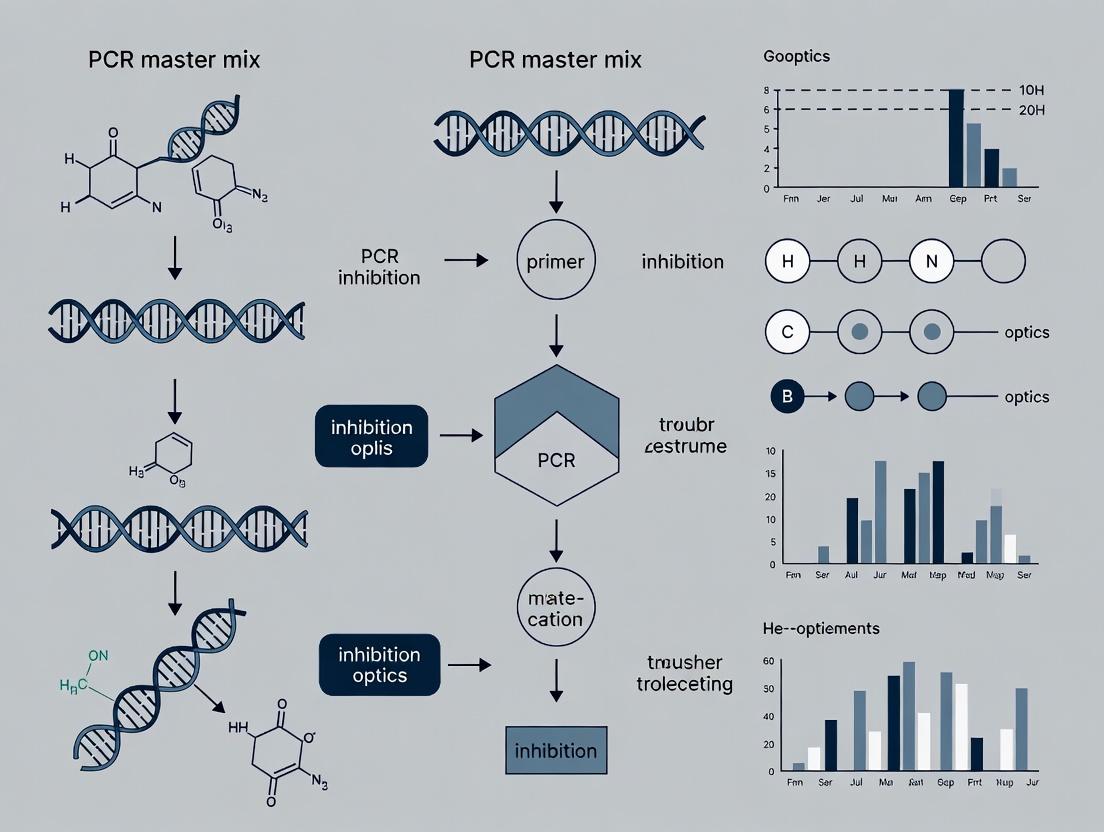
This comprehensive guide addresses PCR master mix inhibition, a critical challenge in molecular diagnostics and drug development.
PCR Inhibition Demystified: A Complete Troubleshooting Guide for Researchers and Drug Developers
Abstract
This comprehensive guide addresses PCR master mix inhibition, a critical challenge in molecular diagnostics and drug development. We explore the fundamental causes of inhibition, from sample-derived contaminants to reagent incompatibilities. The article provides actionable, step-by-step methodologies for detection and prevention, a systematic troubleshooting framework for failed or suboptimal reactions, and advanced validation strategies to ensure robust, reproducible results. Designed for researchers, scientists, and drug development professionals, this resource synthesizes current best practices to optimize assay reliability and data integrity.
Understanding the Enemy: What is PCR Inhibition and Why Does it Happen?
PCR Inhibition Support Center
Welcome, Researcher. This support center is part of a comprehensive thesis on PCR master mix inhibition troubleshooting. The following guides address common inhibition challenges, providing actionable protocols and data to restore amplification efficiency.
Troubleshooting Guides & FAQs
Q1: My PCR reaction failed (no amplicon). My sample is from a complex biological source (e.g., soil, blood, plant tissue). What is the most likely cause and how do I confirm it? A: The most likely cause is the presence of PCR inhibitors co-purified with your target nucleic acid. Common inhibitors include humic acids (environmental samples), heparin (blood), heme (blood), detergents, polyphenols, and polysaccharides (plant tissues).
- Confirmation Protocol: Perform a Spike-In or Dilution Test.
- Set up a standard PCR with your sample DNA.
- Set up a parallel reaction with a known, clean template (e.g., a control plasmid) at a low, constant concentration.
- Set up a third reaction containing BOTH your sample DNA AND the clean control template ("spike-in").
- If the reaction with only your sample fails, but the spike-in reaction also fails or shows dramatically reduced yield for the control amplicon, inhibition is confirmed. The inhibitors are affecting the amplification of the known template.
Q2: How do different inhibitors quantitatively affect PCR efficiency? A: Inhibitors reduce amplification efficiency (E), increase the quantification cycle (Cq), and lower the final yield. The impact varies by inhibitor type and concentration.
Table 1: Quantitative Impact of Common PCR Inhibitors
| Inhibitor | Common Source | Critical Concentration* | Observed Effect (at critical conc.) | Proposed Primary Mechanism |
|---|---|---|---|---|
| Humic Acid | Soil, Sediment | 0.1 µg/µL | ΔCq > +5; Yield drop > 90% | Binds to DNA polymerase, blocks active site |
| Heparin | Blood/Plasma | 0.1 IU/µL | Complete reaction failure | Binds to and denatures DNA polymerase |
| Hematin (Heme) | Blood | 1 µM | ΔCq +3 to +5; Efficiency drop to <70% | Interferes with strand elongation; may degrade DNA |
| Collagen | Tissue | 10 ng/µL | Significant yield reduction | Unknown; may sequester Mg²⁺ ions |
| Polyphenols | Plant Leaf | 0.01% (v/v) | Smearing, no specific product | Bind to nucleic acids/proteins; degrade RNA |
| SDS (Detergent) | Lysis buffers | 0.005% (w/v) | Complete reaction failure | Denatures DNA polymerase |
*Concentration causing a ΔCq shift of >2 cycles in a standard assay.
Q3: What are the definitive protocols to overcome PCR inhibition? A: Implement one or more of the following evidence-based mitigation strategies.
Protocol 1: Sample Dilution
- Principle: Reduces inhibitor concentration below its critical threshold.
- Method: Perform a dilution series of your template DNA (e.g., 1:2, 1:5, 1:10) in nuclease-free water or TE buffer. Amplify each dilution. Optimal results are often seen at moderate dilutions where the inhibitor is diluted but the target DNA remains detectable.
Protocol 2: Inhibitor-Resistant Polymerase Master Mixes
- Principle: Use engineered polymerase blends with enhanced binding affinity or additives that protect the enzyme.
- Method: Compare your failed sample using a standard Taq polymerase mix versus a commercial inhibitor-resistant mix (e.g., designed for direct PCR from blood, soil, or plants). Use the same cycling conditions. A successful reaction with the specialized mix confirms inhibitor-type compatibility.
Protocol 3: Nucleic Acid Clean-up (Spin-Column or Magnetic Bead)
- Principle: Physically separates inhibitors from nucleic acids.
- Method: Re-purify your DNA/RNA using a silica-membrane column or magnetic bead-based kit that includes wash steps with ethanol-containing buffers. Ensure the final elution is in a low-ionic-strength buffer (e.g., TE, water) and not the original lysis buffer.
Protocol 4: Supplemental Additives
- Principle: Additives can bind, sequester, or counteract inhibitors.
- Method: Add one of the following to your master mix and re-amplify:
- BSA (0.1-0.4 µg/µL): Nonspecific protein that binds polyphenols and humics.
- TMA Oxalate (5-10 mM): Chelator for divalent cations in humic acids.
- Betaine (0.5-1.5 M): Reduces secondary structures; can stabilize polymerase.
- Additional MgCl₂ (0.5-2 mM extra): Compensates for Mg²⁺ sequestration by some inhibitors.
The Scientist's Toolkit: Key Research Reagent Solutions
Table 2: Essential Reagents for Inhibition Troubleshooting
| Reagent/Kit | Primary Function in Inhibition Context |
|---|---|
| Inhibitor-Resistant Polymerase Mix | Engineered enzyme/buffer system tolerant to common biological inhibitors. |
| Nucleic Acid Clean-up Kit (Silica/Magnetic) | Removes contaminating salts, proteins, and organic inhibitors post-extraction. |
| Bovine Serum Albumin (BSA), Molecular Biology Grade | Acts as a competitive binder and stabilizer, neutralizing phenolic compounds. |
| Carrier RNA/DNA (e.g., Poly-A, tRNA) | Improves yield during extraction from low-biomass samples; can reduce polymerase inhibition. |
| Internal Amplification Control (IAC) DNA | Distinguishes true target absence from PCR failure due to inhibition. |
| SPUD Assay Primers/Template | A qPCR-based assay specifically designed to detect the presence of inhibitors. |
Mechanistic & Workflow Visualizations
Mechanisms of PCR Inhibition
PCR Inhibition Troubleshooting Workflow
Troubleshooting Guides & FAQs
FAQ 1: Why did my PCR reaction fail to amplify after using a new DNA extraction kit?
- Answer: New extraction kits may use different chemical formulations. Common inhibitors from sample preparation include:
- Phenol/Chloroform Residue: Incomplete removal during organic extraction.
- High Concentrations of EDTA or Citrate: From collection tubes (e.g., blue-top vacutainers), which chelate Mg²⁺ essential for polymerase activity.
- Heme/Hemoglobin: From blood samples, degrading at high temps to form porphyrins that inhibit polymerases.
- Polysaccharides & Humic Acids: From plant/soil samples, co-precipitating with DNA.
- Diagnostic: Perform a dilution series of your template. If amplification recovers at higher dilutions, inhibition is likely. Compare with a known clean template using the same master mix.
FAQ 2: My no-template controls (NTCs) are showing amplification. What environmental or reagent sources could be causing this contamination?
- Answer: NTC amplification indicates contamination of reagents or the environment with target nucleic acids or amplicons. Sources include:
- Aerosols: From previous PCRs opened in the same lab space.
- Contaminated Consumables: Tubes, plates, or tips.
- Contaminated Reagents: Water or master mix components, often from shared reagents.
- Cross-contamination: During sample handling.
- Action: Implement strict unidirectional workflow (pre-PCR, PCR, post-PCR in separate areas). Use UV-treated plastics and dedicated equipment. Aliquot all reagents. Use uracil-DNA glycosylase (UDG) with dUTP in master mix to combat carryover amplicons.
FAQ 3: I suspect my master mix itself is inhibitory. How can I test this, and what reagent components are typical sources?
- Answer: While rare, master mix components can degrade or be formulated sub-optimally. Test by performing a reaction with a known, robust, and clean template at its optimal concentration. If it fails, the issue may be with the mix. Key reagent sources include:
- Degraded or Inactive Enzyme: From improper storage or freeze-thaw cycles.
- Suboptimal MgCl₂ Concentration: Too high can increase non-specific binding; too low reduces enzyme activity.
- Incorrect pH: From buffer degradation or improper formulation.
- Contaminated Nucleotides or Primers.
- Protocol: Perform a master mix component titration experiment (see table and protocol below).
Table 1: Common PCR Inhibitors, Sources, and Threshold Concentrations
| Inhibitor Category | Specific Compound | Common Source | Approximate Inhibitory Concentration in PCR |
|---|---|---|---|
| Blood Components | Hematin | Blood, Tissue Lysates | > 0.1 µM |
| Ion Chelators | EDTA | Collection Tubes, Lysis Buffers | > 0.1 mM |
| Dyes & Pigments | IgG (from Serum) | Blood Samples | > 10 mg/mL |
| Polyanions | Heparin | Plasma Collection Tubes | > 0.1 IU/µL |
| Polysaccharides | Xylan, Dextran Sulfate | Plant, Fecal Samples | > 0.01% (w/v) |
| Humic Substances | Humic Acid | Soil, Sediment | > 0.1 ng/µL |
| Proteins | Collagen | Tissue Samples | Variable |
| Laboratory Chemicals | Phenol | Organic Extraction | > 0.05% (v/v) |
| Detergents | SDS | Lysis Buffers | > 0.005% (w/v) |
Table 2: Master Mix Component Titration Results (Example Experiment)
| Component Tested | Standard Concentration | Tested Range | Optimal Concentration (for this assay) | Impact of Deviation |
|---|---|---|---|---|
| MgCl₂ | 1.5 mM | 0.5 mM - 4.0 mM | 2.0 mM | <1.5mM: Reduced yield; >3.0mM: Increased nonspecific bands |
| dNTPs | 200 µM each | 50 µM - 400 µM | 200 µM | <100µM: Low yield; >300µM: Potential inhibition |
| Polymerase | 0.025 U/µL | 0.005 - 0.05 U/µL | 0.02 U/µL | <0.01 U/µL: Low yield; >0.04 U/µL: No added benefit |
| Primers | 0.2 µM each | 0.05 µM - 1.0 µM | 0.3 µM | <0.1µM: Low yield; >0.5µM: Primer-dimer formation |
Experimental Protocols
Protocol: Master Mix Component Titration for Inhibition Diagnosis Objective: Systematically identify suboptimal or inhibitory reagent concentrations in a PCR master mix.
- Prepare Base Master Mix: Create a large batch excluding the component to be titrated (e.g., MgCl₂).
- Create Titration Series: Aliquot the base mix. Add back the component (e.g., MgCl₂) to create a series of concentrations (e.g., 0.5, 1.0, 1.5, 2.0, 3.0, 4.0 mM). Keep all other components constant.
- Template and Controls: Use a single, well-characterized, inhibitor-free DNA template at a mid-range concentration. Include a negative control (water) for each titration point.
- Amplification: Run PCR using a standardized cycling protocol.
- Analysis: Analyze products by gel electrophoresis and/or qPCR Cq values. Plot yield or Cq against concentration to find the optimum.
Protocol: Standard Addition Method for Sample Inhibition Detection Objective: Quantify the level of inhibition present in an unknown sample.
- Prepare Sample Dilutions: Make a dilution series of the suspected inhibitory sample (e.g., 1:1, 1:5, 1:10, 1:20).
- Spike with Known Target: Add a fixed, known quantity of target DNA (a synthetic control) to each dilution and to a clean water control.
- Amplify: Perform PCR/qPCR on all spiked samples.
- Calculate: Compare the Cq value of the spiked control in the sample to the Cq in clean water. A significant delay (ΔCq > 2-3) indicates inhibition. The dilution at which the ΔCq disappears indicates the required dilution factor for the inhibitor.
Visualizations
Title: PCR Inhibitor Origin Pathways
Title: PCR Inhibition Diagnostic Decision Tree
The Scientist's Toolkit: Key Research Reagent Solutions
| Reagent/Material | Primary Function in Inhibition Troubleshooting |
|---|---|
| Inhibitor-Resistant Polymerase Blends | Engineered polymerases or blends (e.g., with BSAs, single-stranded binding proteins) that withstand common inhibitors like humic acid, heparin, or hematin. |
| Carrier RNA/DNA (e.g., Poly-A, tRNA) | Added during extraction to improve nucleic acid recovery from dilute samples and compete for non-specific inhibitor binding sites. |
| PCR Additives (e.g., BSA, Betaine, DMSO) | Stabilize polymerase, reduce secondary structure, or sequester inhibitors. BSA is particularly effective against phenolics and humics. |
| DNA Binding Silica Columns/Magnetic Beads | Enable multiple wash steps to remove contaminants during extraction, though inhibitors can co-bind. |
| Internal Amplification Control (IAC) | A non-target sequence added to each reaction to distinguish true target negativity from PCR failure due to inhibition. |
| UDG (Uracil-DNA Glycosylase) + dUTP | Enzymatic system to prevent carryover contamination from previous amplicons, a key environmental inhibitor source. |
| Alternative Lysis/Binding Buffers | Specialized buffers (e.g., with PTB or guanidinium thiocyanate) designed to dissociate inhibitors from target nucleic acids. |
| qPCR Inhibition Reference Dye | A passive dye (not probe-based) to detect irregularities in reaction kinetics caused by inhibitors affecting polymerase speed. |
Troubleshooting Guides & FAQs: PCR Master Mix Inhibition
FAQ 1: How can I confirm that my sample contains PCR inhibitors like hemoglobin or heparin?
- Answer: Perform a spike-in or dilution experiment. Add a known quantity of a control template (e.g., a synthetic oligonucleotide with a primer binding site) to both your suspected sample and a clean buffer. A significant reduction in amplification efficiency (higher Ct value or failure) in the sample indicates inhibition. Serial dilution of the sample often reduces inhibitor concentration and improves amplification, which is a classic sign of inhibition.
FAQ 2: What is the most effective method to remove humic acids from environmental DNA samples prior to PCR?
- Answer: Use a combination of specialized silica-based purification columns designed for environmental samples (e.g., kits with inhibitors removal technology) and gel electrophoresis followed by excision and extraction of high-molecular-weight DNA. Humic acids often co-purify with DNA, and standard kits may not suffice. Protocols often include a wash step with pre-cooled 5% PVPP (polyvinylpolypyrrolidone) before purification or the use of added bovine serum albumin (BSA) in the PCR mix to bind residual inhibitors.
FAQ 3: My sample is blood. How do I mitigate hemoglobin inhibition in PCR?
- Answer: Optimize your DNA extraction first. Use proteinase K digestion thoroughly and include multiple wash steps with ethanol-based buffers. In the PCR setup, include one or more of the following in your master mix: 400-800 µg/mL of Bovine Serum Albumin (BSA) or 0.1-1 U/µL of single-stranded DNA binding protein (SSB). These proteins bind hemoglobin and other inhibitors, freeing the polymerase. Also, consider diluting the template DNA.
FAQ 4: I suspect heparin carryover from blood collection tubes. What's the solution?
- Answer: Heparin is a potent inhibitor that is difficult to remove post-extraction. The primary solution is preventive: use EDTA or citrate tubes for sample collection if PCR is anticipated. If heparinized samples are unavoidable, treat the purified nucleic acids with heparinase I (e.g., 0.1 U/µg nucleic acid, incubate at 25°C for 2 hours) prior to PCR. Alternatively, use a polymerase shown to be more resistant to heparin, and increase magnesium chloride concentration by 0.5-1 mM.
FAQ 5: How do I choose an additive to combat an unknown inhibitor?
- Answer: Set up a systematic additive screen. Prepare your standard PCR master mix and aliquot it. To each aliquot, add a different potential inhibitory counteragent at a common starting concentration. Run the reactions with your sample and a positive control. Compare Ct values and amplicon yields.
Table 1: Common PCR Inhibitors & Countermeasures
| Inhibitor | Common Source | Primary Mechanism | Recommended Countermeasure | Typical Effective Concentration in PCR |
|---|---|---|---|---|
| Hemoglobin | Whole blood, lysates | Binds to polymerase, catalyzes oxidative degradation of dNTPs | Add BSA or SSB protein | BSA: 400-800 µg/mL; SSB: 0.1-1 U/µL |
| Heparin | Plasma, serum (from green-top tubes) | Binds to polymerase, competes with DNA template | Use heparinase I pre-treatment; Increase [Mg2+] | Heparinase I: 0.1 U/µg DNA; Mg2+: +0.5-1.0 mM |
| Humic Acids | Soil, sediment, plants | Mimics DNA, intercalates, inhibits polymerase | Use inhibitor-removal spin columns; Add BSA or T4 Gene 32 protein | BSA: 400-1000 µg/mL |
| Urea / Guanidine | Chaotropic lysis buffers | Denatures polymerase, disrupts hydrogen bonding | Ensure complete removal via ethanol washing; Dilute template | N/A (Remove during extraction) |
| Polysaccharides | Plants, bacteria | Entraps DNA, increases viscosity | Dilution; Use high-salt extraction buffers; Add PVP | 1-2% PVP in extraction buffer |
| Calcium ions | Serum, some tissues | Stabilizes DNA, reduces denaturation efficiency | Use chelators (EDTA, EGTA) in extraction; Ensure adequate Mg2+ excess | 0.1-0.5 mM EDTA in master mix |
Experimental Protocol: Additive Screening for Inhibition Relief
Objective: To identify the most effective additive for restoring PCR amplification from an inhibited sample. Materials: Inhibited DNA sample, positive control DNA, standard PCR master mix, primer set, tested additives (e.g., BSA, SSB, T4 GP32, DMSO, Betaine), thermal cycler. Method:
- Prepare a 2X concentrated stock solution of each additive in nuclease-free water.
- For each additive, create a master mix aliquot: combine 12.5 µL of 2X PCR mix, 1 µL each of forward and reverse primer (10 µM), 1 µL of positive control DNA, and 7.5 µL of additive stock. This yields a 22 µL volume with 1X final additive concentration.
- Prepare a negative control (water instead of additive) and a "no additive" control (water instead of additive, but with inhibited sample in step 4).
- Add 3 µL of your inhibited DNA sample to each reaction tube from step 2. For the positive control tube, add 3 µL of nuclease-free water.
- Run PCR using standard cycling conditions for your target.
- Analyze results via gel electrophoresis or qCt analysis. The additive yielding the lowest Ct (qPCR) or brightest band (gel) with the inhibited sample is the most effective.
The Scientist's Toolkit: Key Reagent Solutions
| Reagent / Material | Primary Function in Inhibition Troubleshooting |
|---|---|
| Bovine Serum Albumin (BSA) | Binds to and sequesters a wide range of inhibitors (hemoglobin, phenolics, humics), freeing Taq polymerase. |
| Single-Stranded Binding Protein (SSB) | Stabilizes single-stranded DNA, prevents renaturation, and can displace inhibitors bound to DNA or polymerase. |
| T4 Gene 32 Protein | Similar to SSB, effective against polyphenolic inhibitors like humic acids. |
| Polyvinylpyrrolidone (PVP) | Binds polyphenols and polysaccharides during DNA extraction, preventing co-purification. |
| Heparinase I | Enzyme that specifically degrades heparin into non-inhibitory fragments. |
| Inhibitor Removal Columns | Specialized silica membranes with wash buffers designed to remove common environmental and biological inhibitors. |
| DMSO | Reduces secondary structure in DNA templates; can help mitigate mild inhibition by improving polymerase processivity. |
| Betaine | A chemical chaperone that evens out DNA stability; can help with complex templates and may reduce inhibitor impact. |
Visualizations
Technical Support Center: PCR Inhibition Troubleshooting
This technical support center is part of a broader thesis research project on PCR master mix inhibition mechanisms and solutions. The guides below address specific experimental issues related to inhibitors targeting core PCR components.
Troubleshooting Guides & FAQs
Q1: My PCR reaction shows complete failure (no amplicon) when using a crude biological sample. What is the most likely cause and how can I confirm it? A1: Complete failure often points to potent inhibition of Taq DNA polymerase or chelation of essential magnesium cofactors. To confirm:
- Perform a spike-in control experiment. Run a parallel reaction with a known, clean template DNA spiked into your suspect sample. If this also fails, inhibition is confirmed.
- Perform a dilution series of your sample template. Recovery of amplification at higher dilutions is indicative of inhibitor presence.
Q2: I observe faint, non-specific bands or a smeared ladder. Could this be inhibition-related? A2: Yes. Partial inhibition can reduce polymerase fidelity and processivity. This often results from:
- Limited dNTP availability due to contaminants competing as substrates.
- Suboptimal Mg2+ concentration from chelation, affecting enzyme fidelity.
- Solution: Increase Taq polymerase concentration by 1.5-2X and optimize MgCl2 concentration in 0.5 mM increments.
Q3: My qPCR shows a significant increase in Cq value and reduced amplification efficiency with certain sample types. Which inhibitor targets should I suspect? A3: This pattern is classic for partial inhibition. Primary suspects are:
- dNTP competitors/analogs (e.g., from residual drug metabolites).
- Moderate magnesium chelators (e.g., citrate, EDTA from lysis buffers).
- Proteins that bind nonspecifically to polymerase or template.
- Protocol: Use a master mix containing BSA (0.1-0.5 µg/µL) or T4 Gene 32 Protein (0.5-1 µM) to outcompete non-specific binding.
Q4: What are the definitive experiments to distinguish between polymerase inhibition, dNTP interference, and magnesium chelation? A4: A systematic component rescue experiment is required.
Experimental Protocol: Inhibition Mechanism Diagnostic Objective: To identify the primary target of an unknown PCR inhibitor. Master Mix (1X final): 1X Buffer, 0.2 mM each dNTP, 0.5 µM primers, 0.025 U/µL Taq Polymerase, 1.5 mM MgCl2, template. Setup: Prepare 4 reaction sets. In each set, add the suspected inhibitor at the problematic concentration.
- Set 1 (Control): Standard master mix.
- Set 2 (Polymerase Rescue): Increase Taq polymerase concentration stepwise (2X, 5X).
- Set 3 (dNTP Rescue): Increase dNTP concentration stepwise (2X, 4X).
- Set 4 (Mg2+ Rescue): Increase MgCl2 concentration stepwise (2 mM, 3.5 mM, 5 mM). Interpretation: Compare yield (gel electrophoresis) or Cq (qPCR). Recovery in a specific set pinpoints the target.
Quantitative Data on Common Inhibitors
Table 1: Inhibition Thresholds of Common Contaminants in PCR
| Inhibitor Class | Example Compound | Typical Source | Critical Inhibition Concentration* | Primary Interference Target |
|---|---|---|---|---|
| Divalent Cation Chelators | EDTA | Lysis buffers, blood collection tubes | > 0.1 mM | Mg2+ cofactor |
| Polysaccharides | Heparin | Blood, tissue samples | > 0.1 IU/µL | Polymerase binding |
| Phenolic Compounds | Humic Acid | Soil, plants | > 0.5 ng/µL | Polymerase & dNTPs |
| Proteins | Collagen | Tissue samples | > 0.5 mg/mL | Polymerase binding |
| Lipids | Myristic Acid | Milk, fatty tissue | > 0.2% v/v | Polymerase activity |
| Dye-based Reagents | Bromophenol Blue | Gel loading buffers | > 0.0025% | Polymerase & Mg2+ |
| Ionic Detergents | Sodium Dodecyl Sulfate (SDS) | Lysis buffers | > 0.002% | Polymerase denaturation |
| Hemeproducts | Hematin, Hemoglobin | Blood, tissue | > 1 µM | Polymerase, dNTPs, Mg2+ |
| Urea | Urea | Urine samples | > 10 mM | Polymerase denaturation |
| Calcium Ions | CaCl2 | Some buffer systems | > 0.5 mM | dNTP competitor (for Mg2+) |
*Concentration in the final PCR reaction. Thresholds can vary based on polymerase type and buffer composition.
Table 2: Efficacy of Common Remediation Strategies
| Remediation Strategy | Typical Concentration/Amount | Effective Against Inhibitor Class(es) | Potential Drawback |
|---|---|---|---|
| Sample Dilution | 1:5 to 1:100 | All (if dilution > inhibition threshold) | Reduces target DNA concentration |
| Polymerase Increase | 2X to 5X standard | Proteins, polysaccharides, mild denaturants | Increases cost, may increase non-specific product |
| MgCl2 Increase | +0.5 to +2.5 mM | Chelators (EDTA), heme products | Reduces fidelity, alters primer stringency |
| Additive: BSA | 0.1 - 0.5 µg/µL | Phenolics, proteins, humic acids, heparin | May interfere with downstream applications |
| Additive: T4 GP32 | 0.5 - 1 µM | Proteins, complex templates | High cost |
| Additive: Formamide | 1-3% v/v | Polysaccharides, GC-rich secondary structure | Inhibits some polymerases |
| Additive: Betaine | 0.5 - 1.5 M | Hematin, urea, salt, GC-rich templates | Optimize concentration required |
| Purification: Silica-column | N/A | Hemoglobin, urea, dyes, salts | DNA yield loss, not for large fragments |
| Purification: PVPP/Chelex | 1-5% w/v | Humic acids, polyphenols, heme | Requires extra centrifugation step |
Experimental Protocols
Protocol 1: Standard Inhibition Susceptibility Test Purpose: To test a new polymerase or master mix formulation's resilience to inhibitors.
- Prepare a standard master mix with the polymerase system under test.
- Aliquot the mix into separate tubes.
- Spike each tube with a serial dilution of a standardized inhibitor (e.g., hematin, heparin, humic acid).
- Add a constant amount of clean, control template (e.g., lambda DNA).
- Run PCR. Analyze via gel electrophoresis or qPCR.
- Plot Amplicon Yield or ΔCq vs. Inhibitor Concentration to determine the IC50.
Protocol 2: Chelator Challenge & Magnesium Titration Purpose: To determine the effective Mg2+ concentration in the presence of a chelating inhibitor.
- Prepare a master mix without MgCl2.
- Aliquot the mix into a series of tubes (e.g., 8 tubes).
- Add the suspected chelating sample/inhibitor to all tubes.
- Add a MgCl2 gradient (e.g., from 0.5 mM to 5.0 mM in 0.5 mM steps) to the tube series.
- Run PCR. The optimal Mg2+ band will shift to a higher concentration compared to a no-inhibitor control.
Diagrams
Title: Three Primary Targets of PCR Inhibitors
Title: PCR Inhibition Diagnosis Workflow
The Scientist's Toolkit: Research Reagent Solutions
Table 3: Essential Reagents for Inhibition Research & Troubleshooting
| Reagent | Purpose/Function in Inhibition Studies | Example Product/Note |
|---|---|---|
| Inhibitor Standards | Provide consistent, known quantities of inhibitors for challenge experiments. | Hematin (from bovine), Humic Acid (sodium salt), Heparin (sodium salt). |
| Resilient Polymerases | Engineered enzymes with higher tolerance to common inhibitors. | Taq HS, Tth, or recombinant polymerases with added binding domains. |
| PCR Additives | Compounds added to master mix to counteract specific inhibition mechanisms. | BSA (non-acetylated), Betaine, Formamide, T4 Gene 32 Protein. |
| Chelator-Resistant Mg Salts | Magnesium compounds less susceptible to chelation. | Mg(OAc)2 sometimes used as alternative to MgCl2. |
| Inhibition-Removal Kits | Specialized purification columns for difficult samples. | OneStep PCR Inhibitor Removal Kit (Zymo), PowerClean Pro (Qiagen). |
| Internal Control DNA/Plasmid | A non-target sequence co-amplified to distinguish global inhibition from target-specific failure. | Should be of similar amplicon length and GC content. |
| qPCR Master Mix with ROX | Dye for well-factor normalization; some mixes also contain inhibitor-tolerant polymers. | Applied Biosystems TaqMan Environmental Master Mix. |
| Gradient Thermal Cycler | Essential for optimizing annealing temp and, crucially, Mg2+ concentration. | Required for Protocol 2 (Chelator Challenge). |
The Clinical and Research Consequences of Unchecked Inhibition.
Troubleshooting Guide & FAQs for PCR Master Mix Inhibition
This support center addresses common issues related to PCR inhibition, a critical failure point with significant downstream consequences for clinical diagnostics and research validity. Unchecked inhibition leads to false negatives, erroneous quantitative data, and compromised therapeutic development.
Frequently Asked Questions (FAQs)
Q1: What are the primary clinical consequences of an undetected inhibited PCR reaction? A1: In clinical diagnostics, particularly for low-abundance targets (e.g., sepsis, viral load monitoring), inhibition causes false-negative results. This can delay correct diagnosis and treatment, directly impacting patient outcomes. In oncology, inhibited cfDNA assays can underestimate tumor burden or miss minimal residual disease.
Q2: How does inhibition skew research data in drug development? A2: Inhibition artificially lowers gene expression levels or copy numbers in qPCR, leading to incorrect fold-change calculations. This invalidates dose-response studies for novel therapeutics, misguides target validation, and wastes resources on false leads. Unreliable PCR data compromises preclinical data packages submitted for regulatory approval.
Q3: My amplification curves show late Ct values and reduced endpoint fluorescence. Is this inhibition? A3: These are classic signs of inhibition. Inhibitors reduce the effective polymerase activity or interfere with fluorescence detection, causing delayed amplification (higher Ct) and lower plateau fluorescence (RFU) compared to uninhibited controls. You must validate with an internal positive control (IPC).
Q4: What are the most common inhibitors in biological samples? A4: Common inhibitors vary by sample type:
- Blood/Biopsies: Hemoglobin, heparin, IgG.
- FFPE Tissues: Formalins, porphyrins.
- Plant/Microbial: Polysaccharides, polyphenols, humic acids.
- Environmental: Heavy metals, soil particulates.
Q5: How can I systematically test for and identify the source of inhibition in my workflow? A5: Implement a diagnostic dilution series and spiking experiment.
Experimental Protocol: Diagnostic Dilution & Spiking Assay
Objective: To confirm inhibition and pinpoint its source (sample vs. reagent).
Materials:
- Test sample (e.g., extracted nucleic acid).
- Known inhibitor-free control DNA (at a moderate copy number, e.g., 10^4 copies/µL).
- Your standard PCR master mix.
- Nuclease-free water.
Method:
- Prepare a 1:5 and 1:25 dilution of your test sample nucleic acid in nuclease-free water.
- Set up three reaction groups in triplicate:
- Group A (Sample Dilution): Master mix + Undiluted, 1:5, and 1:25 test sample.
- Group B (Spike-In Control): Master mix + Nuclease-free water (no template control, NTC).
- Group C (Spike-In Test): Master mix + Spiked Undiluted, 1:5, and 1:25 test sample. Spike each by adding a constant, low volume of the control DNA.
- Run PCR/qPCR.
- Analysis:
- If Ct improves with dilution in Group A, inhibition is present in the original sample.
- Compare Group B vs. Group C. If the spiked control DNA amplifies poorly in the test sample background (C) versus in water (B), the inhibition originates from the sample. If it amplifies normally, the master mix or primers may be the issue.
Table 1: Impact of Common Inhibitors on qPCR Efficiency
| Inhibitor (at Critical Concentration) | ∆Ct (Delay) | Apparent Efficiency Loss | Primary Mechanism |
|---|---|---|---|
| Hemoglobin (0.5 mg/mL) | +4.2 cycles | ~75% | Polymerase binding |
| Heparin (0.1 IU/µL) | +6.8 cycles | ~85% | Nucleic acid binding |
| Humic Acid (1 ng/µL) | +3.5 cycles | ~70% | Fluorescence quenching |
| IgG (2 mg/mL) | +2.1 cycles | ~60% | Non-specific binding |
| SDS (0.005%) | Complete failure | ~100% | Enzyme denaturation |
Table 2: Efficacy of Inhibition Mitigation Strategies
| Mitigation Method | Typical Ct Recovery | Notes / Trade-offs |
|---|---|---|
| Sample Dilution (1:10) | 2-4 cycles | Risk of losing low-abundance targets. |
| Column-Based Cleanup | 3-6 cycles | Potential nucleic acid loss (up to 50%). |
| Polymerase Blends | 1-3 cycles | Specific to polymerase-binding inhibitors. |
| Bovine Serum Albumin (BSA 0.1 µg/µL) | 1-4 cycles | Effective against polyphenols, humics. |
| Alternative Lysis/Extraction Kit | 4-8 cycles | Addresses source; highest efficacy. |
The Scientist's Toolkit: Research Reagent Solutions
| Reagent / Material | Function in Overcoming Inhibition |
|---|---|
| Inhibitor-Robust Polymerase Blends | Engineered enzymes or blends resistant to binding by common inhibitors (e.g., heparin, IgG). |
| Carrier RNA/DNA | Added during extraction to compete for inhibitor binding, improving nucleic acid recovery. |
| Polymerase Enhancers (e.g., T4 Gene 32 Protein) | Stabilizes single-stranded DNA, improving polymerase processivity in suboptimal conditions. |
| Internal Positive Control (IPC) | Exogenous control spiked into each reaction to distinguish true target absence from inhibition. |
| Magnetic Bead-Based Cleanup Kits | Efficient removal of salts, proteins, and organic compounds post-extraction. |
Diagrams
Proactive Prevention and Detection: Best Practices for Robust PCR Setup
Technical Support Center: Troubleshooting Nucleic Acid Extraction for PCR
FAQs & Troubleshooting Guides
Q1: My qPCR reactions show poor amplification efficiency and high Cq values. Could this be due to inhibitors carried over from the nucleic acid extraction?
A: Yes, this is a common issue. Residual guanidinium salts, phenols, ethanol, or heparin from extraction kits are potent PCR inhibitors. Our research, as part of our PCR master mix inhibition thesis, shows that even 0.01% (v/v) carryover of phenol can reduce PCR efficiency by over 40%. Ensure thorough washing and complete drying of silica membranes or magnetic beads. For ethanol carryover, consider a final wash with 80% acetone, which evaporates more completely.
Q2: I am getting false-positive signals in my no-template controls (NTCs). What extraction-related factors could cause this?
A: Amplicon or plasmid contamination from previous PCR runs is the primary suspect (carryover contamination). This can occur via aerosols or contaminated surfaces/reagents. Key solutions include:
- Physical Separation: Perform pre-PCR (extraction, master mix prep) and post-PCR (analysis) in separate, dedicated rooms.
- Enzymatic Decontamination: Use Uracil-DNA Glycosylase (UDG) or similar systems in your master mix.
- Protocol Optimization: Implement thorough bench decontamination with 10% bleach or DNA degradation solutions between handling steps.
Q3: My nucleic acid yields are consistently low, leading to insufficient template for downstream PCR. How can I optimize this?
A: Low yield often stems from suboptimal lysis or binding conditions.
- Tissue Samples: Increase mechanical disruption (e.g., bead beating) and ensure complete proteinase K digestion. Adjust lysis time and temperature per sample type.
- Biofluids (e.g., plasma): Increase input volume and use carrier RNA (like poly-A) during binding to improve recovery of low-concentration viral RNA/DNA.
- Formalin-Fixed Samples: Extended heating and specialized de-crosslinking buffers are required to reverse formaldehyde modifications.
Q4: How does the choice of extraction method (spin-column vs. magnetic beads) impact inhibitor removal and PCR performance?
A: Both methods can be optimized for high purity. Our comparative data is summarized below:
Table 1: Comparison of Nucleic Acid Extraction Methods
| Parameter | Silica Spin-Column | Magnetic Beads | Notes |
|---|---|---|---|
| Inhibitor Removal | High (multiple wash steps) | High (flexible wash regimes) | Bead methods allow more customizable washes. |
| Throughput | Low to Medium (24-96 samples) | High (96-384 samples) | Beads are ideal for automation. |
| Yield Consistency | High | Very High | Bead binding is less prone to user variation. |
| Risk of Cross-Contamination | Low (if caps are closed) | Very Low (no aerosol from opening tubes) | Bead separation minimizes well-to-well carryover. |
| Elution Volume Flexibility | Limited (≥20 µL typical) | High (≥2 µL possible) | Beads allow elution in very small volumes for concentrated yields. |
Q5: Are there specific steps in the extraction workflow most critical for preventing carryover?
A: Absolutely. The post-elution handling is high-risk. Never open or handle eluted DNA/RNA in the same area where amplified PCR products are handled. Always use filter tips and change gloves frequently. The workflow below details the critical separation.
Diagram Title: Physical Separation Workflow to Prevent PCR Carryover
Detailed Experimental Protocol: Assessing Inhibitor Carryover
Title: Protocol for Quantifying PCR Inhibition from Residual Extraction Reagents.
Objective: To measure the impact of common extraction kit reagent carryover on qPCR amplification efficiency.
Materials: See "Research Reagent Solutions" table below. Method:
- Spike-In Experiment: Prepare a series of clean, known-concentration gDNA solutions (e.g., 10^4 copies/µL).
- Inhibitor Spiking: Spike these identical gDNA solutions with serial dilutions of a suspected carryover reagent (e.g., Guanidinium Thiocyanate: 0.001%, 0.01%, 0.1% v/v; Ethanol: 0.1%, 0.5%, 1% v/v). Include a no-inhibitor control.
- qPCR Setup: Run all samples in quadruplicate using a robust, validated qPCR assay for the target gene. Use a master mix known to be susceptible to inhibitors for a sensitive test.
- Data Analysis: Calculate mean Cq for each inhibitor concentration. Plot Cq shift (ΔCq) relative to the clean control against inhibitor concentration. Calculate PCR efficiency from standard curves run with each inhibitor level.
Table 2: Typical Results from Inhibitor Carryover Experiment
| Inhibitor | Concentration (v/v) | Mean ΔCq (vs. Control) | % Reduction in Amplification Efficiency | Observation |
|---|---|---|---|---|
| Guanidinium Thiocyanate | 0.001% | +0.5 | 5% | Minimal impact |
| 0.01% | +2.1 | 25% | Significant inhibition | |
| 0.1% | Undetermined | ~100% | Complete inhibition | |
| Ethanol | 0.5% | +1.8 | 20% | Significant inhibition |
| 1.0% | +3.5 | 45% | Severe inhibition | |
| Phenol | 0.001% | +3.0 | 40% | Severe even at low levels |
The Scientist's Toolkit: Research Reagent Solutions
Table 3: Essential Materials for Optimized Nucleic Acid Extraction
| Item | Function | Key Consideration for Minimizing Carryover |
|---|---|---|
| Silica Membranes / Magnetic Beads | Bind nucleic acids via salt-dependent charge interaction. | Quality determines binding capacity and inhibitor wash-away efficiency. |
| Lysis Buffer (w/ Guanidinium salts) | Denatures proteins, inactivates RNases/DNases, disrupts cells. | Primary inhibitor source. Must be thoroughly removed in washes. |
| Wash Buffers (w/ Ethanol) | Removes salts, proteins, and other contaminants. | Ethanol carryover is common. Ensure complete evaporation/drying step. |
| Nuclease-Free Water | Elution of purified nucleic acids. | pH should be slightly alkaline (pH 8-8.5) for DNA stability and elution efficiency. |
| Carrier RNA | Improves yield of low-concentration viral RNA. | Must be purified and free of DNA contaminants to avoid false positives. |
| Proteinase K | Digests proteins and nucleases for efficient lysis. | Requires optimal temperature (56°C) and time; heat-inactivate if needed. |
| UDG / UNG Enzyme | Incorporated into master mix to degrade carryover amplicons. | Critical for diagnostic labs. Requires dUTP in prior PCRs. |
| Nucleic Acid Decontaminant (e.g., bleach) | Degrades contaminating DNA/RNA on surfaces. | Use 10% fresh dilution for bench cleaning; incompatible with metal surfaces. |
Troubleshooting Guides & FAQs
FAQ 1: Why did my PCR fail to amplify from a complex genomic DNA template, even with optimized cycling conditions?
- Issue: Complex samples (e.g., soil, blood, plant extracts) often contain inhibitors like humic acids, polyphenols, or heparin that co-purify with the DNA.
- Solution: Reformulate your master mix with additives known to counteract inhibition.
- BSA (Bovine Serum Albumin): Add at 0.1-0.5 µg/µL. BSA acts as a "sink" for inhibitors by binding them and sequestering them away from the polymerase.
- Betaine: Use at a final concentration of 0.5-1.5 M. Betaine reduces secondary structure in DNA and stabilizes the polymerase, often enhancing specificity and yield in difficult samples.
- Protocol: Prepare a test master mix series with varying concentrations of BSA (0, 0.1, 0.3, 0.5 µg/µL) and betaine (0, 0.5, 1.0, 1.5 M). Run identical reactions with the problematic template and a clean control template. Analyze yield via gel electrophoresis.
FAQ 2: My PCR consistently produces weak or no product for a high-GC (>70%) target. How can master mix additives help?
- Issue: High GC content leads to stable secondary structures that impede primer annealing and polymerase progression.
- Solution: Incorporate GC enhancers and combination additives.
- GC Enhancers (e.g., DMSO, Glycerol): Add DMSO at 2-10% (v/v). These agents interfere with hydrogen bonding, lowering the melting temperature (Tm) of DNA strands and helping to denature stubborn secondary structures.
- Combination Approach: Use a mix of DMSO (5%), betaine (1 M), and a specialized high-GC polymerase for a synergistic effect.
- Protocol: Set up a gradient PCR with a temperature range around the calculated Tm (e.g., Tm ± 5°C). Use a master mix containing 5% DMSO and 1 M betaine. Compare results to a standard master mix.
FAQ 3: I am getting non-specific amplification (primerdimers, multiple bands) in my multiplex or low-template PCR. Which additive can improve specificity?
- Issue: Non-specific priming is common in reactions with low annealing stringency or high primer concentration.
- Solution: Utilize additives that increase primer specificity.
- Betaine: At 1.0-1.5 M, it equalizes the contribution of GC and AT base pairs to duplex stability, allowing for more accurate Tm calculation and stringent annealing.
- Formamide (1-3%): A potent denaturant that can be added to increase stringency and reduce non-specific binding, particularly in multiplex assays.
- Protocol: Titrate betaine from 0.5 M to 1.5 M in 0.25 M increments. Perform PCR with a slightly increased annealing temperature (e.g., +2°C above calculated Tm). Analyze products on a high-resolution gel or capillary electrophoresis.
FAQ 4: What is the recommended approach for systematically testing master mix additives for a novel or problematic assay?
- Issue: Unknown inhibition or difficult amplicon characteristics require a structured optimization.
- Solution: Follow a factorial experimental design testing individual and combined additives.
- Protocol:
- Identify Variables: Choose additives relevant to your suspected issue (e.g., BSA for inhibition, DMSO for GC-richness).
- Prepare Additive Stocks: Make sterile, molecular-grade stock solutions.
- Set Up Test Matrix: Use a 96-well plate to test combinations (e.g., BSA at 0/0.4 µg/µL crossed with DMSO at 0/5%/10%).
- Run Reactions: Use identical template and cycling conditions.
- Analyze: Quantify yield (qPCR) or assess specificity (gel). Select the condition yielding the highest specific product with the lowest background.
Table 1: Common PCR Additives, Mechanisms, and Working Concentrations
| Additive | Primary Function | Mechanism of Action | Typical Working Concentration | Best For |
|---|---|---|---|---|
| BSA | Inhibitor Chelation | Binds to and neutralizes common PCR inhibitors (phenolics, humics, SDS). | 0.1 - 0.5 µg/µL | Complex templates (blood, soil, plant). |
| Betaine | GC-Rich & Specificity Enhancer | Reduces DNA secondary structure; equalizes Tm of GC/AT pairs. | 0.5 - 1.5 M | GC-rich targets, multiplex PCR, improves specificity. |
| DMSO | GC-Rich Enhancer | Disrupts base pairing, lowers DNA Tm, prevents secondary structure. | 2 - 10% (v/v) | Very high GC content, long amplicons. |
| Glycerol | Stabilizer & Enhancer | Stabilizes polymerase, lowers DNA Tm, improves efficiency. | 5 - 15% (v/v) | Long-range PCR, some inhibitor tolerance. |
| Formamide | Stringency Enhancer | Strong denaturant that increases annealing stringency. | 1 - 3% (v/v) | Reducing non-specific bands, multiplex PCR. |
Table 2: Example Optimization Results for a Difficult GC-Rich Target
| Condition | BSA (µg/µL) | Betaine (M) | DMSO (%) | Yield (ng/µL) | Specificity (1-5 Scale) |
|---|---|---|---|---|---|
| 1. No Additives | 0 | 0 | 0 | 2.1 | 2 (Multiple bands) |
| 2. DMSO Only | 0 | 0 | 5 | 8.5 | 3 (Smear present) |
| 3. Betaine Only | 0 | 1.0 | 0 | 12.7 | 4 (Weak non-specific) |
| 4. DMSO + Betaine | 0 | 1.0 | 5 | 35.2 | 5 (Single sharp band) |
| 5. DMSO + Betaine + BSA | 0.4 | 1.0 | 5 | 34.8 | 5 |
Experimental Protocols
Protocol: Systematic Additive Screening for Inhibition Relief Objective: To identify the optimal additive combination for amplifying target DNA from an inhibitor-containing sample. Materials: See "The Scientist's Toolkit" below. Method:
- Prepare a 2X concentrated stock of your chosen core PCR master mix (polymerase, buffer, dNTPs, Mg2+).
- In a 96-well plate, create additive stock solutions in water to yield the desired final concentrations when mixed 1:1 with the 2X master mix.
- For each test well, combine 10 µL of 2X master mix with 8 µL of the additive solution.
- Add 1 µL of template (problem sample) and 1 µL of primer mix to each well.
- Run the thermocycling protocol standard for your target.
- Analyze 5 µL of each product by agarose gel electrophoresis. Use a clean template control for comparison.
- Quantify band intensity using imaging software to determine the optimal condition.
Protocol: Determination of Optimal Betaine Concentration for Specificity Objective: To titrate betaine to eliminate primerdimers in a sensitive assay. Method:
- Prepare a standard PCR master mix without betaine.
- Aliquot the master mix into 5 tubes. Add betaine from a 5M stock to achieve final concentrations of 0 M, 0.5 M, 0.75 M, 1.0 M, and 1.25 M.
- Add template and primers to each tube. Include a no-template control (NTC) for each betaine concentration.
- Perform PCR.
- Run products on a high-resolution 3-4% agarose or agarose-acrylamide composite gel.
- The optimal concentration maximizes target band intensity while completely eliminating primerdimer in the NTC.
Diagrams
Title: Decision Tree for PCR Additive Selection
Title: BSA Mechanism: Inhibitor Binding & Polymerase Protection
The Scientist's Toolkit: Research Reagent Solutions
| Item | Function in Master Mix Optimization |
|---|---|
| Molecular-Grade BSA | A non-enzymatic protein that binds inhibitors, preventing them from inactivating the DNA polymerase. Essential for dirty samples. |
| PCR-Betaine (5M Stock) | A zwitterionic osmolyte that reduces DNA secondary structure and homogenizes melting temperatures, crucial for GC-rich targets and multiplexing. |
| Ultra-Pure DMSO | A chemical denaturant that helps unwind high-GC DNA regions by interfering with hydrogen bonding, facilitating primer annealing and elongation. |
| Hot-Start DNA Polymerase | An engineered polymerase inactive at room temperature, preventing primerdimer formation and non-specific amplification during reaction setup. |
| MgCl₂ Solution (25-50mM) | The cofactor for DNA polymerase; its concentration is critical for primer annealing, specificity, and yield. Often needs optimization with additives. |
| dNTP Mix (10mM each) | The building blocks (A, T, C, G) for DNA synthesis. Balanced concentrations are vital for fidelity and efficient extension. |
| Nuclease-Free Water | The solvent for all reactions; must be free of nucleases and contaminants to prevent degradation of primers/template and introduce inhibition. |
| Inhibitor-Rich Control DNA | A standardized problematic template (e.g., extracted from blood or soil) used as a positive control when testing inhibitory relief strategies. |
Troubleshooting Guides & FAQs
Frequently Asked Questions
Q1: Why is my IAC failing to amplify even when my target reaction is successful? A: This typically indicates an issue with the IAC design or concentration. The IAC amplicon may be too long, or its primer-binding sites may have secondary structure. The concentration of the IAC template may also be too low to consistently amplify. Redesign the IAC with a shorter amplicon (100-150 bp) and optimize its concentration in a titration series.
Q2: My IAC consistently amplifies, but my target is negative. How do I know if this is a true negative or inhibition? A: A consistently amplifying IAC confirms that the master mix and thermocycler conditions were functional. If the IAC Ct value is stable and within its expected range across samples (including the negative control), the target negative result is likely a true negative, not inhibition. Compare the IAC Ct in the no-template control (NTC) to the sample. A significant delay (> 3 Ct) in the sample suggests partial inhibition.
Q3: How do I choose between a competitive and non-competitive IAC design? A: Use the table below to decide based on your experimental goals.
| Feature | Competitive IAC | Non-Competitive IAC |
|---|---|---|
| Template | Same primer sites as target, different probe/amplicon | Unique primer sites, different probe |
| Resource Competition | Yes, competes with target for primers/dNTPs | No, uses dedicated primers |
| Primary Function | Monitors amplification efficiency; sensitive to reaction kinetics | Monitors presence of inhibitors; simpler validation |
| Best For | Quantification assays (qPCR), where efficiency is critical | Qualitative diagnostics, presence/absence testing |
| Multiplex Complexity | High (risk of primer dimer) | Lower |
Q4: What is an acceptable variation in IAC Ct values across a plate? A: Variation depends on the IAC type and master mix. For a well-optimized assay, expect the following ranges:
| IAC Type | Expected Ct Range Across a Plate (Standard Deviation) | Action Required if SD Exceeds: |
|---|---|---|
| Non-Competitive | Ct 25 ± 0.5 | 1.0 Ct |
| Competitive (Low Conc.) | Ct 30 ± 1.0 | 2.0 Ct |
| Competitive (High Conc.) | Ct 20 ± 0.3 | 0.7 Ct |
Significant deviation suggests pipetting errors, uneven plate heating, or inhibitor carryover.
Q5: My IAC is amplifying in the No-Template Control (NTC). What should I do? A: This indicates contamination of reagents with the IAC template. Follow this protocol:
- Prepare a new aliquot of master mix from a fresh stock.
- Use new, sterile water and plate.
- Remake the IAC template dilution series using fresh buffer in a clean workspace.
- Re-run the assay. If the problem persists, decontaminate pipettes and surfaces with a DNA-degrading solution (e.g., 10% bleach, followed by RNase/DNase-free water).
Troubleshooting Guide: IAC Performance Failures
Issue: No IAC Amplification in Any Well
- Check 1: Master Mix Integrity. Verify enzyme activity by running a control target with a known template.
- Check 2: IAC Template Integrity. Run the IAC template alone at a high concentration (e.g., 10^6 copies/µL) in a fresh master mix.
- Check 3: Primer/Probe Function. Ensure IAC-specific primers/probe are correctly resuspended and are at the recommended concentration (typically 100-900 nM final).
Issue: Erratic IAC Ct Values
- Check 1: Pipetting Accuracy. Use calibrated pipettes and ensure master mix is thoroughly mixed before dispensing.
- Check 2: Plate Sealing. Ensure the plate is properly sealed to prevent evaporation.
- Check 3: Inhibitor Carryover. If using difficult samples (e.g., stool, blood, soil), purify the nucleic acid with an inhibitor removal kit. See protocol below.
Experimental Protocols
Protocol 1: IAC Design and Validation
Objective: To design and validate a non-competitive IAC for a Salmonella spp. invA gene qPCR assay. Methodology:
- Design: Using a sequence alignment tool, identify a conserved region in a phocine herpesvirus (PhHV-1) genome absent from sample backgrounds.
- Primer/Probe Design: Design primers (amplicon 120 bp) and a TaqMan probe with a distinct fluorophore (e.g., CY5) from the target (FAM).
- Synthesis: Order the oligonucleotides and a gBlock gene fragment containing the full IAC amplicon with flanking primer sites.
- Titration: Perform a 10-fold serial dilution of the gBlock (from 10^7 to 10^0 copies/µL) in the presence of a constant, high concentration of invA target (10^5 copies/µL) and in the presence of invA-negative sample matrix.
- Validation: Run qPCR. The optimal IAC concentration is the lowest copy number that yields a consistent Ct (± 0.5 SD) across all replicates in both conditions (e.g., 10^3 copies/reaction).
Protocol 2: Assessing Inhibition in Complex Matrices
Objective: To determine if inhibition from stool samples is affecting a C. difficile tcdB PCR assay. Methodology:
- Sample Prep: Extract nucleic acid from 200 mg stool using a commercial kit (e.g., QIAamp PowerFecal Pro DNA Kit).
- Spike-In Experiment: Prepare two reaction sets:
- Set A (Sample): Master mix + extracted sample + IAC (at predetermined concentration).
- Set B (Control): Master mix + elution buffer (no matrix) + IAC (same concentration).
- qPCR Run: Amplify both sets using the same thermocycling protocol.
- Data Analysis: Calculate ΔCt = Ct(IAC in Sample) - Ct(IAC in Control). Interpret using the table:
| ΔCt Value | Inhibition Interpretation | Recommended Action |
|---|---|---|
| ΔCt < 1 | No significant inhibition | Report target result as valid. |
| 1 ≤ ΔCt ≤ 3 | Partial inhibition | Dilute sample 1:10 and re-extract or re-amplify. Report target result from diluted sample. |
| ΔCt > 3 or No Amp | Severe inhibition | Re-extract using an inhibitor removal step (e.g., bead cleaning, alternative lysis buffer). |
Visualizations
IAC Workflow for Inhibition Diagnosis
Competitive vs. Non-Competitive IAC Mechanism
The Scientist's Toolkit: Research Reagent Solutions
| Reagent/Material | Function in IAC Implementation | Example Product/Note |
|---|---|---|
| Synthetic gBlock Gene Fragment | Provides the engineered template for the IAC. Contains primer binding sites and probe sequence. | IDT gBlocks, Twist Bioscience Gene Fragments |
| TaqMan Probe (Dual-Labeled) | Sequence-specific detection of the IAC amplicon. Must use a fluorophore distinct from target assays. | FAM (Target), HEX/CY5/VIC (IAC) |
| Inhibitor-Removal Silica Beads | Binds and removes PCR inhibitors (humics, polyphenols, heme) from complex samples during extraction. | Zymo Research Inhibitor Removal Technology, MagMAX beads |
| dNTP Mix (PCR Grade) | Building blocks for DNA synthesis. Critical for both target and IAC amplification. | Ensure stability and lack of contamination. |
| Hot-Start DNA Polymerase | Reduces non-specific amplification and primer-dimer formation, improving multiplex (IAC + target) efficiency. | Taq HS, Platinum Taq, KAPA2G |
| Multiplex PCR Buffer | Optimized salt and additive formulation to support simultaneous amplification of multiple amplicons. | Usually supplied with the polymerase. |
| Nuclease-Free Water | Solvent for master mix and template dilution. Must be free of nucleases and contaminants. | Ambion, Qiagen, or DEPC-treated. |
| Digital Pipettes & Calibrated Tips | Ensures accurate and precise dispensing of IAC template at low concentrations (e.g., 10^3 copies/µL). | Regular calibration is essential. |
Technical Support & Troubleshooting Center
Troubleshooting Guides
Guide 1: Diagnosing PCR Inhibition via Dilution Series
- Problem: No amplification or erratic quantification (Ct) values in qPCR.
- Diagnostic Test: Perform a 5-fold serial dilution of the template sample (neat, 1:5, 1:25) alongside a positive control (inhibitor-free DNA in water).
- Interpretation:
- No Inhibition: Ct values shift predictably with dilution (ΔCt ~2.3 for 5-fold dilutions). Amplification curves are parallel.
- Confirmed Inhibition: The diluted samples (1:5, 1:25) show significant recovery (lower Ct) compared to the neat sample. Amplification efficiency improves with dilution.
Guide 2: Differentiating Inhibition from Poor Template Quality
- Problem: Low yield or failed amplification.
- Diagnostic Test: Run a dilution series of the sample with a parallel dilution of a known, high-quality DNA sample spiked into the same sample matrix (e.g., extracted blood, soil eluate).
- Interpretation:
- Matrix Inhibition: The spiked control shows inhibition in the neat matrix that is alleviated upon dilution. The sample's own target shows similar recovery.
- Template Degradation: The spiked control amplifies normally at all dilutions, but the sample's endogenous target shows poor, non-recovering amplification.
Frequently Asked Questions (FAQs)
Q1: Why is a dilution series the recommended first-line test for inhibition? A: It is rapid, low-cost, and uses reagents already in the lab. It provides immediate visual evidence (Ct shifts, curve shape changes) and can semi-quantify the level of inhibition, informing the necessary dilution for valid results.
Q2: My dilution series suggests inhibition. What is the next step? A: Identify the inhibitor source. Review your nucleic acid extraction protocol. Consider switching to a more robust polymerase blend designed for inhibitor tolerance (see Research Reagent Solutions), implementing additional cleanup steps (e.g., column washing, bead-based purification), or diluting the template as the test indicated.
Q3: How do I interpret Ct values from a diagnostic dilution series? A: Plot Log10(dilution factor) against the observed Ct value. Compare the slope to the ideal slope of ~-3.32 (for 100% efficient, 2-fold dilution). A significantly flatter slope indicates the presence of inhibitors affecting amplification efficiency.
Q4: Can this method be used for digital PCR (dPCR)? A: Yes. Inhibition in dPCR often manifests as a reduction in positive partitions and an increase in Poisson noise. A dilution series can help identify the optimal template loading concentration where the impact of inhibitors is minimized, leading to more accurate copy number quantification.
Data Presentation: Quantitative Indicators of Inhibition
Table 1: Interpreting Ct Shifts in a 5-Fold Diagnostic Dilution Series
| Sample Condition | Expected ΔCt (1:5 Dilution) | Observed ΔCt with Inhibition | Implication |
|---|---|---|---|
| No Inhibition | ~2.3 | ~2.3 | Inhibition not detected. |
| Mild Inhibition | ~2.3 | 1.5 - 2.2 | Partial inhibition. Results from neat sample may be biased. |
| Severe Inhibition | ~2.3 | < 1.5 or Ct increases | Strong inhibition. Neat sample data is unreliable. Use diluted template. |
Table 2: Common PCR Inhibitors and Their Sources
| Inhibitor Class | Example Compounds | Common Sample Sources |
|---|---|---|
| Phenolic Compounds | Humic & fulvic acids | Soil, plants, forensic samples |
| Hematological | Heme, hemoglobin, lactoferrin | Blood, tissue biopsies |
| Ionic | Heparin, EDTA, NaCl | Anticoagulants, lysis buffers |
| Polysaccharides | Glycogen, agarose | Tissue homogenates, bacterial cultures |
| Proteins | Collagen, immunoglobulins | Milk, serum, tissue |
Experimental Protocols
Protocol: Diagnostic Dilution Series for qPCR Inhibition
- Prepare Template Dilutions: Dilute the problematic template sample in nuclease-free water or elution buffer. Prepare a 1:5 and a 1:25 dilution (e.g., 2 µL template + 8 µL buffer, then repeat).
- Prepare Control Series: Dilute a known, inhibitor-free DNA (with similar concentration to the sample) in the same dilution buffer.
- Setup qPCR: Use your standard master mix and assay. Run all three sample dilutions (neat, 1:5, 1:25) and the three control dilutions in duplicate.
- Analysis: Calculate the ΔCt between successive dilutions for both the sample and control. Plot amplification curves to assess shape and parallelism.
Protocol: Spiked Internal Control for Matrix Effect Validation
- Spike Solution: Prepare a solution of non-target DNA (e.g., salmon sperm DNA, synthetic plasmid) at a known, low copy number.
- Create Matrix Dilutions: Serially dilute the original sample matrix (the inhibited sample post-extraction) with water or buffer.
- Spike: Add a fixed volume/amount of the spike solution to each matrix dilution and a series of water-only controls.
- Run qPCR: Perform amplification with an assay specific to the spike target.
- Interpret: Compare the Ct values of the spike in matrix vs. in water. Recovery in diluted matrix confirms matrix inhibition.
Visualizations
Title: Diagnostic Workflow for PCR Inhibition
Title: Common Mechanisms of PCR Inhibition
The Scientist's Toolkit: Research Reagent Solutions
Table 3: Essential Reagents for Inhibition Troubleshooting
| Item | Function in Inhibition Context |
|---|---|
| Inhibitor-Resistant Polymerase Blends | Engineered polymerases (e.g., recombinant Taq with fusion proteins) that tolerate common inhibitors like humic acid, heparin, and hematin. |
| Bovine Serum Albumin (BSA) | Acts as a competitive binding agent, sequestering inhibitors (e.g., polyphenols, ionic detergents) away from the polymerase. |
| Polyvinylpyrrolidone (PVP) | Binds polyphenolic inhibitors frequently found in plant and soil extracts. |
| Dilution Buffer (nuclease-free water or TE) | The simplest reagent for diagnostic dilution and often the final solution by reducing inhibitor concentration below a critical threshold. |
| SPRI (Solid-Phase Reversible Immobilization) Beads | Magnetic beads used for post-extraction cleanup to remove residual salts, organics, and other contaminants. |
| Internal Control DNA/Assay | A non-target sequence spiked into the reaction to distinguish between true inhibition and target absence/degradation. |
| qPCR Master Mix with High Mg2+ Buffer | Provides excess cofactor to counteract chelating inhibitors, stabilizing polymerase activity. |
Best Practices for Lab Setup and Workflow to Prevent Cross-Contamination
Technical Support Center: PCR Inhibition Troubleshooting
FAQ: Identifying and Resolving Cross-Contamination
Q1: My negative controls are showing amplification. What is the most likely source of this contamination and how do I address it? A: Amplification in negative controls (No-Template Controls, NTCs) typically indicates amplicon or primer contamination. Immediate actions include:
- Decontaminate the workspace: Discard all open reagents (especially primers and master mix). Clean all surfaces, pipettes, and equipment with a DNA/RNA decontamination solution (e.g., 10% bleach, followed by ethanol and RNase-free water).
- Segregate workflows: Implement strict unidirectional workflow: designate separate, physically separated areas for (1) pre-PCR (reagent prep), (2) sample/template handling, and (3) post-PCR (analysis). Use separate sets of pipettes and lab coats for each area.
- Use uracil-DNA glycosylase (UDG/UNG): Incorporate dUTP instead of dTTP in your PCR. Add UDG to the master mix. It will degrade any uracil-containing carryover amplicons from previous reactions before the PCR cycle starts.
Q2: My sample amplification is inconsistent, with some replicates failing (Cq > 35 or no amplification). Could this be cross-contamination from inhibitors? A: Inconsistent replication failure is more indicative of sample-derived PCR inhibitors or pipetting error than amplicon contamination. To troubleshoot:
- Check sample purity: Use spectrophotometry (A260/A280, A260/A230) or fluorescence assays to assess purity. Dilute the sample to reduce inhibitor concentration.
- Perform a spike-in experiment: Add a known quantity of target DNA to your sample extract and to a clean water control. Compare the Cq values. A significant delay (ΔCq > 2) in the sample indicates inhibition.
- Use an inhibitor-resistant master mix: Switch to a master mix specifically formulated with inhibitors like heparin, hematin, or humic acid.
Q3: What are the critical physical setup practices for a lab focused on sensitive PCR-based assays? A: The core principle is spatial and temporal separation.
- Dedicated Rooms: Ideal setup has three separate rooms: Pre-PCR (clean), Template Addition, and Post-PCR.
- Airflow Control: Maintain positive air pressure in the pre-PCR room and negative pressure in the post-PCR room. Use HEPA filters.
- Dedicated Equipment & Supplies: This includes pipettes, centrifuges, vortexers, lab coats, gloves, and waste containers. Color-code items by zone.
- Consumables: Use low-retention, aerosol-resistant filter tips for all liquid handling. Always use sterile, single-use tubes.
Experimental Protocol: Spike-In Test for PCR Inhibition
Purpose: To determine if sample extracts contain substances that inhibit PCR amplification. Materials:
- Test sample DNA/RNA extract
- Inhibitor-free water (negative control)
- Known positive control target DNA (spike)
- PCR master mix, primers/probes for the spike target
- Real-Time PCR instrument
Methodology:
- Prepare two reaction mixtures:
- Tube A (Sample Spike): Combine 5 µL of sample extract with a known amount (e.g., 1000 copies) of positive control target DNA.
- Tube B (Control Spike): Combine 5 µL of inhibitor-free water with the same amount of positive control target DNA.
- To each tube, add PCR master mix and primers specific to the spike target. Bring to final volume.
- Run the reactions in your real-time PCR instrument using standard cycling conditions.
- Compare the quantification cycle (Cq) values for the spike target between Tube A and Tube B.
Interpretation: A Cq delay in Tube A of more than 2 cycles compared to Tube B confirms the presence of PCR inhibitors in the sample extract.
Data Presentation: Common PCR Inhibitors and Their Effects
Table 1: Common Sample-Derived PCR Inhibitors and Mitigation Strategies
| Inhibitor | Common Source | Effect on PCR | Mitigation Strategy |
|---|---|---|---|
| Hematin / Heme | Blood, Tissue | Binds to polymerase, reduces activity. | Dilution, use of BSA or inhibitor-resistant polymerase. |
| Heparin | Blood collection tubes | Negatively charged, interferes with reaction. | Purification via silica-column or ethanol precipitation. |
| Humic Acid | Soil, Plants | Binds to DNA/polymerase. | Use of polyvinylpyrrolidone (PVP) in extraction, specialized purification kits. |
| Polysaccharides | Plants, Feces | Increases viscosity, interferes with lysis. | Dilution, CTAB-based extraction methods. |
| Ca²⁺ ions | Milk, Bone | Can affect enzyme efficiency. | Chelation with EDTA or EGTA, dilution. |
| SDS (Detergent) | Lysis buffers | Denatures enzymes. | Ensure dilution below 0.01% in final reaction. |
The Scientist's Toolkit: Key Research Reagent Solutions
Table 2: Essential Reagents for PCR Inhibition Research & Prevention
| Item | Function |
|---|---|
| UDG/UNG Enzyme | Enzymatically degrades carryover uracil-containing amplicons to prevent false positives. |
| dUTP Nucleotide | Used in place of dTTP to incorporate uracil into amplicons, making them susceptible to UDG. |
| Inhibitor-Resistant Polymerase | Engineered DNA polymerase (e.g., Taq GOLD, Tth) tolerant to common sample inhibitors. |
| BSA (Bovine Serum Albumin) | Stabilizes the polymerase, neutralizes inhibitors by non-specific binding. |
| PCR Grade Water (Nuclease-Free) | Guaranteed free of nucleases and inhibitors, used for all master mix and dilution preparation. |
| Aerosol-Resistant Filter Tips | Prevents cross-contamination via pipette aerosols. Mandatory for all pre-PCR steps. |
| Nucleic Acid Purification Kit (Silica-column) | Removes salts, proteins, and other contaminants from crude samples. |
| DNA/RNA Decontamination Solution | (e.g., 10% bleach, commercial RNase Away) for surface and equipment cleaning. |
Visualization: Logical Workflow for Contamination Prevention
Title: PCR Contamination & Inhibition Troubleshooting Decision Tree
Visualization: Ideal Unidirectional Lab Workflow
Title: Unidirectional Lab Workflow to Prevent Cross-Contamination
Systematic Troubleshooting: Diagnosing and Resolving Inhibition in Your Reactions
Troubleshooting Guides & FAQs
Q1: My qPCR reaction shows a significant delay in Ct (Ct shift) compared to the positive control, but amplification eventually occurs. What does this indicate and how can I troubleshoot it? A1: A consistent Ct shift across replicates, with normal curve shape, is a classic sign of partial inhibition. The inhibitor is reducing reaction efficiency without completely blocking polymerization.
- Primary Action: Dilute the template (1:5, 1:10). If the Ct follows the dilution linearly, inhibition is confirmed. Use an inhibitor-robust master mix.
- Protocol - Dilution Test: Prepare 5-fold and 10-fold dilutions of your sample in nuclease-free water. Run qPCR alongside the neat sample. Calculate the expected ΔCt for a 5-fold dilution (ΔCt = -log2(5) ≈ -2.32). If the observed ΔCt is significantly greater (e.g., -3.5), residual inhibitors are still affecting efficiency.
Q2: The maximum fluorescence (RFU) of my amplification curve is substantially lower than controls, even with a normal Ct. What is the cause? A2: Reduced plateau RFU suggests a limitation in the final amplicon yield, often due to dNTP/ primer depletion or impaired polymerase activity. In inhibition contexts, it frequently points to dNTP competitors (e.g., metal chelators) or fluorescein quenchers.
- Primary Action: Increase master mix volume per reaction (e.g., from 1X to 1.2X) to provide more reagents. Check for phenol or hematin carryover from sample prep.
- Protocol - Spiking Experiment: Spike a known quantity of control DNA (e.g., from a different species) into both your test sample and a nuclease-free water control. A reduced RFU in the spiked sample vs. the control directly indicates the presence of general reaction inhibitors.
Q3: My amplification curves are sigmoidal but show abnormal shapes: flat, biphasic, or with a "drop" at the end. How should I interpret these? A3: Non-sigmoidal curves indicate severe, mechanics-disrupting inhibition.
- "Flat" curves (no amplification): Complete inhibition. Check sample preparation reagents (e.g., SDS, Guanidine salts).
- Biphasic curves: Often indicate two populations of template (e.g., partially degraded DNA) or late-onset amplification from inhibitor degradation.
- Curve "droop" or decline post-cycle: Can indicate probe degradation (hydrolysis assays) or severe PCR product re-annealing at high concentrations, sometimes exacerbated by certain inhibitors.
- Primary Action: Purify the sample using a column-based method designed for inhibitor removal (e.g., silica-membrane with wash steps). For biphasic curves, assess RNA/DNA integrity on a gel or bioanalyzer.
Q4: Are there standardized tests to detect the presence of inhibitors in my nucleic acid sample? A4: Yes, the Internal Amplification Control (IAC) Spiking Assay is the gold standard.
- Protocol:
- IAC Preparation: Use a non-target DNA/RNA sequence (e.g., plant gene) with distinct primers/probe.
- Spiking: Add a fixed, low copy number of the IAC to your master mix.
- Run: Perform qPCR for both the target and the IAC channels.
- Interpretation: A significant Ct delay or reduced RFU in the IAC channel only in the test sample indicates the presence of non-competitive inhibitors. A delay in both target and IAC indicates general inhibitors. No IAC signal suggests complete inhibition.
Table 1: Common Inhibitors and Their Signature Effects on qPCR Amplification Curves
| Inhibitor Class | Example Source | Typical Ct Shift (ΔCt)* | Effect on RFU | Common Curve Abnormality |
|---|---|---|---|---|
| Heme / Hematins | Blood, Tissue | +2 to +6 | Severe Reduction (>50%) | Suppressed plateau, early plateau |
| Phenol / Guanidine | Organic Extraction | +1 to +∞ (Complete) | Severe Reduction | Flatline or biphasic |
| Polysaccharides | Plant, Stool | +0.5 to +3 | Moderate Reduction | Sloping baseline, reduced efficiency |
| Humic Acids | Soil, Water | +3 to +8 | Severe Reduction | Delayed amplification, low plateau |
| IgG / Antibodies | Milk, Serum | +0 to +2 | Mild Reduction | Normal shape, reduced efficiency |
| Ca²⁺ & Mg²⁺ Chelators | EDTA, Citrate | +1 to +4 | Variable | Non-linear log phase |
*ΔCt relative to a purified control sample.
Table 2: Efficacy of Common Mitigation Strategies
| Mitigation Strategy | Effectiveness vs. Mild Inhib. | Effectiveness vs. Severe Inhib. | Key Drawback |
|---|---|---|---|
| Template Dilution (1:5-1:10) | High | Low | Reduces target sensitivity |
| Column-based Purification | High | High | Yield loss, time cost |
| Inhibitor-Robust Polymerase | Very High | Moderate | Higher cost per reaction |
| BSA (0.1-1 mg/mL) | Moderate (Protein-based Inhib.) | Low | Can increase non-specific binding |
| Supplemental MgCl₂ (1-2 mM) | High (Chelators) | Low | Requires optimization |
Experimental Protocols
Protocol 1: Systematic Inhibition Diagnosis Workflow
- Run the suspect sample neat alongside a positive control (known clean template).
- Observe Ct, RFU, and curve shape. Note patterns.
- Dilute the suspect template 1:5 and 1:10. Re-run.
- Spike a clean control template into the suspect sample. Run alongside the same spike in water.
- Purify an aliquot of the sample using a dedicated inhibitor-removal kit.
- Re-test the purified sample. Compare all results to decide on the optimal mitigation path.
Protocol 2: Evaluating Inhibitor-Robust Master Mix Formulations
- Prepare a dilution series of a known inhibitor (e.g., hematin from 0-50 µM) in nuclease-free water.
- Spike each inhibitor dilution into a constant amount of target DNA.
- Aliquot equal volumes of each spiked mixture into separate tubes.
- Add different commercial inhibitor-robust master mixes (A, B, C) to the aliquots according to manufacturer specs.
- Run qPCR with identical cycling conditions.
- Analyze ΔCt at each inhibitor concentration relative to the 0 µM control for each master mix. Plot ΔCt vs. [Inhibitor] to compare robustness.
Visualizations
Decision Tree for Amplification Curve Anomalies
IAC Spiking Assay Workflow & Interpretation
The Scientist's Toolkit: Research Reagent Solutions
| Item | Function in Inhibition Context |
|---|---|
| Inhibitor-Robust DNA Polymerase | Engineered enzyme (e.g., mutant Taq) resistant to common inhibitors like humic acid, hematin, and tannins. Often includes stabilizing additives. |
| Internal Amplification Control (IAC) | A non-target nucleic acid sequence spiked at low copy number to distinguish sample-specific inhibition from general reaction failure. |
| Bovine Serum Albumin (BSA) | Acts as a competitive binding agent for proteases and other protein-based inhibitors (e.g., IgG). Stabilizes the polymerase. |
| Polyvinylpyrrolidone (PVP) | Binds polyphenolic compounds (e.g., tannins, humic substances), neutralizing their inhibitory effect. |
| SPUD Assay Template | A universal, pre-optimized qPCR assay used specifically to test for the presence of inhibitors in sample preparations. |
| Silica-Membrane Spin Columns | For sample clean-up; wash buffers (often ethanol-based) remove salts and organic contaminants, while inhibitors bind to the membrane. |
| Carrier RNA/DNA | Added during extraction of low-concentration samples to improve nucleic acid recovery and dilute out residual inhibitors co-eluting from the column. |
| MgCl₂ Supplement | Counteracts chelating agents (e.g., EDTA, citrate) that sequester Mg²⁺, a critical cofactor for polymerase activity. |
FAQs & Troubleshooting Guides
Q1: What are the primary indicators of inhibition in a PCR reaction? A: Key indicators include:
- Complete amplification failure (no product).
- A significant reduction in amplicon yield (>50% reduction in band intensity or fluorescence) compared to a positive control.
- Delayed quantification cycle (Cq) values (∆Cq > 3 compared to control).
- Abnormal amplification curves (e.g., sigmoidal shape with low plateau).
- Inconsistent results across replicates.
Q2: What is the most efficient first step to diagnose PCR inhibition? A: Perform a dilution series test. Prepare serial dilutions (e.g., 1:2, 1:5, 1:10) of your template nucleic acid. If amplification improves with dilution, inhibition is likely present. If yield decreases proportionally with dilution, inhibition is less likely, and template quality/quantity should be investigated.
Q3: How can I distinguish between inhibition and poor template quality? A: Conduct a spike-in or internal control experiment. Add a known quantity of a control template (e.g., a exogenous DNA sequence not found in your samples) to both your test sample and a clean, controlled reaction (nuclease-free water). Failure to amplify the spike-in only in the test sample confirms the presence of an inhibitor. This is a core diagnostic step within our thesis framework.
Q4: What are common inhibitors and their sources in PCR? A: Common inhibitors vary by sample type:
- Blood/Serum: Hemoglobin, heparin, IgG.
- Tissues: Collagen, myoglobin, polysaccharides, fats.
- Plants: Polyphenols, polysaccharides, humic/fulvic acids.
- Microbial Cultures: Polysaccharides, proteins, metabolites.
- Environmental: Humic substances, heavy metals, phenols.
Q5: What experimental protocol can confirm and identify a specific inhibitor class? A: Inhibitor Challenge Assay. This involves spiking purified PCR reactions with suspected inhibitors at known concentrations and measuring the impact on amplification efficiency (E).
Protocol: Inhibitor Challenge Assay
- Prepare a standard master mix for a well-optimized assay.
- Prepare stock solutions of suspected inhibitors (e.g., 10 mg/mL hemoglobin, 0.1 mM humic acid, 0.5% w/v collagen).
- Spike the master mix with a series of concentrations of each inhibitor (e.g., 0, 0.1x, 0.5x, 1x, 2x of expected in vivo concentration).
- Add a constant amount of purified, high-quality control template.
- Run PCR and analyze the Cq shift and amplification efficiency.
- Calculate the percentage inhibition:
% Inhibition = [1 - (E_inhibited / E_control)] * 100.
Quantitative Data from Inhibitor Challenge Assays Table 1: Impact of Common Inhibitors on Real-Time PCR Efficiency (Representative Data)
| Inhibitor | Source | Critical Concentration for 50% Inhibition (Cq ∆ ≥ 3) | Primary Mechanism |
|---|---|---|---|
| Hemoglobin | Blood | 0.5 µM (≈0.03 mg/mL) | Binds to DNA polymerase, chelates Mg²⁺ |
| Heparin | Plasma/Blood | 0.1 IU/µL | Competes with DNA for binding to polymerase |
| Humic Acid | Soil/Plants | 10 ng/µL | Intercalates with nucleic acids, inhibits polymerization |
| Collagen | Tissue | 0.1% (w/v) | Physically impedes diffusion, binds enzymes |
| SDS (Detergent) | Lysis buffers | 0.005% (w/v) | Denatures polymerase |
Q6: What are the most effective solutions to overcome identified PCR inhibition? A: Solutions are inhibitor-specific:
- Physical/Chemical Cleanup: Use column-based purification kits with inhibitors-specific buffers (e.g., polyvinylpyrrolidone for polyphenols).
- Dilution: The simplest method if template concentration is not limiting.
- Enhanced Polymerase Systems: Use inhibitor-resistant polymerases (e.g., engineered or from extremophiles).
- Additives: Include PCR enhancers like BSA (0.1-1 mg/mL), betaine (0.5-1.5 M), or T4 gene 32 protein.
The Scientist's Toolkit: Research Reagent Solutions
Table 2: Essential Reagents for PCR Inhibition Studies
| Reagent / Material | Function in Inhibition Troubleshooting |
|---|---|
| Inhibitor-Resistant DNA Polymerase | Engineered enzyme with higher tolerance to common inhibitors like hematin or humic acids. |
| Bovine Serum Albumin (BSA) | Non-specific competitor that binds and neutralizes a wide range of inhibitors (e.g., phenols, tannins). |
| Polyvinylpyrrolidone (PVP) | Binds and precipitates polyphenols and polysaccharides common in plant extracts. |
| SPRI Beads | Solid-phase reversible immobilization beads for nucleic acid cleanup; effective against many small molecule inhibitors. |
| Internal Control Plasmid/DNA | Exogenous template used in spike-in experiments to differentiate inhibition from target absence. |
| Purified Inhibitor Standards | (e.g., Hematin, Humic Acid) Used in challenge assays to create standard curves and identify inhibitor classes. |
| PCR Enhancer Cocktails | Commercial blends of betaine, trehalose, or other agents that stabilize polymerase and DNA. |
Diagnostic Workflow Diagram
Inhibitor Mechanism & Diagnostic Pathway
Troubleshooting Guides & FAQs
Q1: How can I identify if my PCR reaction is inhibited, and what is the first-line remediation? A: Inhibition is often indicated by reduced yield, complete failure, or inconsistent Ct values in qPCR. The first-line strategy is to dilute the template (e.g., 1:5, 1:10). A significant improvement in amplification with dilution confirms inhibition. If dilution is not feasible or ineffective, proceed with sample clean-up.
Q2: My sample is from a complex matrix (e.g., soil, blood). Which clean-up method should I prioritize? A: For complex inhibitors (humic acids, hemoglobin, heparin), silica-column-based purification (e.g., QIAamp, DNeasy PowerSoil kits) is most effective. See Table 1 for a comparison of clean-up efficiency rates from recent studies.
Q3: When should I consider switching DNA polymerases instead of cleaning up my sample? A: Switch polymerases when the inhibitor class is known to affect Taq polymerase but not others, or when sample clean-up results in unacceptable DNA loss. Inhibitor-tolerant polymerases (e.g., those from Pyrococcus species) are essential for direct amplification from crude samples.
Q4: What master mix additive should I use to combat PCR inhibition from plant polysaccharides? A: Bovine Serum Albumin (BSA) at a final concentration of 0.1-0.8 µg/µL is the most common and effective additive for polysaccharide and polyphenol inhibition. For tougher plant inhibitors, combination additives like BSA + PVP may be required.
Q5: Are there universal master mix additives, and what are their potential downsides? A: No additive is truly universal. Common "broad-spectrum" additives include BSA, betaine, and T4 gene 32 protein (gp32). Downsides can include reduced amplification efficiency for some targets, increased non-specific binding, or higher cost. See Table 2 for efficacy data.
Data Presentation
Table 1: Efficiency of Sample Clean-up Methods Against Common Inhibitors
| Inhibitor Source | Silica Column | SPRI Beads | Ethanol Precipitation | Phenol-Chloroform |
|---|---|---|---|---|
| Humic Acids (Soil) | 92-99% | 75-85% | 60-70% | 85-95% |
| Hemoglobin (Blood) | 98-99% | 88-95% | 50-60% | 95-99% |
| Heparin (Blood) | 99% | 95% | 30-40% | 98% |
| Polysaccharides (Plant) | 90-95% | 80-90% | 70-80% | 90-95% |
| Melanin (Tissue) | 85-90% | 70-80% | 40-50% | 80-90% |
Data synthesized from recent studies (2022-2024) comparing post-purification qPCR recovery rates.
Table 2: Efficacy of Common Master Mix Additives
| Additive | Typical Working Concentration | Effective Against | Can Inhibit If Overused? |
|---|---|---|---|
| BSA | 0.1 - 0.8 µg/µL | Polysaccharides, Phenolics, Some proteases | Yes (>1.0 µg/µL) |
| Betaine | 0.5 - 1.5 M | GC-rich templates, Some salts | Yes (>2.0 M) |
| T4 gp32 | 10 - 100 nM | Phenolics, Melanin, Complex secondary structure | Mild effect |
| DMSO | 1 - 5% v/v | Secondary structure, GC-rich regions | Yes (>10%) |
| Formamide | 1 - 3% v/v | Similar to DMSO | Yes (>5%) |
| Non-ionic detergents | 0.1 - 1% v/v | Weak protein interactions | Yes (>2%) |
Experimental Protocols
Protocol 1: Assessing PCR Inhibition via Serial Template Dilution
- Prepare a standard PCR master mix.
- Aliquot the master mix into 5 tubes.
- Add template DNA to each tube in a serial dilution (e.g., Undiluted, 1:2, 1:5, 1:10, No-Template Control).
- Run the PCR/qPCR program.
- Analysis: A positive correlation between increased dilution and improved amplification (lower Ct, higher yield) indicates the presence of inhibitors in the original sample.
Protocol 2: Evaluating Inhibitor-Tolerant Polymerases
- Select 2-3 commercial inhibitor-tolerant polymerases and a standard Taq polymerase as a control.
- Prepare separate master mixes for each polymerase following manufacturer guidelines.
- Spike a known quantity of purified target DNA into a constant, inhibitory background (e.g., 2% humic acid, 1 mg/mL heparin).
- Perform qPCR with all master mixes. Include a no-inhibitor control for each.
- Analysis: Compare Ct values and endpoint fluorescence. The polymerase with the smallest ΔCt between inhibited and clean reactions is the most tolerant.
Protocol 3: Titrating Master Mix Additives
- Prepare a base master mix without additives.
- Spike the sample with a known, constant concentration of inhibitor.
- Create separate reaction tubes where you add the candidate additive (e.g., BSA) across a concentration gradient (e.g., 0, 0.1, 0.2, 0.4, 0.8 µg/µL).
- Run qPCR.
- Analysis: Plot Ct value or yield against additive concentration. The optimal concentration is the point of maximum amplification before potential inhibition from the additive itself occurs.
Visualizations
Diagram Title: Logical Workflow for PCR Inhibition Remediation
Diagram Title: Mechanism of Additive Action Against PCR Inhibitors
The Scientist's Toolkit: Research Reagent Solutions
| Item | Primary Function in Inhibition Remediation |
|---|---|
| Silica-membrane Spin Columns (e.g., QIAamp) | Bind DNA in high-salt, wash away inhibitors, elute clean DNA. |
| SPRI (Solid Phase Reversible Immobilization) Beads | Bind DNA in PEG solution, magnetic separation allows inhibitor removal. |
| Bovine Serum Albumin (BSA), Molecular Biology Grade | Acts as a competitive protein, binding to and neutralizing inhibitory compounds. |
| T4 Gene 32 Protein (gp32) | Single-stranded DNA binding protein that stabilizes DNA and outcompetes some inhibitors. |
| Inhibitor-Tolerant Polymerase Mixes (e.g., Pfu, Tgo, engineered blends) | Polymerase enzymes with modified structures resistant to common inhibitors. |
| PCR Enhancers/Polyamines (e.g., Betaine, Spermine) | Reduce secondary structure, stabilize enzymes, and can mitigate salt effects. |
| Chelex 100 Resin | Chelates metal ions, useful for removing inhibitors from blood/body fluids. |
| Polyvinylpyrrolidone (PVP) | Binds polyphenols and polysaccharides, commonly used for plant extracts. |
Technical Support Center: PCR Master Mix Inhibition Troubleshooting
This technical support center is framed within the context of a broader thesis on PCR master mix inhibition troubleshooting research. It provides targeted guidance for resolving common issues related to reaction condition optimization.
Troubleshooting Guides & FAQs
Q1: My PCR yield is low or absent. Could Mg2+ concentration be the issue? A: Yes, Mg2+ acts as a cofactor for Taq DNA polymerase. Its concentration critically influences primer annealing, enzyme fidelity, and product yield. Insufficient Mg2+ can reduce yield, while excess can promote non-specific binding and increase error rates.
- Protocol for Mg2+ Optimization:
- Prepare a standard PCR master mix, omitting MgCl2.
- Aliquot the master mix into separate tubes.
- Add MgCl2 to create a concentration gradient (e.g., 0.5 mM, 1.0 mM, 1.5 mM, 2.0 mM, 2.5 mM, 3.0 mM, 4.0 mM).
- Add template and run the PCR.
- Analyze products via agarose gel electrophoresis to identify the concentration giving the strongest specific band with minimal background.
Q2: How does template volume or concentration affect my PCR, and how can I optimize it? A: Excessive template volume can introduce inhibitors (e.g., heparin, EDTA, proteases, heme) that copurify with DNA, leading to reaction inhibition. Too little template may yield no product. The optimal amount is a balance.
- Protocol for Template Volume Optimization:
- Perform a template dilution series (e.g., undiluted, 1:10, 1:100, 1:1000) in nuclease-free water.
- Keep all other reaction components constant.
- Run PCR and analyze the gel.
- The ideal dilution yields a strong specific product. Increased yield from diluted template suggests the presence of inhibitors in the original sample.
Q3: Can adjusting cycling parameters rescue a failing PCR? A: Absolutely. Modifying annealing temperature and extension time can enhance specificity and yield, especially for suboptimal Mg2+ or template conditions.
- Protocol for Annealing Temperature Optimization (Temperature Gradient):
- Use a thermal cycler with a gradient function.
- Set a gradient across 12-16°C (e.g., 50°C to 65°C).
- Run the PCR. Analyze to find the temperature yielding the strongest specific band.
- Protocol for Extension Time Adjustment:
- Standard extension time is 1 minute per kb.
- For long amplicons (>3 kb) or difficult templates, increase extension time to 2-3 minutes per kb.
- For high-fidelity enzymes with slower processivity, consult the manufacturer's guidelines to increase extension time.
Table 1: Effect of Mg2+ Concentration on PCR Outcome
| MgCl2 Concentration (mM) | Product Yield | Specificity | Notes |
|---|---|---|---|
| 0.5 - 1.0 | Low/None | High | Possible enzyme inhibition |
| 1.5 - 2.5 (Typical Optimal) | High | High | Standard range for most primers/templates |
| 3.0 - 4.0 | High | Low | Increased primer-dimer & non-specific bands |
| >4.0 | Variable | Very Low | Significant risk of spurious amplification |
Table 2: Troubleshooting Guide Based on Symptom
| Symptom | Possible Cause (Mg2+) | Possible Cause (Template) | Primary Action |
|---|---|---|---|
| No product | Concentration too low | Volume too low, inhibitors present | Perform Mg2+ gradient; dilute template |
| Smear on gel | Concentration too high | Degraded template | Lower Mg2+; check template integrity |
| Non-specific bands | Concentration too high | Volume too high | Increase annealing temp; lower Mg2+; dilute template |
| Primer-dimer | Concentration too high | Volume too low | Lower Mg2+; increase primer specificity |
Experimental Protocols
Protocol: Comprehensive PCR Optimization Experiment Objective: Systematically identify optimal Mg2+, template amount, and annealing temperature.
- Prepare Master Mix Base: Combine nuclease-free water, buffer (Mg-free), dNTPs, primers, and polymerase.
- Set Up Matrix: Create a 4x3 physical matrix for Mg2+ (1.5, 2.0, 2.5, 3.0 mM) and Template (10 ng, 50 ng, 100 ng).
- Aliquot: Dispense master mix into 12 tubes. Add MgCl2 and template according to the matrix.
- Run Gradient PCR: Use an annealing temperature gradient (e.g., 55°C to 65°C) across the block.
- Analysis: Resolve products on a 1.5-2% agarose gel. The combination yielding the brightest, single band at the expected size indicates optimal conditions.
Visualizations
Title: PCR Inhibition Troubleshooting Decision Tree
Title: Sequential Optimization Workflow
The Scientist's Toolkit: Research Reagent Solutions
| Item | Function in Optimization |
|---|---|
| MgCl2 Solution (25-50 mM) | Provides the divalent cation (Mg2+) essential for Taq polymerase activity; the variable component for cofactor optimization. |
| Nuclease-Free Water | Serves as the reaction solvent; used for making dilutions and adjusting final volume without introducing RNases/DNases. |
| Template DNA Dilution Buffer | Often 10 mM Tris-HCl, pH 8.5; used to dilute concentrated template stocks without chelating Mg2+ (unlike TE buffer with EDTA). |
| PCR Enhancers (e.g., DMSO, BSA, Betaine) | Additives that can help amplify difficult templates (high GC%, secondary structure) by reducing inhibition and stabilizing polymerase. |
| Gradient Thermal Cycler | Instrument that allows a single PCR run to test a range of annealing temperatures across different tubes, accelerating optimization. |
| Standard Taq Buffer (10X) | Typically contains KCl, Tris-HCl, and sometimes detergent; provides the core ionic and pH environment for the reaction. |
| High-Fidelity Polymerase Mix | Enzyme blends with proofreading activity for long or accurate amplification; may require different Mg2+/cycling conditions. |
| Qubit dsDNA HS Assay Kit | For accurate quantitation of low-concentration template DNA, more precise than A260 for optimization work. |
Technical Support Center
Troubleshooting Guides & FAQs
Q1: My qPCR amplification from whole blood samples shows delayed Cq values or complete suppression. What are the most common inhibitors and how can I overcome them? A: Common inhibitors in whole blood include heme, lactoferrin, and IgG. Heme inhibits polymerase activity by degrading the DNA polymerase cofactor Mg²⁺ and interfering with DNA unwinding.
- Troubleshooting Steps:
- Dilution: Perform a 1:5 or 1:10 dilution of the extracted nucleic acid. A reduction in Cq delay indicates inhibition.
- Purification Enhancement: Add a wash step with an inhibitor removal resin (e.g., silica-based or chelating) post-extraction.
- Master Mix Selection: Use an inhibitor-resistant polymerase (e.g., engineered Taq or Tth polymerases with higher heparin/heme tolerance). See Table 1.
- Protocol Adjustment: Increase polymerase unit concentration by 25-50% in the reaction.
Q2: Soil extracts consistently fail to amplify despite high DNA yield. What is the best approach? A: Humic and fulvic acids are potent PCR inhibitors in soil, co-purifying with DNA. They absorb at 230 nm, which can be used as a quality check (A260/A230 < 1.7 indicates contamination).
- Troubleshooting Steps:
- Extraction Method: Use a specialized soil DNA kit with polyvinylpolypyrrolidone (PVPP) or activated charcoal steps to bind polyphenolics.
- Gel Electrophoresis: Check extract purity on a gel; humics cause smearing.
- Post-Extraction Clean-up: Perform a column-based clean-up or use size-exclusion chromatography (e.g., Sephadex G-50).
- Additive Inclusion: Add bovine serum albumin (BSA, 0.1-0.5 µg/µL) or T4 gene 32 protein (gp32) to the reaction. BSA binds humic acids, freeing the polymerase.
Q3: How do I optimize PCR from Formalin-Fixed Paraffin-Embedded (FFPE) tissue, where inhibition coincides with DNA damage? A: FFPE inhibition stems from formalin-induced crosslinks, residual paraffin, and salts. The primary issue is fragmented, damaged DNA, but inhibitors like formalin adducts also block polymerase progression.
- Troubleshooting Steps:
- Deparaffinization: Ensure complete paraffin removal using xylene or a commercial dewaxing solution followed by ethanol washes.
- Crosslink Reversal: Optimize proteinase K digestion (increase incubation time to 48-72 hrs and temperature to 56°C) and include a post-digestion heat step (90°C for 1 hr).
- Repair Enzymes: Use a pre-PCR incubation with DNA repair enzymes (e.g., uracil-DNA glycosylase (UDG) for deamination, or proprietary repair mixes).
- Amplicon Design: Target short amplicons (<150 bp) to avoid damaged regions.
- Master Mix: Use a polymerase blend optimized for damaged DNA and containing robust antibodies for hot-start.
Q4: Certain pharmacological agents (e.g., heparin, antibiotics) are carried over from patient samples. How do they inhibit PCR and how can this be neutralized? A: Heparin is a polyanionic polysaccharide that binds to Mg²⁺ and DNA polymerase. Certain antibiotics (e.g., from cell culture) can also inhibit polymerases.
- Troubleshooting Steps:
- Identification: Review patient medication history or cell culture media composition.
- For Heparin: Add heparinase I (0.1-1 U/µL) to the extraction or reaction buffer. Alternatively, use a LiCl-based precipitation during extraction.
- For General Carry-over: Perform an additional ethanol precipitation with 70% wash or use a silica-based column designed for inhibitor removal.
- Commercial Kits: Employ nucleic acid extraction kits validated for specific pharmacological inhibitor removal.
Q5: What are the definitive experiments to confirm the presence of a PCR inhibitor? A: Perform a spiking experiment.
- Experimental Protocol:
- Prepare a standard reaction with a known quantity of intact, purified control DNA template (e.g., plasmid, gDNA).
- Add 1-5 µL of the suspected inhibitory sample (e.g., blood extract, soil eluate) to the test reaction.
- Run parallel reactions with the same amount of control DNA and nuclease-free water instead of the sample.
- Interpretation: A significant delay (ΔCq > 2) or complete failure in the test reaction compared to the water control confirms the presence of an inhibitor in the sample.
Data Presentation
Table 1: Efficacy of Commercial Inhibitor-Resistant Master Mixes in Challenging Samples
| Master Mix (Engineered Polymerase) | Whole Blood (ΔCq vs Control)* | Soil Extract (Success Rate) | FFPE DNA (ΔCq vs Standard Mix)* | Heparin Tolerance (U/mL) |
|---|---|---|---|---|
| Mix A (Modified Taq) | +1.5 | 85% | +0.8 | 0.2 |
| Mix B (Tth-based) | +0.9 | 92% | +2.1 | 0.5 |
| Mix C (Archaeal Polymerase Blend) | +0.5 | 98% | +0.3 | 0.05 |
| Standard Taq Mix | Fail | 15% | +4.5 | 0.01 |
*ΔCq: Average delay in quantification cycle compared to amplification from pure template in nuclease-free water. Lower is better.
Table 2: Impact of Sample Preparation Additives on PCR from Inhibitory Samples
| Additive | Function | Recommended Conc. in PCR | Best For Sample Type | Effect on Cq (Mean Reduction) |
|---|---|---|---|---|
| Bovine Serum Albumin (BSA) | Binds phenolic compounds, humic acids, & sequesters proteases | 0.1-0.5 µg/µL | Soil, Plant, FFPE | 2.3 cycles |
| T4 Gene 32 Protein (gp32) | Binds ssDNA, stabilizes templates, displaces inhibitors | 10-100 nM | FFPE, Degraded DNA | 1.8 cycles |
| Betaine | Reduces secondary structure, stabilizes polymerase | 0.5-1.5 M | GC-rich, Blood | 1.0 cycle |
| Formamide | Denatures secondary structure, helps unwind DNA | 1-3% (v/v) | FFPE, Complex templates | 1.5 cycles |
Experimental Protocols
Protocol 1: Inhibitor Removal from Soil DNA Extracts using PVPP Spin Columns
- Prepare PVPP Slurry: Hydrate PVPP in autoclaved dH₂O for 5 mins. Centrifuge and discard supernatant.
- Pack Column: Load 500 µL of PVPP slurry into a sterile spin column with a cellulose filter.
- Condition: Centrifuge at 1000 x g for 2 mins to pack the bed.
- Load Sample: Apply up to 200 µL of crude soil DNA extract to the column bed.
- Incubate & Elute: Let stand for 5 mins at RT. Centrifuge at 5000 x g for 5 mins. The flow-through contains inhibitor-reduced DNA.
- Concentrate: If needed, concentrate DNA using ethanol precipitation.
Protocol 2: Heparinase I Treatment for Heparinized Plasma/Blood Samples
- To the Extracted Nucleic Acid: Add 1 µL of Heparinase I (1 U/µL) to 19 µL of DNA/RNA eluate.
- Incubate: Incubate at 25°C for 60-120 minutes.
- Inactivate: Heat the sample at 65°C for 10 minutes to inactivate the enzyme.
- Proceed to PCR: Use 1-5 µL of the treated sample directly in the PCR reaction. Note: Optimize enzyme amount and time for your sample type.
Mandatory Visualization
Title: PCR Inhibition Troubleshooting Decision Pathway
Title: PCR Inhibitor Sources and Mechanisms
The Scientist's Toolkit: Research Reagent Solutions
| Item | Function & Rationale |
|---|---|
| Inhibitor-Resistant DNA Polymerase | Engineered enzymes (e.g., from Tth, Pfu) with enhanced tolerance to heme, humic acids, and high salt concentrations. Critical for direct amplification from crude extracts. |
| Bovine Serum Albumin (BSA), Fraction V | Acts as a competitive binder for phenolic compounds and a stabilizer for polymerase. Essential for amplifying from soil or plant extracts. |
| Polyvinylpolypyrrolidone (PVPP) | Insoluble polymer that binds polyphenolic inhibitors (humics, tannins) during sample preparation via hydrogen bonding. |
| Heparinase I Enzyme | Specifically cleaves heparin into smaller, non-inhibitory fragments. Required for processing samples from heparinized blood collection tubes. |
| DNA Repair Enzyme Mix | Contains enzymes like UDG, Endonuclease IV, and DNA ligase to reverse common FFPE damage (deamination, nicks, gaps) pre-PCR. |
| Size Exclusion Chromatography Columns (e.g., Sephadex G-50) | Separate inhibitors (low MW) from nucleic acids (high MW) based on size. Effective for final clean-up of complex extracts. |
| Inhibitor Removal Spin Columns (Silica or Chelating Resin) | Specialized silica membranes or resins with surface modifications designed to bind common inhibitors while allowing DNA to pass through. |
| Betaine | A chemical chaperone that reduces DNA secondary structure and stabilizes proteins. Improves amplification efficiency from GC-rich or damaged templates. |
Ensuring Reliability: Validation Strategies and Comparative Analysis of Solutions
Troubleshooting Guides & FAQs
Q1: Our qPCR amplification curves show late Ct values or suppression of the fluorescent signal in samples pre-treated for inhibition removal, even with spiked controls. What could be the issue?
A1: This typically indicates incomplete inhibition removal or a loss of target nucleic acid during the purification/concentration step. First, verify the recovery efficiency of your spiked control. If the recovery of the exogenous spike is also low, the issue is with the removal protocol itself. Ensure you are not exceeding the binding capacity of silica columns or magnetic beads. Re-optimize the input sample volume to bead/column ratio. If the spike recovers well but the endogenous target does not, this suggests the removal process may be selectively damaging your target (e.g., through excessive fragmentation). Incorporate a carrier RNA or adjust lysis conditions to better protect the native nucleic acids.
Q2: How do we definitively distinguish between true PCR inhibition and poor RNA/DNA quality after an inhibition removal procedure?
A2: Perform a serial dilution of your processed sample and a known uninhibited control. In a truly inhibited reaction, the dilution will not produce the expected ∆Ct shift (typically ~3.3 cycles per 10-fold dilution for ideal kinetics). Poor quality or degraded nucleic acid will still show a consistent ∆Ct shift upon dilution, but the absolute signal will be lower across all dilutions. Concurrently, analyze the sample integrity on a bioanalyzer or gel. The use of an Internal Positive Control (IPC) spiked into the PCR master mix itself (not the sample) is critical here; failure of the IPC indicates residual inhibition in the final eluate.
Q3: Our spiked control shows high variability in recovery between replicates. How can we improve consistency?
A3: High variability often stems from inconsistent handling during the inhibition removal workflow. For bead-based systems, ensure complete resuspension of beads during binding and washing steps. For column-based systems, check that centrifugation speeds and times are strictly adhered to, and that no residual ethanol is left after wash steps, as it inhibits PCR. The spike itself should be added in a small volume (<5% of total sample volume) to the original, uninhibited sample matrix before the removal process begins, and be thoroughly mixed via vortexing and pulse-spinning. Consider using a non-competitive, exogenous nucleic acid sequence (e.g., from a phage or plant) that does not cross-react with your target or host.
Experimental Protocol: Determining Recovery Efficiency with Spiked Controls
Objective: To quantify the efficiency of an inhibition removal procedure by measuring the recovery of a known quantity of exogenous control nucleic acid spiked into the sample matrix.
Materials:
- Test samples (e.g., soil extract, fecal nucleic acid, blood).
- Exogenous spike (e.g., MS2 phage RNA, Arabidopsis thaliana gDNA, or a synthetic oligonucleotide).
- Inhibition removal kit (e.g., silica column, magnetic beads, inhibitor binding resin).
- qPCR or RT-qPCR system with validated assays for both the target and the spike.
- Nuclease-free water.
Method:
- Spike Addition: Aliquot identical volumes of the homogenized, raw sample matrix. Into the "Test" aliquots, spike a precise, known quantity of the exogenous control (e.g., 10⁴ copies). Maintain "No-Spike" aliquots as background controls.
- Inhibition Removal: Process all aliquots (Spiked Test, Unspiked Test, and a Spiked Water control) through the chosen inhibition removal protocol in parallel.
- Elution: Elute all samples in an identical, predetermined volume.
- Quantification: Run qPCR for the spike target on all eluted samples. Include a standard curve prepared from the neat spike material serially diluted in nuclease-free water.
- Calculation:
- Determine the absolute copy number of the spike recovered in the "Spiked Test" and "Spiked Water" samples from the standard curve.
- % Recovery = (Copy number in Spiked Test / Copy number in Spiked Water) x 100.
- The "Spiked Water" sample measures the maximum potential recovery in the absence of matrix.
- Subtract any signal detected in the "Unspiked Test" sample (background) from the "Spiked Test" result.
Interpretation: A recovery of >90% indicates highly efficient removal. Recoveries of 50-90% are common and often acceptable, but may require data normalization. Recovery <50% suggests significant nucleic acid loss or incomplete inhibition removal, necessitating protocol optimization.
Data Presentation
Table 1: Recovery Efficiency of Spiked MS2 Phage RNA through Different Inhibition Removal Methods
| Method (Kit) | Sample Matrix | Input Spike (copies/µL) | Recovered Spike (copies/µL) | % Recovery (Mean ± SD) | Final Ct Shift vs. Water Control |
|---|---|---|---|---|---|
| Silica Column A | Fecal Suspension | 1.00 x 10³ | 8.20 x 10² | 82.0% ± 5.2 | +0.9 |
| Magnetic Beads B | Soil Extract | 1.00 x 10³ | 6.50 x 10² | 65.0% ± 8.1 | +1.6 |
| Inhibitor Binding Resin C | Plasma | 1.00 x 10³ | 9.05 x 10² | 90.5% ± 3.5 | +0.3 |
| Direct Dilution (1:5) | Fecal Suspension | 1.00 x 10³ | 1.95 x 10² | 19.5% ± 1.7 | +3.8 |
Table 2: Troubleshooting Guide for Common Recovery Issues
| Observed Problem | Potential Cause | Recommended Action |
|---|---|---|
| Low & Variable Spike Recovery | Inconsistent bead binding or column flow. | Standardize mixing (vortex/time), check centrifugation speed. |
| High Spike Recovery but High Sample Ct | Target degradation during processing. | Add carrier RNA, reduce processing time/temperature. |
| Low Spike & Low Sample Recovery | Exceeded binding capacity. | Reduce input sample volume relative to beads/column. |
| Good Recovery but IPC in PCR fails | Residual soluble inhibitors in eluate. | Add an extra wash step with 80% ethanol; ensure elution buffer is inhibitor-free. |
Visualizations
Title: Workflow for Recovery Efficiency Validation
Title: Diagnostic Logic for Inhibition Removal Issues
The Scientist's Toolkit: Key Research Reagent Solutions
| Item | Function in Experiment |
|---|---|
| Exogenous Non-Competitive Spike (e.g., MS2 RNA) | A known quantity of foreign nucleic acid added to sample pre-processing to physically track recovery efficiency through the removal protocol. |
| Internal Positive Control (IPC) for qPCR | A separate primer/probe set and target spiked directly into the PCR mix to detect residual soluble inhibitors in the final eluate. |
| Inhibitor-Binding Magnetic Beads | Paramagnetic particles with a surface chemistry that binds inhibitors (humics, polyphenols, heme) while allowing nucleic acids to remain in solution. |
| Silica Membrane Columns | Columns that bind nucleic acids under high-salt conditions, allowing inhibitors to be washed away before low-salt elution of purified NA. |
| Carrier RNA (e.g., Poly-A, tRNA) | Co-precipitates with target nucleic acids, improving recovery during bead- or column-based binding, especially for low-concentration samples. |
| Inhibitor-Resistant Polymerase | Engineered DNA polymerases (often used in master mixes) that are less susceptible to common inhibitors, providing an additional layer of robustness. |
| Standard Curve Template (for Spike) | Precisely quantified nucleic acid identical to the spike, used to generate the qPCR standard curve for absolute quantification of recovered material. |
Comparative Analysis of Commercial Inhibitor Removal Kits and Resilience Master Mixes
Technical Support Center
FAQs & Troubleshooting Guide
This support center provides guidance for researchers encountering PCR inhibition, framed within ongoing thesis research on systematic troubleshooting of master mix performance.
Frequently Asked Questions (FAQs)
Q1: What are the primary sources of PCR inhibitors I should anticipate in clinical or environmental samples? A: Common inhibitors include hemoglobin and lactoferrin (blood), humic and fulvic acids (soil/plants), collagen and bile salts (tissues), urea (urine), melanin (skin), myoglobin (muscle), and polysaccharides (plants, feces). The efficacy of inhibitor removal kits or resilient master mixes varies significantly by inhibitor type and concentration.
Q2: When should I use an inhibitor removal kit versus a "resilient" or "inhibitor-resistant" master mix? A: Use an inhibitor removal kit as a pre-PCR purification step when inhibitor load is known to be very high, sample volume is sufficient for pre-processing, and nucleic acid yield is not critically low. Use a resilient master mix for high-throughput workflows where sample preprocessing is impractical, with low-to-moderate inhibitor loads, or when preserving maximal nucleic acid yield is paramount.
Q3: My PCR fails even after using a resilient master mix. What are the next steps? A: Follow this systematic troubleshooting protocol:
- Dilute the Template: Simple dilution reduces inhibitor concentration. Test a 1:5 and 1:10 dilution.
- Re-purity: Apply an inhibitor removal kit to the diluted sample.
- Add Enhancers: If your master mix is compatible, supplement with adjuncts like BSA (0.1-1 µg/µL) or trehalose (0.2-0.6 M).
- Adjust Protocol: Increase polymerase amount or use a touchdown/step-down cycling program.
Q4: How do I quantitatively compare the performance of different kits and mixes for my thesis? A: Design a spike-and-recovery experiment using a standardized target (e.g., cloned plasmid DNA) spiked into a constant background of a specific inhibitor (e.g., humic acid). Compare the following metrics across products:
- Cycle Threshold (Ct) Delay: ∆Ct vs. inhibitor-free control.
- Amplification Efficiency (E): Calculated from standard curves.
- Endpoint Fluorescence (RFU): Indicator of final yield.
- % Recovery: vs. purified control.
Troubleshooting Guides
Issue: Low DNA/RNA Yield After Using an Inhibitor Removal Kit
- Potential Cause 1: Binding capacity of the column or bead matrix was exceeded.
- Solution: For silica-based kits, ensure the sample lysis/binding mixture has the correct pH and ionic strength. Do not overload the column; split the sample across multiple purifications.
- Potential Cause 2: Incomplete elution.
- Solution: Pre-warm elution buffer to 55-60°C and let it sit on the membrane/beads for 2-5 minutes before centrifugation. Ensure the elution buffer is at the correct pH.
Issue: Inconsistent Amplification with a Resilient Master Mix Across Sample Types
- Potential Cause 1: The master mix's proprietary polymerase or buffer is not optimally resistant to the specific inhibitor profile in your samples.
- Solution: Perform a side-by-side comparison of 2-3 different "resilient" mixes using your specific sample types (see experimental protocol below).
- Potential Cause 2: Carryover of alcohols or salts from prior purification steps.
- Solution: Ensure all purified nucleic acid samples are thoroughly desalted. Re-precipitate or use a desalting column.
Issue: Increased Non-Specific Amplification with Resilient Master Mixes
- Potential Cause: Some robust polymerases have higher processivity, which can reduce stringency.
- Solution: Optimize the annealing temperature upward by 1-3°C. Use a hot-start enzyme formulation. Titrate MgCl₂ concentration downward if the buffer allows.
Experimental Protocols
Protocol 1: Standardized Inhibitor Challenge Assay Objective: Quantify the resilience of commercial master mixes. Materials: See "Research Reagent Solutions" table. Method:
- Prepare a 10-fold serial dilution of a chosen inhibitor (e.g., humic acid, 0-500 ng/µL final conc.) in nuclease-free water.
- Spike a constant amount of your target DNA (e.g., 10^4 copies of a control plasmid) into each inhibitor dilution.
- Set up identical 25 µL PCR reactions for each master mix under test, using the spiked samples as template.
- Run real-time PCR with your standard cycling conditions.
- Analyze ∆Ct (relative to inhibitor-free control) and amplification efficiency for each mix/inhibitor concentration.
Protocol 2: Inhibitor Removal Kit Efficiency Validation Objective: Measure the recovery and purity of nucleic acids post-purification. Method:
- Spike a known quantity of nucleic acids (quantified by fluorometry) into a complex matrix containing inhibitors (e.g., whole blood lysate, soil extract).
- Split the sample. Process one aliquot per the kit's protocol. Leave one aliquot unpurified.
- Elute in a defined volume. Quantify the recovered nucleic acid via fluorometry (for yield) and measure A260/A230 & A260/A280 ratios (for purity).
- Perform PCR on both purified and unpurified samples using a standard, non-resistant master mix. Compare Ct values and endpoint fluorescence.
Data Presentation
Table 1: Comparison of Select Commercial Inhibitor-Resistant Master Mix Performance* (Humic Acid Challenge)
| Master Mix (Manufacturer) | ∆Ct at 100 ng/µL Humic Acid | Amplification Efficiency at 100 ng/µL | Key Claimed Additive/Feature |
|---|---|---|---|
| Mix A (Company X) | +2.1 | 89% | Proprietary polymerase, enhanced buffer |
| Mix B (Company Y) | +3.5 | 78% | BSA & trehalose included |
| Mix C (Company Z) | +1.5 | 92% | Multi-enzyme blend, inhibition blockers |
| Standard Mix | Failure (Ct >40) | N/A | None |
*Hypothetical data based on common product literature trends.
Table 2: Comparison of Select Inhibitor Removal Kit Performance* (from Spiked Blood Samples)
| Kit (Manufacturer) | Avg. DNA Yield Recovery | Avg. A260/A280 (Purity) | Avg. Ct Improvement vs. Crude Sample |
|---|---|---|---|
| Silica Column Kit (Company M) | 75% | 1.85 | +6.5 cycles |
| Magnetic Bead Kit (Company N) | 82% | 1.90 | +7.2 cycles |
| Precipitation-Based Kit (Company O) | 65% | 1.70 | +4.8 cycles |
*Hypothetical data based on common product literature trends.
Visualizations
PCR Inhibition Troubleshooting Decision Tree
Common Inhibition Mechanisms & Solutions
The Scientist's Toolkit: Research Reagent Solutions
| Item | Function in Inhibition Research |
|---|---|
| Humic Acid (Sodium Salt) | A standard, consistent environmental inhibitor for challenge assays. |
| Bovine Serum Albumin (BSA) | A common PCR enhancer that binds inhibitors; used as an additive or included in master mixes. |
| Trehalose | A chemical chaperone that stabilizes enzymes; improves polymerase resistance to inhibitors. |
| Control Plasmid/GDNA | A known, inhibitor-free template to establish baseline PCR performance. |
| SPUD (Internal Control) DNA | An internal amplification control to distinguish true target inhibition from general PCR failure. |
| Quantitative Fluorometer Assay | For accurate nucleic acid quantification pre- and post-purification to calculate recovery. |
| Magnetic Stand (for Bead Kits) | Essential for separating magnetic silica beads from supernatant during purification. |
| PCR-Grade Water (Low EDTA) | Critical for making inhibitor stock solutions to avoid confounding chelation effects. |
Technical Support Center: PCR Inhibition & Assay Validation Troubleshooting
Frequently Asked Questions (FAQs)
Q1: My standard curve shows good linearity but the calculated amplification efficiency is 115%. What does this indicate and how can I fix it?
A: An efficiency >110% often indicates pipetting errors in serial dilution, inhibitor carryover in low concentration standards, or non-optimal primer concentrations. To troubleshoot:
- Re-prepare fresh serial dilutions using a larger dilution factor (e.g., 1:10 instead of 1:5).
- Include an inhibitor removal step (e.g., column purification) for your standard template.
- Re-titrate primer pairs (typical optimal range 100-500 nM each).
Q2: How do I distinguish between true assay LOD/LOQ issues and master mix inhibition?
A: Perform a spike-recovery experiment. Spike a known concentration of target into both your sample and a clean buffer prepared with the same master mix. Compare Cq shifts.
| Experiment Condition | Expected Result if Inhibition is Present | Expected Result if LOD Issue |
|---|---|---|
| Sample + Spike | Significant Cq delay vs. control | Cq as expected for spike |
| Buffer + Spike | No Cq delay | Cq as expected for spike |
| Sample (no spike) | No amplification or high Cq | No amplification |
Q3: My LOQ is acceptable with purified DNA but fails with crude lysates. What master mix components should I adjust?
A: This points to sample-specific inhibition. Consider master mixes with enhanced inhibitor resistance:
- Increased hot-start polymerase concentration (e.g., 2X vs 1X formulations)
- Addition of mismatch-tolerant polymerases (e.g., hybrid enzymes)
- Inclusion of non-competitive carriers (e.g., RNA, BSA)
- Optimized MgCl₂ concentration (often increased to 4-6 mM for crude samples)
Troubleshooting Guides
Issue: High Variation in Replicate Samples at Low Concentration (Near LOQ)
Possible Cause: Stochastic sampling error or inconsistent master mix dispensing. Step-by-Step Resolution:
- Increase reaction volume from 10 µL to 20 or 50 µL to sample more target molecules.
- Use a master mix with a robust, low-CV formulation (check vendor data for %CV at low copy numbers).
- Implement digital PCR for absolute quantification at very low targets.
- Validate pipette calibration for small volume dispensing (<5 µL).
Issue: Amplification Efficiency Varies Between Sample Types
Possible Cause: Differential inhibition affecting polymerase kinetics. Step-by-Step Resolution:
- Perform a standard addition experiment:
- Prepare a dilution series of your target in nuclease-free water (Control).
- Prepare the same dilution series in your sample matrix (Test).
- Plot Cq vs. log concentration for both.
- Compare slopes: Parallel lines indicate no inhibition; different slopes indicate inhibition.
- Remediation: If slopes differ (>10% efficiency change), implement sample cleanup or switch to an inhibitor-resistant master mix.
Table 1: Recommended Performance Thresholds for Assay Validation
| Metric | Ideal Value | Acceptable Range | Calculation Method |
|---|---|---|---|
| Amplification Efficiency | 100% | 90-110% | E = [10^(-1/slope) - 1] * 100% |
| R² (Standard Curve) | 0.999 | ≥0.990 | Linear regression |
| LOD (Copies/µL) | 3 copies/reaction | ≤10 copies/reaction | Probabilistic (95% detection) |
| LOQ (%CV) | <25% CV | <35% CV | Lowest conc. with CV < threshold |
| Dynamic Range | 6-8 log10 units | ≥5 log10 units | From LOQ to highest linear point |
Table 2: Impact of Common Inhibitors on Quantitative Metrics
| Inhibitor | Source | Effect on Efficiency | Effect on LOD | Mitigation Strategy |
|---|---|---|---|---|
| Heparin | Blood collection tubes | Decrease (↓5-25%) | Increase (↑2-5x) | Use heparinase or silica purification |
| Humic Acid | Soil, plants | Decrease (↓15-40%) | Increase (↑10-50x) | Polyvinylpyrrolidone (PVP) treatment |
| EDTA | Lysis buffers | Decrease (↓10-30%) | Increase (↑3-10x) | Adjust Mg²⁺ concentration (add 0.5-1 mM extra) |
| IgG | Serum samples | Decrease (↓5-20%) | Increase (↑2-4x) | Proteinase K digestion, BSA addition |
| Polysaccharides | Fecal samples | Decrease (↓20-50%) | Increase (↑10-100x) | Dilution, centrifugation, CTAB cleanup |
Experimental Protocols
Protocol 1: Determining LOD and LOQ for Inhibited Samples
Purpose: Establish assay limits in the presence of potential inhibitors. Materials: See "Research Reagent Solutions" below. Procedure:
- Prepare a 10-fold serial dilution of target template (e.g., 10⁶ to 10⁰ copies/µL) in nuclease-free water (inhibition-free control).
- Prepare identical dilution series in your sample matrix (e.g., crude lysate).
- Set up qPCR reactions in triplicate for each concentration point using your master mix.
- Run amplification with appropriate cycling conditions.
- For LOD: Identify the lowest concentration where ≥95% of replicates amplify.
- For LOQ: Identify the lowest concentration where the coefficient of variation (CV) of Cq values is ≤25% (or your chosen threshold).
Protocol 2: Master Mix Inhibition Spike-Recovery Test
Purpose: Diagnose if poor LOD/LOQ stems from master mix inhibition. Procedure:
- Prepare two identical dilution series of a control template.
- To Series A, add a constant amount of suspected inhibitor (e.g., 0.5 µg/µL humic acid).
- To Series B, add equivalent volume of water.
- Use the same master mix for both series.
- Perform qPCR and generate standard curves.
- Compare slopes: >10% difference indicates master mix is susceptible to that inhibitor.
Diagrams
Title: PCR Inhibition Diagnosis Workflow
Title: Key Metrics for Assay Robustness
The Scientist's Toolkit: Research Reagent Solutions
| Item | Function in LOD/LOQ/Effciency Validation | Example Products/Brands |
|---|---|---|
| Inhibitor-Resistant Master Mix | Contains polymerases and buffer formulations that maintain activity in presence of common inhibitors. | ThermoFisher TaqPath, Qiagen Type-it, Bio-Rad Inhibitor-Tolerant MM |
| Digital PCR Master Mix | Enables absolute quantification without standard curve; critical for LOD validation at single-copy level. | Bio-Rad ddPCR Supermix, ThermoFisher QuantStudio 3D |
| Nucleic Acid Purification Kits (Inhibitor Removal) | Removes PCR inhibitors from complex samples prior to amplification. | Qiagen PowerSoil, Roche High Pure, Zymo Research Xpedition |
| Synthetic DNA/RNA Standards | Provides exact copy number control for standard curve generation and LOD/LOQ determination. | IDT gBlocks, Twist Synthetic Controls, NIST Reference Materials |
| dPCR Validation Plates | Pre-quantified reference materials for cross-platform and cross-master mix comparison. | Serasep dPCR Validation Panels, LGC SARS-CoV-2 ddPCR Standard |
| Internal Amplification Control (IAC) | Distinguishes between true target absence and reaction failure/inhibition. | Integrated DNA Technologies (IDT) IPC, VIC-labeled probe assays |
Digital PCR (dPCR) as a Validation Tool for Assessing Inhibition in qPCR Assays
Technical Support Center: Troubleshooting qPCR Inhibition
Troubleshooting Guides
Guide 1: Systematic Workflow for Identifying qPCR Inhibition
- Symptom: qPCR standard curve shows poor efficiency (>110% or <90%), high variation in replicate Cq values, or unexpected negative controls.
- Initial Check: Verify pipetting accuracy, reagent integrity, and thermal cycler calibration.
- Perform Dilution Series: Prepare a 5-fold serial dilution of the sample. Run qPCR. If Cq values shift linearly with dilution, proceed. If not, inhibition is likely.
- Spike-In Control: Add a known quantity of exogenous DNA (non-competitive control) to both neat and diluted samples. A significant Cq delay in the neat sample versus the diluted sample confirms inhibition.
- Validate with dPCR: Follow the validation protocol below to obtain absolute quantification and confirm inhibition status.
Guide 2: Transitioning from qPCR to dPCR for Validation
- Primary Challenge: Discrepancy between qPCR results and expected target concentration.
- Step-by-Step:
- Use the same nucleic acid extraction from the qPCR assay.
- Prepare dPCR reaction mix according to the manufacturer's protocol, using the same primer/probe sets.
- Partition the sample (via droplets or chips).
- Amplify using a standard PCR protocol optimized for the dPCR system.
- Analyze partitions (positive/negative). Calculate absolute concentration (copies/µL) without reliance on a standard curve.
- Compare the dPCR-derived concentration with the qPCR interpolated concentration. A significant downward bias in qPCR indicates inhibition.
Frequently Asked Questions (FAQs)
Q1: My qPCR assay shows normal amplification in purified standards but delayed Cq in sample extracts. Is this inhibition, and how can dPCR prove it? A: Yes, this is a classic sign of co-purified inhibitors. dPCR can prove it because its quantification is based on binary endpoint detection (positive/negative partitions) and Poisson statistics, not the kinetics of amplification (Cq). Inhibitors affect the time to positivity but not the fundamental yes/no answer per partition. If the absolute concentration from dPCR is higher than the concentration extrapolated from the qPCR standard curve, it confirms that the inhibitor suppressed the qPCR signal.
Q2: What are the most common inhibitors in qPCR, and does dPCR overcome them all? A: Common inhibitors include heparin, humic acids, hematin, IgG, and high concentrations of salts or organics. dPCR is more tolerant to many, but not all, inhibitors. At very high concentrations, inhibitors can still prevent amplification even in dPCR partitions. The key advantage is that dPCR provides a direct readout of the "effective" target concentration in the reaction, clearly showing the divergence from expected values.
Q3: How do I interpret dPCR results when validating a potentially inhibited qPCR assay? A: Create a comparison table. The critical finding is a consistent ratio. If dPCR consistently measures a 2-fold higher concentration than qPCR across multiple samples, it indicates a ~50% inhibitory effect in the qPCR assay.
Q4: Can I use dPCR to quantify the level of inhibition?
A: Yes. By calculating the ratio of the target concentration estimated by qPCR (from its error-prone standard curve) to the absolute concentration measured by dPCR, you can estimate the percent inhibition: [1 - (qPCR conc. / dPCR conc.)] * 100%.
Data Presentation: Inhibition Study Results
Table 1: Comparison of qPCR vs. dPCR Measurements in Spiked Inhibitor Conditions
| Sample ID | Known Spike (copies/µL) | qPCR Measured (copies/µL) | dPCR Measured (copies/µL) | Apparent qPCR Efficiency | Inference |
|---|---|---|---|---|---|
| Purified Standard | 1000 | 950 ± 75 | 980 ± 25 | 98% | No Inhibition |
| Sample + 0.1 mM Hematin | 1000 | 650 ± 120 | 1010 ± 30 | 65% | Moderate Inhibition |
| Sample + 0.5 mM Hematin | 1000 | 210 ± 95 | 995 ± 35 | 21% | Severe Inhibition |
| Sample (unknown) | Unknown | 150 ± 50 | 400 ± 20 | N/A | Inhibition Confirmed |
Table 2: Key Reagent Solutions for Inhibition Troubleshooting
| Reagent / Material | Function in Inhibition Analysis |
|---|---|
| Digital PCR Master Mix | Optimized for partition formation and endpoint PCR; often contains enhanced polymerase resistant to common inhibitors. |
| Partitioning Oil/Generation Fluid | Creates thousands of nanoscale reactions (droplets or wells) for absolute quantification. |
| Exogenous Internal Control (IC) DNA | Non-competitive spike to distinguish true target inhibition from general PCR failure in both qPCR and dPCR. |
| Inhibitor-Binding Resins (e.g., BSA, T4 Gene 32 Protein) | Additives that can be included in master mix to chelate or sequester specific inhibitors. |
| Nucleic Acid Dilution Buffer | Low-EDTA, low-salt buffer for creating serial dilutions to observe inhibition relief. |
Experimental Protocols
Protocol 1: dPCR Validation of qPCR Inhibition
- Title: Absolute Quantification of Inhibited Samples via Droplet Digital PCR.
- Materials: ddPCR Supermix for Probes (or equivalent), DG8 Cartridges and Gaskets, Droplet Generation Oil, QX200 Droplet Reader (or equivalent system), sample cDNA/DNA.
- Method:
- Prepare the dPCR reaction mix in a total volume of 22 µL: 11 µL Supermix, 1.1 µL each primer (18 µM), 0.3 µL probe (5 µM), 4.5 µL nuclease-free water, and 4 µL of template DNA.
- Load 20 µL of the reaction mix into the middle row of a DG8 cartridge. Carefully add 70 µL of Droplet Generation Oil to the bottom wells.
- Place a gasket on the cartridge and run it in the Droplet Generator. Transfer the generated droplets (~40 µL) to a 96-well PCR plate. Seal the plate.
- Amplify on a thermal cycler: 95°C for 10 min; 40 cycles of 94°C for 30 sec and 58°C for 60 sec; 98°C for 10 min; 4°C hold (ramp rate: 2°C/sec).
- Load the plate into the Droplet Reader. Analyze data with manufacturer's software (e.g., QuantaSoft). Set amplitude threshold between positive and negative droplet populations.
- The software calculates the concentration (copies/µL) using Poisson correction. Compare this value to the qPCR-derived concentration.
Protocol 2: Spike-In Control Experiment for qPCR
- Title: Using Exogenous Control to Detect Inhibition in Real-Time PCR.
- Method:
- Select a non-competitive control (e.g., from a different species, synthetic oligonucleotide).
- Add a fixed amount of this control DNA to all qPCR reactions, including no-template controls (NTCs), standards, and unknown samples.
- Use a distinct fluorescent dye (e.g., VIC) for the control probe, separate from the target dye (FAM).
- Run the multiplex qPCR assay.
- Analyze. Consistent Cq values for the spike-in across all samples indicate no inhibition. A significantly delayed Cq in specific samples indicates the presence of PCR inhibitors affecting even the exogenous DNA.
Visualization: Workflows and Relationships
Title: Systematic Workflow to Diagnose & Validate qPCR Inhibition Using dPCR
Title: Mechanism of Inhibitor Impact on qPCR vs. dPCR
Implementing a QC/QA Framework for Ongoing Monitoring of Inhibition in Your Lab
Troubleshooting Guides & FAQs
Q1: Why did my qPCR assay show a sudden increase in Cq values across all samples, including the positive control? A: This is a classic sign of master mix or instrument-level inhibition. First, check the pipette calibration and ensure the optical cover on the thermal cycler block is clean. If the issue persists, perform a serial dilution of a known positive template with the suspect master mix. A non-linear increase in Cq with dilution confirms inhibition in the mix itself. Compare against a fresh aliquot or different lot number.
Q2: How can I distinguish between sample-specific inhibition and systemic reagent failure? A: Implement an Internal Positive Control (IPC). Spike a consistent, non-interfering amount of control nucleic acid (e.g., from a different species) into each sample during extraction or directly into the master mix. If the IPC Cq is delayed only in specific samples, those samples contain inhibitors. If the IPC is delayed in all reactions, the issue is systemic (reagent or instrument failure).
Q3: My extraction-negative control shows amplification. What does this indicate and how do I troubleshoot it? A: This indicates contamination, most likely from amplicon carryover or contaminated reagents. The framework requires immediate pausing of experiments. Decontaminate workspaces with UV irradiation and sodium hypochlorite. Prepare fresh aliquots of all reagents, especially water and master mix, from sterile stock. Re-run the extraction with fresh elution buffer. The QC step is to re-validate all reagent lots with no-template controls (NTCs) before resuming sample testing.
Q4: What is the most effective method to monitor inhibition in every single qPCR run for high-throughput labs? A: Incorporate a Standardized Inhibition Monitor (SIM) curve. In duplicate wells on each plate, run a 5-point, 1:4 serial dilution of your target amplicon (or a synthetic control) in both clean buffer and a constant background of your sample matrix (e.g., pooled negative sample). Calculate the ΔCq (Cqmatrix – Cqbuffer) for each dilution point. A significant and consistent ΔCq shift indicates matrix effect. Track this ΔCq trend over time using a Levey-Jennings chart.
Q5: Post-purification, my samples still show inhibition. Which additive should I add to my master mix? A: The choice depends on the suspected inhibitor. Common additives include:
- BSA (0.1-1 mg/mL): Effective against humic acids, polyphenols, and hematin.
- T4 Gene 32 Protein (50-200 ng/µL): Helps stabilize polymerase against many inhibitors.
- Supplemental MgCl₂ (0.5-1 mM increase): Can counteract chelators like EDTA or citrate.
- Betaine (0.5-1 M): Mitigates the effects of complex polysaccharides and high GC content. Test additives using the SIM curve method (Q4) to quantify recovery before full implementation.
Experimental Protocols
Protocol 1: Serial Dilution Test for Master Mix Inhibition
Purpose: To confirm inhibition within a PCR master mix lot. Method:
- Prepare a 1:5 serial dilution of a high-copy positive control template (in nuclease-free water) across 5 tubes (e.g., 10^5 to 10^1 copies/µL).
- Using the master mix under test, set up reactions with 2 µL of each dilution in duplicate.
- In parallel, set up identical reactions using a freshly thawed, known-good master mix lot.
- Run the qPCR protocol.
- Plot Cq vs. log10(dilution factor) for both master mixes. Calculate amplification efficiency.
Protocol 2: Internal Positive Control (IPC) Spike-in for Sample Inhibition Screening
Purpose: To identify inhibition originating from individual samples. Method:
- Select a non-competitive IPC (e.g., alien DNA sequence with separate primer/probe set).
- Option A (Post-extraction): Add a fixed volume of IPC template (e.g., 1 µL of 10^3 copies/µL) to each completed PCR reaction master mix before aliquoting.
- Option B (Pre-extraction): Add a known amount of IPC to the lysis buffer or directly to the sample prior to nucleic acid extraction. This also monitors extraction efficiency.
- Run qPCR with multiplexed or separate detection for target and IPC.
- A sample is flagged for inhibition if its IPC Cq value exceeds the mean IPC Cq of negative controls by more than 2 standard deviations.
Data Presentation
Table 1: Common PCR Inhibitors and Mitigation Strategies
| Inhibitor Class | Common Source | Primary Effect | QC Detection Method | Corrective Action |
|---|---|---|---|---|
| Hematin/Heme | Blood, Tissue | Binds to polymerase, reduces activity | IPC ΔCq shift; SIM curve | Dilute sample; Add BSA (0.5 mg/mL) |
| Humic Acids | Soil, Plants | Binds to nucleic acids/polymerase | Poor extraction yield; High Cq | Use inhibitor-removal columns; Add BSA or T4 gp32 |
| Polysaccharides | Feces, Plants | Increases viscosity, sequesters Mg²⁺ | Non-linear dilution curve; Low RFU | Additional purification; Dilution; Add betaine |
| Urea / Guanidine | Urine, Lysis Buffers | Denatures enzymes | Complete amplification failure | Ensure complete buffer removal; Dialyze sample |
| IgG Antibodies | Serum, Milk | May bind to polymerase | IPC ΔCq shift | Proteinase K treatment; Sample dilution |
| Ca²⁺ ions | Dairy, Bone | Competes with Mg²⁺ cofactor | Reduced efficiency | Add MgCl₂ to master mix; Chelate with EDTA |
Table 2: QC/QA Framework Key Performance Indicators (KPIs)
| KPI | Target | Measurement Frequency | Corrective Action Threshold |
|---|---|---|---|
| Master Mix Efficiency (E) | 90% ≤ E ≤ 110% | Every new lot & weekly in-use | E outside target range |
| Master Mix Sensitivity (LoD) | ≤ XX copies/rxn (lab-defined) | Every new lot | LoD increases by >100% |
| IPC Mean Cq (Negative Samples) | X.XX ± 0.50 Cq (lab-defined) | Every run | >2 SD from historical mean |
| ΔCq of SIM Curve | ≤ 0.5 Cq | Every run | ΔCq > 1.0 Cq |
| NTC Positivity Rate | < 1% | Every run | ≥ 1 contamination event |
The Scientist's Toolkit: Research Reagent Solutions
| Item | Function in Inhibition Troubleshooting |
|---|---|
| Synthetic DNA/RNA Control | Provides a consistent, non-infectious target for building standard curves and testing master mix performance. |
| Alien IPC Assay | A pre-optimized primer/probe set for a non-human, non-target sequence used to spike into samples/reactions to detect inhibition. |
| Inhibitor-Removal Spin Columns | Specialized silica-membrane columns containing additives to bind common inhibitors (e.g., humic acids) during nucleic acid purification. |
| PCR Additives (BSA, Betaine, T4 gp32) | Master mix supplements that counteract specific classes of inhibitors by stabilizing the polymerase or reducing secondary structure. |
| Nuclease-Free Water (Certified) | The solvent for all master mixes and dilutions; must be certified free of nucleases and background bacterial DNA. |
| Digital Pipette Calibration Kit | Ensures accurate and precise liquid handling, which is critical for reproducible serial dilutions and reaction assembly. |
| qPCR Plate Sealing Film (Optically Clear) | Ensures a consistent seal to prevent well-to-well contamination and evaporation, which can cause false inhibition signals. |
Diagrams
Diagram 1: PCR Inhibition QC Decision Workflow
Diagram 2: Inhibition Mechanisms & Polymerase Block
Conclusion
Effective management of PCR inhibition is not a single step but an integrated process encompassing informed sample handling, proactive assay design, systematic troubleshooting, and rigorous validation. By understanding inhibitor mechanisms, implementing robust detection controls, and applying targeted remediation strategies, researchers and drug developers can significantly enhance the reliability of their molecular data. As PCR applications expand into complex matrices for biomarker discovery and clinical diagnostics, future directions will involve the development of even more resilient enzyme formulations and integrated, automated systems for real-time inhibition detection and correction. Mastering these principles is fundamental to ensuring data integrity, accelerating research timelines, and building confidence in downstream diagnostic and therapeutic decisions.