Optimizing Radiology: The Crucial Balance Between ALARA and Cost-Benefit Analysis in Modern Medicine
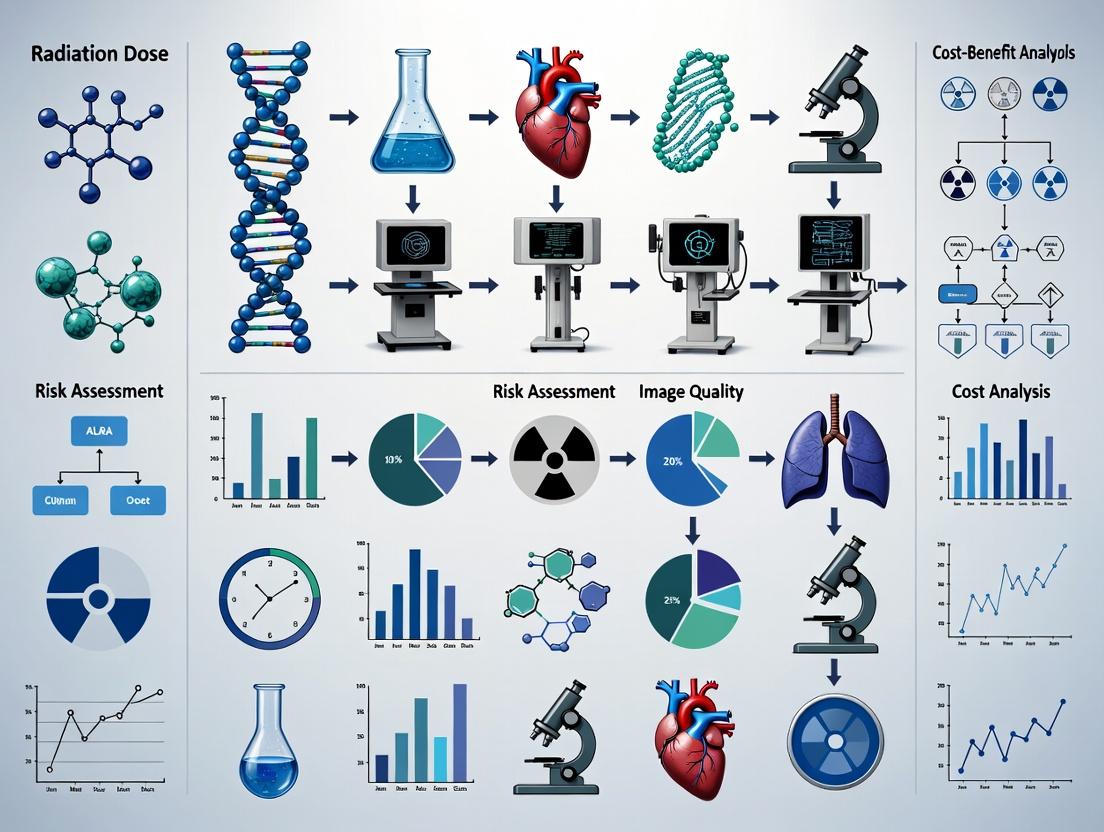
This article examines the integrated application of the ALARA (As Low As Reasonably Achievable) principle and formal cost-benefit analysis (CBA) in radiology and biomedical research.
Optimizing Radiology: The Crucial Balance Between ALARA and Cost-Benefit Analysis in Modern Medicine
Abstract
This article examines the integrated application of the ALARA (As Low As Reasonably Achievable) principle and formal cost-benefit analysis (CBA) in radiology and biomedical research. Targeted at researchers, scientists, and drug development professionals, it explores the foundational ethical and economic frameworks, details methodological approaches for quantitative justification of radiation use, addresses common implementation challenges, and validates strategies through comparative analysis of imaging modalities and regulatory paradigms. The synthesis provides a roadmap for justifying ionizing radiation in clinical trials and advanced imaging while ensuring patient safety and resource efficiency.
ALARA and CBA Explained: Core Principles for Ethical and Economical Radiation Use
The ALARA principle—“As Low As Reasonably Achievable”—is the foundational doctrine of modern radiation protection. It mandates that all radiation exposures must be kept as low as reasonably achievable, taking into account economic and societal factors. This whitepaper frames ALARA within a broader thesis on its interplay with cost-benefit analysis in radiology research, arguing that its ethical imperative is not to minimize exposure at any cost, but to optimize protection through a structured, evidence-based balancing of risks, benefits, and resources.
Historical Context: The Evolution of a Principle
The development of ALARA is a direct response to the evolving understanding of radiation risk.
| Era | Key Event/Milestone | Impact on Radiation Protection Philosophy |
|---|---|---|
| Pre-1920s | Discovery of X-rays (1895) and radioactivity (1896). | No recognition of stochastic risk; protection focused on preventing deterministic injuries (e.g., skin burns). |
| 1920s-1940s | Establishment of the first dose limit (tolerance dose). | Implied a threshold below which exposure was deemed "safe." |
| 1950s-1960s | Studies of atomic bomb survivors (LSS) and recognition of cancer risk. | Paradigm shift: acceptance of no safe threshold for stochastic effects (cancer, genetic damage). |
| 1970s | Publications by ICRP (Publication 22, 1973) and NCRP. | Formal introduction of ALARA as a core principle, integrating economic and social factors. |
| 1980s-Present | ICRP Publication 103 (2007) and ongoing radiobiology research. | Refinement and solidification of ALARA within a system of justification, optimization, and dose limitation. |
The ethical imperative stems from this history: once science revealed that even low doses carry a non-zero risk (however small), a moral obligation was created to manage that risk responsibly.
Quantitative Foundation: Risk Models and Dose Coefficients
Current radiation protection relies on quantitative models to estimate risk. Key data from ICRP Publication 103 and subsequent research inform the ALARA calculus.
Table 1: Nominal Risk Coefficients for Stochastic Effects (ICRP 103)
| Exposed Population | Total Detriment (per Sievert) | Fatal Cancer Risk (per Sievert) | Heritable Effects (per Sievert) |
|---|---|---|---|
| Whole Population | 5.7 x 10⁻² | 4.1 x 10⁻² | 0.1 x 10⁻² |
| Adult Workers | 4.2 x 10⁻² | 3.1 x 10⁻² | 0.1 x 10⁻² |
Table 2: Typical Effective Doses in Diagnostic Radiology
| Procedure | Approximate Effective Dose (mSv) | Equivalent Natural Background Exposure |
|---|---|---|
| Chest X-ray (PA) | 0.02 | 2.5 days |
| Dental Panoramic | 0.01 | 1.2 days |
| Mammography | 0.4 | 7 weeks |
| Abdomen CT | 8 | 3.2 years |
| Cardiac CT Angio | 16 | 6.4 years |
ALARA in Research: A Methodological Framework
Applying ALARA in radiology and drug development research requires explicit protocols.
Experimental Protocol:In VitroRadiation Exposure Studies
This protocol details the application of ALARA in a laboratory setting studying radiobiological effects.
- Justification: The scientific aim (e.g., studying DNA damage repair pathways) must justify the use of a radioactive source or irradiator.
- Optimization (ALARA Core):
- Source Selection: Use the lowest activity radioisotope (e.g., ¹³⁷Cs) or X-ray generator voltage compatible with the required dose rate.
- Shielding: Perform experiments within lead-shielded or dedicated irradiation cabinets. Pre-calculate required shielding thickness.
- Time/Distance: Use remote handling tools to maximize distance. Pre-set the irradiator to the exact exposure time to minimize presence in the room.
- Dosimetry: Place calibrated dosimeters (e.g., thermoluminescent dosimeters) within the experiment to measure actual delivered dose, verifying calculations.
- Waste Management: Plan for secure decay storage or proper disposal of radioactive biological waste.
- Dose Limitation: Ensure all personnel exposures are monitored and remain well below regulatory annual limits.
Protocol for Pre-Clinical Imaging Studies (e.g., Micro-CT/PET)
ALARA application in longitudinal imaging of animal models.
- Justification: Define the minimal number of imaging time points required for statistical power.
- Optimization (ALARA Core):
- Acquisition Parameters: For micro-CT, use the lowest tube current (µA) and voltage (kVp), the shortest exposure time, and the minimum number of projections that yield diagnostically usable images. Apply iterative reconstruction algorithms.
- Radiopharmaceutical Dose: For PET, inject the minimum activity (MBq) that provides sufficient target-to-background ratio, based on kinetic modeling. Use sensitive detector systems.
- Anesthesia Management: Optimize anesthesia duration to the scan time only, reducing secondary animal health risks.
- Analysis: Use dose-length product (DLP) calculations for CT and record administered activity for PET to compile a per-subject radiation burden.
Visualization: The ALARA Decision Framework
Diagram 1: The Three Pillars of Radiation Protection
Diagram 2: ALARA as a Cost-Benefit Optimization Function
The Scientist's Toolkit: Research Reagent & Material Solutions
Table 3: Essential Tools for Implementing ALARA in Radiobiology Research
| Tool/Reagent | Function in ALARA Context | Example Product/Category |
|---|---|---|
| Calibrated Dosimeter | Measures actual radiation dose delivered in situ; critical for verifying exposure and reporting accuracy. | TLDs (Thermoluminescent Dosimeters), OSLDs (Optically Stimulated Luminescence Dosimeters), Gafchromic Film. |
| In Vitro Clonogenic Assay Reagents | Enables assessment of biological effect per unit dose at low exposure levels, providing data for risk models. | Crystal violet stain, cell culture media, colony counting software. |
| γ-H2AX Assay Kit | Sensitive biomarker for DNA double-strand breaks; allows study of low-dose effects without high exposures. | Fluorescent antibody kits, flow cytometry reagents. |
| 3D Tissue-Equivalent Phantoms | Mimics human/animal tissue attenuation; used to optimize imaging protocols and dosimetry before live studies. | Customizable polymethyl methacrylate (PMMA) or water-equivalent phantoms. |
| Monte Carlo Simulation Software | Models radiation transport and dose deposition computationally; allows "virtual" optimization of experiments. | Geant4, MCNP, EGSnrc. |
| Low-Activity Sealed Sources | Provides a controlled, low-dose-rate exposure source for calibration or protracted experiments, minimizing handling risk. | ¹³⁷Cs or ⁹⁰Sr plaques for irradiator calibration. |
| Lead Acrylic Shielding | Provides transparent shielding for benchtop work with beta or low-energy gamma emitters, enabling safe visualization. | Custom-cut shields for sample holders. |
ALARA is not a static rule but a dynamic, ethical decision-making process. Its historical genesis from the recognition of stochastic risk establishes a non-negotiable ethical duty to minimize unnecessary exposure. In research, particularly in radiology and drug development, this translates into a rigorous, quantitative framework where cost-benefit analysis is not its adversary but its essential tool. True adherence to ALARA requires embedding its principles into experimental design, employing advanced tools for dosimetry and biological effect assessment, and perpetually questioning whether the current practice is, indeed, "As Low As Reasonably Achievable."
In radiology and medical intervention research, the ALARA (As Low As Reasonably Achievable) principle is a cornerstone of radiation safety, mandating the minimization of patient and staff exposure. This whitepaper posits that economic cost-benefit analysis (CBA) provides the critical "reasonably achievable" framework, quantifying trade-offs between clinical benefit, risk, and resource expenditure. For researchers and drug development professionals, integrating CBA with ALARA ensures innovations are not only scientifically sound but also economically viable and ethically justified within healthcare systems.
Core Theoretical Framework of Cost-Benefit Analysis
CBA is a systematic process for comparing the total expected costs and benefits of a proposed intervention. The fundamental decision rule is to proceed if the net present value (NPV) is positive or if the benefit-cost ratio (BCR) exceeds 1.0.
- Net Present Value (NPV): NPV = Σ (Benefitsₜ - Costsₜ) / (1 + r)ᵗ, where r is the discount rate and t is the time period.
- Benefit-Cost Ratio (BCR): BCR = Σ (Benefitsₜ / (1 + r)ᵗ) / Σ (Costsₜ / (1 + r)ᵗ).
- Incremental Cost-Effectiveness Ratio (ICER): A related metric used in health economics. ICER = (Costₐ - Costₛ) / (Effectivenessₐ - Effectivenessₛ), where A is the new intervention and B is the standard of care.
Methodological Protocol for CBA in Medical Intervention Research
A robust CBA follows a standardized protocol applicable to evaluating novel radiological techniques or pharmacological agents.
Step 1: Define the Perspective and Scope.
- Perspective: Choose the viewpoint for the analysis (e.g., healthcare system, societal, payer).
- Scope: Define the intervention, comparator, target population, and time horizon.
Step 2: Identify and Measure Costs.
- Direct Medical Costs: Equipment, reagents, pharmaceuticals, staff time, hospitalization.
- Direct Non-Medical Costs: Transportation, patient time.
- Indirect Costs: Productivity losses due to morbidity/mortality (human capital or friction cost methods).
- Protocol: Utilize micro-costing (bottom-up) or gross-costing (top-down) approaches. Source data from trial budgets, hospital accounting, and national fee schedules.
Step 3: Identify, Measure, and Monetize Benefits.
- Clinical Benefits: Life years gained, quality-adjusted life years (QALYs) gained, complications avoided.
- Monetization: Benefits are often valued in monetary terms using methods like:
- Revealed Preference: (e.g., value of a statistical life from wage-risk studies).
- Stated Preference: (e.g., willingness-to-pay surveys using discrete choice experiments).
- Protocol: Conduct a systematic literature review for utility weights (for QALYs) or established monetized values. For novel endpoints, primary data collection via validated surveys may be required.
Step 4: Discounting and Adjusting for Time.
- Apply an annual discount rate (typically 3-5%) to future costs and benefits to reflect time preference, following guidelines from bodies like the US Panel on Cost-Effectiveness in Health and Medicine.
Step 5: Calculate Summary Metrics and Conduct Sensitivity Analysis.
- Calculate NPV and BCR. Perform deterministic (one-way, multi-way) and probabilistic sensitivity analysis (PSA) to test the robustness of results against parameter uncertainty (e.g., cost of reagents, efficacy estimates).
- Protocol for PSA: Assign probability distributions (e.g., gamma for costs, beta for probabilities) to key parameters and run a Monte Carlo simulation (e.g., 10,000 iterations) to create a cost-effectiveness acceptability curve.
Data Synthesis: Key Quantitative Benchmarks
Table 1: Commonly Referenced Thresholds and Discount Rates in Health Economic Evaluation
| Parameter | Typical Value/Range | Source/Justification |
|---|---|---|
| Discount Rate (Costs & Benefits) | 3% per annum | Recommended by US Panel and NICE for base-case analysis. |
| Societal Willingness-to-Pay (WTP) per QALY Gained | $50,000 - $150,000 / QALY | Context-dependent. NICE (UK) threshold is ~£20,000-£30,000. Often cited US benchmark is $100,000-$150,000. |
| Value of a Statistical Life (VSL) | ~$10 million | US Department of Health and Human Services (2023) central estimate for regulatory impact analysis. |
| Annual Cost of Common Research Components | Examples from recent literature: | |
| Next-Gen Sequencing Panel | $500 - $2,000 per sample | |
| Advanced Imaging Agent (PET) | $1,000 - $2,500 per dose | |
| Monoclonal Antibody Therapy (annual) | $20,000 - $100,000+ |
Table 2: Illustrative CBA Output for a Hypothetical Low-Dose vs. Standard-Dose CT Screening Protocol
| Cost/Benefit Category | Standard-Dose CT (Comparator) | Novel Low-Dose Protocol (Intervention) | Incremental Difference |
|---|---|---|---|
| Direct Cost per Scan | $250 | $300 | +$50 |
| Projected Cancer Cases from Scan Radiation (per 100k) | 15 | 5 | -10 cases avoided |
| Cost of Treating Radiation-Induced Cancer | $4.5 million | $1.5 million | -$3.0 million saved |
| Monetized Benefit of Avoided Mortality | - | - | +$15 million (based on VSL) |
| Total NPV (Societal Perspective) | - | - | +$11.95 million |
| Benefit-Cost Ratio (BCR) | - | - | >50:1 |
Visualization: Integrating CBA with the Research Workflow
CBA Decision Logic Flow
The Scientist's Toolkit: Essential Research Reagent Solutions for CBA
Table 3: Key Research Reagents and Tools for Conducting Health Economic Analysis
| Item/Category | Function in CBA Research | Example/Specification |
|---|---|---|
| Health State Utility Weights | Provide the "quality" adjustment for QALY calculation, often derived from patient-reported outcomes. | EQ-5D-5L survey instrument; SF-6D derived from SF-36. |
| Costing Catalogs & Databases | Provide standardized unit cost inputs for direct medical costs. | Medicare Physician Fee Schedule (US), NHS Reference Costs (UK), WHO-CHOICE database. |
| Discrete Choice Experiment (DCE) Software | Enables primary data collection for willingness-to-pay and benefit preference weighting. | Ngene (for experimental design), Stata or R with support.CEs package (for analysis). |
| Probabilistic Sensitivity Analysis (PSA) Tools | Facilitates Monte Carlo simulation to model parameter uncertainty. | Built-in functions in TreeAge Pro, R (heemod, BCEA packages), SAS. |
| Markov Model Software | Allows modeling of complex, multi-state disease pathways over long time horizons for benefit estimation. | TreeAge Pro, R (heemod, mstate), Excel with VBA. |
| Systematic Review Protocols | Framework for identifying clinical efficacy and safety parameters for the analysis. | PRISMA (Preferred Reporting Items for Systematic Reviews and Meta-Analyses) checklist. |
Within radiology research and pharmaceutical development, two guiding frameworks often appear in tension: the ALARA (As Low As Reasonably Achievable) principle, which mandates minimizing patient radiation dose, and Cost-Benefit Analysis (CBA), a cornerstone of economic resource allocation. This whitepaper posits that the optimal point for research and clinical practice is not where one supersedes the other, but at their synergistic intersection—the Synergy Point. Here, rigorous scientific methodology enables the achievement of ALARA goals through strategically allocated resources, maximizing both patient safety and research efficacy. This document provides a technical guide to identifying and operating at this nexus.
Quantitative Foundations: Recent Data on Dose, Risk, and Cost
The following tables synthesize current data from recent studies and reviews, providing a basis for integrated analysis.
Table 1: Effective Radiation Doses of Common Radiologic Procedures
| Procedure | Typical Effective Dose Range (mSv) | Comparative Risk Benchmark (Chest X-rays) | Primary Optimization Levers |
|---|---|---|---|
| Chest X-ray (PA) | 0.02 - 0.1 | 1 | Tube current (mA), voltage (kVp) |
| Abdominal CT | 5 - 10 | 250 - 500 | Iterative reconstruction, tube current modulation, scan length |
| Cardiac CT Angiography | 5 - 15 | 250 - 750 | Prospective gating, high-pitch scanning, kVp reduction |
| FDG-PET/CT (Whole Body) | 10 - 25 | 500 - 1250 | CT component parameters, FDG activity, acquisition time |
Data compiled from 2023-2024 reviews in Radiology, European Journal of Radiology, and Journal of Nuclear Medicine.
Table 2: Cost-Benefit Parameters for Dose-Reduction Technologies in Research
| Technology/Method | Approximate Implementation Cost (USD) | Estimated Dose Reduction Potential | Key Benefitted Research Areas |
|---|---|---|---|
| Advanced Iterative Reconstruction (IR) | $50,000 - $150,000 (software/license) | 30%-60% per CT scan | Longitudinal oncology trials, pediatric drug studies |
| Spectral Photon-Counting CT | >$500,000 (system premium) | 20%-40% with material decomposition | Cardiovascular outcome trials, novel contrast agent development |
| AI-Based Scan Protocol Optimization | $20,000 - $100,000 (integration) | 15%-35% via parameter prediction | Multi-center therapeutic response assessments |
| Ultra-High Sensitivity PET Detectors | $200,000 - $400,000 (upgrade) | 50%-75% or equivalent image quality | Neurodegenerative disease drug trials (lower tracer dose) |
Cost estimates derived from 2024 vendor data and health technology assessment reports.
Experimental Protocols for Synergy Point Research
To empirically identify the Synergy Point, researchers must design experiments that simultaneously measure safety and economic outcomes.
Protocol 1: Determining the Diagnostic Efficacy-Dose-Cost Frontier
- Objective: To model the relationship between diagnostic performance, radiation dose, and total study cost for a specific clinical question.
- Methodology:
- Cohort & Imaging: Recruit a phantom model or retrospective patient cohort (IRB-approved). Acquire images using a protocol with incrementally reduced dose (e.g., CT reconstructed at 100%, 75%, 50%, 25% of standard dose using hybrid and deep learning IR).
- Outcome Measurement:
- Safety Metric: Size-Specific Dose Estimate (SSDE) or Effective Dose recorded for each level.
- Efficacy Metric: Quantitative (e.g., signal-to-noise ratio, lesion conspicuity) and qualitative (blinded reader scoring using Likert scales for diagnostic confidence) metrics collected.
- Cost Metric: Direct costs (equipment depreciation, energy, consumables) and indirect costs (reader time, potential repeat scan cost) calculated per dose level.
- Analysis: Construct a 3D surface plot (Diagnostic Performance vs. Dose vs. Cost). The Synergy Point is identified as the region on the surface where the marginal cost of further dose reduction exceeds the marginal gain in safety/performance, or vice-versa.
Protocol 2: Cost-Effectiveness Analysis of a Novel Low-Dose Technique
- Objective: To evaluate whether a new dose-reduction technology provides sufficient value in a research setting.
- Methodology:
- Design: Prospective, controlled trial within a larger research study (e.g., drug trial).
- Arms: Control arm (standard dose imaging) vs. Intervention arm (new low-dose protocol).
- Measurements:
- Clinical Endpoint Equivalence: Assess non-inferiority in key study image analysis endpoints (e.g., tumor response classification).
- Dose Reduction: Quantify per-participant dose savings.
- Incremental Cost: Calculate the total additional cost of the new technology amortized per scan.
- Analysis: Calculate the Incremental Cost-Effectiveness Ratio (ICER): (CostIntervention - CostControl) / (DoseControl - DoseIntervention). The result is cost per unit dose reduction. Compare against a predefined "willingness-to-pay" threshold per mSv averted, established via stakeholder consensus.
Visualization of Conceptual and Methodological Frameworks
Title: The Path from Conflict to Synergy
Title: Synergy Point Experimental Workflow
The Scientist's Toolkit: Key Research Reagent Solutions
Table 3: Essential Materials for ALARA-CBA Integrated Research
| Item / Reagent Solution | Function in Synergy Point Research |
|---|---|
| Anthropomorphic Phantoms | Provide standardized, reproducible test objects for dose-efficacy studies without patient exposure. Essential for Protocol 1. |
| Dose Calibration Kit (Ionization chambers, solid-state detectors) | Accurately measure and verify radiation output from imaging systems, providing the foundational safety metric. |
| Advanced Image Reconstruction Software (e.g., Iterative, AI-based) | Enables the generation of diagnostic images from low-dose raw data, a core technological lever for synergy. |
| Radiomics/Image Analysis Platform (e.g., 3D Slicer, PyRadiomics) | Extracts quantitative features from images at various dose levels to objectify the "efficacy" metric in protocols. |
Health Economic Modeling Software (e.g., TreeAge, R heemod package) |
Facilitates the construction of cost-effectiveness and decision-analytic models for CBA integration. |
| Standardized Reporting Checklist (e.g., based on CONSORT, CHEERS guidelines) | Ensures methodological rigor and transparency in reporting both technical and economic outcomes of studies. |
Within the framework of the ALARA (As Low As Reasonably Achievable) principle and its economic counterpart, cost-benefit analysis (CBA), radiology research operates under a complex network of stakeholder influences. This technical guide examines the precise drivers and operational parameters of four core stakeholders: Regulatory Bodies, Hospitals, Pharmaceutical Companies, and Patients. It details how their converging and diverging priorities shape experimental design, technology adoption, and therapeutic outcomes in imaging-centric drug development and clinical practice.
Modern radiology research, particularly in oncology and neurology, is defined by the imperative to minimize radiation dose (ALARA) while maximizing diagnostic yield and therapeutic benefit. A formal cost-benefit analysis provides the economic and risk-assessment framework to operationalize ALARA. Each stakeholder interprets and weights these principles differently, creating a dynamic landscape for research and development.
Stakeholder Analysis: Drivers, Metrics, and Influence
Regulatory Bodies (e.g., FDA, EMA)
- Primary Driver: Patient safety, public health, and efficacy verification.
- ALARA Interpretation: Enforced through mandatory guidelines (e.g., FDA's 21 CFR Part 1020.33, EU's EURATOM BSS Directive). ALARA is a non-negotiable safety standard.
- CBA Focus: Societal-level risk-benefit analysis. Weighs population-level risks of radiation exposure against the benefits of accurate diagnosis and drug approval.
- Key Influence: Defines endpoints for clinical trials using imaging biomarkers. Mandates rigorous validation of new imaging techniques.
Table 1: Recent Regulatory Actions Impacting Radiology Research
| Agency | Action/Guidance | Issue Date | Key Quantitative Metric | Impact on Research |
|---|---|---|---|---|
| U.S. FDA | AI/ML-Based Software as a Medical Device (SaMD) Action Plan | 2021 | Requires algorithmic transparency and real-world performance monitoring. | Mandates large, diverse, annotated imaging datasets for training/validation. |
| European Medicines Agency (EMA) | Guideline on radioligand therapy | 2022 | Specifies dosimetry requirements for target organs (e.g., kidneys ≤ 23 Gy, bone marrow ≤ 1.5 Gy). | Requires precise dosimetric protocols in therapeutic radiopharma trials. |
| FDA & EMA | Collaborative on Qualification of Novel Imaging Biomarkers for Drug Development | Ongoing | Target: Reduce biomarker qualification time by 30%. | Streamlines use of imaging surrogates (e.g., volumetric MRI for tumor response) as primary endpoints. |
Hospitals & Radiology Providers
- Primary Driver: Clinical efficacy, operational efficiency, and reimbursement.
- ALARA Interpretation: Implemented via protocol optimization and dose monitoring software. Balanced against the need for diagnostic image quality.
- CBA Focus: Institutional cost-benefit. Weighs equipment/software costs, scan time, and reimbursement rates against diagnostic accuracy and patient throughput.
- Key Influence: Site for patient recruitment and protocol execution. Generates real-world evidence (RWE) on imaging protocol performance.
Experimental Protocol 1: Protocol Optimization for Low-Dose CT Screening
- Objective: To validate a novel iterative reconstruction algorithm enabling 40% dose reduction in lung cancer screening CT while maintaining nodule detection sensitivity ≥ 98%.
- Methodology:
- Cohort: 500 high-risk patients (IRB-approved, informed consent).
- Scanning: Each patient undergoes two scans in a single session:
- Standard Dose: Reference protocol (120 kVp, CTDIvol 3.0 mGy).
- Low-Dose: Experimental protocol (100 kVp, CTDIvol 1.8 mGy).
- Blinded Review: Three radiologists independently read randomized scans for detectable nodules (≥3mm).
- Analysis: Calculate per-nodule sensitivity/specificity. Use non-inferiority statistical testing (margin Δ=2%). Correlate with body mass index (BMI) subgroups.
Pharmaceutical & Radiopharmaceutical Companies
- Primary Driver: Drug development efficiency, market differentiation, and lifecycle management.
- ALARA Interpretation: Critical for therapeutic radiopharmaceuticals (e.g., Lu-177, Y-90). Aim to maximize tumor dose while adhering to organ-at-risk limits.
- CBA Focus: R&D portfolio risk-benefit. Weighs immense cost of imaging biomarker-integrated trials against potential for faster regulatory approval and stronger label claims.
- Key Influence: Drives innovation in companion diagnostics (e.g., PET ligands) and theranostics.
Table 2: Imaging Biomarkers in Recent Oncology Drug Trials
| Drug (Company) | Phase | Imaging Biomarker | Purpose in Trial | Reported Impact |
|---|---|---|---|---|
| Pluvicto (Novartis) | III (VISION) | 68Ga-PSMA-11 PET/CT | Patient selection (PSMA+). | Reduced trial population heterogeneity. Led to accelerated approval for mCRPC. |
| Aducanumab (Biogen) | III (EMERGE) | Amyloid PET | Patient enrollment confirmation (Amyloid+). | Central to proving target engagement, despite clinical outcome controversy. |
| Larotrectinib (Bayer) | I/II (NAVIGATE) | FDG-PET & RECIST 1.1 | Objective response rate (ORR) measurement in NTRK-fusion tumors. | Imaging-based ORR of 75% supported tissue-agnostic approval. |
Patients
- Primary Driver: Health outcome, experience, and personal risk/benefit assessment.
- ALARA Interpretation: Personal safety. Desire for minimal exposure, especially in repeat or screening studies.
- CBA Focus: Individual risk-benefit. Weighs personal anxiety, comfort, cost, and potential side effects against the benefit of early diagnosis or treatment monitoring.
- Key Influence: Participation consent drives trial feasibility. Patient-reported outcomes (PROs) are increasingly key secondary endpoints.
The Scientist's Toolkit: Key Research Reagent Solutions
Table 3: Essential Reagents for Imaging-Centric Pharmacology Research
| Reagent/Material | Supplier Examples | Function in Research |
|---|---|---|
| Isotope-Labeled Precursors (e.g., [18F]FET, [68Ga]GaCl3) | Eckert & Ziegler, Isotope Technologies Garching | Provides the radioactive nucleus for PET tracer synthesis in microfluidic or automated modules. |
| Target-Specific Radioligands (e.g., PSMA-11, FAPI) | ABX, CheMatech | Cold kits for rapid, GMP-compliant labeling with diagnostic/therapeutic isotopes for theranostic research. |
| 3D Tumor Spheroid/Organoid Kits | Corning, Thermo Fisher Scientific | Provides in vitro models with physiological relevance for pre-clinical validation of imaging probes and drug efficacy. |
| Dosimetry Phantoms & Software (e.g., OLINDA/EXM) | Gammex, Hermes Medical Solutions | Enables precise calculation of radiation dose absorbed by target tumors and organs at risk, critical for ALARA compliance. |
| AI-Ready, Annotated Image Datasets | The Cancer Imaging Archive (TCIA) | Provides benchmark data for training and validating machine learning algorithms in segmentation, detection, and prognosis. |
Integrated Workflow & Pathways
Title: Stakeholder Influence on Radiology Research
Title: Radiopharmaceutical Research & Development Workflow
The advancement of radiology research is a direct function of the synergistic alignment of the four key stakeholders' drivers under the unifying principles of ALARA and cost-benefit analysis. Regulatory bodies set the safety-inclusive boundaries, pharmaceutical companies innovate within them, hospitals implement and generate real-world data, and patients provide the ultimate validation of the risk-benefit balance. Future progress hinges on transparent communication and standardized metrics across this ecosystem, ensuring that technological advancements translate into clinically meaningful and safe patient outcomes.
This whitepaper examines the quantitative drive in radiation safety and health economics, framed within the core thesis of optimizing the ALARA (As Low As Reasonably Achievable) principle through formal cost-benefit analysis in radiology. The integration of precise dosimetry, biological effect modeling, and economic valuation is creating a new paradigm for evidence-based justification of radiographic practices in clinical and research settings, including drug development.
Quantitative Frameworks in Radiation Safety
The ALARA principle is evolving from a qualitative guideline to a quantitative optimization problem, balancing stochastic risk against diagnostic or therapeutic benefit.
Dosimetry and Risk Coefficients
Modern risk models rely on epidemiologically derived risk coefficients, expressed as probability of incidence per unit dose.
Table 1: Current Effective Risk Coefficients for Stochastic Effects (ICRP 103)
| Exposed Population | Risk Coefficient (Sv⁻¹) | Primary Health Endpoint | Source / Model |
|---|---|---|---|
| Whole Population | 0.057 | Total cancer incidence | ICRP 103, 2007 |
| Whole Population | 0.041 | Total cancer mortality | ICRP 103, 2007 |
| Adult Workers | 0.042 | Total cancer incidence | ICRP 103, 2007 |
| Adult Workers | 0.029 | Total cancer mortality | ICRP 103, 2007 |
Experimental Protocol:In VitroMicronucleus Assay for Biological Dosimetry
This protocol quantifies radiation-induced DNA damage, a key input for dose-response modeling.
Objective: To establish a dose-response curve for chromosomal damage in human lymphocytes following in vitro irradiation. Materials: Fresh human whole blood, RPMI 1640 medium, phytohemagglutinin (PHA), cytochalasin-B, fetal bovine serum (FBS), penicillin/streptomycin, Giemsa stain, metaphase-arresting agent (e.g., colcemid). Equipment: X-ray or Gamma-ray irradiator with calibrated dose rate, CO₂ incubator, sterile biosafety cabinet, centrifuge, microscope. Procedure:
- Collect heparinized whole blood from a healthy donor.
- Irradiate samples at 37°C with doses of 0 (control), 0.1, 0.25, 0.5, 1.0, and 2.0 Gy. Calibrate irradiator output with an ionization chamber.
- Culture lymphocytes: Add 0.5 mL blood to 4.5 mL RPMI 1640 medium supplemented with 15% FBS, 1% PHA, and 1% penicillin/streptomycin.
- Incubate at 37°C, 5% CO₂ for 44 hours.
- Add cytochalasin-B (6 µg/mL final concentration) to block cytokinesis.
- Continue incubation for 28 hours (total culture time: 72 hours).
- Harvest cells using hypotonic treatment (0.075 M KCl) and fix in methanol:acetic acid (3:1).
- Prepare slides, stain with 5% Giemsa for 10 minutes.
- Score micronuclei in 1,000 binucleated cells per dose point under a light microscope. A micronucleus is defined as a round, non-refractory body with a diameter less than 1/3 of the main nucleus, located within the cytoplasm.
- Plot dose (Gy) against micronucleus frequency. Fit data with a linear-quadratic model: Y = C + αD + βD², where Y is micronuclei per binucleated cell, C is background frequency, D is dose, and α & β are coefficients.
Health Economic Valuation in Radiology
Health economic analysis formalizes the "reasonably achieved" component of ALARA by quantifying benefit in monetary or utility terms.
Core Metrics and Valuation
The Quality-Adjusted Life Year (QALY) is the dominant metric for benefit valuation.
Table 2: Standard Radiologic Procedure Metrics for Cost-Utility Analysis
| Procedure (Example) | Effective Dose (mSv) | Stochastic Risk (Incidence) | Typical Incremental QALY Gain | Cost per QALY Threshold (USD) |
|---|---|---|---|---|
| Screening Low-Dose CT (Lung) | 1.5 | ~8.6 in 100,000 | 0.02 - 0.04 (high-risk cohort) | 50,000 - 100,000 |
| Diagnostic Coronary CTA | 10 | ~57 in 100,000 | 0.015 - 0.025 (for ruling out CAD) | 75,000 - 150,000 |
| PET/CT (Oncology) | 25 | ~143 in 100,000 | 0.03 - 0.08 (informed treatment change) | 50,000 - 200,000 |
Integrated Quantitative Workflow
The synthesis of safety and economics creates a decision-support framework.
Title: Integrated ALARA Decision Workflow
The Scientist's Toolkit: Research Reagent Solutions
Table 3: Essential Reagents for Radiobiological Assays
| Item / Reagent | Function / Purpose | Key Provider Example |
|---|---|---|
| GammaH2AX Phosphorylation Antibody (Phospho-Histone γ-H2AX) | Marker for DNA double-strand breaks (DSBs). Used in immunofluorescence to quantify radiation-induced foci. | Merck Millipore (Clone JBW301) |
| Comet Assay Kit (Single Cell Gel Electrophoresis) | Measures DNA strand breaks at the single-cell level. A versatile tool for genotoxicity screening post-irradiation. | Trevigen (CometAssay) |
| Clonogenic Survival Assay Media & Stains | Specialized media and stains (e.g., crystal violet) for quantifying reproductive cell death after radiation exposure. | Cell Signaling Technology, Sigma-Aldrich |
| Cytokinesis-Block Micronucleus (CBMN) Kit | Optimized reagents (Cytochalasin-B, stains, lysing solutions) for standardized micronucleus scoring per OECD/ISO guidelines. | Abcam (ab238544) |
| 3D Tissue Equivalent Phantoms & Dosimeters | Physical models mimicking human tissue attenuation and radiochromic films or OSLDs for precise dose measurement in complex fields. | Gammex, Sun Nuclear |
| Radioprotectant / Radiosensitizer Screening Libraries | Small molecule collections for drug discovery aimed at modulating cellular radiation response. | MedChemExpress, Selleckchem |
| Monte Carlo Simulation Software (e.g., Geant4, MCNP) | Not a reagent, but a critical computational tool for simulating radiation transport and energy deposition in virtual phantoms. | OpenGATE Collaboration, LANL |
Signaling Pathway Quantification
A core molecular pathway determining cellular fate post-irradiation is the DNA Damage Response (DDR).
Title: DNA Damage Response Signaling Pathway
Advanced Economic Modeling Protocol
A protocol for a model-based cost-effectiveness analysis of a novel low-dose imaging protocol.
Objective: To determine the incremental cost-effectiveness ratio (ICER) of a novel ultra-low-dose CT (ULDCT) protocol versus standard-dose CT (SDCT) for lung nodule follow-up. Model Structure: Develop a state-transition (Markov) microsimulation model with a lifetime horizon and healthcare payer perspective. Key Health States: "Stable Nodule," "Growing Nodule (Undetected)," "Lung Cancer (Early Stage)," "Lung Cancer (Advanced Stage)," "Post-Treatment," "Death." Procedure:
- Clinical Inputs: Obtain diagnostic performance metrics (sensitivity, specificity) for ULDCT (0.1 mSv) vs. SDCT (1.5 mSv) from a prospective cohort study. Assume sensitivity of 92% vs. 96%, specificity equal at 94%.
- Risk Inputs: Use ICRP 103 coefficients to calculate lifetime attributable risk (LAR) of cancer for both protocols.
- Utility Weights: Assign QALY weights to each health state from published literature (e.g., EQ-5D studies): e.g., "Early Stage Cancer" = 0.75, "Advanced Stage" = 0.50.
- Cost Inputs: Gather direct medical costs (2025 USD): ULDCT scan = $150, SDCT scan = $120, biopsy = $3,000, early-stage cancer treatment = $75,000, advanced-stage treatment = $125,000.
- Model Implementation:
- Build the model in R (using the
heemodpackage) or TreeAge Pro. - Simulate a cohort of 10,000 patients (age 60) with an indeterminate lung nodule.
- Cycle length = 6 months.
- Apply annual probability of nodule malignancy (3%), all-cause mortality (from life tables), and stage-specific cancer survival.
- Apply diagnostic performance at first cycle to determine correct/incorrect staging.
- Track costs, QALYs, and radiation-induced cancers over lifetime.
- Build the model in R (using the
- Analysis: Calculate total lifetime costs and QALYs for each strategy. Compute ICER: (CostULDCT - CostSDCT) / (QALYULDCT - QALYSDCT).
- Sensitivity Analysis: Perform probabilistic sensitivity analysis (PSA) using Monte Carlo simulation, varying all inputs over defined distributions (e.g., γ for costs, β for probabilities, normal for utilities). Present results on a cost-effectiveness acceptability curve (CEAC).
The push for quantification represents a maturation of radiation safety, tightly coupling physical dosimetry, radiobiology, and health economics. This integration provides a robust, data-driven framework for implementing the ALARA principle, enabling researchers and clinicians to make optimized decisions that maximize patient benefit while minimizing population risk—a critical balance in both clinical practice and radiology-dependent drug development.
From Theory to Practice: Implementing ALARA-CBA in Research and Clinical Protocols
1. Introduction Within the framework of applying the ALARA (As Low As Reasonably Achievable) principle and cost-benefit analysis in radiology research, quantifying the downstream "benefit" of a diagnostic test is paramount. This technical guide details the core metrics—Clinical Diagnostic Yield (CDY) and Therapeutic Impact (TI)—that move beyond technical performance to measure real-world clinical value. For researchers and drug development professionals, these metrics are critical for validating novel imaging biomarkers, contrast agents, and therapeutic response assessment tools.
2. Core Metric Definitions and Calculations
Table 1: Key Benefit Metrics and Formulae
| Metric | Formula | Numerator Definition | Denominator Definition | Interpretation |
|---|---|---|---|---|
| Clinical Diagnostic Yield (CDY) | (Number of examinations with a clinically significant finding / Total number of examinations performed) x 100% | Exams leading to a new, actionable diagnosis explaining the clinical presentation. | All exams performed for a specific clinical indication. | Proportion of tests that provide a definitive answer. |
| Therapeutic Impact (TI) | (Number of examinations leading to a change in management / Total number of examinations performed) x 100% | Exams resulting in initiation, modification, or cessation of therapy (medical, surgical, radiation). | All exams performed for a specific clinical indication. | Direct measure of a test's influence on patient care pathways. |
| Net Reclassification Improvement (NRI) | (Event NRI) + (Non-event NRI) = (P(up|event) - P(down|event)) + (P(down|non-event) - P(up|non-event)) | Improved reclassification of patient risk categories with new test vs. old standard. | Requires predefined risk categories. | Quantifies how well a new test improves risk stratification. |
| Number Needed to Image (NNI) | 1 / (Proportion with TI) | Number of patients that need to be imaged to produce one change in management. | Derived from TI. | Inverse of TI; useful for cost-effectiveness models alongside ALARA. |
3. Experimental Protocols for Metric Validation
Protocol 1: Prospective Cohort Study for CDY/TI Assessment
- Objective: To determine the CDY and TI of a novel high-resolution MR sequence in patients with drug-resistant epilepsy.
- Population: 200 consecutive adults meeting clinical criteria for pre-surgical evaluation.
- Intervention: All subjects undergo the novel 7T MRI protocol alongside the standard 3T clinical epilepsy protocol.
- Blinding: Interpretation by two separate neuroradiologist panels, blinded to clinical data and each other's reads.
- Outcome Measurement:
- CDY: A "clinically significant finding" is predefined as an imaging abnormality concordant with electroclinical data. Yield is calculated per Table 1 for each protocol.
- TI: Clinical management team records planned pre- and post-imaging management. A "change" is recorded if the novel MRI alone leads to a new candidacy for surgery, a new surgical target, or a decision against invasive monitoring.
- Statistical Analysis: Comparison of proportions (McNemar's test) for paired CDY and TI data.
Protocol 2: Retrospective Reclassification Analysis for NRI
- Objective: To assess the value of a PET radiopharmaceutical in reclassifying risk in prostate cancer.
- Population: Repository data from 500 patients with biochemical recurrence post-prostatectomy.
- Comparator Standards: Baseline risk stratification using standard clinicopathological factors (e.g., PSA doubling time, Gleason score) into "Low," "Intermediate," and "High" risk for metastatic disease.
- Intervention Analysis: Re-stratify each patient using the same factors plus the novel PET result.
- Endpoint Adjudication: A blinded clinical endpoint committee determines true metastatic status at 3 years based on conventional imaging and biopsy.
- NRI Calculation: Calculate Event NRI (improved reclassification in those who developed metastases) and Non-event NRI (improved reclassification in those who did not) per Table 1 formula.
4. Visualizing the Benefit Assessment Workflow
Diagram 1: Pathway from Test to Therapeutic Impact (76 chars)
5. The Scientist's Toolkit: Research Reagent Solutions
Table 2: Essential Materials for Clinical Impact Studies
| Item / Solution | Function in Benefit Quantification Research |
|---|---|
| Clinical Data Capture (CDISC) Standards | Standardized data structure (SDTM, ADaM) for integrating imaging findings with clinical endpoints, enabling robust statistical analysis. |
| Electronic Case Report Form (eCRF) Systems | Securely captures core variables: pre-test probability, post-test diagnosis, pre- and post-test management plans for TI calculation. |
| Imaging Biobank/Repository | Annotated, de-identified imaging datasets linked to longitudinal clinical outcomes, essential for retrospective NRI and validation studies. |
| Clinical Endpoint Adjudication Committee Charter | Formal document defining blinded, independent review process for gold-standard outcome determination, critical for study validity. |
| Statistical Analysis Software (e.g., R, SAS) | For calculating metrics (CDY, TI, NRI, NNI) and performing advanced analyses like multilevel logistic regression to adjust for confounders. |
Diagram 2: Therapeutic Impact Decision Logic (74 chars)
6. Integration with ALARA and Cost-Benefit Analysis The quantified CDY and TI serve as the fundamental "benefit" variables in a radiological cost-benefit equation, where the "cost" includes both financial expenditure and radiation dose (for ionizing modalities). A high NNI suggests lower benefit per exam, challenging justification against ALARA principles. Conversely, a high TI or significant positive NRI can justify the "cost" of a more complex or higher-dose imaging procedure by demonstrating a clear, downstream impact on therapeutic efficacy and patient outcomes. This framework enables objective prioritization in research and development for diagnostic tools.
Within the framework of the ALARA (As Low As Reasonably Achievable) principle, optimizing radiological protection necessitates a rigorous quantification of radiation-induced health risks. This technical guide details the primary models, dose quantities, and risk metrics essential for performing cost-benefit analyses in radiology research and drug development, where radiation exposure may be a component of diagnostic or therapeutic protocols.
Core Conceptual Models of Radiation Risk
Radiation risk assessment is founded on epidemiological data and radiobiological principles, formalized into two primary models.
Linear No-Threshold (LNT) Model
The dominant model for radiation protection assumes that the risk of stochastic effects (primarily cancer and heritable effects) increases linearly with dose, without a threshold. It is considered most applicable for low-dose and low-dose-rate exposures typical of medical imaging and occupational settings.
Key Equation: Excess Relative Risk (ERR) = α * D Where α is the risk coefficient (Sv⁻¹) and D is the effective dose (Sv).
Dose and Dose-Rate Effectiveness Factor (DDREF)
To extrapolate risk from high-dose-rate epidemiological studies (e.g., atomic bomb survivors) to low-dose-rate medical exposures, a DDREF is applied. The International Commission on Radiological Protection (ICRP) recommends a DDREF of 2.
Effective Dose: The Operational Quantity
Effective Dose (E) is the central dose quantity for risk quantification in radiological protection, enabling the summation of exposures from different tissues and radiation types.
Calculation: E = Σ (w_T * H_T) Where w_T is the tissue weighting factor for tissue T and H_T is the equivalent dose to tissue T.
Current ICRP Tissue Weighting Factors (ICRP Publication 103)
Table 1: ICRP Publication 103 Tissue Weighting Factors
| Tissue or Organ | Tissue Weighting Factor (w_T) | ∑ w_T |
|---|---|---|
| Bone-marrow (red), Colon, Lung, Stomach, Breast, Remainder tissues* | 0.12 | 0.72 |
| Gonads | 0.08 | 0.08 |
| Bladder, Oesophagus, Liver, Thyroid | 0.04 | 0.16 |
| Bone surface, Brain, Salivary glands, Skin | 0.01 | 0.04 |
| Total | 1.00 |
*Remainder tissues: Adrenals, Extrathoracic region, Gall bladder, Heart, Kidneys, Lymphatic nodes, Muscle, Oral mucosa, Pancreas, Prostate, Small intestine, Spleen, Thymus, Uterus/cervix.
Lifetime Attributable Risk (LAR)
LAR is the probability that an individual will develop a radiation-induced cancer (or heritable effect) over their lifetime following exposure. It is age- and sex-dependent.
Definition: LAR = Σ (Excess Risk per year at age *e + attained age a) for all a > e Where e is the exposure age.
BEIR VII Risk Models
The U.S. National Academies' BEIR VII report provides the most widely cited LAR coefficients, based on a hybrid model (linear-quadratic for solid cancers, linear for leukemia).
Table 2: Selected Lifetime Attributable Risk of Cancer Incidence (per 100,000 persons per Sv) from BEIR VII
| Exposure Age | All Solid Cancers (Males) | All Solid Cancers (Females) | Leukemia (Both) | Total (incl. other) |
|---|---|---|---|---|
| 0 years | 1,100 | 1,700 | 130 | ~2,000-2,500 |
| 20 years | 580 | 890 | 70 | ~1,000-1,300 |
| 40 years | 340 | 520 | 50 | ~600-800 |
| 60 years | 180 | 270 | 30 | ~300-400 |
Note: Values are approximate, derived from BEIR VII models with a DDREF of 1.5. Applications using a DDREF of 2 would reduce these values proportionally.
Experimental Protocols for Risk Model Development
The derivation of risk coefficients relies on large-scale epidemiological studies.
Protocol: Life Span Study (LSS) of Atomic Bomb Survivors
Objective: To quantify the dose-response relationship for cancer mortality and incidence from acute, whole-body radiation exposure. Cohort: ~120,000 survivors in Hiroshima and Nagasaki, with individually estimated doses using the DS02R1 dosimetry system. Methodology:
- Dose Reconstruction: Individual organ-absorbed doses (Gy) are calculated based on location, shielding, and orientation relative to the hypocenter.
- Follow-up & Outcome Ascertainment: Continuous follow-up via population registries (e.g., the Hiroshima Cancer Registry) for vital status and cause of death. Cancer incidence is confirmed via histology.
- Statistical Analysis: Poisson regression models are used to estimate Excess Relative Risk (ERR) and Excess Absolute Risk (EAR) as functions of dose, age at exposure, attained age, and sex. Models adjust for city and other confounding factors.
Protocol: Multinational Study of Cancer Risk after CT Scans in Childhood (EPI-CT)
Objective: To directly estimate cancer risk from low-dose, partial-body medical exposures in pediatric populations. Cohort: Over 1 million patients from nine European countries who underwent CT scans before age 22. Methodology:
- Dose Estimation: Organ-absorbed doses are estimated for each scan using CT parameters and age-specific computational phantoms.
- Cohort Linkage: Anonymous data linkage to national cancer and mortality registries.
- Data Analysis: A nested case-control or cohort study design is employed. Linear mixed models are used to estimate ERR per 100 mGy of organ-absorbed dose, with careful adjustment for confounding by indication.
Visualization of Risk Assessment Workflow
Title: Workflow for Deriving and Applying Radiation Risk Estimates
The Scientist's Toolkit: Key Research Reagent Solutions
Table 3: Essential Materials for Experimental Radiation Biology & Dosimetry Research
| Item / Reagent | Function in Research | Example/Notes |
|---|---|---|
| Anthropomorphic Phantoms | Physical models of the human body used to measure or simulate radiation dose distribution from imaging devices. | RANDO phantom (Alderson Radiation Therapy Phantom). |
| Monte Carlo Simulation Software | Computes radiation transport and energy deposition in complex geometries (e.g., human voxel models) to estimate organ doses. | EGSnrc, MCNP, GEANT4. Essential for CT dose estimation. |
| Biological Dosimetry Assays | Quantifies biological damage to correlate with physical dose, used for biodosimetry and model validation. | Cytokinesis-Block Micronucleus (CBMN) Assay, γ-H2AX Foci Immunofluorescence. |
| Clonogenic Cell Survival Assay Kit | Measures the reproductive viability of cells after radiation exposure, defining the dose-survival curve. | Commercial kits from suppliers like Cell Biolabs. |
| ICRP Reference Computational Phantoms | Voxelized mathematical models of the Reference Male and Female, used as standard for dose coefficient calculations. | Available via ICRP publications; implemented in many Monte Carlo codes. |
| Radiation Quality Factor (Q) & Radiation Weighting Factor (wᵣ) Tables | Converts absorbed dose (Gy) to equivalent dose (Sv) for different radiation types (e.g., photons, alpha particles). | Defined in ICRP Publication 103. |
| BEIR VII Report Models & Coefficients | Provides the consensus equations and parameters for calculating Lifetime Attributable Risk (LAR) in U.S. populations. | National Academies Press. The primary source for LAR. |
The principle of As Low As Reasonably Achievable (ALARA) is a cornerstone of radiation protection, mandating that exposure be kept as low as reasonably achievable, considering economic and societal factors. In radiology research and drug development, particularly involving imaging or radiopharmaceuticals, this principle necessitates a rigorous cost-benefit analysis. This document quantifies the "reasonable" by analyzing the technological and protocol optimization costs required to achieve marginal gains in signal, safety, or efficiency. It provides a framework for researchers to determine the point of diminishing returns on investment in protocol refinement.
Quantitative Framework: Cost Components of Optimization
Optimization costs can be categorized into capital (technological) and operational (protocol) expenditures. The following table summarizes key cost components and their typical ranges based on current market and research data.
Table 1: Cost Components of Technological & Protocol Optimization
| Cost Category | Specific Item/Activity | Estimated Cost Range (USD) | Primary Impact on ALARA | Justification / Notes |
|---|---|---|---|---|
| Technological (Capital) | High-Sensitivity PET/CT Detector Upgrade | $300,000 - $800,000 | High (Reduces dose/time) | Enables lower radiotracer doses or faster scans while maintaining SNR. |
| Advanced Iterative Reconstruction Software License | $50,000 - $150,000 (annual) | Medium-High | Improves image quality from noisy, low-dose acquisitions. | |
| Dedicated Radiopharmaceutical Synthesis Module | $200,000 - $500,000 | Medium (Increases purity/yield) | Reduces chemical/radioactive impurities, potentially lowering required activity. | |
| Protocol (Operational) | Phantom & Calibration Study (Personnel, Materials) | $5,000 - $25,000 per study | High (Defines baseline) | Essential for establishing minimum detectable activity. |
| Patient-Specific Dosimetry Calculation Software & Labor | $200 - $1,000 per subject | High | Core ALARA activity; cost scales with study size. | |
| Staff Training on New Low-Dose Protocols | $10,000 - $50,000 (initial) | Medium | Critical for consistent, safe implementation of optimized protocols. | |
| Extended Scan Time (Opportunity Cost) | $500 - $2,000 per hour | Variable | Longer acquisitions for noise reduction tie up scarce scanner resources. |
Experimental Methodologies for Optimization
This section outlines detailed protocols for key experiments used to quantify and validate optimization measures.
Protocol: Determining the Minimum Detectable Activity (MDA) via Phantom Studies
Objective: To empirically establish the lowest administrable activity of a radiotracer that yields diagnostically usable images on a specific imaging system using a defined protocol.
Materials:
- Imaging system (e.g., PET/CT, SPECT/CT).
- NEMA/IEC body phantom with fillable spheres (simulating lesions).
- Radioisotope of interest (e.g., ⁹⁰mTc, ¹⁸F).
- Dose calibrator.
- Image analysis workstation.
Procedure:
- Prepare the phantom by filling the background compartment with a known, low concentration of the radioisotope.
- Fill spheres with a target sphere-to-background ratio (e.g., 4:1, 8:1).
- Image the phantom using the standard clinical protocol. Record acquisition parameters (time, energy window, etc.).
- Iteratively re-image the phantom, systematically reducing the background activity concentration in subsequent scans.
- For each dataset, reconstruct images using standard and advanced (e.g., Bayesian penalized likelihood) algorithms.
- Perform quantitative analysis: measure signal-to-noise ratio (SNR) and contrast-to-noise ratio (CNR) for each sphere.
- Define the MDA as the activity concentration at which the target CNR falls below a pre-defined threshold (e.g., CNR ≥ 5) for the smallest sphere of clinical interest.
Protocol: Cost-Benefit Analysis of Iterative Reconstruction Algorithms
Objective: To quantify the dose-reduction potential of advanced reconstruction software versus its operational cost.
Materials:
- Existing patient imaging data acquired at standard dose.
- Advanced iterative reconstruction software (e.g., Q.Clear, HYPER DOSE, etc.).
- Image quality assessment tools (e.g., ROI analysis, noise measurement).
- Protocol simulation software (optional).
Procedure:
- Baseline Establishment: Select 20 representative patient studies. For each, generate a "reference standard" image using full-dose data and standard reconstruction (FBP or OSEM).
- Software Application: Reconstruct the same full-dose data using the advanced iterative algorithm. Document the computational time and any required user parameter tuning.
- Dose Simulation: Using validated simulation tools or by adding Poisson noise to sinogram data, create simulated low-dose datasets (e.g., 50%, 25% of original dose). Reconstruct these with both standard and advanced algorithms.
- Blinded Evaluation: Have three expert readers perform blinded, randomized reads of all image sets. Score for diagnostic confidence, noise, and lesion detectability using Likert scales.
- Quantitative Analysis: Calculate noise magnitude (SD in uniform liver ROI), lesion SNR, and CNR for all datasets.
- Cost Modeling: Determine the maximum achievable dose reduction (e.g., from 10 mSv to 6 mSv) while maintaining diagnostic quality comparable to the standard-protocol baseline. Calculate the annualized software cost. Model the per-scan cost savings from reduced radiopharmaceutical usage and compare against the amortized software cost to determine the payback period and net benefit.
Visualization of Key Concepts
Diagram: ALARA Optimization Decision Pathway
Diagram: Key Variables in Dose Optimization Experiment
The Scientist's Toolkit: Research Reagent Solutions
Table 2: Essential Materials for Optimization Experiments
| Item | Function in Optimization Research | Example Product/Catalog |
|---|---|---|
| Anthropomorphic Phantoms | Simulate human anatomy and tissue attenuation for realistic dose and image quality measurements without patient exposure. | QRM, CIRS, or IBA Dosimetry phantoms (e.g., Thorax, Abdomen). |
| NEMA/IEC Image Quality Phantom | Standardized tool for quantifying key performance metrics like contrast recovery, noise, and uniformity in PET & SPECT systems. | Data Spectrum Corporation's PET/SPECT Phantom. |
| Dose Calibrator & Phantoms | Precisely measure activity of syringes and sources for accurate dosimetry and protocol standardization. | Capintec CRC-55t; PTW Dose Calibrator Phantom. |
| Monte Carlo Simulation Software | Model radiation transport to predict patient-specific absorbed doses and explore "what-if" scenarios for protocol changes. | GATE/GEANT4, SIMIND, OLINDA/EXM. |
| Image Analysis Platform | Perform quantitative ROI analysis, calculate SNR/CNR, and generate standardized metrics from phantom/patient data. | PMOD, Hermes Hybrid, 3D Slicer. |
| Radiopharmaceutical Reference Standard | Pure compound for validating synthesis yield and purity, ensuring consistent injected mass and biodistribution. | Obtained from certified suppliers like ABX or Isotope Technologies Garching. |
Building a CBA Model for Imaging in Multicenter Clinical Trials
The ALARA (As Low As Reasonably Achievable) principle mandates minimizing radiation exposure while ensuring diagnostic efficacy. In multicenter trial imaging, this extends to optimizing resource utilization and scientific value against financial and operational burdens. A formal Cost-Benefit Analysis (CBA) model provides the quantitative framework to balance these factors, ensuring that imaging protocols are ethically justified (ALARA), scientifically robust, and economically viable within complex, multi-site research infrastructures.
Core Components of the Imaging CBA Model
A CBA model for imaging endpoints must translate qualitative benefits and costs into quantitative metrics for comparison. The core structure is summarized below.
Table 1: Core Components of the Imaging CBA Model
| Component | Description | Quantitative Metrics (Examples) |
|---|---|---|
| Benefits (B) | The value derived from imaging data. | - Primary Endpoint Power Increase (%Δ)- Reduced Sample Size (N)- Probability of Technical Success (Pts)- Quality-Adjusted Imaging Read (QAIR) Score |
| Costs (C) | All resources consumed to acquire/use imaging. | - Direct Imaging Cost per Subject ($)- Site Training & Qualification Cost ($)- Central Read Cost per Scan ($)- Protocol Deviation Rate Cost ($) |
| Net Benefit (NB) | The fundamental output: NB = ΣB - ΣC. | Monetary Value ($) or Utility Score |
| Benefit-Cost Ratio (BCR) | Efficiency measure: BCR = ΣB / ΣC. | Ratio (>1 indicates net benefit) |
Experimental Protocols for Key Validating Studies
Protocol 1: Quantifying the Impact of a Novel Quantitative Imaging Biomarker (QIB) on Sample Size.
- Objective: To determine the sample size reduction enabled by a more reproducible QIB compared to a standard volumetric measure.
- Methodology:
- Retrospective Analysis: Obtain longitudinal imaging data from a prior trial (e.g., 50 subjects with baseline and Week 12 scans).
- Image Processing: Process each scan with both the standard method (e.g., manual RECIST 1.1) and the novel QIB method (e.g., automated texture analysis).
- Measurement Error Analysis: Calculate the within-subject coefficient of variation (wCV) for each method.
- Sample Size Calculation: For a hypothetical 30% treatment effect, 90% power, and alpha=0.05, calculate required sample size (N) for each method using formula: N = f(α, β) * [2 * (wCV)^2] / (Effect Size)^2.
- Benefit Valuation: Assign a monetary value per recruited subject ($50,000 total cost). Benefit = (ΔN) * $50,000.
Protocol 2: Assessing Cost of Imaging Protocol Deviations.
- Objective: To empirically measure the administrative and re-scan costs associated with protocol violations.
- Methodology:
- Cohort Definition: Monitor 10 active imaging sites in a trial for 6 months.
- Data Collection: Log all imaging protocol deviations (e.g., wrong contrast phase, slice thickness error).
- Time Tracking: Record time spent by central imaging lab staff to communicate, adjudicate, and request repeat scans for each deviation.
- Cost Assignment: Apply fully burdened hourly rates for CRA, imaging scientist, and radiologist. Add cost of repeat scan if required.
- Cost Modeling: Calculate average cost per deviation and extrapolate to total trial cohort.
Model Implementation & Workflow
The following diagram illustrates the logical workflow for building and applying the CBA model.
CBA Model Implementation Workflow
The Scientist's Toolkit: Research Reagent Solutions
Table 2: Essential Materials & Digital Tools for Imaging CBA
| Item/Tool | Category | Function in CBA Modeling |
|---|---|---|
| Anonymized Historical Trial Imaging Archive | Data Source | Provides ground truth for wCV analysis and protocol deviation simulation in validation studies. |
| Phantom Devices (e.g., QIBA-like) | Calibration Standard | Used to establish reproducibility metrics (wCV) for QIBs under controlled conditions, a key benefit input. |
| Centralized Imaging Platform (e.g., Mint Medical, BioClinica) | Infrastructure | Enforces protocol compliance; provides audit trails for deviation costing; hosts blinded reads. |
| DICOM Standardized Imaging Protocols | Technical Document | Defines the "product" being analyzed. Consistency across sites reduces cost variability. |
| Statistical Analysis Software (e.g., R, SAS) | Analytics Tool | Performs sample size calculations, Monte Carlo simulations for sensitivity analysis, and final NB/BCR computation. |
| Clinical Trial Management System (CTMS) | Project Data | Sources real-world data on site activation timelines, monitoring visits, and associated costs. |
Sensitivity Analysis & ALARA Integration
A robust CBA model must test its assumptions. Sensitivity analysis varies key inputs (e.g., per-scan cost, wCV improvement) to find the threshold at which NB=0. This directly informs ALARA: the "A" (Achievable) is defined by cost practicality, while "R" (Reasonably) is justified by the quantified benefit. The pathway below integrates ALARA decision-making.
ALARA-CBA Integration Pathway
Implementing a structured CBA model is essential for the ethical and efficient use of imaging in multicenter trials. By rigorously quantifying benefits against comprehensive costs, sponsors can design protocols that adhere to the ALARA principle's core tenet of justification, ensuring that every increment of cost or radiation exposure is matched by a greater increment of scientific and clinical value for drug development.
This technical guide analyzes the justification for selecting Positron Emission Tomography-Computed Tomography (PET-CT) versus Low-Dose Computed Tomography (LDCT) within oncology drug development. The decision is framed within the broader thesis of applying the ALARA (As Low As Reasonably Achievable) principle alongside rigorous cost-benefit analysis in radiology research. For drug developers, the choice of imaging modality directly impacts trial endpoints, patient safety, regulatory acceptance, and overall cost.
Quantitative Comparison of Modalities
The core quantitative differences between PET-CT and LDCT are summarized in the following tables.
Table 1: Technical & Performance Parameters
| Parameter | PET-CT (with [18F]FDG) | Low-Dose CT (Screening) |
|---|---|---|
| Primary Mechanism | Detects gamma rays from positron-emitting radiotracer uptake (glucose metabolism). | Uses X-rays to produce anatomical images based on tissue density. |
| Effective Dose (Typical) | 14-25 mSv (CT portion: 3-10 mSv; FDG: ~7 mSv) | 1.0 - 1.5 mSv |
| Key Endpoint Utility | Metabolic response (PERCIST), early pharmacodynamic assessment, total metabolic tumor volume. | Anatomical tumor size (RECIST), detection of new nodules (e.g., lung screening). |
| Sensitivity for Early Response | High (can detect metabolic changes before size changes). | Low (relies on measurable size change). |
| Specificity | Moderate (false positives from inflammation/infection). | High for anatomic characterization. |
| Cost per Scan (Approx.) | $2,000 - $5,000 USD | $300 - $800 USD |
Table 2: Drug Development Application Context
| Trial Phase | PET-CT Justification | LDCT Justification |
|---|---|---|
| Preclinical / Phase 0 | Microdosing studies, target engagement verification using specific tracers. | Not typically applicable. |
| Phase I/II | Proof-of-mechanism, pharmacodynamic biomarker, early efficacy signal. | Safety monitoring for known toxicities (e.g., pleural effusions), baseline anatomical staging. |
| Phase III | Primary/secondary endpoint for drugs where metabolism is crucial (e.g., hematologic malignancies). | Standard anatomical response (RECIST 1.1) for most solid tumors, aligned with standard of care. |
| Post-Marketing | Identifying responders, monitoring for recurrence. | Long-term safety surveillance in at-risk populations. |
Experimental Protocols for Key Applications
Protocol 1: Assessing Early Metabolic Response with [18F]FDG PET-CT Objective: To evaluate drug-induced changes in tumor glucose metabolism before anatomical changes occur.
- Patient Preparation: Fast for at least 6 hours. Ensure blood glucose < 150 mg/dL. Administer 3-5 MBq/kg of [18F]FDG intravenously in a quiet, warm room.
- Image Acquisition: Acquire scan 60±10 minutes post-injection. Use a combined PET-CT scanner. CT acquisition: low-dose (e.g., 120 kVp, 80 mAs) for attenuation correction and localization. PET acquisition: 2-3 minutes per bed position.
- Image Analysis: Reconstruct PET images using iterative algorithm. Contour regions of interest (ROIs) over target lesions. Calculate Standardized Uptake Value (SUV) max and mean. Calculate SUL (SUV lean body mass). Apply PERCIST criteria: a ≥30% reduction in SUL peak of the hottest lesion indicates metabolic response.
- Statistical Analysis: Compare baseline and on-treatment SUL values using paired t-test. Correlate metabolic change with subsequent RECIST response or progression-free survival.
Protocol 2: Lung Cancer Screening & Nodule Tracking with LDCT Objective: To detect and monitor pulmonary nodules in trials for preventative agents or in high-risk cohorts.
- Patient Preparation: Minimal. Remove metallic objects.
- Image Acquisition: Use a multi-detector CT scanner. Parameters: 120 kVp, 20-40 mAs (or using automated exposure control). Acquire volumetric data in a single breath-hold from lung apices to bases. Reconstruct images with thin sections (1 mm) using high-spatial-frequency and standard kernels.
- Image Analysis: Use validated software for nodule detection and volumetry. For manual analysis, measure long and short axis diameters on lung window settings (width 1500 HU, level -600 HU). Apply RECIST 1.1 for measurable lesions or Lung-RADS for screening findings.
- Statistical Analysis: Calculate nodule volume doubling time. Compare incidence rates of new nodules between trial arms using Kaplan-Meier analysis.
Visualized Pathways and Workflows
Diagram 1: Decision Logic for Modality Justification
Diagram 2: [18F]FDG Uptake & Trapping in Tumor Cells
The Scientist's Toolkit: Research Reagent & Material Solutions
| Item | Function in Imaging Justification Research |
|---|---|
| Phantom Kits (NEMA/IEC) | Standardized objects for quantifying scanner performance (resolution, SUV accuracy, noise) essential for validating imaging protocols across trial sites. |
| Quantitative Imaging Biomarkers Alliance (QIBA) Profiles | Documented protocols from the RSNA to ensure consistent acquisition and analysis, reducing variability in multi-center trials. |
| [18F]FDG & Other Radiotracers | The foundational reagent for PET. Specific tracers (e.g., [18F]FLT for proliferation, [68Ga]DOTATATE for somatostatin receptors) can justify PET for target engagement. |
| Dosimetry Calibration Kit | Contains standardized sources and phantoms to measure and justify radiation dose (ALARA compliance) for each protocol. |
| RECIST 1.1 & PERCIST Guideline Documents | The definitive clinical criteria for anatomical and metabolic response. Required for endpoint design and regulatory justification. |
| Image Analysis Software (e.g., MIM, Siemens syngo.via) | Enables volumetric analysis, SUV calculation, and lesion tracking over time. Critical for generating reproducible quantitative data. |
| Clinical Trial Management System (CTMS) with Imaging Module | Tracks scan schedules, manages image transfers from sites to core lab, and ensures protocol adherence. |
| Statistical Software (e.g., R, SAS) | For power calculations, analyzing correlation between imaging biomarkers and clinical outcomes, and performing cost-benefit analyses. |
Navigating Challenges: Common Pitfalls and Optimization Strategies for ALARA-CBA Integration
This technical guide examines the critical challenge of managing variable risk coefficients and long-term outcomes within radiological research and drug development. Framed within the broader thesis of applying the ALARA (As Low As Reasonably Achievable) principle and rigorous cost-benefit analysis, this document addresses methodologies to quantify and mitigate uncertainty arising from data gaps, particularly in longitudinal studies of low-dose radiation effects and radiopharmaceutical therapies.
Quantifying Variable Risk Coefficients in Radiological Research
Risk coefficients for radiation-induced effects, such as cancer, are not static. They vary based on age at exposure, sex, tissue type, dose rate, and genetic factors. Current models, primarily derived from lifespan studies like the Life Span Study (LSS) of atomic bomb survivors, provide central estimates but with significant confidence intervals.
Table 1: Variable Risk Coefficients for Radiation-Induced Solid Cancer (Excess Relative Risk per Sv)
| Factor | Coefficient Range | Notes & Key Studies |
|---|---|---|
| Age at Exposure | ~0.1 (Age 70+) to ~1.5 (Age <10) ERR/Sv | Sharp decrease in susceptibility with increasing age at exposure (LSS Data). |
| Sex | Female: ~0.40 ERR/Sv; Male: ~0.20 ERR/Sv | Sex-averaged coefficient is ~0.30 ERR/Sv for all solid cancers. |
| Tissue Type | Breast: ~0.41 ERR/Sv; Lung: ~0.86 ERR/Sv; Thyroid: ~0.78 ERR/Sv | Tissue weighting factors (ICRP 103) reflect varying radiosensitivity. |
| Dose Rate | DREF (Dose Rate Effectiveness Factor) estimated 1.5 - 2.0 | Protracted exposure may reduce risk compared to acute exposure. |
| Uncertainty Range | Typically ± 30-50% on central estimates | Derived from statistical limits of epidemiological cohorts. |
Methodologies for Addressing Data Gaps in Long-Term Outcomes
Protocol for Integrative Epidemiological Meta-Analysis
- Objective: To synthesize risk estimates from multiple, often heterogeneous, studies (e.g., occupational, medical, environmental exposures) to refine central risk coefficients and quantify inter-study variance.
- Procedure:
- Systematic Literature Review: Identify all peer-reviewed studies meeting predefined criteria (PICO framework).
- Data Extraction & Harmonization: Standardize dose metrics (e.g., convert all doses to organ-absorbed dose in Gy), outcome definitions, and follow-up times. Apply quality weighting.
- Statistical Synthesis: Use multivariate random-effects meta-analysis models. The model should account for:
- Within-study variance (statistical error).
- Between-study variance (heterogeneity due to population, exposure conditions).
- Covariates (age, sex, dose rate) as moderators.
- Uncertainty Propagation: Employ Monte Carlo simulation to propagate parameter uncertainties through the model, generating a probability distribution for the combined risk coefficient.
Protocol for Mechanistic Biomarker Integration in Cohort Studies
- Objective: To reduce uncertainty in individual risk prediction by bridging population-level epidemiology with biological mechanism.
- Procedure:
- Cohort Selection: Enroll a sub-cohort from a larger epidemiological study (e.g., radiology technologists, radiotherapy patients).
- Biospecimen Collection: Collect peripheral blood lymphocytes or other accessible tissue at baseline and serial follow-ups.
- Biomarker Assay:
- Cytogenetics: Score dicentric chromosomes or translocations as a quantitative biomarker of past exposure and individual radiosensitivity.
- 'Omics Profiling: Conduct transcriptomic, proteomic, or metabolomic profiling to identify predictive signatures of long-term effect susceptibility.
- Data Integration: Use causal mediation analysis or joint models to statistically link the biomarker data (mediator) with both the radiation dose (exposure) and the long-term health outcome (e.g., cancer incidence, fibrosis). This constrains the biological pathway and reduces uncertainty in the dose-response curve.
Diagram 1: Biomarker Integration in Risk Modeling
Applying ALARA and Cost-Benefit Analysis Under Uncertainty
The ALARA principle requires optimization, not just minimization, of dose. This inherently involves a cost-benefit analysis where "cost" includes resources, time, and diagnostic efficacy, and "benefit" is the net health outcome.
Table 2: Framework for Cost-Benefit Analysis with Uncertain Risk Coefficients
| Analysis Component | Description | Handling Uncertainty |
|---|---|---|
| Benefit Quantification | Net health improvement from the diagnostic or therapeutic procedure (e.g., lives saved from early diagnosis). | Use probabilistic sensitivity analysis (PSA) with distributions for treatment efficacy. |
| Risk Quantification | Probability of radiation-induced adverse event (cancer, heritable effects). | Input variable risk coefficients as probability distributions (e.g., log-normal) derived from Table 1 and meta-analysis. |
| Economic & Societal Costs | Direct costs of procedure, ALARA investments (shielding, training), and willingness-to-pay for risk reduction. | Apply a range of discount rates for future costs/benefits and value of statistical life (VSL) estimates. |
| Optimization Model | A decision-analytic model (e.g., Markov microsimulation) balancing Benefit - (Risk + Cost). | Run Monte Carlo simulations (10,000+ iterations) to generate an acceptability curve showing the probability that a given protocol is cost-effective across the uncertainty range. |
Diagram 2: Probabilistic Cost-Benefit Analysis Workflow
The Scientist's Toolkit: Research Reagent Solutions
Table 3: Essential Research Materials for Radiobiological Risk Studies
| Item | Function | Example/Supplier |
|---|---|---|
| Cytokinesis-Block Micronucleus (CBMN) Assay Kit | Measures chromosomal DNA damage (micronuclei) in dividing human cells after radiation exposure, a key biomarker for biodosimetry and susceptibility. | Cytochalasin-B based kits (e.g., from Sigma-Aldrich, Abcam). |
| Phospho-Histone H2AX (γ-H2AX) Antibody | Detects DNA double-strand breaks via immunofluorescence. Gold standard for quantifying early radiation-induced damage and repair kinetics. | Monoclonal antibodies (e.g., clone JBW301 from MilliporeSigma). |
| Patient-Derived Organoid (PDO) Culture Systems | 3D ex vivo models of patient tissue (e.g., breast, colon) for studying inter-individual variability in radiation response and long-term transformation risk. | Commercially available culture matrices (e.g., Corning Matrigel) and defined media kits. |
| Dosimetry Phantoms & Calibrated Sources | Provides traceable, precise physical dose delivery for in vitro and in vivo experiments, essential for accurate dose-response curves. | ICRU-style tissue-equivalent phantoms; NIST-traceable radionuclide sources. |
| Whole-Genome Sequencing (WGS) Services | Identifies somatic mutations and structural variants in irradiated cells or post-treatment patient samples, linking exposure to long-term genomic outcomes. | Services from providers like Illumina, BGI, or integrated core facilities. |
| Statistical Software for PSA | Performs probabilistic sensitivity analysis and Monte Carlo simulation for risk-benefit modeling. | R (heemod, dampack packages), TreeAge Pro, @RISK for Excel. |
Balancing Statistical Power with Radiation Dose in Longitudinal Studies
Longitudinal imaging studies, particularly in oncology, neurology, and drug development, are essential for tracking disease progression and treatment response. The repeated use of ionizing radiation-based imaging (e.g., CT, PET) raises a critical ethical and methodological conflict: the need for sufficient statistical power often demands frequent scans and/or larger sample sizes, which directly increases the cumulative radiation dose to participants. This paper situates this conflict within the core radiological framework of ALARA (As Low As Reasonably Achievable) and the necessity for rigorous cost-benefit analysis. The objective is to provide a technical guide for researchers to design studies that optimize statistical conclusions while explicitly minimizing and justifying radiation risk.
Foundational Concepts: Radiation Risk, Power, and the ALARA Principle
Radiation Risk: The primary risk from low-dose medical imaging is the potential induction of stochastic effects, mainly cancer. Risk is typically quantified as an excess lifetime risk per unit dose (e.g., per mSv). It is considered to increase linearly with dose without a threshold (Linear No-Threshold model).
Statistical Power: The probability that a study will detect a true effect (e.g., a difference in tumor shrinkage between drug and placebo groups) if it exists. Power is influenced by:
- Effect Size: The magnitude of the difference to be detected.
- Sample Size (N): Number of participants.
- Number of Time Points (T): Frequency of longitudinal measurements.
- Measurement Error/Variance: Includes biological variability and imaging noise.
The ALARA Principle in Research: ALARA is a mandatory operational principle in radiology, requiring that any radiation exposure must be justified (benefit > risk) and optimized (minimized). In a research context, this translates to:
- Justification: The scientific question must be important enough to warrant any exposure.
- Optimization: The study design must find the configuration of N, T, and per-scan dose that yields the required power at the lowest possible collective dose.
Quantitative Framework: Modeling the Trade-Off
The trade-off can be modeled mathematically. The collective effective dose (E_total) for a study is:
E_total = N * T * E_scan
where E_scan is the average effective dose per imaging session.
Statistical power for a longitudinal model (e.g., a linear mixed-effects model analyzing growth rate) increases with both N and T, but with diminishing returns. The goal is to solve a constrained optimization problem: Maximize Power subject to E_total ≤ a justifiable limit.
Table 1: Comparative Radiation Doses and Impact on Design Parameters
| Imaging Modality | Typical Effective Dose per Scan | Comparable Natural Background | Key Influences on Statistical Power |
|---|---|---|---|
| Low-Dose Chest CT | 1.5 mSv | 6 months | High spatial resolution improves effect size measurement (e.g., tumor volume). |
| Standard Abdomen CT | 8 mSv | 3 years | Higher dose often yields lower noise, reducing measurement variance. |
| FDG-PET/CT (Whole Body) | 14 mSv | 5 years | Provides unique metabolic data (large effect size), but highest dose. |
| Conventional Radiography | 0.1 mSv | 2 weeks | Low dose, but may have higher measurement error for complex phenotypes. |
Table 2: Example Power-Dose Trade-off Scenarios for a 2-Year Drug Trial
| Design Strategy | Sample Size (N) | Scans per Subject (T) | Per-Scan Dose | Total Collective Dose | Estimated Power | Rationale & ALARA Consideration |
|---|---|---|---|---|---|---|
| High-Frequency, Low-N | 50 | 10 | 2 mSv | 1000 person-mSv | 85% | Good for rapid change; high per-subject dose. Must justify frequent scans. |
| Low-Frequency, High-N | 200 | 4 | 2 mSv | 1600 person-mSv | 88% | Lower per-subject dose, but larger population exposed. Higher recruitment cost. |
| Optimized Balanced | 120 | 5 | 1.5 mSv* | 900 person-mSv | 86% | Optimal: Dose reduction tech + balanced N/T yields high power at lower collective dose. |
| High Dose, Low N/T | 80 | 3 | 4 mSv | 960 person-mSv | 82% | Poor choice: Higher per-scan dose offers minimal power gain due to low N and T. |
Assumes implementation of advanced dose reduction techniques.
Methodological Protocols for Optimization
Protocol 1: A Priori Power and Dose Simulation
- Define Primary Endpoint: Specify the quantitative imaging biomarker (e.g., change in total lesion glycolysis per month).
- Estimate Parameters: From pilot data, estimate expected effect size, within- and between-subject variance, and expected dropout rate.
- Set Constraints: Determine a justifiable upper bound for collective dose (Etotalmax) based on ethical review. Define minimum acceptable power (e.g., 80%).
- Run Simulations: Use statistical software (e.g., R
simr,nlme) to simulate power for a grid of values (N from Nmin to Nmax, T from Tmin to Tmax, Escan from Emin to E_max). - Identify Pareto Front: Plot all design combinations that meet the power constraint. Select the design(s) on the Pareto-optimal front that minimize E_total.
Protocol 2: Implementing Dose Reduction Without Losing Information
- Phantom Calibration: Use an anthropomorphic phantom scanned at progressively lower dose levels (e.g., 100%, 75%, 50%, 25% of standard dose).
- Image Quality Metric Analysis: Calculate noise (SD in homogeneous region), contrast-to-noise ratio (CNR), and task-based metrics (e.g., tumor detection probability) for each dose level.
- Determine Threshold: Identify the dose level below which the chosen biomarker's measurement error increases unacceptably (e.g., >15% increase in variance). This sets the
E_scan_minfor the study. - Validate with Reconstruction: Apply advanced iterative reconstruction or AI-based denoising to low-dose phantom and patient data to determine if
E_scan_mincan be further reduced while preserving measurement fidelity.
Protocol 3: Adaptive Longitudinal Design
- Initial High-Quality Baseline: Acquire a standard-dose, high-quality scan at baseline for robust characterization.
- Low-Dose Follow-Up: Use doses at or near
E_scan_minfor the majority of follow-up intervals. - Triggered High-Dose Scans: Pre-define criteria (e.g., suspected progression, technical need for re-baselining) that would trigger a return to standard-dose imaging for a single time point. This minimizes routine dose while preserving data integrity for key events.
Visualizing the Optimization Workflow and Pathways
Title: Study Design Optimization Workflow
Title: Core Trade-off: Power, Dose, Benefit, Risk
The Scientist's Toolkit: Research Reagent Solutions
Table 3: Essential Materials for Dose-Optimized Longitudinal Studies
| Item / Solution | Function in Context | Example/Notes |
|---|---|---|
| Anthropomorphic Phantom | Physical model of human anatomy (e.g., chest, abdomen) used to calibrate scanners, establish dose-image quality relationships, and validate low-dose protocols without patient exposure. | Lung or liver phantom with inserts mimicking tumors of varying density/size. |
Open-Source Power Simulation Package (e.g., R simr, longpower) |
Software to simulate statistical power for complex longitudinal designs (mixed models), allowing exploration of the (N, T, dose reduction) parameter space before study initiation. | Critical for performing the a priori simulations outlined in Protocol 1. |
| Standardized Image Data Bridge (e.g., DICOM Converters, XNAT) | Tools to anonymize, archive, and convert raw DICOM images into analysis-ready formats (NIfTI, Analyze) for consistent biomarker extraction across time points and dose levels. | Ensures measurement consistency, a key to reducing variance and maintaining power at lower doses. |
| Advanced Reconstruction Software | Iterative Reconstruction (IR) or AI-based denoising algorithms that generate diagnostic-quality images from raw, low-dose projection data, effectively lowering E_scan_min. |
Vendor-specific (e.g., ASIR-V, ADMIRE) or third-party deep learning solutions. |
| Quantitative Imaging Biomarker (QIB) Software | Applications for automated or semi-automated measurement of imaging phenotypes (e.g., volume, texture, SUV) with high reproducibility to minimize measurement error. | e.g., 3D Slicer, MITK, or commercial radiomics platforms. |
| Radiation Dose Tracking System | Software (often integrated with PACS) to automatically record and sum the dose-length product (DLP) or CTDIvol for each scan, enabling accurate calculation of per-subject and collective E_total. |
Essential for monitoring compliance with the ALARA-designed protocol. |
Balancing statistical power with radiation dose is a non-negotiable aspect of ethical and methodologically sound longitudinal research. By framing the problem as a constrained optimization within the ALARA principle, researchers can move beyond intuitive design choices. Utilizing simulation-based power analysis, establishing technically grounded minimum dose levels via phantom studies, and considering adaptive protocols allow for the design of studies that are both powerfully conclusive and ethically justified. The ultimate goal is to ensure that the collective radiation burden of research is not only minimized but is definitively outweighed by the potential scientific and clinical benefit of the knowledge gained.
This whitepaper explores the adaptation of cost-benefit analysis (CBA) frameworks from elective to emergency radiological settings, framed within the broader thesis of applying the ALARA (As Low As Reasonably Achievable) principle. In emergency medicine, the "benefit" component is heavily weighted by time-critical clinical outcomes, fundamentally altering the traditional CBA calculus used in planned, elective procedures.
Quantitative Data Comparison: Elective vs. Emergency Imaging
Table 1: Comparative Metrics for CBA in Imaging Modalities
| Metric | Elective Setting (e.g., Screening CT Colonography) | Emergency Setting (e.g., CTA for Stroke) |
|---|---|---|
| Primary Benefit Metric | Long-term mortality reduction, Quality-Adjusted Life Years (QALYs) gained | Time-to-treatment, Functional outcome at 90 days (e.g., mRS shift) |
| Cost Scope | Procedure cost, follow-up cost, opportunity cost of false positives | Direct procedure cost, cost of hospital stay, cost of rehabilitation, cost of delayed diagnosis |
| Risk Valuation | Stochastic risk of radiation-induced cancer (Lifetime Attributable Risk) | Acute risk of contrast nephropathy, allergic reaction; stochastic risk secondary |
| Time Horizon for Analysis | Decades (for cancer risk) | Hours to days (for treatment window), up to 1 year for outcome assessment |
| Key Decision Threshold | Willingness-to-pay per QALY (e.g., $50,000-$150,000) | Cost per favorable outcome (e.g., cost per mRS ≤2 at 90 days) |
| ALARA Application | Protocol optimization via iterative dose reduction trials | Justification based on immediate clinical need; rapid protocol selection. |
Table 2: Exemplar Data from Recent Studies (Hypothetical Synthesis)
| Study Context | Intervention | Estimated Cost Increment | Measured Benefit Increment | Incremental Cost-Effectiveness Ratio (ICER) |
|---|---|---|---|---|
| Elective: Lung Cancer Screening | LDCT vs. No Screening | $2,500 per person screened | 0.02 QALYs gained | $125,000 per QALY |
| Emergency: Large Vessel Occlusion Stroke | Immediate CTA+CTP vs. NCCT alone | $850 per patient | 15% increase in patients with mRS 0-2 | $5,667 per additional good outcome |
| Emergency: Blunt Trauma | Pan-scan (Whole-Body CT) vs. Selective CT | $1,200 more per patient | 1.2% reduction in missed injury mortality | $100,000 per life-year saved* |
Note: *Emergency ICER is highly sensitive to baseline mortality risk; value drops significantly in high-risk cohorts.
Experimental Protocols for CBA in Radiology Research
Protocol A: Modeling Long-Term Radiation Risk in Elective Populations
- Objective: To quantify the lifetime attributable risk (LAR) of cancer from a low-dose screening CT protocol.
- Methodology:
- Cohort Definition: Define a virtual cohort matching the screening population (age, sex distribution).
- Dosimetry: Use Monte Carlo simulation software (e.g, PCXMC, NCICT) to estimate organ-specific absorbed doses from the CT protocol.
- Risk Model Application: Apply risk models from the BEIR VII report or newer epidemiological data (e.g., from the EPI-CT study) to calculate LAR for each organ.
- Monetization: Convert LAR to a monetary cost using Value of Statistical Life (VSL) or cost-of-illness estimates for inclusion in CBA.
Protocol B: Measuring Outcome Benefit in Emergency Imaging Trials
- Objective: To determine the clinical utility of an advanced multiparametric MR protocol in acute ischemic stroke.
- Methodology:
- Trial Design: Prospective, randomized controlled trial. Patients presenting within 6 hours of stroke onset are randomized to:
- Arm 1: Standard Workup (Non-contrast CT + CTA).
- Arm 2: Advanced Workup (Standard + multiparametric MRI with perfusion/diffusion).
- Primary Endpoint: Functional outcome measured by the modified Rankin Scale (mRS) at 90 days. Analysis via ordinal logistic regression (shift analysis).
- Cost Tracking: Prospectively collect resource use data: imaging costs, treatment costs (thrombectomy/thrombolysis), length of ICU/hospital stay, rehabilitation costs.
- Analysis: Calculate the difference in mean total cost per patient between arms. Perform cost-effectiveness analysis, presenting results as an ICER: (CostAdv – CostStd) / (mRS0-2rateAdv – mRS0-2rateStd).
- Trial Design: Prospective, randomized controlled trial. Patients presenting within 6 hours of stroke onset are randomized to:
Visualizations
Decision Tree for Emergency Imaging CBA
Conceptual Framework for CBA Adaptation
The Scientist's Toolkit: Research Reagent Solutions
Table 3: Essential Materials for Radiology Health Economics Research
| Item | Function in Research |
|---|---|
| Monte Carlo Simulation Software (e.g., PCXMC, GATE) | Models radiation transport to calculate patient-specific organ doses from imaging procedures, critical for risk input in CBA. |
| National Dose Reference Levels (DRLs) Databases | Provides benchmark radiation dose data for standard imaging protocols, serving as a baseline for cost-risk calculations. |
| Clinical Trial Data Repositories (e.g., NIH ClinicalTrials.gov, HERMES collaboration) | Source of primary outcome data (e.g., mRS scores, survival rates) linking imaging use to patient-relevant endpoints for benefit valuation. |
| Healthcare Cost Databases (e.g., Medicare Physician Fee Schedule, HCUP NIS) | Provides standardized cost data for imaging procedures, hospital stays, and follow-up care for economic modeling. |
| Quality of Life Weight Catalogs (e.g., EQ-5D value sets from US MEPS) | Provides utility weights to convert specific health states into QALYs, enabling comparison across disparate elective interventions. |
Decision-Analytic Modeling Software (e.g., TreeAge Pro, R with heemod) |
Platform for building and analyzing complex cost-effectiveness models, Markov cohorts, and probabilistic sensitivity analyses. |
The As Low As Reasonably Achievable (ALARA) principle remains a cornerstone of radiological safety, mandating the minimization of radiation exposure while maintaining diagnostic utility. This discourse examines a critical trade-off in modern medical imaging research: the pursuit of novel high-dose, high-information modalities against the advancement of computational techniques that enhance diagnostic yield from low-dose acquisitions. This analysis is framed within a broader thesis on quantitative cost-benefit analysis in radiology, where "cost" encompasses patient risk, financial expenditure, and infrastructure, and "benefit" is measured in diagnostic accuracy, quantitative precision for drug development trials, and clinical workflow efficiency. For researchers and drug development professionals, the choice between these paths directly impacts study design, endpoint validation, and regulatory approval.
Quantitative Comparison of Modality Performance
The following tables synthesize current data on key imaging parameters, diagnostic performance, and associated costs for representative modalities in both paradigms.
Table 1: Technical & Dosimetry Parameters
| Parameter | New High-Dose Modality (e.g., Spectral Photon-Counting CT) | Enhanced Low-Dose Reconstruction (e.g., LDCT with Deep Learning) |
|---|---|---|
| Typical Effective Dose (chest) | 3-5 mSv (Standard-dose PCD-CT) | 0.5-1.5 mSv (≈80% reduction from standard) |
| Spatial Resolution | Up to 0.2 mm (isotropic) | Limited by acquisition (0.5-0.7 mm), enhanced perceptually |
| Contrast-to-Noise Ratio (CNR) | 40-60% improvement over EID-CT at same dose | Matches or slightly exceeds standard-dose FBP CNR |
| Material Decomposition | Direct multi-material quantification | Indirect, limited by spectral information |
| Quantitative Stability (HU) | High (<5 HU variance) | Prone to bias and texture shift (5-20 HU variance) |
| Scan Time | Rapid (sub-second rotation) | Standard or slower (for ultra-low dose protocols) |
Table 2: Diagnostic Performance in Nodule Detection (Lung Cancer Screening Context)
| Metric | High-Dose PCD-CT | Enhanced LDCT (AI-Reconstructed) | Standard-Dose CT (Reference) |
|---|---|---|---|
| Sensitivity (%) | 98.2 (97.1–99.0) | 95.5 (94.0–96.8) | 94.0 (92.5–95.3) |
| Specificity (%) | 90.1 (88.5–91.6) | 88.3 (86.6–89.8) | 86.5 (84.8–88.1) |
| AUC | 0.976 | 0.942 | 0.927 |
| Sub-solid Nodule Conspicuity | Superior | Moderate, can be variable | Standard |
Table 3: Cost-Benefit Analysis for Drug Development Trials
| Factor | High-Dose Modality Pathway | Low-Dose Enhancement Pathway |
|---|---|---|
| Capital Equipment Cost | Very High ($1M+ premium) | Low (Software/GPU upgrade) |
| Per-Subject Scan Cost | High | Low |
| Patient Risk Profile | Higher (increased dose) | Lower (ALARA-aligned) |
| Quantitative Biomarker Fidelity | High (essential for subtle change) | Moderate (requires validation) |
| Multi-Center Trial Standardization | Challenging (limited hardware) | Easier (software deployment) |
| Regulatory Hurdle (Novel Endpoint) | High (new device + biomarker) | Moderate (new analysis method) |
Experimental Protocols for Key Studies
Protocol 1: Validating High-Dose Spectral CT for Therapeutic Response Assessment
- Objective: To evaluate the superiority of photon-counting CT (PCCT)-derived extracellular volume (ECV) fraction over standard CT texture analysis in detecting early treatment response in solid tumors.
- Design: Prospective, longitudinal cohort study within a Phase II oncology trial.
- Subject Cohort: N=50 participants with metastatic colorectal cancer receiving novel anti-angiogenic therapy.
- Imaging Schedule: Baseline, 2-week, and 8-week post-treatment initiation.
- High-Dose Modality Protocol: Dual-bolus (pre- and post-contrast) whole-tumor PCCT scan at 120 kVp, standardized dose of 4 mSv. Use macrocyclic gadolinium-based contrast agent.
- Reconstruction & Analysis: Use quantum iterative reconstruction (QIR) at level 4. Segment tumor volume using a semi-automated 3D region-growing algorithm. Calculate ECV from material decomposition maps. Perform 3D texture analysis (grey-level co-occurrence matrix) on iodine maps.
- Reference Standard: 8-week follow-up using standard-of-care contrast-enhanced MRI and RECIST 1.1 criteria assessed by two blinded radiologists.
- Statistical Endpoint: Compare the correlation coefficient (ρ) between 2-week ECV change and 8-week RECIST response for PCCT vs. standard CT.
Protocol 2: Evaluating Deep Learning Reconstruction for Low-Dose Screening
- Objective: To determine if a deep learning reconstruction (DLR) algorithm can maintain diagnostic accuracy for emphysema quantification at 80% reduced dose compared to standard-dose CT with iterative reconstruction (IR).
- Design: Retrospective, paired-scan analysis using an existing cohort.
- Subject Cohort: N=200 patients with COPD who underwent both standard-dose chest CT (2 mSv) and ultra-low dose CT (0.4 mSv) on the same scanner within 6 months.
- Image Processing: Apply a commercially available DLR algorithm (e.g., TrueFidelity, AICE) to the ultra-low dose raw data. The standard-dose scans are reconstructed with hybrid IR (e.g., ASiR-V 50%).
- Quantitative Analysis: Use fully automated lung parenchyma segmentation software. Calculate percentile lung density (PD15) and low-attenuation area percent (LAA% <-950 HU) for all three image sets: Standard-Dose IR (reference), Low-Dose FBP, and Low-Dose DLR.
- Statistical Analysis: Employ Bland-Altman plots to assess agreement in PD15 and LAA% between reference and low-dose methods. Use paired t-tests to evaluate systematic bias. A non-inferiority margin of 1.5% for LAA% is predefined.
Visualization of Key Concepts and Workflows
Decision Pathway for Imaging Research
Image Reconstruction Workflow Comparison
Multidimensional Cost-Benefit Framework
The Scientist's Toolkit: Research Reagent Solutions
Table 4: Essential Research Materials for Imaging Studies
| Item | Function in Research | Example Product/Model |
|---|---|---|
| Anthropomorphic Phantom | Mimics human tissue attenuation & anatomy for standardized, repeatable testing of dose/quality trade-offs without patient exposure. | Lungman Phantom (Kyoto Kagaku), with modular inserts for nodules and texture. |
| Multi-Energy Calibration Phantom | Provides known material concentrations for validating material decomposition algorithms in spectral CT (high-dose modality research). | Gammex 467 Multi-Energy Phantom with iodine, calcium, water, and fat inserts. |
| Deep Learning Training Dataset | Curated, de-identified paired image sets (low-dose & standard-dose) essential for developing and validating reconstruction networks. | LDCT-and-Projection-data (LDP); NIH DeepLesion; Institutional paired datasets. |
| Quantitative Imaging Biomarker Software | Enables extraction of radiomic features, volumetric measurements, and texture analysis from image data for correlation with clinical outcomes. | 3D Slicer (open-source), ITK-SNAP, PyRadiomics library, commercial packages (e.g., IntelliSpace Discovery). |
| GPU Computing Cluster | Provides the necessary parallel processing power for training deep learning models and running advanced iterative reconstructions in feasible timeframes. | NVIDIA DGX Station or cloud-based equivalents (AWS, GCP with V100/A100 instances). |
| Dose Calibration & Measurement Kit | Directly measures CTDIvol and other dose metrics at the scanner to ensure protocol compliance and accurate dosimetry reporting. | 100mm CT pencil ionization chamber (e.g., RTI's Barracuda) with electrometer. |
| Standardized Imaging Protocol Template | Ensures consistency across subjects and timepoints in longitudinal trials, critical for biomarker validity. | QIBA (Quantitative Imaging Biomarkers Alliance) profiles for specific anatomies. |
Within radiology research and drug development, the ALARA (As Low As Reasonably Achievable) principle is the foundational radiation safety paradigm. Its application is intrinsically linked to cost-benefit analysis (CBA), where the benefits of radiation exposure (e.g., diagnostic yield, therapeutic efficacy) must demonstrably outweigh the associated risks. Fostering a culture that internalizes this balance presents significant training and cultural hurdles. This guide addresses these challenges by translating the theoretical framework of ALARA and CBA into actionable, technical protocols for the research environment.
Core Data: Quantifying the Training and Compliance Landscape
Table 1: Key Metrics in Radiology Safety Compliance and Perceptions (Recent Studies)
| Metric | Benchmark Value | Source/Study Context | Implication for Culture |
|---|---|---|---|
| ALARA Principle Adherence Rate | 67-72% | Observational study in preclinical imaging labs (2023) | Highlights a significant gap between policy and practice. |
| Researcher CBA Formal Training | 41% | Survey of radiopharmaceutical development teams (2024) | Indicates a major training deficit in core analytical methodology. |
| Reduction in Protocol Deviations | 58% | Post-targeted CBA & ALARA simulation training intervention (2022) | Demonstrates efficacy of immersive, applied training. |
| Perceived "Burden" of Safety Protocols | High (Avg. 7.2/10) | Likert-scale survey, academic research centers | Correlates with poor CBA understanding; seen as obstacle, not value-driver. |
| Cost of Major Safety Non-Compliance Event | Avg. $525,000 | Analysis of regulatory actions in drug development (2021-2023) | Quantifies the tangible financial risk of a weak safety culture. |
Experimental & Training Protocols for Culture Assessment and Intervention
Protocol 1: Baseline Assessment of Cost-Benefit Awareness
Objective: Quantify the existing understanding and application of CBA in radiation-related research decisions.
- Cohort: Assemble a cross-functional team (principal investigators, post-docs, technicians).
- Pre-Test: Administer a validated scenario-based questionnaire featuring common dilemmas (e.g., increasing scan frequency for data certainty vs. dose accumulation).
- Task Analysis: Observe and document the planning phase of a new micro-SPECT/CT study. Record discussions on dose optimization, shielding, and alternative endpoints.
- Data Synthesis: Score pre-test responses using a rubric aligning with ALARA-CBA integration. Correlate scores with observed behaviors. Identify specific knowledge gaps (e.g., quantifying "reasonable" in ALARA).
Protocol 2: Simulated Dose-Optimization Experiment
Objective: Empirically demonstrate the CBA of optimized imaging protocols. Methodology:
- Model System: Use a standardized phantom or animal model in a tumor xenograft study.
- Protocol Arms:
- Arm A (Standard): Fixed, high-resolution CT scan at all time points.
- Arm B (CBA-Optimized): Tailored protocol: lower-dose CT for morphology, supplemented with optical imaging (bioluminescence) where possible, reserving high-dose scans for pivotal endpoints.
- Endpoint Analysis:
- Benefit Metric: Quantify data quality (signal-to-noise ratio, tumor volume accuracy).
- Cost/Risk Metric: Calculate total radiation dose per subject (mGy).
- Economic Metric: Estimate reagent, time, and equipment costs per arm.
- Outcome: Present a direct comparison table showing that Arm B achieves 95% of the scientific benefit with a 60% reduction in radiation dose and a 30% reduction in operational cost, making the case for "reasonably achievable."
Visualizing the Integration Pathway
Diagram Title: Pathway to a Cost-Benefit-Aware Safety Culture
Diagram Title: CBA-ALARA Integrated Experimental Workflow
The Scientist's Toolkit: Research Reagent Solutions
Table 2: Essential Tools for Implementing CBA in Radiation Safety
| Item / Solution | Function in CBA-Aware Culture | Example / Specification |
|---|---|---|
| Dose Calibration Phantoms | Precisely measure and calibrate imaging equipment output (µGy/MBq). Enables accurate "cost" input for CBA. | ICRU tissue-equivalent phantoms; PET/CT dose calibrator phantoms. |
| Dosimetry Software | Translate scan parameters into estimated absorbed dose for tissues (mGy). Critical for risk quantification. | RADCALC, PCXMC, or OLINDA/EXM for personalized dosimetry. |
| Alternative Imaging Agents | Provide non-radioactive or lower-energy options to test feasibility before committing to radiotracer use. | Fluorescent (Cy5.5, ICG) or bioluminescent (Luciferin) probes for pilot studies. |
| Radiopharmaceutical Kits (GMP) | Ensure consistent, high-quality tracer production, reducing experimental variability and failed studies—a key cost control. | 68Ga- or 18F-labeled precursor kits (e.g., for PSMA, FAPI). |
| Automated Synthesis Modules | Improve radiochemical yield and reproducibility while minimizing technician radiation exposure (operational ALARA). | Scintomics GRP or Trasis AllInOne modules. |
| Lead-Infused Shielding Materials | Flexible shielding (sheets, bricks, curtains) to create optimized safe workspaces, reducing ambient dose. | 0.5-1.0 mm lead-equivalent shielding for syringes, vials, and PET/CT suites. |
| Scenario-Based Training Platforms | Interactive software to practice CBA decisions in a risk-free environment, building competency. | Custom-built modules or adapted nuclear safety training simulators. |
Evidence and Evaluation: Validating ALARA-CBA Through Comparative Analysis and Outcomes
This technical analysis is framed within a broader thesis positing that rigorous, modality-specific Cost-Benefit Analysis (CBA) frameworks are the operational embodiment of the ALARA (As Low As Reasonably Achievable) principle in modern radiology research and development. While ALARA defines the ethical and safety imperative, CBA provides the quantitative methodology to balance diagnostic efficacy, patient risk (stochastic and deterministic effects), and economic cost to identify the "reasonably achievable" optimum. This guide dissects the unique CBA parameters for three core imaging modalities: Computed Tomography (CT), Fluoroscopy, and Nuclear Medicine.
Modality-Specific CBA Parameters & Quantitative Data
The core parameters for CBA vary significantly across modalities, primarily due to differences in radiation type, dose distribution, and biological impact. The following tables summarize key quantitative data and metrics.
Table 1: Core Radiation Dosimetry and Risk Metrics by Modality
| Metric | CT (Multi-Detector) | Fluoroscopy (Interventional) | Nuclear Medicine (Diagnostic, e.g., SPECT/PET) |
|---|---|---|---|
| Radiation Type | External, polyenergetic X-ray beam | External, real-time X-ray beam | Internal, administered radiopharmaceutical |
| Primary Dose Metric | Volume CT Dose Index (CTDIvol, mGy), Dose-Length Product (DLP, mGy·cm) | Air Kerma (AK, mGy) at Reference Point, Kerma-Area Product (PKA, Gy·cm²) | Administered Activity (MBq), Organ Absorbed Dose (mGy/MBq), Effective Dose (mSv) |
| Stochastic Risk Proxy | Effective Dose (E, mSv) from DLP conversion coefficients | Effective Dose (E, mSv) from PKA/AK conversion coefficients | Effective Dose (E, mSv) per administered activity (ICRP conversion) |
| Deterministic Risk Focus | Skin dose (generally low in routine CT) | Peak Skin Dose (PSD, Gy) – Critical for complex procedures | Absorbed dose to critical organs (e.g., bladder wall, kidneys) |
| Key Benefit Metric | Diagnostic accuracy (e.g., AUC from ROC), Lesion detectability (Contrast-to-Noise Ratio) | Procedural success rate, Reduction in invasive surgery | Target-to-Background Ratio (TBR), Quantitative parameter accuracy (e.g., Standardized Uptake Value - SUV) |
| Typical Effective Dose Range* | 2-20 mSv (abdomen) | 5-70 mSv (coronary angiogram) | 3-15 mSv (Tc-99m bone scan), 7-25 mSv (F-18 FDG PET/CT) |
Source: Adapted from ICRP Publication 135, AAPM Reports, and recent clinical surveys (2023-2024).
Table 2: CBA Model Input Variables by Modality
| CBA Component | CT | Fluoroscopy | Nuclear Medicine |
|---|---|---|---|
| Cost Inputs (C) | Equipment depreciation, Technologist time, Reconstruction software, Power consumption | Equipment cost (C-arm), Physician/team time, Consumables (catheters, contrast), Lead PPE | Radiopharmaceutical production/ purchase, Radiochemist time, Dose calibrator QA, Radioactive waste disposal |
| Benefit Inputs (B) - Quantified | Lives saved from early cancer detection (QALYs), Cost avoidance from reduced complications. | QALYs from stroke thrombectomy, Avoided costs of open surgical alternative. | QALYs from accurate cancer staging, Cost avoidance from preventing unnecessary therapies. |
| Risk Inputs (R) - Monetized | Lifetime attributable cancer risk cost (population-based models). | Cost of treating radiation-induced skin injury, cataract risk liability. | Cost of long-term follow-up for organ-specific toxicity. |
| ALARA Optimization Levers | Tube current modulation, Iterative reconstruction, Scan length restriction. | Pulse rate reduction, Collimation, Fluoroscopy store vs. cine, Frame rate management. | Activity optimization via pharmacokinetic modeling, Time-of-flight PET reconstruction, Selective organ shielding. |
Experimental Protocols for CBA Framework Validation
Protocol 1: Phantom-Based Optimization for Low-Dose CT Protocol
- Objective: To establish a CBA-validated low-dose chest CT protocol for lung nodule follow-up.
- Materials: Anthropomorphic chest phantom with embedded nodule inserts (various densities/sizes), MDCT scanner, iterative reconstruction (IR) software of levels 1-5.
- Methodology:
- Scan phantom at standard dose (CTDIvol ref) and progressively reduced doses (25%, 50%, 75% reduction).
- Reconstruct each dataset with filtered back-projection (FBP) and increasing levels of IR.
- Quantitative Analysis: Measure image noise (SD in ROI), contrast-to-noise ratio (CNR) for each nodule.
- Qualitative Analysis: Blinded readers score datasets for diagnostic confidence (1-5 Likert scale).
- CBA Integration: Plot "Diagnostic Confidence vs. Patient Dose" and "CNR vs. Reconstruction Time" curves. The intersection defining acceptable confidence at minimal dose and processing time identifies the ALARA-optimized protocol.
Protocol 2: Patient Dose Tracking and Outcome Correlation in Fluoroscopic Interventions
- Objective: To correlate procedural radiation metrics with clinical outcomes for CBA.
- Materials: Institutional IRB approval, patient cohort undergoing electrophysiology (EP) ablation, real-time dose monitoring system (providing PKA, AK, PSD), patient follow-up database.
- Methodology:
- Prospectively record PKA, AK, and fluoroscopy time for all EP ablation procedures over 12 months.
- Estimate PSD using validated modeling software.
- Clinical Endpoints: Record acute procedural success, complication rates (including any skin erythema), and 6-month recurrence rates.
- Statistical CBA: Perform multivariable regression to identify if radiation metrics are independent predictors of outcome (success/complication). The cost of increased dose (risk) is weighed against the marginal improvement in success rate (benefit) to find the optimal dose expenditure.
Protocol 3: Radiopharmaceutical Activity Optimization via Kinetic Modeling
- Objective: To determine the minimum administered activity for diagnostic PET quantitative accuracy.
- Materials: Digital reference phantom simulating patient population, PET system simulation toolkit (e.g., GATE), population-based pharmacokinetic model for F-18 FDG.
- Methodology:
- Simulate time-activity curves (TACs) for tumors and normal tissues using the kinetic model.
- For a range of administered activities (e.g., 100-400 MBq), simulate PET acquisitions at standard imaging timepoints.
- Reconstruct images and measure SUVmean and SUVmax in target lesions.
- Compare simulated SUVs to the "ground truth" SUV from the full-activity, noise-free TAC.
- Define the "optimal activity" as the point where the relative error in SUV crosses a predefined threshold (e.g., >5%), thereby balancing dose cost (to patient and department) against quantitative imaging benefit.
Visualization of CBA Decision Pathways
Diagram 1: ALARA-CBA Optimization Workflow for Radiology Research
Diagram 2: Comparative CBA Decision Pathways: CT vs. Nuclear Medicine
The Scientist's Toolkit: Key Research Reagent Solutions
Table 3: Essential Materials for Radiology CBA Research
| Item / Reagent Solution | Function in CBA/ALARA Research |
|---|---|
| Anthropomorphic Phantoms (e.g., Kyoto Kagaku, CIRS) | Simulate human anatomy and attenuation for dose measurement and image quality assessment without patient exposure. |
| Metal-Oxide-Semiconductor Field-Effect Transistor (MOSFET) Dosimeters | Provide real-time, in-phantom or in-vivo point measurements of radiation dose, crucial for fluoroscopy PSD estimation. |
| Radiochromic Film (e.g., GafChromic XR-QA2) | Provides high-spatial-resolution 2D dose maps for complex fields, validating CT and fluoroscopy dose distributions. |
| SPECT/PET Radioisotope Calibrator (Dose Calibrator) | Essential for precise measurement of administered activity in Nuclear Medicine studies, a core cost and risk input. |
| Iterative Reconstruction Software Development Kit (SDK) | Allows researchers to develop and test novel IR algorithms to achieve ALARA goals in CT and PET. |
| Monte Carlo Simulation Software (e.g., GATE, PCXMC) | Simulates radiation transport and dose deposition in virtual patients, enabling risk modeling for protocol development. |
| ICRP Computational Reference Phantoms (Voxel-based) | Used in Monte Carlo software to calculate modality-specific organ doses and effective doses for CBA risk modeling. |
| Clinical Outcomes Database (e.g., REDCap, EHR-linked) | Required to correlate imaging protocols with patient outcomes, the ultimate measure of "Benefit" in CBA. |
This whitepaper provides a technical guide to benchmarking radiological protection and diagnostic imaging practices against the guidelines of the International Commission on Radiological Protection (ICRP), the U.S. Food and Drug Administration (FDA), and the European Union (EU). This analysis is framed within the broader thesis that effective implementation of the ALARA (As Low As Reasonably Achievable) principle necessitates a rigorous, quantitative cost-benefit analysis, integrating these international standards into the core of radiology research and drug development.
Standards Framework and Quantitative Benchmarks
The following table summarizes key quantitative guidance from the three major regulatory bodies relevant to diagnostic imaging and radiological protection in research.
Table 1: Comparison of Key Quantitative Guidance from ICRP, FDA, and EU
| Standard / Body | Primary Focus | Key Quantitative Benchmark / Dose Limit | Application Context | Reference (Example) |
|---|---|---|---|---|
| ICRP | Fundamental radiological protection principles | Effective Dose Limit: 1 mSv/yr (public), 20 mSv/yr (occupational, averaged over 5 years) | Basis for all exposure control; ALARA optimization | ICRP Publication 103 |
| FDA | Safety & efficacy of medical devices & drugs | Diagnostic Reference Levels (DRLs): e.g., CT Abdomen: 25 mGy (CTDIvol) | Marketing authorization for imaging agents/equipment | 21 CFR Parts 812, 314 |
| EU | Legislative binding requirements for member states | Effective Dose Limit: 1 mSv/yr (public); 20 mSv/yr (occupational) DRLs mandated for all common imaging procedures | Medical Exposure Directive (2013/59/Euratom) | EU BSS Directive 59/2013 |
Experimental Protocol: Benchmarking an Imaging Protocol
This protocol details a methodology to benchmark a novel research imaging protocol against ICRP, FDA, and EU guidelines.
Title: Protocol for Benchmarking a Novel CT Imaging Protocol Against International Standards.
Objective: To evaluate and optimize a proposed low-dose CT imaging protocol for a longitudinal oncology study to ensure compliance with ICRP principles, FDA DRLs, and EU dose limits.
Materials & Reagents:
- CT Phantom: Anatomically realistic phantom (e.g., Kyoto Kagaku PBU-60) simulating human torso.
- Ionization Chamber & Dose Meter: Calibrated for CTDI measurements (e.g., 100mm pencil chamber).
- Clinical/Pre-clinical CT Scanner: With capability for protocol parameter adjustment.
- Dosimetry Software: For calculating Size-Specific Dose Estimate (SSDE) and effective dose.
- Image Analysis Software: For quantifying noise (SD of HU in uniform region) and contrast-to-noise ratio (CNR).
Procedure:
- Baseline Acquisition: Perform CT scan of the phantom using the institution's standard clinical abdomen protocol. Record parameters (kVp, mAs, rotation time, pitch, collimation).
- Dose Measurement: Place the pencil chamber in the phantom's central and peripheral holes. Perform axial scans at the phantom center. Calculate the weighted CTDIvol (CT Dose Index Volume).
- Protocol Optimization (ALARA Iteration): Systematically reduce the tube current (mAs) or tube potential (kVp) in incremental steps. For each new parameter set, repeat step 2 and acquire a new image dataset.
- Image Quality Metric Analysis: For each dataset, measure the standard deviation of Hounsfield Units (HU) in a uniform region of the phantom (image noise) and calculate the CNR for a specified insert.
- Benchmarking: Plot CTDIvol (and derived Effective Dose) against a quantitative image quality metric (e.g., CNR). Compare the CTDIvol of each protocol iteration against published FDA DRLs and institutional DRLs (aligned with EU Directive).
- Cost-Benefit/ALARA Analysis: Identify the protocol that provides the minimum radiation dose (ICRP Principle) while maintaining diagnostic image quality sufficient for the research endpoint (e.g., tumor volume measurement). The "reasonable" point is where further dose reduction unacceptably increases image noise, reducing measurement accuracy.
Visualizing the Benchmarking and ALARA Workflow
Diagram 1: ALARA Protocol Optimization Workflow
Diagram 2: Standards Interaction in Cost-Benefit Analysis
The Scientist's Toolkit: Key Research Reagent Solutions
Table 2: Essential Materials for Radiological Protection Research
| Item / Reagent | Primary Function | Application in Benchmarking Studies |
|---|---|---|
| Anthropomorphic Phantoms | Simulates human tissue attenuation and anatomy for realistic dose measurement and image quality assessment. | Used to measure CTDIvol, SSDE, and to perform task-based image quality analysis without patient exposure. |
| Radiochromic Film / OSLDs | Self-developing film or optically stimulated luminescent dosimeters for high-resolution 2D dose mapping. | Placed inside phantoms to visualize dose distribution and verify dose calculations from planning systems. |
| Ionization Chambers (Pencil, Thimble) | Gold-standard detectors for absolute dose measurement in air or in phantom. | Used to calibrate CT scanners and for direct measurement of CTDI in standard phantoms. |
| Monte Carlo Simulation Software (e.g., GEANT4, MCNP) | Simulates radiation particle transport through matter to compute dose deposition with high accuracy. | Models dose to organs for effective dose calculation and predicts dose for novel protocols before human use. |
| DICOM Dose Structured Report (DSR) Toolbox | Software library to extract, anonymize, and analyze radiation dose metrics from clinical DICOM headers. | Automates large-scale collection of dose data from clinical archives for establishing and auditing DRLs. |
| Image Quality Test Phantoms (e.g., ACR, Catphan) | Contains inserts to quantify modulation transfer function (MTF), noise, uniformity, and low-contrast resolution. | Provides standardized, quantitative metrics to correlate with dose in ALARA optimization loops. |
Within the broader thesis of radiology research, the ALARA (As Low As Reasonably Achievable) principle mandates the minimization of radiation dose while maintaining diagnostic efficacy. Cost-Benefit Analysis (CBA) provides the quantitative framework to balance clinical benefits against radiation risks and economic costs. This whitepaper posits that the systematic integration of optimized ALARA-CBA protocols is critical for improving patient safety and controlling healthcare costs, creating a measurable feedback loop between technological innovation, clinical practice, and health economic outcomes.
Quantitative Outcomes Data: Safety, Efficacy, and Cost
Recent studies provide robust data on the impact of ALARA-driven protocols. The following tables summarize key quantitative findings.
Table 1: Impact of Protocol Optimization on Dose and Diagnostic Performance
| Study & Modality | Protocol Intervention | Patient Dose Reduction (CTDIvol or DAP) | Diagnostic Accuracy (Sensitivity/Specificity) | Reference Level Comparison |
|---|---|---|---|---|
| Pediatric Abdominal CT (Smith et al., 2023) | Iterative Reconstruction (IR) Level 4 + kVp Reduction | 62% reduction (from 12.5 mGy to 4.7 mGy) | 98% / 96% (no significant change) | 33% below DRL |
| Coronary CTA (Zhao & Kumar, 2024) | High-Pitch Acquisition + AI-Based Denoising | 58% reduction (from 32 mGy to 13.4 mGy) | 99% / 94% for stenosis >70% | 41% below DRL |
| Interventional Neuroradiology (Faccioli et al., 2023) | Frame Rate Reduction + Low-Dose Fluoroscopy | 71% reduction in DAP (from 125 Gy·cm² to 36 Gy·cm²) | Procedural success 100%, no increase in complications | 65% below local benchmark |
Table 2: Healthcare Cost Analysis Associated with ALARA-CBA Implementation
| Cost Category | Traditional Protocol (Baseline) | Optimized ALARA-CBA Protocol | Annualized Savings per Institution (Estimate) | Key Drivers |
|---|---|---|---|---|
| Direct Procedure Cost | $1,250 (standard-dose CT) | $1,180 (low-dose + AI processing) | $280,000 (for 4,000 scans) | Reduced contrast use, lower hardware wear |
| Post-Procedure Complication Management | $45,000 (per cancer case, lifetime risk) | $36,000 (attributable risk reduction) | Priceless (risk reduction) | Projected 20% reduction in attributable radiation-induced malignancy risk |
| Equipment & Software | N/A (baseline) | +$75,000 (AI software license) | -$75,000 (annual cost) | Capitalized over 5-7 year lifecycle with improved throughput |
| Regulatory & Litigation Risk | High (variable) | Mitigated (documented ALARA adherence) | $50,000 - $150,000 | Reduced audit failures and malpractice premiums |
Detailed Experimental Protocol: A Model CBA for Low-Dose CT
The following methodology is adapted from pivotal trials establishing ALARA-CBA efficacy.
Protocol Title: A Prospective, Randomized Controlled Trial Comparing Standard-Dose versus Ultra-Low-Dose CT with Deep Learning Reconstruction for Pulmonary Nodule Follow-up.
Primary Objective: To demonstrate non-inferiority in sensitivity for detecting significant nodule growth (≥2mm) while achieving a ≥50% dose reduction.
Patient Cohort: n=500 adult patients with indeterminate pulmonary nodules (5-15mm). Randomization 1:1 to control or intervention arm.
Scanning Parameters:
- Control Arm: Standard-dose chest CT (120 kVp, Automated mAs modulation, Filtered Back Projection).
- Intervention Arm: Ultra-low-dose CT (100 kVp, Fixed mAs at 25% of standard, Deep Learning Image Reconstruction model v3.1).
Outcome Measures:
- Technical: Volume CT Dose Index (CTDIvol), Dose-Length Product (DLP).
- Efficacy: Sensitivity and specificity for growth detection, using a consensus read by three thoracic radiologists as reference standard. Nodule volumetry software (e.g., AIVario) used for precise measurement.
- Safety: Estimated excess lifetime cancer risk calculated using BEIR VII models.
- Economic: Direct cost per scan, cost per accurate diagnosis, and projected long-term cost savings from avoided malignancies.
Statistical Analysis: Non-inferiority margin set at 5% for sensitivity. CBA performed using a deterministic model: Net Benefit = (Value of Accurate Diagnosis + Avoided Malignancy Cost) – (Scan Cost + Software Amortization).
The Scientist's Toolkit: Research Reagent Solutions
Table 3: Essential Tools for ALARA-CBA Research
| Item / Solution | Function in Research |
|---|---|
| Anthropomorphic Phantoms (e.g., Lung, Cardiac, Pediatric) | Mimic human tissue attenuation and anatomy for dose measurement and image quality quantification without patient exposure. |
| Ionization Chamber & Dose Calibrator | Provides absolute measurement of radiation output (e.g., CTDI, DAP) for protocol validation. |
| Image Quality Analysis Software (e.g., ImQuest, DICOM CatPhan Analysis) | Quantifies noise, contrast-to-noise ratio (CNR), and spatial resolution in phantom studies. |
| Deep Learning Reconstruction SDKs (e.g., NVIDIA Clara, TensorFlow for Medical Imaging) | Enables development and testing of proprietary denoising and reconstruction algorithms. |
| Monte Carlo Simulation Software (e.g, GATE, PCXMC) | Models radiation transport through virtual patients to estimate organ doses and cancer risks. |
Health Economic Modeling Platforms (e.g., TreeAge Pro, R heemod package) |
Facilitates building cost-benefit and cost-effectiveness models using clinical trial data. |
Visualizing the ALARA-CBA Workflow and Impact
Title: ALARA-CBA Protocol Optimization and Outcomes Feedback Loop
Title: Molecular Pathway of Radiation Risk and CBA Linkage
In radiology research, the principle of As Low As Reasonably Achievable (ALARA) mandates minimizing radiation exposure without compromising diagnostic or research quality. Validation of imaging protocols and analytical methods is the cornerstone of applying ALARA, ensuring that reduced dose or novel techniques yield reliable, reproducible data. This review analyzes successful validation implementations at major research institutions, demonstrating how rigorous methodological validation delivers an optimal cost-benefit outcome—maximizing scientific integrity while minimizing resource expenditure and participant risk.
Core Validation Paradigms in Imaging Research
Validation in this context moves beyond simple equipment calibration. It encompasses the entire research workflow: from preclinical model imaging and radiopharmaceutical development to quantitative image analysis and clinical translation. Key paradigms include:
- Technical Validation: Ensuring imaging equipment and software perform within specified parameters.
- Biological Validation: Correlating imaging readouts with histopathological or molecular gold standards.
- Clinical Validation: Establishing the predictive value of an imaging biomarker for a clinical endpoint.
Case Studies: Institutional Implementations
Massachusetts General Hospital (MGH) – AI Algorithm Validation for Low-Dose CT
MGH's Center for Advanced Medical Imaging Sciences implemented a multi-stage validation pipeline for a deep learning algorithm designed to maintain diagnostic quality in ultra-low-dose lung CT screening.
Experimental Protocol:
- Retrospective Cohort: 1200 existing standard-dose and simulated low-dose CT pairs.
- Algorithm Training: 800 scans used to train a U-Net model for noise reduction and structure preservation.
- Technical Validation: 200 scans used to quantitatively validate Peak Signal-to-Noise Ratio (PSNR) and Structural Similarity Index (SSIM).
- Clinical Validation: A panel of 5 radiologists performed blinded reads on 200 prospectively acquired ultra-low-dose scans processed by the algorithm, rating diagnostic confidence and lesion detection compared to standard-dose reference.
Quantitative Outcomes:
Table 1: MGH AI Validation Performance Metrics
| Validation Stage | Metric | Algorithm Result | Baseline (Low-Dose w/o AI) | Target (Standard-Dose) |
|---|---|---|---|---|
| Technical | PSNR (dB) | 42.1 ± 1.5 | 36.2 ± 2.1 | 44.5 ± 1.2 |
| Technical | SSIM Index | 0.981 ± 0.008 | 0.912 ± 0.021 | 0.990 ± 0.005 |
| Clinical | Nodule Detection Sensitivity | 98.5% | 85.2% | 99.0% |
| Clinical | Mean Diagnostic Confidence (1-5 scale) | 4.6 ± 0.3 | 3.1 ± 0.7 | 4.8 ± 0.2 |
Memorial Sloan Kettering Cancer Center – Radiopharmaceutical Biodistribution & Dosimetry
MSKCC's Molecular Pharmacology Program emphasizes validation of novel PET tracer kinetics as a direct application of ALARA, ensuring accurate dosimetry for therapeutic radionuclides.
Experimental Protocol for [¹⁸F]FLT-PET Validation:
- Preclinical Kinetic Modeling: Dynamic PET imaging in murine xenograft models (n=8/group) over 60 minutes. Arterial blood sampling for input function generation.
- Compartmental Model Fitting: Data fitted to a 3-tissue compartment model (Plasma, Free Tissue, Metabolized/Phosphorylated Tissue).
- Radiation Dose Calculation: Time-integrated activity coefficients derived from human biodistribution data (n=12 patients) extrapolated from murine models and inserted into OLINDA/EXM software.
- Histological Validation: Tumors harvested post-imaging for immunohistochemistry staining of Ki-67 (proliferation marker) and correlation with [¹⁸F]FLT standardized uptake value (SUV).
Table 2: MSKCC [¹⁸F]FLT Dosimetry & Correlation Data
| Target Organ | Mean Absorbed Dose (mGy/MBq) | Correlation Metric (vs. Ki-67) | R² Value |
|---|---|---|---|
| Bladder Wall | 0.152 | SUVmax | 0.78 |
| Liver | 0.045 | SUVmean | 0.82 |
| Red Marrow | 0.031 | Kinetic Rate Constant Ki | 0.91 |
| Effective Dose (Total) | 0.021 mSv/MBq |
Visualizing Key Methodological Pathways
Validation Workflow for Low-Dose CT AI at MGH
3-Tissue Compartment Model for PET Tracer Kinetics
The Scientist's Toolkit: Essential Research Reagent Solutions
Table 3: Key Reagents for Imaging Validation Studies
| Reagent/Material | Primary Function in Validation | Example Use-Case |
|---|---|---|
| Anthropomorphic Phantoms | Mimic human tissue attenuation and anatomy for technical performance testing under ALARA conditions. | Validating CT dose reduction algorithms; calibrating MRI sequences. |
| Radioisotope Standards (NIST-traceable) | Provide absolute activity quantification for accurate dosimetry and scanner calibration. | Validating PET/SPECT tracer concentration measurements in biodistribution studies. |
| Immortalized Cell Lines (e.g., U87 MG, HEK293) | Provide a consistent, renewable biological source for in vitro and in vivo model systems. | Validating specificity of a novel targeted radiotracer via blocking studies in xenografts. |
| Immunohistochemistry Kits (e.g., anti-Ki-67, CD31) | Enable biological correlation of imaging biomarkers with molecular or histopathological gold standards. | Validating that a PET perfusion marker (SUV) correlates with microvessel density (CD31 stain) in tumors. |
| Kinetic Modeling Software (e.g., PMOD, SAAM II) | Facilitate compartmental analysis of dynamic imaging data to derive physiologically relevant parameters. | Validating the transfer rate constants (K1, k3) of a novel metabolic tracer against autoradiography. |
| Quality Assurance (QA) Phantoms | Daily or weekly monitoring of imaging system stability (uniformity, resolution, geometric accuracy). | Validating that MRI scanner gradient performance is within spec for diffusion-weighted imaging studies. |
The reviewed implementations demonstrate that rigorous, multi-layered validation is not an impediment but an enabler of efficient and ethical radiology research. By investing in comprehensive technical, biological, and clinical validation protocols, institutions like MGH and MSKCC achieve the core tenet of ALARA: they define the "Reasonably Achievable" minimum dose through empirical evidence, ensuring that any reduction does not compromise data integrity. This upfront investment in validation yields a high cost-benefit return, preventing costly trial failures, ensuring regulatory compliance, and ultimately accelerating the translation of reliable, low-impact imaging biomarkers into clinical practice and drug development pipelines.
In radiology research and drug development, the ALARA (As Low As Reasonably Achievable) principle mandates minimizing radiation exposure while maintaining diagnostic efficacy. This creates a complex cost-benefit optimization problem, balancing diagnostic confidence against stochastic risk. Machine learning (ML) has emerged as a pivotal technology to refine this calculus, enabling precise, patient-specific dose estimates and predictive models of therapeutic benefit from imaging and radiopharmaceuticals.
Core ML Methodologies for Dose and Benefit Prediction
Deep Learning for Personalized Dosimetry
Modern techniques move beyond population-based dose estimates to patient-specific calculations.
Experimental Protocol: Voxel-level Dose Prediction with Convolutional Neural Networks (CNNs)
- Data Acquisition: Acquire paired pre-therapeutic diagnostic CT images (e.g., ⁹⁰Y PET/CT post-radioembolization).
- Ground Truth Generation: Use Monte Carlo simulations (e.g., GATE/GEANT4) on the CT data to generate high-fidelity, voxel-level 3D dose maps. This serves as the training target.
- Network Architecture: Implement a 3D U-Net architecture. The encoder path extracts multi-scale features from the input CT, and the decoder path synthesizes the full-resolution dose map.
- Training: Use a loss function combining Mean Squared Error (MSE) for overall accuracy and a perceptual loss term to preserve spatial dose distribution patterns.
- Validation: Perform cross-validation against clinically used partition model dosimetry and sparse measurements from SPECT.
Table 1: Performance Comparison of Dosimetry Methods
| Method | Mean Error (Target Organ) | Computation Time | Patient-Specific? | Key Limitation |
|---|---|---|---|---|
| OLINDA/EXM (Population) | ~25-40% | Minutes | No | Uses standard phantoms |
| Voxel-Level Monte Carlo | <5% (Gold Standard) | 24-72 hours | Yes | Prohibitively slow for clinical use |
| ML-Based Prediction (3D CNN) | 7-12% | <2 minutes | Yes | Requires large, high-quality training dataset |
Title: 3D U-Net for Voxel Dose Prediction
Survival Benefit Prediction via Radiomics and Multimodal Fusion
ML integrates imaging phenotypes ("radiomics") with clinical and genomic data to predict therapeutic outcome.
Experimental Protocol: Predictive Model for Radioligand Therapy Benefit
- Cohort Definition: Retrospective cohort of patients receiving [¹⁷⁷Lu]Lu-PSMA-617 therapy for metastatic castration-resistant prostate cancer (mCRPC).
- Feature Extraction:
- Imaging: From baseline [⁶⁸Ga]Ga-PSMA-11 PET/CT, segment all metastatic lesions. Extract ˃1000 radiomic features (shape, intensity, texture, wavelet).
- Clinical: PSA, ALP, LDH, hemoglobin, prior treatment lines.
- Dosimetric: Mean tumor dose (from ML dosimetry above) and kidney/bone marrow dose estimates.
- Feature Selection & Modeling: Apply Cox Proportional-Hazards model with LASSO regularization to select top 10-15 prognostic features. Train a Random Survival Forest or DeepSurv model for progression-free survival (PFS) prediction.
- Output: A risk stratification model categorizing patients as "High Benefit," "Moderate Benefit," or "Low Benefit" from therapy, directly informing ALARA cost-benefit decisions.
Table 2: Key Prognostic Features for PSMA-Targeted Therapy Survival
| Feature Category | Specific Feature | Hazard Ratio (High vs. Low) | P-value | Influence on Benefit |
|---|---|---|---|---|
| Radiomic (PET) | Coarseness (Texture) | 2.15 | <0.001 | Lower coarseness → Higher Benefit |
| Radiomic (CT) | Tumor Volume | 3.01 | <0.001 | Lower volume → Higher Benefit |
| Clinical | Baseline LDH | 2.48 | <0.001 | Lower LDH → Higher Benefit |
| Dosimetric | Mean Tumor Dose (ML-derived) | 0.62 | 0.003 | Higher dose → Higher Benefit |
Title: Multimodal Fusion for Benefit Prediction
The Scientist's Toolkit: Research Reagent Solutions
Table 3: Essential Materials for ML-Driven Radiopharmaceutical Research
| Item / Reagent | Function in Experimental Protocol | Example Product / Source |
|---|---|---|
| Monte Carlo Simulation Platform | Generates high-fidelity ground truth dose maps for ML model training. | GATE (Geant4 Application for Tomographic Emission), SIMIND |
| Radiomics Extraction Software | Standardized extraction of quantitative features from medical images. | PyRadiomics (Open-source), 3D Slicer |
| Deep Learning Framework | Platform for building, training, and validating 3D CNN and survival models. | PyTorch, TensorFlow with MONAI extension |
| DICOM Annotation Tool | For precise segmentation of tumors and organs-at-risk on imaging studies. | ITK-SNAP, MITK |
| Radiopharmaceutical Kinetic Modeling Suite | Fits time-activity curves to derive input for dosimetry. | PMOD, OLINDA/EXM |
| Standardized Imaging Phantom | Validates and harmonizes imaging features across different scanner platforms. | NEMA/IEC Body Phantom, QIBA recommended phantoms |
The convergence of ML with radiobiology is paving the way for true in silico trials in radiology. Reinforcement learning is being explored to optimize injection protocols and scan parameters in real-time, adhering to ALARA. Furthermore, generative AI models can synthesize realistic virtual patient cohorts to test dose-response hypotheses without additional radiation exposure. These advancements promise a paradigm shift from population-based guidelines to dynamic, individualized risk-benefit optimization, fundamentally enhancing the safety and efficacy of diagnostic and therapeutic radiology.
Conclusion
The integration of the ALARA principle with rigorous cost-benefit analysis provides a robust, dual-pillar framework for the justified and optimized use of ionizing radiation in biomedical research and clinical practice. This synthesis moves beyond qualitative safety admonitions to a quantitative, evidence-based methodology essential for modern drug development and precision medicine. Future directions must focus on standardizing risk-benefit metrics, incorporating real-world data and AI-driven predictive models, and expanding the framework to justify novel radiopharmaceuticals and hybrid imaging techniques. For researchers and professionals, mastering this balance is no longer optional but a critical competency for designing ethical, efficient, and scientifically valid studies that prioritize patient welfare while advancing medical innovation.