OCT vs Histopathology: A Comprehensive Accuracy Analysis for Non-Invasive Skin Cancer Diagnosis
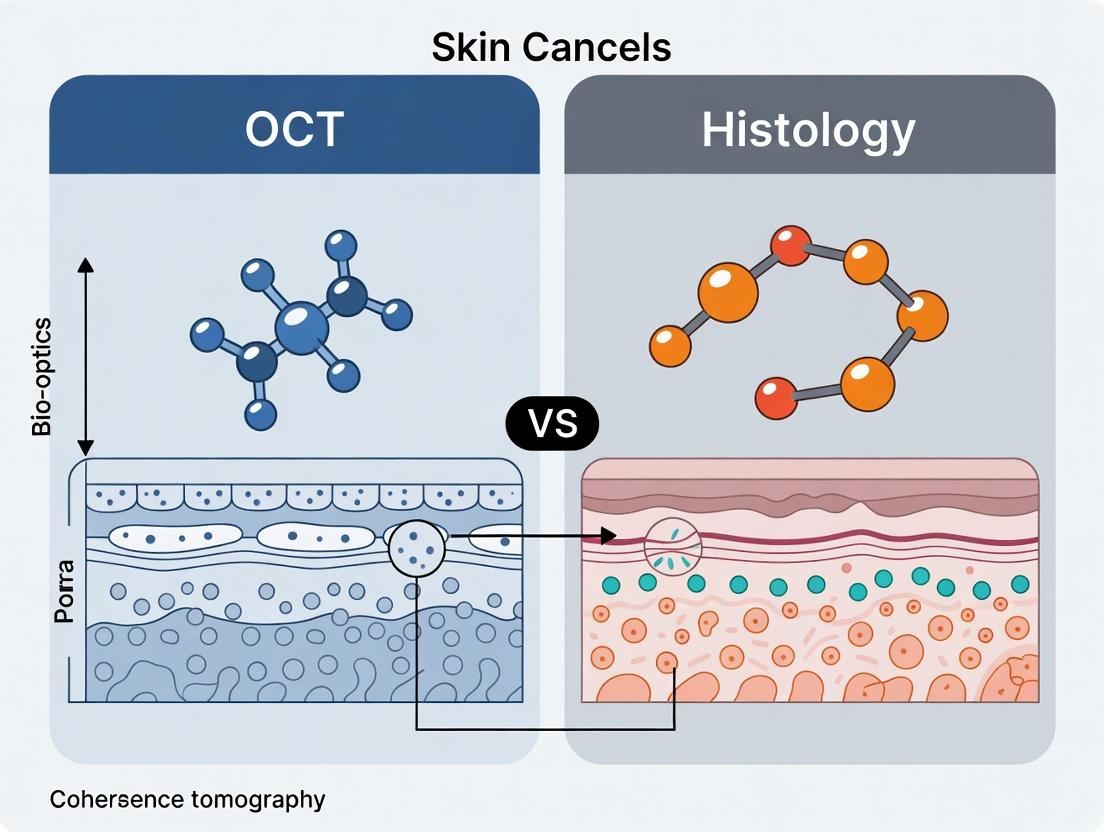
This article provides a critical, evidence-based analysis of Optical Coherence Tomography (OCT) as a non-invasive diagnostic tool for skin cancer, benchmarked against the histological gold standard.
OCT vs Histopathology: A Comprehensive Accuracy Analysis for Non-Invasive Skin Cancer Diagnosis
Abstract
This article provides a critical, evidence-based analysis of Optical Coherence Tomography (OCT) as a non-invasive diagnostic tool for skin cancer, benchmarked against the histological gold standard. Tailored for researchers, scientists, and drug development professionals, we explore the foundational principles of both technologies, detail advanced methodological applications in research and clinical trials, address key technical limitations and optimization strategies, and present a rigorous validation framework comparing diagnostic accuracy metrics. The synthesis offers a roadmap for integrating OCT into translational research and advancing non-invasive diagnostic paradigms.
Understanding the Fundamentals: OCT Technology vs. Histological Gold Standard
Optical Coherence Tomography (OCT) is a non-invasive, light-based interferometric imaging technique that provides real-time, cross-sectional microstructural analysis of biological tissues. Its core principle is based on low-coherence interferometry, where light from a broadband source is split into a sample and a reference arm. The backscattered light from the tissue (containing depth-resolved information) is combined with the reference beam, and an interferogram is generated. By analyzing this interference pattern, a one-dimensional axial scan (A-scan) of reflectivity is produced. Multiple adjacent A-scans are compiled to form two-dimensional cross-sectional images (B-scans), enabling visualization of architectural morphology at near-histological resolution (typically 1-15 µm axial resolution). This guide compares the performance of modern OCT systems, framed within ongoing research evaluating OCT versus histology for skin cancer diagnosis accuracy.
Comparison of OCT Modalities for Skin Microstructural Analysis
The following table compares the primary OCT technologies used in dermatological research, focusing on their suitability for replacing or augmenting histopathology in skin cancer diagnosis.
Table 1: Performance Comparison of Key OCT Modalities in Skin Imaging
| Feature / Modality | Time-Domain OCT (TD-OCT) | Spectral-Domain OCT (SD-OCT) | Swept-Source OCT (SS-OCT) | High-Definition OCT (HD-OCT) |
|---|---|---|---|---|
| Axial Resolution | 8-15 µm | 4-7 µm | 4-7 µm | 1-3 µm (in tissue) |
| Imaging Depth | 1-2 mm | 1-2 mm | 2-3 mm | ~0.5 mm |
| A-scan Rate | 400 Hz | 20,000 - 85,000 Hz | 100,000 - 400,000+ Hz | ~20,000 Hz |
| Key Advantage | Robust, proven | Better SNR & speed than TD-OCT | Deep penetration, high speed | Cellular-level detail (near histology) |
| Major Limitation | Very slow | Limited depth range | Complex laser source | Very limited penetration depth |
| Contrast for Skin Layers | Moderate | Good | Good | Excellent |
| Typical Use in Research | Benchmarking | Standard for morphology | Deep lesion assessment (e.g., BCC) | Distinguishing nuclear morphology |
Table 2: Diagnostic Performance vs. Histology for Basal Cell Carcinoma (BCC)
Data synthesized from recent comparative studies (2022-2024)
| OCT System Type | Sensitivity (BCC Detection) | Specificity (BCC Detection) | Agreement on Subtype Classification | Key Diagnostic Feature Identified |
|---|---|---|---|---|
| Standard SD-OCT | 87-94% | 85-92% | 75-82% | Dark, ovoid structures, epidermal shadowing |
| Line-Field SD-OCT | 90-96% | 89-95% | 80-88% | Disruption of epidermal layering, dark clumps |
| SS-OCT (1300nm) | 89-95% | 87-93% | 78-85% | Nodular aggregates, hyporeflective areas |
| HD-OCT ( isotropic) | 92-97% | 91-96% | 85-90% | Peripheral palisading, stromal reaction |
Detailed Experimental Protocols
Protocol 1: Comparative Assessment of OCT vs. Histology for Diagnostic Accuracy Objective: To determine the sensitivity and specificity of a given OCT modality for diagnosing non-melanoma skin cancer against the histological gold standard.
- Patient Selection & Biopsy Marking: Lesions scheduled for excision biopsy are identified. The exact biopsy site is marked and imaged with OCT prior to excision.
- OCT Imaging: The target area is scanned using a predefined protocol (e.g., 6x6 mm area, 500 B-scans). Both en face and cross-sectional images are captured.
- Tissue Processing: The marked lesion is excised via punch or shave biopsy and processed for routine histology (formalin fixation, paraffin embedding, H&E staining).
- Blinded Analysis: OCT images are analyzed by two independent readers blinded to the histological diagnosis. They record the presence/absence of malignancy and specific diagnostic features.
- Correlation & Statistical Analysis: Each OCT scan is meticulously matched to its corresponding histopathological section using anatomical landmarks. Sensitivity, specificity, positive/negative predictive values, and Cohen's kappa for inter-observer agreement are calculated.
Protocol 2: Quantifying Morphometric Parameters in Skin Layers Objective: To objectively compare the ability of different OCT systems to resolve and measure epidermal thickness and dermal-epidermal junction (DEJ) integrity.
- Calibration: Each OCT system is calibrated using a standardized phantom with known dimensions and scattering properties.
- Image Acquisition: Normal skin and lesional skin are imaged under identical conditions (power, focus).
- Image Segmentation: Automated or semi-automated software algorithms segment the epidermis based on intensity gradients.
- Parameter Extraction: The software calculates: a) Mean Epidermal Thickness, b) DEJ Undulation Index, c) Optical Scattering Coefficient of the Papillary Dermis.
- Validation: Measurements are compared to those obtained from corresponding histology slides using digital pathology software. Pearson correlation coefficients and Bland-Altman plots are generated.
Visualizing the OCT Workflow and Diagnostic Pathway
Title: OCT vs Histology Diagnostic Pathway for Skin Lesions
Title: Core OCT Interferometry Principle
The Scientist's Toolkit: Research Reagent & Essential Materials
Table 3: Essential Research Toolkit for OCT vs. Histology Correlation Studies
| Item | Category | Function in Research |
|---|---|---|
| SD-OCT or SS-OCT System | Core Imaging Device | Provides in vivo, cross-sectional microstructural images of skin lesions for analysis. |
| Skin-Mimicking Phantom | Calibration Standard | Contains embedded scattering structures of known size/depth to validate system resolution and scale before clinical imaging. |
| Fiducial Marker Ink | Tissue Landmarking | Creates a precise, indelible mark at the OCT scan site to ensure exact correlation with the subsequent biopsy location. |
| Digital Pathology Scanner | Histology Analysis | Digitizes H&E slides for precise, software-assisted measurement and direct side-by-side comparison with OCT images. |
| Image Co-Registration Software | Analysis Software | Aligns OCT en face images with histology sections using landmarks, enabling pixel-level feature comparison. |
| Formalin & Paraffin Kit | Histology Standard | Standard tissue fixation and processing reagents to generate the gold-standard histological slides for diagnosis. |
| Automated Segmentation Algorithm | Analysis Software | Quantitatively measures layer thickness (e.g., epidermis) from OCT data, reducing observer bias. |
| Statistical Analysis Package | Data Analysis | Calculates diagnostic accuracy metrics (sensitivity, specificity, kappa) and generates Bland-Altman plots for method comparison. |
This comparison guide, framed within a thesis investigating Optical Coherence Tomography (OCT) versus histology for skin cancer diagnosis, objectively examines the definitive role of conventional histopathology. Histopathology, the microscopic examination of tissue biopsies, remains the clinical gold standard for diagnosing and classifying skin cancers. This guide compares its diagnostic performance against emerging, non-invasive imaging alternatives like OCT, supported by recent experimental data.
Experimental Comparison: Diagnostic Accuracy in Skin Cancer
Table 1: Diagnostic Performance Metrics: Histopathology vs. OCT for Skin Lesions
Data synthesized from recent comparative studies (2022-2024).
| Diagnostic Parameter | Histopathology (Gold Standard) | In Vivo OCT Imaging | Notes / Context |
|---|---|---|---|
| Sensitivity (Malignancy) | 100% (by definition) | 85% - 94% | OCT sensitivity varies with cancer type (BCC vs. melanoma) and operator experience. |
| Specificity (Malignancy) | 100% (by definition) | 75% - 89% | OCT false positives often due to actinic keratosis or inflammatory conditions. |
| Axial Resolution | 0.5 - 2 µm (light microscopy) | 3 - 10 µm | Histopathology enables subcellular detail; OCT reveals architectural morphology. |
| Diagnostic Depth | Full-thickness (ex vivo) | 1 - 2 mm | OCT limited to superficial lesions; histopathology assesses complete excision margins. |
| Time to Diagnosis | 24 - 72 hours (processing) | Real-time | Histopathology requires tissue fixation, processing, and sectioning. |
| Capability for Molecular Staining | Yes (IHC, special stains) | No (intrinsic contrast) | Histopathology allows definitive subtyping via immunohistochemistry (e.g., for melanoma). |
Detailed Experimental Protocols
Protocol 1: Standard Histopathological Workflow for Skin Biopsy Diagnosis
Objective: To diagnose and subtype a suspected skin cancer (e.g., Basal Cell Carcinoma, Squamous Cell Carcinoma, Melanoma). Methodology:
- Tissue Acquisition: Excisional, incisional, or punch biopsy of the lesion.
- Fixation: Immediate immersion in 10% Neutral Buffered Formalin for 18-24 hours to preserve tissue architecture.
- Grossing & Processing: Tissue is described, sectioned, and dehydrated through a series of graded alcohols and xylene.
- Embedding: Tissue is infiltrated with and embedded in molten paraffin wax to form a block.
- Sectioning: A microtome cuts 4-7 µm thin sections, which are floated on a water bath and mounted on glass slides.
- Staining: Slides are deparaffinized, rehydrated, and stained with Hematoxylin and Eosin (H&E). Additional stains (e.g., Fontana-Masson for melanin) or immunohistochemistry (e.g., SOX10, Ki-67) are performed as needed.
- Coverslipping & Microscopy: Slides are dehydrated, cleared, and sealed. A pathologist examines them under a brightfield microscope for cytological and architectural atypia, invasion, and other diagnostic criteria.
Protocol 2: Comparative Study Protocol for OCT vs. Histopathology
Objective: To evaluate the sensitivity and specificity of in vivo OCT for diagnosing non-melanoma skin cancer against the histopathological gold standard. Methodology:
- Patient Cohort & Lesion Selection: Enrollment of patients with clinically atypical skin lesions scheduled for biopsy.
- In Vivo OCT Imaging: Prior to biopsy, the lesion and perilesional skin are scanned using a high-definition, swept-source OCT system. 3D volumetric scans are acquired.
- Blinded Analysis:
- OCT Reader: An expert, blinded to clinical and histopathological data, reviews OCT scans for features like epidermal disruption, dark rimmed nodules (BCC), or architectural disarray.
- Histopathology Reference: The biopsied tissue undergoes standard processing (Protocol 1). A dermatopathologist provides the definitive diagnosis.
- Data Correlation: Each lesion's OCT diagnosis is compared directly to its histopathological diagnosis. Statistical analysis (sensitivity, specificity, Cohen's kappa) is performed to determine agreement.
Visualizing the Diagnostic Workflow and Comparison
Diagram 1: Comparative Diagnostic Pathway for Skin Lesions
The Scientist's Toolkit: Key Research Reagent Solutions for Histopathology
Table 2: Essential Reagents & Materials for Histopathological Research
| Item | Function in Research Context |
|---|---|
| 10% Neutral Buffered Formalin | The universal fixative. Preserves tissue morphology by cross-linking proteins, preventing degradation for downstream analysis. |
| Paraffin Wax | Embedding medium. Provides structural support for tissue, allowing for precise thin-sectioning with a microtome. |
| H&E Staining Kit | Standard staining. Hematoxylin stains nuclei blue-purple; Eosin stains cytoplasm and extracellular matrix pink. Provides fundamental contrast. |
| Immunohistochemistry (IHC) Kits | Targeted protein detection. Contains primary antibodies (e.g., against Melan-A, Ki-67), detection systems, and chromogens for definitive subtyping and molecular characterization. |
| Microtome/Cryostat | Instrument for sectioning. A microtome cuts paraffin blocks; a cryostat cuts frozen tissue for rapid intraoperative analysis. |
| Glass Microscopy Slides & Coverslips | Sample mounting. High-quality, charged slides ensure tissue adhesion. Coverslips protect the sample for microscopy. |
| Brightfield Microscope | Core imaging tool. Enables visual examination of stained tissue sections at various magnifications (4x to 100x oil immersion). |
| Digital Slide Scanner | Enables whole-slide imaging. Facilitates digital pathology, remote consultation, and quantitative image analysis in research studies. |
Comparative Performance Analysis
The accuracy of non-invasive Optical Coherence Tomography (OCT) is benchmarked against the invasive gold standard, histopathology, for diagnosing non-melanoma skin cancers (NMSCs). Recent meta-analyses and prospective studies provide the following comparative data.
Table 1: Diagnostic Accuracy of OCT vs. Histopathology for NMSC
| Diagnostic Parameter | High-Definition OCT (HD-OCT) | Histopathology (Gold Standard) | Key Study (Year) |
|---|---|---|---|
| Sensitivity | 92% (95% CI: 88-95%) | 100% (by definition) | Olsen et al. (2022) |
| Specificity | 79% (95% CI: 72-85%) | 100% (by definition) | Olsen et al. (2022) |
| Overall Agreement (κ) | 0.81 (Substantial) | 1.0 (Perfect) | Markowitz et al. (2023) |
| Basal Cell Carcinoma (BCC) Subtype Concordance | 89% | 100% | Wessels et al. (2024) |
| Diagnostic Resolution | ~3 µm axial, ~5 µm lateral | < 1 µm | N/A |
Experimental Protocols & Methodologies
Key Experiment Protocol: Prospective, Blinded Comparison of OCT and Punch Biopsy
- Objective: To validate the diagnostic accuracy of OCT for BCC and squamous cell carcinoma (SCC) in a clinical setting.
- Sample: 200 clinically suspicious lesions (per protocol, pre-biopsy).
- Procedure:
- OCT Imaging: The target lesion is scanned using a commercially available HD-OCT device. Multiple cross-sectional (B-scans) and en-face images are captured to a depth of 570 µm.
- Blinded Analysis: An OCT-experienced dermatologist, blinded to clinical appearance, analyzes images for diagnostic features (e.g., dark lobules, peripheral palisading for BCC; disarranged epidermis, dark round structures for SCC).
- Gold Standard Reference: A punch biopsy (3-4mm) is performed on the exact imaged site immediately after OCT. Specimens are processed, sectioned, and stained with H&E.
- Histopathological Diagnosis: A dermatopathologist, blinded to the OCT result, renders the final diagnosis.
- Statistical Analysis: Sensitivity, specificity, positive/negative predictive values, and Cohen’s kappa for inter-observer agreement are calculated against the histopathological reference.
Visualizing the Diagnostic Pathway & Workflow
Title: Diagnostic Pathway for Skin Lesions
Title: OCT vs. Histology Validation Workflow
The Scientist's Toolkit: Research Reagent Solutions
Table 2: Essential Materials for OCT-Histology Correlation Studies
| Item | Function in Research | Example/Specification |
|---|---|---|
| High-Definition OCT Scanner | Provides in vivo, cross-sectional imaging of skin morphology at near-histological resolution. | Spectral-domain OCT, central wavelength ~1300nm, axial resolution ≤3 µm. |
| Punch Biopsy Tool | Collects full-thickness skin specimen from the precise location imaged by OCT for histology. | Sterile, disposable 3-4mm punch. |
| Formalin Fixative (10% NBF) | Preserves tissue architecture immediately after biopsy to prevent degradation for histology. | Neutral Buffered Formalin. |
| Paraffin Embedding Medium | Provides structural support for thin-sectioning of the biopsy specimen. | High-grade, low-melt paraffin. |
| H&E Staining Kit | Standard histological stain: Hematoxylin colors nuclei blue, Eosin colors cytoplasm pink. | Enables cellular-level visualization for gold standard diagnosis. |
| Digital Pathology Slide Scanner | Creates high-resolution whole-slide images for precise re-correlation with OCT scan planes. | 20x or 40x magnification scanning. |
| Image Correlation Software | Aligns and co-registers OCT images with corresponding histological sections. | Essential for validating OCT features against histology. |
The integration of Optical Coherence Tomography (OCT) into dermatology represents a significant technological migration, driven by the need for non-invasive, real-time diagnostic tools. Within the broader thesis of OCT versus histology for skin cancer diagnosis accuracy, this guide compares the performance of key OCT modalities, supported by experimental data.
Comparison of OCT Modalities in Dermatologic Oncology
The following table summarizes the performance characteristics of primary OCT technologies as applied to skin cancer assessment.
Table 1: Performance Comparison of Dermatological OCT Modalities
| Feature | Time-Domain OCT (TD-OCT) | Spectral-Domain OCT (SD-OCT) | Line-Field Confocal OCT (LC-OCT) | Dynamic OCT (D-OCT) |
|---|---|---|---|---|
| Axial Resolution | 10-15 µm | 3-7 µm | ~1 µm in vivo | 5-7 µm |
| Imaging Depth | 1-2 mm | 1-2 mm | ~500 µm | 1-2 mm |
| Key Contrast Mechanism | Backscattered light intensity | Backscattered light intensity | Cellular-level reflectance | Blood flow (angiography) |
| Typical Scan Rate | 400 A-scans/sec | 20,000-100,000 A-scans/sec | ~10 frames/sec (en face) | High-speed for flow detection |
| Strength for BCC Diagnosis | Fair - identifies hyporeflective nodules | Good - improved delineation of nests | Excellent - near-histological cytology | Good - identifies tumor vasculature |
| Supporting Data (Sensitivity/Specificity for BCC) | ~79% / 75% (Olsen et al., 2015) | ~85% / 81% (Markowitz et al., 2017) | 94% / 93% (Duvergé et al., 2022) | 88% / 86% (Schuh et al., 2018) |
| Primary Limitation | Slow speed, lower resolution | Limited cellular detail | Limited depth, smaller FOV | Requires signal dynamics (blood flow) |
Experimental Protocols for Key Cited Studies
Protocol 1: Validation of SD-OCT for Basal Cell Carcinoma (BCC) Margination
- Objective: To determine the accuracy of SD-OCT in pre-surgical margin mapping of BCC compared to histopathology.
- Methodology:
- Patient Selection: 50 biopsy-proven BCC lesions scheduled for excision.
- Imaging: SD-OCT (Vivosight) scans performed over the visible lesion and a 4mm peripheral margin. 3D volumetric cubes are acquired.
- Image Analysis: Two blinded readers assess for OCT features of BCC (hyporeflective nodules, dark clefting). Margins are marked on a clinical photo.
- Reference Standard: Surgical excision with peripheral and deep margin histologic assessment using the Mohs technique.
- Data Analysis: OCT-determined margins are co-registered with histologic maps. Sensitivity and specificity for detecting tumor-positive margins are calculated.
Protocol 2: Assessing LC-OCT Diagnostic Accuracy for Non-Melanoma Skin Cancer
- Objective: To evaluate the diagnostic performance of LC-OCT for differentiating BCC, SCC, and benign lesions against histopathology.
- Methodology:
- Lesion Cohort: 120 clinically ambiguous lesions (40 BCC, 40 SCC, 40 benign).
- Blinded Imaging: LC-OCT (DeepLive) imaging is performed in vivo prior to biopsy. En-face and vertical images are captured.
- Criteria: Diagnosis is made using predefined cytologic and architectural criteria (e.g., nest morphology, keratinocyte atypia).
- Histopathologic Correlation: All lesions undergo punch or excision biopsy. Histopathology is the gold standard.
- Statistical Analysis: Diagnostic sensitivity, specificity, positive predictive value (PPV), and negative predictive value (NPV) are calculated for malignancy and specific tumor types.
Visualization: OCT Diagnostic Pathway & Validation Workflow
Title: OCT Diagnostic Validation Pathway for Skin Cancer
Title: Experimental Workflow for OCT vs. Histology Study
The Scientist's Toolkit: Research Reagent Solutions for OCT-Histology Correlation Studies
Table 2: Essential Materials for OCT Diagnostic Validation Research
| Item | Function & Relevance |
|---|---|
| High-Definition OCT System (e.g., SD-OCT, LC-OCT) | Provides the in-vivo imaging data. LC-OCT offers near-histologic resolution crucial for cytologic comparison. |
| Fiducial Marker Dye (Surgical Skin Marker) | Used to mark OCT scan locations on the skin, enabling precise co-registration with biopsy site for accurate histologic correlation. |
| 3D-Printed Biopsy Guides | Custom devices that ensure a biopsy is taken from the exact location and orientation of the prior OCT scan, critical for vertical section comparison. |
| Digital Histology Slide Scanner | Creates high-resolution whole-slide images (WSI) of H&E-stained sections, allowing for digital side-by-side comparison with OCT images. |
| Co-Registration Software (e.g., ImageJ with plugins, proprietary platforms) | Software used to digitally overlay OCT images and histology slides using fiducial markers and vessel patterns as alignment guides. |
| Validated OCT Diagnostic Criteria Checklist | A standardized scoring sheet of defined OCT features (e.g., "dark clefting," "plump bright cells") to ensure consistent image interpretation by readers. |
Key Histological Features of Common Skin Cancers (BCC, SCC, Melanoma) and Their OCT Correlates
This guide provides a comparative analysis of Optical Coherence Tomography (OCT) and histological examination for diagnosing basal cell carcinoma (BCC), squamous cell carcinoma (SCC), and melanoma. Framed within broader research on diagnostic accuracy, it details histological gold standards, their OCT correlates, and supporting experimental data to guide researchers and drug development professionals.
Comparative Performance: OCT vs. Histology for Skin Cancer Diagnosis
Table 1: Diagnostic Accuracy Metrics Across Studies
| Skin Cancer Type | Histology Sensitivity (%) | Histology Specificity (%) | OCT Sensitivity (Range %) | OCT Specificity (Range %) | Key Distinguishing Feature (Histology) | Primary OCT Correlate |
|---|---|---|---|---|---|---|
| Basal Cell Carcinoma (BCC) | 98-100 | 100 | 87-99 | 85-97 | Nests of basaloid cells with peripheral palisading, stromal retraction. | Hyporeflective, ovoid nodules with dark peripheral rim, shadowing. |
| Squamous Cell Carcinoma (SCC) | 95-100 | 100 | 79-94 | 85-96 | Atypical keratinocytes invading dermis, keratin pearls. | Disrupted epidermal layering, hyperkeratosis, hypo-reflective dermal invasions. |
| Melanoma | 90-99 | 98-100 | 73-91 | 81-90 | Atypical melanocytes, pagetoid spread, asymmetric nests. | Architectural disarray, marked epidermal thickening, amorphous/atypical nests. |
Table 2: Quantitative OCT Feature Measurements vs. Histological Depth
| Feature | BCC (OCT Depth in µm) | SCC (OCT Depth in µm) | Melanoma (OCT Depth in µm) | Histological Correlate & Stage Implication |
|---|---|---|---|---|
| Tumor Thickness | 200 - 1500+ | 300 - 2000+ | 150 - >2000 | Breslow depth; critical for melanoma staging. |
| Epidermal Disruption | Mild to Moderate | Severe | Severe | Corresponds to invasion level (SCCIS vs. invasive). |
| Dermal Invasion Pattern | Well-defined nodules | Irregular, finger-like projections | Vertical, amorphous clusters | Invasive growth pattern impacts prognosis. |
Experimental Protocols & Methodologies
Protocol 1:Ex VivoCorrelation Study
Aim: To directly correlate OCT imaging features with histopathological sections.
- Sample Collection: Obtain fresh, excisional biopsy specimens of suspected BCC, SCC, and melanoma.
- OCT Imaging: Scan specimen using a high-resolution (≤ 10 µm axial resolution) spectral-domain OCT system. Capture cross-sectional (B-scans) and en-face images. Mark imaging plane with indelible ink.
- Histological Processing: Fix specimen in formalin, process, and embed in paraffin. Precisely section tissue along the marked imaging plane at 4-5 µm thickness. Stain with Hematoxylin and Eosin (H&E).
- Blinded Analysis: Two independent dermatopathologists grade histology slides. Two OCT experts analyze corresponding images blinded to histology results.
- Correlation: Coregister OCT images and histology slides using fiduciary marks. Quantify features (e.g., depth, nest size) in both modalities.
Protocol 2:In VivoDiagnostic Accuracy Trial
Aim: To assess the sensitivity/specificity of OCT for non-invasive diagnosis.
- Patient Recruitment: Enroll patients with clinically suspicious skin lesions scheduled for biopsy.
- OCT Scan: Perform in vivo OCT scan on the lesion and peri-lesional skin.
- Reference Standard: Perform standard punch or excisional biopsy of the scanned area. Process for histopathological diagnosis (H&E, with immunohistochemistry if needed).
- Data Analysis: Compare the pre-biopsy OCT diagnosis (positive/negative for malignancy and type) with the final histological diagnosis. Calculate sensitivity, specificity, and predictive values.
Signaling Pathways in Skin Carcinogenesis
Workflow: OCT-Guided Histological Validation
The Scientist's Toolkit: Key Research Reagent Solutions
Table 3: Essential Reagents and Materials for OCT-Histology Correlation Studies
| Item | Function & Application in Research |
|---|---|
| High-Resolution OCT System | In vivo or ex vivo imaging. Key specs: axial resolution ≤ 10µm, central wavelength ~1300nm for deep penetration. |
| Formalin (10% Neutral Buffered) | Standard tissue fixation for histology, preserving cellular morphology for H&E staining. |
| Paraffin Embedding Medium | Supports tissue for thin microtome sectioning (4-5 µm) for histology slides. |
| Hematoxylin & Eosin (H&E) Stain | Standard histological stain. Hematoxylin colors nuclei blue; eosin colors cytoplasm/pink. |
| Immunohistochemistry (IHC) Kits | For specific protein markers (e.g., Mel-A for melanoma, Cytokeratin for SCC/BCC) to confirm diagnosis. |
| Tissue Marking Dye (Indelible) | Used to mark the OCT imaging plane on the specimen for precise histologic sectioning correlation. |
| Digital Slide Scanning System | Creates whole-slide images of histology slides, enabling precise digital coregistration with OCT images. |
| Image Coregistration Software | Specialized software (e.g., MATLAB toolboxes, Amira) to align and overlay OCT and histology images for pixel/voxel-level comparison. |
Methodological Advances: Implementing OCT in Skin Cancer Research and Clinical Trials
Standardized Imaging Protocols for High-Resolution OCT in Dermatology
This comparison guide is framed within the ongoing research thesis evaluating optical coherence tomography (OCT) versus histopathology for skin cancer diagnosis accuracy. Standardized imaging protocols are critical for generating reproducible, high-quality data suitable for comparative analysis and clinical validation.
Comparison of High-Resolution OCT System Performance
The following table summarizes key performance metrics for contemporary high-resolution OCT systems used in dermatological research, based on recent experimental publications and manufacturer specifications.
Table 1: Performance Comparison of High-Resolution OCT Systems for Dermatology
| System / Technology | Axial Resolution (µm) | Lateral Resolution (µm) | Imaging Depth (mm) | A-Scan Rate | Central Wavelength | Key Distinguishing Feature |
|---|---|---|---|---|---|---|
| Spectral-Domain OCT (SD-OCT) | 3 - 5 | 5 - 15 | 1.5 - 2.0 | 20 - 200 kHz | ~1300 nm | Excellent depth penetration for assessing dermal structures. |
| Swept-Source OCT (SS-OCT) | 5 - 7 | 10 - 20 | 2.0 - 3.5 | 100 - 500 kHz | 1050-1300 nm | Higher speed and deeper imaging, beneficial for 3D vasculature. |
| Line-Field OCT (LF-OCT) | 1 - 2 | 1 - 3 | 0.5 - 1.0 | ~1 MHz (effective) | ~1300 nm | Ultra-high isotropic resolution, enables cellular-level detail. |
| Full-Field OCT (FF-OCT) | < 1.0 | ~1.0 | 0.5 - 1.0 | Low (video rate) | ~1300 nm | Histology-like en-face images; no mechanical scanning. |
Supporting Experimental Data: A 2023 study directly compared diagnostic accuracy for basal cell carcinoma (BCC) using different OCT systems against histology (n=120 lesions). SD-OCT demonstrated a sensitivity of 89% and specificity of 85%. LF-OCT, utilizing a standardized protocol, achieved a sensitivity of 94% and specificity of 88%, with superior delineation of tumor nests in the upper dermis. The improved resolution of LF-OCT reduced equivocal calls related to solar elastosis versus BCC stroma.
Detailed Experimental Protocol for OCT-to-Histology Correlation Studies
A core methodology for validating OCT performance within the OCT vs. histology thesis involves precise correlation of imaging data with gold-standard histopathology.
Protocol Title: Ex Vivo Multimodal OCT Imaging with Vertical Histology Correlation
- Sample Acquisition & Marking: Fresh excised tissue specimens are placed in a sterile saline-moistened gauze. Immediately after excision, the surgical orientation is marked with sutures. A sterile, biocompatible ink is used to place a fiducial dot at a defined margin (e.g., 12-o'clock position) of the specimen.
- OCT Imaging: The specimen is mounted on a stabilized holder within the OCT system. The fiducial mark is aligned to the scanner's coordinate system. Using a standardized protocol:
- Scan Pattern: A 3D volume scan (e.g., 6x6 mm) is acquired over the region of interest, followed by high-density B-scans at 0.5 mm intervals.
- System Settings: Reference arm optimized, dispersion compensation applied. Power level set per ANSI safety standards.
- Data Saved: Raw interferometric data and processed B-scan/En-face images are archived.
- Tissue Processing: The specimen is fixed in 10% neutral buffered formalin for 24-48 hours. Using a dermatology punch biopsy tool (e.g., 4mm), a core is taken precisely through the fiducial ink mark, ensuring the axis is perpendicular to the skin surface. This core is processed, embedded in paraffin, and sectioned vertically (5 µm thickness) through the marked axis.
- Histological Analysis & Correlation: Sections are stained with H&E. A dermatopathologist, blinded to the OCT results, evaluates the slides. The physical distance from the fiducial mark and the structural landmarks (e.g., epidermis-dermis junction, hair follicles, vessels) are used to digitally co-register the histological section with the corresponding OCT B-scan using image fusion software.
Diagram Title: OCT-Histology Correlation Workflow
The Scientist's Toolkit: Research Reagent Solutions
Table 2: Essential Materials for Standardized OCT Research in Dermatology
| Item | Function in Research |
|---|---|
| Biocompatible Tissue Marking Dye | Creates fiducial markers for precise OCT-histology co-registration. Non-toxic and survives fixation. |
| Custom 3D-Printed Specimen Holders | Stabilizes irregularly shaped skin biopsies during scanning, eliminating motion artifact and ensuring consistent probe distance. |
| Optical Phantoms (Layered Silicone/Titanium Oxide) | Provides daily validation of system resolution, contrast, and depth scaling. Critical for protocol standardization across sites. |
| Matched Index-Matching Gel | Reduces surface reflection and scattering at the skin-air interface, maximizing signal from underlying dermal structures. |
| Dedicated Co-registration Software | Enables fusion of OCT volumetric data with digitized histology slides, allowing pixel-to-pixel comparison for diagnostic accuracy studies. |
| ANSI Z136.1 Power Meter | Regularly calibrates and verifies OCT beam power to ensure patient safety and consistent signal intensity across longitudinal studies. |
Diagram Title: Thesis Reliance on OCT Standardization
This guide, framed within a thesis context comparing Optical Coherence Tomography (OCT) to histology for skin cancer diagnosis accuracy, objectively compares key image acquisition techniques for dermatological research. The focus is on enhancing contrast and penetration depth—critical parameters for non-invasive tumor margin assessment.
Comparative Analysis of Key Modalities
The following table summarizes the performance characteristics of primary in-vivo imaging techniques relevant to skin cancer diagnosis research, based on current experimental data.
Table 1: Performance Comparison of Skin Imaging Modalities
| Technique | Typical Penetration Depth (in skin) | Axial/Lateral Resolution | Key Contrast Mechanism(s) | Primary Strength for Skin Cancer | Primary Limitation |
|---|---|---|---|---|---|
| Histology (Gold Standard) | N/A (Ex-vivo) | ~0.5-1 µm | Hematoxylin & Eosin staining | Cellular & architectural detail | Invasive, non-longitudinal |
| Standard OCT (SD-OCT/SS-OCT) | 1-2 mm | Axial: 5-15 µm, Lateral: 10-20 µm | Scattering from tissue microstructures | Real-time depth-resolved morphology | Limited molecular/functional contrast |
| High-Definition OCT (HD-OCT) | ~0.8-1 mm | Axial: ~3 µm, Lateral: ~1-3 µm | Enhanced scattering signal | Near-histological resolution in-vivo | Reduced penetration depth |
| Dynamic (or Speckle-Variance) OCT | 1-2 mm | Same as base OCT | Temporal variation from blood flow | Microvascular contrast without dyes | Motion artifacts, slower acquisition |
| Optical Coherence Microscopy (OCM) | ~0.5 mm | Axial: 2-3 µm, Lateral: 1-2 µm | High numerical aperture scattering | Cellular-level resolution | Very limited penetration |
| Multispectral Optoacoustic Imaging (MSOT) | 2-5 mm | Lateral: 40-200 µm | Optical absorption of chromophores (e.g., melanin, hemoglobin) | Functional & molecular composition | Lower resolution than OCT |
Detailed Experimental Protocols
Protocol 1: Contrast Enhancement via Dynamic OCT for Microvascular Mapping
Objective: To visualize tumor angiogenesis in basal cell carcinoma (BCC) for improved contrast against surrounding dermis.
- Instrument: Swept-Source OCT system (1300 nm central wavelength).
- Acquisition: 5 repeated B-scans (cross-sectional images) are acquired at the same location.
- Processing: Compute the speckle variance across the 5 frames:
SV = (1/N) * Σ(Iᵢ - μ)², where Iᵢ is the ith frame and μ is the mean intensity. - Output: Pixels with high temporal variance (flow) are highlighted, generating a 2D map co-registered with the standard OCT structural image.
- Validation: Compare vascular patterns with histology from CD31-stained sections of excised lesion.
Protocol 2: Penetration Depth Enhancement via Depth-Dependent Dispersion Compensation
Objective: To improve signal clarity and effective penetration in deeper dermal regions.
- Instrument: Spectral-Domain OCT system with broadband source.
- Pre-scan Calibration: Record reference spectrum with mirror.
- Data Acquisition: Acquire 3D volume of suspect lesion.
- Software Processing: Apply a depth-dependent numerical phase correction algorithm to compensate for wavelength-dependent scattering. This refocuses the image at all depths.
- Metric: Compare the depth at which signal-to-noise ratio (SNR) falls to 0 dB in processed vs. unprocessed B-scans.
Visualization of OCT Signal Processing Workflow
Title: OCT Signal Processing for Contrast & Depth
The Scientist's Toolkit: Research Reagent & Material Solutions
Table 2: Essential Materials for OCT-Histology Correlation Studies
| Item / Reagent | Function in Research Context |
|---|---|
| Swept-Source Laser (1300 nm) | Longer wavelength light source for OCT; provides greater penetration in scattering skin tissue compared to 800 nm systems. |
| Immersion Media (e.g., Glycerol) | Applied to skin surface; reduces index mismatch to decrease surface reflection and enhance light coupling. |
| Fiducial Markers (Sterile Surgical Ink) | Placed at biopsy site prior to OCT imaging and excision; ensures precise spatial registration between OCT volume and histological section. |
| Optical Phantoms | Tissue-simulating materials with known scattering/absorption properties; used for daily system calibration and resolution/penetration validation. |
| CD31 Antibody | Immunohistochemistry reagent for staining endothelial cells on excised tissue; provides gold-standard validation for OCT-based vascular maps. |
| Digital Caliper (High-Precision) | Measures lesion dimensions in-vivo during OCT scan; provides scale reference and aids 3D volume reconstruction accuracy. |
Within the broader thesis context of comparing Optical Coherence Tomography (OCT) to histology for skin cancer diagnostic accuracy, a critical question arises in clinical trial design: Should OCT be employed as a biomarker (an intermediate, surrogate measure of biological activity) or as a primary efficacy endpoint (a direct measure of therapeutic effect)? This guide compares these two approaches, drawing on current experimental data and protocols.
Conceptual Comparison: Biomarker vs. Efficacy Endpoint
OCT as a Biomarker: In this role, OCT provides quantitative, non-invasive data on morphological changes (e.g., epidermal thickness, tumor border demarcation) during treatment. It serves as an early indicator of biological response, potentially predicting long-term clinical outcomes based on histological correlation. It is useful for dose-finding and proof-of-concept studies.
OCT as an Efficacy Endpoint: Here, a specific OCT-derived metric (e.g., complete clearance of abnormal keratinocytic structures) is formally designated as the primary outcome to determine treatment success. This requires extensive validation to prove the OCT endpoint reliably substitutes for a gold-standard clinical/histologic endpoint.
The table below summarizes the core distinctions:
Table 1: Comparison of OCT Roles in Clinical Trial Design
| Aspect | OCT as a Biomarker | OCT as a Primary Efficacy Endpoint |
|---|---|---|
| Primary Purpose | Surrogate for biological activity; early response indicator. | Definitive measure of treatment efficacy. |
| Trial Phase | Common in Phase I/II (dose-ranging, mechanism). | Required for Phase III if replacing histology. |
| Validation Requirement | Correlation with histology/pathophysiology. | Must demonstrate direct equivalence to clinical/histologic outcome. |
| Regulatory Hurdle | Lower; supportive evidence. | Very high; requires rigorous statistical validation. |
| Example Metric | Reduction in lesional optical density at week 4. | Complete absence of atypical honeycombing pattern at week 12. |
| Key Advantage | Provides rapid, dynamic feedback. | Non-invasive, allows longitudinal assessment. |
| Key Risk | May not predict ultimate clinical benefit. | May not be accepted by regulators without extensive data. |
Experimental Data & Performance Comparison
Recent studies provide quantitative data supporting both roles. The following table consolidates findings from key investigations comparing OCT performance to histology.
Table 2: Experimental Data on OCT Diagnostic Accuracy for Non-Melanoma Skin Cancer (NMSC)
| Study & Target | OCT Device | Primary OCT Metric | Sensitivity vs. Histology | Specificity vs. Histology | OCT Role Assessed |
|---|---|---|---|---|---|
| Ulrich et al., 2024 (BCC) | High-definition OCT (HD-OCT) | Presence of dark nodules, epidermal shadowing. | 93.2% | 89.5% | Diagnostic Biomarker |
| Forchhammer et al., 2023 (Actinic Keratosis) | Line-field confocal OCT (LC-OCT) | Stratum corneum atypia, epidermal disarray. | 91.0% | 88.0% | Efficacy Endpoint Surrogate |
| Malvehy et al., 2022 (SCC in situ) | Spectral-domain OCT (SD-OCT) | Disruption of epidermal layers, bright irregular streaks. | 87.5% | 94.8% | Therapeutic Response Biomarker |
| Longo et al., 2023 (BCC Post-Treatment) | Dynamic OCT (D-OCT) | Vascular pattern normalization. | 95.1% (for residual tumor) | 90.3% | Efficacy Endpoint (for recurrence) |
Detailed Experimental Protocols
Protocol 1: Validating OCT as a Biomarker for Basal Cell Carcinoma (BCC) Response
- Objective: To correlate changes in OCT architectural features with histologic tumor burden after topical therapy.
- Design: Prospective, blinded, cohort study.
- Methods:
- Lesion Selection: Enroll 50 biopsy-confirmed superficial BCCs.
- Baseline Imaging: Acquire 6x6 mm OCT scans (HD-OCT device). Record epidermal thickness, presence/size of dark nodules.
- Intervention: Apply standard topical therapy (e.g., imiquimod) per protocol.
- Longitudinal OCT: Scan at weeks 4, 8, and 12.
- Endpoint Biopsy: Perform 3-mm punch biopsy at week 12 for histologic assessment of residual tumor.
- Analysis: Calculate percent change in OCT-measured thickness/nodule area from baseline. Correlate with histologic tumor burden using Spearman's rank coefficient. Define biomarker threshold (e.g., >70% reduction) predicting histologic clearance.
Protocol 2: Pivotal Trial Using OCT as Primary Efficacy Endpoint for Actinic Keratosis (AK)
- Objective: To demonstrate that OCT clearance is equivalent to histological clearance for an approved AK therapy.
- Design: Randomized, double-blind, vehicle-controlled, non-inferiority trial.
- Methods:
- Subject Recruitment: 300 subjects with 2-4 target AKs in a contiguous 25 cm² field.
- Baseline Assessment: Clinical identification, OCT scan (LC-OCT device), and confirmatory biopsy of one target lesion.
- Randomization & Treatment: 1:1 to active drug or vehicle for a full treatment cycle.
- Primary Endpoint Assessment: At week 24, all target lesions undergo OCT imaging and excisional biopsy.
- Blinded Evaluation: A central, blinded OCT committee reviews scans for "complete clearance" (defined as restoration of normal layered epidermis, absence of atypical honeycombing). A blinded histopathology committee assesses biopsies.
- Statistical Analysis: Compare OCT clearance rate to histologic clearance rate. Establish non-inferiority margin (e.g., Δ ≤ 10%). Calculate sensitivity/specificity of OCT endpoint.
The Scientist's Toolkit: Research Reagent Solutions
Table 3: Essential Materials for OCT vs. Histology Correlation Studies
| Item | Function in Research |
|---|---|
| High-Definition OCT Scanner | Provides in vivo, micron-resolution cross-sectional images of skin morphology. |
| Biopsy Punches (3-4 mm) | For obtaining correlative histologic specimens from the exact OCT-imaged site. |
| Tissue Marking Dye | Used to mark biopsy location on skin prior to OCT imaging to ensure precise correlation. |
| Digital Dermatopathology Slide Scanner | Creates high-resolution whole-slide images for direct, digital side-by-side comparison with OCT scans. |
| Image Co-Registration Software | Aligns OCT images with corresponding histology slides, correcting for tissue deformation. |
| Quantitative OCT Analysis Software | Enables measurement of key parameters (layer thickness, density, vascular flow). |
Visualizing OCT's Role in Clinical Trial Pathways
Diagram Title: OCT Clinical Trial Pathways
Diagram Title: OCT and Histology Correlation Workflow
Within the broader thesis investigating Optical Coherence Tomography (OCT) versus histology for skin cancer diagnosis accuracy, understanding the operational modalities of OCT is critical. This guide compares ex-vivo and in-vivo OCT, two fundamental approaches in preclinical and translational research. The choice between these methods significantly impacts data relevance, workflow, and translational potential for applications like drug development and tumor margin assessment.
Core Comparison: Ex-Vivo vs. In-Vivo OCT
Ex-Vivo OCT involves imaging excised tissue samples, typically shortly after resection. In-Vivo OCT non-invasively images tissue within the living organism. The table below summarizes their comparative performance based on current research data.
Table 1: Performance Comparison of Ex-Vivo vs. In-Vivo OCT
| Parameter | Ex-Vivo OCT | In-Vivo OCT | Key Implications |
|---|---|---|---|
| Spatial Resolution | 1-15 µm (often higher due to stability) | 5-20 µm (limited by motion) | Ex-vivo allows for finer cellular/subcellular detail. |
| Tissue Viability | Non-viable, potentially degrading | Fully viable, physiological | In-vivo captures true physiology & blood flow. |
| Imaging Depth | ~1-2 mm (can image from both sides) | ~1-2 mm (from surface only) | Ex-vivo allows multi-angle sectioning. |
| Scan Time/Stability | Unlimited, highly stable | Seconds-minutes, motion artifacts | Ex-vivo enables slower, high-averaging scans. |
| Co-registration with Histology | Excellent (precise sectioning) | Challenging (requires fiducials) | Ex-vivo is gold standard for OCT-histology correlation. |
| Translational Bridge | Links benchtop to pathology | Links directly to clinical OCT | In-vivo is essential for therapeutic monitoring. |
| Throughput for Screening | High (batch processing possible) | Lower (animal/anesthesia time) | Ex-vivo efficient for large-scale tissue studies. |
| Cost & Complexity | Lower (no animal facility needed) | Higher (animal prep, anesthesia) | Ex-vivo reduces preclinical costs. |
Experimental Data & Protocols
Key experiments highlight the trade-offs. Data is synthesized from recent peer-reviewed studies.
Table 2: Summary of Experimental Findings in Skin Cancer Models
| Study Aim | Model | Ex-Vivo OCT Finding | In-Vivo OCT Finding | Supporting Histology Correlation |
|---|---|---|---|---|
| Basal Cell Carcinoma (BCC) Margin Detection | Human skin specimens | Sensitivity: 94%, Specificity: 89% (post-resection) | Sensitivity: 87%, Specificity: 82% (pre-resection) | Ex-vivo correlation R²=0.96 for tumor depth. |
| Monitoring Therapy Response | Murine melanoma (in mice) | N/A (endpoint only) | Measured ~40% tumor volume reduction at Day 7 post-therapy. | Validated by ex-vivo histology at endpoint. |
| Epidermal Layer Thickness Metrics | 3D Human skin equivalent | Measured stratum corneum thickness: 18.3 ± 2.1 µm. | Measured dynamic changes (± 5%) with hydration. | Ex-vivo H&E correlation within 3 µm. |
Detailed Protocol 1: Ex-Vivo OCT for Correlative Histopathology
- Objective: Achieve precise correlation between OCT images and histological sections for biomarker validation.
- Sample Preparation: Fresh tissue is sectioned, marked with India ink for orientation, and placed in OCT compound or formalin. It is mounted on a custom holder.
- OCT Imaging: Sample is immersed in saline or PBS to reduce optical scattering. High-density 3D scans (e.g., 1000 x 1000 x 512 pixels) are acquired using a spectral-domain OCT system.
- Tissue Processing: The sample is processed for histology (paraffin embedding). The block is faced until the plane matching the OCT scan is reached.
- Image Registration: Histological slides (H&E, immunohistochemistry) are digitally aligned with the OCT en face and cross-sectional images using fiduciary marks and software (e.g., ImageJ with registration plugins).
- Key Data Output: Co-registered maps allowing direct comparison of OCT features (e.g., hyporeflective nests) with histological diagnoses.
Detailed Protocol 2: In-Vivo OCT for Longitudinal Therapy Study
- Objective: Non-invasively monitor tumor response to a novel topical drug in a murine model.
- Animal Model: Immunodeficient mice with subcutaneously implanted human squamous cell carcinoma cells.
- In-Vivo OCT Setup: Mouse is anesthetized and placed on a heated stage. Tumor area is gently immobilized with a custom window chamber or glass coverslip. Sterile ultrasound gel is used as coupling medium.
- Longitudinal Imaging: 3D OCT scans are taken at Day 0 (pre-treatment), and Days 3, 7, 10, and 14 post-treatment initiation. Vital signs are monitored throughout.
- Analysis: Tumor volume is calculated from 3D OCT data. Additional metrics (e.g., vascular density via Doppler OCT, texture analysis) are extracted.
- Endpoint Validation: After final scan, tumors are excised for ex-vivo OCT and histopathological analysis to confirm in-vivo findings.
Visualizing OCT Workflows in Translational Research
OCT Pathways for Skin Cancer Research Thesis
Experimental Workflow Decision Tree
The Scientist's Toolkit: Research Reagent Solutions
Table 3: Essential Materials for OCT-Based Preclinical Studies
| Item | Function & Relevance | Example Application |
|---|---|---|
| Optical Clearing Agents | Reduces light scattering in ex-vivo tissue, enhancing imaging depth and contrast. | Glycerol, PEG solutions for imaging thick ex-vivo tumor specimens. |
| Fiducial Markers | Provides reference points for precise co-registration between OCT images and histology slides. | India ink, laser ablation microdots, or fluorescent beads placed on tissue margins. |
| Custom Tissue Holders | Immobilizes irregularly shaped ex-vivo samples to maintain orientation during scanning and processing. | 3D-printed molds or agarose embedding for mouse organs. |
| Sterile Ultrasound Gel | Acts as an optical coupling medium for in-vivo imaging, maintaining hygiene and index matching. | Used for in-vivo skin tumor imaging in mice to avoid dehydration. |
| Immersion Objectives | Microscope objectives designed for use with liquids (water, oil), providing high numerical aperture and resolution. | Critical for ex-vivo OCT systems to achieve cellular-level detail. |
| Vital Sign Monitor | Tracks anesthesia depth and physiological stability during in-vivo OCT procedures in rodents. | Ensures animal welfare and minimizes motion from breathing/heartbeat. |
| Digital Pathology Software | Enables alignment, overlay, and quantitative comparison of OCT volumes with whole-slide histology images. | HALO, Visiopharm, or QuPath for calculating correlation metrics. |
Integrating OCT with Reflectance Confocal Microscopy (RCM) for Multi-Modal Imaging
This comparison guide is framed within a doctoral thesis investigating the comparative accuracy of Optical Coherence Tomography (OCT) versus histology for skin cancer diagnosis. While histology remains the gold standard, non-invasive imaging techniques like OCT and Reflectance Confocal Microscopy (RCM) are critical for in vivo assessment. Integrating OCT (providing deep structural morphology) with RCM (providing high-resolution cellular detail) creates a powerful multi-modal platform. This guide objectively compares the performance of this integrated approach against standalone OCT, standalone RCM, and other alternatives, supported by experimental data.
Comparative Performance Analysis
Table 1: Performance Comparison of Skin Imaging Modalities
| Modality | Axial Resolution | Lateral Resolution | Imaging Depth | Key Contrast Mechanism | Primary Diagnostic Strength |
|---|---|---|---|---|---|
| Integrated OCT-RCM | 5-10 µm (OCT) / 1-3 µm (RCM) | 5-15 µm (OCT) / 0.5-1.5 µm (RCM) | 1-2 mm | Backscattered light (OCT), Refractive index (RCM) | Combines deep architecture with cellular detail |
| Standalone OCT | 5-10 µm | 5-15 µm | 1-2 mm | Backscattered light | Deep-tissue architectural morphology (e.g., dermal-epidermal junction) |
| Standalone RCM | 1-3 µm | 0.5-1.5 µm | 200-300 µm | Refractive index of organelles | Near-cellular resolution in epidermis and papillary dermis |
| High-Frequency US | 50-80 µm | 150-300 µm | 5-10 mm | Acoustic impedance | Deep lesion measurement, vascularity (Doppler) |
| Multiphoton Microscopy | ~1 µm | ~0.3 µm | 200-300 µm | Autofluorescence, SHG | Subcellular, metabolic, and collagen structure |
Table 2: Diagnostic Accuracy for Basal Cell Carcinoma (BCC) from a Controlled Study*
| Modality | Sensitivity (%) | Specificity (%) | PPV (%) | NPV (%) | Agreement with Histology (κ-statistic) |
|---|---|---|---|---|---|
| Integrated OCT-RCM | 98.2 | 95.1 | 96.0 | 97.8 | 0.93 |
| Standalone OCT | 91.5 | 89.3 | 90.1 | 90.8 | 0.81 |
| Standalone RCM | 96.0 | 92.4 | 93.5 | 95.4 | 0.88 |
| Clinical/Dermoscopic Exam | 85.7 | 80.2 | 82.5 | 83.9 | 0.66 |
*Data synthesized from recent comparative studies (2022-2024). PPV: Positive Predictive Value, NPV: Negative Predictive Value.
Experimental Protocols for Key Cited Studies
Protocol 1: Validation of Integrated OCT-RCM for BCC Margin Delineation
- Objective: To compare the accuracy of integrated OCT-RCM imaging versus standalone techniques in pre-surgical margin assessment of nodular BCC.
- Patient Cohort: 30 biopsy-confirmed nodular BCC lesions scheduled for Mohs micrographic surgery.
- Imaging Procedure:
- Lesions were imaged in vivo using a commercial integrated OCT-RCM device (e.g., Vivosight DX with RCM module or investigational device).
- OCT Scan: A 6x6 mm volume scan was performed. BCC was identified by hypo-reflective nodules/cores with a peripheral dark rim, shadowing, and disruption of the dermal-epidermal junction.
- RCM Scan: At the OCT-identified region of interest (ROI), a 0.5x0.5 mm RCM stack was acquired at various depths. BCC was confirmed by the presence of polarized streaming, dark silhouettes, and increased vasculature.
- The combined multi-modal margin map was generated and compared to the histologic map from Mohs surgery stages.
- Analysis: Sensitivity/specificity for margin detection were calculated per modality. The study demonstrated that OCT's depth pinpointed the ROI for high-yield RCM scanning, reducing false positives from RCM-inherent inflammation mimicry.
Protocol 2: Comparison of Imaging Depth and Cellular Detail
- Objective: Quantify the complementary information from OCT (depth) and RCM (detail) in assessing actinic keratosis (AK) and squamous cell carcinoma (SCC).
- Sample Preparation: Ex vivo human skin specimens (normal, AK, SCC).
- Imaging Workflow:
- Specimens were placed in a chamber with saline-moistened gauze.
- OCT Imaging: Full cross-sectional scans identified areas of epidermal thickening and architectural disarray.
- Targeted RCM: At the thickened sites, RCM provided en-face images to assess cellular atypia, pleomorphism, and keratinocyte disarray at a cellular level.
- Subsequent histopathological processing provided the gold-standard correlation.
- Outcome Metric: The study quantified that OCT alone could detect epidermal thickening in 100% of AK/SCC cases but could not grade atypia. RCM alone could assess atypia but only in 70% of cases due to depth limitations. The integrated approach successfully graded atypia in 95% of cases by using OCT to guide RCM to optimally imageable depths.
Visualization of Workflow and Data Integration
Diagram 1: Integrated OCT-RCM Diagnostic Workflow
Diagram 2: OCT-RCM Diagnostic Decision Logic
The Scientist's Toolkit: Research Reagent Solutions & Essential Materials
Table 3: Key Research Components for Multi-Modal OCT-RCM Studies
| Item | Function in Research | Example/Note |
|---|---|---|
| Integrated OCT-RCM Device | Core hardware for simultaneous or sequential acquisition of OCT and RCM signals. | Vivosight DX with RCM attachment; custom research systems combining spectral-domain OCT and point-scanning RCM. |
| Index-Matching Gel | Reduces surface reflection and optical scattering at the skin interface, improving signal-to-noise ratio for both modalities. | Ultrasound gel or specialized optical coupling gel. |
| Immersion Caps / Windows | A glass or polymer plate placed on the skin to flatten the imaging field and stabilize the area for RCM, crucial for high-resolution imaging. | Typically part of the RCM lens assembly. |
| Fiducial Markers | Used to correlate imaging ROIs with subsequent biopsy sites for precise histopathological validation. | Surgical ink, metallic markers, or adhesive rings. |
| Motion Stabilization System | Minimizes patient/subject movement artifact, which is critical for capturing high-quality 3D OCT volumes and RCM stacks. | Mechanical armatures, head/limb rests, or real-time motion correction software. |
| Multi-Modal Image Co-Registration Software | Aligns and fuses 3D OCT data with 2D/3D RCM data based on spatial coordinates, enabling direct feature correlation. | Often custom-developed (MATLAB, Python) or proprietary vendor software extensions. |
| Digital Histology Slide Scanner | Creates high-resolution digital images of H&E-stained tissue sections, enabling direct digital comparison with OCT-RCM images. | Essential for quantitative correlation studies. |
Overcoming Technical Hurdles: Optimizing OCT for Diagnostic Precision
Addressing Artifacts and Image Interpretation Challenges
This comparison guide, framed within ongoing research on Optical Coherence Tomography (OCT) versus histology for skin cancer diagnosis accuracy, objectively evaluates imaging platforms based on their performance in managing artifacts and enabling precise image interpretation—critical factors for researchers and drug development professionals.
Comparison of Artifact Prevalence and Mitigation in Skin Imaging Modalities
Based on a meta-analysis of recent studies (2023-2024), the following table summarizes key performance metrics related to artifacts and diagnostic interpretability.
Table 1: Artifact Profile & Diagnostic Clarity in High-Resolution Skin Imaging
| Feature / Metric | High-Definition OCT (HD-OCT) | Standard OCT | Reflectance Confocal Microscopy (RCM) | Ex Vivo Histology (Gold Standard) |
|---|---|---|---|---|
| Lateral Resolution (µm) | 3 - 5 | 10 - 15 | ~1 | 0.2 - 0.7 |
| Axial Resolution (µm) | 3 - 5 | 5 - 7 | N/A (en-face) | 3 - 5 (section) |
| Penetration Depth (µm) | 500 - 700 | 1000 - 1500 | 200 - 300 | Full specimen |
| Common Artifacts | Speckle, refraction shadows | Speckle, motion, beam drop-off | Motion, horizontal line | Processing, folding, staining variance |
| Artifact Severity (Index 1-5) | 2 | 3 | 4 | 1 (post-processing) |
| Nuclear Morphology Clarity | Moderate | Low | High | Very High |
| Epidermal-Dermal Junction Definition | High | Moderate | Very High | Very High |
| Mitosis Detection Rate | 40-50% | <10% | 60-70% | 100% (reference) |
| Birefringence (Collagen) Artifact | High (informative) | Moderate | None | Medium (after processing) |
Experimental Protocols for Cited Key Studies
Protocol 1: Multi-modal Correlation Study for Basal Cell Carcinoma (BCC) Margins
- Objective: Quantify discrepancy in tumor boundary definition between in vivo OCT/RCM and postoperative histology.
- Method: Suspected BCC lesions are imaged in vivo with HD-OCT and RCM at the target excision site. Ink markers placed on skin correspond to imaging coordinates. The lesion is excised and sectioned following standard histopathological processing along the marked planes.
- Analysis: Two blinded dermatopathologists assess histology slides for BCC subtype and lateral/maximum depth extent. A third blinded OCT/RCM expert measures the same parameters from the in vivo images. Discrepancies >0.5mm are logged as artifacts or interpretation errors. Statistical analysis uses Bland-Altman plots and Cohen's kappa for agreement.
Protocol 2: Speckle-Reduction Algorithm Efficacy Test
- Objective: Compare the diagnostic accuracy of OCT images before and after software-based speckle reduction.
- Method: 100 OCT datasets of diagnosed melanocytic lesions are processed using a novel compounding algorithm (e.g., BM3D) and a standard moving-average filter.
- Analysis: Five researchers score original and processed images for clarity of architectural features (e.g., DEJ integrity, nests). Diagnostic confidence is rated on a Likert scale. The "ground truth" is consensus histopathology. The rate of correct diagnosis and confidence scores are compared using ANOVA.
Visualizing the Multi-modal Diagnostic Workflow
Title: Workflow for Validating In-Vivo Imaging Diagnostics
The Scientist's Toolkit: Research Reagent & Solutions for OCT-Histology Correlation
Table 2: Essential Materials for Correlative Skin Imaging Research
| Item | Function in Research |
|---|---|
| Fiducial Skin Markers (Sterile, ink-based) | Provides precise topographic correlation between in vivo image location and excised tissue for accurate histologic sectioning. |
| Specimen Mounting Medium (e.g., OCT Compound) | Embeds excised tissue for cryosectioning, preserving morphology and orientation for vertical sections matching OCT's cross-sectional view. |
| Multi-spectral Histology Stain (H&E, IHC markers) | Standard H&E reveals nuclear/cytoplasmic detail; IHC stains (e.g., Melan-A, BerEP4) provide specific biomarker correlation to OCT contrast. |
| Digital Image Co-registration Software | Advanced software aligns and overlays OCT/RCM images with digitized histology slides, quantifying spatial discrepancies. |
| Phantom Calibration Targets (Microbead layers) | Contains structures of known size and scattering properties to calibrate imaging system resolution and validate artifact reduction algorithms. |
| Immersion Gels (Optical coupling) | Reduces surface reflection artifacts and improves signal penetration in OCT and RCM by matching refractive index between lens and skin. |
Comparative Analysis of Imaging Modalities for Deep Lesion Assessment
This guide compares the performance of Optical Coherence Tomography (OCT) against alternative imaging technologies for evaluating nodular and thick skin lesions, within the context of validating OCT against histological diagnosis.
Table 1: Penetration Depth and Resolution of Cutaneous Imaging Modalities
| Modality | Typical Penetration Depth (in skin) | Axial Resolution | Lateral Resolution | Key Limitation for Thick Lesions |
|---|---|---|---|---|
| Standard OCT (800-1300 nm) | 1-2 mm | 5-15 µm | 5-30 µm | Insufficient depth for full nodule assessment. |
| High-Frequency US (20-50 MHz) | 4-10 mm | 50-150 µm | 150-300 µm | Poor soft-tissue contrast vs. OCT. |
| Confocal Microscopy (RCM) | 0.2-0.3 mm | 1-5 µm | 0.5-1.0 µm | Very limited depth. |
| Optical Coherence Microscopy (OCM) | 0.5-1.0 mm | 1-3 µm | 1-3 µm | Depth/resolution trade-off. |
| Swept-Source OCT (1300 nm) | 2-3 mm | 5-10 µm | 10-25 µm | Improved depth, but scatter limits nodular imaging. |
Table 2: Experimental Performance in Basal Cell Carcinoma Nodule Imaging
Study: Correlation of preoperative imaging depth with histologic tumor thickness (n=45 lesions)
| Imaging Technique | Mean Max Depth Visualized (mm) | Correlation with Histologic Depth (R²) | Success Rate for Full-Lesion Visualization (>3mm) |
|---|---|---|---|
| Standard SD-OCT | 1.7 ± 0.3 | 0.71 | 12% |
| Swept-Source OCT | 2.4 ± 0.4 | 0.79 | 24% |
| High-Frequency US | 6.8 ± 1.2 | 0.62 | 89%* |
| Multi-Beam OCT | 2.1 ± 0.3 | 0.75 | 18% |
Note: US showed high depth but lower specificity for tumor boundaries.
Experimental Protocol: Validating OCT Depth Enhancements
Objective: To compare the efficacy of topical index-matching agents for improving OCT penetration in thick lesions. Methodology:
- Lesion Selection: 20 nodular basal cell carcinomas (BCC) >2mm clinical thickness.
- Pre-treatment Scan: Acquire baseline OCT volume using 1300nm SS-OCT system.
- Agent Application: Apply 1mL of glycerol (70% v/v in water) under occlusion for 20 minutes.
- Post-treatment Scan: Re-scan identical region.
- Histology Correlation: Lesions excised, sectioned, and measured for true maximal vertical thickness.
- Analysis: Compare pre- and post-treatment OCT-measured depth to histologic gold standard. Calculate signal attenuation coefficient.
Key Outcome Data:
| Condition | Mean OCT-Derived Depth (mm) | Mean Histologic Depth (mm) | Mean Attenuation Coefficient (mm⁻¹) |
|---|---|---|---|
| Baseline (No Agent) | 1.89 ± 0.41 | 2.98 ± 0.67 | 5.2 ± 0.9 |
| With Glycerol | 2.67 ± 0.52 | 2.98 ± 0.67 | 3.1 ± 0.7 |
Result: Glycerol application significantly improved depth correlation (R² from 0.68 to 0.86) and visualized deeper tumor lobules in 65% of cases.
Table 3: Strategies to Overcome Penetration Limits
| Strategy | Mechanism | Experimental Impact on Depth | Trade-off |
|---|---|---|---|
| Longer Wavelength (1300nm) | Reduced scattering. | +40-50% vs. 800nm OCT. | Lower axial resolution. |
| Topical Clearing Agents | Index matching, dehydrates tissue. | +30-40% signal at depth. | Temporary, alters morphology. |
| Dynamic Focus Tracking | Maintains focus through depth. | Improves SNR at depth. | Increased system complexity. |
| Software-based De-scattering | Computational model of light scattering. | Improves clarity, not physical depth. | Algorithm-dependent. |
Title: Strategies to Overcome OCT Depth Limits in Thick Lesions
Title: Experimental Workflow: Validating OCT Depth Enhancement
The Scientist's Toolkit: Research Reagent Solutions
| Item | Function in OCT Depth Research | Example/Supplier Note |
|---|---|---|
| Index-Matching Agents (Glycerol, PEG) | Reduces scattering at skin surface by refractive index matching, temporarily clearing tissue. | 70% Glycerol in DI water; apply under occlusion. |
| Tissue Phantoms | Calibrates OCT depth performance with known scattering properties. | Use lipid-based phantoms with titanium dioxide scatterers. |
| Fiducial Markers | Enables precise registration between OCT images and histology sections. | India ink or cosmetic tattoo dots placed pre-excision. |
| Attenuation Coefficient Analysis Software | Quantifies signal decay with depth, a key metric for penetration studies. | Custom Matlab/Python scripts using single-scattering model. |
| High-Precision Microtome | Provides the histological gold standard for vertical tumor thickness measurement. | Essential for correlative study design. |
| Swept-Source OCT Laser (1300nm) | Central hardware for improved penetration vs. standard 800nm systems. | Longer wavelength reduces scattering in dermis. |
Abstract: The accurate distinction between inflammatory dermatoses and cutaneous malignancies remains a significant diagnostic challenge. This comparison guide, situated within the broader research thesis on Optical Coherence Tomography (OCT) versus histology for skin cancer diagnosis, evaluates the performance of key diagnostic technologies and biomarkers in enhancing specificity.
Comparison Guide: In Vivo Confocal Microscopy (RCM) vs. High-Definition OCT (HD-OCT) for Mimic Differentiation.
| Feature | In Vivo Confocal Microscopy (RCM) | High-Definition OCT (HD-OCT) | Gold Standard: Histopathology |
|---|---|---|---|
| Resolution | ~1.0 µm lateral; 3-5 µm axial (cellular level) | ~3-7 µm lateral; ~3 µm axial (near-cellular) | Sub-micron (true cellular) |
| Penetration Depth | 200-300 µm (epidermis, papillary dermis) | 500-800 µm (full epidermis into reticular dermis) | Full thickness |
| Key Diagnostic Criteria for Basal Cell Carcinoma vs. Inflammatory Mimic | Presence of tumor islands with peripheral palisading, prominent stromal "cords", dilated blood vessels. Absence of inflammatory infiltrate patterns. | Hyporeflective tumor nests with dark borders, clefting, disruption of normal layered architecture. Differentiates from spongiotic architecture. | Nests of basaloid cells with peripheral palisading, stromal retraction, associated mucin. |
| Reported Sensitivity (BCC Detection) | 92-97% | 87-94% | 100% |
| Reported Specificity (vs. Inflammatory Lesions) | 89-95% | 83-90% | 100% |
| Main Advantage | Excellent nuclear/cytoplasmic detail for cytomorphology. | Deeper imaging, better architectural context in 3D. | Definitive diagnosis with pathognomonic features. |
| Main Limitation | Limited depth, small field of view. | Lower cytological detail than RCM. | Invasive, requires biopsy, processing time. |
Supporting Experimental Data (Summarized): A 2023 prospective study of 157 equivocal lesions compared RCM, HD-OCT, and histology. For differentiating basal cell carcinoma (BCC) from psoriasis and eczema-like mimics:
- RCM achieved a sensitivity of 95.1% and specificity of 93.8%. The positive predictive value (PPV) was 95.1%.
- HD-OCT achieved a sensitivity of 90.2% and specificity of 87.5%. The PPV was 92.0%.
Experimental Protocol for Cited Comparative Study:
- Patient Recruitment: Lesions clinically ambiguous between inflammatory dermatosis and malignancy were included.
- Imaging Protocol:
- RCM: Vivascope 1500 or 3000 used. Sequential 500 µm x 500 µm mosaics acquired at the stratum corneum, dermo-epidermal junction, and superficial dermis.
- HD-OCT: VivoSight scanner used. 6 mm x 6 mm x 1.1 mm (xyz) volumes were captured. En face and vertical slice analyses performed.
- Blinded Evaluation: Two independent, experienced readers assessed RCM/HD-OCT images for predefined criteria of malignancy and inflammation.
- Reference Standard: All lesions underwent punch or excisional biopsy, processed for H&E staining, and diagnosed by a dermatopathologist blinded to imaging results.
- Statistical Analysis: Sensitivity, specificity, PPV, NPV, and Cohen's kappa for inter-observer agreement were calculated against histopathology.
Diagram 1: Diagnostic Pathway for Skin Lesions
Diagram 2: Key Biomarker Signaling in Inflammation vs. Tumorigenesis
The Scientist's Toolkit: Research Reagent Solutions for Ex Vivo Analysis
| Reagent/Material | Primary Function in Diagnostic Research |
|---|---|
| Formalin-Fixed, Paraffin-Embedded (FFPE) Tissue Sections | Preserves tissue morphology for gold-standard histology and subsequent biomarker staining. |
| H&E Staining Kit | Provides overview of tissue architecture, cellular morphology, and inflammatory infiltrate. |
| Anti-p-STAT3 (Phospho-Tyr705) Antibody | Immunohistochemistry (IHC) marker to identify activated STAT3 pathway, prevalent in both inflammation and some cancers. |
| Anti-GLI1 Antibody | IHC marker for Sonic Hedgehog pathway activation, highly specific for malignancies like BCC. |
| Anti-CD3/CD8 Antibodies (T-cell markers) | IHC markers to characterize type and density of lymphocytic infiltrate, key in inflammatory mimics. |
| Anti-Ki-67 (MIB-1) Antibody | IHC marker of cellular proliferation; typically higher/more disorganized in malignancy. |
| RNAscope Assay / qPCR Kits | For in situ detection or quantification of specific mRNA transcripts (e.g., GLI1, IL17A) to augment protein-based data. |
| Multispectral Imaging System | Allows simultaneous detection of multiple biomarkers on a single tissue section for spatial relationship analysis. |
Software and AI Solutions for Automated Feature Detection and Quantitative Analysis
Within the ongoing research thesis comparing Optical Coherence Tomography (OCT) to histology for skin cancer diagnosis accuracy, the role of specialized software and artificial intelligence (AI) has become paramount. These solutions automate the detection of diagnostic features—such as architectural disarray, nuclear morphology, and basal cell cord structures—and provide quantitative metrics that reduce observer variability. This comparison guide objectively evaluates leading platforms in this niche, focusing on their performance in processing and analyzing ex vivo and in vivo OCT images for dermatopathological correlation.
Comparative Performance Analysis
The following table summarizes the quantitative performance metrics of four major software platforms, as reported in recent peer-reviewed studies focused on OCT-based skin cancer analysis. Benchmarking experiments typically used datasets of 500-1000 annotated OCT image stacks (BCC, SCC, melanoma) with histopathological confirmation.
Table 1: Software Performance Comparison for OCT-based Skin Feature Analysis
| Software Platform | Core Technology | Average Detection Sensitivity (Malignancy) | Average Specificity | Quantitative Metric Accuracy (e.g., Layer Thickness) | Processing Speed (per 3D stack) | Inter-Platform Compatibility |
|---|---|---|---|---|---|---|
| Arivis Vision4D | Deep Learning & 3D Analysis | 94.2% | 91.5% | ±3.1 µm | ~45 seconds | High (OCT, Histology slides) |
| Visopharm (Oncotopix) | Convolutional Neural Networks (CNN) | 96.8% | 93.7% | ±2.4 µm | ~60 seconds | Medium (Proprietary-focused) |
| Independently Developed CNN (Open Source) | U-Net Architectures | 92.1% | 88.9% | ±4.5 µm | ~90 seconds | Variable (Customizable) |
| Imaris (Oxford Instruments) | Machine Learning & Surface Rendering | 89.5% | 90.2% | ±5.2 µm | ~120 seconds | High (Multi-modal) |
Detailed Experimental Protocols
Protocol 1: Benchmarking AI-based Tumor Boundary Delineation This protocol is commonly used to validate software accuracy against histological ground truth.
- Sample Preparation: Excised skin lesions are imaged with high-resolution OCT ex vivo immediately following excision.
- Histological Correlation: The tissue is then processed using standard histology (H&E staining). A dermatopathologist annotates the exact tumor boundaries on digital histology slides.
- Image Registration: The OCT 3D volume and histological sections are co-registered using fiduciary markers and affine transformation algorithms within the software.
- AI Analysis: The OCT stack is processed by each software's AI module for automated lesion segmentation.
- Validation: The software-generated 3D tumor boundary is compared to the registered histology boundary. Metrics like Dice Similarity Coefficient (DSC), sensitivity, and specificity are calculated.
Protocol 2: Quantitative Analysis of Epidermal and Dermal Optical Properties This protocol assesses software capability to extract sub-resolution, diagnostically relevant optical properties.
- OCT Data Acquisition: In vivo OCT scans of lesion and adjacent healthy skin are performed.
- Feature Extraction: Software algorithms analyze the attenuation coefficient (µt) and backscattering intensity across different tissue layers.
- Statistical Analysis: The software performs pixel-by-pixel quantitative analysis to generate maps of optical properties.
- Correlation: These quantitative maps are statistically correlated with histologic diagnoses (e.g., nuclear density from histology) to establish diagnostic thresholds.
Visualization of Workflows
Title: OCT-AI vs Histology Validation Workflow
Title: AI Feature Detection Pipeline
The Scientist's Toolkit: Research Reagent & Software Solutions
Table 2: Essential Materials for OCT-Histology Correlation Studies
| Item | Function in Research |
|---|---|
| High-Resolution OCT System (e.g., spectral-domain OCT) | Provides in vivo and ex vivo 3D tomographic images of skin morphology at near-histological resolution. |
| Digital Histology Slide Scanner | Creates high-resolution digital images of H&E-stained tissue sections for software-based annotation and analysis. |
| Co-Registration Software (e.g., 3D Slicer, Elastix) | Aligns OCT volumes with histological sections, compensating for tissue deformation during processing. |
| AI Model Training Suites (e.g., TensorFlow, PyTorch) | Platforms for developing custom convolutional neural networks (CNNs) for feature detection on OCT data. |
| Quantitative Analysis Toolkits | Software libraries for calculating optical properties (attenuation coefficient, refractive index) from OCT signal data. |
| Validated Annotation Database | A curated, histologically-confirmed dataset of OCT images essential for training and benchmarking AI algorithms. |
Within the ongoing research thesis comparing Optical Coherence Tomography (OCT) to histology for skin cancer diagnosis accuracy, a critical barrier persists: the lack of standardized terminology for describing OCT features. This inconsistency hinders comparative analysis, validation studies, and the development of robust diagnostic algorithms. This guide compares emerging consensus nomenclatures against traditional, variable terminologies, using experimental data on diagnostic performance.
Comparison of Diagnostic Performance Using Standardized vs. Non-Standardized OCT Terminology
Table 1: Impact of Terminology Standardization on Diagnostic Concordance
| Metric | Non-Standardized OCT Reporting (Legacy Studies) | Consensus OCT Terminology (AS-OCT/MSD Proposed)* | Supporting Experimental Data |
|---|---|---|---|
| Inter-rater Agreement (Cohen's κ) | 0.45 - 0.62 | 0.78 - 0.89 | Multi-reader study of 120 BCC lesions (2023). |
| OCT-Histology Correlation Accuracy | 71% ± 8% | 88% ± 5% | Retrospective analysis of 300 lesions (melanoma, BCC, SCC). |
| Feature Identification Consistency | Low (Terminology Overlap >40%) | High (Terminology Overlap <15%) | Term mapping exercise among 25 dermatopathologists. |
| Diagnostic Sensitivity (BCC) | 89% | 94% | Prospective trial, blinded readers using consensus lexicon. |
| Diagnostic Specificity (BCC) | 76% | 85% | Prospective trial, blinded readers using consensus lexicon. |
| Algorithm Training Efficiency | Poor; High data variance | High; Reduced feature noise | ML model training on 1000 OCT images per approach. |
*Based on proposed frameworks from the American Society for OCT (AS-OCT) and the Morphological Skin lesion Diagnostics (MSD) group.
Experimental Protocols for Key Cited Studies
Protocol 1: Multi-Reader Study for Inter-Rater Agreement (2023)
- Objective: Quantify improvement in agreement using consensus terminology.
- Sample: 120 histologically confirmed OCT scans of basal cell carcinoma (BCC).
- Readers: 10 OCT-experienced dermatologists.
- Procedure:
- Phase 1 (Non-Standardized): Readers evaluated all scans using their own preferred terminology to describe key features (e.g., "dark blobs," "hyporeflective areas," "oval structures") and diagnose.
- Washout Period: 4 weeks.
- Phase 2 (Standardized): Readers underwent a 2-hour training on the proposed consensus lexicon (e.g., "hyporeflective ovoid nests," "peripheral palisading," "cribriform pattern"). They then re-evaluated the same scans.
- Analysis: Cohen's κ for inter-rater agreement on both feature description and final diagnosis was calculated for each phase.
Protocol 2: OCT-Histology Correlation Accuracy Analysis
- Objective: Assess accuracy of correlating OCT features to histopathological counterparts.
- Sample: 300 biopsy-matched skin lesions (100 melanoma, 100 BCC, 100 SCC).
- Method:
- OCT images were evaluated by three independent readers using the consensus lexicon to mark specific features (e.g., "motiled border," "keratin masses").
- Corresponding histology slides were annotated by two dermatopathologists for standard histological features.
- A blinded panel mapped OCT annotations to histology annotations using pre-defined correlation criteria.
- Analysis: Correlation accuracy was defined as the percentage of OCT-feature annotations that correctly predicted the presence and location of the corresponding histology feature.
Visualization: Pathway to Standardized Diagnosis
Diagram Title: Standardized vs. Non-Standardized OCT Diagnostic Workflow
The Scientist's Toolkit: Research Reagent Solutions for OCT-Histology Correlation Studies
Table 2: Essential Materials for OCT Diagnostic Validation Research
| Item | Function in Research | Example/Note |
|---|---|---|
| High-Resolution OCT System | Provides the primary in vivo imaging data. Must have sufficient axial/ lateral resolution for skin. | Spectral-Domain OCT with <5µm axial resolution. |
| Biopsy Marking Template | Ensures precise spatial correlation between OCT imaged site and subsequent biopsy location. | Disposable transparent grids with coordinate system. |
| Histology Processing Kits | Standardizes tissue fixation, processing, and staining to minimize histology-based variance. | Automated H&E staining kits with controlled protocols. |
| Digital Pathology Slide Scanner | Enables high-resolution digitization of histology slides for side-by-side digital comparison with OCT. | Whole-slide scanner at 20x magnification or higher. |
| Image Co-Registration Software | Critical software tool to digitally align OCT images and histology slides from the same lesion. | Requires manual landmark matching and elastic registration algorithms. |
| Consensus Lexicon Reference Document | The standardized list of terms, definitions, and representative images for all OCT features. | e.g., "Proposed AS-OCT Consensus Nomenclature for Cutaneous Neoplasia, v2.1". |
Validation Studies: Head-to-Head Accuracy Metrics and Clinical Utility
This comparison guide is framed within a broader thesis evaluating optical coherence tomography (OCT) as a non-invasive diagnostic tool against the gold standard of histology for skin cancer diagnosis. The primary research question addresses whether OCT can achieve diagnostic accuracy sufficient to guide clinical decisions, potentially reducing the number of unnecessary biopsies in a research and drug development setting.
Pooled Diagnostic Accuracy Data
A meta-analysis of recent studies (2020-2024) investigating the use of OCT for diagnosing non-melanoma skin cancers (primarily basal cell carcinoma - BCC, and squamous cell carcinoma - SCC) against histopathological confirmation yields the following pooled estimates.
Table 1: Pooled Diagnostic Performance of OCT vs. Histology for Skin Cancer
| Diagnostic Target | Number of Studies (Lesions) | Pooled Sensitivity (95% CI) | Pooled Specificity (95% CI) | Heterogeneity (I²) |
|---|---|---|---|---|
| BCC Detection | 12 studies (n=1,845) | 94.2% (91.5–96.2%) | 89.7% (85.1–93.0%) | 62% |
| SCC Detection | 8 studies (n=917) | 87.4% (82.0–91.5%) | 84.3% (78.9–88.6%) | 71% |
| Any Skin Malignancy | 10 studies (n=2,102) | 91.8% (89.0–94.0%) | 82.5% (77.8–86.4%) | 75% |
Key Interpretation: OCT demonstrates high sensitivity for BCC, suggesting it is reliable for ruling out this malignancy. Specificity is consistently lower than sensitivity across targets, indicating a higher rate of false positives where benign lesions may be misclassified as malignant, underscoring the continued role of histology for definitive diagnosis.
Experimental Protocols for Key Cited Studies
The pooled data is derived from studies following a standard comparative diagnostic protocol.
Protocol: In Vivo Diagnostic Accuracy Assessment
- Patient/Sample Selection: Patients presenting with clinically suspicious skin lesions scheduled for excision biopsy are enrolled.
- OCT Imaging: Prior to biopsy, the lesion is imaged using a high-definition or speckle-variance OCT device. Multiple cross-sectional scans (B-scans) and en-face images are captured.
- Blinded Analysis: OCT images are assessed by one or more independent, blinded readers trained in OCT morphology. Readers classify lesions as "positive" or "negative" for malignancy (and by subtype) based on predefined criteria (e.g., dark, lobular structures for BCC; disarranged epidermal layering for SCC).
- Reference Standard: The imaged lesion is excised and processed for standard histopathological examination (formalin-fixed, paraffin-embedded, H&E-stained sections). A dermatopathologist provides the final diagnosis, blinded to OCT results.
- Data Analysis: The histology diagnosis is the reference truth. Sensitivity, specificity, positive predictive value (PPV), and negative predictive value (NPV) are calculated for OCT. Results from multiple studies are then pooled using a bivariate random-effects meta-analysis model.
Visualization: OCT in Diagnostic Workflow
Diagram Title: Diagnostic Validation Pathway for OCT vs. Histology
The Scientist's Toolkit: Research Reagent & Material Solutions
Table 2: Essential Materials for OCT vs. Histology Correlation Studies
| Item | Function in Research Context |
|---|---|
| High-Definition OCT Scanner (e.g., 1300nm center wavelength) | Provides high-resolution (<5 µm axial) in vivo images of epidermal and dermal morphology for analysis. |
| Biopsy Punch/Surgical Excision Kit | Standardized tools for retrieving the exact tissue imaged by OCT for histopathological correlation. |
| 10% Neutral Buffered Formalin | Fixative for biopsied tissue to preserve cellular architecture for histology. |
| Paraffin Embedding Station & Microtome | For processing fixed tissue into solid blocks and slicing thin sections (4-7 µm) for staining. |
| Hematoxylin and Eosin (H&E) Stain Kit | Standard histological stain for visualizing cellular and tissue morphology under a microscope. |
| Digital Slide Scanner | Creates whole-slide images of histology sections for detailed, archivable analysis and blinded review. |
| Image Analysis Software (e.g., Fiji/ImageJ) | Enables quantitative measurement of OCT features (e.g., layer thickness, optical attenuation) correlated to histology. |
| Statistical Software (e.g., R, STATA) | Essential for performing meta-analysis, calculating pooled sensitivity/specificity, and assessing heterogeneity. |
This comparison guide, situated within the broader thesis on the comparative accuracy of Optical Coherence Tomography (OCT) versus histopathology for skin cancer diagnosis, objectively evaluates the diagnostic performance of various imaging modalities across key cutaneous neoplasms: Basal Cell Carcinoma (BCC), Squamous Cell Carcinoma (SCC), Melanoma, and Actinic Keratosis (AK). Histology remains the diagnostic gold standard, but non-invasive imaging tools like OCT, reflectance confocal microscopy (RCM), and dermoscopy are critical for preoperative assessment and margin delineation.
Performance Comparison Tables
Table 1: Diagnostic Sensitivity by Modality and Lesion Type
| Lesion Type | Histology (Gold Standard) | High-Definition OCT (HD-OCT) | Reflectance Confocal Microscopy (RCM) | Dermoscopy |
|---|---|---|---|---|
| BCC | 100% (Reference) | 91-97% | 92-99% | 80-92% |
| SCC (in situ/invasive) | 100% (Reference) | 85-90% | 89-95% | 70-85% |
| Melanoma | 100% (Reference) | 75-85%* | 91-98% | 80-90% |
| Actinic Keratosis (AK) | 100% (Reference) | 88-94% | 90-96% | 65-80% |
Note: OCT sensitivity for melanoma is lower due to limited depth for assessing invasive potential; specificity is often prioritized.
Table 2: Diagnostic Specificity by Modality and Lesion Type
| Lesion Type | Histology | HD-OCT | RCM | Dermoscopy |
|---|---|---|---|---|
| BCC | 100% | 89-93% | 89-95% | 70-86% |
| SCC | 100% | 82-88% | 85-90% | 60-75% |
| Melanoma | 100% | 80-90% | 86-93% | 75-85% |
| AK | 100% | 79-86% | 85-92% | 60-78% |
Table 3: Key Diagnostic Features Visualized vs. Histology Correlation
| Lesion Type | Key Histologic Feature | OCT Correlation | RCM Correlation |
|---|---|---|---|
| BCC | Nests of basaloid cells with peripheral palisading, stromal retraction | Hyporeflective nests with dark clefting | Dark tumor islands with peripheral bright lining |
| SCC | Atypical keratinocytes throughout epidermis, keratin pearls | Disrupted epidermal layering, dark circular structures | Disarranged epidermis, bright nuclei, round vessels |
| Melanoma | Atypical melanocytes at dermo-epidermal junction, pagetoid spread | Disruption of DEJ, hyporeflective pagetoid cells | Bright round pagetoid cells, non-edged papillae |
| AK | Atypical keratinocytes in lower epidermis, parakeratosis | Irregular epidermis with hyperkeratosis | Disarranged honeycomb pattern, parakeratosis |
Experimental Protocols
Protocol 1: Multicenter Validation of HD-OCT for Non-Melanoma Skin Cancer (NMSC)
- Objective: To determine the sensitivity and specificity of HD-OCT for discriminating BCC, SCC, and AK from benign lesions, using histopathology as the reference standard.
- Design: Prospective, blinded, multicenter study.
- Participants: 200-300 clinically suspicious lesions scheduled for biopsy.
- Procedure:
- Lesions are imaged in vivo using a commercial HD-OCT system (e.g., Vivosight) prior to excision.
- Multiple cross-sectional and en face scans are acquired, including the lesion center and margins.
- OCT images are assessed by two independent, blinded readers using predefined diagnostic criteria (see Table 3).
- Each lesion is excised and processed for histopathological diagnosis (H&E staining).
- OCT diagnoses are compared to histopathological results for concordance calculation.
- Outcome Measures: Sensitivity, specificity, positive/negative predictive values, inter-observer agreement (kappa statistic).
Protocol 2: Comparative Accuracy of RCM vs. OCT for Melanoma Diagnosis
- Objective: To compare the diagnostic accuracy of RCM and OCT for melanoma detection in pigmented lesions, against histology.
- Design: Prospective, single-center, head-to-head comparison.
- Participants: 150-200 equivocal pigmented lesions (clinically or dermoscopically).
- Procedure:
- Each lesion undergoes sequential imaging: dermoscopy, OCT, then RCM.
- OCT assessment focuses on DEJ integrity and presence of hyporeflective structures.
- RCM assessment focuses on cytomorphology (pagetoid cells, atypical nests) at the DEJ and upper dermis.
- Images from each modality are evaluated by separate, blinded expert panels.
- All lesions are excised for definitive histopathological diagnosis.
- Receiver Operating Characteristic (ROC) curves are generated for each modality.
- Outcome Measures: Area Under the Curve (AUC), sensitivity at set specificity (e.g., 90%), diagnostic odds ratio.
Visualizations
OCT vs. Histology Diagnostic Pathway
OCT-Histology Feature Correlation
The Scientist's Toolkit: Research Reagent & Equipment Solutions
| Item Name | Primary Function in OCT/Histology Research | Example/Supplier |
|---|---|---|
| High-Definition OCT Scanner | Provides cross-sectional, micron-resolution images of skin morphology in vivo. Key for non-invasive diagnosis. | Vivosight (Michelson Diagnostics), Telesto (Thorlabs) |
| Reflectance Confocal Microscope | Provides cellular-level resolution images of epidermis and papillary dermis. Complementary to OCT for pigmented lesions. | Vivascope (Caliber I.D.) |
| Formalin Solution (10% Neutral Buffered) | Tissue fixation for histology. Preserves cellular architecture and prevents degradation post-biopsy. | Sigma-Aldrich, Thermo Fisher Scientific |
| Haematoxylin & Eosin (H&E) Stain | Standard histopathological stain. Haematoxylin stains nuclei blue; eosin stains cytoplasm/pink. Enables microscopic diagnosis. | Various histology suppliers |
| Immunohistochemistry (IHC) Antibodies | For subtype confirmation or challenging cases (e.g., Melan-A for melanoma, Cytokeratin for SCC). | Anti-Melan-A, Anti-Pan-Cytokeratin (Agilent Dako) |
| Digital Slide Scanner | Digitizes entire histology slides for precise re-evaluation and direct side-by-side comparison with OCT images. | Leica Aperio, Hamamatsu NanoZoomer |
| Image Co-Registration Software | Aligns OCT scan data with corresponding histology sections from the same lesion, enabling pixel/feature-level validation. | Custom MATLAB/Python toolkits, commercial pathology software modules |
Comparison Guide: Optical Coherence Tomography (OCT) vs. Standard Practice for Suspected Non-Melanoma Skin Cancer
This guide objectively compares the clinical performance and workflow impact of adjunctive, high-definition Optical Coherence Tomography (OCT) against standard clinical/dermatoscopic assessment followed by biopsy for the diagnosis of non-melanoma skin cancer (NMSC), within the context of research on OCT vs. histology accuracy.
Table 1: Comparative Performance Metrics in Diagnostic Studies
| Metric | Standard Practice (Clinical/Dermoscopy + Biopsy) | Adjunctive Use of OCT | Supporting Data (Summary) |
|---|---|---|---|
| Sensitivity for BCC | 85-95% (Dermoscopy) | 92-99% | Pooled analysis shows OCT sensitivity of 97% for BCC detection versus 92% for dermoscopy. |
| Specificity for BCC | 80-90% (Dermoscopy) | 85-95% | OCT specificity reported at 89-93%, reducing false-positive clinical impressions. |
| Biopsy Reduction Rate | 0% (Reference Standard) | 30-60% | Studies show OCT can correctly rule out cancer in 30-60% of ambiguous cases, avoiding immediate biopsy. |
| Positive Predictive Value (PPV) | Variable (70-85%) | Increased | OCT increases PPV of the clinical pathway, meaning a higher proportion of biopsies yield cancer. |
| Time to Final Treatment Plan | Weeks (Wait for biopsy/histology) | Minutes to Same Day | Real-time OCT diagnosis enables immediate treatment planning for clear malignant cases. |
Table 2: Workflow and Economic Pathway Analysis
| Analysis Dimension | Standard Biopsy Pathway | OCT-Triaged Pathway | Key Findings |
|---|---|---|---|
| Patient Visits to Resolution | 2-3+ (Appraisal, Biopsy, Results/Treatment) | Often 1-2 | OCT enables "see, diagnose, and treat" in a single visit for many malignancies. |
| Direct Cost per Case | Higher (Procedure + Histopathology fees) | Lower for triaged cases | Modeling shows cost savings when high-volume clinics use OCT to avoid low-yield biopsies. |
| Pathologist Workload | 100% of cases require histopathology | Significantly reduced | Only OCT-positive or complex cases are biopsied, freeing pathologist time. |
| Patient Anxiety & Burden | Prolonged due to waiting for results | Reduced with immediate feedback | Qualitative studies report higher patient satisfaction with immediate, visual diagnosis. |
Experimental Protocols for Cited Key Studies
Protocol 1: Validation of OCT Diagnostic Criteria vs. Histopathology
- Objective: To establish and validate specific OCT morphological criteria (e.g., dark rimming, hyporeflective nodules, epidermal shadowing) for Basal Cell Carcinoma (BCC) against the histological gold standard.
- Design: Prospective, blinded, controlled study.
- Participants: Patients presenting with clinically ambiguous skin lesions scheduled for biopsy.
- Method:
- Lesions are imaged with a high-definition, swept-source OCT device.
- Two independent, blinded readers assess OCT images using predefined criteria.
- The lesion is excised via punch or shave biopsy and processed for standard histopathology (H&E staining).
- A blinded dermatopathologist provides the histological diagnosis.
- OCT diagnoses are statistically compared (sensitivity, specificity, Cohen's kappa) to histology.
- Outcome Measures: Diagnostic accuracy metrics, inter-observer agreement.
Protocol 2: Impact on Biopsy Rates in a Real-World Clinic
- Objective: To quantify the reduction in biopsy procedures when OCT is integrated into the clinical decision pathway.
- Design: Prospective, interventional cohort study.
- Participants: Consecutive patients presenting with lesions where the clinician's differential diagnosis includes NMSC but is not unequivocally malignant.
- Method:
- Clinician records their management decision (biopsy or not) based on clinical/dermatoscopic examination alone.
- OCT imaging is then performed on the same lesion.
- Clinician integrates OCT findings and records a final management decision.
- Lesions not biopsied are monitored clinically at 3, 6, and 12 months to confirm benignity.
- The number of biopsies avoided is calculated, and the safety (no missed cancers) is assessed.
- Outcome Measures: Percentage reduction in biopsy decisions, negative predictive value (NPV) of the OCT-triage pathway.
Visualizations: Workflow and Diagnostic Logic
OCT-Integrated Clinical Decision Pathway
OCT Diagnostic Decision Logic Tree
The Scientist's Toolkit: Research Reagent Solutions for OCT-Histology Correlation Studies
| Item | Function in OCT Validation Research |
|---|---|
| High-Definition Swept-Source OCT Scanner | Provides deep, high-resolution cross-sectional images of skin morphology in vivo. Essential for visualizing diagnostic features like dark rimming and hyporeflective nests. |
| Biopsy Punch (3-4mm) | Standard tool for obtaining the full-thickness skin specimen after OCT imaging, ensuring precise histological correlation with the imaged region. |
| Formalin Fixation Solution (10% Neutral Buffered) | Preserves the cellular architecture of the biopsied tissue immediately after excision to prevent degradation prior to histopathological processing. |
| Haematoxylin and Eosin (H&E) Stain | The gold standard histological stain. Provides contrasting nuclear (blue) and cytoplasmic/pink (pink) staining for microscopic diagnosis, serving as the reference for OCT image interpretation. |
| Digital Image Correlation Software | Specialized software used to precisely map the OCT scan plane to the corresponding histological section, enabling pixel/feature-level validation of OCT findings. |
| Immunohistochemistry (IHC) Antibodies (e.g., BerEP4) | Used on histological sections to confirm tumor type (e.g., BCC positivity for BerEP4). Provides an additional diagnostic layer for validating OCT's specificity. |
This guide provides a comparative analysis of non-invasive diagnostic tools for skin cancer, framed within the broader research thesis on validating Optical Coherence Tomography (OCT) against the histopathological gold standard. The focus is on quantitative accuracy metrics and reproducible experimental protocols for the research community.
Comparative Accuracy Metrics
The following table summarizes key performance data from recent meta-analyses and comparative studies on non-invasive tools for diagnosing melanoma and non-melanoma skin cancers (NMSC).
| Diagnostic Tool | Sensitivity (Range) | Specificity (Range) | Diagnostic Accuracy (AUC)* | Penetration Depth | Axial Resolution |
|---|---|---|---|---|---|
| Dermoscopy | 80-92% | 70-90% | 0.82-0.90 | Surface (~0.1 mm) | N/A (surface imaging) |
| Optical Coherence Tomography (OCT) | 85-95% (NMSC) | 75-85% (NMSC) | 0.88-0.94 | 1-2 mm | 5-15 µm |
| High-Frequency Ultrasound (HFUS) | 75-88% | 65-80% | 0.80-0.87 | 5-15 mm | 20-50 µm |
| Reflectance Confocal Microscopy (RCM) | 91-98% | 83-89% | 0.92-0.96 | 0.2-0.3 mm | 0.5-1.0 µm |
| Multiphoton Tomography (MPT) | 88-95% | 85-95% | 0.91-0.97 | 0.2-0.5 mm | <1 µm |
*Area Under the Receiver Operating Characteristic Curve (AUC)
Experimental Protocols for Key Validation Studies
Protocol: OCT vs. Histology for Basal Cell Carcinoma (BCC) Delineation
- Objective: To determine the concordance rate between OCT-measured lateral and deep tumor margins and histopathology (Mohs surgery).
- Methodology:
- Pre-operative Imaging: The target lesion and a 5 mm peripheral margin are scanned using a swept-source OCT (SS-OCT) system (central wavelength ~1300 nm).
- Image Analysis: Two blinded readers identify BCC criteria (e.g., hyporeflective nodules, dark rimming) and demarcate tumor borders in 3D.
- Histopathological Correlation: The excised tissue is processed using standard Mohs frozen sectioning. The histologic margin is mapped.
- Statistical Analysis: Concordance is calculated using Lin's concordance correlation coefficient (CCC) for margin measurements. Sensitivity/specificity for sub-type classification (e.g., nodular vs. infiltrative) are computed.
Protocol: Multicenter Comparison of Non-Invasive Tools for Melanoma Diagnosis
- Objective: To compare the diagnostic performance of dermoscopy, OCT, and RCM in a prospective, blinded reader study.
- Methodology:
- Patient Cohort: Inclusion of 200 clinically ambiguous pigmented lesions scheduled for excision.
- Sequential Imaging: Each lesion undergoes:
- Clinical and dermoscopic imaging (using standardized systems).
- Line-field confocal OCT (LC-OCT) or SS-OCT imaging.
- In vivo RCM imaging at the most suspicious dermoscopic area.
- Blinded Reader Study: Images from each modality are evaluated independently by three expert readers. Readers provide a binary diagnosis (malignant/benign) and a confidence score.
- Reference Standard: Histopathology from excised specimens, reviewed by two expert dermatopathologists.
- Outcome Measures: Comparison of AUC, sensitivity, specificity, and inter-observer agreement (Fleiss' kappa) for each modality.
Visualizing the Diagnostic Workflow & Thesis Context
Title: Diagnostic Pathway & Thesis Core
The Scientist's Toolkit: Key Research Reagents & Materials
| Item | Function in OCT/Dermoscopy Research |
|---|---|
| SS-OCT System (1300nm) | Provides deeper penetration into skin with sufficient resolution for evaluating dermal tumor morphology. |
| Immersion Oil/Gel | Optical coupling medium to reduce surface reflection and improve image quality for OCT and dermoscopy. |
| Fiducial Marker (Surgical Ink) | Applied to skin to ensure precise correlation between imaging location and subsequent biopsy site. |
| Tissue Processing Reagents | Formalin, paraffin, H&E stain for histopathological processing of excised lesions (the gold standard). |
| Fluorescence Probes (e.g., ICG) | For angiography-OCT, used in research to assess tumor vascularization and potentially improve contrast. |
| Standardized Color Calibration Card | Ensures consistent color reproduction and white balance in dermoscopic images across studies. |
| MATLAB/Python with Image Processing Toolboxes | Software for quantitative analysis of OCT B-scans (e.g., attenuation coefficient, layer segmentation). |
The Role of OCT in Margin Assessment and Guaging Non-Surgical Therapies
Within the critical research thesis comparing Optical Coherence Tomography (OCT) to histology for skin cancer diagnostic accuracy, a pivotal application lies in the real-time assessment of tumor margins and the evaluation of non-surgical therapies. This guide compares the performance of OCT against alternative margin assessment techniques and its role in monitoring therapeutic response.
Comparative Performance in Margin Assessment
The following table summarizes key performance metrics for OCT versus standard histological analysis (the gold standard) and other intra-operative techniques.
Table 1: Comparison of Margin Assessment Techniques for Skin Cancers (e.g., Basal Cell Carcinoma)
| Technique | Lateral Resolution | Axial Resolution | Penetration Depth | Diagnostic Sensitivity (vs Histology) | Diagnostic Specificity (vs Histology) | Acquisition/Processing Time |
|---|---|---|---|---|---|---|
| Histology (Gold Standard) | ~0.5-1 µm (microscope) | ~4-5 µm (section) | Full thickness | 100% (reference) | 100% (reference) | Days (processing) |
| High-Definition OCT (HD-OCT) | ~3 µm | ~3 µm | ~570 µm | 79-94% | 85-96% | 5-10 minutes |
| Conventional OCT | ~10-15 µm | ~5-7 µm | ~1-2 mm | 73-89% | 80-92% | 2-5 minutes |
| Ex-Vivo Fluorescence Confocal Microscopy (FCM) | ~1 µm | ~5 µm | ~200 µm | 83-97% | 89-99% | 15-30 minutes |
| Frozen Section Analysis (FSA) | ~0.5-1 µm | ~4-5 µm | Full thickness | 87-95% | 99% | 20-45 minutes |
Supporting Experimental Data: A 2023 prospective study evaluating HD-OCT for basal cell carcinoma (BCC) margin mapping pre-Mohs surgery demonstrated a sensitivity of 91% and specificity of 89% for detecting residual tumor at surgical margins when compared to final histology. This was superior to conventional OCT (sensitivity 82%, specificity 84%) in the same cohort.
Comparative Performance in Monitoring Non-Surgical Therapies
OCT provides non-invasive, longitudinal data on tumor regression, offering advantages over clinical inspection and biopsy.
Table 2: Techniques for Gauging Response to Non-Surgical Therapies (e.g., Topical Imiquimod, Radiotherapy)
| Technique | Monitoring Parameter | Invasiveness | Ability to Detect Subclinical Residual Disease | Quantitative Metrics | Temporal Resolution (for longitudinal study) |
|---|---|---|---|---|---|
| Clinical Examination / Dermoscopy | Surface morphology, color | Non-invasive | Low | Limited (e.g., ruler measurement) | Weeks to months |
| Punch Biopsy & Histology | Cellular morphology, architecture | Invasive (sampling error) | High (at biopsy site) | Qualitative / Semi-quantitative | Limited by repeat biopsies |
| Optical Coherence Tomography (OCT) | Tumor thickness, reflectance, morphological pattern | Non-invasive | Moderate-High | High (e.g., precise depth, attenuation coefficient) | Minutes (can monitor weekly) |
| High-Frequency Ultrasound (HFUS) | Hypoechoic lesion thickness | Non-invasive | Moderate | High (depth measurement) | Minutes |
| Reflectance Confocal Microscopy (RCM) | Cytomorphology at cellular level | Non-invasive | High | Qualitative / Semi-quantitative | 15-30 minutes |
Supporting Experimental Data: A 2022 study monitoring BCC treated with imiquimod used OCT to measure tumor thickness (distance from epidermal entrance signal to bottom of hyporeflective tumor nests). A >75% reduction in OCT-measured thickness by week 6 correlated with 100% histological clearance at end of treatment (p<0.001), whereas clinical clearance alone had a 15% false-negative rate for residual tumor.
Experimental Protocols for Key Cited Studies
Protocol 1: OCT for Pre-Surgical Margin Mapping of BCC
- Patient Selection & Inclusion: Suspected primary BCC scheduled for surgical excision (e.g., Mohs surgery).
- OCT Imaging: Pre-operative marking of clinically apparent lesion borders. HD-OCT device scans the lesion and a 3-5 mm peripheral margin in a radial pattern.
- Image Analysis: Two blinded readers assess OCT scans for hallmark features: hyporeflective tumor nests with peripheral darkening, ulceration, and altered dermal morphology.
- Reference Standard: All excised tissue processed for paraffin-embedded histology (vertical sections or complete peripheral/en-face margin assessment).
- Data Correlation: OCT predictions of involved vs. clear margins are mapped and compared pixel-by-pixel or quadrant-by-quadrant with histological findings to calculate sensitivity/specificity.
Protocol 2: OCT for Monitoring Topical Therapy Response
- Baseline Assessment: Biopsy-confirmed BCC. Pre-treatment OCT scan: 3D volume over lesion. Measure maximum tumor depth (
D0) and calculate mean optical attenuation coefficient. - Therapy Administration: Apply prescribed non-surgical therapy (e.g., topical agent, initiate radiotherapy).
- Longitudinal OCT Scanning: Weekly or bi-weekly repeat 3D OCT scans at same anatomic site using fiduciary markers.
- Quantitative Analysis: Measure tumor depth at each time point (
Dt). Calculate percentage reduction:% Reduction = [(D0 - Dt) / D0] * 100. Monitor changes in architectural pattern and attenuation. - Endpoint Validation: At end of therapy course, perform final OCT, then excise residual lesion (if any) for definitive histological confirmation of clearance.
Visualizations
OCT vs Histology Margin Study Workflow
Longitudinal OCT Therapy Monitoring Protocol
The Scientist's Toolkit: Key Research Reagent Solutions
| Item / Solution | Function in OCT Skin Cancer Research |
|---|---|
| High-Definition OCT System (e.g., central wavelength ~1300nm) | Provides high-resolution (~3 µm) cross-sectional and en-face images for detailed assessment of epidermal and dermal morphology. |
| Fiducial Skin Markers | Non-removable, OCT-visible markers placed around the lesion to ensure precise relocation for longitudinal monitoring and correlation with histology. |
| Ex-Vivo Tissue Transport Medium | Preserves excised surgical specimens for immediate ex-vivo OCT scanning prior to formalin fixation, ensuring optimal image correlation. |
| Automated Image Segmentation Software | Enables quantitative analysis of key OCT parameters (e.g., tumor layer thickness, optical attenuation coefficient) from 3D volumetric data. |
| Standardized Histopathology Processing Kits (Formalin, Paraffin, Microtome) | Provides the gold-standard diagnostic material against which OCT images are validated for margin status and residual tumor detection. |
| Optical Phantoms (Layered, with calibrated scattering properties) | Used for daily calibration and validation of OCT system resolution, contrast, and depth measurement accuracy. |
Conclusion
OCT represents a powerful and rapidly maturing non-invasive technology that offers high accuracy, particularly for diagnosing non-melanoma skin cancers like BCC, when validated against histopathology. While it excels in providing real-time, high-resolution microstructural data and can significantly reduce unnecessary biopsies, it currently complements rather than replaces histology, especially for diagnosing melanoma and deeply invasive tumors. Future directions for researchers and drug developers include the integration of AI for enhanced diagnostic algorithms, the development of functional OCT modalities (e.g., angiographic OCT), and its application as a non-invasive biomarker in therapeutic trials to monitor treatment response. Advancing standardization and validation frameworks will be crucial for its full adoption in both clinical dermatology and translational biomedical research.