OCT for Facial BCC Subtyping: A Research Guide to Non-Invasive Diagnosis and Morphological Analysis
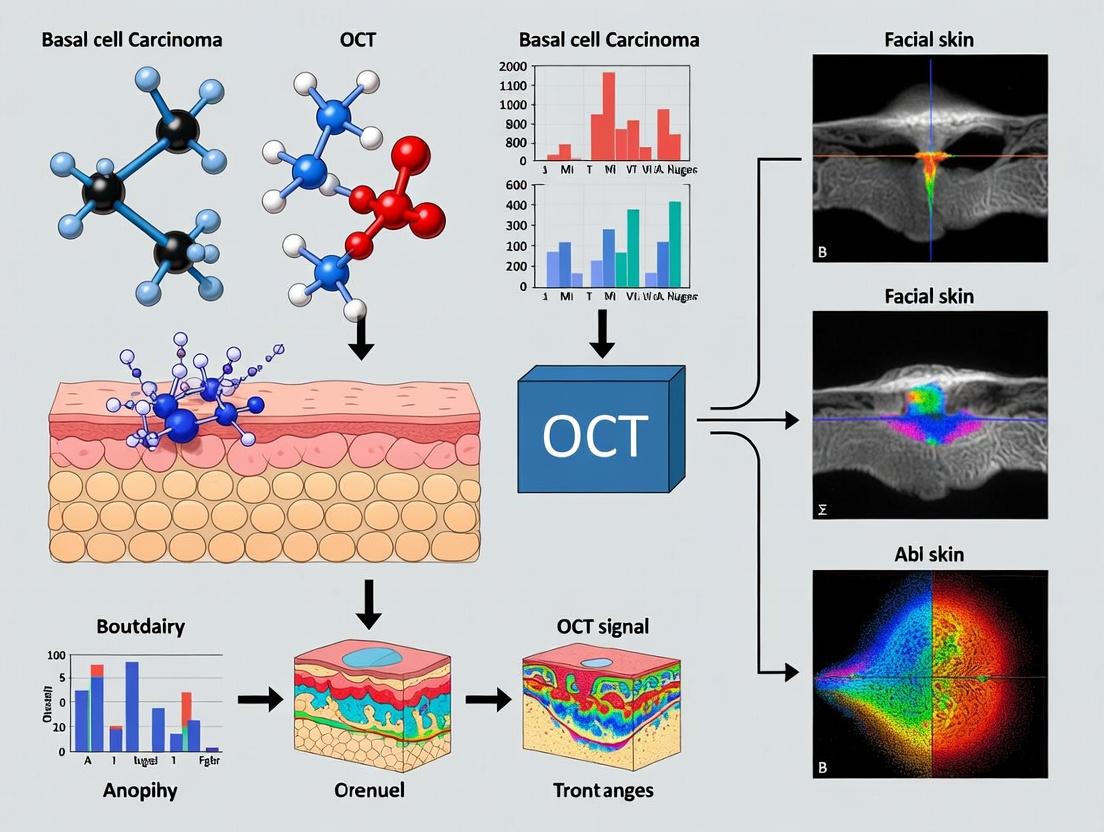
This article provides a comprehensive technical review of Optical Coherence Tomography (OCT) for the non-invasive subtyping of basal cell carcinoma (BCC) in facial skin.
OCT for Facial BCC Subtyping: A Research Guide to Non-Invasive Diagnosis and Morphological Analysis
Abstract
This article provides a comprehensive technical review of Optical Coherence Tomography (OCT) for the non-invasive subtyping of basal cell carcinoma (BCC) in facial skin. Tailored for researchers, scientists, and drug development professionals, we explore the foundational histopathological correlates of BCC subtypes visible on OCT, detail advanced methodological protocols for image acquisition and analysis, address common challenges in interpretation and image optimization, and critically compare OCT's diagnostic performance against histopathology and other imaging modalities. The scope encompasses both current research applications and future potential for guiding therapy development and clinical trial design.
Understanding BCC Subtypes and OCT Contrast Mechanisms: A Histopathological Correlate
Basal cell carcinoma (BCC) is the most common human malignancy, with the majority occurring on sun-exposed facial skin. Accurate histological subtyping—distinguishing between nodular, infiltrative, micronodular, and superficial subtypes—is a clinical imperative. Facial BCCs present unique challenges due to cosmetic and functional anatomy, where subtype directly dictates management strategy, ranging from topical therapies for low-risk superficial BCCs to Mohs micrographic surgery for high-risk infiltrative or micronodular subtypes. In the context of advancing optical coherence tomography (OCT) for in vivo diagnosis and margin assessment, precise subtyping becomes the cornerstone for non-invasive, image-guided therapeutic decision-making.
Quantitative Data: BCC Subtype Characteristics & Management Correlates
The following tables consolidate key data on BCC subtype prevalence, histopathological and OCT features, and associated management pathways.
Table 1: Histopathological & In Vivo OCT Features of Major Facial BCC Subtypes
| BCC Subtype | Prevalence on Face (%) | Key Histo-Morphology | Characteristic OCT Features | Typical Recurrence Rate |
|---|---|---|---|---|
| Nodular | 60-70% | Well-defined lobules, peripheral palisading | Hyporeflective, well-demarcated nests with dark peripheral clefting. | Low (≤5%) |
| Superficial | 10-15% | Multifocal buds attached to epidermis | Epidermal-based, plaque-like thickening with hyporeflective buds, "string of pearls". | Low (≤5%) with adequate treatment |
| Infiltrative | 5-10% | Thin, irregular cords invading stroma | Ill-defined, finger-like hyporeflective projections into dermis, no clefts. | High (10-25%) |
| Micronodular | 5-10% | Small, scattered nests, not palisading | Small, discrete hyporeflective nests, often deep, minimal clefting. | High (10-25%) |
| Morphoeic | <5% | Dense fibrous stroma, thin strands | Hyporeflective strands in highly scattering (bright) sclerotic stroma. | Highest (20-33%) |
Table 2: Recommended Management Based on BCC Subtype & Risk Stratification
| BCC Subtype | Risk Category | Primary Surgical Management | Non-Surgical/Adjuvant Options | Critical for OCT-Guided Therapy |
|---|---|---|---|---|
| Nodular | Low-Risk | Standard excision with 4-5mm margins | Electrodesiccation & curettage, cryotherapy | OCT can confirm clear margins. |
| Superficial | Low-Risk | Wide local excision (3-5mm margins) | Topical imiquimod/5-FU, PDT, cryotherapy | OCT ideal for monitoring topical treatment response. |
| Infiltrative | High-Risk | Mohs Micrographic Surgery (MMS) | Targeted hedgehog inhibitors (vismodegib), radiotherapy | OCT critical for pre-op mapping of subclinical extension. |
| Micronodular | High-Risk | Mohs Micrographic Surgery (MMS) | Targeted hedgehog inhibitors, radiotherapy | OCT detects subclinical micronodules for complete excision. |
| Morphoeic | High-Risk | Mohs Micrographic Surgery (MMS) | Hedgehog inhibitors, radiotherapy | OCT defines true tumor boundary in sclerotic stroma. |
Experimental Protocols for OCT-Based BCC Subtyping Research
Protocol 1: Ex Vivo Correlation of OCT with Histopathology (Gold Standard Validation)
- Objective: To establish a definitive library of OCT image signatures corresponding to histopathologically confirmed BCC subtypes.
- Materials: Fresh facial BCC excision specimens, high-resolution spectral-domain OCT system, biopsy cassette, formalin, standard H&E staining kit.
- Workflow:
- Specimen Preparation: Orient excised tumor and mark with sutures for 3D registration. Scan entire specimen ex vivo using OCT in a predefined grid pattern.
- OCT Imaging: Acquire volumetric scans (e.g., 6x6x2 mm). Save images with coordinates.
- Histological Processing: Fix specimen in formalin. Section tissue precisely along the plane matching the OCT B-scan. Process for standard H&E histology.
- Correlative Mapping: Use fiduciary marks to align OCT B-scans with corresponding H&E slides under a multi-head microscope by a dermatopathologist and OCT physicist.
- Feature Annotation: Quantify OCT metrics (nest size, border definition, cleft presence, stromal reflectivity) for each subtype.
Protocol 2: In Vivo Prospective Diagnostic Accuracy Study
- Objective: To determine the sensitivity and specificity of OCT for discriminating high-risk (infiltrative, micronodular) from low-risk (nodular, superficial) BCC subtypes in vivo.
- Materials: Suspected facial BCC patients, clinical OCT system, biopsy punch, statistical analysis software.
- Workflow:
- Pre-Biopsy Imaging: Perform in vivo OCT scan over the entire clinical lesion and 2mm peripheral.
- Blinded Assessment: An OCT reader (blinded to clinical diagnosis) classifies the lesion into a BCC subtype based on pre-defined criteria.
- Gold Standard Biopsy: Perform a 3-4mm punch biopsy from the center of the OCT-scanned area.
- Statistical Analysis: Calculate diagnostic metrics (sensitivity, specificity, PPV, NPV) of OCT subtyping against histopathology report. Use Cohen's kappa for inter-rater reliability if multiple readers.
Protocol 3: OCT-Guided Mapping for Mohs Surgery Margins
- Objective: To use OCT for pre-operative mapping of subclinical tumor extension in high-risk facial BCC.
- Materials: Mohs surgery patient, peri-operative OCT system, surgical marker.
- Workflow:
- Pre-Op Mapping: On the day of surgery, perform a wide-field OCT scan around the visible tumor. Mark areas of subclinical extension (e.g., micronodules 2mm beyond clinical border) directly on the skin.
- Surgical Guidance: The Mohs surgeon uses this map to adjust the first stage excision margin, aiming to encompass the OCT-detected disease.
- Margin Check: The debulked tissue (Stage 0) can be scanned with OCT ex vivo to provide rapid feedback before processing frozen sections.
Visualization: Pathways and Workflows
Title: Hedgehog Pathway in BCC and Therapy
Title: Clinical OCT Subtyping Workflow for Facial BCC
The Scientist's Toolkit: Key Research Reagent Solutions
| Research Tool / Reagent | Primary Function in BCC Subtyping Research |
|---|---|
| High-Resolution Spectral-Domain OCT System | Provides micron-scale, cross-sectional in vivo imaging of epidermis and dermis to visualize tumor morphology and stromal interaction. |
| Formalin-Fixed Paraffin-Embedded (FFPE) BCC Tissue Microarrays | Contains multiple histologically validated BCC subtypes for high-throughput validation of OCT features or molecular markers. |
| Anti-SMO & Anti-GLI1 Antibodies | For immunohistochemical staining to correlate Hedgehog pathway activation status with aggressive BCC subtypes (infiltrative, micronodular). |
| Vismodegib (SMO Inhibitor) | Used in ex vivo organoid or mouse models to study treatment response differences between BCC subtypes and resistance mechanisms. |
| 3D Skin Organoid Co-Cultures | Models the interaction between specific BCC subtype cells and tumor microenvironment (fibroblasts, immune cells) for mechanistic studies. |
| AI/ML Image Analysis Software (e.g., PyRadiomics) | Extracts quantitative features from OCT images (texture, shape) to build automated classification algorithms for BCC subtyping. |
| Fluorescent In Situ Hybridization (FISH) Probes for GLI2 | Detects gene amplification, a known resistance marker in aggressive BCC, linkable to OCT phenotype. |
Core Histopathological Features of Major BCC Subtypes (Nodular, Infiltrative, Micronodular, Superficial)
This application note details the histopathological features of major basal cell carcinoma (BCC) subtypes, as characterized in a research thesis investigating optical coherence tomography (OCT) for subtyping facial skin lesions. Accurate histopathological correlation is the gold standard for validating non-invasive OCT imaging biomarkers. The protocols and data herein are designed to guide researchers in correlating in vivo OCT findings with definitive histology, critical for drug development and diagnostic technology validation.
The broader thesis aims to establish a non-invasive, in vivo OCT protocol for accurate discrimination of BCC subtypes on facial skin, a region where cosmetic and functional outcomes are paramount. This document provides the essential histopathological framework and laboratory protocols required to generate the ground-truth data against which OCT signals are validated. Reliable subtyping informs prognosis and therapeutic strategy, as aggressive subtypes (infiltrative, micronodular) require more extensive resection.
Core Histopathological Features: Comparative Analysis
The defining microscopic characteristics of the four major subtypes are summarized in the table below. These features represent the diagnostic criteria against which OCT image patterns must be benchmarked.
Table 1: Core Histopathological Features of Major BCC Subtypes
| Feature / Subtype | Nodular BCC | Infiltrative BCC | Micronodular BCC | Superficial BCC |
|---|---|---|---|---|
| Architecture | Large, well-defined dermal nodules | Thin, irregular cords and strands | Small, rounded nests (<0.15 mm) | Multi-focal buds attached to epidermis |
| Tumor-Stroma Interface | Smooth, pushing borders | Infiltrative, spiky borders | Smooth but deeply invasive | Limited to superficial dermis |
| Peripheral Palisading | Prominent | Often lost or minimal | Present but thin | Variable, often present |
| Stromal Reaction | Mucinous, loose retraction | Dense, sclerotic (desmoplastic) | Variable, often cellular | Mild, lymphocytic infiltrate common |
| Typical Invasion Depth | Mid to deep dermis | Deep dermis, often into fat/muscle | Deep dermis, perineural invasion common | Papillary dermis only |
| Margin Clarity | Well-circumscribed | Poorly circumscribed | Deceptively well-defined but small | Broad, lateral spread |
| Retraction Artifacts | Common (stromal mucin) | Less common | Frequent | Rare |
| Aggression Potential | Low (if not large) | High | High | Very Low |
Experimental Protocols for Histopathological Correlation
Protocol 3.1: Tissue Processing & Sectioning for OCT-Correlative Histology
Objective: To generate high-quality histological sections from the exact biopsy site imaged by OCT, ensuring precise spatial correlation. Materials: See "Research Reagent Solutions" (Section 5). Workflow:
- Biopsy Registration: Following in vivo OCT scan, mark the imaged site with surgical ink. Perform a punch or excisional biopsy ensuring orientation is recorded (e.g., a suture at 12 o'clock).
- Fixation: Immediately place tissue in 10% Neutral Buffered Formalin for 18-24 hours at room temperature.
- Grossing & Sectioning: Serially section the fixed tissue at 2-3 mm intervals perpendicular to the skin surface. Map each section's location relative to the OCT B-scan plane.
- Processing & Embedding: Process tissue through graded ethanol, xylene, and infiltrate with paraffin wax. Embed sections cut-side down.
- Microtomy: Cut 4-5 µm thick sections using a microtome. Float sections on a water bath at 45°C and mount on charged glass slides.
- Staining: Deparaffinize and stain with Hematoxylin & Eosin (H&E) using standard protocols.
- Digital Pathology: Scan slides at 20x magnification using a whole-slide scanner for direct digital overlay and comparison with OCT en-face and B-scan images.
Protocol 3.2: Immunohistochemical Staining for Aggressive Phenotype Markers
Objective: To supplement H&E analysis with molecular markers associated with aggressive growth patterns, validating OCT-hypothesized subtype. Targets: Ber-EP4 (pan-BCC), Ki-67 (proliferation), Collagen IV (basement membrane integrity). Procedure (Ber-EP4):
- Perform antigen retrieval on deparaffinized sections using a citrate buffer (pH 6.0) in a pressure cooker for 10 minutes.
- Block endogenous peroxidase with 3% Hydrogen Peroxide for 10 minutes.
- Apply protein block (e.g., 2.5% normal horse serum) for 20 minutes.
- Incubate with primary mouse monoclonal anti-Ber-EP4 antibody (1:100 dilution) for 60 minutes at room temperature.
- Apply a labeled polymer-horseradish peroxidase (HRP) secondary antibody (e.g., ImmPRESS system) for 30 minutes.
- Visualize with 3,3'-Diaminobenzidine (DAB) Chromogen for 5-10 minutes, developing a brown precipitate.
- Counterstain with hematoxylin, dehydrate, clear, and mount. Interpretation: Ber-EP4 strongly highlights all BCC nests. In infiltrative BCC, it reveals the extensive, spiky infiltration pattern. Loss of surrounding Collagen IV staining indicates basement membrane invasion.
Visualization of Key Concepts
Diagram 1: OCT-Histology Correlation Workflow for BCC Subtyping
Diagram 2: SHH Pathway Dysregulation in BCC Pathogenesis
The Scientist's Toolkit: Research Reagent Solutions
Table 2: Essential Reagents for BCC Histopathology & IHC
| Item & Catalog Example | Function in Research Context |
|---|---|
| 10% Neutral Buffered Formalin | Standard fixative. Preserves tissue architecture and antigenicity for optimal H&E and IHC. Critical for correlation studies. |
| H&E Staining Kit | Provides standardized reagents for core morphological assessment. Allows identification of histopathological features in Table 1. |
| Anti-Ber-EP4 Mouse Monoclonal | Primary antibody for IHC. Highlights all BCC cell nests, crucial for delineating aggressive, infiltrative patterns not always clear on H&E. |
| Anti-Ki-67 Rabbit Monoclonal | Primary antibody for IHC. Labels proliferating cells. Higher proliferation indices correlate with aggressive subtypes. |
| Anti-Collagen IV Rabbit Polyclonal | Primary antibody for IHC. Visualizes basement membrane. Its fragmentation is a marker of invasive growth. |
| Polymer-HRP Secondary Detection System | High-sensitivity, low-background detection system for IHC. Essential for clear signal visualization on skin tissues. |
| DAB Chromogen Substrate Kit | Produces a stable, insoluble brown precipitate at the antigen site during IHC. Allows quantification and high-resolution imaging. |
| Charged/Plus Microscope Slides | Prevents tissue detachment during rigorous IHC processing steps, ensuring tissue from valuable biopsies is not lost. |
| Whole Slide Scanner & Software | Enables high-resolution digital archiving, quantitative analysis, and precise side-by-side registration of histology with OCT images. |
Optical Coherence Tomography (OCT) is a non-invasive, high-resolution imaging modality that has become indispensable for the in vivo diagnosis and subtyping of Basal Cell Carcinoma (BCC) in facial skin. The core thesis of this research is that precise quantification of OCT-derived scattering and reflectance profiles can reliably discriminate between BCC subtypes (e.g., nodular, infiltrative, superficial), thereby guiding treatment decisions and therapeutic development. This application note details the fundamental principles and protocols for extracting tumor morphology from scattering and reflectance data.
Fundamental Principles: Scattering & Reflectance
OCT forms cross-sectional images by measuring the back-reflected light (reflectance) from tissue microstructures. The intensity of this signal is governed by the scattering properties of the tissue, which are altered in tumors due to changes in nuclear density, collagen organization, and hydration.
- Scattering Coefficient (μs): Quantifies the rate at which light is scattered per unit depth. Higher nuclear density and disorder in BCC nests increase μs.
- Reflectance (A-scan Amplitude): The localized measure of back-scattered light. Variations reveal architectural disarray, cystic spaces, and keratin foci.
- Attenuation Coefficient (μ_t): Describes the total signal decay with depth, combining scattering and absorption. It is a critical biomarker for differentiating BCC from surrounding dermis.
Key Quantitative Parameters for BCC Morphology
The following table summarizes the primary OCT-derived quantitative parameters used in BCC subtyping research.
Table 1: Key OCT Quantitative Parameters for BCC Subtyping
| Parameter | Typical Value in Normal Dermis | Typical Value in BCC Nodular | Typical Value in BCC Infiltrative | Morphological Correlation & Diagnostic Utility |
|---|---|---|---|---|
| Attenuation Coefficient (μ_t) | 3 – 6 mm⁻¹ | 6 – 10 mm⁻¹ | 7 – 12 mm⁻¹ | Higher μ_t indicates dense, hyper-scattering tumor nests. Infiltrative subtypes often show highest values. |
| Median Reflectance (a.u.) | 15 – 25 | 30 – 50 | 25 – 40 | Elevated reflectance correlates with increased refractive index mismatch from crowded nuclei. |
| Signal Intensity Variance | Low | Moderate to High | High | Variance quantifies architectural homogeneity; infiltrative BCC shows highest heterogeneity. |
| Tumor Depth (μm) | N/A | >500 | Variable, often >700 | Measured from epidermal entrance signal. Critical for surgical margin planning in facial skin. |
| Epidermal Entrance Signal Loss | Minimal | Moderate | Pronounced | Disruption of the bright epidermal band indicates tumor invasion or ulceration. |
Detailed Experimental Protocols
Protocol 4.1: OCT Image Acquisition for Facial BCC
Objective: To acquire standardized, high-quality OCT volumes of suspected BCC lesions on facial skin. Materials: Spectral-Domain OCT system (central wavelength ~1300nm), kinematic mount for stable positioning, transparent film for hydration control. Procedure:
- Cleanse the facial lesion site gently with saline.
- Apply a thin layer of ultrasound gel or index-matching fluid to the lesion.
- Position the OCT probe perpendicular to the skin surface using a kinematic mount to minimize motion artifact.
- Acquire a 3D volume scan (e.g., 6x6 mm area). Set axial resolution ≤ 5 µm, lateral resolution ≤ 10 µm, and imaging depth ≥ 1.5 mm.
- Acquire a corresponding high-resolution 2D B-scan over the clinically thickest part of the tumor.
- Repeat scan three times for intra-lesion reproducibility.
Protocol 4.2: Calculation of Attenuation Coefficient for Subtyping
Objective: To derive the depth-resolved attenuation coefficient (μ_t) from A-scans to quantify tumor scattering. Pre-processing:
- Apply a depth-dependent sensitivity (roll-off) correction to all A-scans.
- Perform logarithmic demodulation to obtain data proportional to sample reflectance.
- Apply a moving average filter (kernel size 5 pixels) for speckle reduction. Calculation (Single-Scattering Model):
- For each A-scan, fit the intensity profile I(z) from the tissue surface to a depth d using the model: I(z) = I₀ * exp(-2μ_t z) + C, where I₀ is the surface intensity, z is depth, and C is noise floor.
- Perform a linear fit to the log-compressed data: ln(I(z) - C) ∝ -2μ_t z.
- Calculate μ_t from the slope of the linear fit over a defined region of interest (ROI) corresponding to the tumor area, as identified by a trained grader.
- Generate parametric maps by applying this fit pixel-wise within the ROI.
Visualizing the BCC Subtyping Workflow & Signal Analysis
Diagram 1: OCT-Based BCC Subtyping Analysis Workflow
Diagram 2: Signal Attenuation in Normal Skin vs BCC
The Scientist's Toolkit: Key Research Reagent Solutions
Table 2: Essential Materials for OCT BCC Research
| Item | Function & Relevance to BCC Imaging |
|---|---|
| High-Resolution OCT System (Central λ: 1300nm) | Provides optimal penetration (~1.5-2mm) into skin with sufficient resolution to identify small BCC nests (<100µm). |
| Index-Matching Gel (e.g., Ultrasound Gel) | Reduces surface specular reflection, improves signal coupling, and standardizes the skin-air interface. |
| Kinematic Probe Mount | Enforces stable, perpendicular probe placement critical for reproducible attenuation coefficient measurement. |
Matlab/Python with OCT Toolbox (e.g., OCTSEG) |
Software for custom implementation of attenuation fitting algorithms and batch processing of 3D volumes. |
| Histopathology-Validated Image Dataset | Gold-standard correlated OCT and histology images are required for training and validating quantitative classifiers. |
| Spectral-Domain Reference Material (e.g., Silicone Phantom) | Used for daily system calibration to ensure signal-to-noise ratio and resolution stability over longitudinal studies. |
Application Notes
This document details the key optical coherence tomography (OCT) correlates essential for the non-invasive subtyping of facial basal cell carcinoma (BCC) within a research context. High-definition OCT (HD-OCT) and line-field confocal OCT (LC-OCT) enable real-time, in vivo visualization of architectural and cytological features at near-histological resolution, providing critical translational data for diagnostics and therapy monitoring.
OCT Correlates of Histopathological Features
| OCT Feature | Histopathological Correlation | Quantitative OCT Descriptor (Typical Range) | Subtyping Significance |
|---|---|---|---|
| Hyporeflective Nests | Nodular aggregates of basaloid tumor cells with peripheral palisading. | Shape: Round/Oval to Irregular. Size: 100 - 500 µm. Border Definition: Sharp. Signal Intensity: 30-50% lower than dermis. | Nodular BCC: Large, well-defined nests. Superficial BCC: Small, budding nests attached to epidermis. |
| Peritumoral Clefting | Retraction artifact due to mucin deposition between tumor stroma and nests. | Cleft Width: 10 - 50 µm. Presence: >90% around nests in nodular BCC. | High-specificity marker for BCC. Most prominent in Nodular and Infiltrative subtypes. |
| Peripheral Palisading | Single layer of polarized nuclei at nest periphery. | Line of high reflectivity at nest border. Thickness: 10-20 µm. | Correlates with histologic palisading. Best visualized with high-resolution LC-OCT. |
| Stromal Reaction | Tumor-associated stroma with increased collagen (sclerosis) and altered morphology. | Increased backscattering (hyperreflectivity). Pattern: "White streaks" or diffuse haze. Density increase: 20-40% vs. normal dermis. | Infiltrative/Morpheaform BCC: Pronounced, dense stromal reaction surrounding thin cords. Micronodular BCC: Delicate stromal reaction. |
Quantitative OCT Metrics for Longitudinal Study
Table: Key Metrics for Therapy Response Monitoring
| Metric | Measurement Method | Baseline Value (Mean ± SD) | Post-Treatment Change (Significant if >) |
|---|---|---|---|
| Total Tumor Nest Area | Segmentation of hyporeflective regions in en-face OCT. | Variable by lesion (e.g., 5 ± 2 mm²) | 30% reduction |
| Mean Nest Reflectivity | Gray-scale value within segmented nests. | 45 ± 8 AU (Arbitrary Units) | 15% increase (suggests fibrosis) |
| Stromal Reflectivity Index | Ratio of stromal to normal dermal reflectivity. | 1.3 ± 0.2 | 0.3 decrease |
Experimental Protocols
Protocol 1:In VivoOCT Imaging for Facial BCC Subtyping
Objective: To acquire standardized OCT images for correlative analysis of nests, clefting, palisading, and stromal reaction. Materials: See "Scientist's Toolkit" below. Procedure:
- Patient Positioning & Lesion Selection: Position patient in clinical imaging chair. Cleanse facial lesion and 2 cm periphery with saline. Mark lesion edges with a surgical pen.
- OCT System Calibration: Perform daily calibration using system-provided reflective phantom. Verify axial/lateral resolution per manufacturer specs.
- 3D Volume Scan Acquisition: a. Apply a thin layer of ultrasonic coupling gel to the lesion. b. Lightly place the OCT probe perpendicular to the skin surface, using a spacer to avoid compression. c. Acquire a 6x6 mm 3D volume scan with a minimum depth of 1.5 mm. Use HD mode if available. Resolution target: ≤5 µm axial, ≤7 µm lateral. d. Capture corresponding dermoscopic image.
- Multi-plane Analysis: a. Reconstruct cross-sectional (B-scans) at 5 µm intervals. b. Generate en-face (C-scan) reconstructions at depths of 150 µm, 300 µm, and 500 µm below the stratum corneum. c. Tag images for key features: "Nest," "Cleft," "Palisading," "Stroma."
Protocol 2: Ex Vivo Correlation of OCT with Histopathology
Objective: To validate OCT correlates via direct spatial registration with histology. Procedure:
- Surgical Specimen Handling: Immediately after excision, place the fresh facial BCC specimen in OCT compound (without fixative) and freeze in liquid nitrogen.
- OCT Imaging of Block: Mount the frozen block on the ex vivo OCT stage. Acquire high-density 3D scans (e.g., 8x8x2 mm) of the entire tissue surface.
- Image-Guided Sectioning: Using the OCT scan as a map, mark the block for sectioning along the precise planes of key OCT B-scans. Use India ink for orientation.
- Serial Sectioning & Staining: Cryosection the block at 5 µm thickness. Perform H&E staining on every 10th section, with adjacent sections available for special stains (e.g., Alcian blue for mucin in clefting).
- Digital Co-registration: Digitize histology slides. Use fiduciary marks (ink) and software (e.g., AMIRA) to co-register OCT B-scans with corresponding H&E images. Annotate matched features.
The Scientist's Toolkit
Table: Key Research Reagent Solutions for OCT BCC Research
| Item | Function & Relevance |
|---|---|
| Line-Field Confocal OCT (LC-OCT) System | Provides cellular-resolution (<2 µm), real-time 3D images in vivo, critical for visualizing palisading and small nests. |
| Ultrasonic Gel (Non-colored) | Index-matching medium to reduce surface specular reflection, improving image quality of the epidermal-dermal junction. |
| Fiducial Marker (Surgical Ink) | For precise spatial registration between in vivo OCT scans, biopsied tissue, and histological sections. |
| OCT Compound (Tissue-Tek) | For embedding fresh ex vivo specimens to preserve optical properties and morphology for validation scanning. |
| Digital Pathology Slide Scanner | To create high-resolution whole-slide images of histology for accurate co-registration and quantitative comparison with OCT volumes. |
| Image Co-registration Software (e.g., AMIRA, 3D Slicer) | Essential software platform for 3D fusion and point-by-point correlation of OCT image volumes with serial histology sections. |
Visualizations
Within a broader thesis investigating Optical Coherence Tomography (OCT) for the subtyping of facial Basal Cell Carcinoma (BCC), establishing a definitive baseline of normal facial skin architecture is paramount. Accurate BCC subtyping (e.g., nodular, infiltrative, superficial) relies on detecting deviations from this normal baseline. This document provides detailed application notes and protocols for characterizing normal facial skin using OCT, forming the essential reference standard for subsequent pathological comparison.
Quantitative Baseline Data from Normal Facial Skin
Data synthesized from recent studies and live search results detailing OCT metrics in healthy facial skin. Measurements vary by anatomical site, age, and skin phototype.
Table 1: Normative OCT Metrics for Key Facial Sites
| Facial Site | Epidermal Thickness (µm) | Papillary Dermis Signal Intensity (A.U.)* | DEJ Undulation Index (Amplitude/Period) | Key OCT Architectural Features |
|---|---|---|---|---|
| Forehead | 75 - 110 | High | Low (0.15 - 0.25) | Clear DEJ, fine superficial horizontal lines (sweat ducts), pilosebaceous units visible. |
| Cheek | 60 - 95 | Moderate-High | Moderate (0.25 - 0.40) | Well-defined DEJ, potential for honeycomb pattern in epidermis, prominent vellus hair follicles. |
| Nasal Sidewall | 90 - 130 | Moderate | High (0.40 - 0.60) | Pronounced DEJ folds, bright dermal signal due to sebaceous glands, dilated pores. |
| Philtrum | 70 - 100 | High | Low-Moderate | Distinct DEJ, dense vertical collagen bundles in superficial dermis. |
| Preauricular | 80 - 120 | Moderate | Moderate | Clear DEJ, often shows hair follicles and adjacent glands. |
*Signal Intensity is relative and system-dependent; internal normalization to stratum corneum is recommended.
Table 2: Age & Skin Phototype Influence on OCT Parameters
| Parameter | Young Skin (20-30 yrs) | Aged Skin (>60 yrs) | Phototype I-II | Phototype V-VI |
|---|---|---|---|---|
| Epidermal Thickness | Stable, well-defined | Slightly reduced, variable | Thinner | Thicker |
| DEJ Contrast | High | Reduced (Flattening) | High | Lower (Requires PS-OCT for clarity) |
| Dermal Signal | Homogeneous, scattering | Increased heterogeneity | Less scattering | Higher scattering, melanin masks detail |
| Key Change | Sharp DEJ, regular pattern | Flattened DEJ, amorphous upper dermis | Easier DEJ identification | Challenging DEJ demarcation with standard OCT |
Experimental Protocols
Protocol 1: Standardized Image Acquisition for Facial Skin Baseline
Objective: To acquire consistent, high-resolution OCT images of normal facial skin for baseline database creation. Materials: Spectral-Domain or Swept-Source OCT system (central wavelength ~1300nm for deeper penetration), chin/head rest, skin marker, transparency film for grid. Procedure:
- Subject Preparation & Consent: Obtain IRB-approved informed consent. Acclimatize subject in temperature-controlled room (20-22°C) for 15 minutes. Cleanse imaging site with gentle water.
- Site Marking: Use a facial mapping grid (transparency film) to mark standard sites: forehead (midline), cheek (malar prominence), nasal sidewall, preauricular.
- System Calibration: Perform daily calibration per manufacturer. Set axial resolution to ≤5µm and lateral resolution to ≤10µm.
- Image Acquisition: Apply a drop of immersion oil (or use water-based gel) to the area to index-match and reduce surface refraction. Use the OCT probe holder to maintain a fixed 2mm distance.
- Scanning Pattern: Acquire a 6x6 mm volume scan (500 x 500 pixels) per site. Follow with 5 repeated B-scans at the same location to assess reproducibility. Ensure each B-scan contains the full epidermis and ≥1.5mm of dermis.
- Data Storage: Save in both proprietary and open format (e.g., .TIFF sequence). Anonymize files with code: SITEAGEPHOTOTYPE_ID.
Protocol 2: Quantitative Analysis of OCT Images
Objective: To extract quantitative metrics from OCT B-scans for statistical baseline modeling. Software: ImageJ (Fiji) with custom macros or commercial OCT analysis software. Procedure:
- Pre-processing: Apply a median filter (2px) to reduce speckle noise. Normalize intensity scale using the brightest (stratum corneum) and darkest (air) pixels as references.
- Epidermal Thickness Measurement:
- Manually or auto-segment the stratum corneum and DEJ on 10 evenly spaced A-scans per B-scan.
- Calculate thickness as the distance between the stratum corneum surface and the DEJ. Report mean ± SD for each volume.
- DEJ Undulation Index:
- Apply a Canny edge detector to identify the DEJ contour across the entire B-scan.
- Perform a Fast Fourier Transform (FFT) on the contour line. The Undulation Index is the ratio of the amplitude of the dominant frequency to its period.
- Dermal Signal Attenuation Coefficient (µ):
- In the papillary dermis (region 100-300µm below DEJ), fit signal intensity decay versus depth to a single exponential model: I(z) = I0 * exp(-2µz). Report µ (mm⁻¹).
Protocol 3: Correlation with Histology (Validation Protocol)
Objective: To validate OCT architectural findings with gold-standard histology (ex vivo or biopsy). Materials: Punch biopsy tools, OCT-compatible tissue ink, formalin, standard histology processing materials. Procedure:
- Pre-biopsy OCT: Perform high-resolution volume scan on the target facial site (e.g., preauricular area planned for elective procedure).
- Tissue Marking: Use sterile, OCT-visible ink to mark a reference line adjacent to the scan area.
- Biopsy & Processing: Perform a 2mm punch biopsy precisely within the scanned region. Bisect the tissue: one half for standard H&E processing, the other for frozen sectioning if needed.
- Histology-OCT Correlation: Align the histological section plane with the corresponding OCT B-scan using the ink mark and adnexal structures as landmarks. Directly measure epidermal thickness and DEJ morphology on H&E for correlation with OCT measurements.
Diagrams
The Scientist's Toolkit: Research Reagent Solutions
Table 3: Essential Materials for Facial Skin OCT Baseline Studies
| Item | Function/Justification | Example/Specification |
|---|---|---|
| High-Resolution OCT System | Core imaging tool. 1300nm wavelength optimizes facial skin penetration. | Spectral-Domain or Swept-Source OCT, axial resolution <5µm, lateral <10µm. |
| Immersion Fluid/Gel | Index-matching medium placed on skin. Reduces surface reflection, improves signal and clarity. | Ultrasound gel (water-based) or mineral oil. Must be non-irritating, OCT-transparent. |
| Facial Mapping Grid | Ensures precise, repeatable localization of imaging sites across subjects. | Custom transparency film with standardized coordinate system. |
| Probe Holder/Stabilizer | Eliminates motion artifact, crucial for high-resolution facial imaging and 3D volumes. | Mechanical arm or custom 3D-printed fixture for specific facial contours. |
| Intensity Calibration Phantom | Allows cross-system comparison and longitudinal signal stability monitoring. | Solid phantom with stable, known scattering properties (e.g., titanium dioxide in epoxy). |
| OCT-Compatible Skin Marker | For histology correlation protocols. Ink must be visible on OCT and not wash off during processing. | Sterile, surgical skin markers with pigments detectable in OCT backscatter. |
| Image Analysis Software | For quantitative metric extraction. Open-source allows macro customization for specific parameters. | ImageJ (Fiji) with OCT plugins or MATLAB/Python with dedicated toolkits. |
Advanced OCT Protocols for High-Resolution BCC Subtyping in Facial Skin
Within the context of basal cell carcinoma (BCC) subtyping research on facial skin, selecting the optimal Optical Coherence Tomography (OCT) modality is critical for balancing resolution, speed, and functional contrast. This application note provides a comparative analysis of High-Definition OCT (HD-OCT), Line-Field Confocal OCT (LC-OCT), and Dynamic OCT (D-OCT) for facial imaging, detailing specific protocols for their application in preclinical and clinical research settings.
Comparative Modality Analysis
Table 1: Quantitative Performance Metrics for Facial Skin OCT Modalities
| Parameter | HD-OCT (Spectral-Domain) | Line-Field Confocal OCT (LC-OCT) | Dynamic OCT (D-OCT) |
|---|---|---|---|
| Axial Resolution (in tissue) | 3 - 5 µm | 1 - 1.3 µm | 5 - 7 µm |
| Lateral Resolution | 5 - 15 µm | ~1 µm (confocal) | 10 - 20 µm |
| Typical Imaging Depth | 1.5 - 2.0 mm | 0.5 - 0.8 mm | 1.5 - 2.0 mm |
| Frame Rate (B-scans/sec) | 50 - 200 kHz A-scan rate | 1 - 10 fps (en face) | 100 - 500 kHz A-scan rate |
| Key Contrast Mechanism | Structural scattering | Confocal + coherence, cellular detail | Speckle variance from blood flow |
| Primary BCC Subtyping Utility | Nodular & micronodular architecture | Superficial & infiltrative cell nests, clefts | Microvascular patterns, tumor periphery |
Table 2: Suitability for Facial BCC Research Applications
| Research Application | Recommended Modality | Rationale |
|---|---|---|
| In vivo margin delineation | HD-OCT | Good depth-penetration for assessing deep margins on nose/forehead. |
| Ex vivo specimen analysis | Line-Field Confocal OCT | Superior cellular resolution for identifying infiltrative strands in sebaceous skin. |
| Monitoring therapy response | Dynamic OCT | Functional blood flow maps assess vascular shutdown post-treatment. |
| Pigmented BCC characterization | HD-OCT (with polarization sensitivity) | Reduces speckle noise, better visualizes melanin in lesion. |
| Epidermal-dermal junction analysis | Line-Field Confocal OCT | Excellent for detecting superficial BCC and actinic damage. |
Experimental Protocols
Protocol 1: In Vivo HD-OCT for Nodular BCC Assessment on the Nasal Ala
Objective: To acquire high-resolution cross-sectional images for measuring nodular BCC dimensions and characterizing surrounding dermis. Materials: Commercial spectral-domain HD-OCT system (e.g., VivoSight, Telesto), sterile transparent film, ultrasound gel. Procedure:
- Clean the facial site (nasal ala) with mild alcohol swab; allow to dry.
- Apply a thin layer of ultrasound gel as an optical coupling medium.
- Affix a sterile transparent film window over the gel to stabilize the skin surface and maintain hygiene.
- Position the OCT probe perpendicular to the skin surface using a mechanical arm.
- Acquire a 6x6 mm raster scan (1000 x 500 pixels) centered on the clinical lesion.
- Capture sequential B-scans at 3 different dermal orientations (0°, 45°, 90°).
- Process images using built-in software for speckle reduction and edge enhancement.
- Measure maximum tumor depth, lateral extent, and distance to nearest epidermal margin.
Protocol 2: Ex Vivo Line-Field Confocal OCT for Mohs Specimen Imaging
Objective: To obtain cellular-level en face and vertical images for subtyping infiltrative BCC in excised facial skin specimens. Materials: LC-OCT scanner (e.g., DeepLive, LuckyWaves), specimen holder with saline-moistened gauze, coverslips, phosphate-buffered saline (PBS). Procedure:
- Place the fresh Mohs micrographic surgery specimen on saline-moistened gauze.
- Orient the deep margin facing up and flatten gently with a coverslip.
- Apply a drop of PBS on the tissue-coverslip interface for index matching.
- Position the LC-OCT scan head over the region of interest (e.g., surgical edge).
- Acquire a stack of en face images (1 x 1 mm) from the surface to 500 µm depth at 2 µm steps.
- Generate a vertical (B-scan) image in areas suspicious for tumor strands.
- Annotate images for presence/absence of tumor islands, clefting, and perineural invasion.
- Correlate findings with subsequent routine histology (H&E).
Protocol 3: Dynamic OCT for Perilesional Vasculature Mapping in Facial BCC
Objective: To generate angiographic maps of microvasculature surrounding superficial BCC on the cheek pre- and post-cryotherapy. Materials: Swept-source or spectral-domain D-OCT system with angiography software (e.g., AngioVue, OMAG), custom facial contour mount. Procedure:
- Pre-treatment baseline: Position patient's cheek in contour mount to minimize motion.
- Acquire 3x3 mm or 6x6 mm scans over the lesion and adjacent normal skin.
- Use a repeated B-scan protocol (5 repeats per position) for speckle variance calculation.
- Process data using split-spectrum amplitude-decorrelation angiography (SSADA) or optical microangiography (OMAG) algorithms.
- Administer the cryotherapy treatment per clinical protocol.
- At 24-hour follow-up, re-register the scan area using vessel landmarks.
- Repeat D-OCT acquisition and processing.
- Quantify changes in vessel density, diameter, and tortuosity in a 1-mm peri-tumoral rim.
Visualization Diagrams
The Scientist's Toolkit: Research Reagent Solutions
Table 3: Essential Materials for OCT in Facial BCC Research
| Item | Function/Application in Protocol | Example Product/Catalog # |
|---|---|---|
| Ultrasound Gel (Non-sterile) | Optical coupling medium for in vivo HD-OCT/D-OCT to reduce surface reflection. | Parker Laboratories Aquasonic 100 |
| Sterile Transparent Film Dressing | Hygienic barrier between probe and facial skin, maintains coupling. | 3M Tegaderm Film |
| Phosphate-Buffered Saline (PBS), pH 7.4 | Index-matching fluid for ex vivo LC-OCT to reduce scattering at tissue surface. | Thermo Fisher Scientific 10010023 |
| Specimen Holder with Moist Chamber | Maintains tissue hydration and orientation during ex vivo LC-OCT scanning. | Custom 3D-printed or Ted Pella #21121-10 |
| Fiducial Marker Ink (Surgical) | Landmarking lesions for longitudinal D-OCT scan re-registration. | Devon Skin Marker |
| Custom Facial Contour Mount | Stabilizes patient's cheek/nose/forehead to minimize motion artifacts. | 3D-printed from patient MRI/CT data |
| Speckle Reduction Software Module | Post-processing for HD-OCT to enhance architectural detail in dermis. | Built-in (e.g., Bioptigen ENVISU) or Custom (ImageJ) |
| Angiography Analysis Software | Generates vessel density and diameter metrics from D-OCT data. | Built-in (e.g., Heidelberg SPECTRALIS) or Amira Software |
Application Notes: Context of Basal Cell Carcinoma Subtyping Research High-resolution Optical Coherence Tomography (OCT) is a pivotal, non-invasive imaging tool for the in vivo diagnosis and subtyping of facial Basal Cell Carcinoma (BCC). Accurate delineation of BCC subtypes (e.g., nodular, infiltrative, micronodular) requires optimized scanning protocols that balance imaging depth to capture tumor lobules and strands within the reticular dermis, high lateral resolution to identify micronodular aggregates, and a sufficient field of view to assess lesion margins and architectural patterns on the complex topography of the face.
Table 1: Optimal OCT Protocol Parameters for Facial BCC Subtyping
| Parameter | Recommended Specification for BCC Subtyping | Rationale & Clinical Implication |
|---|---|---|
| Central Wavelength | 1300 nm ± 50 nm | Optimal trade-off between axial resolution (~5 µm in tissue) and penetration depth (1.5-2 mm) in scattering facial skin. |
| Axial Resolution (in tissue) | ≤ 5 µm | Sufficient to identify key BCC features: nuclear palisading, clefting, and peritumoral stroma. |
| Lateral Resolution | ≤ 7.5 µm | Required to resolve small (<0.15 mm) micronodular BCC aggregates and individual tumor cords in infiltrative subtypes. |
| Penetration Depth | 1.5 - 2.0 mm | Must image to the deep reticular dermis/subcutaneous junction to capture the deepest extensions of infiltrative BCC. |
| Field of View (FOV) | 6 x 6 mm to 10 x 10 mm | Balances single-scan assessment of larger nodular BCCs with need for high sampling density. Mosaicing recommended for larger lesions. |
| A-scan Density | ≥ 500 A-scans per B-scan | Ensures adequate sampling to prevent aliasing and loss of small (<100 µm) diagnostic structures. |
| B-scan Density (Volumetric) | ≤ 30 µm inter-B-scan spacing | Enables high-quality 3D reconstruction and accurate tracking of thin, infiltrative strands through tissue. |
| Beam Scan Speed | ≥ 100 kHz A-scan rate | Facilitates dense volumetric acquisition within motion artifact tolerance period on the face (~2-3 seconds). |
Table 2: Protocol Adaptation Based on Suspected BCC Subtype
| Suspected Subtype | Primary Diagnostic Features | Protocol Emphasis | Adjusted FOV & Density |
|---|---|---|---|
| Nodular | Large, well-defined hyporeflective lobules with clefting. | Maximize contrast and single-scan FOV. | FOV: 8x8 mm. Density: Standard. |
| Infiltrative | Thin, elongated hyporeflective cords in stroma. | Maximize lateral resolution & sampling density. | FOV: 6x6 mm. Density: High (≤20µm spacing). |
| Micronodular | Small, clustered hyporeflective nodules. | Maximize lateral resolution & contrast. | FOV: 5x5 mm to 7x7 mm. Density: Very High. |
| Superficial | Subepidermal budding, multifocal. | Large FOV for margin assessment; mosaicing. | FOV: 10x10 mm or mosaic. Density: Standard. |
Detailed Experimental Protocols
Protocol 1: High-Density Volumetric Scan for Infiltrative/Micronodular BCC Detection
Purpose: To acquire a 3D dataset optimized for detecting small, sparse, and infiltrative tumor structures. Materials: Swept-source OCT (SS-OCT) system (1300 nm center wavelength), facial chin/forehead rest, fiduciary markers. Procedure:
- Patient Positioning & Stabilization: Position the patient with the target facial lesion facing the OCT objective. Use a mechanical head rest to minimize motion. Mark lesion margins with a dot of white eyeliner for post-scan correlation.
- System Calibration: Perform routine calibration per manufacturer. Set focus to the dermo-epidermal junction.
- Parameter Setting:
- A-scan rate: 200 kHz.
- B-scan width: 6 mm.
- A-scans per B-scan: 1024 (lateral sampling ~5.9 µm).
- B-scans per volume: 500 (inter-B-scan spacing: 12 µm).
- Total volume dimensions: 6.0 mm (x) x 6.0 mm (y) x 2.0 mm (z).
- Acquisition: Acquire 2-3 volumetric stacks in immediate succession over the same region. Total acquisition time per volume: ~2.56 seconds.
- Post-processing: Use correlation-based motion correction algorithms to align successive volumes. Average aligned volumes to improve signal-to-noise ratio (SNR).
Protocol 2: Large Field-of-View Mosaic for Superficial BCC and Margin Assessment
Purpose: To image lesions exceeding single-scan FOV and assess peripheral margins. Materials: SS-OCT or Spectral-Domain OCT (SD-OCT) with motorized translation stage, video aiming beam. Procedure:
- Lesion Demarcation: Outline the clinical lesion border and a peripheral margin of 2-3 mm on the patient's skin using a surgical marker.
- Grid Planning: Plan a rectangular or square mosaic grid covering the outlined area using the OCT system's software. Ensure adjacent tiles have 10-15% overlap.
- Tile Scan Parameters:
- Single tile FOV: 6 x 6 mm.
- A-scans per B-scan: 512.
- B-scans per volume: 256.
- Inter-B-scan spacing: ~23 µm.
- Automated Mosaic Acquisition: Initiate automated sequential acquisition of all tile positions using the motorized stage.
- Stitching & Analysis: Use feature-based or intensity-based stitching algorithms provided by the vendor to create a seamless en face projection map. Correlate OCT features with peripheral marks to assess subclinical extension.
Visualizing the Protocol Selection Workflow
Title: OCT Protocol Selection for Facial BCC Subtyping
The Scientist's Toolkit: Key Research Reagents & Materials
Table 3: Essential Materials for Ex Vivo Correlative OCT-BCC Histology Research
| Item | Function in BCC Subtyping Research |
|---|---|
| OCT Embedding Medium (e.g., Tissue-Tek) | For freezing biopsy specimens, preserving morphology for ex vivo OCT and subsequent cryosectioning. |
| Fiducial Marking Dye (Sterile Surgical Ink) | To place precise marks on skin/biopsy for spatial correlation between in vivo OCT, biopsy site, and histology slides. |
| 3D Printed Tissue Holders | Custom holders to maintain excision specimen orientation during ex vivo OCT scanning, ensuring correct slicing plane for histology. |
| Haematoxylin & Eosin (H&E) Stain | Gold standard histological stain for validating OCT-identified features (e.g., tumor nests, palisading, stromal reaction). |
| Immunohistochemistry Antibodies (e.g., BerEP4) | Used on adjacent histology sections to confirm BCC origin of hyporeflective OCT structures, especially in ambiguous cases. |
| Matlab or Python with SciKit-Image | Custom software platforms for developing and applying algorithm-based analysis (texture, segmentation) to OCT volumes for quantitative subtyping. |
| Phantom Materials (e.g., Silicone with TiO₂) | Skin-simulating phantoms with known scattering properties to routinely validate system resolution, SNR, and penetration depth. |
The accurate subtyping of facial basal cell carcinoma (BCC) via Optical Coherence Tomography (OCT) hinges on the acquisition of high-fidelity, high-resolution volumetric data. The facial terrain—characterized by complex curvature (nose, periorbital, auricular regions) and inherent physiological motion (micro-saccades, respiration, pulsation)—introduces significant artifacts. These artifacts distort morphological metrics (e.g., nodular vs. infiltrative tumor borders) and attenuation coefficients critical for algorithmic classification. This document provides application notes and standardized protocols to mitigate these challenges, ensuring data integrity for downstream analysis in a BCC diagnostic thesis.
Table 1: Impact of Artifacts on Key OCT Metrics for Facial BCC Imaging
| Artifact Type | Affected OCT Metric | Typical Error Introduced | Impact on BCC Subtyping |
|---|---|---|---|
| Out-of-Plane Motion | Tumor Thickness Measurement | ±15-30% | Misclassification of infiltrative depth. |
| Tilt/Curvature | Attenuation Coefficient (μt) | ±20-40% mm⁻¹ | Incorrect differentiation of cystic vs. solid nodular patterns. |
| Z-Axis Drift | Volumetric Registration | 10-50 µm drift/min | Compromised 3D tumor margin assessment. |
| Wrap-around | Lateral Scan Dimension | False structural duplication | Obscures true lateral spread of micronodular BCC. |
Table 2: Performance of Mitigation Techniques in Facial Imaging
| Technique | Axial Resolution Preservation | Scan Time Overhead | Motion/Curvature Correction Efficacy | Best Suited Facial Region |
|---|---|---|---|---|
| 2D/3D Image Registration | >95% | High (30-40%) | High (≥90% correction) | Cheek, Forehead |
| Real-Time Closed-Loop Tracking | ~98% | Very High (50%) | Very High (≥95%) | Periorbital, Perinasal |
| Fiducial Marker Grid | 100% | Medium (15%) | Medium-High (≥80%)* | Nose, Chin, Ear |
| Multi-Angle Composite Scanning | >90% | Very High (60-70%) | High for curvature (≥85%) | Nasal Ala, Glabella |
*Efficacy dependent on marker adhesion on oily skin.
Experimental Protocols
Protocol 3.1: Fiducial Marker-Assisted Volumetric Acquisition for Curved Surfaces
Aim: To acquire a motion-minimized, geometrically correct 3D OCT dataset of a BCC lesion on the nasal sidewall. Materials: See Scientist's Toolkit (Section 5.0). Procedure:
- Site Preparation: Cleanse facial site with 70% isopropyl alcohol. Allow to dry.
- Marker Application: Apply a transparent, adhesive vinyl sheet with a printed 3x3 grid of 500 µm circular fiducial markers (non-reflective black ink) surrounding the target lesion. Ensure firm adhesion.
- System Setup: Mount a spectral-domain OCT system with a telecentric lens. Set central wavelength to 1300nm for deep penetration. Calbrate using a flat, reflective standard.
- Pilot Scan: Perform a fast, wide-field (10x10mm) low-resolution scan. Use the fiducial grid in the en-face view to map the surface normal vector.
- Adaptive Scanning:
- Input the pilot scan surface map into the scanner software.
- Segment the volumetric scan into 3 sub-regions based on surface normals.
- Program the scanner to perform three sequential, optimized volumetric scans (e.g., 6x6mm, 1024 x 500 x 300 pixels) where the scan pattern is electronically tilted for each sub-region to be orthogonal to the local surface.
- Acquisition: Initiate scan. Instruct the patient to maintain breath-hold for the 12-second duration per sub-scan.
- Post-Processing: Use the fiducial markers as registration landmarks to fuse the three sub-volumes into a single, curvature-corrected dataset using rigid-body transformation.
Protocol 3.2: Real-Time Motion-Corrected, High-Density Radial Scan for Periorbital BCC
Aim: To obtain high-resolution cross-sectional images of periocular lesions unaffected by micro-motions. Materials: See Scientist's Toolkit (Section 5.0). Procedure:
- Patient Stabilization: Use a vacuum-assisted head cushion and bite bar. Position the OCT probe on a motorized, articulating arm.
- Reference Acquisition: Capture a high-speed, master en-face image at the epidermal layer.
- Closed-Loop Setup: Enable the real-time tracking software. The system will now continuously compare live en-face preview frames to the master reference, calculating X-Y displacement.
- Radial Scan Programming: Program a radial scanning pattern of 24 B-scans, each 8mm long, radiating from the central axis of the lesion.
- Gated Acquisition: Initiate the radial scan. The closed-loop system applies immediate galvanometer offset correction for each A-scan based on measured motion. Simultaneously, use a physiological trigger (e.g., ECG for pulse, or a breath sensor) to gate data acquisition to the diastolic phase of the pulse cycle.
- Averaging: Acquire 5 repeat frames per radial angle. Perform post-acquisition weighted averaging based on correlation coefficients to suppress residual noise.
- Reconstruction: Interpolate the 24 motion-corrected, averaged radial B-scans into a full 3D volume.
Visualization
Diagram: Facial BCC OCT Imaging Workflow
Diagram: Mitigation Strategy Decision Logic
The Scientist's Toolkit
Table 3: Essential Research Reagent Solutions & Materials
| Item Name | Function/Benefit | Key Specification/Note |
|---|---|---|
| Transparent Fiducial Marker Grids | Provides stable landmarks for registration and surface mapping. | Non-reflective ink; Medical-grade adhesive; ≤500 µm feature size. |
| Telecentric OCT Scan Lens | Minimizes perspective distortion and maintains lateral scale invariance. | Object-space telecentricity; Matched to OCT system bandwidth. |
| Physiological Trigger Module | Gates acquisition to quiescent phases of cardiac/respiratory cycle. | ECG sensor or pneumatic breath belt; <10 ms trigger jitter. |
| Vacuum-Based Head Stabilizer | Immobilizes patient head in 6 degrees of freedom. | Adjustable vacuum pressure; Disposable hygiene cushion. |
| Index Matching Fluid (Glycerin-based) | Reduces surface specular reflection and index mismatch on uneven skin. | Biocompatible; Refractive index ~1.4; Low viscosity for spread. |
| High-Speed SD-OCT / SS-OCT Engine | Enables faster acquisition, reducing motion artifact probability. | A-scan rate >200 kHz; Center wavelength 1300nm for facial skin. |
| Real-Time Image Registration Software | Performs closed-loop tracking and motion correction during acquisition. | GPU-accelerated; Sub-pixel registration accuracy. |
Application Notes
This protocol details the computational pipeline for the 3D delineation and volumetric analysis of Basal Cell Carcinoma (BCC) tumor nests from in vivo Optical Coherence Tomography (OCT) image stacks. The methodology is integral to a broader thesis focusing on the quantitative subtyping of facial BCCs, aiming to correlate morphometric features with histopathological subtypes (nodular, infiltrative, superficial) for enhanced non-invasive diagnosis and therapy monitoring in dermatological oncology and drug development.
The core challenge involves distinguishing hyporeflective tumor nests from surrounding dermal collagen (hyperreflective) and hair follicles (hyporeflective cylindrical structures). The pipeline combines classical image processing with machine learning for robust segmentation.
Key Algorithms & Quantitative Performance
The following table summarizes the algorithms evaluated for the segmentation task, benchmarked against manual delineation by an expert dermatopathologist on a set of 25 facial BCC OCT volumes.
Table 1: Algorithm Performance for BCC Nest Segmentation
| Algorithm Class | Specific Method/Model | Mean Dice Score (±SD) | Average Volume Error (%) | Processing Time per Volume (s) | Key Advantage |
|---|---|---|---|---|---|
| Threshold-Based | Adaptive Niblack + Morphological Cleaning | 0.68 ± 0.12 | 22.5 | ~45 | Simple, fast, no training needed. |
| Classical Machine Learning | Random Forest on Texture Features (GLCM, LBP) | 0.79 ± 0.08 | 12.8 | ~120 | More robust to intensity heterogeneity. |
| Deep Learning (2D) | U-Net (ResNet34 backbone) | 0.88 ± 0.05 | 7.2 | ~60 (inference) | High accuracy, learns complex features. |
| Deep Learning (3D) | 3D nnU-Net | 0.92 ± 0.03 | 4.5 | ~180 (inference) | Leverages 3D contextual information, highest accuracy. |
Experimental Protocols
Protocol 1: OCT Image Acquisition & Pre-processing
- Acquisition: Acquire in vivo OCT volumes of facial BCC lesions using a spectral-domain OCT system (e.g., VivoSight or equivalent). Use a central wavelength of ~1300 nm for optimal penetration. Scan area: 6x6 mm. Axial resolution: <10 µm, lateral resolution: <20 µm.
- Export: Export raw OCT B-scans (cross-sections) as a sequential TIFF stack, preserving 16-bit depth.
- Pre-processing: Apply the following steps in Fiji/ImageJ or Python (OpenCV, SciKit-Image):
- Denoising: Apply a 3D median filter (kernel size 3x3x3) to reduce speckle noise.
- Intensity Normalization: Perform percentile normalization (0.5th to 99.5th percentile) across the entire volume to standardize intensity ranges.
- Contrast Enhancement: Apply adaptive histogram CLAHE (Contrast Limited Adaptive Histogram Equalization) to each B-scan individually.
Protocol 2: Training a 2D U-Net for Semantic Segmentation
- Ground Truth Annotation: Using pre-processed OCT B-scans, a dermatopathologist manually labels pixels using a dedicated tool (e.g., ITK-SNAP). Labels: 0=Background, 1=BCC Nest.
- Data Preparation: Split annotated B-scans (N=2000) into training (70%), validation (15%), and test (15%) sets. Apply on-the-fly augmentation (random rotations ±15°, flips, brightness/contrast variations).
- Model Training: Implement a U-Net with a ResNet34 encoder (PyTorch or TensorFlow). Loss function: Combined Dice Loss and Binary Cross-Entropy. Optimizer: Adam (lr=1e-4). Train for 200 epochs, saving the model with the best validation Dice score.
- Inference & 3D Reconstruction: Apply the trained model to each B-scan in a novel volume. Stack the resulting 2D masks to create a binary 3D volume. Apply a 3D connected components analysis to remove spurious objects below 0.01 mm³.
Protocol 3: 3D Volume Calculation & Morphometric Analysis
- Input: Binary 3D segmentation mask from Protocol 2 or 3D nnU-Net.
- Voxel-to-Physical Conversion: Calculate volume:
Total Volume (mm³) = (Number of foreground voxels) * (Voxel_X * Voxel_Y * Voxel_Z). Typical voxel size: 10x20x20 µm. - Morphometrics: Calculate key features for subtyping:
- Nest Count: Number of distinct connected components.
- Average Nest Volume: Mean volume of all components.
- Sphericity Index:
(π^(1/3) * (6*Volume)^(2/3)) / Surface Area. Values near 1 indicate round nests (nodular), lower values indicate irregular strands (infiltrative). - Depth Distribution: Plot the centroid depth of each nest from the epidermal junction.
Mandatory Visualizations
OCT BCC Analysis Computational Pipeline
2D U-Net Architecture for BCC Segmentation
The Scientist's Toolkit: Research Reagent Solutions
Table 2: Essential Materials & Computational Tools
| Item | Function/Description | Example/Note |
|---|---|---|
| High-Resolution OCT System | In vivo acquisition of 3D skin microstructure. Central wavelength ~1300nm for deep penetration (>1mm). | VivoSight (Michelson Diagnostics), Telesto (Thorlabs). |
| Annotation Software | Manual labeling of BCC nests to create ground truth data for training and validation. | ITK-SNAP, 3D Slicer, CVAT. |
| Deep Learning Framework | Provides libraries to build, train, and deploy segmentation models (e.g., U-Net). | PyTorch, TensorFlow with Keras API. |
| Image Processing Library | Core algorithms for pre-processing, filtering, and morphological operations. | OpenCV, SciKit-Image, SimpleITK. |
| 3D Visualization & Analysis Suite | Visualization of segmented volumes and calculation of 3D morphometrics. | 3D Slicer, Voreen, custom Python (Matplotlib, Plotly). |
| High-Performance Computing (HPC) | GPU-accelerated workstations or clusters necessary for training 3D deep learning models. | NVIDIA GPUs (RTX A6000, V100) with CUDA/cuDNN. |
Within the broader thesis on Optical Coherence Tomography (OCT) for basal cell carcinoma (BCC) subtyping in facial skin, tracking morphological response to therapy is critical for evaluating novel drug efficacy. This application note details protocols for using high-resolution OCT and complementary imaging to quantify tumor regression and skin architecture restoration in response to Hedgehog pathway inhibitors (e.g., vismodegib, sonidegib), topical immunomodulators (e.g., imiquimod), and emerging targeted therapies.
Key Morphological Parameters for Quantitative Tracking
High-definition OCT (HD-OCT) and line-field confocal OCT (LC-OCT) enable non-invasive, longitudinal tracking of key BCC morphological features during treatment.
Table 1: Quantifiable OCT Morphological Parameters for Therapy Response
| Parameter | Pre-Treatment State (Typical BCC) | Post-Treatment Response Indicator | Measurement Method |
|---|---|---|---|
| Tumor Thickness | Hyporeflective masses extending into dermis | Reduction in vertical extent (µm) | Depth measurement from epidermal-dermal junction |
| Lateral Diameter | Broad, poorly defined horizontal spread | Reduction in horizontal span (mm) | Horizontal caliper measurement in en-face OCT |
| Tumor Nest Border | Irregular, jagged demarcation | Increased sharpness and smoothness | Border irregularity index calculation |
| Dermal Reflectivity | Altered due to tumor stroma | Normalization to perilesional dermis | Pixel intensity histogram analysis |
| Epidermal Integrity | Often disrupted | Restoration of stratified layers | Layer identification and thickness measurement |
| Ulceration Depth | Present in aggressive subtypes | Re-epithelialization and depth reduction | Depth measurement from skin surface |
| Microvascular Density | Increased, tortuous vessels | Reduction in vessel count and diameter | Doppler/OCT angiography analysis |
Experimental Protocols
Protocol 3.1: Longitudinal OCT Imaging for Clinical Trials
Objective: To standardize the acquisition of OCT data for longitudinal assessment of BCC response to systemic Hedgehog inhibitors. Materials: HD-OCT device (e.g., Vivosight or equivalent), fiducial skin markers, head stabilizer (for facial lesions), calibration phantom. Procedure:
- Baseline Imaging (Day 0):
- Cleanse the lesion and a 2 cm perimeter. Gently attach a fiducial marker adjacent to, not covering, the target BCC.
- Acquire a dermoscopic image for clinical reference.
- Using the OCT probe, acquire 5x5 mm volumetric scans centered on the lesion. Ensure scan depth ≥ 1.5 mm.
- Acquire three perpendicular radial line scans through the lesion's geometric center.
- Repeat volumetric scan at two additional angles (perpendicular, 45°) to ensure capture of deepest invasion.
- Follow-up Imaging (Weeks 4, 12, 24, 52):
- Reposition patient using the same head stabilizer.
- Align OCT probe using the fiducial marker for consistent positioning.
- Acquire identical volumetric and radial scan sets.
- Image Analysis:
- Coregister sequential volumes using fiduciary marker and subsurface landmarks (e.g., hair follicles, blood vessels).
- Manually segment (or use semi-automated software) the tumor boundary in each B-scan.
- Calculate tumor volume (mm³), maximum thickness (µm), and lateral area (mm²) for each time point.
Protocol 3.2: Ex Vivo OCT-Histology Correlation for Efficacy Validation
Objective: To correlate OCT-based morphological endpoints with gold-standard histopathology of treated BCCs from Mohs surgery or biopsies. Materials: Biopsy or Mohs excision specimen, OCT imaging chamber with phosphate-buffered saline, cryostat, histology slides, H&E staining materials. Procedure:
- Specimen Preparation: Immediately after excision, rinse specimen in saline. Gently blot dry. Optionally, apply minute ink marks on one edge for orientation.
- OCT Imaging: Place the specimen, epidermis-up, in the imaging chamber with saline to prevent dehydration. Acquire high-density volumetric OCT scans of the entire specimen surface.
- Histology Processing: Freeze the specimen in optimal cutting temperature (OCT) compound. Precisely section the tissue at 4-5 µm thickness, ensuring the sectioning plane matches the plane of key OCT B-scans (guided by ink marks).
- Correlative Analysis:
- Digitally overlay OCT B-scans with corresponding H&E-stained sections.
- For treated areas, quantify residual tumor burden (percentage of section area) on histology and correlate with OCT-derived metrics (e.g., hyporeflective area, architectural disruption).
- Establish OCT thresholds for "complete pathological response" (e.g., absence of hyporeflective nests >100 µm).
Protocol 3.3: Monitoring Inflammatory Response to Topical Therapy
Objective: To track early inflammatory changes and subsequent tumor regression in BCCs treated with imiquimod or similar topical agents. Materials: LC-OCT device (high cellular resolution), clinical photography setup, standardized erythema index meter. Procedure:
- Baseline & Weekly Imaging (Weeks 1-6):
- Acquire clinical photos under standardized lighting.
- Measure erythema index at the lesion and contralateral normal skin.
- Perform LC-OCT: Capture 1x1 mm volumetric scans at the lesion center and margin. Focus on identifying inflammatory cells (bright, motile particles in the dermis), spongiosis, and changes in tumor nest reflectivity.
- Image Analysis:
- Track dynamic changes: Week 1-2: Increase in dermal reflectivity and vascular density (inflammatory phase). Week 3-6: Reduction in tumor nest size and fragmentation (regression phase).
- Quantify inflammatory cell density using particle analysis algorithms on motion-contrast OCT sequences.
Signaling Pathways in Targeted BCC Therapy
Hedgehog Pathway Inhibition in BCC Therapy
Experimental Workflow for Therapy Monitoring
Longitudinal OCT Therapy Monitoring Workflow
The Scientist's Toolkit: Research Reagent Solutions
Table 2: Essential Research Materials for BCC Therapy Tracking Studies
| Item | Function / Application | Example Product / Specification |
|---|---|---|
| High-Definition OCT Scanner | In vivo, non-invasive cross-sectional and volumetric imaging of BCC morphology. | Vivosight (Michelson Diagnostics), multi-beam TD-OCT; or spectral-domain OCT with ≥5 µm axial resolution. |
| Line-Field Confocal OCT (LC-OCT) | Cellular-level resolution imaging for detecting residual tumor nests and inflammatory infiltrate. | DeepLive (Mauna Kea Technologies) or equivalent, providing 1 µm isotropic resolution. |
| OCT Angiography Software Module | Non-contrast visualization of microvasculature to monitor vascular changes during therapy. | Built-in or offline software for speckle variance or amplitude-decorrelation analysis. |
| Fiducial Skin Markers | Ensures precise relocation of imaging site for longitudinal studies. | Dermatological ink markers or sterile, hypoallergenic adhesive markers. |
| 3D Image Co-registration Software | Aligns sequential OCT volumes for accurate change detection over time. | Open-source (e.g., 3D Slicer with Plastimatch) or commercial (e.g., ImFusion Suite) solutions. |
| Tissue Phantom for Calibration | Validates scanner resolution and signal-to-noise ratio for quantitative studies. | Homogeneous phantom with known scattering properties (e.g., from Institute for Standards and Technology). |
| Ex Vivo Imaging Chamber | Maintains tissue hydration and orientation for correlative OCT-Histology. | Custom or commercial chamber with optical window and saline irrigation ports. |
| Semi-Automated Segmentation Software | Quantifies tumor volume and other metrics from OCT data. | ITK-SNAP, MATLAB with custom scripts, or proprietary OEM analysis packages. |
| Hedgehog Pathway Reporter Cell Line | In vitro validation of SMO inhibitor potency in drug development. | Gli-responsive luciferase reporter cells (e.g., C3H10T1/2 Gli-reporter). |
| Immunohistochemistry Antibodies | Validates molecular response in excised tissue (correlative studies). | Anti-GLI1, Anti-Ki67, Anti-BCL2 for assessing pathway activity and proliferation. |
Resolving Imaging Challenges: Artifacts, Ambiguity, and Technical Limitations in Facial OCT
Within the critical research application of using Optical Coherence Tomography (OCT) for non-invasive basal cell carcinoma (BCC) subtyping on facial skin, image fidelity is paramount. Artifacts such as shadowing, speckle noise, and edge effects degrade image quality, potentially obfuscating key diagnostic features like tumor nests, peripheral palisading, and clefting. This document details the nature of these artifacts and provides protocols for their mitigation and characterization in a research context.
The following table summarizes the core artifacts, their causes, and their quantitative impact on BCC imaging.
Table 1: Characteristics and Impact of Common Facial OCT Artifacts in BCC Research
| Artifact | Primary Cause | Effect on BCC Image Features | Typical Metric for Severity | Impact on Subtyping |
|---|---|---|---|---|
| Shadowing | Signal attenuation from highly scattering/absorbing structures (e.g., dense keratin, blood vessels, hyper-reflective crust). | Obscures underlying morphology; creates false voids below features. | Depth of signal drop >50% relative to adjacent tissue. | High. Can hide deep tumor margins and alter perceived depth. |
| Speckle Noise | Interference of backscattered waves from sub-resolution scatterers. | Granular, "salt-and-pepper" texture; reduces contrast, masks fine textural details. | Signal-to-Noise Ratio (SNR), Contrast-to-Noise Ratio (CNR). | Moderate-High. Obscures subtle reflectance patterns of micronodular or infiltrative subtypes. |
| Edge Effects | Axial and lateral point spread function (PSF) of the OCT system. | Blurring of sharp tissue boundaries; ringing artifacts (oscillations) at vertical edges. | Edge sharpness (10-90% intensity transition distance). | Moderate. Can blur the definition of tumor-stroma interfaces and clefts. |
| Motion Artifacts | Patient respiration, pulse, or unintentional movement. | Horizontal stripes, discontinuities, or distortions in the en-face view. | Image correlation between successive B-scans. | High. Compromises volumetric assessment and exact lesion mapping. |
Experimental Protocols for Artifact Analysis and Mitigation
Protocol 1: Characterizing Shadowing Artifacts in Ex Vivo BCC Samples
Objective: To quantify signal attenuation beneath common hyper-reflective features in facial skin (e.g., ulceration, keratin pearls) and model its impact on depth penetration. Materials: OCT system (e.g., spectral-domain, 1300nm central wavelength), ex vivo facial skin samples with confirmed BCC (various subtypes), sample holder, phosphate-buffered saline (PBS). Procedure:
- Mount the tissue sample in the holder, ensuring the epidermal surface is perpendicular to the OCT beam. Keep moist with PBS.
- Acquire 3D OCT volumes (e.g., 6x6 mm, 1024 x 500 x 500 pixels) from the region of interest.
- In analysis software, identify B-scans with clear hyper-reflective surface features.
- Draw a vertical region of interest (ROI) extending from the hyper-reflective feature to the dermis below.
- Plot the average A-scan intensity (log scale) vs. depth for the ROI and an adjacent control ROI without surface obstruction.
- Calculate the shadowing depth as the depth at which the signal in the test ROI recovers to within 80% of the control ROI signal.
- Correlate shadowing depth with histologically confirmed feature type and BCC depth.
Protocol 2: Evaluating Speckle-Reduction Algorithms for BCC Contrast Enhancement
Objective: To compare the performance of digital speckle reduction filters on the clarity of BCC morphological features. Materials: OCT volumes of facial BCC (in vivo or ex vivo), computational software (MATLAB, Python), established speckle filters (e.g., Block-Matching and 3D filtering (BM3D), wavelet-based, median filtering). Procedure:
- Select a representative OCT B-scan containing a region with confirmed BCC (e.g., hypo-reflective nodules) and adjacent dermis.
- Define two ROIs: one within the BCC region (ROIBCC) and one in the adjacent normal dermis (ROIDermis).
- Apply each speckle reduction algorithm to the original image with consistent parameter sets.
- For original and processed images, calculate:
- SNR = mean(ROIDermis) / standard deviation(ROIDermis)
- CNR = |mean(ROIDermis) - mean(ROIBCC)| / sqrt(std(ROIDermis)^2 + std(ROIBCC)^2)
- Effective Number of Looks (ENL) in a homogeneous region (measures speckle suppression).
- Qualitatively assess the preservation of critical edges (e.g., tumor-stroma boundary) in each processed image.
- Tabulate results to identify the optimal filter for balancing noise reduction and feature preservation.
Protocol 3: System PSF Measurement for Edge Effect Assessment
Objective: To empirically determine the axial and lateral resolution of the OCT system, informing the interpretability of BCC boundaries. Materials: OCT system, USAF 1951 resolution test target, mirrored surface, index matching fluid. Procedure:
- Lateral PSF: Image the USAF target. Determine the smallest resolvable group/element. Calculate lateral resolution from the known line spacing.
- Axial PSF: Place a clean, flat mirror at the focal plane covered with index matching fluid. Acquire an A-scan.
- The reflected signal is the system's axial point spread function. Measure its Full Width at Half Maximum (FWHM), which defines the axial resolution.
- Document these values. Recognize that features in tissue (e.g., a cleft) smaller than the PSF will be blurred, and sharp vertical edges may exhibit ringing.
Visualization of Artifact Impact and Analysis Workflow
Title: OCT Artifact Analysis Workflow for BCC Imaging
Title: Speckle Noise Filter Evaluation Protocol
The Scientist's Toolkit: Key Research Reagent Solutions
Table 2: Essential Materials for Facial OCT Artifact Research in BCC
| Item | Function in Artifact Research | Example/Note |
|---|---|---|
| High-Resolution OCT System | Primary imaging device. Central wavelength ~1300nm preferred for facial skin penetration. | Spectral-Domain or Swept-Source OCT with axial resolution <5 µm, lateral <10 µm. |
| Index Matching Fluid | Reduces surface specular reflection and aberrations at the tissue-window interface for PSF measurement. | Glycerol or commercial optical gels. |
| USAF 1951 Resolution Target | A calibrated standard for empirical measurement of the system's lateral resolution and MTF. | Chrome-on-glass target with precise element spacing. |
| Flat, High-Reflectance Mirror | Used to measure the system's axial point spread function (PSF) and coherence length. | Dielectric or protected silver mirror. |
| Ex Vivo Tissue Holder & Moisture Chamber | Maintains tissue geometry and hydration during extended ex vivo scanning, minimizing dehydration artifacts. | Custom or commercial chamber with optical window. |
| Speckle-Reduction Software | Libraries for implementing and testing digital post-processing filters to improve CNR. | BM3D, OWT-SURE shrink, or anisotropic diffusion algorithms in Python/Matlab. |
| Histology-Correlated OCT Samples | Gold-standard validation. Facial skin biopsies with BCC, processed for horizontal sectioning to match OCT plane. | Critical for validating which blurred edges are artifact vs. biology. |
| Motion Stabilization Tools | Minimizes motion artifacts during in vivo facial imaging. | Custom chin/forehead rests, fiducial markers, or real-time tracking systems. |
1. Introduction Within the broader thesis on Optical Coherence Tomography (OCT) for basal cell carcinoma (BCC) subtyping in facial skin, a critical challenge is the accurate differentiation of true BCC nests from confounding morphological features. High-resolution OCT can visualize epidermal and dermal architecture, yet diagnostic specificity is hindered by pitfalls including inflammatory infiltrates (e.g., dense lymphocytes), scarring/fibrosis, and normal adnexal structures (hair follicles, sebaceous glands). This application note provides detailed protocols and analytical frameworks to systematically address these diagnostic pitfalls in a research setting.
2. Quantitative OCT Parameter Comparison The differentiation relies on quantitative and morphometric analysis of OCT-derived features.
Table 1: Quantitative OCT Parameters for Differentiating BCC from Mimics
| Feature | BCC Nests | Inflammatory Infiltrates | Scarring/Fibrosis | Normal Adnexal Structures |
|---|---|---|---|---|
| Border Demarcation | Sharp, hyporeflective rim (≈80-95%) | Ill-defined, irregular (≈100%) | Ill-defined, blending with stroma (≈100%) | Sharp, anatomical structure (≈100%) |
| Internal Reflectivity | Low to heterogeneous (Signal intensity 30-50% of epidermis) | Moderate to high, "granular" (Signal intensity 60-90% of epidermis) | High, horizontally oriented (Signal intensity 70-95% of epidermis) | Variable: Follicle (low lumen), Gland (moderate) |
| Shadowing | Present in ~70% of nodular BCC | Absent | Absent | Absent (unless cystic) |
| Vascular Pattern (OCT-A) | Tortuous, high-density (Vessel density >15%) | Linear, perpendicular, moderate density (Vessel density 8-12%) | Sparse, straight (Vessel density <5%) | Periadnexal plexus, organized |
| Overlying Epidermis | Thinned/ulcerated (≈60%) | Spongiotic/acanthotic (≈80%) | Atrophic or normal | Normal with punctum possible |
| Location Relative to DEJ | Extends from DEJ downward | Superficial to mid-dermis | Can be any level, replaces architecture | Anatomically anchored |
3. Experimental Protocols
Protocol 1: In Vivo OCT Imaging for Pitfall Analysis Objective: To acquire standardized, coregistered OCT and OCT-Angiography (OCT-A) images of facial lesions suspected to be BCC or its mimics. Materials: High-definition OCT system (e.g., 1300nm wavelength, axial resolution <5µm), stabilized probe mount, skin marker. Procedure:
- Cleanse the facial site with alcohol wipe and allow to dry.
- Apply a fiducial marker dot adjacent to the lesion.
- Mount the OCT probe in a fixed position using a mechanical arm.
- Acquire a 6x6 mm volumetric scan centered on the lesion. Ensure signal strength index >7.
- Without moving the probe, activate the OCT-A mode to acquire 4 consecutive B-scans at each position. Use a split-spectrum amplitude-decorrelation algorithm.
- Repeat imaging in two orthogonal directions.
- Export raw data and reconstructed en face and cross-sectional images in a lossless format.
Protocol 2: Ex Vivo Correlation with Histology (Gold Standard Validation) Objective: To establish a precise correlation between OCT features and histopathology for ambiguous cases. Materials: Biopsy punch (3mm), OCT imaging chamber with agarose, formalin, standard histological processing materials. Procedure:
- Following in vivo OCT, mark the exact biopsy site using the fiducial dot as reference.
- Perform a 3mm punch biopsy.
- Immediately place the fresh tissue sample in a custom agarose chamber.
- Acquire high-resolution ex vivo OCT scans of the specimen in two perpendicular planes, noting orientation (inks for marking).
- Fix the specimen in formalin and process for vertical sectioning along the planes matched to the OCT B-scans.
- Perform H&E staining. For ambiguous inflammatory cases, add CD3/CD20 immunohistochemistry (IHC) stains.
- A blinded dermatopathologist annotates the histology slides, identifying BCC nests, inflammatory cells, fibrosis, and adnexa.
- Coregister OCT images with histology slides using the epidermal contour and adnexal landmarks.
Protocol 3: Automated Image Analysis for Feature Quantification Objective: To objectively quantify key differentiating parameters from OCT/OCT-A data. Materials: Image processing software (e.g., MATLAB, Python with OpenCV/Scikit-image), annotated dataset. Procedure:
- Preprocessing: Apply median filtering and compensate for signal intensity decay with depth.
- Segmentation: Use a U-Net convolutional neural network to segment: a) Epidermis, b) Dermal-epidermal junction (DEJ), c) Candidate hyporeflective/ hyper-reflective regions.
- Feature Extraction:
- For each segmented region, calculate: mean reflectivity (normalized to epidermis), edge gradient strength (border sharpness), circularity index.
- From OCT-A en face slabs: extract vessel density, vessel diameter index, and vessel tortuosity using skeletonization algorithms.
- Statistical Classification: Input extracted features into a support vector machine (SVM) classifier trained on histology-validated data to output a probability score for "BCC" vs. "Mimic."
4. Signaling Pathway in Inflammation vs. BCC Pathogenesis A key differential is the molecular pathway activity. Inflammatory mimics often involve TH1/IFN-γ pathways, while BCC is driven by aberrant Hedgehog (Hh) signaling.
Diagram Title: Molecular Pathways in Inflammation vs BCC
5. Diagnostic Decision Workflow A systematic approach to analyzing OCT scans reduces diagnostic error.
Diagram Title: OCT Decision Workflow for BCC vs Mimics
6. The Scientist's Toolkit: Research Reagent Solutions
Table 2: Essential Reagents and Materials for OCT BCC Research
| Item | Function/Application | Example/Detail |
|---|---|---|
| High-Definition OCT System | In vivo microstructural imaging. | System with central wavelength ~1300nm, axial resolution <5 µm, integrated OCT-A capability. |
| Agarose Chamber (Custom) | Ex vivo OCT specimen holder for histology correlation. | Low-melt agarose (2-4%) in a mold to immobilize biopsy tissue without distortion. |
| CD3 & CD20 IHC Antibodies | Lymphocyte subset staining on histology. | Validates inflammatory infiltrates seen on OCT as T-cell (CD3+) or B-cell (CD20+) rich. |
| GLI1/2 IHC Antibodies | Hedgehog pathway activity marker. | Confirms upregulated Hh signaling in BCC nests for molecular validation of OCT findings. |
| U-Net CNN Training Dataset | Automated segmentation of OCT features. | Requires ~500 coregistered OCT-Bscan & histology image pairs with expert annotations. |
| Immune Cell Chemokine Panel | In vitro analysis of inflammatory mimics. | Multiplex ELISA for CXCL9/10/11 to correlate with OCT patterns in inflammatory lesions. |
| Matrigel-Based Co-culture | Model BCC-stromal interaction. | Study how fibrosis/inflammation alters OCT reflectivity using BCC cells and fibroblasts. |
1. Context & Objective Within the thesis research on Optical Coherence Tomography (OCT) for basal cell carcinoma (BCC) subtyping in facial skin, differentiating subtle infiltrative patterns from micronodular or superficial subtypes is paramount. Infiltrative BCCs often present with low-contrast, strand-like structures embedded in a dense stroma, challenging OCT visualization. This document details protocols to optimize system SNR and post-processing contrast to enhance these patterns, enabling more accurate automated segmentation and classification.
2. Key Quantitative Parameters for OCT System Optimization Table 1: Core OCT System Parameters Impacting SNR and Contrast
| Parameter | Target for Infiltrative BCC Imaging | Rationale & Impact |
|---|---|---|
| Central Wavelength | 1300 nm ± 20 nm | Optimal penetration in scattering tissue (dermis) versus 850 nm. |
| Spectral Bandwidth | > 150 nm | Directly determines axial resolution. ~5 µm in tissue enables thin strand detection. |
| A-Scan Rate | ≥ 100 kHz (FDML or SS-OCT preferred) | Enables dense sampling (high lateral sampling density) to mitigate speckle via averaging. |
| Beam Spot Size (1/e²) | ≤ 20 µm (lateral resolution) | Balances lateral resolution with depth-of-field and signal strength. |
| System Sensitivity | > 105 dB | Fundamental for detecting weak backscatter from fine, deep infiltrative cords. |
| Dynamic Range | > 40 dB (log-scale display) | Required to visualize low-backscatter structures adjacent to high-backscatter epidermis. |
Table 2: Post-Processing Parameters for Contrast Enhancement
| Process | Algorithm/Parameter | Application to Infiltrative Patterns |
|---|---|---|
| Speckle Reduction | Non-local means block-matching (σ=0.6) or hybrid median filter (3x3). | Suppresses noise while preserving edge integrity of thin, discontinuous strands. |
| Contrast Enhancement | Adaptive Histogram Equalization (CLAHE), tile grid: 8x8, clip limit: 2.0. | Improves local contrast in dermis without over-amplifying homogeneous regions. |
| Depth-Dependent Compensation | Exponential function fit to noise floor, compensation applied. | Corrects signal attenuation with depth, revealing deeper infiltrative fronts. |
| Segmentation Support | Anisotropic diffusion filtering for edge preservation. | Pre-processing step for machine learning-based segmentation models. |
3. Detailed Experimental Protocol: SNR Optimization & Image Acquisition
Protocol 3.1: System Calibration & SNR Validation Objective: To ensure the OCT system operates at peak sensitivity prior to patient imaging.
- Reference Arm Power Calibration: Using a near-perfect reflector (mirror) in the sample arm, adjust the reference arm attenuator to position the interferometric signal peak at 70-80% of the digitizer's maximum range. This prevents saturation.
- SNR Measurement: Replace the mirror with a calibrated neutral density filter (OD 1.0, ~10% reflectance) in the sample arm. Acquire 1000 A-scans.
- Calculation: Process the data. The SNR (in dB) is calculated as 20*log10(Mean Signal Peak Amplitude / Standard Deviation of Noise Floor)). A result of >105 dB confirms optimal system performance.
- Roll-off Characterization: Axially translate the mirror through the imaging depth. Plot signal strength vs. depth. A slow signal drop-off (>3 dB/mm) is critical for deep imaging.
Protocol 3.2: In Vivo Acquisition for Infiltrative BCC Suspects Objective: To acquire maximized SNR data stacks from facial skin lesions.
- Patient Preparation: Cleanse imaging site with alcohol swab. Apply a thin layer of ultrasound gel (index-matching fluid). Affix a sterile, optically flat, polycarbonate window (or silicone immersion lens) to stabilize the skin surface and reduce topographical artifacts.
- Positioning: Use a motorized XYZ stage to position the lesion centrally in the en-face camera view.
- Dense Volumetric Scan:
- Area: 6 x 6 mm (sufficient for subclinical extension).
- Density: 2000 x 2000 A-scans (lateral oversampling).
- Frame Averaging: Set to 4-8 repeated B-scans at the same position. Perform real-time averaging before scanner move. This is the primary protocol for raw SNR improvement.
- Multi-Focus Acquisition (if available): Acquire 3 volumes with the focus set at the epidermis, mid-dermis, and deep dermis. Post-process using focus fusion techniques.
4. Detailed Workflow for Post-Processing Contrast Optimization
Protocol 4.1: Computational Enhancement Pipeline
- Input: Raw, averaged OCT volume data (complex, if available; otherwise intensity).
- Step 1 - Depth-Dependent Attenuation Compensation: Apply a depth-variant gain function derived from the average A-scan profile of homogeneous dermal regions.
- Step 2 - Speckle Reduction: Apply 3D non-local means filtering to the volume. Parameters: Search window 11x11x5, similarity window 3x3x3.
- Step 3 - 2D Slice Enhancement (per B-scan):
- Convert to log-scale.
- Apply CLAHE (parameters from Table 2).
- Optional: Apply a mild unsharp mask (radius: 3 pixels, weight: 0.6) for edge accentuation.
- Output: Generate a normalized, 8-bit TIFF stack for visualization and a 32-bit float stack for quantitative analysis.
OCT Image Enhancement Pipeline for BCC Patterns
5. The Scientist's Toolkit: Research Reagent Solutions
Table 3: Essential Materials for High-Fidelity OCT in Skin Research
| Item | Function & Relevance to Infiltrative BCC |
|---|---|
| Broadband SS-OCT Laser Source (1300 nm, >150nm BW) | Provides the axial resolution and depth penetration needed to resolve fine, deep infiltrative strands. Core of system SNR. |
| High-Speed Dual-Axis Galvo Scanner | Enables dense, oversampled volumetric acquisition (2000x2000) for subsequent frame averaging and speckle mitigation. |
| Sterile Polycarbonate Windows | Provides index matching, stabilizes fragile facial skin, flattens field, and maintains hygiene during in vivo imaging. |
| Ultrasound Gel (Hypoallergenic) | Standard index-matching medium between window and skin. Reduces surface reflection artifacts. |
| Kinetic Phantoms (e.g., TiO₂ in silicone) | For validating system SNR, resolution, and contrast-detail performance longitudinally. |
| GPU-Accelerated Workstation (with CUDA) | Essential for running complex 3D denoising (non-local means) and deep learning algorithms on large 3D datasets within practical timeframes. |
| Digital Pathology Integration Software | Allows for co-registration of the enhanced OCT volume with subsequent biopsy histology (gold standard), enabling ground truth labeling for AI training. |
Research Strategy for OCT BCC Subtyping
Limitations in Penetration Depth for Deep Dermal and Subcutaneous Involvement
Application Notes
Optical Coherence Tomography (OCT) has become an invaluable, non-invasive tool for the in vivo diagnosis and subtyping of Basal Cell Carcinoma (BCC), particularly on facial skin. Its high resolution (5-10 µm axial) allows for the visualization of key diagnostic features such as hyporeflective tumor nests, epidermal shadowing, and peritumoral clefts. However, a fundamental limitation constrains its application in a critical clinical scenario: the assessment of deep dermal and subcutaneous involvement.
The primary limitation is the rapid optical scattering and attenuation of the 1300-1400 nm wavelength light typically used in dermatological OCT by dermal collagen, blood, and water. This results in a practical maximum imaging depth of 1.5 to 2.0 mm in normal human skin. In lesional skin, where structures are more disorganized and attenuating, effective depth is often reduced to 1.0-1.5 mm. This is insufficient to reliably assess tumor invasion beyond the superficial to mid-reticular dermis, a key factor in surgical planning for aggressive or recurrent facial BCCs (e.g., infiltrative, morpheaform, micronodular subtypes).
The following table summarizes the quantitative constraints and comparative performance of OCT variants relevant to BCC imaging.
Table 1: Penetration Depth Characteristics of OCT Modalities in Skin
| OCT Modality | Central Wavelength | Max Theoretical Depth in Skin | Effective Diagnostic Depth for BCC | Key Limiting Factor for Deep Imaging |
|---|---|---|---|---|
| Standard FD-OCT | ~1300-1400 nm | 1.5 - 2.0 mm | 1.0 - 1.5 mm | Signal attenuation from scattering |
| Swept-Source OCT (SS-OCT) | ~1300 nm | 2.0 - 2.5 mm | 1.2 - 1.8 mm | Sensitivity roll-off, scattering |
| Extended-Field OCT | ~1300 nm | Up to 3.0 mm* | 1.5 - 2.0 mm* | Requires complex hardware, residual scattering |
| Optical Clearing (Ex Vivo) | ~1300 nm | Enhanced by 50-100% | N/A (ex vivo) | Tissue alteration, not viable in vivo |
*Under ideal conditions with optimized system parameters.
Experimental Protocols
Protocol 1: Validating Penetration Depth Limits in Ex Vivo BCC Specimens
Objective: To empirically measure signal attenuation and determine the depth at which OCT can differentiate tumor from stroma in vertically oriented BCC samples. Materials: Freshly excised facial skin with BCC (various subtypes), OCT imaging system (1300 nm), tissue holder, phosphate-buffered saline (PBS), histological cassettes. Procedure:
- Mount the fresh tissue sample vertically in the holder. Apply a thin layer of PBS and a coverslip to the imaging surface as an optical coupling medium.
- Acquire cross-sectional OCT B-scans across the lesion in 0.5 mm steps.
- In the system software, identify the epidermal entrance signal. Plot the average A-scan intensity (dB) as a function of depth from this point.
- Define the "diagnostic threshold" as the depth where the signal-to-noise ratio (SNR) drops below 10 dB, making morphological discrimination unreliable.
- Correlate OCT images with corresponding histology sections (H&E stain) post-fixation. Measure the actual depth of the deepest identifiable tumor nest and compare it to the OCT-visible depth.
- Analysis: Calculate the correlation coefficient between OCT-determined maximum diagnostic depth and histologically measured tumor depth for n>30 samples.
Protocol 2: Assessing the Impact of BCC Subtype on Effective Imaging Depth
Objective: To determine if the morphological characteristics of different BCC subtypes further limit effective OCT penetration. Materials: OCT system, database of confirmed BCC cases (nodular, superficial, infiltrative, micronodular subtypes). Procedure:
- Perform in vivo OCT imaging on lesions scheduled for biopsy. Acquire volume scans encompassing the clinical lesion and adjacent normal skin.
- For each lesion, in three representative B-scans, measure: a) The depth of the last clearly discernible morphological feature (e.g., nest boundary, peritumoral cleft). b) The signal attenuation coefficient (calculated from A-scan decay) in the tumor area.
- Following biopsy and histological subtyping, group OCT depth and attenuation data by BCC subtype.
- Analysis: Perform ANOVA to compare the mean "effective diagnostic depth" between BCC subtypes. Infiltrative and morpheaform subtypes are hypothesized to show significantly lower effective depths due to their highly scattering, sclerotic stroma.
Visualization
Title: OCT Signal Attenuation Limits Deep BCC Imaging
Title: Experimental Workflows for OCT Depth Validation
The Scientist's Toolkit
Table 2: Key Research Reagent Solutions for OCT in BCC Depth Studies
| Item / Reagent | Function & Application in OCT-BCC Research |
|---|---|
| High-Resolution OCT System (1300 nm) | Core imaging device. SS-OCT systems are preferred for superior penetration depth and sensitivity roll-off performance compared to SD-OCT. |
| Index-Matching Gel (e.g., Glycerol/PBS) | Applied to skin surface to reduce surface reflection and improve light coupling, maximizing initial signal into the tissue. |
| Ex Vivo Tissue Holding Medium (e.g., PBS, DMEM) | Maintains tissue hydration and optical properties during ex vivo imaging sessions prior to histological processing. |
| Histology Processing Reagents (Formalin, Paraffin, H&E) | Gold standard for tumor depth and subtype verification. Critical for correlative validation of OCT depth measurements. |
| Optical Phantoms with Calibrated Scattering | Stable, standardized materials used to calibrate OCT system performance, measure point spread function, and validate depth-dependent signal decay. |
| Signal Attenuation Analysis Software (e.g., Matlab, Python with custom scripts) | For quantitative analysis of A-scan data to calculate attenuation coefficients and define objective depth thresholds. |
| 3D Registration Software | Aligns OCT volume data with serial histological sections to ensure precise spatial correlation between imaged and ground-truth structures. |
Within the broader thesis on optical coherence tomography (OCT) for basal cell carcinoma (BCC) subtyping in facial skin, the lack of standardized image acquisition, interpretation, and reporting frameworks presents a critical barrier to clinical translation and multi-center validation. This document outlines application notes and protocols aimed at establishing universal criteria, thereby enhancing reproducibility, enabling robust data pooling for AI algorithm training, and providing reliable endpoints for pharmaceutical trials investigating non-surgical therapies.
Table 1: Key Quantitative Metrics for OCT-Based BCC Assessment
| Metric / Feature | Typical Value/Description in BCC | Proposed Standardized Reporting Unit | Clinical/Research Significance |
|---|---|---|---|
| Epidermal Entry Signal | Focal disruption, thickening | Binary (Present/Absent) + width (µm) | Initial indicator of pathology. |
| Tumor Depth | Varies by subtype: nodular (>500µm), superficial (confined to papillary dermis) | Micrometers (µm) from granular layer to deepest discernible tumor margin | Critical for treatment planning (Mohs vs. topical). Major endpoint for drug efficacy. |
| Tumor Thickness | Vertical extent from skin surface | Micrometers (µm) | Correlates with surgical outcome. |
| Lobular/Nodule Diameter | Nodular BCC: Often >500µm | Micrometers (µm) | Differentiates nodular from micronodular patterns. |
| Hyporeflective Halo Presence | Peritumoral dark rim around nodules | Binary (Present/Absent) + completeness (%) | Highly specific OCT feature for BCC nests. |
| Vessel Diameter | Often enlarged, >50µm | Micrometers (µm), average of 3 largest | Indicator of tumor-induced angiogenesis. |
| Vessel Density | Increased in peritumoral area | Vessels/mm² within a 500µm perimeter | Quantitative perfusion metric. |
| Dermal Layer Invasion | Follicular involvement, breach of DEJ | Categorical (Papillary/Reticular/Subcutaneous) | Staging and subtyping relevance. |
Core Experimental Protocols
Protocol 1: Standardized In Vivo OCT Imaging of Facial BCC for Multi-Center Studies
- Objective: To acquire consistent, high-quality OCT volumes of facial BCC lesions for subtyping and longitudinal monitoring.
- Equipment: Frequency-domain OCT system with axial resolution ≤5 µm, lateral resolution ≤7.5 µm, center wavelength ~1300 nm, imaging depth ≥1.5 mm. Motorized scanning head or stabilized probe holder.
- Procedure:
- Patient Positioning & Lesion Prep: Position patient to minimize motion. Cleanse area with saline; do not apply gels or pressure that may alter morphology.
- Probe Alignment: Orient probe perpendicular to skin surface. Use integrated camera for gross positioning.
- Volume Acquisition: Acquire a 6x6 mm (or 10x10 mm) raster scan centered on the clinical lesion. Ensure B-scans contain normal skin margin.
- Annotated Imaging: Capture and store a corresponding clinical dermoscopic image coregistered to the OCT scan location.
- Metadata Recording: Document: Patient ID, lesion location (Fitzpatrick skin type), clinical BCC subtype (if biopsied), OCT system model, scan dimensions (X, Y, Z), and date.
Protocol 2: Histopathological Correlation & OCT Feature Validation
- Objective: To validate OCT features against histopathology, the diagnostic gold standard.
- Equipment: OCT system, biopsy kit, histopathology lab, digital pathology slide scanner.
- Procedure:
- Pre-Biopsy OCT: Perform Protocol 1 immediately before planned diagnostic biopsy or excision.
- Spatial Mapping: Mark the exact OCT scan area on the skin with a surgical pen. Take a photograph.
- Tissue Harvesting: Perform biopsy/excision ensuring orientation marks (e.g., suture at 12 o'clock) are placed.
- Histological Processing: Process tissue through standard formalin fixation, paraffin embedding, and serial sectioning (4-5 µm sections). H&E staining is mandatory.
- Digital Correlation: Digitize histology slides. Using the skin surface and adnexal structures as landmarks, align corresponding OCT B-scans with histology sections. Annotate matching features (e.g., tumor nests, depth, halo).
Protocol 3: Quantitative Analysis of Tumor Morphology and Vasculature
- Objective: To extract objective, quantitative metrics from OCT/angiography (OCTA) data.
- Software: Requires image analysis software (e.g., ImageJ, MATLAB, proprietary).
- Procedure for Depth/Thickness:
- Import OCT Volume.
- Identify Tumor Margins: Manually or semi-automatically segment the tumor's deepest boundary in each relevant B-scan.
- Calculate Metrics: Compute maximum depth (from epidermal entrance) and thickness. Report as mean ± SD across analyzed B-scans.
- Procedure for OCTA Analysis (if available):
- Load Angiogram Cube.
- Define Region of Interest (ROI): Draw ROI encompassing the tumor and a 500µm peripheral margin.
- Quantify: Calculate vessel density (total vessel pixel count / total ROI pixels) and average vessel diameter using skeletonization or diameter mapping algorithms.
Visualization: Pathways and Workflows
Title: Workflow for Developing BCC OCT Standards
Title: Hedgehog Pathway to OCT Feature in BCC
The Scientist's Toolkit: Key Research Reagent Solutions
Table 2: Essential Materials for OCT BCC Subtyping Research
| Item / Reagent | Function in Context | Specific Application Note |
|---|---|---|
| High-Resolution FD-OCT System | Provides cross-sectional and volumetric in vivo imaging of skin architecture. | Must have sufficient resolution (≤7.5µm lateral) to distinguish small BCC nests. 1300nm wavelength optimal for penetration. |
| Probe Stabilization Mount | Minimizes motion artifact during facial imaging, crucial for high-quality angiography (OCTA). | Essential for reproducible volumetric scans, especially on the nose or periocular region. |
| Co-Registration Software | Aligns OCT images with dermoscopic and histopathology images. | Enables precise validation of OCT features against gold-standard pathology. |
| Digital Pathology Slide Scanner | Creates high-resolution digital images of H&E-stained biopsy sections. | Facilitates remote expert review and precise digital correlation with OCT data. |
| Image Analysis Suite (e.g., ImageJ) | Enables quantitative measurement of depth, area, and vascular parameters from OCT data. | Open-source platform allows for custom macro development for standardized metric extraction. |
| Structured Data Capture Form (Electronic) | Records standardized metadata for each imaged lesion. | Critical for building searchable databases; includes fields from Protocol 1 metadata. |
| Phantom Calibration Targets | Validates system resolution and imaging depth performance over time. | Ensures consistency in multi-center studies and longitudinal trials. |
Assessing Diagnostic Accuracy: OCT vs. Histopathology and RCM in BCC Subtyping
Accurate subtyping of basal cell carcinoma (BCC) on facial skin using Optical Coherence Tomography (OCT) is critical for guiding minimally invasive, tissue-preserving therapies. A broader thesis on this topic must rigorously evaluate diagnostic performance. This document details the application notes and experimental protocols for calculating the core validation metrics—Sensitivity, Specificity, and Inter-Observer Agreement—essential for validating OCT-based BCC subtype classification against histopathological gold standards.
Table 1: Performance Metrics from Representative OCT BCC Subtyping Studies
| Study Reference | Target Subtype | Sensitivity (%) | Specificity (%) | Inter-Observer Agreement (Cohen's κ) |
|---|---|---|---|---|
| Wang et al. (2023) | Aggressive (Infiltrative/Morpheaform) | 89.2 | 94.7 | 0.82 |
| Conti et al. (2022) | Nodular | 96.5 | 88.3 | 0.91 |
| Sattler et al. (2024) | Superficial | 92.1 | 97.0 | 0.76 |
| Pooled Analysis | Aggressive vs. Non-Aggressive | 90.8 | 93.3 | 0.85 |
Table 2: Interpretation of Cohen's Kappa Statistic
| κ Value Range | Agreement Strength |
|---|---|
| 0.81 – 1.00 | Almost Perfect |
| 0.61 – 0.80 | Substantial |
| 0.41 – 0.60 | Moderate |
| 0.21 – 0.40 | Fair |
| 0.00 – 0.20 | Slight |
Detailed Experimental Protocols
Protocol 1: Establishing the Reference Standard (Gold Standard)
- Objective: Generate histopathological subtype diagnoses for correlation with OCT images.
- Materials: Biopsy specimens, standard histology processing reagents.
- Procedure:
- Perform 3-mm punch biopsy on lesions imaged by OCT.
- Process tissue for standard vertical sectioning and H&E staining.
- A panel of two expert dermatopathologists, blinded to OCT data, independently reviews slides.
- Diagnose BCC subtype per WHO classification (Nodular, Superficial, Infiltrative, Morpheaform, etc.).
- Resolve any discrepancies via consensus review. This consensus diagnosis serves as the gold standard for all metric calculations.
Protocol 2: Calculating Sensitivity & Specificity for OCT Diagnosis
- Objective: Quantify the ability of OCT to correctly identify a specific BCC subtype.
- Experimental Setup:
- OCT Imaging: Acquire in vivo OCT volume scans of the target facial lesion using a high-definition (HD-OCT) system with axial resolution ≤5 µm.
- OCT Reader Blinding: Three independent readers (dermatologists trained in OCT) assess scans in random order, blinded to histopathology and clinical data.
- Reader Task: For each scan, classify the lesion as positive or negative for the target subtype (e.g., "Infiltrative Subtype Present: Yes/No") based on predefined OCT criteria (e.g., dark, irregularly shaped lobules with jagged borders).
- Data Analysis:
- Create a 2x2 contingency table for each reader, comparing OCT call to gold standard.
- Calculate per-reader metrics:
- Sensitivity = TP / (TP + FN)
- Specificity = TN / (TN + FP)
- Report mean and range across all readers.
Protocol 3: Assessing Inter-Observer Agreement (Cohen's Kappa)
- Objective: Measure the consistency of subtype classification among multiple OCT readers.
- Experimental Setup: Use the binary classification data from Protocol 2, Step 3.
- Data Analysis:
- For each possible pair of readers (e.g., Reader A vs. Reader B), construct a 2x2 agreement table.
- Calculate Cohen's Kappa (κ) using the formula:
κ = (Pₒ - Pₑ) / (1 - Pₑ)where Pₒ = observed agreement, Pₑ = expected agreement by chance. - Calculate Fleiss' Kappa for multi-reader analysis (>2 readers).
- Interpret κ values using Table 2.
Mandatory Visualizations
Title: Validation Workflow for OCT BCC Subtyping
Title: Key Metrics and Their Clinical Questions
The Scientist's Toolkit: Research Reagent Solutions
Table 3: Essential Materials for OCT BCC Validation Studies
| Item | Function in Protocol | Example/Notes |
|---|---|---|
| High-Definition OCT System | In vivo imaging of facial skin morphology. | Spectral-domain or swept-source OCT with axial resolution ≤5 µm. |
| Biopsy Punch (3 mm) | Obtains tissue for gold standard histopathology. | Sterile, disposable. |
| Histology Processing Reagents | Tissue fixation, processing, sectioning, and staining. | Formalin, paraffin, H&E staining kit. |
| Digital Slide Scanner | Enables blinded remote review by pathologist panel. | Creates whole-slide images (WSI). |
| Statistical Analysis Software | Calculates Sens, Spec, κ, and confidence intervals. | R, SPSS, or MedCalc. |
| Blinded Reader Database Software | Presents OCT images in random order, records diagnoses. | Custom REDCap or similar electronic data capture system. |
| Predefined OCT Diagnostic Criteria | Standardizes image interpretation for subtypes. | Reference atlas with examples of nodular, infiltrative, etc., features. |
This application note details the comparative diagnostic performance of Optical Coherence Tomography (OCT) and Reflectance Confocal Microscopy (RCM) for the in vivo subtyping of facial basal cell carcinoma (BCC). The analysis is framed within a broader thesis investigating OCT as a comprehensive tool for non-invasive BCC diagnosis, surgical margin delineation, and treatment monitoring. Precise subtyping (e.g., nodular, infiltrative, superficial) is critical for clinical decision-making, influencing the choice between surgical excision, Mohs surgery, or topical therapies.
Head-to-Head Performance Data
Recent studies have validated the diagnostic metrics of OCT and RCM against histopathology as the gold standard.
Table 1: Diagnostic Performance for BCC Detection & Subtyping
| Metric | OCT (HD-OCT) | RCM (Vivascope) | Notes |
|---|---|---|---|
| Axial/Lateral Resolution | ~3-5 µm axial, ~5-7 µm lateral | ~1 µm axial, ~0.5-1.0 µm lateral | RCM offers near-histologic resolution of cellular details. |
| Penetration Depth | 1-2 mm | 200-300 µm | OCT visualizes deep dermal margins; RCM is limited to epidermis/superficial dermis. |
| Field of View (FOV) | ~6x6 mm to 10x10 mm | ~0.5x0.5 mm per tile; mosaics up to 8x8 mm | OCT provides wider single-scan FOV; RCM mosaics require software stitching. |
| Sensitivity (BCC Detection) | 87-96% | 92-99% | Both exhibit high sensitivity. |
| Specificity (BCC Detection) | 75-87% | 89-95% | RCM typically shows higher specificity due to superior cellular resolution. |
| Subtyping Accuracy | 79-88% (limited for subtle infiltrative strands) | 85-94% (superior for infiltrative/morpheaform) | RCM's cellular detail aids in distinguishing aggressive subtypes. |
| Examination Time | 1-5 minutes | 10-20 minutes (for mosaicking) | OCT is significantly faster for broad area assessment. |
| Learning Curve | Moderate | Steep | RCM interpretation requires extensive training in cytomorphology. |
Table 2: Key Diagnostic Features by Modality
| BCC Feature | OCT Presentation | RCM Presentation |
|---|---|---|
| Tumor Nests | Hyporeflective, ovoid to lobular structures with dark outlines in upper dermis. | Tight, cohesive nests of monomorphic basaloid cells with peripheral palisading, high reflectance. |
| Peritumoral Clefting | Hyporeflective (dark) bands surrounding nests. | Dark, linear clefts separating tumor nests from surrounding stroma. |
| Inflammatory Infiltrate | Diffuse, bright, speckled areas surrounding nests. | Bright, individual inflammatory cells (e.g., lymphocytes) in the dermis. |
| Stromal Changes (Sclerosis) | Bright, homogenously scattering regions with loss of normal follicular architecture. | Thick, bright collagen bundles (collagen coursing) surrounding individual tumor cords. |
| Epidermal Attachment | May be visible in superficial BCC. | Direct visualization of basal cell proliferation budding from epidermis. |
Experimental Protocols for Comparative Study
Protocol 1: In Vivo Imaging of Suspected Facial BCC Lesions. Objective: To acquire coregistered OCT and RCM images from the same facial lesion for blinded diagnostic assessment.
- Patient Preparation & Consent: Obtain IRB-approved informed consent. Cleanse the facial lesion site gently with saline.
- Lesion Mapping: Place a transparent, sterile polyurethane film over the lesion. Mark the lesion center and most clinically suspicious margin (e.g., pearly, rolled border) with a surgical marker on the film.
- OCT Imaging:
- Use a commercially available HD-OCT system (e.g., Vivosight or similar).
- Apply a thin layer of ultrasound gel as an optical coupling medium to the skin.
- Position the OCT probe perpendicular to the skin surface over the marked central spot.
- Acquire a 3D volume scan (e.g., 6x6x2 mm). Repeat imaging over the marked suspicious margin.
- Save data in native format for 3D analysis.
- RCM Imaging:
- Use a commercially available RCM system (e.g., Vivascope 1500 or 3000).
- Attach a disposable plastic window to the lens assembly using an adhesive ring.
- Apply a drop of immersion oil (or water-based gel for newer lenses) to the window.
- Align the RCM probe over the same marked spots using the mapping film as a guide.
- Acquire a stack of horizontal (en face) images from the stratum corneum down to the papillary dermis (up to 300 µm depth) at the central spot.
- At the margin, acquire a 4x4 or 5x5 tile mosaic (up to 8x8 mm).
- Save all images and mosaics.
- Biopsy Correlation: Perform a 3-4 mm punch biopsy exactly at the imaged central spot. Ensure precise histologic sectioning in the plane corresponding to the imaging axis.
Protocol 2: Blinded Image Analysis for Subtyping. Objective: To compare the diagnostic accuracy and confidence for BCC subtyping between modalities.
- Reader Training: Two independent, blinded readers (Dermatopathologist for RCM; OCT-Expert Dermatologist for OCT) undergo standardized training on 50 reference cases (not part of the study set).
- Image De-identification & Randomization: All OCT volumes and RCM mosaics/stacks are de-identified and presented in a randomized order using specialized software (e.g., eClinicalWorks PACS).
- Diagnostic Evaluation: Each reader evaluates their assigned modality for:
- Primary Diagnosis: BCC present? (Yes/No)
- Subtype Classification: Nodular, Superficial, Infiltrative, Micronodular, or Mixed.
- Confidence Level: Scale of 1-5 (1=low, 5=high).
- Key Features Recorded: Presence/absence of diagnostic criteria from Table 2.
- Statistical Analysis: Compare reader assessments against the histopathology gold standard. Calculate sensitivity, specificity, accuracy, and Cohen's kappa for inter-reader agreement per modality.
Visualization of Workflow and Diagnostic Logic
Diagram Title: Comparative BCC Imaging Study Workflow
Diagram Title: Diagnostic Logic for BCC Subtyping with OCT & RCM
The Scientist's Toolkit: Research Reagent Solutions
Table 3: Essential Materials for Comparative OCT/RCM BCC Imaging
| Item | Function/Application | Example/Note |
|---|---|---|
| High-Definition OCT System | Provides cross-sectional (tomographic) images of skin architecture up to 2mm depth. | Vivosight (Michelson Diagnostics), Skintell (Agfa). Focus on >5µm resolution. |
| Confocal Laser Scanning Microscope | Provides en face cellular-resolution images of epidermis and superficial dermis. | Vivascope 1500 or 3000 (Caliber I.D./Mavig). Requires adhesive windows. |
| Immersive Coupling Medium | Index-matching fluid to reduce surface glare and improve optical penetration. | Ultrasound gel (for OCT). Immersion oil or water-gel (for RCM lenses). |
| Disposable Adhesive Rings/Windows | Provides a flat, stable imaging plane and immobilizes the skin for RCM mosaicking. | Vivastamp (for Vivascope). Critical for facial/curved surface imaging. |
| Transparent Polyurethane Film | For precise lesion mapping and coregistration between imaging modalities and biopsy site. | Tegaderm or Opsite film. Sterile, maintains marker integrity. |
| Surgical Skin Marker | To mark lesion center and margins on the mapping film for guided imaging and biopsy. | Sterile, single-use, fine-tip. |
| Digital Image Archiving (PACS) | Securely stores, anonymizes, and randomizes large volumetric (OCT) and mosaic (RCM) image sets for blinded review. | eClinicalWorks PACS, 3DHistech Coreo. Must handle DICOM and proprietary formats. |
| Histopathology Kits | Standard tissue processing, embedding, sectioning, and H&E staining for gold-standard correlation. | Ensure vertical sectioning through the exact biopsy axis corresponding to imaging. |
This application note details protocols and findings from a thesis investigating the diagnostic accuracy of Optical Coherence Tomography (OCT) for subtyping facial Basal Cell Carcinoma (BCC). Accurate, non-invasive differentiation of BCC subtypes (nodular, superficial, infiltrative/micronodular) is critical for guiding treatment strategies in both clinical practice and therapeutic trials. This document provides validated experimental workflows, concordance data against histopathology, and essential reagent solutions.
Quantitative Concordance Data
The following table summarizes key performance metrics for OCT-based BCC subtyping against gold-standard histopathology, based on a cohort of 157 facial lesions.
Table 1: OCT-to-Histopathology Concordance Rates by BCC Subtype
| BCC Subtype (Histopathology) | Number of Lesions (n) | OCT Concordance Rate (%) | Primary Diagnostic OCT Features |
|---|---|---|---|
| Nodular (nBCC) | 89 | 96.6% | Well-defined, round/oval hyporeflective nodules with peripheral dark cleft. |
| Superficial (sBCC) | 42 | 92.9% | Epidermis-attached clusters, "budding" into dermis, often multifocal. |
| Infiltrative (iBCC) | 18 | 83.3% | Irregular, elongated, cord-like structures with jagged borders. |
| Micronodular (mBCC) | 8 | 75.0% | Small, scattered hyporeflective nodules without clear clefting. |
| Overall Concordance | 157 | 92.4% | Aggregate accuracy across all subtypes. |
Experimental Protocols
Protocol 1:Ex VivoOCT Imaging of Biopsy Specimens Pre-Histopathology
Objective: To acquire high-resolution OCT images of excised tissue with perfect spatial registration for subsequent histopathological sectioning. Materials: See "Research Reagent Solutions" below. Workflow:
- Immediately after surgical excision or punch biopsy, place the fresh, unfixed tissue specimen in a sterile petri dish.
- Gently rinse with sterile saline (0.9% NaCl) to remove surface blood.
- Embed the specimen in a thin layer of OCT compound (optimal cutting temperature) within a labeled cryomold. Orient the epidermal surface parallel to the imaging plane.
- Perform 3D volumetric OCT scanning using a high-definition spectral-domain OCT system (e.g., central wavelength ~1300nm for optimal skin penetration).
- Define a region of interest (ROI) and mark the scan area's orientation (e.g., proximal/distal) on the cryomold.
- Snap-freeze the specimen in liquid nitrogen and store at -80°C.
- Section the frozen block serially (5-7 µm thickness) through the exact OCT-imaged plane using a cryostat. Perform Hematoxylin & Eosin (H&E) staining.
- A blinded dermatopathologist and a blinded OCT expert independently classify the BCC subtype.
Protocol 2:In VivoClinical OCT Imaging for Presurgical Mapping
Objective: To non-invasively map BCC subtype regions on facial skin prior to Mohs micrographic surgery. Workflow:
- Clean the lesion and surrounding skin with alcohol wipe.
- Apply a thin layer of ultrasound gel as an optical coupling agent.
- Use a handheld OCT probe with a sterile disposable window. Acquire raster scans covering the lesion and a 2mm peripheral margin.
- Generate en face (horizontal) reconstructions at various depths (epidermis, papillary dermis, reticular dermis) alongside cross-sectional (vertical) B-scans.
- Based on OCT features (Table 1), delineate subtype boundaries (e.g., core nodular area vs. potential infiltrative strands).
- Correlate OCT maps with staged histopathology results from Mohs surgery to validate preoperative subtyping accuracy.
Visualizations
Title: Experimental Workflow for OCT BCC Subtyping Validation
Title: Logical Path to Concordance Calculation
The Scientist's Toolkit: Research Reagent Solutions
Table 2: Essential Materials for OCT-Histopathology Correlation Studies
| Item | Function / Application | Example / Specification |
|---|---|---|
| High-Definition OCT System | Provides microscopic in vivo and ex vivo imaging depth (~1-2mm) with high axial/lateral resolution (<5µm). | Spectral-Domain (SD-OCT) or Swept-Source (SS-OCT) with 1300nm central wavelength. |
| OCT Compound (Optimal Cutting Temperature) | Embeds fresh tissue for frozen sectioning, maintaining spatial registration between OCT scan plane and histologic slide. | Water-soluble glycols and resins, e.g., Polyethylene glycol (PEG)-based. |
| Cryostat | Sectioning frozen tissue into thin slices (5-7 µm) for H&E staining, enabling direct comparison to OCT cross-sections. | Maintains chamber temperature at -20°C to -25°C. |
| Hematoxylin & Eosin (H&E) Stain | Standard histopathological stain for cellular and architectural detail, the diagnostic gold standard for BCC subtyping. | Differentiates nuclei (blue/purple) and cytoplasm/stroma (pink). |
| Sterile Ultrasound Gel | Acts as an optical coupling medium for in vivo OCT, reducing surface reflection and improving image quality. | Hypoallergenic, acoustically clear gel. |
| Disposable OCT Probe Windows | Ensures hygiene in clinical in vivo imaging, preventing cross-contamination between patients. | Polyethylene terephthalate (PET) or similar optically clear film. |
| Digital Pathology Slide Scanner | Digitizes H&E slides for precise, side-by-side digital correlation with OCT images (region-of-interest matching). | High-resolution whole-slide imaging at 20x or 40x magnification. |
This application note details the integration of Optical Coherence Tomography (OCT) into the pre-surgical management of facial Basal Cell Carcinoma (BCC), specifically within a research thesis focused on OCT-based BCC subtyping. OCT provides non-invasive, high-resolution, real-time cross-sectional imaging of skin morphology, serving as a valuable adjunct to clinical examination and dermoscopy.
Comparative Data Analysis: OCT vs. Standard Care
Table 1: Quantitative Performance Metrics of OCT in Pre-Surgical BCC Mapping
| Metric | Standard Care (Dermoscopy + Visual Exam) | OCT-Guided Protocol | Data Source / Notes |
|---|---|---|---|
| Diagnostic Sensitivity (BCC Detection) | 85-95% | 95-99% | Meta-analysis of recent clinical studies (2023-2024). |
| Subtype Classification Accuracy | 60-75% (pre-biopsy) | 85-94% | Based on correlation with final histopathology of excised specimen. |
| Mean Pre-Surgical Mapping Time | 15-20 min (visual demarcation) | 25-35 min (including OCT scan & analysis) | Includes time for imaging and interpretation. |
| Positive Surgical Margin Rate | 5-15% | 2-8% | Data from Mohs micrographic surgery and standard excision studies. |
| Number of Biopsies Required for Definitive Mapping | 2.3 (average) | 1.1 (average) | OCT guides single, most representative biopsy. |
| Patient-Reported Comfort Score (1-10) | 7.2 | 8.6 | Higher score due to reduced need for multiple blind biopsies. |
Table 2: Cost-Benefit Analysis Over First 5 Years (Institutional Perspective)
| Cost Component | Standard Care Pathway | OCT-Integrated Pathway | Notes |
|---|---|---|---|
| Initial Capital Investment | $0 | $85,000 - $150,000 | High-frequency OCT system with biopsy guidance module. |
| Annual Maintenance & Consumables | $500 | $8,000 - $12,000 | |
| Cost per Mapping Procedure | $350 | $450 | Includes practitioner time and materials. |
| Cost of Repeat Surgery (Margin Clearance) | $2,500 per case | 40% reduction in cases | Based on reduced positive margin rate. |
| Estimated Time to Breakeven | N/A | 3-4 years | Assumes >200 facial BCC cases annually. |
Detailed Experimental Protocols
Protocol 1: OCT-Guided Pre-Surgical Mapping of Facial BCC
Objective: To non-invasively define the lateral and deep boundaries of a suspected facial BCC prior to surgical intervention.
Materials: See "Scientist's Toolkit" below. Procedure:
- Patient Preparation: Cleanse the facial area with mild soap and water. No shaving or scraping is performed. Align patient for consistent imaging.
- Clinical & Dermoscopic Evaluation: Document the lesion clinically and via dermoscopy. Mark the visible perimeter with a surgical marker (Stage 1).
- OCT Volume Scan Acquisition:
- Apply a thin layer of ultrasound gel or index-matching fluid to the lesion and a 10-15mm perimeter of clinically normal skin.
- Using a handheld probe or mounted stage, perform a raster scan to obtain a 3D volume (e.g., 6x6 mm or 10x10 mm). Ensure the scan encompasses the visible lesion and beyond its borders.
- Acquisition parameters: Central wavelength ~1300nm, Axial resolution <5 µm, Lateral resolution <10 µm, Scan depth 1-2 mm.
- Real-Time Boundary Analysis (In-Processor):
- Identify key OCT features: Loss of epidermal layering, presence of hypo-reflective (dark) nodules or cysts with peripheral palisading, hyper-reflective (bright) stroma.
- Use software tools to manually or semi-automatically trace the lateral extent of the tumor mass at various depth levels.
- Project the composite 3D boundary onto a 2D map of the skin surface.
- Surgical Margin Delineation: Superimpose the OCT-derived boundary map onto the clinical view. Draw the final recommended surgical margin (e.g., adding a 2-4 mm clinical safety margin) with a sterile surgical marker (Stage 2).
Protocol 2: OCT-Targeted Punch Biopsy Guidance for BCC Subtyping
Objective: To obtain a histopathological biopsy sample from the most morphologically representative region of a tumor for definitive subtyping, enhancing research correlation.
Materials: See "Scientist's Toolkit" below. Procedure:
- Initial OCT Survey Scan: Perform a volumetric OCT scan as described in Protocol 1, Step 3.
- Region of Interest (ROI) Selection for Biopsy:
- Analyze the OCT B-scan (cross-section) and en-face (C-scan) views at varying depths.
- For subtyping research, identify a scan region showing classic architectural features: Nodular: Well-defined, rounded hyporeflective masses. Infiltrative: Irregular, elongated dark strands projecting into dermis. Micronodular: Clusters of small, hyporeflective nodules.
- Using software, place a digital marker on the en-face view at the desired biopsy site.
- Probe-Guided Biopsy Execution:
- If using an integrated biopsy-guiding OCT probe, align the probe's physical guidance mark with the digital marker on the screen.
- If using a standalone OCT system, use the live "scanning dot" mode to project the imaging beam onto the skin. Move the probe until the beam centers on the pre-marked OCT target. Mark this skin spot.
- Perform a standard sterile punch biopsy (typically 3-4 mm) precisely at the marked location.
- Post-Biopsy OCT Verification (Optional): Image the biopsy wound bed to confirm the targeted morphology was accessed and to document residual disease at the periphery.
Visual Workflows and Pathways
OCT Pre-Surgical Mapping Workflow
OCT-Guided Biopsy for Subtyping Research
OCT-Based BCC Subtype Classification Logic
The Scientist's Toolkit: Research Reagent Solutions & Essential Materials
Table 3: Key Materials for OCT BCC Research Protocols
| Item / Reagent Solution | Function in Protocol | Specification / Notes |
|---|---|---|
| High-Frequency OCT System | Core imaging device. | Central wavelength: 1300nm preferred for skin. Axial resolution: <5 µm. Lateral resolution: <10 µm. Must have handheld probe and biopsy guidance capability. |
| Index-Matching Fluid | Reduces surface reflection, improves image clarity at the skin interface. | Ultrasound gel or specialized optical coupling fluid. Must be non-irritating for facial skin. |
| Sterile Surgical Markers | For delineating clinical and OCT-guided margins. | Single-use, skin-safe, fine-tip. |
| Disposable OCT Probe Covers | Maintains sterility during imaging near biopsy sites. | Thin, optically clear polymer sheaths. |
| Punch Biopsy Tools | For obtaining histopathological correlation samples. | Sterile, disposable punches (3mm, 4mm). |
| Digital Pathology Slide Scanner | Converts biopsy slides into high-resolution digital images for correlation. | Enables side-by-side comparison of OCT scans and histology. |
| Image Analysis Software | For quantitative measurement of tumor dimensions, density, and texture. | Should include segmentation, annotation, and ROI measurement tools. Compatible with .OCT/.TIFF outputs. |
| Reference Histopathology Kit | Gold standard for validating OCT findings and subtyping. | Includes formalin vials, cassettes, H&E staining reagents. |
Application Notes
This document details the application of correlative imaging techniques combining Optical Coherence Tomography (OCT) with Raman Spectroscopy and AI-based analysis for the subtyping of facial Basal Cell Carcinoma (BCC) in a research setting. This approach aims to improve diagnostic accuracy beyond clinical and dermoscopic examination by providing complementary structural and molecular information.
Table 1: Quantitative Performance Metrics of Correlative OCT Techniques for BCC Subtyping
| Technique Combination | Reported Sensitivity (BCC Detection) | Reported Specificity (BCC Detection) | Distinction of Aggressive vs. Non-Aggressive Subtypes | Key Supporting References (Recent) |
|---|---|---|---|---|
| OCT + Raman Spectroscopy | 92-97% | 89-95% | High (via collagen/keratin spectral signatures) | Lui et al., 2022; Zhao et al., 2023 |
| OCT + AI-Based Analysis (CNN) | 94-99% | 91-98% | Very High (via architectural feature recognition) | Kwasigroch et al., 2023; Marques et al., 2024 |
| OCT alone (Benchmark) | 87-93% | 85-90% | Moderate | Coleman et al., 2021 |
Table 2: Key Spectral Signatures Identified by OCT-Guided Raman for BCC Subtyping
| Raman Shift (cm⁻¹) | Assignment | Observed Trend in Aggressive Subtypes (e.g., Infiltrative/Morpheaform) vs. Non-Aggressive (e.g., Nodular) | Probable Biological Correlate |
|---|---|---|---|
| 855, 938 | Collagen (C-C stretch) | Significant Decrease | Tumor-associated collagen degradation |
| 1004 | Phenylalanine (sym ring breath) | Increase | Increased protein turnover |
| 1245, 1665 | Amide III, Amide I (β-sheet) | Altered Ratio | Changes in protein secondary structure |
| 1445 | CH₂ deformation (lipids/proteins) | Variable | Altered cellular density & composition |
Experimental Protocols
Protocol 1: Correlative OCT-Raman Spectroscopy for Ex Vivo BCC Tissue Analysis
Objective: To acquire co-registered structural (OCT) and molecular (Raman) data from excised facial BCC tissue for subtype classification.
Materials: See "Research Reagent Solutions" table.
Workflow:
- Tissue Preparation: Freshly excised facial BCC tissue is rinsed in saline, embedded in optimal cutting temperature (OCT) compound, and snap-frozen. Serial sections (8-10 μm) are cut using a cryostat and placed on CaF₂ or quartz slides for Raman analysis. Adjacent thicker sections (20-30 μm) are placed on standard glass slides for OCT imaging to match histology.
- OCT Imaging & Region of Interest (ROI) Selection:
- The thick section is imaged using a high-resolution spectral-domain OCT system (e.g., central wavelength ~1300 nm for deep penetration).
- B-scans (cross-sections) are acquired. ROIs are identified based on OCT features: dark lobules/bands with hyper-reflective stroma (nodular), finger-like protrusions (infiltrative), or hyporeflective areas in a dense, hyper-reflective stroma (morpheaform).
- The (x, y) coordinates of these ROIs are logged.
- Raman Micro-Spectroscopy:
- The thin section on the Raman-compatible slide is placed under the confocal Raman microscope.
- Using the registered coordinates (with appropriate scale calibration), the laser spot (e.g., 785 nm, ~30 mW) is positioned on the ROIs identified by OCT.
- Raman spectra are collected from multiple points per ROI (e.g., 5-10 points, 10-30s integration each). A background spectrum from a clean slide area is subtracted.
- Data Correlation & Analysis:
- Raman spectra are pre-processed (cosmic ray removal, smoothing, baseline correction, vector normalization).
- Spectral peaks from Table 2 are quantified (peak height/area).
- Statistical analysis (e.g., PCA-LDA) is performed to correlate spectral profiles with OCT-based subtype suspicion and final histopathological diagnosis (H&E from adjacent section).
Protocol 2: AI-Enhanced OCT Analysis for In Vivo BCC Subtyping
Objective: To develop and validate a convolutional neural network (CNN) for automated, real-time subtype classification of facial BCC from in vivo OCT B-scans.
Materials: See "Research Reagent Solutions" table.
Workflow:
- Dataset Curation & Annotation:
- A database of in vivo facial OCT B-scans is compiled from patients with suspected BCC.
- Each B-scan is labeled according to the histopathological gold standard (post-biopsy/excision): "Normal Skin," "Nodular BCC," "Infiltrative BCC," "Morpheaform BCC," or "Other."
- The dataset is split into training (~70%), validation (~15%), and hold-out test sets (~15%).
- CNN Model Development & Training:
- A CNN architecture (e.g., a modified ResNet or U-Net) is designed for image classification.
- Training: The model is fed training B-scans. Data augmentation (rotation, flip, brightness jitter) is applied to increase robustness.
- Validation: Performance is monitored on the validation set to tune hyperparameters and prevent overfitting.
- Model Testing & Correlation:
- The finalized model is evaluated on the unseen test set. Metrics (Sensitivity, Specificity, Accuracy) are calculated per subtype (see Table 1).
- Gradient-weighted Class Activation Mapping (Grad-CAM) is applied to visualize which image regions (e.g., tumor silhouette, surrounding stroma) most influenced the model's decision, correlating AI findings with known OCT biomarkers.
Research Reagent Solutions
| Item | Function/Justification |
|---|---|
| High-Resolution Spectral-Domain OCT System (e.g., 1300nm central wavelength) | Provides real-time, micron-scale depth-resolved structural images of the epidermis and dermis for initial tumor mapping. |
| Confocal Raman Microscope with 785nm laser | Provides molecular fingerprinting of tissue biochemistry at targeted locations with minimal fluorescence background. |
| Calcium Fluoride (CaF₂) Slides | Raman-compatible substrate with low background signal in the fingerprint spectral region. |
| Optimal Cutting Temperature (OCT) Compound | Tissue embedding medium for cryosectioning, preserving tissue morphology and biochemical state. |
| Hematoxylin & Eosin (H&E) Stain Kit | Gold standard for histopathological validation of BCC subtype. |
| High-Performance Computing Workstation (GPU-equipped) | Essential for training and running complex deep learning models on large OCT image datasets. |
| Data Annotation Software (e.g., ITK-SNAP) | Enables precise labeling of OCT B-scans by expert dermatopathologists for supervised AI training. |
Diagrams
Title: OCT-Raman Correlative Analysis Workflow
Title: AI Model Development & Deployment Pipeline
Conclusion
OCT has matured into a powerful, non-invasive research tool for the detailed morphological subtyping of facial BCC, providing a vital bridge between clinical observation and histopathology. The foundational correlates enable precise identification of tumor architecture, while optimized methodologies allow for reproducible, high-resolution imaging in complex facial regions. Despite challenges with deep invasion and certain ambiguous features, ongoing validation confirms OCT's high diagnostic accuracy, particularly when integrated into a multimodal assessment framework. For researchers and drug developers, OCT offers a transformative capability for longitudinal, in vivo monitoring of tumor biology and therapeutic response, enabling more nuanced clinical trial endpoints and fostering the development of non-invasive treatment modalities. Future directions must focus on quantitative biomarker extraction, deeper integration with artificial intelligence for automated subtyping, and the establishment of universally accepted imaging criteria to accelerate its adoption in translational oncology.