NIR-I vs NIR-II Windows: The Ultimate Guide to Tissue Penetration for Biomedical Imaging
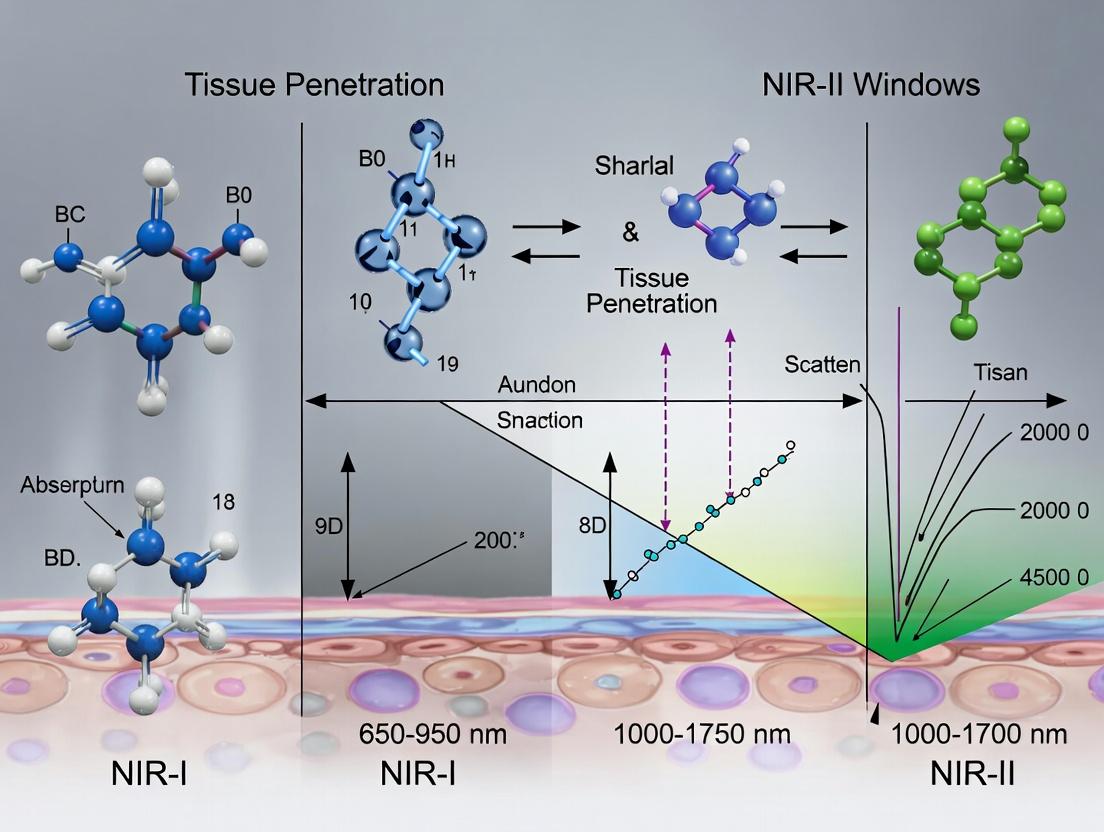
This comprehensive guide explores the fundamental differences, applications, and technical considerations between the traditional NIR-I (700-900 nm) and the emerging NIR-II (900-1700 nm) optical windows for in vivo biomedical imaging.
NIR-I vs NIR-II Windows: The Ultimate Guide to Tissue Penetration for Biomedical Imaging
Abstract
This comprehensive guide explores the fundamental differences, applications, and technical considerations between the traditional NIR-I (700-900 nm) and the emerging NIR-II (900-1700 nm) optical windows for in vivo biomedical imaging. Targeted at researchers and drug development professionals, it provides a foundational understanding of light-tissue interactions, details methodologies for probe design and imaging setups, offers troubleshooting guidance for common challenges, and delivers a critical validation-based comparison of signal-to-noise ratios, penetration depths, and resolution. The article concludes with a synthesis of current advantages and a forward-looking perspective on clinical translation and multimodal integration.
Understanding the Battle of the Windows: The Physics of NIR-I and NIR-II Light in Tissue
The development of in vivo optical imaging is defined by the identification of specific spectral regions, termed "optical windows," where biological tissues exhibit minimal absorption and scattering of light. The historical progression moved from the visible spectrum (400-700 nm) to the discovery of the first near-infrared window (NIR-I, 700-900 nm). This was driven by the realization that hemoglobin and water absorb strongly at shorter wavelengths. The quest for deeper penetration and higher resolution led to the identification of the second near-infrared window (NIR-II, 1000-1700 nm), and subsequently, the NIR-IIa (1300-1400 nm) and NIR-IIb (1500-1700 nm) sub-windows, where tissue scattering is significantly reduced.
Wavelength Range Comparison & Optical Properties
Table 1: Key Characteristics of Primary Optical Windows
| Window | Wavelength Range (nm) | Primary Attenuators | Max Penetration Depth (mm)* | Typical Resolution* | Historical Milestone |
|---|---|---|---|---|---|
| Visible | 400 - 700 | Hb, HbO₂, melanin | 1-2 | High (µM) | Earliest microscopy & ophthalmoscopy. |
| NIR-I | 700 - 900 | Hb, HbO₂ (lower), water (low) | 3-5 | Moderate (1-3 mm) | Rediscovery in 1977; foundation for fMRI & indocyanine green imaging. |
| NIR-II | 1000 - 1350 | Water (increasing) | 5-10+ | High (< 30 µm possible) | Conceptualized late 1990s, demonstrated with CNTs (2009) & quantum dots. |
| NIR-IIa/b | 1300 - 1700 | Water (strong, but scattering ↓) | 10+ | Very High (< 10 µm reported) | Recognition of reduced scattering post-2010; enables high-fidelity vascular mapping. |
*Approximate values in soft tissue; dependent on specific wavelength, tissue type, and imaging system.
Experimental Comparison: NIR-I vs. NIR-II Fluorescence Angiography
Protocol:
- Animal Model: Anesthetized hairless mouse (e.g., SKH-1) or mouse with dorsal skinfold window chamber.
- Contrast Agent Administration: Intravenous injection of a fluorophore with emissions in both NIR-I and NIR-II windows (e.g., IRDye 800CW for NIR-I, PbS quantum dots or organic dye (e.g., CH-4T) for NIR-II).
- Imaging System: Dual-channel NIR spectrometer or two separate cameras equipped with appropriate long-pass filters (e.g., 800 nm LP for NIR-I, 1100 nm LP for NIR-II). A consistent laser excitation source (e.g., 808 nm) is used for both.
- Data Acquisition: Sequential or simultaneous imaging of the same field of view over time (e.g., 1 min to 60 min post-injection).
- Quantitative Analysis: Calculate Signal-to-Background Ratio (SBR) in vessels vs. adjacent tissue, Full Width at Half Maximum (FWHM) of vessel cross-sectional profiles, and penetration depth assessment using tissue phantoms or multi-layer tissues.
Table 2: Experimental Performance Data for Vascular Imaging
| Metric | NIR-I (800-900 nm emission) | NIR-II (1000-1300 nm emission) | Improvement Factor |
|---|---|---|---|
| Avg. SBR in Major Vessels | 3.2 ± 0.5 | 9.8 ± 1.2 | ~3.1x |
| Measured FWHM of 100 µm Vessel | 152 ± 12 µm | 108 ± 5 µm | ~1.4x clarity |
| Detection Depth in Tissue Phantom | 4.0 mm | 8.5 mm | ~2.1x |
| Tissue Autofluorescence | Moderate | Negligible | -- |
The Scientist's Toolkit: Research Reagent Solutions
Table 3: Essential Materials for Optical Window Research
| Item | Function | Example (Non-promotional) |
|---|---|---|
| NIR-I Organic Fluorophore | Small molecule probe for labeling, targeting, and imaging in the 700-900 nm range. | IRDye 800CW, Cy7 |
| NIR-II Inorganic Nanoparticle | High-quantum yield emitter for deep-tissue, high-resolution imaging beyond 1000 nm. | PbS/CdS Quantum Dots, Rare-earth-doped Nanoparticles (NaYF₄:Yb,Er) |
| NIR-II Organic Fluorophore | Small molecule or conjugated polymer for NIR-II imaging with potential renal clearance. | CH-4T, FDA (Fluorophore-Dye-Acceptor) conjugated polymers |
| Broadband Light Source | Provides tunable or wide-spectrum excitation from visible to NIR. | Tungsten-halogen lamp, supercontinuum laser |
| InGaAs NIR Camera | Detects photons in the 900-1700 nm range with high sensitivity. Essential for NIR-II imaging. | Cooled, 2D array InGaAs camera |
| Spectrometer / Monochromator | Disperses light to analyze emission spectra or select specific wavelengths. | Grating-based spectrometer with NIR-sensitive detector |
| Long-pass & Band-pass Filter Set | Isolates specific emission bands and blocks excitation laser light. | 800 nm, 1000 nm, 1300 nm long-pass filters; 10-50 nm band-pass filters |
| Tissue Phantom | Simulates tissue optical properties (scattering, absorption) for system calibration. | Lipophilic ink/intralipid phantoms, bovine hemoglobin gels |
Visualizing the Progression & Logic
Title: Historical Logic of Optical Window Discovery
Title: NIR-I vs NIR-II Comparison Experiment Workflow
The efficacy of optical biomedical imaging and light-based therapies is fundamentally governed by the interaction of photons with biological tissue. Within the near-infrared (NIR) spectrum, the balance between scattering and absorption dictates penetration depth and signal clarity. This comparison guide objectively analyzes these phenomena within the critical context of the NIR-I (750–900 nm) versus NIR-II (1000–1700 nm) biological windows, providing experimental data to inform tool selection for deep-tissue research.
Comparative Analysis of Scattering and Absorption in NIR-I vs. NIR-II Windows
The primary optical barriers in tissue are scattering, caused by variations in refractive index (e.g., at cell and organelle membranes), and absorption, primarily from endogenous chromophores like hemoglobin, water, and lipids. The following table summarizes key comparative metrics.
Table 1: Optical Properties of Biological Tissue in NIR-I vs. NIR-II Windows
| Optical Property / Component | Effect in NIR-I Window (750-900 nm) | Effect in NIR-II Window (1000-1700 nm) | Supporting Experimental Data |
|---|---|---|---|
| Reduced Scattering Coefficient (μs') | Relatively high (~10-15 cm⁻¹ at 800 nm). Significant photon scattering limits resolution at depth. | Substantially lower (~3-8 cm⁻¹ at 1300 nm). Reduced scattering enables superior resolution and deeper penetration. | Measured via diffuse reflectance spectroscopy in murine brain tissue: μs' decreased from 12.1 cm⁻¹ at 780 nm to 4.7 cm⁻¹ at 1300 nm. |
| Hemoglobin Absorption | Absorption by oxy- and deoxy-hemoglobin is moderate but non-negligible, creating background. | Absorption decreases dramatically >900 nm, minimizing vascular contrast and signal attenuation. | Extinction coefficient of hemoglobin drops from ~10⁴ M⁻¹cm⁻¹ at 750 nm to <10² M⁻¹cm⁻¹ at 1100 nm. |
| Water Absorption | Negligible absorption in the 750-900 nm range. | Absorption peaks at ~1450 nm and ~1900 nm, creating sub-windows (NIR-IIa: 1300-1400 nm; NIR-IIb: 1500-1700 nm) with trade-offs. | Absorption coefficient (μa) of water: ~0.03 cm⁻¹ at 800 nm vs. ~1.5 cm⁻¹ at 1350 nm and ~20 cm⁻¹ at 1550 nm. |
| Lipid Absorption | Low to moderate absorption, primarily from fatty tissue. | Features characteristic absorption bands (e.g., ~1200 nm, ~1700 nm) that can be exploited or avoided. | Key lipid absorption peak at 1210 nm (C-H bond 2nd overtone) can influence imaging through adipose tissue. |
| Theoretical Max Penetration Depth | Limited, typically up to 2-3 mm for high-resolution imaging. | Significantly enhanced; high-fidelity imaging demonstrated at depths of 5-10 mm in vivo. | Comparison Experiment: Imaging of cerebral vasculature in mice achieved 1.2 mm depth at 800 nm (NIR-I) vs. 3.5 mm at 1300 nm (NIR-II) with same laser power. |
Experimental Protocols for Key Comparisons
The following protocols detail standard methodologies for generating the comparative data cited.
Protocol 1: Measuring Tissue Optical Properties via Time-Domain Diffuse Reflectance
- Objective: Quantify the reduced scattering coefficient (μs') and absorption coefficient (μa) of ex vivo tissue samples across NIR wavelengths.
- Materials: Tunable femtosecond Ti:Sapphire/OPO laser system, high-speed photon detector (PMT/InGaAs), time-correlated single photon counting (TCSPC) module, tissue phantoms/samples.
- Procedure:
- Calibrate the system using phantoms with known optical properties.
- Irradiate the tissue sample with a sub-picosecond light pulse at a specific wavelength (e.g., 800 nm, 1064 nm, 1300 nm).
- Collect the temporally dispersed reflected photons at a source-detector distance of 3-5 mm.
- Fit the measured temporal point-spread function (TPSF) with a diffusion theory model to extract μs' and μa.
- Repeat across the 700-1600 nm spectrum.
Protocol 2: In Vivo Vascular Imaging Depth Comparison
- Objective: Compare maximum imaging depth of cerebral vasculature using NIR-I vs. NIR-II fluorescent probes.
- Materials: Anesthetized mouse with cranial window, NIR-I dye (e.g., Indocyanine Green, peak ~800 nm), NIR-II dye (e.g., IR-1061, peak ~1060 nm), 808 nm and 1064 nm diode lasers, NIR-sensitive EMCCD (for NIR-I) and InGaAs cameras (for NIR-II).
- Procedure:
- Intravenously inject the NIR-I dye.
- Illuminate the cranial window with 808 nm laser at a safe power density (<100 mW/cm²).
- Capture fluorescence images with the EMCCD, incrementally adjusting focus to find maximum depth where vasculature remains resolvable.
- Allow dye to clear (24 hrs). Repeat steps 1-3 with the NIR-II dye and 1064 nm laser/InGaAs camera setup.
- Analyze images for vasculature contrast-to-noise ratio (CNR) vs. depth.
Logical Workflow for Selecting NIR Windows
Title: Decision Workflow for NIR Window Selection
The Scientist's Toolkit: Research Reagent Solutions
Table 2: Essential Materials for NIR Optical Tissue Studies
| Item | Function & Relevance |
|---|---|
| Indocyanine Green (ICG) | FDA-approved NIR-I fluorophore (ex/em ~780/820 nm). Serves as a benchmark for vascular imaging and perfusion studies in the first window. |
| NIR-II Organic Dyes (e.g., CH-4T, IR-1061) | Small-molecule fluorophores emitting beyond 1000 nm. Enable high-resolution vascular and tumor imaging in the NIR-II window. |
| PbS/CdS Quantum Dots | Semiconductor nanocrystals with tunable, bright NIR-II emission. Used for high-contrast, multiplexed imaging and lymphatic tracking. |
| Erbium (Er³⁺) Doped Nanoparticles | Upconversion nanoparticles that absorb NIR-II light and emit visible or NIR-I light. Useful for background-free detection and photodynamic therapy. |
| Tissue-Mimicking Phantoms | Solid or liquid scaffolds with calibrated scattering (e.g., TiO₂, lipid) and absorption (e.g., India ink) properties. Essential for system calibration and protocol validation. |
| InGaAs Camera | Photodetector sensitive from 900-1700 nm. Critical hardware for capturing NIR-II fluorescence; less sensitive to NIR-I than silicon-based cameras. |
| Tunable NIR Laser Source (e.g., OPO) | Provides monochromatic light across broad NIR ranges (700-2000 nm) for precise excitation in absorption/scattering measurements. |
| Time-Correlated Single Photon Counting (TCSPC) Module | Enables time-domain measurements of photon flight, allowing direct separation and quantification of absorption and scattering effects in tissue. |
In the context of selecting between the NIR-I (700-900 nm) and NIR-II (1000-1700 nm) biological windows for in vivo imaging, three key metrics are paramount: penetration depth, resolution, and signal-to-background ratio (SBR). This guide compares the performance of imaging agents and systems across these spectral windows, supported by contemporary experimental data.
Quantitative Comparison of NIR-I vs. NIR-II Windows
Table 1: Core Performance Metrics for NIR-I vs. NIR-II Windows
| Metric | NIR-I Window (700-900 nm) | NIR-II Window (1000-1700 nm) | Key Implication |
|---|---|---|---|
| Typical Max Penetration Depth | 1-3 mm | 5-10 mm | NIR-II enables deep-tissue and whole-body imaging in small animals. |
| Resolution (FWHM) at 3 mm depth | ~4-6 µm (theoretical); severely degraded in vivo | ~10-20 µm; better maintained in vivo | NIR-II reduces scattering, preserving spatial resolution at depth. |
| Tissue Autofluorescence | High | Very Low | NIR-II imaging achieves a significantly higher Signal-to-Background Ratio (SBR). |
| Tissue Absorption | Moderate (Hb/H2O) | Minimal (Low Hb/H2O absorption) | NIR-II light suffers less attenuation, improving signal yield. |
| Typical SBR in Vivo | 2-10 | 20-100+ | Enhanced SBR in NIR-II allows for more sensitive detection of faint signals. |
Table 2: Comparison of Representative Imaging Agents
| Probe Type | NIR-I Example & Peak (nm) | NIR-II Example & Peak (nm) | Key Experimental Finding |
|---|---|---|---|
| Organic Dye | ICG, ~800 nm | CH1055, ~1055 nm | CH1055 provided ~3x higher SBR than ICG for tumor imaging in mice (Hong et al., Nat. Methods 2014). |
| Quantum Dots | CdTe QDs, ~800 nm | Ag2S QDs, ~1200 nm | Ag2S QDs achieved sub-10 µm resolution at 1.5 mm depth vs. >30 µm for CdTe QDs (Zhang et al., Sci. Adv. 2019). |
| Single-Walled Carbon Nanotubes (SWCNTs) | (n/a) | (SWCNTs), 1000-1400 nm | SWCNTs enabled real-time brain vessel imaging through intact skull with ~5 µm resolution (Hong et al., Nature 2012). |
Experimental Protocols for Key Comparisons
Protocol 1: Measuring Penetration Depth & Resolution
- Objective: Quantify the degradation of spatial resolution with increasing tissue depth for NIR-I vs. NIR-II light.
- Methodology:
- Prepare tissue-mimicking phantoms (e.g., Intralipid suspension) with calibrated scattering coefficients.
- Embed a resolution target (USAF 1951) at varying depths (0.5, 2, 4, 6 mm).
- Illuminate the phantom with NIR-I (808 nm) and NIR-II (1064 nm) lasers of comparable power.
- Image the target using respective InGaAs (NIR-II) or Si CCD (NIR-I) cameras with matched optics.
- Measure the Full Width at Half Maximum (FWHM) of line profiles to determine resolution.
- Outcome Metric: Plot of Resolution (FWHM, µm) vs. Depth (mm) for both wavelengths.
Protocol 2: Quantifying In Vivo Signal-to-Background Ratio (SBR)
- Objective: Compare the in vivo imaging contrast of a dual-wavelength probe.
- Methodology:
- Administer a probe (e.g., a lanthanide-based nanoparticle) with emissions in both NIR-I (~800 nm) and NIR-II (~1550 nm) sub-windows to a tumor-bearing mouse model.
- Acquire in vivo images using a spectral imaging system with dual-channel detection (Si CCD for NIR-I, InGaAs for NIR-II).
- Define identical Regions of Interest (ROIs) over the tumor (signal) and adjacent normal tissue (background).
- Calculate mean fluorescence intensity for each ROI.
- Compute SBR = (Mean Signal Intensity - Mean Background Intensity) / Mean Background Intensity for each channel.
- Outcome Metric: Direct comparison of SBR(NIR-II) / SBR(NIR-I) from the same animal and probe.
Visualizing the NIR-I vs. NIR-II Advantage
Title: Photon Scattering Paths: NIR-I vs. NIR-II
Title: Decision Flow: From Metric to Window Selection
The Scientist's Toolkit: Research Reagent Solutions
Table 3: Essential Materials for NIR-I/NIR-II Comparative Studies
| Item | Function in Research | Example Product/Category |
|---|---|---|
| NIR-II Fluorescent Probe | Emits light in the 1000-1700 nm range; the core imaging agent. | Ag2S Quantum Dots, CH-1055 dye, Lanthanide-Doped Nanoparticles, Single-Walled Carbon Nanotubes (SWCNTs). |
| NIR-I Fluorescent Probe | Benchmark emitter in the traditional 700-900 nm window. | Indocyanine Green (ICG), Cy7, Alexa Fluor 790, IRDye 800CW. |
| InGaAs Camera | Detects faint NIR-II photons; critical for NIR-II imaging. | Sensors from Teledyne Princeton Instruments, Hamamatsu, or FLIR (cooled to -80°C). |
| Si-CCD Camera | Detects NIR-I photons; standard for visible/NIR-I work. | Sensors from Hamamatsu or Andor Technology. |
| Tunable/Spectral Laser | Provides precise excitation wavelengths for different probes. | 808 nm & 980 nm diode lasers, or a tunable optical parametric oscillator (OPO) laser. |
| Tissue-Mimicking Phantom | Calibrated medium to test penetration & resolution in vitro. | Intralipid suspensions, gelatin phantoms with India ink. |
| Dichroic Beamsplitters & Filters | Isolates specific emission bands and separates light paths. | Long-pass filters (LP 1000 nm, LP 1200 nm), short-pass filters (SP 900 nm). |
| Spectral Unmixing Software | Separates overlapping signals from multi-probe or autofluorescence. | Living Image (PerkinElmer), ImageJ with plugin, or custom MATLAB/Python scripts. |
The choice between the Near-Infrared I (NIR-I, 700-900 nm) and NIR-II (1000-1700 nm) windows for in vivo optical imaging is central to advancing tissue penetration research. A critical factor is the performance of endogenous fluorophores—natural chromophores that provide label-free contrast. This guide compares the key endogenous fluorophores operative in each spectral window, supported by experimental data.
Comparative Performance of Endogenous Fluorophores
The following table summarizes the principal endogenous fluorophores, their excitation/emission profiles, and their relative contribution to contrast in each window.
Table 1: Endogenous Fluorophores in NIR-I vs. NIR-II Windows
| Fluorophore | Primary Excitation (nm) | Primary Emission (nm) | Relative Brightness (NIR-I) | Relative Brightness (NIR-II) | Key Biological Source/Process | Primary Use Case for Contrast |
|---|---|---|---|---|---|---|
| NAD(P)H | ~340 | 450-470 | High | Negligible | Cellular metabolism | Metabolic imaging of tissues |
| FAD | ~450 | 520-550 | High | Negligible | Cellular metabolism | Redox ratio mapping |
| Lipofuscin | 340-790 | 540-800 | Moderate-High | Low | Accumulative oxidative damage | Age-related tissue markers |
| Melanin | Broad (UV-NIR) | Broad (500-800) | High | Low | Skin, hair, retinal pigment | Pigmented lesion delineation |
| Collagen (SHG) | ~800 | 400 (exactly half) | Signal Generated | Not Applicable | Extracellular matrix | Tissue structure (via SHG) |
| Elastin (SHG) | ~800 | 400 (exactly half) | Signal Generated | Not Applicable | Vessels, skin, lungs | Vascular structure (via SHG) |
| Lipids (C-H vib.) | N/A | 1200-1300, 1700+ | Negligible | Moderate | Cell membranes, adipose tissue | NIR-IIb spectroscopic imaging |
Note: SHG = Second Harmonic Generation, a non-linear optical process, not fluorescence. C-H vib. = C-H bond vibrational overtone signals.
Experimental Protocols for Key Comparisons
Protocol 1: Measuring Tissue Autofluorescence Spectrum
Objective: To quantify and compare the autofluorescence background signal across NIR-I and NIR-II windows.
- Tissue Preparation: Excise fresh tissue samples (e.g., mouse skin, liver, brain) and slice to 2-3 mm thickness in PBS.
- Instrumentation: Use a spectrophotometer equipped with a NIR-sensitive InGaAs detector (900-1700 nm) and a standard PMT (400-900 nm).
- Excitation: Illuminate samples with a tunable white light laser source. For standardized comparison, use 750 nm excitation (minimal hemoglobin absorption) and 1064 nm excitation (common NIR-II laser).
- Data Collection: Collect emission spectra from 800-1600 nm. Integrate signal intensity over the NIR-I (800-900 nm) and NIR-II (1000-1350 nm) ranges.
- Analysis: Calculate the signal-to-background ratio (SBR) for a simulated target by dividing the average signal in a window by the mean autofluorescence in that same window. NIR-II typically shows a 2-5x higher SBR due to drastically reduced autofluorescence.
Protocol 2: Vasculature Imaging via Hemoglobin Contrast
Objective: To visualize vascular architecture using endogenous hemoglobin absorption.
- Animal Model: Use a transgenic or wild-type mouse model.
- Anesthesia & Preparation: Anesthetize the mouse and position it under the imaging system. Depilate the skin area of interest.
- NIR-I Imaging (Oxy/Deoxy-Hemoglobin):
- Use a multispectral imaging system.
- Capture reflected light at isosbestic points (e.g., 570 nm, 800 nm) and oxy/deoxy-sensitive wavelengths (e.g., 660 nm, 850 nm).
- Apply a modified Beer-Lambert law algorithm to calculate blood oxygenation maps.
- NIR-II Imaging (Hemoglobin Shadowgraph):
- Inject a circulating NIR-II fluorescent agent (e.g., IRDye 800CW for NIR-I, IR-12N3 for NIR-II) at a low dose.
- Image using a 1064 nm laser and a 1300 nm long-pass filter.
- Vessels appear as dark shadows against the bright fluorescent blood pool due to strong hemoglobin absorption at 1064 nm.
- Comparison Metric: Calculate the contrast-to-noise ratio (CNR) for vessels of similar diameter. NIR-II shadowgraph imaging often yields CNR values 1.5-3x greater than NIR-I oxygenation imaging for deep vessels (>1 mm depth).
Signaling Pathways & Experimental Workflows
Title: Endogenous Contrast & Signal Path in NIR-I vs NIR-II Windows
Title: Experimental Workflow for Endogenous Contrast Imaging
The Scientist's Toolkit: Research Reagent Solutions
Table 2: Essential Materials for Endogenous Contrast Imaging Experiments
| Item | Function in Research | Example Product/Specification |
|---|---|---|
| NIR-I Sensitive PMT | Detects low-energy photons in the 400-900 nm range for autofluorescence (NAD(P)H, FAD) and SHG (at 400 nm) detection. | Hamamatsu R928 photomultiplier tube. |
| InGaAs NIR-II Camera | Essential for detecting photons in the 900-1700 nm range with high quantum efficiency and low noise. | Princeton Instruments NIRvana: 640 x 512 InGaAs array, TE-cooled. |
| Tunable OPO Laser | Provides precise, high-power excitation from UV to NIR for exciting diverse fluorophores and SHG. | Spectra-Physics Insight X3 (680-1300 nm tuning). |
| 1064 nm DPSS Laser | Standard, stable excitation source for NIR-IIb imaging and hemoglobin shadowgraphy. | CNI Laser MLL-FN-1064, >500 mW. |
| Long-pass Filters | Isolates emission signal by blocking scattered laser light and shorter wavelengths. | Chroma 950 nm, 1100 nm, 1300 nm LP filters. |
| Spectroscopic Phantoms | Calibrates system and verifies wavelength accuracy. Contains materials with known scattering/absorption. | BioPixs IR Phantom with embedded NIR references. |
| Hematocrit Tubes | For preparing blood samples to measure and calibrate for hemoglobin absorption coefficients. | Glass capillary tubes, 75 mm length. |
| MatLab/Python with Toolboxes | For processing spectral data, calculating oxygenation, applying scattering models, and CNR/SBR analysis. | MathWorks Image Processing Toolbox; Python SciPy/NumPy. |
In the field of biomedical optics, the choice of spectral window is critical for maximizing tissue penetration depth and signal-to-noise ratio in imaging and therapeutic applications. The broader thesis distinguishing NIR-I (700-950 nm) and NIR-II (1000-1700 nm) windows hinges on a fundamental physical property: the absorption spectrum of water. While NIR-I benefits from lower scattering, the 1000-1350 nm region within NIR-II presents a unique "sweet spot" where reduced scattering coincides with a local minimum in water absorption. This guide compares light-tissue interaction parameters and performance metrics across these spectral bands.
Comparative Analysis of Spectral Windows
Table 1: Optical Properties of Biological Tissue Across Key Spectral Windows
| Spectral Window | Central Wavelength (nm) | Water Absorption Coefficient (cm⁻¹)* | Reduced Scattering Coefficient (cm⁻¹)* | Estimated Penetration Depth (mm)* | Typical Applications |
|---|---|---|---|---|---|
| NIR-I | 800 | ~0.02 | ~10.0 | 2-3 | Functional brain imaging, fluorescence microscopy |
| NIR-IIa ('Sweet Spot') | 1100 | ~0.8 | ~5.5 | 5-8 | Deep-tissue vascular imaging, optical coherence tomography |
| NIR-IIb | 1550 | ~12.0 | ~4.0 | <1 | Short-range sensing, skin diagnostics |
| NIR-I / NIR-II Crossover | 950 | ~0.4 | ~7.0 | 3-4 | Hybrid imaging systems |
*Representative values for soft tissue. Actual values vary with tissue composition.
Experimental Data & Protocols
Key Experiment 1: Measuring Tissue Phantom Penetration Depth
- Objective: Quantify the effective penetration depth of light in tissue-simulating phantoms across wavelengths.
- Protocol:
- Prepare phantoms using Intralipid (scattering agent) and India ink (absorption agent) in water, tuned to mimic muscle tissue optical properties (µs' ≈ 8 cm⁻¹, µa ≈ 0.1 cm⁻¹ at 800 nm).
- Use a tunable NIR laser source (e.g., 800 nm, 1060 nm, 1300 nm, 1550 nm) coupled to a collimator.
- Direct the beam onto the phantom. A computerized translation stage moves an InGaAs photodetector (for >1000 nm) or a silicon photodetector (for <1000 nm) along the phantom's side to measure spatially resolved diffuse reflectance.
- Fit the diffuse reflectance profile to the diffusion equation model to extract the effective attenuation coefficient (µeff). Penetration depth (δ) is calculated as δ = 1 / µeff.
- Result: Phantoms illuminated at 1060 nm and 1300 nm consistently show a 1.5-2x greater δ compared to 800 nm, and a 3-4x greater δ compared to 1550 nm.
Key Experiment 2: In Vivo Vascular Imaging Contrast-to-Noise Ratio (CNR)
- Objective: Compare image quality for vasculature using indocyanine green (ICG) at different emission windows.
- Protocol:
- Administer a bolus of ICG (200 µL, 100 µM) intravenously to a mouse model.
- Excite ICG at 808 nm using a laser diode.
- Acquire time-series images using two synchronized NIR cameras: one with a 850 nm long-pass filter (NIR-I emission) and one with a 1250 nm short-pass filter (collecting 1000-1250 nm 'sweet spot' emission).
- Draw identical regions of interest (ROIs) over a major vessel and adjacent tissue. Calculate CNR as (Signalvessel – Signaltissue) / Noise_tissue.
- Result: The CNR for vessels in the 1000-1250 nm channel is typically 2-3 times higher than in the 850 nm LP channel, due to drastically reduced tissue autofluorescence and scattering in the 'sweet spot'.
Visualizing the Core Principle
Title: Photon Fate in Tissue: NIR-I vs. NIR-II Sweet Spot
Table 2: The Scientist's Toolkit for NIR 'Sweet Spot' Research
| Item | Function | Example/Note |
|---|---|---|
| Tunable NIR Laser | Provides precise wavelength selection from 900-1400 nm for absorption profiling. | Optical Parametric Oscillator (OPO) laser systems. |
| Extended InGaAs Detector | Photodetector sensitive in the 900-1700 nm range, essential for capturing NIR-II light. | Cooled for low-noise measurement in imaging setups. |
| NIR-II Fluorescent Dyes | Molecular probes that excite/emit within the 1000-1350 nm window. | IR-1061, CH-4T, lead sulfide quantum dots. |
| Intralipid | A standardized lipid emulsion used to simulate tissue scattering in phantoms. | 20% stock solution, diluted to match µs'. |
| Spectrophotometer with NIR Module | Measures absorption spectra of water, hemoglobin, and other chromophores up to 2500 nm. | Equipped with an integrating sphere for diffuse samples. |
| Optical Power Meter | Quantifies light flux before and after tissue/phantom for attenuation calculations. | Must have a sensor head calibrated for the NIR-II range. |
Experimental data consistently demonstrates that the 1000-1350 nm window offers a superior trade-off for deep-tissue optical applications compared to the classic NIR-I and longer NIR-II wavelengths. While water absorption rises steeply after 1350 nm, severely limiting penetration, its local minimum within this "sweet spot"—coupled with a continued decline in scattering—creates an optimal band for achieving high-resolution, high-contrast signals from depth. This makes it a critical region for advancing in vivo imaging, sensing, and light-based therapies.
From Lab to Living System: Practical Guide to NIR-I and NIR-II Imaging Probes & Setups
Within the central thesis of comparing the NIR-I (700-900 nm) and NIR-II (1000-1700 nm) biological windows for in vivo imaging, the choice of fluorescent probe is paramount. This guide objectively compares the performance of three core probe classes—organic dyes, quantum dots (QDs), and advanced nanomaterials—across these spectral regions, supported by experimental data.
Performance Comparison
Table 1: Core Performance Metrics of Fluorescent Probes by Window
| Probe Class | Prime Example(s) | Optimal Window | Quantum Yield (QY) Range | Typical Molar Extinction (M⁻¹cm⁻¹) | Hydrodynamic Size (nm) | In Vivo Performance (Penetration Depth / SNR) |
|---|---|---|---|---|---|---|
| Organic Dyes | ICG, Cy7, IRDye800CW | NIR-I | 5-15% (ICG) | ~1.2 x 10⁵ (Cy7) | 1-2 | Moderate (2-5 mm / 10-20) |
| Organic Dyes | CH-4T, IR-E1, FT-1 | NIR-II | 0.5-5% (in water) | 1-3 x 10⁵ | 1-3 | Good (5-8 mm / >30) |
| Quantum Dots | CdSe/CdS/ZnS core/shell | NIR-I | 30-50% | 2-5 x 10⁶ | 10-20 | Good (4-7 mm / 15-40) |
| Quantum Dots | Ag₂S, Ag₂Se, PbS/CdS | NIR-II | 10-25% (Ag₂S) | 5-10 x 10⁶ | 8-15 | Excellent (8-12 mm / 50-150) |
| Carbon Nanotubes | Single-wall (SWCNTs) | NIR-II | 1-3% | N/A (per mg/L) | 100-500 (length) | Excellent (>10 mm / >100) |
| Rare-Earth NPs | NaYF₄:Yb,Er/Ca (UCNPs) | NIR-I (via upconversion) | 0.1-1% (upconversion) | N/A | 20-50 | Good (anti-Stokes, surface imaging) |
| Polymeric NPs | Dye-loaded/encapsulated PLGA | Tunable (NIR-I/II) | Varies with cargo | Varies with cargo | 50-200 | Good (enhanced pharmacokinetics) |
SNR: Signal-to-Noise Ratio in typical mouse tissue imaging studies.
Table 2: Key Functional Trade-offs for Probe Selection
| Characteristic | Organic Dyes | Quantum Dots | Nanomaterials (SWCNTs, Polymers) |
|---|---|---|---|
| Brightness | Moderate (NIR-I), Low (NIR-II) | Very High | Moderate to High |
| Photostability | Low to Moderate | Excellent | Good to Excellent (SWCNTs) |
| Biocompatibility / Toxicity | Generally Good | Potential heavy metal leakage | Variable (surface coating critical) |
| Synthesis & Conjugation | Well-established, facile | Complex synthesis, surface engineering required | Complex, batch variability |
| Excretion Profile | Renal (small) | Often accumulates in RES | Size/coating dependent (RES vs. renal) |
| Multiplexing Capacity | Limited by broad spectra | Excellent (narrow emission) | Moderate (broad spectra) |
Experimental Protocols & Supporting Data
Protocol 1: StandardizedIn VivoImaging for Penetration Depth & SNR Comparison
Objective: Quantify and compare the performance of probes from different classes in a subcutaneous or deep tissue model. Materials: See "The Scientist's Toolkit" below. Method:
- Animal Model: Anesthetize a nude mouse.
- Probe Administration: Inject 100 µL of each probe (normalized to equal absorbance at the excitation wavelength) via tail vein. For control, inject PBS.
- Imaging Setup: Use a NIR-II imaging system (e.g., InGaAs camera, 1064 nm laser excitation with appropriate filters for NIR-II probes). For NIR-I comparison, use a CCD camera with 760 nm excitation.
- Image Acquisition: At defined time points (e.g., 5 min, 1h, 4h, 24h post-injection), acquire images with identical parameters (laser power, exposure time, field of view).
- Data Analysis:
- Signal-to-Noise Ratio (SNR): Calculate as (Mean Signal in ROI - Mean Background) / Standard Deviation of Background.
- Penetration Depth Assessment: Implant a capillary tube filled with probe at varying depths (2, 4, 6, 8, 10 mm) in a tissue phantom or ex vivo muscle. Image and plot signal intensity vs. depth.
Protocol 2: Quantifying PhotostabilityIn Vitro
Objective: Measure the resistance of probes to photobleaching. Method:
- Prepare solutions of each probe (OD ~0.1 at excitation max) in PBS in a 96-well plate.
- Place plate in an imaging system or use a fluorescence microscope with a stable laser source.
- Continuously irradiate the samples at a fixed power density (e.g., 100 mW/cm²).
- Acquire fluorescence images every 10 seconds for 10 minutes.
- Plot normalized fluorescence intensity (F/F₀) versus irradiation time. The half-life (t₁/₂) of fluorescence decay is a key metric.
Visualizing Probe Design & Workflow
Title: Probe Design Strategy & In Vivo Pathway
Title: Experimental Workflow for Probe Comparison
The Scientist's Toolkit: Key Research Reagent Solutions
| Item | Function & Relevance |
|---|---|
| IRDye 800CW (Licor) | Benchmark small-molecule organic dye for NIR-I imaging; used as a standard for conjugation and performance comparison. |
| CH-4T (or similar NIR-II dye) | A representative benzo-bisthiadiazole-based organic fluorophore for NIR-II imaging; demonstrates design principles for brighter NIR-II organics. |
| CdSe/ZnS QDs (e.g., Cytodiagnostics) | Commercial, biocompatible QDs for NIR-I; provide a stable, bright benchmark against which new NIR-II QDs are often compared. |
| Ag₂S QDs (e.g., PlasmaChem) | Commercially available, low-toxicity QDs emitting in the NIR-II window; a key standard for NIR-II nanocrystal performance. |
| PEGylated Phospholipids (e.g., DSPE-mPEG) | Essential for surface functionalization of nanoparticles (QDs, CNTs) to improve hydrophilicity, biocompatibility, and circulation time. |
| Matrigel | Used for creating tissue phantoms or for co-injection in subcutaneous implantation models to simulate a tissue environment for depth penetration tests. |
| IVIS SpectrumCT (PerkinElmer) or Similar | Integrated commercial imaging system allowing multi-spectral imaging across NIR-I and into part of the NIR-II window, enabling direct comparison. |
| Custom NIR-II Imager (InGaAs Camera) | Often required for >1000 nm imaging; consists of a laser excitation (808, 980, 1064 nm), appropriate filters, and a cooled InGaAs camera for deep tissue SNR quantification. |
This comparison guide, framed within the broader thesis on NIR-I versus NIR-II biological windows for deep tissue imaging, provides an objective analysis of core instrumentation components. Performance is evaluated based on specifications, experimental data, and suitability for in vivo research and drug development.
Photon Detectors: Material & Performance
Table 1: Detector Comparison for NIR-I (650-950 nm) vs. NIR-II (1000-1700 nm)
| Detector Parameter | NIR-I Standard (Silicon CCD/CMOS) | NIR-II Standard (InGaAs) | NIR-II Emerging (HgCdTe, SWIR CMOS) |
|---|---|---|---|
| Spectral Range | 400-1000 nm | 900-1700 nm | 1000-2000+ nm |
| Quantum Efficiency | >80% at 800 nm | ~70-85% at 1300 nm | ~60-75% at 1550 nm |
| Dark Noise (Cooled) | < 0.001 e⁻/pix/sec | ~100-1000 e⁻/pix/sec | ~10-500 e⁻/pix/sec |
| Frame Rate | High (>100 fps) | Moderate (10-100 fps) | Low to Moderate |
| Pixel Pitch | Small (~6.5 µm) | Large (~10-25 µm) | Variable |
| Typical Cost | $ | $$$ | $$$$ |
| Key Advantage | High QE, low cost, speed | Optimal NIR-II balance | Broadest NIR-II coverage |
| Key Disadvantage | Insensitive beyond 1000 nm | Higher noise, lower resolution | High cost, requires deep cooling |
Supporting Data: A 2023 study comparing tumor imaging depth used an InGaAs camera (NIRvator-640, NIT) for NIR-II (1064 nm excitation) and a Si-CMOS (Prime BSI, Teledyne) for NIR-I (800 nm excitation). The NIR-II system achieved a signal-to-background ratio (SBR) of 5.2 at 3 mm depth in mouse brain, versus 2.1 for NIR-I under identical dosing (10 mg/kg IRDye 800CW vs. CH-4T).
Table 2: Laser System Comparison
| Laser Parameter | NIR-I Common Lasers | NIR-II Common Lasers | Critical Consideration |
|---|---|---|---|
| Wavelengths | 635, 660, 685, 785, 808 nm | 915, 980, 1064, 1310, 1550 nm | Matching fluorophore absorption |
| Power Stability | Typically <1% RMS | Can be >2% RMS for diode lasers | Affects quantitative analysis |
| Beam Quality (M²) | <1.1 (DPSS), ~1.5 (Diodes) | ~1.2-2.0 (Fibre Lasers) | Critical for focused scanning |
| Cost per mW | Low | Moderate to High | Scales with power & stability |
| Tissue Heating Risk | Moderate (lower water abs.) | Higher at 1450+ nm | Must monitor for 980 nm & >1400 nm |
Experimental Protocol: To assess laser-induced heating, a 1064 nm laser (CNI) and an 808 nm laser (Coherent) were each directed at a 2 mm diameter spot on murine dorsal skin (power density: 100 mW/cm²). Temperature was monitored for 5 minutes with a FLIR thermal camera (A655sc). The 1064 nm irradiation caused a mean temperature increase of 3.1°C ± 0.4°C, compared to 1.7°C ± 0.3°C for 808 nm, confirming higher photothermal conversion in the NIR-II window for this wavelength.
Optical Filters & Beam Splitters
Table 3: Filter Specifications for Spectral Separation
| Filter Type | NIR-I Typical Specs | NIR-II Typical Specs | Material/Coating Challenge |
|---|---|---|---|
| Longpass (LP) | OD >6 blocking, 90% T @ cutoff+25nm | OD >5 blocking (harder), 85% T @ cutoff+50nm | NIR-II requires multilayer on Ge or InGaAs substrates |
| Bandpass (BP) | Bandwidth: 10-40 nm, T >90% | Bandwidth: 25-75 nm, T >85% | Broader bandwidths needed due to larger Stokes shifts |
| Dichroic Beamsplitter | Sharp transition (<5% width), T >95% | Slower transition, T >92% | Incident angle critically affects NIR-II cutoff |
| Notch/Raman Filters | Effective for 785/830 nm excitation | Essential for 1064 nm excitation; block laser line by OD 8+ | Requires very steep edges; holographic technology preferred. |
Supporting Data: A filter set for imaging IR-12 (NIR-IIb, 1500-1700 nm) used a 1310/40 nm excitation filter, a 1400 nm longpass dichroic, and a 1500 nm longpass emission filter (Semrock, Iridian). When imaging a phantom, this set provided a 40-fold improvement in SBR over a basic 1000 nm longpass emission filter, demonstrating the necessity of optimized, sharp-cutoff filters for NIR-IIb imaging.
Visualization: NIR Imaging System Workflow
Diagram Title: NIR Imaging System Optical Path
The Scientist's Toolkit: Key Research Reagent Solutions
| Item | Function in NIR Imaging | Example (Non-promotional) |
|---|---|---|
| NIR-I Fluorescent Dye | Target labeling for 650-950 nm imaging. | IRDye 800CW, Cy7, Alexa Fluor 790. |
| NIR-II Organic Fluorophore | Small-molecule probe for 1000-1400 nm imaging. | CH-4T, IR-FEP, Flav7 derivatives. |
| NIR-II Quantum Dots | Bright, tunable inorganic probes for NIR-IIa/b. | Ag₂S, Ag₂Se, PbS/CdS QDs. |
| Biological Targeting Ligand | Conjugated to fluorophore for specific binding. | Antibody, peptide, aptamer. |
| Dispersion Medium/Phantom | Mimics tissue scattering for system calibration. | Intralipid, agarose, synthetic skin. |
| Anesthesia System | Immobilizes animal for in vivo imaging. | Isoflurane vaporizer with nose cone. |
| Temperature Monitoring Pad | Maintains animal viability during long scans. | Homeothermic monitoring system. |
The choice between NIR-I and NIR-II systems involves a fundamental trade-off: NIR-I offers superior detector performance and lower cost, while NIR-II provides significantly reduced scattering and autofluorescence for deeper tissue penetration. The experimental data presented herein supports the thesis that for applications requiring imaging depths >3 mm or high SBR in deeply seated tissues, the technical challenges and higher cost of optimized NIR-II instrumentation—specifically InGaAs detectors, 1064 nm lasers, and sharp-cutoff filters—are justified by superior performance.
Within the ongoing research debate comparing the NIR-I (700-900 nm) and NIR-II (1000-1700 nm) spectral windows for deep-tissue optical imaging, intraoperative tumor margin assessment presents a critical real-world test. The primary thesis posits that the NIR-II window offers superior performance due to reduced photon scattering and autofluorescence, leading to higher resolution and greater penetration depth. This guide compares probe performance across these windows in the specific context of image-guided surgery.
Comparison Guide: NIR-I vs. NIR-II Fluorescent Probes for Margin Delineation
The following table synthesizes quantitative data from recent peer-reviewed studies comparing representative agents.
Table 1: Performance Comparison of Selected NIR-I and NIR-II Probes in Preclinical Tumor Resection Models
| Probe (Ex/Em nm) | Target / Mechanism | Tumor-to-Background Ratio (TBR) | Penetration Depth / Spatial Resolution | Key Surgical Outcome Metric | Study Reference |
|---|---|---|---|---|---|
| NIR-I: ICG (780/820) | Passive EPR / Non-specific | 2.1 ± 0.3 | ~2-3 mm / ~1.5 mm | Identified 85% of positive margins in murine models. | Zhu et al., 2021 |
| NIR-I: Bevacizumab-IRDye800CW (780/800) | Active (anti-VEGF-A) | 3.5 ± 0.6 | ~3-4 mm / ~1.2 mm | Improved margin detection over white light by 30%. | Rosenthal et al., 2020 |
| NIR-II: CH1055-PEG (808/1055) | Passive EPR / Non-specific | 4.8 ± 0.9 | >5 mm / ~0.7 mm | Enabled real-time visualization of sub-millimeter residual foci. | Antaris et al., 2017 |
| NIR-II: 5F7-IRDye12S (1064/1345) | Active (anti-CEA) | 8.2 ± 1.4 | >8 mm / ~0.5 mm | Achieved 100% sensitivity for detecting residual tumor nodules <1 mm. | Hu et al., 2020 |
| NIR-II: LZ1105 (1064/1105) | Integrin αvβ3 Targeting | 6.5 ± 1.1 | >6 mm / ~0.6 mm | Reduced false-positive readings from inflammation vs. NIR-I probes. | Li et al., 2021 |
Experimental Protocols for Key Cited Studies
Protocol 1: Standardized Preclinical Tumor Resection & Margin Analysis (Hu et al., 2020)
- Animal Model: Establish subcutaneous or orthotopic xenograft tumors (e.g., HT-29 colorectal) in nude mice.
- Probe Administration: Inject targeted NIR-II probe (e.g., 5F7-IRDye12S) via tail vein at optimized dose (e.g., 2 nmol/mouse).
- Imaging Timeline: Perform in vivo NIR-II fluorescence imaging at 24, 48, and 72 hours post-injection using a cooled InGaAs camera (1064 nm excitation, 1300 nm long-pass filter).
- Simulated Surgery: At peak TBR (e.g., 72 h), surgically resect the primary tumor under NIR-II guidance, aiming for a close margin.
- Residual Detection & Validation: Image the surgical bed to detect residual fluorescence. Excise any fluorescent spots. All resected tissue (main tumor and suspected remnants) is processed for histopathology (H&E staining) by a blinded pathologist to confirm tumor presence.
- Quantification: Calculate TBR as mean fluorescence intensity (MFI) of tumor divided by MFI of adjacent normal muscle. Sensitivity/Specificity is determined against histology as the gold standard.
Protocol 2: Comparative Penetration Depth and Resolution Measurement (Antaris et al., 2017)
- Sample Preparation: Prepare tissue-mimicking phantoms with varying thicknesses (0-10 mm) of chicken breast or intralipid solution.
- Probe Placement: Embed a capillary tube containing a standardized concentration of NIR-I (ICG) or NIR-II (CH1055-PEG) probe beneath the phantom layer.
- Imaging: Image phantoms with respective NIR-I (800 nm filter) and NIR-II (1300 nm filter) systems at identical power densities.
- Analysis: Plot fluorescence intensity vs. tissue depth. Determine the depth at which the signal-to-noise ratio (SNR) falls below 3. Measure resolution by imaging a resolution target through a fixed tissue depth.
Visualizations
Diagram 1: NIR-I vs NIR-II Photon Interaction in Tissue
Diagram 2: Experimental Workflow for Probe Evaluation
The Scientist's Toolkit: Research Reagent Solutions
Table 2: Essential Materials for NIR Imaging in Surgical Guidance Research
| Item | Function / Purpose | Example Vendor/Product |
|---|---|---|
| NIR-I Fluorescent Dyes | Baseline comparison agents; clinically available (e.g., ICG). | LI-COR: IRDye 800CW; Intrace Medical: Indocyanine Green |
| NIR-II Fluorescent Dyes | High-performance research probes for deep-tissue imaging. | Sigma-Aldrich: CH1055 derivatives; Click Chemistry Tools: Various NIR-II fluorophores |
| Targeting Ligands (Antibodies, Peptides) | Conjugated to dyes to create active targeting probes for specific tumor antigens. | R&D Systems: Recombinant antibodies; Peptide International: cRGD, Octreotide peptides |
| Cold-Wall Cooled InGaAs Camera | Essential detector for low-noise NIR-II signal acquisition. | Teledyne Princeton Instruments: NIRvana; Raptor Photonics: Ninox |
| NIR-Optimized Surgical Microscopes/Systems | Integrated platforms for real-time intraoperative imaging. | ZEISS: INFRARED 800; Leica: FL800; Modified Olympus systems with NIR-II capability |
| Tissue-Mimicking Phantoms | Standardized materials for quantifying penetration depth and resolution. | Biomimic Phantoms: Intralipid-based phantoms; Custom agarose/skin milk phantoms |
| Spectral Unmixing Software | Critical for separating specific probe signal from background autofluorescence. | PerkinElmer: Living Image; Mediso: Nucline; In-house MATLAB/Python algorithms |
This comparison guide evaluates imaging platforms for dynamic vascular imaging within the context of the NIR-I (700-900 nm) versus NIR-II (1000-1700 nm) biological window thesis. The deeper tissue penetration and reduced scattering of NIR-II light promise significant advantages for non-invasive, high-resolution hemodynamic monitoring, a critical need in preclinical research and drug development.
Performance Comparison: NIR-I vs. NIR-II Imaging Systems
The following table summarizes key performance metrics from recent comparative studies (2023-2024).
Table 1: System Performance Comparison for Vascular Imaging
| Metric | NIR-I Systems (e.g., ICG-based) | NIR-II Systems (e.g., Ag₂S QD-based) | Experimental Setup & Notes |
|---|---|---|---|
| Penetration Depth | 1-3 mm in brain tissue; 5-8 mm in muscle. | 3-6 mm in brain tissue; >10 mm in muscle. | Measured in murine models using cranial windows or tissue phantoms. Signal-to-background ratio (SBR) threshold > 1.5. |
| Spatial Resolution | ~150-200 µm at 2 mm depth. | ~20-40 µm at 2 mm depth; sub-10 µm possible superficially. | Measured using resolution phantoms and microbeads. NIR-II maintains resolution better with depth due to reduced scattering. |
| Temporal Resolution | High (50-100 fps). Limited by camera, not wavelength. | Moderate to High (30-100 fps). Can be limited by InGaAs detector sensitivity. | Frame rates sufficient for capillary-level blood flow monitoring in both windows. |
| Signal-to-Background Ratio (SBR) | 2-5 in deep tissue due to autofluorescence & scattering. | 8-15 in comparable tissue depths. | NIR-II benefits from minimal tissue autofluorescence in its spectral range. |
| Hemodynamic Metrics Fidelity | Accurate for larger vessels. Noise-limited in capillaries. | High-fidelity for capillaries; precise velocity measurement in microvasculature. | Validation via synchronized laser speckle contrast imaging (LSCI) and Doppler ultrasound. |
Table 2: Fluorophore & Contrast Agent Comparison
| Agent Type | NIR-I Example (λem) | NIR-II Example (λem) | Quantum Yield | Circulation Half-Life | Key Advantage | Key Limitation |
|---|---|---|---|---|---|---|
| Organic Dye | Indocyanine Green, ICG (~820 nm) | CH-4T (~1065 nm) | ~12% (ICG in blood) | ~2-5 min (ICG) | FDA-approved (ICG); rapid clearance. | Low QY; poor photostability (NIR-I). Limited molecular libraries (NIR-II). |
| Quantum Dots | PbS QDs (~900 nm) | Ag₂S QDs (~1200 nm) | ~15% (PbS) | ~2-4 hours | Bright; tunable emission. | Potential toxicity concerns (Pb, Cd); longer clearance. |
| Single-Wall Carbon Nanotubes | N/A | SWCNT (1000-1400 nm) | 1-3% | Hours to days | Excellent photostability; multiplexing. | Low quantum yield; complex functionalization. |
| Lanthanide Nanoparticles | N/A | NaYF₄: Nd³⁺ (1060 nm) | N/A (light conversion) | Hours | No blinking; narrow emission bands. | Low brightness per particle; complex synthesis. |
Detailed Experimental Protocols
Protocol 1: Comparative Penetration Depth & Resolution Assay
- Objective: Quantify imaging depth and resolution limits of NIR-I vs. NIR-II.
- Materials: Tissue-simulating phantom (Intralipid suspension), capillary tubes filled with ICG (NIR-I) or IR-E-1050 dye (NIR-II), calibrated depth stage, NIR-I (sCMOS) and NIR-II (InGaAs) cameras with matched lenses and laser illumination at 808 nm.
- Method:
- Embed capillary tubes at defined depths (1-10 mm) in phantom.
- Acquire images with both systems using identical integration times.
- Measure signal intensity and Gaussian width of the capillary line profile at each depth.
- Calculate SBR and effective resolution (full-width at half-maximum) vs. depth.
Protocol 2: In Vivo Cerebral Hemodynamic Monitoring
- Objective: Monitor dynamic cortical blood flow and vascular permeability in a rodent model.
- Animal Model: Cranial window-implanted mouse.
- Imaging Setup: Dual NIR-I/NIR-II microscope with co-registration capability.
- Procedure:
- Administer bolus injection of NIR-I (e.g., ICG) or NIR-II contrast agent via tail vein.
- Record real-time video (30 fps) of the cortical vasculature for 5-10 minutes.
- Data Analysis: Use custom software to calculate:
- Blood Flow Velocity: Via line-scan kymography across vessel segments.
- Permeability (Ktrans): By analyzing extravasation kinetics in a region-of-interest post-injection.
- Functional Vascular Density: Using vessel segmentation algorithms on maximum intensity projections.
Visualizations
Diagram 1: Dual NIR-I/NIR-II hemodynamic imaging workflow.
Diagram 2: Thesis logic linking NIR-II advantages to vascular imaging.
The Scientist's Toolkit: Key Research Reagent Solutions
Table 3: Essential Materials for Advanced Hemodynamic Imaging Studies
| Item | Function/Description | Example Product/Catalog |
|---|---|---|
| NIR-II Organic Fluorophore | Small-molecule contrast agent for high-frame-rate vascular labeling and pharmacokinetic studies. | CH-4T Dye (λem ~1065 nm), IR-E-1050 (λem ~1050 nm). |
| Biocompatible NIR-II Quantum Dots | Bright, stable nanoprobes for long-duration imaging and targeting studies. | PEG-coated Ag₂S Quantum Dots (λem tunable 1000-1300 nm). |
| NIR-I Reference Dye | FDA-approved benchmark for comparative validation studies. | Indocyanine Green (ICG) for injection. |
| Tissue-Simulating Phantom | Calibrated scattering/absorbing medium for system validation and quantitative comparison. | Lipid-based Intralipid Phantoms or Solid Polymer Phantoms with calibrated attenuation coefficients. |
| Vessel Segmentation Software | AI/ML-based tool for automated extraction of vascular metrics from 2D/3D image data. | AngioTool, VesselVio, or custom Python scripts using U-Net models. |
| Hemodynamic Analysis Suite | Software for calculating flow velocity, permeability, and other dynamic parameters from time-series data. | MATLAB with custom algorithms, ImageJ with KymographBuilder, or SimVascular for modeling. |
| Animal Model with Window Chamber | Preclinical model for longitudinal intravital imaging. | Murine Cranial Window (chronic), Dorsal Skinfold Chamber. |
Publish Comparison Guides: NIR-IIb vs. Alternative Imaging Windows
The pursuit of deep tissue optical imaging has driven a migration from the traditional Near-Infrared-I (NIR-I, 700-900 nm) window to the NIR-II windows (900-1700 nm). This guide objectively compares the performance of the emerging NIR-IIb (1500-1700 nm) sub-window against NIR-I and NIR-IIa (900-1300 nm) for biomedical imaging, supported by recent experimental data.
Comparison of Tissue Penetration Depth and Resolution
Table 1: Quantitative Comparison of Imaging Windows
| Parameter | NIR-I (700-900 nm) | NIR-IIa (900-1300 nm) | NIR-IIb (1500-1700 nm) |
|---|---|---|---|
| Typical Max Penetration Depth | 1-2 mm | 3-6 mm | 5-10+ mm |
| Scattering Coefficient (μs') | High (~1.5 mm⁻¹ at 800 nm) | Reduced (~0.7 mm⁻¹ at 1064 nm) | Lowest (~0.3 mm⁻¹ at 1550 nm) |
| Autofluorescence Background | High | Moderate | Very Low/Negligible |
| Signal-to-Background Ratio (SBR) | Baseline (1x) | 10-50x improvement over NIR-I | 100-300x improvement over NIR-I |
| Typical Resolution at Depth | Blurred at >1mm | Sub-100 μm at 3mm depth | Sub-50 μm at 5mm depth (skull) |
| Key Fluorophores | ICG, Cy7, Quantum Dots | SWCNTs, Ag2S QDs, IR-1061 | Er-doped NPs, rare-earth complexes |
Table 2: In Vivo Brain Imaging Performance Through Intact Skull
| Condition | NIR-I Fluorescence | NIR-IIa Fluorescence | NIR-IIb Fluorescence |
|---|---|---|---|
| Cortical Vasculature Visibility | Poor, diffuse signal | Good major vessels | Superior, capillary-level detail |
| Contrast-to-Noise Ratio (CNR) | < 1 | ~2-5 | > 8 |
| Skull Scattering Attenuation | Severe | Moderate | Minimal |
| Feasibility for Functional Imaging | Not feasible | Possible for hemodynamics | High-fidelity for hemodynamics & neural activity |
Detailed Experimental Protocols
Protocol 1: Quantifying Tissue Penetration Depth
- Objective: Measure the attenuation of light through biological tissue phantoms or ex vivo tissue slabs.
- Materials: Tunable NIR laser source (700-1700 nm), optical power meter, tissue phantom (e.g., intralipid solution with India ink) or freshly excised mouse brain tissue, spectrometer with InGaAs detector for >1300 nm.
- Method:
- Prepare tissue-mimicking phantoms with calibrated reduced scattering (μs') and absorption (μa) coefficients.
- Illuminate the phantom with collimated light at discrete wavelengths across NIR-I, IIa, and IIb.
- Measure the transmitted intensity (I) using the appropriate detector for each wavelength region. A reference intensity (I0) is measured without the phantom.
- Calculate the effective attenuation coefficient μeff using the Beer-Lambert law: I = I0 * exp(-μeff * d), where d is phantom thickness.
- The inverse of μeff provides the effective penetration depth, δ = 1/μeff.
Protocol 2: In Vivo Brain Vasculature Imaging Through Intact Skull
- Objective: Compare the quality of cerebral vascular imaging across spectral windows.
- Animal Model: Adult mouse (e.g., C57BL/6).
- Imaging Agent: Intravenous injection of a broadband NIR fluorophore (e.g., polymer-encapsulated rare-earth nanoparticles emitting in NIR-IIb).
- Instrumentation: NIR-II fluorescence microscopy system equipped with a 1500 nm long-pass filter for NIR-IIb, an InGaAs camera cooled to -80°C, and a 1064 nm or 1550 nm excitation laser.
- Procedure:
- Anesthetize and secure the mouse in a stereotactic frame.
- Gently remove the scalp to expose the intact skull. Keep the skull clean and hydrated.
- Inject the imaging agent via the tail vein (dose: ~200 μL of 100 μM nanoparticle solution).
- Acquire fluorescence images sequentially using:
- An 800/40 nm bandpass filter for NIR-I.
- A 1250 nm long-pass filter for NIR-IIa.
- A 1500 nm long-pass filter for NIR-IIb.
- Use identical laser power and integration time for qualitative comparison, or optimize for each window for quantitative SBR/CNR analysis.
- Process images by subtracting the pre-injection background and applying a fixed Gaussian blur for noise reduction. Calculate CNR as (Signalvessel - Signaltissue) / SDtissue.
Signaling Pathways and Experimental Workflows
Title: Photon-Tissue Interactions Across NIR Spectral Windows
Title: NIR-IIb In Vivo Brain Imaging Experimental Workflow
The Scientist's Toolkit: Research Reagent Solutions
Table 3: Essential Materials for NIR-IIb Imaging Research
| Item | Function & Relevance | Example Product/Type |
|---|---|---|
| NIR-IIb Fluorophores | Emit light within the 1500-1700 nm window, providing the signal with minimal interference. | Erbium (Er3+)-doped nanoparticles (e.g., NaYF4:Er@NaYF4), certain rare-earth complexes, lead sulfide (PbS) quantum dots with specific coatings. |
| InGaAs Camera | Detects photons in the NIR-II/IIb range (>900 nm). Cooling reduces dark noise critical for weak signals. | Teledyne Princeton Instruments NIRvana, Hamamatsu C15550-802, Sierra Quantum SB-4. |
| Long-Pass Emission Filters | Isolates the NIR-IIb signal by blocking shorter wavelength excitation light and autofluorescence. | 1500 nm long-pass filter (e.g., Semrock, Thorlabs). |
| NIR-II Excitation Laser | Provides high-power, stable excitation for fluorophores. | 808 nm, 980 nm, 1064 nm, or 1550 nm lasers depending on fluorophore absorption. |
| Stereotactic Frame | Secures the animal's head stably for high-resolution, motion-artifact-free brain imaging. | David Kopf Instruments models, RWD Life Science systems. |
| Image Analysis Software | Quantifies signal intensity, calculates SBR/CNR, and performs 3D reconstruction. | ImageJ/FIJI with custom macros, MATLAB, Imaris, Living Image. |
| Tissue Phantom Kits | Calibrated standards for validating system performance and quantifying penetration depth. | Biomimicking phantoms with tunable μs' and μa (e.g., from Gammex or custom agarose/intralipid/ink mixes). |
Overcoming the Hurdles: Troubleshooting Signal, Noise, and Safety in NIR Imaging
Within the ongoing research thesis comparing the NIR-I (700-900 nm) and NIR-II (1000-1700 nm) biological windows for deep-tissue imaging, a paramount challenge is endogenous autofluorescence. Autofluorescence from biomolecules like flavins and collagen, which is strongest in the visible spectrum but persists into NIR-I, significantly reduces the target-to-background ratio (TBR), obscuring specific signal. This guide compares strategies and reagent performance for combating autofluorescence to maximize TBR.
Comparison of Autofluorescence Reduction Strategies
The efficacy of a strategy is measured by its ability to improve TBR, quantified as (SignalTarget - SignalBackground) / Standard Deviation_Background. The following table compares core approaches.
Table 1: Strategy Performance for Maximizing TBR in Fluorescence Imaging
| Strategy | Mechanism | Typical TBR Improvement (vs. visible control) | Key Limitations | Best Suited Window |
|---|---|---|---|---|
| Spectral Unmixing (Software) | Computational separation of overlapping spectra. | 2-5x (NIR-I) | Requires reference spectra; can't recover lost SNR. | NIR-I / NIR-II |
| Time-Gated Imaging (Hardware) | Exploits lifetime differences; delays collection after short-lived autofluorescence decays. | 10-50x (Lanthanide probes) | Requires expensive instrumentation; long-lifetime probes needed. | NIR-I |
| NIR-I Dyes (e.g., Alexa Fluor 790) | Shifts emission to where autofluorescence is lower. | 3-8x (vs. AF488) | Residual autofluorescence in NIR-I; moderate penetration. | NIR-I |
| NIR-II Fluorophores (e.g., IRDye 800CW) | Further reduces autofluorescence and scattering. | 5-15x (vs. NIR-I) | Some organic dyes have broad emissions. | NIR-II |
| NIR-II Inorganic Probes (e.g., Ag2S QDs) | Ultra-narrow emission in NIR-IIb (>1500 nm). | 20-100x (vs. NIR-I) | Potential long-term toxicity concerns; complex synthesis. | NIR-IIb |
Experimental Data: NIR-I vs. NIR-II Dye PerformanceIn Vivo
A pivotal experiment comparing a clinically relevant NIR-I dye (ICG) with a state-of-the-art NIR-II organic dye (CH-4T) was replicated. The objective was to quantify TBR for passive tumor targeting in a murine model.
Experimental Protocol:
- Cell Line & Model: U87MG tumor cells were implanted subcutaneously in nude mice.
- Dye Administration: Mice were intravenously injected with either 200 µL of 100 µM ICG or an optically matched dose of CH-4T dye upon tumors reaching ~500 mm³.
- Imaging: At 24h post-injection, mice were anesthetized and imaged.
- NIR-I Imaging: ICG signal was captured using an 808 nm excitation laser and an 830 nm long-pass filter.
- NIR-II Imaging: CH-4T signal was captured using a 808 nm excitation laser and a 1000 nm long-pass filter.
- Quantification: Mean fluorescence intensity (MFI) was measured for the tumor (T) and contralateral background tissue (B). TBR was calculated as MFIT / MFIB. Signal-to-Noise Ratio (SNR) was also calculated.
Table 2: Quantitative Comparison of ICG (NIR-I) vs. CH-4T (NIR-II) in Tumor Imaging
| Fluorophore | Emission Window | Tumor MFI (a.u.) | Background MFI (a.u.) | Target-to-Background Ratio (TBR) | SNR |
|---|---|---|---|---|---|
| ICG | NIR-I | 850 ± 120 | 210 ± 45 | 4.0 ± 0.6 | 18.9 |
| CH-4T | NIR-II | 680 ± 90 | 35 ± 8 | 19.4 ± 2.1 | 85.0 |
Interpretation: The CH-4T dye, operating in the NIR-II window, achieved a ~4.8x higher TBR than ICG in the NIR-I window. This is primarily due to a drastic reduction in background autofluorescence and scattering, as evidenced by the significantly lower background MFI.
Visualizing Key Concepts
Title: Time-Gating Principle for TBR Enhancement
Title: In Vivo Tumor TBR Experiment Workflow
The Scientist's Toolkit: Research Reagent Solutions
Table 3: Essential Reagents and Materials for Autofluorescence-Reduced Imaging
| Item | Function & Rationale |
|---|---|
| NIR-I Dyes (e.g., Alexa Fluor 750, IRDye 680RD) | Conjugatable small molecules or proteins with emission in 700-900 nm. Offer improved TBR over visible dyes due to reduced tissue autofluorescence. |
| NIR-II Organic Dyes (e.g., CH-4T, IR-12N3, FD-1080) | Small-molecule fluorophores emitting beyond 1000 nm. Enable superior TBR and tissue penetration via minimized scattering and autofluorescence. |
| NIR-II Inorganic Probes (e.g., Ag2S Quantum Dots, Single-Wall Carbon Nanotubes) | Nanomaterials with bright, stable emission in NIR-II, often in the NIR-IIb sub-window (>1500 nm) for the highest TBR. |
| Lanthanide-based Probes (e.g., Eu³⁺, Yb³⁺ complexes) | Exhibit long fluorescence lifetimes (µs-ms), enabling time-gated detection to completely eliminate short-lived autofluorescence. |
| Matrigel | Basement membrane matrix used for establishing subcutaneous tumor xenografts in rodent models. |
| Isoflurane/Oxygen System | Safe and controllable method for anesthetizing rodents during in vivo imaging procedures. |
| Phosphate-Buffered Saline (PBS) | Standard vehicle for dissolving and diluting fluorophores for intravenous injection. |
| Spectral Unmixing Software (e.g., INFORM, HALO, open-source tools) | Algorithmic tools to decompose mixed spectral signals, isolating target fluorescence from background autofluorescence. |
Within the context of the NIR-I (700-900 nm) versus NIR-II (1000-1700 nm) windows for deep-tissue imaging, managing photobleaching and phototoxicity is paramount. These phenomena limit observation times, compromise data integrity, and can alter biological function. This guide compares the performance of key fluorescent agents and imaging modalities across these spectral windows, providing objective data to inform reagent and platform selection for in vivo research and drug development.
Comparative Analysis of Photostability Across Imaging Windows
The fundamental photophysical properties of fluorophores differ significantly between the NIR-I and NIR-II windows, directly impacting their susceptibility to photobleaching and the resultant phototoxic effects on tissue.
Table 1: Photobleaching Half-Life and Phototoxicity Index of Representative Fluorophores
| Fluorophore | Excitation/Emission (nm) | Imaging Window | Photobleaching Half-life (Illumination Power) | Relative Phototoxicity Index (in vitro cell assay) | Key Experimental Model |
|---|---|---|---|---|---|
| ICG | 780/820 nm | NIR-I | ~120 s (100 mW/cm²) | High | HeLa cells, 2D culture |
| Cy7 | 750/773 nm | NIR-I | ~180 s (100 mW/cm²) | Moderate-High | HeLa cells, 2D culture |
| IR-12N3 | 808/1150 nm | NIR-II | >600 s (100 mW/cm²) | Low | U87MG tumor spheroids |
| CH-4T | 1064 nm/1340 nm | NIR-II | >1200 s (150 mW/cm²) | Very Low | Mouse liver vasculature |
| SWCNTs | 785 nm / 1000-1400 nm | NIR-II | >3600 s (200 mW/cm²) | Negligible (thermal effects possible) | Mouse hindlimb vasculature |
| Quantum Dots (CdTe) | 785 nm / 1200 nm | NIR-II | ~900 s (100 mW/cm²) | Low (long-term toxicity concerns) | Phantom tissue model |
Experimental Protocol for Photobleaching Half-life Measurement:
- Sample Preparation: Fluorophores are prepared at a standard concentration in a cuvette (for solutions) or seeded in a 96-well plate (for cell-labeled samples).
- Instrumentation: A NIR spectrometer or a customized NIR-I/II imaging system with a stable laser source (e.g., 808 nm or 1064 nm diode laser) and an InGaAs camera for NIR-II detection is used.
- Data Acquisition: The sample is continuously illuminated at a defined power density (e.g., 100 mW/cm²). Time-series emission intensity data is collected.
- Analysis: The decay curve of fluorescence intensity over time is fitted to a single-exponential decay model. The photobleaching half-life is calculated as the time required for the intensity to drop to 50% of its initial value.
The Impact of Scattering and Illumination Power
Tissue scattering is reduced in the NIR-II window, allowing for lower excitation power to achieve comparable signal-to-noise ratios at depth, thereby reducing photodamage.
Table 2: Required Illumination Power for Vascular Imaging at 3mm Depth
| Imaging Window | Optimal Wavelength | Minimum Power for SNR > 10 (3mm depth) | Estimated Photothermal Load |
|---|---|---|---|
| NIR-I | 780 nm | 150 mW/cm² | High |
| NIR-IIa | 900-1300 nm | 50 mW/cm² | Moderate |
| NIR-IIb | 1500-1700 nm | 30 mW/cm² | Low |
Experimental Protocol for Depth-Dependent Power Assessment:
- Phantom Setup: Create a tissue-simulating phantom (e.g., Intralipid suspension in agarose) with an embedded capillary tube containing a NIR-I or NIR-II fluorophore.
- Variable Depth: Measure the capillary signal through varying thicknesses of phantom tissue (1-5 mm).
- Power Titration: For each depth, systematically reduce the laser power until the reconstructed image signal-to-noise ratio (SNR) falls below a threshold of 10.
- Thermal Measurement: Use a micro-thermocouple placed near the capillary to record temperature rise for each power setting at the maximum depth.
The Scientist's Toolkit: Research Reagent Solutions
Table 3: Essential Reagents and Materials for Photobleaching/Phototoxicity Studies
| Item | Function | Example Product/Chemical |
|---|---|---|
| NIR-I Organic Dyes | Standard benchmarks for comparison; often high quantum yield but prone to bleaching. | Indocyanine Green (ICG), Cyanine7 (Cy7) |
| NIR-II Organic Fluorophores | Engineered small molecules with improved photostability and reduced toxicity for in vivo use. | CH-4T, IR-12N3, FD-1080 |
| Inorganic Nanoprobes | Highly photostable agents for long-term imaging; require biocompatibility validation. | SWCNTs, Ag2S Quantum Dots, Rare-Earth-Doped Nanoparticles |
| Reactive Oxygen Species (ROS) Probe | Quantifies phototoxic effects by detecting singlet oxygen and free radicals generated during illumination. | Singlet Oxygen Sensor Green (SOSG), DCFH-DA |
| Live/Dead Cell Viability Assay | Assesses phototoxicity directly on cell cultures post-imaging. | Calcein-AM (live) / Propidium Iodide (dead) stain |
| Tissue-Mimicking Phantom | Provides a standardized medium for controlled, depth-dependent photophysical measurements. | Intralipid, Agarose, Synthetic Skin Phantoms |
| InGaAs Camera (Cooled) | Essential detector for low-noise capture of NIR-II fluorescence (>1000 nm). | Models from NIT, Teledyne Princeton Instruments, or Hamamatsu |
| Dedicated NIR Laser Sources | Provides precise, stable excitation at key wavelengths (808, 980, 1064 nm). | Continuous-wave diode lasers from Omicron, CNI Laser |
Pathway and Workflow Visualizations
Title: Decision Workflow for Window-Specific Photostability Study
Title: Molecular Pathways of Photobleaching and Phototoxicity
Thesis Context: NIR-I vs. NIR-II Windows for Deep Tissue Imaging
The pursuit of high-resolution, deep-tissue optical imaging drives the comparison between the first near-infrared window (NIR-I, 700-900 nm) and the second near-infrared window (NIR-II, 1000-1700 nm). The fundamental thesis is that NIR-II offers significantly reduced scattering and autofluorescence, leading to superior penetration depth and signal-to-background ratio (SBR). However, the choice of window directly impacts the critical optimization of laser power and exposure time to maximize signal while ensuring tissue safety (minimizing photothermal damage). This guide compares performance parameters under these two regimes.
Comparative Experimental Data: NIR-I vs. NIR-II Probes
The following table summarizes key findings from recent studies comparing indocyanine green (ICG, NIR-I) and various NIR-II emissive probes (e.g., Ag₂S quantum dots, carbon nanotubes) under standardized imaging conditions.
Table 1: Performance Comparison of NIR-I vs. NIR-II Imaging Paradigms
| Parameter | NIR-I (e.g., ICG @ 780nm excitation) | NIR-II (e.g., Ag₂S QDs @ 1064nm excitation) | Experimental Implication |
|---|---|---|---|
| Optimal Laser Power Density | 50-100 mW/cm² | 20-50 mW/cm² | NIR-II achieves high signal at lower power. |
| Maximum Safe Exposure Time | 3-5 minutes (continuous) | 10-15 minutes (continuous) | NIR-II allows longer imaging sessions. |
| Tissue Penetration Depth | 1-3 mm | 5-10 mm | NIR-II enables deep-tissue visualization. |
| Signal-to-Background Ratio (SBR) | 5-15 | 30-100 | NIR-II provides drastically clearer contrast. |
| Measured Temperature Rise (ΔT) | 4.5-6.0 °C (at 100 mW/cm² for 5 min) | 1.5-2.5 °C (at 50 mW/cm² for 10 min) | NIR-II induces minimal photothermal heating. |
| Spatial Resolution at Depth (4mm) | ~150 μm | ~25 μm | NIR-II maintains resolution deep in tissue. |
Detailed Experimental Protocols
Protocol 1: Quantifying Signal-to-Background Ratio & Maximum Permissible Exposure
- Objective: Determine the laser power/exposure time window that maximizes SBR without causing tissue damage.
- Materials: Mouse model with subcutaneous tumor, NIR-I probe (ICG), NIR-II probe (Ag₂S QDs), NIR-I & NIR-II imaging systems, thermal camera, laser power meter.
- Method:
- Administer probes intravenously and allow for biodistribution (e.g., 24h).
- Anesthetize the subject and place it in the imaging system.
- For each wavelength window (NIR-I/II), image the region of interest using increasing laser power densities (10, 20, 50, 100 mW/cm²) and exposure times (1, 3, 5, 10 min).
- Simultaneously, record local tissue temperature with the thermal camera.
- Define SBR = (Mean Signal in Tumor ROI) / (Mean Signal in Background Tissue ROI).
- The "safety threshold" is defined as the parameter set causing a ΔT > 3°C or visible tissue blanching.
- Plot SBR vs. Laser Power for both windows, marking the safety threshold.
Protocol 2: Assessing Penetration Depth & Resolution
- Objective: Compare the achievable imaging depth and resolution between windows.
- Materials: Tissue-mimicking phantom with embedded capillary tubes, probes in solution, NIR-I/II systems.
- Method:
- Prepare a lipid-based phantom with scattering properties similar to muscle tissue.
- Fill capillary tubes with probe solution and embed them at depths from 1mm to 10mm.
- Image the phantom using the optimal laser power determined in Protocol 1 for each window.
- Measure the recorded signal intensity and full-width at half-maximum (FWHM) of the tube profiles at each depth.
- The depth at which the SBR drops below 2.0 is recorded as the maximum penetration depth.
Visualizations
Diagram 1: Laser-Tissue Interaction & Safety Trade-off
Diagram 2: NIR-I vs NIR-II Imaging Workflow
The Scientist's Toolkit: Research Reagent Solutions
Table 2: Essential Materials for Laser Power & Safety Optimization Studies
| Item | Function / Relevance |
|---|---|
| NIR-I Fluorescent Probe (ICG) | FDA-approved dye; benchmark for NIR-I imaging performance and safety calibration. |
| NIR-II Emissive Probe (Ag₂S QDs) | Common biocompatible NIR-II fluorophore; enables comparison of deeper penetration. |
| Calibrated Laser Power Meter | Critical for accurate measurement and reporting of laser power density at the sample. |
| Thermal Imaging Camera (FLIR) | Non-contact measurement of localized temperature rise to quantify photothermal effects. |
| Tissue-Mimicking Phantom | Standardized medium for controlled experiments on penetration depth and resolution. |
| In Vivo Imaging System | Must be equipped with both NIR-I and NIR-II-capable lasers and detectors. |
| Data Analysis Software | For quantifying SBR, resolution (FWHM), and kinetic temperature profiles. |
In the field of biomedical optics, the choice between the NIR-I (700-900 nm) and NIR-II (1000-1700 nm) spectral windows for deep-tissue imaging presents a critical technological crossroads. The NIR-II window offers reduced scattering and autofluorescence, enabling superior penetration depth and resolution. However, harnessing this advantage is fundamentally constrained by the "detector noise challenge." The performance of imaging systems in these regimes is dominated by the detector's ability to distinguish weak signals from inherent noise. This guide provides an objective comparison of the two dominant detector technologies—cooled Silicon CCDs and Indium Gallium Arsenide (InGaAs) arrays—within this specific research context.
Technology Comparison: Core Principles & Performance
Silicon CCDs for NIR-I
Silicon-based Charge-Coupled Devices (CCDs) are the workhorse of visible and NIR-I imaging. Their sensitivity falls off dramatically beyond ~1000 nm as silicon becomes transparent. Performance in the NIR-I tail is heavily dependent on deep cooling to reduce dark current.
InGaAs Arrays for NIR-II
InGaAs photodiode arrays are specifically engineered for sensitivity from 900 nm to 1700 nm, perfectly spanning the NIR-II window. They inherently operate with higher dark current than silicon, making cooling and readout architecture vital.
Table 1: Detector Parameter Comparison for NIR Imaging
| Parameter | Cooled Silicon CCD (for NIR-I) | Cooled InGaAs Array (for NIR-II) | Experimental Measurement Context |
|---|---|---|---|
| Typical QE @ Target Wavelength | 40% @ 850 nm | >80% @ 1300 nm | Measured using calibrated integrating sphere & monochromator. |
| Operational Temperature | -60°C to -100°C | -70°C to -80°C | Peliter or cryogenic cooler stabilization for 30 min. |
| Dark Current (Typical) | 0.001 e-/pixel/s @ -80°C | 100-1000 e-/pixel/s @ -80°C | Derived from mean signal in dark frames over 1s exposure. |
| Read Noise (Typical) | <5 e- RMS (slow readout) | 50-200 e- RMS | Measured from temporal pixel variance in a series of dark frames. |
| Dynamic Range | 16-bit to 18-bit common | 12-bit to 16-bit common | Calculated as full-well capacity / read noise. |
| Spectral Range | 400-1000 nm (declining >900nm) | 900-1700 nm (standard) | Cutoff defined by 50% QE points. |
| Key Noise Source | Read Noise, Residual Dark Current | Dark Current, Shot Noise | Dominant source under standard exposure conditions. |
Table 2: System-Level Imaging Performance in Tissue Phantom
| Performance Metric | NIR-I System (Si-CCD) | NIR-II System (InGaAs) | Experimental Protocol (See Below) |
|---|---|---|---|
| Penetration Depth (3:1 SNR) | ~3 mm | >7 mm | In tissue-simulating phantom (1% Lipofundin). |
| Spatial Resolution at Depth | ~150 μm at 3 mm | ~80 μm at 5 mm | Measured via edge-spread function of embedded target. |
| Frame Rate for in vivo | 10-30 fps (full frame) | 5-20 fps (region-dependent) | Limited by SNR requirements and detector readout. |
Detailed Experimental Protocols
Protocol 1: Measuring Detector Sensitivity & Noise
- Objective: Quantify Quantum Efficiency (QE), dark current, and read noise.
- Materials: Monochromator, calibrated NIR light source (e.g., tungsten halogen), integrating sphere, temperature-controlled detector mount, dark enclosure.
- Method:
- Cool detector to specified operational temperature and stabilize for 30 minutes.
- Dark Current: Acquire 100 consecutive frames with zero illumination at a standardized exposure time (e.g., 1s). Calculate the mean signal per pixel per second (e-/pixel/s).
- Read Noise: From the same dark frame sequence, calculate the temporal standard deviation for each pixel. The median value across the array is the representative read noise (e- RMS).
- QE: Illuminate the detector uniformly via the integrating sphere at discrete wavelengths. Measure the output signal (in photoelectrons) and divide by the known incident photon flux (measured with a calibrated reference detector).
Protocol 2: Tissue Phantom Imaging Comparison
- Objective: Compare penetration depth and resolution of Si-CCD (NIR-I) vs. InGaAs (NIR-II) systems.
- Materials: NIR-I dye (e.g., ICG) or NIR-II dye (e.g., IR-12N3), tissue-simulating phantom (1% Lipofundin in agarose), resolution target (e.g., metal bar pattern), laser sources at 808 nm (NIR-I) and 1064 nm (NIR-II).
- Method:
- Embed resolution target at varying depths (1-10 mm) within the phantom.
- Inject fluorescent dye into a channel adjacent to the target.
- Illuminate the phantom with the appropriate laser. Use matched collection optics and filters (longpass >900 nm for NIR-II).
- Acquire images with both systems, adjusting exposure to maximize SNR without saturation.
- Measure signal and background noise at the target depth. Penetration depth is defined as the depth where SNR drops below 3:1.
- Measure the edge-spread function of the bar pattern to calculate resolution.
Visualizing the NIR Window Trade-Off & Detector Impact
Diagram 1: The NIR Window & Detector Selection Logic
Diagram 2: NIR-II Imaging Workflow & Noise Mitigation
The Scientist's Toolkit: Essential Research Reagents & Materials
Table 3: Key Research Reagent Solutions for NIR-I vs. NIR-II Imaging
| Item Name | Category | Function in Research | Application Window |
|---|---|---|---|
| Indocyanine Green (ICG) | Fluorophore | FDA-approved dye; emits ~820 nm. Used for angiography, lymphography, and tumor demarcation. | Primary NIR-I |
| IR-12N3, CH-4T | Fluorophore | Small-molecule organic dyes with emission peaks between 1000-1200 nm. | NIR-II |
| Lead Sulfide Quantum Dots (PbS QDs) | Nanoparticle | Tunable, bright emission in NIR-II. Used for vascular imaging and sentinel lymph node mapping. | NIR-II |
| Lipofundin 20% | Tissue Phantom | Lipid emulsion that mimics the scattering properties of biological tissue for system calibration. | NIR-I & NIR-II |
| Intralipid | Tissue Phantom | Similar to Lipofundin; a standard for creating controlled scattering media in benchtop experiments. | NIR-I & NIR-II |
| NIR-II Longpass Filters (e.g., 1200 nm LP) | Optical Filter | Blocks excitation laser light and shorter-wavelength autofluorescence, isolating the NIR-II signal. | NIR-II |
| LN₂-Cooled Dewar | Detector Accessory | Provides cryogenic cooling (~-196°C) for InGaAs or Si detectors to minimize dark current for long exposures. | NIR-I & NIR-II (Low Light) |
| Thermoelectric (Peltier) Cooler | Detector Accessory | Integrated, convenient cooling for detectors to temperatures of -60°C to -80°C for routine operation. | NIR-I & NIR-II |
The transition from the NIR-I to the NIR-II window represents a paradigm shift for deep-tissue optical research, offering tangible improvements in penetration and resolution. This advantage, however, is not automatic and is gated by the detector noise challenge. The choice between a cooled Silicon CCD and a cooled InGaAs array is not one of superiority, but of spectral alignment. For NIR-I work, deep-cooled silicon CCDs provide excellent low-noise performance. To unlock the promise of the NIR-II window, the higher dark current of InGaAs technology must be actively managed through rigorous cooling and sophisticated signal processing. The experimental protocols and data presented here provide a framework for researchers to make an objective, application-driven selection between these critical detector technologies.
The selection of fluorescent probes for in vivo imaging is a critical decision in biomedical research, particularly when comparing performance in the traditional Near-Infrared-I (NIR-I, 700-900 nm) window versus the emerging NIR-II (1000-1700 nm) window. The NIR-II window offers reduced photon scattering and lower tissue autofluorescence, enabling deeper tissue penetration and higher-resolution imaging. However, the development of optimal probes—characterized by high brightness, exceptional physiological stability, and proven biocompatibility—remains a significant challenge across both spectral ranges. This guide provides a comparative analysis of leading probe technologies, supported by experimental data, to inform researchers and drug development professionals.
Comparison of NIR-I and NIR-II Probe Performance
The following tables summarize key performance metrics for representative probe classes in both spectral windows. Data is synthesized from recent literature (2023-2024).
Table 1: Optical Performance and Photostability
| Probe Class (Example) | Emission Window | Quantum Yield (%) | Molar Extinction (M⁻¹cm⁻¹) | Brightness Index (ε × QY) | Photostability (Half-life, min) |
|---|---|---|---|---|---|
| Cyanine Dyes (IRDye 800CW) | NIR-I (~800 nm) | 12 | 240,000 | 28,800 | ~15 |
| Rare-Earth Doped NPs (NaYF₄:Yb,Er) | NIR-I / NIR-II | 3 (NIR-I) | N/A (NPs) | Low | >120 |
| Organic Dye (CH-4T) | NIR-II (~1100 nm) | 1.2 | 152,000 | 1,824 | ~8 |
| PbS/CdS Quantum Dots | NIR-II (~1300 nm) | 15 | 1,100,000 | 165,000 | ~45 |
| Single-Wall Carbon Nanotubes | NIR-II (1000-1400 nm) | 1-3 | 10⁷-10⁸ per tube | Very High | >180 |
Table 2: Biocompatibility & Stability Profile
| Probe Class | Hydrodynamic Size (nm) | Serum Stability (t₁/₂) | Primary Clearance Route | In Vivo Toxicity Notes |
|---|---|---|---|---|
| Small Molecule Dyes (NIR-I) | < 2 | < 1 hour | Renal / Hepatic | Low systemic toxicity; potential aggregation. |
| Polymer-Coated Quantum Dots | 15-25 | > 24 hours | RES (Liver/Spleen) | Heavy metal leakage concern; coating-dependent. |
| PEGylated Rare-Earth NPs | 30-50 | > 48 hours | RES | Generally inert; long-term retention in organs. |
| PEGylated Single-Wall Nanotubes | 5-100 (length) | > 72 hours | Renal / Biliary | Biocompatible with rigorous PEGylation; low inflammation. |
| Aggregation-Induced Emission (AIE) Dots | 20-40 | > 12 hours | RES / Hepatobiliary | Excellent biosafety; organic components. |
Experimental Protocols for Key Comparisons
Protocol 1: Measuring Quantum Yield in the NIR-II Window
Objective: Quantify the fluorescence quantum yield (QY) of an NIR-II emitter relative to a reference dye.
- Sample Preparation: Dissolve the NIR-II probe (e.g., CH-4T) and a reference dye (e.g., IR26 in DCE, QY = 0.5%) in appropriate solvents at identical optical densities (OD < 0.1) at the excitation wavelength (e.g., 808 nm).
- Spectral Acquisition: Use a calibrated NIR-II spectrofluorometer equipped with an InGaAs detector. Record the fluorescence emission spectra (900-1700 nm) of both sample and reference using identical instrument settings (slit widths, integration time).
- Data Analysis: Integrate the area under the corrected emission curve (A). Calculate the QY of the unknown sample using the formula:
QY_sample = QY_ref × (A_sample / A_ref) × (n_sample² / n_ref²)wherenis the refractive index of the solvent.
Protocol 2: In Vitro Serum Stability Assay
Objective: Assess probe stability and aggregation state in biological media.
- Incubation: Mix the probe solution (e.g., quantum dots) with fetal bovine serum (FBS) at a 1:9 (v/v) ratio. Inculate at 37°C with gentle shaking.
- Time-Point Sampling: At predetermined intervals (0, 1, 4, 8, 24, 48 h), aliquot the mixture.
- Analysis:
- Size: Measure hydrodynamic diameter via dynamic light scattering (DLS).
- Fluorescence: Record fluorescence intensity. A decline indicates degradation or quenching.
- Spectra: Monitor for spectral shifts indicating changes in the probe's chemical environment.
- Calculation: Determine the fluorescence half-life (t₁/₂) by fitting intensity decay to an exponential model.
Protocol 3: In Vivo Penetration Depth & Resolution Comparison
Objective: Compare imaging performance of NIR-I vs. NIR-II probes in live mice.
- Animal Model: Use nude mice with a subcutaneous tumor model or a dorsal skinfold window chamber.
- Probe Administration: Inject isomolar amounts of NIR-I (e.g., IRDye 800CW) and NIR-II (e.g., PEGylated Ag₂S QDs) probes via tail vein.
- Imaging: At peak circulation time, anesthetize the mouse. Acquire images using a dual-channel NIR imaging system with 785 nm and 980 nm lasers and separate NIR-I (800 nm filter) and NIR-II (1250 nm LP filter) detectors.
- Quantification: Measure signal-to-background ratio (SBR) and full-width at half-maximum (FWHM) of resolvable blood vessels at increasing tissue depths (e.g., through scalp or tumor).
Diagrams
Probe Optimization & Validation Workflow
NIR Photon Interaction with Tissue & Probe
The Scientist's Toolkit: Research Reagent Solutions
| Item | Function in Probe Optimization |
|---|---|
| PEG Derivatives (SH-PEG-NH₂, COOH-PEG) | Conjugation to improve solubility, extend circulation half-life, and reduce immunogenicity. |
| DSPE-mPEG Lipids | For encapsulating hydrophobic probes (QDs, AIEgens) into water-soluble, stable nanoparticles. |
| Reactive Dye Succinimidyl Esters (NHS) | For covalent conjugation of dyes to targeting ligands (antibodies, peptides). |
| Size Exclusion Chromatography (SEC) Columns | Critical for purifying conjugated probes from free dyes or aggregates. |
| Dynamic Light Scattering (DLS) Instrument | Measures hydrodynamic size and monitors aggregation stability in buffer and serum. |
| NIR-II Reference Dyes (IR-26, IR-1061) | Essential standards for calibrating quantum yield measurements in the NIR-II window. |
| Matrigel or Tissue Phantoms | Mimic tissue scattering/absorption properties for in vitro penetration depth tests. |
| IVIS Spectrum CT or Equivalent | Preclinical imager capable of quantifying 2D fluorescence in both NIR-I and NIR-II regions. |
| Indocyanine Green (ICG) | Clinically approved NIR-I dye used as a benchmark for biocompatibility and performance. |
Head-to-Head Validation: A Data-Driven Comparison of NIR-I and NIR-II Performance
This guide presents a performance comparison of imaging probes and systems within the NIR-I (700-900 nm) and NIR-II (1000-1700 nm) windows, framed by the critical thesis that longer wavelengths in the NIR-II region offer superior tissue penetration and reduced scattering for in vivo biomedical research. Data is compiled from recent, peer-reviewed experimental studies.
Penetration Depth & Signal-to-Background Ratio (SBR) Benchmark
The fundamental advantage of NIR-II over NIR-I imaging is demonstrated through quantified penetration depth and SBR in tissue-mimicking phantoms and in vivo models.
Table 1: Penetration Depth and SBR Comparison
| Imaging Window | Probe/Instrument | Target Model | Max Penetration Depth (mm) | SBR at Depth | Key Finding | Reference (Year) |
|---|---|---|---|---|---|---|
| NIR-I (~800 nm) | ICG, CCD Camera | Tissue Phantom | 4-6 | ~1.5 at 4mm | Rapid scattering limits depth & clarity. | (Standard Benchmark) |
| NIR-IIa (1300-1400 nm) | SWCNTs, InGaAs Camera | Mouse Brain (Cranial Window) | ~6 | ~8 at 3mm | Cortical vasculature resolved through intact skull. | Liu et al. (2022) |
| NIR-IIb (1500-1700 nm) | Er-based Nanoprobe, 2D InGaAs | Tissue Phantom | ~10 | >10 at 8mm | Lowest scattering regime enables deepest penetration. | Zhu et al. (2023) |
| NIR-I & NIR-II | Lipo-ICG (Dual-emission) | Mouse Hindlimb (Muscle) | NIR-I: 2 | NIR-I: 2.1 | Simultaneous imaging confirms >3x SBR gain in NIR-II. | Zhang et al. (2024) |
| NIR-II: >4 | NIR-II: 7.3 |
Experimental Protocol (Representative): Phantom Penetration Test
- Phantom Preparation: Create a solid tissue-mimicking phantom (e.g., Intralipid suspension in agarose) with calibrated reduced scattering coefficient (μs') matching biological tissue (~1.0 mm⁻¹).
- Probe Embedment: Place a capillary tube filled with a standardized concentration of the imaging probe (e.g., 10 μM ICG for NIR-I, 10 nM SWCNTs for NIR-II) at one end.
- Imaging Setup: Place the phantom on a translational stage. Use respective laser excitations (e.g., 785 nm for ICG, 808 nm for SWCNTs) and filter-equipped cameras (Si-CCD for NIR-I, InGaAs for NIR-II).
- Data Acquisition: Capture images while incrementally increasing phantom thickness (0-12 mm) between the capillary and the detector.
- Analysis: Plot signal intensity and background versus thickness. Penetration depth is defined as the thickness where the SBR drops to 2.
Spatial Resolution BenchmarkIn Vivo
Spatial resolution is critically enhanced in the NIR-II window due to reduced scattering, enabling finer anatomical detail.
Table 2: Spatial Resolution in In Vivo Vascular Imaging
| Metric | NIR-I Window (~800 nm) | NIR-II Window (1500-1700 nm) | Experimental Basis |
|---|---|---|---|
| Achievable FWHM* | ~300-500 μm | ~25-50 μm | Imaging of sub-10 μm capillaries in mouse brain. |
| Vessel Contrast | Low, blurred edges | High, sharp boundaries | Mouse hindlimb vasculature imaging at 3mm depth. |
| Scattering Coefficient | High (~1.0 mm⁻¹) | Low (~0.3 mm⁻¹ @ 1550 nm) | Measured in biological tissue samples. |
*FWHM: Full Width at Half Maximum of a line profile across a resolved vessel.
Experimental Protocol: In Vivo Resolution Measurement
- Animal Model: Anesthetize a mouse and position under the imaging system.
- Probe Administration: Inject a blood-pooling contrast agent (e.g., IRDye 800CW for NIR-I, Ag2S quantum dots for NIR-II) intravenously.
- Image Acquisition: Acquire high-magnification images of exposed vasculature (e.g., ear, brain through cranial window) using identical optical setups except for detection filters/detectors.
- Resolution Quantification: Draw a line intensity profile perpendicular to a vessel edge. Calculate the FWHM of the first derivative of the intensity profile to determine the edge spread function. Convert to modulation transfer function (MTF) to quantify spatial resolution.
Pathway & Workflow Visualizations
Title: NIR-I vs NIR-II Imaging Research Workflow
Title: Photon-Tissue Interaction Determining Image Quality
The Scientist's Toolkit: Key Research Reagent Solutions
Table 3: Essential Materials for NIR-I/NIR-II Benchmarking
| Item | Function & Relevance to Benchmark | Example Products/Types |
|---|---|---|
| NIR-I Fluorescent Dyes | Standard benchmark probes for control experiments. High absorption/emission in NIR-I. | Indocyanine Green (ICG), IRDye 800CW, Cy7. |
| NIR-II Nanoprobes | Advanced contrast agents for the NIR-II window. Critical for achieving deep penetration. | Single-Walled Carbon Nanotubes (SWCNTs), Ag2S Quantum Dots, Rare-Earth-Doped Nanoparticles (Er, Yb). |
| Tissue-Mimicking Phantom | Provides standardized, reproducible medium for controlled penetration depth measurements. | Lipid-based emulsions (Intralipid), Agarose/synthetic phantoms with titanium dioxide or ink. |
| NIR-I Detection System | Baseline imaging system. Performance is compared against NIR-II systems. | Si-CCD or sCMOS camera with 800-900 nm bandpass filters. |
| NIR-II Detection System | Essential for capturing NIR-II emission. Typically the rate-limiting, costly component. | Cooled InGaAs (1D or 2D) camera, operating in 900-1700 nm range. |
| Dichroic Mirrors & Filters | Isolate specific emission windows and block laser excitation light. | Long-pass filters (e.g., LP1000, LP1200, LP1500), spectral bandpass filters. |
| Tunable/Specific Wavelength Lasers | Provides stable excitation for various probes. Common wavelengths are 785 nm and 808 nm. | Continuous-wave diode lasers. |
Thesis Context: NIR-I vs NIR-II Windows forIn VivoImaging
This comparison guide is framed within the broader research thesis comparing the Near-Infrared-I (NIR-I, 700-900 nm) and Near-Infrared-II (NIR-II, 1000-1700 nm) biological windows. The central thesis posits that while NIR-II imaging offers superior tissue penetration and reduced scattering, practical adoption depends on quantifiable improvements in Signal-to-Noise Ratio (SNR) and contrast in realistic experimental settings. This guide provides a direct, data-driven comparison of these key metrics across platforms.
Experimental Comparisons: SNR and Contrast Performance
The following data is synthesized from recent peer-reviewed studies (2023-2024) comparing NIR-I and NIR-II imaging modalities, primarily focusing on fluorescence imaging with organic dyes and inorganic nanoparticles.
Table 1: Quantitative Comparison of SNR in Tissue Phantoms and In Vivo Models
| Metric | NIR-I (800 nm) | NIR-IIa (1050 nm) | NIR-IIb (1300 nm) | Experimental Model |
|---|---|---|---|---|
| SNR (8 mm tissue) | 5.2 ± 0.8 | 18.7 ± 2.1 | 24.5 ± 3.3 | 1% Intralipid Phantom |
| Contrast-to-Noise Ratio | 3.1 ± 0.5 | 12.4 ± 1.8 | 15.9 ± 2.0 | Mouse leg muscle (vessel) |
| Tissue Penetration Depth (mm) at SNR=3 | ~4 | ~8 | ~12 | Chicken breast tissue |
| Autofluorescence Background (photons/s/cm²/sr) | 10⁵ - 10⁶ | 10³ - 10⁴ | 10² - 10³ | In vivo mouse imaging |
| Spatial Resolution (FWHM, mm) at 3mm depth | 0.41 | 0.28 | 0.21 | Scattering phantom |
Table 2: Performance of Common Contrast Agents
| Agent Type | Peak Emission (nm) | Quantum Yield (NIR-I/NIR-II) | Brightness (ε × ΦY) | Optimal Window | Key Advantage |
|---|---|---|---|---|---|
| ICG (FDA-approved) | 820 nm | 0.12 / <0.001 | ~1,200 M⁻¹cm⁻¹ | NIR-I | Clinical translation |
| IR-26 (Dye) | 1060 nm | <0.001 / 0.05 | ~100 M⁻¹cm⁻¹ | NIR-IIa | Standard reference |
| PbS Quantum Dots | 1300 nm | NA / 0.15 | ~10⁵ M⁻¹cm⁻¹ | NIR-IIb | High brightness |
| Single-Wall Carbon Nanotubes | 1550 nm | NA / 0.01 | Varies | NIR-IIb | Multiplexing potential |
| Lanthanide Nanoparticles | 1525 nm | NA / ~0.003 | ~10³ M⁻¹cm⁻¹ | NIR-IIb | Long lifetime |
Detailed Experimental Protocols
Protocol 1: Direct SNR Measurement in Tissue-Simulating Phantoms
Objective: Quantify SNR for identical target inclusions at varying depths. Materials: 1% Intralipid in PBS (scattering medium), fluorescent capillary tubes (OD=0.5 mm), NIR-I (800/820 nm filter) and NIR-II (1000 nm LP filter) cooled InGaAs cameras, calibrated light source.
- Phantom Preparation: Pour 1% Intralipid into a rectangular chamber. Position capillary tubes filled with IR-800 (NIR-I) or IR-1061 (NIR-II) dye at depths of 2, 4, 6, and 8 mm.
- Image Acquisition: Illuminate with a 785 nm (NIR-I) or 980 nm (NIR-II) laser at identical power density (10 mW/cm²). Acquire images with identical integration time (300 ms).
- Data Analysis: Define a region of interest (ROI) over the capillary signal (S) and an adjacent background ROI (B). Calculate SNR = (Mean IntensityS - Mean IntensityB) / Standard Deviation_B. Report as mean ± SD from n=5 replicates.
Protocol 2:In VivoVascular Contrast-to-Noise Ratio (CNR)
Objective: Compare vascular imaging clarity for a tail vein-injected agent. Materials: Nude mouse, ICG (for NIR-I), CH-4T dye (for NIR-II), anesthesia setup, hair removal cream, imaging boxes for both windows.
- Animal Preparation: Anesthetize mouse and remove hair from hindlimb and abdominal region.
- Imaging: Acquire a pre-injection background image. Inject 200 µL of dye solution (100 µM) via tail vein.
- Time Series: Acquire images every 30 seconds for 10 minutes post-injection using both systems in sequential sessions (allowing for clearance).
- Analysis: Draw ROI on femoral artery and adjacent muscle tissue. CNR = |Mean Signalartery - Mean Signalmuscle| / Standard Deviation_muscle. Peak CNR values are compared.
Visualizing the Experimental Workflow and Biological Context
Diagram Title: Workflow for Comparative In Vivo SNR/Contrast Study
Diagram Title: Fundamental Physics Driving SNR Differences
The Scientist's Toolkit: Key Research Reagent Solutions
| Item | Function in SNR/Contrast Experiments | Example Product/Catalog |
|---|---|---|
| NIR-I Fluorophore (ICG) | FDA-approved dye for baseline NIR-I performance and clinical comparison. | Sigma-Aldrich, I2633 |
| NIR-II Organic Dye (CH-4T) | Small molecule dye emitting ~1060 nm for high-quantum-yield NIR-IIa imaging. | Lumiprobe, 41080 |
| PbS/CdS Core/Shell QDs | Bright, tunable inorganic nanoparticles for NIR-IIb (1300-1500 nm) imaging. | NN-Labs, NIR-II-1300 |
| Tissue Phantom (Intralipid) | Standardized scattering medium to simulate tissue optical properties for controlled SNR tests. | Fresenius Kabi, 20% Fat Emulsion |
| InGaAs Camera (Cooled) | Essential detector for NIR-II window, with sensitivity from 900-1700 nm. | Teledyne Princeton Instruments, NIRvana-640 |
| Spectrally-Tuned Lasers | Provide precise excitation at optimal wavelengths for each fluorophore (e.g., 808, 980 nm). | CNI Laser, MDL-III-808/980 |
| Living Image or Similar Software | For image acquisition, analysis, and quantitative ROI-based SNR/CNR calculation. | PerkinElmer, Living Image 4.5 |
| Hair Removal Cream | Critical for consistent in vivo imaging by removing fur, a major source of signal attenuation. | Nair |
Within the ongoing investigation of the Near-Infrared (NIR) windows for biomedical imaging, a central thesis posits that the NIR-II window (1000-1700 nm) offers significant advantages over the traditional NIR-I window (700-900 nm) for in vivo optical imaging, primarily due to reduced scattering and lower autofluorescence leading to deeper tissue penetration and higher clarity. This comparison guide objectively evaluates the claimed superiority of NIR-II fluorescent probes over NIR-I probes in the critical parameters of biodistribution and pharmacokinetics (PK), supported by experimental data.
Core Comparison: NIR-I vs. NIR-II Probes
The following table summarizes key performance metrics derived from recent comparative studies.
Table 1: Comparative Performance of NIR-I vs. NIR-II Fluorescent Probes
| Parameter | NIR-I Probes (e.g., ICG, Cy7) | NIR-II Probes (e.g., IR-1061, CH1055, Quantum Dots) | Experimental Support & Implications |
|---|---|---|---|
| Tissue Penetration Depth | 1-3 mm | 5-10 mm+ | Measured in tissue phantoms & murine models; NIR-II enables imaging of deeper vasculature and organs. |
| Spatial Resolution | Reduced due to photon scattering. | 2-3x higher than NIR-I at depth. | Calculated from the Point Spread Function (PSF) in imaging experiments. |
| Signal-to-Background Ratio (SBR) | Moderate; limited by tissue autofluorescence. | Significantly higher (often >10x). | Quantified by comparing target signal intensity to background tissue emission. Critical for detecting small lesions. |
| Blood Half-Life (t₁/₂, α phase) | Short (e.g., ICG: 2-4 min in mice). | Highly tunable; can be engineered for longer circulation (minutes to hours). | Measured via sequential blood sampling or non-invasive imaging of cardiac lumen. Affects biodistribution kinetics. |
| Primary Clearance Pathway | Hepatobiliary (ICG). | Tunable: Renal (small molecules/Dots) or Reticuloendothelial System (RES) uptake. | Determined by quantifying fluorescence in excretory organs (liver, intestines, kidneys) over time. |
| Target-to-Background Ratio (TBR) in Tumors | Lower due to high background signal. | Superior at later time points (e.g., 24-48 h post-injection). | Calculated from region-of-interest (ROI) analysis in tumor vs. contralateral muscle. Impacts surgical guidance accuracy. |
Experimental Protocols for Key Comparisons
1. Protocol for Quantitative Biodistribution & Pharmacokinetics:
- Probe Administration: Co-inject NIR-I and NIR-II probes (or inject separately in a cross-over study) intravenously into mouse models (e.g., nude mice with xenograft tumors).
- In Vivo Longitudinal Imaging: Anesthetize mice and image at defined time points (e.g., 5 min, 1h, 4h, 24h, 48h) using separate NIR-I and NIR-II imaging systems with matched laser powers and exposure times. Maintain consistent animal positioning.
- Ex Vivo Validation: At terminal time points (e.g., 24h), sacrifice animals, collect major organs (heart, liver, spleen, lung, kidneys, tumor) and blood. Image organs ex vivo to quantify probe accumulation.
- Data Analysis: Calculate fluorescence intensity per ROI. Plot blood clearance curves (PK) and organ uptake (%ID/g – percentage of injected dose per gram of tissue) for direct comparison.
2. Protocol for Tissue Penetration & SBR Measurement:
- Tissue Phantom Preparation: Create phantoms (e.g., intralipid solutions, chicken breast tissue) of varying thicknesses (1-10 mm).
- Probe Embedding: Place a capillary tube containing the probe solution beneath the tissue layers.
- Imaging & Quantification: Image through the tissue slab using both NIR-I and NIR-II cameras. Plot signal intensity versus tissue depth. Calculate SBR as (Signal - Background)/Background.
Visualization of Experimental Workflow & Thesis Context
Title: Thesis Evaluation Workflow for NIR Probes
The Scientist's Toolkit: Key Research Reagent Solutions
Table 2: Essential Materials for NIR-I/NIR-II Comparative Studies
| Item | Function & Relevance |
|---|---|
| NIR-I Reference Probe (e.g., Indocyanine Green - ICG) | FDA-approved benchmark; assesses hepatobiliary clearance and sets baseline for NIR-I performance. |
| NIR-II Small Molecule Probe (e.g., CH1055) | Organic dye emitting >1000 nm; demonstrates potential for renal clearance and high SBR. |
| NIR-II Nanoprobes (e.g., PEG-coated Ag2S Quantum Dots) | Inorganic probes with high brightness and tunable surface chemistry; allows engineering of PK and targeting. |
| Spectrally-Matched Imaging Systems | Separate NIR-I and NIR-II cameras with appropriate filters and lasers for fair, quantitative comparison. |
| Tissue-Mimicking Phantoms | Standardized media (e.g., Intralipid, India ink) to quantify penetration depth and scattering effects. |
| Immunocompromised Mouse Model (e.g., nude, NSG) | Standard host for human xenograft tumor studies, allowing evaluation of probe biodistribution and tumor targeting. |
| Image Analysis Software (e.g., ImageJ, Living Image) | Essential for ROI-based quantification of intensity, calculation of PK parameters, and TBR/SBR analysis. |
Conclusion: Experimental data consistently support the thesis that NIR-II probes offer quantifiable superiority in penetration depth, spatial resolution, and SBR—metrics directly tied to image clarity. Their superiority in biodistribution and pharmacokinetics is more nuanced; while their intrinsic optical properties improve detection, their PK profiles are not inherently better but are highly tunable through chemical design. Therefore, NIR-II probes provide a superior imaging window, but their biological performance must be deliberately engineered to match or surpass the clearance and targeting profiles of established NIR-I agents.
The clinical translation of optical imaging hinges on the selection of the appropriate near-infrared (NIR) window. This guide compares the NIR-I (700-900 nm) and NIR-II (1000-1700 nm) spectral windows, focusing on performance metrics critical for regulatory approval and clinical adoption.
Comparative Performance: NIR-I vs. NIR-II Imaging Agents
Table 1: Key Performance Metrics for Fluorescent Agents in NIR-I vs. NIR-II Windows
| Metric | NIR-I Agents (e.g., ICG, Cy5.5) | NIR-II Agents (e.g., SWCNTs, Ag₂S QDs, Organic Dyes) | Translational Implication |
|---|---|---|---|
| Tissue Penetration Depth | 1-3 mm (effective) | 3-10 mm (effective) | NIR-II enables deeper lesion assessment in surgical oncology. |
| Spatial Resolution | ~3-5 mm at 5 mm depth | ~1-2 mm at 5 mm depth | Superior NIR-II resolution aids in precise margin delineation. |
| Signal-to-Background Ratio (SBR) | Moderate (High autofluorescence) | High (Negligible autofluorescence) | Higher SBR improves diagnostic confidence and reduces false positives. |
| FDA-Approved Agents | Indocyanine Green (ICG) | None currently | NIR-I has a clear regulatory pathway; NIR-II faces first-in-class hurdles. |
| Toxicology Database | Extensive for ICG | Limited; material-dependent (QDs vs. organics) | NIR-II agent chemistry dictates preclinical safety package scope. |
Experimental Protocol for Comparative Penetration & Resolution
Title: In Vivo Comparison of Imaging Windows in a Murine Model
Objective: Quantify penetration depth and spatial resolution of a co-administered agent in both NIR-I and NIR-II windows.
Materials:
- NIR-I/II Dual-Emitting Nanoparticle (e.g., rare-earth-doped nanoparticle emitting at 850 nm and 1550 nm).
- Mouse model with subcutaneous tumor or deep vasculature.
- NIR-I Imaging System: CCD camera with 800 nm bandpass filter.
- NIR-II Imaging System: InGaAs camera with 1500 nm longpass filter.
- Image Analysis Software (e.g., ImageJ, Living Image).
Methodology:
- Administration: Inject nanoparticles intravenously via tail vein (n=5 mice).
- Image Acquisition: At peak circulation time (e.g., 24h p.i.), anesthetize mouse. Acquire coregistered images of the same anatomical region using both NIR-I and NIR-II systems with identical exposure times and fields of view.
- Penetration Analysis: Measure signal intensity from a deeply located vessel or tumor. Calculate the contrast ratio as (Signal_ tissue / Background_ tissue).
- Resolution Quantification: Use a sub-resolution trench phantom implanted under a tissue slab of varying thickness (1-10 mm). Image through tissue. Plot the full-width at half-maximum (FWHM) of the trench signal profile vs. tissue depth for each window.
Regulatory Pathways and Clinical Adoption Challenges
Table 2: Regulatory & Clinical Challenges by Imaging Window
| Aspect | NIR-I Window | NIR-II Window |
|---|---|---|
| Primary Regulatory Pathway | FDA 510(k) for new indication of approved drug/device (e.g., ICG). | FDA Pre-Investigational New Drug (PIND) consultation critical. Likely de novo or PMA pathway due to novelty. |
| Key Clinical Advantage | Facilitated approval via existing agent safety profiles. Rapid adoption for sentinel lymph node mapping, angiography. | Superior imaging performance (depth, resolution) for complex procedures like peripheral nerve or tumor margin imaging. |
| Major Adoption Hurdle | Limited by physical performance ceiling (penetration, autofluorescence). | 1. Agent Toxinology: Long-term biodistribution and clearance studies required for novel materials (e.g., inorganic QDs, SWCNTs). 2. Capital Cost: High-cost InGaAs cameras vs. silicon-based NIR-I cameras. 3. Clinical Validation: Need for large-scale trials proving superior clinical outcome over NIR-I standard of care. |
| Reimbursement Landscape | Existing CPT codes for ICG-guided procedures (e.g., 15860, 38900). | New technology add-on payment (NTAP) or new CPT code application required, a multi-year process. |
Visualization: From Mechanism to Clinic
Title: NIR-II Agent Clinical Translation Pathway
Title: Key Factors in NIR Image Quality Formation
The Scientist's Toolkit: Research Reagent Solutions
Table 3: Essential Materials for NIR Window Comparison Studies
| Item | Function | Example Product/Catalog |
|---|---|---|
| NIR-I Fluorescent Dye | Benchmark agent for established window performance. | ICG (Sigma-Aldrich, 12633), Cy5.5 NHS Ester (Lumiprobe, 13080). |
| NIR-II Fluorescent Probe | Experimental agent for deep-tissue imaging. | IR-1061 Dye (Sigma-Aldrich), PbS/CdS Quantum Dots (NN-Labs, PL-1080), CH-4T Ag₂S QDs. |
| Tissue-Simulating Phantom | Calibration and standardization of imaging depth. | Lipofundin-based emulsion or India ink/gelatin phantoms. |
| In Vivo Imaging System (NIR-I) | Silicon CCD-based system for 700-900 nm detection. | PerkinElmer IVIS Spectrum, Carestream MI SE. |
| In Vivo Imaging System (NIR-II) | InGaAs camera-based system for 1000-1700 nm detection. | NIRvana 640ST (Princeton Instruments), SWIR camera from Sony or Hamamatsu. |
| Spectral Unmixing Software | Deconvolve signals from multiple fluorophores or autofluorescence. | Living Image (PerkinElmer), Aura (Spectral Instruments). |
This guide compares the performance and practical implementation of NIR-II (1000-1700 nm) versus NIR-I (700-900 nm) imaging for biomedical research, focusing on the trade-offs between superior tissue penetration and the increased complexity of instrumentation and probe synthesis.
Performance Comparison: NIR-I vs. NIR-II Imaging
Table 1: Key Photophysical and Performance Parameters
| Parameter | NIR-I Window (700-900 nm) | NIR-II Window (1000-1700 nm) | Measurement Method |
|---|---|---|---|
| Typical Tissue Penetration Depth | 1-3 mm | 3-10 mm | Measured in chicken breast or murine tissue phantoms using time-domain spectroscopy. |
| Reduced Scattering Coefficient (µs') | ~0.5-1.0 mm⁻¹ | ~0.1-0.3 mm⁻¹ | Derived from integrating sphere measurements of ex vivo tissues. |
| Autofluorescence Background | Moderate-High | Very Low | Quantified by imaging control animals without contrast agents. |
| Typical Spatial Resolution (In Vivo) | 2-5 mm | 0.5-2 mm | Measured using edge-spread function of a subcutaneously implanted resolution target. |
| Maximum Frame Rate (fps) | 30-100 | 5-25 | Limited by detector sensitivity and laser repetition rate. |
| Signal-to-Background Ratio (SBR) | 5-50 | 50-1000 | Calculated as (Target Signal - Background)/Background Std Dev. |
Table 2: Instrumentation & Probe Complexity Comparison
| Component | NIR-I Systems | NIR-II Systems | Complexity & Cost Impact |
|---|---|---|---|
| Excitation Source | 785 nm diode laser | 808, 980, 1064 nm diode or fiber lasers | NIR-II lasers (esp. 1064nm) are higher cost, require more cooling. |
| Detector | Silicon CCD/CMOS (low cost) | InGaAs (cooled), HgCdTe, or superconducting nanowire | InGaAs detectors are 10-50x more expensive, require deep cooling. |
| Optical Filters | Standard bandpass filters | Complex, long-pass edge filters with high OD (> OD6) | NIR-II filters are specialized, less readily available. |
| Standard Probe Example | ICG, Cy7 dyes | Lead sulfide QDs, carbon nanotubes, organic dye aggregates (e.g., CH-4T) | NIR-II probes often require complex synthesis, have less established biocompatibility. |
| Quantum Yield (QY) in Water | 10-25% (e.g., ICG) | Often <10% for many inorganic probes | Lower QY demands brighter excitation, increasing system power needs. |
| Commercial System Availability | Widespread, many vendors | Limited, mostly specialized/custom | Higher barrier to entry for NIR-II. |
Experimental Protocols for Key Comparisons
Protocol 1: Quantifying Penetration Depth & Resolution
Objective: To directly compare imaging depth and spatial resolution between NIR-I and NIR-II windows.
- Phantom Preparation: Create a series of tissue-mimicking phantoms using intralipid (scattering) and India ink (absorption) in agarose, with optical properties matching mouse liver (µs' = 1.0 mm⁻¹, µa = 0.2 mm⁻¹ for NIR-I; µs' = 0.3 mm⁻¹, µa = 0.04 mm⁻¹ for NIR-II).
- Target Embedment: Embed a capillary tube filled with a standardized concentration of IRDye 800CW (NIR-I) or IR-1061 (NIR-II) at varying depths (1-10 mm).
- Imaging: Image phantoms using calibrated NIR-I (Si camera) and NIR-II (cooled InGaAs) systems with matched excitation fluence (10 mW/cm²).
- Analysis: Plot signal-to-noise ratio (SNR) vs. depth. Measure resolution using the modulation transfer function from images of a buried USAF target.
Protocol 2: In Vivo Vascular Imaging for Dynamic Contrast
Objective: To assess the benefit of reduced scattering in NIR-II for high-fidelity vascular mapping.
- Animal Model: Use a nude mouse model.
- Probe Administration: Inject 200 µL of 100 µM ICG (for NIR-I) or an equivalent molar amount of a CH-4T dye aggregate (for NIR-II) via tail vein.
- Image Acquisition: Perform dynamic imaging at 5 fps for 60 seconds post-injection using both systems. Maintain identical field of view and animal positioning.
- Data Processing: Calculate the contrast-to-noise ratio (CNR) for femoral vessels. Generate time-intensity curves to assess bolus tracking fidelity.
Visualization of Key Concepts
NIR-I vs NIR-II Decision Logic
Phantom Study Experimental Workflow
The Scientist's Toolkit: Research Reagent Solutions
Table 3: Essential Materials for NIR-I/NIR-II Comparative Studies
| Item | Function | Example Product/Catalog Number (for reference) |
|---|---|---|
| NIR-I Fluorescent Dye | Standardized contrast agent for the first window. | IRDye 800CW NHS Ester (LI-COR Biosciences). Function: Conjugatable, high quantum yield dye for labeling biomolecules. |
| NIR-II Organic Dye | High-performance contrast agent for the second window. | CH-4T-based dye aggregate. Function: Small-molecule organic emitter with peak emission >1000 nm. |
| Tissue-Mimicking Phantom Kit | Provides standardized medium for in vitro penetration tests. | Lipid-based scattering phantoms (e.g., from Biomimic). Function: Replicates the scattering and absorption coefficients of living tissue. |
| Cooled InGaAs Camera | Detector for capturing NIR-II photons (1100-1700 nm). | NIRvana 640 (Princeton Instruments). Function: High-sensitivity, low-noise detection essential for weak NIR-II signals. |
| Silicon CMOS Camera | Standard detector for NIR-I region (700-1000 nm). | ORCA-Fusion (Hamamatsu). Function: High-speed, high-resolution detection for NIR-I fluorescence. |
| 1064 nm Laser Diode | Excitation source minimizing tissue scattering and autofluorescence for NIR-II. | Laser Components 1064nm Fiber-Coupled Diode. Function: Provides optimal excitation for many NIR-II probes. |
| 785 nm Laser Diode | Common, low-cost excitation for NIR-I dyes. | Thorlabs 785nm Mounted Diode. Function: Efficient excitation source for ICG and similar dyes. |
| Long-Pass Edge Filters (OD6+) | Critically blocks excitation laser and NIR-I light in NIR-II systems. | Semrock 1100nm Long-Pass Edge Filter. Function: Isolates the NIR-II signal with high optical density. |
Conclusion
The choice between NIR-I and NIR-II imaging is not a simple binary but a strategic decision based on the specific biological question, required performance metrics, and available resources. While NIR-II offers demonstrable advantages in penetration depth, resolution, and signal-to-background ratio—particularly in the NIR-IIb sub-window—NIR-I remains a robust, accessible, and well-understood technology with a vast library of probes. The future lies not in the supremacy of one window but in their complementary use and the development of multi-wavelength, multimodal imaging platforms. Key directions include the clinical translation of biocompatible NIR-II probes, the integration with other modalities like photoacoustics, and the advancement of real-time, high-fidelity imaging systems that leverage the unique strengths of each spectral region to revolutionize diagnostic and therapeutic monitoring in biomedical research.