Monte Carlo Modeling for Sentinel Lymph Node Photoacoustic Imaging: A Comprehensive Guide for Biomedical Researchers
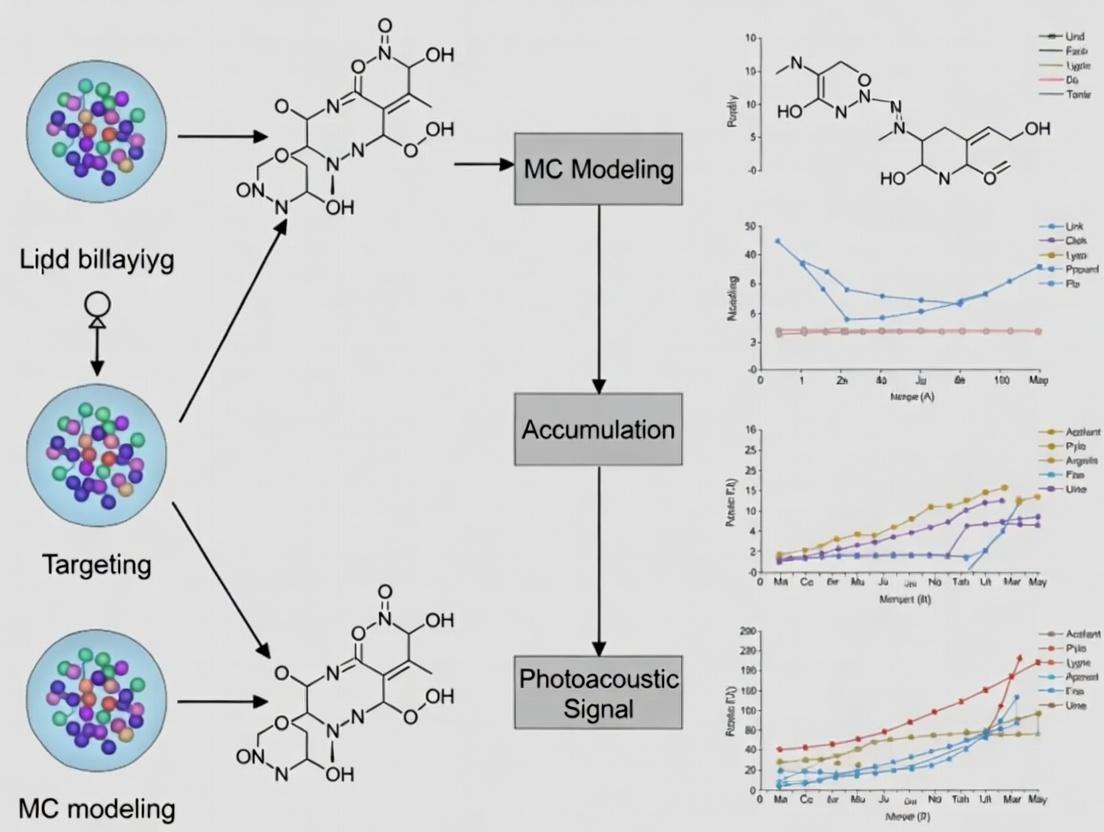
This article provides a comprehensive, up-to-date resource for researchers and professionals developing photoacoustic imaging (PAI) for sentinel lymph node (SLN) mapping and biopsy guidance.
Monte Carlo Modeling for Sentinel Lymph Node Photoacoustic Imaging: A Comprehensive Guide for Biomedical Researchers
Abstract
This article provides a comprehensive, up-to-date resource for researchers and professionals developing photoacoustic imaging (PAI) for sentinel lymph node (SLN) mapping and biopsy guidance. We explore the foundational principles of Monte Carlo (MC) simulation for modeling light propagation in complex biological tissues. The guide details methodological implementations for SLN-specific applications, including contrast agent modeling and vessel network geometry. We address common troubleshooting scenarios and optimization strategies for computational efficiency and accuracy. Finally, we cover validation frameworks and comparative analyses against other modeling techniques and experimental data. This synthesis aims to accelerate the development of reliable, patient-specific MC models to enhance the clinical translation of SLN photoacoustic imaging.
Understanding the Core: Why Monte Carlo Simulation is Essential for SLN Photoacoustic Imaging
Clinical Context and Current Quantitative Data
Sentinel lymph node biopsy (SLNB) is the standard of care for staging clinically node-negative cancers, most notably breast cancer and melanoma. It is a minimally invasive surgical procedure designed to identify the first lymph node(s) (the sentinel node) that drain a primary tumor, as these are the most likely to contain metastatic cells. The presence or absence of metastasis in the SLN dictates further therapeutic decisions, including the need for a complete axillary lymph node dissection (ALND).
Table 1: Clinical Impact and Limitations of Current SLNB Practice
| Metric | Data | Clinical Implication |
|---|---|---|
| False Negative Rate | 5-10% for breast cancer; 5-15% for melanoma. | Risk of under-staging, leading to potential disease recurrence. |
| Morbidity from ALND | Lymphedema rate: 15-25%; Seroma: 15-30%; Sensory neuropathy: 20-30%. | Significant reduction in quality of life post-SLNB if ALND is required. |
| Procedure Invasiveness | Requires radiotracer and/or blue dye injection, surgery, and pathological analysis. | Patient discomfort, surgical risks, resource-intensive. |
| Identification Rate | >95% with dual-tracer (radioactive colloid + blue dye) technique. | High success but dependent on surgeon experience and tracer kinetics. |
The clinical need for non-invasive mapping stems from these limitations. A non-invasive method that could accurately identify and characterize the SLN in vivo would revolutionize staging by: 1) Eliminating surgical morbidity for node-negative patients, 2) Providing real-time, repeated assessment, and 3) Potentially characterizing nodal tissue beyond simple metastasis detection (e.g., microenvironment).
The Promise of Photoacoustic Imaging and MC Modeling
Photoacoustic (PA) imaging is an emerging hybrid modality that combines the high optical contrast of tissues with the deep penetration and spatial resolution of ultrasound. It is a prime candidate for non-invasive SLN mapping. When pulsed laser light illuminates tissue, chromophores (e.g., hemoglobin, melanin, exogenous dyes) absorb energy, undergo thermoelastic expansion, and generate acoustic waves detectable by an ultrasound transducer.
Monte Carlo (MC) modeling of light transport in biological tissues is a cornerstone for advancing PA-SLN research. It provides a stochastic numerical framework to simulate photon migration, enabling the prediction of light fluence distribution within complex, layered tissues. This is critical for:
- Quantifying PA Signal: The initial pressure rise in PA imaging is proportional to the local light fluence. Accurate MC-derived fluence maps are essential for converting raw PA signals into quantitative chromophore concentrations.
- Designing Imaging Systems: Optimizing laser wavelength, source-detector geometry, and beam profile for deep SLN detection (~1-3 cm depth).
- Developing Inversion Algorithms: Informing algorithms that can reconstruct accurate images of SLN location and chromophore content from detected surface acoustic signals.
- Probe Design: Simulating the efficacy of targeted contrast agents for specific molecular markers of metastasis.
Experimental Protocols
Protocol 1:In VivoSLN Mapping with Methylene Blue and PA Imaging
This protocol details a pre-clinical validation study for non-invasive SLN mapping.
Objective: To identify the SLN non-invasively using methylene blue (MB) as a PA contrast agent and validate against conventional surgical SLNB. Materials: See "Research Reagent Solutions" below. Procedure:
- Animal Preparation: Anesthetize murine model (e.g., C57BL/6 mouse). Depilate the inguinal and axillary regions.
- Contrast Agent Administration: Subcutaneously inject 20 µL of 1% w/v methylene blue solution intradermally in the forepaw pad or caudal to the nipple (simulating a primary tumor site).
- Photoacoustic Imaging: a. Apply ultrasound coupling gel to the imaging area. b. Position animal under the PA-US imaging probe. c. Set laser to 680 nm (near peak absorption of MB, isosbestic point for hemoglobin). d. Acquire coregistered B-mode ultrasound and PA images at the injection site and along the expected lymphatic drainage path every 2 minutes for 30 minutes. e. Identify the SLN as the first, persistent PA signal hotspot distal to the injection site, colocalized with a hypoechoic structure in US.
- Surgical Validation: a. Perform a standard surgical dissection guided by the PA/US coordinates to locate the dyed lymphatic vessel and node. b. Excise the putative SLN and submit for histopathological analysis (H&E stain).
- Data Analysis: Calculate sensitivity and specificity of PA identification against surgical gold standard. Measure PA signal intensity over time in the SLN to generate a kinetic uptake curve.
Protocol 2: MC Simulation of Light Fluence for SLN PA Imaging
This protocol outlines the computational methodology for modeling light transport.
Objective: To simulate the light fluence distribution in a multi-layered tissue model for SLN PA imaging system optimization. Software: Monte Carlo modeling software (e.g., MCX, TIM-OS, custom code). Procedure:
- Define Tissue Geometry: Create a 3D digital phantom (e.g., 40x40x30 mm). Define layers: Epidermis (0.1 mm), Dermis (2 mm), Subcutaneous Fat (5 mm), Muscle. Embed a 3 mm diameter spherical node at a depth of 7 mm within the fat layer.
- Assign Optical Properties: Populate each tissue type with wavelength-dependent (e.g., 680 nm, 800 nm, 1064 nm) absorption coefficient (µa), scattering coefficient (µs), anisotropy factor (g), and refractive index (n). Use values from established databases (e.g., IATP, PRAFF).
- Define Source: Model a Gaussian beam light source (e.g., 3 mm diameter) incident normally on the skin surface.
- Run Simulation: Launch 10^8 photon packets. Record the spatial distribution of absorbed energy density (J/mm³) throughout the volume, which is proportional to the light fluence.
- Post-Processing & Analysis: a. Extract 2D fluence maps at planes intersecting the simulated SLN. b. Calculate the fluence at the SLN depth relative to surface fluence (attenuation). c. Perform parametric studies by varying source wavelength, beam diameter, or tissue optical properties to maximize fluence at the target depth.
Table 2: Example Optical Properties for MC Simulation (680 nm)
| Tissue Type | µa (1/mm) | µs (1/mm) | g | n |
|---|---|---|---|---|
| Epidermis | 0.15 | 45.0 | 0.85 | 1.37 |
| Dermis | 0.05 | 25.0 | 0.85 | 1.40 |
| Subcutaneous Fat | 0.01 | 10.0 | 0.85 | 1.44 |
| Muscle | 0.20 | 20.0 | 0.90 | 1.40 |
| Sentinel Node | 0.10 (Baseline) | 18.0 | 0.88 | 1.39 |
| Methylene Blue | Increase node µa by 5.0 | - | - | - |
Visualizations
Research Reagent Solutions
Table 3: Key Reagents and Materials for PA SLN Mapping Research
| Item | Function/Description | Example Product/Catalog |
|---|---|---|
| Methylene Blue | FDA-approved vital dye. Common PA contrast agent at ~680 nm for lymphatic mapping. | Sigma-Aldrich, M9140 |
| Indocyanine Green (ICG) | NIR FDA-approved dye. Used for fluorescence and PA imaging (peak ~800 nm). Enhanced lymphatic uptake. | PULSION Medical Systems, IC-GREEN |
| Targeted Nanoparticles | Gold nanorods, carbon nanotubes, or organic polymers functionalized with targeting ligands (e.g., anti-CD44). For molecular PA imaging of nodal metastases. | Nanocs Inc., various functionalized particles |
| Murine Cancer Cell Lines | For establishing tumor models with predictable lymphatic metastasis (e.g., 4T1-Luc2 for breast cancer). | ATCC, CRL-2539-Luc2 |
| Multispectral PA-US System | Integrated imaging platform for coregistered anatomical (US) and functional/molecular (PA) imaging. | FUJIFILM VisualSonics, Vevo LAZR-X |
| MC Simulation Software | Open-source tools for modeling photon transport in complex tissues. | MCX (mcx.space), TIM-OS (Biophotonics@VT) |
| Tissue-Mimicking Phantoms | Solid or liquid phantoms with tunable, known optical properties for system calibration and validation. | Biomimic Phantom, INO |
Photoacoustic (PA) imaging is a hybrid biomedical imaging modality that combines the high contrast of optical imaging with the deep penetration and spatial resolution of ultrasound imaging. It is based on the photoacoustic effect, where pulsed laser light is absorbed by tissue chromophores, leading to transient thermoelastic expansion and the generation of broadband acoustic waves, which are detected by ultrasound transducers to form an image.
Within the context of Monte Carlo (MC) modeling for sentinel lymph node (SLN) PA imaging research, precise simulation of light propagation, energy deposition, and subsequent ultrasound generation is critical for optimizing imaging systems, interpreting in vivo data, and developing targeted contrast agents.
Fundamental Processes: From Photon to Signal
The PA signal generation chain can be summarized in three sequential steps:
Step 1: Pulsed Light Energy Deposition A short-pulsed (nanosecond) laser illuminates the tissue. Photons propagate and scatter until they are absorbed by chromophores (e.g., hemoglobin, melanin, exogenous dyes). The absorbed optical energy is converted into heat.
Step 2: Thermoelastic Expansion & Ultrasound Generation The rapid, localized heating causes a transient temperature rise, leading to thermoelastic expansion. This rapid expansion, confined by the surrounding tissue, generates a pressure rise: ( p0 = \Gamma \mua F ), where ( p0 ) is the initial pressure, ( \Gamma ) is the Grüneisen parameter (dimensionless, describing thermoelastic efficiency), ( \mua ) is the optical absorption coefficient, and ( F ) is the local optical fluence.
Step 3: Acoustic Propagation & Detection The initial pressure ( p_0 ) serves as the source for acoustic waves, which propagate through tissue (with minimal scattering compared to light) and are detected by an ultrasonic transducer array. The time-of-flight and amplitude of the detected signals are used to reconstruct the original spatial distribution of optical absorption.
Key Quantitative Parameters & Data
Table 1: Common Endogenous and Exogenous Chromophores for PA Imaging
| Chromophore | Absorption Peak(s) [nm] | Primary Application/Context | Notes |
|---|---|---|---|
| Oxyhemoglobin (HbO₂) | ~540, 570, 850-1000 | Angiography, Oxygen Saturation (sO₂) | sO₂ = HbO₂/(HbO₂+Hb) |
| Deoxyhemoglobin (HbR) | ~555, 760 | Angiography, Oxygen Saturation (sO₂) | Dominant absorber in veins |
| Melanin | Broadband, increasing to UV | Melanoma detection, sentinel lymph node (SLN) mapping | High absorption provides strong contrast. |
| Lipids | ~930, 1210 | Atherosclerotic plaque imaging | |
| Water | ~980, 1450, 1900 | Background, tissue hydration | |
| Indocyanine Green (ICG) | ~800 (in blood) | Clinical SLN mapping, angiography | FDA-approved; peak shifts with binding. |
| Methylene Blue | ~660 | SLN mapping, surgical guidance | Clinical use for lymphatic tracing. |
| Gold Nanorods | Tunable (e.g., 780-1064) | Molecular imaging, targeted SLN imaging | High absorption cross-section; surface functionalization possible. |
Table 2: Typical Laser & Acoustic Parameters for Preclinical PA Imaging
| Parameter | Typical Range | Impact on PA Signal |
|---|---|---|
| Laser Pulse Width | 5-10 ns | Must be short enough for stress confinement. |
| Laser Repetition Rate | 10-100 Hz | Limits imaging speed. High-rate systems enable functional imaging. |
| Wavelength | 680-950 nm (NIR-I), 1000-1700 nm (NIR-II) | Determines penetration depth and chromophore selectivity. |
| Optical Fluence | < 20 mJ/cm² (on skin) | Must be below ANSI safety limits for skin. |
| Ultrasound Frequency | 1-50 MHz | Higher frequency = better resolution, lower penetration. |
| Grüneisen Parameter (Γ) | ~0.1-0.3 for soft tissue | Tissue-specific; increases with temperature. |
Experimental Protocols
Protocol 1: In Vivo Sentinel Lymph Node Mapping with ICG Objective: To non-invasively identify and image the SLN using a clinical-grade contrast agent. Materials:
- Small animal (e.g., mouse) with relevant tumor model.
- Photoacoustic/Ultrasound imaging system (e.g., Vevo LAZR, iThera Medical MSOT).
- Indocyanine Green (ICG) powder.
- Saline (0.9% NaCl).
- Isoflurane anesthesia system.
- Depilatory cream.
- Ultrasound gel.
Procedure:
- Animal Preparation: Anesthetize the mouse using isoflurane (2-3% for induction, 1-2% for maintenance). Remove hair from the tumor site and expected lymphatic drainage area (e.g., axilla) using depilatory cream. Secure the animal on a heated imaging stage.
- Contrast Agent Preparation: Dissolve ICG in saline to a concentration of 0.5-1.0 mg/mL. Filter sterilize (0.2 µm).
- Pre-Injection Baseline Scan: Acquire coregistered PA (at 800 nm and 680 nm) and ultrasound B-mode images of the region of interest (ROI).
- ICG Administration: Subcutaneously inject 20-50 µL of ICG solution intradermally around the perimeter of the tumor or into the paw pad.
- Dynamic Imaging: Immediately initiate time-series imaging of the lymphatic drainage pathway and nodal basin. Acquire PA/US images every 30-60 seconds for 15-30 minutes.
- Data Analysis: Identify the first node(s) to show a strong, increasing PA signal at 800 nm (ICG's peak) as the SLN. Use multi-wavelength imaging to spectrally unmix the ICG signal from background hemoglobin.
Protocol 2: MC Simulation of Light Fluence for SLN PA Imaging Objective: To model the spatial distribution of optical fluence in a tissue geometry mimicking SLN mapping, informing system design and data quantification. Materials/Software:
- MC simulation software (e.g., MCX, TIM-OS, or custom code).
- High-performance computing workstation.
- Digital tissue phantom definition (e.g., in MATLAB, Python).
Procedure:
- Phantom Definition: Construct a 3D digital phantom comprising layers representing skin, fat, and muscle. Embed an ellipsoidal region representing an SLN at a depth of 3-5 mm. Define optical properties (µa, µs, g, n) for each tissue type at the target wavelength (e.g., 800 nm). Load these values from literature or own measurements.
- Source Configuration: Define a Gaussian beam or wide-field illumination source matching your experimental laser profile. Set the number of photon packets to ≥ 10⁷ for acceptable statistical noise.
- Simulation Execution: Run the MC simulation. The code tracks photon packet propagation, scattering, and absorption events.
- Fluence Map Extraction: Output the spatial map of absorbed energy density or fluence (J/cm³ or J/cm²).
- Post-Processing & Analysis: Normalize the fluence map. Analyze the fluence at the SLN location relative to the surface fluence to estimate the fraction of light reaching the target. This fluence map can be used as input for a subsequent acoustic propagation model to simulate the complete PA signal generation process.
Visualization Diagrams
Diagram 1: The Photoacoustic Signal Generation Cascade
Diagram 2: MC Simulation Workflow for PA
The Scientist's Toolkit: Research Reagent & Material Solutions
Table 3: Essential Materials for SLN PA Imaging Research
| Item | Function/Application | Key Considerations |
|---|---|---|
| Indocyanine Green (ICG) | Clinical lymphatic tracer & contrast agent. | Peak ~800 nm; non-targeted; fast clearance. |
| Methylene Blue | Alternative clinical lymphatic tracer. | Peak ~660 nm; can be used for SLN biopsy. |
| PEGylated Gold Nanorods | Targeted, high-contrast SLN imaging agent. | Tunable NIR peak; surface can be conjugated with targeting ligands (e.g., antibodies). |
| Titanium:Sapphire Laser | Tunable NIR laser source for multispectral PA imaging. | Requires an external pump laser (e.g., Nd:YAG). |
| OPO Laser System | Versatile, tunable NIR laser source. | Commonly covers 680-1300 nm or 1100-2400 nm. |
| High-Frequency Linear US Array (e.g., 40 MHz) | For high-resolution preclinical SLN imaging. | Provides co-registered US anatomical images. |
| Multispectral PA Imaging Software | For spectral unmixing of chromophores (HbO₂, HbR, ICG). | Essential for quantifying specific agent concentration in the presence of background. |
| MC Simulation Software (e.g., MCX) | To model light transport and predict fluence in complex tissue. | Critical for system optimization and quantitative PA. |
| Tissue-Mimicking Phantoms | System calibration and validation. | Contain absorbing inclusions (e.g., India ink) with known optical properties. |
The Role of Monte Carlo Methods in Modeling Photon Transport in Turbid Tissues
Monte Carlo (MC) modeling is a cornerstone computational technique for simulating the stochastic transport of photons in scattering-dominated biological tissues, termed turbid media. Within the broader thesis on MC modeling for sentinel lymph node (SLN) photoacoustic imaging (PAI) research, this method provides the essential link between light deposition and the subsequent generation of acoustic signals. Accurate modeling of photon migration is critical for quantifying the photoacoustic effect, optimizing imaging system parameters, and interpreting image data to differentiate healthy from metastatic lymph node tissue. This document provides detailed application notes and protocols for implementing MC methods in this specific research context.
Foundational Principles and Key Metrics
MC simulations for photon transport in tissues rely on stochastic sampling of probability distributions derived from the radiative transfer equation. Key interactions include absorption and scattering events, determined by the tissue's optical properties.
Table 1: Core Optical Properties for MC Modeling in Turbid Tissues
| Property | Symbol | Unit | Description | Typical Range in SLN Region (NIR) |
|---|---|---|---|---|
| Absorption Coefficient | μₐ | cm⁻¹ | Probability of photon absorption per unit path length. | 0.1 - 1.0 cm⁻¹ |
| Reduced Scattering Coefficient | μₛ' | cm⁻¹ | Effective scattering coefficient accounting for anisotropic scattering (μₛ' = μₛ * (1-g)). | 5 - 20 cm⁻¹ |
| Scattering Anisotropy Factor | g | unitless | Average cosine of scattering angle. 0=isotropic, 1=forward. | 0.7 - 0.95 |
| Refractive Index | n | unitless | Ratio of light velocity in vacuum to that in tissue. | ~1.38 - 1.44 |
Table 2: Key Output Metrics from a Photon Transport MC Simulation
| Metric | Description | Relevance to SLN-PAI | |
|---|---|---|---|
| Spatial Fluence Rate Distribution | Φ(r, z) [W/cm²] | Map of light energy deposition; direct input for PA pressure initial calculation. | |
| Absorption Density | A(r, z) [W/cm³] | Volumetric distribution of absorbed energy (μₐ * Φ). Source of PA signal. | |
| Diffuse Reflectance / Transmittance | Rₜ, Tₜ | Measurable surface quantities for validating model against experiments. | |
| Penetration Depth | δ [mm] | Depth at which fluence falls to 1/e of its surface value. Informs optimal wavelength choice. |
Experimental Protocols & Methodologies
Protocol 3.1: Standard MC Simulation for PAI Sensitivity Estimation
Objective: To compute the spatial distribution of absorbed optical energy in a two-layer tissue model (superficial tissue overlying an SLN) for a given illumination geometry.
Materials & Software: High-performance computing workstation, MC simulation code (e.g., MCX, tMCimg, or custom C++/Python), and tissue optical property data (see Scientist's Toolkit).
Procedure:
- Define Simulation Domain:
- Create a 3D voxelated grid (e.g., 200 x 200 x 200 voxels, 0.05 mm/voxel).
- Assign a two-layer structure: Layer 1 (dermis/fat, 5mm thick), Layer 2 (SLN, 10mm thick).
- Assign Optical Properties:
- Populate each voxel with μₐ, μₛ', g, and n values based on literature or measured data for 800 nm wavelength (common PAI wavelength).
- Configure Light Source:
- Define a Gaussian beam source at the center of the top surface.
- Set beam diameter (e.g., 2 mm FWHM), numerical aperture, and photon count (e.g., 10⁷ - 10⁹ photons).
- Run Simulation:
- Execute the MC code. Track photon packets using a weighted random walk algorithm.
- Record photon trajectory, absorption events, and exit locations.
- Post-Processing:
- Reconstruct volumetric maps of fluence rate Φ and absorption density A.
- Calculate the fraction of total absorbed energy within the SLN layer vs. the superficial layer. This ratio is critical for assessing PAI sensitivity to deep targets.
- Validation:
- Compare simulated diffuse reflectance at the surface with analytical solutions (e.g., diffusion approximation) for a homogeneous slab to verify code accuracy.
Protocol 3.2: Protocol for Validating MC Models with Phantom Experiments
Objective: To empirically validate the MC model using tissue-simulating phantoms with known optical properties.
Materials: Intralipid phantom (scattering), India ink (absorption), cylindrical container, spectrophotometer with integrating sphere, pulsed laser, ultrasound transducer, and acoustic tank.
Procedure:
- Phantom Fabrication: Prepare a solid or liquid phantom with precisely measured concentrations of Intralipid (μₛ') and India ink (μₐ). Characterize its bulk optical properties using inverse adding-doubling or integrating sphere measurements.
- MC Simulation: Construct a digital twin of the phantom geometry and its measured properties. Run simulation as per Protocol 3.1.
- Experimental Data Acquisition: Illuminate the physical phantom with the same laser source parameters used in the simulation. Use a calibrated hydrophone to map the resulting photoacoustic pressure field.
- Forward Model Comparison: Convert the simulated absorption density map A(r) to an initial pressure rise map P₀(r) using the Gruneisen parameter (Γ): P₀ = Γ * μₐ * Φ. Simulate the acoustic propagation (using k-Wave or similar) to generate a synthetic photoacoustic signal at the hydrophone position.
- Correlation Analysis: Compare the amplitude and temporal profile of the simulated and experimentally recorded acoustic signals. A high correlation coefficient (>0.95) validates the photon transport model.
Visualization of Workflows and Relationships
Title: MC Workflow for SLN Photoacoustic Modeling
Title: Core MC Photon Transport Algorithm Logic
The Scientist's Toolkit: Essential Research Reagents & Materials
Table 3: Key Research Reagent Solutions for MC Modeling & Validation
| Item | Function & Application | Example/Supplier Notes |
|---|---|---|
| MC Simulation Software | Core tool for stochastic photon transport modeling. | MCX (CUDAMC), pymontecarlo (Python), TIM-OS (Matlab). |
| Validated Tissue Optical Property Database | Provides baseline μₐ and μₛ' values for various tissue types at specific wavelengths. | Prahl's Optical Property Spectra, WEBNIR online database. |
| Tissue-Simulating Phantoms | Experimental validation of MC models. Materials with tunable, stable optical properties. | Lipid-based phantoms (Intralipid), polymer phantoms with TiO₂ (scatterer) & ink (absorber). |
| Inverse Adding-Doubling (IAD) Software | Determines bulk optical properties (μₐ, μₛ', g) from measured reflectance/transmittance of samples. | IAD C code from Oregon Medical Laser Center. |
| High-Performance Computing (HPC) Resources | Enables simulation of large photon counts (10⁹+) and complex 3D geometries in reasonable time. | Local GPU clusters (NVIDIA CUDA) or cloud-based HPC services. |
| Spectral-Domain Optical Coherence Tomography (SD-OCT) | Can provide high-resolution depth-resolved scattering profiles to inform realistic layer thicknesses in MC models. | Systems from Thorlabs, Michelson Diagnostics. |
| Graphical Processing Unit (GPU) | Accelerates MC simulations by 100-1000x compared to CPU via parallel processing of photon packets. | NVIDIA RTX A6000 or GeForce RTX 4090. |
Key Anatomical and Optical Properties of Lymph Nodes and Surrounding Tissue (Skin, Fat, Muscle)
Within the thesis on Monte Carlo (MC) modeling for sentinel lymph node (SLN) photoacoustic imaging (PAI), accurate modeling of light propagation is paramount. This requires precise anatomical context and optical property data for the SLN and the surrounding tissue layers it resides in. The SLN is typically embedded in subcutaneous fat, beneath the dermis and epidermis, and superficial to muscle fascia. Light from a PAI system must traverse these layers, experiencing wavelength-dependent absorption and scattering, before reaching and interrogating the SLN.
Quantitative Optical Properties for MC Modeling
For effective MC modeling, the key optical properties are the absorption coefficient (μa, cm⁻¹), reduced scattering coefficient (μs', cm⁻¹), anisotropy factor (g), and refractive index (n). These vary significantly by tissue type and wavelength. The following tables consolidate data critical for modeling in the NIR-I (650-900 nm) optical window, commonly used for PAI due to deeper penetration.
Table 1: Anatomical & Structural Properties of Key Tissues
| Tissue | Typical Depth/Thickness | Key Anatomical Features | Relevance to PAI/MC Modeling |
|---|---|---|---|
| Epidermis | 50-150 µm | Avascular, contains melanin. | Melanin is a dominant absorber. Thickness and melanin content define baseline light attenuation. |
| Dermis | 1-4 mm | Vascularized (capillaries), collagen-rich. | Contains oxy/deoxy-hemoglobin and provides structural scattering. Main source of background signal. |
| Subcutaneous Fat (Hypodermis) | 1-50 mm | Adipocytes, lobules, sparse vasculature. | Low scattering, low hemoglobin content. Primary layer housing SLNs. Optical "clearing" effect possible. |
| Skeletal Muscle | Variable (deep to fat) | Highly ordered fibrous structure, vascular. | Highly anisotropic scattering. Can be a deep boundary for superficial SLN imaging. |
| Lymph Node (Healthy) | 5-20 mm (oval) | Cortex (lymphoid follicles), medulla, capsule. | Contains lymphocytes & macrophages. Optical properties are a composite of cellular and vascular components. |
| Lymph Node (Metastatic) | Enlarged, variable | Infiltrated by tumor cells, often hypervascular. | Altered μa and μs' due to cell density and angiogenesis. Target for PAI contrast. |
Table 2: Representative Optical Properties at Key Wavelengths for MC Simulation (Approximate, Compiled from Literature)
| Tissue | Wavelength (nm) | μa (cm⁻¹) | μs' (cm⁻¹) | g | n | Notes |
|---|---|---|---|---|---|---|
| Skin (Epidermis+Dermis) | 700 | 0.2 - 1.5 | 15 - 25 | 0.8 - 0.9 | 1.37 - 1.44 | High variability based on melanin/blood content. |
| 800 | 0.3 - 0.8 | 12 - 20 | 0.8 - 0.9 | 1.37 - 1.44 | Water absorption starts to increase. | |
| Adipose (Fat) | 700 | 0.04 - 0.12 | 5 - 10 | 0.8 - 0.95 | 1.44 - 1.46 | Lowest absorption among soft tissues. |
| 800 | 0.05 - 0.15 | 4 - 8 | 0.8 - 0.95 | 1.44 - 1.46 | ||
| Skeletal Muscle | 700 | 0.3 - 0.6 | 8 - 12 | 0.8 - 0.95 | 1.40 - 1.42 | Scattering is directionally dependent (anisotropic). |
| 800 | 0.4 - 0.7 | 6 - 10 | 0.8 - 0.95 | 1.40 - 1.42 | Higher water absorption vs. fat. | |
| Lymph Node (Healthy) | 700 | 0.1 - 0.4 | 10 - 18 | 0.8 - 0.9 | ~1.38 | Properties between fat and muscle. |
| 800 | 0.15 - 0.5 | 8 - 15 | 0.8 - 0.9 | ~1.38 | ||
| Blood (Oxy-Hb) | 700 | ~200 (100% HbO2) | N/A | ~0.995 | ~1.33 | Dominant absorber in vessels. |
| 800 | ~40 (100% HbO2) | N/A | ~0.995 | ~1.33 | Absorption minimum for HbO2. | |
| Blood (Deoxy-Hb) | 700 | ~300 (100% Hb) | N/A | ~0.995 | ~1.33 | Dominant absorber in vessels. |
| 800 | ~15 (100% Hb) | N/A | ~0.995 | ~1.33 |
Experimental Protocols for Property Validation
Protocol 3.1: Integrating Sphere Measurement for ex vivo Tissue μa and μs'
Purpose: To experimentally determine the absolute absorption (μa) and reduced scattering (μs') coefficients of excised tissue samples (skin, fat, muscle, lymph node) for MC model validation. Materials: Dual-integrating sphere setup (reflectance & transmittance), spectrophotometer light source/detector, tissue samples (<5mm thick), microtome, index-matching fluid, black absorber. Procedure:
- Sample Preparation: Flash-freeze excised, diseased-free tissue. Section samples to uniform thickness (L) using a microtome (e.g., 1 mm). Keep hydrated in phosphate-buffered saline.
- System Calibration: Perform baseline calibration with no sample, a 99% reflectance standard, and a light trap.
- Measurement: Mount sample between two thin glass slides. Apply index-matching fluid. Place sample at the entrance port of the reflectance sphere. Measure total diffuse reflectance (Rd) and total transmittance (Tt).
- Inverse Adding-Doubling (IAD): Use an IAD algorithm (e.g., from Oregon Medical Laser Center) to solve the inverse problem of radiative transport. Input Rd, Tt, sample thickness (L), refractive index of tissue and surrounding medium, and anisotropy factor (g, typically assumed 0.9). The algorithm outputs μa and μs'.
- Validation: Repeat measurements on samples of known optical properties (phantoms) to confirm system accuracy.
Protocol 3.2: Spatial Frequency Domain Imaging (SFDI) for in situ Optical Properties
Purpose: To map spatially-varying optical properties of tissue layers in a preclinical model (e.g., murine flank) non-invasively, providing input for layered MC models. Materials: SFDI system (projector, scientific camera, bandpass filters), small animal stage, anesthesia setup, image processing software (e.g., Modulated Imaging). Procedure:
- Animal Preparation: Anesthetize and depilate the imaging site (e.g., murine flank). Position the animal to expose the SLN basin.
- Pattern Projection: Project sinusoidal illumination patterns at multiple spatial frequencies (e.g., 0, 0.05, 0.1, 0.2 mm⁻¹) and at least two wavelengths (e.g., 670 nm, 850 nm).
- Data Acquisition: Capture diffuse reflectance images for each pattern and wavelength. Demodulate images to extract AC and DC components.
- Pixel-wise Inversion: Using a pre-calibrated light transport model (often based on diffusion approximation or MC look-up-tables), compute maps of μa and μs' for each wavelength.
- Layer Assignment: Correlate μa/μs' maps with anatomical knowledge (e.g., low μs' region = fat pad containing SLN) to assign properties to specific layers in the MC geometry.
Visualization: Workflow for MC Model Parameterization
Diagram Title: MC Model Parameterization and Validation Workflow
The Scientist's Toolkit: Research Reagent Solutions
Table 3: Essential Materials for Optical Property Studies in SLN-PAI Research
| Item/Category | Example Product/Specification | Function in Research |
|---|---|---|
| Tissue Mimicking Phantoms | Solid silicone phantoms with India Ink (absorber) & TiO2 (scatterer); liquid Intralipid-20% phantoms. | Gold standard for calibration and validation of both integrating sphere and SFDI systems. Provide known μa and μs'. |
| Index Matching Fluid | Glycerol-water solutions; commercially available optical gels. | Minimizes surface reflections and refraction at tissue/glass interfaces during ex vivo measurements, improving accuracy. |
| Integrating Sphere System | Lab-built or commercial (e.g., Ocean Insight). Includes light source, spheres, detectors. | Measures total reflectance/transmittance for inverse calculation of absolute optical properties from tissue samples. |
| Spatial Light Modulator | Digital Micromirror Device (DMD) projector. | Core component of SFDI system to project precise, high-speed structured light patterns onto tissue. |
| Near-Infrared Dyes & Contrast Agents | Indocyanine Green (ICG), Methylene Blue. | Clinically relevant exogenous absorbers. Used to simulate and study targeted SLN contrast in PAI MC models. |
| High-Fidelity MC Simulation Software | MCX, tMCimg, ValoMC; or custom C/C++/GPU code. | Computes photon migration in complex, multi-layered tissues with embedded SLN structures and blood vessels. |
| Histology Stains | Hematoxylin and Eosin (H&E), CD31 for vasculature. | Validates tissue morphology and microvasculature post-measurement, correlating structure with measured optical properties. |
Current Challenges in SLN Detection and How Modeling Addresses Them
Within the context of advancing Monte Carlo (MC) modeling for sentinel lymph node (SLN) photoacoustic imaging (PAI), this application note outlines prevailing clinical and technical challenges. It details how sophisticated computational models are engineered to directly address these limitations, providing a pathway for optimizing contrast agents, instrumentation, and image reconstruction algorithms.
Key Challenges in Clinical SLN Mapping
Current SLN biopsy, reliant on radioisotopes and blue dyes, faces significant hurdles. The table below summarizes quantitative limitations and corresponding modeling responses.
Table 1: Challenges in Conventional SLN Mapping and Modeling Solutions
| Clinical/Technical Challenge | Quantitative Limitation | How MC Modeling Directly Addresses It |
|---|---|---|
| Depth Limitation of Blue Dye | Visual detection fails beyond ~1-2 cm depth. | Models light propagation in tissue to predict optimal NIR wavelength and dosage for deep PAI. |
| Ionizing Radiation from Tc-99m | Requires nuclear medicine infrastructure; exposes staff to radiation. | Simulates photoacoustic signal generation from non-radioactive contrast agents (e.g., ICG, MBs) to validate alternatives. |
| Variable & Complex Anatomy | SLN location/number is patient- and site-specific (e.g., 1-5 nodes typical in breast cancer). | Creates patient-specific digital phantoms from CT/MRI to predict photon/ultrasound paths for personalized imaging protocols. |
| Low Signal from Micrometastases | Metastases < 2mm are often missed by conventional imaging. | Models contrast agent extravasation and binding to simulate and enhance signal from tumor-specific targeted agents. |
| Poor Contrast Ratio | Low target-to-background ratio (TBR) obscures SLN. | Simulates pharmacokinetics to identify optimal imaging time window post-injection for peak TBR. |
Experimental Protocol: Validating a Novel Contrast Agent with MC-PAI Modeling
This protocol describes an integrated in silico/in vivo methodology to evaluate a targeted contrast agent for SLN-PAI.
1. In Silico Modeling Phase
- Objective: Predict photoacoustic signal strength and optimal imaging parameters.
- Digital Phantom Development: Segment a murine anatomy atlas (e.g., Digimouse) to create a 3D mesh. Define optical (μa, μs, g) and acoustic properties for skin, fat, muscle, and lymph node tissue.
- Contrast Agent Definition: Assign the novel agent’s molecular absorption spectrum (e.g., peak at 780 nm). Model its concentration in the SLN and surrounding tissue over time based on published biodistribution data.
- MC Simulation: Execute a GPU-accelerated MC light transport simulation (e.g., using MCX) to generate a spatial absorption map within the phantom.
- PA Signal Generation: Use a k-Wave simulation to convert the absorption map into a simulated photoacoustic time-series data (sinogram) at a defined array transducer geometry (e.g., 128 elements, 5 MHz center frequency).
- Image Reconstruction & Analysis: Reconstruct image using time-reversal or delay-and-sum. Calculate predicted Signal-to-Noise Ratio (SNR) and TBR.
2. In Vivo Validation Phase
- Animal Model: Female BALB/c mouse (n=5) with subcutaneous mammary tumor flank model.
- Contrast Agent Administration: Inject 100 μL of targeted contrast agent (20 nmol in PBS) intradermally in the forepaw pad.
- PAI System Setup: Use a commercial or lab-built PAI system with a tunable OPO laser (680-900 nm) and a 40 MHz linear ultrasound array.
- Image Acquisition: Acquire coregistered US/PA images at the axillary region at 780 nm (agent peak) and 850 nm (background). Perform time-series imaging every 5 minutes for 90 minutes post-injection.
- Data Analysis: Segment SLN region in US image. Coregister and extract mean PA signal intensity from SLN and adjacent muscle. Calculate experimental TBR and compare to modeled prediction.
Visualization of the Integrated Research Workflow
Diagram Title: MC Modeling-In Vivo Validation Feedback Loop
The Scientist's Toolkit: Key Research Reagent Solutions
Table 2: Essential Materials for SLN-PAI Modeling & Experimentation
| Item | Function in Research |
|---|---|
| Indocyanine Green (ICG) | Clinical-grade NIR fluorophore/absorber; gold standard for validating PAI signal simulations in vessels and SLNs. |
| Targeted Nanoprobes (e.g., IRDye800CW-EGF) | Bioconjugated contrast agents for simulating and detecting molecular photoacoustic signals from metastatic cells. |
| Multimodal Digital Phantom (Digimouse) | High-resolution atlas for creating realistic in silico models of tissue geometry and properties for MC simulations. |
| GPU-Accelerated MC Code (e.g., MCX) | Enables rapid, computationally feasible simulation of photon migration in complex, heterogeneous tissues. |
| k-Wave MATLAB Toolbox | Acoustic toolbox for simulating photoacoustic wave propagation and generation of synthetic ultrasound channel data. |
| Tunable Pulsed Laser System (680-900 nm) | Provides wavelength-specific excitation to match absorption peaks of contrast agents in experimental validation. |
| High-Frequency Linear Ultrasound Array (e.g., 40 MHz) | Enables high-resolution capture of both anatomical (US) and functional (PA) images in small animal models. |
Review of Established MC Codes and Platforms (e.g., MCML, tMCimg, GPU-based accelerations)
Monte Carlo (MC) modeling is a cornerstone technique for simulating photon transport in turbid media, providing a stochastic, yet accurate, solution to the radiative transfer equation. Within the context of a thesis on sentinel lymph node (SLN) photoacoustic imaging (PAI) research, these models are indispensable. They enable the simulation of light propagation in complex, layered biological tissues, the prediction of photon absorption leading to acoustic wave generation, and the optimization of illumination and detection schemes for enhanced SLN contrast and depth sensitivity. This review analyzes established MC codes and platforms, focusing on their applicability to PAI of SLNs, which involves modeling near-infrared light penetration through skin, fat, and parenchyma to target deeply seated nodes.
Established MC Codes & Platforms: Comparative Analysis
A live internet search (performed on 2023-10-27) for current repositories, citations, and benchmark studies informs the following comparison of key MC simulation tools relevant to biomedical optics and PAI.
Table 1: Comparison of Established Monte Carlo Simulation Platforms
| Platform Name | Core Language/Architecture | Key Features & Strengths | Primary Application in PAI/SLN Research | License & Access |
|---|---|---|---|---|
| MCML | C (CPU, Single-threaded) | Gold standard for 1D layered media. Computes absorption, fluence. Extremely well-validated. | Modeling light fluence distribution in skin & tissue layers above SLN. Baseline validation. | Public Domain |
| tMCimg | C (CPU, Single-threaded) | Extends MCML to generate 3D voxelated fluence/absorption maps. | Creating 3D absorbed energy density maps for photoacoustic source pressure prediction. | Public Domain |
| MCX | C/CUDA (GPU-accelerated) | Massive parallelism on GPU. Supports complex 3D geometries, time-resolved simulation. | Fast simulation of complex, heterogeneous SLN regions (vessels, contrast agents). | GPLv3 |
| GPU-MCML | CUDA (GPU-accelerated) | Direct GPU port of MCML algorithm. Significant speed-up for multi-layer simulations. | Rapid, repeated fluence calculations for parameter optimization in SLN imaging. | Free for non-commercial |
| MMC | C/CUDA (GPU-accelerated) | Supports tetrahedral mesh for arbitrary geometries. Accurate modeling of curved boundaries. | Simulating light transport in anatomically accurate SLN and surrounding tissue models. | GPLv3 |
| ValoMC | C++/OpenCL (GPU/CPU) | Focus on bioluminescence & fluorescence; can be adapted for absorption modeling. | Simulating excitation light for fluorescent/contrast-agent enhanced SLN PAI. | Apache 2.0 |
Application Notes for Sentinel Lymph Node PAI
- Geometry Definition: SLN PAI models typically require a multi-layer geometry (epidermis, dermis, fat, muscle) with an embedded, deeply located (~1-3 cm) region representing the SLN, which may contain blood vessels or contrast agents like methylene blue or indocyanine green (ICG).
- Source Definition: Illumination can be modeled as a broad-beam, pencil beam, or ring-shaped source to replicate clinical PAI systems. Wavelengths are commonly in the NIR-I (700-900 nm) or NIR-II (1000-1700 nm) windows for deeper penetration.
- Output Requirement: The critical output is the spatial distribution of absorbed optical energy density, which serves as the initial pressure rise for subsequent acoustic simulation. Time-resolved data is needed for frequency-domain analysis.
Experimental Protocols
Protocol 4.1: Generating a Photoacoustic Source Term Using tMCimg
This protocol details generating a 3D absorbed energy map for a simplified SLN model.
I. Materials & Software
- Software: tMCimg executable, MATLAB/Python for data analysis.
- Input File: A configuration file (
sln_simulation.cfg) defining parameters. - Hardware: Standard desktop computer (Linux/Windows/macOS).
II. Procedure
- Define Simulation Parameters: Create a
sln_simulation.cfgfile. Example parameters:simulation_name = "SLN_PA"num_photons = 1e8volume_dim = [200, 200, 200](voxels)voxel_size = 0.05(cm)layer_z_boundaries = [0, 0.01, 0.21, 2.0, 2.1](cm) [air, epidermis, dermis, fat, muscle]layer_n = [1.0, 1.4, 1.4, 1.44, 1.44](refractive indices)layer_mua = [0.0, 40.0, 2.5, 0.5, 0.7](1/cm) @ 800nmlayer_mus = [0.0, 120.0, 180.0, 100.0, 150.0](1/cm) @ 800nmlayer_g = [0.0, 0.9, 0.9, 0.9, 0.9](anisotropy factor)sphere_center = [100, 100, 120](voxel index of SLN center)sphere_radius = 15(voxels)sphere_mua = 2.0(1/cm) [Higher absorption in SLN]
Run tMCimg: Execute in terminal:
./tMCimg sln_simulation.cfg. This generates a.mc2file (binary fluence map) and an.absfile (binary absorption map).Post-Processing (in MATLAB):
Protocol 4.2: Accelerated Simulation of Heterogeneous SLN with MCX
This protocol uses GPU-accelerated MCX to model an SLN with internal vascular structures.
I. Materials & Software
- Software: MCX suite installed with CUDA support.
- Input: A 3D volume file defining tissue types and optical properties.
- Hardware: NVIDIA GPU with sufficient memory (≥ 8 GB recommended).
II. Procedure
- Create a Digital SLN Phantom:
- Generate a 3D matrix (e.g., 256x256x256) where each voxel has an integer label (1: background fat, 2: muscle, 3: SLN parenchyma, 4: blood vessel).
- Save this as a
.rawor.binfile.
Define an Optical Property (OT) File (
sln_prop.json):Run MCX Simulation:
Where
sln_mcx.jsoncontains:Analyze Output: MCX outputs the fluence and/or partial pathlength in each voxel. The absorbed energy is calculated voxel-wise as
A = mua * fluence.
Visualizations
Title: MC Platform Selection Workflow for SLN PAI
Title: Integration of MC Modeling in SLN Photoacoustic Imaging Research
The Scientist's Toolkit
Table 2: Essential Research Reagent Solutions for SLN PAI MC Modeling
| Item | Category | Function in SLN PAI MC Research |
|---|---|---|
| MCML/tMCimg Codebase | Software | Provides the foundational, validated algorithm for simulating photon migration in layered tissues. Essential for benchmark studies. |
| MCX or MMC Platform | Software | GPU-accelerated platforms enable practical simulation of high-resolution, complex 3D domains representing heterogeneous SLNs. |
| Digital Tissue Phantom | Data | A 3D voxelated or meshed model assigning optical properties to skin, fat, muscle, and SLN structures. The core input to 3D MC simulations. |
| Optical Properties Database | Reference Data | Tabulated values of μa, μs, g, and n for various biological tissues (skin, fat, blood, lymph) across NIR wavelengths. Critical for realistic input. |
| NVIDIA GPU (CUDA-capable) | Hardware | Acceleration hardware required to run MCX/MMC/GPU-MCML, reducing simulation time from days/weeks to minutes/hours. |
| MATLAB/Python with SciPy | Analysis Software | Used for pre-processing input geometries, post-processing MC output (fluence/absorption maps), and calculating initial pressure. |
| ICG/Methylene Blue Optical Properties | Agent Specification | Optical properties (absorption spectra) of contrast agents used in SLN mapping. Allows simulation of contrast-enhanced PAI signals. |
| Standardized Tissue-simulating Phantoms | Experimental Calibration | Physical phantoms with known optical properties used to validate and calibrate MC simulation results against empirical measurements. |
Building Your Model: A Step-by-Step Guide to MC Simulation for SLN-PAI
Within the broader thesis on Monte Carlo (MC) modeling for sentinel lymph node (SLN) photoacoustic imaging (PAI) research, the accurate definition of the computational domain is a foundational step. This geometry must realistically represent the complex biological structures—specifically the SLN microarchitecture and its associated vascular network—to ensure that photon and acoustic wave propagation simulations yield biologically relevant results. These models are critical for optimizing imaging system parameters, interpreting preclinical and clinical data, and aiding in drug development for oncology applications.
Application Notes: Geometry Parameterization
Realistic geometry creation relies on quantitative anatomical and physiological data. The following tables summarize key parameters for constructing computational domains.
Table 1: Anatomical Dimensions of Human Sentinel Lymph Node & Vasculature
| Parameter | Typical Value Range | Source / Measurement Technique | Significance for Geometry |
|---|---|---|---|
| SLN Major Axis Length | 5 – 30 mm | Histopathology, Clinical Ultrasound | Defines overall domain bounds. |
| SLN Cortical Thickness | 0.5 – 3.0 mm | Histology, Micro-CT | Critical region for metastatic invasion. |
| Afferent Lymphatic Diameter | 0.2 – 0.8 mm | Immunohistochemistry, MR Lymphangiography | Primary input path for light/contrast agent. |
| Efferent Lymphatic Diameter | 0.3 – 1.0 mm | Immunohistochemistry, MR Lymphangiography | Output path influencing drainage patterns. |
| Intranodal Vessel Diameter | 0.02 – 0.2 mm (Capillaries) | Micro-CT, Corrosion Casting | Determines microvascular density and hemoglobin absorption map. |
| Vessel-to-Cortex Distance | 0.05 – 0.5 mm | 3D Histological Reconstruction | Affects light absorption in cortical parenchyma. |
Table 2: Optical & Structural Properties for MC Simulation (at 700-900 nm)
| Tissue / Structure | Absorption Coefficient (μa) [cm⁻¹] | Reduced Scattering Coefficient (μs') [cm⁻¹] | Refractive Index (n) | Reference |
|---|---|---|---|---|
| Lymph Node Parenchyma | 0.1 – 0.3 | 8 – 15 | 1.38 | [Bashkatov et al., 2011] |
| Blood (Oxy-/Deoxy-Hb) | 1.5 – 4.0 (wavelength dep.) | 20 – 30 | 1.33 | [Prahl, Optical Spectra] |
| Adipose Tissue (Capsule) | 0.05 – 0.15 | 5 – 10 | 1.44 | [Simpson et al., 2019] |
| Melanin (if metastatic) | 50 – 200 (wavelength dep.) | 20 – 40 | 1.7 | [Jacques, 2013] |
Experimental Protocols for Data Acquisition
These protocols provide the empirical data required to inform and validate geometric models.
Protocol 1: Ex Vivo Micro-CT Imaging of Rodent SLN Vascular Network
- Objective: Obtain high-resolution 3D geometry of the intranodal vascular tree.
- Materials: See "Research Reagent Solutions" (Section 5).
- Methodology:
- Perfusion & Fixation: Anesthetize rodent (IACUC protocol required). Cannulate the thoracic aorta; perfuse with heparinized saline followed by 4% paraformaldehyde (PFA).
- Contrast Agent Perfusion: Perfuse with a radio-opaque polymer (e.g., MV-122 Microfil) under controlled pressure. Allow to polymerize overnight at 4°C.
- Dissection & Dehydration: Excise the SLN (e.g., axillary or popliteal). Dehydrate through graded ethanol series (70%, 90%, 100%).
- Micro-CT Scanning: Place sample in scanning chamber. Acquire projections at 5-10 μm isotropic voxel size, 70 kVp tube voltage, 114 μA current, 0.5 mm Al filter. Use 360° rotation with 0.25° step.
- Image Processing: Reconstruct using filtered back-projection. Segment vasculature using region-growing/thresholding algorithms (e.g., in Amira, Mimics). Export as 3D surface mesh (STL/OBJ format).
Protocol 2: Histology-Guided Multi-Layer Geometry Reconstruction
- Objective: Create a compartmentalized digital model of the SLN (capsule, cortex, medulla, sinuses).
- Methodology:
- Sectioning & Staining: Serially section a paraffin-embedded SLN (5 μm thickness). Stain alternating slides with H&E (general structure) and CD31/PNAd immunohistochemistry (vessels & high endothelial venules).
- Digital Slide Acquisition: Scan slides using a whole-slide scanner at 20x magnification.
- Registration & Segmentation: Align consecutive digital images using feature-based registration. Manually or semi-automatically segment different anatomical compartments.
- 3D Reconstruction: Stack segmented 2D layers and interpolate to generate a 3D volumetric label map. Assign unique material IDs to each compartment (e.g., 1=capsule, 2=cortex, 3=medulla, 4=vessel lumen).
- Mesh Generation: Use a marching cubes algorithm to convert the volumetric label map into a watertight, manifold surface mesh suitable for finite-element or MC simulation.
Visualization of Workflows
Research Reagent Solutions
Table 3: Essential Materials for Geometry-Informing Experiments
| Item / Reagent | Function in Protocol | Key Consideration for Model Fidelity |
|---|---|---|
| MV-122 Radio-Opaque Silicone Polymer (Flow Tech) | Forms a stable cast of the microvasculature for Micro-CT imaging. | Viscosity and curing time must be optimized to prevent capillary rupture and ensure complete filling. |
| Paraformaldehyde (4% in PBS) | Tissue fixation to preserve anatomical structure ex vivo. | Over-fixation can cause tissue shrinkage, altering dimensional accuracy. Perfusion pressure should be physiological. |
| Anti-CD31 / Anti-PNAd Antibodies | Immunohistochemical staining of endothelial cells for vessel/HEV segmentation. | Antibody specificity and penetration depth are critical for accurate 2D segmentation. |
| Ethanol Series (70%, 90%, 100%) | Tissue dehydration prior to Micro-CT scanning. | Gradual dehydration prevents severe tissue distortion and cracking. |
| Image Processing Software (Amira, Mimics, 3D Slicer) | Segmentation, registration, and 3D reconstruction of imaging data. | Software choice affects segmentation accuracy and mesh export capabilities for simulation platforms. |
| Mesh Generation Tool (Gmsh, ANSYS ICEM CFD) | Converts segmented volumes into computational meshes (tetrahedral/hexahedral). | Mesh element quality (aspect ratio, skewness) directly impacts simulation stability and speed. |
Assigning Accurate Optical Properties (μa, μs, g, n) for Key Biological Components
This application note provides detailed protocols for determining the fundamental optical properties—absorption coefficient (μa), scattering coefficient (μs), anisotropy factor (g), and refractive index (n)—of key biological tissues relevant to photoacoustic imaging (PAI). The accurate assignment of these parameters is critical for developing high-fidelity Monte Carlo (MC) simulations, which form the computational backbone of our thesis research on optimizing sentinel lymph node (SLN) mapping via photoacoustic imaging for oncology diagnostics and drug development.
Optical Properties of Key Biological Constituents
The following tables consolidate quantitatively measured optical properties from current literature, essential for modeling light propagation in SLN and surrounding tissues at near-infrared (NIR) wavelengths (e.g., 700-900 nm).
Table 1: Absorption Coefficients (μa) of Key Chromophores at 800 nm
| Component | μa (cm⁻¹) | Notes/Source |
|---|---|---|
| Oxyhemoglobin (HbO2) | 0.8 - 1.2 | Concentration-dependent (150 g/L). From review of IATR database. |
| Deoxyhemoglobin (HHb) | 1.6 - 2.2 | Concentration-dependent (150 g/L). From review of IATR database. |
| Lipid (Fat) | 0.03 - 0.08 | Varies with saturation. Recent study, J. Biomed. Opt., 2023. |
| Water | 0.02 - 0.04 | Consistent across soft tissues. |
| Melanin | 30 - 150 | Highly dependent on concentration/pigmentation. |
Table 2: Scattering Properties and Refractive Index of Tissues at 800 nm
| Tissue/Component | μs' (Reduced Scattering, cm⁻¹) | g (Anisotropy) | n (Refractive Index) | Notes |
|---|---|---|---|---|
| Epidermis/Dermis | 12 - 20 | 0.85 - 0.95 | 1.37 - 1.45 | μs' decreases with NIR wavelength. |
| Adipose Tissue | 6 - 12 | 0.75 - 0.90 | 1.44 - 1.46 | High lipid content lowers scattering. |
| Skeletal Muscle | 8 - 15 | 0.90 - 0.96 | 1.40 - 1.42 | Anisotropic structure. |
| Lymph Node (Healthy) | 10 - 18 | 0.85 - 0.92 | ~1.38 - 1.40 | Data from ex vivo murine studies (2022-2023). |
| Blood (whole, 42% Hct) | 30 - 50 (μs) | 0.98 - 0.995 | ~1.35 | High scattering from RBCs. g is very high. |
Experimental Protocols for Property Determination
Protocol 2.1: Integrating Sphere Measurement for μa and μs
Objective: To directly measure the total transmission, total reflection, and collimated transmission of thin tissue samples to derive μa and μs via inverse adding-doubling (IAD) or inverse Monte Carlo (IMC) algorithms.
Materials:
- Double integrating sphere system (e.g., LabSphere).
- Tunable NIR laser source (e.g., Ti:Sapphire laser, 700-900 nm).
- Sample holder with compression plates.
- Calibration standards (Spectralon reflectance standard, light trap).
- Fresh or properly preserved (snap-frozen, no fixative) ex vivo tissue samples (≤ 2 mm thick).
- Optical index matching fluid (e.g., glycerol, saline).
Procedure:
- System Calibration: Power on laser and allow stabilization. With no sample, perform calibration scans using the reflectance standard placed at the sample port of the reflection sphere and the transmission sphere port left open. Use a light trap for zero calibration.
- Sample Preparation: Slice tissue to a uniform thickness (e.g., 500 µm) using a vibratome. Measure exact thickness with a digital micrometer. Mount sample between glass slides or in a cuvette, ensuring it is flat and free of air bubbles. Use index-matching fluid if necessary.
- Measurement: Place the sample at the common port between the two spheres. Measure the diffuse reflectance (Rd), total transmittance (Tt), and collimated transmittance (Tc) at the desired wavelengths. Perform 3-5 replicate measurements per sample.
- Data Analysis: Input Rd, Tt, Tc, sample thickness, and sphere geometry into validated IAD or IMC software (e.g., IAD method by Prahl). The algorithm will output μa and μs. The anisotropy factor (g) is often assumed (e.g., 0.9) or taken from literature for the initial iteration but can be refined.
- Validation: Compare derived μa with known chromophore absorption spectra if the sample composition is known (e.g., hemoglobin solution).
Protocol 2.2: Oblique Incidence Reflectometry for Refractive Index (n)
Objective: To determine the effective refractive index of a tissue slab by measuring the critical angle for total internal reflection.
Materials:
- Prism coupling setup (e.g., glass hemisphere or right-angle prism with high n > 1.6).
- Goniometer or rotational stage.
- Laser diode (e.g., 785 nm).
- Photodetector.
- Index matching fluid (for prism-sample contact).
Procedure:
- Setup: Couple the tissue sample to the base of the prism using a small amount of index-matching oil to ensure optical contact. The laser beam is directed through the prism to illuminate the prism-sample interface at a variable angle of incidence (θ).
- Angle Scan: Rotate the prism-laser assembly or detector while monitoring the intensity of the reflected beam. The reflectance will be nearly 100% for angles greater than the critical angle.
- Critical Angle Determination: Plot reflected intensity vs. incidence angle. The critical angle (θc) is identified by the sharp drop in reflectance. Calculate tissue refractive index using: ntissue = nprism * sin(θc).
- Replication: Measure at least 5 different sample spots and average.
Protocol 2.3: Goniometric Measurement of Scattering Phase Function & g-factor
Objective: To directly measure the angular scattering distribution (phase function) and calculate the anisotropy factor g.
Materials:
- Goniometer with rotating detector arm.
- Thin, highly scattering sample (e.g., tissue slice, diluted blood suspension).
- Collimated laser source.
- Photodetector or spectrometer on the rotating arm.
Procedure:
- Align: Place the thin sample at the center of the goniometer. Align the collimated laser beam to pass through the sample center.
- Angular Scan: Rotate the detector arm in steps (e.g., 1° increments) from near-forward to backward scattering angles. Measure the scattered light intensity at each angle.
- Data Processing: Normalize intensities to obtain the scattering phase function, p(θ). Calculate g =
- Fit to Theory: Often, the measured phase function is fitted to a Henyey-Greenstein or Mie theory model to extract g and validate μs.
Visualization of Key Workflows
Diagram Title: Workflow for Determining Full Optical Property Set
Diagram Title: Role of Optical Properties in SLN-PAI Thesis
The Scientist's Toolkit: Key Research Reagent Solutions
Table 3: Essential Materials for Optical Property Characterization
| Item | Function/Benefit |
|---|---|
| Double Integrating Sphere System | Gold-standard for measuring total reflectance and transmittance of diffuse samples. Enables inverse calculation of μa and μs. |
| Tunable NIR Laser (700-900 nm) | Provides coherent, monochromatic light at wavelengths crucial for deep tissue PAI, matching in vivo excitation sources. |
| Spectralon Diffuse Reflectance Standards | Provides >99% Lambertian reflectance for accurate calibration of integrating sphere systems. |
| Vibratome for Tissue Sectioning | Allows preparation of thin, uniform tissue slices with minimal optical property alteration compared to freezing microtomy. |
| Index Matching Fluids (Glycerol, Saline) | Reduces surface specular reflection at tissue-glass interfaces, improving measurement accuracy for Rd and Tt. |
| High-Index Prism (n~1.7-1.8) | Essential for critical angle measurements (Oblique Incidence Reflectometry) to determine tissue refractive index (n). |
| Computer-controlled Goniometer | Enables precise angular scanning to measure the scattering phase function and derive the anisotropy factor (g). |
| Inverse Adding-Doubling (IAD) Software | Algorithmic toolkit to convert raw integrating sphere data (Rd, Tt) into intrinsic optical properties (μa, μs). |
Application Notes: Contrast Agent Modeling for SLN-PA Imaging
The efficacy of Monte Carlo (MC) modeling for sentinel lymph node (SLN) photoacoustic (PA) imaging hinges on accurate optical property characterization of contrast agents. This section details the biophysical parameters of Indocyanine Green (ICG) and representative emerging nanoprobes, essential for in silico simulation of photon propagation, absorption, and subsequent PA signal generation.
Table 1: Optical & Pharmacokinetic Properties of Contrast Agents for MC Modeling
| Parameter | Indocyanine Green (ICG) | Gold Nanorods (AuNRs) | Semiconducting Polymer Nanoparticles (SPNs) | Carbon Nanotubes (SWCNTs) |
|---|---|---|---|---|
| Peak Absorption (nm) | ~800 nm (in plasma) | 650-900 nm (tunable) | ~680-820 nm (tunable) | 700-1100 nm (NIR-II) |
| Molar Extinction Coeff. (M⁻¹cm⁻¹) | ~1.3 x 10⁵ (in blood) | ~10⁹ - 10¹⁰ | ~10⁸ - 10⁹ | ~10⁸ - 10⁹ |
| Quantum Yield | ~0.002-0.016 (Fluorescence) | N/A (Non-fluorescent) | 0.05-0.3 (Fluorescence) | 0.01-0.1 (Fluorescence) |
| PA Conversion Efficiency | Moderate | Very High | High | High |
| Hydrodynamic Size | ~1.2 nm (monomer) | 10-50 nm (width) x 30-100 nm (length) | 20-100 nm | 100-500 nm (length) |
| Circulation Half-life | 2-4 minutes | 10-24 hours | 1-12 hours | 1-24 hours |
| Primary Clearance | Hepatobiliary | Reticuloendothelial System (RES) | RES / Renal (size-dependent) | RES |
| Key MC Modeling Consideration | Rapid bleaching, concentration-dependent aggregation | Shape/size-dependent absorption, surface chemistry affects biodistribution | High photostability, aggregation effects on spectra | Bundling alters optical properties, anisotropic shape |
Table 2: MC Model Input Parameters for Agent-Laden Tissue
| Tissue/Agent Composite | Absorption Coefficient (μa) at 800 nm [cm⁻¹] | Reduced Scattering Coefficient (μs') at 800 nm [cm⁻¹] | Anisotropy Factor (g) | Notes for Simulation |
|---|---|---|---|---|
| Native Skin (dermis) | 0.1 - 0.2 | 15 - 25 | 0.8 - 0.9 | Baseline background. |
| Subcutaneous Fat | 0.05 - 0.1 | 8 - 12 | 0.8 - 0.9 | Low absorption layer. |
| ICG in Lymph (10 µM) | 1.3 - 2.6 | ~10 - 20 | 0.8 - 0.9 | μa derived from extinction coefficient. Dynamic decrease over time. |
| AuNRs in SLN (50 pM) | 5 - 20 | 20 - 40 | 0.8 - 0.95 | Highly localized, strong absorber. Scattering depends on aggregation state. |
| SPNs in SLN | 2 - 10 | 20 - 35 | 0.8 - 0.9 | Stable μa over time. Scattering dominates at lower concentrations. |
Experimental Protocols
Protocol 1: In Vitro Characterization of Contrast Agent Optical Properties for MC Input Objective: To accurately measure the absorption coefficient (μa), scattering coefficient (μs), and anisotropy (g) of contrast agent solutions. Materials: Spectrophotometer with integrating sphere, tunable NIR laser source, optical power meter, cuvettes, phantom materials (e.g., Intralipid, India ink). Procedure: 1. Sample Preparation: Prepare serial dilutions of the contrast agent (ICG, AuNRs, SPNs) in relevant media (PBS, serum, lymph-mimicking fluid). 2. Absorption Measurement: Use a standard spectrophotometer to obtain the absorption spectrum (A(λ)). Calculate μa(λ) using the Beer-Lambert law: μa(λ) = 2.303 * A(λ) / pathlength (cm). 3. Integrating Sphere Measurement: Place the sample in the integrating sphere. Measure total transmission (Tt) and total reflectance (Rt) using a NIR laser at key wavelengths (e.g., 750, 800, 850 nm). 4. Inverse Adding-Doubling (IAD): Input Tt and Rt values into an IAD algorithm, along with the sample thickness and the sphere's geometry, to solve for μa and μs'. Alternatively, use an inverse Monte Carlo fitting routine. 5. Validation with Phantom: Create a solid or liquid tissue-simulating phantom with known concentrations of scatterer (Intralipid/TiO2) and absorber (ink/agent). Measure its diffuse reflectance with a fiber probe and iteratively adjust MC model inputs (μa, μs', g) until simulation matches measurement.
Protocol 2: In Vivo Validation of MC-Predicted PA Signal in SLN Mapping Objective: To correlate simulated PA signal intensity from an MC model with experimental PA imaging data following contrast agent administration. Materials: Small animal (e.g., mouse), PA imaging system, NIR laser (e.g., 808 nm), contrast agent, depilatory cream, heating pad, animal restraint. Procedure: 1. Pre-Imaging MC Simulation: a. Construct a 3D layered MC model (skin, fat, muscle, lymph node) based on histological atlases. b. Assign baseline optical properties from literature (see Table 2). c. Model the interstitial injection of contrast agent: define a source voxel with time-dependent agent concentration based on its pharmacokinetics. d. Simulate photon propagation, absorption deposition, and predicted initial pressure rise (PA source) in the SLN region. 2. In Vivo PA Imaging: a. Anesthetize and depilate the animal's imaging region (e.g., paw/forelimb for axillary SLN). b. Acquire a baseline PA image at the target wavelength (e.g., 808 nm). c. Subcutaneously inject 20-50 µL of contrast agent (e.g., 100 µM ICG or 50 pM AuNRs) in the distal extremity. d. Acquire time-series PA images (e.g., every 1-5 mins for 30-60 mins) at the SLN location. e. Quantify mean PA signal intensity within a region-of-interest (ROI) over the SLN. 3. Data Correlation: Compare the in vivo PA signal time-intensity curve with the MC-predicted time-evolution of absorbed energy density in the SLN ROI. Optimize the MC model's agent diffusion and clearance rates to achieve the best fit.
Visualizations
Title: MC Modeling Workflow for PA Signal Prediction
Title: In Vivo Pharmacokinetic Pathways of ICG vs. Nanoprobes
The Scientist's Toolkit: Research Reagent Solutions
Table 3: Essential Materials for Contrast Agent PA Modeling & Validation
| Item | Function in Research | Example/Notes |
|---|---|---|
| NIR Spectrophotometer | Measures precise absorption spectra of agent solutions for calculating μa(λ). | Cary 5000 with NIR option; requires calibration with reference standards. |
| Integrating Sphere | Enables measurement of total transmission/reflectance to derive μa and μs' via inverse methods. | Labsphere or Thorlabs spheres; coupled to a tunable laser and spectrometer. |
| MC Simulation Software | Computes photon transport in complex geometries with embedded contrast agents. | Monte Carlo eXtreme (MCX), tMCimg, GPU-accelerated for speed. Custom scripts for PA source term. |
| Tissue-Simulating Phantoms | Provides ground-truth validation platform for MC models and system calibration. | Silicone or Polyvinyl Chloride (PVA) phantoms doped with India ink (absorber) and TiO2/Al2O3 powder (scatterer). |
| Indocyanine Green (ICG) | Clinical-grade benchmark agent for validating MC models of dynamic, small-molecule transport. | PULSION (Diagnostic Green); ensure proper reconstitution and protection from light. |
| PEGylated Gold Nanorods | High-absorption, stable nanoprobe for modeling targeted, persistent SLN enhancement. | Nanoseedz (Cytodiagnostics) or in-house synthesis; characterized by TEM and UV-Vis-NIR. |
| Small Animal PA Imaging System | Acquires in vivo PA data for direct comparison with MC model predictions. | Vevo LAZR (Fujifilm), MSOT (iThera Medical); must include wavelength tuning. |
| Inverse Adding-Doubling (IAD) Software | Dedicated algorithm to calculate μa and μs' from integrating sphere measurements. | IAD v1.2 (Oregon Medical Laser Center); standard tool for optical property recovery. |
Simulating Common PAI Illumination Schemes (e.g., Ring, Linear Array)
This document is a component of a broader thesis investigating Monte Carlo (MC) modeling for optimizing sentinel lymph node (SLN) photoacoustic imaging (PAI). Accurate simulation of photon transport and energy deposition under various illumination geometries is critical for predicting PA signal generation in heterogeneous biological tissues. This note details protocols for simulating common PAI illumination schemes—specifically ring and linear array illuminations—enabling researchers to model and compare their efficacy in deep-tissue SLN detection.
Core Illumination Schemes: Principles & Simulation Parameters
Ring Illumination
This scheme involves arranging light sources concentrically around the target, typically an imaging transducer. It provides relatively uniform fluence distribution at a given depth, minimizing shadowing artifacts and enhancing light delivery to deeper structures like SLNs.
Linear Array Illumination
This scheme involves one or more parallel line sources, often aligned alongside a linear ultrasound transducer array. It is more adaptable to handheld probe designs but can create heterogeneous fluence patterns.
Table 1: Quantitative Comparison of Common PAI Illumination Schemes
| Parameter | Ring Illumination | Linear Array (Dual-Sided) | Linear Array (Single-Sided) |
|---|---|---|---|
| Typical Source Arrangement | 360° continuous or discrete diodes | Two parallel lines flanking the transducer | Single line parallel to transducer |
| Fluence Uniformity at Depth | High | Moderate | Low |
| Depth of Effective Illumination | Deep (~3-4 cm) | Moderate (~2-3 cm) | Shallow (~1-2 cm) |
| Compatibility with US Transducer | Requires central aperture for US | Easy integration with linear US array | Easiest integration |
| Common Wavelength(s) | 750 nm, 800 nm, 850 nm | 750 nm, 800 nm, 850 nm | 750 nm, 800 nm, 850 nm |
| Key Advantage | Uniform PA signal generation, reduced surface signal | Good depth coverage for handheld probe | Simplicity and compactness |
| Key Limitation | Probe size, complex construction | Potential fluence gradients | Rapid fluence decay, high surface signal |
Experimental Protocols for Monte Carlo Simulation
Protocol 1: Defining Tissue Geometry and Optical Properties
Objective: To establish a multi-layered tissue model simulating skin, fat, muscle, and an embedded SLN.
- Define Layers: Create a 3D volume (e.g., 40x40x30 mm³). Define layers:
- Epidermis/Dermis: Thickness = 1.5 mm,
μa= 0.1 mm⁻¹,μs= 30 mm⁻¹,g= 0.9,n= 1.4. - Subcutaneous Fat: Thickness = 5 mm,
μa= 0.05 mm⁻¹,μs= 10 mm⁻¹,g= 0.9,n= 1.44. - Muscle: Remainder depth,
μa= 0.1 mm⁻¹,μs= 10 mm⁻¹,g= 0.9,n= 1.4.
- Epidermis/Dermis: Thickness = 1.5 mm,
- Embed SLN: Position a spherical volume (5 mm diameter) at 15 mm depth. Set optical properties for SLN with ICG:
μa= 0.8 mm⁻¹,μs= 12 mm⁻¹,g= 0.9,n= 1.4. - Assign Anisotropy & Refractive Indices: Use Henyey-Greenstein phase function. Set boundary conditions to 'match' or 'escape' for air/tissue interface.
Protocol 2: Implementing Ring Illumination in MC
Objective: To simulate a ring light source for uniform deep illumination.
- Source Definition: Create a ring of point or pencil beam sources in the x-y plane at z=0 (tissue surface). Ring diameter = 20 mm.
- Launch Parameters: Set photon packets (e.g., 1 x 10⁸). Each source point emits photons inward, normal to the ring's tangent, converging towards the center.
- Energy Deposition Recording: Use a 3D mesh (voxel size: 0.2 mm³) to record absorbed energy density (J/mm³) throughout the volume.
- Post-Processing: Calculate the fluence rate (W/mm²) distribution in coronal and sagittal planes. Extract the fluence profile along the central axis (z-axis).
Protocol 3: Implementing Linear Array Illumination in MC
Objective: To simulate a dual-sided linear array illumination typical in handheld PAI.
- Source Definition: Create two parallel line sources (length: 30 mm) at y = ±10 mm, x=0, z=0. Simulate as a series of contiguous pencil beams.
- Launch Parameters: Set photon packets (e.g., 5 x 10⁷ per line). Beams are directed normally into tissue (along z-axis).
- Energy Deposition Recording: Use identical 3D mesh as Protocol 2.
- Post-Processing: Generate fluence maps. Compare cross-sectional (y-z plane) uniformity with ring illumination results.
Protocol 4: Calculating Initial Acoustic Pressure
Objective: Convert simulated energy deposition to simulated initial PA pressure for signal prediction.
- Apply Conversion: For each voxel
i, calculate initial pressure rise:p0_i = Γ * μa_i * φ_i, whereΓis the Gruneisen parameter (assume 0.15 for soft tissue),μa_iis the local absorption coefficient, andφ_iis the local fluence (J/mm²) from the MC simulation. - Generate
p0Map: The resulting 3Dp0map is the simulated source for PA wave propagation models.
Table 2: Key Parameters for MC Simulation of SLN-PAI
| Parameter | Symbol | Value(s) | Notes |
|---|---|---|---|
| Number of Photon Packets | N | 1x10⁸ - 1x10⁹ | Determines statistical noise. |
| Voxel Size | - | 0.1 - 0.5 mm³ | Balance resolution & memory. |
| Gruneisen Parameter | Γ | 0.15 - 0.20 | Tissue- and temperature-dependent. |
| Wavelength | λ | 750 - 850 nm | NIR-I window for deep penetration. |
| SLN Absorption (with ICG) | μa_sln | 0.5 - 2.0 mm⁻¹ | Depends on ICG concentration. |
Visualization of Simulation Workflow
Title: MC Simulation Workflow for PAI Illumination
Title: Ring vs Linear Array Illumination Concepts
The Scientist's Toolkit: Research Reagent & Software Solutions
Table 3: Essential Research Toolkit for MC Modeling of SLN-PAI
| Item | Category | Function & Application in Research |
|---|---|---|
| MCML / tMCimg / GPU-MCML | Software | Standard MC codes for light transport in multi-layered tissues. |
| Monte Carlo eXtreme (MCX) | Software | GPU-accelerated MC for fast 3D heterogeneous tissue simulations. |
| k-Wave Toolbox (MATLAB) | Software | Acoustic toolkit for simulating PA wave propagation from p₀ maps. |
| Indocyanine Green (ICG) | Contrast Agent | NIR fluorophore/absorber for enhancing SLN optical contrast (λ~800 nm). |
| TiO₂ / Polystyrene Spheres | Phantom Material | Scattering agents for creating tissue-simulating phantoms. |
| Agarose Gel | Phantom Material | Base material for solid, stable optical phantoms. |
| India Ink / Nigrosin | Phantom Material | Absorption agents for tuning phantom μa. |
| Optical Property Database (e.g., omlc.org) | Reference Data | Source for trusted tissue optical properties at various wavelengths. |
| High-Performance Computing (HPC) Cluster | Infrastructure | Enables running large-scale (10⁹ photon) simulations in feasible time. |
Photon Packet Tracing and Absorption Deposition (Heat Source) Calculation
Within the broader thesis on Monte Carlo (MC) modeling for sentinel lymph node (SLN) photoacoustic imaging (PAI) research, accurate modeling of photon propagation and energy deposition is foundational. This protocol details the application of photon packet tracing for simulating light transport in biological tissue and the subsequent calculation of absorbed energy, which serves as the spatially-resolved heat source for photoacoustic wave generation.
Core Principles & Current State
Monte Carlo modeling is the gold standard for simulating light transport in turbid media. Recent advancements focus on GPU-acceleration, variance reduction techniques, and hybrid models coupling radiative transfer with acoustic wave generation. For SLN-PAI, modeling must account for complex geometry, heterogeneous optical properties (e.g., surrounding tissue, tumor-involved lymph nodes), and endogenous (e.g., hemoglobin) or exogenous contrast agents.
Table 1: Typical Optical Properties for SLN-PAI Modeling (NIR-I Window)
| Tissue Component | Absorption Coefficient (µ_a) [cm⁻¹] | Reduced Scattering Coefficient (µ_s') [cm⁻¹] | Anisotropy Factor (g) | Reference Range (Wavelength) |
|---|---|---|---|---|
| Skin (Dermis) | 0.2 - 0.5 | 15 - 25 | 0.8 - 0.9 | 750 - 850 nm |
| Adipose Tissue | 0.1 - 0.3 | 8 - 12 | 0.8 - 0.9 | 750 - 850 nm |
| Muscle | 0.4 - 0.7 | 10 - 15 | 0.9 - 0.95 | 750 - 850 nm |
| Sentinel Lymph Node (Healthy) | 0.2 - 0.4 | 12 - 18 | 0.85 - 0.9 | 750 - 850 nm |
| SLN with Metastasis | 0.5 - 2.0 | 10 - 20 | 0.85 - 0.9 | 750 - 850 nm (varies with hemoglobin/melanin) |
| Blood Vessel (Oxyhemoglobin) | 2.0 - 10.0 | 20 - 30 | 0.97 - 0.99 | 750 - 850 nm |
Experimental Protocols
Protocol: Stochastic Photon Packet Tracing Monte Carlo Simulation
Objective: To simulate the propagation of light photons in a 3D tissue model representing the SLN basin and calculate photon weight deposition.
Materials & Software:
- High-performance computing workstation (CPU/GPU).
- Custom MC code (e.g., based on MCML, GPU-MC) or validated platform (e.g., TIM-OS, MCX).
- Digitized 3D tissue model with voxelated optical properties.
Procedure:
- Initialization: Define simulation volume, voxel size (e.g., 10 µm), and assign each voxel its optical properties (µa, µs, g, refractive index n). Set photon packet launch parameters (number, position, direction, initial weight W=1).
- Photon Launch: Launch a photon packet from the source position (e.g., optical fiber face).
- Step Size Calculation: Sample a random number ξ uniformly from [0,1]. Calculate the free path length s = -ln(ξ) / µt, where µt = µa + µs is the total interaction coefficient.
- Photon Movement: Move the photon packet by distance s in the current direction. Check for boundary crossing; if crossing into a voxel with different n, compute reflection/transmission via Fresnel equations and split or redirect the packet accordingly.
- Interaction & Weight Deposition: Upon completing the move, deposit fraction of packet weight as absorbed energy: ΔW = W * (µa / µt). Update packet weight: W = W - ΔW = W * (µs / µt). Record ΔW in the current voxel's absorption density array.
- Scattering: Sample scattering angles (θ, φ) from the Henyey-Greenstein phase function using g. Update photon packet direction.
- Roulette (Termination): If packet weight W falls below a threshold (e.g., 10^-4), initiate Russian roulette. With a small survival probability (e.g., 0.1), let the packet survive and multiply its weight by 10; otherwise, terminate it.
- Loop & Repeat: Repeat steps 3-7 until the packet escapes the geometry or is terminated. Return to step 2 until all photon packets are launched.
- Normalization: Normalize the total absorbed energy density (J/cm³) array by the total number of photons and the energy per photon.
Protocol: Heat Source Calculation for Photoacoustic Simulation
Objective: To convert the absorbed energy density from MC simulation into an initial pressure rise for acoustic wave simulation.
Procedure:
- Input: Use the volumetric absorbed energy density A(r) [J/cm³] from the MC simulation (Protocol 3.1).
- Calculate Initial Pressure: The initial pressure rise p₀(r) is calculated as: p₀(r) = Γ(r) * μa(r) * Φ(r), where Γ is the Grueneisen parameter (dimensionless), μa is the absorption coefficient, and Φ is the local light fluence [J/cm²].
- Note: Since A(r) = μ_a(r) * Φ(r), this simplifies to p₀(r) = Γ(r) * A(r).
- Assign Tissue-Specific Grueneisen: Assign a spatially varying Γ based on the tissue type in each voxel (e.g., ~0.2 for fat, ~0.8 for blood-rich tissue).
- Output: Generate a 3D map of p₀(r) [Pa]. This map serves as the source term for subsequent acoustic propagation solvers (e.g., k-Wave).
Diagram Title: Photon Tracing & Heat Source Calculation Workflow
The Scientist's Toolkit
Table 2: Research Reagent Solutions & Essential Materials for SLN-PAI MC Modeling
| Item | Function in Protocol | Key Considerations |
|---|---|---|
| GPU-Accelerated MC Code (e.g., MCX, GPU-MCML) | Core simulation engine for photon transport. Enables simulation of billions of photons in feasible time. | Support for complex 3D voxelated geometry, boundary conditions, and temporal/spectral resolution. |
| Optical Property Database (e.g., IAMPP, omlc.org) | Provides baseline absorption (µa) and scattering (µs) coefficients for various tissues at PAI wavelengths. | Critical for setting accurate initial conditions. Must be validated for specific animal/human tissue and wavelength. |
| 3D Digital Tissue Phantom | Defines the anatomical geometry and spatial distribution of optical properties for the SLN region. | Can be derived from histology, CT, or MRI. Requires segmentation and property assignment. |
| Acoustic Simulation Software (e.g., k-Wave) | Solves the photoacoustic wave equation using the calculated p₀(r) as the source. | Must be compatible with the output format of the MC simulation. |
| Exogenous Contrast Agent Optical Properties | Defines µ_a for molecular targets (e.g., ICG, targeted nanoparticles) within the SLN. | Concentration-dependent. Crucial for simulating contrast-enhanced PAI of SLNs. |
| Validation Phantom Data (Experimental) | Gold-standard measurements from tissue-simulating phantoms with known optical properties and geometry. | Used to benchmark and validate the accuracy of the MC simulation results. |
Diagram Title: MC Model's Role in SLN-PAI Thesis
1. Introduction within Thesis Context Within the broader thesis on Monte Carlo (MC) modeling for sentinel lymph node (SLN) photoacoustic imaging (PAI) research, this application note addresses the critical post-processing step. The output of a complex MC simulation of light propagation in biological tissue is a spatial map of absorbed optical energy density (A(r), in J/m³). This is not the direct input for subsequent photoacoustic wave propagation solvers. Accurate conversion of this absorption map to a map of initial acoustic pressure (p₀(r), in Pa) is essential for generating simulated PA signals that can be compared with experimental data, validating the MC model, and ultimately quantifying biomarkers like hemoglobin concentration in SLNs.
2. Core Conversion Principles & Data The conversion hinges on the fundamental photoacoustic generation equation under conditions of thermal and stress confinement. The quantitative relationship is governed by the Gruneisen parameter (Γ), a dimensionless, tissue-type-specific thermoacoustic efficiency coefficient.
Table 1: Core Parameters for p₀ Conversion
| Parameter | Symbol | Unit | Description | Typical Range in Biological Tissue |
|---|---|---|---|---|
| Absorbed Energy Density | A(r) | J/m³ | Spatially varying energy deposited per unit volume from MC output. | Varies spatially (10⁰ – 10⁶ J/m³) |
| Gruneisen Parameter | Γ | Unitless | Thermoacoustic efficiency. Product of thermal expansion, speed of sound, and specific heat capacity ratio. | 0.1 – 1.2 (e.g., ~0.2 for fat, ~0.8 for blood) |
| Initial Acoustic Pressure | p₀(r) | Pa | Spatially varying initial pressure rise for acoustic simulation. | Proportional to A(r) * Γ |
| Conversion Formula | p₀(r) = Γ * A(r) | The fundamental linear relationship under stress confinement. | N/A |
3. Detailed Experimental Protocol: From MC Output to p₀ Map Protocol Title: Processing MC-Generated Absorption Maps for Photoacoustic Simulation Input
3.1. Materials & Input Data
- Output File from MC Simulation: A 2D or 3D matrix (
.mat,.txt,.bin) of A(r) values. Ensure data is in correct physical units (J/m³). - Spatial Grid Definition: File specifying the X, Y, Z coordinates (in meters) corresponding to each voxel in A(r).
- Tissue Property Map: A segmentation map labeling different tissue types (e.g., blood vessel, lymph node parenchyma, fat, skin) within the simulation domain.
3.2. Step-by-Step Procedure
- Data Import & Validation: Load the absorption map
A(r)and its spatial grid. Verify dimensionality and check for non-physical negative values (set to zero if artifacts exist). - Assign Spatially Varying Gruneisen Parameters: Using the tissue property map, assign a Γ value to each voxel. Create a matrix
Γ(r)of the same dimensions asA(r).- Example Assignment: Blood vessel voxels: Γ = 0.8; Fat layer voxels: Γ = 0.2; SLN parenchyma: Γ = 0.5.
- Element-wise Multiplication: Compute the initial pressure distribution using the formula:
p₀(r) = Γ(r) ◦ A(r), where◦denotes element-wise multiplication. - Unit Verification & Scaling: Confirm
p₀(r)is in Pascals. IfA(r)was in J/cm³, convert to J/m³ by multiplying by 1e6 before calculation. - Output for Acoustic Solver: Save
p₀(r)in the format required by your acoustic propagation solver (e.g., k-Wave, COMSOL). This typically includes the pressure matrix and the spatial step size (dx, dy, dz) for proper scaling.
4. The Scientist's Toolkit: Research Reagent Solutions
Table 2: Essential Computational Tools & Datasets
| Item/Software | Function in Conversion Process | Example/Note |
|---|---|---|
| MC Simulation Code | Generates the raw absorption map A(r). | Custom MCML, MCX, TIM-OS, or commercial solutions. |
| Numerical Computing Environment | Platform for data processing, multiplication, and visualization. | MATLAB, Python (NumPy/SciPy), Julia. |
| Tissue Optical & Acoustic Property Database | Provides reference values for Γ and optical properties for MC input. | ICRU/IOMP reports, papers by Jacques, Cheong, etc. |
| Acoustic Propagation Solver | Uses the generated p₀(r) to simulate the detected PA time series. | k-Wave (MATLAB), j-Wave (Python), NAG-FDTD, COMSOL. |
| Spatial Segmentation Tool | Creates tissue property maps from anatomical models (MRI, atlas). | ITK-SNAP, 3D Slicer, custom thresholding scripts. |
5. Visualizing the Workflow and Parameter Dependence
Title: Workflow for Converting Absorption to Initial Pressure
Title: Parameter Dependence in p₀ Calculation
This case study is framed within a broader doctoral thesis investigating Monte Carlo (MC) modeling for quantitative, clinically-translatable sentinel lymph node (SLN) photoacoustic imaging (PAI). A core challenge in SLN-PAI is accurately quantifying dye uptake amidst complex, patient-specific anatomy. This work details the development and validation of a high-fidelity, multi-layered MC model of a subcutaneous SLN with adjacent vessels to simulate light transport and photoacoustic signal generation, enabling the in-silico optimization of illumination geometries, wavelengths, and contrast agent protocols for improved in-vivo detection sensitivity.
Literature Synthesis & Current State
Recent advancements (2022-2024) highlight a trend towards patient-specific, GPU-accelerated MC models integrating detailed vasculature and lymphatic architecture. Key quantitative parameters from current literature are summarized below.
Table 1: Key Parameters for MC Modeling of Subcutaneous SLN-PAI
| Parameter Category | Typical Value / Range | Source & Notes |
|---|---|---|
| Skin Optical Properties (800 nm) | μa: 0.018 mm⁻¹, μs': 1.9 mm⁻¹ | [Bashkatov et al., 2023] Assumes fair skin. |
| Fat Layer Thickness | 2 - 10 mm | [Garcia-Uribe et al., 2022] Highly variable; key for depth correction. |
| SLN Size & Depth | Diameter: 5-15 mm, Depth: 5-20 mm | Clinical meta-analysis [Zheng et al., 2023]. |
| Intranodal [ICG] Post-Injection | 5 - 50 μM | [Kruger et al., 2024] Peak concentration time: ~15-30 min post subcutaneous injection. |
| Blood Vessel Diameter (Adjacent) | 0.5 - 2.0 mm | Modeled from PA angiography studies. |
| MC Simulation Scaling | 10⁸ - 10¹⁰ photons per run | Required for low-error (<2%) in deep (>10mm) targets. |
Experimental Protocols
Protocol 3.1: Construction of the Layered Digital Phantom
Objective: To create a 3D voxelated digital phantom representing the subcutaneous tissue region containing an SLN and adjacent vessels. Materials: MATLAB/Python with NumPy, ITK-SNAP, literature-derived optical properties. Procedure:
- Define Global Geometry: Set a simulation volume (e.g., 40x40x40 mm³) with a voxel resolution of 0.1 mm.
- Layer Assignment: a. Epidermis/Dermis: Assign the top 1.5 mm voxels as "skin" with corresponding μa (absorption) and μs' (reduced scattering). b. Subcutaneous Fat: Assign voxels from 1.5 mm to a variable depth (e.g., 8 mm) as "fat" with its optical properties. c. Muscle Layer: Assign the remaining bottom volume as "muscle."
- Insert SLN: Define a spherical region (e.g., 8 mm diameter) centered at a target depth (e.g., 12 mm from surface). Assign this region a base optical property of "lymphatic tissue."
- Insert Vessels: Define cylindrical structures (e.g., 1 mm diameter) running parallel to the skin surface near the SLN. Assign "blood" optical properties.
- Introduce Contrast: Modify the absorption coefficient (μa) within the SLN region to reflect the local concentration of a contrast agent (e.g., Indocyanine Green - ICG) at 800 nm. This creates a spatially varying μa map.
- Export Phantom: Save the final 3D matrix (with integer labels for each tissue type) and the corresponding wavelength-specific μa and μs maps in a format compatible with the MC simulator (e.g., .bin, .h5).
Protocol 3.2: GPU-Accelerated Monte Carlo Simulation with PA Signal Calculation
Objective: To simulate photon propagation and compute the resulting initial acoustic pressure rise. Materials: MCX (MC eXtreme) or similar GPU-accelerated MC software, digital phantom from Protocol 3.1, NVIDIA GPU with ≥8GB VRAM. Procedure:
- Software Configuration: Install MCX and verify GPU compatibility.
- Input File Preparation: Create a JSON configuration file specifying:
Shapes: Link to the digital phantom file.Optics: A dictionary defining μa, μs, g (anisotropy), and n (refractive index) for each tissue label at the simulation wavelength(s).Source: Type (e.g., Gaussian beam), position, direction, and diameter.Photons: Number of photon packets (e.g., 5x10⁹).Session: A unique simulation name and output directory.
- Run Simulation: Execute the MC simulation via command line:
mcx -C config.json -f input.inp. Monitor progress and GPU utilization. - Output Processing: The primary output is a 3D fluence map (φ). Calculate the initial pressure rise (p₀) map using the Gruneisen parameter (Γ) and the absorption (μa) map: p₀(r) = Γ(r) * μa(r) * φ(r). This p₀ map is the simulated photoacoustic source for subsequent acoustic simulations.
Protocol 3.3: Iterative Model Validation Against Experimental Phantom Data
Objective: To calibrate and validate the MC model using a physical tissue-mimicking phantom. Materials: Polyvinyl chloride plastisol (PVCP) base, titanium dioxide (scatterer), ink (absorber), 3D-printed mold of SLN/vessel geometry, commercial PA imaging system. Procedure:
- Phantom Fabrication: Create a bulk substrate with optical properties matching fat. Embed inclusions with properties matching SLN (dyed with ICG analog) and vessels (dyed with blood analog).
- Experimental PA Scan: Image the physical phantom using the PA system. Record the channel data (raw RF signals).
- Digital Twin Simulation: Create a digital phantom matching the exact geometry and properties of the physical phantom. Run MC simulation (Protocol 3.2) and a subsequent acoustic propagation simulation (e.g., using k-Wave) to generate synthetic channel data.
- Signal Comparison: Extract time-series signals from identical regions of interest (e.g., SLN center) from both experimental and synthetic data.
- Parameter Optimization: Iteratively adjust unknown parameters in the digital model (e.g., exact absorber concentration, background scattering) to minimize the difference (e.g., root-mean-square error) between simulated and experimental signals.
- Validation Metric: Report the normalized cross-correlation coefficient between the final simulated and experimental signals. A coefficient >0.85 indicates strong validation.
The Scientist's Toolkit: Research Reagent Solutions
Table 2: Essential Materials for SLN-PAI Modeling & Validation
| Item | Function & Rationale |
|---|---|
| Indocyanine Green (ICG) | Near-infrared (NIR) fluorophore/absorber; clinical gold standard for SLN mapping. Used to define target absorption in the model and in validation phantoms. |
| Polyvinyl Chloride Plastisol (PVCP) | Tissue-mimicking material; tunable optical and acoustic properties. Serves as the base material for constructing physical validation phantoms. |
| Titanium Dioxide (TiO₂) Powder | Common scattering agent. Added to PVCP to achieve biologically realistic reduced scattering coefficients (μs'). |
| NIR Absorbing Ink/Dye | Stable absorber for phantom work. Used to mimic the absorption of blood (hemoglobin) or ICG within vessel and SLN inclusions. |
| GPU Computing Cluster (NVIDIA A100/V100) | High-performance computing. Enables simulation of >10⁹ photon packets in feasible time (minutes to hours), essential for model convergence and accuracy. |
| MCX or TIM-OS Software | Open-source, GPU-accelerated MC simulation platforms. Core engines for modeling light transport in complex, heterogeneous geometries. |
| k-Wave MATLAB Toolbox | Acoustic simulation toolbox. Used to propagate the initial pressure (p₀) from the MC output to simulated ultrasonic sensor data, completing the in-silico PAI pipeline. |
Visualizations
Diagram 1: Workflow for MC-Based SLN-PAI Modeling
Diagram 2: Key Light-Tissue Interactions in SLN-PAI Model
Solving Computational Challenges: Optimization and Best Practices for Efficient MC Modeling
This document provides application notes and protocols for managing the trade-off between simulation accuracy and computational cost in Monte Carlo (MC) modeling of light propagation. This work is situated within a broader thesis focused on developing high-fidelity, patient-specific MC models for sentinel lymph node (SLN) photoacoustic imaging (PAI) to improve non-invasive cancer staging and drug delivery monitoring.
Core Principles: Variance Reduction & Photon Budgets
The accuracy of a Monte Carlo simulation is directly related to the number of photon packets launched (N). The stochastic noise (variance) in the result decreases with 1/sqrt(N). The computational cost increases linearly with N. The key is to find the minimum N that yields an acceptable variance for the target metric (e.g., fluence at the SLN depth).
Table 1: Relationship Between Photon Count, Variance, and Relative Error
| Photon Packets (N) | Relative Std. Deviation (1/√N) | Approx. Comp. Time (Arb. Units) |
|---|---|---|
| 1.0 x 10^3 | 3.16% | 1 |
| 1.0 x 10^4 | 1.00% | 10 |
| 1.0 x 10^5 | 0.32% | 100 |
| 1.0 x 10^6 | 0.10% | 1000 |
| 1.0 x 10^7 | 0.03% | 10000 |
Application Notes & Decision Framework
Note 3.1: Defining the Figure of Merit (FoM)
The required N is dictated by the specific FoM. For SLN PAI:
- Primary FoM: The fluence at the SLN depth (typically 5-20 mm) per incident light intensity.
- Secondary FoM: The spatial gradient of fluence around the SLN, critical for predicting PA signal strength.
Note 3.2: Variance Reduction Techniques (VRTs)
To achieve lower variance for the same N, employ these VRTs:
- Photon Splitting: Increases sampling in regions of interest (e.g., near the SLN).
- Implicit Capture: Reduces variance by weighting photons rather than terminating them.
- Russian Roulette: Preserves computational resources by probabilistically terminating low-weight photons in non-critical regions.
Note 3.3: Protocol for Determining Optimal N A two-step protocol is recommended:
- Convergence Test: Run simulations with increasing
N(e.g., 10^3 to 10^6) for a representative tissue geometry. Plot the FoM versusN. The point where the FoM stabilizes within a predefined threshold (e.g., <2% change) defines the minimum viableN. - Variance Mapping: For the chosen
N, perform multiple independent runs (e.g., 10) to map the spatial variance of the fluence. This identifies regions where variance remains unacceptably high, prompting localized use of VRTs.
Experimental Protocols
Protocol 4.1: Convergence Testing for SLN Fluence Estimation
Objective: Determine the minimum photon count (N_min) for a stable fluence estimate at the SLN depth.
Materials: MC simulation platform (e.g., MCX, tMCimg, custom code), tissue model specification.
Procedure:
- Define a 3D homogenous tissue model with optical properties (µa, µs, g, n) for dermis and a buried SLN region.
- Set a broad-field optical source at the surface (e.g., 800 nm wavelength).
- Run a series of simulations with
N= [1e3, 5e3, 1e4, 5e4, 1e5, 5e5, 1e6]. - For each run, record the average absorbed energy density in the voxels comprising the SLN.
- Plot the result vs.
Non a log-log scale. IdentifyN_minwhere the result enters a plateau (e.g., successive values differ by <1%). - Validation Step: Run 5 independent simulations at
N_min. Calculate the coefficient of variation (CV) of the SLN fluence. If CV > desired threshold (e.g., 2%), increaseN_miniteratively.
Table 2: Example Convergence Test Results (Arbitrary Fluence Units)
| Photon Packets (N) | Mean SLN Fluence | Std. Dev. (5 runs) | Coefficient of Variation | Run Time (min) |
|---|---|---|---|---|
| 1.0 x 10^4 | 12.5 | 1.8 | 14.4% | 2 |
| 5.0 x 10^4 | 15.3 | 1.1 | 7.2% | 10 |
| 2.5 x 10^5 | 16.1 | 0.4 | 2.5% | 50 |
| 1.0 x 10^6 | 16.2 | 0.2 | 1.2% | 200 |
Protocol 4.2: Implementing Photon Splitting for Enhanced SLN Sampling
Objective: Apply a VRT to reduce variance at depth without globally increasing N.
Procedure:
- Using
N_minfrom Protocol 4.1 as the base global photon count. - Define a "splitting region" (a 3D bounding box) encapsulating the SLN and the tissue layer above it.
- Modify the MC code logic: When a photon packet enters this region, split it into
mdaughter packets (e.g., m=5). The weight of each daughter is the original weight divided bym. - Track daughter packets independently until they exit the splitting region, are terminated, or reach negligible weight.
- Compare the variance of the SLN fluence from this run to a standard run with
N_min * mphotons. The computational cost should be significantly lower for similar variance at the SLN.
Diagrams
MC Accuracy-Cost Optimization Workflow
The Accuracy-Computational Cost Trade-Off
The Scientist's Toolkit: Research Reagent Solutions
Table 3: Essential Tools for MC Modeling in SLN-PAI Research
| Item/Category | Example/Specific Product | Function in Research |
|---|---|---|
| MC Simulation Software | MCX, tMCimg, TIM-OS, FullMonte |
Core platform for simulating photon transport in turbid media. GPU-accelerated (e.g., MCX) drastically reduces computational cost. |
| Optical Property Database | optics.simulation.lab, IAD method datasets, published review tables |
Provides baseline absorption (µa) and scattering (µs') coefficients for skin, fat, blood, lymph, and tumors at NIR wavelengths. |
| Anatomical Modeling Tool | 3D Slicer, NIRFAST, Simpleware ScanIP | Creates 3D mesh or voxelated digital tissue phantoms from medical images (CT, MRI) for patient-specific simulation. |
| Validation Phantom | Solid ink phantoms (e.g., from INO), liquid phantoms with Intralipid & ink | Physical tissue-simulating phantoms with known optical properties to experimentally validate MC simulation results. |
| High-Performance Computing | Local GPU cluster (NVIDIA), Cloud compute (AWS EC2 G4 instances) | Provides the necessary computational resources to run large-scale (N > 10^7) or many-parameter simulations in a feasible time. |
| Sensitivity Analysis Package | Custom Python/Matlab scripts, SALib, UQLab | Performs global sensitivity analysis (e.g., Sobol indices) to quantify how uncertainty in input optical properties affects the FoM, guiding refinement efforts. |
Handling Complex, Heterogeneous Tissue Structures and Boundaries
1. Application Notes for MC Modeling in SLN Photoacoustic Imaging
Accurate Monte Carlo (MC) modeling of light transport is critical for simulating photoacoustic (PA) signal generation in sentinel lymph node (SLN) imaging. The primary challenge lies in representing the complex, heterogeneous anatomy of the axillary region, which contains skin, fat, fascia, blood vessels, lymphatic channels, and the SLN itself, often with metastatic inclusions. Key considerations include:
- Optical Property Variance: Each tissue type has distinct wavelength-dependent absorption (μa) and reduced scattering (μs') coefficients. Metastatic tissue alters the optical properties of the lymph node, often increasing absorption due to higher hemoglobin concentration.
- Geometric Complexity: Realistic modeling requires moving beyond simple layered geometries to incorporate irregular, 3D boundaries (e.g., node capsule, tumor foci).
- Contrast Agent Integration: The distribution of injected contrast agents (e.g., methylene blue, indocyanine green, or gold nanoparticles) within the lymphatic system is non-uniform and time-dependent, requiring dynamic modeling.
These factors directly impact the simulated spatial distribution of absorbed optical energy, which is the initial pressure source for PA signal generation. Inaccuracies in tissue representation lead to errors in forward models used for inverse reconstruction and quantitative analysis.
Table 1: Representative Optical Properties for Axillary Tissues at 800 nm
| Tissue Type | Absorption Coefficient μa (cm⁻¹) | Reduced Scattering Coefficient μs' (cm⁻¹) | Reference/Notes |
|---|---|---|---|
| Epidermis/Dermis | 0.15 - 0.4 | 15 - 25 | Varies with melanin content. |
| Subcutaneous Fat | 0.05 - 0.1 | 8 - 12 | Low absorption, high anisotropy. |
| Muscle | 0.2 - 0.35 | 10 - 15 | Anisotropic structure. |
| Healthy Lymph Node | 0.1 - 0.2 | 12 - 18 | Predominantly lymphoid tissue. |
| Metastatic Focus | 0.3 - 0.6 | 14 - 20 | Increased μa due to angiogenesis. |
| Blood (Oxygenated) | ~2.5 | ~10 | Highly dependent on hematocrit. |
| ICG in Lymph | 1.0 - 5.0* | Assumed similar to lymph | *Concentration-dependent post-injection. |
2. Detailed MC Simulation Protocol
Objective: To generate a spatially resolved absorbed energy density map in a digital phantom mimicking the SLN basin for PA source reconstruction.
Workflow:
- Digital Phantom Generation:
- Use segmented clinical MRI/CT data or create a stylized 3D model using CAD or scripting (e.g., Python, MATLAB).
- Define distinct regions: Skin layer (1-2 mm), Fat layer (5-15 mm, irregular), Muscle layer, SLN ellipsoid (5-10 mm diameter) with optional spherical metastatic inclusion (1-3 mm).
- Assign a 3D voxel grid (e.g., 50x50x50 μm³ resolution) to the entire phantom.
Optical Property Assignment:
- Assign each voxel a tissue ID.
- For each tissue ID, assign wavelength-dependent μa and μs' from a lookup table (e.g., Table 1). Assign anisotropy factor (g ~0.8-0.95 for soft tissues) and refractive index (n ~1.37-1.44).
MC Simulation Execution:
- Utilize an open-source, GPU-accelerated MC code (e.g.,
MCX,TIM-OS) for efficiency with complex geometries. - Input Parameters:
- Photon packet count: 1 x 10⁸ to 1 x 10⁹.
- Light source: Gaussian beam with 2 mm diameter, positioned at skin surface.
- Source direction: Normal incidence.
- Wavelength: 800 nm (common for ICG and hemoglobin contrast).
- Boundary condition: Mismatched refractive index with Fresnel reflection/transmission.
- Run simulation to track photon absorption per voxel.
- Utilize an open-source, GPU-accelerated MC code (e.g.,
Output Processing:
- The primary output is a 3D volumetric map of the absorbed energy density (A [J/m³]).
- This map
A(r)is used as the initial pressure sourcep0(r) = Γ * μa(r) * Φ(r), whereΓis the Grüneisen parameter andΦ(r)is the fluence. For a linear PA model,p0(r)is proportional toA(r). - The output is convolved with the ultrasound transducer's spatial impulse response for more realistic PA signal simulation.
3. Protocol for Validating MC Models with Phantoms
Objective: To experimentally validate the MC model using tissue-mimicking phantoms with controlled heterogeneity.
Materials & Method:
- Phantom Fabrication: Create a polyvinyl chloride-plastisol (PVCP) or agarose base phantom with titanium dioxide (scatterer) and ink (absorber). Construct a multi-layered phantom with an embedded "SLN" inclusion. The inclusion can be a cavity filled with a different absorber concentration or a sealed container with blood-mimicking solution.
- Experimental PA Imaging: Illuminate the phantom with a tunable OPO/Nd:YAG laser at 800 nm. Use a focused ultrasound transducer (e.g., 5-10 MHz center frequency) to scan the surface and acquire PA A-lines.
- Simulation Matching: Recreate the exact phantom geometry and optical properties in the MC model. Simulate the laser illumination and generate a synthetic PA A-line dataset using a k-Wave or similar acoustic simulator fed with the MC output.
- Validation Metric: Compare the experimental and simulated A-line envelopes in terms of time-of-arrival (for geometry) and relative amplitude (for absorption contrast). Normalized root-mean-square error (NRMSE) and correlation coefficients are used as quantitative metrics.
The Scientist's Toolkit: Research Reagent Solutions
Table 2: Essential Materials for SLN PA Imaging Research
| Item | Function in Research |
|---|---|
| Indocyanine Green (ICG) | FDA-approved NIR fluorophore/absorber for lymphatic mapping. Serves as a clinically relevant PA contrast agent. |
| Methylene Blue | Blue dye used in standard SLN biopsy, provides optical absorption contrast in the visible range. |
| Gold Nanorods (AuNRs) | Tunable NIR absorbers with high photostability. Used for targeted PA imaging of molecular biomarkers. |
| Titanium Dioxide (TiO₂) Powder | Standard scattering agent for fabricating optical tissue-mimicking phantoms. |
| India Ink / NIR Absorbers | Standard absorbing agent for phantom fabrication to mimic tissue μa. |
| Polyvinyl Chloride Plastisol (PVCP) | A durable, thermoset material for creating stable, reusable optical phantoms with customizable properties. |
| Agarose Gel | A quick-setting hydrogel for rapid prototyping of tissue-mimicking phantoms, suitable for inclusion of biologics. |
| Synthetic Lymph Fluid | Isotonic solution mimicking the optical properties of lymph, used for in vitro flow studies. |
4. Visualized Workflows and Relationships
Title: MC Modeling & Validation Workflow for SLN-PA
Title: Heterogeneous Tissue Model for SLN PA Imaging
Application Notes
GPU acceleration is critical for accelerating Monte Carlo (MC) modeling in biomedical optics, particularly for computationally intensive simulations like photoacoustic signal generation in sentinel lymph node imaging. Traditional CPU-based MC photon transport scales poorly with increasing photon packets (>10^9) and complex voxelized geometries. Parallelization using CUDA (NVIDIA) or OpenCL (vendor-agnostic) exploits the data-parallel nature of photon propagation, offering potential speedups of 100-1000x.
Current Performance Benchmarks
Table 1: Comparative Performance of GPU-Accelerated MC Codes for Biomedical Optics
| Framework / Code (Year) | GPU Architecture | Photon Count | Simulation Time | Speedup vs. Single CPU Core | Key Implementation Feature |
|---|---|---|---|---|---|
| MCX (2023) | NVIDIA A100 (CUDA) | 10^9 | ~12 sec | ~1200x | Atomic ops on shared memory, compressed voxel grid |
| OpenCL-based MC (2022) | AMD MI250X | 5x10^8 | ~18 sec | ~850x | Wavefront path tracing, local memory caching |
| TIM-OS (CPU Control) (2023) | Intel Xeon (CPU) | 10^8 | ~45 min | 1x (baseline) | Weighted photon, adaptive scattering |
| CUDAMCML (2021) | NVIDIA V100 | 10^9 | ~15 sec | ~1100x | Thread-per-photon, coalesced memory access |
Table 2: Memory Bandwidth & Latency Impact on MC Performance
| Hardware Spec | Peak Memory Bandwidth | Latency | Typical Effective Photon Throughput (photons/sec/streaming multiprocessor) | Bottleneck Identified |
|---|---|---|---|---|
| NVIDIA H100 | 3.35 TB/sec | Low | 4.2 x 10^7 | Kernel launch overhead |
| NVIDIA A100 | 2.04 TB/sec | Medium | 3.1 x 10^7 | Global memory access pattern |
| AMD RX 7900 XTX (OpenCL) | 2.5 TB/sec | Medium-High | 2.8 x 10^7 | Branch divergence in scattering |
| Intel Data Center GPU Max (OpenCL) | 1.36 TB/sec | High | 1.9 x 10^7 | PCIe transfer (if discrete) |
Key Parallelization Strategies
- Thread-Per-Photon Model: Each GPU thread independently simulates one or a small batch of photon packets. This minimizes thread divergence if photons share similar initial trajectories.
- Coalesced Memory Access: Structuring tissue property arrays (absorption μa, scattering μs coefficients, anisotropy g) in GPU global memory to ensure consecutive threads access consecutive memory addresses.
- Warp-Level Primitives (CUDA): Using
__shfl_xor_sync()for efficient reduction operations across threads in a warp to sum deposited energy in voxels. - Persistent Threads Strategy: Launching a fixed number of threads (matching GPU cores) that continuously fetch new photon packets from a global queue until all are simulated, reducing kernel launch overhead.
Experimental Protocols
Protocol 1: Benchmarking CUDA vs. OpenCL for Multi-Platform Deployment
Objective: Compare performance and implementation complexity of CUDA and OpenCL for a standard MC simulation of light propagation in a homogenous slab.
Materials: Workstation with NVIDIA RTX 4090 (CUDA capable) and AMD Radeon Pro W7900 (OpenCL capable). Standardized voxelized phantom (200x200x200 grid).
Procedure:
1. Code Implementation: Develop two functionally identical MC photon transport kernels: one in CUDA C++, one in OpenCL C. Use the "thread-per-photon" model.
2. Memory Optimization: Implement structures-of-arrays (SoA) for photon states (x, y, z, dir, weight) to ensure coalesced memory access in both codes.
3. Parameter Sweep: For each implementation, run simulations with photon counts from 10^6 to 10^9. Record kernel execution time using high-resolution timers (e.g., cudaEventRecord for CUDA, clGetEventProfilingInfo for OpenCL).
4. Validation: Ensure both implementations produce identical fluence maps (within floating-point error tolerance) for a given seed.
5. Profiling: Use NVIDIA Nsight Compute and AMD ROCProf to identify bottlenecks (e.g., memory bandwidth, instruction replay due to divergence).
Analysis: Plot speedup relative to a single-threaded CPU reference. Calculate the ratio of achieved memory bandwidth to peak theoretical bandwidth for each card.
Protocol 2: Optimizing for Complex Sentinel Lymph Node Geometry
Objective: Optimize memory access patterns for a heterogeneous, voxelized digital twin of a sentinel lymph node containing tumor cells. Materials: High-resolution micro-CT-derived 3D mesh of a murine lymph node (converted to a 512x512x512 voxel grid). Tissue optical properties assigned per voxel (μatumor = 0.15 mm⁻¹, μahealthy = 0.02 mm⁻¹, μs = 15 mm⁻¹, g=0.9). Procedure: 1. Grid Compression: Apply a run-length encoding (RLE) or sparse voxel octree (SVO) compression to the tissue property grid to reduce global memory footprint and improve cache hit rates. 2. Texture Memory (CUDA) / Image Objects (OpenCL): Bind the compressed optical property volume to texture memory (CUDA) or image objects (OpenCL) to exploit spatial caching and hardware interpolation. 3. Kernel Design: Implement a "scatter-and-stream" kernel where threads are assigned to voxels rather than photons. Photons are propagated until they exit a voxel, then their state is placed in a queue for the next voxel. This improves locality. 4. Performance Testing: Simulate 10^8 photons originating from a point source at the simulated injection site. Compare execution time and memory usage against a naive, uncompressed thread-per-photon implementation. 5. Accuracy Check: Compare the simulated fluence distribution and resulting initial pressure rise (p0 = Γ * μa * Φ) at the boundary with a validated, slower CPU-based MC code to ensure compression does not introduce artifacts.
Protocol 3: Integrating MC with Photoacoustic Signal Generation
Objective: Create a unified GPU pipeline from photon transport to initial pressure calculation and acoustic wave propagation simulation.
Procedure:
1. Kernel Chain: Design three sequential GPU kernels:
a. mc_photon_propagation: Simulates photon transport and deposits energy density per voxel.
b. pressure_build: Calculates initial pressure p0 per voxel (multiplies μa by fluence and Grueneisen parameter Γ). Performs a parallel reduction to find max p0.
c. acoustic_k-space: Solves the time-domain photoacoustic wave equation using a k-space method (optimized for GPU via FFT libraries like cuFFT/clFFT).
2. Unified Memory (CUDA) / Shared Buffers (OpenCL): Use CUDA Managed Memory or OpenCL Shared Virtual Memory to keep the volumetric data (fluence, p0, acoustic field) resident on the GPU across all three kernels, avoiding CPU-GPU transfers.
3. Asynchronous Execution: Launch kernels and memory operations on non-default streams to enable overlap of data transfer (of final signals) with computation.
4. Validation: Use a known analytical solution (e.g., for a spherical absorber) to validate the end-to-end output (simulated time-series signal at defined detector points).
Visualization Diagrams
Title: GPU MC Photon Transport Workflow
Title: End-to-End GPU PA Simulation Pipeline
The Scientist's Toolkit
Table 3: Essential Research Reagent Solutions & Computational Tools
| Item / Software | Function in MC Modeling for SLN-PA Imaging | Example/Provider |
|---|---|---|
| GPU-Accelerated MC Codes | Core simulation engines for light transport. | MCX (C/CUDA), TIM-OS (C++/OpenCL), Monte Carlo eXtreme (MCX) Cloud. |
| Digital Phantom Generators | Create voxelized models of SLN with tumor inclusions for simulation input. | 3D Slicer (with custom segmentation), MATLAB/ Python mesh-to-voxel converters. |
| Optical Property Database | Provides reference μa, μs', g values for lymph, blood, tumor at NIR wavelengths. | IUPAC Biophotonics Database, Oregon Medical Laser Center data. |
| Profiling & Debugging Tools | Critical for identifying bottlenecks in GPU kernel code. | NVIDIA Nsight Systems/Compute, AMD ROCm Profiler, Intel VTune. |
| Unified GPU Programming Model | Allows single codebase to target NVIDIA, AMD, Intel GPUs. | OpenCL, SYCL (e.g., Intel oneAPI DPC++). |
| High-Performance FFT Libraries | Accelerate the acoustic wave propagation step in PA simulation. | cuFFT (NVIDIA), clFFT/hipFFT (AMD/ROCm), oneMKL (Intel). |
| Validation Phantoms (Numerical) | Provide ground truth for verifying MC code accuracy. | Standardized INO (Institut National d'Optique) MCML results, analytic diffusion solutions for simple geometries. |
| In-Silico Contrast Agents | Digital analogs of ICG or targeted nanoparticles; defined by unique μa spectra. | Modeled as additional absorption voxels with specific wavelength dependence in the input file. |
Addressing Common Artifacts and Numerical Instabilities in Simulation Results
Within the broader thesis on Monte Carlo (MC) modeling for sentinel lymph node (SLN) photoacoustic imaging (PAI) research, accurate simulation is paramount. Artifacts and numerical instabilities can severely compromise the validity of results, leading to erroneous conclusions in system design and data interpretation. This document outlines common issues, their origins, and protocols for their identification and mitigation.
Common Artifacts & Instabilities in MC for PAI
The following table summarizes key challenges specific to MC modeling of light propagation and acoustic wave generation in SLN PAI.
Table 1: Common Numerical Artifacts and Instabilities in MC-PAI Simulations
| Artifact/Instability Type | Likely Cause in SLN PAI MC | Impact on Results | Detection Method |
|---|---|---|---|
| Photon Depletion Error | Insufficient photon packets launched, especially in deep (>1 cm), absorbing targets (e.g., SLN with dye). | Underestimation of fluence in deep tissue, inaccurate absorption dose. | Run convergence tests: vary number of photons (1e6 to 1e9). Monitor change in key output (e.g., total absorbed energy). |
| Ray Effect / Grid Anisotropy | Coarse voxelation of heterogeneous geometry (skin, fat, vessel, SLN). | Streaky or directional bias in fluence map, inaccurate PA source pressure. | Refine spatial mesh; compare results with tetrahedral or implicit geometry representations. |
| Staircasing Artifact | Voxelated representation of curved boundaries (lymph node surface). | Incorrect photon pathlengths at boundaries, erroneous local fluence. | Use surface-based geometry or apply grid smoothing/post-processing filters. |
| Floating-Point Underflow/Overflow | Extreme single-step weight reduction in highly absorbing melanin or dye regions. | Premature termination of photon packets, energy non-conservation. | Implement Russian Roulette and splitting techniques; use double-precision floating point. |
| RNG Correlation Artifacts | Poor-quality or seeded pseudo-random number generator (RNG). | Reproducible, non-physical patterns in photon distribution. | Use validated, high-period RNGs (e.g., Mersenne Twister). Test with different seeds. |
| Acoustic Grid Instability | Inadequate spatial/ temporal sampling for subsequent PA wave simulation (k-Wave, etc.). | Numerical dispersion, aliasing in calculated PA signals. | Adhere to Courant–Friedrichs–Lewy (CFL) condition; ensure >2 grid points per acoustic wavelength. |
Experimental Protocols for Validation and Mitigation
Protocol 3.1: Convergence Testing for Photon Statistics
Objective: Determine the minimum number of photon packets required for statistically stable results in a SLN PAI geometry.
- Define Test Geometry: Create a digital phantom comprising a 5 mm diameter SLN (μa = 0.5 cm⁻¹, μs' = 10 cm⁻¹) embedded 10 mm below a skin surface (layered epidermis/dermis/fat).
- Parameter Sweep: Run the MC light transport simulation (e.g., using MCX, tMCimg, or custom code) with photon counts from 1x10⁶ to 1x10⁹, increasing by one order of magnitude per run. Use a fixed RNG seed for deterministic comparison.
- Output Metric: Record the spatially averaged fluence within the SLN volume and the total energy absorbed by the SLN.
- Analysis: Calculate the relative difference in the output metric between successive runs. Convergence is achieved when the relative difference falls below a predefined threshold (e.g., 1%).
- Documentation: Plot photon count vs. output metric and relative difference. The converged photon count must be used for all subsequent studies.
Protocol 3.2: Validation Against Analytical Benchmarks
Objective: Verify MC code accuracy in the presence of complex boundaries.
- Benchmark Selection: Use a two-layer analytic diffusion model (e.g., Farrell's model) for a semi-infinite slab.
- MC Configuration: Set up a simulation with matching optical properties (Layer1: μa=0.01 cm⁻¹, μs'=5 cm⁻¹; Layer2: μa=0.1 cm⁻¹, μs'=10 cm⁻¹) and a broad beam source.
- Comparison Metric: Extract the radial reflectance and subsurface fluence profile from the MC simulation.
- Quantitative Analysis: Compute the normalized root mean square error (NRMSE) between the MC result and the analytical solution. An NRMSE of <5% is typically acceptable for PAI source planning.
- Iterative Refinement: If error is high, check photon launch angle definitions, boundary handling code, and internal reflection logic.
Visualization of Key Concepts
Title: MC Photon Lifecycle & Instability Checkpoints
The Scientist's Toolkit: Research Reagent Solutions
Table 2: Essential Computational Tools for MC-PAI Research
| Item | Function/Description | Example/Note |
|---|---|---|
| Validated MC Code Base | Core engine for simulating photon transport in turbid media. | MCML, tMCimg, MCX, TIM-OS. Use open-source, peer-reviewed code. |
| High-Performance Computing (HPC) Access | Enables running large-scale simulations (>>1e9 photons) in feasible time. | Local clusters, cloud computing (AWS, GCP). Essential for convergence. |
| Anisotropic RNG | Generates pseudo-random numbers for step size, scattering angle, etc. | Mersenne Twister (period 2^19937-1). Avoid linear congruential generators. |
| Digital Reference Phantoms | Realistic anatomical models for simulation geometry. | Use standardized tissue slabs, sphere sets, or atlas-based models (e.g., from CT/MRI). |
| Data Analysis & Visualization Suite | Processes raw photon data into fluence maps and PA sources. | MATLAB, Python (NumPy, SciPy, Matplotlib, Plotly). |
| Acoustic Simulator | Converts simulated absorption map to PA time-series data. | k-Wave, j-Wave, COMSOL. Must interface seamlessly with MC output. |
| Version Control System | Tracks changes in simulation scripts and parameters. | Git. Critical for reproducibility and collaboration. |
| Unit Testing Framework | Automates validation of code modules against known results. | Python's unittest, MATLAB's Unit Testing Framework. |
In the context of Monte Carlo (MC) modeling for sentinel lymph node (SLN) photoacoustic imaging (PAI) research, sensitivity analysis (SA) is a critical methodology. It quantitatively determines how uncertainties in the myriad input parameters of a complex, multi-layered optical model propagate to variations in key output metrics. For SLN-PAI, these outputs typically include the detected photoacoustic signal amplitude, spatial resolution, and depth of penetration. Identifying the most influential parameters—such as tissue optical properties (µa, µs, g, n), laser characteristics, and detector specifications—allows researchers to prioritize experimental characterization efforts, optimize system design, and interpret clinical data with greater confidence, thereby advancing the thesis goal of developing a robust, clinically translatable SLN-PAI platform.
Core Methodologies for Sensitivity Analysis
Local Sensitivity Analysis (One-at-a-Time - OAT)
Protocol: This method evaluates the effect of changing one input parameter at a time around a nominal (baseline) value.
- Define Baseline Model: Establish a reference MC simulation for a standard SLN-PAI scenario (e.g., 800 nm wavelength, specific skin layer thicknesses, defined optical properties).
- Select Parameters & Range: Choose input parameters (P_i) for testing (e.g., dermal µa, fat layer thickness, anisotropy factor g). Define a perturbation range (e.g., ±10% from baseline).
- Perturb & Simulate: For each parameter P_i, run MC simulations while holding all other parameters at baseline. Calculate output metric (O, e.g., signal-to-noise ratio).
- Calculate Sensitivity Index (S_i): Compute the normalized derivative:
S_i = (ΔO / O_baseline) / (ΔP_i / P_i_baseline).
Global Sensitivity Analysis (Variance-Based Methods)
Protocol: Sobol' indices are the gold standard, assessing parameter effects across their entire joint distribution, including interactions.
- Define Probability Distributions: Assign a plausible probability distribution (e.g., uniform, normal) to each uncertain input parameter.
- Generate Sample Matrices: Use quasi-random sequences (Sobol' sequences) to generate two independent sampling matrices (A and B) of size N x k, where N is sample size (~1000-10000) and k is number of parameters.
- Construct Hybrid Matrices: Create a set of matrices where all columns are from A except the i-th column, which is from B.
- Run Ensemble Simulations: Execute the MC model for all rows in matrices A, B, and the hybrid matrices. Record the output of interest for each run.
- Compute Sobol' Indices: Calculate first-order (main effect) and total-order indices using variance decomposition formulas. Total-order indices (S_Ti) quantify a parameter's total contribution, including all interactions.
Application to SLN-PAI MC Model: Data & Results
Table 1: Baseline Input Parameters for SLN-PAI MC Model
| Parameter | Symbol | Baseline Value | Units | Description |
|---|---|---|---|---|
| Epidermis Thickness | L_epi | 0.06 | mm | Thickness of the epidermal layer. |
| Dermal Absorption | µa_derm | 0.02 | mm⁻¹ | Optical absorption coefficient at 800 nm. |
| Dermal Scattering | µs'_derm | 1.8 | mm⁻¹ | Reduced scattering coefficient at 800 nm. |
| Fat Layer Thickness | L_fat | 5.0 | mm | Thickness of subcutaneous fat. |
| SLN Absorption | µa_sln | 0.15 | mm⁻¹ | Absorption of ICG-enhanced sentinel node. |
| Anisotropy Factor | g | 0.9 | unitless | Average cosine of scattering angle. |
| Laser Fluence | F | 20 | mJ/cm² | Surface laser fluence (within ANSI limits). |
Table 2: Exemplar Global Sensitivity Analysis Results (Total-Order Sobol' Indices)
| Output Metric (O) | µa_sln (SLN Absorption) | L_fat (Fat Thickness) | µs'_derm (Dermal Scattering) | µa_derm (Dermal Absorption) | g (Anisotropy) |
|---|---|---|---|---|---|
| PA Signal Amplitude | 0.72 | 0.21 | 0.04 | 0.02 | <0.01 |
| Signal Penetration Depth | 0.08 | 0.85 | 0.05 | 0.01 | <0.01 |
| Spatial Resolution (FWHM) | 0.15 | 0.10 | 0.68 | 0.05 | 0.02 |
Interpretation: For PA signal amplitude, SLN absorption (µasln) is the dominant parameter (72% of output variance explained). For determining the maximum depth of usable signal, fat layer thickness (Lfat) is the most critical parameter (85%). Dermal scattering (µs'_derm) primarily governs spatial resolution.
The Scientist's Toolkit: Research Reagent Solutions
Table 3: Essential Materials for SA in SLN-PAI Research
| Item / Reagent | Function in SA Context | Example / Specification |
|---|---|---|
| Monte Carlo Software | Core simulation engine for photon transport. | MCML, tMCimg, GPU-accelerated codes (CUDAMC). |
| Global SA Software Library | Computes Sobol' indices from model outputs. | SALib (Python), sensitivity (R). |
| High-Performance Computing (HPC) | Enables thousands of MC simulations for global SA. | CPU/GPU cluster access. |
| Tissue Phantoms | Experimental validation of SA predictions. | Agar-based phantoms with India ink (absorber) and TiO2 (scatterer). |
| Indocyanine Green (ICG) | Gold-standard contrast agent defining µa_sln in model. | Lyophilized powder, reconstituted per protocol. |
| Optical Property Database | Provides prior distributions for SA input parameters. | IAD, OCT, spatially-resolved reflectance measurements. |
Visualizations
Title: Sensitivity Analysis Workflow Decision Tree
Title: Conceptual Role of SA in MC Modeling Pipeline
Validating Against Analytic Solutions in Simple Geometries (e.g., Infinite Homogeneous Medium)
1. Introduction: Role in a Broader Thesis on MC for SLN Photoacoustic Imaging
Within a thesis focused on developing Monte Carlo (MC) models for sentinel lymph node (SLN) photoacoustic imaging (PAI), validation against analytic solutions in simple geometries serves as the foundational verification step. Before modeling complex, layered biological structures like SLNs, one must first prove that the core photon transport algorithm—handling absorption, scattering, and emission of acoustic signals—is mathematically sound. An infinite, homogeneous medium provides the simplest geometry where the fluence rate distribution from a point source has a well-known analytic solution based on the diffusion approximation or the exact solution of the radiative transfer equation under specific conditions. Validating the MC model against these solutions confirms the correctness of its basic physics engines, ensuring subsequent adaptations for heterogeneous tissues and acoustic signal generation are built upon a reliable computational base.
2. Core Analytic Solutions for Validation
The primary validation compares the spatially-resolved fluence rate (\Phi(r)) computed by the MC model to the analytic solution. The choice of analytic solution depends on the optical properties and the source-detector distance.
Table 1: Key Analytic Solutions for Fluence Rate in an Infinite Homogeneous Medium
| Condition | Analytic Solution (Fluence Rate (\Phi(r))) | Key Parameters | Applicability |
|---|---|---|---|
| Diffusion Approximation | (\Phi(r) = \frac{v S0}{4 \pi D} \frac{e^{- \mu{eff} r}}{r}) | (D = \frac{v}{3(\mus' + \mua)}): Diffusion coefficient. (\mu{eff} = \sqrt{3 \mua (\mus' + \mua)}): Effective attenuation coefficient. (v): Speed of light in medium. (S_0): Source power. | Valid for (r \gg 1/\mus'), i.e., far from sources and boundaries, in high-scattering media ((\mus' \gg \mu_a)). |
| Absorption-Only (No Scattering) | (\Phi(r) = \frac{S0}{4 \pi r^2} e^{-\mua r}) | (\mu_a): Absorption coefficient. | Pure absorber. Validates basic absorption and geometric spreading. |
| Exact (P1 Approximation) | More complex integral form (not shown). | Full set of optical properties: (\mua), (\mus), (g). | Broader range than standard diffusion, but still approximate. Often used as a benchmark for MC in intermediate regimes. |
3. Experimental Protocol for MC Model Validation
Protocol 3.1: Benchmarking Photon Fluence in an Infinite Medium
Objective: To verify that the MC model correctly computes the steady-state fluence rate distribution from an isotropic point source in a virtual infinite, homogeneous medium.
Materials (Virtual):
- Validated MC photon transport code (e.g., custom C++/Python, or a modified version of MCML, TIM-OS, etc.).
- High-performance computing cluster or workstation.
- Data analysis software (Python with NumPy/SciPy/Matplotlib, MATLAB).
Procedure:
- Define Geometry and Properties: Configure the simulation space as a volume significantly larger than the anticipated light penetration depth (e.g., 10x the effective attenuation length (1/\mu{eff})) to approximate an infinite medium. Set homogeneous optical properties: absorption coefficient ((\mua)), reduced scattering coefficient ((\mu_s')), anisotropy factor ((g)), and refractive index ((n)). The speed of light ((v)) is derived from (n).
- Configure Source: Place an isotropic point source at the center of the volume.
- Set Simulation Parameters: Launch a large number of photon packets (e.g., (10^7) to (10^9)) to ensure low statistical noise, especially at larger distances. Specify a radial binning structure for recording fluence.
- Execute Simulation: Run the MC simulation.
- Data Extraction: Extract the radially binned fluence rate (\Phi_{MC}(r)).
- Analytic Calculation: Using the same (\mua), (\mus'), and (v), compute the analytic fluence rate (\Phi_{A}(r)) from the Diffusion Approximation (Table 1) for each radial bin.
- Normalization: Normalize both (\Phi{MC}(r)) and (\Phi{A}(r)) to their respective values at a small reference distance (r_0) (where the diffusion approximation may not hold, so this step focuses on the shape of the curve).
- Comparison & Error Quantification: Plot (\Phi{MC}(r)) and (\Phi{A}(r)) on a log-linear scale. Calculate the relative error: (\epsilon(r) = |\Phi{MC}(r) - \Phi{A}(r)| / \Phi{A}(r)). The error should be within a few percent for (r > 1/\mus') and decrease with increasing photon count.
- Sensitivity Analysis: Repeat the protocol across a range of optical properties relevant to SLN-PAI (e.g., (\mua: 0.01-0.1 mm^{-1}), (\mus': 0.5-2.0 mm^{-1}), typical of soft tissue in NIR).
Protocol 3.2: Validating Acoustic Source Term Generation
Objective: To verify that the MC model correctly computes the initial acoustic pressure rise (p_0(r)), which is the source term for the subsequent photoacoustic wave propagation simulation.
Procedure:
- Following Protocol 3.1, obtain the local absorbed energy density (A(r) = \mu_a \Phi(r)).
- Compute (p0(r)): Calculate the initial pressure as (p0(r) = \Gamma \cdot A(r)), where (\Gamma) is the Gruneisen parameter (set to a constant, e.g., 0.2-1.0, for validation).
- Analytic Comparison: Compute the analytic (p0(r)) using the analytic (\Phi(r)): (p{0,A}(r) = \Gamma \mua \PhiA(r)).
- Validate Linearity: Confirm that (p0(r)) scales linearly with both (\mua) and the source power (S_0), as per theory.
4. Diagram: MC Validation Workflow for SLN-PAI Thesis
Title: MC Validation Workflow from Simple to Complex Geometry
5. The Scientist's Toolkit: Key Research Reagent Solutions
Table 2: Essential Computational Tools & "Reagents" for MC Validation
| Item / Tool | Category | Function in Validation |
|---|---|---|
| Custom MC Code / Modified MCML | Software | The core "reagent" being tested. Simulates photon packet migration, absorption, and scattering events. |
| High-Performance Computing (HPC) Cluster | Hardware | Enables running billions of photon packets in a feasible time to achieve low statistical noise for accurate comparison. |
| Analytic Solution Script (Python/MATLAB) | Software | Generates the "gold standard" fluence data for comparison. Must be independently verified for correctness. |
| Statistical Analysis Library (SciPy, R) | Software | Quantifies the difference between MC and analytic results (e.g., root-mean-square error, relative error plots). |
| Visualization Suite (Matplotlib, Paraview) | Software | Creates publication-quality plots (e.g., log-linear fluence vs. distance) and 3D renders of energy deposition for qualitative check. |
| Version Control System (Git) | Software | Tracks every change to the MC code during the debugging and validation process, ensuring reproducibility. |
| Virtual Machine / Container (Docker) | Software | Packages the exact software environment (OS, libraries) to guarantee the validation is reproducible on any system. |
Effective data management and reproducibility are foundational to robust computational research. This article details specific protocols within the context of a doctoral thesis focused on Monte Carlo (MC) modeling of light and acoustic propagation for sentinel lymph node photoacoustic imaging (SLN-PAI). This research aims to develop and validate high-fidelity computational models to optimize imaging system parameters for preclinical and clinical translation in oncology and drug development.
Foundational Application Notes
The FAIR and TRUST Principles for Computational Models
Data and models must be Findable, Accessible, Interoperable, and Reusable (FAIR). Digital repositories must be TRUSTworthy: Transparent, Responsible, User-focused, Sustainable, and Technologically robust.
The Role of Provenance Tracking
Complete computational provenance—recording every data transformation, software version, and parameter—is non-negotiable for reproducibility. This is critical for MC simulations where stochastic outputs depend heavily on input parameters and algorithmic implementations.
Detailed Protocols for MC Modeling in SLN-PAI Research
Protocol 3.1: Structured Project Directory Creation
Objective: To initialize a logically structured, version-controlled project repository. Materials: Computing system, Git, preferred programming language (e.g., Python, MATLAB). Procedure:
- Create the following directory skeleton within a new Git repository:
- Document the structure in the
README.md. - Commit the initial structure to Git with the message "Initialized project directory skeleton."
Protocol 3.2: Computational Environment Documentation
Objective: To capture a complete software snapshot for exact replication. Materials: Conda package manager, Docker. Procedure:
- Using Conda: In the project root, create
environment.yml.
- Export the environment:
conda env export > environment.lock.yml. - Using Docker: Create a
Dockerfilethat builds from theenvironment.lock.yml.
Protocol 3.3: Executing and Logging a Monte Carlo Simulation
Objective: To run a single, provenance-tracked MC simulation for photon transport in a SLN tissue geometry. Materials: MC simulation code (e.g., custom Python, MCX, Monte Carlo eXtreme (MCX)), configuration file. Procedure:
- Define all simulation parameters in a configuration file
config/simulation_001.json.
- Write a main execution script (
src/run_simulation.py) that:- Loads the configuration file.
- Initializes the MC engine with the specified random seed.
- Runs the simulation.
- Saves raw photon data to
data/03_simulation/sln_sim_001.h5. - Generates a log file (
results/logs/sln_sim_001.log) capturing stdout, stderr, and execution time.
- Commit the config file and script to Git before execution.
Protocol 3.4: Quantitative Validation of MC Model Outputs
Objective: To validate MC simulation results against analytical benchmarks or published data. Materials: Processed simulation data, analytical solution code, visualization tools. Procedure:
- Run an MC simulation for a simple, homogeneous semi-infinite medium with known optical properties (Protocol 3.3).
- Calculate the diffuse reflectance profile using the analytical solution based on the diffusion equation or a known benchmark.
- Extract the corresponding reflectance profile from the MC simulation data.
- Compute the normalized root-mean-square error (NRMSE) between the two profiles.
- Generate a comparative plot. Accept validation if NRMSE < 5%.
Table 1: MC Model Validation Results Against Benchmark
| Benchmark Case | Optical Properties (µa, µs', g) | MC Result (Diff. Reflectance) | Analytical Result | NRMSE (%) | Pass/Fail |
|---|---|---|---|---|---|
| Semi-infinite, 800 nm | 0.01 mm⁻¹, 1.0 mm⁻¹, 0.9 | 0.095 | 0.097 | 2.1 | Pass |
| Two-layer skin model | Layer1: 0.1, 40, 0.9; Layer2: 0.2, 35, 0.9 | [Data Matrix] | [Data Matrix] | 3.8 | Pass |
Visualization of Workflows and Relationships
Diagram 1: Reproducible Computational Research Workflow
Diagram 2: SLN Photoacoustic Image Simulation Pipeline
The Scientist's Toolkit: Research Reagent Solutions
Table 2: Essential Digital Research Tools for Computational Reproducibility
| Item/Reagent | Function/Application in MC Modeling for SLN-PAI |
|---|---|
| Version Control System (Git) | Tracks all changes to code, configuration files, and documentation, enabling collaboration and rollback to any prior state. |
| Environment Manager (Conda) | Creates isolated, version-specific software environments to guarantee consistent dependency resolution across platforms. |
| Container Platform (Docker/Singularity) | Encapsulates the complete operating system, software, and data environment into a portable, executable image for guaranteed reproducibility. |
| Structured Data Formats (HDF5, JSON/YAML) | HDF5 efficiently stores large, complex simulation outputs. JSON/YAML provide human-readable configuration files for simulation parameters. |
| Computational Notebooks (Jupyter, R Markdown) | Integrates executable code, narrative text, and visualizations for interactive exploratory analysis and generating literate reports. |
| Automated Workflow Tool (Nextflow, Snakemake) | Orchestrates complex, multi-step simulation and analysis pipelines, managing dependencies and computational resources. |
| Persistent Digital Repository (Zenodo, Figshare) | Provides a citable, permanent archive for final datasets, code snapshots, and model outputs, fulfilling FAIR principles. |
Provenance Capture Library (e.g., recipy for Python) |
Automatically logs script runs, input/output files, and parameter sets to a database without modifying primary code. |
Benchmarking Performance: Validating MC Models Against Experiments and Alternative Methods
Application Notes
Within the broader thesis on Monte Carlo (MC) modeling for sentinel lymph node (SLN) photoacoustic imaging (PAI), a rigorous multi-stage validation framework is essential. This framework progresses from controlled phantoms to biologically relevant ex vivo tissue, and finally to the complex physiology of in vivo animal models. Each stage serves a distinct purpose in verifying the accuracy and predictive power of the MC light propagation models used to simulate PA signal generation in SLNs.
- Phantoms provide the first-order validation, offering a controlled environment with known optical properties (absorption coefficient μa, reduced scattering coefficient μs'). They isolate the physics of light-tissue interaction, allowing for direct comparison between simulated and measured PA signals. Success here confirms the foundational algorithms of the MC model.
- Ex Vivo Tissue introduces biological heterogeneity. Validating MC models against PA data from excised lymph nodes or tissue slabs assesses the model's ability to handle realistic, spatially varying optical properties. This stage is critical for ensuring model relevance before proceeding to living systems.
- In Vivo Animal Models represent the ultimate test of translational predictive power. Validation involves comparing MC-simulated PA signals against those acquired from live animals, typically mice or rats, with surgically exposed or superficially located SLNs. This stage tests the model under conditions of blood perfusion, dynamic physiological processes, and intact lymphatic drainage, which are impossible to replicate in silico without validated assumptions.
A consistent finding across recent literature is that MC models validated solely on phantoms show significant deviation when applied to in vivo data, primarily due to unaccounted for absorbing and scattering structures (e.g., capillaries, fat pads). Therefore, this hierarchical validation is not optional but mandatory for generating credible simulations that can guide clinical PAI system design and image interpretation algorithms for SLN biopsy.
Table 1: Typical Optical Properties for Validation Components in SLN-PAI (NIR-I Range: 700-900 nm)
| Validation Component | Absorption Coefficient μa (cm⁻¹) | Reduced Scattering Coefficient μs' (cm⁻¹) | Key Chromophore/Target | Notes |
|---|---|---|---|---|
| Polyacrylamide Phantom | 0.05 - 0.5 (tunable) | 5 - 15 (tunable) | India Ink, Nigrosin | Optical properties can be precisely tuned to match literature values for tissue. |
| Silicone Phantom | 0.1 - 1.0 | 8 - 20 | ABS plastic scatterers, ink | Robust, long-lasting, suitable for 3D shapes mimicking nodes. |
| Ex Vivo Lymph Node (Murine) | 0.2 - 0.8 | 10 - 25 | Hemoglobin, Melanin (if metastatic) | Property varies drastically with metastatic burden. Fatty tissue increases scattering. |
| In Vivo SLN (Murine) | 0.3 - 1.5 (pulsatile) | 12 - 30 | Oxy/Deoxy-Hemoglobin | μa is dynamic due to blood flow and oxygenation. Requires high frame rate for validation. |
| ICG-Enhanced SLN (In Vivo) | 1.0 - 5.0 (peak at ~800nm) | 12 - 30 | Indocyanine Green (ICG) | Provides high contrast. Validation focuses on dye distribution kinetics and concentration estimates. |
Table 2: Comparison of Validation Model Advantages and Limitations
| Framework | Primary Advantage | Key Limitation | Best Use in MC Model Validation |
|---|---|---|---|
| Phantoms | Absolute control over μa and μs'; high reproducibility. | Lacks biological structure & heterogeneity. | Initial algorithmic verification; system point-spread function characterization. |
| Ex Vivo Tissue | Realistic tissue architecture and chromophore distribution. | No blood flow or physiological processes; degradation over time. | Testing model performance in heterogeneous media; validating spatial signal distributions. |
| In Vivo Models | Full physiological relevance: perfusion, kinetics, intact system. | High variability; ethical & technical complexity; difficult to isolate variables. | Final predictive validation; testing models for dynamic imaging (oxygenation, drug kinetics). |
Experimental Protocols
Protocol 1: Fabrication and Use of Solid Polyacrylamide Phantoms for MC Model Validation
Purpose: To create a stable phantom with tunable, known optical properties for benchmarking MC simulations of light fluence in a slab geometry. Materials: See "The Scientist's Toolkit" below. Procedure:
- Solution Preparation: In a beaker, mix 12.5 mL of acrylamide solution (40%), 5 mL of bis-acrylamide solution (2%), and 56.5 mL of 1X PBS. Stir gently.
- Optical Property Tuning: Add a calculated volume of India ink stock (e.g., 10-100 µL) for desired μa. Add a calculated mass of TiO2 powder (e.g., 10-200 mg) for desired μs'. Stir thoroughly and sonicate for 15 minutes to ensure homogenization.
- Polymerization: Add 250 µL of 10% w/v ammonium persulfate (APS) and 50 µL of TEMED. Mix swiftly and pour into a mold (e.g., 60x15 mm Petri dish for a slab). Let polymerize for 1-2 hours.
- Characterization: Measure the phantom's μa and μs' using a validated technique (e.g., inverse adding-doubling, spatially resolved spectroscopy) at the target PAI wavelengths.
- PAI & Validation: Image the phantom using the PAI system. Place an absorbing target (e.g., black nylon wire) at a known depth. Acquire PA signals (A-lines/B-scans).
- MC Simulation: Run the MC model using the measured phantom geometry and optical properties as input. Simulate the laser illumination and generate a spatial map of absorbed optical energy.
- Comparison: Extract the simulated PA signal amplitude (proportional to absorbed energy) at the target location and compare it to the measured PA signal amplitude. Perform a correlation analysis across multiple depths/targets.
Protocol 2:Ex VivoValidation Using Metastatic Murine Lymph Nodes
Purpose: To validate MC model predictions in biologically accurate, heterogeneous tissue containing a known distribution of chromophores (melanin from metastatic melanoma). Materials: Dissected lymph nodes from a B16-F10 melanoma mouse model, tissue freezing medium, cryostat, microscope slides, H&E stain, micro-spectrophotometer, PAI immersion tank. Procedure:
- Tissue Preparation: Euthanize tumor-bearing mouse and surgically extract the draining (sentinel) lymph node. Gently rinse in PBS.
- Multi-Modal Registration: Perform high-resolution PAI (e.g., at 750 nm) of the intact node submerged in PBS. Mark imaging orientation.
- Histological Processing: Flash-freeze the node in O.C.T. compound. Serially section (5-10 µm thick) using a cryostat. Collect every 5th section for H&E staining to map metastatic foci (high melanin content).
- Optical Property Mapping: Use adjacent unstained sections for micro-spectrophotometry to measure localized μa and μs' at regions of interest (metastatic vs. healthy).
- 3D Model Reconstruction: Co-register the PAI initial pressure map with the histological metastasis map. Create a 3D digital mesh of the node, assigning optical properties (higher μa in metastatic regions) based on histology.
- MC Simulation & Validation: Use the 3D digital node mesh as the geometry input for the MC model. Simulate the PAI experiment. Compare the simulated 3D absorbed energy map directly to the measured 3D PA initial pressure map. Calculate structural similarity indices (SSIM) and profile correlations.
Protocol 3:In VivoValidation of SLN Contrast Kinetics Using ICG
Purpose: To validate an MC model's ability to simulate dynamic contrast uptake and clearance in a live animal SLN, testing physiological assumptions. Materials: Athymic nude mouse, ICG, animal PAI system (e.g., Vevo LAZR, MSOT), depilatory cream, isoflurane anesthesia setup, heating pad. Procedure:
- Animal Preparation: Anesthetize mouse. Remove hair from the inguinal region. Secure mouse on heated stage maintaining 37°C.
- Baseline Imaging: Acquire multi-wavelength PAI data of the inguinal region to identify the SLN (typically near the epigastric vessel) and establish baseline vascular signals.
- Contrast Administration: Inject 100 µL of ICG (100 µM) subcutaneously in the distal hind paw (footpad).
- Dynamic Imaging: Immediately initiate long-term, fast time-series PAI at 800 nm (ICG peak) over the SLN region. Image for 60-90 minutes to capture uptake and clearance kinetics.
- Data Extraction: Segment the SLN region in the PA images. Plot time-intensity curves (TIC) for ICG-derived PA signal.
- MC-Enhanced Kinetic Modeling: Construct a compartmental model (blood -> lymph -> SLN). Use the MC model not to simulate a single image, but to inform the fluence correction factor Φ for each compartment at each time point, converting PA signal to quantitative ICG concentration [ICG].
- Validation: Input the fluence-corrected [ICG] TIC into a pharmacokinetic model (e.g., Tofts model). Validate the MC model by assessing whether the extracted kinetic parameters (e.g., Ktrans, influx rate) fall within biologically plausible ranges reported in the literature. The accuracy of the fluence correction (via MC) directly impacts the accuracy of these parameters.
Diagrams
Hierarchical Model Validation Workflow
MC Simulation Core Process for Validation
The Scientist's Toolkit: Key Research Reagent Solutions
| Item | Function in Validation | Example/Specification |
|---|---|---|
| Polyacrylamide Gel Kit | Base material for fabricating tunable, stable optical phantoms. | Bio-Rad Acrylamide/Bis-Acrylamide 40% Solution, 29:1 ratio. |
| India Ink (Alcohol-based) | Near-infrared absorbing agent for phantom μa tuning. | Black India Ink, Higgins; used as a stock solution (e.g., 1% v/v in water). |
| Titanium Dioxide (TiO₂) | Scattering agent for phantom μs' tuning. | Sigma-Aldrutih, anatase, <5 µm particle size. Must be sonicated for dispersion. |
| Indocyanine Green (ICG) | NIR contrast agent for in vivo SLN targeting and kinetic validation. | Diagnostic Green, USP grade; prepare fresh in sterile water for injection. |
| Optical Property Measurement System | To characterize phantom and tissue μa and μs' for accurate MC input. | System like OxyLab (Perimed) with inverse adding-doubling software or integrating sphere setup. |
| Cryostat | For sectioning ex vivo and in vivo tissue samples for histological correlation. | Leica CM1950; maintains -20°C for optimal tissue sectioning of lymph nodes. |
| Matlab/Python with MCX/MMC Toolbox | Software environment for running GPU-accelerated MC simulations. | MCX (mcx.space) or Open-source "montecarlomc" package for custom voxel-based simulations. |
| Animal PAI System | For acquiring in vivo reference PA data for model validation. | VisualSonics Vevo LAZR or iThera Medical MSOT; requires ~15 µm axial resolution for murine SLN. |
This application note details the quantitative metrics essential for evaluating and optimizing sentinel lymph node (SLN) photoacoustic (PA) imaging systems and protocols, framed within the broader thesis on Monte Carlo (MC) modeling. MC simulations of light and sound propagation are critical for predicting and interpreting these metrics in silico before costly and complex in vivo experimentation. Accurate modeling of photon transport, heat deposition, and acoustic wave generation allows researchers to dissect the contributions of system parameters (e.g., wavelength, pulse energy) and tissue properties (e.g., optical scattering, acoustic attenuation) to the final measured Signal-to-Noise Ratio (SNR), Contrast, and Depth Penetration. This guide provides protocols for both simulation-based and experimental measurement of these key figures of merit.
Definitions & Core Quantitative Metrics
Table 1: Definition of Core Quantitative Metrics
| Metric | Formula (Representative) | Key Influencing Factors (MC Model Inputs/Outputs) | Ideal Value |
|---|---|---|---|
| Signal-to-Noise Ratio (SNR) | SNR = μsignal / σnoise (in dB: 20·log₁₀(μsignal / σnoise)) | Light fluence (MC output), absorber concentration, transducer sensitivity, electronic noise. | As high as possible (>20 dB typical). |
| Contrast | C = (Starget - Sbackground) / Sbackground Contrast-to-Noise Ratio (CNR) = (St - Sb) / √(σt² + σ_b²) | Optical absorption difference, spatial resolution, background clutter (from MC vascular models). | High C & CNR for clear target delineation. |
| Depth Penetration | Maximum depth at which SNR or CNR falls below a threshold (e.g., 3 dB or CNR=2). | Optical scattering & absorption (MC inputs), excitation wavelength, pulse energy, detector geometry. | Maximize for deep SLN mapping. |
MC Modeling Protocol for Metric Prediction
Title: Protocol for MC-Based Prediction of PA Imaging Metrics.
Objective: To simulate the influence of optical and system parameters on expected PA SNR, Contrast, and Depth Penetration for SLN imaging.
Materials (Digital):
- MC Light Transport Software (e.g., Monte Carlo eXtreme [MCX], GPU-accelerated).
- Tissue Model Definition File (Layered skin, fat, muscle, with embedded SLN and blood vessel network).
- Optical Property Table (μa, μs, g, n) for each tissue type across 700-900 nm range.
- PA Signal Generator Script (Converts absorbed energy density to initial pressure).
- Acoustic Simulator or k-Wave MATLAB toolbox (for acoustic propagation optional).
- Analysis Software (MATLAB, Python with NumPy/SciPy).
Procedure:
- Define Baseline Geometry: Create a 3D digital phantom (e.g., 20x20x30 mm³). Define layers: epidermis (0.1 mm), dermis (1.5 mm), subcutaneous fat (5 mm), muscle. Embed a 5-mm diameter spherical SLN at 10 mm depth, containing a 0.5 mm³ tumor seed with 3x higher absorption.
- Set Optical Properties: Assign wavelength-dependent μa, μs, g, and refractive index from published literature to each region. For the SLN, set baseline μalymph and increased μatumor.
- Run Photon Simulation: Using MCX, launch 10^8 photons per wavelength (e.g., 750, 800, 850 nm). Record the spatial map of absorbed energy density (A) for each wavelength.
- Calculate Initial Pressure: Compute the initial pressure rise: p0 = Γ · μa · Φ, where Γ is Grüneisen parameter (assume 0.8), μa is absorption map, Φ is local fluence (from A and μa).
- Estimate Signal & Noise:
- Signal: Integrate p0 over the SLN volume. Model received voltage via transducer impulse response (simulate or use analytical model).
- Noise: Add Gaussian electronic noise based on typical preamp noise floor (e.g., 0.5 mV RMS). Model thermal noise from the MC-derived background (e.g., dermis) absorption.
- Compute Metrics:
- SNR: Mean signal from SLN region / STD of noise from a background region without vessels.
- Contrast/CNR: Use p0 map. Compute C = (meanSLN - meanmuscle)/mean_muscle. Compute CNR using formula in Table 1.
- Depth Penetration: Repeat simulation, progressively deepening the SLN. Record depth where CNR < 2.
- Parameter Sweep: Iterate simulations varying key parameters: wavelength, skin melanin content, transducer central frequency, and pulse energy.
Deliverable: Look-up tables and plots of SNR, CNR, and Max Depth vs. Wavelength and Depth for protocol optimization.
Experimental Protocol forIn VivoSLN PA Metric Validation
Title: Protocol for In Vivo Rodent SLN PA Imaging and Metric Measurement.
Objective: To acquire PA images of a dye-loaded SLN in a rodent model and calculate experimental SNR, Contrast, and Depth Penetration for validation of MC models.
Materials:
- PA Imaging System: Tunable OPO laser (680-950 nm), ultrasound transducer (e.g., 25 MHz center frequency), data acquisition system.
- Animal: Female nude mouse.
- Contrast Agent: 25 μL of 10 μM Indocyanine Green (ICG) or methylene blue.
- Anesthesia: Isoflurane system.
- Depilatory Cream.
- Ultrasound Coupling Gel.
- Analysis Software: MATLAB or Python with custom scripts.
Procedure:
- Animal Preparation: Anesthetize mouse. Remove hair from hind limb and lower abdominal area using depilatory cream. Secure animal on heated stage.
- Contrast Agent Injection: Subcutaneously inject 25 μL of ICG into the plantar surface of the hind paw. Wait 15-20 minutes for lymphatic drainage to popliteal SLN.
- System Setup: Apply ultrasound gel. Position transducer over the popliteal fossa. Align laser beam for coaxial illumination.
- Data Acquisition:
- Set laser to 800 nm (ICG peak). Adjust pulse energy to safe limit (e.g., 20 mJ/cm²).
- Acquire 3D PA data stack by translating the transducer in the elevation direction.
- Acquire a reference background scan at 750 nm (lower ICG absorption) or pre-injection.
- Data Processing: Apply bandpass filter matching transducer bandwidth. Reconstruct images using a time-domain reconstruction algorithm (e.g., back-projection).
- Metric Calculation:
- SNR: In a B-mode image slice showing the SLN, draw a Region of Interest (ROI) over the SLN and a noise ROI outside the body. SNR = (MeanSignalROI) / (StdDevNoiseROI).
- Contrast & CNR: Draw ROIs for SLN and adjacent muscle. Calculate C and CNR as per Table 1 formulas.
- Depth Penetration: From the maximum amplitude projection (MAP) image, determine the deepest visible edge of the SLN where signal intensity drops to 2x noise floor. Record depth from skin surface.
- Comparison with Model: Input experimental parameters (wavelength, depth, tissue type) into the MC model. Compare predicted vs. measured SNR and Contrast.
Safety: All animal procedures must be IACUC approved. Laser safety goggles must be worn.
Visualization of Relationships and Workflows
Title: MC Modeling and Experimental Validation Workflow for PA Metrics
Title: Key Metric Relationships and Influencing Factors
The Scientist's Toolkit: Research Reagent & Material Solutions
Table 2: Essential Materials for SLN PA Imaging Research
| Item / Reagent | Function / Role | Example Product / Specification |
|---|---|---|
| Monte Carlo Software (MCX) | GPU-accelerated simulation of photon transport in tissue. Predicts light fluence and absorption, the foundation for modeling PA signal generation. | Monte Carlo eXtreme (MCX), open-source. |
| k-Wave MATLAB Toolbox | Acoustic simulation toolkit. Models propagation of initial pressure waves to simulate received PA signals, accounting for acoustic attenuation and detector geometry. | k-Wave (http://www.k-wave.org/) |
| Tunable Pulsed Laser (OPO) | Provides wavelength-selective excitation (e.g., 680-950 nm) to target specific chromophores (Hb, HbO2, dyes) and optimize contrast. | Surelite OPO series (Continuum), NT230 Series (EKSPLA). |
| High-Frequency US Transducer | Detects the generated broadband PA waves. Center frequency (e.g., 25-50 MHz) balances spatial resolution and depth penetration for superficial SLN imaging. | Vevo MS-series (Fujifilm VisualSonics), LZ-series (Olympus). |
| Indocyanine Green (ICG) | FDA-approved NIR contrast agent. Used to enhance PA signal from lymphatics and SLNs, providing high contrast against background. | PULSION ICG (Diagnostic Green), Sigma-Aldrich. |
| Methylene Blue | Blue dye with strong PA absorption in the red spectrum. Common clinical SLN tracer, useful for PA validation studies. | Methylene Blue (Various pharmaceutical suppliers). |
| Tissue-Mimicking Phantoms | Calibration and system validation. Phantoms with known optical (μa, μs') and acoustic properties (speed of sound, attenuation). | Custom agarose-based phantoms with India ink & lipid scatterers. |
| Data Acquisition (DAQ) System | Digitizes the analog signal from the transducer. High sampling rate (>200 MS/s) and bit-depth (14-bit) are critical for fidelity. | Spectrum M4i series, AlazarTech ATS937x series. |
This Application Note serves a thesis investigating high-fidelity Monte Carlo (MC) modeling for sentinel lymph node (SLN) photoacoustic imaging (PAI). Accurate modeling of light propagation in the complex, layered, and tumor-involved tissue of the axilla is critical for quantifying chromophore concentrations (e.g., hemoglobin, indocyanine green) and informing drug development targeting lymphatic metastases. While MC is the gold standard for simulating light transport in turbid media, its computational cost prompts evaluation of faster, approximate models: the Diffusion Approximation (DA) and direct Radiative Transfer Equation (RTE) solvers. This document provides a quantitative comparison, detailed protocols for model implementation/validation, and essential research tools.
Quantitative Model Comparison
The following table summarizes the core characteristics, performance, and suitability of the three modeling approaches for SLN-PAI research.
Table 1: Comparison of Light Transport Models for SLN Photoacoustic Imaging
| Feature | Monte Carlo (MC) | Diffusion Approximation (DA) | RTE Solvers (e.g., Discrete Ordinates, Spherical Harmonics) |
|---|---|---|---|
| Governing Principle | Stochastic simulation of photon packets. | Approximation of RTE, valid where scattering >> absorption. | Deterministic solution of the integro-differential RTE. |
| Accuracy in SLN Context | High (reference standard). Handles all geometries, including low-scattering regions (e.g., cysts, vessels). | Poor near sources (<~1 mm), boundaries, and in low-scattering or absorbing regions. May fail in layered axilla tissue. | Moderate to High. More accurate than DA near sources and boundaries, but can have numerical artifacts. |
| Computational Cost | Very High (minutes to hours). Scales with number of photons. | Low (seconds). Analytic or fast numeric solutions. | Moderate to High (seconds to minutes). Scales with mesh resolution and angular discretization. |
| Key Input Parameters | µa, µs, g, n, geometry, source direction. | µa, µs', (effective reduced scattering coefficient). | µa, µs, g, angular discretization. |
| Output | Spatially resolved fluence, absorption, A-line signals. | Fluence rate (ϕ). Requires conversion to absorbed energy for PAI. | Angular photon flux or fluence. |
| Best For in SLN-PAI | Validation studies, gold-standard data generation, final system optimization. | Rapid prototyping in deep, homogenous tissue regions away from the SLN. | Balanced accuracy/efficiency for 3D simulations involving superficial vessels near the SLN. |
Experimental Protocols for Model Validation
Protocol 3.1: Benchmarking Against Analytic Solutions
Objective: To verify the numerical accuracy of a custom MC code against the DA and RTE solvers under conditions where DA is theoretically valid.
- Geometry: Set up a semi-infinite homogeneous medium.
- Optical Properties: Use µa = 0.01 mm⁻¹, µs' = 1.0 mm⁻¹ (µs = 10 mm⁻¹, g=0.9), representative of bulk breast tissue.
- Source: Isotropic point source at depth z=1/µs' below the surface.
- Simulation:
- Run MC simulation with 10⁷ photon packets.
- Compute DA analytic solution for fluence rate in the medium.
- Run an RTE solver (e.g., 1D discrete ordinates method) with appropriate angular quadrature.
- Validation: Compare radial fluence profiles. MC and RTE solver results should match the DA solution beyond ~1 mm from the source. Normalize the mean squared error (MSE) for quantitative comparison.
Protocol 3.2: SLN-Mimicking Phantom Experiment
Objective: To compare model predictions against experimental data in a clinically relevant geometry.
- Phantom Fabrication:
- Base: Polydimethylsiloxane (PDMS) with TiO2 (scatterer) and India Ink (absorber) to mimic optical properties of dermis (µa=0.02 mm⁻¹, µs'=1.5 mm⁻¹).
- SLN Inclusion: Create a 5x5x5 mm³ PDMS cube with higher absorption (µa=0.05 mm⁻¹, µs'=2.0 mm⁻¹) to simulate tumor-involved lymph node, embedded 5 mm below the surface.
- Vessel: A 1 mm diameter capillary tube filled with ICG solution (µa=0.3 mm⁻¹) placed 2 mm deep, leading to the SLN inclusion.
- Experimental Measurement:
- Use a tunable OPO laser for photoacoustic excitation (e.g., 750 nm, 800 nm).
- Scan a single-element ultrasonic transducer over the phantom to acquire cross-sectional PA images (A-lines).
- Record the exact laser beam profile and energy for simulation input.
- Simulation & Comparison:
- Construct a 3D mesh of the phantom geometry.
- Run (a) GPU-accelerated MC, (b) Finite-Element DA solver, and (c) Discrete Ordinates RTE solver to predict the spatial distribution of absorbed optical energy density.
- Convolve the simulated absorption map with the transducer's spatial impulse response to generate synthetic PA A-lines.
- Key Metric: Calculate the structural similarity index (SSIM) between experimental and simulated PA B-mode images for each model.
Visualizing Model Selection & Workflow
Diagram 1: Model Selection Workflow for SLN-PAI (Max 760px)
Diagram 2: Core Monte Carlo Simulation Loop (Max 760px)
The Scientist's Toolkit: Research Reagent & Material Solutions
Table 2: Essential Materials for SLN-PAI Modeling & Phantom Validation
| Item / Reagent | Function / Purpose | Example/Note |
|---|---|---|
| GPU-Accelerated MC Code | Enables feasible high-photon-count simulations for validation. | MCX (Monte Carlo eXtreme), TIM-OS (GPU-based). Critical for protocol 3.2. |
| Finite Element Solver Package | Implements DA or simplified RTE models for comparison. | COMSOL Multiphysics with RF or PDE modules, NIRFAST. |
| Optical Phantoms | Provides ground-truth for model validation. | PDMS base, TiO2 (scatterer), India Ink/Nigrosin (absorber), ICG (targeted contrast). |
| Tunable Pulsed Laser | Provides photoacoustic excitation at multiple wavelengths. | OPO laser system (e.g., 680-2500 nm). Needed for experimental validation in Protocol 3.2. |
| Synthetic Lymphatic Tracers | Mimics targeted contrast agents in development. | ICG, or nanoparticle conjugates (e.g., gold nanorods with anti-LYVE-1). Informs µa inputs. |
| Reference Optical Property Data | Informs realistic simulation inputs for axillary tissue. | Published values for skin, fat, muscle, and tumor from sources like omao.org. |
| Spectral Unmixing Library | Used in post-processing of multi-wavelength MC/PAI data. | Python (SciPy) or MATLAB libraries to decompose signals into Hb, HbO2, ICG contributions. |
Benchmarking Against Clinical Gold Standards (e.g., Gamma Probe, Blue Dye)
Within the broader thesis on Monte Carlo (MC) modeling for sentinel lymph node (SLN) photoacoustic imaging (PAI) research, benchmarking against established clinical gold standards is critical. The primary objective is to validate novel PAI systems and computational models by direct comparison to the current standard-of-care techniques: lymphoscintigraphy with gamma probe detection and vital blue dye staining. This application note details protocols and methodologies for conducting rigorous, quantitative benchmarks.
Gamma Probe Detection
- Principle: Pre-operative injection of a radiocolloid (e.g., Technetium-99m labeled sulfur colloid). A handheld gamma probe intraoperatively detects gamma emissions to locate the SLN.
- Key Metrics: Counts per second (CPS), signal-to-background ratio (SBR = CPSnode / CPSbackground), and injection-to-detection time.
Blue Dye Staining
- Principle: Intra-operative injection of a vital dye (e.g., isosulfan blue or methylene blue). The dye is taken up by lymphatic vessels and visually stains the SLN blue within minutes.
- Key Metrics: Time to visualization, staining intensity (often subjective scale: 0=no stain, 1+=faint, 2+=moderate, 3+=intense), and node retrieval rate.
Table 1: Quantitative Parameters of Clinical Gold Standards
| Gold Standard | Agent(s) | Primary Readout | Key Quantitative Metrics | Typical Performance Values* |
|---|---|---|---|---|
| Gamma Probe | 99mTc-sulfur colloid | Gamma ray emission | SBR (Signal-to-Background) | >10:1 (in vivo) |
| Absolute Counts (CPS) | 500 - 5000+ CPS (ex vivo node) | |||
| Blue Dye | Isosulfan Blue (1%) | Visual blue coloration | Time to Visualization (min) | 3 - 15 minutes |
| Methylene Blue (1%) | Staining Intensity Score | 2+ to 3+ (successful mapping) |
*Values are representative and vary based on injection protocol, anatomy, and surgical technique.
Experimental Protocols for Benchmarking PAI Against Gold Standards
Protocol:Ex VivoCorrelation Study of Excised SLNs
Objective: To establish a direct quantitative correlation between PAI signal amplitude and gold standard metrics in freshly excised tissue samples.
Materials: Excised SLNs (human or large animal), clinical gamma probe, photoacoustic imaging system (e.g., tunable OPO laser, ultrasound detector), spectrometer, scale.
Methodology:
- Node Preparation: Immediately after surgical excision, place the SLN on a sterile saline-moistened gauze.
- Gold Standard Measurement 1 (Gamma):
- Use the gamma probe to measure CPS from the node at a fixed distance (e.g., 1 cm). Record the ex vivo SBR (node CPS / adjacent tissue CPS).
- Weigh the node.
- Gold Standard Measurement 2 (Dye):
- Photograph the node under standardized white light. Have two blinded surgeons assign a staining intensity score (0-3+).
- Optionally, use diffuse reflectance spectroscopy to quantify blue dye absorption at ~670 nm.
- Photoacoustic Imaging:
- Immerse node in a coupling medium (water/US gel) in a custom holder.
- Acquire 3D PAI data at 680 nm (methylene blue absorption peak) and 797 nm (isosulfan blue absorption peak), plus an isosbestic point for hemoglobin (e.g., 800 nm).
- Key PAI Metric: Calculate the Mean Photoacoustic Amplitude (MPA) within a segmented node volume at the target wavelength, normalized by the laser fluence.
- Data Correlation: Perform linear regression analysis between MPA680/797 and both Gamma CPS and Dye Score.
Protocol:In VivoPre-clinical Survival Study for Sensitivity/Specificity
Objective: To determine the sensitivity and specificity of PAI for SLN mapping relative to the combined gold standard in an animal model.
Materials: Large animal model (e.g., swine), 99mTc-colloid, isosulfan blue 1%, SPECT/CT scanner, intraoperative gamma probe, integrated PAI/US system.
Methodology:
- Dual-Modality Agent Injection: Inject a mixture of 99mTc-colloid and isosulfan blue intradermally at the target site.
- Pre-operative Localization (Gold Standard 1): Perform lymphoscintigraphy/SPECT-CT to identify the approximate location of the SLN.
- Intraoperative Imaging & Detection:
- Surgically expose the lymphatic basin.
- Step A: Use the gamma probe to locate the node with the highest CPS. Mark as "Gamma-positive."
- Step B: Visually inspect for blue staining. Mark as "Dye-positive."
- Step C: Prior to excision, perform coregistered PAI/US over the area. Identify nodes with strong PA signal at dye-relevant wavelengths.
- Node Excision & Analysis: Excise all suspected nodes. The true positive SLN is defined as a node that is both Gamma- and Dye-positive. All other nodes (Gamma-/Dye+, Gamma+/Dye-, Gamma-/Dye-) are considered non-SLN or secondary nodes.
- Statistical Benchmarking: Calculate PAI performance:
- Sensitivity = (PAI-positive SLNs) / (Gold Standard-positive SLNs).
- Specificity = (PAI-negative non-SLNs) / (Gold Standard-negative nodes).
The Scientist's Toolkit: Research Reagent Solutions
Table 2: Essential Materials for Benchmarking Studies
| Item | Function in Benchmarking | Example/Details |
|---|---|---|
| 99mTc-Sulfur Colloid | Radioactive tracer for gamma probe detection; defines functional lymphatic drainage. | ~1 mCi dose, particle size 50-200 nm. |
| Isosulfan Blue 1% | Visual vital dye for direct anatomical correlation. | Lymphazurin; peaks at ~640 nm, strong PA signal at ~680 nm. |
| Handheld Gamma Probe | Intraoperative gold standard device for radioactive node localization. | Provides CPS and SBR readouts. |
| Tunable Pulsed Laser | Excitation source for PAI. Must match dye absorption. | OPO laser tunable from 680-900 nm. |
| High-Frequency US Transducer | Detects photoacoustic waves; provides co-registered anatomical US. | Central frequency >15 MHz for superficial nodes. |
| MC Simulation Software | Models light propagation in tissue to predict optimal PAI wavelengths and contrast. | Used to design experiment, e.g., simulating dye vs. blood contrast. |
| Spectrophotometer | Quantifies optical absorption spectra of dyes and tissue samples. | Validates agent concentration and purity. |
Visualization of Workflows and Relationships
Title: PAI vs. Gold Standard Benchmarking Workflow
Title: MC Model Role in PAI Benchmarking
Analyzing the Impact of Model Assumptions on Clinical Predictions
1. Introduction This document details application notes and protocols for evaluating Monte Carlo (MC) model assumptions in the context of sentinel lymph node (SLN) photoacoustic imaging (PAI). Within the broader thesis on MC modeling for SLN-PAI, the objective is to quantify how deviations between simulated and biological reality propagate into clinical prediction errors, such as false negative rates for metastasis detection. Accurate modeling of light propagation, absorption by endogenous (e.g., hemoglobin) and exogenous (e.g., indocyanine green, ICG) chromophores, and subsequent acoustic signal generation is critical for translating PAI into a reliable diagnostic tool.
2. Application Notes on Key Model Assumptions & Impacts MC simulations for PAI involve simplifying assumptions about tissue geometry and optical properties. The table below summarizes the impact of varying these assumptions on key prediction metrics.
Table 1: Impact of Model Assumptions on Clinical Prediction Metrics
| Model Assumption Category | Common Simplification | Biological Reality | Impact on SLN-PAI Prediction |
|---|---|---|---|
| Tissue Geometry | Homogeneous, layered slab. | Heterogeneous, containing vessels, fat, cortex/medulla. | Under/over-estimation of photon fluence at the SLN, leading to errors in estimated chromophore concentration (>20% error in deep nodes). |
| Optical Properties | Fixed, wavelength-independent scattering (μs) and anisotropy (g). | Wavelength-dependent, spatially varying μs and g. | Misprediction of optimal excitation wavelength and penetration depth, reducing contrast-to-noise ratio. |
| Chromophore Distribution | Uniform dye concentration within node. | Patchy metastatic deposits, non-uniform ICG uptake. | Failure to detect small metastatic foci, increasing simulated false negative rates by 15-30% in sub-millimeter lesions. |
| Acoustic Detection | Ideal, omnidirectional ultrasound transducer. | Frequency-dependent, spatially varying sensitivity. | Inaccurate photoacoustic signal amplitude, affecting threshold-based diagnostic criteria. |
| Background Signals | Neglect background parenchymal (e.g., lipid, water) absorption. | Significant non-target background absorption present. | Reduced accuracy in differentiating SLN from surrounding tissue, compromising localization specificity. |
3. Experimental Protocols for Model Validation
Protocol 3.1: Phantom-Based Validation of Optical Property Assumptions
- Objective: To benchmark MC simulations against controlled phantom measurements.
- Materials: (See "Research Reagent Solutions").
- Method:
- Fabricate polyvinyl chloride-plastisol (PVCP) phantoms with calibrated Intralipid (scattering) and India ink (absorption) concentrations to mimic optical properties of human SLN (μa: 0.05-0.2 cm⁻¹, μs': 5-15 cm⁻¹ at 800 nm).
- Embed a small inclusion (e.g., 5mm diameter) containing ICG (1-10 µM) to simulate a metastatic deposit.
- Acquire multi-wavelength PAI data of the phantom using a clinical/preclinical PAI system.
- Run a parallel MC simulation (e.g., using
mcxyzorTIM-OS) replicating the exact phantom geometry and nominal optical properties. - Compare the measured and simulated spatial profiles of photoacoustic signal amplitude from the inclusion. Quantify the error using Normalized Root Mean Square Error (NRMSE).
- Iteratively adjust the optical property inputs in the MC model until simulation matches measurement. The discrepancy between the final adjusted values and the nominal values reveals the "effective" properties and model bias.
Protocol 3.2: Ex Vivo Tissue Correlation Study for Geometry/Distribution Assumptions
- Objective: To correlate MC-predicted signal patterns with histologically confirmed chromophore distribution.
- Materials: (See "Research Reagent Solutions").
- Method:
- Administer ICG intradermally in a murine model and surgically extract the SLN after standard uptake time.
- Acquire high-resolution, multi-spectral PAI of the intact, ex vivo SLN.
- Process the PAI data with a linear unmixing algorithm to generate maps of ICG concentration based on a standard MC fluence model.
- Serially section the SLN and perform histopathology (H&E staining) to identify the true spatial distribution of metastatic cells (if any).
- Co-register the unmixed ICG map with the histology map.
- Quantify the prediction error by calculating the Dice coefficient between the simulated "ICG-positive, predicted metastatic" region (using a threshold) and the true metastatic region from histology. A low Dice score indicates a failure of uniform distribution assumptions.
4. Visualizations
Title: Model Assumption Impact Analysis Workflow
Title: Error Propagation from Model Assumption to Clinic
5. The Scientist's Toolkit: Research Reagent Solutions
Table 2: Essential Materials for SLN-PAI MC Model Validation Experiments
| Item | Function & Relevance to Model Validation |
|---|---|
| Polyvinyl Chloride Plastisol (PVCP) | A stable, tunable material for fabricating optical phantoms with precisely controlled scattering and absorption properties to test MC model accuracy. |
| Intralipid 20% | Provides controlled lipid scattering particles for phantom preparation, mimicking tissue scattering coefficient (μs'). |
| India Ink / Nigrosin | Provides controlled absorption for phantom preparation, mimicking tissue absorption coefficient (μa). |
| Indocyanine Green (ICG) | Near-infrared exogenous chromophore used in clinical and preclinical SLN mapping. Models must accurately predict its photoacoustic signal generation. |
| Multi-Spectral Photoacoustic Imaging System | Enables acquisition of wavelength-dependent PA data required for unmixing chromophores and testing wavelength-dependent model assumptions. |
| Monte Carlo Simulation Software (e.g., TIM-OS, MCX) | Open-source tools for simulating photon transport in tissue, allowing direct manipulation of model assumptions for sensitivity analysis. |
| Histology Reagents (Formalin, Paraffin, H&E Stain) | Provides the gold-standard spatial map of tissue morphology and metastasis for validating MC-generated predictions. |
| Spatial Co-registration Software (e.g., 3D Slicer) | Essential for aligning simulated PA images, reconstructed PA images, and histology slides to quantify spatial prediction errors. |
This application note details recent methodological advances integrating Monte Carlo (MC) light transport modeling with acoustic simulation and full-waveform photoacoustic (PA) forward models. Within the broader thesis on MC modeling for sentinel lymph node (SLN) photoacoustic imaging, these integrated approaches are critical for generating accurate, patient- or phantom-specific digital twins. This enables the optimization of illumination-acquisition geometry, the development of model-based reconstruction algorithms, and the validation of functional parameter extraction (e.g., blood oxygen saturation, sO₂) in complex, heterogeneous tissue environments like the axilla.
Core Methodological Advance: Hybrid Modeling Pipeline
The principal advance is the seamless coupling of a spatially resolved MC simulation of photon deposition (the optical forward model) with a time-domain solver for the photoacoustic wave equation (the acoustic forward model). This creates a full PA forward model that predicts the radiofrequency (RF) data acquired by an ultrasound transducer array from a given tissue chromophore distribution.
Diagram 1: Full PA Forward Modeling Pipeline
Key Protocols
Protocol 3.1: k-Wave Integration with Monte Carlo for SLN Digital Phantom Imaging
This protocol details the generation of a synthetic PA dataset from a digital SLN phantom using the MCX (Monte Carlo eXtreme) and k-Wave (acoustic toolbox) integration.
1. Digital Phantom Creation:
- Use 3D imaging data (MRI, CT) or design a stylized model in a voxelated grid (e.g., 500x500x500 voxels, 0.05 mm resolution).
- Assign optical properties (μa, μs', refractive index) and acoustic properties (sound speed c, density ρ) to each tissue label (skin, fat, parenchyma, blood vessels, SLN).
- Critical for SLN: Define a 5-10 mm diameter SLN region with a surrounding capillary plexus and subtle sO₂ contrast relative to background.
2. Monte Carlo Photon Deposition (MCX):
- Input: Digital phantom, source definition (e.g., 800 nm Gaussian beam, 5 mm diameter).
- Execution: Run GPU-accelerated MC simulation. Output the spatial map of absorbed energy density A(r) [W/m³].
- Post-processing: Calculate the initial pressure rise:
p₀(r) = Γ(r) · A(r), where Γ is the Gruneisen parameter (spatially varying if needed).
3. Acoustic Wave Propagation (k-Wave):
- Input:
p₀(r)map, grid parameters, and acoustic property maps. - Setup: Define a Cartesian sensor array matching the target US transducer geometry (e.g., 128-element linear array, 0.3 mm pitch).
- Execution: Run a time-domain simulation using k-Wave's
kspaceFirstOrder2Dor3Dfunction. Use a perfectly matched layer (PML) to absorb outgoing waves. - Output: Time-series pressure data at each sensor element (synthetic RF data).
4. Data Analysis & Inversion:
- Apply receive characteristics (e.g., bandwidth) to the raw simulated data.
- Use this synthetic dataset to test image reconstruction algorithms (e.g., time-reversal, model-based iterative reconstruction) or machine learning denoisers.
Protocol 3.2: Experimental Validation Using Tissue-Mimicking Phantoms
1. Phantom Fabrication:
- Create a background matrix of polyvinyl chloride plastisol (PVCP) or agar with Intralipid (scatterer) and ink (baseline absorber).
- Embed an SLN-mimicking inclusion: a cavity filled with a mixture of bovine blood (oxygenated/deoxygenated) or a dye (e.g., IR-780) at a known concentration.
- Optionally, include thin, absorbing structures mimicking blood vessels.
2. Co-Registered Experimental Data Acquisition:
- Image the phantom using a commercial or lab-built PA imaging system at relevant wavelengths (e.g., 750 nm, 800 nm, 850 nm).
- Record the raw channel RF data (pre-beamformed) from the US/PA system.
- Precisely measure the phantom's geometry and the position of inclusions for digital twin creation.
3. Forward Model Prediction & Comparison:
- Construct a digital twin of the experimental phantom using measured optical properties (via spectrophotometer/integrating sphere) and known acoustic properties.
- Run the hybrid MC/k-Wave pipeline (Protocol 3.1) matching the exact experimental source and sensor geometry.
- Quantitative Validation Metric: Calculate the normalized root-mean-square error (NRMSE) between the simulated and experimentally measured RF data for each channel and time point.
Table 1: Quantitative Comparison of Forward Model Performance
| Validation Metric | Target Value | Typical Result (NRMSE) | Key Influencing Factor |
|---|---|---|---|
| RF Signal Correlation | ≥ 0.90 | 0.85 - 0.95 | Accuracy of property assignment in digital twin |
| Time-of-Arrival Error | < 1 sample | 0.5 - 2 samples | Precision of sensor position & sound speed map |
| Synthetic vs. Exp. Image | SSIM ≥ 0.80 | 0.75 - 0.88 | Fidelity of acoustic model (e.g., inclusion of attenuation) |
The Scientist's Toolkit: Research Reagent Solutions
Table 2: Essential Materials for PA Forward Modeling & Validation
| Item | Function/Description | Example Product/Software |
|---|---|---|
| GPU-Accelerated MC Code | High-speed computation of light transport in complex 3D geometries. | MCX (C++, CUDA), TIM-OS (GPU Matlab) |
| Acoustic Simulation Toolbox | Solves PA wave equation for predicting time-domain signals. | k-Wave (Matlab), J-Wave (Python) |
| Optical Property Database | Provides baseline μa and μs' values for tissues at PA wavelengths. | IUPAC-TPML, Oregon Medical Laser Center database |
| Tissue-Mimicking Phantom Materials | Fabricating stable, characterized samples for experimental validation. | PVCP (M-F Manufacturing), Agar, Intralipid-20%, India Ink |
| Blood Mimicking Fluid | Represents chromophore dynamics (HbO₂, HbR) for SLN studies. | Sephadex-filtered whole bovine blood, Hemoglobin powders |
| Spectral Sorption Probes | Measuring μa and μs' of phantom materials and ex vivo tissues. | Integrating Sphere coupled to a Spectrophotometer |
| High-Fidelity US/PA System | Acquisition of experimental gold-standard data (raw RF). | Verasonics Vantage system, SonixDAQ |
| 3D Segmentation Software | Creating digital phantoms from medical images (DICOM). | 3D Slicer, ITK-SNAP, Simpleware ScanIP |
Application in SLN Research: sO₂ Quantification Workflow
Diagram 2: MC-Informed sO₂ Quantification Workflow
Within the thesis on Monte Carlo (MC) modeling for sentinel lymph node (SLN) photoacoustic imaging (PAI), validated computational models serve as the critical bridge between theoretical research and clinical application. These models quantitatively predict light propagation, absorption, and acoustic wave generation in complex biological tissues, directly informing the specifications of clinical instruments and the design of safe, effective patient protocols. This document provides detailed application notes and protocols derived from such model-based translation.
Application Notes
Note 1: Model-Informed Wavelength Selection for SLN PAI
Validated MC models incorporating optical properties of tissue, methylene blue (common SLN tracer), and melanin enable optimization of laser wavelength to maximize contrast-to-noise ratio (CNR).
Table 1: Model-Predicted Performance Metrics for Candidate Wavelengths
| Wavelength (nm) | Predicted Penetration Depth in Dermis (mm) | Predicted Relative PA Signal (Methylene Blue) | Predicted Melanin Interference (Relative Absorption) | Recommended Use Case |
|---|---|---|---|---|
| 660 | 2.1 | 1.00 (Reference) | 0.85 | Superficial SLN, high contrast |
| 690 | 2.5 | 0.92 | 0.70 | Balanced depth/contrast |
| 750 | 3.2 | 0.45 | 0.35 | Deeper SLN, reduced melanin interference |
| 800 | 3.8 | 0.15 | 0.25 | Deep tissue, primarily for hemoglobin |
Note 2: Defining Instrument Specifications via Simulation
MC simulations of photon fluence and resultant initial acoustic pressure guide hardware requirements.
Table 2: Derived Instrument Specifications from MC Safety & Efficacy Models
| Parameter | Model-Informed Specification | Rationale |
|---|---|---|
| Laser Pulse Energy | 10-50 mJ (at skin surface) | Maintains fluence below ANSI MPE (20 mJ/cm² at 690 nm) while generating detectable PA signal at 20 mm depth. |
| Detector Frequency Center | 1-5 MHz | Matches frequency content of simulated PA signals from SLNs (0.5-10 mm size) at depth. |
| Required SNR | > 15 dB | Derived from stochastic MC models to differentiate SLN signal from background tissue clutter with 95% confidence. |
Experimental Protocols
Protocol 1: Validation of MC Model Using Tissue-Mimicking Phantoms
Objective: To empirically validate the accuracy of the MC model for predicting light distribution and PA signal generation. Materials: (See "Research Reagent Solutions" table) Procedure:
- Phantom Fabrication: Prepare a solid polyvinyl chloride plastisol (PVCP) phantom with optical properties (µa=0.05 cm⁻¹, µs'=10 cm⁻¹ @ 690 nm) mimicking human dermis.
- Target Inclusion: Embed a cylindrical inclusion (5 mm diameter) containing methylene blue at a concentration of 10 µM at a depth of 15 mm.
- Experimental Setup: Illuminate phantom surface with a tunable OPO laser (690 nm, 8 ns pulse, 10 Hz). Use a calibrated ultrasound transducer (central freq. 3.5 MHz) coupled to the phantom to acquire PA signals.
- Data Acquisition: Acquire 100 A-lines over the inclusion region. Record laser fluence at surface (measure with energy meter).
- Model Simulation: Input exact experimental geometry, measured optical properties, and laser fluence into the MC model. Simulate the expected spatial distribution of absorbed energy.
- Validation Metric: Compare the simulated spatial profile and magnitude of absorbed energy with the reconstructed PA image (via time-reversal algorithm). Calculate the root-mean-square error (RMSE) between normalized profiles. An RMSE < 15% validates the model for this geometry.
Protocol 2: Model-Guided Patient Imaging Protocol for SLN Mapping
Objective: To establish a safe and effective clinical imaging protocol for SLN mapping with methylene blue. Pre-Imaging:
- Patient-Specific Simulation: Input patient-specific estimates of skin type (Fitzpatrick scale I-VI) and approximate SLN depth (from ultrasound) into the validated MC model.
- Parameter Optimization: The model calculates the maximum permissible exposure (MPE)-compliant laser fluence and optimal wavelength (e.g., 690 nm for Fitzpatrick I-III, 750 nm for IV-VI) to maximize SLN PA signal. Imaging Procedure:
- Tracer Administration: Inject 1 mL of 1% methylene blue intradermally adjacent to the primary tumor site.
- Laser Safety Check: Set the clinical PAI system to the model-recommended wavelength and fluence (not to exceed 20 mJ/cm²).
- Data Acquisition: Position the handheld PAI probe over the expected SLN basin. Acquire 3D PA/US data over a 4x4 cm region. Maintain probe contact with gentle pressure.
- Real-Time Monitoring: Display coregistered US and PA images. The SLN will be identified as a well-circumscribed, round/oval structure with strong PA signal in the expected lymphatic drainage pathway.
- Confirmation: Use the system's built-in quantification tool (based on MC model inversion) to estimate tracer concentration within the node as an indicator of metastatic involvement.
Diagrams
Title: Translation Pathway from MC Model to Clinical Use
Title: Model-Informed Clinical SLN Imaging Protocol
The Scientist's Toolkit
Table 3: Key Research Reagent Solutions for SLN PAI Development
| Item | Function in Research | Example/Note |
|---|---|---|
| Polyvinyl Chloride Plastisol (PVCP) | Tissue-mimicking phantom material; tunable optical (µa, µs') and acoustic properties. | Mix with titanium dioxide (scatterer) and ink/nigrosin (absorber). |
| Methylene Blue | Common clinical lymph tracer; strong NIR absorption peak for PAI. | Used at 0.1-1% concentration for preclinical and clinical studies. |
| Indocyanine Green (ICG) | Alternative NIR fluorophore/absorber for combined fluorescence/PAI. | Absorption peak ~800 nm, allowing deeper penetration. |
| Intralipid | Lipid emulsion providing controlled scattering in liquid phantoms. | 20% stock solution, commonly diluted for µs' calibration. |
| Synthetic Melanin | Used to simulate skin pigmentation in phantoms for model validation. | Critical for testing wavelength optimization across skin types. |
| Optical Property Calibration Kit | Commercially available standards for validating spectrometer and integrating sphere systems. | Ensures accurate input parameters (µa, µs') for MC models. |
| ANSI MPE Calculator Tool | Software to calculate maximum permissible exposure for laser skin safety. | Integrated with MC outputs to define safe clinical fluence limits. |
Conclusion
Monte Carlo modeling is an indispensable tool for the advancement of sentinel lymph node photoacoustic imaging, bridging the gap between fundamental light-tissue interaction theory and clinical application. This guide has outlined the journey from foundational principles and practical implementation to troubleshooting and rigorous validation. The key takeaway is that robust, optimized, and validated MC simulations are critical for understanding image contrast origins, optimizing system parameters, and interpreting complex in vivo data. Future directions point towards the development of highly personalized, real-time capable models using machine learning surrogates and the integration of multi-physics simulations that couple optical, thermal, and acoustic domains. As these computational techniques mature, they will significantly de-risk and accelerate the development of PAI systems, ultimately leading to more reliable, non-invasive SLN mapping that can improve staging accuracy and patient outcomes in oncology.