Mastering Master Mixes: A 2025 Guide to Optimized PCR for Biomedical Assays
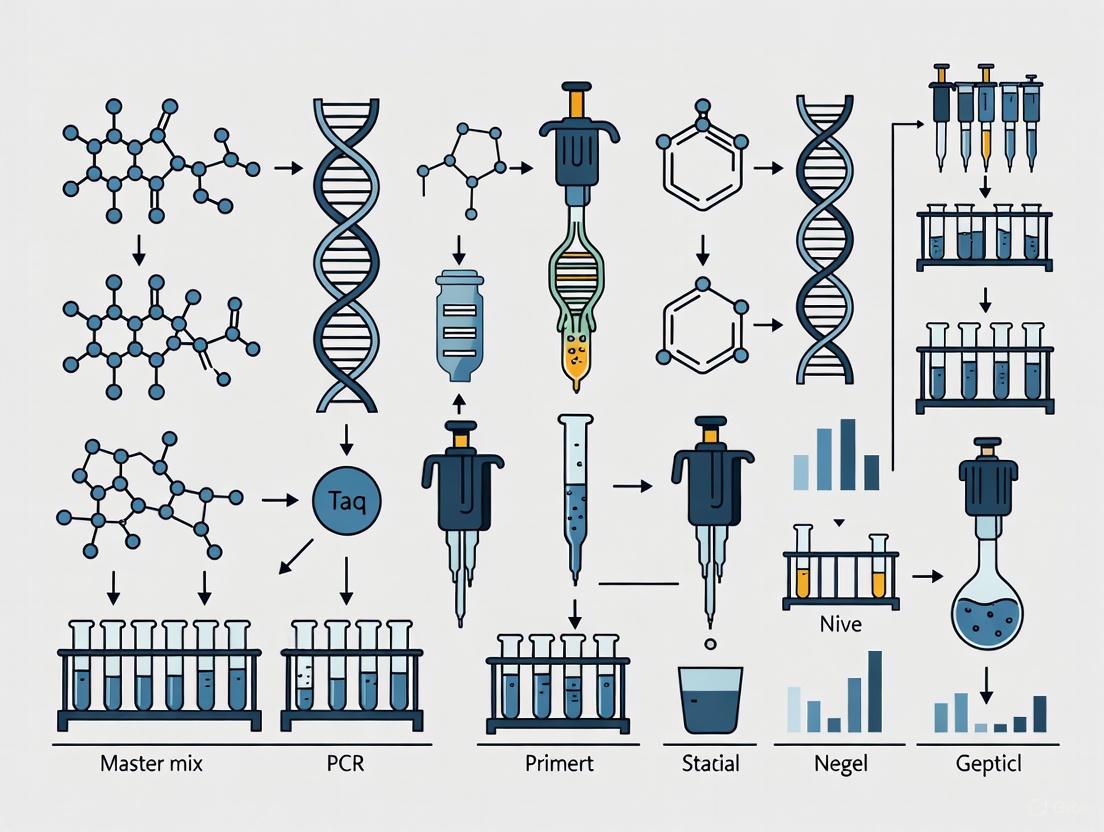
This article provides a comprehensive guide for researchers and drug development professionals on optimizing PCR master mixes to enhance the accuracy, efficiency, and reliability of biomedical assays.
Mastering Master Mixes: A 2025 Guide to Optimized PCR for Biomedical Assays
Abstract
This article provides a comprehensive guide for researchers and drug development professionals on optimizing PCR master mixes to enhance the accuracy, efficiency, and reliability of biomedical assays. Covering foundational principles to advanced applications, it explores the selection of high-fidelity and hot-start polymerases, formulation for complex templates, and integration with cutting-edge multiplexing and digital PCR technologies. A strong focus is placed on systematic troubleshooting for common pitfalls like nonspecific amplification and low yield, alongside rigorous validation strategies to ensure data integrity for clinical and research applications. The guidance synthesizes current market trends and proven methodologies to empower scientists in achieving robust, reproducible molecular diagnostics and research outcomes.
The Core Components: Understanding Master Mix Chemistry and Selection Criteria
Core Components of a PCR Master Mix
A PCR master mix is a pre-formulated, ready-to-use solution that contains all the essential components required for the polymerase chain reaction, except for the template DNA and gene-specific primers [1]. Its use standardizes workflow, minimizes pipetting errors, and ensures experimental consistency. The table below summarizes the core components and their critical functions in DNA amplification.
Table 1: Essential Components of a Standard PCR Master Mix
| Component | Primary Function | Standard Final Concentration |
|---|---|---|
| DNA Polymerase | Enzyme that synthesizes new DNA strands by adding nucleotides to the primer. | 1–2 units per 50 µL reaction [2] |
| dNTPs | Deoxynucleoside triphosphates (dATP, dCTP, dGTP, dTTP); the building blocks for new DNA strands. | 0.2 mM of each dNTP [2] |
| MgCl₂ | Essential cofactor for DNA polymerase activity; stabilizes DNA and primer-template interactions. | 1–5 mM (often 1.5–2.0 mM) [3] [4] |
| Buffer System | Maintains optimal pH and ionic conditions (e.g., Tris-HCl, KCl) for enzyme activity and specificity. | 1x concentration [1] |
DNA Polymerase
DNA polymerases, such as the ubiquitous Taq polymerase, are enzymes that catalyze the template-directed synthesis of new DNA strands. They add deoxynucleotides to the 3'-end of a primer that is annealed to the target sequence. In a typical 50 µL reaction, 1–2 units of enzyme are sufficient. However, this amount may require optimization, as higher concentrations can lead to nonspecific amplification, while lower concentrations may result in poor yield [2].
Deoxynucleoside Triphosphates (dNTPs)
dNTPs provide the necessary nucleotides for the DNA polymerase to incorporate into the newly synthesized strand. The four dNTPs are typically added in equimolar concentrations to ensure balanced base incorporation. The recommended final concentration for each dNTP is generally 0.2 mM [2]. It is crucial to maintain free dNTP concentrations above the enzyme's Km (approximately 0.010–0.015 mM) for efficient incorporation. Excessively high dNTP concentrations can be inhibitory, as they can chelate Mg²⁺ ions, making them unavailable for the polymerase [2].
Magnesium Ion (Mg²⁺)
Magnesium chloride (MgCl₂) is a critical component because the Mg²⁺ ion is an essential cofactor for DNA polymerase activity [3] [4]. It facilitates the formation of the phosphodiester bond between the 3'-OH of the primer and the phosphate group of the incoming dNTP. Furthermore, Mg²⁺ stabilizes the interaction between the primer and the template DNA by neutralizing the negative charges on their phosphate backbones [4]. The optimal concentration is typically between 1 mM and 5 mM, with 2 mM being a common starting point [3] [4]. The precise concentration must be optimized, as it is influenced by dNTP and DNA template concentrations.
Buffer System
The buffer provides a stable chemical environment for the PCR. It typically contains Tris-HCl to maintain a consistent pH (usually around 8.0–8.5) and potassium chloride (KCl) to promote primer annealing. The buffer is the foundation that ensures all other components function together correctly [1].
The Scientist's Toolkit: Research Reagent Solutions
Table 2: Key Reagents for Master Mix Preparation and PCR Optimization
| Reagent / Solution | Function | Key Considerations |
|---|---|---|
| 2x Concentrated Master Mix | Pre-mixed solution of all core components; simplifies setup and enhances reproducibility [1]. | Allows equal-volume addition of master mix and sample/primer combo. Ideal for high-throughput applications. |
| Hot-Start DNA Polymerase | Enzyme engineered to be inactive at room temperature. | Reduces nonspecific amplification and primer-dimer formation prior to the initial denaturation step. |
| MgCl₂ Stock Solution (e.g., 25 mM) | Separate magnesium source for reaction optimization [3]. | Essential for fine-tuning Mg²⁺ concentration, which is critical for assay specificity and efficiency. |
| PCR Enhancers / Stabilizers | Additives like DMSO, BSA, or betaine. | Can improve amplification efficiency of difficult templates (e.g., those with high GC content). |
| UDG (Uracil-DNA Glycosylase) | Enzyme used in carryover prevention protocols. | Degrades PCR products from previous reactions (containing dUTP) before amplification, preventing contamination [2]. |
Troubleshooting Guides & FAQs
Frequently Asked Questions
Q1: Why is magnesium concentration so critical, and how do I optimize it? Magnesium is a required cofactor for thermostable DNA polymerases. Without adequate free Mg²⁺, the enzyme is inactive. Conversely, excess free Mg²⁺ reduces enzyme fidelity and increases nonspecific amplification [3]. Optimization is required because the amount of free Mg²⁺ is affected by the concentration of dNTPs, chelating agents (like EDTA), and the DNA template itself [3]. A standard optimization protocol involves a magnesium titration using a separate MgCl₂ stock solution, testing a range from 1.0 mM to 3.0 mM in 0.5 mM increments.
Q2: My positive control amplifies, but my sample does not. What could be wrong? This is a classic sign of PCR inhibition. Many biological samples contain contaminants that co-purify with DNA and can inhibit the polymerase. To troubleshoot:
- Check DNA Quality: Ensure the A260/A280 ratio is ~1.8.
- Dilute the Template: Diluting the sample may reduce the concentration of inhibitors.
- Add More Enzyme: Increasing the amount of DNA polymerase by 10–20% can sometimes overcome mild inhibition [2].
- Use a Robust Master Mix: Some master mixes, like certain PACE variants, are specifically formulated for better performance with crude DNA samples [1].
Q3: I switched to a new batch of master mix, and my established assay failed. What should I do? This unexpected issue, while frustrating, does occur. Different PCR assays can show individual sensitivity to minute changes in reaction mixture components, even between batches of the same product [5]. The solution is to:
- Validate New Batches: Always test a new batch of any reagent alongside the old one using a core set of your established assays before putting it into widespread use [6] [5].
- Maintain a Backup: For critical diagnostic assays, it is prudent to have protocols validated for master mixes from more than one manufacturer to ensure continuity [5].
Troubleshooting Common PCR Problems
Table 3: Troubleshooting Guide for Common Master Mix-Related Issues
| Problem | Potential Causes | Solutions |
|---|---|---|
| No or Low Amplification | - Insufficient free Mg²⁺ [4]- Low dNTP concentration [2]- Inactive enzyme or incorrect buffer | - Optimize MgCl₂ concentration.- Verify dNTP concentration and quality.- Test enzyme activity with a control template. |
| Nonspecific Bands / Primer-Dimers | - Excessive Mg²⁺ concentration [3] [4]- Primer concentration too high [2]- Low annealing temperature | - Titrate Mg²⁺ to the lowest effective concentration.- Lower primer concentration (e.g., to 0.1–0.3 µM).- Increase annealing temperature incrementally. |
| Poor Reproducibility | - Inconsistent reagent mixing/thawing [6]- Master mix not adequately mixed before aliquoting | - Ensure all components are thoroughly mixed after thawing.- Vortex and centrifuge the master mix before use. |
Experimental Protocol: Optimizing Mg²⁺ Concentration for a Novel Assay
This protocol provides a detailed methodology for determining the optimal MgCl₂ concentration for a new PCR assay, a critical step in assay validation.
Objective: To identify the MgCl₂ concentration that yields the highest specific amplification yield with minimal background for a given primer-template system.
Materials:
- DNA polymerase with supplied magnesium-free reaction buffer [3]
- Separate 25 mM MgCl₂ stock solution
- dNTP mix (10 mM each)
- Forward and reverse primers (10 µM each)
- Template DNA (e.g., 20 ng/µL genomic DNA)
- Nuclease-free water
- PCR tubes and thermal cycler
Method:
- Prepare the Master Mix Base: Create a master mix containing all components except the template DNA and MgCl₂. Calculate for one extra reaction to account for pipetting error.
- 5.0 µL of 10x Magnesium-Free Buffer
- 1.0 µL of dNTP Mix (10 mM each)
- 1.0 µL of Forward Primer (10 µM)
- 1.0 µL of Reverse Primer (10 µM)
- 0.5 µL of DNA Polymerase (e.g., 1.25 U/µL)
- 35.5 µL of Nuclease-free Water Total Volume (without Mg²⁺ and template): 44 µL per reaction
Aliquot and Add MgCl₂: Aliquot 44 µL of the master mix base into each of six PCR tubes. Add MgCl₂ from the 25 mM stock to achieve the desired final concentrations in the 50 µL reaction, as shown below.
Add Template and Run PCR: Add 5 µL of template DNA to each tube, mix gently, and centrifuge. Run the PCR using the predetermined thermal cycling conditions.
Analyze Results: Analyze the PCR products using agarose gel electrophoresis. The lane with the brightest specific band and the least nonspecific product or primer-dimer indicates the optimal Mg²⁺ concentration.
Table 4: Sample Setup for Mg²⁺ Titration Experiment
| Tube | Master Mix Base (µL) | 25 mM MgCl₂ (µL) | Template DNA (µL) | Final [MgCl₂] in 50 µL |
|---|---|---|---|---|
| 1 | 44 | 0.0 | 5 | 0.0 mM (Negative Control) |
| 2 | 44 | 1.0 | 5 | 1.0 mM |
| 3 | 44 | 1.5 | 5 | 1.5 mM |
| 4 | 44 | 2.0 | 5 | 2.0 mM |
| 5 | 44 | 2.5 | 5 | 2.5 mM |
| 6 | 44 | 3.0 | 5 | 3.0 mM |
Schematic: Role of Mg²⁺ in the Polymerase Reaction Mechanism
The following diagram illustrates the molecular mechanism of how magnesium ions facilitate the catalytic function of DNA polymerase at the active site, based on structural studies [7].
In the realm of biomedical PCR assay development, master mix optimization is foundational to success. The choice of DNA polymerase is arguably the most critical variable in this optimization, directly impacting the specificity, yield, and accuracy of amplification. This guide provides a detailed comparative analysis of three primary polymerase categories—Taq, High-Fidelity, and Hot-Start—framed within the context of troubleshooting common experimental challenges. Designed for researchers and drug development professionals, this resource offers structured data, protocols, and decision frameworks to streamline your enzyme selection process and enhance assay reproducibility.
Taq DNA Polymerase
Taq DNA polymerase, derived from Thermus aquaticus, is the workhorse enzyme for routine PCR but has defined limitations.
- Key Characteristics: Lacks 3'→5' proofreading exonuclease activity, resulting in lower replication fidelity [8]. It catalyzes non-template-dependent addition of a single nucleotide (typically an adenosine) to the 3' end of PCR products, generating "A-overhangs" suitable for TA cloning [9].
- Primary Limitations: Its key constraints are low specificity (prone to nonspecific amplification and primer-dimer formation) and low fidelity (error rates typically around 1-20 x 10⁻⁵, or 1 error per 200-500 bases in a 3-kb amplicon) [8] [10] [11].
High-Fidelity DNA Polymerase
High-fidelity polymerases are engineered for applications requiring precise DNA sequence replication, such as cloning, sequencing, and site-directed mutagenesis [12] [13].
- Mechanism of Accuracy: These enzymes achieve high accuracy through two mechanisms: (1) an optimized polymerase active site with superior discrimination against incorrect nucleotides, and (2) a 3'→5' proofreading exonuclease activity that excises misincorporated nucleotides [13] [11].
- Examples and Performance: Enzymes like Pfu (from Pyrococcus furiosus) and engineered blends like Q5 High-Fidelity DNA Polymerase offer error rates up to 50-300 times lower than Taq [12] [9]. Q5 polymerase, for instance, is fused to the Sso7d DNA-binding domain, enhancing its processivity and ability to amplify long and difficult templates [13].
Hot-Start DNA Polymerase
Hot-Start polymerases are engineered to remain inactive at room temperature, preventing enzymatic activity during PCR reaction setup [12].
- Mechanism: This is typically achieved by binding the enzyme with inhibitory antibodies, using heat-labile chemical modifications, or aptamers that block the active site. The inhibitor is denatured during the initial PCR denaturation step (e.g., >90°C), activating the enzyme [12] [14].
- Key Advantage: This technology drastically reduces nonspecific amplification and primer-dimer formation, improving assay sensitivity, specificity, and yield. It also enables convenient room-temperature setup for high-throughput applications [12].
Table 1: Quantitative Comparison of Common DNA Polymerases
| Polymerase Type | Example Enzymes | Proofreading (3'→5' Exo) | Fidelity (Relative to Taq) | Error Rate | Resulting Ends | Key Applications |
|---|---|---|---|---|---|---|
| Standard Taq | Taq DNA Polymerase | No | 1x | ~1.3-1.8 x 10⁻⁴ [9] | 3'A Overhang | Routine PCR, genotyping |
| Hot-Start Taq | Hot Start Taq DNA Polymerase | No | ~1x | Similar to Standard Taq | 3'A Overhang | Routine PCR with improved specificity |
| High-Fidelity | Q5 High-Fidelity, Phusion Hot Start | Yes (++++ ) | 50x - 280x [9] | <1 x 10⁻⁶ [13] | Blunt | Cloning, sequencing, NGS |
| High-Fidelity Hot-Start | Q5 Hot Start, Hot-Start Hifi Polymerase [14] | Yes (++++ ) | >50x | ~1 x 10⁻⁶ | Blunt | Sensitive cloning, NGS library prep |
| Long-Range | LongAmp Taq | Yes (++ ) | ~2x [9] | N/A | 3'A/Blunt | Long-range PCR (>5 kb) |
Troubleshooting Guides & FAQs
Frequently Asked Questions (FAQs)
Q1: My PCR yields multiple nonspecific bands or a high background smear. How can I improve specificity?
- Problem: Nonspecific amplification due to polymerase activity during reaction setup at room temperature.
- Solution: Use a Hot-Start DNA Polymerase. The antibody-mediated or chemically modified inhibition prevents activity until the first high-temperature denaturation step, dramatically reducing primer-dimer and misprimed amplification [12].
- Protocol: When setting up your master mix, use a validated hot-start enzyme. Ensure the initial denaturation step is sufficient (typically 30 seconds to 2 minutes at 98°C) to fully activate the enzyme. Setting up reactions on ice can provide an additional layer of precaution.
Q2: I am cloning a PCR product, but a high percentage of my clones have mutations in the inserted sequence. What is the cause and solution?
- Problem: The error rate of standard Taq polymerase is too high for cloning applications.
- Solution: Switch to a High-Fidelity DNA Polymerase with proofreading activity. Enzymes like Q5 or Pfu offer error rates that are orders of magnitude lower [13] [10].
- Protocol:
- Use a high-fidelity polymerase and its recommended buffer.
- Minimize PCR cycle numbers to reduce the accumulation of stochastic errors.
- For blunt-ended cloning strategies, ensure the polymerase generates blunt ends (e.g., Q5, Pfu). If using a TA-cloning strategy, a dedicated A-tailing step may be required post-amplification.
Q3: How do I decide between a high-fidelity polymerase and Taq for my diagnostic assay, where the readout is just presence/absence of a product?
- Problem: Uncertainty about fidelity requirements for non-sequencing applications.
- Solution: For qualitative yes/no detection, Taq or Hot-Start Taq is often sufficient and more cost-effective [11]. High fidelity is less critical when the sequence itself is not analyzed, such as in genotyping or pathogen detection. The priority should be on specificity and yield, making a robust hot-start enzyme an excellent choice [12] [11].
Q4: My target is GC-rich or has complex secondary structure. Which polymerase should I use?
- Problem: Polymerases with low processivity struggle with difficult templates.
- Solution: Use a highly processive polymerase, often an engineered high-fidelity enzyme. Look for polymerases fused to processivity-enhancing domains like Sso7d, which improve the enzyme's ability to remain bound to the template and unwind secondary structures [12] [13].
- Protocol: Combine a high-processivity enzyme (e.g., Q5, Platinum II Taq) with specialized buffers or additives like DMSO, betaine, or GC enhancers. A thermal cycling protocol with a higher denaturation temperature may also be beneficial.
Decision Workflow for Polymerase Selection
The following diagram illustrates the logical decision-making process for selecting the most appropriate DNA polymerase based on your experimental goals and template characteristics.
Experimental Protocols & Methodologies
Protocol 1: Assessing Fidelity via Cloning and Sequencing
This method directly sequences cloned PCR products to determine polymerase error rates across a large DNA sequence space [10].
- Materials: High-fidelity and Taq polymerases, target plasmid DNA, primers, cloning kit, sequencing reagents.
- Procedure:
- Amplification: Amplify your target gene from a plasmid template (e.g., 25 pg/reaction) using the polymerases you are comparing. Use a sufficient number of cycles (e.g., 30) to maximize observable errors.
- Cloning: Purify the PCR products and clone them into a suitable vector using a system like Gateway or traditional restriction/ligation.
- Sequencing: Pick multiple individual colonies (e.g., 50-100 per polymerase) and prepare plasmid DNA for Sanger sequencing of the entire insert.
- Analysis: Align sequences to the known original template. Count all mutations (substitutions, insertions, deletions). Calculate the error rate using the formula: Error Rate = (Total Mutations Observed) / (Total Base Pairs Sequenced). The number of template doublings during PCR can also be factored in for a more precise measurement [10].
Protocol 2: Evaluating Specificity with Hot-Start Activation
This protocol visually demonstrates the effectiveness of hot-start technology in reducing nonspecific amplification [12].
- Materials: Hot-Start DNA Polymerase, non-hot-start version of the same enzyme, template DNA (e.g., human genomic DNA), primers, agarose gel electrophoresis system.
- Procedure:
- Reaction Setup: Prepare two identical PCR master mixes targeting a specific gene. To one tube, add the standard polymerase; to the other, add the hot-start version.
- Incubation (Optional): To rigorously test the hot-start mechanism, incubate the assembled reactions at room temperature for 30-60 minutes before placing them in the thermal cycler.
- Amplification: Run the PCR using the manufacturer's recommended cycling conditions.
- Analysis: Analyze the PCR products on an agarose gel. The reaction with the hot-start polymerase should show a single, clean band of the expected size, while the standard polymerase may show multiple nonspecific bands and primer-dimer [12].
The Scientist's Toolkit: Research Reagent Solutions
Table 2: Essential Reagents for PCR Master Mix Optimization
| Reagent / Material | Function / Description | Key Considerations |
|---|---|---|
| DNA Polymerase | Enzyme that synthesizes new DNA strands. The core component of any PCR. | Choice depends on balance of fidelity, speed, and specificity (see Table 1). |
| 5'→3' Exonuclease | Activity present in some polymerases (e.g., Taq) that degrades DNA ahead of the polymerase. | Required for probe-based qPCR assays (e.g., TaqMan). |
| Proofreading Activity (3'→5' Exo) | Corrects misincorporated nucleotides, drastically improving fidelity. | Essential for cloning and sequencing; often produces blunt-ended products [12] [13]. |
| dNTP Mix | The building blocks (dATP, dCTP, dGTP, dTTP) for DNA synthesis. | Quality and concentration are critical for high yield and fidelity. Imbalances can increase error rates. |
| PCR Buffer with MgCl₂ | Provides optimal ionic strength and pH. Mg²⁺ is a essential cofactor for polymerase activity. | Mg²⁺ concentration often requires optimization; it affects primer annealing, enzyme activity, and fidelity [15]. |
| Hot-Start Modifier | Antibody or chemical inhibitor that blocks polymerase activity until initial denaturation. | Crucial for improving specificity and enabling room-temperature setup [12] [14]. |
| PCR Enhancers | Additives like betaine, DMSO, or proprietary commercial blends. | Help amplify difficult templates (GC-rich, high secondary structure) by lowering melting temperature or disrupting structures [15]. |
Frequently Asked Questions (FAQs)
FAQ 1: What are the primary advantages of using a ready-to-use master mix compared to preparing individual components? Ready-to-use master mixes significantly enhance convenience and standardization. They contain all essential PCR components except for the primers and template DNA, which speeds up hands-on time and reduces the risk of pipetting errors or contamination during reaction setup [5]. This contributes to better inter-laboratory reproducibility by ensuring a consistent baseline reaction environment [16].
FAQ 2: Can I expect perfect reproducibility when switching to a new batch of the same master mix brand? While manufacturers strive for consistency, batch-to-batch variability can occur and may unexpectedly impact specific, validated PCR assays. One case study reported a new batch from a reputable manufacturer failing to amplify a specific Lassa virus target, despite functioning correctly for other assays like Yellow Fever virus. This highlights that different assays can show individual sensitivity to minute changes in the reaction mixture, even when the product specification is unchanged [5]. It is recommended to quality-control new batches with a full panel of in-house assays before implementing them in critical diagnostics [5].
FAQ 3: My master mix-based PCR failed. What are the first steps in troubleshooting? Start by verifying the components you added: template quality and concentration, and primer integrity and specificity [17] [16]. If these are confirmed, test the master mix itself by using a previously validated control assay with known performance. If the control works, the issue is likely with your assay-specific components or design. If the control fails, consider trying a new aliquot of master mix or a different manufacturer's product [5].
FAQ 4: How do I choose the right master mix for a specific application, such as amplifying GC-rich templates? Select a master mix specifically formulated for challenging templates. For GC-rich regions, high-performance mixes often include specialized additives or co-solvents that help denature secondary structures [17] [18]. Always review the manufacturer's instructions and application notes, as they provide recommended conditions optimized for their specific enzyme and buffer system [16].
Troubleshooting Guides
Guide: "No Amplification" or "Weak Amplification"
This guide addresses the issue of absent or faint PCR products when using a ready-to-use master mix.
Table 1: Troubleshooting "No Amplification" or "Weak Amplification"
| Observation | Possible Cause | Recommended Solution |
|---|---|---|
| No amplification in test and positive control | Master mix failure or incompatibility | Use a new aliquot of master mix. Verify functionality with a control assay. If problem persists, switch to a different manufacturer's master mix [5]. |
| Weak or no amplification in test samples only | Poor template quality or quantity; PCR inhibitors | Re-quantify template DNA. Re-purify template to remove inhibitors like salts, EDTA, or phenol [17] [19]. Analyze DNA integrity by gel electrophoresis [20]. |
| Suboptimal cycling conditions | Increase the number of PCR cycles (e.g., to 35-40) for low-copy templates [17] [18]. Optimize denaturation and annealing temperatures [19]. | |
| Incorrect primer design or degradation | Verify primer sequence and specificity. Use fresh primer aliquots to avoid freeze-thaw degradation [17] [16]. |
Guide: "Non-Specific Amplification" or "Multiple Bands"
This guide helps resolve issues where the PCR produces unwanted, non-target products.
Table 2: Troubleshooting "Non-Specific Amplification"
| Observation | Possible Cause | Recommended Solution |
|---|---|---|
| Multiple bands on a gel | Annealing temperature too low | Increase the annealing temperature stepwise in 1-2°C increments. Use a gradient cycler to determine the optimal temperature [17] [19]. |
| Primer concentration too high | Optimize primer concentration, typically between 0.1–1 µM. High concentrations promote mispriming and primer-dimer formation [17] [18]. | |
| Enzyme activity at low temperatures | Use a hot-start DNA polymerase, which is inactive until the initial denaturation step, to prevent non-specific amplification during reaction setup [17] [19]. | |
| Excessive cycle number | Reduce the number of PCR cycles to prevent accumulation of non-specific amplicons in later cycles [17]. |
Experimental Protocols for Validation and Optimization
Protocol: Quality Control of a New Master Mix Batch
Purpose: To ensure a new batch of ready-to-use master mix performs equivalently to the current batch for all critical in-house assays.
Background: Batch-to-batch variability, though rare, can cause complete assay failure. Relying on a single assay for quality control is insufficient, as different assays can be sensitive to subtle changes in buffer composition [5].
Materials:
- Old and new batches of ready-to-use master mix.
- Nuclease-free water.
- Validated primer sets for a panel of in-house assays (including the most sensitive and critical ones).
- Positive control templates (e.g., plasmid DNA, in vitro transcribed RNA for RT-PCR) for each assay.
- Real-time PCR instrument or thermal cycler.
Methodology:
- Reaction Setup: For each assay in the panel, prepare two parallel reactions.
- Reaction A: Use the old, validated batch of master mix.
- Reaction B: Use the new batch of master mix.
- Keep all other components (primers, template, water) identical and from the same source.
- Amplification: Run the PCR or RT-PCR under standard cycling conditions for each assay.
- Analysis:
- For qPCR: Compare the quantification cycle (Cq) values and amplification curve shapes between Reaction A and B. A significant shift in Cq (> 1 cycle) or poor curve kinetics in Reaction B indicates a problem with the new batch for that specific assay.
- For conventional PCR: Compare amplicon yield and specificity via gel electrophoresis.
Troubleshooting Note: If an assay fails only with the new batch, contact the manufacturer. It is prudent to maintain validated protocols for a master mix from a secondary manufacturer for critical diagnostic applications [5].
Protocol: Optimizing a Master Mix for a Novel Assay
Purpose: To establish robust cycling conditions and component ratios when developing a new PCR assay with a ready-to-use master mix.
Materials:
- Ready-to-use master mix.
- Forward and reverse primers (10 µM stock).
- Template DNA.
- Nuclease-free water.
- Thermal cycler with gradient functionality.
Methodology:
- Annealing Temperature Optimization:
- Prepare a master mix containing all components (master mix, primers, template, water).
- Aliquot the mix into a PCR tube strip.
- Use the thermal cycler's gradient function to run a PCR with an annealing temperature range (e.g., 50°C to 65°C).
- Analyze results by gel electrophoresis or qPCR melt curve analysis to identify the temperature that yields the strongest specific product with minimal background [19].
- Primer Concentration Titration:
- Prepare a series of reactions where the final primer concentration is varied (e.g., 0.1 µM, 0.25 µM, 0.5 µM, 1.0 µM).
- Run the PCR at the optimal annealing temperature determined in step 1.
- Analyze the results to find the concentration that provides maximum yield without increasing non-specific products or primer-dimers [18].
The workflow for this optimization process is outlined in the diagram below.
The Scientist's Toolkit: Research Reagent Solutions
Table 3: Essential Reagents for PCR Assay Development and Troubleshooting
| Item | Function | Key Considerations |
|---|---|---|
| High-Fidelity Master Mix | Amplification with very low error rates, essential for cloning and sequencing. | Contains DNA polymerases with proofreading (3'→5' exonuclease) activity. Use for downstream applications requiring high sequence accuracy [19]. |
| Hot-Start Master Mix | Prevents non-specific amplification and primer-dimer formation during reaction setup. | The polymerase is inactive until a high-temperature activation step. Greatly improves specificity and yield, especially for complex targets [17] [18]. |
| GC Enhancer / Additives | Aids in denaturing DNA secondary structures and high GC-rich regions. | A specialized additive included in some master mixes or available separately. Critical for amplifying difficult templates [17] [19]. |
| dNTP Mix | Provides the nucleotide building blocks (dATP, dCTP, dGTP, dTTP) for DNA synthesis. | Must be fresh and at equimolar concentrations to prevent misincorporation and reduced fidelity [17] [19]. |
| MgCl₂ Solution | Essential co-factor for DNA polymerase activity. | Concentration is often pre-optimized in master mixes. If adjusting separately, optimize in 0.2-1 mM increments, as excess Mg²⁺ can cause non-specific binding [17] [20]. |
The PCR Master Mix market is poised for significant expansion, driven by its critical role in molecular diagnostics and life sciences research. The market's growth is characterized by several key quantitative metrics and regional dynamics.
Global Market Size and Growth Projections
The following table summarizes the core market data and projected growth:
| Market Metric | Value / Projection | Time Period / CAGR |
|---|---|---|
| Global PCR Master Mix Market Size | ~USD 1.5 Billion [21] | Base Year 2025 (est.) |
| Global PCR Master Mix Market Size | ~USD 2.8 Billion [21] | Projected 2033 |
| Compound Annual Growth Rate (CAGR) | ~8% [21] | Forecast Period 2025-2033 |
| Hot-Start PCR Master Mix Segment Value | ~USD 476 Million [22] | Base Year 2025 (est.) |
| Hot-Start PCR Master Mix Segment CAGR | 7.3% [22] | Forecast Period 2025-2033 |
| High-Fidelity PCR Master Mix Segment Value | >USD 1.2 Billion [21] | Projected 2028 |
Market Drivers and Segment Dynamics
Market growth is fueled by several interconnected drivers. The rising prevalence of infectious diseases and the expansion of personalized medicine create sustained demand for reliable molecular diagnostics [21]. Technologically, the industry is shifting towards multiplexing capabilities and automation-compatible formulations to increase laboratory throughput and efficiency [21]. A key trend is the move towards specialized formulations like hot-start and high-fidelity mixes that enhance specificity, sensitivity, and ease-of-use [23] [22] [21].
Geographically, North America, particularly the United States, currently dominates the market due to its robust research infrastructure, high healthcare expenditure, and presence of key market players [22] [21]. However, the Asia-Pacific region is expected to witness the most rapid growth, fueled by increasing healthcare investments and a growing biotechnology research landscape [22] [21].
Technical Support Center: Troubleshooting and FAQs
This section provides practical guidance for researchers encountering issues with PCR master mixes, framed within the context of optimizing biomedical PCR assays.
Frequently Asked Questions (FAQs)
What is a PCR Master Mix? A PCR Master Mix is a pre-made, ready-to-use solution containing all the core components necessary for a polymerase chain reaction, except for the template DNA and gene-specific primers. Typical components include a thermostable DNA polymerase (e.g., Taq), dNTPs, MgCl₂, and optimized reaction buffers [24] [25].
What are the main advantages of using a Master Mix? Using a master mix significantly reduces pipetting steps, minimizing the risk of pipetting errors and cross-contamination. It enhances reproducibility across experiments, saves preparation time, and ensures reactions are set up with optimized concentrations of key components [24] [25].
How should I store the PCR Master Mix, and what is its shelf life? Master mixes should be stored at -20°C to -80°C to maintain enzyme activity and reagent stability. You should avoid repeated freeze-thaw cycles, which can degrade performance. Shelf life is typically 6 to 12 months when stored properly at -20°C, but always consult the manufacturer's datasheet for specific recommendations [25].
My assay failed after switching to a new batch of master mix. What could be wrong? While manufacturers perform quality control, some PCR assays can be uniquely sensitive to minute, uncharacterized changes in buffer composition between batches [5]. This can result in a complete failure for one assay while others perform normally. It is critical to validate new reagent batches with a key assay before full implementation and, for essential diagnostics, to have a validated protocol using a master mix from an alternative manufacturer [5].
What is the purpose of a Hot-Start Master Mix? Hot-Start polymerases are engineered to be inactive at room temperature. This mechanism prevents non-specific amplification and primer-dimer formation that can occur during reaction setup before the PCR cycle begins, thereby significantly improving the specificity and yield of the desired product [22] [17].
Advanced Troubleshooting Guide
This guide addresses common experimental problems and their solutions.
Problem: No Amplification or Low Yield
| Possible Cause | Solution / Experimental Protocol |
|---|---|
| Incorrect Annealing Temperature | Recalculate primer Tm values and test an annealing temperature gradient, starting at 5°C below the lower Tm of the primer pair [26]. |
| Poor Template Quality or Quantity | Protocol: Analyze template DNA integrity via gel electrophoresis (for degradation) and check purity using A260/A280 ratio. Re-purify template if contaminated with inhibitors like phenol or salts. Adjust input amount (e.g., 1 pg–10 ng for plasmid, 1 ng–1 µg for genomic DNA) [17] [26]. |
| Inactive or Missing Reagent | Include positive control primers. Test a new aliquot of master mix. Ensure all reaction components were added [5] [26]. |
| PCR Inhibitors in Sample | Protocol: Further purify the DNA template by alcohol precipitation or using a commercial PCR cleanup kit (e.g., Monarch Spin Columns). Alternatively, dilute the template sample to reduce inhibitor concentration [17] [26]. |
Problem: Multiple Bands or Non-Specific Products
| Possible Cause | Solution / Experimental Protocol |
|---|---|
| Primer Annealing Temperature Too Low | Increase the annealing temperature stepwise in 1–2°C increments. Use a gradient thermal cycler for optimization [17] [26]. |
| Non-Hot-Start Polymerase Activity | Switch to a hot-start DNA polymerase. Set up reactions on ice and use a thermal cycler with a heated lid, pre-heated to the denaturation temperature [17] [26]. |
| Excess Mg²⁺ Concentration | Protocol: Optimize Mg²⁺ concentration by testing increments of 0.2–1.0 mM. Thoroughly mix the Mg²⁺ solution and buffer before use [26]. |
| Poor Primer Design/Specificity | Verify primer sequences for specificity and lack of self-complementarity (which causes primer-dimers). Use primer design software and consider increasing primer length [17] [26]. |
Problem: Contamination (False Positives)
Contamination is a critical issue, particularly in diagnostic settings. The workflow below outlines a systematic approach to prevention and identification.
Systematic Isolation Protocol: If your No-Template Control (NTC) is positive, set up a series of reactions where you replace one component at a time with a new, trusted aliquot.
- Start by replacing the PCR-grade water [27].
- If contamination persists, test a new aliquot of the master mix [27] [5].
- Continue by testing new aliquots of primers and probes [27].
- If the source remains elusive, discard all open reagents and perform a full decontamination of workspaces and equipment with a 10% bleach solution, followed by DNA-free water [27].
The Scientist's Toolkit: Essential Research Reagent Solutions
The table below details key materials and reagents crucial for successful and reliable PCR experimentation.
| Item | Function / Explanation |
|---|---|
| Hot-Start Master Mix | The cornerstone reagent for most modern PCR assays. Its engineered polymerase reduces pre-amplification mishaps, providing greater specificity, sensitivity, and yield [22] [17]. |
| High-Fidelity Master Mix | Essential for cloning, sequencing, and mutagenesis. These mixes contain polymerases with proofreading (3'→5' exonuclease) activity, resulting in significantly lower error rates during amplification [21] [26]. |
| PCR-Grade Water | A critical, often overlooked reagent. It is nuclease-free and certified to contain no contaminating DNA or PCR inhibitors, preventing false positives and reaction failure [27] [17]. |
| Aerosol-Resistant Filter Tips | Used in all pre-PCR setup areas to prevent aerosol-borne contamination of samples and reagents, a primary source of DNA carryover and false positives [27]. |
| dNTP Mix | Deoxynucleotide triphosphates (dATP, dCTP, dGTP, dTTP) are the building blocks for new DNA strands. Provided in master mixes at optimized, balanced concentrations to prevent misincorporation errors [24] [26]. |
| MgCl₂ / MgSO₄ Solution | Magnesium ions are a essential cofactor for DNA polymerase activity. Its concentration is often optimized and is included in the master mix buffer [17] [26]. |
| PCR Additives (e.g., GC Enhancer) | Reagents like DMSO, betaine, or proprietary GC enhancers help denature complex templates with high GC-content or secondary structures, facilitating polymerase progression [17] [26]. |
| Uracil-DNA Glycosylase (UNG) | An enzymatic system to prevent PCR product carryover contamination. Using dUTP in the PCR creates uracil-containing amplicons. UNG treatment in a subsequent pre-PCR step degrades these contaminants while leaving native DNA templates intact [27]. |
Advanced Formulations and Protocols for Complex Biomedical Applications
In biomedical PCR assays, the quality of your results is fundamentally dependent on the compatibility between your master mix and the DNA template you are amplifying. Challenging templates, such as those with high GC-content, high AT-content, or those requiring long amplicons, present unique obstacles that standard PCR protocols often fail to overcome. These challenges include secondary structure formation, premature enzyme activity, and polymerase stalling, which can lead to PCR failure, non-specific amplification, or the introduction of mutations [28] [17] [29]. Master mix optimization is therefore not a luxury but a necessity for obtaining reliable, reproducible data in critical applications like drug target validation and diagnostic assay development.
This guide provides targeted troubleshooting strategies and FAQs to help you select and tailor the right master mix for your most demanding templates, ensuring amplification success and data integrity in your research.
FAQ: Addressing Common PCR Challenges
Q1: What makes GC-rich templates so difficult to amplify, and what are the key strategies for success?
GC-rich templates (typically defined as sequences with over 60% GC content) are challenging primarily due to their thermal stability and tendency to form secondary structures [28] [29]. The strong triple hydrogen bonds of G-C base pairs require more energy to break than A-T pairs, leading to higher melting temperatures. This stability promotes the formation of rigid secondary structures like hairpin loops, which can block polymerase progression and result in incomplete or failed amplification [29].
Key strategies for amplifying GC-rich regions include:
- Polymerase Choice: Use polymerases specifically engineered for GC-rich templates. These often come with specialized buffers or compatible GC Enhancers that contain additives to help destabilize secondary structures. Examples include OneTaq Hot Start DNA Polymerase with GC Buffer and Q5 High-Fidelity DNA Polymerase with its GC Enhancer [28] [30].
- Additives: Incorporate co-solvents like DMSO, glycerol, or betaine. These additives work by reducing the formation of secondary structures that inhibit the polymerase, thereby improving the yield of your target amplicon [17] [29].
- Thermal Cycling Adjustments: Increase the denaturation temperature (e.g., to 95-98°C) for the first few cycles to help melt stubborn secondary structures. Be cautious, as prolonged high temperatures can reduce polymerase activity over many cycles [29].
- Mg²⁺ Concentration Optimization: Fine-tune the MgCl₂ concentration, as GC-rich templates may require altered magnesium levels for optimal polymerase activity and primer binding. A gradient PCR in 0.5 mM increments between 1.0 and 4.0 mM can help find the ideal concentration [28] [17].
Q2: Are AT-rich templates problematic, and how can their amplification be improved?
While less frequently discussed than GC-rich templates, AT-rich sequences present their own set of challenges. The primary issue is low thermal stability due to the weaker two-hydrogen bonds of A-T base pairs. This can lead to low melting temperatures, making it difficult to find an annealing temperature that is both specific and efficient. Furthermore, AT-rich regions can form unusual secondary structures and are more prone to spurious primer binding and mis-priming [17].
Optimization approaches for AT-rich templates include:
- Lower Annealing Temperatures: Use an annealing temperature closer to the primer Tm, or employ a temperature gradient to find the optimal balance between specificity and yield [17] [30].
- Reduced Denaturation Temperature: Lower the denaturation temperature slightly (e.g., to 90-92°C) to prevent excessive strand separation and potential template damage.
- Enzyme Selection: A hot-start polymerase is highly recommended to prevent non-specific amplification and primer-dimer formation that can occur at lower temperatures during reaction setup [17] [22].
Q3: What are the critical factors when attempting to amplify long amplicons?
Amplifying long targets (generally >5 kb) pushes the limits of standard PCR. The main challenges include polymerase processivity, enzyme fidelity, and the accumulation of truncated products due to incomplete extension or template damage [17].
To successfully generate long amplicons, consider the following:
- High-Processivity Polymerases: Choose enzymes specifically designed for long-range PCR. These polymerases often combine a high-fidelity, proofreading main enzyme with a processive companion enzyme to ensure efficient and accurate amplification over long distances [17].
- Extended Extension Times: Calculate extension times based on the polymerase's speed (e.g., 1-2 minutes per kb for most enzymes) and be prepared to extend the time in later cycles [17] [31].
- Template Quality and Integrity: The DNA template must be of high molecular weight and integrity. Sheared or nicked DNA will prevent the amplification of full-length products. Always verify template quality by gel electrophoresis before attempting long-range PCR [17].
- Buffer Optimization: Ensure the reaction buffer provides adequate pH buffering and salt concentrations to support prolonged incubation times and stable enzyme activity [31].
Q4: What is a "Hot-Start" master mix, and when should I use it?
A Hot-Start PCR Master Mix contains a DNA polymerase that is intentionally rendered inactive until a high-temperature activation step (usually the initial denaturation) is applied [32] [22]. This technology is crucial for improving amplification specificity.
You should use a hot-start master mix in the following scenarios:
- To minimize non-specific amplification and primer-dimer formation [32] [22].
- When amplifying low-copy-number targets.
- When using complex templates like genomic DNA.
- In multiplex PCR assays, where multiple primer sets are used simultaneously.
- For any highly sensitive diagnostic or research assay where specificity and reproducibility are paramount [21] [32].
Q5: How does polymerase fidelity impact my downstream applications, and how do I choose?
Polymerase fidelity refers to the accuracy with which an enzyme copies the DNA template, measured as its error rate. Low-fidelity polymerases (e.g., standard Taq) can introduce mutations during amplification. For downstream applications like cloning, sequencing, and functional analysis, these mutations can lead to erroneous results [32] [30].
Select your polymerase based on your application:
- Routine PCR and genotyping: Standard Taq polymerase may be sufficient.
- Cloning, sequencing, and mutant analysis: Use a high-fidelity polymerase (e.g., Q5 High-Fidelity DNA Polymerase, which has an error rate ~280 times lower than Taq) [28] [30]. High-fidelity polymerases often possess 3'→5' exonuclease (proofreading) activity that corrects misincorporated nucleotides.
Troubleshooting Guide: Master Mixes for Challenging Templates
Table 1: Troubleshooting Common PCR Amplification Issues
| Observed Problem | Potential Causes | Recommended Solutions |
|---|---|---|
| No Product | • Excessively high annealing temperature• Poor primer design• Complex GC-rich template• Insufficient Mg²⁺ | • Perform gradient PCR to optimize annealing temperature [17] [30]• Verify primer specificity and design [31]• Switch to a polymerase/GC enhancer system [28] [29]• Titrate Mg²⁺ concentration [28] [17] |
| Smearing or Multiple Bands | • Low annealing temperature• Excess Mg²⁺• Non-hot-start polymerase activity | • Increase annealing temperature stepwise [17] [30]• Reduce Mg²⁺ concentration in 0.2-1 mM increments [30]• Use a hot-start master mix [32] [22] |
| Unexpected Product Size | • Mispriming due to poor primer specificity• Secondary structures in template | • Blast check primer specificity [31]• Use a touchdown PCR protocol• Add DMSO or other additives to disrupt structures [17] [29] |
| Poor Yield with Long Amplicons | • Insufficient extension time• Polymerase lacking processivity• Degraded template | • Increase extension time according to polymerase speed and amplicon length [17]• Switch to a specialized long-range PCR polymerase [17]• Check template integrity on a gel [17] |
| Sequence Errors in Clones | • Low-fidelity polymerase• Too many PCR cycles• Unbalanced dNTPs | • Use a high-fidelity, proofreading polymerase [32] [30]• Reduce the number of amplification cycles [30]• Use fresh, equimolar dNTP mixtures [30] |
Experimental Protocol: Optimizing a PCR Assay for a GC-Rich Target
This protocol provides a step-by-step methodology for developing a robust PCR assay for a challenging GC-rich target, incorporating key optimization strategies.
Materials and Reagents
Table 2: Research Reagent Solutions for GC-Rich PCR Optimization
| Reagent | Function/Description |
|---|---|
| High-Quality Template DNA | Intact, purified DNA from your source (e.g., cell line, tissue). Store in TE buffer or nuclease-free water [17]. |
| Specialized DNA Polymerase | A polymerase known for amplifying difficult templates (e.g., OneTaq or Q5 from NEB; AccuPrime from ThermoFisher) [28] [29]. |
| GC Enhancer / Additives | Proprietary buffer (e.g., OneTaq GC Buffer) or additives like DMSO, betaine, or glycerol to disrupt secondary structures [28] [29]. |
| MgCl₂ or MgSO₄ Solution | Magnesium salt solution for separate titration, if not included in the buffer at a fixed concentration [28] [17]. |
| Optimized Primer Pair | Primers designed according to best practices (length 15-30 bp, GC content 40-60%, Tm within 5°C of each other) [31]. |
| dNTP Mix | Balanced mixture of all four deoxynucleotides to prevent misincorporation [30]. |
Step-by-Step Procedure
Initial Setup with GC-Enhanced Master Mix:
- Prepare a 50 µL reaction on ice using the specialized polymerase and its accompanying GC buffer or enhancer according to the manufacturer's instructions [28].
- Example Reaction Setup:
- 10 µL: 5X GC Reaction Buffer
- 1 µL: 10 mM dNTP Mix
- 2.5 µL: Forward Primer (10 µM)
- 2.5 µL: Reverse Primer (10 µM)
- X µL: Template DNA (10-100 ng)
- 0.5 µL: Specialized DNA Polymerase
- Y µL: GC Enhancer (if required separately)
- Z µL: Nuclease-Free Water to 50 µL final volume
Thermal Cycling with a Stepped Protocol:
- Initial Denaturation: 98°C for 2 minutes (activates hot-start polymerase).
- Cycling (30-35 cycles):
- Denaturation: 98°C for 20 seconds. Use a higher temperature for the first 5 cycles (e.g., 98°C) to help melt stubborn structures [29].
- Annealing: Use a gradient, starting at 5°C below the calculated Tm of your primers.
- Extension: 72°C for 1 minute per kb of amplicon.
- Final Extension: 72°C for 5-10 minutes.
Titration of Magnesium Concentration (if problems persist):
Analysis:
- Analyze 5-10 µL of the PCR product by agarose gel electrophoresis to check for product size, specificity, and yield.
The workflow for this optimization process is outlined in the diagram below.
Master Mix Selection Data and Market Trends
Understanding the different types of master mixes available and their market growth can inform your reagent selection and highlight industry trends.
Table 3: Global PCR Master Mix Market Overview (2025-2033 Projections)
| Segment | Key Characteristics | Projected Market Size (2033) | Primary Growth Drivers |
|---|---|---|---|
| Standard PCR Master Mixes | General-purpose, cost-effective; ideal for routine, simple amplicons. | ~$2.8 Billion (Total Market) [21] | Widespread use in basic research and education. |
| Hot-Start PCR Master Mixes | Enhanced specificity; enzyme inactive until high-temp activation. | ~$476 Million (Segment) [22] | Demand for high-specificity in diagnostics and multiplex assays [32] [22]. |
| High-Fidelity PCR Master Mixes | Low error rates (proofreading); essential for cloning and sequencing. | ~$1.2 Billion (Segment) [21] | Growth in personalized medicine, synthetic biology, and biopharma R&D [21] [32]. |
The decision-making process for selecting the right master mix based on template type is summarized below.
Troubleshooting Guides
Guide 1: Resolving Nonspecific Amplification and Primer-Dimer Formation
Problem: Multiple, unexpected bands on the gel or amplification curves, indicating off-target binding and primer-dimer artifacts, especially in assays with high plexity.
Cause Analysis:
- Primer Specificity: Inadequate in silico checks for cross-homology or self-complementarity.
- Annealing Temperature (Ta): Suboptimal Ta leading to promiscuous primer binding.
- Magnesium Concentration: Excess Mg²⁺ can stabilize nonspecific primer-template interactions.
- Primer Concentration: High primer concentrations increase the probability of dimerization.
Solution Steps:
- Re-evaluate Primer Design: Use tools like NCBI BLAST for specificity. Ensure primers have similar melting temperatures (Tm ± 2°C).
- Perform a Temperature Gradient: Optimize the annealing temperature across a range (e.g., 55°C to 65°C).
- Titrate MgCl₂: Test MgCl₂ concentrations from 1.5 mM to 4.0 mM in 0.5 mM increments.
- Optimize Primer Cocktail: Systematically lower individual primer concentrations (from 0.5 µM down to 0.1 µM).
- Use a Hot-Start Polymerase: This prevents enzyme activity during reaction setup, reducing low-temperature artifacts.
- Incorporate Additives: Add Betaine (0.5-1.5 M) or DMSO (1-5%) to reduce secondary structures and improve specificity.
Guide 2: Addressing Uneven or Suppressed Amplification of Multiple Targets
Problem: Significant variation in Cq values (>3 cycles between targets) or complete dropout of one or more targets.
Cause Analysis:
- Primer Competition: Limited reagents (dNTPs, enzyme, cofactors) are being disproportionately consumed by the most efficient primers.
- Amplicon Length Disparity: Shorter amplicons out-compete longer ones.
- Sequence-Dependent Biases: GC-rich targets may amplify poorly compared to AT-rich ones under standard conditions.
- Master Mix Incompatibility: Standard master mixes may not be formulated for high-plex reactions.
Solution Steps:
- Re-balance Primer Ratios: Identify the weakest amplifier and increase its primer concentration relative to the strongest one. This often requires an iterative process.
- Standardize Amplicon Length: Design all amplicons to be within a narrow size range (e.g., 70-150 bp).
- Optimize Master Mix Formulation:
- Increase polymerase concentration (e.g., from 0.025 U/µL to 0.05 U/µL).
- Ensure sufficient dNTP pool (e.g., 400-500 µM of each dNTP).
- Validate with a Commercial Multiplex Master Mix: Use a specialized master mix as a positive control to rule out formulation issues.
Frequently Asked Questions (FAQs)
Q1: What is the maximum number of targets I can reliably multiplex in a single qPCR reaction? A: The practical limit is typically 4-6 plex for standard assays. However, with advanced design and optimization (like data-driven Smart-Plexer approaches), 10-plex and higher is achievable. The limit is dictated by spectral overlap of fluorescent dyes, reagent competition, and instrument detection capabilities.
Q2: How do I select and combine fluorescent dyes for multiplex qPCR? A: Choose dyes with distinct emission spectra to minimize crosstalk. The combination must be compatible with your real-time PCR instrument's optical filters. Common pairs include FAM/HEX/Cy5/ROX. Always perform a dye crosstalk control (single dyes in all channels) to validate the setup.
Q3: My multiplex assay works with a specialized commercial master mix but fails with my in-house formulation. What key components should I re-examine? A: Focus on these components in your in-house master mix optimization, framed within the context of your thesis research:
| Component | Typical Concentration Range (Standard) | Recommended for High-Plex | Function & Rationale for Optimization |
|---|---|---|---|
| Hot-Start DNA Polymerase | 0.02 - 0.025 U/µL | 0.04 - 0.075 U/µL | Catalyzes DNA synthesis. Increased concentration helps maintain processivity across competing targets. |
| MgCl₂ | 1.5 - 3.0 mM | 2.5 - 4.0 mM (Titrate) | Essential cofactor. Critical for primer binding and fidelity; optimal concentration is highly sequence-dependent in multiplex. |
| dNTPs | 200 µM each | 400 - 500 µM each | Building blocks for new DNA strands. Higher concentration prevents depletion in reactions with multiple simultaneous amplifications. |
| PCR Buffer | 1X | 1X (with proprietary enhancers) | Maintains pH and ionic strength. Commercial mixes often contain proprietary stabilizers and enhancers (e.g., trehalose, BSA) that are difficult to replicate. |
| Betaine | 0 M | 0.8 - 1.2 M | Additive. Equalizes the melting temperature of DNA strands by reducing the differential stability of GC vs. AT base pairs, crucial for uniform amplification. |
Q4: What is a data-driven multiplexing approach like "Smart-Plexer," and how does it work? A: Smart-Plexer is a conceptual framework that uses pre-experimental data and computational modeling to predict optimal multiplex assay conditions. Instead of purely empirical "trial-and-error," it involves:
- In silico Prediction: Using software to calculate primer thermodynamics (Tm, ΔG), predict dimerization, and estimate amplification efficiency for each primer pair.
- Monoplex Calibration: Running each primer pair individually to gather empirical Cq and efficiency data.
- Algorithmic Optimization: Inputting the monoplex data and in silico predictions into a model that calculates the ideal primer concentration ratios and master mix composition for the multiplex reaction to achieve balanced Cq values.
Experimental Protocol: Master Mix Optimization for a 5-Plex qPCR Assay
Objective: To systematically optimize an in-house master mix formulation for robust and balanced amplification of five genetic targets.
Materials:
- Template: Genomic DNA (e.g., 10 ng/µL human genomic DNA).
- Primers: Five target-specific primer pairs, resuspended to 100 µM stock.
- Master Mix Components: Hot-Start Taq Polymerase, 10X PCR Buffer, 50 mM MgCl₂, 10 mM dNTP Mix, Molecular Grade H₂O, Betaine (5M stock).
- qPCR Instrument: Any standard real-time PCR cycler.
Methodology:
- Primer Cocktail Preparation: Based on initial monoplex data, create a primer cocktail with unequal concentrations. For example, assign weaker amplifiers (higher Cq) a higher concentration (e.g., 0.4 µM) and strong amplifiers (low Cq) a lower concentration (e.g., 0.1 µM).
- Master Mix Formulation Matrix: Prepare a series of master mixes according to the table below. Keep the primer cocktail and template volume constant.
| Reaction Component | Condition 1 (Standard) | Condition 2 (High Enzyme) | Condition 3 (High dNTP) | Condition 4 (With Betaine) |
|---|---|---|---|---|
| 10X PCR Buffer | 1X | 1X | 1X | 1X |
| MgCl₂ (50 mM) | 3.0 mM | 3.0 mM | 3.0 mM | 3.5 mM |
| dNTP Mix (10 mM) | 0.2 mM each | 0.2 mM each | 0.4 mM each | 0.2 mM each |
| Taq Polymerase | 0.025 U/µL | 0.05 U/µL | 0.025 U/µL | 0.05 U/µL |
| Betaine (5M) | - | - | - | 1.0 M |
| Primer Cocktail | 1X | 1X | 1X | 1X |
| Template DNA | 1X | 1X | 1X | 1X |
| H₂O | To Volume | To Volume | To Volume | To Volume |
- qPCR Run: Aliquot the master mixes into a qPCR plate, run in triplicate. Use a standard thermocycling protocol with a combined annealing/extension step at 60°C for 60 seconds.
- Data Analysis: Compare the Cq values, amplification curves, and endpoint fluorescence for all five targets across the four conditions. The optimal condition is the one with the smallest ΔCq between targets and the highest fluorescence for all.
Visualizations
Diagram 1: Multiplex PCR Troubleshooting Logic
Diagram 2: Data-Driven Smart-Plexer Workflow
The Scientist's Toolkit: Research Reagent Solutions
| Item | Function |
|---|---|
| Hot-Start Taq DNA Polymerase | A modified enzyme inactive at room temperature, preventing non-specific amplification and primer-dimer formation during reaction setup. Essential for complex multiplexing. |
| Multiplex PCR Master Mix (Commercial) | Pre-optimized, proprietary formulations containing enhanced buffer salts, stabilizers, and higher concentrations of polymerase and dNTPs specifically designed for multi-target assays. |
| dNTP Mix | An equimolar solution of the four deoxynucleotides (dATP, dCTP, dGTP, dTTP), the essential building blocks for DNA synthesis. Purity and concentration are critical. |
| MgCl₂ Solution | A magnesium chloride solution used to titrate the final Mg²⁺ concentration in the reaction. Mg²⁺ is a crucial cofactor for polymerase activity and affects primer annealing. |
| PCR Additives (Betaine, DMSO) | Chemical enhancers that reduce the formation of secondary structures in DNA templates, homogenize the melting temperatures of different amplicons, and improve overall assay robustness. |
| Fluorescent Probe/Primer Sets | Hydrolysis probes (e.g., TaqMan) or dual-labeled primers that emit a fluorescent signal upon amplification. Must be spectrally distinct for multiplex detection. |
Optimizing Master Mixes for Reverse Transcription (RT-PCR), qPCR, and dPCR
Within the framework of biomedical PCR assay research, the master mix is not merely a convenience but the biochemical cornerstone of the reaction. It is a pre-mixed, optimized solution containing the core components necessary for the amplification of nucleic acids [33]. The strategic optimization of these master mixes is critical for developing robust, reproducible, and cost-effective diagnostic and research assays in drug development [34] [33]. A poorly optimized master mix can lead to a cascade of experimental failures, including false negatives in clinical diagnostics or irreproducible data in pre-clinical research, thereby compromising the validity of scientific conclusions. The principles of Robust Parameter Design (RPD), which aim to minimize the influence of uncontrollable noise factors by adjusting control factors, are perfectly aligned with master mix optimization [34]. Here, the composition of the master mix represents a set of control factors designed to ensure consistent performance despite variations in sample quality, operator technique, or instrument calibration.
Core Principles of Master Mix Composition and Optimization
Universal Components of a PCR Master Mix
A master mix, whether for standard PCR, qPCR, or RT-PCR, typically contains several key components. Combining these into a single master mix reduces pipetting steps, minimizes contamination, improves consistency across multiple reactions, and saves time [33]. The table below summarizes these essential elements.
Table: Key Components of a Standard PCR Master Mix
| Component | Standard Final Concentration | Function | Optimization Considerations |
|---|---|---|---|
| DNA Polymerase | 0.5–2.5 units/50 µL reaction [31] | Enzymatically synthesizes new DNA strands. | Hot-start versions reduce non-specific amplification; fidelity varies [17]. |
| Buffer | 1X concentration | Provides optimal chemical environment (pH, salts) for polymerase activity. | Buffer composition is often proprietary and polymerase-specific [35]. |
| Magnesium (Mg²⁺) | 1.5–5.0 mM [31] | Essential cofactor for polymerase activity; influences primer annealing and product specificity. | A critical optimization parameter; concentration affects yield and specificity [36] [17]. |
| dNTPs | 200 µM each [31] | Building blocks (dATP, dCTP, dGTP, dTTP) for DNA synthesis. | Unbalanced concentrations increase PCR error rate; quality is paramount [17]. |
| Primers | 0.1–1 µM each [17] | Forward and reverse primers define the target sequence to be amplified. | Concentration must be optimized to balance yield and primer-dimer formation [36] [17]. |
| Stabilizers/Additives | Varies | Enhancers like DMSO, BSA, or Betaine [31]. | Aid in amplifying complex templates (e.g., GC-rich); require careful titration [17]. |
Advanced Master Mix Formulations for Specialized Techniques
Beyond standard PCR, specialized techniques require tailored master mixes.
- Reverse Transcription (RT-PCR) Master Mixes: These contain reverse transcriptase in addition to PCR components for converting RNA into complementary DNA (cDNA) in a one-step protocol. Kits are available that blend a high-fidelity reverse transcriptase with a proofreading enzyme to ensure accurate cDNA synthesis [33].
- Quantitative PCR (qPCR) Master Mixes: These mixes include either a DNA-binding dye like SYBR Green I or are compatible with sequence-specific fluorescent probes (e.g., TaqMan) [33]. They are optimized for speed, sensitivity, and low background fluorescence. Many include a passive reference dye (e.g., ROX) to normalize for well-to-well variation [33].
- High-Fidelity PCR Master Mixes: Designed for applications like cloning, these mixes utilize proofreading DNA polymerases (e.g., Q5, Phusion, KOD) that possess 3'→5' exonuclease activity to correct misincorporated nucleotides, resulting in significantly lower error rates [36] [17]. These often use MgSO₄ instead of MgCl₂ [33].
Table: Comparison of Master Mix Types for Specialized PCR Applications
| Application | Core Specialized Component | Key Function | Example Commercial Mixes |
|---|---|---|---|
| High-Fidelity PCR | Proofreading DNA Polymerase (e.g., Q5, Phusion) | Reduces error rate for cloning and sequencing | High-fidelity PCR Master, KOD Hot Start Master Mix [33] |
| qPCR (Probe-based) | Hot-start Taq, dNTPs, Buffer, Passive Reference Dye (ROX) | Enables target-specific quantification via hydrolysis probes | FastStart TaqMan Probe Master, EagleTaq Universal Master Mix (ROX) [33] |
| qPCR (SYBR Green) | Hot-start Taq, dNTPs, Buffer, SYBR Green I dye | Binds double-stranded DNA for intercalation-based quantification | FastStart SYBR Green Master, KiCqStart SYBR Green qPCR ReadyMix [33] |
| One-Step RT-qPCR | Reverse Transcriptase, PCR Enzyme, dNTPs, Buffer | Combines reverse transcription and qPCR in a single tube | KiCqStart One-Step Probe RT-qPCR ReadyMix [33] |
Figure 1: A systematic workflow for optimizing a PCR master mix, incorporating iterative testing of key variables like annealing temperature and magnesium concentration to achieve a robust and reliable protocol.
The Scientist's Toolkit: Essential Research Reagent Solutions
Successful assay development relies on a suite of trusted reagents and tools. The following table details essential materials for master mix optimization and troubleshooting.
Table: Essential Research Reagent Solutions for Master Mix Optimization
| Reagent / Tool | Function | Example Use-Case |
|---|---|---|
| Hot-Start DNA Polymerase | Polymerase is inactive at room temperature, preventing non-specific priming and primer-dimer formation until the initial denaturation step [17]. | Essential for high-specificity multiplex PCR and routine assays to improve yield of the desired product [33] [17]. |
| GC Enhancer / Betaine | Additives that destabilize secondary structures and reduce the melting temperature of GC-rich DNA, facilitating primer annealing and polymerase progression [31] [17]. | Amplification of difficult, GC-rich templates that would otherwise fail or produce low yield [17]. |
| MgCl₂ / MgSO₄ Stock Solutions | Tunable source of magnesium cofactor. Mg²⁺ concentration is a primary variable for optimizing reaction efficiency and specificity [36] [31]. | Titrated in 0.2-1 mM increments to resolve issues like no product, multiple bands, or smears on a gel [36] [17]. |
| dNTP Mix (Ultrapure) | Provides high-quality, equimolar nucleotides for accurate and efficient DNA synthesis. Impurities or imbalances can reduce yield and increase error rate [17]. | Critical for all PCR applications, especially high-fidelity amplification and long-amplicon PCR. |
| Nuclease-Free Water | Solvent free of RNases and DNases that could degrade reaction components, ensuring reaction integrity. | Used for resuspending primers and bringing all reaction mixes to their final volume. |
| Gradient Thermal Cycler | Instrument that allows testing a range of annealing temperatures across a single block, dramatically speeding up optimization [17]. | Empirically determining the optimal annealing temperature for a new primer set [36]. |
Troubleshooting Guides and FAQs
Low or No Amplification Yield
Q: My PCR reaction has failed, and I see no product or a very faint band on the gel. What are the primary causes in the master mix, and how can I resolve them?
- A: Troubleshooting Low/No Yield
- Problem: Suboptimal Magnesium Concentration.
- Cause: Mg²⁺ is a crucial cofactor for polymerase activity. Insufficient Mg²⁺ can drastically reduce or eliminate amplification [36] [17].
- Solution: Titrate Mg²⁺ concentration in 0.5 mM to 1.0 mM increments across a test range (e.g., 1.0 mM to 4.0 mM) to find the optimum for your specific primer-template system [36] [31].
- Problem: Inactive or Insufficient DNA Polymerase.
- Cause: Enzyme may have been inactivated by improper storage or handling. The amount of polymerase may be insufficient for the specific template or inhibited by sample carryover [17].
- Solution: Ensure fresh aliquots and proper storage. Test a new batch of polymerase. Consider increasing the amount of polymerase or using a master mix with high processivity and inhibitor tolerance [17].
- Problem: Poor Primer Design or Quality.
- Cause: Primers with secondary structures (hairpins), self-complementarity (primer dimers), or miscalculated melting temperatures (Tm) will not anneal efficiently [31].
- Solution: Verify primer sequence and design using software (e.g., NCBI Primer-BLAST). Resuspend primers properly, avoid freeze-thaw cycles by aliquoting, and confirm concentration spectrophotometrically [35] [31]. Optimize primer concentration (typically 0.1-1 µM) [17].
- Problem: Inhibitors in the Reaction.
- Cause: Residual salts, phenol, EDTA, or proteins from the template purification process can inhibit DNA polymerases [17].
- Solution: Re-purify the template DNA, perform an ethanol precipitation, or use a DNA cleanup kit. Consider diluting the template or using a polymerase known for high tolerance to inhibitors [17].
- Problem: Suboptimal Magnesium Concentration.
Non-Specific Amplification and Multiple Bands
Q: My reaction produces multiple incorrect bands or a smear instead of a single, specific product. How can I adjust the master mix to improve specificity?
- A: Troubleshooting Non-Specific Amplification
- Problem: Annealing Temperature is Too Low.
- Cause: Low temperature allows primers to bind to non-target sequences with partial complementarity [17].
- Solution: Increase the annealing temperature in 1-2°C increments. Use a gradient thermal cycler to empirically determine the optimal temperature, which is typically 3-5°C below the primer Tm [36] [17].
- Problem: Excess Magnesium or DNA Polymerase.
- Problem: Non-Hot-Start Polymerase Activity.
- Cause: Standard polymerases have activity at room temperature, leading to primer-dimer formation and mispriming during reaction setup [17].
- Solution: Switch to a hot-start DNA polymerase, which is inactive until a high-temperature activation step. Alternatively, set up reactions on ice and use pre-heated thermocyclers [17].
- Problem: Too Much Template or Primer.
- Problem: Annealing Temperature is Too Low.
Reducing Error Rate and Improving Fidelity for Cloning
Q: I am generating PCR products for cloning, but my sequencing results show a high number of mutations. How can I optimize my master mix for high fidelity?
- A: Troubleshooting Low Fidelity
- Problem: Using a Low-Fidelity DNA Polymerase.
- Problem: Unbalanced dNTP Concentrations.
- Cause: If the concentrations of dATP, dCTP, dGTP, and dTTP are not equimolar, the polymerase is more likely to incorporate an incorrect nucleotide [17].
- Solution: Always use a high-quality, pre-mixed dNTP solution with each nucleotide at a standardized concentration (e.g., 2.5 mM each for a 10 mM total dNTP mix) [17].
- Problem: Excessive Cycle Number.
- Cause: Each PCR cycle presents an opportunity for errors; thus, a high number of cycles amplifies any early errors exponentially [17].
- Solution: Use the minimum number of cycles necessary to produce sufficient yield for your downstream application. Increase the amount of input DNA if possible to reduce the required cycles [17].
Figure 2: A logical troubleshooting guide for common PCR issues. This decision-path map helps researchers systematically identify and address the most probable master mix-related causes of amplification failure, non-specificity, or low fidelity.
Detailed Experimental Protocols for Optimization
Protocol 1: Optimizing Magnesium Concentration and Annealing Temperature
Objective: To empirically determine the optimal Mg²⁺ concentration and annealing temperature for a new primer set using a single 96-well plate.
Background: Both Mg²⁺ and annealing temperature (Tₐ) are interdependent factors critical for specificity and yield. Mg²⁺ stabilizes DNA duplexes and is a necessary polymerase cofactor, while the Tₐ determines the stringency of primer binding [36] [31] [17].
Materials:
- 10X PCR Buffer (without MgCl₂)
- 50 mM MgCl₂ stock solution
- Custom primer set (e.g., 20 µM each)
- dNTP mix (10 mM)
- DNA template (e.g., 10 ng/µL)
- Nuclease-free water
- Hot-start DNA polymerase
- Gradient thermal cycler
Method:
- Prepare a Master Mix for 48 reactions (allowing for duplicates) containing per reaction: 1X PCR Buffer, 200 µM dNTPs, 0.5 µM of each primer, 1 unit of hot-start DNA polymerase, and nuclease-free water. Do not add Mg²⁺ or template yet.
- Aliquot the master mix into 6 sterile 1.5 mL tubes.
- Spike each tube with a different volume of 50 mM MgCl₂ to create a Mg²⁺ concentration series (e.g., 1.0 mM, 1.5 mM, 2.0 mM, 2.5 mM, 3.0 mM, 4.0 mM). Mix thoroughly.
- Add a constant volume of DNA template to each Mg²⁺ tube and mix.
- Dispense the contents of each Mg²⁺ tube into a single row of an 8-well PCR strip (or a column of a 96-well plate), preparing enough for duplicate reactions.
- Run the PCR using a gradient thermal cycler, setting the annealing temperature to span a range (e.g., 55°C to 65°C) across the block.
- Analyze the results via agarose gel electrophoresis. The well showing a single, intense band of the correct size at the highest Tₐ and narrowest Mg²⁺ range indicates the optimal conditions.
Protocol 2: Systematic Assay Validation Using a Robust Optimization Framework
Objective: To validate a master mix protocol ensuring it is both cost-effective and robust to normal experimental variations, aligning with Robust Parameter Design principles [34].
Background: A robust protocol minimizes the influence of "noise factors" (e.g., minor pipetting errors, tube lot variations, thermocycler calibration) by optimizing "control factors" (master mix components) [34]. This is formalized in a stochastic optimization problem: minimize cost g₀(x) = cᵀx subject to the constraint that protocol performance g(x,z,w,e) ≥ t, where x represents control factors and z,w,e represent various noise factors [34].
Materials:
- Optimized master mix from Protocol 1
- Multiple lots of nuclease-free water
- Different brands of PCR tubes
- Two different thermal cyclers
- Technical operators of varying experience levels
Method:
- Define Control and Noise Factors: Control factor (x) is the master mix formulation. Noise factors (z,w) can include different reagent lots, tube types, instruments, and operators.
- Experimental Design: Prepare a large batch of the optimized master mix. Set up multiple identical reactions where these noise factors are deliberately varied according to a structured design.
- Execution: Run the PCR amplification with all samples.
- Data Analysis: Quantify the output (e.g., qPCR Cq values, band intensity). Use a mixed effects model to partition the variance and estimate the protocol's sensitivity to the different noise factors [34].
- Validation: The protocol is considered robust if the performance (e.g., Cq value or yield) consistently remains above a pre-defined threshold (t) across all noise conditions, with minimal variance. This ensures reliability in a high-throughput production environment [34].
The optimization of Polymerase Chain Reaction (PCR) master mixes is a critical step in ensuring the accuracy, sensitivity, and reliability of biomedical PCR assays in research and drug development. Even with perfectly designed primers and optimized cycling conditions, many PCR templates present challenges that standard protocols cannot overcome. GC-rich regions, complex secondary structures, and the presence of PCR inhibitors commonly encountered with clinical samples can lead to amplification failure, reduced yield, or non-specific products. Incorporating specific additives such as Dimethyl sulfoxide (DMSO), Bovine Serum Albumin (BSA), and Betaine into PCR master mixes provides a powerful strategy to overcome these hurdles. This guide provides researchers with detailed, practical information on how and when to use these key additives to enhance amplification efficiency for even the most challenging targets, framed within the broader context of master mix optimization for biomedical research.
FAQ: Troubleshooting Common PCR Problems with Additives
Q1: When should I consider adding DMSO to my PCR master mix? DMSO should be your first consideration when amplifying GC-rich templates (typically >60% GC content). GC-rich sequences form stable secondary structures that prevent the DNA polymerase from efficiently traversing the template. DMSO works by interfering with hydrogen bonding and base stacking, which disrupts these secondary structures and facilitates strand separation during the denaturation and annealing steps [37] [38]. This additive is also beneficial for templates with pronounced hairpin loops. It is important to note that DMSO reduces the activity of Taq polymerase; therefore, finding the optimal concentration is a balance between improving template accessibility and maintaining sufficient enzyme activity [38].
Q2: How can BSA improve my PCR results from complex biological samples? BSA is highly effective in neutralizing a wide range of PCR inhibitors often found in nucleic acid extracts from clinical and environmental samples. These inhibitors include phenolic compounds, indigo dyes, heme, melanin, and detergents like SDS carried over from the DNA extraction process [39] [38]. BSA acts as a non-specific protein that binds to these inhibitors, preventing them from interacting with and deactivating the DNA polymerase. Its inclusion is particularly recommended for PCR assays involving samples such as blood, soil, feces, or plant material, where inhibitor carryover is common [39] [40].
Q3: What is the primary function of Betaine, and when is it most useful? Betaine (also known as trimethylglycine) is a secondary structure destabilizer that is highly effective for normalizing the melting temperature of DNA. It is especially valuable for amplifying templates with extreme GC content and long homopolymeric sequences [31] [38]. Betaine works by accumulating preferentially in the hydration sphere of DNA, which weakens the base-stacking forces and reduces the dependence of DNA melting on base composition. This results in a more uniform melting temperature across the entire template, facilitating more efficient and specific amplification [38]. Many commercial PCR kits include betaine as a mystery additive for this reason.
Q4: Can I use multiple additives in a single PCR reaction? Yes, combining additives can sometimes resolve particularly stubborn amplification issues, as they often work through complementary mechanisms. For instance, a combination of DMSO and Betaine is frequently reported to successfully amplify GC-rich templates that prove resistant to a single additive [39]. A recommended combination for such challenging cases is 1.0 M Betaine with 5-8% DMSO [39]. However, when using multiple additives, empirical testing is crucial, as their combined effect on polymerase activity and reaction stringency can be complex and difficult to predict.
Q5: I am getting no amplification product. Which additive should I try first? Start by systematically evaluating and optimizing your reaction components before introducing additives. If the problem persists, BSA is a good first choice if you suspect inhibitor carryover from your sample preparation [39] [40]. If the template is suspected to have a high GC content or complex secondary structure, begin with DMSO (at 5%) or Betaine (at 1.0 M) [40] [38]. A checklist approach is recommended: ensure your master mix is properly constituted, check reagent concentrations, and aliquot components to avoid freeze-thaw degradation before concluding that additives are necessary [40].
The following table summarizes the core properties, mechanisms, and applications of DMSO, BSA, and Betaine for PCR optimization.
Table 1: Essential Guide to PCR Additives for Master Mix Optimization
| Additive | Primary Function & Mechanism | Optimal Concentration Range | Common Use Cases |
|---|---|---|---|
| DMSO | Disrupts secondary structures (e.g., hairpins, GC-rich stabilities) by reducing DNA melting temperature [37] [38]. | 2% - 10% [37] [38] | GC-rich templates (>60%), templates with strong secondary structures [38]. |
| BSA | Neutralizes common PCR inhibitors (e.g., phenols, heparin, heme) by acting as a competitive binding agent; stabilizes reaction components [39] [38]. | 0.1 - 0.8 mg/mL (or ~400 μg/mL) [39] [40] | Crude lysates, blood samples, plant extracts, and samples with suspected inhibitor carryover [39]. |
| Betaine | Equalizes the contribution of base composition to DNA melting temperature (Tm); reduces secondary structure formation [31] [38]. | 0.5 M - 2.5 M (commonly 1.0 - 1.7 M) [31] [38] | Extremely GC-rich templates, long templates, and homopolymeric sequences [38]. |
Experimental Protocol: Systematic Optimization of Additives in Master Mixes
This protocol provides a step-by-step methodology for empirically determining the optimal type and concentration of additives for a specific PCR assay.
Objective: To identify the additive and its concentration that provides the highest yield and specificity for a challenging PCR template.
Materials and Reagents:
- Standard PCR reagents: DNA polymerase with buffer, dNTPs, primers, template DNA, nuclease-free water [31].
- Stock solutions of additives:
- DMSO (100%)
- BSA (10 mg/mL)
- Betaine (5 M), use Betaine or Betaine monohydrate, not Betaine HCl [38].
- PCR tubes and thermal cycler.
- Agarose gel electrophoresis equipment for endpoint analysis.
Methodology:
Master Mix Preparation: Calculate the total volume of master mix required for all test reactions, including controls, and prepare a single batch. This ensures reaction consistency. The master mix should contain all standard components: buffer, dNTPs, primers, DNA polymerase, and template [31] [40].
Aliquot and Supplement:
- Distribute the master mix into individual PCR tubes.
- Add a different additive or concentration to each tube according to your experimental design. For example:
- Tube 1: No additive (negative control).
- Tubes 2-4: DMSO at 2%, 5%, and 8%.
- Tubes 5-6: BSA at 0.2 mg/mL and 0.5 mg/mL.
- Tubes 7-9: Betaine at 0.5 M, 1.0 M, and 1.5 M.
- Tube 10: A combination (e.g., 5% DMSO + 1.0 M Betaine).
- Adjust the volume in all tubes to the final desired volume with nuclease-free water.
Thermal Cycling: Run the PCR using your standard cycling protocol. It is generally not necessary to adjust cycling parameters when initially testing additives.
Product Analysis: Analyze the PCR products using agarose gel electrophoresis.
- Primary Yield: Identify the condition that produces the brightest band of the expected size.
- Specificity: Identify the condition that shows the cleanest result with the least non-specific amplification or primer-dimer.
Validation: Once an optimal condition is identified, repeat the experiment to confirm the reproducibility of the results.
Workflow Visualization: A Strategic Path for PCR Additive Optimization
The following workflow provides a logical decision-making pathway for diagnosing PCR problems and selecting the appropriate additive.
Advanced Considerations and Final Recommendations
For researchers working on high-stakes applications like diagnostic assay or drug development, advanced considerations are paramount. Additive compatibility with DNA polymerase is a critical factor. While DMSO is tolerated by many polymerases, it does inhibit Taq polymerase activity, and this effect must be balanced with its benefits [38]. Furthermore, for applications requiring high fidelity, such as cloning or sequencing, note that additives like Betaine can improve yield without compromising the error rate of proofreading enzymes. When scaling up reactions for high-throughput screening, it is essential to validate that the chosen additive performs consistently across different batch sizes and plate formats.
In conclusion, the strategic incorporation of DMSO, BSA, and Betaine provides a robust toolkit for overcoming the most persistent challenges in PCR amplification. By following the systematic troubleshooting and optimization protocols outlined in this guide, researchers can reliably enhance the performance of their master mixes, ensuring the generation of high-quality, reproducible data for their biomedical research and development projects.
Solving Common PCR Problems: A Systematic Troubleshooting and Optimization Framework
FAQs: Troubleshooting Common PCR Failure Scenarios
FAQ 1: My PCR reaction shows no band or a very faint band. What are the first things I should check related to my template DNA?
The most common causes for no or low yield are issues with the template DNA itself. We recommend a systematic check of the following:
- Confirm Template Presence and Purity: First, verify the concentration of your DNA template using spectrophotometry or fluorometry [41]. Assess purity by checking the absorbance ratio at A260/A280; a ratio of ≥1.8 is generally accepted for pure DNA [42]. Contaminants like phenol, EDTA, or salts can inhibit polymerase activity [17] [41].
- Assess Template Integrity: Evaluate template DNA integrity by gel electrophoresis. Degraded DNA, which appears as a smear on a gel, can lead to poor amplification [17].
- Optimize Template Quantity: The amount of template can be critical. Use 1 pg–10 ng of plasmid DNA or 1 ng–1 µg of genomic DNA per 50 µl reaction [42]. If the quantity is insufficient, increase the amount or the number of PCR cycles (up to 40 cycles for very low copy numbers) [17].
- Consider Template Complexity: For difficult templates like GC-rich sequences, use a PCR additive (e.g., GC enhancer, DMSO, or betaine) and increase the denaturation temperature or time to help melt secondary structures [17] [41].
FAQ 2: I have confirmed my template is good, but I'm still getting low yield. Could the problem be my primers?
Absolutely. Primer quality and design are frequent culprits. To troubleshoot:
- Check Primer Concentration: Optimize primer concentrations, typically in the range of 0.1–1 µM. For standard PCR, a concentration of 0.2 µM is often sufficient [17] [43].
- Verify Primer Design: Review your primer design against best practices. Primers should be 18-30 nucleotides long with a GC content of 40-60% [42] [43]. Avoid stretches of identical nucleotides and ensure the Tm of paired primers is within 5°C of each other [42] [43]. Use tools like MFEprimer-3.0 for quality control to check for non-specific binding, dimer formation, and hairpins [44].
- Optimize Annealing Temperature: A suboptimal annealing temperature is a common cause of failure. The optimal temperature is usually 3–5°C below the calculated Tm of the primers [17] [43]. Use a gradient thermal cycler to determine the ideal temperature empirically [17].
FAQ 3: How can I prevent non-specific products and primer-dimer formation in my reactions?
Nonspecific amplification and primer-dimer are often related to primer behavior and reaction stringency.
- Use Hot-Start DNA Polymerases: These enzymes remain inactive until a high-temperature activation step, preventing enzymatic activity during reaction setup at lower temperatures that can lead to primer-dimer and non-specific priming [17] [41].
- Increase Annealing Temperature: Incrementally increase the annealing temperature to improve specificity [17] [42]. If using a PCR additive, note that it may weaken primer binding, requiring a corresponding adjustment in annealing temperature [17].
- Review Primer Design (Again): Ensure primers are not complementary to each other, especially at their 3' ends, to prevent primer-dimer formation [41] [43]. Avoid runs of 3 or more Gs or Cs at the 3' end [43].
- Optimize Mg2+ Concentration: Excess Mg2+ can reduce specificity and favor non-specific products. Review and optimize the Mg2+ concentration for your specific primer-template system [17] [41].
FAQ 4: My reagents are fresh, but I suspect a reaction component is failing. What is the best way to check?
Systematic validation of each reagent is key.
- Prepare Fresh Working Stocks: If any reagent is suspected to be compromised, prepare fresh working stocks or dilutions and add them one at a time to the reaction mixture to identify the problematic component [41].
- Use a Master Mix: A commercial PCR master mix, which is a premixed solution of Taq polymerase, dNTPs, MgCl₂, and buffers, ensures consistency and reduces pipetting errors. These mixes undergo rigorous quality control, providing more reproducible results [45].
- Employ Positive and Negative Controls: Always include a positive control (with a known working template and primers) and a negative control (no template) to identify false positives/negatives and troubleshoot experimental errors [45].
Quantitative Data for Troubleshooting
Table 1: Template DNA Quality Assessment Guide
| Parameter | Recommended Specification | Troubleshooting Action |
|---|---|---|
| Purity (A260/A280) | ~1.8 [42] | If ratio is low, re-purify template to remove contaminants [17]. |
| Quantity (50 µl reaction) | Genomic DNA: 1 ng–1 µg [42] | Increase amount if low; decrease if excess causes nonspecific products [17]. |
| Plasmid DNA: 1 pg–10 ng [42] | ||
| Integrity | Intact band on gel [17] | If degraded (smeared), re-isolate template DNA [17] [41]. |
Table 2: Primer Design and Usage Guidelines
| Parameter | Optimal Range | Critical Considerations |
|---|---|---|
| Length | 18–30 nucleotides [43] | Longer primers enhance specificity. |
| GC Content | 40–60% [43] | Avoid extremes for stable Tm. |
| Melting Temperature (Tm) | Primer pairs should have similar Tm [43] | Calculate using rule: 2°C x (A+T) + 4°C x (G+C) [43]. |
| Annealing Temperature | 3–6°C below primer Tm [17] [43] | Optimize stepwise in 1–2°C increments [17]. |
| Concentration | 0.1–1.0 µM (0.2 µM often sufficient) [17] [43] | High concentration promotes primer-dimer [17]. |
Table 3: Key Research Reagent Solutions for PCR
| Reagent / Solution | Function | Validation & Usage Tips |
|---|---|---|
| Hot-Start DNA Polymerase | Reduces non-specific amplification and primer-dimer by being inactive at room temperature [17] [41]. | Verify high processivity for difficult (GC-rich, long) targets [17]. |
| PCR Master Mix | Premixed, optimized solution of core components (polymerase, dNTPs, Mg²⁺, buffer) for consistency and reproducibility [45]. | Test a new master mix on a small scale before large-scale use [45]. |
| dNTP Mix | Provides the nucleotide building blocks for new DNA strands. | Use balanced, equimolar concentrations to prevent increased error rates [17]. |
| MgCl₂ / MgSO₄ Solution | Cofactor essential for DNA polymerase activity; concentration critically affects specificity and yield [17]. | Optimize concentration for each primer-template system; excess can cause nonspecific products [17] [41]. |
| PCR Additives (e.g., BSA, Betaine, DMSO) | Enhancers that help denature difficult templates (GC-rich), reduce secondary structures, or overcome inhibitors [17] [41]. | Use the lowest effective concentration and adjust annealing temperature accordingly [17]. |
Experimental Protocols for Key Checks
Protocol 1: Systematic Verification of PCR Reagents
This protocol helps pinpoint a failing reagent when troubleshooting persistent amplification failure [41].
- Preparation: Prepare fresh, ice-thawed aliquots of all PCR reagents: nuclease-free water, 10x reaction buffer, MgCl₂ (25 mM), dNTP mix (10 mM each), forward and reverse primers (10 µM), DNA polymerase, and template DNA.
- Baseline Reaction: Set up a standard positive control reaction with all known good reagents.
- Systematic Substitution: For each test reagent, set up a new reaction tube where only that one reagent is replaced with the new or suspected stock. Keep all other components identical to the baseline reaction.
- Example: To test a new batch of MgCl₂, create a reaction that uses the new MgCl₂ but the original (known good) buffer, polymerase, dNTPs, etc.
- Analysis: Run all reactions simultaneously on a thermal cycler and analyze the products by gel electrophoresis. The reaction that fails likely contains the problematic reagent.
Protocol 2: Primer Quality Control Using MFEprimer-3.0
This in silico protocol validates primer specificity and quality before use, saving time and resources [44].
- Access the Tool: Navigate to the publicly available MFEprimer-3.0 server at https://mfeprimer3.igenetech.com/.
- Input Sequences: Enter your forward and reverse primer sequences into the designated fields.
- Configure Parameters: Specify the target template sequence (if available) for a specific binding site and non-specific amplicon check.
- Run Analysis: Execute the program to check for:
- Hairpins: Self-complementarity within a single primer.
- Self-Dimers and Cross-Dimers: Complementarity between copies of the same primer or between the forward and reverse primer.
- Non-specific Binding Sites: Potential sites in the template where primers might bind incorrectly.
- SNPs in Binding Sites: Variations that could affect binding efficiency across different samples.
- Interpret Results: Redesign primers that the tool flags for stable dimers, hairpins, or significant non-specific binding risks.
Workflow for PCR Troubleshooting
The following diagram illustrates a systematic, decision-tree-based workflow for diagnosing and resolving common PCR amplification failures, starting from the initial observation of no or low yield.
FAQs: Addressing Common Nonspecific Amplification Issues
FAQ 1: What are the primary causes of nonspecific bands and primer-dimers in my PCR?
Nonspecific amplification typically arises from two main sources: suboptimal reaction conditions and problematic primer design.
- Reaction Conditions: Excess magnesium (Mg2+), low annealing temperatures, and the presence of active DNA polymerase during reaction setup at room temperature can all promote mispriming and primer-dimer formation [17] [46]. At low temperatures, primers can bind nonspecifically to similar, but incorrect, sequences on the template DNA or to each other [47].
- Primer Design: Primers with self-complementary regions can form hairpin structures, while primers with complementary sequences to each other, especially at their 3' ends, are prone to form primer-dimers [17] [31]. These unintended duplexes are then extended by the DNA polymerase, consuming reaction resources [48].
FAQ 2: How does a hot-start enzyme prevent primer-dimer formation, and which type should I choose?
Hot-start DNA polymerases are chemically or physically modified to be inactive at room temperature. This prevents enzymatic activity during the critical reaction setup period, where primers are most likely to find and bind to off-target sequences or each other [49] [50]. The enzyme is only activated by a high-temperature incubation step (e.g., 95°C) at the start of cycling, ensuring that primer extension only occurs under stringent conditions [49].
The choice of hot-start technology depends on your experimental needs, as summarized in the table below [49]:
| Hot-Start Technology | Key Benefits | Key Considerations |
|---|---|---|
| Chemical Modification | Stringent inhibition; animal-origin component free | Requires longer activation time; may affect long target amplification |
| Antibody-Based | Short activation time; full enzyme activity restored | Antibodies may be of animal origin |
| Affibody-Based | Short activation time; less exogenous protein | May be less stringent than antibody-based |
| Aptamer-Based | Short activation time; animal-origin component free; reversible activation | May be less stringent; may not work well with low-Tm primers [47] |
FAQ 3: My primers are well-designed, but I still see primer-dimers. What step should I optimize first?
For well-designed primers, the most effective first step is to increase the annealing temperature. A higher annealing temperature increases stringency, ensuring that primers only bind to their perfectly matched target sequences and not to similar, but incorrect, sequences or to each other [17] [51] [46]. It is recommended to use a gradient thermal cycler to test annealing temperatures in 1–2°C increments, starting at 3–5°C below the calculated primer Tm [17].
Troubleshooting Guides
Guide 1: Systematic Optimization of Mg2+ Concentration
Magnesium ion (Mg2+) concentration is a critical factor, as it acts as a cofactor for DNA polymerase. Both insufficient and excess Mg2+ can cause problems.
Detailed Protocol: Mg2+ Titration Experiment
- Prepare Master Mix: Create a master mix containing all standard PCR components (buffer, dNTPs, primers, template, water, and hot-start DNA polymerase), but omit Mg2+.
- Aliquot: Distribute equal volumes of the master mix into 5-8 separate PCR tubes.
- Spike with MgCl₂: Add a titrated volume of MgCl₂ stock solution (e.g., 25 mM) to each tube to create a concentration gradient. A standard range is 1.0 mM to 4.0 mM in 0.5 mM increments.
- Run PCR: Perform amplification using your standard cycling program.
- Analyze: Resolve the PCR products on an agarose gel. Identify the Mg2+ concentration that yields the strongest specific band with the least background smearing or nonspecific bands.
The table below summarizes the effects of Mg2+ concentration:
| Mg2+ Status | Impact on Fidelity | Impact on Specificity | Observed Result |
|---|---|---|---|
| Too Low | N/A | N/A | No or weak product (poor polymerase activity) [46] |
| Optimal | High | High | Strong specific band, clean background [17] |
| Too High | Lowered (increased error rate) [17] | Lowered (increased nonspecific bands) [17] [46] | Multiple bands or smearing |
Guide 2: Optimization of Thermal Cycling Conditions
Thermal cycling parameters directly control the stringency of primer binding and efficiency of amplification.
Detailed Protocol: Annealing Temperature Gradient
- Prepare Reactions: Set up identical PCR reactions using an optimized Mg2+ concentration and a hot-start enzyme.
- Program Thermocycler: Use the gradient function on your thermal cycler. Set the annealing temperature to span a range, for example, from 55°C to 65°C.
- Run PCR: Start the cycling program. The instrument will automatically run identical reactions at different annealing temperatures.
- Analyze: Run the products on a gel. The optimal temperature is the highest one that still produces a robust yield of your specific product.
The following diagram illustrates the step-by-step workflow for a systematic PCR optimization, combining the titration of Mg2+ and annealing temperature.
The table below provides a quick reference for adjusting cycling parameters to mitigate specific issues:
| Cycling Parameter | Common Issue | Optimization Strategy | Expected Outcome |
|---|---|---|---|
| Annealing Temperature | Low temperature causing nonspecific bands/primer-dimers | Increase temperature in 1-2°C increments [17] [51] | Improved specificity, reduced primer-dimer |
| Annealing Time | Long time promoting off-target binding | Shorten the annealing time [17] | Reduced amplification of nonspecific targets |
| Denaturation | Inefficient separation of GC-rich templates | Increase denaturation time/temperature [17] | Better yield for complex templates |
| Extension Time | Incomplete product for long amplicons | Prolong extension time (e.g., 1 min/kb) [17] | Increased yield of long targets |
| Cycle Number | Excess cycles accumulating artifacts | Reduce number of cycles (e.g., 25-35) [17] | Cleaner product, higher fidelity |
The Scientist's Toolkit: Essential Research Reagent Solutions
The following table lists key reagents and their critical functions in optimizing master mixes for specific amplification.
| Reagent Solution | Function in Master Mix Optimization |
|---|---|
| Hot-Start DNA Polymerase | Prevents enzymatic activity at room temperature, drastically reducing primer-dimer and nonspecific product formation during reaction setup [49] [50]. |
| MgCl2 or MgSO4 Stock | Essential cofactor for DNA polymerase; concentration must be optimized for each primer-template system to balance specificity, fidelity, and yield [17] [31]. |
| PCR Additives (e.g., DMSO, Betaine, GC Enhancer) | Aids in denaturing complex templates (e.g., GC-rich sequences, secondary structures) by reducing DNA melting temperature, improving yield and specificity [17] [46]. |
| High-Fidelity DNA Polymerase Blends | Polymerases with proofreading (3'→5' exonuclease) activity significantly reduce error rates, crucial for downstream applications like cloning and sequencing [17] [46]. |
| Nuclease-Free Water | Ensures the reaction is free of contaminating nucleases that can degrade primers, template, and PCR products, leading to failed reactions [17]. |
Visualizing the Mechanism of Hot-Start Enzymes
The diagram below illustrates how hot-start technology inhibits polymerase activity at low temperatures to prevent nonspecific amplification.
A Guide for Researchers and Drug Development Professionals
This guide provides a detailed framework for optimizing the core thermal cycling steps of denaturation, annealing, and extension. Fine-tuning these parameters is a critical component of master mix optimization, directly impacting the yield, specificity, and fidelity of your PCR assays in biomedical research and therapeutic development.
PCR Phase Optimization Guide
The table below summarizes the key parameters, common issues, and optimization strategies for each critical phase of the PCR cycle.
| PCR Phase | Key Parameters | Typical/Baseline Values | Common Issues & Symptoms | Fine-Tuning & Optimization Strategies |
|---|---|---|---|---|
| Denaturation | Temperature & Duration | Initial Denaturation: 94-98°C for 1-3 min [52].Cycle Denaturation: 94-98°C for 15-30 sec [52] [53]. | • Incomplete denaturation → No/weak product [54].• Excessive heat/time → Enzyme inactivation [55]. | • GC-rich templates: Use higher temps (98°C) or longer times [52] [17] [55].• Standard templates: Use short times at 94-95°C [55].• Long targets (>10 kb): Minimize time to reduce depurination [55]. |
| Annealing | Temperature & Duration | 5°C below primer Tm [52] [53].Time: 15-60 sec [52] [55] [53]. | • Temperature too low → Nonspecific products/primers [54] [17].• Temperature too high → Low/no yield [54].• Time too long → Mispriming [17] [55]. | • Optimize Tm: Use a gradient cycler. Start 3-5°C below lowest Tm, increase if nonspecific, decrease if no product [52] [54].• Universal Annealing: Use polymerases/buffers designed for a single annealing temp (e.g., 60°C) [52].• Short Times: For high-efficiency polymerases, use 5-15 sec [55]. |
| Extension | Temperature, Duration, & Final Step | Temperature: 68-72°C [52] [55] [53].Duration: 1-2 min/kb [52] [53].Final Extension: 5-15 min [52] [53]. | • Time too short → Incomplete/short products [52] [17].• Incorrect temperature → Low yield [17]. | • Fast Enzymes: Use 10-20 sec/kb for optimized polymerases [55].• Long Targets (>3 kb): Use longer times and 68°C [55] [53].• Final Extension: Include a 5-15 min step for complete products and A-tailing [52] [53]. |
Troubleshooting Common PCR Problems
This section addresses specific experimental issues you might encounter, with targeted solutions based on the optimization principles above.
No Amplification Product
- Possible Cause: Suboptimal Annealing Temperature
- Possible Cause: Inefficient Denaturation
- Possible Cause: Insufficient Number of Cycles
- Possible Cause: Poor Template Quality or Quantity
Nonspecific Amplification (Extra Bands)
- Possible Cause: Annealing Temperature Too Low
- Possible Cause: Primer-Dimer Formation
- Possible Cause: Excessive Cycle Number
- Possible Cause: Incorrect Mg2+ Concentration
Smearing or High Background
- Possible Cause: Excess Template or Enzyme
- Possible Cause: Inadequate Denaturation
- Solution: Ensure the denaturation temperature and time are sufficient to completely separate the DNA strands, especially for complex templates [17].
The Scientist's Toolkit: Essential Reagents for PCR Optimization
| Research Reagent Solution | Function in Assay Optimization |
|---|---|
| Hot-Start DNA Polymerase | Suppresses non-specific amplification and primer-dimer formation by remaining inactive until a high-temperature activation step, crucial for robust assay performance [54] [17]. |
| High-Fidelity DNA Polymerase | Essential for applications like cloning and sequencing where low error rates are critical; these enzymes contain proofreading (3'→5' exonuclease) activity [54] [21]. |
| PCR Master Mix (Pre-mixed) | A pre-blended, ready-to-use solution containing buffer, dNTPs, and polymerase. It streamlines workflow, improves reproducibility, and is ideal for high-throughput settings [56]. |
| GC Enhancer / Additives (e.g., DMSO) | A co-solvent that helps denature GC-rich templates and sequences with strong secondary structure, improving yield and specificity in challenging amplifications [17] [55]. |
| MgCl2 or MgSO4 Solution | A separate magnesium salt solution allows for fine-tuning of Mg2+ concentration, a critical co-factor for polymerase activity that greatly influences specificity and yield [54] [53]. |
| Optimized Buffer Systems | Specially formulated buffers may include isostabilizing components that permit a universal annealing temperature or enhance performance with difficult templates [52] [55]. |
Experimental Workflow for Systematic PCR Optimization
The following diagram illustrates a logical, step-by-step workflow for diagnosing and resolving common PCR issues through parameter optimization.
Essential FAQs for PCR Optimization
What is the difference between a hot-start and a standard polymerase, and when should I use it?
Hot-start DNA polymerases are engineered to be inactive at room temperature, requiring a high-temperature activation step. This prevents enzymatic activity during reaction setup, thereby significantly reducing non-specific amplification and primer-dimer formation [54] [17]. For biomedical assays where specificity, sensitivity, and consistency are paramount—such as in clinical testing or high-throughput drug screening—a hot-start master mix is the superior choice.
How do I choose between a two-step and a three-step PCR protocol?
The choice depends on the melting temperature (Tm) of your primers relative to the extension temperature.
- Use Three-Step PCR (denaturation, annealing, extension) when the primer Tm is lower than the extension temperature or is less than 68°C [55]. This is the most common protocol.
- Use Two-Step PCR (denaturation, combined annealing/extension) when the primer Tm is close to or a few degrees lower than the extension temperature (e.g., 68-72°C) [52] [55]. This protocol can shorten run times and may improve efficiency for some targets.
My template is GC-rich. What specific optimizations should I prioritize?
GC-rich templates (>65% GC) form stable secondary structures that are difficult to denature. A multi-pronged approach is best:
- Enhanced Denaturation: Use a higher denaturation temperature (98°C) and/or longer denaturation times [52] [17] [55].
- Specialized Reagents: Use a polymerase and master mix specifically optimized for GC-rich templates [54] [17] [55].
- Additives: Incorporate GC enhancers or co-solvents like DMSO (2.5-5%) into your reaction to help melt the stable structures [17] [55].
- Primer Design: Design primers with a higher Tm (>68°C) to allow for a higher annealing temperature, which improves specificity [55].
How does magnesium concentration affect my PCR, and how do I optimize it?
Magnesium (Mg2+) is an essential cofactor for DNA polymerase activity. Insufficient Mg2+ can result in no PCR product, while excess Mg2+ can cause non-specific amplification and reduce fidelity [54] [53]. To optimize, start with the manufacturer's recommended concentration for your master mix. If necessary, perform a titration experiment, testing Mg2+ concentrations in 0.2-0.5 mM increments around the baseline (e.g., from 1.0 mM to 4.0 mM) to find the concentration that gives the highest yield and specificity for your specific primer-template system [54] [53].
Troubleshooting Guides
FAQ: Contamination Prevention
1. How can I tell if my PCR reaction is contaminated? The primary method for detecting contamination is the consistent amplification in your No Template Control (NTC). An NTC contains all reaction components except the DNA template. Amplification in the NTC indicates that one or more of your reagents or equipment has been contaminated with the target DNA sequence [57] [58]. The pattern of amplification can help identify the source: similar Ct values across NTCs suggest reagent contamination, while random Ct values point to environmental contamination from aerosols [57].
2. What is the single most important practice for preventing contamination? Physical separation of pre- and post-PCR areas is the most critical step. This involves establishing dedicated, separate rooms or spaces for reagent preparation, sample preparation, and amplification/product analysis. This prevents amplified PCR products (amplicons) from contaminating your master mixes, reagents, and samples [57] [59]. A unidirectional workflow—moving from the clean pre-PCR areas to the post-PCR area without ever returning—must be strictly enforced [59].
3. My reagents are contaminated. What should I do? You should systematically substitute each of your old reagents with a new, previously unopened aliquot and re-run your negative control. The substitution that eliminates the contamination band identifies the contaminated reagent, which should be discarded. To prevent future occurrences, always aliquot your reagents upon receipt to minimize repeated freeze-thaw cycles and limit the potential for widespread contamination [58].
4. How can I decontaminate my work surfaces and equipment? For effective decontamination, use a freshly diluted 10-15% bleach solution (sodium hypochlorite). Allow it to remain on the surface for 10-15 minutes before wiping with de-ionized water. Bleach is highly effective at degrading DNA. For surfaces incompatible with bleach, 70% ethanol can be used, but it is less effective and should be followed by UV light irradiation for complete decontamination [57] [59].
5. What laboratory setup is ideal for preventing PCR contamination? An ideal PCR laboratory should have at least three physically separate rooms, each with dedicated equipment, lab coats, and consumables [59]:
| Area | Primary Function | Air Pressure |
|---|---|---|
| Reagent Preparation | Aliquoting reagents, preparing master mixes | Positive pressure |
| Sample Preparation | Nucleic acid extraction, adding DNA template | Negative pressure |
| Amplification & Product Analysis | Thermal cycling, analyzing amplicons | Negative pressure |
The air handlers for these areas should be independent, and central air-conditioning should not be used to connect them [59].
FAQ: Reaction Fidelity and Specificity
1. I get no PCR product. What are the main causes? Amplification failure can stem from several sources. Begin by checking the DNA template quality and quantity. Ensure the template is intact, free of inhibitors (e.g., phenol, EDTA), and used in sufficient amount (typically 1-1000 ng for genomic DNA) [17]. Next, verify your primer concentration and design, ensuring they are specific to the target and have appropriate melting temperatures (Tm). Finally, confirm that critical reaction components like Mg²⁺ concentration and DNA polymerase are present at optimal concentrations [17] [31].
2. My gel shows multiple non-specific bands or a smear. How can I improve specificity? Non-specific amplification is often due to suboptimal reaction conditions. The following steps can help:
- Increase the annealing temperature. Use a thermal cycler with a gradient function to determine the optimal temperature, typically 3-5°C below the primer Tm [17].
- Use a hot-start DNA polymerase. This enzyme is inactive at room temperature, preventing non-specific priming and primer-dimer formation during reaction setup [17].
- Optimize Mg²⁺ concentration. Excess Mg²⁺ can reduce fidelity and promote non-specific binding [17].
- Reduce the number of cycles. Too many cycles can lead to the accumulation of non-specific products [17].
- Consider using PCR enhancers. Additives like DMSO or Betaine can help denature complex templates with high GC content or secondary structures [17] [31].
3. How can I ensure high fidelity for cloning applications? For downstream applications like cloning and sequencing, high fidelity is crucial. To minimize error rates:
- Use a high-fidelity DNA polymerase. These enzymes possess proofreading (3'→5' exonuclease) activity to correct misincorporated nucleotides [17].
- Ensure balanced dNTP concentrations. Unbalanced dNTPs increase the error rate of the polymerase [17].
- Optimize Mg²⁺ concentration. Excessive Mg²⁺ can reduce fidelity [17].
- Avoid an excessive number of cycles. Limit cycles to the minimum required for sufficient yield [17].
4. What are the key considerations for primer design to ensure reliable results? Well-designed primers are fundamental to PCR success. Key characteristics include [31]:
- Length: 15-30 nucleotides.
- GC content: 40-60%.
- Melting Temperature (Tm): 52-58°C for both primers, with a difference of no more than 5°C between them.
- 3' End: Should end with a G or C to increase priming efficiency and avoid complementary sequences to prevent primer-dimer formation.
- Specificity: Verify specificity using tools like NCBI Primer-BLAST to avoid amplification of non-target sequences.
Experimental Protocols & Data Presentation
Detailed Protocol: Master Mix Preparation and Reaction Setup
This protocol is designed to minimize pipetting errors and contamination risk.
1. Materials and Reagents
- Nuclease-free water
- 10X PCR Buffer (with or without MgCl₂)
- dNTP Mix (10 mM each)
- Primer Forward (20 μM)
- Primer Reverse (20 μM)
- Template DNA
- Hot-Start DNA Polymerase
- MgCl₂ (25 mM), if not in buffer
- PCR tubes
- Filtered pipette tips
2. Procedure
- Thaw and Mix: Thaw all reagents on ice and mix thoroughly by vortexing. Briefly centrifuge to collect contents at the bottom of the tube [60].
- Calculate Master Mix: Calculate the volumes required for a single 50 μL reaction, as shown in the table below. For multiple samples, multiply each volume by (n + 1), where 'n' is the number of reactions, to account for pipetting loss.
- Prepare Master Mix: In a sterile 1.5 mL microcentrifuge tube, combine the components in the following order: water, buffer, dNTPs, MgCl₂ (if needed), primers, and finally, the DNA polymerase [31] [58]. Gently mix by pipetting up and down at least 20 times.
- Aliquot: Dispense the appropriate volume of master mix into each PCR tube.
- Add Template: Add the required volume of template DNA to each tube, changing pipette tips between each sample. For the NTC, add nuclease-free water instead of template.
- Run PCR: Place tubes in the thermal cycler and start the amplification program.
Table 1: Standard 50 μL PCR Reaction Setup
| Component | Final Concentration | Volume per 50 μL Reaction |
|---|---|---|
| Nuclease-free Water | - | Q.S. to 50 μL |
| 10X PCR Buffer | 1X | 5.0 μL |
| dNTP Mix (10 mM) | 200 μM (each) | 1.0 μL |
| MgCl₂ (25 mM)* | 1.5 - 2.5 mM | 0.5 - 2.0 μL |
| Primer Forward (20 μM) | 0.4 μM | 1.0 μL |
| Primer Reverse (20 μM) | 0.4 μM | 1.0 μL |
| Template DNA | Varies (1-1000 ng) | X μL |
| Hot-Start DNA Polymerase | 0.5 - 2.5 Units | 0.5 - 1.0 μL |
| Total Volume | 50 μL |
Note: Add only if not already present in the 10X buffer [31].
Master Mix Optimization for Reaction Fidelity
Table 2: Factors Affecting PCR Fidelity and Optimization Strategies
| Factor | Effect on Fidelity | Optimization Strategy |
|---|---|---|
| DNA Polymerase Type | Proofreading enzymes (e.g., Pfu) have 3'→5' exonuclease activity for error correction. | Select a high-fidelity polymerase for cloning and sequencing applications [17]. |
| Mg²⁺ Concentration | Excess Mg²⁺ can reduce fidelity and promote non-specific binding. | Titrate Mg²⁺ to the lowest concentration that gives robust, specific yield [17]. |
| dNTP Concentration & Quality | Unbalanced dNTP concentrations increase misincorporation rates. | Use equimolar concentrations of high-quality dNTPs [17]. |
| Cycle Number | A high number of cycles increases the chance of accumulating errors. | Use the minimum number of cycles necessary for sufficient product yield [17]. |
| Template Quality | Damaged or UV-irradiated DNA can introduce sequence errors. | Use high-integrity template DNA and avoid UV exposure when cutting gel bands [17]. |
Visualization: PCR Laboratory Workflow
The following diagram illustrates the unidirectional workflow and physical separation required in a PCR laboratory to prevent contamination.
Diagram Title: Unidirectional PCR Lab Workflow to Prevent Contamination
The Scientist's Toolkit: Research Reagent Solutions
Table 3: Essential Reagents and Materials for Contamination-Free, High-Fidelity PCR
| Item | Function | Importance for Reliability |
|---|---|---|
| Hot-Start DNA Polymerase | Enzyme activated only at high temperatures, preventing non-specific amplification during setup. | Crucial for reaction specificity and yield; reduces primer-dimer formation [17]. |
| PCR Master Mix (Premixed) | Premixed solution containing buffer, dNTPs, Mg²⁺, and polymerase. | Ensures consistency, reduces pipetting steps and contamination risk, and saves time [61]. |
| Aerosol-Barrier Filter Tips | Pipette tips with an internal filter to prevent aerosol contamination of the pipette shaft. | Essential for preventing cross-contamination between samples [59] [58]. |
| Uracil-DNA-Glycosylase (UNG) | Enzyme that degrades uracil-containing DNA from previous amplifications. | Effective carryover contamination prevention method when dUTP is used in place of dTTP [57] [59]. |
| PCR Additives (DMSO, Betaine) | Co-solvents that help denature complex DNA secondary structures. | Improves amplification efficiency and specificity of GC-rich or difficult templates [17] [31]. |
| 10-15% Bleach Solution | Chemical decontaminant that degrades DNA. | Critical for decontaminating work surfaces and equipment; must be prepared fresh weekly [57] [59]. |
Ensuring Assay Robustness: Validation, Quality Control, and Technology Comparison
Core Concepts in Diagnostic Assay Validation
What are the key metrics used to validate a diagnostic assay, and how do they interrelate?
The validation of a diagnostic assay relies on several key statistical metrics that evaluate its analytical and clinical performance. Understanding these metrics is fundamental for researchers and drug development professionals to properly assess an assay's utility and reliability [62].
Sensitivity measures the assay's ability to correctly identify positive samples that truly have the condition. It is calculated as the proportion of true positives out of all actual positive samples:
Sensitivity = True Positives / (True Positives + False Negatives)[62]. A highly sensitive test is crucial for ruling out disease when the result is negative.Specificity measures the assay's ability to correctly identify negative samples that do not have the condition. It is calculated as the proportion of true negatives out of all actual negative samples:
Specificity = True Negatives / (True Negatives + False Positives)[62]. A highly specific test is valuable for confirming disease when the result is positive.Predictive Values determine the clinical usefulness of test results. The Positive Predictive Value (PPV) indicates the probability that a positive test result truly reflects the condition, while the Negative Predictive Value (NPV) indicates the probability that a negative test result truly reflects the absence of the condition. Unlike sensitivity and specificity, predictive values are influenced by disease prevalence in the population [62].
Inverse Relationship: Sensitivity and specificity typically have an inverse relationship; as sensitivity increases, specificity tends to decrease, and vice versa. Assay optimization involves finding the appropriate balance between these metrics based on the clinical or research application [62].
Efficiency in PCR refers to the amplification performance of the assay. An ideal PCR efficiency of 100% corresponds to a doubling of the target product in each amplification cycle. In practice, efficiency between 90-110% is generally acceptable, with efficiencies closer to 100% providing more accurate quantification in real-time PCR experiments [63].
Table 1: Key Validation Metrics and Their Calculations
| Metric | Definition | Calculation Formula | Optimal Benchmark |
|---|---|---|---|
| Sensitivity | Ability to correctly identify true positives | True Positives / (True Positives + False Negatives) | ≥80% for diagnostic biomarkers [64] |
| Specificity | Ability to correctly identify true negatives | True Negatives / (True Negatives + False Positives) | ≥80% for diagnostic biomarkers [64] |
| Positive Predictive Value (PPV) | Probability that positive results are true positives | True Positives / (True Positives + False Positives) | Varies with prevalence |
| Negative Predictive Value (NPV) | Probability that negative results are true negatives | True Negatives / (True Negatives + False Negatives) | Varies with prevalence |
| PCR Efficiency | Amplification performance in each PCR cycle | Calculated from standard curve slope | 90-110% (Ideal: 100%) [63] |
Troubleshooting Guides
Poor or No Amplification
Why is my assay showing poor or no amplification, and how can I resolve this?
Poor or no amplification is one of the most common issues in PCR-based diagnostic assays and can stem from various factors including template quality, primer design, and reaction components [17].
- Possible Causes and Recommendations:
| Possible Cause | Recommendation |
|---|---|
| Poor template quality or integrity | Minimize DNA shearing during isolation. Evaluate template integrity by gel electrophoresis. Store DNA properly in molecular-grade water or TE buffer (pH 8.0) to prevent degradation [17]. |
| Insufficient template quantity | Examine the quantity of input DNA and increase amount if necessary. Choose DNA polymerases with high sensitivity. Increase number of PCR cycles if appropriate [17]. |
| Inappropriate primer design or concentration | Review primer design using online tools. Verify primer specificity to target. Optimize primer concentrations (usually 0.1-1 μM). For long PCR, use minimum concentration of 0.5 μM [17]. |
| Suboptimal Mg2+ concentration | Optimize Mg2+ concentration for maximum yield. Note that EDTA or high dNTP concentrations may require higher Mg2+ [17]. |
| Insufficient DNA polymerase | Increase amount of DNA polymerase if reaction contains high concentration of additives (e.g., DMSO) or inhibitors. Use polymerases with high processivity [17]. |
| Complex targets (GC-rich, secondary structures) | Use DNA polymerases with high processivity. Add PCR enhancers or co-solvents. Increase denaturation time and/or temperature [17]. |
Non-Specific Amplification
How can I reduce non-specific amplification and primer-dimer formation in my assays?
Non-specific amplification, including multiple bands or primer-dimer formation, compromises assay specificity and sensitivity. This typically results from suboptimal reaction conditions or poor primer design [17] [65].
- Possible Causes and Recommendations:
| Possible Cause | Recommendation |
|---|---|
| Low annealing temperature | Increase annealing temperature stepwise in 1-2°C increments. Optimal annealing is typically 3-5°C below the lowest primer Tm. Use gradient cycler for optimization [17]. |
| Excess primers, DNA polymerase, or Mg2+ | Optimize primer concentrations (0.1-1 μM). Review recommended DNA polymerase amounts. Reduce Mg2+ concentration to prevent nonspecific products [17]. |
| Non-hot-start DNA polymerase | Use hot-start DNA polymerases that activate only at high temperatures to prevent nonspecific amplification during reaction setup [17]. |
| Long annealing/extension times | Shorten annealing time to minimize primer binding to nonspecific sequences. Adjust extension time appropriately for amplicon length [17]. |
| High number of cycles | Reduce number of cycles (generally 25-35) to prevent accumulation of nonspecific amplicons while maintaining adequate yield [17]. |
| Mispriming due to primer design | Verify primers lack complementary regions within template. Avoid GC-rich 3' ends and direct repeats to prevent misalignment [65]. |
Low Sensitivity and Efficiency
How can I improve the sensitivity and amplification efficiency of my PCR assay?
Low sensitivity and efficiency affect the detection limit and quantitative accuracy of diagnostic assays. Optimization requires systematic investigation of reaction components and conditions [17] [63].
- Possible Causes and Recommendations:
| Possible Cause | Recommendation |
|---|---|
| Suboptimal primer design ignoring homologous genes | Design sequence-specific primers based on SNPs present in all homologous sequences. This is crucial for specific amplification in plant and animal genomes [63]. |
| Insufficient cDNA template or poor quality | Use standard curve method with serial cDNA dilutions to determine optimal template concentration range. Achieve R² ≥ 0.99 and efficiency = 100 ± 5% [63]. |
| PCR inhibitors in template | Re-purify template DNA. Precipitate and wash with 70% ethanol to remove residual salts or inhibitors. Use inhibitor-tolerant polymerases for complex samples [17]. |
| Suboptimal thermal cycling conditions | Optimize denaturation time/temperature. Ensure proper extension time based on amplicon length. Use DNA polymerases with high processivity for robust amplification [17]. |
| Unbalanced nucleotide concentrations | Ensure equimolar concentrations of dATP, dCTP, dGTP, and dTTP. Unbalanced nucleotides increase error rate and reduce efficiency [65]. |
Experimental Protocols
Stepwise PCR Optimization Protocol
This optimized protocol for real-time RT-PCR analysis ensures high efficiency, specificity, and sensitivity through systematic optimization of each parameter [63].
Figure 1. Workflow for Stepwise PCR Assay Optimization
Detailed Methodology:
Sequence-Specific Primer Design
- Retrieve all homologous sequences of target gene from genomic databases
- Perform multiple sequence alignment using tools like CLUSTAL X
- Design primers spanning single-nucleotide polymorphisms (SNPs) that differentiate homologous sequences
- Verify primer specificity using BLAST and check for secondary structures using GeneRunner software [63]
Annealing Temperature Optimization
- Perform gradient PCR with annealing temperatures ranging 3-5°C below and above calculated Tm
- Identify temperature yielding single, specific band with highest yield
- Use a thermal cycler with gradient capability for precise optimization [17]
Primer Concentration Optimization
- Test primer concentrations from 0.1-1 μM in 0.1-0.2 μM increments
- For long PCR and degenerate primers, start with minimum 0.5 μM
- Select concentration providing lowest Ct value without non-specific amplification [17]
cDNA Concentration Range Optimization
- Prepare 5-10 fold serial dilutions of cDNA template
- Amplify each dilution in triplicate to establish linear dynamic range
- Ensure R² ≥ 0.99 for standard curve [63]
Final Validation
- Construct standard curve using serial dilutions of standardized template
- Calculate efficiency from slope: E = [10^(-1/slope) - 1] × 100%
- Acceptable efficiency: 90-110% (ideal: 100±5%) [63]
Multiplex Assay Validation Protocol
This protocol enables development and validation of multiplex real-time PCR assays for simultaneous detection of multiple targets, such as viral pathogens [66].
Detailed Methodology:
Primer Design for Multiplex Assay
- Design primers for each target to generate amplicons with distinct melting temperatures (Tm)
- Ensure amplicon sizes between 85-200 bp for efficient amplification
- Verify minimal cross-homology between primer sets using alignment software [66]
Reaction Optimization
- Use SYBR Green-based master mix for melting curve analysis
- Optimize primer concentrations for each target (typically 0.2-0.4 μM each)
- Use hot-start DNA polymerase to prevent non-specific amplification
- Cycling conditions: Initial activation 95°C for 15 min, then 45 cycles of 95°C for 30s, 55-60°C for 35s, 72°C for 35s [66]
Analytical Validation
- Determine detection limit using serial dilutions of standardized templates
- Assess specificity against related non-target sequences
- Establish standard curves for each target with efficiency 90-110% [66]
Clinical Sample Validation
- Test against confirmed positive and negative clinical samples
- Compare results with reference methods
- Validate melting temperatures for each target are distinct and reproducible [66]
Table 2: Validation Benchmarks from Multiplex PCR Development
| Validation Parameter | Benchmark | Achieved Performance in Viral Detection [66] |
|---|---|---|
| Detection Limit | Target-dependent | 100 copies/mL for HCV, HIV-1, HHpgV-1 |
| Specificity | No cross-reactivity | 100% specificity (no cross-reactivity with HBV, TTV, HAV) |
| Efficiency | 90-110% | Not explicitly stated |
| Melting Temperature Separation | ≥2°C between targets | Distinct Tm values for each virus |
| Clinical Validation | >95% agreement with reference | Demonstrated on 134 patient serum samples |
The Scientist's Toolkit: Research Reagent Solutions
Table 3: Essential Reagents for Diagnostic PCR Assay Development
| Reagent Category | Specific Examples | Function and Application Notes |
|---|---|---|
| DNA Polymerases | Hot-start DNA polymerases (OneTaq Hot Start, Platinum Taq) | Increases specificity by preventing activity until high-temperature activation; reduces primer-dimer formation [17] [65] |
| High-Fidelity Enzymes | Q5 High-Fidelity, Phusion DNA Polymerase | Reduces sequence errors for cloning and sequencing applications; essential for high-accuracy diagnostics [65] |
| PCR Enhancers | GC Enhancer, DMSO, formamide | Improves amplification of difficult templates (GC-rich, secondary structures); use optimal concentrations to avoid inhibition [17] |
| Master Mix Formulations | Pre-mixed solutions with buffer, dNTPs, Mg2+ | Standardizes reactions; improves reproducibility; reduces setup time and contamination risk [67] |
| Quantitation Reagents | SYBR Green, TaqMan probes | Enables real-time quantification; SYBR Green is cost-effective while probe-based assays offer higher specificity [66] |
| Sample Preparation Kits | QIAamp Viral RNA Mini Kit, Monarch kits | Ensures high-quality nucleic acid extraction; critical for sensitivity and removing PCR inhibitors [66] [65] |
Frequently Asked Questions
What are the FDA validation requirements for biomarker assays in 2025?
The FDA's 2025 guidance on Bioanalytical Method Validation for Biomarkers references ICH M10 as a starting point but acknowledges it may not apply to all biomarker analyses. The guidance emphasizes that biomarker assays must be validated according to their Context of Use (COU), with specific attention to factors like biomarker reference ranges and the magnitude of change relevant to clinical decision-making. Unlike drug bioanalysis, fixed criteria for accuracy and precision may not be appropriate—requirements depend on the specific biomarker investigation and intended clinical interpretation [68].
How do I calculate sensitivity and specificity from my validation data?
Create a 2x2 contingency table comparing your test results against a reference method. Calculate sensitivity as True Positives / (True Positives + False Negatives) × 100%. Calculate specificity as True Negatives / (True Negatives + False Positives) × 100%. For example, in a validation study with 369 true positives, 15 false negatives, 558 true negatives, and 58 false positives: Sensitivity = 369/(369+15) × 100% = 96.1%; Specificity = 558/(558+58) × 100% = 90.6% [62].
Why is my PCR efficiency outside the acceptable range (90-110%), and how can I fix it?
Poor PCR efficiency typically results from suboptimal primer design, inhibitor presence, or improper reaction conditions. Redesign primers following sequence-specific guidelines that account for homologous genes and SNPs. Purify template to remove potential inhibitors. Optimize Mg2+ concentration and annealing temperature systematically. Ensure fresh, balanced dNTP preparations. Validate with standard curve using serial template dilutions [63].
What is the difference between analytical validation and clinical validation for diagnostic assays?
Analytical validation proves the test performs correctly in the laboratory (accuracy, precision, sensitivity, specificity). Clinical validation proves the test provides useful information for patient care (predicts outcomes, guides treatment). A test can be analytically valid but clinically useless if it doesn't impact patient management. Both are required for FDA approval, with clinical validation being significantly more challenging [64].
How many samples are needed for proper assay validation?
For discovery phase, 50-200 samples are typically needed to establish meaningful statistical associations. For clinical validation, hundreds to thousands of patient samples may be required depending on intended use and statistical power requirements. The sample size should be calculated based on expected effect size, variability, and statistical power needed for the specific application [64].
Figure 2. Biomarker Validation Pathway from Analytical to Clinical
Within the framework of master mix optimization for biomedical PCR assays, selecting the appropriate amplification technology is paramount. Quantitative PCR (qPCR) and digital PCR (dPCR) are both powerful tools, but they function on different principles, leading to distinct advantages for specific applications in research and drug development. qPCR, also known as real-time PCR, monitors the amplification of a targeted DNA molecule during each cycle of the PCR reaction via fluorescence. The cycle at which the fluorescence crosses a predefined threshold (the Ct or Cq value) is proportional to the logarithm of the initial amount of nucleic acid, which is determined by comparison to a standard curve [69] [70]. In contrast, dPCR takes a different approach by partitioning a single PCR reaction into thousands to millions of individual reactions. Each partition acts as a separate PCR microreactor. After amplification, the partitions are analyzed as positive or negative, and the absolute quantity of the target molecule is calculated using Poisson statistics, without the need for a standard curve [69] [71] [70]. This fundamental difference underpins all subsequent comparisons in performance and application suitability.
Technical Comparison: qPCR vs. dPCR
The choice between qPCR and dPCR impacts the precision, workflow, and ultimate conclusions of an experiment. The following table provides a detailed comparison of their core characteristics.
Table 1: Comprehensive comparison of qPCR and dPCR technologies.
| Feature | Quantitative PCR (qPCR) | Digital PCR (dPCR) |
|---|---|---|
| Core Principle | Measures amplification in real-time within a bulk reaction [70]. | Partitions sample for end-point detection; uses Poisson statistics for absolute quantification [69] [70]. |
| Quantification Method | Relative (with a calibrator) or absolute (requires a standard curve) [69]. | Absolute, without the need for a standard curve [71] [70]. |
| Precision & Sensitivity | Good; can resolve ~2-fold differences; sensitivity can be affected by inhibitors and background DNA [70]. | Excellent; higher precision and lower coefficient of variation; superior for detecting rare alleles and in the presence of inhibitors [72] [70]. |
| Dynamic Range | Large (can span over 5-6 logs) [70]. | Limited by the number of partitions; may require sample dilution for high-concentration targets [70]. |
| Throughput | High; suitable for screening large numbers of samples [70]. | Lower throughput due to partitioning and readout steps [70]. |
| Tolerance to Inhibitors | Moderate; PCR efficiency can be reduced, affecting quantification accuracy [70]. | High; partitioning dilutes inhibitors in the reaction mix, making it more robust [69] [70]. |
| Cost Considerations | Lower instrument cost; per-sample cost includes standards for calibration [70]. | Higher instrument cost; no cost for standards, but includes partitioning consumables [70]. |
| Data Reproducibility | Can vary between labs due to differences in standard curve construction and threshold setting [71]. | High reproducibility across laboratories as it does not rely on external standards or Ct determination [70]. |
Workflow Visualization
The fundamental difference in how qPCR and dPCR process a sample is illustrated in the following workflow.
Application-Focused Selection Guide
Key Applications and Technology Recommendations
The strengths of qPCR and dPCR make them uniquely suited for different experimental goals. The table below outlines the recommended technology for common applications in biomedical research.
Table 2: Selecting the right technology based on application needs.
| Application | Recommended Technology | Rationale |
|---|---|---|
| Absolute Quantification (e.g., viral load, copy number variation) | dPCR [71] [70] | Provides absolute count without a standard curve, reducing inter-lab variability and improving accuracy, especially for low-concentration targets [71]. |
| Rare Allele/Mutation Detection (e.g., in liquid biopsy, cancer) | dPCR [72] [70] | Partitioning enriches the rare target and reduces competition from wild-type sequences, enabling detection of mutations at very low fractional abundances [70]. |
| High-Throughput Screening (e.g., gene expression profiling, diagnostics) | qPCR [70] | Higher throughput and established, faster workflows make it ideal for processing large numbers of samples where extreme sensitivity is not the primary concern. |
| Gene Expression Analysis (Relative) | qPCR [69] [73] | The standard curve method or comparative Ct method is well-established, cost-effective, and provides reliable relative quantification for most expression studies. |
| Analysis with Potential PCR Inhibitors | dPCR [69] [70] | Partitioning dilutes the effect of inhibitors present in the sample, leading to more robust and accurate results compared to qPCR. |
Performance Data in Liquid Biopsies
Liquid biopsy analysis, which involves detecting rare mutations in cell-free DNA (cfDNA), is a key application where dPCR excels. A 2023 study comparing dPCR platforms for detecting EGFR and RAS mutations in lung and colorectal cancer patient cfDNA demonstrated the high clinical sensitivity of the technology. The detection rate for EGFR mutations was 58.8% for one dPCR system (ddPCR) and 100% for another (solid dPCR), while for RAS mutations, the rates were 72.7% and 86.4%, respectively [72]. Furthermore, a meta-analysis on circulating tumor HPV DNA (ctHPVDNA) detection found that the sensitivity was greatest with Next-Generation Sequencing (NGS), followed by dPCR, and then qPCR. This confirms dPCR's superior sensitivity over qPCR for liquid biopsy applications [74].
The Scientist's Toolkit: Research Reagent Solutions
Successful PCR assay development relies on a foundation of optimized reagents. The following table details key components and their functions, with a focus on master mix optimization.
Table 3: Essential reagents for qPCR and dPCR assays and their optimization.
| Reagent / Material | Function & Role in Assay Optimization |
|---|---|
| Master Mix | Contains DNA polymerase, dNTPs, Mg2+, and buffer. It is the core chemical environment for amplification. Optimization includes testing different final concentrations (e.g., 1x vs. 0.5x) to conserve scarce reagents without sacrificing efficiency [75]. |
| Fluorogenic Hydrolysis Probes (e.g., TaqMan) | Provide high specificity through sequence-specific binding. Critical for multiplexing and SNP genotyping. Must be validated for efficiency alongside primers [73] [63]. |
| Intercalating Dyes (e.g., SYBR Green) | Bind double-stranded DNA, offering a cost-effective solution for gene expression analysis. Require meticulous primer design and post-run melt curve analysis to ensure specificity [73]. |
| Sequence-Specific Primers | The primary determinant of assay specificity and efficiency. Design must consider length (18-22 bp), Tm (52-65°C), GC content (40-60%), and the absence of secondary structures or primer-dimer potential [31] [63]. |
| Passive Reference Dye (e.g., ROX) | Normalizes fluorescence fluctuations across the qPCR plate caused by pipetting errors or well-to-well volume differences. The required concentration (High, Low, or No ROX) is instrument-specific [73]. |
| Nuclease-Free Water | The solvent for reaction components; its purity is critical to prevent degradation of primers, templates, and enzymes, which can lead to assay failure. |
Troubleshooting Guides and FAQs
Frequently Asked Questions
Q1: My qPCR assay has low efficiency. What are the main areas I should investigate? A1: Low efficiency often stems from suboptimal primer design, master mix composition, or template quality. First, verify your primer sequences for specificity and the absence of secondary structures. Ensure the primers have an optimal melting temperature (Tm ~60°C) and similar Tms for the pair [31]. Second, optimize the Mg2+ concentration in your master mix, as it is a critical cofactor for polymerase activity. Finally, check the quality and concentration of your template DNA/RNA, as impurities or excessive salt can inhibit the reaction [73] [31].
Q2: Why is there "rain" in my dPCR data, and how can I minimize it? A2: "Rain" refers to the population of partitions that have a fluorescence intensity between the clear positive and negative clusters. It can be caused by factors such as non-specific amplification, suboptimal probe hybridization, or imperfect partitioning [76]. To minimize rain, you can:
- Optimize annealing temperature: Perform a thermal gradient to find the temperature that maximizes the separation between positive and negative clusters.
- Adjust oligonucleotide concentrations: Test higher or lower primer and probe concentrations to improve assay specificity and signal strength [76].
- Check template quality: Degraded or impure template can lead to inconsistent amplification across partitions.
Q3: For absolute quantification of a viral vector, should I use a standard curve with qPCR or switch to dPCR? A3: dPCR is generally superior for this application. It provides an absolute count without a standard curve, eliminating a major source of variability and potential inaccuracy. Studies have shown that dPCR has a lower coefficient of variation (greater precision) than qPCR for viral load quantification [71]. This makes dPCR particularly valuable for assays that require high reproducibility across different laboratories or for quantifying standards that will be used in other assays.
Q4: Can I use an expired master mix for my critical experiment? A4: It is not recommended, but with proper validation, some "past-expiry" master mixes can perform equivalently to new ones. One study demonstrated that several master mixes performed well in standard and fast qPCR protocols even long after their expiry date, maintaining PCR efficiency and sensitivity [75]. However, this should not be assumed. Always run a validation experiment comparing the expired mix against a new one using a dilution series of a control template to confirm that efficiency, sensitivity, and dynamic range have not been compromised before using it for critical samples.
Troubleshooting Common Scenarios
Problem: Poor Sensitivity in Rare Mutation Detection.
- Potential Cause: The signal from the abundant wild-type allele overwhelms the rare mutant allele in a bulk qPCR reaction.
- Solution: Switch to dPCR. Partitioning effectively enriches the mutant target, allowing it to be amplified without competition, thereby dramatically improving detection sensitivity and reliability for targets with low fractional abundance [70].
Problem: High Variation Between Replicates in qPCR.
- Potential Causes: Pipetting inaccuracies, improper mixing of the master mix, or the presence of PCR inhibitors.
- Solutions: Use calibrated pipettes and ensure thorough mixing of the reaction components. For inhibitor-prone samples, dilute the template or use a master mix designed to be inhibitor-tolerant. If the problem persists and high precision is required, consider using dPCR, which is less sensitive to pipetting errors and more tolerant of inhibitors [69] [70].
Problem: Non-Specific Amplification in SYBR Green qPCR.
- Potential Cause: Primer-dimer formation or mis-priming due to suboptimal primer design or low annealing temperature.
- Solutions: Analyze the melt curve to confirm non-specific products. Redesign primers to avoid self-complementarity and secondary structures. Perform a temperature gradient to optimize the annealing temperature. Increase the annealing temperature in increments to enhance specificity [73] [31].
FAQs on Validation Principles and Methodologies
Why is validation against a gold standard like NGS necessary for PCR master mix performance? Validation against Next-Generation Sequencing (NGS) is crucial because it provides an orthogonal method (a method based on a different technological principle) to confirm the accuracy and reliability of your PCR results [77]. While qPCR is the gold standard for quantitation, using NGS for verification helps ensure that your master mix is not introducing amplification biases or errors, which is particularly important for applications like preparing NGS libraries or detecting sequence variants [77] [78]. This confirmation is a key part of a robust quality control process.
What does "orthogonal method" mean in the context of PCR validation? An orthogonal method is a technique that measures the same analyte (e.g., a specific DNA target) but uses a fundamentally different physical or chemical principle than your primary method [77]. For PCR, this means comparing your master mix's results to data from a separate technology. Common orthogonal methods include:
- NGS: Provides sequence-level confirmation and can detect novel transcripts or isoforms [77].
- Digital PCR (dPCR): Offers absolute quantification without the need for a standard curve and is highly precise for detecting low-frequency variants [79].
- Sanger Sequencing: Used for confirming the sequence of PCR amplicons to verify fidelity.
Which orthogonal method should I use for my specific application? The choice depends on your experimental goals and the required throughput. The table below summarizes the key characteristics of each method.
Table 1: Comparison of Orthogonal Validation Methods
| Method | Primary Use | Quantitative Output | Throughput | Key Application for Validation |
|---|---|---|---|---|
| NGS | Discovery, variant detection | ++ | + | Verifying amplification bias, transcriptome-wide confirmation [77] |
| qPCR | Target quantification | +++ | +++ | Gold standard for quantification; often used for verification [77] |
| Digital PCR | Absolute quantification, rare allele detection | +++ | ++ | Validating copy number variation, assessing detection limits with high precision [79] |
| Sanger Sequencing | Sequence confirmation | + | + | Confirming amplicon sequence and checking fidelity [78] |
Troubleshooting Guides
Issue 1: Low Concordance Between qPCR and NGS Data
Problem: The quantitative results (e.g., fold-change values) from your master mix qPCR experiment do not align with the data obtained from NGS analysis.
Possible Causes and Recommendations:
- Amplification Bias in NGS Library Prep: The master mix used to amplify the NGS library may have a GC bias, under-amplifying or over-amplifying certain regions of the genome.
- Recommendation: Use a high-fidelity master mix with demonstrated low GC bias. For example, some master mixes show normalized coverage close to 1 even for genomes with high (70%) GC content, indicating minimal bias [78]. Always use the same master mix for library amplification when comparing samples.
- Incorrect Target Selection for qPCR Verification:
- Recommendation: When verifying NGS data with qPCR, ensure the TaqMan assays are specific to the transcript variant of interest. Use the NCBI RefSeq transcript accession number to select a variant-specific assay in the TaqMan Assay Search Tool [77].
- Sample Degradation:
- Recommendation: Use qPCR to check cDNA integrity upstream of the NGS workflow. This ensures that the input material is of high quality for both methods [77].
Issue 2: High Error Rates in Amplicons for Sequencing
Problem: Sanger sequencing of PCR products reveals an unexpectedly high number of sequence errors, suggesting low fidelity of the DNA polymerase.
Possible Causes and Recommendations:
- Inherent Low Fidelity of the DNA Polymerase:
- Recommendation: Choose a high-fidelity DNA polymerase. The error rate (mutation frequency) of different polymerases can vary significantly. For instance, some high-fidelity polymerases have an error rate approximately 80-fold lower than traditional Taq polymerase [78].
- Unbalanced dNTP Concentrations:
- Recommendation: Ensure that the concentrations of dATP, dCTP, dGTP, and dTTP are equimolar in the reaction. Unbalanced nucleotide concentrations increase the PCR error rate [17].
- Excessive Mg²⁺ Concentration:
- Recommendation: Review and optimize the Mg²⁺ concentration for your specific reaction. Excessive Mg²⁺ can favor misincorporation of nucleotides by the DNA polymerase [17].
- Too Many PCR Cycles:
- Recommendation: Reduce the number of amplification cycles where possible, as a high number of cycles increases the cumulative probability of incorporating mismatched nucleotides [17].
Issue 3: Inconsistent Results in Multiplex Digital PCR (dPCR) Assays
Problem: When running a color-based multiplex dPCR assay, the quantification of target sequences is imprecise or does not match expected values.
Possible Causes and Recommendations:
- Spectral Overlap or Inefficient Probe Cleavage: In "color-combination" dPCR assays, where multiple probes share fluorophores, inaccurate fluorescence measurements can lead to misclassification of partitions [79].
- Recommendation: The analysis should focus on two key partition types: 1) "all negative" partitions (low fluorescence in all channels) and 2) partitions with high fluorescence for the exact combination of fluorophores encoding your target. This method simplifies analysis and can improve quantification precision [79].
- Non-Homogeneous Reagents:
- Recommendation: Mix the master mix and prepared reactions thoroughly before partitioning to eliminate density gradients that form during storage and setup [17].
- Suboptimal Partitioning:
- Recommendation: Ensure a sufficient number of partitions are generated (typically >10,000) so that the data is statistically robust for quantifying multiple targets [79].
Experimental Protocols for Validation
Protocol: Validating Master Mix Performance via NGS Concordance
Aim: To confirm that a PCR master mix accurately amplifies targets without introducing sequence-dependent bias, by comparing its results to NGS data.
Workflow: The following diagram illustrates the integrated experimental workflow for validation.
Materials:
- Test Master Mix: The master mix being validated.
- High-Quality DNA or RNA Sample: Preferably a reference material with known characteristics.
- NGS Library Prep Kit: e.g., NEBNext Ultra II DNA Library Prep Kit [80].
- qPCR Instrument & Assays: TaqMan Gene Expression Assays for targets of interest [77].
- NGS Platform: e.g., Illumina NextSeq [80].
Methodology:
- Sample Preparation: Extract high-quality nucleic acids. If working with RNA, synthesize cDNA and aliquot.
- Sample Splitting: Divide the same cDNA sample into two parts for parallel processing.
- Path A (qPCR with Test Master Mix):
- Perform qPCR using the test master mix and TaqMan assays for a panel of genes (e.g., 10-20 targets).
- Use standard cycling conditions and include technical replicates.
- Calculate the quantitative results (Cq values and fold-changes).
- Path B (NGS):
- Prepare sequencing libraries from the split sample. If validating a master mix for NGS, use the test master mix for library amplification [78].
- Sequence the libraries on an NGS platform to an appropriate depth (e.g., 20-30 million reads per sample).
- Analyze the data to generate quantitative measures (e.g., FPKM, TPM, or raw read counts) for the same genes tested in Path A.
- Data Analysis:
- Perform a correlation analysis (e.g., Pearson or Spearman correlation) between the qPCR quantification (from Path A) and the NGS read counts (from Path B) across all tested genes.
- A strong correlation (e.g., R² > 0.95) indicates high concordance and validates the performance of the master mix.
Protocol: Orthogonal Validation Using Digital PCR (dPCR)
Aim: To use the absolute quantification power of dPCR to validate the quantitative performance of a qPCR master mix, especially for low-abundance targets or rare variants.
Workflow: The logical flow for this orthogonal validation is shown below.
Materials:
- Test Master Mix
- dPCR System: e.g., naica system (Crystal dPCR) or droplet-based system [79].
- dPCR Assays: Probes or dyes compatible with the dPCR system.
Methodology:
- Reaction Setup: Prepare the PCR reaction using the test master mix and the same primers/probes used in qPCR.
- Partitioning: Load the reaction into the dPCR instrument to partition the sample into thousands of nanoscale reactions [79].
- Amplification and Reading: Run the PCR protocol and then read the fluorescence in each partition.
- Analysis: The dPCR software will classify partitions as positive or negative for the target and automatically calculate the absolute concentration of the target in copies per microliter using Poisson statistics [79].
- Comparison: Compare the quantitative results from dPCR with the Cq values obtained from qPCR. A strong, predictable relationship between the two methods validates the quantitative accuracy of the qPCR master mix.
The Scientist's Toolkit: Research Reagent Solutions
Table 2: Essential Materials for Master Mix Validation Experiments
| Item | Function | Example Products / Notes |
|---|---|---|
| High-Fidelity Master Mix | Amplifies templates with minimal errors for sequencing and NGS library prep. Essential for validation. | KOD One PCR Master Mix (~80x higher fidelity than Taq) [78] |
| qPCR Master Mix | Enables sensitive and quantitative real-time PCR. The subject of the validation. | TaqPath ProAmp Master Mix [80] |
| TaqMan Gene Expression Assays | Target-specific probes for highly specific qPCR detection and NGS data verification. | Use RefSeq accessions to design variant-specific assays [77] |
| dPCR System | Provides absolute quantification for orthogonal validation without a standard curve. | naica system (Crystal dPCR) [79] |
| NGS Library Prep Kit | Prepares amplified DNA fragments for sequencing on NGS platforms. | NEBNext Ultra II DNA Library Prep Kit [80] |
| Blocker Oligonucleotides | Used in advanced multiplexing (e.g., CCMA) to rationally delay Ct values and program fluorescence patterns [80]. | Custom DNA oligos designed to overlap reverse primer binding site [80] |
Troubleshooting Guides
PCR Control Interpretation and Troubleshooting
Question: My PCR results are inconsistent. How do I interpret my positive and negative controls to identify the problem?
Proper interpretation of controls is fundamental to troubleshooting PCR experiments. The table below outlines how to diagnose common experimental issues by analyzing the results from your positive and negative controls.
| Sample PCR Result | Negative Control | Positive Control | Interpretation & Recommended Actions |
|---|---|---|---|
| Amplicons observed | Negative (No band) | Positive (Band) | Ideal Result: PCR is working correctly and is free from contamination. Proceed with data analysis [81]. |
| Amplicons observed | Positive (Band) | Positive (Band) | Systemic Contamination: Your PCR reagents or workflow are contaminated. Decontaminate workspace, equipment, and prepare fresh reagents [81]. |
| No amplicons observed | Negative (No band) | Positive (Band) | DNA Extraction Failure: The PCR itself is functional, but the sample DNA was not successfully extracted or is of poor quality. Troubleshoot the DNA extraction process and check sample integrity [81] [17]. |
| No amplicons observed | Negative (No band) | Negative (No band) | PCR Failure: The amplification reaction itself has failed. Systematically troubleshoot PCR components and thermal cycling conditions [81] [82]. |
| No amplicons observed | Positive (Band) | Positive (Band) | Sample Failure with Contamination: All sample PCRs failed, and there is also systemic contamination. Troubleshoot DNA extraction first, then address contamination [81]. |
qPCR Standard Curve Quality Assessment
Question: I ran a standard curve for my qPCR assay. What are the acceptable parameters for efficiency and linearity, and what do poor values indicate?
The standard curve is a critical control for quantitative PCR. The following table defines key quality metrics and their implications for your assay's reliability.
| Quality Metric | Optimal / Acceptable Value | What a Sub-Optimal Value Indicates | Corrective Actions |
|---|---|---|---|
| Amplification Efficiency | 90–110% [83] | <90%: Inhibitors, poor primer efficiency, or suboptimal reactions [83]. >110%: PCR inhibition in concentrated standards, pipetting errors, or bubble formation [83]. | Check sample purity, redesign primers, optimize Mg²⁺ concentration and annealing temperature [17] [82]. |
| Coefficient of Determination (R²) | >0.99 [83] | Poor linearity, often due to inaccurate serial dilutions or pipetting errors [83]. | Carefully repeat serial dilutions, ensure pipettes are calibrated and used correctly [83] [84]. |
| Standard Deviation (SD) of Cq Replicates | ≤ 0.2 [83] | High variability between technical replicates, indicating pipetting inaccuracies or inhomogeneous mixing [83]. | Check pipetting technique, mix reagents thoroughly before aliquoting, and ensure samples are spun down [84]. |
Frequently Asked Questions (FAQs)
General QC Design and Implementation
Q1: Why is it necessary to include both a positive and a negative control in every PCR run? These controls serve distinct, critical purposes. The negative control (e.g., PCR-grade water) detects contamination in your reagents or workflow. A positive result in this control invalidates all your experimental data [81]. The positive control (a known, working DNA template) verifies that your entire PCR process is functioning correctly. If this control fails, it indicates a problem with your PCR reagents or thermal cycler program, alerting you that the experimental results cannot be trusted [81].
Q2: What constitutes a good positive control sample? An ideal positive control is made from an abundant and easily sourced material that is known to work robustly in your assay. To aid in detecting potential cross-contamination, it is advisable to select a sample that is phylogenetically or biologically distinct from your experimental samples. For instance, if you are barcoding wild fungi, using a common button mushroom (Agaricus bisporus) as a control would be a poor choice; a different, distantly related fungus would be better [81].
Q3: My negative control shows contamination. What are the first steps I should take? Immediately decontaminate your workspace and equipment. Prepare fresh aliquots of all reagents, particularly water and the master mix [81] [84]. Implement strict physical separation of pre- and post-PCR areas and use dedicated equipment and lab coats for each zone. Always use filter tips to prevent aerosol contamination and wear gloves, changing them frequently [84].
Standard Curves and qPCR
Q4: Is it really necessary to run a standard curve with every qPCR experiment? Yes, for reliable quantification, it is highly recommended. Recent research demonstrates that standard curves exhibit significant inter-assay variability, even for the same viral target under consistent conditions. Skipping the standard curve to save time or costs can significantly impact the accuracy of your quantitative results [85]. The MIQE guidelines also emphasize the importance of this practice for rigorous qPCR [85] [86].
Q5: What are the common causes of a low-efficiency standard curve (efficiency <90%)? Low efficiency can stem from several factors:
- Primer Issues: Inefficient primer binding or design [83] [82].
- PCR Inhibitors: Carry-over of contaminants from the sample or reagents that inhibit the polymerase [41] [17].
- Suboptimal Reaction Conditions: Incorrect Mg²⁺ concentration, annealing temperature, or probe concentration [17] [82].
- Errors in Standard Dilution: Inaccurate pipetting during the creation of the serial dilution series [83].
Q6: My standard curve has a high R² value but efficiency above 110%. What does this mean? A high R² indicates good linearity in your dilutions, but efficiency over 110% typically suggests the presence of PCR inhibitors in your more concentrated standard samples. As the standard is diluted, the inhibitors are also diluted, reducing their effect and leading to artificially high calculated efficiency. Diluting your template further or purifying the standard can help resolve this [83].
The Scientist's Toolkit: Research Reagent Solutions
The following table details essential materials and reagents required for implementing robust quality control in PCR assays.
| Reagent / Material | Function in Quality Control |
|---|---|
| PCR-Grade Water | Serves as the template for the negative control to detect DNA contamination in reagents or the workflow [81]. |
| Verified Positive Control DNA | A known, amplifiable DNA sample used to verify that the entire PCR process is functioning correctly [81]. |
| Synthetic RNA/DNA Standards | Quantified synthetic nucleic acids for generating standard curves in qPCR, enabling absolute quantification and assessment of amplification efficiency [85] [86]. |
| Hot-Start DNA Polymerase | Reduces non-specific amplification and primer-dimer formation by remaining inactive until a high-temperature activation step, improving assay specificity and yield [41] [17] [82]. |
| PCR Additives (e.g., BSA, Betaine) | Helps overcome the effects of PCR inhibitors present in complex biological samples, improving amplification efficiency and reliability [41] [17]. |
| Fluorescent Dyes/Probes | For qPCR, these reagents generate the fluorescence signal that is measured during amplification cycles, allowing for quantification [87]. |
Experimental Protocols & Workflows
Workflow for Diagnostic Troubleshooting Using Controls
The following diagram outlines a logical workflow for diagnosing experimental problems based on control results.
Protocol for Establishing a qPCR Standard Curve
This protocol provides a detailed methodology for creating and validating a standard curve for absolute quantification in qPCR.
1. Preparation of Standard Stock:
- Obtain a synthetic DNA or RNA fragment of known concentration containing the exact target sequence [85].
- Note: For RNA targets (RT-qPCR), ensure standards are aliquoted to avoid freeze-thaw cycles and handle with RNase-free techniques, as they are particularly unstable [85].
2. Serial Dilution:
- Perform a logarithmic serial dilution (e.g., 1:10 or 1:5 dilutions) in PCR-grade water or TE buffer. A minimum of five dilution points spanning several orders of magnitude (e.g., from 10^8 to 10^2 copies/µL) is recommended [83].
- Critical Step: Use calibrated pipettes and meticulous technique to ensure dilution accuracy. Mix each dilution thoroughly by pipetting up and down or vortexing [84].
3. qPCR Setup:
- Prepare a master mix containing all necessary components (polymerase, buffer, dNTPs, primers, probe).
- Aliquot the master mix into the qPCR plate or tubes.
- Add each standard dilution to separate wells, in triplicate, to assess technical variability and ensure result reliability [83].
- Include a no-template control (NTC, water) to check for contamination.
4. Data Analysis:
- Run the qPCR program. The software will generate a Cq (Quantification Cycle) value for each well.
- Plot the log of the known starting quantity (x-axis) against the average Cq value for each dilution (y-axis). The software will typically fit a linear regression line to these points [83].
- Calculate key parameters:
- Slope: Used to calculate amplification efficiency.
- Efficiency (E): Calculate using the formula: ( E = (10^{-1/slope} - 1) \times 100\% ). Aim for 90-110% [83].
- R²: The coefficient of determination. Aim for >0.99 to confirm a strong linear relationship [83].
- Standard Deviation of Cq Replicates: Should be ≤ 0.2 for high precision [83].
Conclusion
Optimizing the PCR master mix is not a one-time task but a critical, iterative process that underpins the success of modern biomedical assays. By mastering the foundational chemistry, applying advanced methodological strategies, diligently troubleshooting, and rigorously validating performance, researchers can unlock higher levels of sensitivity, specificity, and reproducibility. The future of master mix technology points toward greater integration with automation, the development of even more inhibitor-tolerant and rapid-cycling formulations, and expanded multiplexing capabilities through computational tools. These advancements will further solidify PCR's indispensable role in personalized medicine, infectious disease surveillance, and drug development, empowering scientists to meet the evolving challenges in biomedical research and clinical diagnostics with confidence.
References
- 1. What is a PCR Master Mix? Components & Functions ... [https://3crbio.com/blog/what-is-a-pcr-master-mix/]
- 2. PCR Setup—Six Critical Components to Consider [https://www.thermofisher.com/us/en/home/life-science/cloning/cloning-learning-center/invitrogen-school-of-molecular-biology/pcr-education/pcr-reagents-enzymes/pcr-component-considerations.html]
- 3. What is the role of magnesium in PCR, and what ... [https://help.takarabio.com/36168/kb/article/110034/what-is-the-role-of-magnesium-in-pcr-and-what-is-the-optimal-concentration]
- 4. What Is the Role of MgCl2 in PCR Amplification Reactions? [https://www.excedr.com/resources/what-is-the-role-of-mgcl2-in-pcr]
- 5. Pitfalls in PCR troubleshooting: Expect the unexpected? [https://pmc.ncbi.nlm.nih.gov/articles/PMC4822207/]
- 6. PCR Troubleshooting Tips [https://www.sigmaaldrich.com/US/en/technical-documents/technical-article/genomics/pcr/pcr-troubleshooting-tips?srsltid=AfmBOop0apxBUyD8XSDCcO-N9AZbn-Zf5IJZvhBqpvVcwg81XPHczxVN]
- 7. Distinct Roles of the Active-site Mg2+ Ligands, Asp882 and ... [https://pmc.ncbi.nlm.nih.gov/articles/PMC3030377/]
- 8. What are the limitations of Taq polymerase? [https://www.aatbio.com/resources/faq-frequently-asked-questions/What-are-the-limitations-of-Taq-polymerase]
- 9. DNA Polymerase Selection Chart [https://www.neb.com/en-us/tools-and-resources/selection-charts/dna-polymerase-selection-chart?srsltid=AfmBOoo_lrlc0C-kqhxQbO6X1VYgmBKpyIIw1xMbwHBxsQcmwCTxfUeu]
- 10. Error Rate Comparison during Polymerase Chain Reaction ... [https://pmc.ncbi.nlm.nih.gov/articles/PMC4150459/]
- 11. High-fidelity DNA Polymerases & When to use them [https://clentlifescience.co.uk/high-fidelity-dna-polymerases-and-when-to-use-them/]
- 12. DNA Polymerase—Four Key Characteristics for PCR [https://www.thermofisher.com/us/en/home/life-science/cloning/cloning-learning-center/invitrogen-school-of-molecular-biology/pcr-education/pcr-reagents-enzymes/dna-polymerase-characteristics.html]
- 13. What are the advantages of using Q5® High-Fidelity DNA ... [https://www.neb.com/en-us/faqs/2023/07/24/what-are-the-advantages-of-using-q5-high-fidelity-dna-polymerase?srsltid=AfmBOooXtsbQFC6t5dCMtxKu6V4Mh3unr4hItexd2ANA0-TU1SFtDOuW]
- 14. Hot-Start DNA Polymerase, High Fidelity [https://www.synthego.com/products/pcr-enzymes-reagents/hot-start-dna-polymerase-high-fidelity/]
- 15. YourTaq™ Hot-Start DNA Polymerase, 5 U/µl | leap and lead [https://www.biotechrabbit.com/yourtaq-hot-start-dna-polymerase-5u.html]
- 16. PCR Troubleshooting Tips [https://www.sigmaaldrich.com/US/en/technical-documents/technical-article/genomics/pcr/pcr-troubleshooting-tips?srsltid=AfmBOorH9Y2xzWSyqVVO_YaouUoVgL6GK7UtgN-F3ejOH0t4X5WnGT7M]
- 17. PCR Troubleshooting Guide | Thermo Fisher Scientific - US [https://www.thermofisher.com/us/en/home/life-science/cloning/cloning-learning-center/invitrogen-school-of-molecular-biology/pcr-education/pcr-reagents-enzymes/pcr-troubleshooting.html]
- 18. Free Guide: Top 5 PCR Optimization Tips - Yeasen [https://www.yeasenbio.com/blogs/molecular-biology/free-guide-top-5-pcr-optimization-tips]
- 19. PCR Troubleshooting Guide [https://www.neb.com/en-us/tools-and-resources/troubleshooting-guides/pcr-troubleshooting-guide?srsltid=AfmBOopGaKJY2Cn5-1Sv2lKxdM1xRpdMdeAFFF2yZxg9U9mIhSjS8dhZ]
- 20. Why Did My PCR Fail? 10 Common Problems and Fixes [https://synapse.patsnap.com/article/why-did-my-pcr-fail-10-common-problems-and-fixes]
- 21. Challenges to Overcome in PCR Master Mixes ... [https://www.marketreportanalytics.com/reports/pcr-master-mixes-44673]
- 22. Exploring Hot-start PCR Master Mix Trends 2025-2033 [https://www.datainsightsmarket.com/reports/hot-start-pcr-master-mix-299559]
- 23. Pcr Master Mixes in the Real World: 5 Uses You'll Actually ... [https://www.linkedin.com/pulse/pcr-master-mixes-real-world-5-uses-youll-9nruf]
- 24. How Master Mixes Improve Your PCR [https://www.goldbio.com/blogs/articles/how-pcr-master-mixes-improve-your-pcr?srsltid=AfmBOop7pRIpNpUknLLzLwipvQi6J_STfEy25_1Czogx5v7BjxDLIUON]
- 25. FAQs for PCR Master mixes [https://traxlabsystems.com/blogs/blog/faqs-for-pcr-master-mixes]
- 26. PCR Troubleshooting Guide [https://www.neb.com/en-us/tools-and-resources/troubleshooting-guides/pcr-troubleshooting-guide?srsltid=AfmBOorJDlWINLf3_p30ENixvyRrpFzjmhwCD12jIV1KUrkh1fealeTw]
- 27. Your Ultimate Guide to PCR Contamination Troubleshooting [https://www.clyte.tech/post/guide-to-pcr-contamination-troubleshooting?srsltid=AfmBOoov7B7Uzu8gFr1ubhRGcps3SbbKDmGGJYImE37pHo3gbwJJY6Lx]
- 28. Four tips for PCR amplification of GC-rich sequences [https://www.neb.com/en-us/nebinspired-blog/four-tips-for-pcr-amplification-of-gc-rich-sequences?srsltid=AfmBOopXEpFDqJbsJT3YqtlTxGCt55KhwTKJFkaQHn_2nTurqy2kYj-M]
- 29. 5 easy tips to address problems amplifying GC-rich regions [https://bitesizebio.com/24002/problems-amplifying-gc-rich-regions-problem-solved/]
- 30. PCR Troubleshooting Guide [https://www.neb.com/en-us/tools-and-resources/troubleshooting-guides/pcr-troubleshooting-guide?srsltid=AfmBOoqv7AhI5KN1E0tdTTys3f-rYoG_wUZoNdEbvN9xdJUxSPJubQvk]
- 31. Polymerase Chain Reaction: Basic Protocol Plus ... [https://pmc.ncbi.nlm.nih.gov/articles/PMC4846334/]
- 32. PCR Master Mixes Market Report [https://dataintelo.com/report/global-pcr-master-mixes-market]
- 33. PCR Master Mix [https://www.sigmaaldrich.com/US/en/technical-documents/technical-article/genomics/pcr/pcr-master-mix?srsltid=AfmBOoq60_XYY89yC7pGH41Da-kjsFdku9_h9e9CnqQ6Wwd3OinYoBG2]
- 34. Robust Optimization of Biological Protocols - PMC [https://pmc.ncbi.nlm.nih.gov/articles/PMC4582800/]
- 35. PCR Troubleshooting Tips [https://www.sigmaaldrich.com/US/en/technical-documents/technical-article/genomics/pcr/pcr-troubleshooting-tips?srsltid=AfmBOoq56uaKFB_RWZudSDolqIdCXMSOi18DaV64ToZKsjp5WwU5eUds]
- 36. PCR Troubleshooting Guide [https://www.neb.com/en-us/tools-and-resources/troubleshooting-guides/pcr-troubleshooting-guide?srsltid=AfmBOooc8B5Zh8OKngoSFk9ZI4Chrh0Qs8bE7MYy__TJXSCeMjCUYl9t]
- 37. Optimizing PCR: Proven Tips and Troubleshooting Tricks [https://www.the-scientist.com/optimizing-pcr-proven-tips-and-troubleshooting-tricks-71660]
- 38. Just What Do All These Additives Do? [https://bitesizebio.com/19420/just-what-do-all-these-additives-do/]
- 39. End-point PCR and PCR Primers Support - Troubleshooting [https://www.thermofisher.com/us/en/home/technical-resources/technical-reference-library/pcr-cdna-synthesis-support-center/end-point-pcr-primers-support/end-point-pcr-primers-support-troubleshooting.html]
- 40. Getting No Bands in your PCR Result - Tips to Help [https://www.goldbio.com/blogs/articles/troubleshooting-pcr-part-two-what-to-do-when-you-are-not-getting-bands?srsltid=AfmBOooL8t59LK67XIs_Y157tSjT7qfhjC58OSJo4pZ8YCZZaD2MQuwq]
- 41. PCR Troubleshooting: Common Problems and Solutions [https://www.mybiosource.com/learn/pcr-troubleshooting-common-problems-and-solutions/]
- 42. PCR Troubleshooting Guide [https://www.genscript.com/pcr-troubleshooting-guide.html]
- 43. PCR primer design [https://www.qiagen.com/us/knowledge-and-support/knowledge-hub/bench-guide/pcr/introduction/pcr-primer-design]
- 44. MFEprimer-3.0: quality control for PCR primers [https://pubmed.ncbi.nlm.nih.gov/31066442/]
- 45. How Master Mixes Improve Your PCR [https://www.goldbio.com/blogs/articles/how-pcr-master-mixes-improve-your-pcr?srsltid=AfmBOor6j4FKXRJlURsTMeqWsZVO8IYhw8zXMAchItWjjfIaP9B4_B1a]
- 46. PCR Troubleshooting Guide [https://www.neb.com/en-us/tools-and-resources/troubleshooting-guides/pcr-troubleshooting-guide?srsltid=AfmBOoqnR1Kx6bKy6eO2fMB6NXIqxTL0XZetrz9B2ZbT9lN7xAUw4Fy1]
- 47. What are Hot Start and WarmStart® polymerases ... [https://www.neb.com/en-us/faqs/2023/08/02/what-are-hot-start-and-warmstart-polymerases-and-when-would-i-use-them?srsltid=AfmBOopsVhgBw8fjakmhrSer1tauxuZw0D78sI0dkvnLUjRp2B6xg_xe]
- 48. Eliminating primer dimers and improving SNP detection ... [https://pmc.ncbi.nlm.nih.gov/articles/PMC7200914/]
- 49. How is Hot-Start Technology Beneficial For Your PCR [https://www.thermofisher.com/us/en/home/brands/thermo-scientific/molecular-biology/molecular-biology-learning-center/molecular-biology-resource-library/spotlight-articles/hot-start-technology-benefits-PCR.html]
- 50. Why hot start is so hot? [https://solisbiodyne.com/EN/why-hot-start-is-so-hot/]
- 51. Troubleshooting primer dimer in PCR [https://www.minipcr.com/primer-dimer-pcr/]
- 52. PCR Cycling Parameters—Six Key Considerations for ... [https://www.thermofisher.com/us/en/home/life-science/cloning/cloning-learning-center/invitrogen-school-of-molecular-biology/pcr-education/pcr-reagents-enzymes/pcr-cycling-considerations.html]
- 53. Guidelines for PCR Optimization with Taq DNA Polymerase [https://www.neb.com/en-us/tools-and-resources/usage-guidelines/guidelines-for-pcr-optimization-with-taq-dna-polymerase?srsltid=AfmBOorRgsH7KX4Q2EXwDQFoEzXA3LILcZIKzPd3B3_CXG-bHpZn54XX]
- 54. PCR Troubleshooting Guide [https://www.neb.com/en-us/tools-and-resources/troubleshooting-guides/pcr-troubleshooting-guide?srsltid=AfmBOorRR7JcGfVNy-JlqWt-J0qEjfO3gICZH7e5lCRjwJGaGC8nE_wz]
- 55. Optimizing your PCR [https://www.takarabio.com/learning-centers/pcr/faq/optimization?srsltid=AfmBOoqeE15_Jvnhtfv_yR5a-UjAPLdETUgdYIK53G9Luxi_ZLbBx2QS]
- 56. How PCR Ready-to-use Master Mixes Works [https://www.linkedin.com/pulse/how-pcr-ready-to-use-master-mixes-works-one-simple-6gn0e]
- 57. Avoiding Contamination | Thermo Fisher Scientific - ES [https://www.thermofisher.com/us/en/home/life-science/pcr/real-time-pcr/real-time-pcr-learning-center/real-time-pcr-basics/good-laboratory-practice-avoid-contamination-qpcr-experiments.html]
- 58. Clean Up Your Act! How To Clean Up PCR Contamination [https://bitesizebio.com/20773/clean-up-your-act-how-to-clean-up-pcr-contamination/]
- 59. The Devil in the Details: Contamination in a PCR Lab [https://www.rapidmicrobiology.com/news/the-devil-in-the-details-contamination-in-a-pcr-lab]
- 60. PCR Troubleshooting Tips [https://www.sigmaaldrich.com/US/en/technical-documents/technical-article/genomics/pcr/pcr-troubleshooting-tips?srsltid=AfmBOoq-nu33GMRxdm2ICJgNkFUCyoAllyUWIyTdmLiKL5HorsVO4PXh]
- 61. How Master Mixes Improve Your PCR [https://www.goldbio.com/blogs/articles/how-pcr-master-mixes-improve-your-pcr?srsltid=AfmBOoqtFLSy7syn7UrstPrtggYc0gqC4kVrqWskHrQs2hegz9L7BAvR]
- 62. Diagnostic Testing Accuracy: Sensitivity, Specificity, Predictive ... [https://www.ncbi.nlm.nih.gov/books/NBK557491/]
- 63. An optimized protocol for stepwise optimization of real-time ... [https://www.nature.com/articles/s41438-021-00616-w]
- 64. Biomarker Validation Guide 2025: Discovery to FDA Approval [https://www.motif.bio/blog/biomarker-discovery-validation-guide-2025]
- 65. PCR Troubleshooting Guide [https://www.neb.com/en-us/tools-and-resources/troubleshooting-guides/pcr-troubleshooting-guide?srsltid=AfmBOop1J9Ap59dSYWiBh6YPrMKBS0YXxOa7XKIpwT34c6CGj5x4-xkj]
- 66. Design and optimization of a multiplex real-time PCR ... [https://pmc.ncbi.nlm.nih.gov/articles/PMC12535783/]
- 67. How PCR Master Mixes Works — In One Simple Flow (2025) [https://www.linkedin.com/pulse/how-pcr-master-mixes-works-one-simple-flow-2025-insight-boulevard-mjzlc/]
- 68. FDA Guidance for Industry on Bioanalytical Method ... [https://labs.iqvia.com/blog/fda-guidance-bioanalytical-method-validation-biomarkers]
- 69. Absolute vs. Relative Quantification for qPCR [https://www.thermofisher.com/us/en/home/life-science/pcr/real-time-pcr/real-time-pcr-learning-center/real-time-pcr-basics/absolute-vs-relative-quantification-real-time-pcr.html]
- 70. dPCR vs qPCR vs end-point PCR [https://www.qiagen.com/us/knowledge-and-support/knowledge-hub/bench-guide/pcr/digital-pcr/digital-pcr-vs-quantitative-pcr-vs-end-point-pcr]
- 71. Viral diagnostics in the era of digital PCR - PMC [https://pmc.ncbi.nlm.nih.gov/articles/PMC3519953/]
- 72. Comparison of digital PCR systems for the analysis ... [https://pubmed.ncbi.nlm.nih.gov/36736684/]
- 73. qPCR optimization in focus: tips and tricks for excellent ... [https://www.genaxxon.com/shop/en/blog/qpcr-optimization-in-focus-tips-and-tricks-for-excellent-analyses]
- 74. Comparing the Diagnostic Performance of Quantitative ... [https://www.sciencedirect.com/science/article/pii/S1525157823002921]
- 75. Maximising the Use of Scarce qPCR Master Mixes - PMC [https://pmc.ncbi.nlm.nih.gov/articles/PMC9368830/]
- 76. Optimization of digital droplet polymerase chain reaction for ... [https://pmc.ncbi.nlm.nih.gov/articles/PMC4827695/]
- 77. Real-Time PCR (qPCR) and Whole-Transcriptome NGS [https://www.thermofisher.com/ru/ru/home/life-science/pcr/real-time-pcr/ngs-comparison.html]
- 78. KOD One™ PCR Code No.KMM-101、KOD One™ Master ... Mix PCR [https://www.toyobo-global.com/products/lifescience/products/pcr_020/index.html]
- 79. Data analysis method for multiplex digital pcr using color- ... [https://patents.google.com/patent/EP4372100A1/en]
- 80. Advancing quantitative PCR with color cycle multiplex ... [https://pmc.ncbi.nlm.nih.gov/articles/PMC11417387/]
- 81. Controls in PCR and PCR assays [https://bento.bio/resources/bento-lab-advice/controls-in-pcr-and-pcr-assays-with-bento-lab/]
- 82. PCR Troubleshooting Guide [https://www.neb.com/en-us/tools-and-resources/troubleshooting-guides/pcr-troubleshooting-guide?srsltid=AfmBOoq_zmQLCMBJR-U36FFMbqshGgbyZRcNMfzfpDZg67pPJKgYANQT]
- 83. Learn about the importance of the qPCR standard curve [https://bitesizebio.com/31470/obligate-qpcr-standard-curve/]
- 84. tips and tricks (incl. PCR calculations) | INTEGRA master mix [https://www.integra-biosciences.com/netherlands/en/blog/article/pcr-tips]
- 85. The Impact of the Variability of RT-qPCR Standard Curves ... [https://pmc.ncbi.nlm.nih.gov/articles/PMC12029521/]
- 86. Consensus guidelines for the validation of qRT-PCR ... [https://pmc.ncbi.nlm.nih.gov/articles/PMC8792405/]
- 87. Physical Simulation-Based Calibration for Quantitative ... [https://www.mdpi.com/2076-3417/14/12/5031]