Mastering Fluorophore Selection and Titration for High-Parameter Flow Cytometry
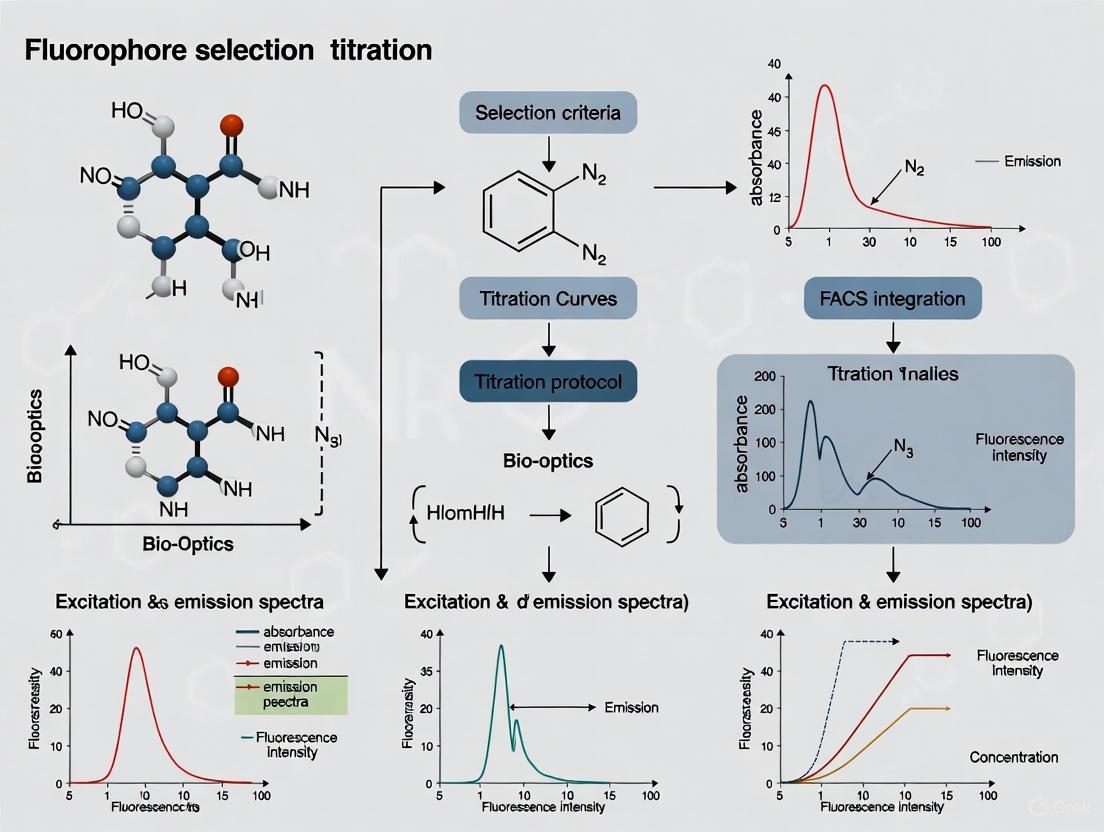
This article provides a comprehensive guide for researchers and drug development professionals on advanced strategies for fluorophore selection and antibody titration in flow cytometry.
Mastering Fluorophore Selection and Titration for High-Parameter Flow Cytometry
Abstract
This article provides a comprehensive guide for researchers and drug development professionals on advanced strategies for fluorophore selection and antibody titration in flow cytometry. It covers foundational principles of spectral properties and brightness, delves into methodological approaches for panel design in applications like immunophenotyping and MRD detection, and offers practical troubleshooting for common issues such as high background and weak signals. Furthermore, it explores validation techniques and compares conventional versus spectral flow cytometry, empowering scientists to achieve superior data quality and reproducibility in high-parameter experiments for biomedical and clinical research.
Fluorophore Fundamentals: Building Blocks for Brilliant Panels
For researchers in flow cytometry and fluorescence-activated cell sorting (FACS), a precise understanding of excitation/emission spectra and the Stokes shift is fundamental to experimental success. These photophysical principles directly impact the sensitivity, specificity, and resolution of your assays. Proper application of these concepts during fluorophore selection and reagent titration is critical for minimizing spectral overlap, reducing background noise, and generating reproducible, high-quality data in drug development and biomedical research.
Frequently Asked Questions (FAQs)
1. What is the Stokes Shift and why is it critical for flow cytometry? The Stokes shift is the difference in energy or wavelength between the peak of the absorption (excitation) spectrum and the peak of the emission (fluorescence) spectrum of the same electronic transition [1] [2]. Named after Irish physicist George Gabriel Stokes, this phenomenon results in the emitted photon always having a longer wavelength (lower energy) than the absorbed photon [2]. In flow cytometry, a large Stokes shift is highly desirable as it creates greater separation between the excitation light and the detected emission signal. This simplifies optical filtering, significantly reduces background interference from scattered excitation light, and improves the signal-to-noise ratio in multicolor panels [1].
2. My fluorescence signal is weak. What are the primary causes? Weak signal intensity can stem from several sources related to excitation and detection. The table below summarizes common causes and solutions.
| Possible Cause | Recommended Solution |
|---|---|
| Suboptimal Antibody Titration | Perform antibody titration to find the concentration that provides the highest signal-to-noise ratio; too little antibody results in weak staining [3] [4]. |
| Mismatched Fluorophore Brightness | Pair low-abundance antigens with the brightest fluorophores (e.g., PE) and high-abundance antigens with dimmer fluorophores (e.g., FITC) [5]. |
| Incorrect Instrument Settings | Verify that the laser and filter settings are appropriate for the excitation and emission spectra of your fluorophore [5] [4]. |
| Photobleaching | Protect samples from excessive light exposure during staining and acquisition, as this can degrade fluorophores [4]. |
| Fixation Sensitivity | Some fluorophores and epitopes are sensitive to fixatives; optimize fixation concentration and duration, or use milder agents (e.g., 0.5-1% formaldehyde) [4]. |
3. How does the solvent or cellular environment affect my fluorophore's emission? The Stokes shift is highly sensitive to the local environment of the fluorophore [6]. More polar solvents typically produce larger Stokes shifts because solvent molecules reorient around the more polar excited-state dipole, stabilizing it and further lowering the energy of the emitted light [6]. This is a critical consideration when comparing in vitro results to intracellular staining, as the interior of a cell represents a complex and polar environment.
4. What is the difference between Stokes and anti-Stokes shifts? A Stokes shift occurs when the emitted light is of lower energy (longer wavelength) than the absorbed light, which is the norm in fluorescence [1]. An anti-Stokes shift occurs when the emitted light is of higher energy (shorter wavelength), which requires the molecule to gain thermal energy from its surroundings [1]. This is commonly observed in Raman spectroscopy [2]. While most flow cytometry relies on Stokes fluorescence, anti-Stokes processes like photon upconversion are used in specialized applications [1].
Troubleshooting Guides
Problem: High Background Fluorescence and Poor Signal Resolution
Potential Sources and Solutions:
- Fc Receptor Binding: Cells like monocytes express Fc receptors that can bind antibodies non-specifically. Solution: Block cells with an Fc receptor blocking reagent prior to staining [5] [4].
- Antibody Concentration Too High: Excess antibody leads to non-specific binding. Solution: Titrate all antibodies to determine the optimal concentration that saturates the target without causing high background [3] [5].
- Dead Cells and Debris: Dead cells exhibit high autofluorescence and non-specific binding. Solution: Include a viability dye (e.g., PI, 7-AAD, or a fixable dye) in your staining panel and gate out non-viable cells during analysis [5] [4].
- Insufficient Washing: Unbound antibody can contribute to background. Solution: Increase the number or volume of washes after staining steps [4].
- Spillover Spreading: In multicolor panels, fluorescence from bright fluorophores can spread into adjacent detectors. Solution: Use tools like spectral viewers during panel design to select fluorophores with minimal emission overlap. Always use proper compensation controls [4].
Problem: Inconsistent Staining Between Experiments
Potential Sources and Solutions:
- Lot-to-Lot Variability: Different lots of the same antibody can have different binding affinities or degrees of labeling. Solution: Whenever a new antibody lot is acquired, perform a new titration experiment to re-establish the optimal staining concentration [3].
- Variations in Cell Preparation: The use of frozen versus fresh cells, or different digestion protocols, can affect antigen accessibility. Solution: Standardize cell preparation protocols. For adherent cells, note that trypsinization can damage some surface epitopes [4].
- Inconsistent Staining Conditions: Variations in incubation time, temperature, or light exposure can lead to inconsistent results. Solution: Follow a strict, documented staining protocol for all experiments and protect samples from light throughout the process [4].
Experimental Protocols
Detailed Methodology: Antibody Titration for Optimal Flow Cytometry
Titration is the process of determining the antibody concentration that provides the best resolution between a positive signal and the background, ensuring all binding sites are saturated with minimal non-specific antibody excess [3].
Materials:
- Antibody of interest
- Cell sample expressing the target antigen
- Staining buffer (e.g., PBS with BSA)
- V-bottom 96-well plate
- Centrifuge with plate adapters
- Flow cytometer
Day 1: Cell Preparation
- Isolate and resuspend your cells in staining buffer at a concentration of 2 × 10^6 cells/mL [3]. Ensure you have enough cells for all titration points and controls.
Day 2: Staining Protocol
- Prepare Antibody Dilutions: In a 96-well plate, perform a series of 2-fold serial dilutions of the antibody in staining buffer. An 8-12 point titration is recommended [3]. For example, if the stock concentration is known, you may start at 1000 ng/test and dilute down.
- Add Cells: Add 100 μL of cell suspension (containing 2 × 10^5 cells) to each well containing the antibody dilutions. Include an unstained control (cells only) and a negative control (e.g., isotype control) [5].
- Incubate and Wash: Incubate for 20 minutes at room temperature in the dark. Centrifuge the plate at 400 × g for 5 minutes, decant the supernatant, and blot on a paper towel. Resuspend the pellet in 200 μL of staining buffer and repeat the wash step twice [3].
- Acquire Data: Resuspend the final cell pellet in an appropriate volume of buffer and acquire data on the flow cytometer.
Analysis:
- For each dilution, analyze the median fluorescence intensity (MFI) of the positive population and the negative/unstained population.
- Calculate the signal-to-noise ratio (Stain Index) for each dilution: (MFIpositive - MFInegative) / (2 × SD_negative) [3].
- The optimal antibody titer is the concentration that yields the highest stain index, not necessarily the highest MFI [3].
Core Principles and Data Visualization
The Photophysical Basis of the Stokes Shift
The following diagram illustrates the sequence of events from photon absorption to emission, explaining the origin of the Stokes shift.
The fundamental origin of the Stokes shift lies in the Franck-Condon principle [2]. Upon absorbing a photon, an electron is promoted to an excited vibrational level of the S₁ electronic state. This is because the most probable transition is to the vibrational level with the greatest wavefunction overlap with the ground state [2]. The molecule rapidly loses this excess vibrational energy to the environment as heat (a process called vibrational relaxation) before emitting a photon to return to the ground state. The emitted photon thus has less energy than the absorbed photon, resulting in the observed Stokes shift [1] [2] [6]. The polarity of the solvent can further increase the Stokes shift by stabilizing the excited state dipole [6].
The graph below visualizes the relationship between excitation and emission spectra and quantifies the Stokes shift.
The Stokes shift (Δλ) is quantitatively defined as the difference between the emission peak maximum (λem) and the absorption (excitation) peak maximum (λex) [1] [2]. It can be expressed in wavelength (nm), wavenumber (cm⁻¹), or energy (eV) units. When expressed in wavenumber, it provides a direct measure of the energy lost during the relaxation process [2].
Quantitative Data for Fluorophore Selection
The following table provides key quantitative metrics for evaluating fluorophore performance in panel design.
| Parameter | Definition | Importance for FACS |
|---|---|---|
| Stokes Shift | Difference (in nm or cm⁻¹) between excitation and emission maxima [1]. | A larger shift simplifies optical filtering and reduces background, improving signal clarity. |
| Excitation Maxima | Wavelength (nm) at which absorption is strongest [1]. | Must match available laser lines on your flow cytometer (e.g., 488 nm, 405 nm). |
| Emission Maxima | Wavelength (nm) at which fluorescence is brightest [1]. | Determines which detector (filter) will be used; impacts spillover into other channels. |
| Fluorophore Brightness | Product of extinction coefficient and quantum yield. | Dictates suitability for detecting low-abundance antigens; bright fluorophores (e.g., PE) are best for dim targets [5]. |
The Scientist's Toolkit: Research Reagent Solutions
| Item | Function |
|---|---|
| Fc Receptor Blocking Reagent | Prevents non-specific binding of antibodies to Fc receptors on immune cells, reducing background staining [5] [4]. |
| Viability Dye | Distinguishes live cells from dead cells during analysis; gating out dead cells reduces autofluorescence and false positives [5] [4]. |
| Fixable Viability Dye | A class of viability dyes that withstand fixation and permeabilization steps, allowing for viability assessment in intracellular staining protocols [5]. |
| Permeabilization Buffer | Contains detergents (e.g., Saponin, Triton X-100) or alcohols (Methanol) to dissolve cell membranes, enabling antibody access to intracellular targets [5] [4]. |
| Compensation Beads | Uniform particles that bind antibodies, used to create consistent single-stained controls for accurately calculating fluorescence spillover compensation [4]. |
| Staining Buffer | Typically PBS with protein (e.g., BSA), helps maintain cell viability and reduce non-specific antibody binding during staining procedures [3]. |
Understanding Fluorophore Brightness and Photostability
Frequently Asked Questions
What does MFI really tell me about my fluorophore's brightness? Mean Fluorescence Intensity (MFI) quantifies the signal from a fluorophore-labeled population. However, the type of "mean" used for calculation is critical. For flow cytometry data displayed on a logarithmic scale, the median is the preferred measure of MFI, with the geometric mean as a good second choice. The arithmetic mean can be misleading due to the log-normal and often skewed nature of fluorescence data, which exaggerates the average. MFI should not be used at all for bimodal populations, as an average does not accurately represent two distinct cell populations; gating and reporting percentages for each population is more informative [7].
Why is my bright fluorophore signal fading during data acquisition? Signal loss is often due to photobleaching, where fluorophores permanently lose their ability to emit light after prolonged exposure to excitation light. The mechanism can involve a reactive radical state and is influenced by molecular oxygen [8]. To mitigate this, you can:
- Consider using an oxygen-scavenging system.
- Explore adding protective agents like cyclooctatetraene (COT) or Trolox [8].
- For certain dyes like Rhodamine 6G, physical confinement in treated PDMS wells has been shown to enhance photostability [8].
My compensation seems incorrect, even with bright single-stain controls. What's wrong? A common pitfall is not having a single-stain control that is brighter than your actual experimental samples. The compensation calculation uses the difference in fluorescence between positive and negative populations. If your sample stains brighter than your control, the software cannot accurately calculate the spillover and will over- or under-compensate the data. Always use single-stain controls that are at least as bright as your highest-expressing sample [9].
The fluorescence intensity in my cell population is highly variable. Is this biological? It might be, but a key technical factor is often cell cycle and cell size. Research shows that cells in G0/G1 phase are typically smaller and have lower background autofluorescence, while larger cells in G2/M phase have significantly higher background and specific fluorescence. When you gate on the "low" and "high" ends of a fluorescence distribution, you may inadvertently be selecting for cells in different cell cycle phases, which can bias your interpretation. Always consider cell cycle effects when analyzing fluorescence intensity distribution [10].
Troubleshooting Guides
Problem: Low Signal-to-Noise Ratio
A poor signal-to-noise ratio makes it difficult to distinguish positive cells from negative cells.
| Potential Cause | Solution |
|---|---|
| Insufficient fluorophore brightness | Select a brighter fluorophore for your target antigen. See Table 1 for comparisons. |
| Suboptimal staining concentration or time | Perform a titration experiment for your antibody. Use the signal-to-noise ratio (MFI of positive population / MFI of negative population) to determine the optimal dilution [7]. |
| High cellular autofluorescence | Recognize that autofluorescence is inherently higher in larger cells and those in G2/M phase [10]. Use a fluorophore whose emission spectrum is distant from the autofluorescence profile of your cells. |
| Photobleaching during washing or acquisition | Minimize sample exposure to light. For fixed samples, consider using an anti-fading mounting medium. |
Problem: Inconsistent MFI Measurements Between Experiments
MFI values for the same sample and stain vary from one experiment to another.
| Potential Cause | Solution |
|---|---|
| Inconsistent instrument settings | Ensure voltages and PMT settings are identical between experiments. Use daily calibration beads. |
| Improper MFI calculation method | Always use the median (preferred) or geometric mean when analyzing data on a log scale, not the arithmetic mean [7]. |
| Changes in cell culture confluency or health | Cell confluency affects cell cycle distribution. Subconfluent cultures have higher autofluorescence than confluent cultures (arrested in G0/G1). Synchronize cells or account for cycle status in analysis [10]. |
| Dye photodegradation | Aliquot dyes, protect from light, and follow manufacturer storage guidelines. |
Table 1: Comparison of Selected Fluorescent Labels This table synthesizes performance data from comparative studies to aid in fluorophore selection. [11] [12]
| Fluorophore Type | Example Dyes | Relative Brightness | Photostability | Key Application Notes |
|---|---|---|---|---|
| Organic Dyes | Alexa Fluor 488, Cy5 | Variable | Moderate | Well-characterized; many antibody conjugates available. |
| Fluorescent Proteins | R-Phycoerythrin (R-PE) | High | Moderate | Very bright, but large size can cause steric hindrance. |
| Tandem Dyes | PE-Cy7, APC-Cy7 | Very High | Lower (prone to degradation) | Extremely bright but can degrade, leading to spillover issues. |
| Polymer Nanoparticles | FluoSpheres | Very High | High | Very bright and stable; good for background suppression. |
| Nuclear Stains (for imaging) | DRAQ5, SYBR Gold | High | High | DRAQ5 and SYBR Gold provide superior image quality vs. TO-PRO-3 [12]. |
| Nuclear Stains (for imaging) | TO-PRO-3, RedDot1 | Moderate | Lower | Less photostable than DRAQ5 and SYBR Gold [12]. |
Table 2: Impact of Cell Cycle on Fluorescence Intensity Data adapted from studies showing the relationship between cell cycle, size, and autofluorescence. [10]
| Cell Cycle Phase | Relative Cell Size | Relative Background Autofluorescence (MFI) | Comment |
|---|---|---|---|
| G0/G1 | Small | Low (e.g., MFI ~152) | Comprises most cells in the "low" fluorescence tail. |
| S | Intermediate | Intermediate | - |
| G2/M | Large | High (e.g., MFI ~370) | Dominates the "high" fluorescence tail. |
Detailed Experimental Protocols
Protocol 1: Determining Optimal Antibody Titration Using Signal-to-Noise Ratio
This protocol is essential for maximizing detection power and conserving reagents.
Research Reagent Solutions:
- Primary Antibody: The fluorophore-conjugated antibody to be titrated.
- Cell Sample: Cells with known positive expression for the target antigen.
- Staining Buffer: PBS (Phosphate Buffered Saline) with 1-5% FBS or BSA.
- Compensation Beads: Used for setting up compensation on the flow cytometer.
Methodology:
- Prepare a series of two-fold dilutions of your antibody in staining buffer. A typical range might be from 1:50 to 1:1600, but this should be adjusted based on manufacturer recommendations and prior knowledge.
- Aliquot a consistent number of cells (e.g., 1x10^5) into multiple tubes.
- Stain each cell aliquot with a different dilution of the antibody. Include an unstained control and a fluorescence-minus-one (FMO) control.
- Incubate in the dark for the recommended time (e.g., 20-30 minutes on ice), then wash the cells.
- Resuspend in buffer and acquire data on the flow cytometer.
- For each dilution, analyze the data to determine the Median Fluorescence Intensity (MFI) of both the positive and negative (or unstained) populations.
- Calculate the Signal-to-Noise (S/N) Ratio for each dilution: S/N = MFIpositive / MFInegative [7].
- Plot the S/N ratio against the antibody concentration. The optimal dilution is typically at the plateau of the S/N curve, where you achieve maximum specific signal without wasting antibody.
Protocol 2: Assessing and Mitigating Photobleaching in Imaging Applications
This methodology is based on published studies that evaluate dye performance. [8] [12]
Research Reagent Solutions:
- Fluorophore of Interest: The dye to be tested (e.g., R6G, TO-PRO-3, Eosin Y515).
- Protective Agents (optional): COT, Trolox, or NBA.
- Imaging Buffer: PBS or the appropriate physiological buffer.
- PDMS Wells or GUVs: For confinement studies (optional, for specialized imaging). [8]
Methodology:
- Prepare your sample according to your standard staining protocol.
- For solution-based testing: Mount the sample and continuously irradiate with the excitation laser at a defined power. For dye comparison on tissues: Follow a standardized staining and rinsing protocol (e.g., using PBS as both solvent and rinsent provides superior SNR for many nuclear dyes like DRAQ5) [12].
- Acquire a time-lapse series of images at regular intervals.
- Quantify the fluorescence intensity of a specific region of interest (ROI) over time.
- Plot the normalized intensity versus time. The exponential decay constant of this curve indicates the rate of photobleaching.
- To test mitigation strategies, repeat the experiment with the addition of an oxygen-scavenging system (e.g., glucose oxidase) or protective agents like Trolox.
The Scientist's Toolkit
Table 3: Essential Reagents for Fluorophore Performance Experiments
| Reagent | Function | Example Use Case |
|---|---|---|
| BSA (Bovine Serum Albumin) | Surface passivation agent; blocks non-specific binding. | Coating PDMS wells or slides to prevent aberrant dye binding [8]. |
| PEG (Polyethylene Glycol) | Polymer for surface passivation; creates a non-adhesive, hydrophilic layer. | Treating PDMS and glass surfaces to minimize interaction with fluorophores [8]. |
| Oxygen Scavenging Systems | Enzymatic removal of dissolved oxygen to reduce photobleaching. | Adding to imaging buffer to extend fluorophore lifetime (e.g., for Cy5 dyes) [8]. |
| Protective Agents (COT, Trolox) | Molecules that quench triplet states or scavenge radicals. | Adding to staining or imaging buffer to enhance photostability, particularly for cyanine dyes [8]. |
| Compensation Beads | Uniform particles that bind antibodies, used to create single-stain controls. | Generating consistent and bright controls for accurate compensation matrix calculation [9]. |
| Nocodazole | Microtubule-depolymerizing agent that arrests cells in G2/M phase. | Used experimentally to synchronize cells and demonstrate the effect of cell cycle on autofluorescence [10]. |
The strategic selection of fluorophores is a cornerstone of successful fluorescence-activated cell sorting (FACS), directly impacting data quality, resolution, and experimental outcomes. As flow cytometry panels expand in complexity, understanding the distinct characteristics, advantages, and limitations of available fluorophore classes becomes essential. These classes primarily include small organic dyes, tandem dyes, and fluorescent polymers, each with unique optical properties, stability profiles, and application suitability. This guide provides a detailed technical overview of these fluorophore classes, framed within the critical context of fluorophore selection and titration for FACS research, to empower researchers, scientists, and drug development professionals in designing robust, high-parameter experiments.
Comparative Analysis of Major Fluorophore Classes
The table below summarizes the core characteristics, strengths, and limitations of the three primary fluorophore classes used in modern flow cytometry.
Table 1: Key Characteristics of Major Fluorophore Classes
| Fluorophore Class | Example Dyes | Core Structure | Key Advantages | Primary Limitations |
|---|---|---|---|---|
| Small Organic Dyes | Alexa Fluor series, FITC, Pacific Blue [13] | Single small molecule | High stability against light and fixatives [14]; Consistent performance | Limited brightness compared to proteins/polymers; Broad emission spectra |
| Tandem Dyes | PE-Cy7, APC-Cy7, PE-CF594 [15] [14] | Two covalently linked fluorophores (Donor & Acceptor) [15] | Large Stokes shift; Expands usable spectrum from single laser [15] | Sensitive to degradation (light, freeze/thaw, fixation) [15]; Batch-to-batch variability |
| Fluorescent Polymers | Brilliant Violet series, StarBright [14] | Multi-chromophore polymer | Very high brightness; Narrow emission spectra; Good stability [14] | Potential non-specific binding; No commercial conjugation kits [14] |
Troubleshooting Common Fluorophore Issues
FAQ: Why is my fluorescence signal weak or absent?
Potential Causes and Solutions:
- Antibody Titration: Your detection antibody may be too dilute. Even validated antibodies may require titration for specific cell types or experimental conditions [16].
- Fluorophore-Antigen Matching: Pair rare or low-abundance proteins with bright fluorochromes. Use dimmer fluorophores for highly expressed antigens [16].
- Instrument Configuration: Verify that the correct laser and filter set are being used for the fluorochrome. Check laser alignment, as misalignment can cause weak signals. Calibration beads can help assess instrument performance [16].
- Photobleaching: Excessive light exposure during staining can cause fluorochrome photobleaching. Protect samples from light throughout the procedure. This is especially critical for tandem dyes [16] [15].
- Target Inaccessibility: For intracellular targets, ensure fixation and permeabilization methods are appropriate for the target location. For surface targets kept on ice during processing to prevent antigen internalization [16].
FAQ: Why am I observing high background fluorescence?
Potential Causes and Solutions:
- Cell Viability: Use viability dyes to exclude dead cells, which exhibit high non-specific binding. Tissue dissociation often increases cell death and background [16].
- Insufficient Washing: Increase the volume, number, or duration of washes, particularly when using unconjugated primary antibodies [16].
- Fc Receptor Binding: Fc regions can bind non-specifically to Fc receptors on immune cells. Use Fc receptor blocking reagents to prevent this [16].
- Spillover Spreading: High background can result from poor compensation or spillover spreading. Ensure compensation controls are brighter than the experimental sample and are treated identically. Use multicolor panel design tools to optimize fluorophore combinations and minimize spillover [16].
- Autofluorescence: Use fresh cells and run unstained controls to assess autofluorescence. Spectral flow cytometry can algorithmically remove autofluorescence during analysis [16] [17].
FAQ: How can I prevent tandem dye degradation?
Tandem dyes are particularly prone to degradation, which uncouples the donor and acceptor, leading to loss of signal in the acceptor channel and increased emission in the donor channel [15].
Preventative Measures:
- Light Sensitivity: Protect tandem dye conjugates from light during both storage and experimentation. Storing in dark bottles can increase shelf life [15].
- Storage Conditions: NEVER store tandem dye conjugates at -20°C or other freezing temperatures, as this denatures the donor fluorochrome. Always follow the manufacturer's recommended storage conditions on the product datasheet [15].
- Incubation Temperature: Perform antibody-cell incubation at 4°C (on ice) when working with live cells. Low temperature slows cell metabolism and reduces cell-mediated uncoupling of the tandem pair [15].
- Fixation and Permeabilization: These steps can degrade tandem dyes. If required, keep fixation/permeabilization times as short and mild as possible [15].
Essential Tools and Reagents for Fluorophore Experimentation
A successful flow cytometry experiment relies on more than just antibodies. The table below lists key reagents and tools that form the foundation of reliable assays.
Table 2: Research Reagent Solutions for Flow Cytometry
| Reagent / Tool | Primary Function | Application Notes |
|---|---|---|
| Viability Dyes (PI, 7-AAD, DAPI) | Distinguish live from dead cells [16] | Critical for reducing non-specific background from dead cells. |
| Fc Receptor Block | Block non-specific antibody binding [16] | Reduces false positives, especially in immunology studies. |
| Compensation Beads | Create single-color controls for compensation [16] | Provide a uniform particle population for setting instrument compensation. |
| Cell Permeabilization Buffers | Allow antibody access to intracellular targets [16] | Use mild detergents for cytoplasmic targets; vigorous solvents for nuclear targets. |
| Spectra Viewer | Compare fluorophore excitation/emission profiles [13] [17] | Essential for assessing spectral overlap during panel design. |
| Multicolor Panel Builder | Assign fluorophores to markers optimally [16] [17] | Tools help match bright fluorophores to low-abundance antigens. |
Experimental Protocol: Validating Fluorophore Performance and Titration
Objective: To determine the optimal staining concentration for a fluorophore-conjugated antibody and assess its performance in a multicolor panel.
Background: Antibody titration is a critical first step in panel design. Using an excessive amount of antibody wastes reagents and increases background, while using too little results in a weak signal. This protocol outlines a method for establishing the optimal working concentration.
Materials:
- Cell sample (with known expression of the target antigen)
- Fluorophore-conjugated antibody to be titrated
- Staining buffer (e.g., PBS with 0.5-1% BSA)
- Flow cytometer
- Optional: Isotype control, viability dye, Fc block
Method:
- Prepare Cells: Create a single-cell suspension. If using whole blood, lyse red blood cells. Count and viability-check the cells.
- Aliquot Cells: Dispense equal numbers of cells (e.g., 0.5-1 million per tube) into multiple staining tubes.
- Titration Series: Prepare a series of antibody dilutions. A common starting range is from 0.06 µg/mL to 1.0 µg/mL, using 2-fold serial dilutions.
- Stain Cells: Add the different antibody concentrations to the cell aliquots. Include an unstained control.
- Incubate and Wash: Incubate in the dark for the recommended time (typically 20-30 minutes at 4°C), then wash cells with buffer and resuspend in a fixed volume for acquisition.
- Acquire Data: Run samples on the flow cytometer and record the Median Fluorescence Intensity (MFI) of the positive population.
Data Analysis:
- Plot the antibody concentration against the MFI for each tube.
- The optimal concentration is typically found at the saturation point on the curve, just before the MFI plateaus. A common practice is to select the concentration that gives the highest Staining Index (SI).
- Staining Index Calculation: SI = (MFIpositive - MFInegative) / (2 × SDnegative), where SDnegative is the standard deviation of the negative/unstained population.
Visualizing Fluorophore Concepts and Workflows
Tandem Dye FRET Mechanism
Diagram 1: Tandem dye FRET mechanism. A donor fluorophore (red) absorbs laser light and transfers energy to an acceptor fluorophore (blue) via FRET, which then emits light at a longer wavelength [15].
Fluorophore Selection Workflow
Diagram 2: Fluorophore selection workflow. A logical process for assigning fluorophores, considering antigen abundance, instrument configuration, spectral overlap, and experimental conditions [16] [17] [15].
The Critical Impact of Spectral Overlap on Panel Resolution
FAQs on Spectral Overlap and Resolution
What is spectral overlap, and why is it a problem in flow cytometry? Spectral overlap occurs when the emission spectra of two or more fluorophores used in a panel partially overlap. In conventional flow cytometry, this requires compensation. In spectral flow cytometry, these overlapping signals are separated through a mathematical process called unmixing. However, excessive overlap, especially between fluorophores with very similar spectral signatures, increases the "complexity" of the panel and can lead to errors, distorting the data and making it difficult to distinguish true positive signals from background noise [18] [19] [20].
How can I identify a spillover or unmixing error in my data? Several characteristic features in your flow data can indicate a spillover or unmixing error [18]:
- Skewed Signals: Populations appear to "lean" into an adjacent channel.
- Hyper-negative Populations: Events appear with negative values on a fluorescence axis, which is biologically implausible.
- Unusual Correlations: You observe strong positive or negative correlations between channels that use fluorophores with known spectral overlap.
- Increased Spread: Data points show a "trumpet-shaped" widening, particularly in brighter populations.
I use spectral flow cytometry; am I immune to these problems? No. While spectral cytometry provides powerful tools to resolve overlapping signals by capturing the full emission spectrum, it is not immune to errors. Incorrect unmixing can still occur due to poor control samples, autofluorescence, or selecting a panel with too many fluorophores of highly similar spectra, leading to high complexity and poor resolution [18] [20].
What is a "complexity index" in panel design tools? The complexity index is a numerical value calculated by spectral panel design software (e.g., Sasquatch Software on the Bigfoot sorter) that estimates the overall similarity of all spectra within your proposed panel. A lower complexity index indicates fluorophores with more distinct signatures, which leads to cleaner unmixing and higher-resolution data. A higher index suggests significant spectral overlap and a higher risk of errors [20].
Troubleshooting Guides
Issue 1: Poor Population Resolution and High Background
Symptoms:
- Inability to clearly distinguish positive populations from negative ones.
- High background signal across multiple channels.
- Populations appear "fuzzy" or poorly defined.
Possible Causes and Solutions:
| Cause | Solution |
|---|---|
| Insufficient antibody titration | Titrate every antibody to find the concentration that provides the highest signal-to-noise ratio. Using excess antibody can cause non-specific binding and increased background [3]. |
| High spectral similarity | Re-evaluate your panel with a spectral viewer. Replace fluorophores with highly similar spectra with more distinct ones to lower the panel's complexity index [20]. |
| Fluorophore brightness mismatch | Pair bright fluorophores with low-density antigens and dim fluorophores with high-density antigens. This prevents bright signals from overwhelming dim ones and improves overall resolution [20] [21]. |
Issue 2: Hyper-negative Populations and Signal Distortion
Symptoms:
- Cell populations displaying negative values on fluorescence axes.
- Clear skewed or "leaning" populations in 2D plots.
Possible Causes and Solutions:
| Cause | Solution |
|---|---|
| Incorrect single-color controls | The controls used to build the spectral unmixing matrix may be flawed. Ensure controls are stained with the same protocol as your samples, use the correct cell type (not beads), and have a clear, bright positive population [18]. |
| Tandem dye degradation | Tandem dyes (e.g., PE-Cy7) can break down, causing a spectral shift. The control sample may not reflect this shift. Use fresh tandem dyes, protect them from light, and validate with an FMO control [18]. |
| Autofluorescence miscalculation | Automated autofluorescence subtraction can sometimes over-correct. If using spectral cytometry, consider using a directed or targeted autofluorescence identification method [18]. |
Guide to Fluorophore Brightness and Antigen Pairing
The table below summarizes the general rule for pairing fluorophore brightness with the expression level of your target antigen to optimize resolution [20] [21].
| Antigen Expression Level | Recommended Fluorophore Brightness | Example Fluorophores |
|---|---|---|
| Low (Tertiary Antigens) | Bright | BV421, PE, APC, Spark PLUS dyes [20] |
| Medium (Secondary Antigens) | Medium | PE-Cy7, APC-Cy7, BV605, Spark dyes [20] |
| High (Primary Antigens/Lineage) | Dim | FITC, Pacific Blue, PerCP [20] |
Experimental Protocols
Protocol: Antibody Titration for Optimal Signal-to-Noise Ratio
Titration is the process of determining the antibody concentration that best resolves a positive signal from the background, providing the highest signal-to-noise ratio [3].
Materials:
- Flow Staining Buffer (e.g., 1x PBS)
- V-bottom 96-well plate
- Multichannel pipette
- Centrifuge with plate adapters
- Cells (e.g., PBMCs) expressing the target antigen
- Antibody to be titrated
Method:
- Determine Stock Concentration: Find the antibody's concentration (e.g., µg/mL) from the product sheet.
- Prepare Dilutions:
- Prepare the first dilution in a well. For antibodies in mg/mL, start at ~1000 ng/test in a 200 µL final volume.
- Add 150 µL of stain buffer to the remaining 7-11 wells for a 2-fold serial dilution.
- Perform serial dilutions: mix the first well and transfer 150 µL to the next, repeating this process across all wells. Discard 150 µL from the final well [3].
- Stain Cells:
- Resuspend cells in staining buffer at 2 × 10^6 cells/mL.
- Add 100 µL of cell suspension to each well.
- Incubate for 20 minutes at room temperature in the dark.
- Centrifuge the plate at 400× g for 5 minutes, decant the supernatant, and blot.
- Wash twice by resuspending in 200 µL of staining buffer, centrifuging, and decanting.
- Acquire and Analyze Data:
- Acquire data on your flow cytometer.
- For each dilution, plot the fluorescence intensity and calculate the Stain Index (SI): (Median Positive - Median Negative) / (2 × SD of Negative).
- Plot the Stain Index against the antibody concentration. The optimal titer is at the peak of the Stain Index curve, before it plateaus [3].
Diagram: Troubleshooting Spectral Overlap Workflow
The Scientist's Toolkit: Essential Research Reagents and Materials
| Item | Function in Experiment |
|---|---|
| V-bottom 96-well Plates | Ideal for small-volume staining and efficient washing during antibody titration and panel optimization [3]. |
| Amine-Reactive Viability Dyes (e.g., LIVE/DEAD Fixable Stains) | Critical for identifying and excluding dead cells from analysis, as they bind non-specifically to antibodies and cause false positives [20]. |
| Fc Receptor Blocking Agent | Reduces non-specific antibody binding to Fc receptors on cells like monocytes, thereby lowering background staining [3]. |
| Serial Dilution Buffers (e.g., 1x PBS, Flow Staining Buffer) | Used for precise serial dilution of antibodies during titration to find the optimal working concentration [3]. |
| UltraComp eBeads or Similar | Used for setting up single-color compensation controls in conventional flow cytometry. Note: for spectral cytometry, single-stained cells are generally preferred [18]. |
| Spectral Viewer Web Tools (e.g., from Cytek, FluoroFinder, BioLegend) | Online tools that allow visualization of fluorophore emission spectra and calculation of panel complexity to predict and avoid spectral overlap issues during panel design [19] [20]. |
In fluorescence-activated cell sorting (FACS), the precise alignment of your instrument's lasers and optical filters with the spectral properties of your chosen fluorophores is a critical determinant of experimental success. Proper configuration minimizes spectral spillover, maximizes signal detection, and ensures the accuracy and reproducibility of your data. This guide provides troubleshooting and best practices to help you optimize your instrument setup for reliable multicolor flow cytometry within the broader context of fluorophore selection and titration.
Fluorophore Fundamentals and Instrument Components
The Fluorescence Process and Its Implications
The fluorescence process is a cycle where a fluorophore absorbs light energy (a photon) and enters an excited state, then returns to its ground state by emitting a photon of lower energy and longer wavelength [22]. The difference between the excitation and emission wavelengths is known as the Stokes shift [22]. A large Stokes shift is fundamental for sensitive detection because it allows emission photons to be easily isolated from excitation photons against a low background [22].
Core Instrument Components
A flow cytometer's ability to detect fluorescence relies on four essential elements [22]:
- Excitation Light Source: Lasers are the typical sources. Common laser lines include 405 nm (violet), 488 nm (blue), 532/561 nm (green/yellow), and 633 nm (red) [23].
- Fluorophore: The fluorescent dye conjugated to an antibody or other probe.
- Optical Filters: These isolate the desired emission light from scattered laser light and other fluorophores' emissions.
- Detector: Typically a photomultiplier tube (PMT) or solid-state detector that registers the emission photons and converts them into an electrical signal [24].
Troubleshooting Guide: Laser and Filter Configuration
Weak or No Fluorescent Signal
| Possible Cause | Solution |
|---|---|
| Laser and PMT settings are incompatible with the fluorophore [25]. | Ensure the correct laser is activated and the appropriate emission filter is in place. Verify PMT voltage is optimized using positive controls [25]. |
| The laser line does not effectively excite the fluorophore. | Consult the fluorophore's excitation spectrum. Choose a fluorophore with strong absorption at your available laser wavelengths [22]. For example, PE is best excited by green/yellow (532/561 nm) lasers, not just blue (488 nm) [23]. |
| Signal over-compensation [25]. | Use Mean Fluorescence Intensity (MFI) alignment instead of visual comparison to set compensation. Re-check single-color controls. |
High Background or Signal Spillover
| Possible Cause | Solution |
|---|---|
| Excessive signal spillover due to fluorophore spectral overlap. | Select fluorophores with minimal emission spectrum overlap. For complex panels, use fluorophores that can be excited by different lasers to reduce spillover. |
| Under-compensation [25]. | Use software-based compensation matrices to objectively adjust for spillover after data collection [23]. Always run single-color controls for each fluorophore in your panel. |
| A high-abundance antigen is paired with an overly bright fluorophore [25]. | Titrate antibodies and pair strong antigens with dimmer fluorophores (e.g., FITC, Pacific Blue) to avoid detector saturation [25]. |
Daily Performance Variability
| Possible Cause | Solution |
|---|---|
| Instrumental drift in laser alignment or power over time. | Implement a daily calibration routine using fluorescent reference beads to ensure instrument stability and allow for inter-experiment data comparison [26]. |
| Suboptimal optical alignment. | Use alignment beads specific to your instrument's lasers (e.g., AlignFlow beads) to verify and adjust optical path accuracy [26]. |
Experimental Protocols for Optimal Configuration
Protocol 1: Daily Instrument Calibration and Quality Control
Purpose: To verify and standardize instrument performance, ensuring data reliability over time and across different instruments [26]. Materials: Fluorescent calibration beads (e.g., AccuCheck ERF Reference Particles), Sheath fluid. Method:
- Resuspend and run the calibration beads according to the manufacturer's instructions.
- Collect data for all fluorescence channels used in your experiments.
- Record the Mean Fluorescence Intensity (MFI) of the bead peaks for each channel.
- Compare these values to established baselines or target values. Significant deviations may indicate a need for instrument maintenance or optical re-alignment.
- For size estimation, use a size calibration kit containing microspheres of known diameters (e.g., 1.0 to 15.0 µm) and compare their forward scatter (FSC) signals to your cells [26].
Protocol 2: Optimizing Laser Power and Detector Voltage
Purpose: To configure PMT voltages for optimal separation between positive and negative signals without saturation. Materials: Unstained cells, cells stained with a bright fluorophore (e.g., PE), and compensation beads. Method:
- Run unstained cells and adjust the PMT voltage so that the cell population is on-scale but near the lower end of the logarithmic histogram.
- Run brightly stained cells. The positive population should be on-scale without appearing in the highest decade of the logarithmic plot, which indicates saturation.
- Use compensation beads or single-color stained cells to set the voltage for each channel such that the negative bead/cell population is in the same position as the unstained control, ensuring proper compensation.
The Scientist's Toolkit: Essential Research Reagents
| Item | Function |
|---|---|
| Fixed Bandpass Filters [24] | Small, stable, and low-cost optical filters used in portable or dedicated instruments for specific excitation or emission wavelengths. Offer limited flexibility. |
| Variable Bandpass Filters (Monochromators) [24] | Provide flexibility to select any excitation or emission wavelength. Used in versatile laboratory instruments but are higher cost and larger. |
| Fluorescent Calibration Beads [26] | Microspheres with assigned fluorescence intensities (e.g., NIST-traceable ERF values) for instrument calibration, standardization, and performance tracking. |
| Cell Sorting Setup Beads [26] | Fluorescent beads optimized for different lasers to check and calibrate cell sorter settings, such as drop delay and sorting efficiency. |
| Size Calibration Beads [26] | Polystyrene microspheres of defined diameters (e.g., 1-15 µm) used to estimate cell size by comparing their Forward Scatter (FSC) signals to experimental samples. |
| Alignment Beads [26] | Laser-specific fluorescent particles (e.g., AlignFlow beads) used to verify and optimize the alignment of the instrument's optical path. |
| Compensation Beads [27] | Beads that bind antibodies and serve as a consistent negative and positive population for accurately calculating fluorescence spillover compensation. |
Configuration Workflow and Relationships
The following diagram illustrates the logical workflow and key relationships for configuring your flow cytometer to match your fluorophores.
Frequently Asked Questions (FAQs)
Q1: Can I use a fluorophore if my instrument doesn't have its ideal excitation laser? A1: Sometimes. Many fluorophores have broad excitation spectra. For example, PE can be excited by both the 488 nm blue laser and the 532/561 nm green/yellow laser, though the signal will be brighter with the latter [27]. Always check the excitation spectrum of the dye and verify with a control that the signal-to-noise ratio is acceptable.
Q2: How do I know which emission filter to use for my fluorophore? A2: The emission filter should be centered on the peak of the fluorophore's emission spectrum and have a bandwidth that captures most of its signal while blocking other fluorophores' emissions. Consult the fluorophore's emission spectrum and your instrument's manual for standard filter sets. For example, a common filter for PE is a 575/26 nm bandpass filter [27].
Q3: What is the simplest way to reduce spillover in a multicolor panel? A3: Spread your fluorophores across different laser lines. Using instruments with multiple lasers (e.g., violet, blue, red) allows you to choose dyes that are excited by different lasers but have emissions detected in separate, non-overlapping channels, drastically reducing spillover [23].
Q4: Why is my signal still poor after verifying the laser and filter settings? A4: The issue may lie with your sample or reagent. Confirm that your antibodies are titrated correctly and have not degraded. Ensure your target antigen is expressed at a detectable level and that sample processing (e.g., permeabilization for intracellular targets) has been optimized [25].
Strategic Panel Design and Precision Titration Protocols
A Step-by-Step Guide to Antibody Titration
Antibody titration is a critical optimization step in flow cytometry to maximize the signal-to-noise ratio of your assay. By identifying the optimal antibody concentration, you minimize non-specific binding to low-affinity targets while preserving a bright, specific signal. This guide provides detailed protocols and troubleshooting advice to ensure accurate and reproducible results in your FACS research.
The Core Protocol: A Step-by-Step Guide
This protocol outlines the standard procedure for titrating a directly labeled antibody [28].
Materials Required
- Cells: A known number of cells (e.g., 1-5 x 10^6 cells/mL) expressing the target antigen of interest [29].
- Antibody: The fluorescently conjugated antibody to be titrated.
- Staining Buffer: Phosphate Buffered Saline (PBS) supplemented with 0.5% - 2% Bovine Serum Albumin (BSA) [30].
- Serum: Normal serum from the same species as the antibody host (e.g., rat serum for a rat antibody) for blocking [31].
- Lab Equipment: Microcentrifuge tubes, pipettes, ice, flow cytometer.
Workflow
The following diagram illustrates the key stages of the antibody titration workflow.
Step-by-Step Instructions
- Prepare Serial Dilutions: Begin with the vendor's recommended concentration or a stock concentration (e.g., 300 µg/mL). Prepare a series of 2-fold serial dilutions in staining buffer. For example, create six tubes with dilutions ranging from 1:50 to 1:1600 [28] [32].
- Prepare and Block Cells: Aliquot a standardized number of cells (e.g., 0.5-1 x 10^6) into separate tubes. Pellet the cells by centrifugation (300 x g for 5 minutes) and resuspend in a blocking solution (e.g., containing 2% normal serum) to minimize Fc receptor-mediated binding. Incubate for 15 minutes on ice [31] [30].
- Stain Cells: Add the different antibody dilutions to the respective cell pellets. Include a negative control (cells alone) and an isotype control. Mix gently and incubate for 15-45 minutes on ice, protected from light [28].
- Wash Cells: Add 2 mL of cold washing buffer to each tube, centrifuge, and carefully aspirate the supernatant. Vortex the pellet to resuspend and repeat the wash step once more [28].
- Resuspend and Acquire: Resuspend the final cell pellet in a protein-free buffer (e.g., 300-500 µL of cold PBS) and analyze immediately on a flow cytometer. If necessary, cells can be fixed (e.g., with 2% paraformaldehyde) and stored in the dark for later acquisition [28].
Data Analysis and Interpretation
After data acquisition, identify the positive and negative cell populations for each antibody dilution. The optimal concentration is determined by calculating the Staining Index (SI), which quantifies the separation between positive and negative signals [32] [29].
Calculating the Staining Index
The formula for the Stain Index is [29]: SI = (Median Fluorescence Intensity of Positive Population - Median Fluorescence Intensity of Negative Population) / (2 × Standard Deviation of the Negative Population)
The dilution that yields the highest SI represents the optimal antibody concentration, offering the best signal-to-noise ratio [32].
Interpretation of Titration Data
The graph below illustrates the relationship between antibody concentration and staining performance.
Example Titration Data
The table below summarizes hypothetical data from a titration experiment.
| Antibody Dilution | Antibody Concentration (µg/mL) | MFI (Positive) | MFI (Negative) | Stain Index (SI) |
|---|---|---|---|---|
| 1:50 | 6.0 | 45,000 | 1,500 | 18.5 |
| 1:100 | 3.0 | 40,000 | 950 | 25.2 |
| 1:200 | 1.5 | 35,000 | 650 | 28.6 |
| 1:400 | 0.75 | 25,000 | 520 | 21.3 |
| 1:800 | 0.375 | 15,000 | 480 | 13.1 |
In this example, the 1:200 dilution provides the highest Stain Index and should be selected for future experiments.
Frequently Asked Questions (FAQs)
Why is antibody titration necessary if the vendor provides a recommended concentration? Vendor recommendations are a good starting point but are based on generic conditions. Titrating under your specific experimental conditions (cell type, staining protocol, instrument) is crucial for maximizing signal-to-noise, saving reagents, and ensuring the highest data quality [29].
What are the common causes of high background or nonspecific staining?
- Excessive antibody concentration: This is the primary cause. Unbound antibody binds to low-affinity off-target sites [29].
- Insufficient Fc receptor blocking: Use normal serum or a commercial Fc block, especially for immune cells [31] [30].
- Dye-dye interactions: With polymer dyes (e.g., Brilliant Violet), use a buffer like Brilliant Stain Buffer to prevent aggregation [31].
- Dead cells: Include a viability dye, as dead cells bind antibodies nonspecifically [32].
I am not seeing any staining. What should I check?
- Confirm the antibody is validated for flow cytometry and the target is expressed in your cells [33].
- Verify that the antibody has been stored correctly and has not lost activity [34].
- For intracellular targets, ensure you have used a proper permeabilization protocol [34] [33].
- Check that you are using the correct laser and filter settings on your cytometer for the fluorophore [33].
When should I re-titrate my antibodies? Re-titration is recommended whenever you change a key experimental parameter, including:
- Cell type or activation status.
- Staining protocol (e.g., surface vs. intracellular).
- Lot number of the antibody.
- Flow cytometer or its configuration [29].
The Scientist's Toolkit: Essential Reagent Solutions
The table below lists key reagents used in antibody titration and flow cytometry staining.
| Reagent | Function / Purpose |
|---|---|
| BSA (0.5-2%) in PBS | A common protein-based buffer used to dilute antibodies and wash cells, reducing non-specific binding to tube surfaces and cells [30]. |
| Normal Serum | Used as a blocking agent to saturate Fc receptors on cells, preventing non-specific binding of staining antibodies [31]. |
| Brilliant Stain Buffer | Essential for panels containing polymer dyes (e.g., Brilliant Violet). It prevents dye-dye interactions and aggregation that cause inaccurate signal [31]. |
| Fc Block (CD16/CD32) | A specific antibody that binds to and blocks Fc receptors, an alternative to normal serum for reducing non-specific antibody binding [30]. |
| Tandem Stabilizer | A reagent that helps protect tandem dyes (e.g., PE-Cy7) from degradation, which can cause false-positive signals in the donor fluorophore's channel [31]. |
| Viability Dye | A critical dye that labels dead cells, allowing for their exclusion during analysis. This improves data quality as dead cells bind antibodies nonspecifically [32]. |
Assigning Fluorophores to Antigens Based on Abundance
Frequently Asked Questions
Q1: What is the most important rule for assigning fluorophores to antigens? The most critical rule is to match the brightness of the fluorophore to the abundance level of the target antigen. Use bright fluorophores for low-abundance antigens and dimmer fluorophores for highly expressed antigens [35] [32]. This ensures you can adequately distinguish positive cells from the negative population for dim targets while avoiding excessive signal that can cause spillover issues for bright targets.
Q2: I am detecting a low signal for a known antigen. What should I check? First, verify that your antibody is validated for your specific sample type and species [36]. Then, ensure you have used a bright enough fluorophore for that antigen's expression level [16]. Other factors to check include: optimizing antibody concentration through titration [32], confirming that the correct laser and filter setup is used on your cytometer [16], and for intracellular targets, verifying that fixation and permeabilization were performed correctly [36] [16].
Q3: My experiment has a high background. Could fluorophore assignment be the cause? While high background can stem from many sources, improper fluorophore assignment can contribute. Using an excessively bright fluorophore for a highly abundant antigen can lead to overwhelming signals and increased spillover, raising the background in other detectors [32]. Furthermore, high background is often caused by factors like non-specific binding to dead cells, insufficient washing, or inadequate Fc receptor blocking [36] [16]. Always include a viability dye to exclude dead cells from your analysis [16] [32].
Q4: What is "spillover spreading" and how does antigen abundance affect it? Spillover spreading is the spreading of a signal into multiple detectors due to the broad emission spectra of fluorophores, which can reduce the ability to distinguish dim positive populations from negative ones [16] [32]. This is exacerbated when using saturating concentrations of a bright antibody-fluorophore conjugate, especially for a highly expressed antigen. Using a separating concentration of antibody (determined by titration) or pairing a dimmer fluorophore with the abundant antigen can help minimize this effect [32].
Troubleshooting Guide
Problem: Low Signal Intensity or No Signal
Potential Causes and Solutions:
- Cause: Fluorophore-Antigen Mismatch. The fluorophore is too dim for the scarcity of the target antigen [16] [35].
- Solution: Re-design your panel to assign a brighter fluorophore (e.g., PE, APC) to the low-abundance antigen [35].
- Cause: Suboptimal Antibody Concentration. The antibody is too dilute, or its optimal concentration has not been determined for your specific experimental conditions [16].
- Solution: Perform antibody titration to find the concentration that provides the best stain index (separation between positive and negative populations) [32].
- Cause: Inaccessible Target. For intracellular targets, antibodies may not be accessing their epitopes [16].
- Solution: Ensure appropriate fixation and permeabilization protocols are used for the target's subcellular location. For surface antigens, keep cells on ice to prevent internalization [16].
Problem: High Background Fluorescence or Non-Specific Staining
Potential Causes and Solutions:
- Cause: Non-Specific Binding from Dead Cells. Dead cells bind antibodies and dyes non-specifically [37] [16].
- Cause: Excessive Antibody or Overly Bright Fluorophore. Using too much antibody or a very bright fluorophore on a highly expressed antigen can lead to high background and spillover [36] [32].
- Solution: Titrate your antibody to find a "separating concentration" and consider re-assigning a dimmer fluorophore to that highly abundant antigen [32].
- Cause: Inadequate Blocking or Washing. Fc receptors can bind antibodies non-specifically, and unbound antibody can remain in the sample [36] [16].
Problem: Poor Resolution Between Positive and Negative Populations
Potential Causes and Solutions:
- Cause: High Spillover Spreading. Signal from a bright fluorophore on one channel is spilling over and obscuring a dim signal in another channel [32].
- Cause: Autofluorescence. Some cells (e.g., neutrophils, stressed cells) naturally emit light, which can mask specific signals [36] [37].
Quantitative Data for Fluorophore Selection
Table 1: Fluorophore Brightness Guide
Use this table to match fluorophores to antigen abundance. Relative brightness can vary by instrument configuration [35].
| Fluorophore Brightness Category | Example Fluorophores | Recommended for Antigen Abundance |
|---|---|---|
| Very Bright | PE, APC, and their super-bright tandems | Low / Rare |
| Bright | PE-Cy7, APC-Cy7, Alexa Fluor 647 | Low to Medium |
| Medium | FITC, Alexa Fluor 488, PerCP-Cy5.5 | Medium to High |
| Dim | Pacific Blue, FITC (on low-expression target) | High / Very Abundant |
Table 2: Antibody Titration Protocol
Based on the method of performing serial 2-fold dilutions to calculate the Stain Index [32].
| Step | Action | Key Consideration |
|---|---|---|
| 1. | Start with the manufacturer's recommended concentration. | Use this as your highest concentration. |
| 2. | Perform a series of 2-fold dilutions (e.g., 1:50, 1:100, 1:200, 1:400). | Prepare a fresh sample for each dilution. |
| 3. | Stain and run the cells on the flow cytometer. | Keep all other staining and instrument conditions constant. |
| 4. | For each dilution, calculate the Stain Index (SI). | SI = (Meanpositive - Meannegative) / (2 × SD_negative) |
| 5. | Choose the optimal concentration. | Separating Concentration: Highest SI for immunophenotyping.Saturating Concentration: Plateau of fluorescence intensity for low-abundance targets. |
Experimental Protocols
Protocol 1: Antibody Titration for Optimal Signal-to-Noise
Purpose: To determine the antibody concentration that provides the best separation between positive and negative cell populations, minimizing spillover and background [32].
- Prepare Cells: Aliquot a consistent number of cells (e.g., 1 × 10^6) into several tubes.
- Create Dilutions: Reconstitute the antibody as recommended. Create a series of 2-fold dilutions in the appropriate buffer (e.g., starting at 1:50, then 1:100, 1:200, 1:400).
- Stain Cells: Add each antibody dilution to a separate cell tube. Include an unstained control.
- Incubate and Wash: Follow your standard staining protocol for incubation time and washing.
- Acquire Data: Run the samples on your flow cytometer, ensuring the instrument settings are consistent and optimized.
- Analyze Data: For each dilution, gate on the cell population of interest. Record the median fluorescence intensity (MFI) of the positive and negative populations and the standard deviation (SD) of the negative population.
- Calculate and Plot: Calculate the Stain Index (SI) for each dilution and plot it against the concentration. The peak of this curve often represents the ideal "separating concentration" [32].
Protocol 2: Voltage Optimization for Detector Sensitivity
Purpose: To set the photomultiplier tube (PMT) voltages to the minimum required to clearly resolve dim fluorescent signals from background noise, which is crucial for detecting low-abundance antigens [32].
- Select Beads: Use dimly fluorescent, hard-dyed calibration beads.
- Set Initial Voltage: Start with a default or low voltage setting for a detector.
- Acquire and Increment: Acquire a few thousand bead events and record the robust Coefficient of Variation (%rCV) and robust Standard Deviation (rSD). Incrementally increase the voltage and repeat.
- Plot and Determine MVR: Plot the %rCV and rSD against the voltage. The Minimum Voltage Requirement (MVR) is the lowest voltage on the %rCV curve before the rSD begins to increase significantly. Use this voltage for your experiment [32].
The Scientist's Toolkit
Table 3: Essential Research Reagent Solutions
| Item | Function in Experiment |
|---|---|
| Viability Dye (e.g., PI, 7-AAD, Fixable Viability Dyes) | Differentiates live from dead cells; critical for excluding dead cells that cause non-specific binding and high background [37] [16] [32]. |
| Fc Receptor Blocking Reagent | Blocks non-specific binding of antibodies to Fc receptors on immune cells, reducing background staining [36] [16]. |
| Compensation Beads | Used to create consistent and accurate single-stained controls for setting fluorescence compensation, which corrects for spectral overlap [16]. |
| Ultra-Bright Fluorophore Conjugates (e.g., PE, APC) | Antibodies conjugated to very bright fluorophores are essential for reliably detecting low-abundance antigens or rare cell populations [16] [35]. |
| Fixation and Permeabilization Buffers | Allows antibodies to access intracellular targets. The specific buffer type (mild detergent vs. alcohol-based) must be chosen based on the target's location and sensitivity [16]. |
Workflow: Assigning Fluorophores to Antigens
The diagram below outlines the logical decision process for assigning fluorophores based on antigen abundance and other key factors.
Leveraging Spectral Flow Cytometry for High-Parameter Panels
Troubleshooting Guides
Issue 1: Poor Resolution of Dim or Rare Cell Populations
Potential Causes and Solutions
| Potential Cause | Recommended Solution | Key Considerations |
|---|---|---|
| Suboptimal Antibody Titration | Perform serial dilution of antibodies to determine the concentration that provides the highest signal-to-noise ratio [3]. | Using excess antibody leads to non-specific binding and increased spillover; too little antibody results in a weak signal [3]. |
| Incorrect Fluorophore-Brightness Pairing | Assign the brightest fluorophores (e.g., PE, Super Bright dyes) to low-density antigens or rare populations. Use dimmer fluorophores for highly expressed antigens [39] [35]. | The brightness of a fluorophore can be instrument-specific. Consult staining index data for your cytometer [39]. |
| High Spillover Spreading | Use a spectrum viewer to select fluorophores with minimal emission overlap. Consult spread matrices to understand the impact of one fluorophore on another's resolution [39] [40]. | Spillover spreading is a key challenge in high-parameter panels and can significantly reduce detection sensitivity [16]. |
Issue 2: High Background Fluorescence or Non-Specific Staining
Potential Causes and Solutions
| Potential Cause | Recommended Solution | Key Considerations |
|---|---|---|
| Cell Death or Poor Sample Health | Use a viability dye (e.g., PI, 7-AAD, DAPI) to exclude dead cells during analysis. Use fresh cells where possible [16] [41]. | Dead cells are a major source of autofluorescence and non-specific antibody binding [41]. |
| Fc Receptor-Mediated Binding | Incubate cells with an Fc receptor blocking reagent prior to antibody staining [16] [41]. | This is particularly important for immune cells like monocytes, macrophages, and B cells [16]. |
| Insufficient Washing or High Antibody Concentration | Increase wash volume, number, or duration. Titrate antibodies to optimize concentration and reduce excess [16]. | High background can often be resolved by simple protocol adjustments like more thorough washing [16]. |
Issue 3: Spectral Unmixing Errors or Inaccurate Compensation
Potential Causes and Solutions
| Potential Cause | Recommended Solution | Key Considerations |
|---|---|---|
| Inadequate Single-Color Controls | Use bright, single-stained controls for every fluorophore in your panel. For rare markers, use antibody-capture beads or an alternative bright marker with the same fluorophore [39] [35]. | Controls must be at least as bright as your experimental sample and should constitute >10% of the control population [35]. |
| Tandem Dye Degradation | Protect stained samples from light and limit fixation time. Use fresh tandem dye conjugates and treat single-stained controls identically to experimental samples [16] [41]. | Tandem dyes (e.g., PE-Cy7) are sensitive to light and fixation, which can cause uncoupling and inaccurate compensation [41]. |
| Autofluorescence Interference | Utilize the autofluorescence extraction feature of spectral analyzers. Record an unstained control to define the autofluorescence signature [39]. | Spectral flow cytometry allows software to identify and remove autofluorescence during unmixing, improving resolution [39]. |
Frequently Asked Questions (FAQs)
Q1: How is fluorophore selection for spectral flow cytometry different from conventional flow cytometry?
In conventional flow cytometry, fluorophores are selected to minimize emission overlap in specific detector channels. In spectral flow cytometry, the goal is to choose fluorophores with unique full-spectrum signatures, even if their emission maxima are similar. The instrument exploits these entire patterns to unmix the signal [39]. This allows for the compatible use of dyes like APC and Alexa Fluor 647, which are difficult to separate on conventional cytometers [39].
Q2: Why is antibody titration critical for high-parameter spectral panels?
Titration is the process of finding the antibody concentration that provides the best separation between a positive signal and the background [3]. Using an optimal titer is critical because:
- Prevents Spillover: Excess antibody increases spillover spreading, which negatively impacts all parameters in the panel [3].
- Saves Reagents: Using the correct concentration avoids wasteful and expensive antibody misuse [3].
- Ensures Reproducibility: Optimal titers are required for each sample type, reagent lot, and staining protocol to ensure reliable results [3].
Q3: What tools are available to help design a high-parameter spectral panel?
Several online tools are available to assist in panel design:
- Spectrum Viewers (e.g., from Thermo Fisher, BD): These allow you to visualize excitation and emission spectra, check for overlap, and assess spectral compatibility on your specific instrument configuration [40] [42].
- Similarity & Complexity Matrix: Available in some spectrum viewers for spectral cytometers, this feature quantifies the similarity between fluorophore signatures and the overall complexity of your panel [40].
- Panel Builders: These online tools help you assign markers to fluorophores based on your instrument and antigen expression levels [16] [42].
Q4: Can I use the same fluorophore combinations on different spectral cytometers?
Not without verification. Each spectral instrument model (e.g., Cytek Aurora, BD FACSymphony, Sony SA3800) has different laser configurations and optical sensitivities [39]. A panel that works well on one instrument may require optimization on another. Always verify your panel design using tools configured for your specific instrument [39] [40].
Experimental Protocols
Detailed Methodology: Antibody Titration for Spectral Flow Cytometry
The following protocol, adapted from current best practices, is essential for assay optimization [3].
Materials
- Flow Staining Buffer (e.g., PBS with BSA)
- V-bottom 96-well plates
- Multichannel pipette (15-300 µL range)
- Centrifuge with plate adapters
- Fresh or properly frozen PBMCs or cells of interest
Procedure
- Antibody Dilution Preparation:
- Determine the antibody stock concentration from the product sheet.
- Prepare the first dilution in a final volume of 200-300 µL. For antibodies in mg/mL, a common starting point is 1000 ng/test. For µL/test recommendations, start at double the recommended volume.
- Perform 2-fold serial dilutions across 8-12 wells of a 96-well plate.
Cell Staining:
- Resuspend cells in staining buffer at a concentration of 2 × 10^6 cells/mL.
- Add 100 µL of cell suspension to each antibody dilution well.
- Incubate for 20 minutes at room temperature in the dark.
- Centrifuge the plate at 400 × g for 5 minutes, decant the supernatant, and blot on paper towels.
- Wash the cells twice with 200 µL of staining buffer.
Acquisition and Analysis:
- Resuspend cells in a suitable volume of buffer and acquire data on your spectral flow cytometer.
- For each dilution, plot the fluorescence intensity of the stained cells and the negative events.
- The optimal titer is the concentration that provides the highest staining index (SI), maximizing the separation between the positive and negative populations [3].
Antibody Titration Workflow
The Scientist's Toolkit: Essential Research Reagent Solutions
| Item | Function | Key Considerations |
|---|---|---|
| Viability Dyes (e.g., PI, 7-AAD, DAPI) | Identifies and allows for the exclusion of dead cells, which cause high background and non-specific binding [16] [41]. | Dyes like PI and 7-AAD cannot be used with fixed cells. Choose a dye compatible with your fixation protocol [41]. |
| Fc Receptor Blocking Reagent | Blocks non-specific binding of antibodies to Fc receptors on immune cells, reducing background staining [16] [41]. | Essential for staining cell types with high Fc receptor expression, such as monocytes and macrophages [16]. |
| Antibody Capture Beads | Serve as a consistent negative/positive control for setting compensation, especially for rare markers or low-affinity antibodies [16] [35]. | Beads provide a uniform population and are critical when a sufficient number of positive cells is not available [35]. |
| Cell Permeabilization Buffers | Allows antibodies and probes to access intracellular targets. Options include mild detergents (saponin) or vigorous solvents (methanol) [16]. | The choice of buffer depends on the target (cytoplasmic vs. nuclear). Methanol can destroy the fluorescence of some tandems (e.g., PE) [16]. |
| Fixation Reagents (e.g., Formaldehyde) | Preserves cell structure and stabilizes antibody binding, allowing for delayed acquisition [16]. | Over-fixation can diminish fluorescence signal and should typically not exceed 30 minutes [16]. |
Spectral Unmixing Principle
This technical support center provides troubleshooting guides and frequently asked questions (FAQs) to address common challenges in flow cytometry panel design, specifically for Minimal Residual Disease (MRD) detection and immune monitoring. The content is framed within the critical context of fluorophore selection and titration to ensure data accuracy and reproducibility in clinical research and drug development.
▍Troubleshooting Guides
Issue 1: High Background Fluorescence and Non-Specific Staining
Potential Causes and Solutions:
Cause A: Fc Receptor-Mediated Binding Immune cells, particularly in the hematopoietic system, express Fc receptors that can non-specifically bind antibodies, independent of their variable domain specificity [31].
- Solution: Implement a blocking step. Incubate cells with a solution containing normal serum from the host species of your antibodies (e.g., rat or mouse serum) for 15 minutes at room temperature before adding your staining antibody cocktail [31]. For human cells stained with mouse antibodies, this is especially critical due to strong binding to human FcγR [31].
Cause B: Dead Cells and Cellular Debris Dead cells are "sticky" and can bind antibodies and other probes non-specifically, drastically altering population statistics [32].
Cause C: Polyethylene Glycol (PEG) Reactivity Some patients, particularly those vaccinated with PEG-containing vaccines, may have anti-PEG antibodies that can cause non-specific binding [31].
- Solution: The polyethylene glycol (PEG) in Brilliant Stain Buffer can help reduce this non-specific binding. It is recommended to use up to 30% (v/v) Brilliant Stain Buffer in your surface staining master mix, even for panels that do not contain Brilliant dyes [31].
Issue 2: Poor Resolution of Dim Antigens or Population Spreading
Potential Causes and Solutions:
Cause A: Suboptimal Detector Voltage If the voltage is set too low, dim fluorescent signals will not be resolved from background noise. If set too high, it may not improve resolution and can compress the dynamic range [32].
- Solution: Perform a "voltage walk" using dimly fluorescent beads. Determine the Minimum Voltage Requirement (MVR)—the lowest voltage on the %rCV curve before an increase in the robust standard deviation—to ensure clear resolution of dim populations [32].
Cause B: Excessive Spillover Spreading Spillover spreading, or the spread of a fluorophore's signal into other detectors, can mask dim populations and reduce resolution [32]. This is a major challenge in high-parameter panels.
- Solution:
- Fluorophore Selection: Pair bright fluorophores with low-abundance targets and dim fluorophores with highly expressed antigens. Use spectrally distinct fluorophores for co-expressed markers [32].
- Antibody Titration: Use a separating concentration of antibody, not a saturating one. A separating concentration provides good distinction between positive and negative cells while reducing spillover spreading. This is identified by calculating the Stain Index across a titration series [32].
- Solution:
Issue 3: Inconsistent MRD Detection Sensitivity
Potential Causes and Solutions:
- Cause A: Method-Dependent Sensitivity Limitations
The sensitivity of MRD detection methods varies significantly. Choosing an inappropriate method for your specific clinical question can lead to false negatives [44].
- Solution: Select a method with sensitivity appropriate for your application. The following table compares common MRD detection methods:
| Method | Applicability | Sensitivity | Key Advantage | Key Limitation for MRD |
|---|---|---|---|---|
| Multicolor Flow Cytometry (FCM) | ~100% [44] | 10-4 to 10-6 [44] | Wide applicability, fast turnaround [44] | Lack of standardization; changes in immunophenotype [44] |
| Next-Generation Sequencing (NGS) | >95% [44] | 10-2 to 10-6 [44] | Comprehensive clonal detection; high sensitivity [44] | High cost; complex data analysis [44] |
| Quantitative PCR (qPCR) | ~40-50% [44] | 10-4 to 10-6 [44] | Highly sensitive for known targets [44] | Only one gene assessed per assay [44] |
- Cause B: Inadequate Gating Strategy
Setting gates based on subjective judgment or using improperly set controls can lead to inaccurate population identification and quantification.
- Solution: Use Fluorescence Minus One (FMO) controls. FMO controls contain all antibodies in the panel except the one of interest and are essential for setting accurate gates, especially for low-density antigens or populations expressed on a continuum [32].
▍Frequently Asked Questions (FAQs)
Q1: What is the single most important step to improve my flow cytometry panel? A: Careful antibody titration is fundamental. Using a separating concentration, determined by calculating the Stain Index, maximizes the signal-to-noise ratio, conserves antibody, and minimizes spillover spreading into other channels, thereby improving the quality of the entire panel [32].
Q2: How can I standardize my data for comparison across different instruments or time? A: Use calibration beads with assigned Equivalent Reference Fluorophore (ERF) values. These beads, standardized by organizations like NIST, allow you to create a standard curve for fluorescence intensity. By running these beads regularly, you can calibrate your instrument, ensuring your data is comparable intra- and inter-instrument [45].
Q3: My panel uses tandem dyes (e.g., PE-Cy7). Why is the data so noisy, and what can I do? A: Tandem dyes are prone to breakdown and dye-dye interactions, which can cause erroneous signals in channels for their constituent fluorophores [31]. They also often exhibit significant spillover spreading [32].
- Solutions:
- Handle reagents gently and protect from light.
- Include tandem stabilizer in your staining buffer and resuspension buffer [31].
- In panel design, consider replacing problem tandem dyes with more stable alternatives, such as Brilliant Violet dyes, where appropriate.
Q4: What are the essential controls for a clinical-grade multicolor panel? A: Beyond unstained cells, the essential controls are:
- Compensation Controls: Single-stained beads or cells for every fluorophore in your panel [46] [32].
- Viability Dye: To exclude dead cells from analysis [32].
- FMO Controls: For setting accurate boundaries for positive/negative populations [32].
- Biological Controls: Healthy donor samples or reference standards for assay validation.
▍Experimental Protocols & Workflows
Detailed Protocol: Antibody Titration for Optimal Stain Index
Purpose: To determine the antibody concentration that provides the best separation between positive and negative cell populations (separating concentration), maximizing detection sensitivity while minimizing spillover [32].
Materials:
- Antibody to be titrated
- Cell sample (known to express the target antigen at a representative level)
- Flow cytometry staining buffer
- Flow cytometer
Method:
- Preparation: Start with the manufacturer's recommended concentration. Perform a series of at least 5-6 two-fold serial dilutions of the antibody in staining buffer.
- Staining: Aliquot a constant number of cells into each tube. Add the different antibody dilutions to each tube, including an unstained control. Incubate in the dark as per your standard staining protocol (e.g., 20-60 minutes at 4°C).
- Acquisition: Wash cells, resuspend in buffer, and acquire data on a flow cytometer with detectors set to predetermined optimal voltages.
- Analysis: For each dilution, create a histogram for the relevant channel.
- Gate on the population of interest.
- Record the Median Fluorescence Intensity (MFI) of both the positive and negative populations.
- Record the Standard Deviation (SD) of the negative population.
- Calculation: Calculate the Stain Index (SI) for each dilution using the formula:
- SI = (MFIpositive - MFInegative) / (2 × SD_negative) [32].
- Interpretation: Plot the Stain Index against the antibody concentration. The point where the SI plateaus or begins to drop is the saturation concentration. The separating concentration is often a dilution or two before this point, where you achieve strong signal separation without using excess antibody [32].
Workflow Diagram: Flow Cytometry Panel Design and Optimization
The following diagram outlines the key stages in designing and optimizing a robust flow cytometry panel for clinical applications.
▍The Scientist's Toolkit: Essential Research Reagents
The following table details key reagents and materials essential for successful and reproducible flow cytometry experiments in clinical panel design.
| Reagent / Material | Function | Application Note |
|---|---|---|
| Normal Serum (e.g., Rat, Mouse) | Blocks Fc receptors to reduce non-specific antibody binding [31]. | Use serum from the host species of your primary antibodies. Include in a pre-staining incubation step [31]. |
| Brilliant Stain Buffer | Prevents dye-dye interactions among polymer-based "Brilliant" dyes (e.g., BV421) and contains PEG to reduce other non-specific binding [31]. | Use in your antibody cocktail master mix. Also beneficial for non-Brilliant dyes in samples from PEG-vaccinated individuals [31]. |
| Tandem Stabilizer | Prevents the degradation of tandem dyes (e.g., PE-Cy7), reducing erroneous signal in channels of their constituent fluorophores [31]. | Add to your staining buffer and sample resuspension buffer prior to acquisition [31]. |
| Viability Dye | Distinguishes live from dead cells; critical for excluding dead cells that cause non-specific binding [32]. | Must be included in every panel. Choose a dye compatible with your fixation protocol and laser lines [32]. |
| Calibration Beads (ERF) | Provides a standardized fluorescent reference for instrument calibration, enabling quantitative comparisons over time and across labs [45]. | Use regularly for performance tracking and when setting up experiments for quantitative assays [45]. |
| Compensation Beads | Highly uniform particles that bind antibodies, used to create single-color controls for accurate compensation matrix calculation [46]. | Superior to cells for creating bright, consistent single-stained controls. |
Best Practices for Staining Intracellular and Low-Abundance Targets
Successful detection of intracellular and low-abundance targets in flow cytometry hinges on meticulous experimental design. Two pillars of this process are fluorophore selection and antibody titration. Proper pairing of bright fluorophores with low-density antigens ensures the signal can be distinguished from background noise [47]. Concurrently, antibody titration identifies the concentration that provides optimal specific binding while minimizing non-specific background and spillover spreading, which is crucial for resolving dim populations in multicolor panels [3] [32]. This guide addresses common challenges and provides optimized protocols to enhance the sensitivity and specificity of your assays.
Troubleshooting Guides & FAQs
FAQ: Resolving Weak or No Signal from Low-Abundance Targets
A weak signal often stems from the combination of a dim fluorophore and a rarely expressed target, inadequate staining conditions, or suboptimal instrument settings.
- Q: What is the most important factor for detecting a low-abundance antigen?
- Q: I am using a bright fluorophore, but my signal is still weak. What should I check?
- A: Ensure your antibody has been titrated to achieve a "separating concentration" that provides the best signal-to-noise ratio [32]. Also, verify that your fixation and permeabilization steps are optimal for your specific intracellular target, as some protocols are better suited for nuclear proteins versus cytoplasmic cytokines [49].
FAQ: Addressing High Background and Non-Specific Staining
High background can obscure specific signals, particularly for dim targets. This is frequently caused by non-specific antibody binding, the presence of dead cells, or inadequate blocking.
- Q: How can I reduce non-specific background in my intracellular staining?
- Q: My cell type has high autofluorescence. How can I improve signal detection?
Troubleshooting Table: Common Staining Issues and Solutions
| Problem | Possible Cause | Recommended Solution |
|---|---|---|
| Weak or No Signal | Low antigen expression paired with a dim fluorophore | Use bright fluorophores (PE, APC) for low-abundance targets [48] [47] |
| Antibody concentration too low | Titrate antibody to find optimal "separating concentration" [3] [32] | |
| Inadequate fixation/permeabilization | Use target-specific protocols (e.g., Foxp3 buffer set for nuclear proteins) [49] | |
| High Background | Non-specific Fc receptor binding | Block with normal serum, Fc receptor blockers, or BSA prior to staining [31] [48] [47] |
| Presence of dead cells | Include a viability dye to exclude dead cells during analysis [32] [47] | |
| Antibody concentration too high | Titrate antibody to avoid excess and use minimal saturating concentration [3] [32] | |
| Loss of Epitope/ Signal | Over-fixation with paraformaldehyde | Optimize fixation time; avoid extended fixation beyond 15 minutes [48] |
| Methanol permeabilization damage | Chill cells on ice before adding ice-cold methanol drop-wise to prevent damage [47] |
Optimized Experimental Protocols
Basic Protocol 1: Surface Staining with Enhanced Blocking
This protocol is optimized to minimize non-specific binding for surface marker staining [31].
Materials:
- FACS Buffer (e.g., PBS with 1-2% FBS or BSA)
- Blocking Solution (see recipe below)
- Brilliant Stain Buffer (for panels containing polymer dyes like Brilliant Violet) [31]
- Fluorophore-conjugated antibodies
Blocking Solution Recipe: [31]
| Reagent | Volume for 1 mL | Final Dilution |
|---|---|---|
| Mouse Serum | 300 µL | 3.3-fold |
| Rat Serum | 300 µL | 3.3-fold |
| Tandem Stabilizer | 1 µL | 1:1000 |
| 10% Sodium Azide | 10 µL | 1:100 |
| FACS Buffer | 389 µL | - |
Procedure:
- Prepare Cells: Dispense cells into a V-bottom 96-well plate. Centrifuge and remove supernatant.
- Block: Resuspend cell pellet in 20 µL of blocking solution. Incubate for 15 minutes at room temperature in the dark.
- Stain: Prepare a surface antibody master mix in FACS Buffer. Add 100 µL of the mix to each well. Incubate for 60 minutes at room temperature in the dark.
- Wash: Wash cells twice with 120-200 µL of FACS buffer, centrifuging between washes.
- Acquire: Resuspend cells in FACS buffer containing tandem stabilizer (1:1000) and acquire on a flow cytometer [31].
Basic Protocol 2: Intracellular Staining for Cytoplasmic Targets
This two-step protocol is recommended for cytoplasmic proteins, cytokines, and other secreted proteins [49].
Materials:
- Intracellular Fixation & Permeabilization Buffer Set
- Flow Cytometry Staining Buffer
- Permeabilization Buffer (1X)
- Directly conjugated antibodies against intracellular targets
Procedure:
- Stain Surface Markers: First, complete the surface staining protocol (Basic Protocol 1), including fixation.
- Permeabilize: After fixing and washing, add 2 mL of 1X Permeabilization Buffer to the cell pellet. Centrifuge and discard the supernatant. Repeat this wash step.
- Stain Intracellularly: Resuspend the cell pellet in 100 µL of 1X Permeabilization Buffer. Add the recommended amount of antibody against the intracellular antigen and incubate for 20-60 minutes at room temperature in the dark.
- Wash: Add 2 mL of 1X Permeabilization Buffer, centrifuge, and discard the supernatant. Repeat this wash.
- Acquire: Resuspend the stained cells in Flow Cytometry Staining Buffer and analyze by flow cytometry [49].
The workflow below summarizes the key decision points for staining.
Protocol: Antibody Titration for Optimal Signal-to-Noise
Titration is essential for determining the antibody concentration that provides the best separation between positive and negative populations [3].
Procedure:
- Prepare Dilutions: In a 96-well plate, perform 2-fold serial dilutions of the antibody in staining buffer, typically across 8-12 points. Start at the manufacturer's recommended concentration or at 1 µg/test for antibodies of unknown concentration [3].
- Stain Cells: Add a consistent number of cells (e.g., 100 µL of 2x10^6 cells/mL) to each well containing the antibody dilutions.
- Incubate and Wash: Follow your standard staining protocol for incubation and washing.
- Calculate Stain Index: Acquire data and for each dilution, calculate the Stain Index (SI) using the formula:
SI = (Mean_positive - Mean_negative) / (2 × SD_negative)[32]. - Select Optimal Titer: Plot the SI against the antibody concentration. The point before the SI plateaus is often the optimal "separating concentration" that maximizes the signal-to-noise ratio without excessive antibody usage [32].
The relationship between antibody concentration and signal quality is summarized in the table below.
| Antibody Concentration | Impact on Signal | Impact on Background | Recommended Use |
|---|---|---|---|
| Too Low (Sub-optimal) | Weak signal, poor resolution of positive cells | Low | Avoid; leads to underestimation of positive cells [3] |
| Separating Concentration (Optimal) | Strong specific signal, best separation from negative | Low | Ideal for most immunophenotyping; conserves antibody [32] |
| Saturating Concentration (Excess) | No increase in specific signal | High non-specific binding and spillover | Use only for very low-abundance targets if necessary [3] [32] |
The Scientist's Toolkit: Essential Research Reagent Solutions
The following reagents are critical for overcoming common challenges in staining intracellular and low-abundance targets.
| Reagent | Function | Key Considerations |
|---|---|---|
| Normal Serum | Blocks non-specific binding via Fc receptors. | Use serum from the same species as your staining antibodies (e.g., rat serum for rat antibodies) [31]. |
| Brilliant Stain Buffer | Prevents polymer dye interactions (e.g., Brilliant Violet). | Essential for panels containing these dyes to avoid false-positive signals [31] [32]. |
| Tandem Stabilizer | Prevents degradation of tandem fluorophores (e.g., PE-Cy7). | Add to staining buffer and sample resuspension buffer to preserve signal integrity [31]. |
| Fixable Viability Dyes | Distinguishes live from dead cells. | Critical for excluding dead cells, which bind antibodies non-specifically and increase background [32] [47]. |
| Intracellular Fixation & Permeabilization Kits | Enables antibody access to internal targets. | Select based on target location: different kits are optimized for cytoplasmic/nuclear proteins [49]. |
Visualizing the Signal Optimization Pathway
The pathway to a high-quality signal involves systematic steps to minimize noise and maximize specific detection. The following diagram outlines this logical workflow.
Solving Common Challenges: From Signal Issues to Spectral Spillover
Diagnosing and Fixing Weak or No Fluorescence Signal
This guide helps you diagnose and resolve the common yet critical issue of weak or no fluorescence signal in flow cytometry, directly impacting data quality and experimental validity.
Frequently Asked Questions
Why is my fluorescence signal weak or absent? Weak or no signal can stem from issues at any stage of your experiment. The causes are broadly categorized below for systematic troubleshooting.
- Sample & Staining Issues: Problems related to your cells, the target antigen, or the staining procedure itself.
- Reagent Issues: Problems with the antibodies, fluorochromes, or their application.
- Instrument & Setup Issues: Incorrect configuration or calibration of the flow cytometer.
Troubleshooting Guide
Use the following table to identify potential causes and solutions for weak or absent fluorescence signals.
| Category | Possible Cause | Solution |
|---|---|---|
| Sample & Staining | Low or no antigen expression | Check literature for confirmed antigen expression in your cell type; use a reliable positive control [51] [52]. |
| Internalization of surface antigen | Perform all staining steps on ice (4°C) and use ice-cold buffers to halt cellular activity [51] [52]. | |
| Inaccessible intracellular target | For intracellular staining, ensure you are using an adequate permeabilization method [51] [52]. For secreted targets, use a Golgi-blocking agent like Brefeldin A [51] [52]. | |
| Cell sample quality | Use freshly isolated cells over thawed frozen cells when possible, as cryopreservation can reduce viability and antigen integrity [53] [52]. | |
| Reagents | Antibody concentration is too low | Titrate your antibody to find the optimal concentration that provides the best signal-to-noise ratio [54] [52] [55]. |
| Antibody is degraded or expired | Track antibody aliquots, ensure proper storage conditions, and do not use expired reagents [52]. Protect fluorochromes from light [51]. | |
| Fluorochrome is too dim for antigen | Pair low-expression antigens with bright fluorochromes (e.g., PE, APC) [52]. For intracellular targets, use low molecular weight fluorochromes for better cell entry [51]. | |
| Incompatible antibody pairings | Ensure secondary antibodies are raised against the host species of the primary antibody [51] [52]. | |
| Instrument & Setup | Incorrect instrument compensation | Check that your single-color positive controls are set up, gated, and compensated correctly [51]. |
| PMT voltage too low / offset too high | Use positive controls to correctly set up the cytometer; ensure the signal is not being cut off and increase the PMT voltage gain within a reasonable range [51] [52]. | |
| Laser misalignment or failure | For benchtop cytometers, run alignment beads (e.g., flow check beads). Consistent issues may require professional servicing [51]. |
Experimental Protocols for Key Diagnostics
Antibody Titration for Optimal Concentration
Titration is crucial for identifying the antibody concentration that yields the best stain index, balancing sensitivity against background noise [54] [55].
Methodology:
- Prepare a series of antibody dilutions (e.g., two-fold serial dilutions) in a staining buffer.
- Aliquot a constant number of cells (e.g., 1x10^6) into multiple tubes.
- Stain each cell aliquot with a different antibody dilution. Include an unstained control.
- Process all samples identically through your standard staining and washing protocol.
- Acquire the samples on the flow cytometer and plot the Median Fluorescence Intensity (MFI) against the antibody concentration.
- The optimal concentration is at the plateau before the MFI saturates, not the point of highest MFI. Using a higher-than-optimal concentration increases background without improving specific signal [54].
Validating Staining with Proper Controls
Proper controls are non-negotiable for diagnosing signal issues and ensuring specificity.
- Positive Control: Cells known to express the target antigen. Confirms the antibody and protocol are working [52].
- Unstained Control: Cells processed without any fluorescent antibodies. Sets the baseline for autofluorescence [52].
- Fluorescence Minus One (FMO) Control: A sample containing all antibodies in your panel except one. This is the gold standard for setting gates for dim populations and identifying spillover spreading error, providing a more accurate negative control than isotype controls [54].
Diagnostic Workflow
Follow this logical pathway to systematically diagnose the source of your signal problem.
Research Reagent Solutions
The table below lists key reagents essential for preventing and resolving weak signal issues.
| Item | Function/Benefit |
|---|---|
| Brefeldin A | A Golgi-blocking agent that prevents secretion of proteins like cytokines, allowing them to accumulate inside the cell for stronger intracellular detection [51] [52]. |
| BD Horizon Brilliant Stain Buffer | Specialized buffer designed to prevent aggregation and quenching of brilliant violet and ultraviolet dyes, preserving fluorescence intensity in multicolor panels [55]. |
| Fc Receptor Block | Reduces nonspecific antibody binding to Fc receptors on immune cells, which is a major source of high background that can obscure weak specific signals [52] [56]. |
| Fixable Viability Dyes | Allows for the identification and subsequent gating-out of dead cells during analysis. Dead cells exhibit high nonspecific antibody binding and autofluorescence, which severely compromises signal resolution [55]. |
| Sodium Azide | Can be added to antibody storage buffers to prevent microbial growth. It also prevents the modulation and internalization of surface antigens during staining, preserving fluorescence intensity [51] [52]. |
By systematically working through these protocols and checks, you can effectively identify and correct the root cause of weak or absent fluorescence in your flow cytometry experiments.
Reducing High Background and Non-Specific Staining
FAQs and Troubleshooting Guides
What are the common causes of high background in flow cytometry?
High background, or non-specific staining, occurs when antibodies bind to cells off-target. The table below summarizes the primary causes and their solutions.
| Possible Cause | Underlying Reason | Recommended Solution | Supporting Protocol |
|---|---|---|---|
| Fc Receptor Binding [31] [57] | Fc receptors on immune cells (e.g., neutrophils, monocytes) bind the constant region (Fc) of antibodies. | Block Fc receptors prior to staining using normal serum or commercial Fc blocking reagents. [31] [57] | Pre-incubate cells with a blocking solution containing serum for 15 minutes at room temperature. [31] |
| Excessive Antibody Concentration [57] [58] | Too much antibody leads to binding to low-affinity, off-target sites. | Perform antibody titration to determine the optimal concentration that maximizes signal-to-noise. [57] [58] | Titrate each antibody to find the dilution that provides the best specific signal with minimal background. |
| Dead Cells [59] [57] | Dead cells are "sticky" due to exposed DNA and damaged membranes, causing non-specific antibody binding. | Use a viability dye to identify and gate out dead cells during analysis. [59] [57] | Include a fixable viability dye in your staining protocol, especially for fixed-cell assays. [59] |
| Insufficient Protein in Buffer [57] [60] | A lack of protein in washing and staining buffers allows antibodies to bind non-specifically to cells. | Add protein to buffers, such as 0.5-1% BSA or 1-10% FBS. [57] [60] | Prepare FACS buffer using PBS containing 1% BSA and 0.1% sodium azide. [31] |
| Fluorophore-Dye Interactions [31] | Certain dye families (e.g., Brilliant Violet) can interact with each other, causing erroneous signals. | Use dye-specific buffer additives, like Brilliant Stain Buffer, for panels containing susceptible polymers. [31] | Add Brilliant Stain Buffer to your surface staining master mix (up to 30% v/v). [31] |
| Inadequate Washing [58] | Unbound antibody remains trapped in the cell pellet, particularly during intracellular staining. | Increase wash steps and consider adding mild detergents like 0.1% Tween-20 or Triton X-100 to wash buffers. [58] | Perform at least two wash steps with a sufficient volume of buffer after antibody incubation. [31] |
Step-by-Step Experimental Protocol for Blocking Non-Specific Staining
This optimized protocol for surface staining is designed to minimize non-specific binding in high-parameter flow cytometry. [31]
Materials
- Mouse Serum (e.g., Thermo Fisher, cat. no. 10410)
- Rat Serum (e.g., Thermo Fisher, cat. no. 10710C)
- Tandem Stabilizer (e.g., BioLegend, cat. no. 421802)
- Brilliant Stain Buffer (e.g., BD Biosciences, cat. no. 566385)
- FACS Buffer (PBS + 1% BSA + 0.1% Sodium Azide)
- V-bottom, 96-well plates
- Centrifuge and multichannel pipettes
Procedure
Prepare Blocking Solution: Create a mixture as outlined in the table below. [31]
Reagent Volume for 1 mL Mix Mouse Serum 300 µL Rat Serum 300 µL Tandem Stabilizer 1 µL 10% Sodium Azide 10 µL FACS Buffer 389 µL Cell Preparation: Dispense cells into a V-bottom 96-well plate. Centrifuge at 300 × g for 5 minutes and remove the supernatant. [31]
- Blocking Step: Resuspend the cell pellet in 20 µL of the prepared blocking solution. Incubate for 15 minutes at room temperature in the dark. [31]
- Prepare Staining Mix: While blocking, prepare a surface antibody master mix. For a 1 mL mix, include 300 µL of Brilliant Stain Buffer, 1 µL of Tandem Stabilizer, your titrated antibodies, and top up with FACS buffer. [31]
- Stain Cells: Add 100 µL of the surface staining mix directly to the cells (without washing away the blocking solution). Mix by pipetting and incubate for 1 hour at room temperature in the dark. [31]
- Wash Cells: Add 120 µL of FACS buffer to the well, centrifuge, and discard the supernatant. Repeat this wash with 200 µL of FACS buffer. [31]
- Resuspend for Acquisition: Resuspend the final cell pellet in FACS buffer containing tandem stabilizer at a 1:1000 dilution. Acquire data on your flow cytometer. [31]
The Scientist's Toolkit: Essential Research Reagent Solutions
The following table details key reagents used to prevent non-specific staining, as featured in the protocols above.
| Reagent | Function | Key Consideration |
|---|---|---|
| Normal Serum [31] [60] | Blocks Fc receptor-mediated binding by providing excess immunoglobulins that occupy FcRs. | Use serum from the same species as your staining antibodies (e.g., rat serum for rat antibodies). [31] |
| BSA or FBS [57] [60] | Blocks non-specific hydrophobic interactions by saturating sticky sites on cells and plastic. | A concentration of 0.5-1% BSA in your FACS buffer is typically sufficient. [57] |
| Fc Block (CD16/32) [57] | Recombinant protein that specifically blocks Fc receptors with high affinity. | Ideal for murine samples; often used in place of or in conjunction with normal serum. |
| Brilliant Stain Buffer [31] | Prevents aggregation and non-specific interactions between conjugated polymers in Brilliant Violet dyes. | Essential for panels using multiple Brilliant Violet dyes. BD Horizon Brilliant Stain Buffer Plus is a 4x more concentrated version. [31] |
| Tandem Stabilizer [31] | Protects susceptible tandem dyes (e.g., PE-Cy7) from degradation, preventing erroneous signal in the donor fluorophore channel. | Should be added to both the blocking solution and the final resuspension buffer. [31] |
| Viability Dye [59] [57] | Distinguishes live from dead cells, allowing dead cells (a source of non-specific staining) to be excluded from analysis. | Use fixable viability dyes for intracellular staining protocols. [59] |
Logical Workflow for Troubleshooting High Background
This diagram illustrates a systematic approach to diagnosing and resolving the causes of high background in your flow cytometry experiments.
Strategies for Managing Autofluorescence and Spreading Error
Within the broader context of fluorophore selection and titration for FACS research, managing technical artifacts is paramount for data integrity. Autofluorescence and spreading error are two significant challenges that can compromise the resolution and accuracy of polychromatic flow cytometry experiments. This guide provides researchers and drug development professionals with targeted strategies to identify, troubleshoot, and minimize these issues.
FAQ: Addressing Autofluorescence
What is autofluorescence and how does it impact my flow cytometry data?
Autofluorescence is the background fluorescent signal emitted by endogenous molecules within cells, such as collagen, riboflavin, NADH, and lipopigments [61] [62]. This signal is not originating from your fluorophore-labeled antibodies and manifests as elevated background across multiple detection channels. It can obscure the detection of low-abundance analytes, diminish your signal-to-noise ratio, and lead to false-positive interpretations [61]. Cell types like granulocytes, neutrophils, and mesenchymal stromal cells often exhibit intrinsically high autofluorescence [61].
How can I determine if autofluorescence is a problem in my experiment?
The most straightforward method is to run an unlabeled control. Process your sample identically to your stained samples, but omit the fluorescently-labeled antibodies [62]. When you acquire this control on your flow cytometer, any measured fluorescence can be attributed to the sample itself or other assay components, providing a baseline for the level of autofluorescence you are dealing with [62].
What are the primary strategies to reduce autofluorescence?
Several practical strategies can be employed to minimize autofluorescence:
- Fixation Method: Aldehyde fixatives like formalin and glutaraldehyde are major contributors. Consider using ice-cold ethanol or methanol as an alternative, or treat aldehyde-fixed samples with sodium borohydride to reduce Schiff base formation [62].
- Remove Red Blood Cells: The heme groups in red blood cells are highly autofluorescent. Lyse RBCs in whole blood samples or perfuse tissue samples with PBS prior to fixation to remove them [62].
- Eliminate Dead Cells: Dead cells and their debris are significantly more autofluorescent than live cells. Use a viability dye to gate out dead cells during analysis or remove them via low-speed centrifugation or a Ficoll gradient prior to staining [62] [63].
- Fluorophore Selection: Choose bright fluorophores that emit in the red to far-red spectrum (e.g., APC, Alexa Fluor 647), as cellular autofluorescence is typically lower in this region compared to the green spectrum [61] [62].
FAQ: Managing Spreading Error
What is spreading error and what causes it?
Spreading error (SE), or spillover spreading, is the phenomenon where the fluorescence signal from one fluorophore is detected in the channels assigned to other fluorophores [64] [32]. This is caused by the overlapping emission spectra of fluorophores used in a panel. It complicates data interpretation by reducing the resolution between positive and negative populations, especially for dimly expressed antigens [32]. In high-dimensional data analysis, such as with t-SNE, SE can be a major source of variability, leading to the erroneous identification of cell population heterogeneity [64].
How can I visualize and measure spreading error in my panel?
The most effective tool for visualizing SE is a spillover spread matrix [32]. This matrix is generated using single-stained controls and graphically represents the amount of signal from each fluorophore that spills over into every other detector. Modern flow cytometry software and third-party panel design tools can calculate and display this matrix, allowing you to identify problematic fluorophore combinations during the panel design phase [65] [32].
What are the best practices to minimize spreading error?
- Antibody Titration: Titrate every antibody to find its "separating concentration"—the dilution that provides the best separation between positive and negative cells. Using saturating concentrations can exacerbate spillover spreading [32].
- Strategic Fluorophore Pairing: Pair bright fluorophores (e.g., PE, APC) with low-abundance antigens, and dimmer fluorophores (e.g., FITC, Pacific Blue) with highly expressed antigens [63] [32]. Avoid using fluorophores with significant spectral overlap for markers that are co-expressed on the same cell population [32].
- Voltage Optimization: Perform a "voltage walk" to determine the minimum voltage requirement (MVR) for each detector. This ensures optimal separation of dim signals from background noise without pushing signals into non-linear ranges [32].
- Instrument Choice: For highly complex panels, consider spectral flow cytometry. This technology can unmix the full spectral signature of each fluorophore, often providing better separation of dyes with similar emission peaks and even allowing for the computational extraction of autofluorescence [17] [61].
Experimental Protocols
Protocol 1: Reducing Aldehyde-Induced Autofluorescence with Sodium Borohydride
This protocol is adapted from methods cited to quench autofluorescence caused by aldehyde fixatives [62].
- Following aldehyde fixation and washing, prepare a fresh solution of 0.1% sodium borohydride (w/v) in phosphate-buffered saline (PBS). Note: Prepare this in a fume hood as hydrogen gas is released.
- Incubate the fixed cells or tissue sections in this solution for 10-30 minutes at room temperature.
- Wash the samples thoroughly with PBS several times to ensure all residues are removed.
- Proceed with your standard antibody staining protocol.
Protocol 2: Antibody Titration for Optimal Signal and Minimal Spillover
This protocol is essential for minimizing spreading error and maximizing resolution [32].
- Prepare a series of 2-fold serial dilutions of your antibody conjugate, starting from the manufacturer's recommended concentration.
- Aliquot a fixed number of cells (e.g., 0.5-1 x 10^6) into several tubes.
- Stain each cell aliquot with a different dilution of the antibody, following your standard staining procedure (including Fc receptor blocking).
- Acquire the data on your flow cytometer and analyze the results.
- Calculate the Stain Index (SI) for each dilution using the formula: SI = (Mean fluorescence of positive population - Mean fluorescence of negative population) / (2 × Standard deviation of negative population)
- Plot the SI against the antibody concentration. The point where the SI plateaus or begins to decline is the saturation concentration. The optimal "separating concentration" is often at the point of high SI before the plateau, which conserves antibody and minimizes spillover [32].
Data Presentation
Quantitative Comparison of Fluorophore Properties
Table 1: Key Properties of Common Flow Cytometry Fluorophores. This table aids in selecting dyes to minimize autofluorescence and spreading error.
| Fluorophore | Excitation Laser (nm) | Emission Max (nm) | Relative Brightness | Recommended Application | Notes |
|---|---|---|---|---|---|
| FITC | 488 | 520 | Moderate [66] | High abundance antigens [32] | Inexpensive, prone to pH quenching [66] |
| Alexa Fluor 488 | 488 | 519 | High [66] | High abundance antigens [32] | Superior photostability and pH resistance vs. FITC [66] |
| PE | 488, 561 | 576 | Very High [66] | Low abundance antigens [32] | High quantum yield; very bright [66] |
| APC | 640 | 660 | Very High [66] | Low abundance antigens [32] | Emits in far-red, lower autofluorescence [61] [62] |
| Alexa Fluor 647 | 640 | 671 | High [66] | Low abundance antigens [32] | Bright, photostable, compatible with APC spectrally [17] |
| Brilliant Violet 421 | 405 | 421 | High [66] | Various | Polymer dye; occupies unique spectral space [66] |
| Pacific Blue | 405 | 455 | Moderate [66] | High abundance antigens [32] | Narrow emission profile [66] |
Troubleshooting Guide for Common Issues
Table 2: Troubleshooting Autofluorescence and Spreading Error.
| Problem | Possible Cause | Recommended Solution |
|---|---|---|
| High Background/ Weak Signal | Cellular autofluorescence (e.g., from metabolically active cells, RBCs) | Use viability dye to gate out dead cells; lyse RBCs; switch to far-red fluorophores [63] [61] [62]. |
| Fixation-induced autofluorescence | Switch from glutaraldehyde to PFA; reduce PFA concentration; use sodium borohydride treatment [63] [62]. | |
| High Spreading Error | Antibody concentration too high | Titrate antibody to find the optimal "separating concentration" [63] [32]. |
| Suboptimal fluorophore pairing | Pair bright fluorophores with low-abundance antigens. Use a spillover matrix to guide panel design [63] [32]. | |
| Poorly compensated data | Use single-stained controls for compensation. For spectral flow, use full unstained control for unmixing [17] [32]. | |
| Loss of Epitope/ Signal | Over-fixation | Optimize fixation time; do not fix for longer than necessary (often <15 min) [63]. |
| Internalization of surface antigen | Perform staining steps at 4°C and use ice-cold reagents [63]. |
The Scientist's Toolkit
Table 3: Essential Research Reagent Solutions
| Reagent | Function | Example Application in This Context |
|---|---|---|
| Viability Dye | Distinguishes live from dead cells via differential amine binding or DNA access. | Gating out autofluorescent dead cells to reduce background and non-specific binding [62] [32]. |
| Fc Receptor Blocking Reagent | Blocks non-specific binding of antibodies to Fc receptors on immune cells. | Reduces non-specific staining and background signal [63]. |
| Single-Stain Compensation Beads | Provide a uniform, negative population and a bright, positive population for each fluorophore. | Creating single-color controls for accurate calculation of spillover and compensation [32]. |
| Sodium Borohydride | Reduces reactive Schiff bases formed by aldehyde fixatives. | Quenching autofluorescence in aldehyde-fixed cells or tissue samples [62]. |
| Red Blood Cell Lysis Buffer | Lyses red blood cells without harming nucleated cells. | Removing highly autofluorescent red blood cells from samples like splenocytes or whole blood [63] [62]. |
| Tandem Dyes (e.g., PE-Cy7) | Combines a donor fluorophore (e.g., PE) with an acceptor (e.g., Cy7) via FRET. | Increases the number of parameters by creating new, distinct emission spectra from a common laser [67]. Note: Handle with care as they are prone to photobleaching and batch variability [67]. |
Visualized Workflows and Relationships
Correcting for Cell Doublets and Low Event Rates
Troubleshooting Guides & FAQs
FAQ: Understanding and Resolving Common Flow Cytometry Issues
What are cell doublets and why are they a problem in flow cytometry? Cell doublets occur when two or more cells pass through the flow cytometer's laser beam as a single event. This poses a significant problem because the instrument will record a combined signal that does not accurately represent either individual cell, leading to misidentification of cell populations and incorrect data interpretation [68] [69]. Doublets can appear as artificial intermediate populations or cause false positive identification of rare cells expressing multiple markers.
How can I distinguish true low event rates from technical issues? A genuinely low event rate indicates a truly scarce cell population, while a technical low event rate is often caused by sample preparation issues, instrument clogs, or incorrect threshold settings. To distinguish between them, verify your sample quality under a light microscope first—visible aggregates indicate a sample problem rather than a true biological scarcity [70]. Additionally, check that your cell concentration is optimized (typically 1-10 million cells/mL) and that your instrument threshold settings are appropriate [71].
Why does my sample have high background scatter or abnormal scatter profiles? High background scatter or abnormal scatter profiles typically indicate sample quality issues. Possible causes include cell lysis or damage, bacterial contamination, presence of dead cells, or incomplete red blood cell lysis [71]. Using fresh buffers, optimizing sample preparation to avoid cell lysis, ensuring complete RBC lysis, and filtering samples through 35µm filters can resolve these issues [70] [71].
Troubleshooting Flow Cytometry Data Quality Issues
The table below summarizes common flow cytometry data quality issues related to cell doublets and event rates, along with their solutions:
Table 1: Troubleshooting Cell Doublets and Event Rate Issues
| Problem | Possible Causes | Recommended Solutions |
|---|---|---|
| Cell Doublets/Aggregates [68] [69] [70] | Sample aggregation, homotypic adhesion, insufficient filtration. | Always strain cells using a 35µm filter cap [70]; Use serum-free conditions, EDTA (1-5 mM), or DNAse (200 µg/mL) to reduce aggregation [70]. |
| Low Event Rate [71] | Low cell number, sample clumping, clogged instrument, incorrect threshold. | Maintain cell concentration at ~1x10⁶/mL [71]; Mix sample gently before acquisition; Unclog instrument with 10% bleach followed by dH₂O [72] [71]. |
| High Event Rate [71] | Overly concentrated sample, air in flow cell/sheath filter. | Dilute sample to appropriate concentration; Remove air according to instrument manual [71]. |
| Coincidence (Swarm Detection) [69] | Multiple particles below trigger threshold passing laser simultaneously at high concentration. | Dilute sample properly; Consider fluorescence triggering instead of FSC for submicron particles [69]. |
| Abnormal Scatter Profile [71] | Cell lysis, bacterial contamination, dead cells, unlysed RBCs. | Use freshly isolated cells when possible [71]; Include a viability dye [72] [70]; Ensure complete RBC lysis [71]. |
Experimental Protocols for Data Quality Control
Protocol 1: Data Cleaning to Remove Doublets and Aggregates
This protocol is essential for preparing high-dimensional flow cytometry data for analysis by eliminating technical artifacts [68].
- Sample Preparation: Resuspend your cell pellet in an appropriate FACS buffer (e.g., Ca/Mg-free PBS with 0.5% BSA). To prevent aggregation, include 1-5 mM EDTA [70].
- Filtration: Pass the cell suspension through a 35µm cell strainer immediately before loading the sample onto the cytometer. Using FACS tubes with built-in 35µm filter caps is highly recommended [70].
- Doublet Discrimination via Gating: Acquire data including Forward Scatter (FSC) and Side Scatter (SSC) parameters. During analysis, use a plot of FSC-Area (FSC-A) vs. FSC-Height (FSC-H) to identify and gate out doublets. Single cells will fall on a diagonal, while doublets will have a higher FSC-A relative to their FSC-H and can be excluded [68].
- Microscopic Quality Control: As a best practice, always check a small aliquot of your prepared sample under a light microscope before running it. Samples with visible aggregates should not be processed until the issue is resolved [70].
Protocol 2: Optimizing Sample and Instrument for Correct Event Rates
This protocol ensures you are collecting data at an appropriate event rate for accurate and efficient analysis [70] [71].
- Cell Concentration Adjustment: After staining and washing, resuspend the cell pellet in a sufficient volume of buffer to achieve a final concentration of approximately 1-10 million cells per mL [70]. The minimum recommended sample volume is 200-300 µL [70].
- Threshold Setting: Set the trigger threshold on your instrument correctly. The threshold should be high enough to ignore small debris and electronic noise but low enough to detect the particles of interest. An improperly set threshold is a common cause of abnormal event rates [71].
- Flow Rate Adjustment: For optimal resolution, especially when analyzing small particles or doing cell cycle analysis, run samples at the lowest flow rate setting on your cytometer. High flow rates can increase coincidence and worsen coefficient of variation (CV) [72].
- Pre-Run Verification: Gently vortex or pipette the sample to ensure a homogeneous single-cell suspension immediately before placing it on the instrument [71].
Workflow for Identifying and Resolving Issues
The following diagram illustrates a logical workflow for diagnosing and correcting problems related to cell doublets and event rates.
The Scientist's Toolkit: Essential Reagents and Materials
Table 2: Key Research Reagent Solutions for Data Quality
| Item | Function | Application Note |
|---|---|---|
| 35µm Filter Cap Tubes [70] | Removes large aggregates and clumps to prevent clogs and reduce doublets. | Essential final step before loading sample onto the cytometer. |
| EDTA (1-5 mM) [70] | Chelates divalent cations to reduce cell adhesion and homotypic aggregation. | Add to FACS buffer when working with sensitive or prone-to-clump cells. |
| DNAse (200 µg/mL) [70] | Degrades extracellular DNA released by dead cells that can entrap cells and cause clumping. | Crucial for samples with low viability or that have been frozen/thawed. |
| Viability Dye [72] [70] | Distinguishes live from dead cells; dead cells increase background and can nonspecifically bind antibodies. | Required for accurate gating and cleaning of data. Use fixable dyes for intracellular staining. |
| Fc Receptor Blocking Reagent [72] [71] | Blocks nonspecific antibody binding to Fc receptors on immune cells, reducing background. | Critical for staining immune cells like monocytes and macrophages. |
| RBC Lysis Buffer [73] [71] | Lyses red blood cells in whole blood or spleen samples to reduce background events. | Ensure the buffer is fresh and lysis is complete; wash well to remove debris. |
Optimizing Compensation and Unmixing in Spectral Experiments
Frequently Asked Questions (FAQs)
General Principles
1. What is the difference between compensation and spectral unmixing? Answer: Both processes correct for fluorescence spillover, but they use different mathematical approaches.
- Compensation: Used in conventional flow cytometry, it is a specific calculation that requires the number of fluorochromes to match the number of detectors. It involves subtracting a percentage of the bright signal from the spillover channel [74].
- Spectral Unmixing: Used in spectral flow cytometry, it is a more general process that can handle any number of fluorochromes and detectors. It separates mixed signals by comparing the full emission spectrum of a sample against a library of known reference spectra from single stains [74] [75].
2. Why is proper compensation/unmixing critical for my data? Answer: Without accurate correction, fluorescence spillover can lead to false positives, misidentification of cell populations, and inaccurate data interpretation. Proper correction ensures that the signal measured in each detector is correctly assigned to its source fluorophore [76] [77].
Troubleshooting Guides
Problem: Populations appear below zero or are asymmetrically skewed.
- Step 1: Identify the scope. Check if the error appears in both your fully stained samples and your single-stained control samples, or only in the fully stained samples [77].
- Step 2a: If the error is in both controls and samples: The compensation/unmixing matrix was likely calculated incorrectly.
- Step 2b: If the error is only in the full stain: Your single-stained controls are not accurately representing the conditions in your full panel [77].
Problem: My data shows positive correlations between markers that are biologically implausible.
- Diagnosis: This is a classic sign of a spillover spreading error or poor unmixing [78].
- Solution:
- Review your panel design: Use a spectrum viewer to check for high spectral overlap between the correlated fluorophores. Consider switching one for a more spectrally distinct dye [17] [75].
- Check your controls: Ensure single-stained controls were prepared correctly, using cells (not beads) where possible, and that the positive population is well-defined [78].
Problem: I am using tandem dyes and getting inconsistent results.
- Diagnosis: Tandem dyes are prone to breakdown, which alters their emission spectrum and ruins compensation/unmixing [67] [75].
- Solution:
- Handling: Always protect tandem dyes from light. Avoid freeze-thaw cycles and keep them cold during staining. Minimize fixation time [67].
- Controls: Always use single-stained controls prepared from the same lot of tandem dye as your full panel, stained on the same day under identical conditions [75].
The Scientist's Toolkit: Research Reagent Solutions
The table below details essential reagents and their functions in optimizing compensation and unmixing.
| Item | Function | Key Considerations |
|---|---|---|
| Single-Stain Compensation Beads | Capture antibodies to create uniform positive controls. | Can produce inaccurate spectra for some cell markers; less ideal than cells [78]. |
| Brilliant Stain Buffer | Prevents aggregation and non-specific binding of polymer dyes (e.g., Brilliant Violet). | Essential when using more than one polymer dye in a panel [77]. |
| Viability Dyes | Distinguish live from dead cells. | Dead cells are more autofluorescent; the control must match autofluorescence (see FAQ) [75]. |
| Cell Fixation & Permeabilization Buffers | Preserve cells for intracellular staining. | Can alter fluorophore spectra; treat your single-stain controls with the same buffers [77]. |
Best Practices for Flawless Controls
What are the five golden rules for reference controls? Answer:
- Bright is Better: The positive signal in your single-stain control must be at least as bright as the brightest expression expected in your full panel [75].
- Like-with-Like Autofluorescence: The autofluorescence of the positive cells must be identical to the autofluorescence of the negative cells used to set the baseline. This often requires using the same cell type for both [75].
- Matched Fluorophore: You cannot substitute one green fluorophore for another (e.g., FITC for GFP). The control must use the identical fluorophore conjugate [77] [75].
- Same Tandem Lot: Due to batch-to-batch variation, you must use the same manufacturer and lot number of a tandem dye for your controls and your panel [75].
- Identical Conditions: Your controls must be subjected to the same staining, fixation, permeabilization, and acquisition timelines as your full-panel samples [78] [75].
How do I create a proper viability dye reference control? Answer: Because dead cells are more autofluorescent than live cells, a standard control is invalid.
- Protocol: Heat-kill a batch of cells. Split them in two. Stain one half with the viability dye (this is your positive). The unstained, heat-killed half serves as your negative, perfectly matching the autofluorescence of the positive population [75].
Advanced Spectral Unmixing
How do I use a reference library, and how long are the controls valid? Answer: A reference library allows you to save and reuse high-quality control spectra.
- Validation: The general rule of thumb is to validate the library controls monthly. Monitor them for spectral shifts over time by overlaying new control spectra with the library spectra [75].
- Best Practice: Only perfect controls should be saved to the library. Using outdated or poor-quality library controls will introduce errors into all subsequent experiments [75].
When should I use autofluorescence extraction? Answer: This is crucial when working with highly autofluorescent cell types (e.g., macrophages, eosinophils, or plant cells).
- Method: During unmixing, the instrument can treat the cell's autofluorescence as a separate "fluorophore" and subtract its spectrum. This requires including an unstained control of the relevant cell type in your experiment to define the autofluorescence signature [17] [78].
Workflow and Decision Diagrams
Diagram 1: A systematic workflow for diagnosing and resolving common compensation and unmixing errors.
Quantitative Data for Panel Design
Table 1: Fluorophore Compatibility Guide for a 3-Laser Spectral Cytometer This table provides a selection of fluorophores and their emission properties to aid in panel design. Incompatible combinations are those with highly similar spectra (high similarity index) [17].
| Emission Range | Recommended Fluorophores | Emission Max (nm) | Notes |
|---|---|---|---|
| 400-500 nm | Alexa Fluor 405, eFluor 450, Pacific Blue | 421, 450, 455 | Compatible with fluorescent proteins like CFP and TagBFP [17]. |
| 500-600 nm | Alexa Fluor 488, FITC, PE | 520, 520, 576 | PE and its tandems offer many options in this range [17]. |
| 600-700 nm | PE-Cy5, PerCP, PE-Cy5.5 | 670, 675, 690 | Note: PE-Cy5 and PerCP may be difficult to separate on conventional cytometers but can be distinguished spectrally [17]. |
| 700-880 nm | PE-Cy7, PE-Alexa Fluor 700, APC-Cy7 | 780, 720, 780 | Ensure lasers are available for excitation (e.g., red laser for APC-Cy7) [17]. |
Table 2: Troubleshooting Quick Reference A summary of common symptoms, their likely causes, and recommended solutions.
| Symptom | Likely Cause | Solution |
|---|---|---|
| Populations skewed below zero | Undercompensation / Poor unmixing | Recalculate matrix with better-gated, brighter single-stain controls [77]. |
| False positive correlations | High spillover / Spectral similarity | Redesign panel to use more distinct fluorophores; check control quality [78]. |
| Poor resolution of dim populations | Excessive spreading from bright fluorophores | Assign bright fluorophores to low-abundance markers and dim fluorophores to high-abundance markers [76]. |
| Inconsistent tandem dye performance | Tandem dye degradation or lot variation | Use fresh reagents from the same lot; protect from light; minimize fixation [67] [75]. |
Ensuring Rigor: Validation, Comparison, and Standardization
Implementing Robust Controls for Panel Validation
In flow cytometry, particularly within research focused on fluorophore selection and titration for FACS, implementing robust controls is not merely a best practice—it is the foundation of scientifically sound and interpretable data. Proper controls allow researchers to distinguish specific signal from background noise, accurately resolve complex populations, and validate that their multicolor panels are performing as intended. This is especially critical in high-parameter spectral flow cytometry, where the increased complexity of panel design demands even more stringent validation [79] [80]. The process begins with a strategic understanding of which controls are necessary to account for the variables in your experiment, from instrument optics to biological autofluorescence. The following sections provide a detailed guide, in a question-and-answer format, to help you implement these controls effectively, directly supporting the broader thesis of rigorous fluorophore selection and titration.
Frequently Asked Questions (FAQs) on Controls and Validation
Q1: Why are controls so critical in multicolor flow cytometry panel design?
Controls are essential for verifying that every fluorescent signal you detect is specific to the antibody-fluorophore conjugate binding its target antigen. Without proper controls, you cannot confidently interpret your data. They help you:
- Establish Specificity: Confirm that staining patterns are due to antigen-antibody binding and not non-specific interactions [36] [81].
- Define Positivity: Accurately set gates to distinguish positive cells from negative cells, which is the cornerstone of all flow cytometry analysis [36].
- Manage Spillover: Correctly measure and account for fluorescent spillover (spread) into other detectors, a process achieved through compensation in conventional flow cytometry and unmixing in spectral flow cytometry [79] [80].
- Identify Background: Identify and account for cellular autofluorescence and other sources of high background, which can obscure true positive signals [36] [80].
Q2: What are the essential controls required for every flow cytometry experiment?
The table below summarizes the non-negotiable controls for a robust experiment.
Table 1: Essential Controls for Flow Cytometry Panel Validation
| Control Type | Purpose | Composition | Key Information Provided |
|---|---|---|---|
| Unstained Cells | To measure cellular autofluorescence and instrument background. | Cells processed identically but without the addition of any fluorescent antibodies. | Baseline signal for all channels; essential for setting negative populations [36]. |
| Fluorophore-matched Compensation Beads | To generate a reference spectrum for each fluorophore for spillover correction. | Beads coated with a capture reagent, individually stained with each fluorophore used in the panel. | The unique spillover signature of each fluorophore, required for both compensation and unmixing [82]. |
| Fluorescence Minus One (FMO) Controls | To accurately set gates and determine positive populations, especially for dim markers or those with extensive spillover. | A stained sample that contains all fluorophores in the panel except for one. | Distinguishes true positivity from spillover spread and background in the channel of the omitted antibody [36]. |
| Biological Controls (Isotype) | To assess the level of non-specific, Fc receptor-mediated antibody binding. | Cells stained with an antibody of the same isotype but irrelevant specificity, conjugated to the same fluorophore. | Level of non-specific background staining; most useful for validating new antibodies or unfamiliar sample types [36]. |
Q3: How does the choice between conventional and spectral flow cytometry impact control strategies?
While the fundamental purpose of controls remains the same, the underlying technology dictates how control data is applied.
- Conventional Flow Cytometry: Uses compensation, a mathematical correction applied after data acquisition based on the spillover coefficients calculated from single-stain controls [79] [80].
- Spectral Flow Cytometry: Uses unmixing, a process that leverages the full emission spectrum of each fluorophore. Single-stain controls are used to create a reference spectral library, which is then used to deconvolute the signal from a multicolor sample [79] [80]. A key advantage is the ability to unmix and subtract cellular autofluorescence as a separate "fluorophore" [80].
Q4: What are common issues revealed by controls during panel validation?
Controls often diagnose problems that can be traced back to fluorophore selection or titration. The troubleshooting table below links common issues to their likely causes and solutions.
Table 2: Troubleshooting Guide Based on Control Findings
| Problem Identified | Potential Causes | Recommended Solutions |
|---|---|---|
| High Background/ Non-specific Staining | - Inadequate Fc receptor blocking.- Antibody concentration too high (overtitration).- Dead cells or cell debris.- Inadequate washing. | - Introduce an Fc blocking step [36] [81].- Titrate antibodies to find the optimal concentration [36].- Include a viability dye to exclude dead cells [36].- Increase wash steps or add low-concentration detergent to wash buffers [36]. |
| Low Signal Intensity | - Antibody concentration too low (undertitration).- Fluorophore is dim and mismatched to low antigen density.- Fluorophore photobleaching due to light exposure.- Intracellular target without proper permeabilization. | - Re-titrate antibody [36].- Pair abundant antigens with dim fluorophores and scarce antigens with bright fluorophores [36].- Protect fluorophores from light at all stages [36].- Ensure cells are fixed and permeabilized for intracellular targets [83]. |
| Unexpected Cell Populations | - Non-specific antibody binding to dead cells.- Multiple cell types express the same marker. | - Use a viability dye and exclude dead cells during analysis [36].- Alter staining strategy to include additional markers for accurate identification [36]. |
| Poor Resolution in FMO Control | - Excessive spillover spreading error due to poor fluorophore combination.- Voltage/PMT settings are too high. | - Re-evaluate panel design; avoid pairing a very bright fluorophore with a scarce antigen that spills into a channel measuring a dim antigen [79].- Optimize photomultiplier tube (PMT) voltages using unstained cells [36]. |
Experimental Protocols for Key Validation Steps
Protocol: Antibody Titration for Optimal Signal-to-Noise Ratio
Purpose: To determine the antibody concentration that provides the strongest specific signal with the lowest non-specific background, a core principle of fluorophore selection and titration for FACS.
Materials:
- Cell sample (e.g., PBMCs or a cell line known to express the target antigen).
- Fluorophore-conjugated antibody to be titrated.
- Staining buffer (e.g., PBS with 1-2% FBS).
- Flow cytometer.
Methodology:
- Prepare Cells: Create a single-cell suspension and aliquot a sufficient number of cells for each titration point (e.g., 5-7 points) and an unstained control.
- Dilution Series: Prepare a series of antibody dilutions. A common starting range is from 0.06 µg/mL to 2 µg/mL, using 2-fold or 3-fold dilutions.
- Staining: Add each antibody dilution to its respective cell tube. Incubate in the dark for the recommended time (typically 20-30 minutes on ice).
- Wash and Resuspend: Wash cells twice with staining buffer, then resuspend in a fixed volume for acquisition.
- Acquisition: Run all samples on the flow cytometer, ensuring instrument settings are consistent.
- Analysis: For each dilution, plot the fluorescence intensity and calculate the Stain Index (SI): SI = (Median Positive - Median Negative) / (2 × SD of Negative). The negative population is from the unstained control. The optimal concentration is the one that provides the highest Stain Index, not necessarily the highest median fluorescence intensity [82].
Protocol: Generating a Spectral Reference Library
Purpose: To create the set of single-color controls required for the unmixing algorithm in spectral flow cytometry.
Materials:
- Compensation beads (e.g., AbC Total Antibody Compensation Bead Kit) OR a known positive cell sample for each marker.
- Every fluorophore-conjugated antibody from the full panel.
- SpectroFlo software or equivalent.
Methodology:
- Sample Preparation: For each antibody in your panel, individually stain compensation beads or a cell sample that expresses the target antigen. Include a tube of unstained beads/cells.
- Acquisition: Run each single-stain control and the unstained control on the spectral cytometer.
- Library Creation: In the spectral software, use the acquisition files to create a new reference library. For each control, the software will identify the positive population and extract its full emission spectrum across all detectors.
- Validation: The software will typically display a similarity index or a warning if two fluorophores have spectra that are too similar for robust unmixing. This is a critical check during panel design [80] [82].
The Scientist's Toolkit: Key Research Reagent Solutions
The following table details essential materials and their functions for establishing robust controls in flow cytometry.
Table 3: Essential Reagents for Control and Validation Experiments
| Reagent / Material | Function | Application Notes |
|---|---|---|
| Compensation Beads | Uniform particles that bind antibodies, providing a consistent and bright signal for calculating spillover and building spectral libraries. | Ideal for creating single-stain controls as they lack autofluorescence. Essential for experiments where a cell line positive for every marker is unavailable [82]. |
| Viability Dye | A fluorescent dye (e.g., SYTOX Blue, Zombie NIR) that penetrates dead cells with compromised membranes, allowing for their exclusion during analysis. | Critical for reducing non-specific background, as dead cells bind antibodies non-specifically. Must be selected to fit within your panel's fluorophore spectrum [36] [82]. |
| Fc Receptor Blocking Solution | A reagent (e.g., purified human or mouse IgG, commercial blocking solutions) that blocks non-specific binding of antibodies to Fc receptors on immune cells. | Crucial for reducing high background staining in samples like PBMCs or tissue digests. Should be applied prior to antibody staining [36]. |
| Brilliant Stain Buffer | Contains additives that break up aggregates (e.g., in Brilliant Violet polymer dyes), preventing artifactual staining and ensuring fluorescence intensity is accurate. | Necessary when using polymer-based "Brilliant" dye conjugates in a multicolor panel. Added to the staining mixture [82]. |
| Isotype Control Antibodies | Antibodies of the same isotype and conjugated to the same fluorophore as the specific antibody, but with an irrelevant antigen specificity. | Used to gauge the level of non-specific background binding. Best practice is to use them at the same concentration as the specific antibody [36]. |
Workflow Visualization for Control Implementation
The following diagram illustrates the logical workflow for selecting and applying the correct controls during a flow cytometry experiment.
Figure 1: Control implementation and validation workflow.
Frequently Asked Questions
What is the core technological difference between conventional and spectral flow cytometry? The fundamental difference lies in how they detect and analyze fluorescent light. Conventional flow cytometry uses optical filters to direct a narrow portion of a fluorochrome's emission to a single detector, creating a "one detector–one fluorophore" approach [84] [85]. Spectral flow cytometry captures the full emission spectrum of each fluorophore using an array of detectors. It then uses algorithms to "unmix" these full spectral signatures, a process distinct from the compensation used in conventional flow [84] [86] [87].
How does panel design flexibility compare between the two technologies? Spectral flow cytometry offers significantly greater flexibility. In conventional flow, panel design is constrained by the need to avoid severe spectral overlap between fluorochromes, as this leads to complex compensation and spread error [32] [85]. Spectral cytometry is less constrained by spectral overlap because it uses the entire emission spectrum for each fluorophore. This allows researchers to distinguish between dyes with very similar peak emissions and build much larger panels—often with 40 or more colors [84] [86] [87].
Which method is better for detecting dimly expressed markers or rare cell populations? Spectral flow cytometry generally provides improved resolution and sensitivity [86]. Its ability to perform autofluorescence extraction—mathematically subtracting the natural background fluorescence of cells—is a key advantage. This is particularly beneficial when working with dimly expressed markers or when trying to resolve subtle differences in cell populations [86] [87]. Furthermore, the minimized need for compensation in spectral panels reduces background "noise," further enhancing sensitivity [84].
We have limited sample volume. Can spectral flow cytometry help? Yes, this is a major advantage of spectral flow. Its high-parameter capability allows researchers to interrogate many more markers from a single tube of sample. This is crucial for precious or limited samples, such as pediatric samples, bone marrow aspirates, or biopsies, where it may be impossible to split the sample across multiple tubes for a conventional panel [86].
Troubleshooting Guides
Common Staining Issues and Solutions
| Problem | Possible Causes | Recommended Solutions |
|---|---|---|
| High Background / Non-specific Staining | Fc receptor binding; Non-specific antibody interactions; Dead cells; Dye-dye interactions [31] [88]. | Block Fc receptors with serum from the host species of your antibodies [31]. Include a viability dye to gate out dead cells [32] [88]. Use Brilliant Stain Buffer or similar for polymer dyes to prevent aggregation [31]. |
| Weak or No Fluorescence Signal | Antibody concentration too low; Target antigen not induced; Inadequate fixation/permeabilization (for intracellular targets); Suboptimal laser PMT voltage [88]. | Titrate every antibody to determine the optimal concentration [32] [3]. Optimize fixation/permeabilization protocol for your target [88]. Perform a "voltage walk" to set detector voltages correctly [32]. |
| Poor Resolution Between Positive and Negative Populations | Antibody concentration is saturating (not separating); Excessive spillover/spreading in conventional flow; Autofluorescence masking signal [32] [3]. | Titrate antibody to find the "separating concentration" that gives the best stain index, not the saturating concentration [32]. For spectral, use autofluorescence extraction [86]. Re-pair marker and fluorophore, using bright dyes for low-density antigens [32]. |
| Unusual Spreading Error or Signal in Multiple Channels | Tandem dye degradation; Dye-dye interactions (e.g., between Brilliant Violet dyes) [31]. | Protect tandem dyes from light and include stabilizers in staining buffers [31]. Use appropriate stain buffers for polymer dyes [31]. Aliquot and store antibodies properly. |
Instrument-Related Issues
| Problem | Conventional Flow Cytometry | Spectral Flow Cytometry |
|---|---|---|
| Addressing Spectral Overlap | Compensation: Mathematically subtracts spillover signal from non-primary detectors. Requires single-stained controls [32]. | Spectral Unmixing: Uses the full spectral fingerprint of each fluorophore to algorithmically resolve signals. Requires a reference library [84] [85]. |
| Impact of Adding More Colors | Compensation becomes complex and error-prone; spillover spreading can drastically reduce population resolution, especially for dim signals [32]. | Highly overlapping fluorophores can be resolved if their full spectra are distinct. The increase in parameters has a less dramatic negative impact on resolution [84] [87]. |
| Decreased Acquisition Rate/Clogging | Can be caused by cell clumps or high sample debris [53]. | Can be caused by cell clumps or high sample debris. Universal Fix: Ensure a single-cell suspension by filtering samples through a nylon mesh before acquisition [53]. |
Experimental Protocols
Basic Protocol: Antibody Titration for Optimal Signal-to-Noise
Titration is critical for both conventional and spectral flow to find the antibody concentration that provides the best separation between positive and negative cells (highest stain index) while minimizing spillover and background [32] [3].
Materials:
- Antibody to be titrated
- Cell sample known to express the target antigen (e.g., PBMCs)
- Flow staining buffer (e.g., PBS with 1-5% FBS)
- V-bottom 96-well plate
- Centrifuge with plate adapters
- Multichannel pipette
Method:
- Prepare Antibody Dilutions: Calculate the stock concentration of your antibody. In the first well of a 96-well plate, prepare your highest concentration (e.g., start at 2x the manufacturer's recommendation or 1000 ng/test). Perform a 2-fold serial dilution across 8-12 wells [3].
- Prepare Cells: Resuspend cells at 2 × 10^6 cells/mL. Add 100 μL (200,000 cells) to each antibody dilution well.
- Stain Cells: Incubate for 20-60 minutes at room temperature in the dark, following your standard staining protocol.
- Wash and Acquire: Centrifuge plates at 400 × g for 5 minutes, decant supernatant, and blot. Resuspend in staining buffer and repeat wash. Resuspend in buffer for acquisition.
- Analyze and Calculate: Acquire data on your cytometer. For each dilution, calculate the Stain Index (SI):
- SI = (Median Fluorescence Intensity of Positive Population - Median Fluorescence Intensity of Negative Population) / (2 × Standard Deviation of Negative Population) [32].
- Select Optimal Titer: Plot the SI against the antibody concentration. The point before the SI plateaus is often the optimal, or "separating," concentration that provides the best resolution without wasting reagent [32].
Basic Protocol: Surface Staining with Blocking
This protocol includes steps to minimize non-specific binding, which is crucial for high-parameter panels [31].
Materials:
- Cells for staining
- Directly conjugated antibodies
- FACS buffer
- Normal serum (e.g., mouse and rat serum)
- Fc receptor blocking reagent (optional)
- Tandem dye stabilizer (e.g., from BioLegend)
- Brilliant Stain Buffer (if using polymer dyes like Brilliant Violet)
Method:
- Prepare Blocking Solution: Create a blocking solution containing 1-5% normal serum from the host species of your antibodies (e.g., rat and mouse serum if using rat- and mouse-derived antibodies) and tandem stabilizer at 1:1000 dilution [31].
- Block Cells: Pellet cells in a V-bottom plate, decant supernatant, and resuspend in 20 μL of blocking solution. Incubate for 15 minutes at room temperature in the dark.
- Prepare Staining Master Mix: Prepare a surface antibody master mix in FACS buffer. Include Brilliant Stain Buffer (up to 30% v/v) if your panel contains susceptible polymer dyes [31].
- Stain Cells: Add 100 μL of the staining mix directly to the cells (without washing away the blocking solution). Mix by pipetting and incubate for 30-60 minutes at room temperature in the dark.
- Wash and Resuspend: Wash cells twice with 120-200 μL of FACS buffer. After the final wash, resuspend cells in FACS buffer for acquisition. For fixed samples, resuspend in a stabilizing fixative [31].
Table 1: Technical Comparison of Conventional vs. Spectral Flow Cytometry
| Feature | Conventional Flow Cytometry | Spectral Flow Cytometry |
|---|---|---|
| Detection Principle | Filter-based; narrow bandpass [84] | Full spectrum collection; prism/grating [84] |
| Fluorophore:Detector Relationship | 1:1 [85] | 1:Many [85] |
| Signal Correction | Compensation [85] | Spectral Unmixing [85] |
| Typical Max Parameters (Common) | ~15-20 [84] [87] | 30-40+ [84] [86] [87] |
| Autofluorescence Handling | Difficult to correct, often requires channel avoidance [86] | Can be extracted and subtracted during unmixing [86] |
| Panel Design Flexibility | Limited by severe spectral overlap [85] | High; can resolve fluorophores with similar peaks [85] |
Table 2: Fluorophore Characteristics and Selection Guidance
| Fluorophore Type | Examples | Key Characteristics & Best Practices |
|---|---|---|
| Small Organic Molecules | Spark, Vio, eFluor [84] | Generally stable and bright. Suitable for most applications. |
| Tandem Dyes | PE-Cy7, APC-Cy7, Brilliant Ultraviolet [84] | Can be sensitive to light and degradation; always use stabilizer. Prone to generating spillover spreading [31] [32]. |
| Polymer Dyes | Brilliant Violet, Brilliant Ultraviolet, NovaFluor [84] [31] | Very bright but prone to dye-dye interactions; require specific stain buffers to prevent aggregation [31]. |
| Next-Generation Dyes | BD Horizon RY586 [85] | Engineered for minimal cross-laser excitation and distinct spectral signatures, optimizing them for spectral unmixing [85]. |
The Scientist's Toolkit: Essential Research Reagent Solutions
| Item | Function | Consideration |
|---|---|---|
| Fc Receptor Blocking Reagent / Normal Serum | Reduces non-specific antibody binding via Fc receptors on cells like monocytes [31] [88]. | Use serum from the same host species as your staining antibodies [31]. |
| Brilliant Stain Buffer / Plus | Prevents aggregation and non-specific interactions of polymer dyes (e.g., Brilliant Violet) [31]. | Essential for panels containing these dyes. BD Brilliant Stain Buffer Plus is 4x more concentrated [31]. |
| Tandem Dye Stabilizer | Protects susceptible tandem dyes (e.g., PE-Cy7) from degradation, which can cause aberrant signals [31]. | Add to staining buffer and sample resuspension buffer. |
| Viability Dye (Fixable) | Distinguishes live from dead cells. Dead cells bind antibodies non-specifically, increasing background [32] [88]. | Crucial for accurate analysis. Use fixable dyes if cells are to be permeabilized. |
| CellBlox | Blocking reagent designed specifically for use with NovaFluor dyes [31]. | Follow manufacturer's instructions for optimal use. |
Workflow and Relationship Diagrams
Diagram 1: Fundamental data processing workflows in conventional versus spectral flow cytometry.
Diagram 2: Iterative workflow for determining the optimal antibody concentration through titration.
Evaluating New Fluorophores and Conjugates for Performance
FAQs and Troubleshooting Guides
This guide addresses common challenges in evaluating new fluorophores and conjugates for flow cytometry, providing targeted solutions for researchers.
FAQ: Signal Detection and Resolution
Q1: I am not detecting a signal from my new fluorophore conjugate. What could be wrong?
Multiple factors can lead to a weak or absent signal. Please consult the table below for possible causes and recommended solutions.
| Possible Cause | Recommendation |
|---|---|
| Suboptimal Laser Configuration | Verify the flow cytometer has a laser that matches the fluorophore’s peak excitation wavelength. [89] |
| Low Antigen Abundance | For weakly expressed targets, use bright fluorophores (e.g., PE, APC) to ensure a high signal-to-noise ratio. [90] [91] |
| Inadequate Fixation/Permeabilization | For intracellular targets, optimize the protocol. Use fresh, ice-cold methanol and add fixatives immediately post-treatment to inhibit enzyme activity. [90] |
| Antibody Concentration | Titrate the antibody to find the optimal concentration. Over-dilution can cause a weak signal. [90] |
Q2: My sample has high background fluorescence. How can I improve the signal-to-noise ratio?
High background can obscure specific staining. The strategies below can help mitigate this issue.
| Possible Cause | Recommendation |
|---|---|
| Cellular Autofluorescence | Use fluorophores with longer emission wavelengths (e.g., APC instead of FITC), as autofluorescence diminishes in red-shifted channels. [90] [91] |
| Non-specific Antibody Binding | Block cells with BSA, Fc receptor blockers, or normal serum prior to staining. [90] |
| Presence of Dead Cells | Incorporate a viability dye (e.g., PI, 7-AAD, or a fixable dye) to gate out dead cells during analysis. [90] |
| Overly Concentrated Antibody | Perform an antibody titration to determine the optimal staining concentration and avoid using excess reagent. [90] |
Q3: How does the choice between a conventional and a spectral cytometer impact my fluorophore selection?
The instrument type fundamentally changes panel design strategy, as summarized below.
| Characteristic | Conventional Flow Cytometer | Spectral Flow Cytometer |
|---|---|---|
| Detection Principle | One detector per fluorophore; uses optical filters and compensation. [92] [89] | Full-spectrum detection on an array of detectors; uses spectral unmixing. [84] [89] |
| Panel Design Goal | Select fluorophores with minimal spectral overlap. [89] | Can utilize fluorophores with highly overlapping spectra, provided their full spectra are distinct. [84] |
| Multiplexing Capacity | Practical limit of ~20-30 parameters. [84] [89] | Can routinely exceed 40 parameters. [84] |
| Key Advantage | Robust and reliable for lower-parameter panels. [89] | Superior for high-parameter panels and resolving background autofluorescence. [84] [89] |
Q4: My tandem dye (e.g., PE-Cy7) is performing poorly. What should I check?
Tandem dyes are susceptible to degradation, which reduces FRET efficiency.
- Protect from Light: Shield tandem dye conjugates from light during storage and experimentation, as photobleaching can break the tandem bond. [91]
- Ensure Proper Storage: Always store antibodies at the recommended temperature. Avoid freeze-thaw cycles, which can denature the protein-based conjugate. [91]
- Avoid Over-fixation: Do not leave cells in fixative for extended periods, as this can damage tandem dyes and increase autofluorescence. [91]
Experimental Protocol: Conjugating a Monoclonal Antibody with FITC
This protocol outlines the direct conjugation of Fluorescein Isothiocyanate (FITC) to a purified antibody, enabling researchers to create their own reagents. [93]
Key Research Reagent Solutions
| Item | Function |
|---|---|
| Purified Monoclonal Antibody | The specific protein to be conjugated with a fluorophore for target detection. |
| FITC, Isomer I | The small organic fluorophore that will be covalently linked to the antibody. |
| FITC Labeling Buffer (pH 9.2) | Creates the optimal alkaline conditions for the conjugation reaction. |
| Anhydrous Dimethyl Sulfoxide (DMSO) | Anhydrous solvent used to dissolve FITC for the reaction. |
| Dialysis Tubing/Cassettes | Used to separate the conjugated antibody from unbound FITC molecules. |
Methodology
- Dialyze Antibody: Dialyze 1-2 mg/mL of purified monoclonal antibody against FITC labeling buffer at 4°C for 2 days with multiple buffer changes. This step removes interfering ions and raises the pH to 9.2 for efficient conjugation. [93]
- Determine Concentration: Measure the absorbance at 280 nm (A280) to determine the precise antibody concentration after dialysis. [93]
- Conjugation Reaction: Add 20 µL of 5 mg/mL FITC in anhydrous DMSO for each milligram of antibody. Incubate for 2 hours at room temperature, protected from light. [93]
- Remove Unbound FITC: Dialyze the mixture against a final dialysis buffer at 4°C to remove any unreacted FITC. [93]
- Determine Fluorochrome/Protein (F/P) Ratio:
- Dilute the final product and measure A280 and A492.
- Calculate the F/P ratio using the formula: F/P = (A492 / 0.69 × 10^5) / (mg/mL protein / 1.5 × 10^5).
- An F/P ratio between 5:1 and 6:1 is typically optimal for flow cytometry. [93]
The following workflow diagrams the key steps and decision points in the fluorophore evaluation process.
The Scientist's Toolkit: Essential Reagents for Fluorophore Evaluation
Successful evaluation and troubleshooting require a set of key reagents and controls.
| Item | Function in Evaluation |
|---|---|
| Viability Dye | Distinguishes live cells from dead cells to reduce non-specific background staining. [90] |
| Compensation Beads | Used with single-color stained samples to calculate accurate spillover coefficients for compensation. [92] |
| Isotype Control | Helps distinguish specific antibody binding from non-specific Fc receptor binding. [90] |
| Fc Receptor Blocking Reagent | Reduces non-specific background staining by blocking Fc receptors on certain cell types. [90] |
| Bright Fluorophore Conjugates (e.g., PE) | Critical for detecting low-abundance antigens due to their high signal-to-noise ratio. [90] [91] |
| Titration Series | Determining the optimal antibody concentration is essential for maximizing signal while minimizing background. [90] |
The logical flow of a robust fluorophore evaluation strategy is summarized in the diagram below.
Standardizing Protocols for Reproducible Clinical and CRO Workflows
Technical Support Center
Troubleshooting Guides
This section addresses common challenges in flow cytometry that can compromise data reproducibility in clinical and Contract Research Organization (CRO) workflows. Consistent protocol standardization is the foundation for generating reliable, publication-quality data.
Table 1: Troubleshooting Common Flow Cytometry Issues
| Problem | Possible Causes | Recommended Solutions |
|---|---|---|
| Weak or No Signal [94] [95] | - Low target expression.- Inadequate fixation/permeabilization.- Dim fluorochrome on low-density target.- Incorrect laser/PMT settings. | - Optimize treatment to induce expression; use fresh PBMCs when possible [94].- Validate fixation/permeabilization protocol for your target; use methanol-free formaldehyde [94].- Pair brightest fluorochrome (e.g., PE) with lowest-density target [94].- Ensure laser wavelength and PMT settings match fluorochrome specs [94] [95]. |
| High Background Fluorescence [94] [95] | - Non-specific antibody binding (e.g., to Fc receptors).- Presence of dead cells.- Antibody concentration too high.- Incomplete compensation. | - Block Fc receptors with BSA or specific blocking reagents [94].- Use a viability dye (e.g., PI, 7-AAD, fixable dyes) to gate out dead cells [94] [95].- Titrate antibodies to find the optimal concentration [95].- Use proper single-stained controls for compensation; verify with FMO controls [95]. |
| Poor Separation of Cell Populations [96] [95] | - Spillover spreading from poor panel design.- Inappropriate use of isotype controls for gating.- Voltage settings placing negatives too high. | - Use tools like a Spectra Viewer to minimize emission spectrum overlap [95].- Use FMO controls, not isotype controls, for accurate gating [96].- Apply standardized application settings to place negative populations correctly [97]. |
| High Variability Between Experiments/Labs [96] [98] | - Inconsistent sample processing or staining.- Drifting instrument settings.- Lack of standardized protocols. | - Automate antibody cocktailing and washing to reduce operator variability [99].- Perform daily quality control (QC) with calibration beads [98].- Implement and adhere to detailed Standard Operating Procedures (SOPs) for all steps [100] [98]. |
Frequently Asked Questions (FAQs)
1. Within the context of fluorophore selection, how can we ensure our flow cytometry data is reproducible across different instruments and over time?
Reproducibility hinges on standardizing the entire workflow, with fluorophore selection being a critical starting point. Key strategies include:
- Panel Design: Assign the brightest fluorophores (e.g., PE) to the lowest-density antigens and dimmer fluorophores (e.g., FITC) to high-density antigens [94]. Utilize multicolor panel building tools to minimize spillover spreading, which is crucial for sensitivity in high-parameter panels [95].
- Instrument Standardization: Use Application Settings (e.g., on FACSDiva software) to calibrate photomultiplier tube (PMT) voltages using your specific cells and stains, not just calibration beads. This ensures negative populations are positioned optimally and bright positives remain within the detector's linear range, allowing for consistent Median Fluorescence Intensity (MFI) values across experiments [97].
- Rigorous QC: Perform daily instrument quality control using calibration beads with predetermined reference ranges to ensure uniformity of function across different cytometers [98].
2. What are the critical controls needed for a properly standardized multicolor flow experiment?
Beyond unstained cells, a robust standardized experiment requires several key controls [94] [95]:
- Single-Stain Controls: Essential for calculating compensation. These can be using cells or antibody capture beads and must be treated identically to experimental samples (e.g., same fixation).
- Fluorescence-Minus-One (FMO) Controls: Critical for accurately setting gates and discerning positive from negative populations, especially for dim markers or complex panels. They help account for spillover spreading [96] [95].
- Viability Staining: Mandatory for excluding dead cells, which exhibit high non-specific antibody binding and autofluorescence, thereby reducing background [94] [95].
- Reference Controls: For longitudinal studies, a stable reference control (e.g., standardized beads or well-characterized cell lines) helps monitor assay performance over time [96].
3. Our CRO handles high-throughput, high-parameter panels. How can we minimize operator-induced variability during sample preparation?
Manual pipetting for antibody cocktailing in large, complex panels is a major source of variability. Automation is the most effective solution [99].
- Automated Workstations: Systems like the Curiox Pluto Workstation automate antibody cocktail preparation, staining, and cell washing using scripted protocols. This eliminates pipetting errors, reduces hands-on time by over 75%, and improves consistency across operators and runs [99].
- Gentle Laminar Wash: Some automated systems replace centrifugation with a gentle laminar flow wash, which can better preserve cell viability, especially for fragile or rare cell populations [99].
- Regulatory Compliance: Automated systems provide audit trails and standardized protocols, supporting GLP/GMP-ready workflows required in clinical development [99].
4. What are the key considerations for standardizing sample collection and processing to ensure consistent results?
Pre-analytical variables are a common source of irreproducibility. Standardization must begin at collection [98]:
- Anticoagulant: Choose an appropriate anticoagulant (e.g., heparin, EDTA, citrate) and use it consistently for all samples in a study. Be aware that heparin can cause cell clumping, while EDTA chelates divalent cations, which may affect some assays [98].
- Storage and Transport: Validate and strictly control storage and transportation temperatures. Sample degradation increases rapidly outside validated conditions [98].
- Stability Validation: The testing site must validate sample stability over time post-draw to define the acceptable testing window. This determines how long samples remain viable for analysis [98].
Detailed Methodologies for Key Standardization Protocols
Protocol 1: Creating and Using Application Settings for Instrument Standardization [97]
This protocol ensures consistent fluorescence intensity measurements across different experiments and days on the same cytometer.
- Initial CS&T Setup: Run the cytometer's standard Cytometer Setup and Tracking (CS&T) software using CS&T beads. This establishes baseline PMT voltages optimized for the beads.
- Run Control Cells: Stain cells with the specific antibody panel for your assay. Prepare two tubes: one with a negative stain (unstained or isotype) and one with a positive stain for each fluorochrome.
- Adjust Voltages for Cells: For each detector, while running the negatively stained cells, adjust the PMT voltage to place the median fluorescence intensity (MFI) of the population at a value of
2.5 x rSDEN(robust Standard Deviation of Electronic Noise, provided in the CS&T report). - Verify Linearity: Check that the MFI of the brightly stained positive population is below the "linearity max channel" value from the CS&T report. Remaining in the linear range is paramount; if necessary, lower the voltage to achieve this, even if the negative population moves.
- Save Application Settings: Once all voltages are optimized, save the configuration as an "Application Setting" in the instrument software.
- Routine Use: For future experiments, after the daily CS&T setup, apply the saved Application Settings before acquiring data.
Protocol 2: Standardized Flow Cytometry for Receptor Occupancy (RO) Assays [100]
RO assays are critical pharmacodynamic (PD) biomarkers in clinical trials for biologics.
- Assay Format Selection: Choose the appropriate format for your drug-target complex:
- Free Receptor Measurement: Measures unoccupied receptors.
- Total Receptor Measurement: Measures both occupied and unoccupied receptors.
- Direct Assessment of Bound Drug: Measures the drug bound to the receptor.
- Staining at Single-Cell Level: The staining protocol is performed on whole blood or cells to measure RO at the single-cell level. This allows determination of saturation and half-maximal active concentration (EC50) on the target cell population.
- Validation: The assay must be validated for its intended use, ensuring it can also detect potential collateral effects like receptor internalization or cleavage.
Research Reagent Solutions
Table 2: Essential Materials for Standardized Flow Cytometry Workflows
| Item | Function in Standardization |
|---|---|
| Calibration & QC Beads [101] [98] | Used for daily instrument quality control to ensure lasers and detectors are performing within specified ranges, enabling cross-instrument and cross-laboratory comparability. |
| Antibody Capture Beads (Compensation Beads) [95] | Provide a consistent and homogeneous matrix for creating single-stain compensation controls, superior to using cells which can have variable antigen expression. |
| Viability Dyes [94] [95] | Critical for identifying and gating out dead cells during analysis, which reduces background fluorescence and non-specific binding, improving data accuracy. |
| Fc Receptor Blocking Reagent [94] [95] | Reduces non-specific antibody binding by blocking Fc receptors on cells like monocytes, thereby decreasing background signal and improving signal-to-noise ratio. |
| CS&T Beads [97] | Specifically used with BD FACSDiva software for the Cytometer Setup and Tracking module, which standardizes the instrument's baseline performance before applying application settings. |
Workflow Visualization
The following diagrams illustrate the logical pathways for achieving standardized workflows and optimal fluorophore selection, which are central to reproducible data.
Standardization Workflow Pathway
Fluorophore Selection Logic
Assessing Sensitivity and Resolution in Final Panel Performance
Frequently Asked Questions
FAQ: What are the most critical factors for achieving high sensitivity in a flow cytometry panel?
The most critical factors are the use of saturating but not excessive antibody concentrations, careful fluorophore selection to minimize spectral overlap, and the inclusion of appropriate controls. Antibody titration is the foundational step, as it determines the signal-to-noise ratio. Using supraoptimal antibody concentrations increases non-specific background, while suboptimal concentrations reduce sensitivity [3] [54].
FAQ: How can I accurately distinguish a dim positive population from a negative population?
Use Fluorescence Minus One (FMO) controls. Unlike unstained or isotype controls, FMO controls account for fluorescent spillover spreading into the channel of interest from all other fluorophores in your panel. This provides a true baseline for setting gates and is the most accurate method for discriminating weak positive signals from background in multicolor experiments [54] [102].
FAQ: My panel resolution seems poor after changing a reagent lot. What should I do?
Re-titrate the antibody with the new lot. Key reagent characteristics, including binding affinity and the degree of fluorescent labeling, can vary between manufacturing lots. Using a previously determined concentration for a different lot can lead to suboptimal staining, affecting both sensitivity and resolution. Consistent lot-to-lot performance requires verification and titration for each new batch [3].
FAQ: Why is my high-dimensional panel not performing as well as expected, even with titrated antibodies?
In high-dimensional panels (e.g., >20 colors), steric hindrance between antibodies and interactions between fluorophores can become significant issues. These are not accounted for in individual antibody titrations. It is necessary to titrate antibodies in the context of the full panel and may require protocol adjustments, such as splitting staining steps or using different antibody clones to avoid steric hindrance [3] [54].
Troubleshooting Guides
Issue 1: High Background or Poor Signal-to-Noise Ratio
- Problem: Inability to clearly resolve a positive population due to high background fluorescence.
- Solution:
- Titrate All Reagents: Ensure every antibody and viability dye is used at its optimal concentration. The goal is the highest signal-to-noise ratio, not the brightest absolute signal [54] [55] [102].
- Implement Fc Receptor Blocking: For cells expressing Fc receptors (e.g., monocytes, macrophages, B cells), use a commercial Fc block reagent prior to antibody staining to prevent non-specific antibody binding [3] [102].
- Exclude Dead Cells: Dead cells exhibit high autofluorescence and non-specific binding. Always include a fixable viability dye in your staining protocol and gate out dead cells during analysis [55] [102].
- Review Sample Preparation: Check that your fixation and permeabilization buffers (for intracellular staining) are compatible with your fluorophores and antigens, as some can damage epitopes or quench fluorescence [103] [55].
Issue 2: Inconsistent Resolution of a Dim Marker
- Problem: Staining for a low-abundance antigen is variable between experiments or fails to separate from the negative population.
- Solution:
- Verify Antibody Specificity: Confirm the antibody is validated for flow cytometry and specifically recognizes your target. Use a knockout cell line or other biological negative control if possible [3] [102].
- Use Brightest Fluorophores on Dim Markers: Assign your brightest fluorophores (e.g., PE, Brilliant Violet 421) to the least abundant antigens and your dimmest fluorophores (e.g., FITC, PerCP-Cy5.5) to highly expressed antigens [54].
- Optimize Staining Conditions: For some markers, such as chemokine receptors, resolution may be improved by staining at 37°C instead of 4°C [55].
- Increase Cell Number: When titrating antibodies for rare or low-expressing markers, increase the number of cells stained per tube to ensure you acquire enough positive events for a reliable assessment [3].
Issue 3: Excessive Spillover Spreading Compromising Population Resolution
- Problem: Fluorescence from one bright marker is spilling over into multiple other detectors, making it difficult to gate adjacent populations accurately.
- Solution:
- Re-titrate Brightest Antibodies: The brightest signals cause the most significant spillover spreading. Using the optimal titer (saturating, but not in excess) minimizes this effect [3] [54].
- Re-assign Fluorophores: If a marker is extremely bright, consider moving it to a fluorophore with a narrower emission spectrum or one that is detected on a laser with fewer other detectors to isolate its spillover [54].
- Use Staining Buffers for Polymer Dyes: When using dyes like BD Horizon Brilliant Violet or Brilliant Blue, always use the recommended staining buffer (e.g., BD Horizon Brilliant Stain Buffer) to prevent polymer aggregation and reduce background [55].
- Leverage Spectral Unmixing: If using a spectral flow cytometer, ensure your single-stain controls are set up correctly for the instrument to build an accurate spectral library for unmixing [54].
Quantitative Data for Panel Assessment
The table below summarizes key metrics and methods for quantitatively assessing antibody performance during titration. The Stain Index is a critical calculation for comparing resolution across different conditions [3] [54].
| Metric | Definition | Calculation Formula | Interpretation |
|---|---|---|---|
| Stain Index (SI) | Measures the ability to distinguish a positive signal from background noise. | SI = (MFI_positive - MFI_negative) / (2 × SD_negative) |
A higher SI indicates better resolution. The optimal antibody concentration is the one that gives the highest SI [54]. |
| Median Fluorescence Intensity (MFI) | The median fluorescence intensity of the positive cell population. | Directly measured from the cytometer. | Should be bright, but the highest MFI does not always equate to the best resolution if background increases proportionally. |
| Signal-to-Noise Ratio | The ratio of the specific signal intensity to the background intensity. | MFI_positive / MFI_negative |
A simpler, but less robust, alternative to the Stain Index. |
Experimental Protocol: Antibody Titration
This protocol provides a detailed methodology for determining the optimal working concentration of an antibody for your specific experimental conditions [3].
Materials:
- Flow Staining Buffer (e.g., PBS with 1-5% BSA or FBS)
- V-bottom 96-well plate
- Multichannel pipette
- Centrifuge with plate adapters
- Cells of interest (e.g., PBMCs) expressing the target antigen
- Antibody to be titrated
Step-by-Step Method:
- Cell Preparation: Harvest and wash your cells. Resuspend the cell population at a concentration of 2 × 10^6 cells/mL in staining buffer. You will need 100 µL per well (200,000 cells) [3].
- Antibody Dilution Series:
- Determine the stock concentration of your antibody.
- In the first well of a 96-well plate, prepare the highest concentration of antibody (e.g., 1000 ng/test in a total volume of 200-250 µL).
- Add 150 µL of staining buffer to the remaining 7-11 wells.
- Perform a 2-fold serial dilution: Mix the first well and transfer 150 µL to the second well. Mix thoroughly and transfer 150 µL to the next well. Continue this process, discarding 150 µL from the final well [3].
- Staining:
- Add 100 µL of your cell suspension (200,000 cells) to each well containing the antibody dilutions.
- Incubate for 20 minutes at room temperature in the dark, following your standard staining protocol.
- Centrifuge the plate at 400× g for 5 minutes, decant the supernatant, and blot on a paper towel.
- Wash the cells twice by resuspending in 200 µL of staining buffer, centrifuging, and decanting [3].
- Acquisition and Analysis:
- Resuspend the cells in a fixed volume of buffer and acquire on your flow cytometer.
- For each dilution, record the Median Fluorescence Intensity (MFI) of the positive population and the MFI and Standard Deviation (SD) of the negative population.
- Calculate the Stain Index (SI) for each dilution.
- Plot the SI and MFI values against the antibody concentration. The point where the SI plateaus is the optimal concentration [3] [54].
Experimental Workflow Diagram
The following diagram illustrates the logical workflow and decision-making process for optimizing panel sensitivity and resolution.
The Scientist's Toolkit: Research Reagent Solutions
| Reagent / Solution | Function | Key Considerations |
|---|---|---|
| Fc Receptor Blocking Reagent | Blocks non-specific binding of antibodies to Fc receptors on immune cells, reducing background. | Essential for staining monocytes, macrophages, and B cells. Should be applied before antibody staining [3] [102]. |
| Fixable Viability Dyes (FVS) | Distinguishes live from dead cells; dead cells are highly autofluorescent and cause non-specific binding. | Must be titrated and used before fixation steps. Wash with protein-containing buffer to reduce background [55] [102]. |
| Compensation Beads | Uniform, highly fluorescent particles used to generate single-stain controls for accurate spillover compensation. | More consistent than using cells for compensation. Bind antibodies non-specifically [102]. |
| Brilliant Stain Buffer | Prevents aggregation and loss of fluorescence from polymer-based dyes (e.g., BD Horizon Brilliant Violet Dyes). | Critical for maintaining signal intensity and reducing background when using these bright dyes [55]. |
| BD Trucount Tubes | Absolute counting tubes with a known number of beads for determining the absolute count of cells in a sample. | For accurate counts, use a lyse/no-wash procedure with whole blood and buffers containing protein [55]. |
| Protein Transport Inhibitors | Trap cytokines inside the cell for intracellular detection (e.g., Brefeldin A, Monensin). | Titrate incubation time to avoid cell toxicity. Add after initial cell stimulation [103] [55]. |
Conclusion
Mastering fluorophore selection and titration is paramount for unlocking the full potential of flow cytometry in research and clinical diagnostics. A foundational understanding of spectral properties, combined with rigorous methodological application and systematic troubleshooting, enables the design of robust, high-parameter panels. The adoption of spectral flow cytometry and validated protocols enhances diagnostic accuracy in areas like minimal residual disease detection and immune monitoring, paving the way for more personalized therapeutic interventions. Future directions will be shaped by emerging technologies such as ghost cytometry and AI-driven data analysis, promising even greater analytical power and standardization for biomedical discovery.
References
- 1. Stokes shift [https://en.wikipedia.org/wiki/Stokes_shift]
- 2. What is the Stokes Shift? - Edinburgh ... [https://www.edinst.com/resource/what-is-the-stokes-shift/]
- 3. The Power of Reagent Titration in Flow Cytometry - PMC [https://pmc.ncbi.nlm.nih.gov/articles/PMC11506663/]
- 4. Flow Cytometry Troubleshooting Guide [https://www.novusbio.com/support/support-by-application/flow-cytometry/troubleshooting?srsltid=AfmBOooViNh5s___qv2Ai_IWnGUMWSW9cebifz1EXzrE6Zlwri2BqvtP]
- 5. Flow Cytometry Troubleshooting Guide [https://www.cellsignal.com/learn-and-support/troubleshooting/flow-cytometry-troubleshooting-guide?srsltid=AfmBOoqMnlXBy3yTSmhO5r1jZImvoY45GS5kPCEGE5mRIRlVtRYL7bKo]
- 6. 10.3.2: The Stokes Shift [https://chem.libretexts.org/Courses/Providence_College/CHM_331_Advanced_Analytical_Chemistry_1/10%3A_Molecular_Luminescence_Spectrometry/10.03%3A_Applications_of_Photoluminescence_Methods/10.3.02%3A_The_Stokes_Shift]
- 7. What is MFI and how is it calculated? [https://www.cytometry.org/web/q_view.php?id=152&filter=Analysis%20Techniques]
- 8. Simple Method to Enhance the Photostability of ... [https://pmc.ncbi.nlm.nih.gov/articles/PMC3723744/]
- 9. Compensation FAQ - FlowJo Documentation [https://docs.flowjo.com/flowjo/experiment-based-platforms/plat-comp-overview/plat-comp-faq/]
- 10. Variability of fluorescence intensity distribution measured ... [https://www.nature.com/articles/s41598-023-31990-1]
- 11. Performance of Fluorescent Labels in Sedimentation Bead ... [https://pubmed.ncbi.nlm.nih.gov/18807154/]
- 12. Quantitative and comparative assessment of dyes and ... [https://www.nature.com/articles/s41598-024-72213-5]
- 13. Fluorophore Selection Guide | Thermo Fisher Scientific - ES [https://www.thermofisher.com/us/en/home/life-science/cell-analysis/fluorophores.html]
- 14. Expansion of Fluorophores for Spectral Flow Cytometry [https://fluorofinder.com/dyes-for-spectral/]
- 15. FAQs - Tandem Dye Conjugated Antibodies [https://www.novusbio.com/support/tandem-dye-conjugated-antibodies-faqs?srsltid=AfmBOor6S7-3y2CTKpqFbNMhTHwlp_iWnLnvcreKdc1zWpquJyLiv0Ym]
- 16. Flow Cytometry Troubleshooting Guide [https://www.bio-techne.com/applications/flow-cytometry/flow-cytometry-troubleshooting-guide]
- 17. A Guide to Spectral Flow Cytometry Fluorophore Selection [https://www.thermofisher.com/us/en/home/life-science/cell-analysis/flow-cytometry/flow-cytometry-learning-center/flow-cytometry-resource-library/flow-cytometry-methods/spectral-flow-cytometry-fluorophore-selection.html]
- 18. Identifying and fixing errors in flow data [https://www.colibri-cytometry.com/post/identifying-and-fixing-errors-in-flow-data]
- 19. Panel Design: spectral viewer web-tools [https://www.colibri-cytometry.com/post/panel-design-spectral-viewer-web-tools]
- 20. Spectral Flow Cytometry Panel Design [https://www.thermofisher.com/us/en/home/life-science/cell-analysis/flow-cytometry/flow-cytometry-learning-center/flow-cytometry-resource-library/flow-cytometry-methods/spectral-flow-cytometry-panel-design.html]
- 21. How to choose fluorophore combinations for Flow Cytometry [https://www.bio-techne.com/resources/blogs/choose-fluorophore-combinations-for-flow-cytometry]
- 22. Fluorescence Fundamentals | Thermo Fisher Scientific - US [https://www.thermofisher.com/us/en/home/references/molecular-probes-the-handbook/introduction-to-fluorescence-techniques.html]
- 23. Advances in Complex Multiparameter Flow Cytometry ... [https://pmc.ncbi.nlm.nih.gov/articles/PMC2728153/]
- 24. Guide to Fluorescence spectroscopy instrumentation [https://ibsen.com/technologies/fluorescence-spectroscopy/fluorescence-instrumentation/]
- 25. Troubleshooting Flow Cytometry Issues [https://www.bosterbio.com/protocol-and-troubleshooting/flow-cytometry-troubleshooting?srsltid=AfmBOorDZ-qVCO5Yi__m0Pk2AR_Sb8WfKDr2qLbbWhhONvN0YGJlBQnl]
- 26. Flow Cytometer Calibration and Size Reference Beads [https://www.thermofisher.com/us/en/home/life-science/cell-analysis/flow-cytometry/flow-cytometry-calibration/flow-cytometer-alignment-and-linearity-beads.html]
- 27. BD Pharmingen™ PE Rat Anti-Mouse CD135 [https://www.bdbiosciences.com/en-us/products/reagents/flow-cytometry-reagents/research-reagents/single-color-antibodies-ruo/pe-rat-anti-mouse-cd135.561068]
- 28. Antibody Titration - Protocols - Flow Cytometry [https://sites.medschool.ucsd.edu/research/moores/shared-resources/flow-cytometry/protocols/Pages/antibody-titration.aspx]
- 29. Importance of Antibody Titration in Flow cytometry [https://bitesizebio.com/22374/importance-of-antibody-titration-in-flow-cytometry/]
- 30. Flow Cytometry Live Cell Protocol [https://www.cellsignal.com/learn-and-support/protocols/protocol-flow-live-cell?srsltid=AfmBOoosrYjARxzO4y5idIvIRmzjidIEgliTbi5dmcGkmH5HNpiup10E]
- 31. Optimization of the Blocking and Signal Preservation ... [https://pmc.ncbi.nlm.nih.gov/articles/PMC12462741/]
- 32. Best Practices for Multiparametric Flow Cytometry [https://www.thermofisher.com/us/en/home/references/newsletters-and-journals/bioprobes-journal-of-cell-biology-applications/bioprobes-79/best-practices-multiparametric-flow-cytometry.html]
- 33. Troubleshooting Tips for Fluorescence Staining [https://biotium.com/tech-tips-protocols/troubleshooting-tips-for-fluorescence-staining/]
- 34. Flow Cytometry (FACS) Troubleshooting Guide [https://www.sinobiological.com/category/fcm-facs-troubleshooting]
- 35. Designing a multicolor flow cytometry protocol [https://www.abcam.com/en-us/technical-resources/guides/flow-cytometry-guide/designing-a-multicolor-protocol]
- 36. Flow Cytometry Troubleshooting Guide [https://fluorofinder.com/flow-cytometry-troubleshooting/]
- 37. Sample Preparation Tips for Accurate Flow Cytometry ... [https://www.labx.com/resources/sample-preparation-tips-for-accurate-flow-cytometry-results/5521]
- 38. Beyond the Limits: How Is Spectral Flow Cytometry ... [https://pmc.ncbi.nlm.nih.gov/articles/PMC12248732/]
- 39. A Guide to Spectral Flow Cytometry Fluorophore Selection [https://www.thermofisher.com/br/en/home/life-science/cell-analysis/flow-cytometry/flow-cytometry-learning-center/flow-cytometry-resource-library/flow-cytometry-methods/spectral-flow-cytometry-fluorophore-selection.html]
- 40. Spectrum Viewer User Guide and FAQ [https://www.bdbiosciences.com/en-us/resources/bd-spectrum-viewer/spectrum-viewer-user-guide-faq]
- 41. Ten tips for the design of multi-color flow panels [https://www.labclinics.com/2019/05/21/ten-tips-for-the-design-of-multi-color-flow-panels/?lang=en]
- 42. Flow Cytometry Support | Thermo Fisher Scientific - US [https://www.thermofisher.com/us/en/home/technical-resources/technical-reference-library/cell-analysis-support-center/flow-cytometry-support.html]
- 43. Guidelines and Protocols | Flow Cytometry | University of ... [https://www.helsinki.fi/en/infrastructures/flow-cytometry/guidelines-and-protocols]
- 44. Minimal Residual Disease Detection: Implications for ... [https://pmc.ncbi.nlm.nih.gov/articles/PMC12079024/]
- 45. Flow Cytometer Calibration and Size Reference Beads [https://www.thermofisher.com/us/en/home/life-science/cell-analysis/flow-cytometry/flow-cytometry-calibration/flow-cytometer-alignment-and-linearity-beads.html.html]
- 46. 5 FlowJo Hacks To Boost The Quality Of Your Flow Cytometry ... [https://expertcytometry.com/flowjo-hacks-to-boost-the-quality-of-your-flow-cytometry-analysis/]
- 47. Flow Cytometry Troubleshooting Guide [https://www.cellsignal.com/learn-and-support/troubleshooting/flow-cytometry-troubleshooting-guide?srsltid=AfmBOorg29qpKXDorjBm8fp1de64pAM9mhZldtOyl0Byk9O-J3Lxn3Vu]
- 48. Troubleshooting Flow Cytometry Issues [https://www.bosterbio.com/protocol-and-troubleshooting/flow-cytometry-troubleshooting?srsltid=AfmBOoqHuWLzRDroMwfq3HPHLQWPg-XZvrYcABggG9Gu_5G4g3kxr5ne]
- 49. Staining Intracellular Antigens for Flow Cytometry [https://www.thermofisher.com/us/en/home/references/protocols/cell-and-tissue-analysis/protocols/staining-intracellular-antigens-flow-cytometry.html]
- 50. 5 Steps to Fixed-Cell Imaging [https://www.thermofisher.com/us/en/home/life-science/cell-analysis/cellular-imaging/fluorescence-microscopy-and-immunofluorescence-if/microscopy-reagents-and-media/fixed-cell-imaging-reagents.html]
- 51. No or weak signal in Flow cytometry [https://www.abcam.cn/technical-resources/troubleshooting/no-or-weak-signal-flow-cytometry]
- 52. Troubleshooting Flow Cytometry Issues [https://www.bosterbio.com/protocol-and-troubleshooting/flow-cytometry-troubleshooting?srsltid=AfmBOooV4o72AFKAliW5Kde2qlZjLsQRj4rkLahdZkkVwZ9B0m5Fd0rJ]
- 53. Flow Cytometry Experimental Process—Spectral versus ... [https://www.thermofisher.com/us/en/home/life-science/cell-analysis/flow-cytometry/flow-cytometry-learning-center/flow-cytometry-resource-library/flow-cytometry-methods/spectral-flow-cytometry-experimental-process.html]
- 54. Principles of Advanced Flow Cytometry: A Practical Guide [https://pmc.ncbi.nlm.nih.gov/articles/PMC10802916/]
- 55. 7 Tips for Optimizing Your Flow Cytometry Experiments [https://www.bdbiosciences.com/en-us/learn/science-thought-leadership/blogs/optimizing-tips-flow-cytometry-experiments]
- 56. All About FACS [https://fluorofinder.com/all-about-facs/]
- 57. What causes non-specific antibody binding and how can it ... [https://www.cytometry.org/web/q_view.php?id=153&filter=Analysis%20Techniques]
- 58. Flow cytometry troubleshooting [https://www.abcam.com/en-us/technical-resources/applications/flow-cytometry/troubleshooting]
- 59. Flow Cytometry Troubleshooting Guide [https://www.cellsignal.com/learn-and-support/troubleshooting/flow-cytometry-troubleshooting-guide?srsltid=AfmBOooHlVVjLFePssWJ3PRr46jxcKxvBb_dS5J5-OwF_o7KpSMMfEv9]
- 60. ICC/IHC Non-Specific Binding / Staining Prevention Protocol [https://www.rndsystems.com/resources/protocols/preventing-non-specific-staining]
- 61. Autofluorescence can interfere with flow cytometry imaging [https://www.bdbiosciences.com/en-us/learn/science-thought-leadership/blogs/Autofluorescence-imaging]
- 62. Tips to Minimize Autofluorescence [https://fluorofinder.com/autofluorescence/]
- 63. Troubleshooting Flow Cytometry Issues [https://www.bosterbio.com/protocol-and-troubleshooting/flow-cytometry-troubleshooting?srsltid=AfmBOoob12z7nNNT6Pt7kUJINdC-2BD0-dKeHb5hNmwAkJN_efdgZTfm]
- 64. Background fluorescence and spreading error are major ... [https://pmc.ncbi.nlm.nih.gov/articles/PMC6175173/]
- 65. Algorithms for the selection of fluorescent reporters - PMC [https://pmc.ncbi.nlm.nih.gov/articles/PMC7838271/]
- 66. Top Fluorescent Dyes for Flow Cytometry [https://www.bocsci.com/research-area/top-10-fluorescent-dyes-for-flow-cytometry-antibody-labeling.html?srsltid=AfmBOop4yas_McYNhhf11e39GhOaTmNHZt8ayVqO8tbd5JtY0dbK_xES]
- 67. Choosing the right fluorophores for your experiment [https://www.abcam.com/en-us/technical-resources/guides/fluorescence-guide/choosing-the-right-fluorophores-for-your-experiment]
- 68. Ensuring Full Spectrum Flow Cytometry Data Quality for ... [https://pubmed.ncbi.nlm.nih.gov/36744957/]
- 69. Critical Analysis of Particle Detection Artifacts in Synaptosome ... [https://pmc.ncbi.nlm.nih.gov/articles/PMC6565374/]
- 70. Protocols and Guidelines - McGovern Medical School [https://med.uth.edu/imm/flow-cytometry-services/protocols-and-guidelines/]
- 71. Troubleshooting Flow Cytometry Issues [https://www.bosterbio.com/protocol-and-troubleshooting/flow-cytometry-troubleshooting?srsltid=AfmBOorgA-0tb2Ik84EdVkRV648rYOGLd5xPxLARHK4vXIlW0tvVv0Cg]
- 72. Flow Cytometry Troubleshooting Guide [https://www.cellsignal.com/learn-and-support/troubleshooting/flow-cytometry-troubleshooting-guide?srsltid=AfmBOoqLdihuS0zmfQwzhol8wRyahB1HiFHkV33pDO24d4A6Rt6xHi-m]
- 73. Immunofluorescence [https://www.bdbiosciences.com/en-us/resources/protocols/immunofluorescence]
- 74. Compensation and Unmixing [https://flowjo.com/docs/flowjo11/compensation-and-unmixing-2]
- 75. Spectral Unmixing in Flow Cytometry: 7 Top Tips for Success [https://bitesizebio.com/70438/spectral-unmixing-in-flow-cytometry/]
- 76. Best Practices In Flow Cytometry Compensation Methodologies [https://expertcytometry.com/best-practices-in-flow-cytometry-compensation-methodologies/]
- 77. How to Fix Flow Cytometry Compensation Errors (and ... [https://voices.uchicago.edu/ucflow/2021/08/09/how-to-fix-compensation-errors-and-unmixing-errors-bad-data-part-4/]
- 78. Tips & Tricks: Optimizing Unmixing [https://www.colibri-cytometry.com/post/tips-and-tricks-optimizing-unmixing]
- 79. Spectral Flow Cytometry Fundamentals [https://www.thermofisher.com/us/en/home/life-science/cell-analysis/flow-cytometry/flow-cytometry-learning-center/flow-cytometry-resource-library/flow-cytometry-methods/spectral-flow-cytometry-fundamentals.html]
- 80. Spectral Flow Cytometry [https://www.bdbiosciences.com/en-us/learn/applications/multicolor-flow-cytometry/spectral-flow-cytometry]
- 81. Flow Cytometry Troubleshooting Guide [https://www.sigmaaldrich.com/US/en/technical-documents/technical-article/protein-biology/flow-cytometry/flow-cytometry-troubleshooting-guide?srsltid=AfmBOooMUlV7Cb3JZCZ-EEUPVPM9nQUUkHRe-qKbXjCrEp75CPqPo1jU]
- 82. Development of a 43 color panel for the characterization of ... [https://pmc.ncbi.nlm.nih.gov/articles/PMC11497249/]
- 83. Validated Flow Cytometry Services | Custom Panel Design [https://www.championsoncology.com/flow-cytometry-services]
- 84. Spectral Flow Cytometry: The Current State and Future of ... [https://pmc.ncbi.nlm.nih.gov/articles/PMC12193525/]
- 85. How Spectral Flow Cytometry has Changed the Landscape ... [https://www.bdbiosciences.com/en-us/learn/science-thought-leadership/blogs/spectral-flow-cytometry-fluorochrome-development]
- 86. Spectral Flow Cytometry: Understanding Its Advantages [https://kcasbio.com/blogs/spectral-flow-understanding-the-advantages/]
- 87. 5 Reasons to Try Spectral for Both Low and High ... [https://www.thermofisher.com/blog/life-in-the-lab/5-reasons-to-try-spectral-for-both-low-and-high-parameter-flow-cytometry/]
- 88. Flow Cytometry Troubleshooting Guide [https://www.cellsignal.com/learn-and-support/troubleshooting/flow-cytometry-troubleshooting-guide?srsltid=AfmBOornzHVZwCh15Wv1VaDeMS1v_khDX2bcyjnzM5CgHpjoFG6tZKFN]
- 89. Blog Post - Seeing in Full Color – Selecting the Right ... [https://www.cerbaresearch.com/article/blog-post-seeing-in-full-color-selecting-the-right-reagents-and-instrumentation-for-your-flow-cytometry-assay/]
- 90. Flow Cytometry Troubleshooting Guide [https://www.cellsignal.com/learn-and-support/troubleshooting/flow-cytometry-troubleshooting-guide?srsltid=AfmBOoo40jwQQ81QzgDTSTQGeGnarHfiLndbQcp0hg0g0p1YaqbCzOwd]
- 91. Considerations of Fluorochrome Selection for Flow Cytometry [https://www.biossusa.com/blogs/news/considerations-of-fluorochrome-selection-for-flow-cytometry?srsltid=AfmBOor8aRu4r0IRkto5twYeaXT8CogbfVLnTTTIT-9L6UoAvThl3DVb]
- 92. Introduction to Spectral Overlap and Compensation in Flow ... [https://fluorofinder.com/newsletter-introduction-to-spectral-overlap-and-compensation-in-flow-cytometry/]
- 93. Conjugation of Fluorochromes to Monoclonal Antibodies [https://pmc.ncbi.nlm.nih.gov/articles/PMC10369850/]
- 94. Flow Cytometry Troubleshooting Guide [https://www.cellsignal.com/learn-and-support/troubleshooting/flow-cytometry-troubleshooting-guide?srsltid=AfmBOorc86z1nab3dOImao6Gdxoo46AieiCo2L1V4HZ2eeWNcaZuQPxM]
- 95. Flow Cytometry Troubleshooting Guide [https://www.novusbio.com/support/support-by-application/flow-cytometry/troubleshooting?srsltid=AfmBOooK-rnOyWx0AfaCOvlBQ11mWoAlcXdAyxV_jL9OeOVdV4sfO4tD]
- 96. The Majority Of Flow Cytometry Experiments Are Not ... [https://programs.cheekyscientist.com/expert-cytometry/]
- 97. Using Application Settings to Standardize Flow Cytometry ... [https://sanguinebio.com/pbmc-basics/using-application-settings-to-standardize-flow-cytometry-results-across-experiments-and-instruments/?srsltid=AfmBOoqKE3wk_r3I85s27oW1La3hXMW9XCoVy6yWs5a9FG_qRq0xCj7o]
- 98. Creating Consistent Results by Managing your Flow ... [https://blog.td2inc.com/creating-consistent-results-by-managing-your-flow-cytometry-data]
- 99. Automated Antibody Prep for CROs | Pluto HT Workflow [https://www.curiox.com/flow-cytometry/antibody-cocktail-solutions-for-cros-with-automation/]
- 100. The Power of Flow Cytometry in Biomarker-Driven Clinical ... [https://www.precisionformedicine.com/blog/harnessing-flow-cytometry-biomarker-driven-clinical-trials/]
- 101. Exploring the Dynamics of Flow Cytometer Calibration ... [https://www.linkedin.com/pulse/exploring-dynamics-flow-cytometer-calibration-beads-kjw6f/]
- 102. Recommended controls for flow cytometry [https://www.abcam.com/en-us/technical-resources/guides/flow-cytometry-guide/recommended-controls-for-flow-cytometry]
- 103. Flow Cytometry Optimization: Sample Prep, Staining & ... [https://www.bosterbio.com/protocol-and-troubleshooting/flow-cytometry-optimization?srsltid=AfmBOoqMV9l6OFsoTFc9tlSxK27AceoEvXx96LfcqLlK7Yp8VGRdKrWy]