In Vivo Microscopy for Malaria Diagnosis: A Revolution in Non-Invasive Detection
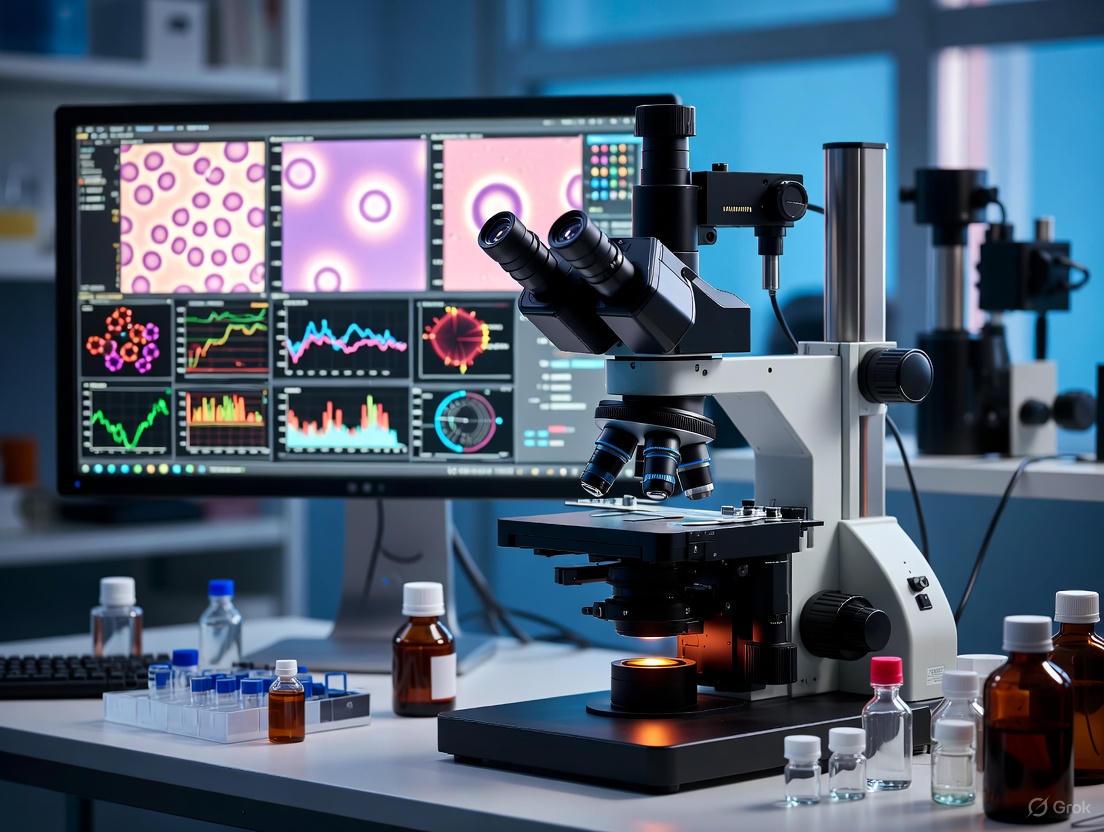
This article explores the transformative potential of in vivo microscopy for malaria diagnosis, a needle-free approach that detects parasites directly within the microvasculature.
In Vivo Microscopy for Malaria Diagnosis: A Revolution in Non-Invasive Detection
Abstract
This article explores the transformative potential of in vivo microscopy for malaria diagnosis, a needle-free approach that detects parasites directly within the microvasculature. Aimed at researchers, scientists, and drug development professionals, it covers the foundational principles of using endogenous biomarkers like hemozoin, details cutting-edge methodologies from portable microscopes to photoacoustic flow cytometers, and addresses key technical challenges such as distinguishing active infections. The content validates these emerging technologies against gold-standard methods like PCR and expert microscopy, highlighting their superior sensitivity, capacity for speciation, and potential to revolutionize clinical diagnosis and surveillance, particularly in resource-limited settings.
The Foundation of Non-Invasive Detection: Principles and Biomarkers
Hemozoin (Hz), also known as malaria pigment, is an insoluble crystalline biocrystal formed by Plasmodium parasites as a detoxification product of host hemoglobin digestion during the intraerythrocytic life cycle [1] [2]. This unique heme crystal represents a critical endogenous biomarker for malaria, offering distinctive magnetic and optical properties that facilitate detection and research applications. For scientists investigating in vivo microscopy and malaria diagnosis, hemozoin provides a naturally occurring, parasite-specific target that persists in blood and tissues, enabling both diagnostic detection and fundamental research into parasite biology and drug mechanisms [3] [2]. This Application Note details the quantitative characteristics, experimental protocols, and research applications of hemozoin as an essential biomarker in malaria research.
Biological Foundation and Significance
During the intraerythrocytic asexual reproduction cycle, Plasmodium parasites consume up to 80% of the host cell hemoglobin [1]. The digestion of hemoglobin releases monomeric α-hematin (ferriprotoporphyrin IX), a toxic compound that acts as a pro-oxidant and catalyzes reactive oxygen species production [1]. To mitigate this toxicity, parasites biocrystallize heme into insoluble, chemically inert β-hematin crystals (hemozoin) within the acidic digestive vacuole [1] [2].
The following diagram illustrates the formation and detection significance of hemozoin in the context of malaria infection:
Figure 1: Hemozoin Formation Pathway. This diagram illustrates the transformation from host hemoglobin to detectable hemozoin crystals through parasitic digestion and detoxification processes.
This detoxification pathway represents a fundamental difference from mammalian heme processing, where heme oxygenase breaks excess heme into biliverdin, iron, and carbon monoxide [1]. The essential nature of hemozoin formation for parasite survival, combined with its absence from human metabolic pathways, makes it an attractive target for therapeutic intervention and diagnostic detection [1] [2].
Quantitative Characterization
Hemozoin crystals are typically 100-200 nanometers long, with each crystal containing approximately 80,000 heme molecules [1]. The crystals exhibit a distinct triclinic structure with reciprocal iron-oxygen coordinate bonds linking hematin molecules into dimers, which then form larger crystalline structures through hydrogen bonding [1].
Table 1: Quantitative Characteristics of Hemozoin Across Plasmodium Species
| Parameter | P. falciparum | P. berghei (Chloroquine-Sensitive) | P. berghei (Chloroquine-Resistant) | P. vivax |
|---|---|---|---|---|
| Crystal Morphology | Needle-like, high aspect ratio parallelogram [2] | Similar to P. falciparum [4] | Morphologically smaller but structurally similar [4] | Species-specific variations [2] |
| Crystal Size | 100-200 nm [1] | Similar to P. falciparum [4] | Smaller crystals [4] | Species-specific variations [2] |
| Hemozoin Production | High intraerythrocytic accumulation [1] | Significant production [4] | Approximately 5-fold less than sensitive strains [4] | Similar amounts despite chloroquine sensitivity [4] |
| Tissue Distribution | Blood, spleen, liver [5] | Blood, spleen, liver [4] | Trace in blood, significant in spleen/liver [4] | Blood, spleen, liver [5] |
Table 2: Hemozoin Detection Methods and Performance Characteristics
| Detection Method | Principle | Sensitivity | Time Requirement | Applications |
|---|---|---|---|---|
| Light Microscopy | Optical detection of birefringent crystals | ~0.001% parasitemia [2] | ~60 minutes [2] | Routine diagnosis, species identification [3] |
| Quantitative Buffy Coat (QBC) | Fluorescent staining with acridine orange | 83% in low parasitemia [3] | <30 minutes [3] | Low parasitemia detection, pigment in leukocytes [3] |
| Magnetic Detection | exploiting inherent crystallinity and weak magnetism [1] [2] | Theoretical: <5 parasites/μL [2] | Minutes [2] | Asymptomatic carrier detection, drug testing [2] |
| PCR-Based Methods | Nucleic acid amplification | ~70% in low parasitemia [3] | >2 hours [2] | Species confirmation, research applications [3] |
Experimental Protocols
Protocol: Hemozoin Isolation fromPlasmodium-Infected Blood
This protocol describes the isolation of natural hemozoin (nHZ) from Plasmodium falciparum cultures, adapted from established methodologies with critical considerations for maintaining physiological relevance [5].
Materials:
- Plasmodium falciparum cultures (synchronized recommended)
- Saponin solution (0.05%-0.15% in PBS)
- Phosphate Buffered Saline (PBS), pH 7.4
- Proteinase K (2 mg/mL in PBS)
- SDS solution (2% in distilled water)
- Urea solution (6 M)
- DNase I (100 U/mL) and RNase A (1 mg/mL) optional
- Sucrose or Percoll-mannitol gradients
Procedure:
Parasite Release from Erythrocytes:
- Pellet infected red blood cells (iRBCs) by centrifugation at 500 × g for 10 minutes.
- Resuspend iRBC pellet in 10 volumes of 0.05% saponin solution in PBS.
- Incubate for 10 minutes at room temperature with gentle agitation.
- Centrifuge at 2,000 × g for 15 minutes to pellet freed parasites and hemozoin.
Initial Purification:
- Wash pellet with PBS 3-5 times until supernatant is clear.
- Resuspend in 2% SDS solution and sonicate briefly (20-30 seconds) to disperse aggregates.
- Centrifuge at 14,000 × g for 15 minutes and discard supernatant.
- Repeat SDS wash until supernatant remains clear after centrifugation.
Protein Digestion:
- Resuspend pellet in Proteinase K solution (2 mg/mL in PBS).
- Incubate overnight at 37°C with gentle agitation.
- Centrifuge at 14,000 × g for 15 minutes and discard supernatant.
Additional Purification (Optional):
Final Preparation:
- Resuspend purified hemozoin in endotoxin-free PBS.
- Sonicate briefly to create homogeneous suspension.
- Store at 4°C for immediate use or -20°C for long-term storage.
Technical Notes:
- Extensive washing removes associated biomolecules but may alter physiological properties [5].
- Test for endotoxin contamination using LAL assay if studying immune responses [5].
- Characterize final preparation using spectrophotometry (Abs 400 nm) or X-ray diffraction to verify crystal structure [1].
Protocol: Quantitative Hemozoin Detection via Colorimetric Assay
This colorimetric method enables quantitative assessment of hemozoin concentration, suitable for drug testing and parasite load quantification [4].
Materials:
- Hemozoin standards (synthetic β-hematin)
- Sodium hydroxide solution (2.5% w/v)
- Pyridine (10% v/v in 2.5% NaOH)
- Hemin chloride standard solutions (0-100 μg/mL)
- Spectrophotometer or plate reader
Procedure:
Standard Curve Preparation:
- Prepare hemin chloride standards in concentration range 0-100 μg/mL in 2.5% NaOH containing 10% pyridine.
- Incubate standards for 1 hour at room temperature with occasional mixing.
- Measure absorbance at 405 nm against blank reagent.
- Generate standard curve of absorbance versus hemin concentration.
Sample Processing:
- Add 1 mL of 2.5% NaOH with 10% pyridine to purified hemozoin samples.
- Incubate for 1 hour at room temperature with occasional vortexing.
- Centrifuge at 10,000 × g for 5 minutes to remove insoluble debris.
- Transfer supernatant to clean cuvette or microplate well.
Quantification:
- Measure absorbance of samples at 405 nm against reagent blank.
- Calculate hemin equivalent concentration from standard curve.
- Account for dilution factors to determine original hemozoin concentration.
Technical Notes:
- Pyridine converts hemozoin to pyridine-hemochromogen which has linear absorbance relationship with concentration [4].
- For tissue samples, homogenize tissue in PBS prior to alkali-pyridine treatment [4].
- This method reliably detects species-specific differences in hemozoin production [4].
Research Applications in Drug Development
Hemozoin formation represents a validated drug target with several antimalarials, including chloroquine and mefloquine, believed to kill parasites by inhibiting hemozoin biocrystallization [1]. The following diagram illustrates the mechanism of drug action and resistance related to hemozoin formation:
Figure 2: Drug Targeting of Hemozoin Formation. This diagram shows how antimalarial drugs inhibit hemozoin formation and how resistance mechanisms develop to circumvent this inhibition.
The experimental workflow for evaluating antimalarial compounds targeting hemozoin formation involves:
Figure 3: Drug Screening Workflow. This experimental pathway outlines the process from compound treatment to hemozoin-based evaluation of antimalarial efficacy.
Key applications in drug development include:
High-Throughput Drug Screening: Measuring hemozoin inhibition provides a direct assessment of compound efficacy against the hemozoin formation pathway [1] [2].
Mechanism of Action Studies: Comparing hemozoin crystal morphology and production levels in drug-treated versus untreated parasites reveals specific mechanisms of drug action [4].
Resistance Monitoring: Quantitative characterization of hemozoin in chloroquine-resistant versus sensitive strains demonstrates altered production patterns, informing resistance mechanisms [4].
The Scientist's Toolkit: Essential Research Reagents
Table 3: Essential Research Reagents for Hemozoin Studies
| Reagent/Category | Specific Examples | Research Application | Technical Considerations |
|---|---|---|---|
| Hemozoin Standards | Synthetic β-hematin [5] | Method calibration, quantitative comparison | Commercial preparations vary in crystal morphology [5] |
| Extraction Reagents | Saponin, SDS, Proteinase K [5] | Isolation of natural hemozoin | Extensive washing removes biomolecules; partial washing preserves physiological context [5] |
| Detection Antibodies | HRP2, pLDH antibodies [6] | Correlation with protein biomarkers | hrp2/3 gene deletions limit HRP2 reliability [6] |
| Lipid Supplements | Linoleic acid, monopalmitic glycerol [7] [4] | In vitro hemozoin formation studies | Lipids catalyze β-hematin formation under physiologically relevant conditions [7] |
| Inhibition Controls | Chloroquine, mefloquine [1] | Drug mechanism studies | Bind to growing crystal faces, preventing heme incorporation [1] |
Methodological Considerations forIn VivoMicroscopy
For researchers applying in vivo microscopy to malaria diagnosis, hemozoin offers unique advantages and technical considerations:
Optical Properties: Hemozoin exhibits optical dichroism, absorbing light more strongly along its length than across its width, enabling automated detection and characterization [1].
Magnetic Characterization: Hemozoin crystals are weakly magnetic and exhibit magnetic circular dichroism, providing detection opportunities through magnetic field-induced optical effects [1] [2].
Background Considerations: Whole blood produces background signals that must be accounted for in sensitive detection methods [2].
Pathophysiological Correlation: Hemozoin phagocytosed by monocytes and macrophages alters their function and serves as a biomarker for recent infection and disease severity [3] [5].
The integration of hemozoin detection with advanced imaging platforms continues to expand the possibilities for malaria research and diagnosis, particularly in the context of asymptomatic infections and low-parasitemia detection where traditional methods face limitations [3] [2].
The detection of hemozoin, a biocrystal produced by Plasmodium parasites during hemoglobin digestion, presents a unique opportunity for advancing malaria diagnostics. This insoluble byproduct serves as an endogenous biomarker due to its distinct optical properties, particularly optical absorption and birefringence [8] [2]. Within the context of developing non-invasive diagnostic tools, such as in vivo microscopy, exploiting these signatures allows for the detection of infected red blood cells without the need for blood draws, addressing limitations of conventional methods like blood smear microscopy and rapid diagnostic tests (RDTs) [8] [9]. This document details the experimental protocols and applications for detecting these optical signatures, providing a framework for researchers and drug development professionals working on next-generation malaria diagnostics.
Core Optical Properties of Hemozoin
Hemozoin is a crystalline pigment with a triclinic structure, formed via cyclic dimerization of ferriprotoporphyrin IX (heme) units [2]. Its unique formation and crystal morphology give rise to two primary optical properties exploitable for detection.
- Optical Absorption: Hemozoin exhibits a strong, characteristic absorption band in the visible to near-infrared spectrum, centered around 655 nm [8]. This property enables the selective detection of hemozoin against the background absorption of hemoglobin and other tissue chromophores. The absorbance contrast can be harnessed in transmission microscopy to identify hemozoin within circulating blood cells in superficial microvasculature [8].
- Birefringence: Due to its crystalline nature and low triclinic symmetry, hemozoin is intrinsically birefringent [8] [10]. When viewed under cross-polarized light, hemozoin crystals rotate the plane of polarized light, appearing bright against a dark background. While this provides high contrast in purified samples or thin smears, the signal can be difficult to detect in highly scattering tissue environments [8].
The following table summarizes the quantitative aspects of these properties and their diagnostic relevance.
Table 1: Quantitative Characteristics of Hemozoin Optical Signatures
| Optical Property | Spectral Range / Key Feature | Detection Sensitivity (Model System) | Key Advantages | Key Limitations |
|---|---|---|---|---|
| Absorption [8] | Strong peak at ~655 nm | Detectable at clinically relevant parasitemia in mouse models [8]; 0.014 µg/mL in adipose-simulating phantoms via diffuse optical spectroscopy [11] | Effective in scattering biological environments; suitable for in vivo imaging [8] | Requires spectral separation from hemoglobin absorption |
| Birefringence [8] [10] | Retardance of polarized light | Highly sensitive in thin blood smears [10] | Provides high contrast for crystalline material; enables specific identification [10] | Low contrast in highly scattering tissue; signal is degraded in deep tissue [8] |
Experimental Protocols for Detection
This section provides detailed methodologies for detecting hemozoin via its absorption and birefringence signatures, utilizing both benchtop and portable imaging systems.
Protocol: In Vivo Detection of Hemozoin Absorption
This protocol is adapted from in vivo microscopy studies in mouse models, designed for detecting circulating hemozoin in superficial microvasculature [8].
- Principle: Transmission microscopy at a wavelength (660 nm) matching hemozoin's absorption peak creates contrast between hemozoin-containing structures and surrounding tissue [8].
- Applications: Needle-free malaria diagnosis, quantification of parasitemia in animal models, and studies of parasite sequestration [8].
Table 2: Research Reagent Solutions for In Vivo Absorption Protocol
| Item | Specification / Function |
|---|---|
| Microvascular Microscope (MVM) | Portable microscope with transmission red (TR) illumination mode (λ = 660 nm, FWHM 15 nm) [8] |
| Imaging Site | Superficial microvasculature with low melanin content (e.g., mouse ear, human oral mucosa) [8] |
| Animal Model | P. yoelii-infected mice (or other relevant malaria models) [8] [12] |
| Bandpass Filter | Chroma λ = 655 ± 30 nm, to isolate the hemozoin absorption band [8] |
| Image Analysis Software | ImageJ (NIH) or equivalent, for contrast enhancement and particle analysis [8] |
Workflow:
- Microscope Setup: Configure the MVM for transmission red (TR) illumination. Use a 660 nm LED light source collimated and passed through a 655/30 nm bandpass filter [8].
- Animal Preparation: Anesthetize and position the animal to allow stable imaging of the target microvasculature (e.g., ear or lip) [8].
- Video Acquisition: Bring the microscope objective in contact with the tissue. Record videos at a high frame rate (e.g., 30 fps) with a short exposure time (≤20 ms) to minimize motion blur from circulating cells [8].
- Image Analysis:
- Import the video sequence into ImageJ.
- Apply contrast enhancement (e.g., 0.4% maximum pixel saturation) to individual frames.
- Identify and count dark, absorbing objects corresponding to hemozoin within the blood vessels.
- Calculate parasitemia correlates based on the density of these objects relative to blood flow metrics [8].
Protocol: Detection of Hemozoin Birefringence
This protocol describes the detection of hemozoin using cross-polarized microscopy, which is highly effective for in vitro samples but less so for deep tissue [8] [10].
- Principle: Linearly polarized light incident on a birefringent hemozoin crystal undergoes a phase shift. A second, cross-oriented polarizer (analyzer) then converts this phase shift into intensity contrast [8].
- Applications: Gold-standard confirmation of hemozoin in blood smears, analysis of crystal morphology, and in vitro drug efficacy testing [2] [10].
Workflow:
- Microscope Setup: Configure a microscope for epi-illumination with cross-polarized (XP) light.
- Illuminate the sample with 525 nm linearly polarized light.
- Use a polarizing beam splitter to direct light to the sample.
- Collect the back-scattered light through an analyzer oriented orthogonal to the illumination polarization [8].
- Sample Preparation:
- Imaging: Bring the sample into focus. Birefringent hemozoin crystals will appear as bright objects against a dark background.
- Analysis: Qualitatively assess the presence and distribution of bright crystals. Use image analysis software to count crystals or quantify birefringence intensity.
Advanced Applications & Integrated Sensing
Moving beyond basic detection, hemozoin's optical properties are being leveraged in sophisticated sensing platforms.
- Quantitative Diffuse Optical Spectroscopy (DOS): This non-invasive technique uses near-infrared light to quantify hemozoin in deep tissue (up to 2-3 cm). It has demonstrated sensitivity to hemozoin at physiologically relevant concentrations (as low as 0.014 µg/mL) and under varying tissue oxygen saturations, showing promise for monitoring sequestration in adipose and other tissues [11].
- Magneto-Optical Technology: Emerging technologies combine the magnetic and optical properties of hemozoin. These methods use magnetic fields to align the crystals, enhancing the consistency of their optical detection and providing a second physical modality to improve specificity [2].
- Nanoparticle Tracking Analysis (NTA): While not purely optical in the imaging sense, NTA uses light scattering to characterize hemozoin particles extracted from parasites. It provides quantitative data on particle concentration and size distribution, revealing variations between Plasmodium species, clones, and stages [14]. This information is crucial for understanding the biophysics of hemozoin formation and its role as a drug target.
Table 3: Performance Comparison of Optical Diagnostic Modalities
| Diagnostic Modality | Target / Principle | Reported Sensitivity | Advantages for Research | Limitations |
|---|---|---|---|---|
| In Vivo Microscopy (Absorption) [8] | Hemozoin absorption at ~655 nm | Clinically relevant parasitemia in mice | Needle-free; detects sequestered parasites; real-time kinetics | Limited to superficial microvasculature |
| Cross-Polarized Light Microscopy [8] [10] | Hemozoin birefringence | High for blood smears | Low-cost; high specificity on smears; crystal morphology data | Poor performance in scattering tissue |
| Diffuse Optical Spectroscopy (DOS) [11] | Hemozoin absorption spectrum | 0.014 µg/mL in phantoms | Deep tissue penetration (2-3 cm); quantitative | Complex instrumentation; lower spatial resolution |
| Rapid Diagnostic Test (RDT) [9] [13] | PfHRP2 / pan-Plasmodium antigens | ~96% (P. falciparum), lower for others [13] | Point-of-care; rapid result; minimal training | Cannot detect HRP2-deleted mutants; not quantitative [2] [13] |
| PCR [2] [13] | Plasmodium DNA | <0.0001% parasitemia [2] | Extremely sensitive; species identification | Time-consuming; requires lab infrastructure; not for treatment monitoring [2] [13] |
The optical signatures of hemozoin, particularly its absorption and birefringence, provide powerful tools for malaria research and diagnostic development. While birefringence offers high specificity in vitro, its utility in complex biological environments is limited. In contrast, absorption-based methods have shown great promise for in vivo applications, enabling non-invasive detection in animal models and holding potential for translation to human diagnosis. The ongoing development of advanced technologies like DOS and magneto-optical sensing, which build upon these fundamental optical properties, is poised to provide researchers and drug developers with unprecedented capabilities for quantifying parasite burden, understanding sequestration, and evaluating therapeutic efficacy in real-time.
The Shift from Blood Smears to In Vivo Vasculature Imaging
The diagnosis of malaria has long relied on conventional methods, with light microscopy of Giemsa-stained blood smears remaining the gold standard for decades [15]. While inexpensive and capable of providing species identification and parasite density quantification, this technique has significant limitations, including a detection threshold of approximately 50 parasites/μL, reliance on skilled technicians, and an inability to detect sequestered Plasmodium falciparum parasites [15]. The emergence of optical imaging technologies has enabled a paradigm shift toward needle-free diagnostic approaches that detect malaria parasites directly within the vasculature, using haemozoin (Hz) as an endogenous biomarker [16]. This Application Note details the experimental protocols and analytical methods for implementing in vivo vasculature imaging for malaria diagnosis, providing researchers with the tools to advance this transformative technology.
Quantitative Comparison of Diagnostic Modalities
The transition from traditional blood smears to in vivo imaging represents a significant advancement in diagnostic capability. The table below summarizes the key performance characteristics and operational parameters of both approaches.
Table 1: Comparative Analysis of Blood Smear Microscopy and In Vivo Vasculature Imaging for Malaria Diagnosis
| Parameter | Blood Smear Microscopy | In Vivo Vasculature Imaging |
|---|---|---|
| Detection Principle | Morphological identification of parasites in fixed blood samples [15] | Optical detection of haemozoin absorbance in circulating blood [16] |
| Sample Type | Finger-prick or venous blood (2-6 µL) [15] | Direct in vivo measurement; no blood draw required [16] |
| Detection Threshold | ~50 parasites/µL [15] | Data not available in search results |
| Key Biomarker | Visual parasite morphology | Haemozoin crystals [16] |
| Time to Result | 30-60 minutes [15] | Potentially real-time (theoretical) |
| Species Differentiation | Yes, based on morphological features [15] | Not demonstrated in current research |
| Parasite Staging | Yes [15] | Not demonstrated in current research |
| Risk of False Positives | Low with experienced microscopists | Requires discrimination from pigment-containing white blood cells (pWBCs) [16] |
| Key Advantages | Inexpensive; provides species and stage data; quantifies parasitemia [15] | Needle-free; potential for rapid diagnosis; detects active infection [16] |
| Major Limitations | Inability to detect sequestered parasites; requires skilled technician [15] | Cannot differentiate species; signal confusion from pWBCs [16] |
Research Reagent Solutions
The following table catalogues the essential materials and reagents required for implementing in vivo vasculature imaging protocols, as derived from the cited research methodologies.
Table 2: Essential Research Reagents and Materials for In Vivo Vasculature Imaging
| Reagent/Material | Function/Application | Research Context |
|---|---|---|
| Haemozoin (Hz) | Endogenous biomarker with unique optical properties; absorbs light at ~655 nm [16] | Serves as the specific target for optical detection of malaria infection [16] |
| DAPI Fluorescent Stain | Nuclear counterstain; enables cell type identification and parasite maturity assessment [16] | Used in validation studies on blood smears to morphologically identify infected RBCs and WBCs [16] |
| Narrow Bandpass Filter (e.g., HQ 655/40) | Isolates the haemozoin absorbance peak, minimizing interference from hemoglobin Q-band absorbance [16] | Critical component of the optical path for specific Hz detection in both in vitro and in vivo setups [16] |
| Plasmodium yoelii-infected Murine Blood | Provides a controlled model for method development and validation [16] | Used for initial development and in vivo testing of classification metrics [16] |
| Plasmodium falciparum Cultures | Provides human-relevant parasite material for in vitro assay validation [16] | Used to validate discriminating features in human-infecting parasite species [16] |
| Upright Conventional Microscope | Platform for high-resolution brightfield and fluorescence image acquisition [16] | Used with a 63x oil immersion objective for detailed analysis of blood smears [16] |
| Image Analysis Software (e.g., ImageJ) | Open-source platform for quantifying Hz area and pixel intensity [16] | Used to calculate key classification parameters (effective diameter and relative intensity difference) [16] |
Experimental Protocol for In Vivo Vasculature Imaging
This section provides a detailed methodology for conducting in vivo imaging to detect malaria parasites via haemozoin absorption, including the critical steps for discriminating between active infections and residual pigment from cleared parasites.
Instrument Setup and Calibration
- Microscope Configuration: Utilize an upright conventional microscope (e.g., Zeiss Z1) equipped with a high-sensitivity camera suitable for low-light in vivo imaging [16].
- Optical Path: Install a narrow bandpass filter (e.g., Chroma HQ 655/40) in the illumination path to isolate the haemozoin absorbance peak centered at 655 nm. This minimizes background absorption from hemoglobin [16].
- Objective Selection: Fit a high-numerical-aperture objective (e.g., 63x oil immersion) to maximize resolution and light collection for superficial vasculature imaging [16].
- Illumination Adjustment: Adjust the intensity of the halogen lamp to achieve sufficient brightness without causing specimen damage or discomfort, ensuring the exposure settings on the camera are optimized to capture the contrast from Hz absorption.
In Vivo Image Acquisition
- Animal Preparation: For preclinical studies using a murine model (e.g., P. yoelii-infected mice), anesthetize the animal according to approved institutional animal care protocols. Secure the animal on a temperature-controlled stage to maintain physiological conditions during imaging [16].
- Site Selection: Identify a suitable imaging site with superficial vasculature, such as the ear pinna or tail. Apply a drop of immersion oil if using an oil-immersion objective.
- Image Capture: Focus the microscope on a plane within a blood vessel. Capture a sequence of brightfield transmission images under 655 nm illumination. Ensure to capture multiple fields of view and video sequences to account for blood flow and increase the number of detectable events.
Data Analysis and Classification
- Image Segmentation: Transfer images to analysis software (e.g., ImageJ). Manually or automatically segment individual circulating cells observed in the vasculature [16].
- Background Intensity Thresholding: Establish a background intensity threshold (IT), defined as the average minimum brightfield pixel intensity of uninfected red blood cells in the field. Apply this threshold to isolate pixels containing Hz signal [16].
- Feature Extraction: For each segmented cell, calculate two key discriminating parameters [16]:
- Haemozoin Effective Diameter (deff): Calculate as ( d{eff} = 2 \times \sqrt{\text{Hz Area} / \pi} ). This parameter leverages the typically larger Hz aggregates found in infected RBCs (iRBCs) compared to those in pigment-containing WBCs (pWBCs).
- Relative Intensity Difference (RID): Compute using the formula ( \text{RID} = (I{\text{background}} - I{\text{cell}}) / I_{\text{background}} ), where ( I ) represents mean pixel intensity. The higher metabolic activity and pigment load in iRBCs often result in a greater RID.
- Cell Classification: Use the calculated feature values to classify cells. The published research established that these features can discriminate between iRBCs and pWBCs with high accuracy, as measured by the Area Under the Receiver Operating Characteristic Curve (AUC > 0.9) [16].
Diagram 1: In vivo imaging and analysis workflow for malaria diagnosis.
Validation and Analytical Framework
The core strength of the in vivo imaging approach lies in its ability to not just detect haemozoin, but to differentiate its cellular origin. This is critical because pigment-containing white blood cells (pWBCs) can persist for days after an infection has been cleared, posing a risk of false-positive diagnosis [16]. The analytical framework below details this discrimination process.
Diagram 2: Haemozoin signal analysis for diagnostic classification.
The protocol described herein enables a direct, needle-free method for detecting active malaria infection by specifically identifying circulating iRBCs. This represents a significant advance over traditional methods, offering the potential for rapid diagnosis and improved patient management in both clinical and field settings. The continuous refinement of these imaging and analytical protocols will further enhance the sensitivity, specificity, and utility of this technology in the global effort to control and eliminate malaria.
In vivo microscopy represents a transformative approach in biomedical research, enabling the noninvasive observation of biological processes in living organisms. This technique provides critical insights into disease mechanisms, drug efficacy, and cellular dynamics without the need for tissue extraction [17]. For diseases like malaria, where parasites sequester in the microvasculature, in vivo imaging offers unique advantages over traditional blood-based diagnostics by accessing this hidden parasite reservoir [8].
The oral mucosa, particularly the lower lip, has emerged as a premier imaging site for superficial vasculature studies. This region offers exceptional accessibility, minimal melanin content that could interfere with optical measurements, and a rich network of microvessels [8] [18]. Its non-invasive accessibility facilitates repeated measurements in both clinical and research settings, making it ideally suited for longitudinal studies of vascular pathologies, infectious diseases, and therapeutic responses.
Rationale for Oral Mucosa as an Imaging Site
The theoretical foundation for utilizing the oral mucosa in malaria diagnostics stems from its unique physiological and structural properties. The oral cavity is highly vascularized with numerous capillary loops, creating an extensive interface between circulation and tissue [19]. This vascular density enables efficient sampling of circulating blood elements and parasite by-products.
From a practical standpoint, the oral mucosa offers significant imaging advantages. Its low keratinization and epithelial thickness minimize light scattering, allowing for superior optical penetration compared to other accessible mucosal surfaces [18]. The buccal mucosa and inner lip regions specifically provide a relatively flat surface that facilitates stable contact with imaging objectives, minimizing motion artifacts during data acquisition [8].
The clinical translation potential is further enhanced by the oral cavity's accessibility for non-invasive procedures. This eliminates the need for needle-based blood sampling, reduces biohazard waste, and improves patient compliance—particularly valuable in pediatric populations and large-scale screening programs [8] [19].
Key Optical Properties and Imaging Parameters
The development of effective oral mucosa imaging protocols requires careful consideration of tissue-specific optical properties and their implications for signal detection.
Table 1: Key Optical Properties of Oral Mucosa Relevant to In Vivo Imaging
| Parameter | Characteristic | Implication for Malaria Diagnostics |
|---|---|---|
| Reduced Scattering Coefficient (μs') | Similar to other mucosal tissues | Informs design of microscope systems; affects detection of hemozoin birefringence [8] |
| Absorption Properties | Dominated by hemoglobin in vasculature | Enables contrast generation for vessel visualization; hemozoin absorbance detectable at 655nm [8] |
| Melanin Content | Low in specified imaging sites | Reduces background absorption, improves signal-to-noise ratio [8] |
| Tissue Penetration Depth | Favorable for visible to NIR wavelengths (500-1000nm) | Permits visualization of superficial microvasculature where infected RBCs may sequester [18] |
The optical signature of hemozoin, a crystalline byproduct of malaria parasite metabolism, provides a critical target for detection. Hemozoin exhibits strong absorbance at 655 nm and birefringence under cross-polarized light [8]. However, in the scattering environment of tissue, the absorbance signature proves more reliably detectable than birefringence, informing the selection of appropriate imaging modalities [8].
Microvascular Microscope (MVM) System Specifications
The Microvascular Microscope (MVM) represents a specialized imaging platform designed specifically for in vivo microvasculature assessment in the oral mucosa [8]. This portable system integrates multiple illumination modes to exploit different optical contrast mechanisms.
Table 2: MVM Illumination Modes and Detection Parameters
| Illumination Mode | Wavelength | Primary Target | Detection Method | Application in Malaria Research |
|---|---|---|---|---|
| Transmission Green (TG) | 550 ± 44 nm | Hemoglobin absorbance | Transmission imaging | Vessel localization [8] |
| Transmission Red (TR) | 660 ± 15 nm | Hemozoin absorbance | Transmission imaging | Detection of hemozoin in infected RBCs [8] |
| Cross Polarized (XP) | 525 ± 35 nm | Hemozoin birefringence | Epi-illumination | Assessment of hemozoin crystals [8] |
The MVM achieves submicron resolution (0.78 μm line thickness distinguishable), sufficient for observing individual blood cells and intracellular hemozoin structures [8]. The system is designed with modified objectives for direct tissue contact and employs a monochromatic CCD camera for high-sensitivity detection. For human imaging applications, the system has been successfully used to visualize vessels in the lower lip's oral mucosa under Institutional Review Board-approved protocols [8].
Experimental Protocol: In Vivo Microscopy of Oral Mucosa for Hemozoin Detection
Equipment Setup and Calibration
MVM Preparation: Assemble the Microvascular Microscope according to published specifications [8]. Ensure all three illumination modes (TG, TR, XP) are properly aligned and functional.
Resolution Verification: Image a USAF 1951 resolution target using TR and XP modes to confirm the system can resolve the highest frequency line pairs (0.78 μm individual line thickness) [8].
Working Distance Calibration: Determine the relationship between magnification and working distance by imaging a 100 lp/mm Ronchi grating with different immersion media (air, water, refractive index liquid) [8].
Subject Preparation and Positioning
Subject Instructions: Instruct subjects to rinse their mouth with water to remove food debris. Avoid antiseptic mouthwashes as they may alter mucosal properties.
Positioning: Stabilize the subject's head using a chin rest or similar support system. Gently evert the lower lip to expose the buccal mucosa.
Objective Interface: Apply a small amount of immersion medium (water or index-matching gel) to the modified microscope objective. Gently bring the objective into contact with the mucosal surface, applying minimal pressure to avoid vascular compression.
Image Acquisition Protocol
Vessel Localization: Using TG illumination (550 ± 44 nm bandpass filter), identify and target microvessels (arterioles, capillaries, venules) with diameters typically around 23 μm [8]. Record video at 30 fps for 15-30 seconds per site.
Hemozoin Absorbance Imaging: Switch to TR illumination (660 ± 15 nm bandpass filter) to target hemozoin's absorption peak. Maintain identical imaging parameters and record video sequences.
Birefringence Assessment (Optional): Employ XP illumination (525 ± 35 nm bandpass filter with cross-polarized detection) to assess hemozoin birefringence, though note this signal may be challenging to detect in highly scattering tissue [8].
Multi-site Imaging: Capture data from at least 3-5 distinct vascular regions to account for potential heterogeneous parasite distribution.
Data Processing and Analysis
Preprocessing: Apply contrast enhancement (0.4% maximum pixel saturation) to individual TR video frames to improve hemozoin visibility [8].
Hemozoin Identification: Identify dark, absorbing inclusions within circulating cells that align with the expected size and morphology of hemozoin crystals.
Velocity Calculation: Determine blood flow velocity by measuring frame-to-frame displacement of plasma gaps between red blood cell clusters in TG mode [8].
Quantification: Calculate parasitemia indices by determining the percentage of infected cells containing hemozoin particles relative to total circulating cells.
Diagram 1: Experimental workflow for in vivo microscopy of oral mucosa showing the sequential application of different illumination modes for comprehensive hemozoin detection.
Research Reagent Solutions
Successful implementation of oral mucosa imaging for malaria diagnostics requires specific reagents and materials optimized for in vivo applications.
Table 3: Essential Research Reagents for Oral Mucosa Imaging Studies
| Reagent/Material | Specifications | Application | Notes |
|---|---|---|---|
| Immersion Medium | Water or index-matching gel with n≈1.33-1.39 | Optical coupling between objective and mucosal surface | Refractive index matching improves resolution at tissue interface [8] |
| Resolution Validation Target | USAF 1951 resolution pattern | System performance verification | Confirm ability to resolve 0.78μm lines [8] |
| Spectral Calibration Standards | Materials with known absorption at 550nm, 655nm, 660nm | Illumination wavelength verification | Ensure proper targeting of hemoglobin and hemozoin absorption peaks [8] |
| Antimalarial Reference Compounds | Chloroquine, artemisinin derivatives | Positive controls for hemozoin formation inhibition | Useful for method validation [8] |
| Parasite Culture Materials | P. falciparum or P. yoelii cultures, human O+ erythrocytes | In vitro validation studies | Essential for correlating in vivo signals with parasite burden [20] |
Data Interpretation and Validation
Interpretation of in vivo microscopy data from the oral mucosa requires careful discrimination of hemozoin-specific signals from potential confounding factors. The absorbance signature of hemozoin at 660 nm appears as dark, intracellular inclusions within circulating red blood cells [8]. These structures should be distinguished from optical artifacts, pigmentations, or other cellular inclusions through their specific spectral properties and morphological characteristics.
Validation of hemozoin detection should correlate in vivo findings with established diagnostic methods, including:
Blood Smear Microscopy: The traditional gold standard for parasitemia quantification [8] [19].
Molecular Methods: PCR-based detection offering superior sensitivity for low-level infections [19].
Antigen-Based Tests: Rapid diagnostic tests detecting HRP2 or other parasite antigens [8] [19].
The sensitivity of in vivo microscopy is particularly valuable for detecting submicroscopic infections that often evade conventional diagnostics but contribute significantly to malaria transmission [19]. This approach can identify sequestered parasites that may be underestimated in peripheral blood samples [8].
The oral mucosa represents an optimal imaging site for targeting superficial vasculature in malaria research and diagnosis. Its unique anatomical and optical properties, combined with advanced microscopy platforms like the MVM, enable non-invasive detection of parasite-specific biomarkers such as hemozoin. The experimental protocols outlined herein provide researchers with a standardized approach for implementing this powerful methodology, offering potential applications in basic parasite biology, antimalarial drug development, and clinical diagnostics. As in vivo imaging technologies continue to advance, the oral mucosa will likely play an increasingly important role in the global effort to understand, detect, and ultimately eliminate malaria.
Cutting-Edge Technologies: From Portable Microscopes to Photoacoustic Systems
The Microvascular Microscope (MVM) is a portable, low-cost microscope developed as a needle-free diagnostic tool for malaria. It is designed to detect the malaria pigment, hemozoin (Hz), an endogenous biomarker, within the superficial microvasculature of easily accessible sites like the oral mucosa. This approach addresses key limitations of conventional diagnostics like blood smear microscopy and rapid diagnostic tests (RDTs), which require blood draws, generate biohazardous waste, and can underestimate parasite density due to the sequestration of infected red blood cells (iRBCs) [8]. The MVM employs dual modes of operation to detect two optical signatures of hemozoin: absorbance and birefringence [8].
Technical Specifications and Key Components
The MVM is engineered for field use, incorporating three illumination modes to locate vessels and detect hemozoin [8].
Table 1: MVM Illumination Modes and Specifications
| Illumination Mode | Wavelength (Center ± Bandwidth) | Primary Function | Key Technical Features |
|---|---|---|---|
| Transmission Green (TG) | 550 nm ± 44 nm | Locate blood vessels by hemoglobin contrast | Broadband LED source; uses hemoglobin's Q-band absorption for contrast |
| Transmission Red (TR) | 660 nm ± 15 nm | Detect hemozoin via its strong absorbance | Aligns with the 655 nm peak in the hemozoin absorption spectrum |
| Cross Polarized Epi (XP) | 525 nm ± 35 nm | Detect hemozoin via its birefringence | Linear polarizer and analyzer; green light chosen for hemoglobin contrast |
The core optical path consists of a modified microscope objective (L1, Newport M-60X, NA=0.85) brought into direct contact with the tissue, followed by a series of biconvex lenses (L2-L4, f=25 mm) that project the image onto a monochromatic CCD camera. The system has a resolution capable of distinguishing submicron structures, with a measured resolution of 0.78 μm on a USAF 1951 target [8].
Experimental Protocols
Protocol: In Vivo Detection of Circulating Hemozoin in a Murine Model
This protocol outlines the procedure for detecting malaria parasites in live mice using the MVM's absorbance signature [8] [21].
- Animal Model: Plasmodium yoelii-infected mice.
- Imaging Site: Superficial microvasculature (e.g., ear, tail).
- Device Setup:
- Remove cross-polarized optical elements for absorbance-only imaging.
- Use Transmission Red (TR) illumination mode.
- Set monochromatic CCD camera to acquire video at 30 frames per second (fps) with 2x2 pixel binning to manage file size.
- Limit exposure time to ≤20 ms to minimize motion blur from circulating cells.
- Image Acquisition:
- Place the MVM objective in gentle contact with the tissue.
- Translate the final lens element to adjust the working distance and bring microvessels into focus.
- Record multiple video sequences from different areas.
- Data Analysis:
- Process TR mode videos in ImageJ (NIH, v1.48t or later).
- Apply contrast enhancement (e.g., 0.4% maximum pixel saturation) to individual frames.
- Identify and count dark, absorbing objects corresponding to hemozoin within blood vessels.
- Quantify parasitemia levels based on hemozoin density.
Protocol: Discriminating Infected RBCs from Pigment-Containing White Blood Cells
This method uses features of the hemozoin absorbance signal to differentiate active infections (iRBCs) from recent, cleared infections (pWBCs), reducing false positives [21].
- Sample Preparation:
- Prepare thin-film blood smears from P. yoelii- or P. falciparum-infected blood.
- Fix smears in methanol and allow to dry.
- Apply a mounting medium containing DAPI fluorescent nuclear stain and seal with a coverslip.
- Image Acquisition (Conventional Microscope):
- Use a high-magnification objective (e.g., 63x oil immersion).
- For each field of view, collect two images:
- A brightfield transmission image using 655 nm ± 20 nm illumination to isolate hemozoin absorbance.
- A fluorescence image using a DAPI filter set to identify cell nuclei.
- Image and Data Analysis:
- Manually segment individual RBCs and WBCs using the brightfield image.
- Determine cell type (iRBC, pWBC, uninfected RBC) via morphology and DAPI signal (RBCs have no nucleus; iRBCs show small parasite nuclei; WBCs have large nuclei).
- Apply a background intensity threshold to the brightfield image to isolate hemozoin signal.
- For each segmented cell, measure:
- Hz Area: The pixel area of the thresholded hemozoin signal.
- Mean Hz Pixel Intensity.
- Calculate classification metrics:
- Hz Effective Diameter (deff): ( d_{eff} = 2 \times \sqrt{Area/\pi} )
- Relative Intensity Difference (RID): The percent difference between the background threshold intensity and the mean Hz pixel intensity.
- Use these metrics to classify cells, with performance evaluated by the Area Under the Curve (AUC) of the Receiver Operating Characteristic (ROC) curve. In vivo, the RID metric has shown an AUC of 0.91 for classifying iRBCs vs. pWBCs [21].
Diagram 1: Cell Classification Workflow
Performance Data and Validation
The MVM platform has been validated in progressively complex environments, from optical phantoms to in vivo models.
Table 2: MVM Performance in Hemozoin Detection
| Experimental Environment | Key Finding | Quantitative Result / Clinical Relevance |
|---|---|---|
| Multilayer Optical Phantom | Hemozoin absorbance readily detectable in a scattering environment mimicking tissue. | Demonstrated feasibility of optical detection in a controlled, tissue-like setting. |
| Excised Mouse Tissue | Hemozoin absorbance confirmed as a viable biomarker in a true tissue environment. | Validated the transition from phantom to biological tissue. |
| In Vivo (P. yoelii-infected mice) | Successful detection of circulating hemozoin over a clinically-relevant parasitemia range. | Proof-of-concept for a rapid, quantitative, needle-free diagnostic technique [8]. |
| Cell Discrimination (In Vitro P. yoelii) | Both Hz diameter and intensity can differentiate iRBCs from pWBCs. | AUC: 0.89 (diameter), 0.85 (intensity) [21]. |
| Cell Discrimination (In Vitro P. falciparum) | High classification accuracy for human-infecting parasite species. | AUC ≥ 0.93 for both classification features [21]. |
| Cell Discrimination (In Vivo) | Intensity-based metric is the most effective classifier in living tissue. | AUC: 0.91 for Relative Intensity Difference (RID) [21]. |
The Scientist's Toolkit: Research Reagent Solutions
Table 3: Essential Research Materials and Reagents
| Item | Function / Application | Example / Specification |
|---|---|---|
| DAPI (4',6-diamidino-2-phenylindole) | Fluorescent nuclear stain for cell type identification and parasite maturity staging in fixed smears [21]. | Invitrogen P-36931 or equivalent. |
| Heparin | Anticoagulant for blood collection to prevent clotting during in vitro experiments and smear preparation [21]. | Prepared in blood collection tubes. |
| Intralipid | Fat emulsion used to create tissue-simulating optical phantoms; mimics the scattering properties of biological tissue [8]. | 20% intravenous fat emulsion. |
| Isolated Hemozoin | Control material for method validation and in vitro phagocytosis assays [21]. | Isolated from P. falciparum culture (e.g., Strain 3D7) via saponin lysis. |
| Collagen I & Fibronectin | Extracellular matrix proteins used to coat substrates (e.g., in microfluidic chips) to facilitate stable endothelial cell adhesion under flow [22]. | Typical concentrations: 2 mg/mL Collagen I, 0.17 mg/mL Fibronectin. |
| fMLP (N-Formylmethionyl-leucyl-phenylalanine) | Potent neutrophil chemoattractant used in transmigration studies to induce and synchronize neutrophil movement [22]. | – |
| β1 Integrin Blocking Antibody | Functional blocking antibody used to investigate the role of neutrophil-basement membrane interactions in microvascular permeability [22]. | – |
Diagram 2: MVM Detection and Analysis Logic
The Cytophone is an innovative photoacoustic flow cytometry platform designed for the non-invasive, in vivo detection of malaria-infected red blood cells (iRBCs). This technology addresses critical limitations of current malaria diagnostics, including their invasive nature, limited sensitivity, and inability to detect asymptomatic infections effectively [23] [24].
The operational principle leverages the unique photoacoustic effect generated by hemozoin—a biocrystal produced by all Plasmodium species as they digest hemoglobin within infected red blood cells [23] [25]. When irradiated by low-energy laser pulses transmitted transcutaneously, hemozoin crystals absorb significantly more energy than surrounding hemoglobin in normal red blood cells. This localized heating generates thermoelastic expansion, producing specific acoustic waves detected by ultrasound transducers placed on the skin [23] [26]. The Cytophone system analyzes these acoustic signatures—including specific wave shapes, widths, and time delays—to identify and enumerate iRBCs circulating in peripheral blood vessels without requiring a blood sample [23] [27].
Table 1: Key Advantages of Cytophone Technology for Malaria Diagnosis
| Feature | Description | Research Implication |
|---|---|---|
| Non-invasive Detection | No blood draw required; laser pulses delivered through intact skin [23] | Enables large-scale screening and repeated measurements without patient discomfort |
| Universal Malaria Biomarker | Targets hemozoin, produced by all Plasmodium species [23] [25] | Potential detection of all human malaria species, including those with antigen deletions |
| Large Blood Volume Sampling | Interrogates 0.2–2.0 mL of blood in 10 seconds [23] | Dramatically improves sensitivity for low-level parasitemia and asymptomatic infections |
| Label-free Operation | No contrast agents or reagents required [23] | Simplified workflow, reduced cost per test, and minimal sample preparation |
| Real-time Monitoring | Continuous detection of iRBCs in blood flow [23] | Enables dynamic assessment of treatment response and parasite clearance kinetics |
Performance Metrics and Comparative Analysis
Clinical validation of the Cytophone system in Cameroon demonstrated its robust diagnostic capabilities. In a longitudinal cohort study (n=20) with follow-up over 30±7 days after parasitemia clearance, the technology showed 90% sensitivity and 69% specificity compared to microscopy, with a receiver-operator-curve area under the curve (ROC-AUC) of 0.84 [23] [27]. When compared to quantitative PCR (qPCR), the ROC-AUC values for Cytophone, microscopy, and rapid diagnostic tests (RDTs) showed no statistically significant differences, indicating comparable diagnostic performance to established methods [23].
The Cytophone platform achieves exceptional sensitivity through its ability to non-invasively interrogate relatively large blood volumes (up to 2.0 mL in 10 seconds), substantially exceeding the few microliters typically examined in blood smear microscopy [23]. This extensive sampling volume enables detection of low-density infections that often evade conventional diagnostics. Additionally, the technology successfully detected declining parasite levels following antimalarial treatment, mirroring trends observed with microscopy and PCR, confirming its utility for therapeutic monitoring [23] [25].
Table 2: Comparative Performance of Malaria Diagnostic Methods
| Method | Sample Type | Limit of Detection (parasites/μL) | Time to Result | Key Limitations |
|---|---|---|---|---|
| Cytophone | Non-invasive (in vivo) | Not explicitly stated (detects 1 CTC/liter in cancer application) [26] | Minutes [25] | Early development stage, requires further validation [24] |
| Light Microscopy | Blood smear | 50–100 (field conditions) [23] [28] | 1–2 hours [29] | Expertise-dependent, time-consuming, poor sensitivity at low parasitemia [28] [29] |
| Rapid Diagnostic Tests (RDTs) | Blood (fingerprick) | 100–200 [23] [30] | 15–20 minutes [29] | Affected by HRP2/3 deletions, cannot quantify parasitemia [23] [24] |
| PCR | Blood | 1–60 [23] [31] | Hours to days [29] [24] | Requires advanced lab infrastructure, trained personnel, slow turnaround [23] [24] |
| qPCR | Blood | ≤16–60 [23] | Hours to days | Expensive, complex infrastructure, not point-of-care [23] |
Experimental Protocols
In Vivo Detection of Malaria-Infected Red Blood Cells
Purpose: To non-invasively detect and quantify malaria-infected red blood cells (iRBCs) in human subjects using the Cytophone platform [23].
Equipment and Reagents:
- Portable Cytophone prototype with 1064-nm solid-state laser (pulse width: 1.5 ns, pulse rate: 1 kHz, adjustable energy up to 240 μJ) [23]
- Array of 16 focused ultrasound transducers with semispherical sensitive surfaces [23]
- Optical system with green pilot laser (532 nm) and optical tip with spherical/cylindrical lenses [23]
- Water reservoir for acoustic coupling between skin and transducers [23]
- Near-infrared imaging system for blood vessel mapping [23]
- White cosmetic markers transparent to 1064 nm laser light [23]
Procedure:
- Participant Preparation: Position participant comfortably with hand exposed. Clean skin surface in the target area (typically dorsal hand where veins are 1–2 mm deep) [23] [26].
- Blood Vessel Mapping: Use near-infrared imaging to identify suitable blood vessels (1.0–1.5 mm diameter) at depths of 1–2 mm. Mark vessel locations with white cosmetic markers that do not interfere with laser transmission [23].
- System Calibration: Align the linear laser beam collinearly with the focused ultrasound transducer array across the targeted blood vessel. Ensure proper acoustic coupling by flowing water between the skin and transducers [23].
- Laser Parameter Setup: Set laser energy to optimal levels (below safety thresholds) confirmed during safety testing. Typical parameters: wavelength 1064 nm, pulse rate 1 kHz, pulse width 1.5 ns [23].
- Signal Acquisition: Apply laser pulses transcutaneously to the targeted blood vessel for a predetermined duration (typically seconds to minutes). Record acoustic signals generated by hemozoin in iRBCs using the ultrasound transducer array [23].
- Signal Processing: Convert bipolar acoustic waveforms into unipolar transient peaks in the photoacoustic trace. Apply algorithms to distinguish iRBC-specific signals based on wave shapes, widths, and time delays [23].
- Data Analysis: Identify positive iRBC detection events as sharp transient peaks above the blood background signal. Correlate signal patterns with parasite developmental stages and quantify iRBC concentration [23].
- Safety Monitoring: Continuously monitor for any adverse reactions during and after the procedure. In initial safety studies, no adverse events were reported among participants [23].
In Vitro Photoacoustic Flow Cytometry Protocol
Purpose: To detect nanoparticle-bearing circulating cells in a controlled flow system, demonstrating the fundamental principles of photoacoustic flow cytometry [32].
Equipment and Reagents:
- 3D-printed flow tank (2.5 cm × 1.5 cm × 7.5 cm) with capillary tube [32]
- Quartz capillary tube (inner diameter: 75 μm) [32]
- Ultrasound transducer (50 MHz central frequency) [32]
- Pulsed laser (1053 nm wavelength, 8 ns pulse width, 10 Hz repetition rate) [32]
- Optical fiber for laser delivery [32]
- Syringe pumps (two) with T-junction connector [32]
- Inverted microscope with camera for visualization [32]
- Sample and control solutions [32]
Procedure:
- Flow System Assembly:
- 3D-print flow tank according to specifications.
- Install quartz capillary tube through flow tank, ensuring proper alignment with transducer port and visualization slot.
- Seal all connections with silicone to prevent leakage [32].
Transducer and Laser Setup:
- Mount ultrasound transducer to flow chamber port with acoustic coupling.
- Connect transducer to pulser/receiver with 59 dB gain amplification.
- Route output signal to oscilloscope with field-programmable gate array (FPGA).
- Align optical fiber to illuminate entire width of capillary tube [32].
Flow System Priming:
- Connect one syringe pump filled with air (40 μL/min flow rate).
- Connect second syringe pump filled with sample (20 μL/min flow rate).
- Connect outlet tubing to bleach container for waste disposal.
- Verify leak-free operation before introducing cells [32].
Sample Preparation:
- Lightly vortex cell suspensions immediately before testing to maintain uniform distribution.
- Rotate syringe periodically during operation to prevent cell settling [32].
Data Acquisition:
- Trigger laser pulses synchronized with ultrasound acquisition via FPGA.
- Record acoustic signals using data acquisition software.
- Simultaneously capture visual data of sample flow using microscope-mounted camera.
- Correlate acoustic signals with laser firing events and sample passage [32].
Signal Processing:
- Analyze acquired acoustic signals for transient peaks indicating target cell passage.
- Compare signals from positive controls (e.g., nanoparticle-labeled cells) and negative controls (e.g., PBS with 2% Tween) [32].
Signaling Pathways and Workflows
The Scientist's Toolkit: Research Reagent Solutions
Table 3: Essential Research Materials for Photoacoustic Flow Cytometry
| Component | Specifications | Research Function |
|---|---|---|
| Pulsed Laser System | 1064 nm wavelength, 1.5 ns pulse width, 1 kHz pulse rate, up to 240 μJ energy [23] | Provides excitation source for photoacoustic effect; 1064 nm optimized for hemozoin absorption while minimizing hemoglobin interference |
| Focused Ultrasound Transducers | Array of 16 elements with semispherical sensitive surfaces; focal points distributed at different depths (0-2 mm) [23] | Detects acoustic waves generated by iRBCs; array configuration enables comprehensive sampling across vessel cross-section |
| Acoustic Coupling System | Water reservoir and flow system between skin and transducers [23] | Ensures efficient transmission of acoustic signals from tissue to transducers |
| Optical Configuration | Collinear 532 nm pilot laser, dichroic mirrors, spherical/cylindrical lenses creating linear laser beam [23] | Precisely targets blood vessels and aligns laser with ultrasound focal points |
| Flow Chamber (In Vitro) | 3D-printed tank with quartz capillary tube (75 μm inner diameter) [32] | Creates controlled flow environment for system validation and calibration |
| Signal Processing Unit | Multichannel amplifier, digitizer, fast signal processing algorithms [23] [26] | Analyzes acoustic waveforms to distinguish iRBC signals from background; identifies specific wave shapes, widths, and time delays |
| Vessel Mapping System | Near-infrared imaging with transparent skin markers [23] | Identifies optimal blood vessels for detection and ensures precise probe placement |
The diagnosis of malaria, a disease causing an estimated 263 million cases and 597,000 deaths globally in 2023, is undergoing a technological revolution through the integration of artificial intelligence and full automation [33] [34]. Fully automated diagnostic systems represent a paradigm shift from traditional reliance on manual microscopy, which remains limited by requirements for skilled personnel, time-intensive procedures, and subjective interpretation [35] [36]. These innovative platforms combine advanced hardware with sophisticated AI algorithms to deliver rapid, accurate, and accessible malaria testing at the point of care, addressing critical gaps in both endemic and non-endemic regions [35].
The miLab MAL system exemplifies this transformation by leveraging cutting-edge AI to achieve unprecedented diagnostic accuracy. Validation studies conducted in collaboration with Labcorp demonstrated 100% sensitivity, specificity, and predictive values across 409 blood samples, identifying even cases initially missed by conventional microscopy [35]. This performance level is particularly valuable in resource-limited settings where trained microscopists are scarce, and in areas facing emerging threats such as local malaria transmission in the U.S. states of Texas, Florida, and Maryland [35].
Performance Analysis of Automated Diagnostic Systems
Comparative Diagnostic Accuracy
Table 1: Performance Comparison of Malaria Diagnostic Methods
| Diagnostic Method | Sensitivity Range | Specificity Range | Limit of Detection | Sample-to-Result Time |
|---|---|---|---|---|
| miLab MAL (AI-based) | 100% [35] | 100% [35] | Not specified | Rapid (point-of-care) [35] |
| pLDH-based RDT | 99.6% [37] | 100% [37] | 50-200 parasites/μL [38] | 15-20 minutes [37] |
| LAMP-based Molecular | 95.2% [34] | 96.8% [34] | 0.6 parasites/μL [34] | <45 minutes [34] |
| Expert Microscopy | 70.1% (asymptomatic) [34] | High (varies with skill) [36] [38] | 50-100 parasites/μL [34] | 30-60 minutes [35] |
| Conventional RDT | 49.6% (asymptomatic) [34] | High [38] | 100-200 parasites/μL [34] | 15-20 minutes [38] |
| AI-RDT Interpretation | 96.1% [39] | 98.0% [39] | Similar to RDT used [39] | Near real-time [39] |
Specialized Performance Characteristics
Table 2: Specialized Application Performance
| Diagnostic Method | Asymptomatic Detection | Submicroscopic Detection | Species Differentiation | Infrastructure Requirements |
|---|---|---|---|---|
| miLab MAL (AI-based) | Not specified | Not specified | Yes [35] | Portable, minimal training [35] |
| LAMP-based Molecular | 94.9% [34] | 95.3% [34] | Pan/Pf capabilities [34] | Basic lab equipment, electricity [34] |
| Expert Microscopy | Poor [34] | 0% [34] | Yes (with expertise) [36] | Microscope, stains, skilled technician [38] |
| Conventional RDT | Limited [34] | 4.7% [34] | Limited to major species [38] | No equipment, minimal training [38] |
| AI-RDT Interpretation | Similar to RDT [39] | Similar to RDT [39] | Depends on RDT type [39] | Smartphone, internet connection [39] |
Experimental Protocols for Automated Diagnosis
Protocol 1: miLab MAL System Operation
Principle: The miLab MAL system utilizes AI-powered digital microscopy to automatically identify and classify Plasmodium species in blood samples without requiring expert microscopy skills [35].
Materials:
- miLab MAL instrument
- Capillary blood collection supplies (lancets, capillary tubes)
- Disposable sample cartridges
- Power source (battery or AC adapter)
- Quality control materials
Procedure:
- Sample Collection: Collect 5-10 μL of capillary blood via fingerprick into the provided sample cartridge [35].
- Instrument Preparation: Ensure the miLab MAL system is powered and calibrated according to manufacturer specifications.
- Sample Loading: Insert the sample cartridge into the designated instrument slot, ensuring proper orientation.
- Automated Analysis: Initiate the testing sequence through the user interface. The system will automatically:
- Prepare the blood film using internal mechanisms
- Acquire high-resolution digital images of the blood smear
- Process images through convolutional neural networks (CNNs) for parasite detection and species classification [36]
- Apply algorithms to distinguish parasite developmental stages and species [33]
- Result Interpretation: Review the automatically generated report displaying:
- Positive/negative determination
- Parasite density calculation (if positive)
- Plasmodium species identification
- Quality control indicators
- Data Management: Export results to connected health information systems for surveillance and record-keeping.
Technical Notes: The system achieves 100% sensitivity and specificity compared to reference standards, with capability to identify low-parasitemia infections missed by manual microscopy [35]. The AI component reduces human error and maintains consistent performance across operators [35].
Protocol 2: AI-Assisted RDT Interpretation with ConnDx System
Principle: This protocol utilizes the HealthPulse mobile application and cloud-based AI to objectively interpret malaria rapid diagnostic tests (RDTs), reducing human error in result reading and enabling real-time data collection [39].
Materials:
- Standard malaria RDT kits (Paracheck Pf, BIOLINE Malaria Ag Pf, CareStart Malaria, or ParaHit Malaria P.f) [39]
- Smartphone with HealthPulse application
- Stable internet connection
- Timer
- Capillary blood collection supplies
Procedure:
- RDT Performance: Conduct the malaria RDT according to manufacturer instructions using capillary blood from a fingerprick [39].
- Image Capture: Using the HealthPulse application:
- Position the RDT cassette within the capture frame displayed on the screen
- Ensure adequate lighting and avoid shadows obscuring the test and control lines
- Capture the image after the appropriate development time (typically 15-20 minutes)
- AI Interpretation: Upload the image to the cloud server where the AI algorithm automatically:
- Identifies the RDT type using object detection models
- Locates test and control lines within the result window
- Classifies line presence and intensity using computer vision algorithms
- Applies image quality assurance checks to flag adverse conditions [39]
- Result Validation: Compare the AI interpretation (displayed in the application) with visual reading by healthcare personnel.
- Data Integration: Aggregated results are automatically displayed on the epidemiological dashboard for real-time surveillance.
Technical Notes: Field validation demonstrated the AI interpretation achieved 96.4% overall concordance with an expert panel, with sensitivity of 96.1% and specificity of 98.0% [39]. The system maintains accuracy across different RDT brands and various field conditions.
The Scientist's Toolkit: Research Reagents & Materials
Table 3: Essential Research Reagents for Automated Malaria Diagnosis Development
| Reagent/Material | Function/Application | Specifications |
|---|---|---|
| Giemsa Stain | Traditional blood smear staining for microscopy reference standard | 10% concentration for 10 minutes staining [37] |
| EDTA-Anticoagulated Whole Blood | Sample matrix for molecular and automated systems | 100 μL volume required for LAMP protocols [34] |
| Proteinase K | Enzymatic lysis for DNA extraction | Heat-activated (65°C) 5-minute lysis step [34] |
| Silica-Coated Magnetic Beads | Nucleic acid purification for molecular methods | TurboBeads for SmartLid extraction technology [34] |
| Lyophilized LAMP Reagents | Isothermal amplification for field-deployable molecular testing | Colorimetric chemistry (pink to yellow) [34] |
| pLDH-based RDT Cassettes | Antigen detection for rapid diagnosis | BIOCREDIT Malaria Ag pf/pv(pLDH/pLDH) [37] |
| SmartLid Blood DNA/RNA Extraction Kit | Nucleic acid purification from whole blood | Enables extraction without centrifuge in <15 minutes [34] |
| Cell-Free DNA/RNA Preservation Tubes | Sample stabilization for transport | eNAT media with guanidinium thiocyanate [34] |
Methodological Framework for Diagnostic Validation
Validation Protocol for Automated Systems
Principle: Comprehensive evaluation of automated diagnostic systems requires comparison against appropriate reference standards across diverse patient populations and parasite densities [37] [34].
Reference Standards:
- Expert microscopy by WHO-certified microscopists examining Giemsa-stained thick and thin blood films [37]
- Quantitative PCR (qPCR) using whole blood or dried blood spots (DBS) with sensitivity to <0.002 parasites/μL [34]
- Independent expert panel review for RDT interpretation validation [39]
Sample Collection and Processing:
- Ethical Considerations: Obtain informed consent and institutional review board approval following local regulations [37].
- Participant Enrollment: Include febrile patients suspected of malaria, asymptomatic individuals in endemic areas, and healthy controls [37] [34].
- Sample Collection: Collect venous or capillary blood in EDTA tubes for parallel testing by multiple methods [37] [34].
- Blinding Procedures: Ensure laboratory personnel are blinded to results from other methods and clinical information.
- Sample Size Calculation: Use statistical power calculations to determine appropriate sample size, typically requiring 400-500 participants for diagnostic accuracy studies [37].
Statistical Analysis:
- Primary Metrics: Calculate sensitivity, specificity, positive predictive value (PPV), and negative predictive value (NPV) with 95% confidence intervals [35] [37].
- Concordance Assessment: Compute Cohen's Kappa statistic to measure agreement beyond chance, with values >0.6 considered good agreement and >0.8 excellent agreement [37] [39].
- Subgroup Analysis: Stratify performance by parasite density (microscopic vs. submicroscopic), symptomatic status, and Plasmodium species [34].
- Receiver Operating Characteristic (ROC) Analysis: Plot ROC curves and calculate area under the curve (AUC) for systems providing quantitative output [39].
Fully automated systems like miLab MAL and AI-driven diagnostic platforms represent a transformative advancement in malaria diagnosis, addressing critical limitations of conventional methods while maintaining high accuracy standards. These technologies demonstrate particular value in detecting low-density infections that fuel transmission reservoirs yet remain undetectable by conventional microscopy and RDTs [34]. The integration of these systems into connected diagnostic networks enables real-time surveillance data collection, essential for guiding elimination campaigns and responding to emerging threats such as insecticide and drug resistance [40] [39].
Future development should focus on expanding automated systems to detect non-falciparum species like Plasmodium knowlesi, which presents unique diagnostic challenges due to its morphological similarities with other species [36] [33]. Additionally, combining multiple diagnostic technologies—such as integrating molecular confirmation with rapid antigen detection—in streamlined workflows will enhance our ability to identify the entire spectrum of malaria infections, from clinical cases to asymptomatic carriers [34]. As these automated systems evolve, they will play an increasingly vital role in achieving global malaria elimination targets by providing the sensitive, scalable, and accessible diagnostic capabilities needed to detect and monitor every malaria infection.
{Article Content}
In Vivo Imaging in Animal Models: From Mice to Non-Human Primates
Application Note
In vivo imaging has become an indispensable tool in malaria research, enabling the direct observation of parasite biology and host-pathogen interactions within a living organism. This application note details the use of in vivo imaging technologies, specifically focusing on bridging insights from rodent models to non-human primates (NHPs) to advance our understanding of malaria diagnosis and pathogenesis. These approaches allow for longitudinal studies of infection dynamics, from the initial liver stage to the pathogenic blood stage, while minimizing the need for invasive procedures [41]. The integration of these imaging modalities provides a powerful framework for evaluating drug and vaccine efficacy in pre-clinical models that closely recapitulate human disease.
Table 1: Key In Vivo Imaging Modalities in Malaria Research
| Imaging Modality | Key Applications in Malaria Research | Key Advantages | Primary Model Systems |
|---|---|---|---|
| In Vivo Bioluminescence | Tracking parasite load and localization in liver and blood stages; assessing drug efficacy. | High sensitivity for detecting low-level infections; enables whole-body imaging. | Mice, NHPs [41] |
| In Vivo Fluorescence Microscopy | Real-time visualization of parasite motility and cell invasion dynamics. | High spatial and temporal resolution; can use fluorescent reporter parasites. | Mice, NHPs [41] |
| Intravital Microscopy (e.g., 2P-IVM) | Studying cell death, immune cell trafficking, and parasite behavior in deep tissues like spleen and lymph nodes. | Provides deep-tissue, high-resolution, time-lapse imaging in a physiological context. | Mice [42] |
| Magnetic Resonance Imaging (MRI) | Assessing pathology in organs such as the brain (e.g., cerebral malaria). | Excellent soft-tissue contrast for anatomical and functional imaging; non-invasive. | NHPs [41] |
| Positron Emission Tomography (PET) | Mapping metabolic activity and site-specific inflammation during infection. | Provides quantitative, functional metabolic information. | NHPs [41] |
A critical choice in malaria research is the selection of an appropriate animal model. Each model offers distinct advantages and limitations, which must be aligned with the research objectives.
Table 2: Comparison of Animal Models for Malaria In Vivo Imaging
| Feature | Mouse Models | Non-Human Primate (NHP) Models |
|---|---|---|
| Phylogenetic Proximity to Humans | ~40 million years since last common ancestor [41] | ~25 million years since last common ancestor [41] |
| Parasite Species | Rodent-specific (e.g., P. berghei, P. yoelii); human parasites cannot infect immunocompetent mice [41] [43] | Human pathogens (e.g., P. falciparum, P. vivax) and closely related simian species (e.g., P. cynomolgi, P. knowlesi) [41] |
| Key Advantages | High genetic tractability; lower cost; extensive reagent availability; suitable for high-throughput studies [43] | Closer biology and immunology to humans; support full life cycle of human parasites; access to asymptomatic liver stages (e.g., hypnozoites) [41] |
| Major Limitations | Significant biological differences from human malaria; requires use of rodent-adapted parasites [41] | High cost; stringent ethical justification; requires specialized BSL2/BSL3 facilities; lower throughput [41] |
| Ideal Use Case | Initial screening of drug/ vaccine candidates, study of parasite genetics, and fundamental immunology [43] | Pre-clinical validation of therapeutics and vaccines, study of human parasite biology, and complex disease pathogenesis [41] |
Experimental Protocols
Protocol 1: Intravital Microscopy of Immune Cell Death in a Murine Model
This protocol details the procedure for imaging and characterizing leukocyte death in the spleen and lymph nodes of mice using two-photon intravital microscopy (2P-IVM) [42].
1. Research Reagent Solutions
- Animals: Mice (e.g., C57BL/6), maintained pathogen-free.
- Anesthetics: Ketamine (100 mg/Kg) and Xylazine (10 mg/Kg) cocktail.
- Immunological Stains: Fluorescent antibodies or transgenic models (e.g., CD11c-YFP) for labeling specific immune cell populations (neutrophils, eosinophils, dendritic cells).
- Experimental Stimuli: UV-inactivated PR8 virus or Vaccinia virus to induce inflammatory conditions.
- Imaging Setup: Upright two-photon microscope (e.g., TrimScope, LaVision BioTec) equipped with Ti:sapphire lasers and an optical parametric oscillator (OPO).
2. Methodology 1. Animal Preparation: Anesthetize the mouse using an intraperitoneal injection of the ketamine/xylazine cocktail. 2. Surgical Exposure: * For Lymph Node Imaging: Perform a minimally invasive surgery to expose the target lymph node [42]. * For Spleen Imaging: Make an incision through the skin and musculature to expose the spleen. Keep the organ moisturized with pre-warmed phosphate-buffered saline (PBS) throughout the procedure [42]. 3. Microscopy Data Acquisition: Immobilize the animal on the microscope stage. Acquire 4D time-lapse images (x, y, z, t) using appropriate excitation wavelengths (e.g., 690–1080 nm). The system should be capable of detecting second-harmonic generation (SHG) from tissue collagen. 4. Data Processing: Save raw data as HDF5 files containing uint8 or uint16 TIFFs. For cell tracking and 3D reconstruction, use commercial software (e.g., Imaris) followed by analysis with customized Matlab or Python scripts.
3. Data Analysis and Annotation * Manual Tracking: Three independent operators should manually annotate the centroids of cells displaying apoptotic-like morphodynamics (membrane blebbing, formation of apoptotic bodies, cell disruption) using the "Spots" function in Imaris. * Ground Truth Consensus: Consolidate operator trajectories using a majority consensus scheme, averaging the two closest spatial coordinates for each time point. * Volumetric Reconstruction: Use the "Surfaces" function in Imaris to generate precise 3D meshes of each cell undergoing death. * Semantic Annotation: For each frame within a cell death sequence, annotators assign a semantic label ("membrane blebbing" or "cell disruption") based on morphological criteria, with a final label determined by majority consensus.
Protocol 2: Longitudinal In Vivo Imaging in Non-Human Primate Models
This protocol outlines the strategy for conducting longitudinal imaging studies in NHP models to investigate the clinically silent liver stage and subsequent blood-stage infection of human malaria parasites.
1. Research Reagent Solutions
- Animals: Cynomolgus or rhesus macaques, with characterized genetic backgrounds (e.g., MHC).
- Parasites: Human pathogen (Plasmodium falciparum, P. vivax) or closely related simian parasite (P. cynomolgi, P. knowlesi) sporozoites or infected red blood cells.
- Reporter Parasites: Genetically modified parasites expressing bioluminescent (e.g., luciferase) or fluorescent (e.g., GFP) proteins.
- Imaging Modalities: Combination of PET, SPECT, MRI, and in vivo fluorescence/bioluminescence imaging systems.
2. Methodology 1. Infection: Challenge the NHP with sporozoites (to study liver stage) or infected red blood cells (to study blood stage) via intravenous injection or mosquito bite. 2. Anesthesia and Monitoring: For each imaging session, anesthetize the animal according to institutional animal care and use protocols. Monitor vital signs throughout the procedure. 3. Multi-Modal Image Acquisition: * Bioluminescence/Fluorescence Imaging: Acquire whole-body images to track general parasite load and localization at regular intervals. * Anatomical/Functional Imaging: Conduct MRI scans to assess organ pathology (e.g., brain swelling in cerebral malaria). Use PET with appropriate radiotracers to map metabolic activity at specific disease time points. 4. Image Co-registration: Use software to co-register functional images (e.g., bioluminescence) with high-resolution anatomical scans (e.g., MRI) to precisely localize infectious foci.
3. Data Analysis * Quantitative Analysis: Quantify bioluminescent signal intensity over time to model parasite growth and clearance in response to interventions. * Pathological Scoring: Use MRI images to score the severity of organ-specific pathology in a blinded manner. * Immune Correlates: Correlate imaging data with immunological parameters assessed from peripheral blood samples (e.g., antigen-specific T-cell responses using tetramer staining) [41].
The Scientist's Toolkit
Table 3: Essential Research Reagent Solutions for In Vivo Malaria Imaging
| Item | Function/Application in Imaging | Example/Specification |
|---|---|---|
| Reporter Parasites | Genetically modified parasites that express bioluminescent or fluorescent proteins, enabling real-time visualization of parasite location and load in vivo [41] [44]. | P. berghei or P. cynomolgi expressing luciferase or GFP. |
| Fluorescent Cell Labels | To track specific host immune cell populations and their interactions with parasites during infection. | Adoptively transferred CFSE-labeled neutrophils; use of CD11c-YFP transgenic mice [42]. |
| Two-Photon Microscope | To acquire high-resolution, time-lapse videos of cell behavior (e.g., motility, death) deep within lymphoid tissues [42]. | System with Ti:sapphire lasers and OPO (e.g., TrimScope). |
| In Vivo Imaging System (IVIS) | For sensitive, non-invasive bioluminescence imaging to monitor whole-body parasite burden over time in both mice and NHPs [41]. | Enables longitudinal studies without sacrificing animals. |
| Anesthetic Cocktail | To ensure animal immobilization and welfare during prolonged surgical and imaging procedures. | Ketamine (100 mg/Kg) and Xylazine (10 mg/Kg) [42]. |
| Image Analysis Software | For cell tracking, 3D volumetric reconstruction, and quantification of dynamic biological processes from raw microscopy data. | Imaris; custom scripts in Matlab or Python [42]. |
Overcoming Diagnostic Hurdles: Specificity, Sensitivity, and Data Interpretation
Within the framework of advancing in vivo microscopy for malaria diagnosis, a significant challenge is the differentiation between active infections and residual parasitic material. The presence of haemozoin (Hz), a malaria-specific crystalline pigment, serves as a key endogenous biomarker for optical detection methods [16]. During an active infection, Hz is produced within infected Red Blood Cells (iRBCs). However, white blood cells (WBCs) phagocytose Hz and can continue to circulate as pigment-containing WBCs (pWBCs) for days after the resolution of an infection [16]. This persistence creates a potential for false-positive diagnoses if optical methods cannot distinguish the cellular source of the Hz signal. This Application Note details analytical methods and protocols to discriminate iRBCs from pWBCs based on features of the Hz absorbance signal, thereby enhancing the specificity of in vivo diagnostic approaches.
Quantitative Classification Metrics
The discrimination between iRBCs and pWBCs is based on two key parameters derived from the haemozoin absorbance signal: the effective diameter (d-eff) of the Hz particle and its relative intensity difference (RID). The classification performance of these parameters, evaluated using the area under the receiver operating characteristic curve (AUC), is summarized in Table 1.
Table 1: Performance Metrics for Haemozoin-Based Classification of iRBCs vs. pWBCs
| Plasmodium Species | Experimental Context | Classification Feature | Area Under Curve (AUC) |
|---|---|---|---|
| P. yoelii | Blood Smear Microscopy (in vitro) | Hz Effective Diameter (d-eff) | 0.89 [16] |
| P. yoelii | Blood Smear Microscopy (in vitro) | Relative Intensity Difference (RID) | 0.85 [16] |
| P. falciparum | Blood Smear Microscopy (in vitro) | Hz Effective Diameter (d-eff) | ≥ 0.93 [16] |
| P. falciparum | Blood Smear Microscopy (in vitro) | Relative Intensity Difference (RID) | ≥ 0.93 [16] |
| P. yoelii | In Vivo Microscopy | Relative Intensity Difference (RID) | 0.91 [16] |
The data demonstrate that both parameters are effective classifiers across different Plasmodium species. The intensity-based metric (RID) proved to be the most robust classifier in the in vivo environment [16].
Experimental Protocols
Blood Smear Preparation and Image Acquisition
This protocol is used for in vitro analysis of Hz signal features [16].
Sample Preparation:
- Collect blood from an infected host (e.g., murine model for P. yoelii or human-derived culture for P. falciparum) into heparinized tubes [16].
- Prepare thin film blood smears on glass slides and fix them in methanol. Allow to air-dry completely [16].
- Apply a mounting medium containing DAPI fluorescent nuclear stain and seal with a coverslip. DAPI staining enables morphological identification of cell types (RBCs vs. WBCs) and parasite stages without interfering with Hz absorbance measurements [16].
Image Acquisition:
- Use an upright conventional microscope with a high-power oil immersion objective (e.g., 63x) [16].
- For brightfield imaging, illuminate the sample with a halogen lamp passed through a narrow bandpass filter (e.g., 655/40 nm). This wavelength isolates the Hz absorbance peak and minimizes interference from haemoglobin [16].
- Capture a brightfield image for each field of view.
- Using the same field of view, capture a fluorescence image using a DAPI filter set to identify nuclei [16].
In Vivo Microscopy for Circulating Haemozoin
This protocol describes the procedure for visualizing and classifying Hz directly in the vasculature of a live animal model [16].
- Animal Model: Utilize a suitable model such as a P. yoelii-infected mouse [16].
- Microscopy Setup: Employ an in vivo microscope configured to detect Hz absorbance, typically at a peak wavelength around 655 nm [16].
- Image Acquisition: Capture video or still images of blood circulating in superficial vasculature.
- Data Collection: Identify Hz particles based on their characteristic absorbance and record their location within the vascular stream.
Image and Data Analysis Workflow
The following workflow, implemented using open-source software like ImageJ, is used to process images and extract classification features [16].
- Manual Cell Segmentation: Manually outline individual RBCs and WBCs using the brightfield image [16].
- Cell Type Identification: Using the corresponding DAPI image, classify each segmented cell. WBCs are identified by their large nucleus. iRBCs are identified by the presence of a parasitic nucleus (DAPI-positive) within an otherwise anucleate RBC [16].
- Hz Signal Isolation: Apply a background intensity threshold to the brightfield image to isolate the Hz signal within each segmented cell [16].
- Feature Extraction:
- Classification: Use the pre-determined feature thresholds to classify each Hz-containing cell as an iRBC or a pWBC.
The Scientist's Toolkit
Table 2: Essential Research Reagents and Materials
| Item | Function / Application |
|---|---|
| DAPI (4',6-diamidino-2-phenylindole) | Fluorescent nuclear stain used to identify white blood cells and parasite nuclei within iRBCs for cell type confirmation [16]. |
| Narrow Bandpass Filter (e.g., 655/40 nm) | Optical filter used to isolate the specific absorbance peak of haemozoin, minimizing background interference during brightfield microscopy [16]. |
| ImageJ / Fiji (Open-Source Software) | Primary software platform for image analysis, including cell segmentation, intensity measurement, and feature calculation [16]. |
| In Vivo Microscope | Specialized microscope for non-invasive imaging of biological processes in live animal models, configured for absorbance detection [16]. |
| Heparinized Blood Collection Tubes | Prevents blood coagulation during sample collection for smear preparation [16]. |
| Giemsa Stain | Conventional stain for malaria blood smears, allowing for morphological identification of parasite species and stages [15]. |
| Sysmex XN/XN-L Hematology Analyzer | Automated analyzer that can generate an "iRBC flag" based on fluorescence flow cytometry, useful for rapid screening [45]. |
| Plasmodium falciparum Culture (e.g., Strain 3D7) | In vitro source of parasites for controlled experiments and the production of isolated haemozoin [16]. |
The accurate differentiation of malaria parasite species and stages is a cornerstone of effective diagnosis and drug development research. Within the broader context of advancing in vivo microscopy for malaria diagnosis, the analysis of hemozoin (Hz), the malaria pigment, provides a critical pathway for innovation. Hemozoin serves as a highly specific, endogenous biomarker for malaria infection, produced by Plasmodium parasites as a detoxification product of heme during hemoglobin catabolism [46] [21]. However, the presence of hemozoin in phagocytizing white blood cells (pWBCs) following infection resolution presents a significant challenge for optical diagnosis, creating a potential for false-positive diagnoses and complicating the accurate assessment of parasitemia [21]. This application note details the use of two key quantitative imaging metrics—Hemozoin Effective Diameter and Relative Intensity Difference—which enable researchers to discriminate between active infections within red blood cells (iRBCs) and the lingering hemozoin in white blood cells (pWBCs) [21]. These metrics are essential for improving the specificity of in vivo diagnostic methods, assessing parasite growth and drug efficacy in development pipelines, and validating the mechanism of action for hemozoin-inhibiting antimalarial compounds [46] [21] [47].
Quantitative Metrics and Their Significance
The discrimination between infected red blood cells (iRBCs) and pigment-containing white blood cells (pWBCs) is achieved by analyzing specific features of the hemozoin absorbance signal. The table below summarizes the core quantitative metrics, their definitions, and their diagnostic significance.
Table 1: Key Classification Metrics for Hemozoin Analysis
| Metric | Definition & Calculation | Diagnostic Significance & Rationale |
|---|---|---|
| Hemozoin Effective Diameter (d_eff) | ( d_{eff} = 2 \times \sqrt{\frac{A}{\pi}} ), where ( A ) is the measured area of the hemozoin absorbance signal [21]. | iRBCs typically contain a few, larger hemozoin crystals, resulting in a larger effective diameter. pWBCs contain numerous, smaller phagocytized crystals, resulting in a smaller effective diameter [21]. |
| Relative Intensity Difference (RID) | ( \text{RID} = \frac{(I{T} - I{Hz})}{I{T}} \times 100\% ), where ( I{T} ) is a background intensity threshold and ( I_{Hz} ) is the mean hemozoin pixel intensity [21]. | The denser, larger crystals in iRBCs cause greater absorbance, leading to a lower mean intensity and a higher RID. The aggregate of smaller crystals in pWBCs has a higher mean intensity, resulting in a lower RID [21]. |
The classification performance of these metrics has been rigorously evaluated. In studies using Plasmodium yoelii-infected mice, the area under the receiver operating characteristic curve (AUC) was 0.89 for the effective diameter and 0.85 for the relative intensity difference. Similar high performance was confirmed with Plasmodium falciparum samples, where both features achieved an AUC of 0.93 or greater [21]. This demonstrates their robustness as classification parameters.
Experimental Protocols
Sample Preparation and Image Acquisition
This protocol outlines the procedure for preparing blood smears and acquiring images for subsequent hemozoin analysis [21].
Key Research Reagent Solutions:
- DAPI-containing mounting medium: For fluorescent nuclear staining to identify cell types and parasite nuclei.
- Broadband halogen lamp with narrow bandpass filter (e.g., 655/40 nm): To isolate the hemozoin absorbance peak and minimize interference from hemoglobin.
- Methanol: For fixation of thin film blood smears.
Procedure:
- Smear Preparation: Prepare thin film blood smears from infected blood. For in vitro phagocytosis simulation, whole blood from a healthy volunteer can be incubated with isolated hemozoin [21].
- Fixation: Fix the smears in methanol and allow them to dry completely [21].
- Staining: Apply a drop of liquid mounting medium containing DAPI fluorescent nuclear stain and seal with a coverslip [21].
- Image Acquisition: a. Use an upright conventional microscope with a high-magnification oil immersion objective (e.g., 63x) [21]. b. For each field of view, collect two images: - Brightfield image: Use transmission illumination filtered through a 655/40 nm bandpass filter to capture the hemozoin absorbance signal [21]. - DAPI fluorescence image: Use a DAPI filter set to identify white blood cells (by their large nucleus) and parasite nuclei within iRBCs [21].
The following workflow diagram illustrates the key steps from sample preparation to metric calculation:
Image Analysis and Metric Calculation
This protocol describes the process for analyzing acquired images to compute the hemozoin effective diameter and relative intensity difference [21].
Procedure:
- Cell Segmentation: Manually segment individual red and white blood cells using the brightfield images [21].
- Cell Type Identification: Visually examine the corresponding DAPI image to determine cell type:
- White Blood Cells (WBCs): Identified by their large nucleus.
- Red Blood Cells (RBCs): Show no DAPI signal.
- Infected RBCs (iRBCs): Identified by the presence of parasite nuclei within the RBC, visible under DAPI staining [21].
- Threshold Application: Apply a background intensity threshold ((I_T)) to the brightfield images to isolate the hemozoin signal. This threshold is typically set as the average minimum brightfield pixel intensity of uninfected red blood cells [21].
- Data Recording: For each segmented cell, record the Hz area and mean Hz pixel intensity [21].
- Metric Calculation: a. Calculate the Hemozoin Effective Diameter ((d{eff})) from the measured area ((A)). b. Calculate the Relative Intensity Difference (RID) using the threshold intensity ((IT)) and the mean hemozoin pixel intensity ((I_{Hz})).
Data Presentation and Analysis
The quantitative data derived from the image analysis should be systematically organized for comparison and interpretation. The following table presents hypothetical data based on the performance metrics described in the research [21].
Table 2: Example Performance Data of Classification Metrics from P. yoelii Studies
| Cell Type | Mean Hz Effective Diameter (nm) | Mean Relative Intensity Difference (RID) | Remarks |
|---|---|---|---|
| iRBCs (P. yoelii) | Larger diameter | Higher RID | The study reported AUC values of 0.89 (diameter) and 0.85 (RID) for classifying iRBCs vs. pWBCs [21]. |
| pWBCs (P. yoelii) | Smaller diameter | Lower RID | Phagocytized crystals are smaller and less dense, leading to distinct metric values [21]. |
| iRBCs (P. falciparum) | Larger diameter | Higher RID | Classification was even more accurate, with AUC ≥ 0.93 for both metrics [21]. |
| pWBCs (P. falciparum) | Smaller diameter | Lower RID | Accurate discrimination helps eliminate false positives from recent, resolved infections [21]. |
The relationship between these metrics and the underlying biological state of the infection can be visualized as a decision logic:
Discussion and Research Applications
The implementation of hemozoin effective diameter and relative intensity difference provides a powerful toolset for the malaria research community. The high AUC values demonstrate strong capability to differentiate iRBCs from pWBCs, directly addressing a major challenge in optical diagnosis and improving the specificity of in vivo microscopy platforms [21].
For drug development professionals, these metrics are invaluable for high-throughput screening and target validation. By quantifying changes in hemozoin crystal size and amount in situ, researchers can directly assess the efficacy of novel antimalarial compounds designed to inhibit hemozoin formation, moving beyond simplistic in vitro β-hematin assays that can yield false positives [46]. Furthermore, tracking crystal size distribution, as shown in other studies using magneto-optical detection, can serve as a proxy for monitoring parasite growth and maturation, offering a quick assessment of drug efficacy [47].
Integrating these classification metrics into automated imaging and analysis systems, such as AI-supported microscopes [48], will enhance diagnostic accuracy and the robustness of data collected in both clinical and research settings. This approach paves the way for more reliable, needle-free malaria diagnosis and accelerates the development of much-needed new antimalarial therapies.
Technical noise, primarily from motion artifacts and inherent signal background, presents a significant challenge for the accuracy and reliability of in vivo microscopy, particularly in live-animal malaria diagnosis research. These confounding factors can obscure the detection of parasitic signals, leading to both false positives and false negatives. This application note details protocols and methodologies for mitigating these issues, focusing on the non-invasive detection of Plasmodium-infected red blood cells (iRBCs) via their hemozoin biomarker. The strategies outlined herein are designed to enhance signal-to-noise ratios in dynamic in vivo environments.
Motion Artifacts: Mitigation and Correction Protocols
Motion artifacts in living systems arise from both subject movement (e.g., breathing, heartbeat) and instrumental drift. The following protocols provide a framework for its management.
Retrospective Motion Correction (RMC) for High-Resolution Imaging
This protocol, adapted from structural neuroimaging, is effective for correcting interscan motion in prolonged acquisitions and can be applied to long-duration in vivo imaging sessions [49].
Experimental Protocol:
- Image Acquisition: Divide a single long-duration 3D acquisition into multiple shorter sequential image segments (e.g., six segments of 4 minutes each instead of one 24-minute scan).
- Real-Time Monitoring: After each segment, quickly screen the image for motion artifacts (e.g., ghosting, blurring). If significant motion is detected, repeat that segment immediately.
- Spatial Registration: Use a rigid-body registration algorithm (e.g., FLIRT from the FSL software package) to spatially align each of the segment images to a single reference image, typically the mid-time point (e.g., the third segment) [49].
- Image Averaging: Form a final, high-quality 3D image by averaging the motion-corrected segment images.
Table 1: Quantitative Impact of RMC on Image Quality
| Metric | Non-Motion-Corrected Average | Motion-Corrected Average (RMC) | Improvement |
|---|---|---|---|
| Contrast-to-Noise Ratio (CNR) | Baseline | Significantly Enhanced | Improved tissue boundary detail for analysis [49] |
| Spatial Blurring | Present due to intra-scan motion | Substantially Reduced | Sharper final image, reduced partial volume effects [49] |
MR-Based Motion Correction in Simultaneous PET/MR
This methodology leverages high-temporal-resolution MR data to correct motion in a complementary imaging modality (PET), demonstrating the principle of using a tracking signal for motion correction. This concept can be extended to other multi-modal in vivo setups [50].
Experimental Protocol:
- Simultaneous Acquisition: Acquire data from both the primary imaging modality and a high-temporal-resolution secondary modality (e.g., EPI MR sequence) concurrently.
- Motion Tracking: Use the secondary data to estimate motion parameters with high frequency (e.g., every 2 seconds) throughout the acquisition.
- Data Framing: Divide the primary modality's listmode data into frames. This can be done via:
- Equidistant Framing: Simple division into fixed-time frames (e.g., 30 frames of 20s).
- Motion-Adapted Framing: Using registered motion jumps (>0.5 mm) as frame boundaries to isolate periods of stability and sudden movement [50].
- Motion-Corrected Reconstruction: Reconstruct the data from each frame, applying the corresponding spatial transformation to align all frames to a common reference position before creating the final image.
Table 2: Performance of MR-Based Motion Correction Algorithms
| Motion Correction Tool | Type | Volume Error Reduction (Example) | Key Feature |
|---|---|---|---|
| BrainCompass (Vendor) | MR-based | Corrected a 36.3% volume increase to 4.7% | Integrated vendor solution [50] |
| MCFLIRT (FSL) | MR-based | Corrected a 36.3% volume increase to -2.8% | Open-source alternative; highly effective [50] |
| Motion-Adapted Framing | Data framing | N/A | Minimizes blurring within frames by detecting motion events [50] |
Signal Background Reduction Protocols
The inherent autofluorescence of living tissue and non-specific signals form a background that can mask target signals. The following techniques are critical for improving detection specificity.
Photobleaching for Autofluorescence Reduction
This protocol uses high-intensity light to chemically degrade endogenous fluorophores (e.g., lipofuscin, elastin) prior to immunofluorescence staining, effectively reducing tissue autofluorescence [51].
Experimental Protocol:
- Apparatus Construction:
- Construct a photobleaching apparatus using a white phosphor LED desk lamp with the diffuser removed.
- Build a scaffold to hold a slide chamber (e.g., a transparent petri dish) above the LED array.
- Create a reflective dome cover lined with aluminum foil to focus light onto the sample.
- Sample Preparation:
- Mount tissue sections on standard glass slides.
- Submerge the slides in a chamber filled with 0.05% sodium azide in Tris-buffered saline (TBS) to prevent microbial growth during bleaching.
- Photobleaching:
- Cover the apparatus with the reflective dome.
- Irradiate the samples for 48 hours at 4°C to minimize heat-related damage [51].
- Post-Treatment Processing:
- Proceed with standard immunofluorescence staining protocols, including antigen retrieval, blocking, and application of primary and fluorescently-labeled secondary antibodies.
Dark Sectioning in Fluorescence Microscopy
Dark sectioning is a novel computational image processing method that leverages the "dark channel prior"—a concept from image dehazing—to identify and remove out-of-focus background light in fluorescence microscopy images. It enhances optical sectioning and improves segmentation accuracy [52].
Workflow Overview:
- Image Acquisition: Capture standard fluorescence microscopy images (this method is applicable to various microscopy types).
- Dark Channel Calculation: For each raw input image, compute its dark channel. This involves finding the pixel with the minimum intensity in a local patch across color channels, which typically corresponds to background or non-signal areas.
- Background Estimation: The dark channel image serves as an estimate of the background signal and light scattering (the "haze").
- Image Restoration: Subtract the estimated background from the original image to produce a clean, optically sectioned image with significantly reduced out-of-focus light.
Specific Background Reduction Reagents
Table 3: Research Reagent Solutions for Background Reduction
| Reagent / Method | Function | Application Context |
|---|---|---|
| TrueBlack Lipofuscin Autofluorescence Quencher | Chemical quenching of lipofuscin autofluorescence | Fluorescence imaging of aged or post-mitotic tissues (e.g., brain, cardiac muscle) [53] |
| Fab Fragment Blocking | Blocks Fc receptors on immune cells to prevent non-specific antibody binding | Immunofluorescence on cell types with high Fc receptor expression [53] |
| Highly Cross-Adsorbed Secondary Antibodies | Affinity-purified antibodies that minimize cross-reactivity with off-target immunoglobulins | Multiplexed immunofluorescence; staining in serum-rich tissues [53] |
| Tyramide Signal Amplification (TSA) | Enzyme-mediated deposition of many fluorophores per antibody, boosting specific signal | Detection of low-abundance analytes; allows signal amplification [53] |
Integrated Application: In Vivo Photoacoustic Detection of Malaria
The Cytophone platform represents a successful integration of motion tolerance and specific signal detection for diagnosing malaria in living subjects (in vivo) by targeting hemozoin, a pigment crystal produced by the malaria parasite [23].
Principle of Operation: The system transcutaneously delivers low-energy laser pulses (1064 nm) into blood vessels. Hemozoin in iRBCs absorbs this light, undergoes localized heating, and generates thermoacoustic (photoacoustic) waves. These waves are detected by an array of focused ultrasound transducers on the skin [23].
Inherent Noise-Suppression Features:
- Motion Robustness: The use of high-pulse-rate lasers (1 kHz) and acoustic resolution minimizes the impact of slow blood flow dynamics and minor subject movement.
- Background Suppression: The system exploits the specific and strong optical absorption of hemozoin at 1064 nm, a wavelength where hemoglobin and other background tissue components have lower absorption, creating a natural contrast mechanism [23].
- Deep-Tissue Signal Capture: An array of 16 focused ultrasound transducers with focal points distributed at different depths (1-2 mm) allows for targeted signal detection from both superficial capillaries and deeper blood vessels, mitigating signal loss and background from overlying tissue [23].
Table 4: Performance of Cytophone vs. Standard Malaria Diagnostics
| Diagnostic Method | Sample Type | Sensitivity (vs. microscopy) | Specificity (vs. microscopy) | Key Advantage |
|---|---|---|---|---|
| Cytophone | Non-invasive (in vivo) | 90% | 69% | No blood draw; detects asymptomatic cases [23] |
| Light Microscopy | Invasive (blood smear) | 100% (reference) | 100% (reference) | Gold standard; species quantification [23] |
| Rapid Diagnostic Test (RDT) | Invasive (blood) | Comparable to microscopy | Comparable to microscopy | Fast and easy; compromised by antigen deletions [23] |
| Quantitative PCR (qPCR) | Invasive (blood) | Highest (reference) | Highest (reference) | Highest sensitivity/specificity; requires lab infrastructure [23] |
The Role of AI and Machine Learning in Automated Image Analysis and Classification
Automated image analysis, powered by artificial intelligence (AI) and machine learning (ML), is revolutionizing malaria diagnosis and research. These technologies address critical limitations of traditional microscopy, which relies heavily on human expertise and is subject to diagnostic variability [54]. In the context of in vivo microscopy for malaria, AI/ML enables automated, high-throughput, and standardized analysis of blood samples or other biological images, significantly enhancing diagnostic accuracy, speed, and accessibility [48] [54]. This document outlines the key applications, experimental protocols, and essential toolkits for implementing AI/ML in malaria image analysis, providing a practical guide for researchers and drug development professionals.
Recent advancements have yielded AI/ML systems with robust performance for detecting Plasmodium parasites and distinguishing between species, which is crucial for administering the correct treatment [55]. The table below summarizes the quantitative performance of two prominent AI-based approaches as validated in recent studies.
Table 1: Performance Metrics of Recent AI/ML Systems for Malaria Diagnosis
| System / Model | Target | Sensitivity | Specificity | Accuracy | Reference Standard |
|---|---|---|---|---|---|
| Noul miLab Automated Microscope [48] | P. falciparum | 96.3% | 98.8% | Not specified | Expert Microscopy / qPCR |
| P. vivax | 96.8% | 97.8% | Not specified | Expert Microscopy / qPCR | |
| CNN Model (Seven-Channel Input) [55] | P. falciparum, P. vivax, Uninfected | Not specified | Not specified | 99.5% | Manual Cell Annotation |
These systems demonstrate significant improvement over routine health center microscopy, particularly in co-endemic regions where species differentiation is critical [48] [55]. The miLab system also correctly identified the species in 99.3% of P. falciparum and 96.5% of P. vivax mono-infections [48].
Detailed Experimental Protocols
Protocol 1: Automated Malaria Diagnosis Using the miLab System
The Noul miLab represents an integrated diagnostic system that automates smear preparation, staining, imaging, and AI-based analysis [48].
1. Sample Collection and Preparation:
- Collect 200-250 μL of capillary blood via finger-prick into a microtainer EDTA tube.
- Ensure samples are obtained from febrile patients presenting for malaria diagnosis, following ethical guidelines and informed consent procedures [48].
2. Device Operation and Loading:
- Load 5 μL of the whole blood sample into a proprietary single-use cartridge.
- Insert the cartridge into the miLab device. The device automatically handles the subsequent steps of smear preparation and staining [48].
3. Automated Imaging and AI Analysis:
- The integrated microscope scans approximately 200,000 red blood cells.
- A built-in AI algorithm analyzes the images in real-time to detect infected red blood cells. The algorithm is designed to distinguish between P. falciparum and P. vivax based on morphological features [48].
4. Result Interpretation:
- Results are displayed on the device screen within approximately 15 minutes.
- Outputs include: 'Suspected P. falciparum', 'Suspected P. vivax', 'Suspected Plasmodium', 'Negative', or 'Review needed'.
- For verification, operators can select detected parasites on the screen to view 10 images along the Z-axis, allowing visual confirmation of the AI's finding [48].
Protocol 2: Developing a CNN Model for Species Classification from Thick Smears
This protocol details the process of developing a Convolutional Neural Network (CNN) for multiclass classification of malaria species from thick blood smear images [55].
1. Data Acquisition and Preprocessing:
- Image Sourcing: Obtain a dataset of thick blood smear images, such as the one from Chittagong Medical College Hospital containing 5,941 microscope-level images [55].
- Data Preprocessing: Apply image processing techniques to enhance model performance. This includes:
2. Model Training and Validation:
- Model Architecture: Implement a CNN architecture with up to 10 principal layers. Incorporate fine-tuning techniques like residual connections and dropout to improve stability and accuracy [55].
- Training Parameters: Use a batch size of 256, 20 epochs, a learning rate of 0.0005, the Adam optimizer, and a cross-entropy loss function [55].
- Data Splitting: Split the data into 80% for training, 10% for validation, and 10% for testing [55].
- Validation Method: Perform a robust evaluation using a variant of the K-fold method (e.g., 5-fold cross-validation) to assess the model's generalization capacity [55].
3. Performance Evaluation:
- Evaluate the model using standard metrics: accuracy, precision, recall, specificity, and F1 score.
- Analyze the confusion matrix to understand species-specific classification performance, such as the reported 99.3% accuracy for P. falciparum and 98.29% for P. vivax [55].
Workflow and System Diagrams
Automated Microscopy Workflow
The following diagram illustrates the end-to-end process of automated malaria diagnosis using an integrated system like the miLab.
CNN Model Development Pipeline
This diagram outlines the key stages in developing and validating a deep learning model for malaria parasite classification.
The Scientist's Toolkit: Essential Research Reagents and Materials
For researchers developing or implementing AI-based malaria diagnostic solutions, the following tools and reagents are essential.
Table 2: Essential Research Reagents and Materials for AI-Based Malaria Diagnosis
| Item | Function / Application | Examples / Specifications |
|---|---|---|
| Automated Microscopy System | Integrated device for sample prep, staining, imaging, and AI analysis. | Noul miLab system [48] |
| Annotated Image Datasets | Gold-standard data for training and validating AI models. | Datasets from clinical sites (e.g., Chittagong Medical College Hospital [55]) |
| Convolutional Neural Network (CNN) Models | Deep learning architecture for image classification and object detection. | Custom CNNs for species identification [55] |
| Rapid Diagnostic Tests (RDTs) | Provides a comparator for validating new AI systems in clinical studies. | BIOCREDIT Malaria Ag Pf/Pv (pLDH/pLDH) [48] |
| qPCR Assay | Molecular reference standard for determining parasite presence and density. | qPCR for 18S rRNA gene [48] |
| Standard Staining Reagents | For preparing blood smears for expert microscopy and some digital systems. | Giemsa stain [54] |
Emerging Applications and Future Directions
The field of AI for malaria diagnosis is rapidly evolving beyond traditional blood smear analysis. One promising non-invasive approach involves smartphone conjunctiva photography for malaria risk stratification [56]. This method uses radiomic analysis of images from the inner eyelid (palpebral conjunctiva) captured with unmodified smartphone cameras. A deep neural network classifier analyzes spatial and textural features imperceptible to the human eye, achieving an AUC of 0.76 in distinguishing between malaria-infected and non-infected asymptomatic cases [56]. This mobile health (mHealth) approach could serve as a valuable pre-screening tool in resource-limited settings.
Benchmarking Performance: Validation Against Gold Standards and Existing Tools
Accurate diagnosis is a critical pillar of malaria control and elimination efforts. While traditional microscopy and rapid diagnostic tests (RDTs) have been the mainstays of point-of-care diagnosis, they face limitations in sensitivity, particularly at low parasite densities. This application note examines the diagnostic performance of innovative in vivo microscopy, specifically the photoacoustic flow cytometry platform Cytophone, against established reference standards—quantitative PCR (qPCR) and expert microscopy—within the broader context of advancing non-invasive malaria diagnostic research.
Performance Comparison of Malaria Diagnostic Methods
The table below summarizes the sensitivity and specificity of various diagnostic methods compared to reference standards across multiple studies:
Table 1: Diagnostic Performance of Malaria Detection Methods
| Diagnostic Method | Reference Standard | Sensitivity (%) | Specificity (%) | Study Context |
|---|---|---|---|---|
| Cytophone (in vivo microscopy) | Microscopy | 90.0 | 69.0 | Cameroonian adults with uncomplicated malaria [23] |
| Cytophone (in vivo microscopy) | qPCR | Comparable to microscopy & RDT* | Comparable to microscopy & RDT* | ROC-AUC not statistically different from microscopy/RDT [23] |
| Automated Microscopy (miLab) | Expert Microscopy (P. falciparum) | 96.3 | Not specified | Ethiopia & Ghana field study [48] |
| Automated Microscopy (miLab) | qPCR (P. falciparum, >200 p/μL) | 97.4 | 98.8 | Ethiopia & Ghana field study [48] |
| Automated Microscopy (miLab) | Expert Microscopy (P. vivax) | 96.8 | Not specified | Ethiopia field study [48] |
| Automated Microscopy (miLab) | qPCR (P. vivax, >200 p/μL) | 95.9 | 97.8 | Ethiopia field study [48] |
| Clinical Microscopy | Expert Microscopy | 96.0 | 88.0 | Rural Kenya with quality assurance program [57] |
| RDT | qPCR | 95.2 | 93.7 | Febrile patients in Dakar, Senegal [58] |
| Microscopy | qPCR | 90.4 | 100.0 | Febrile patients in Dakar, Senegal [58] |
| Standard 18s qPCR | Microscopy | 97.3 | 62.5 | Nigerian children [59] |
| Ultrasensitive PCR | Standard qPCR | 37.0 vs 32.0 prevalence* | Not specified | Asymptomatic schoolchildren, Tanzania [60] |
Note: ROC-AUC = Receiver Operating Characteristic - Area Under the Curve; *Indicates prevalence detection rate rather than direct sensitivity comparison.
Experimental Protocols
In Vivo Photoacoustic Detection (Cytophone) Protocol
Table 2: Key Components of the Cytophone Platform
| Component | Specification | Function |
|---|---|---|
| Laser Source | 1064 nm, 1.5 ns pulse width, 1 kHz pulse rate | Targets hemozoin in infected red blood cells |
| Ultrasound Transducer | Array of 16 focused transducers | Detects photoacoustic signals from hemozoin |
| Acoustic Coupling | Water reservoir system | Ensures efficient signal transmission between skin and transducers |
| Navigation System | Near-infrared imaging with cosmetic markers | Identifies optimal blood vessels for measurement |
Experimental Workflow:
Participant Preparation: Position participant comfortably with forearm exposed. Clean skin surface if necessary.
Vessel Identification: Use integrated near-infrared imaging to locate superficial blood vessels (0.3-1.5 mm diameter). Mark vessel path with cosmetic markers transparent to 1064 nm laser light.
Device Positioning: Align Cytophone probe over marked vessel with acoustic coupling system ensuring proper contact with skin.
Laser Parameter Setting: Adjust laser energy levels (up to 240 μJ) based on skin pigmentation and vessel depth.
Signal Acquisition: Apply laser pulses for 10-second measurement intervals. The system interrogates approximately 0.2-2.0 mL of blood during this period.
Signal Processing: Acquired photoacoustic signals are processed using specialized algorithms to identify characteristic hemozoin signatures.
Result Interpretation: Classify samples as positive based on specific wave shapes, widths, and time delays generated from hemozoin absorbance.
Reference Standard Validation Protocols
Expert Microscopy Protocol (WHO Standard):
Slide Preparation: Prepare thick (3 μL blood) and thin (2 μL blood) smears on clean glass slides.
Staining: Stain slides with Giemsa (3-10% for 30-60 minutes) following WHO standard procedures.
Microscopic Examination:
- Examine thick smears first at 100× magnification, then confirm at 1000× oil immersion.
- Count parasites against 200 white blood cells (WBCs). If count is <10 parasites, examine up to 500 WBCs.
- Declare slide negative after examining 100 microscopic fields with no parasites detected.
- Use thin films for species identification when parasites are detected.
Parasite Density Calculation: Calculate parasites/μL using the formula: (Number of parasites counted / WBCs counted) × assumed WBC count/μL (typically 8,000/μL).
Quality Assurance: Implement blinded re-reading by second level 1 microscopist. Use third microscopist for discrepancy resolution.
qPCR Protocol (18S rRNA Target):
Sample Collection: Collect 200-250 μL of venous or capillary blood into EDTA tubes.
DNA Extraction: Extract DNA from 200 μL packed red blood cells using QIAamp DNA Blood Mini/Midi kits. Include digestion steps with proteinase K.
DNA Concentration: Concentrate extracted DNA using centrifugal vacuum concentrator to enhance sensitivity for low-density infections.
qPCR Reaction Setup:
- Use Plasmodium-specific 18S rRNA primers and probes.
- Prepare reaction mix: 1× QuantiTect buffer, 0.4 μM each primer, 0.2 μM hydrolysis probe.
- Include internal control (human beta-actin) to verify extraction efficiency.
- Run standards in parallel (5-fold serial dilutions from 250,000 to 16 parasites/mL).
Amplification Parameters:
- Initial denaturation: 95°C for 15 minutes
- 50 cycles of: 94°C for 15 seconds (denaturation), 60°C for 60 seconds (annealing/extension)
Result Interpretation: Set cutoff CT value at 40 cycles. Determine parasite density by extrapolation from standard curve.
The Scientist's Toolkit: Research Reagent Solutions
Table 3: Essential Research Materials for Malaria Diagnostic Studies
| Reagent/Material | Application | Specifications | Research Function |
|---|---|---|---|
| Giemsa Stain | Microscopy | 3-10% solution, pH 7.2 | Differentiates parasite chromatin & cytoplasm for visual identification [57] |
| QIAamp DNA Blood Kits | qPCR | Mini/Midi formats for 200-2000 μL samples | Nucleic acid extraction from whole blood with high purity [61] |
| 18S rRNA Primers/Probes | qPCR | Plasmodium-genus specific | Highly sensitive target (5-7 copy number per genome) for parasite detection [61] |
| Plasmodium spp. Positive Controls | qPCR | FACS-sorted culture parasites | Standard curve generation for precise parasite quantification [61] |
| EDTA Blood Collection Tubes | Sample collection | 200-250 μL capacity | Prevents coagulation while preserving parasite morphology & DNA [48] |
| Whatman Filter Paper | DBS collection | 3 MM grade | Stable room temperature storage of samples for DNA/RNA analysis [60] |
Discussion and Research Implications
The development of in vivo microscopy represents a paradigm shift in malaria diagnostics, potentially enabling non-invasive detection of both symptomatic cases and the asymptomatic reservoir. The Cytophone platform demonstrates that direct, transcutaneous detection of hemozoin in circulating iRBCs is feasible with sensitivity comparable to conventional methods [23].
For drug development professionals, these advanced diagnostic tools offer enhanced capability for monitoring treatment response and detecting recrudescent infections at extremely low densities. The high sensitivity of automated microscopy systems like miLab (96-98% compared to expert microscopy) provides confidence in clinical trial endpoints, particularly in regions where P. falciparum and P. vivax co-circulate [48].
Molecular methods continue to evolve, with ultrasensitive PCR assays now detecting parasite densities as low as 0.002-0.2 parasites/μL, far beyond the limit of microscopy (~50 parasites/μL) or RDTs (~100 parasites/μL) [60]. However, the operational complexity of these methods limits their point-of-care application, highlighting the need for continued development of field-deployable technologies like the Cytophone.
Future research directions should focus on optimizing the specificity of in vivo detection systems, expanding their capability for multi-species detection, and validating performance across diverse epidemiological settings and patient populations.
Within the ongoing research on in vivo microscopy for malaria diagnosis, a critical evaluation of existing diagnostic tools is paramount. Microscopy and Rapid Diagnostic Tests (RDTs) form the backbone of malaria confirmation in most endemic areas. However, their comparative diagnostic performance presents a complex landscape for researchers and public health professionals. Microscopy, long considered the gold standard, provides definitive parasite evidence but is hampered by expertise and resource requirements [29]. Conversely, RDTs offer a rapid, equipment-free alternative, yet their performance is influenced by factors such as target antigens, parasite density, and genetic diversity [62] [63]. This application note synthesizes recent comparative data and provides detailed protocols to guide diagnostic selection and application in research and clinical settings, with a particular focus on implications for in vivo diagnostic strategies.
Quantitative Comparison of Diagnostic Performance
The relative performance of microscopy and RDTs is highly context-dependent, varying with transmission intensity, patient symptoms, and the specific biomarkers targeted by the RDT. The data below summarizes key performance metrics from recent field studies.
Table 1: Comparative Sensitivity of Malaria Diagnostic Methods Across Different Study Populations
| Study Population & Location | Microscopy Positivity (%) | RDT Positivity (%) | Reference Standard | Key Findings | Citation |
|---|---|---|---|---|---|
| Symptomatic Patients (Solomon Islands, 2025) | P. falciparum: 6%P. vivax: 10% | P. falciparum: 11%P. vivax: 14% | N/A (Routine surveillance) | RDTs demonstrated higher test positivity rates than microscopy in routine health facilities. | [38] |
| Asymptomatic Pregnant Women (Ethiopia, 2024) | 11.4% | 9.6% | RT-PCR | Microscopy and RDT showed lower sensitivity (60% and 50%, respectively) compared to RT-PCR. | [64] |
| Febrile Patients (Laboratory Study, 2012) | 59% | Antigen-based: 64%Antibody-based: 100% | Microscopy (Gold Standard) | Antigen-based RDT specificity was comparable to microscopy; antibody-based method was unspecific. | [65] |
| Plasmodium Mixed Infections (Meta-Analysis, 2020) | Lower Detection | Variable by RDT Type | PCR | RDTs targeting Pf-HRP2/pan-pLDH detected more mixed infections than microscopy. | [66] |
Table 2: Operational Characteristics of Common Malaria Diagnostic Methods
| Characteristic | Microscopy | Rapid Diagnostic Tests (RDTs) | PCR |
|---|---|---|---|
| Sensitivity | 50-500 parasites/µL [67] | 50-200 parasites/µL [38] [63] | 1-5 parasites/µL [63] |
| Species Differentiation | Excellent (with expertise) | Limited to specific antigens (e.g., HRP2 for Pf, pLDH for Pan/Pv) [66] | Excellent |
| Quantification | Yes (parasite density) | No | Yes (with calibration) |
| Time to Result | 40-60 minutes [65] | 15-30 minutes [62] [63] | Several hours [29] |
| Infrastructure Required | Microscope, reagents, stable power, trained microscopist [63] | Minimal; no power or cold chain for most | Advanced lab, equipment, power, trained personnel [63] |
| Key Limitations | Expertise-dependent, time-consuming, low sensitivity at very low parasitemia | False negatives (hrp2/3 deletions, prozone effect), false positives (antigen persistence) [62] [67] | Not for acute diagnosis, high cost, complex [29] |
Experimental Protocols for Method Comparison
For researchers aiming to validate or compare diagnostic methods in the field or laboratory, standardized protocols are essential. The following section details established procedures for microscopy and RDTs, adapted for a research context.
Protocol: Microscopic Examination of Blood Smears
This protocol outlines the procedure for preparing and examining thick and thin blood smears for the detection and identification of Plasmodium species [29] [65].
3.1.1 Research Reagent Solutions
- Giemsa Stain: Standard stain for visualizing malaria parasites. A 3-10% solution in buffered water (pH 7.2) is typically used [65] [64].
- Phosphate Buffered Saline (PBS) or Buffer Tablets: For preparing buffered water to maintain correct stain pH.
- Absolute Methanol: For fixing thin blood smears.
- Microscopy Oil: Immersion oil for use with 100x objective lens.
3.1.2 Procedure
- Slide Preparation:
- Thick Smear: Place a large drop of blood (~6-10 µL) from a finger prick or EDTA tube onto a clean microscope slide. Using a corner of another slide, spread the drop in a circular pattern to about 1.5 cm diameter. The ideal thickness allows newsprint to be barely readable through it.
- Thin Smear: Place a small drop of blood (~2-3 µL) near one end of a second slide. Use a spreader slide to drag the blood forward at a 30-45° angle to create a monolayer of cells. Label all slides with patient ID and date.
- Staining:
- Fixation: Fix the thin smear by dipping it in absolute methanol for 10-20 seconds. Allow to air-dry. Do not fix the thick smear.
- Staining: Flood the slides with 3% Giemsa stain for 30-45 minutes [64]. Alternatively, Field's rapid staining method for thick films can be used for quicker results [65].
- Rinsing: Gently rinse the slides with buffered water (pH 7.2) to remove excess stain. Stand the slides vertically to air-dry.
- Microscopic Examination:
- Examine the thick smear first under 100x oil immersion.
- Systematically scan a minimum of 100 high-power fields before declaring a sample negative.
- If positive, examine the thin smear to determine species based on parasite morphology and infected red blood cell appearance.
- Calculate parasitemia (for asexual stages):
Parasites/µL = (Number of parasites counted / Number of WBCs counted) × Assumed WBC count/µL (e.g., 8,000)[64]. - For quality control, a second microscopist should read a percentage of slides, with discrepancies resolved by a third, expert reader.
Protocol: Rapid Diagnostic Test Performance and Interpretation
This protocol details the standard procedure for performing a malaria RDT, such as the CareStart Malaria Pf/Pv Combo test, which detects HRP2 and pan-pLDH antigens [64].
3.2.1 Research Reagent Solutions
- Malaria RDT Cassette: Ensure kit is within its expiration date and has been stored according to manufacturer specifications.
- Disposable Capillary Tube or Pipette: For precise blood sample transfer.
- Buffer Solution: The lysis buffer provided with the specific RDT kit.
3.2.2 Procedure
- Sample and Material Preparation:
- Allow the RDT kit, buffer, and blood sample to reach room temperature (if refrigerated).
- Record the kit lot number and expiration date.
- Test Procedure:
- Place the test cassette on a flat, level surface.
- Using a capillary tube or pipette, transfer 5 µL of whole blood (capillary or EDTA) to the sample well.
- Immediately add the specified volume of buffer (e.g., 2 drops or 60 µL) to the buffer well.
- Start a timer for the recommended development time (typically 15-20 minutes). Do not read results after the maximum time specified in the instructions (e.g., 30 minutes).
- Result Interpretation:
- Valid Test: A control line must be visible in the control region.
- Positive for P. falciparum: Both control and P. falciparum (HRP2) lines appear.
- Positive for non-P. falciparum (e.g., P. vivax): Both control and pan-specific (pLDH) lines appear.
- Mixed Infection: Control, HRP2, and pan-pLDH lines are all visible.
- Negative: Only the control line is visible.
- Quality Assurance:
Diagnostic Workflow and Decision Pathways
The following diagram illustrates the logical relationship and comparative role of different diagnostic methods within a research and clinical workflow, particularly in the context of evaluating in vivo microscopy applications.
Malaria Diagnostic Workflow
The Scientist's Toolkit: Research Reagent Solutions
For researchers designing studies comparing diagnostic methods, the following reagents and materials are essential. This table details key components and their specific functions in the context of malaria diagnostic research.
Table 3: Essential Research Reagents for Comparative Malaria Diagnostic Studies
| Research Reagent / Material | Function in Diagnostic Research |
|---|---|
| Giemsa Stain | Stains parasitic nucleic acids and cytoplasm, allowing for morphological differentiation of Plasmodium species and life stages on blood smears. Critical for microscopy-based gold standard comparison. |
| EDTA Blood Collection Tubes | Prevents coagulation of venous blood samples, preserving parasite morphology for microscopy and providing a consistent sample for RDT, PCR, and biobanking. |
| HRP2-based RDTs | Detects P. falciparum-specific Histidine-Rich Protein 2 antigen. Used to evaluate RDT sensitivity/specificity and monitor for pfhrp2/3 deletion mutants. |
| pLDH-based RDTs | Detects Plasmodium Lactate Dehydrogenase (pan or species-specific). Used to compare non-HRP2 antigen performance, detect non-falciparum species, and confirm active infection. |
| Nucleic Acid Extraction Kits | Isolates parasite DNA from blood or dried blood spots (DBS) for downstream molecular analysis like PCR, which serves as a higher sensitivity reference standard. |
| PCR Master Mix & Primers | Amplifies species-specific parasite DNA sequences (e.g., 18s rRNA gene). Essential for confirming sub-microscopic infections, species in mixed infections, and final classification in discordant result analysis. |
| Whatman 903 Filter Paper | For creating Dry Blood Spots (DBS) for easy sample storage, transport, and subsequent molecular analysis from a stable biological source. |
Accurate diagnosis is a cornerstone of effective malaria management and control. While traditional light microscopy has been the standard for over a century, its accuracy is highly dependent on the skill and training of the microscopist, leading to significant variation and many missed infections, particularly in areas where control is successful and case numbers decline [48]. The need for consistent, high-quality diagnostic tools has spurred the development of automated solutions. This application note evaluates the clinical performance of an AI-supported automated microscope, the Noul miLab, based on recent field data from endemic regions in Africa, framing its findings within the broader research on In Vivo Microscopy (IVM) for malaria diagnosis [48]. IVM encompasses technologies that obtain microscopic images in vivo, in real-time, during clinical procedures, and represents a growing field for point-of-care diagnostic tools [68] [69].
A multi-site study was conducted between 2024 and 2025, enrolling febrile patients from health centers in Ethiopia (Hawassa and Gondar) and Ghana (Kumasi) [48]. A total of 2,201 samples were screened using three methods: the Noul miLab automated microscope, rapid diagnostic tests (RDTs), and local health center microscopy. Expert microscopy and quantitative polymerase chain reaction (qPCR) were used as reference standards to evaluate performance [48].
The tables below summarize the sensitivity and specificity of the miLab for detecting Plasmodium falciparum and Plasmodium vivax.
Table 1: Sensitivity of miLab for P. falciparum and P. vivax diagnosis
| Species | Sensitivity vs. Expert Microscopy | Sensitivity vs. qPCR (>200 parasites/µL) |
|---|---|---|
| P. falciparum | 96.3% (335/348) | 97.4% (298/306) |
| P. vivax | 96.8% (399/412) | 95.9% (419/437) |
Table 2: Specificity of miLab and species identification accuracy
| Parameter | Specificity vs. qPCR | Correct Species Assignment |
|---|---|---|
| P. falciparum | 98.8% (1057/1070) | 99.3% (147/148 mono-infections) |
| P. vivax | 97.8% (617/631) | 96.5% (304/315 mono-infections) |
The miLab demonstrated high sensitivity and specificity for both species and was significantly more sensitive than routine microscopy conducted at the participating health centers [48].
Detailed Experimental Protocol
This section outlines the methodology used to generate the field performance data.
Sample Collection and Patient Enrollment
- Study Sites and Periods: Samples were collected from two sites in Ethiopia (Hawassa: Sept-Dec 2024; Gondar: Jan-Feb 2025) and one site in Ghana (Kumasi: Nov-Dec 2024) [48].
- Patient Cohort: Febrile patients presenting for malaria diagnosis at health centers were enrolled prospectively and consecutively. Inclusion criteria consisted of individuals above 1 year of age [48].
- Sample Acquisition: After obtaining informed consent, 200-250 µL of capillary blood was collected from each patient via finger-prick into microtainer EDTA tubes [48].
Diagnostic Testing Workflow
All diagnostic tests were performed on-site for direct comparison.
- Index Test (Noul miLab): Operators loaded 5 µL of whole blood into a single-use cartridge and inserted it into the miLab device. The device then automatically prepared a blood smear, stained it, and imaged it, analyzing approximately 200,000 red blood cells using an AI algorithm. Results were displayed as 'suspected P. falciparum,' 'suspected P. vivax,' 'suspected Plasmodium,' 'Negative,' or 'Review needed.' For the study, 'Review needed' results were counted as negative. The operator could visually verify the AI's detection by selecting infected cells to view 10 images along the Z-axis. The time to result was approximately 15 minutes [48].
- Comparator Tests: Samples were simultaneously screened using RDTs (BIOCREDIT Malaria Ag Pf and Pf/Pv) and via the routine microscopy diagnosis conducted by the health center's resident microscopist [48].
- Reference Standards:
- Expert Microscopy: Thick and thin blood smears were prepared and stained according to WHO standards. Slides were read by two blinded Level 1 microscopists, with a third resolving any discrepancies. A slide was declared negative after examining 100 microscopic fields [48].
- qPCR: The remaining blood from samples was stored at -20°C until DNA extraction could be performed. qPCR was used as a molecular gold standard [48].
Data and Image Analysis
- Algorithm Version: The miLab used software version 1.2 for this study [48].
- Operator Blinding: Operators of the miLab were not blinded to the results of the RDT or local microscopy but were blinded to the expert microscopy and qPCR results [48].
The Scientist's Toolkit: Research Reagent Solutions
Table 3: Essential research reagents and materials
| Item | Function / Description |
|---|---|
| Noul miLab System | A fully integrated, portable, AI-supported automated microscope that performs smear preparation, staining, imaging, and parasite detection. |
| miLab Test Cartridge | A single-use cartridge designed to accept 5 µL of whole blood for fully automated processing within the miLab device. |
| EDTA Microtainer Tubes | Used for the collection and anti-coagulation of capillary blood samples via finger-prick. |
| BIOCREDIT Malaria RDTs | Rapid diagnostic tests used as comparators; specific versions detect HRP2/PfLDH or Pf/Pv LDH antigens. |
| Giemsa Stain | Used for manual staining of thick and thin blood smears prepared for expert microscopy reference. |
| DNA Extraction Kit | For extracting parasite genomic DNA from stored blood samples prior to qPCR analysis. |
| qPCR Reagents | Including primers, probes, and master mix, for the molecular detection and confirmation of Plasmodium species. |
Discussion
The high sensitivity and specificity of the miLab automated microscope, as demonstrated in this field study, highlight the potential of automated, AI-supported diagnostics to overcome the limitations of routine microscopy in endemic settings [48]. The ability to correctly distinguish between P. falciparum and P. vivax in co-endemic regions is critical for prescribing the correct treatment, and the miLab's high accuracy in species assignment is a significant finding [48].
This technology aligns with the broader vision of In Vivo Microscopy (IVM), which aims to provide real-time, high-resolution microscopic data at the point of care [68] [69]. While the miLab is used on ex vivo blood samples, its fully automated workflow and rapid result delivery embody the IVM principle of integrating advanced microscopy into clinical workflows to guide patient management. The value proposition of such technologies is not necessarily to replace conventional methods outright but to serve as a highly reliable adjunct or triage tool, whose results can be verified by a human expert when needed [68]. This is analogous to other IVM applications, such as guiding biopsies for cancer detection, where the technology enhances diagnostic precision without wholly supplanting histology [68] [69].
The data from this study suggests that automated microscopy can play a key role in strengthening malaria surveillance and control, a pillar of the WHO's global malaria strategy [48]. Future development and wider implementation of such devices could significantly improve case detection, patient trust in test results, and the overall quality of malaria burden data in high-transmission countries [48] [70].
Assessing Limits of Detection and Capabilities for Species Identification
Within the framework of advancing in vivo microscopy for malaria diagnosis, a critical evaluation of diagnostic technologies is essential. This application note provides a comparative assessment of the Limits of Detection (LOD) and species identification capabilities of current diagnostic methods, including microscopy, Rapid Diagnostic Tests (RDTs), molecular techniques, and Fluorescence In Situ Hybridization (FISH). The data and protocols herein are intended to guide researchers and drug development professionals in selecting appropriate tools for sensitive detection and accurate speciation, which are crucial for effective malaria control, treatment monitoring, and elimination strategies.
Comparative Performance of Diagnostic Methods
The following table summarizes the key performance metrics of various malaria diagnostic techniques, based on recent research findings.
Table 1: Comparative Limits of Detection and Species Identification Capabilities of Malaria Diagnostics
| Diagnostic Method | Reported Limit of Detection (Parasites/μL) | Capability for Species Identification | Key Advantages | Major Limitations |
|---|---|---|---|---|
| Light Microscopy | 50 - 100 [34] | Yes (requires expertise) [71] | Quantification, species/stage differentiation [71] | Operator-dependent, low sensitivity for subpatent infections [72] [34] |
| Rapid Diagnostic Tests (RDTs) | 100 - 200 [34] | Limited (Pf/Pan) [72] [71] | Rapid, low-cost, field-deployable [71] | Cannot quantify; PfHRP2 gene deletions affect reliability [34] [71] |
| Conventional PCR | Varies; less sensitive than LAMP/Nested PCR [73] | Yes [74] | High specificity, species identification [74] | Requires lab infrastructure, complex workflow, time-consuming [34] |
| Nested PCR | ~100 trophozoites [73] | Yes [74] | High sensitivity and specificity [73] | Lengthy process, high contamination risk [73] |
| Real-time PCR (qPCR) | As low as 0.002 [34]; ~100 trophozoites [73] | Yes [74] | Quantification, high sensitivity [34] [73] | Expensive equipment, technical expertise, cold chain for reagents [34] |
| Loop-Mediated Isothermal Amplification (LAMP) | As low as 0.6 [34]; 1 trophozoite [73] | Yes (with design) [34] | High sensitivity, isothermal conditions, faster than PCR [34] [73] | Primer design complexity, can require sample prep [34] |
| Fluorescence In Situ Hybridization (FISH) | > Giemsa microscopy [75] | Yes (genus and species-specific probes) [74] [75] | Visual confirmation, direct from blood smear [74] [75] | Requires fluorescence microscope, probe design and validation [74] |
A significant challenge for field-deployable tests like RDTs and microscopy is the accurate diagnosis of mixed Plasmodium infections. One study reported that the sensitivity of microscopy and RDTs for detecting mixed infections was only 21.43% and 15.25%, respectively, compared to qPCR [76]. This highlights a critical gap in current diagnostic capabilities, which can lead to incorrect treatments and persistent infections.
Experimental Protocols for Key Diagnostic Methods
Protocol: Fluorescence In Situ Hybridization (FISH) for Malaria
FISH assays provide a sensitive alternative to conventional microscopy for species-specific detection directly from blood smears [74] [75].
- Objective: To detect and identify Plasmodium species in thin blood smears using species-specific fluorescently labeled DNA probes.
- Specimen: EDTA-anticoagulated whole blood or prepared thin blood smears.
- Reagents and Equipment:
- Probes: Fluorescently labelled DNA, PNA, or LNA probes targeting Plasmodium genus-specific and species-specific (P. falciparum, P. vivax) rRNA sequences [74].
- Fixative: Methanol.
- Hybridization Buffer
- Wash Buffer
- Microscope: Standard light microscope equipped with a LED light source and appropriate fluorescence filters [74] [75].
- Procedure:
- Smear Preparation and Fixation: Create a thin blood smear on a glass slide. Fix the smear with methanol for 15 minutes and allow it to air dry [75].
- Permeabilization: Permeabilize cells in the smear to allow probe entry. The specific method and duration may vary by protocol [74].
- Hybridization: Apply the hybridization buffer containing the specific fluorescent probe (e.g., Plasmodium Genus, P. falciparum, or P. vivax) to the smear. Incubate at 37°C for 30 minutes in a humidified chamber [74].
- Washing: Gently wash the slide to remove unbound probe.
- Mounting and Visualization: Mount the slide and examine under the LED fluorescence microscope. Positive samples will show fluorescence within the parasites [74].
- Interpretation: The assay can be configured to detect all human-pathogenic Plasmodium species or to differentiate between P. falciparum and P. vivax using specific probes [75]. The test is completed in less than two hours [74].
Protocol: Loop-Mediated Isothermal Amplification (LAMP)
LAMP is a molecular technique that offers high sensitivity with minimal equipment, making it suitable for near point-of-care settings [34] [73].
- Objective: To sensitively detect Plasmodium DNA from capillary blood samples using isothermal amplification.
- Specimen: 100 μL of EDTA-anticoagulated whole blood from finger-prick capillary collection [34].
- Reagents and Equipment:
- LAMP Primers: Specifically designed for Plasmodium genus and P. falciparum targets [34] [73].
- Bst DNA Polymerase with strand displacement activity [73].
- Nucleic Acid Extraction Kit (e.g., magnetic bead-based kit like SmartLid).
- Isothermal Heater or dry-bath heat block (~65°C).
- Lyophilised Colourimetric LAMP Mix containing a visual dye [34].
- Procedure:
- Nucleic Acid Extraction: Extract parasite DNA from the whole blood sample. A magnetic bead-based method can complete this for 12 samples in under 15 minutes without a centrifuge [34].
- LAMP Reaction Setup: Prepare the reaction mix containing the extracted DNA, LAMP primers, Bst polymerase, and the colourimetric mix in a single tube.
- Amplification: Incubate the reaction tube at a constant temperature (isothermal conditions, e.g., 63-65°C) for 45-60 minutes in the heat block [34] [73].
- Result Readout: Visually observe the colour change in the tube. A distinct colour change (e.g., from pink to yellow) indicates a positive result. Alternatively, analyze products via gel electrophoresis [34] [73].
- Interpretation: The entire sample-to-result workflow can be completed within 45 minutes [34]. This method has demonstrated high sensitivity (95.2%) and specificity (96.8%) in field evaluations, successfully detecting 94.9% of asymptomatic and 95.3% of submicroscopic infections [34].
Workflow Visualization
The following diagram illustrates the key steps and decision points in the diagnostic protocols for FISH and LAMP.
The Scientist's Toolkit: Essential Research Reagents
The following table details key reagents and materials required for implementing the FISH and LAMP protocols described in this note.
Table 2: Essential Research Reagents for Malaria Diagnostic Protocols
| Reagent/Material | Function/Description | Example Application/Note |
|---|---|---|
| Species-Specific FISH Probes | Fluorescently labeled DNA, PNA, or LNA oligonucleotides that bind to species-specific rRNA sequences within the parasite. | Enable differentiation between P. falciparum, P. vivax, and other species directly in blood smears [74] [75]. |
| LED Fluorescence Microscope | Microscope with a Light Emitting Diode (LED) light source and specific filter sets for visualizing fluorescent probes. | More suitable for resource-limited settings compared to traditional mercury-lamp microscopes [74] [75]. |
| LAMP Primer Sets | Specifically designed primer sets (F3, B3, FIP, BIP, etc.) that recognize multiple regions of the target DNA for highly specific amplification. | Designed for Plasmodium genus or species-specific targets (e.g., P. falciparum); critical for assay success [34] [73]. |
| Bst DNA Polymerase | DNA polymerase with strand displacement activity, essential for the isothermal amplification in LAMP. | Does not require a thermal cycler; operates at a constant temperature [73]. |
| Lyophilised Colourimetric LAMP Mix | Pre-mixed, stable reagents containing a visual dye (e.g., phenol red or calcein) that changes color upon amplification. | Eliminates the need for gel electrophoresis for result readout, simplifying the process for near-POC use [34]. |
| Magnetic Bead Nucleic Acid Kits | Kits utilizing silica-coated magnetic beads for purifying nucleic acids from complex samples like whole blood. | Enable rapid, centrifuge-free DNA extraction in the field (e.g., in <15 min for 12 samples) [34]. |
Conclusion
In vivo microscopy represents a paradigm shift in malaria diagnostics, moving beyond invasive blood draws to direct, non-invasive detection of parasites. By leveraging the unique optical properties of hemozoin, technologies like the MVM, Cytophone, and AI-powered miLab demonstrate high sensitivity and specificity, outperforming routine microscopy and offering a robust alternative to RDTs plagued by antigen deletions. Future directions must focus on refining the discrimination between active and past infections, further miniaturizing and reducing the cost of devices for widespread deployment, and validating these tools for detecting low-density asymptomatic infections—a critical step for malaria elimination campaigns. For researchers and drug developers, these technologies also open new avenues for real-time, longitudinal monitoring of parasite dynamics in preclinical models and clinical trials, accelerating the evaluation of novel therapeutics and vaccines.
References
- 1. Hemozoin [https://en.wikipedia.org/wiki/Hemozoin]
- 2. Hemozoin in malaria eradication—from material science ... [https://www.nature.com/articles/s41427-023-00516-6]
- 3. Hemozoin Pigment: An Important Tool for Low Parasitemic ... [https://pmc.ncbi.nlm.nih.gov/articles/PMC5040090/]
- 4. Quantitative characterization of hemozoin in Plasmodium ... [https://pubmed.ncbi.nlm.nih.gov/28279945/]
- 5. Hemozoin: a Complex Molecule with Complex Activities - PMC [https://pmc.ncbi.nlm.nih.gov/articles/PMC8797772/]
- 6. A Dual, Systematic Approach to Malaria Diagnostic Biomarker ... [https://pmc.ncbi.nlm.nih.gov/articles/PMC8752250/]
- 7. A physiochemical mechanism of hemozoin (beta-hematin) ... [https://pubmed.ncbi.nlm.nih.gov/11779214/]
- 8. In vivo microscopy of hemozoin: towards a needle free ... [https://pmc.ncbi.nlm.nih.gov/articles/PMC4574671/]
- 9. Global malaria diagnostic testing programme [https://www.who.int/teams/global-malaria-programme/case-management/diagnosis]
- 10. Review Optical imaging techniques for the study of malaria [https://www.sciencedirect.com/science/article/abs/pii/S0167779911001624]
- 11. Quantitative diffuse optical spectroscopy for noninvasive ... [https://pmc.ncbi.nlm.nih.gov/articles/PMC7587291/]
- 12. Quantitative characterization of hemozoin in Plasmodium ... [https://pmc.ncbi.nlm.nih.gov/articles/PMC5342986/]
- 13. Malaria (Plasmodium) – Microscopy, RDT, PCR and Typing [https://www.publichealthontario.ca/en/Laboratory-Services/Test-Information-Index/Malaria-Blood]
- 14. Nanoparticle tracking analysis of natural hemozoin from ... [https://www.sciencedirect.com/science/article/pii/S0001706X23002929]
- 15. Malaria diagnostic update: From conventional to advanced ... [https://pmc.ncbi.nlm.nih.gov/articles/PMC8993657/]
- 16. Towards a needle-free diagnosis of malaria: in identification and... vivo [https://pmc.ncbi.nlm.nih.gov/articles/PMC5678583/]
- 17. In Vivo Imaging in Pharmaceutical Development and Its ... [https://pmc.ncbi.nlm.nih.gov/articles/PMC5886324/]
- 18. Enhancing Oral Health Diagnostics With Hyperspectral ... [https://medinform.jmir.org/2025/1/e76148]
- 19. A saliva-based rapid test to quantify the infectious ... [https://pmc.ncbi.nlm.nih.gov/articles/PMC6441545/]
- 20. A method for visualizing surface-exposed and internal ... [https://malariajournal.biomedcentral.com/articles/10.1186/1475-2875-7-101]
- 21. in vivo identification and classification of red and white blood ... [https://malariajournal.biomedcentral.com/articles/10.1186/s12936-017-2096-1]
- 22. Microvascular Mimetics for the Study of Leukocyte ... [https://pmc.ncbi.nlm.nih.gov/articles/PMC7048879/]
- 23. Noninvasive in vivo photoacoustic detection of malaria ... [https://www.nature.com/articles/s41467-024-53243-z]
- 24. New malaria test "listens" to cells to make diagnosis [https://www.advancedsciencenews.com/new-malaria-test-listens-to-cells-to-make-diagnosis/]
- 25. Noninvasive malaria test could be global game changer [https://medicine.yale.edu/news-article/noninvasive-malaria-test-could-be-global-game-changer/]
- 26. In vivo liquid biopsy using Cytophone platform for ... [https://pmc.ncbi.nlm.nih.gov/articles/PMC9235419/]
- 27. Noninvasive in vivo photoacoustic detection of malaria with ... [https://pubmed.ncbi.nlm.nih.gov/39455558]
- 28. A Review of Malaria Diagnostic Tools: Microscopy and Rapid ... [https://www.ncbi.nlm.nih.gov/books/NBK1695/]
- 29. Malaria Diagnostic Tests [https://www.cdc.gov/malaria/hcp/diagnosis-testing/malaria-diagnostic-tests.html]
- 30. iMAGING: a novel automated system for malaria diagnosis ... [https://www.frontiersin.org/journals/microbiology/articles/10.3389/fmicb.2023.1240936/full]
- 31. Comparative analysis of four malaria diagnostic tools and ... [https://www.sciencedirect.com/science/article/pii/S1201971221004513]
- 32. In Vitro Photoacoustic Flow Cytometry: A Non-invasive ... [https://www.jove.com/t/30014/in-vitro-photoacoustic-flow-cytometry-non-invasive-flow-photoacoustic]
- 33. Insights into AI-Driven Malaria Diagnosis: A Systematic ... [https://www.sciencedirect.com/science/article/abs/pii/S0001706X25003122]
- 34. Sensitive near point-of-care detection of asymptomatic and ... [https://www.nature.com/articles/s41467-025-64027-4]
- 35. AI-Powered Malaria Diagnosis with miLab™ MAL [https://noul.com/en/board_news_blog/accurate-point-of-care-testing-device/]
- 36. Insights into AI-Driven malaria diagnosis: A systematic ... [https://pubmed.ncbi.nlm.nih.gov/40962162/]
- 37. Comparing the diagnostic accuracy of the newly introduced ... [https://pmc.ncbi.nlm.nih.gov/articles/PMC12057885/]
- 38. Utility of rapid diagnostic tests and microscopy to detect ... [https://malariajournal.biomedcentral.com/articles/10.1186/s12936-025-05468-6]
- 39. Artificial intelligence (AI)-driven rapid diagnostic test ... [https://bmcdigitalhealth.biomedcentral.com/articles/10.1186/s44247-025-00197-x]
- 40. In vivo screen of Plasmodium targets for mosquito-based ... [https://www.nature.com/articles/s41586-025-09039-2]
- 41. In vivo imaging in NHP models of malaria: Challenges, progress and outlooks - PMC [https://pmc.ncbi.nlm.nih.gov/articles/PMC7108422/]
- 42. An in vivo microscopy dataset for the characterization of ... [https://www.nature.com/articles/s41597-025-04632-6]
- 43. Evaluation of Plasmodium berghei Models in Malaria Research [https://www.scientificarchives.com/article/evaluation-of-plasmodium-berghei-models-in-malaria-research]
- 44. In vivo imaging of malaria parasites--recent advances and future directions - PubMed [https://pubmed.ncbi.nlm.nih.gov/16019254/]
- 45. Rapid Detection of Plasmodium vivax by the Hematology ... [https://pmc.ncbi.nlm.nih.gov/articles/PMC10670845/]
- 46. Quantitative imaging of intraerythrocytic hemozoin by transient... [https://www.spiedigitallibrary.org/journals/journal-of-biomedical-optics/volume-25/issue-01/014507/Quantitative-imaging-of-intraerythrocytic-hemozoin-by-transient-absorption-microscopy/10.1117/1.JBO.25.1.014507.full]
- 47. Magneto-optical assessment of Plasmodium parasite ... [https://www.nature.com/articles/s41598-024-60988-6]
- 48. AI-supported automated microscopy for malaria diagnosis [https://www.medrxiv.org/content/10.1101/2025.06.11.25329408v1.full-text]
- 49. Retrospective motion correction protocol for high‐resolution ... [https://pmc.ncbi.nlm.nih.gov/articles/PMC6871401/]
- 50. Evaluating different methods of MR-based motion correction in ... [https://ejnmmiphys.springeropen.com/articles/10.1186/s40658-022-00442-6]
- 51. Simple Elimination of Background Fluorescence in ... [https://pmc.ncbi.nlm.nih.gov/articles/PMC5614400/]
- 52. Dark sectioning boosts segmentation accuracy and image ... [https://www.nature.com/articles/s41592-025-02668-5]
- 53. Amplification and Background Reduction Techniques [https://fluorofinder.com/amplification-and-background-reduction-techniques/]
- 54. Image analysis and machine learning for detecting malaria [https://pmc.ncbi.nlm.nih.gov/articles/PMC5840030/]
- 55. Deep learning-based malaria parasite detection [https://www.nature.com/articles/s41598-025-87979-5]
- 56. Smartphone conjunctiva photography for malaria risk ... [https://www.nature.com/articles/s41746-025-01548-8]
- 57. High Sensitivity and Specificity of Clinical Microscopy in Rural ... [https://pmc.ncbi.nlm.nih.gov/articles/PMC4155547/]
- 58. Sensitivity and specificity for malaria classification of febrile ... [https://www.sciencedirect.com/science/article/pii/S1201971222002594]
- 59. Assessment of Clinical Diagnosis, Microscopy, Rapid ... [https://pmc.ncbi.nlm.nih.gov/articles/PMC3859170/]
- 60. Direct Comparison of Standard and Ultrasensitive PCR for ... [https://pmc.ncbi.nlm.nih.gov/articles/PMC8045654/]
- 61. High-Throughput Ultrasensitive Molecular Techniques for ... [https://pmc.ncbi.nlm.nih.gov/articles/PMC4313154/]
- 62. Performance and Challenges of Malaria Rapid Diagnostic ... [https://www.medrxiv.org/content/10.1101/2025.07.30.25331638v1.full-text]
- 63. Technologies for the point-of-care diagnosis of malaria - PMC [https://pmc.ncbi.nlm.nih.gov/articles/PMC12183878/]
- 64. Comparison of malaria diagnostic methods for detection of ... [https://bmcinfectdis.biomedcentral.com/articles/10.1186/s12879-024-09369-y]
- 65. A comparative laboratory diagnosis of malaria: microscopy ... [https://pmc.ncbi.nlm.nih.gov/articles/PMC3609291/]
- 66. Summary of discordant results between rapid diagnosis ... [https://www.nature.com/articles/s41598-020-69647-y]
- 67. Comparative assessment of microscopy, malaria rapid ... [https://pmc.ncbi.nlm.nih.gov/articles/PMC11603952/]
- 68. In vivo microscopy as an adjunctive tool to guide detection ... [https://pmc.ncbi.nlm.nih.gov/articles/PMC9043840/]
- 69. In Vivo Microscopy Topic Center [https://www.cap.org/member-resources/councils-committees/in-vivo-microscopy-committee/in-vivo-microscopy-topic-center]
- 70. Data systems for malaria burden estimation [https://rethinkpriorities.org/research-area/data-systems-for-malaria/]
- 71. Technologies for the point-of-care diagnosis of malaria [https://idpjournal.biomedcentral.com/articles/10.1186/s40249-025-01329-1]
- 72. Utility of rapid diagnostic tests and microscopy to detect ... [https://pmc.ncbi.nlm.nih.gov/articles/PMC12235921/]
- 73. a comparative analysis study of LAMP, conventional PCR ... [https://bmcbiotechnol.biomedcentral.com/articles/10.1186/s12896-020-00629-8]
- 74. Fluorescence In Situ Hybridization (FISH) Tests for Identifying ... [https://pmc.ncbi.nlm.nih.gov/articles/PMC9141552/]
- 75. Fluorescence In Situ Hybridization (FISH) Assays for ... [https://journals.plos.org/plosone/article?id=10.1371/journal.pone.0136726]
- 76. Performance of microscopy and rapid test for the diagnosis ... [https://www.sciencedirect.com/science/article/pii/S0732889325001221]