Fiber Bragg Grating Sensors for Physiological Monitoring: A 2025 Review of Principles, Applications, and Clinical Translation
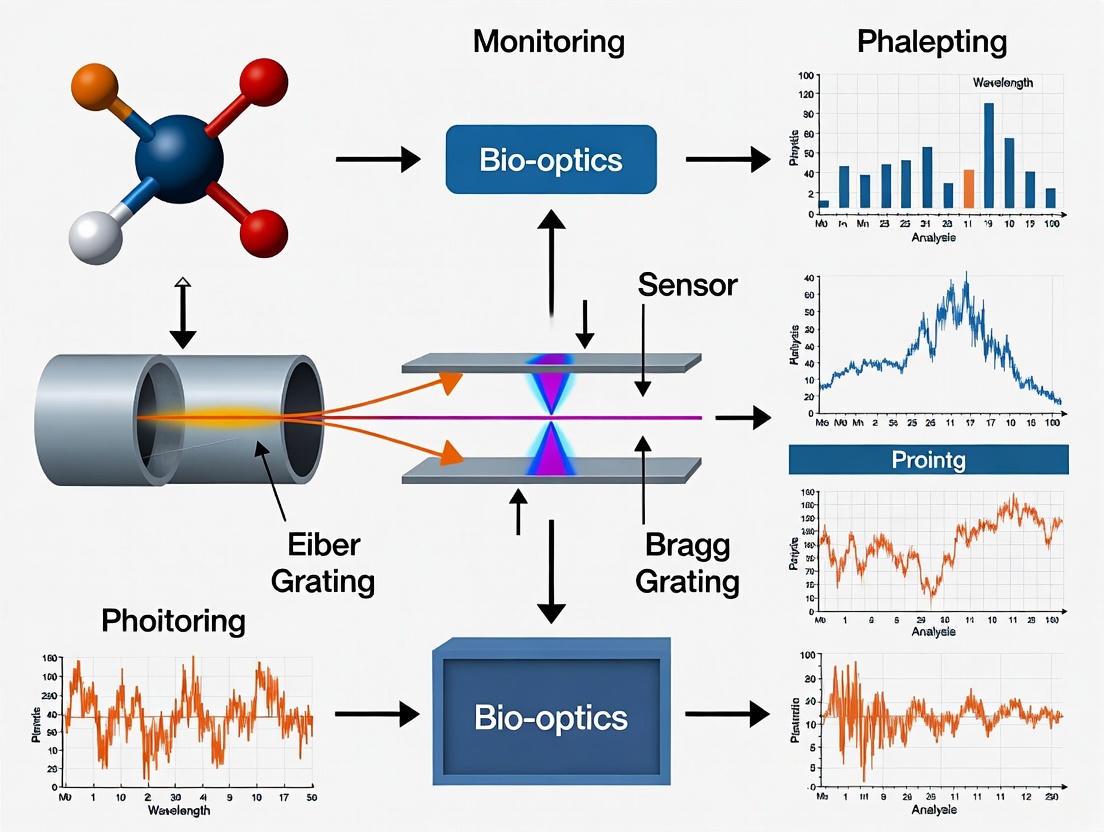
This article provides a comprehensive review of Fiber Bragg Grating (FBG) sensor technology for physiological monitoring, tailored for researchers and drug development professionals.
Fiber Bragg Grating Sensors for Physiological Monitoring: A 2025 Review of Principles, Applications, and Clinical Translation
Abstract
This article provides a comprehensive review of Fiber Bragg Grating (FBG) sensor technology for physiological monitoring, tailored for researchers and drug development professionals. It explores the foundational principles of FBGs, including their inherent immunity to electromagnetic interference (EMI) and high sensitivity, which make them ideal for clinical settings like MRI suites. The manuscript details methodological advances in wearable FBG design for vital sign and body motion tracking, examines critical challenges such as cross-sensitivity and integration into textiles, and presents a comparative analysis with conventional electronic sensors. By synthesizing recent research and future directions, this review serves as a strategic resource for innovating next-generation biomedical monitoring systems.
The Foundation of Fiber Bragg Grating Sensing: Core Principles and Advantages for Biomedical Applications
Fiber Bragg Gratings (FBGs) have emerged as a transformative technology in the field of optical sensing, particularly for physiological monitoring research where precision, miniaturization, and electromagnetic immunity are critical. An FBG is an optical sensor characterized by a periodic modulation of the refractive index along the core of an optical fiber [1]. This modulation forms a grating that acts as a wavelength-specific reflector. The fundamental principle underlying FBG sensing is that the central reflected wavelength, known as the Bragg wavelength (λB), shifts in response to external physical parameters such as temperature change and mechanical strain [1]. This direct relationship between the wavelength shift and environmental perturbations forms the basis for their extensive use in high-precision sensing applications, from structural health monitoring to biomedical device integration [2] [3].
The attractiveness of FBG sensors for physiological monitoring stems from their inherent advantages. These include their small size and lightweight nature, which allow for minimal invasiveness; their complete immunity to electromagnetic interference (EMI), enabling operation in MRI environments and alongside other electronic medical equipment; their corrosion resistance; and their capacity for multiplexing several sensors on a single optical fiber [2] [3]. This last feature is particularly valuable for distributed sensing of physiological parameters, such as mapping pressure points across a wheelchair cushion or measuring strain at multiple points along a tendon [3].
The Bragg Grating Theory of Fiber
The theoretical foundation of FBG operation is rooted in the principles of light diffraction and interference in periodic structures. The grating within the optical fiber core consists of alternating regions with different refractive indices. When broadband light is launched through the fiber, each grating plane reflects a small portion of the incident light. For most wavelengths, these reflected light waves become phase-mismatched and destructively interfere. However, at one specific wavelength, the Bragg wavelength, the reflected waves from each grating plane undergo constructive interference [1]. This results in a strong reflected signal at this wavelength, while all other wavelengths are transmitted through the grating.
The condition for this constructive interference is defined by the Bragg equation:
λB = 2neffΛ
In this equation [1]:
- λB is the Bragg wavelength (the peak reflection wavelength).
- neff is the effective refractive index of the fiber core.
- Λ is the period of the grating (the spatial distance between two successive refractive index modulations).
When the FBG is subjected to external perturbations like strain or temperature changes, both the grating period (Λ) and the effective refractive index (neff) are altered. This causes a shift in the Bragg wavelength (ΔλB), which can be measured with high precision. Monitoring this wavelength shift allows for the quantitative determination of the applied stimulus, making the FBG a highly sensitive transducer for physical parameters [1].
Quantitative Response to Strain and Temperature
The sensitivity of the FBG sensor to strain and temperature is derived by differentiating the Bragg wavelength equation, resulting in a relationship that expresses the relative wavelength shift (ΔλB/λB) [4].
Response to Strain
When an FBG is subjected to mechanical strain, two effects occur: the physical elongation or compression of the fiber changes the grating period (Λ), and the stress-optic effect alters the effective refractive index (neff). The combined effect leads to a wavelength shift described by:
ΔλB / λB = (1 - pe) * Δε
Where [4]:
- Δε is the applied strain variation.
- pe is the photo-elastic constant of the optical fiber material, which accounts for the stress-induced change in the refractive index.
The strain sensitivity is typically condensed into a strain sensitivity coefficient, Kε. For standard silica fibers, the strain sensitivity is approximately ~1.2 pm/µε (picometers per microstrain) [5].
Response to Temperature
A change in temperature affects the FBG through two primary mechanisms: the thermal expansion (or contraction) of the fiber material, which changes the grating period (Λ), and the thermo-optic effect, which alters the effective refractive index (neff). The temperature-induced wavelength shift is given by:
ΔλB / λB = (αf + ξ) * ΔT
Where [4]:
- ΔT is the temperature change.
- αf is the thermal expansion coefficient of the fiber material.
- ξ is the thermo-optic constant.
This sensitivity is typically condensed into a temperature sensitivity coefficient, KT. For standard silica fibers, the temperature sensitivity is typically about ~10 pm/°C [5].
Table 1: Standard Sensitivity Coefficients for Silica FBG Sensors
| Parameter | Sensitivity Coefficient | Typical Value |
|---|---|---|
| Axial Strain | Kε | ~1.2 pm/µε [5] |
| Temperature | KT | ~10 pm/°C [5] |
The Cross-Sensitivity Challenge
A fundamental challenge in FBG sensing is the dual sensitivity of the Bragg wavelength [4]. Since both strain and temperature produce a wavelength shift, it is impossible to distinguish between the two effects using a single standard FBG. This cross-sensitivity can lead to significant measurement errors in physiological monitoring, where temperature fluctuations and mechanical strain often occur simultaneously (e.g., in wearable sensors for joint movement monitoring) [5].
Advanced FBG Designs for Enhanced Sensitivity and Discrimination
Research has led to advanced FBG designs and interrogation schemes to overcome the limitations of standard FBGs, particularly for high-precision applications like physiological monitoring.
Sensitivity Enhancement via Exceptional Points
Recent investigations have integrated concepts from non-Hermitian photonics, specifically Exceptional Points (EPs), to dramatically enhance FBG sensitivity. EPs are spectral singularities where eigenvalues and eigenvectors coalesce, resulting in an extreme sensitivity to external perturbations. By engineering the FBG's grating profile to operate near an EP, significant sensitivity enhancement has been achieved under a power interrogation scheme [5].
Table 2: Enhanced Sensitivity of EP-Engineered FBGs
| Parameter | Standard FBG Sensitivity | EP-Engineered FBG Sensitivity | Enhancement Factor |
|---|---|---|---|
| Temperature | ~10 pm/°C [5] | ~9.3 dBm/°C [5] | Nearly an order-of-magnitude |
| Axial Strain | ~1.2 pm/µε [5] | ~0.5 dBm/µε [5] | Nearly an order-of-magnitude |
These EP-engineered FBGs demonstrate nearly an order-of-magnitude improvement in sensitivity. To manage cross-sensitivity, a sensitivity matrix-based approach can be implemented, enabling accurate simultaneous detection of multiple parameters [5].
Simultaneous Strain and Temperature Measurement
Another approach to resolving the cross-sensitivity issue is the use of Polarization-Maintaining FBGs (PM-FBGs). These sensors possess a built-in birefringence, which results in two distinct Bragg peaks (λ1, λ2) in the reflection spectrum, corresponding to two orthogonal polarization axes [6].
The response of these two peaks to strain (ε) and temperature (T) is given by [6]: Δλ1 = a * ΔT + b * Δε Δλ2 = c * ΔT + d * Δε
Here, the sensitivity coefficients (a, b, c, d) for the two peaks are slightly different. By measuring the shifts of both peaks (Δλ1 and Δλ2), the system of two equations can be solved to simultaneously and independently determine the applied temperature change (ΔT) and strain (Δε) [6]. This eliminates the need for complex transducer packaging designed solely to isolate strain.
Experimental Protocols
The following protocols outline standard procedures for characterizing FBG sensors and for implementing a simultaneous strain and temperature measurement system.
Protocol 1: Fundamental Characterization of FBG Strain and Temperature Sensitivity
This protocol describes the process for calibrating a standard FBG sensor to determine its individual strain and temperature sensitivity coefficients [6].
Research Reagent Solutions Table 3: Key Materials for FBG Characterization
| Item | Function/Description |
|---|---|
| FBG Sensor | The optical sensor under test, with known initial Bragg wavelength. |
| Optical Interrogator | A high-precision device (e.g., tunable laser interrogator) to measure Bragg wavelength shifts in the picometer (pm) range [6]. |
| Temperature Chamber | A controlled environment (e.g., Votsch VT 7021) for cycling temperature over a defined range (e.g., -20°C to +80°C) [6]. |
| Strain Calibration Bench | A setup capable of applying precise, calibrated strain to the FBG (e.g., from 0 µε to +2145 µε) [6]. |
| Reference Sensors | High-precision electrical temperature probes (e.g., ISOTECH 935-14-61) or PT100 sensors, and reference strain gauges [6]. |
Methodology
- Temperature Sensitivity Calibration:
- Place the FBG sensor inside the temperature chamber alongside a high-precision reference temperature probe.
- Cycle the chamber temperature over the desired range (e.g., -20°C to +80°C) while recording the FBG's Bragg wavelength (λB) and the reference temperature (T) at each stable point.
- Plot the wavelength shift (ΔλB) against the temperature change (ΔT). The slope of the linear fit to this data is the temperature sensitivity coefficient, KT (pm/°C).
- Strain Sensitivity Calibration:
- Mount the FBG sensor on the strain calibration bench, ensuring it is coupled to apply axial strain.
- Apply a sequence of known strain values (e.g., in 10 steps from 0 µε to 2145 µε and back to 0 µε) while recording the Bragg wavelength shift.
- Plot the wavelength shift (ΔλB) against the applied strain (Δε). The slope of the linear fit to this data is the strain sensitivity coefficient, Kε (pm/µε).
Protocol 2: Simultaneous Measurement of Strain and Temperature using PM-FBGs
This protocol details the setup and data processing required to decouple strain and temperature using a single Polarization-Maintaining FBG (PM-FBG) sensor, which is ideal for applications where the two parameters cannot be physically isolated [6].
Research Reagent Solutions Table 4: Key Materials for Simultaneous Measurement
| Item | Function/Description |
|---|---|
| PM-FBG Array | A sensor array with multiple PM-FBGs on a single fiber, such as PM-Draw Tower Gratings (PM-DTGs) with an Ormocer coating [6]. |
| Specialized Interrogator | An interrogator capable of detecting both orthogonal polarization responses of the PM-FBGs (e.g., FAZT I4_Bi) [6]. |
| Calibration Setup | Integrated system for applying combined strain and temperature cycles to determine the sensor's specific sensitivity coefficients [6]. |
Methodology
- Sensor Calibration:
- Subject the PM-FBG to a combined calibration cycle of strain (e.g., 0 µε → +2145 µε → 0 µε) and temperature (e.g., -20°C → +120°C → -20°C).
- Use the interrogator to record the wavelength shifts of both Bragg peaks (Δλ1, Δλ2) at each step.
- Perform a multivariate linear regression to determine the four sensitivity coefficients (a, b, c, d) for the equations:
- Δλ1 = a * ΔT + b * Δε
- Δλ2 = c * ΔT + d * Δε
- Operational Measurement:
- Install the calibrated PM-FBG sensor in the test environment.
- Continuously monitor the two Bragg peaks (λ1, λ2) using the specialized interrogator.
- For each measurement instance, calculate the decoupled temperature (ΔT) and strain (Δε) using the inverse of the sensitivity matrix [6]:
- ΔT = ( d * Δλ1 - b * Δλ2 ) / ( a * d - b * c )
- Δε = ( -c * Δλ1 + a * Δλ2 ) / ( a * d - b * c )
- Where the denominator (ad - bc) is the determinant of the matrix.
Schematic Diagrams of FBG Operating Principle and Measurement
FBG Operating Principle and Wavelength Shift
The following diagram illustrates the fundamental working principle of a Fiber Bragg Grating and how the Bragg wavelength shifts in response to applied strain or temperature changes.
Diagram 1: FBG operating principle and wavelength shift.
Simultaneous Strain and Temperature Measurement Workflow
This flowchart outlines the experimental workflow for achieving simultaneous, decoupled measurements of strain and temperature using a Polarization-Maintaining FBG (PM-FBG).
Diagram 2: Workflow for simultaneous strain and temperature measurement.
Fiber Bragg Grating (FBG) sensors have emerged as a transformative technology for physiological monitoring in clinical and research settings. Their operation is based on the principle of light reflection from a periodic grating structure inscribed in the optical fiber core, which shifts in response to external physical parameters such as strain, temperature, and pressure [7] [8]. This technical foundation provides a unique combination of advantages that directly address the stringent requirements of clinical environments, where electromagnetic interference (EMI) immunity, miniaturization, and biocompatibility are paramount for patient safety and data integrity [9]. This application note details these core advantages, supported by quantitative data and experimental methodologies, to guide researchers and drug development professionals in the effective deployment of FBG-based sensing systems.
Key Advantages and Quantitative Data
The following sections elaborate on the three key advantages of FBG sensors, with summarized data presented in subsequent tables for clear comparison.
Electromagnetic Interference (EMI) Immunity
A paramount advantage of FBG sensors in clinical settings is their inherent immunity to electromagnetic interference (EMI). Since FBGs use light as the information carrier rather than electrical currents, they remain unaffected by strong electromagnetic fields generated by equipment such as Magnetic Resonance Imaging (MRI) scanners, electrosurgical units, and other hospital instrumentation [9] [10] [8]. This property ensures reliable and artifact-free signal acquisition, which is critical for patient monitoring during simultaneous diagnostic and therapeutic procedures. This immunity also enhances safety by eliminating the risk of electrical sparks in sensitive environments [9].
Miniaturization and Multiplexing Capability
FBG sensors are inherently small and lightweight, with a standard diameter similar to a human hair (125-250 µm), allowing for integration into minimally invasive surgical tools, catheters, and wearable devices [9] [8]. A single optical fiber can host multiple FBG sensors, a feature known as multiplexing. This enables the simultaneous monitoring of several physiological parameters (e.g., pressure, temperature, and force) from different locations using a single fiber connection, simplifying system design and reducing patient discomfort [10] [8]. Their compact size facilitates embedding into smart textiles for respiratory monitoring and instrumented prosthetics for biomechanical feedback [11] [9].
Biocompatibility and Safety
FBGs offer excellent biocompatibility, particularly polymer optical fibers (POFs), which are more flexible and safer than silica fibers for in-body applications as they are less prone to breaking and causing injury [9]. Silica glass, the primary material for many optical fibers, is chemically passive and biocompatible, making it suitable for intrinsic use in human systems [9]. This, combined with the fact that the sensing mechanism uses light instead of electricity, minimizes risks such as electric shock or thermal heating, making FBGs exceptionally safe for prolonged patient contact and implantable sensing applications [9].
Table 1: Key Advantages of FBG Sensors in Clinical Environments
| Advantage | Technical Basis | Clinical Benefit |
|---|---|---|
| EMI Immunity | Light-based signal transmission; no electrical conductors [10] [8]. | Reliable operation inside MRI suites and alongside other medical electronics; eliminates measurement artifacts. |
| Miniaturization | Small form factor (diameters from 125 µm); flexible [9]. | Enables development of minimally invasive catheters, needles, and wearable sensors. |
| Multiplexing | Multiple FBGs with distinct Bragg wavelengths on a single fiber [10]. | Multi-parameter and multi-point sensing with a single percutaneous entry; reduces system complexity. |
| Biocompatibility | Use of silica glass or biocompatible polymers (POFs) [9]. | Safe for extended contact with tissues and bodily fluids; reduces risk of adverse reaction. |
Table 2: Quantitative Performance of FBG Sensors in Biomedical Applications
| Measurand | Application Example | Reported Performance | Source Context |
|---|---|---|---|
| Pressure | Intravascular blood pressure monitoring [12]. | High sensitivity required for accurate clinical data. | Academic Review [12] |
| Mitral valve apparatus tension measurement [11]. | Ex vivo validation of force-sensing neochordae. | Research Article [11] | |
| Strain | Tendon and ligament force measurement [11]. | Accurate detection of dynamic movements. | Research Article [11] |
| Bone stress analysis during mastication [11]. | Monitoring of biomechanical forces. | Research Article [11] | |
| Temperature | Body temperature monitoring [10]. | Precise measurement for patient vital signs. | Industry Overview [10] |
| Kinematics | Knee joint posture sensing [11]. | Integration into a smart wearable belt. | Research Article [11] |
| Hand movement tracking [11]. | Sensing glove for dynamic finger flexure. | Research Article [11] |
Experimental Protocols
This section provides a generalized workflow and a specific detailed protocol for implementing FBG sensors in physiological monitoring.
Generalized Workflow for FBG-Based Physiological Sensing
The diagram below illustrates the logical workflow for developing and deploying an FBG sensing system for clinical research.
Detailed Protocol: FBG-Based Pressure Sensing for Intravascular Applications
Objective: To measure intravascular blood pressure in real-time using a fiber-optic pressure sensor based on an FBG integrated with a diaphragm mechanism [12].
Materials:
- Single-mode optical fiber with an inscribed FBG.
- Interrogator unit with specified wavelength resolution (e.g., ±1 pm).
- Pressure chamber for calibration.
- Diaphragm housing fixture.
- Data acquisition software.
- Physiological saline solution.
Methodology:
- Sensor Fabrication: Encapsulate the FBG within a custom-designed diaphragm structure. The external pressure deflects the diaphragm, transferring strain to the FBG [12].
- Calibration:
- Connect the sensor to the interrogator.
- Place the sensor assembly inside the pressure chamber.
- Expose the sensor to known pressure levels (e.g., 0 to 300 mmHg) in increments.
- Record the corresponding Bragg wavelength shift (ΔλB) at each pressure point at a constant temperature.
- Generate a calibration curve (Pressure vs. ΔλB) and calculate the pressure sensitivity in pm/mmHg.
- In-Vitro Validation: Submerge the sensor in a bath of physiological saline at 37°C to simulate the vascular environment and validate performance.
- Data Acquisition: During measurement, the interrogator continuously monitors the FBG's Bragg wavelength. The recorded wavelength data is converted to pressure values in real-time using the established calibration curve.
Diagram: Core Operating Principle of an FBG Sensor
The following diagram illustrates the fundamental operating principle of an FBG sensor, where changes in the physical environment cause a measurable shift in the reflected wavelength.
The Scientist's Toolkit: Research Reagent Solutions
Table 3: Essential Materials for FBG Sensor Development in Biomedical Research
| Item | Function / Description | Key Consideration |
|---|---|---|
| Photosensitive Optical Fiber | The substrate for FBG inscription; typically germanosilicate glass for UV writing [7] [9]. | Photosensitivity determines the efficiency of the grating inscription process. |
| Ultraviolet (UV) Laser System | Used with a phase mask to create the periodic refractive index modulation in the fiber core [7] [8]. | Wavelength and coherence length are critical for creating high-quality gratings. |
| Femtosecond (fs) Laser | An alternative for fabricating gratings in non-photosensitive fibers and creating complex structures [7]. | Enables direct inscription in standard fibers without hydrogen loading. |
| Optical Interrogator | The instrument that emits light into the fiber and detects the wavelength shifts from the FBGs [7]. | Wavelength resolution, scan rate, and channel count define system performance. |
| Biocompatible Polymer Coating | A protective layer (e.g., acrylate, polyimide) applied to the fiber post-inscription for mechanical and biological protection [7] [9]. | Must ensure biocompatibility and enhance durability without compromising sensitivity. |
| Polymer Optical Fiber (POF) | A flexible and fracture-tolerant alternative to silica fiber, ideal for wearable sensors [9]. | Higher elastic strain limits and better compatibility with organic materials. |
Fiber Bragg Grating (FBG) sensors have emerged as a transformative technology in physiological monitoring research, offering distinct advantages for measuring biomechanical forces, body temperature, and biochemical analytes. Their inherent immunity to electromagnetic interference (EMI), small size, and passive operation make them exceptionally suitable for use in MRI environments, implantable devices, and long-term patient monitoring [7]. An FBG sensing system operates on the principle of wavelength-based optical transduction, where physiological changes induce a measurable shift in the Bragg wavelength of light reflected by the grating [7]. This application note details the fundamental components of an FBG system and provides a standardized protocol for researchers in biomedical and pharmaceutical development to implement this technology for accurate and reliable physiological sensing.
Core Components of an FBG Sensing System
A functional FBG sensing system comprises four essential components: the optical fiber with the inscribed FBG sensor, the interrogator (or demodulator), the light source (often integrated within the interrogator), and the data acquisition and processing unit.
Optical Fiber and FBG Sensor
An optical fiber consists of a core, cladding, and a protective jacket. The FBG is a periodic modulation of the refractive index within the core of a single-mode optical fiber, typically inscribed using ultraviolet laser light via phase mask, point-by-point, or interferometric techniques [7]. More recently, femtosecond laser inscription has enabled the fabrication of gratings in a wider variety of fiber types without the need for hydrogen loading, providing greater flexibility for specialized sensor designs [7].
The fundamental principle of operation is governed by the Bragg condition, where the central wavelength of the reflected light, known as the Bragg wavelength (( \lambdaB )), is defined as: [ \lambdaB = 2 \cdot n{eff} \cdot \Lambda ] where ( n{eff} ) is the effective refractive index of the fiber core and ( \Lambda ) is the grating period [7]. Changes in strain and temperature directly alter ( n{eff} ) and/or ( \Lambda ), resulting in a shift of the Bragg wavelength (( \Delta \lambdaB )) [7]. For physiological monitoring, the FBG is often packaged or functionalized to respond to a specific biological stimulus, such as pressure, temperature, or a particular biochemical.
Interrogator (Demodulator)
The interrogator is the core electronic unit that detects and processes the optical signal from the FBG sensor. Its primary function is to illuminate the FBG and precisely measure the wavelength shift of the reflected light, converting it into a digital, engineering-relevant value [13]. Interrogators employ various demodulation techniques, including tunable filtering, interferometry, and spectroscopy. Recent research focuses on overcoming the cost-size-accuracy trade-offs, with novel systems using tunable lasers and advanced peak-finding algorithms deployed on microcontrollers achieving compact sizes (100 mm × 100 mm × 10 mm) and demodulation accuracies with a mean absolute error of 9.6 pm [14]. Key specifications for selecting an interrogator include wavelength range, number of channels, sampling rate, and wavelength accuracy.
Light Source
A broadband light source, such as an amplified spontaneous emission (ASE) source, is typically integrated into the interrogator. This source emits light over a wide spectrum that encompasses the Bragg wavelengths of all FBG sensors in the system. For the FBGs described in these results, the operational wavelength range is generally in the C-band, around 1510 to 1590 nm [15] [16] [17]. In alternative systems, a tunable laser source may be used, which scans across a range of wavelengths to identify the peak reflection from the FBG [14].
Data Acquisition and Processing Unit
This unit comprises the software and hardware interfaces that collect the wavelength data from the interrogator, perform necessary calculations and calibrations, and present it to the researcher. Communication is typically handled via protocols like USB, Ethernet, or TCP/IP [15] [16] [17]. The software allows for real-time data visualization, logging, and setting of alarm thresholds based on the measured physiological parameters.
Performance Comparison of Commercial and Research Interrogators
The following table summarizes the key specifications of several commercial and research-grade FBG interrogators, aiding in the selection of an appropriate system for physiological monitoring studies.
Table 1: Performance Specifications of Selected FBG Interrogators
| Product / System | Wavelength Range (nm) | Channels / Sensors per Channel | Max. Sampling Rate | Wavelength Accuracy | Key Features & Applications |
|---|---|---|---|---|---|
| WaveCapture FBG System [15] | 1510 - 1590 | 1, 4, 8, or 16 channels | 5 kHz | ±5 pm | High EOL accuracy, USB 2.0, for harsh environments and various sensing applications. |
| GTR FBG Interrogator [16] | 1515 - 1585 | 1 channel / Up to 8 sensors | 19.23 kHz | < 5 pm repeatability | Miniature size (100x114x35 mm), low weight (310 g), ideal for portable and OEM integrations. |
| FBGuard 1550 [17] | 1505 - 1590 | Up to 16 channels / 40 sensors per channel | 11 kHz (Fast option) | ±5 pm (EOL) | Industrial-grade, static & dynamic measurement, up to 640 sensors total. |
| SOFO VII/MuST [18] | N/A | 4 channels / 7-25 FBGs per channel | N/A | N/A (NIST traceable) | Portable, battery-operated, integrated PC & touch screen for field use. |
| Novel Demodulation System [14] | 1525 - 1565 (C-band) | N/A | 100 Hz | 9.6 pm MAE | Research prototype; compact (100x100x10 mm), cost-effective, uses GRU peak-finding algorithm. |
Experimental Protocol: FBG-Based Temperature Sensing for Physiological Applications
This protocol outlines a methodology for utilizing an FBG sensor to measure temperature, which can be adapted for monitoring core body temperature or skin temperature in clinical research settings.
Research Reagent Solutions and Materials
Table 2: Essential Materials for FBG Temperature Sensing Experiments
| Item | Function / Description |
|---|---|
| FBG Interrogator | e.g., GTR or WaveCapture system, to illuminate the FBG and measure wavelength shifts. |
| Single-Mode Optical Fiber | The medium containing the inscribed FBG sensor. |
| FC/APC Connectorized Patch Cable | Connects the FBG sensor to the interrogator with minimal back-reflection. |
| Temperature Calibration Chamber | A controlled environment (e.g., oven or water bath) for calibrating the FBG's temperature response. |
| NIST-Traceable Reference Thermometer | Provides ground truth temperature readings for calibration. |
| Data Acquisition Software | Provided with the interrogator or custom-built (e.g., in LabVIEW or Python) for logging data. |
| Medical-Grade Biocompatible Coating | (For implantable/ex vivo use) Encapsulates the FBG for biocompatibility and mechanical protection. |
Step-by-Step Procedure
- Sensor Preparation: Inscribe or procure an FBG sensor with a known central wavelength within the interrogator's operating range (e.g., ~1550 nm). If intended for contact with biological tissues, the sensor must be coated with a suitable, medically approved biocompatible polymer (e.g., silicone) to ensure safety and stability.
- Optical Connection: Connect the FC/APC patch cable from the interrogator's optical output to the FBG sensor. Ensure all connections are secure to prevent signal loss.
- System Power-Up: Power on the interrogator and start the data acquisition software. Verify that the software detects the interrogator and can display the reflected spectrum from the FBG.
- Temperature Calibration: a. Place the FBG sensor and the NIST-traceable reference thermometer in the temperature calibration chamber, ensuring good thermal contact. b. Ramp the chamber temperature through a series of stable points across the expected physiological range (e.g., 30°C to 45°C). c. At each stable temperature point, record the Bragg wavelength (( \lambdaB )) from the interrogator and the corresponding temperature (T) from the reference thermometer. d. Perform a linear regression analysis on the collected data to determine the temperature sensitivity coefficient, ( KT ) (typically in pm/°C), from the equation: [ \Delta \lambdaB = KT \cdot \Delta T ] where ( \Delta \lambda_B ) is the measured wavelength shift and ( \Delta T ) is the temperature change.
- Experimental Measurement: a. Deploy the calibrated FBG sensor in the physiological environment (e.g., fixed on the skin or immersed in a cell culture). b. Initiate continuous data acquisition from the interrogator. c. The data acquisition software should now convert the real-time wavelength shifts into temperature values using the established calibration coefficient ( K_T ).
- Data Analysis: Analyze the collected temperature data, noting rates of change, stability, and any correlations with other experimental variables or stimuli.
System Workflow and Signal Pathway
The following diagram illustrates the logical flow of information and the relationship between the core components in a typical FBG sensing system.
Fiber Bragg Grating (FBG) sensors have emerged as advanced tools for monitoring a wide range of physical parameters in various fields, including structural health, aerospace, and biomedical applications [19]. An FBG is an optical sensor that relies on a periodic modulation of the refractive index along the core of an optical fiber, forming a grating that selectively reflects light at a specific wavelength known as the Bragg wavelength [1]. The fundamental principle behind FBG sensing is based on the fact that the Bragg wavelength shifts in response to external factors such as temperature, strain, pressure, and chemical interactions [19] [1]. This ability to capture changes in real-time makes FBG sensing a powerful tool for precision sensing in physiological monitoring [1].
The theory behind Fiber Bragg Gratings is based on the principle of light diffraction. A Bragg grating is a periodic structure with alternating regions of different refractive indices. When light passes through the fiber, the periodic changes in the refractive index cause constructive interference, resulting in the reflection of light at a specific wavelength [1]. This Bragg wavelength (λ~B~) is determined by the equation:
λ~B~ = 2n~eff~Λ
Where:
- λ~B~ is the Bragg wavelength (the wavelength of the reflected light)
- n~eff~ is the effective refractive index of the fiber core
- Λ is the period of the grating (the distance between two successive refractive index changes) [19] [1]
When an external force (like temperature or strain) is applied to the fiber, the grating period (Λ) and/or the refractive index (n~eff~) changes, causing a shift in the Bragg wavelength (Δλ~B~). This shift is directly proportional to the magnitude of the external perturbation, making FBG sensors valuable for real-time monitoring of physiological signals [19] [1].
The Bragg Wavelength Shift Mechanism
Fundamental Principles
The Bragg wavelength shift mechanism forms the cornerstone of FBG sensing technology for physiological monitoring. When an FBG sensor is subjected to external stimuli, such as mechanical strain or temperature variations, both the effective refractive index (n~eff~) and the grating period (Λ) undergo modification, resulting in a measurable shift in the reflected Bragg wavelength [19]. This relationship is quantitatively described by the following equation:
Δλ~B~ = 2 • [(∂n~eff~/∂T)ΔT + n~eff~(∂Λ/∂ε)Δε]
Where:
- Δλ~B~ is the shift in the Bragg wavelength
- ΔT is the temperature change
- Δε is the strain change [19]
For physiological sensing, this fundamental principle can be adapted to measure specific biological parameters. For instance, when employing a specialized coating sensitive to a particular biological compound, the stress induced in this coating layer causes a shift in the Bragg wavelength. When the sensor's temperature remains constant, the Bragg wavelength shift may be expressed as:
Δλ~B~/λ~B~ = K~ε~ × ε
Where ε is the axial stress of the FBG caused by the expansion or contraction of the specialized coating layer, and K~ε~ is a constant [19].
Advanced Sensing Modalities
For more complex physiological measurements, advanced FBG configurations have been developed. Cladding-etched fibers can be used to measure the refractive index of the surrounding medium since the standard FBG itself is not inherently sensitive to the refractive index of its environment [19]. These sensors are based on increased evanescent field interaction with the measurand and have found implementations in chemical and biological fields to measure various liquids and gases [19].
During cladding etching, higher-order Bragg resonances appear when the fiber diameter reduces. These higher-order Bragg resonances are used to determine the diameter of a standard optical fiber with a precision of approximately 200 nm. The evanescent field values of the fundamental mode and higher-order modes are affected by the surrounding refractive index to different extents. Using the relative wavelength shifts between the modes, the refractive index of external media can be determined, enabling precise biochemical sensing applications [19].
FBG Sensors in Physiological Monitoring: Applications and Data
The application of FBG sensors in physiological monitoring has expanded significantly due to their unique advantages, including immunity to electromagnetic interference, small size, and ability to perform multipoint sensing while maintaining a compact form factor [20]. Recent advances using chalcogenide and other specialty fibres represent a substantial step towards all-fibre wearable devices for healthcare monitoring [20].
Table 1: Physiological Parameters Monitored Using FBG Sensors
| Physiological Parameter | FBG Sensing Approach | Typical Wavelength Shift Range | Key Applications |
|---|---|---|---|
| Body Temperature | Direct temperature-strain coupling | ~10 pm/°C | Core body temperature monitoring, febrile condition detection [20] [11] |
| Respiratory Rate | Chest wall movement detection | Varies with breathing depth | Sleep apnea monitoring, respiratory disorder diagnosis [20] [11] |
| Heart Rate | Ballistocardiographic movements | Micro-strain measurements | Cardiovascular health assessment, exercise physiology [20] [11] |
| Sweat Analysis | pH-sensitive coatings | Coating-dependent shifts | Metabolic monitoring, dehydration assessment [20] |
| Biomechanical Forces | Strain sensing in tissues/joints | Varies with applied force | Rehabilitation monitoring, sports science, prosthetics [11] |
| Blood Pressure | Pulse wave velocity measurement | ~1-5 nm depending on design | Hypertension management, cardiovascular monitoring [20] |
Quantitative Data from Physiological Monitoring Studies
Research studies have demonstrated the effectiveness of FBG sensors in capturing various physiological signals with high precision. The following table summarizes key quantitative findings from recent investigations:
Table 2: Experimental Data from FBG-Based Physiological Monitoring Studies
| Study Focus | Sensor Configuration | Key Performance Metrics | Reference |
|---|---|---|---|
| Wearable body temperature monitoring | FBG integrated into textile | Accuracy: ±0.1°C, Resolution: 0.05°C | [20] [11] |
| Respiratory monitoring | Chest belt with FBG | Respiratory rate accuracy: >95% compared to spirometry | [20] [11] |
| Gait analysis | FBG embedded insole | Force resolution: <1N, capable of identifying gait phases | [20] |
| Cardiac monitoring | FBG on chest strap | Heart rate detection accuracy: 98.2% compared to ECG | [20] [11] |
| Joint movement monitoring | FBG integrated into flexible substrate | Angular resolution: <1 degree for knee flexion | [11] |
| Sweat pH monitoring | Hydrogel-coated FBG | pH detection range: 4-8, resolution: ±0.2 pH units | [20] |
Experimental Protocols for Physiological Signal Acquisition
Protocol 1: Respiratory Rate Monitoring Using FBG Sensors
Principle: Respiratory activity causes thoracic movements that induce strain on an FBG sensor integrated into a chest strap. The resulting wavelength shifts correspond to inhalation and exhalation cycles [20] [11].
Materials:
- FBG sensor (central wavelength: 1530-1560 nm)
- Optical interrogator system (resolution: ≥1 pm)
- Elastic chest strap material
- Medical-grade adhesive for sensor fixation
- Data acquisition software
- Reference spirometer for validation (optional)
Procedure:
- Sensor Preparation: Characterize the FBG sensor's baseline spectrum and strain sensitivity prior to integration.
- Chest Strap Integration: Securely mount the FBG sensor onto an elastic chest strap, ensuring the fiber is oriented to maximize strain detection during chest expansion.
- Calibration: Apply known strains to the sensor-chest strap assembly and record corresponding wavelength shifts to establish a strain-wavelength correlation.
- Subject Application: Fit the chest strap snugly around the subject's chest at the level of the xiphoid process.
- Data Acquisition: Connect the FBG to the interrogator and initiate continuous wavelength monitoring at a sampling rate ≥10 Hz.
- Signal Processing: Apply a bandpass filter (0.1-0.5 Hz) to isolate respiratory movements from other artifacts.
- Rate Calculation: Implement peak detection algorithms to identify inhalation peaks and compute respiratory rate in breaths per minute.
Validation: Compare FBG-derived respiratory rates with simultaneous spirometer recordings or manual counting for accuracy assessment. Studies have reported >95% accuracy compared to reference methods [20] [11].
Protocol 2: FBG-Based Body Temperature Monitoring
Principle: FBGs exhibit temperature-dependent wavelength shifts due to thermo-optic and thermal expansion effects, enabling precise body temperature monitoring [20] [11].
Materials:
- FBG sensor with temperature sensitivity ~10 pm/°C
- Optical interrogator with pm-level resolution
- Thermal adhesive or patch for skin attachment
- Reference thermistor or clinical thermometer
- Temperature-controlled calibration chamber
Procedure:
- Temperature Calibration: Characterize the FBG's temperature response by placing it in a controlled thermal chamber across a physiological range (35-41°C).
- Sensor Attachment: Affix the FBG sensor to the skin surface using a medical-grade adhesive patch, ensuring good thermal contact.
- Thermal Isolation: Implement measures to minimize ambient temperature influences, such as using insulating layers.
- Data Collection: Monitor wavelength shifts continuously at a sampling rate of 1 Hz.
- Temperature Conversion: Convert wavelength shifts to temperature values using the established calibration curve.
- Signal Validation: Periodically compare FBG readings with reference clinical thermometers.
Applications: Continuous core temperature monitoring during surgical procedures, febrile illness tracking, and sports physiology studies [20] [11].
Visualization of FBG Sensing Principles
The following diagram illustrates the fundamental working principle of an FBG sensor and how it transduces physiological signals into measurable wavelength shifts:
Diagram 1: FBG Sensing Principle. Physiological stimuli induce measurable shifts in the Bragg wavelength.
The signal processing workflow for extracting physiological information from raw FBG signals involves multiple stages of processing and analysis:
Diagram 2: Signal Processing Workflow. Multiple processing stages transform raw wavelength shifts into physiological parameters.
The Scientist's Toolkit: Essential Research Reagents and Materials
Successful implementation of FBG-based physiological monitoring requires specific materials and reagents optimized for biomedical applications. The following table details essential components:
Table 3: Research Reagent Solutions for FBG Physiological Sensing
| Item | Specifications | Function | Example Applications |
|---|---|---|---|
| FBG Sensors | Single-mode optical fiber, λ~B~: 1530-1560 nm, reflectivity: >70% | Core sensing element detecting physiological parameters | All physiological monitoring applications [19] [11] |
| Interrogation System | Resolution: ≤1 pm, sampling rate: ≥100 Hz | Precise measurement of Bragg wavelength shifts | High-frequency physiological signal acquisition [19] [20] |
| Biocompatible Coatings | Medical-grade silicone, polyimide, or hydrogel polymers | Protect sensor and enhance biocompatibility for skin contact | Wearable sensors, implantable devices [20] [11] |
| Specialized Functional Coatings | pH-sensitive hydrogels, thermoresponsive polymers | Transduce specific biochemical parameters into mechanical strain | Sweat pH monitoring, metabolite detection [20] |
| Optical Connectors | FC/APC, LC/APC angled physical contact | Ensure low-loss connections between sensor and interrogator | All FBG sensing setups requiring disconnection [21] |
| Packaging Materials | Flexible substrates, composite materials | Protect fragile fiber and facilitate integration into wearables | Smart textiles, wearable monitoring devices [20] [21] |
| Calibration Equipment | Temperature chambers, precision translation stages, reference sensors | Establish accurate relationship between wavelength shift and physiological parameter | Sensor characterization and validation [22] [21] |
The Bragg wavelength shift represents a fundamental mechanism that enables precise quantification of physiological signals using FBG sensors. The direct relationship between external stimuli and measurable wavelength changes provides researchers with a powerful tool for non-invasive monitoring of vital signs, biochemical parameters, and biomechanical functions. As FBG technology continues to evolve, with advancements in specialty fibers, miniaturized interrogation systems, and biocompatible packaging, these sensors are poised to play an increasingly significant role in both clinical research and therapeutic monitoring applications. The protocols and methodologies outlined in this document provide a foundation for researchers to leverage FBG technology in their physiological monitoring investigations, potentially leading to innovative approaches in drug development, personalized medicine, and healthcare diagnostics.
Methodological Innovations and Cutting-Edge Applications in Physiological Monitoring
Fiber Bragg grating (FBG) sensors represent a advanced sensing technology within optical fiber systems, capable of precise physiological parameter detection. Their fundamental operation relies on the Bragg wavelength shift caused by changes in strain and temperature, described by the equation ΔλB = 2 * [(∂neff/∂T)ΔT + neff(∂Λ/∂ε)Δε] [19]. This principle enables their function as highly sensitive physiological monitors when integrated into textile substrates.
FBG sensors are particularly suited for wearable applications due to their passive operation, immunity to electromagnetic interference (ensuring MRI compatibility), biocompatibility, and multiplexing capability allowing multiple sensing points on a single fiber [23] [24]. This protocol details methodologies for embedding FBG sensors into textiles for monitoring cardiorespiratory parameters, supporting research in continuous health assessment, drug response evaluation, and clinical diagnostics.
FBG Sensing Principles and Textile Integration Approaches
Fundamental FBG Operating Mechanism
FBGs consist of a periodic modulation of the refractive index within the core of a photosensitive optical fiber. When broadband light propagates through the fiber, a specific wavelength, the Bragg wavelength (λB), is reflected back according to the condition λB = 2neffΛ, where neff is the effective refractive index of the fiber core and Λ is the grating period [19] [23]. External stimuli such as mechanical strain from chest wall movement or temperature variations from blood flow or skin contact alter both neff and Λ, resulting in a measurable shift in λB that is linearly proportional to the applied stimulus [19].
Textile Integration Methodologies
Multiple approaches exist for incorporating FBGs into wearable textile platforms, each offering distinct advantages for specific monitoring applications:
- Embedded Yarn Integration: Optical fibers containing FBG arrays are woven or knitted directly into the textile structure during manufacturing, providing excellent mechanical coupling and durability through interlacing with conventional yarns [25] [24]. This method is particularly suitable for respiratory monitoring belts requiring precise strain transmission.
- Surface Attachment: Fibers are attached to finished textiles using biocompatible adhesives or thin polymer encapsulation strips (e.g., PDMS). This approach offers flexibility in sensor placement on existing garments but may present challenges for long-term mechanical stability [26].
- Encapsulated Module Integration: FBG sensors are first embedded within a protective polymer structure (e.g., 3D-printed TPU insoles or flexible silicone patches) which is then attached to the textile. This method provides enhanced strain transfer and protection from bending losses, crucial for footwear applications and localized pressure sensing [26].
Table 1: Comparison of FBG Integration Methods for Wearable Textiles
| Integration Method | Mechanical Coupling | Durability | Comfort/Flexibility | Best-Suited Applications |
|---|---|---|---|---|
| Embedded Yarn | Excellent | High | Moderate | Respiratory belts, chest bands |
| Surface Attachment | Moderate | Moderate | High | Cardiac vests, temperature sensing |
| Encapsulated Module | Excellent | Very High | Low-Moderate | Instrumented insoles, joint sensing |
Experimental Protocols for Vital Sign Monitoring
Multi-Point Respiratory Pattern Monitoring
Principle and Setup
Respiratory monitoring utilizes FBG sensors to detect thoraco-abdominal strain caused by breathing movements. The protocol involves a sensor array positioned to capture compartmental contributions (pulmonary rib cage, abdominal rib cage, and abdomen) to tidal volume [24]. A minimum of three sensing points per compartment is recommended for comprehensive analysis.
Materials and Sensor Fabrication
- FBG Array: 40 FBGs inscribed in a single Boron-doped photosensitive single-mode fiber (PS1250/1500) using a phase mask technique with a Nd:YAG laser (266 nm wavelength) [26] [24].
- Interrogation System: Portable spectrometer with broadband light source (1520-1620 nm range), minimum 1 pm wavelength resolution, and 100 Hz sampling rate [24].
- Textile Platform: Elastic belt or harness composed of two-layer construction with inner moisture-wicking layer and outer structural layer.
- Embedding Process: Optical fiber is routed through specially designed grooves in the textile structure using a PTFE capillary tube filled with PDMS resin for enhanced strain transfer and mechanical protection [26].
Data Acquisition and Processing
- Signal Acquisition: Collect reflected wavelength data from all FBG sensors simultaneously using wavelength division multiplexing (WDM).
- Motion Artifact Compensation: Implement differential measurements between sensors subject to respiratory strain and reference sensors isolated from breathing movements.
- Parameter Extraction:
- Breathing Rate (BR): Calculate from frequency domain analysis (FFT) of wavelength shift time series.
- Tidal Volume Estimation: Correlate summed wavelength shifts from all sensors with spirometer measurements using subject-specific calibration curves.
The following workflow diagram illustrates the experimental setup and data processing pathway for respiratory monitoring:
Cardiac Monitoring via Ballistocardiography and Pulse Wave Detection
Principle and Setup
Cardiac monitoring employs FBGs to detect micro-vibrations and arterial pulsations associated with the cardiac cycle through ballistocardiographic (BCG) and photoplethysmographic (PPG) principles. Sensors are strategically positioned over major arteries (carotid, radial) or integrated into garments covering the chest region to capture mechanical cardiac signals [27] [23].
Materials and Sensor Configuration
- High-Sensitivity FBG Sensors: Chirped FBGs or tilted FBGs with enhanced pressure sensitivity, inscribed using femtosecond laser for improved stability [23].
- Interrogation System: High-speed interrogator with 1 kHz minimum sampling rate and 0.5 pm wavelength resolution to capture rapid pulse waveforms.
- Textile Integration: Direct embedding in form-fitting garments (chest straps, shirt cuffs) using elastic yarns to maintain consistent sensor-skin contact pressure (5-15 mmHg optimal range).
Signal Processing and Parameter Extraction
- Noise Filtering: Implement bandpass filter (0.5-20 Hz) to remove respiratory interference and high-frequency noise.
- Pulse Wave Analysis:
- Heart Rate (HR): Determine from inter-peak intervals in BCG or pulse waveform.
- Heart Rate Variability (HRV): Calculate from time-domain (SDNN, RMSSD) or frequency-domain (LF, HF power) analysis of RR intervals.
- Pulse Transit Time (PTT): Measure using synchronized sensors at proximal and distal sites for blood pressure estimation [24].
Table 2: Performance Characteristics of FBG-Based Vital Sign Monitoring
| Vital Parameter | Measured Signal | FBG Sensitivity | Reported Accuracy | Key Advantages |
|---|---|---|---|---|
| Respiratory Rate | Thoraco-abdominal strain | 1 pm/με [19] | >94% vs. reference [28] | Compartmental breathing analysis |
| Tidal Volume | Chest wall expansion | Linear correlation R²=0.904 [26] | Requires individual calibration | Non-restrictive monitoring |
| Heart Rate | BCG/Pulse waveform | 0.11 ± 0.10 pm/N [26] | ±2 BPM in controlled conditions | MRI compatibility |
| Blood Pressure | Pulse transit time | N/A | Under investigation | Cuff-less continuous estimation |
Research Reagent and Material Solutions
Successful implementation of FBG-based wearable monitoring systems requires specific materials and instrumentation as detailed below:
Table 3: Essential Research Materials for FBG-Textile Development
| Component | Specification/Recommended Type | Function/Purpose |
|---|---|---|
| Optical Fiber | Boron-doped photosensitive single mode fiber (e.g., Fibercore PS1250/1500) [26] | FBG inscription substrate with high photosensitivity |
| Phase Masks | Custom period for desired Bragg wavelength (e.g., 1520-1620 nm range) [26] | Pattern definition during FBG fabrication |
| Laser Source | Nd:YAG (266 nm) or femtosecond IR laser for inscription [26] | Inducing periodic refractive index modulation |
| Interrogator | Portable spectrometer with 1 pm resolution, 100+ Hz rate [24] | Wavelength shift detection and recording |
| Textile Substrate | Elastic yarns with low stress relaxation (e.g., spandex blends) [25] | Mechanical support and user comfort |
| Encapsulant | PDMS or TPU for flexible protection [26] | Strain transfer enhancement and fiber protection |
| Adhesive | Biocompatible silicone medical adhesive [26] | Sensor fixation to textile or skin |
Data Interpretation and Analytical Considerations
Signal Validation and Artifact Management
Physiological monitoring in ambulatory environments introduces motion artifacts that require specialized processing approaches. Multi-sensor correlation techniques validate physiological signals by comparing outputs from collocated sensors. Adaptive filtering algorithms effectively separate respiratory and cardiac signals when they occupy overlapping frequency bands [23]. Temperature compensation is critical for accurate strain measurement, achieved through reference FBGs isolated from mechanical deformation but exposed to same thermal environment [19].
Clinical Parameter Correlation
Establishing correlation between FBG sensor outputs and clinical gold standards requires systematic validation protocols. For respiratory monitoring, parallel measurement with pneumotachograph or spirometer generates calibration curves for tidal volume estimation [24]. Cardiac parameter validation utilizes ECG for heart rate timing reference and tonometric arterial pressure for pulse wave analysis verification. Statistical analysis should report correlation coefficients, Bland-Altman limits of agreement, and clinical error grids where appropriate.
The following diagram illustrates the signal processing pathway for extracting cardiac parameters:
The integration of FBG sensors into wearable textiles provides a sophisticated methodology for continuous, unobtrusive monitoring of cardiorespiratory function. The protocols detailed herein enable researchers to develop robust monitoring systems capable of capturing both respiratory patterns and cardiac activity with high precision. As this technology advances, future developments will focus on miniaturized interrogation systems, advanced multi-sensor fusion algorithms, and standardized validation frameworks to transition these capabilities from research environments to clinical practice and commercial healthcare applications.
Fiber Bragg Grating (FBG) sensors are becoming an increasingly transformative technology in the field of physiological monitoring, particularly for quantifying body motion and kinematics. An FBG is a periodic or aperiodic perturbation of the effective refractive index in the core of an optical fiber, typically written using ultraviolet laser light [29] [7]. When broadband light is transmitted through the fiber, the grating reflects a very narrow band of wavelengths, known as the Bragg wavelength (( \lambdaB )), while transmitting all others. The fundamental principle governing this reflection is expressed by the equation ( \lambdaB = 2n{eff}\Lambda ), where ( n{eff} ) is the effective refractive index of the fiber core and ( \Lambda ) is the grating period [30] [31] [32].
The core sensing mechanism relies on the fact that the Bragg wavelength shifts ( (\Delta\lambdaB) ) in direct, linear proportion to physical parameters such as axial strain (( \Delta\varepsilon )) and temperature (( \Delta T )) [30] [31]. This relationship is quantitatively described by the following equation: [ \Delta\lambdaB = \lambdaB [(1-pe)\Delta\varepsilon + (\alpha + \xi)\Delta T] ] Here, ( p_e ) is the photoelastic constant, and ( \alpha ) and ( \xi ) are the thermal expansion and thermo-optic coefficients, respectively [30] [33]. For kinematic sensing, strain induced by body movement is the primary measurand, while temperature variations are often compensated for using reference gratings or specialized packaging designs [34].
FBG sensors offer a unique combination of properties that make them exceptionally suitable for biomedical motion tracking. These include their small size and light weight, inherent immunity to electromagnetic interference (EMI), biocompatibility, and chemical inertness [30] [33]. Furthermore, their innate multiplexing capability allows multiple sensors to be inscribed in a single optical fiber and interrogated by a single unit, enabling distributed sensing over long distances and the creation of dense sensing networks for complex kinematic analysis [34] [31] [7].
FBG Sensing Principles and Signal Demodulation
The operational principle of FBG-based kinematic sensing is the transduction of mechanical deformation into a quantifiable wavelength shift. When an FBG sensor is subjected to axial strain due to bending, stretching, or compression, two primary changes occur: the grating period (( \Lambda )) alters, and the effective refractive index (( n_{eff} )) changes via the strain-optic effect [30] [31]. These changes collectively cause a shift in the reflected Bragg wavelength, which is detected and measured.
A critical consideration in practical applications is the phenomenon of cross-sensitivity, where both strain and temperature contribute to the wavelength shift [34] [7]. For accurate kinematic measurements, this cross-sensitivity must be mitigated. Common strategies include:
- Reference Gratings: Using a second, isolated FBG that experiences only temperature changes to provide a compensatory signal [31].
- Temperature-Self Compensating Structures: Special mechanical designs, such as specific packaging methods using materials with tailored thermal expansion properties, that inherently cancel out the temperature effect on the wavelength shift [34].
- Dual-Parameter Sensing Configurations: Employing specialized grating structures (e.g., hybrid FBG/LPG) or specific packaging that allows for the simultaneous and independent resolution of strain and temperature [7].
The process of measuring the wavelength shift, known as demodulation, is performed by an interrogator. For dynamic motion tracking, high-speed interrogation systems are essential to capture rapidly changing signals [30] [35]. The choice of demodulation principle directly influences the sensor's performance characteristics, including its resolution, range, and speed, as summarized in Table 1.
Table 1: Primary Signal Demodulation Principles for FBG Sensors in Motion Tracking
| Demodulation Principle | Working Method | Key Advantages | Typical Applications in Kinematics |
|---|---|---|---|
| Wavelength Shift Detection | Tracks the central wavelength shift of the reflected spectrum using an Optical Spectrum Analyzer (OSA) or integrated interrogator [34]. | High accuracy and resolution; direct measurement; well-established technology. | Monitoring of quasi-static movements (e.g., posture); gait analysis; bone strain measurement [30] [34]. |
| Intensity-Based Detection | Measures the change in reflected optical power at a fixed laser wavelength [34] [35]. | Simpler and lower-cost interrogation; very high-speed measurement capability. | High-frequency and transient motion capture (e.g., pulsed elongation, vibrations, muscle tremors) [35]. |
| Phase Signal Demodulation | Utilizes interferometric techniques to detect phase changes in the light, which are related to wavelength shift [34]. | Extremely high sensitivity and resolution. | Detection of subtle physiological signals (e.g., respiratory chest wall deformation, fine muscle vibrations) [30]. |
The following workflow diagram illustrates the logical process from the physical stimulus to data acquisition in an FBG sensing system.
Figure 1: Signal transduction and acquisition workflow in an FBG-based kinematic sensing system.
Application Notes: From Large-Joint to Fine Motor Skills
The application of FBG sensors in motion tracking spans a wide spectrum, from gross movements of large joints to the delicate intricacies of fine motor skills, demonstrating the technology's remarkable versatility.
Large-Joint Movement Tracking
For monitoring large joints such as the knee, hip, and shoulder, FBG sensors are often integrated into wearable bands or directly embedded into textiles. Their primary function is to measure the angle between body segments during activities like walking, running, or cycling [30]. In these applications, sensors are typically mounted on a cantilever beam structure or an elastic substrate. The bending of this structure during joint movement imposes a predictable strain on the FBG, which is directly correlated to the joint angle [34]. This capability is crucial for objective gait analysis in post-stroke rehabilitation, the assessment of prosthetic fit and function, and sports science for analyzing athletic performance and technique [30] [36]. A key advantage in these scenarios is the sensor's EMI immunity, which allows for reliable operation in environments with electrical noise from muscle activity or other medical devices.
Fine Motor Skill and Gesture Recognition
Tracking fine motor skills, particularly of the hand and face, presents a greater challenge due to the complexity and subtlety of the movements. Recent research has successfully engineered wearable FBG sensors embedded in soft, flexible matrices like Polydimethylsiloxane (PDMS) silicone elastomer for this purpose [36]. These patches are conformable and can be comfortably attached to the finger joints, wrist, or around the mouth. As a finger bends or the wrist pitches, the PDMS patch deforms, transferring strain to the embedded FBG and causing a wavelength shift. Studies have demonstrated the high accuracy of these systems in recognizing intricate gestures, including individual finger bending, wrist pitch, and mouth movements [36]. This technology holds significant promise for developing advanced human-machine interfaces (HMIs), creating personalized communication aids for patients with disabilities, and enabling highly detailed remote monitoring of rehabilitation exercises for conditions like stroke-induced hand impairment [30] [36].
Internal Biomechanical Measurements
Beyond external wearable sensing, FBGs have also shown great potential for in vivo and in vitro biomechanical investigations. Their small size and biocompatibility make them suitable for measuring strain in bones, pressures in orthopedic joints, and stresses in intervertebral discs [30]. In one study, FBG sensors demonstrated feasibility for assessing bone strain in human cadaver femurs under in vitro loading conditions, offering a novel approach that competes with conventional electrical strain gauges while offering advantages in terms of long-term biocompatibility and application on irregular surfaces [30]. Another application involves understanding the effect of bone calcium loss on mechanical strain response, providing a direct indication of bone health and integrity [30].
The quantitative performance of FBG sensors across these diverse applications is summarized in Table 2.
Table 2: Performance Metrics of FBG Sensors in Various Kinematic Applications
| Application Domain | Measured Parameter | Reported Performance / Range | Key Technical Notes |
|---|---|---|---|
| Large-Joint Gait Analysis [30] [34] | Knee/Hip/Ankle Angle | Sensitivity: 36 pm/mm (in a specific cantilever setup) [34] | Linearity is crucial for accurate angle calculation; cross-sensitivity to temperature must be managed. |
| Fine Motor Skills (Hand) [36] | Finger Bend, Wrist Pitch | High recognition accuracy across participants post-calibration; Bragg wavelength shift tracked with < 0.5 pm resolution [36]. | PDMS embedding enhances sensitivity and flexibility; system allows for real-time monitoring. |
| Bone Biomechanics [30] | Bone Surface Strain | Measured strain response to loads from 0.1 kg to 4 kg in a three-point bending test. | FBGs can detect increased strain from decalcification, indicating bone quality degradation. |
| Pulsed/High-Speed Elongation [35] | Dynamic Deformation Rate | Strain sensitivity coefficient ( k_{BE} \approx 1.2 \times 10^{-3} ) nm/με at ~1550 nm [35]. | Requires high-speed interrogators or intensity-based detection for microsecond-scale events. |
Experimental Protocols
This section provides detailed methodologies for implementing FBG sensors in two key kinematic tracking scenarios: monitoring wrist pitch for large-joint analysis and finger bending for fine motor skill assessment.
Protocol 1: Wrist Pitch Recognition using a PDMS-Embedded FBG Sensor
This protocol outlines the procedure for fabricating a flexible FBG sensor and utilizing it for non-invasive, accurate wrist pitch measurement, suitable for rehabilitation monitoring [36].
Research Reagent Solutions & Essential Materials
Table 3: Key Materials for Fabricating a Flexible FBG Sensor
| Item | Function / Description |
|---|---|
| Single-Mode Optical Fiber (e.g., Corning SMF-28e) | The base medium into which the FBG is inscribed; typically has a cladding diameter of 125 μm [36]. |
| UV Laser & Phase Mask | Equipment for inscribing the periodic grating structure into the fiber core via the photomask technique [36] [7]. |
| Polydimethylsiloxane (PDMS) Sylgard 184 | A two-part silicone elastomer used to embed the FBG, providing flexibility, skin compliance, and mechanical protection [36]. |
| 3D-Printed Mold (e.g., Resin) | Defines the geometry (length: 40 mm, width: 20 mm, thickness: 1-3 mm) of the final flexible sensor patch [36]. |
| Optical Interrogator (e.g., FS22SI) | Measures the Bragg wavelength shift with high resolution (< 0.5 pm) and stability (1 pm) [36]. |
| Adhesive (e.g., Blu-Tack, Skin-Safe Tape) | Temporarily secures the fiber in the mold during fabrication and affixes the final sensor to the skin. |
Step-by-Step Procedure
- FBG Inscription and Preparation: Inscribe an FBG with a Bragg wavelength of approximately 1550 nm and a length of 10 mm into a single-mode optical fiber using the phase mask technique and ultraviolet laser light. Re-coat the bare grating region with acrylate to ensure mechanical strength [36].
- Sensor Fabrication and Embedding:
- Design and 3D-print a mold with the desired patch dimensions (e.g., 40 mm x 20 mm x 2 mm) and integrated guide channels at both ends.
- Secure the FBG fiber straight along the center of the mold using an adhesive, ensuring the grating is positioned in the middle of the mold cavity.
- Mix the PDMS precursor and curing agent at the recommended weight ratio (e.g., 10:1), degas to remove air bubbles, and carefully pour it into the mold.
- Cure the PDMS for 72 hours at room temperature. After polymerization, demold the flexible FBG sensor patch [36].
- Sensor Characterization:
- Connect the sensor to an optical interrogator and record the baseline Bragg wavelength.
- Perform a thermal characterization test (e.g., from 30°C to 70°C) to determine the sensor's thermal responsivity, which is essential for data interpretation [36].
- Perform a mechanical calibration by subjecting the sensor to known bending radii or angles and recording the corresponding wavelength shifts to establish a strain/angle-to-wavelength calibration curve.
- Subject Preparation and Sensor Placement:
- Obtain ethical approval and informed consent from the participant.
- Clean the skin area on the dorsal side of the forearm, crossing the wrist joint.
- Affix the PDMS-embedded FBG sensor securely over the wrist joint using skin-safe double-sided tape or a lightweight strap, ensuring good contact without restricting movement.
- Data Acquisition and Wrist Pitch Recognition:
- Instruct the participant to perform a series of controlled wrist flexion and extension movements through a predefined range of motion (e.g., -90° to +90°).
- Simultaneously, record the Bragg wavelength shift from the interrogator at a sufficient sampling rate (e.g., ≥ 1 Hz).
- Use the pre-established calibration curve to convert the recorded wavelength data into real-time wrist pitch angles.
The experimental workflow for this protocol is detailed below.
Figure 2: Experimental workflow for wrist pitch recognition using a PDMS-embedded FBG sensor.
Protocol 2: Finger Bend Tracking for Fine Motor Skill Assessment
This protocol describes the setup for monitoring finger flexion, which is critical for assessing rehabilitation progress in patients with hand motor impairments [33] [36].
Research Reagent Solutions & Essential Materials
- Flexible FBG Sensor Array: Multiple PDMS-embedded FBG sensors (as fabricated in Protocol 1), ideally with varying thicknesses to optimize sensitivity, arranged in an array.
- Glove Substrate: A lightweight, form-fitting fabric glove to which the sensor array will be attached.
- High-Speed Interrogator: An interrogation system capable of simultaneously reading multiple FBGs with a sampling rate sufficient to capture dynamic finger motion (≥ 10 Hz).
- Data Acquisition and Processing Software: Custom or commercial software for recording, visualizing, and processing the multi-channel wavelength data.
Step-by-Step Procedure
- Sensor Array Configuration: Fabricate multiple flexible FBG sensors. Plan their placement on the glove to correspond to the metacarpophalangeal (MCP) and proximal interphalangeal (PIP) joints of the fingers to be monitored.
- Glove Integration: Secively attach each flexible FBG sensor to the dorsal side of the glove fabric using a flexible, non-reactive adhesive. Ensure the sensors are aligned to bend with the finger joints and that the optical fiber leads are routed to minimize stress concentrations.
- System Calibration:
- Have the participant wear the instrumented glove.
- For each finger joint, record the Bragg wavelength at known flexion angles (e.g., 0°, 30°, 60°, 90°) using a goniometer as a reference.
- Generate a unique calibration curve (wavelength shift vs. flexion angle) for each sensor in the array.
- Data Collection and Gesture Recognition:
- Instruct the participant to perform a series of tasks, from isolated finger bending to complex gestures (e.g., making a fist, pinching, or tracing shapes).
- Record the wavelength data from all sensors simultaneously throughout the tasks.
- Apply the calibration curves to convert the multi-channel data into a real-time time series of joint angles.
- For gesture recognition, the combined angle data from multiple sensors can be fed into a classification algorithm (e.g., a machine learning model) to identify specific hand postures or movement patterns.
The Scientist's Toolkit: Essential Research Reagents and Materials
Successful implementation of FBG-based kinematic tracking systems relies on a set of core components and materials. The following table details these essential items and their functions within the research setup.
Table 4: Essential Research Reagent Solutions and Materials for FBG Kinematic Sensing
| Category / Item | Specific Function / Relevance to Research |
|---|---|
| Optical Fiber & Gratings | |
| Single-Mode Optical Fiber (SMF) | Standard medium for FBG inscription; provides a single light propagation path for clear signal interpretation [36] [7]. |
| Photosensitive Fiber (e.g., Germanosilicate) | Fiber type with enhanced photosensitivity, facilitating efficient FBG inscription with ultraviolet light [29] [7]. |
| Fabrication & Inscription | |
| Ultraviolet (UV) Laser Source | Provides high-energy light required to permanently modify the refractive index of the fiber core and inscribe the grating [29] [7]. |
| Phase Mask | A photolithographic mask placed between the laser and fiber to create the specific interference pattern needed for periodic grating inscription [36] [7]. |
| Sensor Packaging & Substrates | |
| Polydimethylsiloxane (PDMS) | A flexible, biocompatible silicone elastomer used to embed and protect FBGs, enhancing their durability, sensitivity to bending, and skin compliance [36]. |
| Polyimide Coating | A thin, tough polymer coating often applied directly to FBGs to protect them from moisture and mechanical damage while allowing for good strain transfer [30]. |
| Cantilever Beam Structures | A simple elastic mechanical structure used in many displacement sensors to convert linear displacement into a uniform strain on the surface-mounted FBG [34]. |
| Interrogation & Data Acquisition | |
| Optical Spectrum Analyzer (OSA) | Instrument used in laboratory settings to directly visualize and measure the reflection spectrum and wavelength shift from an FBG [30] [34]. |
| Commercial FBG Interrogator | A compact, integrated system that includes a broadband light source and a spectrometer, designed specifically for high-resolution, multi-channel FBG reading [36]. |
| Calibration & Testing | |
| Temperature Chamber (e.g., Heating Station) | Essential for characterizing the thermal responsivity of the FBG sensor and for developing temperature compensation strategies [36]. |
| Mechanical Testing Machine | Used for precise mechanical calibration of sensors by applying known loads or displacements [30]. |
Fiber Bragg Grating technology presents a powerful and versatile solution for the detailed quantification of human movement, seamlessly spanning the measurement of large-joint kinematics to the fine nuances of hand and finger motor control. The intrinsic properties of FBGs—including their small size, EMI immunity, biocompatibility, and multiplexing capability—make them uniquely suited for both research and clinical environments. As demonstrated in the provided application notes and protocols, the integration of FBGs with advanced flexible materials like PDMS is paving the way for a new generation of wearable, unobtrusive, and high-fidelity motion capture systems. The ongoing development of more sensitive, robust, and cost-effective FBG-based sensing systems holds the promise of revolutionizing fields such as rehabilitation science, sports medicine, neurology, and drug development, where objective, precise, and continuous monitoring of motor function is paramount.
FBG-Based Catheter Systems for Minimally Invasive Diagnostics and Force Sensing
Fiber Bragg Grating (FBG) sensors represent a transformative technology in the field of minimally invasive surgery (MIS), enabling precise force sensing capabilities that are critical for patient safety and procedural success. These sensors operate on the principle of wavelength shift detection in response to mechanical strain, offering inherent advantages such as electromagnetic immunity, miniaturization, and high sensitivity [7]. Their integration into catheter systems addresses a fundamental challenge in interventional procedures: the lack of tactile feedback at the instrument-tissue interface. Without this feedback, surgeons risk applying inadequate or excessive force, potentially leading to tissue damage, perforation, or ineffective treatment [37]. The clinical significance of this technology is particularly evident in cardiac ablation procedures, where studies have demonstrated that contact forces between 0.1–0.4 N are essential for effective ablation, with deviations from this range potentially resulting in complications such as cardiac perforation or insufficient scarring of cardiac tissue [38].
This document provides comprehensive application notes and experimental protocols for FBG-based catheter systems, specifically designed for researchers and developers working in physiological monitoring and medical device innovation. The content encompasses working principles, performance characterization across various implementations, detailed methodologies for sensor integration and validation, and essential research tools required for advancing this technology toward clinical translation.
Working Principle and Sensing Mechanisms
FBG sensors function through periodic modifications of the refractive index within the core of an optical fiber, creating a wavelength-specific filter that reflects a narrow band of light determined by the grating period. The fundamental operating principle is defined by the Bragg condition: λB = 2·neff·Λ, where λB is the Bragg wavelength, neff is the effective refractive index of the fiber core, and Λ is the grating period [7]. External mechanical forces applied to the catheter tip induce strain on the FBG, altering both the grating period and the effective refractive index through the photoelastic effect. This results in a proportional shift in the Bragg wavelength (ΔλB) that can be precisely measured to quantify the applied force vector.
Advanced FBG-based force sensors employ various structural configurations to decouple three-dimensional force components. Typical designs incorporate flexible elastomeric structures or specialized flexures that translate external forces into predictable strain patterns on one or more FBG sensors [39]. These transduction elements are engineered to provide differential sensitivity to axial (compressive/tensile) and lateral (bending) forces, enabling complete triaxial force measurement. The sensor systems utilize wavelength division multiplexing capabilities of FBGs to incorporate multiple sensing points along a single optical fiber, facilitating both force sensing and shape reconstruction in catheter navigation [38].
Figure 1: FBG Force Sensing Workflow. This diagram illustrates the sequential process from force application to three-dimensional force measurement in FBG-based catheter systems.
Performance Characterization and Comparative Analysis
Quantitative Performance Metrics of FBG-Based Force Sensors
Table 1: Performance characteristics of recently developed FBG-based force sensors for minimally invasive applications
| Sensor Design | Dimensions (Diameter × Length) | Force Range | Resolution | Accuracy/Mean Error | Key Features | Reference |
|---|---|---|---|---|---|---|
| Multi-core FBG with helical spring | Customizable | Clinical range: 0.1-0.4 N | Longitudinal: 7.4 mNLateral: 0.8 mN | Longitudinal: 0.72 mNLateral: 0.96 mN | Excellent force decoupling, high repeatability | [38] |
| Parallel helical slot & elliptical hinge | Miniature scale | ±1 N (x,y)0-2 N (z) | x: 0.77 mNy: 0.79 mNz: 1.25 mN | Not specified | Reserved internal channels for tools/endoscope | [39] |
| Multifunctional magnetic catheter robot | 3-channel design | Not specified | High sensitivity and accuracy | Reliable hard lump detection | Integrated steering, sensing, and instruments | [37] |
| Commercial TactiCath (Abbott) | Clinical catheter | Clinical range | Not specified | Mean error: 11.8 mNMax error: 49.0 mN | Fabry-Perot interferometry | [38] |
| Commercial Thermocool Smarttouch (Biosense Webster) | Clinical catheter | Clinical range | Not specified | Mean error: 58.8 mNMax error: 294.2 mN | Magnetic transmitter/locator based | [38] |
Clinical Applications and Sensor Requirements
Table 2: Sensor requirements for specific clinical applications in minimally invasive procedures
| Clinical Application | Recommended Force Range | Required Resolution | Clinical Significance | Validated Performance |
|---|---|---|---|---|
| Cardiac ablation | 0.1-0.4 N | < 10 mN | Prevents perforation and ensures effective lesion formation | [38] |
| Tissue palpation for tumor detection | Not specified | Sub-mN to mN range | Enables differentiation of abnormal tissue structures | [37] [39] |
| Endoscopic procedures | ±1 N lateral0-2 N axial | ~1 mN lateral~1.25 mN axial | Prevents iatrogenic injury during navigation | [39] |
| Kidney tumor palpation | Not specified | High sensitivity | Reliable detection of abnormal hard lumps | [37] |
| Lung nodule palpation | Not specified | High sensitivity | Combined imaging and palpation capabilities | [37] |
The performance data demonstrates that recent FBG-based sensors achieve exceptional resolution in the sub-millinewton range, significantly surpassing commercial alternatives in precision. This high level of sensitivity enables detection of minute tissue variations critical for identifying pathological structures during palpation procedures. The compact dimensions of these sensors, particularly the miniature triaxial sensor described by Wang et al. [39], facilitate integration into catheter tips without compromising the instrument's maneuverability or requiring large lumen spaces.
Experimental Protocols
Sensor Integration and Calibration Protocol
Objective: To integrate an FBG-based force sensor into a catheter system and establish accurate force measurement through calibration procedures.
Materials and Equipment:
- FBG sensor with flexible transduction element
- Optical interrogator (e.g., MI4151-16-25, Resolution: 1 pm, Accuracy: 1 pm)
- Precision translation stages with force reference standard
- Temperature-controlled environment
- Data acquisition system
- Catheter platform for integration
Procedure:
Sensor Integration:
- Mount the FBG sensor assembly at the distal tip of the catheter platform, ensuring secure fixation and alignment with the catheter axis.
- Route the optical fiber through the catheter lumen, minimizing sharp bends that could induce optical losses or premature mechanical failure.
- Connect the optical fiber to the interrogator system and verify signal integrity through reflection spectrum analysis.
Calibration Setup Configuration:
- Mount the catheter securely in the calibration apparatus, ensuring the sensor tip is freely accessible for force application.
- Align the precision force applicator with the sensor's coordinate system (axial and lateral directions).
- Establish environmental controls to maintain stable temperature during calibration procedures (±0.5°C).
Axial Force Calibration:
- Apply axial forces in incremental steps covering the full operational range (e.g., 0 to 2N in 0.1N increments).
- At each force level, record the corresponding Bragg wavelength shifts from all sensing elements.
- Maintain each force level for 30 seconds to account for potential viscoelastic effects in the transduction element.
- Perform both loading and unloading sequences to assess hysteresis.
Lateral Force Calibration:
- Apply lateral forces in two orthogonal directions (x and y) across the specified range (e.g., ±1N in 0.1N increments).
- Record wavelength shifts from all sensing elements at each force level.
- Rotate the applicator to apply forces from multiple angles to characterize directional response.
Temperature Compensation:
- Subject the sensor to temperature variations across the expected operational range (e.g., 20-40°C) without mechanical loading.
- Record wavelength shifts to establish temperature coefficients for each sensing element.
- Incorporate these coefficients into the force decoupling algorithm.
Data Processing and Model Development:
- Compile wavelength shift data corresponding to all applied force vectors.
- Construct a sensitivity matrix using linear regression or machine learning approaches to relate wavelength shifts to 3D force vectors.
- Validate the model with a separate dataset not used in calibration.
- Calculate performance metrics including resolution, accuracy, cross-talk, and hysteresis.
Validation:
- Perform independent validation tests using sinusoidal force profiles across the operational frequency range.
- Verify sensor performance in tissue-mimicking phantoms with known mechanical properties.
- Conduct longevity testing through repeated loading cycles (≥10,000 cycles) to assess mechanical integrity and signal stability.
Experimental Palpation Protocol for Tumor Detection
Objective: To validate the FBG-based catheter system's capability to detect abnormal tissue structures through palpation.
Materials and Equipment:
- FBG-integrated catheter system
- Tissue-mimicking phantoms with embedded stiff inclusions
- Ex vivo tissue samples (porcine kidney, chicken breast)
- Precision positioning system
- Data acquisition and visualization software
- Histology equipment (for ex vivo validation)
Procedure:
System Preparation:
- Calibrate the FBG catheter system according to Protocol 4.1.
- Verify system functionality through preliminary force application tests.
- Prepare tissue phantoms with stiff inclusions of varying size (5-15mm) and depth (2-10mm).
Palpation Procedure:
- Navigate the catheter tip to the surface of the phantom/tissue using endoscopic guidance.
- Conduct systematic palpation patterns across the tissue surface, maintaining consistent contact force.
- Record triaxial force data during all tissue interactions at a sampling rate ≥100 Hz.
- Vary the indentation depth (1-5mm) and speed (1-5mm/s) to assess detection sensitivity.
Data Collection:
- Capture continuous force profiles during all palpation sequences.
- Document the position and orientation of the catheter tip for each measurement.
- Note visual observations and correlate with force measurements.
Data Analysis:
- Process force data to identify regions with elevated stiffness or distinctive force profiles.
- Generate stiffness maps from force-displacement relationships.
- Calculate signal-to-noise ratios for inclusion detection.
- Compare detected inclusion characteristics with known phantom properties.
Validation:
- For ex vivo tissues, conduct histological analysis to confirm pathological structures.
- Compare FBG sensor findings with manual palpation by experienced surgeons.
- Assess detection sensitivity and specificity across different inclusion sizes and depths.
Expected Outcomes:
- Successful identification of stiff inclusions based on distinctive force signatures
- Characteristic force profiles showing increased resistance when scanning over abnormal tissue
- Correlation between measured force patterns and inclusion size/depth
- Demonstration of detection capability for inclusions as small as 5mm diameter at 5mm depth
The Scientist's Toolkit: Research Reagent Solutions
Table 3: Essential research materials and equipment for developing FBG-based catheter systems
| Category | Specific Item | Function/Application | Example Specifications | Considerations |
|---|---|---|---|---|
| Optical Components | Single-mode optical fiber with FBG arrays | Core sensing element for strain detection | Grating length: 5-10 mm, Reflectivity: >80% | Ensure biocompatible coating |
| Multi-core fiber (MCF) | Enables simultaneous force and shape sensing | 3-7 cores, core spacing: 30-50μm | Provides redundant temperature compensation | |
| Optical interrogator | Wavelength shift detection with high precision | Resolution: 1 pm, Speed: 1-10 kHz | Multiplexing capability for multiple sensors | |
| Mechanical Components | Flexible transduction elements | Transfers external forces to FBG sensors | Helical springs, elliptical hinges, parallel beams | Material choice affects sensitivity and hysteresis |
| N52-grade NdFeB magnets | Enables magnetic steering in magnetic catheter robots | Diameter: 1mm, Length: 2mm | Proper alignment of magnetic moments critical | |
| Biocompatible catheter shaft | Platform for sensor and instrument integration | Outer diameter: 3-5Fr, Working channels: 2-3 | Flexibility and torque response requirements | |
| Instrumentation | Biopsy forceps | Tissue sampling functionality | Miniaturized jaws, flexible shaft | Integration without affecting force sensing |
| Flexible endoscope | Visual guidance and imaging | Diameter: <2mm, resolution: 10K pixels | Complementary to force sensing capability | |
| Laser fiber optic | Ablation and therapeutic functions | Diameter: 200-400μm, wavelength: 980nm or 1470nm | Precision targeting assisted by force feedback | |
| Calibration Equipment | Precision translation stages | Application of controlled forces during calibration | Resolution: 1μm, Travel range: 50mm | Multi-axis configuration for 3D force application |
| Reference force sensor | Calibration standard traceable to NIST | Accuracy: ±0.1% FS, Range: 0-5N | Regular calibration required | |
| Temperature chamber | Environmental control during testing | Stability: ±0.1°C, Range: 20-50°C | Essential for temperature compensation |
Figure 2: FBG-Based Catheter System Architecture. This diagram illustrates the integration of sensing, actuation, and control subsystems in a complete FBG-based catheter platform for minimally invasive procedures.
FBG-based catheter systems represent a significant advancement in minimally invasive diagnostics and therapeutic procedures by providing essential real-time force sensing capabilities. The technology enables precise quantification of tissue interaction forces with sub-millinewton resolution, allowing clinicians to maintain optimal contact pressure during delicate procedures such as cardiac ablation and tissue palpation. The compact nature of FBG sensors facilitates integration with additional functionalities including magnetic steering, endoscopic imaging, and therapeutic instruments, creating versatile platforms for various clinical applications.
Successful implementation requires careful attention to sensor design, calibration methodologies, and system integration. The protocols and specifications provided in this document establish a foundation for developing robust FBG-based catheter systems with validated performance characteristics. As research in this field progresses, further miniaturization, enhanced multi-functionality, and advanced algorithms for tissue characterization will continue to expand the clinical utility of these systems, ultimately improving patient outcomes through enhanced procedural precision and safety.
Fiber Bragg grating (FBG) sensors have become a cornerstone technology in physiological monitoring research due to their small size, immunity to electromagnetic interference, and biocompatibility [19] [40]. The fabrication of these sensors has been revolutionized by femtosecond (fs) laser inscription, a technique that overcomes the limitations of traditional ultraviolet (UV) laser writing by enabling the direct inscription of gratings into standard optical fibers without the need for photosensitization [41] [19]. This capability is paramount for creating robust, high-performance sensors capable of operating in the harsh environments often encountered in biomedical and drug development applications. This application note details the protocols and performance characteristics of fs-laser-inscribed FBG sensors, providing a structured framework for researchers aiming to deploy these advanced tools for physiological monitoring.
Fundamentals of Fs-Laser FBG Inscription
Femtosecond laser inscription relies on non-linear multiphoton absorption processes to induce highly localized and permanent modifications to the refractive index of silica glass [41]. Unlike single-photon absorption with UV lasers, the extremely high peak intensity of fs-laser pulses allows for material modification even in the absence of germanium dopants, which are typically required to impart photosensitivity [41] [40]. This process is governed by a balance between multiphoton absorption and avalanche ionization, leading to a solid-state plasma at the focal point [41]. The subsequent rapid cooling and structural transformation of the material can create various types of refractive index modifications, from isotropic changes to the formation of nanogratings, which are harnessed to form the periodic structure of the FBG [41].
The fundamental parameter for any FBG is the Bragg wavelength (( \lambdaB )), given by: ( \lambdaB = 2 \cdot n{eff} \cdot \Lambda ) where ( n{eff} ) is the effective refractive index of the fiber core and ( \Lambda ) is the grating period [19]. Shifts in the Bragg wavelength (( \Delta\lambda_B )) occur in response to external stimuli such as strain and temperature, forming the basis of the sensing mechanism [19].
Key Inscription Methods and Performance Characteristics
Femtosecond lasers enable several direct-write inscription methods, each offering distinct advantages for sensor fabrication.
- Point-by-Point (PbP) Method: This technique involves focusing a single laser pulse to create each individual modification (or "stroke") of the grating structure. The fiber is then translated by a precise distance corresponding to the grating period before the next pulse is applied [41]. A multi-pass PbP technique can be employed to expose each point to multiple laser pulses over several iterations, allowing for precise control over the grating growth dynamics and enabling the study of laser-induced material changes [41]. This method is highly flexible, allowing for the creation of custom grating patterns, including chirped and apodized gratings [42].
- Line-by-Line Method: Instead of discrete points, this method uses the laser to inscribe continuous lines of modified material. It is particularly useful for fabricating certain types of long-period fiber gratings (LPFGs) [43].
- Phase Mask Method: While a well-established technique, it can be combined with fs-laser sources. The laser beam passes through a phase mask, which creates an interference pattern used to inscribe the grating in a single shot [42]. This method is efficient for mass production but offers less flexibility in grating design compared to direct-write methods.
Quantitative Performance of Fs-Laser FBG Sensors
The following tables summarize the performance characteristics of various fs-laser-inscribed FBG sensors as reported in recent literature, highlighting their suitability for different sensing applications in physiological monitoring.
Table 1: Performance of Standard and Advanced Fs-Laser FBG Sensors
| Sensor Type / Feature | Inscription Method | Key Performance Metric | Value | Relevance to Physiological Monitoring |
|---|---|---|---|---|
| Standard FBG [19] [5] | Phase Mask / PbP | Temperature Sensitivity | ~10 pm/°C | Baseline for body temperature monitoring. |
| Strain Sensitivity | ~1.2 pm/µε | Muscle movement, respiratory, and pulse sensing. | ||
| Phase-Shifted FBG (PSFBG) [44] | PbP with slit beam shaping | Temperature Sensitivity | 10.71 pm/°C | High-precision core body temperature measurement. |
| 3 dB Bandwidth | 4.8 pm | |||
| Temp. Resolution | 0.01 °C | |||
| High-Sensitivity FBG at EPs [5] | Structurally tuned | Temperature Sensitivity | 9.3 dBm/°C | Detecting minute thermal fluctuations in tissue. |
| Axial Strain Sensitivity | 0.5 dBm/µε | Sensing subtle biomechanical strains. | ||
| Eccentric FBG (EFBG) [40] | PbP (core-offset) | Refractive Index (RI) Sensitivity | 649.29 nm/RIU | Label-free biochemical sensing in bodily fluids. |
| Bending Sensitivity | -0.36 dB/m⁻¹ | Posture or gait analysis. | ||
| Small-Period LPG [43] | Line-by-Line | Ammonia Gas Sensitivity | ~0.28 nm/ppm | Monitoring metabolic processes (breath analysis). |
Table 2: Multi-Parameter Sensing with Fs-Laser FBG Configurations
| Sensor Configuration | Measured Parameters | Cross-Sensitivity Resolution Method | Potential Physiological Application |
|---|---|---|---|
| Parallel Cladding & Core FBG (PCCFBG) [45] | Twist: 0.467 & -0.481 dB/(rad/m)Temperature: 0.012 nm/°C | Simultaneous monitoring of core FBG wavelength (temp.) and cladding FBG intensity (twist). | Catheter/endoscope shape tracking and temperature mapping. |
| Eccentric FBG (EFBG) [40] | Temperature: 14.4 pm/°CRI: 649.29 nm/RIUBending: -0.36 dB/m⁻¹ | Independent monitoring of Bragg wavelength (temp.) and cladding mode cut-off wavelength (RI) or intensity (bending). | Simultaneous analyte concentration and temperature measurement in bioreactors. |
| Exceptional Point FBG [5] | Temperature, Axial, Radial & Hydraulic Strain | Sensitivity matrix-based approach to decouple multiple concurrent perturbations. | Complex biomechanical sensing in implants (e.g., load, pressure, and temperature). |
Detailed Experimental Protocols
Protocol 1: Inscription of a Standard Point-by-Point FBG
This protocol outlines the steps for fabricating a first-order FBG using the PbP method, suitable for fundamental strain and temperature sensing [41].
Research Reagent Solutions & Essential Materials
| Item | Function / Specification |
|---|---|
| Femtosecond Laser | Source: Yb-doped laser; Wavelength: 520 nm (2nd harmonic); Pulse Duration: ~300-350 fs; Repetition Rate: 0.1-1 MHz [41] [43]. |
| Optical Fiber | Standard single-mode communication fiber (e.g., SMF-28) or photosensitive fiber. No hydrogen loading is required [41] [19]. |
| High-Precision Translation Stages | Aerotech or equivalent nanostages for fiber positioning. Resolution: < 1 nm. For PbP, translation control along the fiber axis (X) is critical [41]. |
| Microscope Objective Lens | High Numerical Aperture (NA > 0.5) for tight focusing. Spot size dictates minimum feature size (< 0.3 µm) [41] [40]. |
| Optical Isolator & Attenuator | Protects the laser from back-reflections and allows precise control of pulse energy at the focal point. |
| Broadband Source & Optical Spectrum Analyzer (OSA) | For in-situ monitoring of the FBG reflection/transmission spectrum during inscription. |
Workflow Diagram for PbP FBG Inscription
Step-by-Step Procedure:
- Fiber Preparation: Strip a ~2 cm section of the optical fiber's protective coating. Thoroughly clean the exposed section with ethanol and mount it securely on the translation stages, ensuring it is straight and taut.
- System Alignment: Using a low pulse energy, focus the laser beam through the objective lens onto the core of the optical fiber. Fine-tune the position in the Y and Z axes to maximize the intensity of the modification. The optimal focus is often confirmed by observing the scattering from initial test modifications with a CCD camera.
- Parameter Setting: Define the grating parameters. The grating period (( \Lambda )) is calculated based on the target Bragg wavelength (( \lambdaB )) using ( \Lambda = \lambdaB / (2 \cdot n_{eff}) ). For a first-order grating at 1550 nm, this is typically ~535 nm [41]. Set the pulse energy (usually in the range of hundreds of nJ) and determine the number of pulses per point (e.g., 1 for single-shot, or multiple for multi-pass).
- Grating Inscription: Initiate the inscription process. The translation stage moves the fiber at a constant speed, with the laser triggered to fire a single pulse each time the fiber translates by one grating period, ( \Lambda ).
- In-situ Monitoring: Simultaneously, illuminate the fiber with a broadband source and monitor the reflection spectrum on an OSA. The growth of the Bragg peak (increasing reflectivity) and its central wavelength should be tracked in real-time.
- Termination: The process is stopped once the desired reflectivity or spectral shape is achieved. For multi-pass inscription, the fiber is returned to the start position and the process is repeated for a set number of iterations [41].
Protocol 2: Fabrication of a High-Precision Phase-Shifted FBG
This protocol details the creation of a PSFBG for ultra-high-resolution temperature sensing, a critical requirement in thermoregulation studies and drug stability testing [44].
Workflow Diagram for PSFBG Inscription
Step-by-Step Procedure:
- Inscribe Standard FBG: Follow Protocol 1 to inscribe the first half of the FBG.
- Introduce Phase Shift: At the midpoint of the grating, pause the inscription and command the translation stage to move the fiber by an additional distance equal to half the grating period (( \Lambda/2 )). This translation introduces a π-phase shift in the grating's periodic structure.
- Resume Inscription: Complete the inscription of the second half of the FBG.
- Slit Beam Shaping: Implement a slit in the beam path to shape the laser beam profile. This crucial step reduces birefringence-induced broadening of the phase-shifted peak, narrowing its bandwidth from ~12.0 pm to ~4.8 pm [44].
- Spectral Verification: Monitor the transmission spectrum on the OSA. A sharp, narrow peak within the Bragg stop-band confirms the successful creation of the PSFBG.
- Calibration: Characterize the sensor in a controlled temperature environment (e.g., a thermal chamber) to establish its sensitivity (expected to be ~10.71 pm/°C) and resolution (can be as low as 0.01 °C) [44].
Advanced Concepts and Material Interactions
Engineering for Enhanced Sensitivity
Recent research explores non-Hermitian photonics to surpass the sensitivity limits of conventional FBGs. By engineering the grating to operate at an exceptional point (EP)—a degeneracy where eigenvalues and eigenvectors coalesce—the system exhibits a singular response to perturbations [5]. This is achieved by precisely tuning the grating profile so that the edges of the reflection spectrum align with the EP condition. The resulting sensors can demonstrate nearly an order-of-magnitude improvement in sensitivity when using a power-interrogation scheme, achieving values as high as 9.3 dBm/°C for temperature and 0.5 dBm/µε for strain [5]. A sensitivity matrix is then used to decouple the cross-sensitivity between multiple parameters, enabling highly accurate multi-parameter sensing.
Integration into Composite Structures and Memory Effects
For applications in smart implants, fs-laser-inscribed FBGs can be integrated into biocompatible polymers like Polyether ether ketone (PEEK) during Fused Filament Fabrication (FFF) 3D printing [46]. This process involves pausing the print, placing the fiber sensor into the cavity, and resuming printing to fully embed the device, creating a "smart" orthopaedic implant capable of monitoring load and strain in vivo [46].
Furthermore, novel FBG configurations exhibiting a Kovacs-like memory effect (KM-FBG) have been demonstrated [47]. These gratings possess a dual-dip spectrum where the two components have different thermal sensitivities. Upon heating, the dips converge and merge. After cooling, the grating retains its "melted" spectral shape, effectively memorizing the peak temperature it was exposed to. This functionality is analogous to the ancient quipu knots and can be used for one-time event logging (e.g., monitoring the sterilization temperature of a device) or even as a laser-writable data medium [47].
Femtosecond laser inscription provides an unparalleled toolbox for fabricating advanced FBG sensors with enhanced performance, multi-parameter capability, and novel functionalities like memory. The protocols and data summarized in this application note offer researchers in physiology and drug development a foundation for implementing these sophisticated sensors. From high-precision temperature monitoring with PSFBGs to label-free biochemical sensing with EFBGs and smart structural monitoring with embedded sensors, this technology opens new frontiers for precise, reliable, and multifaceted data acquisition in complex biological environments.
Fiber Bragg Grating (FBG) sensors have emerged as a transformative technology in physiological monitoring, offering a unique combination of high sensitivity, electromagnetic immunity, and miniaturization. Their ability to be embedded into both soft and rigid substrates presents unprecedented opportunities for developing advanced patient wearables for clinical research and drug development. This application note details the fundamental principles, integration methodologies, and experimental protocols for successfully incorporating FBG sensors into various material systems, enabling researchers to create robust, reliable monitoring systems for a wide range of physiological parameters.
FBG Fundamentals and Sensing Principles
Core Operating Mechanism
Fiber Bragg Gratings are periodic modulations of the refractive index inscribed within the core of an optical fiber. This structure acts as a wavelength-specific filter, reflecting a narrow band of light centered at the Bragg wavelength (λB) while transmitting all other wavelengths [48] [19]. The fundamental equation governing this behavior is:
λB = 2 · neff · Λ
Where neff is the effective refractive index of the fiber core and Λ is the grating period [19] [49]. When the FBG experiences mechanical strain (ε) or temperature changes (ΔT), both neff and Λ are altered, resulting in a measurable shift in the Bragg wavelength (ΔλB) [19]. This relationship is expressed as:
ΔλB = λB · (kε · ε + kT · ΔT)
Where kε is the strain sensitivity coefficient and kT is the temperature sensitivity coefficient [49]. This linear response to physical stimuli forms the foundation for FBG sensing applications across mechanical, thermal, and biochemical domains.
Key Advantages for Physiological Monitoring
The distinctive properties of FBGs make them particularly suitable for patient-facing applications in clinical research settings. Their complete immunity to electromagnetic interference (EMI) ensures reliable operation in environments with MRI equipment or other strong EMI sources [19] [49]. The multiplexing capability allows multiple sensing points along a single fiber, minimizing system complexity and patient interface burden [48] [49]. Furthermore, their small form factor, flexibility, and passive nature enable comfortable, long-term monitoring without power requirements at the sensing location [48].
Material Integration Strategies
Integration with Soft Materials and Textiles
Soft material integration is essential for wearable applications requiring direct skin contact or anatomical conformity. FBGs can be directly embedded into polymeric matrices or textile structures during manufacturing processes. Research demonstrates successful integration into materials such as polyvinyl alcohol (PVA) and composite konjac glucomannan (KGM) for specialized sensing applications [50]. For textile integration, FBGs can be woven, knitted, or embroidered into fabric structures, providing comfortable, breathable monitoring platforms [48].
The compliance mismatch between optical fibers and soft substrates presents a key engineering challenge. Stress concentration at the interface can lead to delamination or signal drift. Effective strategies include employing intermediate adhesion layers, selecting appropriate coating materials, and optimizing fiber routing paths to minimize bending below critical radii [51].
Integration with Rigid Materials
Rigid material integration provides stable platforms for structural monitoring or implantable devices. Fused Filament Fabrication (FFF) 3D printing has successfully embedded FBGs into high-performance thermoplastics like Polyether Ether Ketone (PEEK) for orthopedic implants [46]. This approach enables custom-shaped, patient-specific monitoring devices with integrated sensing capabilities.
The thermal processing requirements of rigid polymers necessitate careful control during integration. For PEEK, which processes at approximately 400°C, the FBG inscription must survive the thermal cycle, or sensors must be incorporated post-production [46]. Packaging and interfacial bonding are critical for maintaining signal integrity and measurement accuracy under mechanical load.
Performance Metrics and Quantitative Data
Table 1: FBG Sensor Performance Characteristics for Different Integration Scenarios
| Application Context | Sensitivity | Measurement Range | Key Performance Observations | Reference |
|---|---|---|---|---|
| Wearable Respiratory Monitoring | High sensitivity to micro-strain | Sufficient for chest wall expansion | Excellent body conformity, reduced motion artifacts compared to patch-type devices | [48] [51] |
| Embedded in PEEK via FFF | Maintained strain response | Compatible with physiological loads | Survives high-temperature (400°C) processing; stable integration demonstrated | [46] |
| Polymer-Coated FBG (NOA 68) | Improved temperature sensitivity | Larger strain range than uncoated FBG | Young's modulus of coated sample: 3.84 GPa; suitable for sensitive pressure/force sensing | [52] |
| Moisture Content Sensing | Average sensitivity: 25.6 pm/% | Response time: ~180 seconds | Dual-gel coating (PVA/KGM) enables accurate sandstone moisture detection; relevant for hydrogel-based wearables | [50] |
Table 2: Comparative Analysis of FBG Sensing Modalities for Physiological Parameters
| Physiological Parameter | FBG Transduction Method | Typical Coating/Material Functionalization | Key Advantages for Clinical Research | |
|---|---|---|---|---|
| Strain/Movement | Direct mechanical coupling to grating | Polymeric coatings (e.g., NOA 68, NOA 88) for enhanced strain transfer | Multiplexed joint angle and gait analysis capabilities | [52] |
| Temperature | Thermo-optic effect and thermal expansion | Uncoated or protective coatings for insulation | Inherent calibration stability; suitable for febrile response monitoring in drug trials | [19] [49] |
| Pressure/Contact Force | Cross-sensitive design or specialized packaging | UV-curable resins for improved pressure sensitivity | MRI-compatible intracranial or cardiovascular pressure monitoring | [48] [52] |
| Biochemical Markers (pH, analytes) | Coating-induced strain response | Hydrogels, polyimide, or specialized coatings (e.g., PVA/KGM) | Continuous wound healing assessment or inflammatory marker detection | [19] [50] |
Experimental Protocols
Protocol: FBG Embedment in Soft Polymers for Wearable Sensors
This protocol describes the process for embedding FBG sensors into soft polymer substrates to create flexible, wearable monitoring devices.
Materials and Equipment:
- FBG sensors (standard telecommunications or polyimide-coated)
- Soft polymer substrate (e.g., PDMS, Ecoflex, or medical-grade silicone)
- UV-curable adhesive (e.g., NOA 68, NOA 88)
- Oxygen plasma treatment system
- UV curing station (wavelength: 365 nm, intensity: 10-100 mW/cm²)
- Optical spectrum analyzer or FBG interrogator
- Tensile testing machine with environmental chamber
- Calibration fixtures for temperature and strain
Procedure:
Surface Functionalization:
- Clean FBG surface with isopropyl alcohol using lint-free wipes
- Apply oxygen plasma treatment (100-200 W, 1-2 minutes) to enhance adhesion
- Immediately apply primer coating if required for specific polymer systems
Alignment and Fixation:
- Mount FBG in calibration fixture with pre-tension (0.1-0.5% strain)
- Align FBG along principal strain direction in mold or substrate
- Secure fiber ends using UV-curable adhesive spots
- Verify initial Bragg wavelength (λB_initial) using interrogator
Polymer Embedment:
- Prepare polymer resin according to manufacturer specifications
- Degas mixture under vacuum until bubbles cease (15-30 minutes)
- Carefully pour polymer over fixed FBG, ensuring complete encapsulation
- Cure polymer per manufacturer guidelines (thermal or UV)
- Demold composite structure after complete curing
Calibration and Validation:
- Subject composite to controlled temperature cycles (20-45°C)
- Apply uniaxial tensile strains (0-5%) using calibrated testing system
- Record wavelength shifts (ΔλB) versus applied stimuli
- Calculate strain and temperature sensitivity coefficients (kε, kT)
- Perform cyclic loading (1000+ cycles) to assess durability
Troubleshooting:
- Signal drift may indicate poor interfacial bonding; optimize surface treatment
- Reduced sensitivity suggests inadequate strain transfer; consider coating optimization
- Peak splitting may result from non-uniform stress; verify alignment during embedment
Protocol: FBG Integration into Rigid Polymers via Fused Filament Fabrication
This protocol details the methodology for embedding FBG sensors during 3D printing with high-performance thermoplastics for rigid wearable applications.
Materials and Equipment:
- FBG sensors with polyimide coating for high-temperature stability
- PEEK or PLA filament (medical grade, 1.75 mm diameter)
- Fused Filament Fabrication 3D printer with heated chamber
- Fiber positioning and fixation jig
- FBG interrogator system with high temperature capability
- Post-processing tools for finishing
Procedure:
Pre-printing Preparation:
- Design component with dedicated channels for FBG placement (150-300 µm diameter)
- Slice model with paused printing sequence at embedment layer
- Preheat build chamber to material-specific temperature (PEEK: ~400°C)
Printing and Embedment Process:
- Initiate standard printing sequence until pause height is reached
- Carefully position FBG sensor into printed channel using alignment jig
- Apply minimal tension (0.05-0.1% strain) to ensure straight fiber placement
- Secure fiber ends with high-temperature adhesive dots
- Resume printing sequence to fully encapsulate FBG sensor
- Complete build and allow gradual cooling to room temperature
Post-processing and Validation:
- Inspect component for voids, bubbles, or visual defects
- Connect to interrogator and verify FBG survivability through reflectance spectrum
- Perform mechanical testing to validate strain transfer efficiency
- Apply thermal cycles to assess interfacial stability
Troubleshooting:
- FBG signal loss may indicate thermal damage; verify temperature limits
- Poor strain transfer suggests inadequate bonding; optimize channel dimensions
- Wavelength drift may indicate residual thermal stress; adjust cooling parameters
Visualization of Integration Workflows
FBG Integration Workflow Selection
FBG Functionalization and Deployment Process
The Scientist's Toolkit: Essential Research Reagents and Materials
Table 3: Essential Materials for FBG Integration in Wearable Substrates
| Material/Reagent | Function/Purpose | Application Notes | Reference |
|---|---|---|---|
| Polyimide-coated FBG | High-temperature stable sensing element | Withstands FFF processing temperatures (up to 400°C for PEEK) | [46] |
| UV-curable resins (NOA 68, NOA 88) | Enhance strain transfer and provide protection | Improve temperature sensitivity and increase usable strain range | [52] |
| PVA/KGM dual-gel coating | Moisture-sensitive functionalization | Enables humidity/moisture detection; 25.6 pm/% sensitivity demonstrated | [50] |
| Oxygen plasma system | Surface activation for improved adhesion | Critical for polymer-FBG interfacial bonding | [51] |
| Medical-grade silicones (PDMS, Ecoflex) | Soft, biocompatible substrate | Ideal for skin-contact wearables; tunable mechanical properties | [53] [51] |
| PEEK filament | High-performance rigid polymer | Biocompatible thermoplastic for implantable or structural wearables | [46] |
| FBG interrogator | Signal acquisition and processing | Essential for wavelength shift detection with pm-resolution | [48] [19] |
The integration of FBG sensors into both soft and rigid materials represents a significant advancement in wearable monitoring technology for clinical research and pharmaceutical development. The methodologies outlined in this application note provide researchers with robust protocols for creating reliable, high-performance sensing systems capable of tracking diverse physiological parameters. As FBG technology continues to evolve, combining these sensing platforms with machine learning algorithms and wireless connectivity will further enhance their utility in real-world clinical settings, ultimately accelerating therapeutic development through richer, more continuous physiological data collection.
Overcoming Practical Challenges: Cross-Sensitivity, Sensor Design, and System Integration
Fiber Bragg grating (FBG) sensors are pivotal in physiological monitoring due to their high sensitivity, immunity to electromagnetic interference, and compact size [54]. However, a significant challenge persists: the inherent cross-sensitivity between temperature and strain. This cross-sensitivity can introduce substantial measurement errors, as the FBG's Bragg wavelength shifts in response to both stimuli simultaneously [55]. For researchers and drug development professionals requiring precise biomechanical measurements—such as monitoring chest wall motion, cardiac activity, or stress on implantable devices—resolving this ambiguity is critical. This document outlines validated compensation techniques and provides detailed protocols for implementing dual-parameter sensing, specifically contextualized for physiological research.
Cross-Sensitivity Compensation Techniques
Several advanced optical techniques have been developed to mitigate temperature-strain cross-sensitivity. The following table summarizes the core operating principles and key performance metrics of three prominent methods.
Table 1: Comparison of FBG Cross-Sensitivity Compensation Techniques
| Technique | Fundamental Principle | Key Advantage | Reported Performance |
|---|---|---|---|
| Self-Compensated Edge Filter [55] | Matches two FBG peaks to positive/negative slopes of a Fabry-Perot filter; temperature-induced power changes cancel out. | Dynamic compensation in optical domain, no post-processing. | Temperature sensitivity reduced by 50.8%; average strain error of 3.4% over 30°C. |
| OCMI-Based Three-Arm Interferometer [56] | Uses an optical carrier microwave interferometer (OCMI) with a three-arm MZI to generate a Vernier effect, separating strain and temperature signals. | Simultaneously provides high sensitivity and low cross-sensitivity. | Strain sensitivity enhanced by 17.5x; temperature sensitivity reduced to 1.455 kHz/°C. |
| Spatially Non-Overlapping Dual-Wavelength 2D FBG [57] | Engraves two sub-gratings at the same fiber location but spatially separated; uses a coefficient matrix to solve for both parameters. | Single-point measurement, high consistency from single-exposure fabrication. | Sensitivity: ~10.7 pm/°C and ~0.9 pm/µε; enables simultaneous parameter solution. |
The logical workflow for selecting and implementing a compensation strategy is outlined below.
Application Notes for Physiological Monitoring
Integrating these FBG sensors into physiological monitoring systems requires specific design considerations.
- Wearable Sensor Integration: FBG sensors can be embedded into flexible exercise bands or textiles and positioned on the midclavicular line of the chest to concurrently capture cardiac and respiratory mechanical strains [54]. The sensor's encapsulation must shield it from external perturbations while allowing it to couple effectively with the body's surface.
- Multi-Parameter Sensing: A single optical fiber can be configured with multiple FBGs to monitor several physiological parameters at once, such as heart rate, respiration rate, and body temperature [58]. This is crucial for comprehensive patient profiling in clinical trials or remote patient monitoring.
- Signal Demodulation: For real-time monitoring, the FBG interrogator connects to a PC running specialized software (e.g., Enlight software) to collect and interpret raw wavelength data. Subsequent digital filtering (e.g., low-pass at 0.5 Hz for respiration, high-pass at 1 Hz for cardiac signals) separates the intertwined physiological signals [54].
Experimental Protocols
Protocol: Self-Compensated Strain Sensing with an Edge Filter
This protocol details the setup for a strain sensing system that is dynamically compensated for temperature variations [55].
Research Reagent Solutions
Table 2: Essential Materials for Self-Compensated Edge Filter Experiment
| Item | Specification/Function |
|---|---|
| Broadband Light Source | Provides the initial optical signal spanning the FBGs' and filter's wavelengths. |
| 2x FBGs | FBG1 (Reference): Strain-free, exposed only to temperature. FBG2 (Sensor): Exposed to both strain and temperature. |
| Fabry-Perot Interferometer (FPI) | Acts as the edge filter with specific positive and negative slope regions. |
| Photodetector | Converts the final optical power signal into an electrical signal for measurement. |
| Grey Wolf Optimizer (GWO) Algorithm | Optimization software to determine the ideal Bragg wavelengths for the FBGs to maximize temperature compensation. |
Step-by-Step Procedure
- System Configuration: Connect the optical components as shown in the diagram below. The broadband source illuminates both FBGs via a coupler. The reflected light from both gratings is routed through the FPI edge filter before being measured by the photodetector.
- Spectral Tuning with GWO: Using the GWO algorithm, determine the optimal Bragg wavelengths for
FBG1andFBG2. The goal is to matchFBG1's peak to a positive-slope region andFBG2's peak to a negative-slope region of the FPI's transmission spectrum. - FBG Fabrication/Selection: Fabricate or select two FBGs with their Bragg wavelengths as close as possible to the optimized values determined in Step 2.
- Sensor Deployment: Install the FBGs in the target environment. Ensure
FBG1(reference) is mechanically isolated from strain but exposed to the same temperature asFBG2(sensor), which is bonded to the structure subjected to strain. - Data Acquisition & Analysis: Record the photodetector's output voltage. As the system is self-compensated, the strain can be directly correlated to the output power via a pre-calibrated strain-power characterization curve, with minimal temperature-induced error.
Protocol: Dual-Parameter Sensing with a 2D FBG
This protocol enables the simultaneous and independent measurement of temperature and strain at a single point using a specially fabricated 2D FBG [57].
Research Reagent Solutions
Table 3: Essential Materials for 2D FBG Experiment
| Item | Specification/Function |
|---|---|
| Dual-Wavelength 2D FBG | A single FBG with two spatially non-overlapping sub-gratings of different periods, yielding two distinct Bragg wavelengths (e.g., λ₁=1548 nm, λ₂=1550 nm). |
| KrF Excimer Laser | (248 nm) Ultraviolet laser source used for the phase mask-based fabrication of the FBG. |
| 2D Spatial Phase Mask | A custom mask with multiple periodic structures used to inscribe the dual-wavelength grating in a single exposure. |
| Optical Spectrum Analyzer (OSA) | High-resolution instrument for monitoring the reflection spectrum of the FBG during fabrication and testing. |
| Temperature-Controlled Chamber | A calibrated environmental chamber for applying precise temperature changes during calibration. |
| Micro-Strain Tester | A precision mechanical device for applying known, calibrated strain to the optical fiber. |
Step-by-Step Procedure
- 2D FBG Fabrication: Align a single-mode fiber (e.g., SM28e) with the specially designed 2D spatial phase mask. Using a KrF excimer laser (e.g., 30 Hz repetition, 160 mJ pulse energy), expose the fiber to a single pulse to inscribe the two parallel sub-gratings simultaneously. Monitor the growth of the two reflection peaks (e.g., ~1548 nm and ~1550 nm) in real-time using an ASE broadband source and an OSA [57].
- Calibration - Temperature Sensitivity:
- Place the 2D FBG inside the temperature-controlled chamber, ensuring it is strain-free.
- Record the central wavelengths
λ₁andλ₂from the OSA over a defined temperature range (e.g., 20°C to 60°C). - Calculate the temperature sensitivity coefficients,
K_T1andK_T2, for each peak from the slope of the wavelength vs. temperature plot.
- Calibration - Strain Sensitivity:
- At a constant temperature, use the micro-strain tester to apply a known axial strain to the 2D FBG.
- Record the shifts in
λ₁andλ₂over a defined strain range (e.g., 0 to 1000 µε). - Calculate the strain sensitivity coefficients,
K_ε1andK_ε2, for each peak from the slope of the wavelength vs. strain plot.
- Construct Coefficient Matrix: Create the sensitivity matrix relating changes in wavelength to changes in temperature and strain: [ \begin{bmatrix} \Delta\lambda1 \ \Delta\lambda2 \end{bmatrix} = \begin{bmatrix} K{T1} & K{\epsilon 1} \ K{T2} & K{\epsilon 2} \end{bmatrix} \begin{bmatrix} \Delta T \ \Delta\epsilon \end{bmatrix} ]
- Deployment and Measurement:
- Install the calibrated 2D FBG in the application environment.
- Measure the simultaneous wavelengths
λ₁andλ₂. - Invert the coefficient matrix to solve for the unknown temperature (
ΔT) and strain (Δε) acting on the sensor.
The temperature-strain cross-sensitivity in FBG sensors is a manageable challenge. The choice of compensation technique depends on the specific requirements of the physiological monitoring application. The self-compensated edge filter offers a robust solution for simplified, cost-effective strain sensing. For applications demanding the highest sensitivity, the OCMI-based interferometer is superior. When true, compact, single-point multi-parameter sensing is required, the dual-wavelength 2D FBG is the ideal choice. By following the detailed protocols provided, researchers can implement these advanced sensing solutions to obtain highly reliable data for their research and drug development endeavors.
Optimizing Sensor Packaging and Coatings for Durability and Patient Safety
Fiber Bragg Grating (FBG) sensors have emerged as a transformative technology in physiological monitoring research due to their high sensitivity, immunity to electromagnetic interference, and miniaturization potential [19] [59]. However, their translation from laboratory settings to reliable biomedical applications hinges on overcoming significant challenges related to sensor packaging and coatings. These components are critical for ensuring durability in the dynamic environment of the human body while guaranteeing patient safety through biocompatibility and functional reliability [21] [59]. This document provides detailed application notes and experimental protocols for optimizing these essential elements, framed within a comprehensive research context for scientists and drug development professionals.
The fundamental operation of an FBG sensor relies on a periodic modulation of the refractive index within the optical fiber core, which reflects a specific wavelength of light known as the Bragg wavelength (λB) [19] [49]. This wavelength is sensitive to external parameters such as strain and temperature, described by the equation:
λB = 2 * neff * Λ
where neff is the effective refractive index and Λ is the grating period [19] [49]. Shifts in the Bragg wavelength (ΔλB) correspond to physical or chemical changes in the sensor's environment, enabling precise physiological measurements [19].
Key Challenges in Biomedical FBG Sensor Implementation
Deploying FBG sensors for physiological monitoring presents unique interdisciplinary challenges that must be addressed through optimized packaging and coating strategies.
- Biocompatibility and Patient Safety: Any material in direct or indirect contact with bodily tissues or fluids must be non-toxic, non-carcinogenic, and non-irritating [59]. Packaging materials must not elicit adverse immune responses or release harmful substances, requiring careful selection and rigorous testing in physiological solutions [59].
- Miniaturization and Mechanical Durability: Physiological sensing often demands extremely small form factors for minimally invasive procedures [59]. Packaging must protect the fragile silica fiber from mechanical stresses, including bending, tension, and compression, without compromising the sensor's sensitivity or functionality.
- Chemical Stability and Signal Integrity: The packaging must create a stable barrier against moisture, ions, and various biochemical compounds found in physiological environments [19] [59]. This protection prevents corrosion and maintains the integrity of the optical signal over extended implantation periods.
- Temperature-Strain Cross-Sensitivity: A fundamental challenge in FBG sensing is discriminating between temperature variations and mechanical strain [19]. Specialized packaging designs, including athermal configurations, are essential for obtaining accurate physiological measurements [60] [61].
Packaging Design Considerations for Physiological Monitoring
Effective packaging design must balance protection with functionality, ensuring reliable sensor operation while addressing biomedical constraints.
Composite Material Encapsulation
Advanced composite materials offer an excellent balance of protection and flexibility for biomedical FBG sensors. One validated approach involves encapsulating the FBG sensor between layers of unidirectional carbon fiber and glass fabric using an epoxy resin system [21]. This design provides mechanical robustness while maintaining flexibility for conforming to physiological structures.
Key Design Parameters:
- The sensing region should be fully encapsulated between composite layers for optimal protection [21].
- The non-sensing fiber regions (optical cable) should be protected using flexible Teflon tubing and heat-shrink tubes to prevent breakage at ingress/egress points, which are common failure locations [21].
- Vacuum pressure during the curing process (approximately 680 mm Hg) ensures proper adhesion and consolidation of the composite layers, though it may cause minor initial wavelength shifts due to pre-strain [21].
Athermal Packaging for Thermal Compensation
Athermal packaging techniques minimize temperature-induced measurement errors, which is crucial in physiological environments where temperature fluctuations occur. These packages incorporate materials with specific thermal expansion coefficients that counteract the FBG's inherent temperature sensitivity [60] [61].
Implementation Guidelines:
- Athermal packages typically employ hermetically sealed enclosures with materials engineered to provide passive thermal compensation [61].
- Advanced designs may incorporate temperature compensation algorithms for additional accuracy enhancement [61].
- These packages enable reliable operation across the typical human body temperature range and during therapeutic hypothermia or fever conditions.
Substrate Integration and Strain Coupling
For surface-mounted applications, the packaging must ensure efficient strain transfer from the monitoring site to the FBG sensor while withstanding operational and handling loads [21].
Optimization Strategies:
- Aircraft-grade epoxy paste adhesives (e.g., Hysol EA 934NA) have demonstrated effective strain transfer capabilities in validated research settings [21].
- Bond line thickness should be carefully controlled (typically 0.1-0.3 mm) to optimize strain transfer while minimizing the package profile [21].
- Packaging should maintain flexibility to conform to curved anatomical surfaces without disbonding.
Coating Technologies for Enhanced Biocompatibility and Functionality
Specialized coatings enhance FBG sensor performance for specific physiological monitoring applications while addressing biocompatibility requirements.
Biocompatible Protective Coatings
Coatings for physiological FBG sensors must meet stringent biocompatibility standards while providing effective environmental protection.
Table 1: Coating Materials for Biomedical FBG Sensors
| Material Type | Key Properties | Research Applications | Safety Considerations |
|---|---|---|---|
| Polyurethane | Flexibility, abrasion resistance, moisture barrier | Implantable sensors, catheters | Requires cytotoxicity testing per ISO 10993 |
| Silicone | Biocompatibility, flexibility, thermal stability | Chronic implants, surface sensors | Excellent tissue compatibility |
| Parylene-C | Conformal coating, chemical inertness, USP Class VI | Neural probes, chronic implants | Vapor deposition enables pin-hole free layers |
| Hydrogels | Tissue-like mechanical properties, analyte permeability | Biosensing interfaces, minimally invasive probes | Swelling behavior must be characterized |
| Fluoropolymers | Chemical resistance, low friction, stability | Cardiovascular devices, harsh physiological environments | Limited protein adhesion |
Functionalized Coatings for Biochemical Sensing
Surface modifications enable FBG sensors to detect specific biochemical analytes, expanding their utility in physiological monitoring and drug development research.
pH-Sensitive Coatings:
- Implementation: FBG sensors can be coated with pH-sensitive gel layers that expand or contract in response to acidity changes [19].
- Working Principle: At constant temperature, stress induced in the pH-sensitive coating causes axial strain on the FBG, leading to a measurable Bragg wavelength shift (ΔλB/λB = Kε × ε) [19].
- Research Context: Studies by Yulianti et al. have demonstrated FBG sensor applications for pH measurement, relevant for gastrointestinal monitoring or wound healing assessment [19].
Cladding-Modified Sensors for Refractive Index Sensing:
- Methodology: Etching or side-polishing the fiber cladding increases interaction between the evanescent field and the surrounding medium [19].
- Application: These modified FBGs can detect changes in the refractive index of biological fluids, enabling label-free biomolecular detection for diagnostic applications [19].
- Validation: Immersion testing in various liquids (methanol, ethanol, isopropanol, ethylene glycol) demonstrates the principle for biological fluid analysis [19].
Experimental Protocols for Packaging Validation
Rigorous experimental validation is essential to ensure packaged FBG sensors meet the demands of physiological monitoring applications.
Protocol 1: Biocompatibility and Chemical Stability Testing
Objective: Evaluate the biological safety and chemical durability of packaging materials in simulated physiological environments.
Materials:
- Packaged FBG sensors
- Control samples (unpackaged FBG sensors)
- Phosphate-buffered saline (PBS), pH 7.4
- Simulated body fluid (SBF)
- Cell culture media (for cytotoxicity testing)
- Incubator maintaining 37°C
- Optical spectrum analyzer (OSA) or FBG interrogator
Procedure:
- Sample Preparation: Prepare a minimum of five packaged FBG sensors and three control samples for statistical significance.
- Baseline Characterization: Record initial Bragg wavelength, reflection amplitude, and full width at half maximum (FWHM) for all sensors using the OSA/interrogator.
- Immersion Testing: Submerge samples in PBS and SBF solutions maintained at 37°C to simulate physiological conditions.
- Accelerated Aging: Subject samples to elevated temperatures (e.g., 55°C) to accelerate degradation processes, following Arrhenius kinetics principles.
- Periodic Monitoring: At 24-hour, 72-hour, 1-week, 2-week, and 4-week intervals:
- Extract samples and gently rinse with deionized water
- Perform optical characterization (wavelength, amplitude, FWHM)
- Visually inspect for corrosion, discoloration, or delamination
- Return samples to fresh solution
- Data Analysis: Calculate wavelength stability, optical power loss, and spectral deformation over time.
Acceptance Criteria: Commercially viable packages should maintain wavelength stability within ±10 pm, power loss less than 1 dB, and no visual degradation over 30-day testing [21] [59].
Protocol 2: Mechanical Durability and Strain Transfer Efficiency
Objective: Quantify the mechanical robustness of the packaging and its efficiency in transferring strain from the substrate to the FBG.
Materials:
- Packaged FBG sensors bonded to substrate specimens
- Resistance strain gauge (RSG) as reference
- Universal Testing Machine (UTM) with environmental chamber
- FBG interrogator with simultaneous RSG data acquisition
- Composite or biologically relevant substrate specimens
Procedure:
- Sample Preparation: Bond packaged FBG sensors and RSGs in close proximity (<5 mm) on standardized test specimens.
- Static Testing:
- Apply tensile or compressive load in increments up to the expected physiological maximum (typically 1000-2000 με)
- Record simultaneous wavelength shifts and RSG measurements at each load step
- Calculate strain transfer efficiency as: (ΔλFBG/Kε) / εRSG × 100% where Kε is the strain sensitivity coefficient of the FBG
- Cyclic Fatigue Testing:
- Apply cyclic loading at physiologically relevant frequencies (e.g., 1-2 Hz for cardiac applications)
- Continue for a minimum of 10^6 cycles or until failure
- Monitor optical performance continuously or at regular intervals
- Temperature-Strain Discrimination:
- Subject samples to combined thermal (25-45°C) and mechanical loading
- Characterize temperature cross-sensitivity
Validation Metrics: Strain transfer efficiency should exceed 90% with linear response (R² > 0.99) across the physiological strain range [21].
Protocol 3: Functional Coating Performance Validation
Objective: Verify the performance of specialized functional coatings for biochemical sensing applications.
Materials:
- Functionalized FBG sensors (e.g., pH-sensitive, bioreceptor-coated)
- Appropriate analyte solutions with known concentrations
- Reference measurement system (e.g., pH meter, spectrophotometer)
- Flow cell or immersion apparatus
- Temperature-controlled environment
Procedure:
- Calibration:
- Expose functionalized FBG to a series of standard solutions with known analyte concentrations
- Record Bragg wavelength shifts at equilibrium for each concentration
- Generate a calibration curve of ΔλB versus concentration
- Specificity Testing:
- Expose sensors to potentially interfering substances
- Quantify cross-reactivity responses
- Dynamic Response Characterization:
- Measure response time from baseline to stable signal upon analyte exposure
- Determine recovery time upon return to baseline conditions
- Long-Term Stability:
- Perform repeated measurements over days to weeks
- Assess signal drift and coating degradation
The experimental workflow for packaging validation is systematic and iterative:
The Scientist's Toolkit: Research Reagent Solutions
Successful development of optimized FBG sensor packages requires specific materials and equipment with clearly defined functions.
Table 2: Essential Materials for FBG Sensor Packaging Research
| Category | Specific Products/Materials | Research Function | Key Characteristics |
|---|---|---|---|
| Composite Materials | Unidirectional carbon fiber (0.17 mm thick) | Sensing region encapsulation | Prevents microbending, adds stiffness |
| Glass fabric (0.18 mm thick) | Outer protective layer | Provides mechanical strength and flexibility | |
| Epoxy resin system (e.g., 5052 epoxy) | Matrix for composite encapsulation | Room temperature cure, vacuum compatible | |
| Adhesives | Hysol EA 934NA paste adhesive | Bonding packaged sensors to substrates | Aircraft-grade, reliable strain transfer |
| Room-temperature curable silicon paste | Fiber ingress/egress point sealing | Prevents resin wicking, maintains flexibility | |
| Protective Sheathing | Teflon tubing | Non-sensing region protection | Chemical inertness, flexibility |
| Heat shrink tubes (0.5 mm and 1.5 mm) | Connector reinforcement | Strain relief, mechanical protection | |
| Functional Coatings | pH-sensitive hydrogels | Biochemical sensing interface | Swells/contracts with pH changes |
| Parylene-C | Conformal biocompatible barrier | USP Class VI, vapor-deposited | |
| Testing Reagents | Phosphate-buffered saline (PBS) | Simulated physiological fluid | pH 7.4, isotonic |
| Simulated body fluid (SBF) | Accelerated corrosion testing | Ion concentration matching human plasma |
Data Presentation and Analysis Framework
Structured data collection and analysis are essential for comparing packaging performance and making evidence-based design decisions.
Table 3: Quantitative Performance Metrics for Packaged FBG Sensors
| Performance Parameter | Target Value | Test Method | Acceptance Criteria |
|---|---|---|---|
| Strain Transfer Efficiency | >90% | Comparative measurement with RSG | Linear response R² > 0.99 |
| Temperature Cross-Sensitivity | <1 pm/°C (compensated) | Controlled temperature exposure | Athermal packaging performance |
| Wavelength Stability | ±10 pm over 30 days | Long-term immersion testing | In PBS at 37°C |
| Optical Power Loss | <1 dB after packaging | Optical spectrum analysis | Compared to bare fiber |
| Mechanical Fatigue Life | >10^6 cycles at 1000 με | Cyclic loading test | No packaging failure or delamination |
| Biochemical Response Time | <60 seconds (coating-dependent) | Step-change in analyte concentration | 90% response time |
| Biocompatibility | ISO 10993 compliance | Cytotoxicity testing | No adverse biological effects |
Optimizing packaging and coatings represents a critical pathway for advancing FBG sensors from laboratory tools to reliable solutions for physiological monitoring research. The protocols and guidelines presented here provide a structured framework for developing packages that balance the competing demands of durability, sensitivity, biocompatibility, and functionality. As research progresses, emerging trends in smart materials, multi-functional coatings, and miniaturized packaging will further expand the capabilities of FBG sensors in biomedical applications. By adopting these systematic approaches, researchers and drug development professionals can accelerate the translation of FBG technology into innovative solutions for healthcare monitoring and therapeutic interventions.
Fiber Bragg Grating (FBG) sensors have emerged as a transformative technology for physiological monitoring research, offering significant advantages for measuring vital signs and biochemical parameters in drug development studies. Their fundamental operating principle relies on the precise detection of shifts in the Bragg wavelength (λB), which is defined by λB = 2·neff·Λ, where neff is the effective refractive index and Λ is the grating period [7]. Physiological stimuli such as bodily strain, temperature variations, pH changes, or specific biochemical interactions alter neff and/or Λ, producing measurable wavelength shifts (ΔλB) that convey critical physiological information [7].
Maintaining signal integrity throughout the interrogation chain is paramount for obtaining reliable, high-fidelity data in physiological research. Key challenges include overcoming low signal-to-noise ratios in weak physiological signals, compensating for temperature-strain cross-sensitivity in complex biological environments, discriminating multiple closely-spaced FBG peaks in multi-parameter sensing applications, and processing dynamic physiological signals in real-time with minimal latency [62] [63] [7]. This application note examines these interrogation challenges and presents advanced data processing algorithms to enhance measurement accuracy for physiological monitoring applications.
FBG Interrogation Techniques and Performance Comparison
Interrogation techniques form the critical hardware interface that detects and measures Bragg wavelength shifts. The choice of interrogation method significantly impacts system performance, cost, and suitability for specific physiological monitoring scenarios, from high-frequency vital sign capture to long-term biochemical sensing.
Table 1: Comparison of FBG Interrogation Techniques for Physiological Monitoring
| Interrogation Technique | Principle of Operation | Maximum Frequency | Strain Sensitivity | Key Advantages | Physiological Applications |
|---|---|---|---|---|---|
| Arrayed Waveguide Grating (AWG) | Spectral intensity shifts measured via overlapping AWG transmission channels [63] | 120 kHz [63] | ~1.5 µε [63] | High speed, multi-channel capability, compact size [63] | Dynamic strain monitoring, vibration analysis, acoustic emission detection [63] |
| Fiber Fabry-Perot (FFP) Etalon | Wavelength shifts converted to intensity modulation via FFP transmission filtering [63] | MHz range (ultrasonic) [63] | Not specified | Very high frequency response, suitable for ultrasonic detection [63] | Ultrasonic monitoring in fluids, impact localization, high-frequency physiological events [63] |
| Two-Wave Mixing (TWM) Interferometry | Phase shift detection via adaptive interferometry with photorefractive crystals [63] | 50-464 kHz [63] | >0.5 µε/√Hz [63] | Self-adaptive, no static alignment needed, inherent drift compensation [63] | Dynamic strain monitoring, acoustic emission, vibration sensing in harsh environments [63] |
| Gaussian Mixture Model (GMM) | Probabilistic clustering of spectral features to identify true Bragg peak [62] | Limited by algorithm processing speed | 0.043 pm RMSE [62] | Robust to noise, high demodulation accuracy, handles multimodal spectra [62] | Multi-parameter sensing, noisy physiological environments, low-signal applications [62] |
Advanced Data Processing Algorithms for Enhanced Signal Integrity
Sophisticated data processing algorithms have been developed to overcome specific signal integrity challenges in FBG systems, particularly for extracting weak physiological signals from noisy backgrounds and discriminating multiple closely-spaced sensor peaks.
Gaussian Mixture Model for Peak Detection
The Gaussian Mixture Model (GMM) algorithm represents a significant advancement in machine learning-based approaches for FBG signal processing. This method formulates Bragg wavelength detection as a probabilistic clustering problem, where the reflectance spectrum is modeled as a combination of multiple Gaussian distributions [62]. The algorithm operates through the following computational process:
Probability Density Calculation: The probability (Pic) that each wavelength data point (λi) belongs to a specific Gaussian component (c) is calculated using normalized probability density functions [62]:
Pic = (Wc · N(λi | λc, ΔλB)) / (Σk=1 to m Wk · N(λi | λk, ΔλBk))
Parameter Updates: The Gaussian parameters (mean wavelength λc, weight Wc, and bandwidth Δλc) are iteratively refined using expectation-maximization [62]:
λc = (Σi=1 to m Pic · λi) / (Σi=1 to m Pic)
Wc = (Σi=1 to m Pic) / m
Δλc = (Σi=1 to m Pic · (λi - λc)²) / (Σi=1 to m Pic)
Peak Determination: The true Bragg peak is identified as the Gaussian component with the highest probability weight (Wc) after convergence [62].
Experimental validation demonstrates that the GMM algorithm achieves exceptional accuracy with a mean error of 0.031 pm and RMSE of 0.043 pm, significantly outperforming traditional peak detection methods, especially in low signal-to-noise scenarios common in physiological monitoring [62].
Augmented Bayesian Optimization for Data Selection
Augmented Bayesian Optimization addresses the critical challenge of efficient training data selection for machine learning models in FBG applications. This approach integrates traditional Bayesian optimization with a distance-based diversity criterion to identify the most informative design points in the parameter space [64]. The algorithm proceeds as follows:
Surrogate Modeling: A Gaussian process surrogate model is constructed to approximate the complex relationship between FBG design parameters and spectral responses [64].
Acquisition Function: An acquisition function (typically Expected Improvement) identifies parameter combinations expected to yield the most valuable information [64].
Diversity Enhancement: When multiple candidates exhibit similar acquisition values, the algorithm selects the point farthest from the existing dataset to enhance diversity and coverage [64].
This method has demonstrated particular effectiveness for modeling complex Bragg grating spectra, where it significantly reduces the number of simulations required to achieve accurate machine learning models compared to uniform or random sampling strategies [64].
Extreme Gradient Boosting for Spectrum Prediction
The Extreme Gradient Boosting (XGBoost) algorithm provides an efficient framework for predicting Bragg grating spectra from design parameters. This approach reframes spectrum prediction as a regression task, where the algorithm learns to map FBG parameters to spectral characteristics [64]. Key aspects include:
Dimensionality Reduction: Reflectance spectra are initially fitted with Gaussian or polynomial functions, with the fit parameters serving as output features [64].
Ensemble Learning: XGBoost constructs a series of decision trees where each subsequent tree minimizes the errors of its predecessors by focusing on residuals [64].
Performance Assessment: Evaluation employs both parameter prediction (direct comparison of fit parameters) and curve prediction (comparison of reconstructed spectra) [64].
Research indicates that 5th-order polynomial functions provide the highest precision for fitting Bragg spectra (R² > 0.99), effectively capturing asymmetric features and additional peaks that may occur in complex grating structures [64].
Experimental Protocols for Physiological Monitoring Applications
Protocol: Dynamic Physiological Signal Acquisition Using High-Speed Interrogation
This protocol details the experimental setup for capturing high-frequency physiological signals such as cardiovascular activity, muscle vibrations, or respiratory patterns using FBG sensors.
Materials and Equipment:
- FBG sensors (single or array)
- Semiconductor optical amplifier (SOA) fiber ring laser interrogator [63]
- Arrayed Waveguide Grating (AWG) demodulator [63]
- Data acquisition system (minimum 200 kHz sampling rate)
- Optical circulator and couplers
- Sensor attachment materials (medical-grade adhesive)
- Calibration rig with precision translation stage
Procedure:
- Sensor Calibration:
- Mount FBG sensor on calibration rig and connect to interrogation system.
- Apply known strain increments (e.g., 0-500 µε) using precision translation stage.
- Record wavelength shift for each increment to establish strain sensitivity coefficient.
- Repeat calibration at different temperatures (20-40°C) to characterize temperature cross-sensitivity.
System Configuration:
- Configure SOA fiber ring laser with optical circulator to direct light to FBG sensors [63].
- Connect AWG demodulator with adjacent channel spacing optimized for expected wavelength shift range [63].
- Set data acquisition parameters: 200 kHz sampling rate, 16-bit resolution.
- Implement digital band-pass filtering appropriate for expected physiological signals (0.1-20 kHz for most physiological vibrations).
Signal Acquisition:
- Attach FBG sensors to physiological monitoring sites using medical-grade adhesive.
- Initiate data acquisition with simultaneous reference measurement (e.g., ECG, EMG).
- Record baseline signals for 30 seconds before physiological manipulation.
- Conduct experimental protocol while continuously acquiring data.
- Export wavelength shift data for subsequent processing and analysis.
Validation:
- Verify system response using piezoelectric shaker with known input frequencies.
- Compare FBG-derived physiological signals with conventional sensor measurements.
- Calculate signal-to-noise ratio and harmonic distortion to quantify signal integrity.
Protocol: Multi-Parameter Physiological Sensing Using GMM Algorithm
This protocol describes the implementation of the Gaussian Mixture Model algorithm for discriminating multiple FBG sensors in multi-parameter physiological monitoring applications.
Materials and Equipment:
- FBG sensor array (minimum 3 sensors with distinct Bragg wavelengths)
- Broadband light source (e.g., ASE, superluminescent diode)
- Optical spectrum analyzer or spectrometer
- Computing platform with MATLAB/Python for algorithm implementation
- Temperature-controlled environmental chamber
- Multi-parameter physiological phantom or simulator
Procedure:
- Spectral Characterization:
- Illuminate FBG sensor array with broadband source.
- Acquire reference reflectance spectrum for each sensor individually.
- Record combined reflectance spectrum with all sensors active.
- Determine initial Gaussian parameters (center wavelength, bandwidth, amplitude) for each sensor.
GMM Implementation:
- Pre-process raw FBG spectra: normalize intensity, remove background noise.
- Initialize GMM parameters: set number of components equal to number of sensors.
- Implement expectation-maximization algorithm:
- Expectation Step: Calculate probability of each data point belonging to each Gaussian component.
- Maximization Step: Update Gaussian parameters based on probability assignments.
- Iterate until convergence (parameter changes < 0.001 pm between iterations).
- Extract final peak wavelengths for each sensor from converged GMM.
Experimental Validation:
- Subject sensor array to controlled physiological simulations (cyclic strain, temperature variations).
- Acquire spectra at 100 Hz sampling rate for 60 seconds.
- Process data using both conventional centroid method and GMM algorithm.
- Compare accuracy, noise robustness, and cross-talk between sensors.
Validation Metrics:
- Demodulation accuracy (RMSE, mean error) compared to reference measurements [62]
- Noise robustness evaluated by intentional addition of white noise
- Computational efficiency (processing time per spectrum)
- Cross-talk between adjacent sensors in wavelength domain
The Scientist's Toolkit: Essential Research Reagent Solutions
Table 2: Key Research Reagents and Materials for FBG Physiological Monitoring Research
| Category | Item | Specifications | Research Function |
|---|---|---|---|
| Optical Components | Semiconductor Optical Amplifier (SOA) | Fiber-pigtailed, C-band, minimum 20 dB gain [63] | Serves as gain medium and light source in fiber ring laser interrogators [63] |
| Arrayed Waveguide Grating (AWG) | 50 GHz channel spacing, >15 dB adjacent channel isolation [63] | Wavelength demultiplexing for multi-sensor interrogation [63] | |
| Photorefractive Crystal | InP:Fe composition, high diffraction efficiency [63] | Core element in adaptive two-wave mixing interferometers for dynamic strain detection [63] | |
| FBG Sensors | Standard FBG Sensors | 1550 nm center wavelength, >80% reflectivity, 0.5-1.0 nm bandwidth [7] | Fundamental sensing element for strain, temperature, and physiological parameters [7] |
| Specialty Coated FBGs | pH-sensitive hydrogel coating, ~200 nm thickness [7] | Biochemical sensing applications (pH, specific analytes) [7] | |
| Cladding-Etched FBGs | Reduced diameter (~20 µm), controlled via buffered HF acid [7] | Refractive index sensing for biochemical applications [7] | |
| Computational Tools | Gaussian Mixture Model Code | Custom MATLAB/Python implementation with expectation-maximization [62] | Probabilistic peak detection for enhanced accuracy in noisy environments [62] |
| XGBoost Library | Version 1.6+, Python/R implementation with GPU support [64] | Machine learning-based spectrum prediction and parameter optimization [64] | |
| Bayesian Optimization Framework | Custom implementation with Gaussian processes and distance criteria [64] | Intelligent data selection for efficient machine learning model training [64] |
Visualization of Signal Processing Workflows
FBG Signal Processing and Interrogation Workflow
Gaussian Mixture Model Algorithm Implementation
The integration of Fiber Bragg Grating (FBG) sensors into textiles represents a transformative frontier in wearable technology for physiological monitoring. These sensors enable precise, continuous measurement of vital signs such as respiration, cardiac activity, and body movement. However, a significant challenge arises from the material shrinkage inherent during the curing or polymerization processes of host materials and the associated signal loss that can compromise data integrity. This document details application notes and protocols, framed within a broader thesis on FBG sensors for physiological monitoring, to equip researchers and drug development professionals with strategies for reliable sensor integration. The guidance leverages recent advances in material science and optical sensing to ensure robust sensor performance in textile-based monitoring systems.
Material Compatibility and Shrinkage Analysis
Successfully embedding an FBG sensor within a fabric or castable material requires a thorough understanding of the host material's behavior during its solidification process. Material shrinkage can induce significant pre-strain on the sensor, leading to signal drift or sensor failure.
Quantitative Impact of Material Shrinkage
Recent studies embedding FBGs in castable polyurethane resins have quantified the effects of polymerization shrinkage, offering valuable insights for textile composites.
Table 1: Impact of Material Shrinkage on FBG Sensors
| Parameter | Value/Effect | Experimental Context | Citation |
|---|---|---|---|
| Wavelength Shift | Up to 10 nm | Caused by resin polymerization shrinkage | [65] |
| Sensitivity (Acrylate Coating) | Similar energy transmission to polyimide in ultrasonic (100 kHz) measurements | Dynamic strain fields in polyurethane resin | [65] |
| Sensitivity (Polyimide Coating) | Similar energy transmission to acrylate in ultrasonic (100 kHz) measurements | Dynamic strain fields in polyurethane resin | [65] |
| Strain Profiling Resolution | ~100 µε (microstrain) | Using Chirped FBG (CFBG) in a dental composite | [66] |
Strategies for Shrinkage Mitigation
- Pre-selection of FBG Wavelengths: Account for potential shifts by selecting an FBG with an initial Bragg wavelength that has sufficient headroom within the interrogation system's operating range to accommodate a 10 nm shift without falling outside the detectable spectrum [65].
- Material Modification: Incorporate filler materials, such as glass microbeads, into resins or polymer matrices to modify their mechanical properties and reduce the overall shrinkage and exothermic reaction during curing [65].
- Use of Chirped FBG (CFBG) for Profiling: Employ CFBGs to measure the strain profile directly. The "Integration of Differences" (IOD) method allows for the extraction of spatial strain distribution along the sensor with high resolution, which is critical for understanding non-uniform shrinkage in textiles [66].
Sensor Packaging and Coating Selection
The protective coating of the optical fiber is a critical determinant of its durability and strain transfer efficiency. The coating must protect the fragile fiber while ensuring optimal coupling with the host fabric.
Coating Performance in Dynamic Sensing
For physiological monitoring, which involves measuring dynamic strains from body movements and vital signs, the choice of coating is crucial. Experimental results on fibers embedded in polyurethane show that in dynamic strain fields caused by ultrasonic wave propagation, both acrylate and polyimide coatings transmit similar amounts of energy to the fiber core [65]. This finding suggests that for high-frequency physiological signals (e.g., vibration sensing), both standard coatings can be effective.
Advanced Packaging Techniques
For enhanced robustness, particularly in applications requiring repeated flexing or long-term durability, consider packaged sensors.
- Composite Encapsulation: A demonstrated method involves encapsulating the FBG sensing region between unidirectional carbon fibre and glass fabric layers using an epoxy resin system. This approach protects the sensor without altering its sensitivity. The non-sensing cable region can be protected with flexible Teflon tubing and heat-shrink tubes to prevent breakage at ingress/egress points, a common failure point [21].
- Suspended-Type Packaging: To mitigate issues like grating chirp (spectral distortion) caused by non-uniform or transverse strains, a suspended-type packaging design can be used. This method secures the FBG within a mechanical structure so it primarily experiences uniform axial strain, enhancing measurement accuracy [67].
Table 2: Research Reagent Solutions for FBG Integration
| Item | Function/Description | Application Note |
|---|---|---|
| Polyimide-Coated Fiber | Protection for fragile fiber; suitable for high-temperature processes; provides good strain transfer. | Ideal for dynamic strain sensing in fabrics; robust for embedding. |
| Acrylate-Coated Fiber | Standard protective coating; cost-effective. | Suitable for general dynamic sensing where high-temperature resilience is not required. |
| Sika Biresin F50 Resin | Castable polyurethane resin with reproducible mechanical properties. | A model system for simulating integration into polymer-based textiles; can be modified with fillers. |
| Glass Microbeads (Filler) | Reduces shrinkage and modifies exothermic reaction during resin polymerization. | Additive to host material to mitigate shrinkage-induced strain on FBG. |
| Epoxy Resin System (e.g., 5052) | Used for wetting in composite encapsulation for sensor packaging. | Creates a robust, protective shell around the FBG sensor. |
| Teflon Tube / Heat Shrink Tube | Protects the non-sensing cable region of the optical fiber. | Prevents breakage at the critical ingress/egress points from the fabric/composite. |
| Chirped FBG (CFBG) | A fiber grating with a varying period used for distributed strain measurement. | Essential for profiling non-uniform shrinkage strains along the sensor length. |
Experimental Protocol: Embedding FBGs and Validating Performance
This protocol provides a step-by-step methodology for integrating an FBG sensor into a fabric composite and validating its performance post-integration.
Workflow for FBG Integration and Validation
The following diagram outlines the key stages of the integration and validation process.
Detailed Protocol Steps
Pre-Integration Planning and Characterization
- FBG and Coating Selection: Choose a standard polyimide or acrylate-coated FBG based on thermal and flexibility requirements. For shrinkage profiling, select a Chirped FBG (CFBG) [66] [65].
- Initial Spectral Characterization: Using an optical interrogator, record the initial reflection spectrum of the FBG, noting the central Bragg wavelength, bandwidth, and reflectivity. This serves as the baseline [65].
- Host Material Preparation: Prepare the fabric composite or castable resin. If using a resin like polyurethane, consider adding fillers (e.g., 24% mass of glass microbeads) to reduce shrinkage [65].
Integration and Curing Process
- Sensor Embedding: Carefully place the FBG sensor within the fabric layers or resin mold. Ensure the sensor is straight and properly coupled to the host material. For resins, inject the material carefully to avoid damaging the fiber [65].
- Controlled Curing: Cure the material in a temperature-controlled environment. It is critical to monitor the temperature and exothermic reaction during this phase, as shown in Figure 1 of the search results [65]. Allow the material to fully polymerize (which may take up to a week for some resins) before remolding or mechanical testing [65].
Post-Integration Validation
- Post-Cure Spectral Analysis: Re-measure the FBG reflection spectrum after the host material has fully cured. Calculate the permanent wavelength shift from the baseline.
- Dynamic Strain Validation: Subject the integrated sensor to a known dynamic strain. A validated method is to use a piezoelectric transducer to generate ultrasonic waves at a frequency of 100 kHz and measure the FBG's response using an edge-filtering or similar interrogation technique [65].
- Signal Quality Evaluation: Assess the signal-to-noise ratio (SNR) and amplitude of the detected ultrasonic waves. Compare the performance of different fiber coatings (acrylate vs. polyimide) under these dynamic conditions [65].
Signal Interrogation and Loss Mitigation
Even with perfect mechanical integration, signal loss can occur in the optical system. Advanced interrogation techniques enhance signal integrity, especially for weak reflections from embedded sensors.
Advanced Interrogation Techniques
- Heterodyne Detection (HD): This technique is highly effective for recovering weak signals. It works by mixing the weak reflected signal from the FBG with a strong reference pulse, generating a beat signal that is amplified and easier to detect with high signal-to-noise ratio (SNR). This method is particularly beneficial in long-distance or lossy networks, such as those with multiple couplers [68].
- Tree Topology Networks: For multiplexing a large number of sensors across a fabric, an asymmetric tree topology using 50:50 couplers can be employed. This structure enhances the robustness of the sensor network; if one fiber line is damaged, sensors in other lines remain operational. The HD technique is well-suited to overcome the optical losses inherent in such complex topologies [68].
The reliable integration of FBG sensors into fabrics for physiological monitoring is achievable by proactively addressing material shrinkage and signal loss. Key strategies include the careful pre-selection of FBG wavelengths, the use of specialized coatings and packaging, the modification of host materials with fillers, and the application of sensitive interrogation schemes like heterodyne detection. By adhering to the detailed protocols and application notes outlined herein, researchers can develop robust and accurate textile-based sensing systems that advance the field of wearable health monitoring.
Enhancing Strain Monitoring Range and Reducing Measurement Errors in Dynamic Environments
These application notes detail advanced methodologies for enhancing the performance of Fiber Bragg Grating (FBG) sensors in physiological strain monitoring. FBG sensors measure strain through shifts in the reflected Bragg wavelength, a property that makes them ideal for dynamic environments due to their immunity to electromagnetic interference, small size, and biocompatibility [69]. However, challenges such as limited native strain range, signal cross-sensitivity, and spectral distortions in dynamic, multi-parameter settings can introduce measurement errors. This document provides validated protocols to overcome these limitations, enabling high-fidelity data acquisition for research and drug development.
The table below summarizes key performance metrics for advanced FBG sensor configurations, providing a benchmark for researchers.
Table 1: Performance Metrics of Enhanced FBG Sensor Configurations
| Sensor Configuration | Key Enhancement Feature | Measurement Range | Sensitivity | Key Application Context |
|---|---|---|---|---|
| EP-Engineered FBG [5] | Operation at exceptional points (EP) for amplified response | Not Specified | 9.3 dBm/°C (Temp.), 0.5 dBm/µϵ (Axial Strain) | High-precision multi-parameter detection (e.g., coupled temperature/strain) |
| Snake Spring Desensitization FBG [70] | Mechanical desensitization to share applied strain | >10,000 µϵ | Linearity Coefficient >0.9995 | Monitoring large structural deformations (e.g., in implants or simulators) |
| Equal-Strength Cantilever FBG [71] | Uniform strain distribution on sensing element | Not Specified | Eliminates errors from uneven strain distribution | Direct effective stress measurement in saturated environments |
| Contrastive Spectrum Separation (CSSM) [72] | AI-based separation of overlapping spectra | Not Specified | Reduces strain error from ±37.2 µϵ to ~1.35 µϵ | Dense sensor networks under non-uniform strain gradients |
Experimental Protocols
Protocol 1: Implementing a Wide-Range FBG Strain Sensor Using a Snake Spring Desensitization Mechanism
This protocol expands the strain measurement range for monitoring large deformations, such as those in orthopedic implants or simulated tissue models [70].
3.1.1 Research Reagent Solutions Table 2: Essential Materials for Wide-Range Sensor Fabrication
| Item Name | Function/Description |
|---|---|
| Polymer Resin (e.g., Photopolymer) | Primary material for 3D printing the snake spring mechanism, allowing for complex, customized designs. |
| Standard FBG Strain Sensor | Core sensing element; typically a silica fiber with an inscribed grating, encapsulated in a stainless steel tube. |
| Adhesive (e.g., Epoxy) | Used for fixing the FBG to the snake spring's fixed plates and bonding sensor supports to the test structure. |
| Optical Interrogator | Device to illuminate the FBG and detect the wavelength shift with high precision (e.g., pm-level resolution). |
3.1.2 Step-by-Step Methodology
- Sensor Design and Fabrication:
- Design: Model the snake spring mechanism using CAD software. The design should aim for a specific stiffness ratio (Kf/Ks) between the FBG sensor and the spring to achieve the desired desensitization factor, as defined in Equation (10) of the source material [70].
- Fabrication: Fabricate the snake spring and sensor supports using high-resolution 3D printing with a suitable polymer resin.
- Assembly: Assemble the wide-range sensor by connecting both ends of a standard FBG sensor to the two snake springs via fixed plates and bolts. Connect the opposite ends of the springs to the sensor supports with pins.
System Calibration:
- Mount the assembled sensor on a calibrated calibration bench.
- Apply a series of known strains and record the corresponding wavelength shifts (ΔλFBG) from the optical interrogator.
- Plot the wavelength shift against applied strain and perform a linear regression. Verify that the linearity coefficient exceeds 0.9995 and the range meets the target of 10,000 µϵ [70].
Integration and Data Acquisition:
- Adhere the sensor supports firmly onto the target structure (e.g., a simulated bone or implant fixture).
- Connect the FBG to the optical interrogator and establish real-time data acquisition software.
- Convert the measured wavelength shifts to strain values using the calibration coefficient derived in the previous step.
Protocol 2: Reducing Errors from Spectral Overlap Using AI-Driven Demodulation
This protocol addresses measurement errors in high-density FBG sensor networks where spectra overlap due to non-uniform strain fields, a common scenario in complex physiological monitoring [72].
3.2.1 Research Reagent Solutions Table 3: Essential Materials for AI-Driven Spectral Separation
| Item Name | Function/Description |
|---|---|
| High-Density FBG Sensor Network | A network with multiple FBG sensors inscribed along a single optical fiber, prone to spectral overlap. |
| Broadband Light Source | Provides the initial light signal that travels through the fiber and is reflected by the FBGs. |
| Optical Spectrum Analyzer (OSA) | Captures the complex, reflected composite spectrum from the entire sensor network. |
| Contrastive Spectrum Separation Model (CSSM) | The self-supervised deep learning model (dual-encoder CNN) used to separate overlapping spectra. |
3.2.2 Step-by-Step Methodology
- Data Acquisition and Pre-processing:
- Deploy the FBG sensor network in the test environment (e.g., embedded in a tissue simulator).
- Subject the network to a non-uniform strain field and use an OSA to capture the resulting distorted and overlapping reflection spectra.
- Pre-process the spectral data, which may include normalization and segmentation.
Model Application and Training (Self-Supervised):
- Implement the CSSM framework, which uses a dual-encoder architecture with parallel CNNs.
- The model is trained in a self-supervised manner, learning to extract robust features directly from the unlabeled, distorted overlapping spectra by constructing sample contrast tasks [72]. This reduces dependency on large, manually labeled datasets.
Spectral Separation and Wavelength Demodulation:
- Input the captured overlapping spectra into the trained CSSM.
- The model outputs the separated, individual spectra for each FBG sensor.
- Accurately determine the Bragg wavelength shift (ΔλB) for each separated spectrum.
- Calculate the true strain at each sensor point using the standard strain-wavelength relationship, significantly reducing errors introduced by spectral overlap.
Integrated Workflow for High-Fidelity Physiological Strain Monitoring
The diagram below synthesizes the protocols into a unified workflow for deploying an enhanced FBG sensing system in a physiological monitoring context, from sensor preparation to final data analysis.
Validation, Performance Benchmarking, and Comparative Analysis with Competing Technologies
Fiber Bragg Grating (FBG) sensors have emerged as a transformative technology for physiological monitoring, offering unique advantages for researchers investigating vital signs and biomechanical forces. Their inherent immunity to electromagnetic interference (EMI), small size, and biocompatibility make them particularly suited for applications ranging from basic scientific research to clinical drug development [59]. The core function of an FBG sensor relies on the principle of wavelength shift; external physical parameters such as strain, temperature, or pressure induce changes in the periodic refractive index of the fiber, leading to a measurable shift in the reflected Bragg wavelength [19] [73]. Accurate assessment of their performance through standardized metrics is paramount for generating reliable, reproducible data in physiological studies. This application note details the critical performance metrics—sensitivity, accuracy, and dynamic range—and provides structured protocols for their evaluation within a research context.
Core Performance Metrics for FBG Sensors
For FBG sensors, performance is quantified by three interconnected primary metrics. Sensitivity defines the sensor's ability to detect minute changes in a physiological parameter, typically expressed as the ratio of the Bragg wavelength shift to the change in the measurand (e.g., pm/°C for temperature, pm/µε for strain, or pm/kPa for pressure) [74]. Accuracy describes the closeness of the sensor's measurement to the true value of the measurand, often limited by factors like cross-sensitivity and long-term drift. A significant challenge in FBG sensing is cross-sensitivity, particularly between temperature and strain, where a single sensor's response is influenced by multiple environmental parameters simultaneously [19] [5]. Finally, the dynamic range specifies the spectrum over which the sensor can operate effectively, defined by the lowest detectable signal and the maximum tolerable signal before saturation or failure [74].
Table 1: Key Performance Metrics for FBG Sensors in Physiological Monitoring
| Performance Metric | Definition | Typical Units in Physiology | Significance in Research |
|---|---|---|---|
| Sensitivity | Change in Bragg wavelength per unit change in measurand | pm/°C, pm/µε, pm/kPa or dBm/°C [5] | Determates the smallest physiological change detectable (e.g., subtle body temperature fluctuations). |
| Accuracy | Difference between measured value and true value | °C, µε, kPa | Affects the validity of experimental conclusions and reliability of data. |
| Resolution | Smallest detectable change in the measurand | 0.01–1 kPa [74] | Critical for detecting subtle variations, such as in respiratory pressure or pulse waves. |
| Dynamic Range | Span between the smallest and largest measurable values | 40–80 dB [74] | Defines the operational limits for a given application (e.g., from resting to max strain in a joint). |
| Operating Temperature Range | Range of temperatures over which the sensor functions accurately | -40–2500 °C (harsh environments); ~20-40°C (physiological) [74] | Ensures functionality and accuracy under target experimental or physiological conditions. |
Advanced Sensing and Cross-Sensitivity Mitigation
Recent research has demonstrated methods to significantly enhance FBG sensitivity. One advanced approach involves engineering sensors to operate near Exceptional Points (EPs), which are non-Hermitian degeneracies in the sensor's spectral response. This method has been shown to improve temperature sensitivity to 9.3 dBm/°C and axial strain sensitivity to 0.5 dBm/µε, representing an order-of-magnitude enhancement over conventional FBG sensors [5]. To address the pervasive challenge of cross-sensitivity, a sensitivity matrix approach can be implemented. This requires using at least two sensors or a single sensor responsive to multiple parameters. The resulting matrix allows for the mathematical decoupling of simultaneous perturbations, such as temperature and strain, enabling accurate multi-parameter detection [5].
Experimental Protocols for Performance Characterization
Protocol 1: Characterizing Temperature Sensitivity and Accuracy
This protocol defines the procedure for determining the temperature sensitivity and accuracy of an FBG sensor, critical for applications like core body temperature monitoring or febrile response studies.
1. Research Reagent Solutions & Essential Materials Table 2: Essential Materials for Temperature Sensitivity Characterization
| Item | Function/Explanation |
|---|---|
| FBG Sensor | The sensing element; ensure the fiber type (e.g., single-mode) and grating specifications are documented. |
| Temperature-Calibrated Chamber | Provides a stable, uniform, and accurate thermal environment (e.g., liquid bath or oven). A reference thermometer traceable to a national standard is mandatory [74]. |
| Optical Interrogator | A instrument that emits broadband light into the FBG and precisely measures the reflected Bragg wavelength (λB) with high resolution (e.g., <1 pm). |
| Data Acquisition Software | Custom or commercial software to record wavelength shifts from the interrogator in real-time. |
2. Methodology
- Step 1: Sensor Preparation. Record the initial central Bragg wavelength (λB₀) of the FBG sensor at a stable room temperature.
- Step 2: Setup. Place the FBG sensor and a certified reference thermometer inside the temperature chamber, ensuring good thermal contact.
- Step 3: Thermal Cycling. Subject the sensor to a series of stable temperature set points across the intended dynamic range (e.g., 20°C to 45°C for physiological studies). Allow sufficient soak time at each set point for thermal equilibrium.
- Step 4: Data Collection. At each stable temperature (T), record the corresponding Bragg wavelength (λB) from the interrogator and the true temperature from the reference thermometer.
- Step 5: Data Analysis. Plot the wavelength shift (ΔλB = λB - λB₀) against the temperature change (ΔT). Perform a linear regression analysis. The slope of the best-fit line is the temperature sensitivity (KT) in pm/°C. Accuracy is assessed by comparing the temperature derived from the FBG's calibration curve to the reference thermometer's reading at each point.
Protocol 2: Characterizing Strain/Pressure Sensitivity in a Simulated Physiological Environment
This protocol assesses strain or pressure sensitivity, relevant for monitoring respiration, blood pressure, or muscle movement.
1. Research Reagent Solutions & Essential Materials Table 3: Essential Materials for Strain/Pressure Sensitivity Characterization
| Item | Function/Explanation |
|---|---|
| Packaged FBG Sensor | A sensor may be embedded in a composite or polymer packaging for robustness, mimicking integration into textiles or implants [27] [21]. |
| Calibrated Load Frame / Pressure Chamber | Applies known, quantifiable forces or pressures. For pressure, a diaphragm-based setup is common [74]. |
| Resistance Strain Gauge (RSG) | A traditional, calibrated sensor bonded to the test apparatus to provide a reference strain measurement for validation [21]. |
| Optical Interrogator & DAQ Software | As in Protocol 1. |
2. Methodology
- Step 1: Sensor Integration. Package the FBG sensor if necessary (e.g., between composite layers for structural monitoring [21]) or embed it in a material simulant (e.g., elastomer) that mimics tissue mechanics.
- Step 2: Setup. Mount the integrated sensor assembly onto the load frame or inside the pressure chamber. Install the reference RSG in close proximity.
- Step 3: Mechanical Testing. Apply a series of known, incremental forces or pressures. For dynamic assessment, apply cyclic loading at physiologically relevant frequencies (e.g., 0.1-2 Hz for heart rate).
- Step 4: Data Collection. Simultaneously record the Bragg wavelength shift (ΔλB) from the FBG and the reference strain (εref) or pressure (Pref) from the calibrated equipment.
- Step 5: Data Analysis. Plot ΔλB against εref or Pref. The slope of the linear regression is the strain (Kε) or pressure (KP) sensitivity. The sensor's accuracy is determined by the deviation of the FBG-derived measurand from the reference value. Resolution is determined from the noise floor of the interrogator and the sensitivity (Resolution = Δλmin / K, where Δλmin is the smallest detectable wavelength shift).
Data Visualization and Workflow
The following diagram illustrates the logical workflow and key relationships for assessing FBG performance metrics, from sensor preparation to data interpretation.
The Scientist's Toolkit
A well-equipped laboratory for FBG-based physiological research requires the following essential tools and reagents:
Table 4: Research Reagent Solutions for FBG Physiological Studies
| Tool/Reagent | Function in Research |
|---|---|
| Single-Mode Optical Fiber | The standard waveguide for most FBG sensors; operates primarily in the 1550 nm spectral region for physiological sensing [73]. |
| Femtosecond Laser Inscription System | Enables high-precision fabrication of FBGs in various fiber types, allowing for complex grating structures like apodized FBGs for enhanced performance [19] [5]. |
| Optical Interrogator | The core measurement instrument. Its wavelength resolution and scan rate directly determine the system's overall resolution and ability to capture dynamic physiological signals. |
| Biocompatible Coating Materials (e.g., Polymers) | Specialized coatings that enhance sensor robustness, provide biocompatibility for in-vivo or wearable applications, and can enhance sensitivity to specific parameters [59]. |
| Composite Packaging Materials (e.g., Carbon/Glass Epoxy) | Used to create robust, packaged sensors for structural health monitoring or integration into textiles, protecting the fragile fiber while maintaining strain transfer efficiency [21]. |
| Sensitivity Matrix Algorithm | A software-based solution implemented in tools like MATLAB or Python to decouple the effects of cross-sensitivity, enabling accurate multi-parameter sensing [5]. |
The rigorous characterization of sensitivity, accuracy, and dynamic range is the foundation of reliable research using FBG sensors for physiological monitoring. The structured protocols and metrics outlined in this document provide a framework for researchers to validate sensor performance, mitigate artifacts like cross-sensitivity, and ensure the integrity of their experimental data. As the field advances with innovations such as EP-enhanced sensing and sophisticated packaging techniques [5] [21], the consistent application of these performance assessments will be crucial for translating FBG technology from promising research into validated tools for drug development and clinical science.
Fiber Bragg Grating (FBG) sensors represent a significant advancement in physiological monitoring technology, offering a compelling alternative to conventional electrical sensors in clinical and research settings. An FBG is a microstructure—typically a few millimeters long—created within an optical fiber's core, which reflects a specific wavelength of light that shifts in response to environmental parameters like temperature and strain [75]. This operating principle stands in stark contrast to conventional electrical sensors, such as strain gauges or thermocouples, which rely on changes in electrical properties like resistance or voltage [75].
The core thesis of this application note is that FBG sensors provide distinct advantages for physiological monitoring, primarily due to their immunity to electromagnetic interference (EMI), inherent safety (electrical passivity), miniaturization, and multiplexing capabilities [7] [76] [77]. These features make them particularly suitable for use in demanding clinical environments such as magnetic resonance imaging (MRI) suites [77] [78], for long-term implantable monitoring [76], and in multi-parameter wearable systems [36]. The following sections provide a direct, quantitative comparison and detail experimental protocols for their implementation in key clinical use-cases.
Direct Comparison: FBG vs. Conventional Electrical Sensors
The table below summarizes the key characteristics of FBG sensors compared to conventional electrical sensors, with a focus on attributes critical for clinical applications.
Table 1: Quantitative Comparison of FBG and Conventional Electrical Sensors for Clinical Use-Cases
| Characteristic | Fiber Bragg Grating (FBG) Sensors | Conventional Electrical Sensors |
|---|---|---|
| Fundamental Principle | Measurement of wavelength shift (ΔλB) of reflected light [75] |
Measurement of changes in electrical resistance, voltage, or capacitance [51] |
| EMI Immunity | Excellent - Fully immune to electromagnetic and radio frequency interference [7] [76] [77] | Poor - Susceptible to noise, requires shielding [77] |
| Intrinsic Safety | Excellent - Electrically passive, no risk of sparking, safe for use in MRI and with patients [76] [77] | Risk of Shock - Requires electrical currents, posing potential risks [79] |
| Size & Form Factor | Very small (~125 µm diameter fiber), minimally invasive [76] | Generally larger, though micro-scale electrical sensors exist |
| Multiplexing Capability | Excellent - Multiple sensors (dozens) can be inscribed on a single fiber line [7] [78] | Limited - Complex wiring is required for array sensing |
| Biocompatibility | High - Silica fibers are biocompatible, suitable for in-vivo sensing [76] | Varies - Often requires additional encapsulation for implantation |
| Key Clinical Limitation | Cross-sensitivity to temperature and strain requires compensation techniques [7] [79] | Performance degradation in presence of strong EMI (e.g., MRI) [77] |
| Example Clinical Application | MRI-compatible temperature and biomechanical monitoring [77] [78] | Standard patient monitoring in low-EMI environments |
Clinical Application Notes & Experimental Protocols
Application Note 1: MRI-Compatible Body Temperature Monitoring
Accurate body temperature is a critical vital sign. FBG sensors are ideal for temperature monitoring in MRI environments where conventional electrical sensors are non-functional due to strong magnetic fields [77].
Experimental Protocol: Integration of FBG Temperature Sensors into a Smart Garment
Objective: To fabricate and validate a smart garment for continuous, MRI-compatible armpit temperature monitoring.
The Scientist's Toolkit: Table 2: Research Reagent Solutions for FBG Temperature Garment
| Item | Function/Description |
|---|---|
| SMF-28e Optical Fiber | Standard single-mode telecom fiber; substrate for FBG inscription [77] |
| Phase Mask & UV Laser | For FBG inscription via the phase mask technique [7] |
| PMMA Tube | Polymethyl methacrylate encapsulation tube; isolates FBG from strain, ensuring pure temperature measurement [77] |
| Epoxy Glue | For fixing the optical fiber within the PMMA tube [77] |
| FBG Interrogator | Device to illuminate the FBG and detect the Bragg wavelength shift (e.g., FS22SI Industrial BraggMETER) [36] |
| Platinum Resistance Thermometer | Certified reference instrument (e.g., YET-720L) for sensor calibration [77] |
Methodology:
- Sensor Fabrication & Encapsulation: Inscribe an FBG (~5 mm length) into a hydrogen-loaded SMF-28e fiber using the phase mask technique [77]. Encapsulate the FBG in a PMMA tube (e.g., 13-15 mm length, 2 mm outer diameter) using epoxy glue, ensuring the grating is centered and the fiber is fixed at one or both ends to prevent strain coupling [77].
- Calibration Procedure:
- Immerse the encapsulated FBG sensor and a certified platinum resistance thermometer (Pt-100) in a thermostatic water bath.
- Record the Bragg wavelength (
λB) from the interrogator and the reference temperature at discrete temperature points across the expected physiological range (e.g., 35°C to 40°C). - Perform a linear regression to establish the relationship
ΔλB = k * ΔT, wherekis the temperature sensitivity coefficient (typically ~10 pm/°C at 1550 nm) [77].
- Garment Integration:
- Design a path for the optical fiber on the garment that avoids sharp bends (bending radius ≥ 20 mm) to minimize signal loss [77].
- Integrate the sensor and optical fiber into the garment using hot melt glue and a hot press machine, placing the PMMA-encapsulated FBG in the axillary region.
- Validation: Have a subject don the garment with the upper arm close to the torso. The sensor typically reaches equilibrium and reports stable armpit temperature within 10-15 minutes [77].
Application Note 2: Biomechanical Sensing for Rehabilitation
FBG sensors are highly effective for monitoring body movements, joint angles, and forces, providing quantitative data for physiotherapy and post-stroke rehabilitation [3] [36].
Experimental Protocol: PDMS-Embedded FBG Sensor for Joint Angle Measurement
Objective: To develop a flexible, wearable FBG sensor for monitoring wrist pitch and finger bending.
The Scientist's Toolkit: Table 3: Research Reagent Solutions for FBG Biomechanical Sensor
| Item | Function/Description |
|---|---|
| Polydimethylsiloxane (PDMS) | Silicone elastomer (e.g., Dow Corning Sylgard 184); creates a flexible, protective substrate, amplifying bending strain [36] |
| 3D-Printed Mold | Defines the geometry (e.g., 40mm x 20mm x 1-3mm) of the PDMS patch [36] |
| Acrylate-Coated FBG | Standard FBG with protective coating; embedded within PDMS [36] |
| Optical Interrogator | High-resolution unit (e.g., < 0.5 pm) to detect small wavelength shifts from subtle movements [36] |
Methodology:
- Sensor Fabrication:
- Create a rectangular mold (e.g., 40 mm length, 20 mm width, 1-3 mm thickness) using a 3D printer.
- Secure an acrylate-coated FBG straight within the mold, ensuring it is centered.
- Pour a degassed mixture of PDMS (base to curing agent ratio 10:1) into the mold.
- Cure at room temperature for 72 hours to polymerize the PDMS and form the sensor patch [36].
- Bending Calibration:
- Mount the sensor patch at one end, with the other end attached to a motorized stage to create precise, known bending angles.
- For each known angle, record the corresponding Bragg wavelength shift (
ΔλB). Sensitivity can reach up to 64.23 pm/° for angle measurement [3]. - Generate a calibration curve of
ΔλBvs. Bending Angle.
- On-Body Deployment:
- Affix the PDMS-embedded FBG sensor to the skin over the joint of interest (e.g., wrist dorsal side, finger knuckle) using medical-grade adhesive tape.
- As the joint flexes, the bending of the PDMS patch induces a strain on the embedded FBG, causing a measurable wavelength shift.
- Use the pre-established calibration curve to convert the interrogator's wavelength data into real-time joint angle data [36].
FBG sensors present a powerful alternative to conventional electrical sensors for a wide range of clinical applications. Their unique advantages in EMI immunity, intrinsic safety, and multiplexing capability make them indispensable for modern physiological monitoring, particularly in complex environments like MRI and for sophisticated rehabilitation engineering. The experimental protocols outlined provide a foundation for researchers to implement this promising technology in their drug development and clinical research workflows.
Within the field of physiological monitoring research, Fiber Bragg Grating (FBG) sensors have established a prominent position due to their high sensitivity, compact size, and immunity to electromagnetic interference [3]. However, to fully contextualize their value and select the appropriate technology for specific research applications, it is essential to compare them with other advanced optical sensing modalities. This application note provides a detailed comparative analysis of FBG-based sensing with two other critical technologies: Optical Frequency Domain Reflectometry (OFDR) for distributed sensing and Raman Distributed Temperature Sensing (DTS). We will delineate their fundamental principles, performance parameters, and specific use cases within physiological and drug development research, providing structured experimental protocols and guidelines for implementation.
Fiber Bragg Grating (FBG) Sensing
FBG sensors operate on the principle of wavelength modulation. A periodic grating structure inscribed in the fiber core reflects a specific wavelength of light, known as the Bragg wavelength (λBragg), which is given by λBragg = 2nΛ, where n is the effective refractive index of the core and Λ is the grating period [80]. Changes in strain (ε) or temperature (ΔT) alter n and Λ, causing a shift in the Bragg wavelength (ΔλB) [80] [3]. This relationship is described by:
ΔλB/λB = (1-pe)ε + (α+ξ)ΔT
where pe is the photoelastic coefficient, α is the thermal expansion coefficient, and ξ is the thermo-optic coefficient [80]. FBGs are predominantly used for quasi-distributed or multi-point sensing, offering high precision at discrete locations.
Diagram Title: FBG Sensing Principle
Optical Frequency Domain Reflectometry (OFDR)
OFDR is a distributed sensing technique that utilizes the Rayleigh backscatter pattern along an optical fiber as a unique fingerprint. It employs a tunable laser source that sweeps through a range of optical frequencies. The backscattered light from different fiber sections is combined with a reference signal, and an interferometer detects the resulting beat signal. The spatial location z is determined by the frequency of this beat signal, while changes in the local Rayleigh backscatter pattern reveal strain or temperature perturbations [81]. OFDR provides high spatial resolution (millimeter-scale) over limited distances (tens of meters), making it suitable for detailed structural monitoring.
Raman Distributed Temperature Sensing (Raman DTS)
Raman DTS relies on the inelastic scattering of light from molecular vibrations in the optical fiber. When a pulsed laser is launched into the fiber, it generates two components: Stokes (lower frequency) and anti-Stokes (higher frequency) light [82]. The intensity of the anti-Stokes component is highly dependent on temperature, while the Stokes component is largely temperature-independent [83] [82]. The temperature along the fiber is typically demodulated using the ratio of these two components to compensate for fiber attenuation [82]:
R(z,t) = PAS(z,t) / PS(z,t) ∝ exp(-hΔv / kT)
where h is Planck's constant, Δv is the Raman frequency shift, k is Boltzmann's constant, and T is the absolute temperature [82]. Raman DTS is a dedicated distributed temperature sensor that is inherently insensitive to strain.
Diagram Title: Raman DTS System Workflow
Comparative Performance Analysis
The following tables provide a quantitative comparison of the key performance characteristics of the three sensing technologies, summarizing their specifications and suitability for different application scenarios.
Table 1: Technical Performance Specifications
| Parameter | Fiber Bragg Grating (FBG) | OFDR (Rayleigh) | Raman DTS |
|---|---|---|---|
| Sensing Type | Multi-point / Quasi-distributed [3] | Distributed [81] | Fully Distributed [82] |
| Measurands | Strain, Temperature [80] [3] | Strain, Temperature | Temperature only [82] |
| Spatial Resolution | Gauge length (mm-cm) [3] | Millimeter-scale [81] | 0.5 - 3 meters [82] |
| Temperature Accuracy | High (e.g., ±0.1°C with calibration) | Moderate to High | Moderate (e.g., ±0.5°C to ±2°C, configuration-dependent) [82] |
| Strain Sensitivity | High (~1.2 pm/με) [80] | Very High (≤1 με) | Not sensitive to strain [82] |
| Max. Range (Typical) | Dozens of sensors per fiber [80] | Tens of meters [81] | Up to 30+ km [82] |
| Cross-Sensitivity | Strain & Temperature [80] | Strain & Temperature | Minimal (Temperature only) [82] |
Table 2: Application Suitability in Physiological Research
| Application Scenario | Recommended Technology | Rationale & Key Advantage |
|---|---|---|
| Tendon/Ligament Strain Mapping [3] | FBG | High strain sensitivity and accuracy at discrete points. |
| Body Kinematics & Joint Angle [80] [3] | FBG | Excellent for multi-point, flexible sensing on body segments. |
| Pressure Ulcer Prevention [3] | FBG (multi-point) | Ideal for mapping pressure at specific anatomical points (e.g., ischiatic zone). |
| Micro-scale Biomechanics | OFDR | Superior for high-resolution strain mapping over short distances. |
| Large-area Thermal Therapy Monitoring | Raman DTS | Unique capability for continuous temperature profiling over long distances. |
| Metabolic Heat Production Studies | Raman DTS | Distributed temperature measurement across large tissue areas. |
| Process Monitoring in Bioreactors | Raman DTS | Monitors temperature gradients throughout large vessels. |
Experimental Protocols
Protocol: Multi-Point Physiological Strain Monitoring Using FBG Sensors
This protocol details the setup for monitoring tendon strain or respiratory effort using FBG arrays [3].
Sensor Preparation and Calibration:
- Materials: Polyimide-coated FBG array, optical interrogator, calibration chamber.
- Fix the FBG array onto a substrate or within a carrier material (e.g., polydimethylsiloxane/PDMS for flexibility and protection [3]).
- Place the sensor in a temperature-controlled calibration chamber. Apply known strain levels using a precision translation stage and record the corresponding Bragg wavelength shifts to establish the strain sensitivity coefficient
K_ε(typically ~1.2 pm/με [80]).
System Integration:
- Connect the FBG array to the optical interrogator. Configure the software to track the center wavelength of each FBG sensor in the array at a sampling rate suitable for the physiological signal (typically >100 Hz).
In Vivo/In Vitro Measurement*:
- For tendon strain, surgically implant or affix the sensor in close proximity to the tendon [3]. For respiratory monitoring, embed the sensors in a wearable chest band.
- Initiate data recording from the interrogator synchronously with the physiological activity.
Data Analysis:
- Extract the wavelength shift
ΔλBfor each sensor. Apply the calibration coefficient to convert shifts to microstrain:ε = ΔλB / K_ε. - For temperature compensation in non-isothermal environments, use a reference FBG sensor that is isolated from mechanical strain [80].
- Extract the wavelength shift
Protocol: Distributed Temperature Profiling for Thermal Therapy Using Raman DTS
This protocol outlines the use of Raman DTS to monitor temperature distribution during regional hyperthermia or thermal ablation studies [83] [82].
System Configuration and Fiber Selection:
- Materials: Raman DTS interrogator, single-mode optical fiber with appropriate coating (e.g., polyimide for temperatures up to ~300°C, or metal coatings like copper for higher temperatures [83]).
- Connect the sensing fiber to the DTS instrument in a looped-back configuration for double-ended measurement, which corrects for time-dependent differential attenuation [83] [82].
Calibration:
- Place a long section (e.g., >50 m) of the sensing fiber in a stable, homogeneous temperature bath (reference section). The DTS unit uses the known temperature of this section to calibrate the Raman anti-Stokes to Stokes ratio across the entire fiber [83].
Installation and Measurement:
- Route the sensing fiber in a serpentine pattern across or within the tissue phantom or subject area to ensure comprehensive spatial coverage.
- Set the DTS acquisition parameters: spatial resolution (e.g., 1 m) and temperature averaging time (e.g., 10-30 seconds) based on required accuracy and temporal resolution [82].
- Start the DTS measurement and initiate the thermal therapy protocol.
Data Processing:
- The DTS software outputs a temperature trace as a function of distance. Monitor for hot or cold spots along the fiber length.
- The temperature
T(z)at any pointzis derived from the ratioRof anti-Stokes to Stokes intensities. The governing equation used by the system is:T(z) = γ / [ln(P_S(z) / P_AS(z)) + C - ∫Δα(z')dz'][83], whereγis a constant,Cis an instrument parameter, and the integral accounts for differential attenuation.
The Scientist's Toolkit: Research Reagent Solutions
Table 3: Essential Materials and Equipment for Implementation
| Item | Function/Description | Example Use Case |
|---|---|---|
| Polyimide-coated FBG Array | Flexible, biocompatible sensors for physiological strain sensing [3]. | Monitoring finger flexure or spinal forces [3]. |
| Optical Interrogator | Device that emits light and measures the reflected wavelength from FBGs with high resolution. | Tracking real-time Bragg wavelength shifts in FBG experiments. |
| Raman DTS Interrogator | Instrument containing pulsed laser, filters, APD detectors, and processing unit for Raman backscatter analysis [82]. | Distributed temperature monitoring in large tissue phantoms. |
| Metal-coated Optical Fiber | Sensing fiber with copper or aluminum coating for high-temperature (>300°C) and harsh environment operation [83]. | Thermal therapy monitoring where temperatures exceed polyimide limits. |
| Avalanche Photodiode (APD) | High-sensitivity detector for low-power Raman backscattered signals [83] [82]. | Key component inside Raman DTS for signal detection. |
| Wavelength Division Multiplexer (WDM) | Optical filter separating Stokes and anti-Stokes wavelengths in a Raman DTS system [82]. | Enables dual-channel demodulation for accurate temperature sensing. |
| PDMS (Polydimethylsiloxane) | A flexible, bio-compatible polymer used for embedding and protecting FBGs on wearable devices [3]. | Creating flexible sensor patches for joint angle measurement. |
FBG, OFDR, and Raman DTS are complementary optical fiber sensing technologies, each with a distinct role in physiological monitoring and drug development research. The choice of technology is dictated by the specific measurand (strain vs. temperature), the required spatial detail (point, high-resolution, or long-range distributed), and the experimental scale. FBG sensors are unparalleled for high-fidelity, multi-point strain and temperature measurement in discrete locations. OFDR extends this capability to provide high-resolution distributed strain mapping over shorter ranges. In contrast, Raman DTS specializes in providing fully distributed temperature profiles over exceptionally long distances, a unique capability for large-scale thermal monitoring. A thorough understanding of their comparative strengths and limitations, as outlined in this application note, is crucial for selecting the optimal tool to advance research outcomes.
Application Notes
This document details the application of Fiber Bragg Grating (FBG) sensors for advanced physiological monitoring, specifically within a cardiac catheterization laboratory environment and for continuous vital sign measurement. The notes provide validation data and methodologies supporting the integration of FBG technology into clinical research and diagnostic protocols.
Fiber Bragg Grating sensors are optical fiber-based sensors that measure physical parameters like strain and temperature through shifts in the wavelength of reflected light [73]. Their fundamental operating principle is based on the Bragg condition, where a periodic grating inscribed in the fiber core reflects a specific wavelength (λB) that is directly proportional to the grating period (Λ) and the effective refractive index (neff) of the fiber [73]. This relationship is defined by:
λB = 2neffΛ
When the fiber is subjected to strain or temperature changes, the values of neff and Λ change, resulting in a measurable shift in the Bragg wavelength (ΔλB). This shift enables high-resolution detection of minute physical perturbations, making FBGs ideal for sensitive physiological sensing [73] [84].
Key Advantages for Medical Monitoring
The deployment of FBG sensors in medical settings is driven by several inherent advantages over conventional electronic sensors:
- Electromagnetic Immunity: As optical sensors, FBGs are completely immune to electromagnetic interference (EMI), allowing safe operation in environments with MRI machines or other high-field equipment without signal degradation [73] [85].
- Miniaturization and Biocompatibility: The small size of optical fibers (microns in diameter) enables the development of minimally invasive catheters and comfortable wearable devices [73] [84].
- Multiplexing Capability: Multiple FBG sensors can be inscribed at different points along a single optical fiber, each reflecting a unique wavelength. This allows for distributed, multi-point sensing from a single connection, simplifying system design [84].
- Intrinsic Safety: The technology involves low optical power and presents no risk of electrical shock to the patient [73].
The following table summarizes the quantitative performance of FBG sensors in key physiological sensing applications, as validated by published research.
Table 1: Performance Metrics of FBG Sensors in Physiological Monitoring
| Monitoring Application | Key Measured Parameter | Reported Accuracy/Performance | Reference |
|---|---|---|---|
| Pulse Rate Monitoring | Peak-to-Peak Interval (PPI) | Near-perfect correlation with Electrocardiogram (ECG) R-to-R Interval (RRI) [84] | |
| Blood Pressure Estimation | Arterial Wall Strain Waveform | High accuracy via PLS regression analysis of waveform shape [84] | |
| Respiratory Rate | Thoracic/Abdominal Strain | Derived from low-frequency modulation of pulse signal [73] [84] | |
| Structural Health Monitoring | Strain | >95% accuracy in stress detection in non-medical structures [86] | |
| Moisture Content Sensing | Wavelength Shift | High sensitivity with rapid response time in material science [50] |
Experimental Protocols
Protocol 1: FBG-Based Vital Sign Monitoring via Radial Artery Palpation
This protocol details the non-invasive measurement of vital signs using an FBG sensor placed on the skin surface over the radial artery.
Research Reagent Solutions and Materials
Table 2: Essential Materials for FBG Vital Sign Monitoring
| Item | Function/Description | Example Specification |
|---|---|---|
| FBG Interrogator | Device that emits light into the fiber and detects wavelength shifts with high resolution. | e.g., ASE light source, 1525-1570 nm range, ±0.1 pm wavelength resolution [84] |
| Single-Mode Optical Fiber | The sensing medium containing the FBG. | Silica glass, ~250 μm diameter, polyimide coating for flexibility and durability [21] [84] |
| FBG Sensor | The sensing element inscribed in the fiber core. | Grating length: 5-10 mm, Bragg Wavelength: ~1550 nm [73] [84] |
| Medical-Grade Adhesive | Securely attaches the FBG sensor to the skin without causing irritation. | Hypoallergenic, double-sided tape or silicone-based adhesive |
| Data Acquisition System | Software and hardware for recording, visualizing, and processing the wavelength shift data in real-time. | PC with high-speed data acquisition card and custom software (e.g., LabVIEW) |
| Reference ECG Monitor | Gold-standard device for validating heart rate measurements from the FBG signal. | 3-lead electrocardiograph for simultaneous measurement [84] |
Methodology
- Sensor Preparation: The FBG sensor is encapsulated for robustness. A proven method involves packaging the sensing region between thin layers of carbon unidirectional fabric and glass fabric using an epoxy resin system (e.g., 5052 epoxy), which protects the sensor without altering its sensitivity or causing significant optical power loss [21].
- Sensor Placement: The packaged FBG sensor is affixed perpendicular to the direction of blood flow in the radial artery at the subject's wrist using medical-grade adhesive. This orientation maximizes sensitivity to the arterial pulsation [84].
- Data Collection: The interrogator launches near-infrared light and continuously records the Bragg wavelength shift. Data is sampled at a high frequency (e.g., 10 kHz) for 30-60 seconds while the subject is in a supine, resting position. An ECG is recorded simultaneously for validation [84].
- Signal Processing:
- Pulse Rate: The peak-to-peak interval (PPI) is automatically identified in the FBG signal. The pulse rate in beats per minute (BPM) is calculated as 60/(Average PPI in seconds). This is compared against the R-R interval (RRI) from the ECG [84].
- Respiratory Rate: The low-frequency (0.1-0.3 Hz) modulation of the FBG signal's baseline or amplitude, caused by respiration-induced thoracic movement, is extracted using a band-pass filter. The respiratory rate in breaths per minute is calculated from this modulated signal [73] [84].
- Blood Pressure Estimation: The waveform of a single heartbeat from the FBG signal is analyzed. Features of the waveform shape are correlated with reference blood pressure values using a multivariate statistical model like Partial Least Squares (PLS) regression to estimate systolic and diastolic pressure [84].
Protocol 2: FBG-Instrumented Catheter for Intracardiac Pressure Monitoring
This protocol outlines a proposed methodology for integrating FBG sensors into a cardiac catheter tip for direct intracardiac pressure measurement, extrapolating from the core sensing principles and existing biomedical applications.
Research Reagent Solutions and Materials
Table 3: Essential Materials for FBG-Instrumented Catheter Prototype
| Item | Function/Description |
|---|---|
| Commercial Cardiac Catheter | Platform for sensor integration (e.g., 6F-8F diameter). |
| Miniaturized FBG Sensor | Ultra-short (< 1 mm) or micro-structured FBG for pressure sensing at the catheter tip. |
| Pressure-Sensitive Diaphragm | A thin, flexible membrane at the catheter tip that transfers blood pressure to the FBG sensor as strain. |
| Biocompatible Encapsulant | Material (e.g., medical-grade silicone) to hermetically seal the sensor and ensure biocompatibility. |
| Optical Interrogator with High SR | Interrogator capable of kilohertz-level sampling to capture rapid pressure waveforms. |
| Fluid-Filled Pressure Transducer | Standard clinical pressure monitoring system for signal validation. |
Methodology
- Catheter Modification: A miniature FBG sensor is mounted onto a pressure-sensitive diaphragm within a modified catheter tip. The sensor is aligned to experience strain proportional to the deflection of the diaphragm caused by intracardiac pressure.
- Encapsulation and Calibration: The sensor assembly is potted and hermetically sealed using a biocompatible encapsulant. The entire assembly is sterilized. Before use, the FBG-instrumented catheter is calibrated against a known pressure source in a saline bath to establish a pressure-to-wavelength-shift transfer function.
- In-Vivo Validation (Pre-Clinical): The prototype catheter is advanced into the heart chambers of an animal model under fluoroscopic guidance. Pressure measurements from the FBG sensor are recorded simultaneously with those from a standard fluid-filled transducer.
- Data Analysis: The FBG wavelength data is converted to pressure using the calibration function. The resulting waveform is compared to the reference signal for accuracy, fidelity, and ability to capture high-frequency components.
The integration of Fiber Bragg Grating (FBG) sensors into the healthcare sector represents a paradigm shift towards personalized, continuous, and remote patient monitoring. Driven by their inherent advantages—high sensitivity, electromagnetic immunity, and miniaturization—FBG sensors are rapidly moving from research laboratories into clinical applications. This growth is supported by robust market trends, with the global FBG sensor market poised for significant expansion. This analysis details the quantitative market trajectory, core technological drivers, specific clinical applications, and standardized experimental protocols, providing a comprehensive resource for researchers and developers in the field of physiological monitoring.
Market Analysis and Quantitative Adoption Trends
The FBG sensor market is experiencing sustained growth, fueled by increasing adoption across multiple industrial sectors, including healthcare. The following tables summarize the key quantitative forecasts and segment-specific dynamics.
Table 1: Global FBG Sensor Market Size and Growth Projections
| Source / Region | Base Year Market Size (Value) | Forecast Year | Projected Market Size (Value) | Compound Annual Growth Rate (CAGR) |
|---|---|---|---|---|
| Global Market [87] | USD 1.2 Billion (2023) | 2032 | USD 3.5 Billion | 11.5% (2025-2032) |
| Global Market [88] | USD 1.483 Billion (2024) | 2035 | USD 3.537 Billion | 8.22% (2025-2035) |
| United States [89] | USD 9.62 Billion (2025) | 2033 | USD 20.02 Billion | 12.99% (2026-2033) |
| FBG Interrogator Market [90] | USD 178.90 Million (2024) | 2032 | USD 516.69 Million | 12.5% (2025-2032) |
Table 2: FBG Sensor Market Dynamics in Healthcare
| Metric | Detail | Impact / Market Relevance |
|---|---|---|
| Key Growth Driver | Aging population, rise of chronic diseases, shift to remote monitoring [48] | Creates demand for continuous, non-invasive physiological sensing. |
| End-User CAGR | Oil & Gas sector is fastest-growing at ~8.91% [91] | Indicates technology's robustness, a key trait for medical device adoption. |
| Primary Advantage | Biocompatibility, EMI immunity, multiplexing capability [7] [48] | Enables use in MRI, surgical tools, and long-term wearable monitoring. |
| Critical Restraint | High cost of interrogators and need for specialized expertise [89] [48] | Limits widespread clinical penetration; drives R&D in miniaturization. |
| Emerging Opportunity | Integration with AI and IoT for predictive diagnostics [90] | Facilitates smart healthcare systems and proactive patient management. |
Technical Capabilities and Healthcare Applications
FBG sensors operate on the principle of measuring shifts in the Bragg wavelength (( \lambdaB )), which is modulated by physical parameters like strain and temperature according to the formula: [ \Delta\lambdaB \propto \Delta\varepsilon + \Delta T ] where ( \Delta\varepsilon ) is strain change and ( \Delta T ) is temperature change [7] [48]. This fundamental principle enables a wide array of medical applications.
Operational Principle of an FBG Sensor
The following diagram illustrates the core working principle of an FBG sensor, from light propagation to wavelength shift measurement.
Key Application Areas in Healthcare
- Wearable Physiological Monitoring: FBG sensors are integrated into textiles, bandages, and patches for continuous, unobtrusive monitoring of respiratory rate, heart rate, and pulse waveform [48]. Their compatibility with fabrics and immunity to sweat corrosion make them ideal for long-term wear.
- Cardiopulmonary Function Analysis: Sensors embedded in chest straps can precisely distinguish between respiratory cycles and cardiac contractions, providing valuable data for managing conditions like sleep apnea and chronic obstructive pulmonary disease (COPD) [48].
- Minimally Invasive Surgical Tools: FBGs are mounted on catheters, needles, and endoscopes to provide real-time force and temperature feedback during procedures, enhancing surgical precision and safety while reducing tissue trauma [48] [87].
- Rehabilitation and Biomechanics: Sensorized insoles, gloves, and joint braces equipped with FBG arrays are used for gait analysis, posture monitoring, and tracking rehabilitation progress by measuring pressure distribution and kinematic movements [48].
Experimental Protocols for Physiological Monitoring
To ensure reproducible and reliable data, standardized experimental protocols are essential. Below are detailed methodologies for two key applications in FBG-based physiological sensing.
Protocol: Cardiorespiratory Monitoring with a Chest-Worn FBG Band
Objective: To continuously and simultaneously monitor respiratory rate and heart rate using an FBG sensor integrated into an elastic chest strap.
Materials and Reagent Solutions: Table 3: Essential Research Reagents and Materials
| Item | Function / Explanation |
|---|---|
| Polyimide-Coated FBG Sensor | Provides mechanical robustness and enhances strain transfer from the body to the optical fiber. |
| FBG Interrogator | Device that emits light into the fiber and precisely measures the wavelength shift of the reflected light. |
| Elastic Bandage/Strap Substrate | A comfortable, stretchable material that holds the sensor firmly against the subject's chest. |
| Medical-Grade Silicone Encapsulant | Biocompatible coating that protects the sensor from moisture (sweat) and mechanical damage. |
| Data Acquisition & Processing Software | Custom software (e.g., in LabVIEW or Python) to filter, visualize, and analyze the wavelength data in real-time. |
Methodology:
- Sensor Preparation: A single polyimide-coated FBG sensor is calibrated prior to embedding. The sensor is looped and securely embedded into an elastic strap using medical-grade silicone, ensuring optimal contact with the thorax.
- Subject Setup: The strap is fitted around the subject's chest at the level of the diaphragm. The subject is instructed to remain seated and relaxed.
- Data Acquisition: The FBG interrogator is set to a sampling rate of ≥ 100 Hz to adequately capture both slow respiratory cycles and faster cardiac-induced vibrations. Data is collected for a minimum of 5 minutes.
- Signal Processing:
- The raw wavelength data is processed with a band-pass filter to separate signals.
- Respiration: A low-frequency bandpass filter (0.1 - 0.5 Hz) is applied to isolate the large-scale strain caused by chest expansion and contraction.
- Heartbeat: A higher-frequency bandpass filter (0.5 - 10 Hz) is applied to isolate subtle, high-frequency vibrations from cardiac activity.
- Data Analysis: Peaks in the filtered respiration and heartbeat signals are automatically detected. Respiratory Rate (RR) and Heart Rate (HR) are calculated in breaths per minute (BPM) and beats per minute (BPM), respectively.
Protocol: Knee Kinematics and Gait Analysis with FBG-Instrumented Textiles
Objective: To measure knee flexion/extension angles during gait using a textile-integrated FBG sensor.
Methodology:
- Sensor System Design: A sensing patch is created by integrating an optical fiber with multiple FBGs along the knee joint's flexion axis on a flexible sleeve.
- Calibration: The system is calibrated by having the subject hold a series of known knee angles (e.g., full extension, 30°, 60°, 90° flexion) while recording the corresponding FBG wavelength shifts to establish a strain-angle relationship.
- Gait Trials: The subject walks on a treadmill at a controlled speed. FBG wavelength data is collected throughout multiple gait cycles.
- Data Analysis: The calibrated wavelength data is converted into knee joint angles in real-time using a pre-defined translation algorithm, allowing for the analysis of angular velocity, range of motion, and gait symmetry.
Experimental Workflow for Kinematic Analysis The following diagram outlines the logical flow and data transformation from sensor setup to kinematic output.
FBG sensor technology is firmly established as a powerful tool for physiological monitoring research, with a clear commercial trajectory toward clinical adoption. The convergence of market growth, demonstrated technical efficacy in diverse applications, and the development of standardized experimental protocols creates a fertile ground for innovation. Future research must focus on overcoming the primary barriers to widespread clinical use: the development of low-cost, portable interrogators and the creation of robust, user-friendly packaging for long-term implantation and wear. The ongoing integration of FBG systems with artificial intelligence for predictive analytics and the miniaturization of photonic components will further solidify their role in the next generation of smart, personalized healthcare solutions.
Conclusion
Fiber Bragg Grating sensors represent a paradigm shift in physiological monitoring, offering a unique combination of EMI immunity, high sensitivity, and miniaturization that is unrivaled by conventional electronic sensors for specific clinical applications. This review has synthesized their operational principles, demonstrated their versatility in wearable and invasive monitoring, and outlined robust strategies to overcome technical hurdles like cross-sensitivity. The successful validation against existing technologies underscores their readiness for broader clinical adoption. Future progress hinges on developing more cost-effective interrogation systems, establishing standardized protocols for sensor integration into medical textiles, and conducting large-scale clinical trials to firmly validate their efficacy in drug development and personalized medicine. The ongoing convergence of FBG technology with artificial intelligence for data analysis and the trend towards multifunctional sensing platforms are poised to unlock new frontiers in continuous, real-time patient monitoring and biomedical research.
References
- 1. Fiber Bragg Grating Sensing: A Powerful Tool for Real- ... [https://yilut.com/en/view/164.html]
- 2. Fiber Bragg grating (FBG)-based sensors: a review of ... [https://link.springer.com/article/10.1007/s44290-024-00141-4]
- 3. Recent advancements of fiber Bragg grating sensors in ... [https://pmc.ncbi.nlm.nih.gov/articles/PMC9976692/]
- 4. 2.1. FBG Sensing Principle [https://bio-protocol.org/exchange/minidetail?id=635381&type=30]
- 5. Fiber Bragg Grating Sensors with Enhanced Sensitivity for ... [https://arxiv.org/html/2509.22212v1]
- 6. Demonstration of strain independent temperature ... [https://www.spiedigitallibrary.org/conference-proceedings-of-spie/11180/111807B/Demonstration-of-strain-independent-temperature-measurements-using-optical-PM-FBG/10.1117/12.2536182.full]
- 7. Fiber Bragg Grating Sensors: Design, Applications, and ... [https://pmc.ncbi.nlm.nih.gov/articles/PMC11991054/]
- 8. What Is Fiber Bragg Grating? The Ultimate Guide to FBG ... [https://resources.l-p.com/glossary/fiber-bragg-grating-precise-strain-temperature-sensing-monitoring]
- 9. Polymer optical fiber and fiber Bragg grating sensors for ... [https://www.sciencedirect.com/science/article/abs/pii/S0030399223010800]
- 10. Fiber Bragg Grating Sensing: A Revolutionary Technology ... [https://yilut.com/en/view/156.html]
- 11. Recent advancements of fiber Bragg grating sensors in ... [https://link.springer.com/article/10.1007/s12596-023-01134-9]
- 12. Fiber-Optic Pressure Sensors: Recent Advances in ... [https://www.mdpi.com/1424-8220/25/20/6336]
- 13. Optical Interrogators [https://www.hbkworld.com/en/products/instruments/mechanical-structural-daq/optical-interrogators]
- 14. Cost-effective and lightweight FBG demodulation system ... [https://opg.optica.org/oe/fulltext.cfm?uri=oe-33-8-17446]
- 15. WaveCapture FBG Interrogator System | Fiber Bragg ... [https://www.advancedenergy.com/en-us/products/sense-and-measurement/thermal-sensing/fiber-optic-sensors/wavecapture-fbg-interrogator/]
- 16. GTR FBG Interrogator - Fiber Bragg Grating Sensor [https://www.sensuron.com/gtr-fbg-interrogator/]
- 17. FBG Interrogator | Idil by Fiber Optics ... [https://idil-fiber-optics.com/product/fbg-interrogator/]
- 18. SOFO VII MuST FBG Portable Reading Unit [https://www.soilinstruments.com/products/optical-fiber-sensors/sofo-vii-must-fbg-portable-reading-unit/]
- 19. Fiber Bragg Grating Sensors: Design, Applications, and ... [https://www.mdpi.com/1424-8220/25/7/2289]
- 20. Specialty optical-fibre sensors enable real-time contact ... [https://www.light-am.com/en/article/doi/10.37188/lam.2025.054]
- 21. Development and characterization of fibre bragg grating ... [https://link.springer.com/article/10.1007/s44397-025-00022-0]
- 22. Real-time aggregation forces monitoring in varied soil ... [https://www.nature.com/articles/s41598-025-23198-2]
- 23. Fiber Bragg Grating Sensor for Structural Health Monitoring ... [https://www.researchsquare.com/article/rs-6847852/latest]
- 24. Fiber-optic smart textiles for biophysical real-time ... [https://research.nu.edu.kz/en/projects/fiber-optic-smart-textiles-for-biophysical-real-time-measurement-/]
- 25. A roadmap study of wearable electronic textile materials [https://link.springer.com/article/10.1007/s42114-025-01419-6]
- 26. Fiber Bragg Grating Embedded 3D-Printed Insole with ... [https://pmc.ncbi.nlm.nih.gov/articles/PMC12467239/]
- 27. Analysis of different integration approaches of Fiber Bragg ... [https://www.sciencedirect.com/science/article/pii/S0263224125015234]
- 28. Wearable Fashion Technology 2025: Smart Clothing ... [https://xlook.app/blog/wearable-fashion-tech-2025-guide/]
- 29. Fiber Bragg Gratings – FBG, index modulation, ... [https://www.rp-photonics.com/fiber_bragg_gratings.html]
- 30. The Use of Fiber Bragg Grating Sensors in Biomechanics and ... [https://pmc.ncbi.nlm.nih.gov/articles/PMC3545548/]
- 31. Fibre Bragg Grating Sensor - an overview [https://www.sciencedirect.com/topics/engineering/fibre-bragg-grating-sensor]
- 32. Fiber Bragg grating [https://en.wikipedia.org/wiki/Fiber_Bragg_grating]
- 33. A Review of Wearable Optical Fiber Sensors for Rehabilitation Monitoring - PMC [https://pmc.ncbi.nlm.nih.gov/articles/PMC11175184/]
- 34. Fiber-Bragg-Grating-Based Displacement Sensors [https://pmc.ncbi.nlm.nih.gov/articles/PMC9414369/]
- 35. Application of Fiber Bragg Gratings as a Sensor of Pulsed ... [https://pmc.ncbi.nlm.nih.gov/articles/PMC9572065/]
- 36. PDMS-embedded wearable FBG sensors for gesture ... [https://pmc.ncbi.nlm.nih.gov/articles/PMC10942691/]
- 37. Multifunctional Magnetic Catheter Robot with Triaxial Force ... [https://pmc.ncbi.nlm.nih.gov/articles/PMC12018763/]
- 38. Three-dimensional catheter tip force sensing using multi- ... [https://www.frontiersin.org/journals/robotics-and-ai/articles/10.3389/frobt.2023.1154494/full]
- 39. A miniature triaxial force sensor based on fiber Bragg ... [https://www.sciencedirect.com/science/article/abs/pii/S026322412400530X]
- 40. Multi-parameter sensor based on femtosecond laser ... [https://www.spiedigitallibrary.org/conference-proceedings-of-spie/13817/1381707/Multi-parameter-sensor-based-on-femtosecond-laser-pulses-inscribed-EFBG/10.1117/12.3086355.full]
- 41. Dynamics of Fiber Bragg Grating Formation with ... [https://www.mdpi.com/1424-8220/25/19/6138]
- 42. Research of fiber Bragg gratings inscription by the method ... [https://www.sciencedirect.com/science/article/abs/pii/S003040262500004X]
- 43. Femtosecond laser inscribed small-period long-period fiber ... [https://www.sciencedirect.com/science/article/abs/pii/S0925400524015909]
- 44. High-precision temperature sensor using phase-shifted ... [https://pubmed.ncbi.nlm.nih.gov/40984301/]
- 45. Femtosecond laser-inscribed parallel cladding and core ... [https://opg.optica.org/abstract.cfm?uri=ao-64-23-6779]
- 46. Integration of Fibre Bragg Grating Sensor into PEEK via ... [https://www.sciencedirect.com/science/article/pii/S0924424725005023]
- 47. Kovacs-like memory effect mediated fiber Bragg grating [https://www.nature.com/articles/s41467-025-61538-y]
- 48. FBG-based wearable sensors and devices in the ... [https://www.sciencedirect.com/science/article/abs/pii/S0030399224013781]
- 49. Radiation tolerant fiber Bragg gratings: review of FBG ... [https://link.springer.com/article/10.1007/s12596-025-02861-x]
- 50. Fiber Bragg grating sensor for accurate and in situ ... [https://www.sciencedirect.com/science/article/abs/pii/S0925400525004666]
- 51. Advances and perspectives in fiber-based electronic ... [https://www.nature.com/articles/s41528-025-00465-w]
- 52. Recent Advances in Fiber Bragg Grating Sensing - PMC [https://pmc.ncbi.nlm.nih.gov/articles/PMC10819933/]
- 53. Self-Healing Soft Robots: Materials, Sensors and ... [https://link.springer.com/article/10.1007/s12541-025-01272-z]
- 54. Monitoring of heartbeat and breathing parameters with ... [https://www.sciencedirect.com/science/article/abs/pii/S0030399224010107]
- 55. An Optimized Self-Compensated Solution for Temperature ... [https://pmc.ncbi.nlm.nih.gov/articles/PMC8433950/]
- 56. Low cross-sensitivity and sensitivity-enhanced FBG sensor ... [https://opg.optica.org/oe/abstract.cfm?uri=oe-31-9-14119]
- 57. A spatially non-overlapping dual-wavelength 2D FBG for ... [https://www.frontiersin.org/journals/physics/articles/10.3389/fphy.2022.1014404/full]
- 58. Specialty optical-fibre sensors enable real-time contact ... [https://www.light-am.com/article/doi/10.37188/lam.2025.054]
- 59. Challenges in Adapting Fibre Optic Sensors for Biomedical ... [https://pmc.ncbi.nlm.nih.gov/articles/PMC12110622/]
- 60. United States Athermal Packaged Fiber Bragg Grating ... [https://www.linkedin.com/pulse/united-states-athermal-packaged-fiber-bragg-grating-fbg-qmdwe/]
- 61. Athermal Packaged Fiber Bragg Grating (FBG) [https://www.datainsightsmarket.com/reports/athermal-packaged-fiber-bragg-grating-fbg-922630]
- 62. Developed machine learning algorithm for fiber Bragg ... [https://link.springer.com/article/10.1007/s44397-025-00014-0]
- 63. High-speed interrogation for dynamic fiber Bragg grating ... [https://www.spiedigitallibrary.org/conference-proceedings-of-spie/13542/135425C/High-speed-interrogation-for-dynamic-fiber-Bragg-grating-sensing/10.1117/12.3057236.full]
- 64. Augmented Bayesian Data Selection: Improving Machine ... [https://www.mdpi.com/1424-8220/25/16/4970]
- 65. Challenges of Embedding Fiber Bragg Grating Sensors in ... [https://www.mdpi.com/1424-8220/25/9/2657]
- 66. Post-gel polymerisation shrinkage profiling of polymer ... [https://www.nature.com/articles/s41598-020-80838-5]
- 67. A novel highly sensitive suspended-type fiber Bragg ... [https://www.sciencedirect.com/science/article/abs/pii/S1068520025002251]
- 68. Long-Distance FBG Sensor Networks Multiplexed in ... [https://pmc.ncbi.nlm.nih.gov/articles/PMC12252006/]
- 69. FBG Fiber Optic Strain Sensor Market - Global Forecast ... [https://www.researchandmarkets.com/reports/6134643/fbg-fiber-optic-strain-sensor-market-global?srsltid=AfmBOoo2hXSsq3LhcTFcxMWtjPSC-3qWJQsr77sJTm6hNL1Dt1vvDZOx]
- 70. Design, Calibration, and Application of a Wide-Range Fiber ... [https://pmc.ncbi.nlm.nih.gov/articles/PMC11861511/]
- 71. A novel effective stress sensor based on FBG sensing ... [https://www.sciencedirect.com/science/article/abs/pii/S0263224124022164]
- 72. Separation of distorted overlapping spectra in FBG sensor ... [https://opg.optica.org/oe/abstract.cfm?uri=oe-33-21-44654]
- 73. Fiber Optic Sensors for Vital Signs Monitoring. A Review ... [https://pmc.ncbi.nlm.nih.gov/articles/PMC7926559/]
- 74. Fiber-Optic Pressure Sensors: Recent Advances in Sensing ... [https://pmc.ncbi.nlm.nih.gov/articles/PMC12567829/]
- 75. Optical Fiber vs. Electrical Strain Gauges for Infrastructure ... [https://www.hbkworld.com/en/knowledge/resource-center/articles/strain-measurement-basics/optical-strain-sensor-fundamentals/white-paper-optical-fiber-sensors-vs-conventional-electrical-strain-gauges]
- 76. Fiber grating sensors in medicine: Current and emerging ... [https://www.sciencedirect.com/science/article/abs/pii/S092442471100118X]
- 77. Fiber Bragg Grating-Based Smart Garment for Monitoring ... [https://www.mdpi.com/1424-8220/22/11/4252]
- 78. Industrial and medical applications of fiber Bragg gratings ... [https://www.researching.cn/articles/OJcd5047d543a3b213]
- 79. GaAs vs FBG vs Fluorescent Fiber Optic Temperature Sensors [https://www.fjinno.net/gaas-vs-fbg-vs-fluorescent-fiber-optic-temperature-sensors-comprehensive-comparison/]
- 80. Optical Fiber Sensing Technology for Sports Monitoring [https://www.mdpi.com/2304-6732/12/10/963]
- 81. Application of Fiber Bragg Grating Distributed Sensors to ... [https://opg.optica.org/abstract.cfm?uri=ofs-2006-ThD4]
- 82. Physics and applications of Raman distributed optical fiber ... [https://www.nature.com/articles/s41377-022-00811-x]
- 83. Comparative Experimental Study of a High-Temperature ... [https://pmc.ncbi.nlm.nih.gov/articles/PMC6387110/]
- 84. Vital Sign Measurement Using FBG Sensor for New ... [https://www.intechopen.com/chapters/65519]
- 85. FBG Sensor Applications in Aerospace Engineering [https://link.springer.com/chapter/10.1007/978-981-95-1626-1_4]
- 86. Top 5 Uses of Fiber Bragg Grating Devices in 2025 [https://www.linkedin.com/pulse/fiber-bragg-grating-devices-real-world-5-uses-youll-actually-trezf/]
- 87. Fiber Bragg Grating Sensor Market Report [https://dataintelo.com/report/fiber-bragg-grating-sensing-market]
- 88. Fiber Bragg Grating Sensor Market Size, Share [https://www.marketresearchfuture.com/reports/fiber-bragg-grating-sensor-market-35776]
- 89. United States Fbg Sensor Market Chart | Size, Growth & ... [https://www.linkedin.com/pulse/united-states-fbg-sensor-market-chart-size-growth-forecast-visualization-yexhe/]
- 90. FBG Interrogator Market Size, Growth, Trends ... [https://www.consegicbusinessintelligence.com/fbg-interrogator-market]
- 91. Fiber Bragg Grating Sensor Market Size & Share Analysis [https://www.mordorintelligence.com/industry-reports/fiber-bragg-grating-sensor-market]