Controlled IOP OCT Imaging: A Comprehensive Guide for Precision Ocular Research & Drug Development
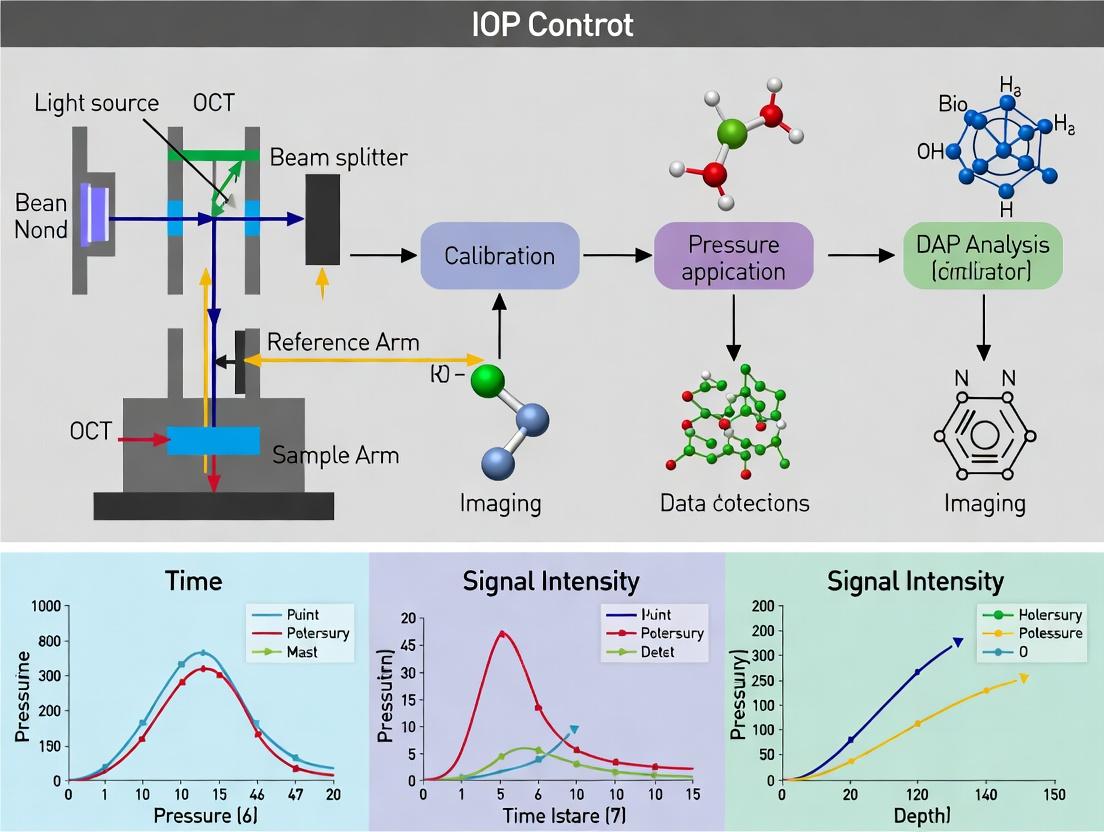
This article provides a detailed framework for conducting and interpreting Optical Coherence Tomography (OCT) imaging under precisely controlled intraocular pressure (IOP) conditions.
Controlled IOP OCT Imaging: A Comprehensive Guide for Precision Ocular Research & Drug Development
Abstract
This article provides a detailed framework for conducting and interpreting Optical Coherence Tomography (OCT) imaging under precisely controlled intraocular pressure (IOP) conditions. Tailored for researchers and drug development professionals, it explores the fundamental biomechanical principles of the optic nerve head and lamina cribrosa, outlines robust methodologies for integrating IOP control systems with OCT platforms, addresses common experimental pitfalls and optimization strategies, and validates findings through comparative analysis with other techniques. The guide synthesizes best practices to enhance reproducibility, data accuracy, and physiological relevance in studies of glaucoma, ocular biomechanics, and therapeutic efficacy.
The Biomechanical Imperative: Why Controlled IOP is Crucial for Accurate OCT Imaging
Introduction to Ocular Biomechanics and IOP's Dynamic Role
Application Notes
Ocular biomechanics is the study of the mechanical properties and behavior of ocular tissues under force. Intraocular pressure (IOP) is not a static metric but a dynamic driver of tissue strain, stress, and cellular mechanotransduction. Within research on OCT imaging under controlled IOP conditions, understanding this interplay is critical for modeling disease progression (e.g., glaucoma, keratoconus) and evaluating therapeutic interventions. Controlled IOP manipulation in ex vivo or in vivo models allows for the quantification of biomechanical responses, linking structural changes from OCT to underlying cellular signaling events.
Table 1: Biomechanical Properties of Ocular Tissues Under Dynamic IOP
| Tissue | Key Biomechanical Parameter | Typical Value Range (from recent literature) | Response to Acute IOP Elevation |
|---|---|---|---|
| Cornea | Elastic Modulus (Young's Modulus) | 0.1 - 3.0 MPa (varies by species & method) | Anterior corneal surface flattens, stromal strain occurs. |
| Sclera | Elastic Modulus (Young's Modulus) | 1.0 - 100 MPa (highly anisotropic & regional) | Posterior pole deformation, lamina cribrosa bows backward. |
| Lamina Cribrosa | Tangent Modulus | 0.15 - 0.80 MPa (ex vivo human studies) | Significant posterior displacement and pore deformation. |
| Optic Nerve Head | Mean Strain (at 15→30 mmHg) | 2.5% - 5.5% (in vivo OCT studies) | Compression, shearing, and radial expansion. |
| Trabecular Meshwork | Flow Resistance | Increases non-linearly with IOP | Outflow facility decreases, further elevating IOP. |
Experimental Protocols
Protocol 1: Ex Vivo Ocular Globe Inflation with Synchronized Spectral-Domain OCT Imaging Objective: To quantify full-field deformation and strain in the posterior eye wall in response to precise IOP steps.
- Tissue Preparation: Enucleate porcine or human donor eyes, preserving >5 mm of optic nerve. Immerse in moist chamber with antibiotic-supplemented PBS. Cannulate the anterior chamber with a 25-gauge needle connected to a closed-column saline reservoir and pressure transducer.
- System Setup: Mount globe in a custom holder within the OCT sample arm. Align the optic nerve head (ONH) centrally. Connect the pressure line to a computer-controlled syringe pump with feedback from the in-line transducer.
- IOP Control & Imaging: Set baseline IOP to 5 mmHg for 10 min. Acquire a 3D OCT volume scan (e.g., 6x6 mm, 512x512 A-scans). Sequentially increase IOP in 5 mmHg steps (10, 15, 20, 25, 30 mmHg). At each step, allow 3-minute equilibration before acquiring a new 3D volume.
- Data Analysis: Use digital volume correlation (DVC) or speckle tracking algorithms on sequential OCT volumes to compute 3D displacement vectors and Lagrangian strain tensors within the sclera and ONH.
Protocol 2: In Vivo Assessment of Corneal Biomechanics using OCT Elastography under Controlled IOP Modulation Objective: To measure in vivo corneal elastic wave velocity as a function of manipulated IOP in an animal model.
- Animal Preparation: Anesthetize rodent (mouse/rat) and place on a heating pad. Administer topical anesthetic and apply a rigid gas-permeable contact lens with a central port for IOP control.
- IOP Modulation & Excitation: Cannulate the anterior chamber via the corneal limbus or the pars plana. Connect to a micro-infusion system. Set a stable baseline IOP (e.g., 15 mmHg). Induce a low-amplitude (<1 mmHg), rapid air-puff or acoustic radiation force excitation at the corneal center.
- High-Speed OCT Acquisition: Use a phase-stable, high-speed OCT system (e.g., >50 kHz A-scan rate) to M-B mode scan along the corneal meridian. Capture wave propagation for 20 ms post-excitation.
- Wave Analysis: Reconstruct phase-resolved tissue displacement maps over time. Calculate elastic wave propagation velocity (V) from space-time diagrams. Repeat at IOP levels of 20, 25, and 30 mmHg. Correlate V² with IOP and estimate corneal stiffness.
Mandatory Visualizations
Diagram Title: OCT Biomechanics Research Workflow
Diagram Title: IOP-Induced Mechanotransduction Pathway
The Scientist's Toolkit: Research Reagent Solutions
Table 2: Essential Materials for Controlled IOP OCT Experiments
| Item | Function & Explanation |
|---|---|
| Computer-Controller Micropump | Precisely regulates fluid column height or infusion rate to apply static or dynamic IOP profiles with feedback from a pressure transducer. |
| High-Speed, Phase-Stable OCT System | Enables capture of micron-scale tissue displacements and elastography. Phase stability is critical for measuring nanometric motion. |
| Digital Volume Correlation (DVC) Software | Computational method to calculate 3D strain fields by tracking inherent OCT speckle patterns between volumes at different IOP levels. |
| Ex Vivo Perfusion System (e.g., iPerfusion) | Maintains physiologic pressure and flow in anterior segment cultures for studying trabecular meshwork outflow facility. |
| Custom Eye Mounting Chamber | Holds ex vivo globes or anterior segments stably during inflation, compatible with OCT imaging windows and fluid lines. |
| Fluorescent Microspheres (e.g., 0.5 µm) | Injected into anterior chamber to visualize aqueous humor outflow patterns via OCT or confocal microscopy under controlled IOP. |
| Rho-Associated Kinase (ROCK) Inhibitor (e.g., Y-27632) | Pharmacologic tool to disrupt cellular contractility, used to validate the role of cytoskeleton in IOP-induced biomechanical responses. |
Application Notes
Optical Coherence Tomography (OCT) is a cornerstone of ophthalmic imaging, yet its standard in vivo application suffers from a critical, often overlooked limitation: the artifact induced by uncontrolled intraocular pressure (IOP). In the context of research focused on OCT imaging under controlled IOP conditions, this artifact presents a significant confounder in quantifying true tissue morphology, biomechanics, and drug response. Uncontrolled IOP leads to variable tissue deformation, affecting layer thickness measurements, texture analysis, and angiography readings. These pressure-induced variances can be misattributed to pathological progression or therapeutic effect, compromising data integrity in preclinical and clinical research. Implementing controlled IOP protocols is therefore not merely a refinement but a necessity for high-fidelity, reproducible ophthalmic imaging research, particularly in glaucoma, drug delivery, and corneal biomechanics studies.
Quantitative Data on IOP-Induced OCT Artifacts
Table 1: Impact of Uncontrolled IOP on Key OCT Metrics
| OCT Parameter | IOP Range (mmHg) | Reported Change (%) | Tissue Studied | Primary Consequence |
|---|---|---|---|---|
| Retinal Nerve Fiber Layer (RNFL) Thickness | 10 to 30 | -3.5% to -7.2% | Porcine/Primate | Overestimation of glaucomatous loss |
| Total Retinal Thickness | 15 to 40 | -4.1% per 10 mmHg | Human (in silico model) | Misinterpretation of edema resolution |
| Choroidal Thickness | 10 to 30 | -8.1% to -15.4% | Rat | False indicator of choroidal remodeling |
| Optic Nerve Head Biomechanics | 5 to 45 | Lamina cribrosa anterior displacement: ~40 µm | Primate | Confounds biomechanical strain analysis |
| Corneal Epithelial Thickness | 15 to 50 | Variable, non-linear | Porcine | Invalidates refractive surgery assessments |
Detailed Experimental Protocols
Protocol 1: Ex Vivo OCT Imaging of Ocular Tissues Under Controlled Perfusion Pressure
Objective: To acquire OCT images of an enucleated eye under precisely controlled IOP, simulating physiological and pathological pressure ranges. Materials: Perfusion system with programmable syringe pump, pressure transducer, data acquisition board, heated organ bath, isotonic saline solution, ex vivo ocular globe, spectral-domain OCT system. Procedure:
- Cannulation: Carefully cannulate the anterior chamber (for corneal studies) or vitreous cavity (for retinal studies) of the ex vivo globe.
- System Connection: Connect the cannula to the perfusion system via sterile tubing. Ensure all connections are leak-proof.
- Pressure Calibration: Calibrate the pressure transducer reading to the height of a fluid column. Set the programmable pump to maintain a feedback loop with the transducer.
- Equilibration: Place the globe in a heated organ bath (34-37°C) with humidified air. Set initial IOP to 10 mmHg and allow 15 minutes for equilibration.
- OCT Acquisition: Position the OCT scanner. Acquire baseline volumetric scans at the set IOP.
- Pressure Ramp: Incrementally increase IOP in 5 mmHg steps from 10 to 45 mmHg. Allow 5 minutes of stabilization at each step before acquiring OCT volumes.
- Data Synchronization: Record the exact IOP value for each OCT scan via synchronized timestamps from the pressure DAQ and OCT computer.
- Analysis: Co-register OCT volumes across pressure steps. Measure layer thicknesses, texture, and deformation.
Protocol 2: In Vivo Rodent Ocular OCT with Dynamic IOP Monitoring and Adjustment
Objective: To perform longitudinal in vivo OCT imaging in rodents while monitoring and controlling IOP to a setpoint. Materials: Anesthetized rodent setup, rodent positioning stage, rebound tonometer (e.g., iCare), anterior chamber cannula (30G), micro-infusion pump, pressure monitor, rodent OCT adapter. Procedure:
- Animal Preparation: Anesthetize and position the animal. Apply lubricating ophthalmic gel to prevent corneal desiccation.
- IOP Cannulation: Under a surgical microscope, carefully insert a 30G needle connected to the infusion line and pressure sensor into the anterior chamber.
- Baseline IOP: Record the true baseline IOP via the cannula. Note discrepancy with non-invasive tonometer readings.
- System Closed-Loop: Set the micro-infusion pump to maintain IOP at a target (e.g., 15 mmHg) using feedback from the pressure sensor.
- OCT Imaging: Perform OCT imaging (retina, cornea, angle) with the IOP locked at the target pressure.
- Pressure Challenge: For intervention studies, adjust the target IOP to a new setpoint (e.g., 30 mmHg). Stabilize for 3 minutes, then re-acquire OCT scans.
- Post-Experiment: Gently lower IOP to baseline, remove cannula, and apply topical antibiotic. Allow animal recovery.
- Analysis: Compare OCT metrics at different controlled IOP setpoints, not across uncontrolled imaging sessions.
Visualizations
Title: How Uncontrolled IOP Creates OCT Artifacts
Title: In Vivo Controlled IOP OCT Imaging Workflow
The Scientist's Toolkit: Research Reagent Solutions
Table 2: Essential Materials for Controlled IOP OCT Research
| Item | Function & Rationale |
|---|---|
| Programmable Micro-Perfusion System | Provides precise, feedback-controlled pressure via a syringe pump and pressure transducer, enabling dynamic IOP setting and stabilization during imaging. |
| Heated Organ Bath & Humidity Chamber | Maintains ex vivo ocular tissues at physiological temperature and hydration, preserving tissue viability and optical properties for extended experiments. |
| High-Fidelity Pressure Transducer | Accurately measures real-time IOP within the cannulated eye, serving as the critical feedback signal for the perfusion control loop. |
| 30G-33G Cannulation Needles | Ultra-fine needles for anterior chamber or vitreous cannulation, minimizing trauma and fluid leakage to ensure stable pressure control. |
| OCT-Compatible Positioning Stage | A motorized stage that allows precise, stable positioning of the eye (ex vivo or in vivo) relative to the OCT beam for longitudinal, co-registered imaging. |
| Viscous Ocular Gel (e.g., GenTeal) | Prevents corneal desiccation during in vivo procedures without significantly altering corneal thickness or optics, unlike saline drops. |
| Pressure-Data/OCT Software Sync Tool | Custom script or hardware trigger to synchronize the timestamp of each OCT B-scan/frame with the recorded IOP value, crucial for analysis. |
| Custom Software for Pressure-Segmented Analysis | Enables analysis of OCT metrics (thickness, texture, angiography) segmented by the IOP level at which they were acquired. |
Application Notes
These Application Notes detail methodologies for investigating the Optic Nerve Head (ONH), Lamina Cribrosa (LC), and Peripapillary Sclera (PPS) under controlled intraocular pressure (IOP) conditions using optical coherence tomography (OCT). This research is central to a thesis exploring the biomechanical and vascular etiologies of glaucomatous optic neuropathy. Precise, quantitative assessment of these tissues during IOP modulation is critical for understanding pathophysiology and evaluating novel neuroprotective or IOP-lowering therapies.
Table 1: Key Quantitative Metrics for OCT Assessment of ONH, LC, and PPS under Controlled IOP
| Anatomical Target | Primary Metric (OCT) | Typical Baseline Value (Human) | Change Observed in Glaucoma / Under Elevated IOP | Significance |
|---|---|---|---|---|
| Optic Nerve Head | Bruch's Membrane Opening (BMO) Area | ~1.8 - 2.2 mm² | Increases (posterior deformation) | Quantifies neural canal opening and overall ONH compliance. |
| Optic Nerve Head | Minimum Rim Width (MRW) | ~250 - 350 µm | Decreases (neuroretinal rim thinning) | More structure-function correlated than rim area. |
| Lamina Cribrosa | Anterior LC Depth (ALCD) | ~350 - 550 µm below BMO | Increases (posterior bowing) | Direct measure of LC deformation and mechanical strain. |
| Lamina Cribrosa | LC Curvature Index | Varies; near 0 for flat surface | Increases (becomes more convex posteriorly) | Describes the shape of LC deformation. |
| Lamina Cribrosa | Pore Area/Total LC Area Ratio | ~50-70% | Decreases (pore compression/distortion) | Indicates potential axonal compromise. |
| Peripapillary Sclera | PPS Thickness | ~250 - 450 µm (region-dependent) | Thins in some models, may remodel long-term | Critical for determining ONH biomechanical environment. |
| Peripapillary Sclera | PPS Strain | Derived from displacement | Increases with IOP elevation | Direct measure of load-bearing tissue deformation. |
Experimental Protocols
Protocol 1: Ex Vivo OCT Imaging of the ONH Complex Under Precision IOP Control Objective: To quantify the immediate biomechanical deformation of the LC and PPS in response to stepped IOP changes. Materials: Enucleated porcine or human donor globe, custom pressure chamber, syringe pump with pressure transducer, spectral-domain OCT system, phosphate-buffered saline (PBS), software for 3D segmentation (e.g., ITK-SNAP, MATLAB). Procedure:
- Secure the donor globe in a custom chamber with the optic nerve head exposed via a corneal and lensectomy window.
- Connect the chamber to a servo-controlled syringe pump and pressure transducer system. Prime with PBS.
- Set baseline IOP to 5 mmHg. Acquire a high-density, 3D radial OCT scan volume centered on the ONH.
- Incrementally increase IOP in 5 mmHg steps (e.g., 10, 15, 20, 25, 30 mmHg). Allow 5-minute equilibration at each step before OCT acquisition.
- At each IOP level, acquire identical OCT volumes.
- Segmentation & Analysis: Use semi-automated algorithms to segment the BMO, anterior and posterior LC surfaces, and the inner and outer boundaries of the PPS across all IOP levels. Calculate metrics from Table 1. Compute Lagrangian strain tensors within the LC and PPS from the measured deformations.
Protocol 2: In Vivo OCT Angiography (OCTA) of Peri-Papillary Microvasculature During Acute IOP Challenge Objective: To assess the autoregulatory capacity of the peripapillary capillary plexuses in response to controlled IOP elevation. Materials: Primate or rodent model, OCTA system, animal positioning stage, ventilator/anesthesia equipment, laser-based IOP elevation system or anterior chamber cannula connected to a saline reservoir. Procedure:
- Anesthetize and secure the animal. Maintain physiological parameters (blood pressure, pCO2, temperature).
- Acquire baseline OCTA scans (e.g., 3x3 mm, 6x6 mm) of the peripapillary region. Extract vessel density (VD) from the radial peripapillary capillary (RPC) and superficial vascular complex (SVC).
- IOP Challenge: Elevate IOP to a target (e.g., 30 mmHg or 50% of mean arterial pressure) using the controlled saline reservoir connected to the anterior chamber. Maintain for 5-10 minutes.
- Acquire OCTA scans immediately at elevated IOP.
- Return IOP to baseline. Acquire recovery scans at 5, 15, and 30 minutes post-challenge.
- Analysis: Coregister scan volumes. Quantify changes in VD and vessel skeleton density (VSD) in the RPC and SVC at each time point. Correlate with IOP-induced changes in LC morphology from concurrent structural OCT.
Visualizations
The Scientist's Toolkit
Table 2: Essential Research Reagent Solutions for Controlled IOP-OCT Studies
| Item | Function & Application |
|---|---|
| Customizable Pressure Chamber | Holds ex vivo globe or in vivo eye; interfaces with fluid columns/pumps for precise IOP control during imaging. |
| Servo-Controlled Syringe Pump with Feedback | Precisely elevates and maintains IOP to target setpoints (e.g., 0.1 mmHg resolution) for challenge protocols. |
| High-Fidelity Pressure Transducer | Provides real-time, accurate IOP measurement data synchronized with OCT acquisition frames. |
| Spectral-Domain or Swept-Source OCT System | Enables high-speed, high-resolution volumetric and angiographic imaging of deep ONH structures. |
| 3D Segmentation & Biomechanics Software (e.g., COMSOL, FEBio) | Reconstructs tissue geometries from OCT data and computes biomechanical parameters like strain and stiffness. |
| Artificial Aqueous Humor / PBS (with additives) | Maintains tissue hydration and physiological ionic balance during ex vivo or cannulated in vivo experiments. |
| Animal Model with Chronic IOP Elevation (e.g., rodent microbead model) | Provides a pathophysiologically relevant system for studying long-term ONH remodeling and drug efficacy. |
Within the broader thesis on Optical Coherence Tomography (OCT) imaging under controlled Intraocular Pressure (IOP) conditions, understanding the fundamental biomechanical principles of pressure-strain relationships and tissue compliance is paramount. This research aims to quantitatively link controlled IOP perturbations to real-time, high-resolution tissue deformation (strain) measured via OCT. The resulting compliance metrics—defining how distensible a tissue is under pressure—serve as critical biomarkers for assessing ocular health, disease progression (e.g., glaucoma, keratoconus), and the efficacy of pharmacological interventions in pre-clinical and clinical drug development.
Core Theoretical Framework
Defining Pressure, Stress, Strain, and Compliance
- Pressure (P): In this context, IOP (mmHg or kPa) is the controlled independent variable.
- Stress (σ): The internal force per unit area within the tissue (e.g., sclera, cornea, lamina cribrosa) in response to IOP. Often estimated via computational models.
- Strain (ε): The dimensionless measure of tissue deformation (change in length / original length) directly measurable from sequential OCT images.
- Compliance (C): The primary functional output. Defined as the change in a dimensional parameter (e.g., tissue thickness, cup volume) per unit change in IOP: C = ΔV / ΔP. Low compliance indicates a stiff, non-deformable tissue; high compliance indicates a soft, easily deformable tissue.
Key Mathematical Relationships
The non-linear, viscoelastic behavior of biological tissue is often described by simplified models for specific pressure ranges:
Table 1: Representative Ocular Tissue Compliance Metrics from Literature
| Tissue Type | Species | Pressure Range (mmHg) | Measured Parameter | Compliance Value (Mean ± SD) | Measurement Technique | Key Reference (Example) |
|---|---|---|---|---|---|---|
| Cornea | Human (ex vivo) | 15-30 | Central Corneal Thickness | 0.44 ± 0.09 µm/mmHg | Ultrasound Pachymetry | Kling et al., 2014 |
| Sclera | Porcine (ex vivo) | 5-45 | Posterior Pole Strain | 0.12 ± 0.03 %/mmHg | OCT + Digital Image Correlation | Coudrillier et al., 2012 |
| Lamina Cribrosa | Non-human Primate | 10-45 | Anterior Lamina Depth | 1.8 ± 0.6 µm/mmHg | Spectral-Domain OCT | D. Li et al., 2022 |
| Optic Nerve Head | Human (in vivo) | Baseline + Gaze | Neuroretinal Rim Area | 0.0012 ± 0.0004 mm²/mmHg | Swept-Source OCT | G. A. et al., 2023 |
| Trabecular Meshwork | Human (ex vivo) | 8-15 | Outflow Facility (1/Resistance) | 0.25 ± 0.11 µL/min/mmHg | Perfusion Culture | J. A. et al., 2021 |
Table 2: Impact of Disease State on Tissue Compliance
| Condition | Affected Tissue | Observed Compliance Change vs. Healthy | Implications for Drug Development |
|---|---|---|---|
| Primary Open-Angle Glaucoma | Lamina Cribrosa | Decreased (Increased Stiffness) | Target therapies to restore ECM remodeling. |
| Keratoconus | Cornea | Increased (Reduced Structural Integrity) | Target collagen cross-linking or strengthening. |
| Diabetes Mellitus | Sclera | Decreased (Glycation-induced stiffening) | Consider systemic disease impact on ocular biomechanics. |
| Corticosteroid-induced OHT | Trabecular Meshwork | Decreased (Reduced Outflow Facility) | Model for screening IOP-lowering therapeutics. |
Experimental Protocols
Protocol 1: In Vivo OCT Imaging of Corneal Compliance Under Controlled IOP
- Objective: To quantify corneal strain and compliance in a live animal model during acute IOP elevation.
- Materials: Anaesthetized rodent/non-human primate, swept-source OCT system, IOP control system (reservoir connected to anterior chamber cannula), pressure transducer, data acquisition software.
- Methodology:
- Animal Preparation & Cannulation: Anesthetize subject. Insert a 30-gauge needle connected to the saline reservoir and pressure transducer into the anterior chamber.
- Baseline Imaging: Set reservoir height to establish baseline IOP (e.g., 15 mmHg). Acquire high-resolution 3D OCT volume scan of the central cornea.
- Pressure Challenge: Systematically increase reservoir height in 5 mmHg increments (e.g., 20, 25, 30 mmHg). Allow 2-minute stabilization at each step.
- OCT Acquisition: At each stable IOP, acquire a 3D OCT volume at the same anatomical location.
- Data Analysis:
- Segment corneal epithelial and endothelial boundaries using automated algorithms.
- Calculate corneal thickness (CT) at each IOP.
- Plot CT vs. IOP. Compliance = slope of the linear regression (ΔCT / ΔIOP).
- Pharmacological Intervention: Administer test compound (e.g., collagen cross-linker). Repeat steps 2-5 after 60 minutes. Compare pre- and post-intervention compliance.
Protocol 2: Ex Vivo Biomechanical Testing of Scleral Compliance
- Objective: To measure the pressure-strain relationship in an ex vivo scleral shell.
- Materials: Enucleated globe, perfusion system with pressure control, OCT or digital camera, mechanical testing software, PBS at 37°C.
- Methodology:
- Sample Preparation: Clean and carefully remove extraocular tissues. Cannulate the optic nerve head/sclera to connect to the perfusion system.
- Mounting & Hydration: Secure globe in a chamber filled with PBS. Flush interior with PBS to remove clots.
- Inflation Test: Increase internal pressure from 0 to 50 mmHg at a constant rate (e.g., 1 mmHg/sec).
- Simultaneous Monitoring: Use OCT or a synchronized camera to capture the posterior pole deformation at 2 mmHg intervals.
- Strain Calculation: Apply digital image correlation (DIC) to sequential images to compute 2D strain fields (εxx, εyy, ε_xy).
- Compliance Mapping: Generate a spatial compliance map by calculating the local strain vs. pressure relationship for each pixel/region.
The Scientist's Toolkit: Research Reagent Solutions
Table 3: Essential Materials for Compliance Research
| Item/Category | Function & Relevance | Example Product/Specification |
|---|---|---|
| Controlled IOP System | Precisely regulates and monitors intraocular pressure during experiments. Essential for defining the pressure input. | iPerfusion system, or custom reservoir/manometer with digital transducer. |
| High-Speed, High-Resolution OCT | Captures micron-scale tissue deformation in real-time. Key for strain measurement. | Spectralis OCT2, Envisu R4310, or custom swept-source OCT. |
| Digital Image Correlation (DIC) Software | Analyzes OCT or camera images to compute displacement and strain fields. | LaVision DaVis, MatchID, or custom MATLAB/Python algorithms. |
| Perfusion Culture System | Maintains ex vivo tissues (e.g., TM, cornea) under physiological pressure for drug testing. | Ligon Perfusion System or customized organ culture dish with pressure control. |
| Biomechanical Testing Software | Models stress distribution from measured strain and geometry. | ANSYS, COMSOL Multiphysics (for FE Analysis). |
| Fluorescent Microspheres | Serve as fiducial markers for tracking tissue motion in DIC analysis. | Invitrogen FluoSpheres (0.5-2.0 µm). |
| Cross-linking Agents | Positive controls for reducing compliance (e.g., Riboflavin/UVA). | Photrexa Viscous (riboflavin 5'-phosphate). |
| ECM-Degrading Enzymes | Positive controls for increasing compliance (e.g., collagenase). | Collagenase Type IV (for gentle tissue dissociation). |
Visualization: Pathways and Workflows
1. Introduction and Research Context This document outlines the application notes and protocols for a thesis investigating optic nerve head (ONH) structural and vascular changes using Optical Coherence Tomography (OCT) and OCT Angiography (OCTA) under controlled intraocular pressure (IOP) conditions. The primary aim is to establish a robust experimental framework to delineate IOP-dependent mechanical stress from primary neurodegenerative components in glaucoma, thereby creating a refined model for assessing neuroprotective drug efficacy.
2. Core Quantitative Data Summary
Table 1: Key Clinical & Experimental Metrics in Glaucoma Neurodegeneration
| Metric | Normal Range (Human) | Glaucomatous Change (Typical) | Experimental Model (Mouse/Rat) Equivalent | Primary OCT/OCTA Measure |
|---|---|---|---|---|
| Intraocular Pressure (IOP) | 10-21 mmHg | >21 mmHg (Elevated) | Induced to 30-50 mmHg (Microbead/ Laser) | Controlled Independent Variable |
| Retinal Nerve Fiber Layer (RNFL) Thickness | 90-110 μm (Global Avg) | Thinning at -1 to -2 μm/year | Significant thinning post-IOP elevation | Circumpapillary RNFL map |
| Ganglion Cell Complex (GCC) Thickness | 80-100 μm | Progressive thinning | Measurable layer reduction | Macular OCT scan |
| ONH Peripapillary Vessel Density (pcVD) | 45-55% (Superficial Layer) | Reduction of 5-15% | Quantifiable decrease in angiography signal | OCTA 3x3 or 4.5x4.5 mm scan |
| Mean Ocular Perfusion Pressure (MOPP) | ~50 mmHg | Often reduced | Calculated from MAP and IOP | Derived hemodynamic parameter |
Table 2: Candidate Neuroprotective Drug Targets & Readouts
| Drug/Target Class | Example Agents | Proposed Mechanism of Action | Primary Efficacy Readout (OCT/OCTA) | Secondary Biomarker |
|---|---|---|---|---|
| NMDA Antagonists | Memantine, Brimonidine | Reduce excitotoxicity, RGC apoptosis | Attenuation of RNFL/GCC thinning | Electroretinogram (ERG) |
| ROCK Inhibitors | Netarsudil, Ripasudil | Increase outflow, neuroprotection via actin cytoskeleton | IOP reduction + VD improvement | Axonal transport assays |
| BDNF Mimetics/TrkB Agonists | Brimonidine, 7,8-DHF | Promote RGC survival signaling | Preservation of GCC structure | Phospho-TrkB immunohistochemistry |
| Anti-inflammatory/ Microglial Modulators | Minocycline, Fingolimod | Suppress neurotoxic microglial activation | Reduced ONH edema/volume change | IBA1/CD68 staining in ONH |
| Metabolic Modulators | Nicotinamide (Vitamin B3) | Boost mitochondrial resilience | Slowed progression of RNFL loss | NAD+ levels in retina |
3. Detailed Experimental Protocols
Protocol 3.1: Controlled IOP Challenge with Concurrent OCT/OCTA Imaging in Rodents Objective: To assess acute ONH structural and vascular reactivity to defined IOP elevations.
- Animal Preparation: Anesthetize animal (e.g., C57BL/6 mouse). Secure in stereotaxic frame with heating pad. Apply topical anesthetic and dilating agent to cornea.
- IOP Control & Measurement: Cannulate anterior chamber with a 33-gauge needle connected to a saline reservoir and pressure transducer. Set baseline IOP to 10 mmHg. Use a programmable syringe pump to elevate IOP to target levels (e.g., 30, 45, 60 mmHg) in stepped increments.
- OCT/OCTA Acquisition: Position spectral-domain OCT system. Align ONH. Acquire volumetric OCT scans (e.g., 100 B-scans over 1.5x1.5 mm) and repeated OCTA scans at each IOP plateau (5-minute stabilization prior to imaging).
- Data Analysis: Coregister volumes. Quantify: (a) ONH cup depth/volume, (b) Prelaminar tissue thickness, (c) Peripapillary total retinal and RNFL thickness, (d) Superficial vascular complex density.
- Post-Challenge: Return IOP to baseline, acquire final scan. Perfuse-fix for histology correlation.
Protocol 3.2: Longitudinal Drug Efficacy Testing in a Chronic Ocular Hypertensive Model Objective: To evaluate neuroprotective drug efficacy independent of IOP-lowering.
- Model Induction: Induce chronic unilateral ocular hypertension via intracameral magnetic microbead injection or laser photocoagulation of the trabecular meshwork. Confirm sustained IOP elevation (>25 mmHg) via rebound tonometry for 4 weeks.
- Treatment Groups: Randomize animals into: (1) Vehicle control, (2) IOP-lowering control (e.g., topical prostaglandin analog), (3) Test neuroprotective compound (systemic or topical), (4) Combination therapy.
- Longitudinal Monitoring: Weekly IOP checks. Acquire OCT (RNFL, GCC) and OCTA (vessel density) scans at baseline, 2, 4, 6, and 8 weeks post-induction under standardized anesthesia.
- Terminal Analysis: At endpoint, perform anterograde labeling of RGCs (e.g., CTB-488). Transcardially perfuse. Enucleate eyes and optic nerves for: (a) RGC counts from flat mounts, (b) ONH cross-section for histology (H&E, PPD), (c) Retinal/ONH protein analysis (Western for p-TrkB, cleaved caspase-3, GFAP, IBA1).
- Statistical Correlation: Relate longitudinal OCT/OCTA metrics to terminal RGC count and molecular biomarkers using multivariate regression.
4. Visualizations
Pathways in Glaucomatous Neurodegeneration & Drug Targets
Drug Efficacy Study Workflow
5. The Scientist's Toolkit: Research Reagent Solutions
Table 3: Essential Materials for Controlled IOP & OCT Research
| Item / Reagent | Function / Application | Example Product / Specification |
|---|---|---|
| Programmable Anterior Chamber Cannulation System | Precise, real-time control and measurement of IOP during live imaging. | Custom or commercial system with micro-pump, pressure transducer, and 33G needle. |
| Spectral-Domain OCT System for Preclinical Research | High-resolution in vivo imaging of retinal layers and ONH microstructure. | Heidelberg Spectralis SD-OCT with rodent lens, or Bioptigen/Leica equivalent. |
| OCT Angiography (OCTA) Module | Non-invasive visualization and quantification of retinal & ONH vasculature. | Built-in module for split-spectrum amplitude-decorrelation angiography (SSADA). |
| Magnetic Microbeads (10 µm) | Induction of chronic, moderate ocular hypertension via trabecular meshwork blockage. | Polystyrene microbeads, fluorescently tagged (e.g., FluoroSphere 1µm from Invitrogen, adapted protocol). |
| Anterograde Tracer (Cholera Toxin B Subunit) | Labeling of viable RGCs for terminal quantification of survival. | Alexa Fluor conjugates (CTB-488, CTB-555); injected intravitreally. |
| Primary Antibody: Anti-Brn3a | Specific immunohistochemical marker for RGC nuclei in retinal flat mounts. | Mouse anti-Brn3a (Millipore, MAB1585). |
| Primary Antibody: Phospho-TrkB (Tyr816) | Marker for activation of BDNF survival signaling pathway. | Rabbit anti-phospho-TrkB (Abcam, ab75173). |
| Pressure-Fixation Apparatus | Ensures consistent anatomical preservation of ONH for histology. | System to deliver fixative at a controlled pressure (e.g., ~70-90 cm H₂O). |
| Automated Image Analysis Software | Quantification of OCT layer thickness, ONH parameters, and vessel density. | Heidelberg Eye Explorer, ImageJ with custom macros, or commercial AI-based solutions. |
Building the System: A Step-by-Step Protocol for IOP-Controlled OCT Acquisition
This document details the core hardware and protocols for a research system designed to perform Optical Coherence Tomography (OCT) imaging of ocular structures under precisely controlled Intraocular Pressure (IOP). This setup is fundamental for investigations into glaucoma pathophysiology, ocular drug delivery efficacy, and biomechanical properties of ocular tissues, providing reproducible experimental conditions that mimic physiological and pathological states.
OCT Platform Selection: Critical Parameters for Controlled IOP Studies
Selecting an appropriate OCT platform is paramount for achieving high-resolution, volumetric data under dynamic IOP conditions. The system must offer sufficient speed to minimize motion artifacts during perfusion and the sensitivity to detect subtle morphological changes.
Table 1: Comparative Analysis of OCT Systems for Dynamic IOP Research
| Parameter | Spectral-Domain (SD-OCT) | Swept-Source (SS-OCT) | Critical Consideration for IOP Studies |
|---|---|---|---|
| Axial Resolution | 3-7 µm | 4-8 µm | Higher resolution is crucial for tracking thin layers (e.g., retinal nerve fiber layer, trabecular meshwork). |
| A-Scan Rate | 20-200 kHz | 100,000-1,500,000+ kHz | Faster scanning reduces artifacts from pulsatile flow in cannulation systems and enables 4D imaging (3D + time). |
| Central Wavelength | ~840 nm (posterior), ~1310 nm (anterior) | ~1050-1310 nm | Longer wavelengths (1310 nm) offer better penetration for anterior segment imaging; 840 nm is standard for retina. |
| Depth Range | 1.5-3.0 mm in air | 3.0-16+ mm in air | Greater depth range (SS-OCT) is advantageous for full anterior segment visualization (cornea to lens). |
| Key Advantage | High signal-to-noise ratio at lower cost. | Superior imaging depth and speed, reduced sensitivity roll-off. | SS-OCT is often preferred for anterior chamber dynamics under variable IOP. |
| Software | Vendor-specific acquisition; often requires custom analysis. | Vendor-specific; some offer programmable API for external hardware sync. | System must allow triggering/synchronization with IOP control apparatus. |
Recommendation: For comprehensive studies involving the anterior segment (cornea, angle, iris, lens) under controlled IOP, a high-speed SS-OCT system (A-scan rate >200 kHz) with a 1310 nm source is ideal. For isolated retinal studies, a high-resolution SD-OCT may suffice. The platform must provide an external trigger input/output for synchronization with the IOP cannulation system.
IOP Cannulation and Control System Setup
Precise IOP control is achieved via a fluid-column-based or pressure-servo system connected directly to the eye. The following protocol details the establishment of a two-cannula system for continuous perfusion and pressure monitoring.
Protocol 1: Establishment of a Dual-Cannula Ex Vivo Ocular Perfusion System
Objective: To cannulate an ex vivo eye (e.g., porcine, murine, or human donor) for simultaneous pressurized perfusion and real-time IOP monitoring.
Materials (Research Reagent Solutions):
- Modified Artificial Aqueous Humor (AAH): 119 mM NaCl, 4.7 mM KCl, 1.2 mM MgSO₄, 24 mM NaHCO₃, 2.5 mM CaCl₂, 6.7 mM Glucose, 5 mM HEPES; pH 7.4, 305 mOsm. Function: Physiologically compatible perfusate that maintains tissue viability.
- Polyethylene Tubing (PE-50 or PE-10): For connecting reservoirs, pressure transducers, and cannulas. Function: Inert fluid pathway.
- 27G or 30G Stainless Steel Cannulas: Two per eye. Function: Penetrate the anterior chamber with minimal trauma.
- Pressure Transducer: Digital or analog (0-100 mmHg range). Function: Converts fluid pressure into an electrical signal.
- Data Acquisition (DAQ) Module: Bridges transducer to computer. Function: Records and logs real-time IOP data.
- Height-Adjustable Reservoir: Connected to inflow cannula. Function: Provides hydrostatic pressure (IOP = height in cm H₂O / 1.36).
- Three-Way Stopcocks & Luer-Lock Connectors: Function: Allow for system priming, bubble removal, and connection of multiple lines.
- Viscous Surgical Adhesive (e.g., CYANOACRYLATE): Function: Secures cannulas at the puncture site to prevent leaks.
- Temperature-Controlled Chamber: Function: Maintains tissue at 34-37°C during experiment.
Methodology:
- System Priming: Flush all tubing and the inflow reservoir with filtered AAH. Ensure no air bubbles are present in the lines, as they dampen pressure transmission.
- Eye Preparation: Secure an enucleated eye in a custom holder. Gently pressurize the eye to ~15 mmHg via a separate, temporary cannula to maintain shape.
- Cannulation: Using a micro-surgical blade, create two paracenteses at the limbus, 2-3 clock hours apart.
- Inflow Cannula: Insert the first cannula connected to the height-adjustable reservoir into the anterior chamber. Secure it with a drop of surgical adhesive.
- Pressure Monitoring Cannula: Insert the second cannula. Connect it directly to the pressure transducer via a short, stiff tube. Seal with adhesive.
- System Connection: Connect the inflow cannula tubing to the AAH reservoir. Open the stopcocks to initiate flow.
- Calibration & Baseline: Set the reservoir height to achieve the desired baseline IOP (e.g., 15 mmHg). Confirm the transducer reading matches the hydrostatic pressure calculation. Zero the transducer at the level of the eye.
- Integration with OCT: Position the eye under the OCT scanner. Use the DAQ module's TTL output (corresponding to IOP) to trigger OCT scans at specific pressure points or intervals.
Table 2: IOP Control System Components and Specifications
| Component | Recommended Specification | Function in Experiment |
|---|---|---|
| Pressure Transducer | Digital, 0-100 mmHg, ±0.25% FS accuracy | Provides real-time, high-fidelity IOP feedback. |
| DAQ System | 16-bit resolution, 1 kS/s minimum sampling rate | Digitizes transducer signal for computer logging. |
| Peristaltic/Syringe Pump | Infusion rate: 0.1 µL/min to 100 µL/min | Alternative to hydrostatic column for active pressure servo control. |
| Reservoir | Height adjustable with micrometer stage (0.1 mm resolution) | Sets IOP precisely via hydrostatic pressure. |
| Software | LabVIEW, Arduino IDE, or custom Python scripts | Controls DAQ, logs IOP data, and synchronizes with OCT. |
Integrated Experimental Workflow Protocol
Protocol 2: Synchronized OCT Imaging During a Dynamic IOP Challenge
Objective: To acquire volumetric OCT scans at predefined, stable IOP plateaus during a controlled pressure ramp.
Methodology:
- System Synchronization: Connect the IOP DAQ system's digital output to the OCT's external trigger input. Configure the OCT to initiate a volume scan upon receiving a TTL pulse.
- Protocol Programming: Write a control script that: a. Commands the reservoir actuator (or pump) to move to a target IOP (e.g., 10 mmHg). b. Waits for a stabilization period (e.g., 2 minutes) for tissue creep to subside. c. Sends a TTL trigger pulse to the OCT. d. Records the exact timestamp and IOP value. e. Repeats steps a-d for a series of pressures (e.g., 10, 15, 20, 30, 40, 15 mmHg).
- Data Acquisition: Run the protocol. The OCT will acquire a volume dataset at each pressure step, each tagged with the corresponding IOP.
- Post-processing: Use segmentation algorithms to extract metrics (e.g., anterior chamber angle, corneal thickness, retinal layer thickness) from each volume. Correlate these metrics directly with the recorded IOP.
System Integration & Data Correlation Diagrams
Integrated OCT IOP Control Data Flow
OCT Scan Trigger Protocol at Stable IOP
The Scientist's Toolkit: Essential Research Reagent Solutions
Table 3: Key Reagents and Materials for OCT-IOP Studies
| Item | Function & Rationale |
|---|---|
| Artificial Aqueous Humor (AAH) | A bicarbonate-buffered, ionically balanced solution that mimics true aqueous, maintaining endothelial/metabolic function and reducing experimental artifact from non-physiological perfusates. |
| Fluorescent Microspheres (e.g., 0.5 µm, red fluorescent) | Added to AAH in tracer studies. Allows visualization of outflow pathways via confocal microscopy or OCT angiography post-perfusion, correlating structure with function at set IOP. |
| Pressure-Sensitive Dyes (e.g., Rhodamine B) | Experimental. Can be perfused to theoretically provide a 2D pressure map within the anterior chamber when imaged with specific fluorescence modalities, complementing OCT morphology. |
| Tissue Viability Markers (e.g., Alizarin Red, Trypan Blue) | Used pre/post-experiment to assess corneal endothelial damage or trabecular meshwork integrity, ensuring OCT changes are due to IOP and not tissue degradation. |
| High-Viscosity Sodium Hyaluronate | Used in some protocols to occlude the secondary (pressure-sensing) cannula. Dampens noise from minor fluid movements, providing a cleaner, more stable IOP signal for OCT triggering. |
| Custom 3D-Printed Eye Holders | Provides stable, reproducible positioning of irregularly shaped ex vivo eyes relative to the OCT scan head, critical for longitudinal scans across varying IOP. |
1. Introduction & Thesis Context This document provides detailed application notes and protocols for the precise synchronization of intraocular pressure (IOP) control with optical coherence tomography (OCT) image capture. This work is a core methodological component of a broader thesis investigating retinal biomechanics, vascular reactivity, and neuroprotective drug efficacy under dynamically controlled IOP conditions. Accurate synchronization is critical for correlating transient physiological events with specific pressure stimuli, enabling high-resolution spatiotemporal analysis essential for both basic research and preclinical drug development.
2. System Integration Architecture A successful setup requires the integration of three core subsystems: a Pressure Control Unit, an OCT Imaging Unit, and a Master Synchronization Controller.
Table 1: Core System Components and Specifications
| Component | Example Model/Type | Key Specification | Function in Synchronization |
|---|---|---|---|
| Pressure Control Unit | Programmable syringe pump or feedback-controlled pressure reservoir | Resolution: ±0.5 mmHg; Update Rate: ≥10 Hz | Generates and maintains the target IOP profile (step, ramp, cyclic). |
| IOP Sensor | In-line solid-state pressure transducer | Range: 0-100 mmHg; Accuracy: ±0.25% FS | Provides real-time, high-fidelity pressure feedback. |
| OCT Imaging System | Spectral-Domain or Swept-Source OCT | A-scan Rate: 50-200 kHz; Trigger Input: TTL | Captures cross-sectional or volumetric retinal images. |
| Synchronization Controller | Microcontroller (e.g., Arduino) or DAQ card (e.g., National Instruments) | Digital I/O; Analog Input; Programmable Logic | Receives pressure data, sends triggers to OCT, logs timestamps. |
| Data Acquisition Software | Custom LabVIEW, Python, or MATLAB script | -- | Coordinates hardware, saves synchronized pressure and image data streams. |
Diagram 1: System Integration and Data Flow for IOP-OCT Sync
3. Detailed Synchronization Protocols
Protocol 3.1: Hardware Trigger Setup for Timed Acquisition Objective: To initiate OCT volume scans at precise moments during an IOP protocol. Materials: As per Table 1; BNC cables, TTL-compatible I/O pins.
- Connect the digital output pin of the Synchronization Controller to the external trigger input port of the OCT system.
- Configure the OCT software for "external trigger" or "hardware trigger" mode. Set all other acquisition parameters (scan pattern, density, depth).
- Program the Synchronization Controller to execute the following logic: a. Ramp IOP to baseline (e.g., 15 mmHg) and stabilize for t seconds. b. Send a 5V TTL pulse (≥10 ms duration) to the OCT trigger input. c. After a predefined delay (e.g., 50 ms to allow scanner settlement), command the pressure system to step IOP to the next target. d. Wait for pressure stabilization (user-defined threshold), then send the next TTL pulse. e. Repeat for all pressure steps in the protocol.
- The OCT system saves each triggered volume as a separate file. The controller saves a log file pairing each TTL timestamp with the recorded IOP value.
Protocol 3.2: Retrospective Synchronization Using Shared Clock Objective: To align continuous OCT imaging with continuous pressure recording for dynamic events. Materials: As per Table 1; Network Time Protocol (NTP) server or shared clock signal.
- Synchronize the system clocks of the OCT computer and the Synchronization Controller PC via NTP or a direct clock signal.
- Start continuous recording on the pressure system (logging IOP at ≥10 Hz) and note the precise start time (HH:MM:SS.sss).
- Immediately initiate a continuous, untriggered OCT acquisition (e.g., repeated B-scans at a fixed location) and note its start time.
- Execute the dynamic IOP protocol (e.g., sinusoidal oscillation).
- In post-processing, align the two data streams using the shared start timestamps. The IOP value can be assigned to each OCT frame based on its acquisition time.
Protocol 3.3: Calibration Protocol for Pressure-Image Latency Objective: To measure and compensate for the system latency between a pressure command and its observable effect in the OCT image.
- Set up a mock chamber with a reflective, flexible membrane in place of the sample.
- Program the controller to send a TTL pulse to the OCT (starting a rapid B-scan M-mode acquisition at a single line) simultaneously with a command for a rapid IOP step (e.g., 10 to 30 mmHg).
- Record the pressure transducer output and OCT M-mode stream at high temporal resolution.
- Analyze the data to determine the time delay (Δt) between the rise in the pressure trace and the onset of axial movement in the OCT M-mode image.
- This Δt is the system latency and must be subtracted during temporal analysis of experimental data.
4. Research Reagent Solutions & Essential Materials
Table 2: Key Research Reagent Solutions for Ex Vivo Studies
| Item | Function & Explanation |
|---|---|
| Carbogenated (95% O₂/5% CO₂) Ames' Medium | Maintains physiological pH and provides oxygen/nutrient support to retinal tissue during ex vivo perfusion. |
| Perfusion Circuit Priming Solution | A sterile saline solution used to remove air bubbles from the pressure control and cannulation lines prior to connection, preventing embolism. |
| Artificial Aqueous Humor | A balanced salt solution used to pressurize the anterior chamber, mimicking the natural ocular fluid. |
| Vital Dyes (e.g., FITC-Dextran) | Fluorescent tracers used in conjunction with OCT angiography protocols to validate vascular perfusion and integrity under varying IOP. |
| Pharmacological Agents | Tool compounds (e.g., L-NAME, endothelin-1) or neuroprotective drug candidates administered via perfusion to study vascular reactivity or therapeutic efficacy under IOP stress. |
Diagram 2: Experimental Workflow for Synchronized IOP-OCT Study
5. Data Presentation & Analysis Synchronized data enables the creation of direct correlations. Key parameters extracted from OCT images (e.g., retinal thickness, choroidal vessel area, optic nerve head deformation) are plotted against the corresponding IOP trace.
Table 3: Example Quantitative Output from a Synchronized Step Protocol
| IOP Step (mmHg) | Mean Retinal Thickness (µm) ± SD | Choroid Area (px²) ± SD | Time to 90% Thickness Change (s) | N (scans/step) |
|---|---|---|---|---|
| 10 | 245.3 ± 3.1 | 15250 ± 210 | -- | 5 |
| 25 | 238.7 ± 2.8 | 14560 ± 185 | 4.2 ± 0.8 | 5 |
| 40 | 231.5 ± 4.0 | 13880 ± 305 | 3.9 ± 0.6 | 5 |
| 25 (Return) | 239.1 ± 3.5 | 14610 ± 225 | 5.1 ± 1.1 | 5 |
Application Notes This protocol provides a standardized framework for studying ex vivo ocular tissues, particularly the optic nerve head (ONH) and lamina cribrosa, under dynamically controlled intraocular pressure (IOP) using Optical Coherence Tomography (OCT). These studies are fundamental for the broader thesis on understanding biomechanical strain, deformations, and cellular mechanotransduction pathways implicated in glaucoma pathogenesis and neuroprotection. The ability to precisely ramp, hold, and image under controlled conditions enables high-fidelity, reproducible data critical for evaluating potential therapeutic interventions in drug development.
Quantitative Data Summary
Table 1: Standardized Pressure Ramping Protocol Parameters
| Phase | Target IOP (mmHg) | Ramp Rate (mmHg/min) | Hold Duration | Primary Imaging Goal |
|---|---|---|---|---|
| Baseline | 8 (physiological) | N/A (equilibration) | 10 minutes | Baseline architecture |
| Ramp 1 | 15 | 5 | 5 minutes | Elastic response |
| Ramp 2 | 30 | 5 | 10 minutes | Hyper-elastic behavior |
| Ramp 3 | 45 | 5 | 15 minutes | Viscoelastic creep |
| Ramp 4 | 10 | -10 (unloading) | 10 minutes | Hysteresis/recovery |
Table 2: OCT Imaging Parameters for Deformation Analysis
| Parameter | Specification |
|---|---|
| OCT System Type | Spectral-Domain (SD-OCT) |
| Central Wavelength | 850 nm or 1300 nm |
| A-Scan Rate | ≥ 50 kHz |
| Axial Resolution | ≤ 5 µm in tissue |
| B-Scan Density | 250-500 scans per volume |
| Volume Scan Time | < 5 seconds per volume |
| Key Metrics | Lamina cribrosa displacement, anterior lamina cribrosa surface depth, prelaminar tissue thickness, scleral canal expansion |
Detailed Experimental Protocol
1. Tissue Preparation and Mounting
- Sample: Enucleated porcine or human donor eye.
- Procedure: The anterior segment is removed 3-4 mm posterior to the limbus. The posterior globe is firmly mounted in a custom, saline-filled pressure chamber. The optic nerve is left unobstructed. The chamber is connected to a programmable pressure reservoir system (e.g., a syringe pump with pressure feedback or a gravity-fed system with an in-line pressure transducer and solenoid regulator).
- Priming: The chamber and tubing are filled with pre-warmed (34°C) Dulbecco’s Phosphate-Buffered Saline (DPBS) with added glucose (5.5 mM) to maintain tissue viability. All bubbles are meticulously purged from the system.
2. System Calibration and Baseline
- The OCT scanner is positioned to capture volumetric scans centered on the ONH.
- The pressure control system is zeroed at the level of the ONH.
- IOP is raised to 8 mmHg and held for 10 minutes to allow for tissue equilibration.
- A baseline OCT volume scan (Table 2) is acquired.
3. Pressure Ramping and Holding Sequence
- Following Table 1, the IOP is increased from 8 mmHg to the target for each ramp phase at a constant rate of 5 mmHg/min using the programmable pump/regulator.
- Upon reaching the target IOP, the pressure is held precisely for the specified duration.
- At the final minute of each hold period, a high-density OCT volume scan is acquired. This ensures imaging occurs under steady-state conditions, minimizing motion artifacts from pressure changes.
4. Imaging and Data Acquisition Synchronization
- The pressure control system’s analog output (IOP reading) is fed into the OCT system's auxiliary input channel.
- This allows each OCT B-scan or volume scan to be time-stamped and synchronized with the exact IOP value, enabling precise correlation of structural deformation with applied pressure.
5. Post-Processing and Analysis
- Image Segmentation: Key structures (anterior lamina cribrosa surface, posterior sclera, Bruch's membrane) are segmented manually or using automated algorithms from each volumetric dataset.
- Deformation Mapping: 3D displacement vectors for the lamina cribrosa are calculated by registering sequential volumes using digital image correlation or speckle tracking techniques.
- Strain Calculation: Lagrangian strain tensors are computed from displacement fields to quantify compression, tension, and shear within the ONH tissues.
Visualization
Diagram 1: Pressure Ramp, Hold, and Image Sequence Workflow
Diagram 2: Key ONH Mechanotransduction Pathways Under IOP Stress
The Scientist's Toolkit: Research Reagent Solutions
Table 3: Essential Materials for Ex Vivo IOP-OCT Studies
| Item | Function & Rationale |
|---|---|
| Custom Pressure Chamber | Holds posterior eye cup; interfaces with pressure lines and OCT objective. Allows unobstructed optical access and nerve exposure. |
| Programmable Syringe Pump/Pressure Regulator | Provides precise, closed-loop control of IOP with ramping and holding capabilities. Essential for protocol standardization. |
| High-Speed SD-OCT Engine | Enables rapid volumetric imaging (<5 sec) to "freeze" tissue state during holds, minimizing motion blur from physiological drift. |
| In-Line Pressure Transducer | Provides real-time, high-fidelity feedback of actual chamber pressure (IOP) to the control system and for data synchronization. |
| Warm Circulator & Chamber Jacket | Maintains tissue bath at 34°C, approximating physiological temperature to preserve tissue viability and biomechanical properties. |
| Physiological Buffered Salt Solution (e.g., DPBS + Glucose) | Maintains ionic balance and provides minimal metabolic substrate to prolong ex vivo tissue health during experiments. |
| Digital Image Correlation (DIC) Software | Analyzes sequential OCT scans to compute full-field 3D displacement and strain maps of the ONH microstructure. |
| Stereoscopic Micromanipulators | Allows precise, stable positioning of the OCT scan head relative to the tissue sample for repeatable imaging planes. |
This application note, framed within a broader thesis on Optical Coherence Tomography (OCT) imaging under controlled intraocular pressure (IOP) conditions, delineates the critical considerations for selecting and implementing ex vivo and in vivo models. The choice of model—cadaveric, live animal, or ex vivo perfusion—directly impacts the translational relevance of research in ophthalmology, glaucoma pathophysiology, and drug development.
Model Comparisons & Quantitative Data
Table 1: Key Characteristics of Experimental Models for OCT-IOP Research
| Model Type | IOP Control Precision | Tissue Viability Duration | Physiological Relevance (e.g., Outflow) | Cost & Accessibility | Primary Use Case |
|---|---|---|---|---|---|
| Human Cadaveric | High (static/post-mortem changes) | Hours | Low (no active cellular function) | Moderate | Anatomical mapping, surgical training, protocol validation |
| Live Animal (e.g., Mouse, Rat, Non-human Primate) | Moderate to High (dynamic) | Weeks to Months | High (intact neurovascular & immune response) | High (especially NHP) | Longitudinal studies, disease progression, in vivo drug efficacy |
| Ex Vivo Perfused (e.g., Anterior Segment, Organ Culture) | Very High (precisely tunable) | 24-48 hours (up to 7 days in advanced systems) | Moderate (preserved cellular/tissue function) | Low to Moderate | Mechanistic studies, high-throughput drug screening, acute IOP interventions |
Table 2: Recent Data from OCT-IOP Studies Across Models (2022-2024)
| Study Model (Reference) | Key OCT Metric | IOP Range Tested | Primary Finding | Limitation Noted |
|---|---|---|---|---|
| Human Cadaveric Eyes (J Glaucoma, 2023) | Lamina Cribrosa Displacement | 10-50 mmHg (static steps) | Linear posterior displacement of 32 ± 8 µm per 10 mmHg increase. | No retrobulbar pressure, altered scleral stiffness post-mortem. |
| C57BL/6 Mice (IOVS, 2024) | Retinal Nerve Fiber Layer (RNFL) Thickness | 10-60 mmHg (acute ramp) | RNFL thinning rate of 0.18 µm/min above 30 mmHg. | Anesthesia effects on IOP; species difference in ocular biomechanics. |
| Porcine Anterior Segment Perfusion (Exp Eye Res, 2023) | Trabecular Meshwork (TM) Area via OCT | 8-45 mmHg (dynamic) | TM area decreased by 22% at 45 mmHg vs baseline; reversible with Rho-kinase inhibitor. | Outflow facility declines after 48 hours in culture. |
Experimental Protocols
Protocol 1: Ex Vivo Human Cadaveric Eye Preparation for OCT and Static IOP Loading
Application: Validation of OCT imaging protocols and baseline biomechanical response. Materials: Human donor globe (<48h post-mortem), artificial aqueous humor (AAH), saline, 27G needle, pressure transducer, syringe pump, OCT system.
- Preparation: Gently clean globe, dissect extraocular muscles, and cannulate the anterior chamber with a 27G needle connected to a 3-way valve.
- IOP Control System: Connect one valve port to a pressure transducer and another to a syringe pump filled with AAH.
- Pressurization: Use the syringe pump to infuse AAH and raise IOP to a predefined level (e.g., 10 mmHg). Allow 5 minutes for stabilization.
- OCT Imaging: Acquire volumetric OCT scans (e.g., optic nerve head, anterior chamber angle) at each stabilized IOP step (e.g., 10, 20, 30, 40 mmHg).
- Data Analysis: Coregister OCT volumes. Quantify deformations (e.g., lamina cribrosa curvature, anterior chamber depth).
Protocol 2: Chronic IOP Elevation and Longitudinal OCT in a Rodent Model
Application: Study of glaucomatous neurodegeneration and neuroprotection drug efficacy. Materials: Adult rats/mice, microbead injection model, tonometer, in vivo OCT system, isoflurane anesthesia setup.
- IOP Elevation: Anesthetize animal. Using a glass micropipette, inject 10 µL of 10 µm polystyrene microbeads into the anterior chamber. This blocks the trabecular meshwork, elevating IOP chronically.
- IOP Monitoring: Measure IOP 2-3 times weekly using a rebound tonometer under light anesthesia.
- Longitudinal OCT Imaging: At baseline and weekly intervals, anesthetize and position animal. Acquire radial and volumetric scans centered on the optic nerve head using in vivo OCT.
- Analysis: Segment RNFL and ganglion cell complex layers. Correlate thickness changes with IOP history over 4-8 weeks.
Protocol 3: Ex Vivo Anterior Segment Perfusion Culture for Drug Screening
Application: High-precision study of conventional outflow pathway and pharmacologic responses. Materials: Porcine/novine eye, perfusion culture system, pressure sensors, peristaltic pump, reservoir with culture medium, OCT with anterior segment lens.
- Tissue Preparation: Dissect the anterior segment (cornea, iris, TM, scleral spur). Mount in a custom perfusion chamber.
- System Setup: Connect chamber to a dual-channel system: one for IOP control via a height-adjustable reservoir, another for active perfusion with recirculating culture medium (e.g., DMEM + antibiotics) using a peristaltic pump.
- Equilibration: Perfuse at a constant pressure of 8 mmHg for 12-24 hours to stabilize outflow facility.
- Intervention & OCT Imaging: Raise reservoir to set IOP (e.g., 15 mmHg). Acquire OCT scans of the iridocorneal angle. Add drug (e.g., netarsudil 0.02%) to the reservoir. Monitor pressure drop and re-image TM after 2 hours.
- Outflow Facility Calculation: Calculate facility (C) as C = (Perfusion Rate) / (IOP - Episcleral Venous Pressure).
Diagrams
Title: Model Selection Workflow for OCT-IOP Research
Title: IOP-Induced Pathophysiology & OCT Biomarkers
The Scientist's Toolkit: Research Reagent Solutions
Table 3: Essential Materials for OCT-IOP Studies
| Item | Function & Relevance to OCT-IOP Research |
|---|---|
| Artificial Aqueous Humor (AAH) | Isotonic, buffered solution for pressurizing ex vivo and perfused eyes, mimicking physiological conditions without cellular toxicity. |
| Polystyrene Microbeads (1-10 µm) | Used in rodent in vivo models to block the trabecular meshwork, inducing chronic, moderate IOP elevation for glaucoma studies. |
| Rho-Kinase (ROCK) Inhibitors (e.g., Y-27632, Netarsudil) | Pharmacologic tool compounds to increase conventional outflow facility; used as positive controls in perfusion models and drug studies. |
| Viability/Cell Death Assay Kits (e.g., Calcein-AM/Propidium Iodide) | For confirming tissue health in ex vivo perfusion cultures post-OCT imaging, distinguishing live from dead cells in the TM or retina. |
| Customizable Anterior Segment Perfusion System | Bioreactor that maintains physiological temperature, pressure, and nutrient supply, enabling dynamic OCT imaging of living tissue. |
| OCT-Compatible Immersion Fluids (e.g., Goniovisc) | Clear, viscous fluid applied to the cornea during anterior segment OCT to maintain optical clarity and corneal hydration. |
| Fiducial Markers (Microspheres or Ink) | Placed on the sclera during ex vivo studies to facilitate precise volumetric registration of OCT scans across different IOP levels. |
This application note details protocols for optimizing Optical Coherence Tomography (OCT) scan acquisition to enable precise biomechanical analysis of ocular tissues, primarily the cornea and sclera. This work is a core methodological component of a broader thesis investigating tissue remodeling and drug efficacy under controlled intraocular pressure (IOP) conditions. Accurate biomechanical modeling—requiring precise strain, elasticity, and deformation measurements—is fundamentally dependent on the initial OCT data acquisition parameters. Suboptimal scanning can introduce artifacts, reduce spatial resolution, or increase noise, thereby compromising subsequent analytical outcomes.
The following table summarizes the critical trade-offs and recommended parameter ranges for biomechanical OCT imaging under dynamic IOP loading.
Table 1: OCT Scan Parameters for Biomechanical Analysis
| Parameter | High-Resolution/Static Analysis | High-Speed/Dynamic Analysis | Biomechanical Impact |
|---|---|---|---|
| Scan Pattern | Dense Raster (3D Cube), Radial | Sparse Radial, Line Scan, 2D B-scans at fixed meridian | Pattern defines spatial sampling uniformity and anisotropy. Radial scans optimize for corneal curvature. |
| A-Scans per B-Scan | 1000 - 2000 | 256 - 512 | Directly influences lateral resolution and B-scan signal-to-noise ratio (SNR). |
| B-Scans per Volume | 250 - 500 | 50 - 100 | Determines volumetric sampling density and scan time. Crucial for 3D strain tensor calculation. |
| Scan Speed (kHz) | 50 - 100 (for stability) | 200 - 500+ (latest systems) | Limits total acquisition time, enabling capture of rapid deformation under IOP change. |
| Scan Density (µm) | 10 - 30 µm lateral | 30 - 100 µm lateral | Finer density improves feature tracking accuracy but increases data burden and scan time. |
| Averaging | 5 - 20 frames (BM-scan) | 1 - 3 frames | Reduces speckle noise but increases susceptibility to motion artifacts during dynamics. |
| Use Case | Ex vivo tissue baseline characterization, high-fidelity geometry. | In vivo or ex vivo dynamic IOP challenge, real-time deformation tracking. |
Experimental Protocols
Protocol 1: Baseline Ex Vivo Tissue Characterization for Biomechanical Properties
Objective: To acquire a high-fidelity 3D structural baseline of corneal/scleral tissue under a static, controlled IOP (e.g., 15 mmHg). Materials: Ex vivo ocular globe mounted in a pressurized artificial anterior chamber, spectral-domain or swept-source OCT system, IOP controller with manometer. Procedure:
- Mount the tissue sample and allow it to equilibrate at the target IOP for 10 minutes.
- Position the OCT scanner perpendicular to the corneal apex or region of interest (sclera).
- Set Acquisition Parameters: Select a 3D cube scan pattern. Configure for ≥1000 A-scans/B-scan and ≥250 B-scans/volume over a 6x6 mm area. Set scan speed to medium (e.g., 70 kHz) to allow for frame averaging (8-16x).
- Acquire and save the reference volume.
- Validation: Ensure the signal penetrates through the entire region of interest and that the SNR is sufficient for clear delineation of epithelial, stromal, and endothelial layers (cornea) or scleral lamellae.
Protocol 2: Dynamic Deformation Tracking During IOP Ramp
Objective: To capture tissue deformation in response to a controlled IOP change for strain calculation. Materials: As in Protocol 1, with an IOP controller capable of programmed pressure ramps (e.g., 10 to 30 mmHg over 30 seconds). Procedure:
- Establish baseline at IOP = 10 mmHg.
- Set Acquisition for Speed: Select a repeated radial scan pattern (e.g., 8-16 meridians) or a dense series of 2D B-scans at a single, critical meridian.
- Configure for lower density (e.g., 512 A-scans/B-scan) but maximum system speed (≥200 kHz). Disable or minimize averaging (≤3x).
- Initiate the IOP ramp protocol on the pressure controller.
- Simultaneously initiate the OCT repetitive scan sequence, ensuring the total scan cycle time is at least 10x faster than the rate of IOP change.
- Acquire sequential data throughout the ramp and a stabilization period.
- Data Synchronization: Timestamp each OCT frame with the corresponding IOP value from the controller's output log for matched analysis.
Visualization of Experimental Workflow
Diagram Title: OCT Biomechanics Acquisition Workflow
The Scientist's Toolkit: Research Reagent Solutions & Essential Materials
Table 2: Essential Materials for OCT Biomechanics under Controlled IOP
| Item | Function/Explanation |
|---|---|
| Pressurized Artificial Anterior Chamber | A chamber that holds ex vivo corneal or scleral samples, allowing precise control and modulation of IOP via fluid column or syringe pump. |
| Computer-Controlled IOP System | A system with pressure transducer, pump, and software for programming dynamic IOP profiles (steps, ramps, sine waves). |
| High-Speed Spectral-Domain or Swept-Source OCT Engine | The core imaging system. Speeds >200 kHz are preferred for dynamic studies to minimize motion artifacts. |
| Phosphate-Buffered Saline (PBS) with Dextran | Bathing solution for ex vivo tissues. Dextran (e.g., 5%) helps maintain corneal thickness by balancing oncotic pressure. |
| Spectral-Domain OCT Resolution Phantom | A microstructure plate or target with known feature sizes for periodic validation of lateral and axial resolution. |
| Data Synchronization Interface | A hardware (digital I/O) or software interface to tag each OCT frame with a timestamp and corresponding IOP value. |
| OCT-Compatible Immersion Fluid | A solution with refractive index matching to tissue (e.g., saline) placed between the objective and sample to reduce optical power loss. |
| Advanced Biomechanical Analysis Software | Software capable of digital image correlation (DIC), optical flow, or speckle tracking on OCT data to compute displacement and strain fields. |
Solving Common Challenges: Artifact Reduction and Data Quality Optimization
Identifying and Mitigating Motion Artifacts from Pressure Fluctuations
Within the broader thesis on Optical Coherence Tomography (OCT) imaging under controlled intraocular pressure (IOP) conditions, motion artifacts induced by physiological and experimental pressure fluctuations present a significant challenge. These artifacts degrade image quality, introduce measurement inaccuracies, and confound the interpretation of biomechanical and pharmacological responses. This document details the sources of such artifacts, quantitative characterization methods, and robust experimental protocols for their mitigation, enabling high-fidelity OCT data acquisition for drug development and ophthalmic research.
Motion artifacts in controlled IOP OCT studies arise from multiple sources, broadly categorized as follows.
Table 1: Sources and Characteristics of Motion Artifacts
| Source Category | Specific Origin | Typical Frequency Range | Amplitude (in OCT B-scan) | Primary Effect on OCT |
|---|---|---|---|---|
| Physiological Pulsation | Cardiac cycle, arterial pulse | 1-2 Hz (60-120 BPM) | 5-20 µm (axial) | Periodic axial shift, vessel wall motion. |
| Respiratory Motion | Chest/abdominal movement | 0.1-0.3 Hz (6-20 breaths/min) | 10-50 µm (axial/lateral) | Low-frequency baseline drift. |
| IOP Control System Noise | Pump/valve oscillations, pressure line resonances | 5-50 Hz (system-dependent) | 2-15 µm (axial) | Structured, repetitive artifact patterns. |
| Gross Subject Motion | Animal/patient movement, saccades | < 1 Hz (sporadic) | 50 µm -> 1 mm | Large, irregular displacements, image discontinuity. |
| Thermal Drift | Equipment heating/cooling | < 0.01 Hz | Slow drift over minutes | Gradual focal plane shift. |
Experimental Protocols for Artifact Identification and Mitigation
Protocol 3.1: Synchronized Multi-Modal Data Acquisition for Artifact Source Tagging
Objective: To temporally correlate OCT image sequences with physiological and system pressure data to identify artifact sources. Materials: Spectral-domain or swept-source OCT system, pressure-controlled perfusion system with high-frequency sensor, physiological monitor (ECG, respiration belt), data acquisition (DAQ) card with common clock. Procedure:
- Synchronization Setup: Connect the OCT frame trigger output, pressure sensor analog output, and physiological monitor outputs to a multi-channel DAQ card. Use a single master clock to generate all sampling and trigger signals.
- Calibration: Record baseline signals (pressure, ECG) without OCT scanning to establish noise floors and phase relationships.
- Data Acquisition: a. Mount the sample (e.g., ex vivo ocular globe, tissue phantom) in the pressure-controlled chamber. b. Set IOP to a constant baseline (e.g., 15 mmHg). Initiate simultaneous recording from all sensors and the OCT system at a fixed frame rate (≥ 20 Hz for B-scans). c. Apply a programmed pressure waveform (e.g., a step, sinusoid, or ramp) to the system. d. Repeat under different conditions (e.g., drug perfusion, altered compliance).
- Analysis: Use cross-correlation or time-frequency analysis (e.g., wavelet transform) between the pressure sensor signal, ECG R-peaks, and the axial displacement of a stable tissue layer in the OCT M-scan.
Protocol 3.2: Post-Processing Algorithm for Bulk Motion Compensation
Objective: To remove axial motion artifacts from OCT B-scan or volume sequences using image registration. Materials: OCT volume dataset, computational software (MATLAB, Python with libraries). Procedure:
- Pre-processing: Apply standard OCT processing (FFT, dispersion compensation, logarithmic scaling) to obtain intensity volumes
I(x, z, t). - Reference Frame Selection: Choose a high-SNR frame from mid-sequence as the reference,
I_ref(x, z). - Global Axial Shift Calculation:
a. For each frame
I_t(x, z), compute the 1D cross-correlation function along the axial (z) direction between the ensemble averages ofI_tandI_ref. b. Find the lag (in pixels) at the maximum correlation. Convert to micrometers using the axial resolution. c. Shift the entire frameI_tby the negative of this lag using linear interpolation. - Validation: Manually verify alignment of stationary features (e.g., sclera, rigid chamber boundaries). Calculate the reduction in frame-to-frame variance in a stable region of interest.
Protocol 3.3: Hardware-Level Mitigation via Passive Damping System
Objective: To dampen high-frequency pressure fluctuations from the perfusion system before they reach the sample. Materials: In-line air-filled compliance chamber (syringe), restrictive capillary tubing, pressure transducer, tubing connectors. Procedure:
- Assembly: Integrate a compliance chamber (e.g., a 1-3 mL air-filled syringe) into the perfusion line as close to the sample inlet as possible. Place a length of narrow-bore capillary tubing (e.g., 0.012" ID, 20-30 cm) between the pump and the compliance chamber to increase fluidic resistance.
- Characterization: Using a pressure sensor at the sample inlet, record the system's step response with and without the damping assembly. The goal is to critically damp the response, eliminating overshoot and ringing.
- Optimization: Adjust the air volume in the compliance syringe and the length of the capillary tubing to achieve a pressure noise floor < 0.2 mmHg RMS in the 1-50 Hz band.
- Integration: Implement the optimized damping assembly into the OCT-IOP experimental setup, ensuring no air bubbles are introduced.
The Scientist's Toolkit: Research Reagent Solutions
Table 2: Essential Materials for Motion-Controlled OCT Experiments
| Item | Function & Rationale |
|---|---|
| Programmable Perfusion System (e.g., Aladdin-1000, Fluigent) | Precisely controls IOP with programmable waveforms; essential for simulating physiological pressure variations and testing artifact responses. |
| High-Bandwidth Pressure Sensor (e.g., Honeywell Sensotec, 0-50 mmHg) | Measures dynamic pressure fluctuations at the sample inlet with millisecond resolution for source identification. |
| Tissue-Mimicking Phantom (e.g., Agarose with TiO2/scatterers) | Provides a stable, motionless control sample for isolating system-induced artifacts from biological motion. |
| Immersion-Coupled Sample Chamber | Holds the sample (e.g., eye) in index-matched fluid, reducing surface tension artifacts and enabling precise pressure control. |
| Physiological Monitoring System (ECG, Respiration) | Provides temporal landmarks for cardiac and respiratory cycles, enabling gated acquisition. |
| Synchronized Data Acquisition Hardware (National Instruments DAQ) | Allows simultaneous recording of OCT triggers, pressure, and physiology on a unified timeline. |
| Post-Processing Software Suite (e.g., Fiji/ImageJ with plugins, custom Python/Matlab scripts) | Enables implementation of registration, filtering, and analysis algorithms for artifact mitigation. |
Data Analysis and Visualization
Table 3: Quantitative Metrics for Artifact Severity Assessment
| Metric | Formula / Description | Interpretation |
|---|---|---|
| Temporal SNR (tSNR) | tSNR = mean(I(x,z,t)) / std(I(x,z,t)) over time at each pixel. |
Lower tSNR indicates higher temporal instability from motion/noise. |
| Displacement RMS | Root-mean-square of axial displacement of a fiducial marker over time. | Direct measure of total artifact magnitude (µm). |
| Spectral Power in Cardiac Band | Integral of Fourier power spectrum between 0.8-2.5 Hz. | Quantifies artifact contribution from physiological pulsation. |
| Correlation Coefficient Decay | Frame-to-frame correlation coefficient as a function of time lag. | Faster decay indicates greater instability. |
Diagram 1: Artifact Identification and Mitigation Workflow (100 chars)
Diagram 2: Artifact Generation Pathway (70 chars)
Managing Perfusion Fluid Dynamics and Maintaining Tissue Viability
This document provides application notes and protocols for managing perfusion fluid dynamics and maintaining tissue viability in ex vivo organotypic culture models. These protocols are essential for a broader thesis research program focused on longitudinal Optical Coherence Tomography (OCT) imaging of retinal and neuronal tissues under controlled Intraocular Pressure (IOP) conditions. Precise control of perfusion parameters is critical to mimic physiological conditions, ensure tissue health for the duration of experiments (often 7-14 days), and obtain reproducible, physiologically relevant OCT imaging data for drug development and disease modeling.
Key Quantitative Parameters for Perfusion Systems
The following table summarizes target parameters for maintaining tissue viability in retinal or anterior segment cultures under controlled IOP.
Table 1: Target Perfusion and Viability Parameters for OCT-IOP Studies
| Parameter | Target Range | Rationale & Impact on Viability |
|---|---|---|
| Perfusion Pressure (IOP) | 10 - 20 mmHg (adjustable for disease models) | Mimics physiological IOP. Elevated IOP (>30 mmHg) induces gliosis & axon damage. |
| Flow Rate | 0.1 - 0.5 mL/min per chamber | Ensures adequate metabolite delivery/waste removal without shear stress. |
| Perfusate Temperature | 34 - 37°C (typically 35°C for neural tissue) | Maintains enzymatic activity and ionic pump function. |
| pH | 7.3 - 7.4 (with HEPES buffer) | Critical for cellular homeostasis and protein function. |
| Oxygenation | 95% O₂ / 5% CO₂ (carbogen) | High O₂ tension required for avascular retinal explants. |
| Glucose Concentration | 5 - 6.5 mM (supplemented) | Precludes glycolytic stress in high-demand neural tissue. |
| Viability Assay (Calcein-AM/EtHD-1) | >85% viable cells at endpoint | Benchmark for successful culture maintenance pre/post OCT imaging. |
| OCT Imaging Interval | Every 24 - 48 hours | Balances data resolution with culture disturbance. |
Detailed Experimental Protocols
Protocol 1: Setup of a Pressure-Controlled Perfusion System for OCT-Compatible Chambers
Objective: To establish a closed, recirculating perfusion system that maintains precise IOP and allows for repeated OCT imaging. Materials: Peristaltic or syringe pump, pressure transducer, feedback control unit, gas-permeable tubing, heated water jacket, custom imaging chamber, OCT-compatible window, carbogen tank, waste reservoir. Method:
- Assembly: Connect the perfusate reservoir to the pump inlet. Route tubing through the pump, heater, and bubble trap before connecting to the inlet port of the imaging chamber.
- Pressure Feedback Loop: Connect the chamber’s pressure port to a calibrated transducer linked to a feedback controller. Set the controller to the target IOP (e.g., 15 mmHg). Connect the chamber outlet to a variable-height waste column; the controller adjusts the pump speed or outlet resistance to maintain set pressure.
- Priming and De-bubbling: Completely fill the system with perfusate, ensuring no air bubbles remain, especially in the chamber or pressure line.
- Equilibration: Start perfusion at the target pressure and allow the system to run for 60 minutes to stabilize temperature, pH, and gas equilibrium before introducing tissue.
Protocol 2: Tissue Preparation and Loading under Sterile Conditions
Objective: To prepare neural tissue explants and load them into the perfusion chamber without compromising viability. Materials: Dissection microscope, sterile tools, artificial cerebrospinal fluid (aCSF), holding chamber, adhesion substrate (e.g., collagen-coated membrane). Method:
- Dissection: Rapidly dissect target tissue (e.g., retina, optic nerve head) in ice-cold, oxygenated aCSF.
- Mounting: Gently place the tissue onto a porous, OCT-transparent membrane pre-coated with a cell-adhesive substrate (e.g., poly-D-lysine).
- Chamber Sealing: Carefully transfer the membrane with tissue into the pre-equilibrated imaging chamber. Seal the chamber according to manufacturer instructions, avoiding tissue drift or damage.
- System Initiation: Restart perfusion immediately. Gradually increase flow to the target rate over 15 minutes to acclimate the tissue.
Protocol 3: Longitudinal Viability Assessment Concurrent with OCT Imaging
Objective: To monitor and quantify tissue health at defined intervals without terminating the culture. Materials: Fluorescent viability dyes (Calcein-AM, Ethidium Homodimer-1), confocal microscope or compatible fluorescence imager, fresh perfusate. Method:
- Staining Protocol: At predetermined intervals (e.g., days 0, 4, 7, 14), pause perfusion. Introduce a perfusate containing 1 µM Calcein-AM and 2 µM Ethidium Homodimer-1.
- Incubation: Incubate for 30-45 minutes at 35°C, protected from light.
- Imaging and Analysis: Acquire fluorescence images at standardized locations. Calculate viability as: (Calcein-positive cells / Total nuclei) x 100%.
- Resumption: Rinse with fresh, dye-free perfusate for 20 minutes before resuming normal perfusion and scheduled OCT imaging.
The Scientist's Toolkit: Essential Reagent Solutions
Table 2: Key Research Reagent Solutions for Perfused Tissue Culture
| Item | Function in Protocol | Key Components (Example) |
|---|---|---|
| Oxygenated Artificial CSF (aCSF) | Primary perfusion medium; maintains ionic and osmotic balance. | NaCl, KCl, NaHCO₃, MgCl₂, CaCl₂, Glucose, HEPES, saturated with Carbogen. |
| Serum-Free Neuromedium | Long-term culture supplement; provides neurotrophic support. | B-27 or N-2 Supplement, L-glutamine, optional growth factors (BDNF, CNTF). |
| Viability Stain Kit | Live/Dead assay for quantitative health assessment. | Calcein-AM (esterase activity in live cells), Ethidium Homodimer-1 (nuclei of dead cells). |
| Adhesion Substrate | Anchors explant to membrane, promoting health and structure. | Poly-D-Lysine or Laminin coating solution. |
| Antioxidant Supplement | Mitigates oxidative stress in ex vivo high-oxygen environment. | Sodium Pyruvate, Ascorbic Acid, Trolox. |
| Peristaltic Pump Tubing (Gas-Permeable) | Delivers perfusate while allowing essential gas exchange. | Silicone or Marprene tubing. |
Visualization Diagrams
Diagram Title: Pressure-Controlled Perfusion & OCT Workflow
Diagram Title: Key Factors for Tissue Viability in Perfusion
Software and Hardware Calibration for Synchronization Accuracy
This document provides detailed application notes and protocols for achieving high-precision synchronization in optical coherence tomography (OCT) imaging systems, specifically within a broader thesis research framework investigating retinal biomechanics and vascular responses under controlled intraocular pressure (IOP) conditions. Accurate temporal synchronization between the OCT image acquisition hardware, the IOP control apparatus (e.g., an ophthalmic cannulation and manometry system), and any ancillary stimulus delivery (e.g., drug or light stimulus) is paramount for establishing causal relationships. This calibration ensures that observed physiological changes can be reliably correlated with specific IOP setpoints or intervention timepoints, which is critical for researchers, scientists, and drug development professionals studying glaucoma, neuroprotection, and ocular therapeutics.
Core Synchronization Concepts and Quantitative Data
Synchronization errors introduce phase noise and temporal jitter, corrupting time-series data essential for dynamic analysis. Key performance metrics are summarized below.
Table 1: Common Synchronization Performance Metrics & Targets for OCT-IOP Research
| Metric | Definition | Impact on IOP-OCT Studies | Typical Target Specification |
|---|---|---|---|
| Temporal Jitter | Short-term variations in the timing of events from their ideal positions. | Blurs rapid biomechanical responses (e.g., initial retinal compliance to IOP step). | < 1 ms (≤ 500 µs ideal) |
| Latency | Constant delay between a command signal and the system's physical response. | Offsets the observed response timeline; critical for pharmacokinetic studies. | Measured and compensated, ideally < 10 ms |
| Clock Drift | Long-term divergence between independent system clocks. | Causes desynchronization in long-duration experiments (>1 min). | < 100 ppm (parts per million) |
| Trigger Accuracy | Precision with which a master trigger initiates an action in a slave device. | Ensures each OCT B-scan is acquired at the intended IOP phase. | ± 1 sample period of the slave device |
Table 2: Synchronization Error Impact on Measured Parameters in Controlled IOP Studies
| Parameter Measured | Example Analysis | Consequence of Poor Synchronization (e.g., 10 ms error) |
|---|---|---|
| Retinal Layer Thickness | Compliance calculation during IOP ramp. | Erroneous strain rate estimation. |
| Optic Nerve Head Biomechanics | Lamina cribrosa displacement vs. IOP. | Misalignment between pressure peak and structural response. |
| Vascular Reactivity | Vessel diameter change post-IOP spike. | Inability to correlate diameter minima with precise IOP value. |
| Drug Efficacy | Time-to-response for a neuroprotective agent. | Incorrect pharmacokinetic/pharmacodynamic modeling. |
Experimental Protocols for Calibration
Protocol 3.1: End-to-End System Latency Characterization
Objective: To measure the total latency from an IOP change command to its reflection in the acquired OCT data stream.
Materials: Programmable IOP controller, OCT system with external trigger input/output, high-speed pressure transducer (reference), data acquisition (DAQ) card, synchronization software (e.g., LabVIEW, Python with nidaqmx).
Procedure:
- Connect the IOP controller's
trigger inputto the OCT'sframe trigger output. - Connect the analog output of the reference pressure transducer (measuring the anterior chamber or line pressure) to an analog input channel on the DAQ.
- Connect the OCT's
frame trigger outputto a digital input channel on the same DAQ. - Program the IOP controller to execute a rapid pressure step (e.g., 15 to 30 mmHg) upon receiving a TTL pulse.
- Program the OCT software to initiate a continuous B-scan or M-scan acquisition and output a TTL pulse at the start of each acquisition.
- Start the DAQ recording (sampling rate ≥1 kHz) and the OCT acquisition.
- Manually send a trigger pulse to the IOP controller to initiate the pressure step.
- Record data for 5 seconds.
- Analysis: Align the timelines of the DAQ channels. Calculate the time difference (Δt) between the rising edge of the OCT frame trigger (digital channel) and the 50% point of the pressure step response (analog channel). This Δt is the total system latency.
Protocol 3.2: Inter-Device Clock Drift Measurement and Correction
Objective: To quantify and correct for drift between the internal clocks of the OCT computer and the IOP controller/DAQ system. Materials: Two computers/embedded systems (OCT PC and Control PC), Network Time Protocol (NTP) server or GPS-disciplined clock, timestamp logging software. Procedure:
- Synchronize both the OCT PC and the Control PC to a common, high-accuracy NTP server on an isolated network at the start of the experiment.
- Program both systems to log a periodic event (e.g., a "heartbeat" message or a specific trigger) with their local timestamps to a shared file or a dedicated logger every second for 24 hours.
- After the logging period, extract the timestamp pairs.
- Analysis: Plot the time difference between the two clocks (Control PC time - OCT PC time) versus the OCT PC time. Perform a linear regression. The slope of the line is the clock drift rate (e.g., in ms per hour). The y-intercept is the initial offset.
- Correction: In post-processing, apply the linear drift correction to all timestamps from one device. For real-time correction, use a disciplined master clock (e.g., a dedicated hardware timer) to generate all critical triggers for both systems.
Protocol 3.3: Software-Based Jitter Reduction for Image Acquisition Triggering
Objective: To minimize jitter in OCT image acquisition triggered by an external IOP phase signal. Materials: OCT system with Software Development Kit (SDK) or API access, real-time operating system (RTOS) or Windows with real-time extensions, function generator. Procedure:
- Connect a function generator set to a low-frequency square wave (e.g., 1 Hz, 5V TTL) to the OCT's external trigger input. This simulates the IOP controller's "start of cycle" signal.
- On the OCT control PC, disable all non-essential background processes and network adapters.
- Develop a custom acquisition script using the OCT SDK. The script must:
- Operate in a high-priority, real-time thread if possible.
- Poll the trigger input port in a tight, blocking loop or use an interrupt-based callback.
- Upon detecting the rising edge, record an immediate high-resolution timestamp (using
QueryPerformanceCounteron Windows orclock_gettimeon Linux). - Initiate the OCT scan sequence.
- Log the timestamp for each frame.
- Simultaneously, connect the function generator's sync output to a DAQ card input to record the "true" trigger time.
- Run the experiment for 1000 trigger cycles.
- Analysis: Calculate the difference between the OCT PC's recorded timestamp and the "true" trigger timestamp for each cycle. The standard deviation of these differences is the measured jitter. Optimize code and system settings to minimize it.
Diagrams
Diagram 1: Hardware Synchronization Architecture
Diagram 2: Experiment Synchronization Workflow
The Scientist's Toolkit: Research Reagent Solutions
Table 3: Essential Materials for OCT-IOP Synchronization Experiments
| Item | Function & Relevance to Synchronization | Example Product/Note |
|---|---|---|
| Programmable IOP Controller | Generates precise, repeatable pressure waveforms (steps, ramps, sinuses). Must accept external triggers. | Ellex iTrack/FAITH system, Custom syringe pump with pressure feedback. |
| High-Speed Pressure Transducer | Provides ground-truth, time-resolved pressure measurement for latency calculation and validation. | Honeywell Microswitch series, FISO FOP-M fiber optic sensor. |
| Data Acquisition (DAQ) Card | Simultaneously digitizes analog signals (pressure) and digital triggers with a unified, high-resolution clock. | National Instruments USB-6000+ series, Measurement Computing devices. |
| Real-Time Software Platform | Enables deterministic, low-jitter control and data logging by prioritizing critical tasks. | National Instruments LabVIEW RT, MathWorks Simulink Real-Time, Python with rt/PREEMPT_RT kernel. |
| Precision Timer/Clock Source | Serves as a master clock to discipline all subsystems, mitigating drift. | GPS Disciplined Oscillator, Stanford Research Systems PRS10 Rubidium standard, PXIe-6674T timing module. |
| Optical Trigger Sensor | Non-invasive method to detect the actual OCT scanner position (e.g., galvo reset) for precise trigger alignment. | Photodiode and LED pair mounted on scanner. |
| Synchronization API/SDK | Allows custom software to precisely command hardware actions and query timestamps, bypassing OS delays. | Heidelberg Eye Explorer (HEEX), ThorImageLS SDK, Custom microcontroller firmware. |
1. Introduction and Thesis Context This document provides application notes and detailed protocols for optimizing the signal-to-noise ratio (SNR) in optical coherence tomography (OCT) imaging, specifically within the context of a broader thesis investigating retinal and optic nerve head biomechanics under controlled intraocular pressure (IOP) conditions. Precise SNR optimization is critical for extracting quantitative, biologically relevant data from tissues whose optical properties may change with mechanical stress.
2. Key Quantitative Data Summary
Table 1: Impact of Key Parameters on OCT SNR under Pressure Modulation
| Parameter | Effect on SNR | Typical Target Value/Range | Notes for Pressure Experiments |
|---|---|---|---|
| Incident Optical Power | SNR ∝ Power | ≤ 1.5-2.0 mW (in vivo retina) | Must remain within ANSI limits; constant as IOP varies. |
| Detection Bandwidth | SNR ∝ 1/√(Bandwidth) | 50-200 MHz | Wider bandwidth increases noise; may be tuned for dynamic pressure response. |
| A-Scan Rate | Indirect effect via integration time | 50-200 kHz (Spectral-Domain) | Higher speed reduces time per scan, potentially lowering SNR. |
| Spectral Window | SNR ∝ Central Wavelength / Bandwidth | e.g., 850 nm ± 50 nm | Longer λ may improve penetration in edematous tissue at high IOP. |
| Reference Arm Power | Optimal at interference fringe peak | ~70-90% of sample arm power | Must be re-optimized if sample reflectivity changes with pressure. |
| Averaging (B-Scans) | SNR ∝ √(Number of Frames) | 10-50 frames | Essential for stabilization; increases acquisition time, risking motion artifact. |
| Controlled IOP Range | Induces SNR variation | 10 - 80 mmHg (ex vivo); 10-30 mmHg (in vivo) | Primary independent variable. Tissue compression alters backscatter. |
Table 2: Common SNR Optimization Techniques & Pressure-Specific Considerations
| Technique | Standard Protocol | Adaptation for Varied IOP Experiments |
|---|---|---|
| Spectral Shaping | Apply Hanning window to raw spectrum. | May require adjustment if pressure-induced dispersion changes occur. |
| Digital Dispersion Compensation | Apply numerical correction post-acquisition. | Critical. Must be calibrated at multiple IOP levels using a mirror. |
| Averaging | Register and average multiple B-scans. | Use real-time tracking; pressure chamber must be vibrationally isolated. |
| Background Subtraction | Subtract pre-captured system noise spectrum. | Must be performed for each pressure state if system drift occurs. |
3. Detailed Experimental Protocols
Protocol 3.1: Baseline SNR Characterization at Nominal IOP Objective: Establish a reference SNR map of the sample (e.g., ex vivo porcine optic nerve head) at physiological IOP (e.g., 15 mmHg).
- System Calibration: Use a calibrated reflectance standard (e.g., silver mirror) to measure the system's point spread function (PSF) and peak SNR.
- Sample Mounting: Secure the sample in a pressurized chamber with optical windows. Connect the chamber to a programmable pressure controller and manometer.
- Pressure Equilibration: Set the controller to 15 mmHg. Allow 5 minutes for stabilization.
- OCT Acquisition:
- Set reference arm for optimal fringe contrast.
- Acquire a 3D volume (e.g., 512 x 512 x 1024 px, 5 frames averaged per B-scan).
- Save raw spectral data (k-linearized).
- SNR Calculation: Process data. Calculate SNR per A-scan as: SNR(z) = 10·log₁₀( Isignal(z) / Inoise ), where I_noise is measured from a signal-free region (e.g., vitreous).
Protocol 3.2: Dynamic SNR Monitoring During IOP Ramp Objective: Quantify how SNR and signal intensity vary with continuous IOP change.
- Initialization: Complete Protocol 3.1 at 10 mmHg.
- Synchronized Setup: Link the pressure controller output to the OCT acquisition software trigger.
- Ramp Protocol: Program a linear IOP ramp from 10 to 80 mmHg over 5 minutes.
- Acquisition: Initiate the pressure ramp and simultaneously begin continuous, rapid B-scan acquisition at a fixed central location (e.g., 1000 B-scans at 1 kHz).
- Analysis: For each B-scan, extract the mean intensity from a defined region of interest (ROI). Plot ROI Intensity vs. IOP and derived SNR vs. IOP.
Protocol 4: The Scientist's Toolkit: Research Reagent Solutions
Table 3: Essential Materials for OCT SNR Optimization in Pressure Studies
| Item | Function & Relevance |
|---|---|
| Programmable Bioreactor / Pressure Chamber | Provides precise, dynamic control of hydrostatic or pneumatic pressure around the sample (IOP simulation). |
| High-Precision Pressure Manometer | Accurately monitors and provides feedback to the pressure controller. Essential for correlating SNR with exact IOP. |
| Index-Matching Fluid | Reduces surface reflections at optical windows and tissue interfaces, minimizing specular noise artifacts. |
| Immersion Objective Lens | Maintains a consistent optical path and numerical aperture into the pressurized chamber, preserving resolution. |
| Calibrated Reflectance Standards | (Mirror, neutral density filters) Used for daily system SNR validation and PSF measurement. |
| Dispersion Compensation Kit | (Physical: glass rods; Digital: software algorithms) Corrects for chromatic dispersion induced by windows and tissue, sharpening the signal. |
| Spectral-Domain or Swept-Source OCT Engine | Core imaging system. Swept-source at ~1060 nm may offer better penetration for pressurized, dense tissues. |
| Real-Time Image Registration Software | Enables effective frame averaging by correcting for sample micro-motion induced by pressure changes. |
5. Visualization: Signaling Pathways and Workflows
Title: Pressure-Induced OCT Signal Change & Experimental Workflow
Title: OCT Signal Processing Pipeline for SNR Optimization
Best Practices for Sample Preparation and Mounting to Minimize Confounders
Within a thesis investigating optical coherence tomography (OCT) imaging under controlled intraocular pressure (IOP) conditions, the integrity of the research data is paramount. Sample preparation and mounting are critical, yet often overlooked, steps that can introduce significant confounders, compromising the validity of biomechanical and morphological measurements. This protocol details standardized methods to minimize artifacts related to tissue deformation, hydration, orientation, and interfacial reflection, ensuring that observed changes in OCT metrics are attributable to the experimental IOP modulation and not preparation artifacts.
Key Confounders in OCT-IOP Research
The following table summarizes primary confounders, their impact on OCT data, and the core mitigation strategy.
| Confounder | Impact on OCT Imaging & IOP Research | Primary Mitigation Practice |
|---|---|---|
| Mechanical Stress/Deformation | Alters native tissue geometry and biomechanical properties, leading to erroneous thickness & deformation readings under IOP. | Use non-compressive mounting techniques and precise excision. |
| Tissue Desiccation | Changes optical scattering properties and induces shrinkage, confounding true IOP-induced structural changes. | Maintain physiological hydration with controlled saline immersion. |
| Improper Orientation | Introduces tilt and skew, causing anisotropic artifact in B-scans and inaccurate layer thickness measurement. | Employ stereotaxic or custom 3D-printed mounts for alignment. |
| Mount-Induced Pressure | Local pressure points create regional variations in pre-tension, distorting the IOP-strain relationship. | Utilize fluidic or agarose-bed mounting systems. |
| Interfacial Reflections | Saturation artifacts at mount-sample interface obscure critical subsurface features (e.g., trabecular meshwork). | Index-match mounting media and anti-reflective coatings. |
| Temperature Fluctuation | Affects tissue biomechanics and medium viscosity, altering pressure-volume dynamics. | Implement in-line temperature control for perfusate and stage. |
Detailed Experimental Protocols
Protocol 1: Non-Compressive Mounting for Posterior Eye Segments (e.g., Optic Nerve Head)
Objective: To secure a posterior eye cup for IOP perfusion without inducing clamp- or suture-based stress.
Materials:
- Freshly enucleated ocular globe.
- Custom 3D-printed or commercial anterior chamber mount (e.g., lens holder).
- Heated, isotonic perfusion system (e.g., PBS with 1.0 g/L Glucose, 35-37°C).
- Low-melting-point agarose (1.0-1.5%).
- OCT-compatible sample chamber.
- Stereotaxic micromanipulators.
Method:
- Carefully remove the cornea and lens.
- Secure the scleral rim to the anterior chamber mount using pre-tensioned, lightweight O-rings. Avoid sutures.
- Place the mounted sample in the OCT chamber. Fill the chamber with pre-warmed perfusion medium to cover the posterior region.
- For ONH stabilization, gently pour lukewarm, liquid 1.2% low-gelling agarose around the posterior pole, allowing it to set and provide cradle-like support without upward pressure.
- Connect the anterior mount to the pressure-controlled perfusion column. Initiate a slow pressure ramp (e.g., 5 mmHg to 30 mmHg) while acquiring OCT volumes to verify absence of mount-induced drift.
Protocol 2: Index-Matched Mounting for Anterior Segment Imaging
Objective: To visualize iridocorneal angle structures without saturation artifacts from the mounting surface.
Materials:
- Anterior segment sample.
- Custom glass-bottom dish with anti-reflective coating.
- Index-matching fluid (e.g., PBS-Gelatin solution or commercial optical gel, n ≈ 1.33 - 1.38).
- Fluidic pressure control system with in-line pressure transducer.
- Temperature-controlled stage.
Method:
- Mount the anterior segment onto a dedicated holder, securing the sclera.
- Place the holder in the glass-bottom dish.
- Carefully fill the dish with the pre-warmed index-matching fluid until the fluid meniscus just covers the corneal apex. This eliminates the air-tissue interface.
- Connect the holder to the IOP control system via inlet and outlet ports.
- Set the temperature control to 34°C ± 0.5°C. Allow the system to equilibrate for 15 minutes before initiating OCT imaging protocols.
Protocol 3: Standardized Excision & Hydration for Corneal Buttons
Objective: To obtain reproducible corneal samples with minimal edge artifacts and stable hydration.
Materials:
- Trephine with disposable blades (diameter matched to mount).
- Hypodermic needles (27G) and syringe.
- Perfusion medium (DMEM/F-12 with HEPES).
- Moist chamber (sealed Petri dish with saline-soaked gauze).
- Corneal mount with porous base for perfusion.
Method:
- Using a sharp trephine on a protective backing, excise the corneal button with a single, clean downward motion. Do not saw.
- Immediately place the button endothelial-side-up on a damp gauze in the moist chamber.
- For mounting, place the cornea endothelial-side-down on the porous mount. Secure gently with a slotted nylon ring.
- Connect the porous base to a reservoir of perfusion medium. Use hypodermic needles inserted into the stroma near the limbus (bevel up) to allow continuous, passive hydration from the reservoir during imaging, maintaining stromal clarity.
Visualization of Workflows and Relationships
Diagram Title: OCT-IOP Sample Prep Workflow & Confounder Mitigation
Diagram Title: Controlled IOP Imaging System Integration
The Scientist's Toolkit: Research Reagent & Material Solutions
| Item | Function in OCT-IOP Sample Preparation |
|---|---|
| Custom 3D-Printed Mounts | Provides exact anatomical fit for specific tissues (e.g., scleral rim, corneal curvature), eliminating slippage and uneven pressure. |
| Low-Gelling Temperature Agarose (1-2%) | Creates a customizable, supportive bed that cradles tissue without applying upward force, stabilizing regions like the ONH. |
| Index-Matching Fluid (n≈1.38) | Reduces strong specular reflection at the sample-mount interface, allowing clear visualization of superficial and angle structures. |
| In-Line Pressure Transducer & Feedback Controller | Precisely measures and regulates IOP in real-time, independent of reservoir height, ensuring accurate pressure protocols. |
| In-Line Heater & Temperature Probe | Maintains perfusate and sample at physiological temperature (34-37°C), preserving tissue viability and biomechanical properties. |
| Porous Polyethylene or Fritted Glass Mounts | Allows passive, even hydration of tissue (e.g., corneal stroma) from a connected reservoir during extended imaging sessions. |
| Anti-Reflective Coated Glass-Bottom Dishes | Minimizes back-reflections from the dish itself, improving signal-to-noise ratio in the critical focus region. |
| Pre-Tensioned, Biocompatible O-Rings | Enables secure sample fixation without the localized stress points induced by sutures or clamps. |
Benchmarking Performance: Validating IOP-Controlled OCT Against Gold Standards
This document details the application notes and protocols for correlative imaging, a core methodology within a broader thesis investigating ocular tissue biomechanics and pathophysiology using Optical Coherence Tomography (OCT) under controlled Intraocular Pressure (IOP) conditions. The precise linkage of non-invasive, volumetric OCT data with the high-resolution, molecular, and ultrastructural information from histology and electron microscopy (EM) is critical for validating OCT-based biomarkers and understanding the microstructural basis of IOP-induced tissue changes.
Application Notes
Rationale for Correlative Imaging in IOP Studies
OCT provides real-time, in situ imaging of tissue morphology and dynamics under varying IOP. However, its resolution (~1-15 µm) and lack of molecular specificity limit definitive cellular or sub-cellular identification. Histology (light microscopy) offers cellular and tissue context with molecular staining, while EM reveals ultrastructural details (e.g., collagen fibril organization, cell organelle states). Correlating these modalities bridges functional imaging with ground-truth structural biology.
Key Challenges & Solutions
- Spatial Registration: Aligning 3D OCT volumes with 2D histological/EM sections.
- Solution: Use of intrinsic landmarks (vessel bifurcations, optic nerve head contours) and artificial fiducials (India ink, laser microdissection marks) placed prior to processing.
- Tissue Distortion: Histological processing (fixation, dehydration, embedding) causes tissue shrinkage and deformation.
- Solution: Use of standardized protocols, computational unwarping algorithms based on control points, and perfusion fixation at a set, controlled IOP.
- Workflow Continuity: Tracking the same region of interest (ROI) across modalities.
- Solution: Implement a robust sample tracking and labeling system and a precise block-facing protocol.
Detailed Protocols
Protocol 1: Perfusion-Fixation of Ocular Tissues at Controlled IOP for Correlative Analysis
Objective: To preserve tissue in a physiological state matching the OCT acquisition IOP for subsequent histology/EM. Materials: Perfusion system with IOP manometer, paraformaldehyde (PFA) fixative, phosphate buffer, anterior chamber cannula. Procedure:
- Mount the enucleated globe (or ex vivo posterior cup) in the perfusion chamber.
- Cannulate the anterior chamber (or vitreous cavity for posterior segment).
- Set the IOP to the target level (e.g., 10, 15, 30 mmHg) using saline perfusion and allow to equilibrate for 15 minutes.
- Switch the perfusate to 4% PFA at the identical pressure for 2 hours.
- Dissect the region of interest (e.g., lamina cribrosa, cornea) under a dissecting microscope.
- Post-fix in PFA for 24h at 4°C before further processing for histology or EM.
Protocol 2: OCT-Guided Region of Interest (ROI) Sampling for Histology/EM
Objective: To precisely excise and process the tissue region scanned by OCT. Materials: Clinical or spectral-domain OCT system, microdissection tools, fiducial markers (sterile India ink), cryostat or microtome. Procedure:
- Acquire high-resolution OCT volumes of the tissue under controlled IOP. Record 3D coordinates.
- Using a micro-syringe, inject minute amounts of India ink at 2-3 strategic locations at the tissue boundary, visible in both OCT and gross examination.
- Excise the tissue, maintaining orientation.
- For histology: Dehydrate, embed in paraffin or OCT compound. Serially section (5-10 µm). Perform H&E, Masson's Trichrome, or immunohistochemistry (IHC).
- For EM: Post-fix in glutaraldehyde/osmium tetroxide, dehydrate, embed in epoxy resin. Section ultrathin (70-90 nm) and stain with uranyl acetate/lead citrate.
- Digitize slides. Use fiducials and anatomical landmarks to digitally co-register with the OCT B-scan.
Protocol 3: Computational Co-Registration of OCT and Histological Data
Objective: To achieve pixel-level alignment between OCT and histological images. Software: MATLAB, Python (OpenCV, scikit-image), or commercial image registration software. Procedure:
- Preprocessing: Extract the 2D OCT B-scan plane that most closely matches the histological section plane. Convert both images to grayscale.
- Landmark Selection: Manually identify corresponding points (≥6) in both images (e.g., vessel centers, ink spots, tissue boundaries).
- Transformation: Calculate a projective or polynomial transformation matrix based on the landmark pairs.
- Warping & Validation: Apply the transformation to the histological image. Validate alignment using additional landmarks not used in the calculation. Measure registration error (Table 1).
Data Presentation
Table 1: Representative Co-Registration Accuracy Across Modalities
| Tissue Sample | IOP Condition (mmHg) | Modalities Registered | Mean Registration Error (µm) | Key Validated Feature |
|---|---|---|---|---|
| Porcine Optic Nerve Head | 15 | OCT B-scan vs. H&E | 12.5 ± 3.2 | Lamina cribrosa beam structure |
| Murine Cornea | 10 | OCT B-scan vs. TEM | 0.8 ± 0.3* | Collagen fibril alignment in stroma |
| Human Trabecular Meshwork (ex vivo) | 22 | OCT vs. IHC (α-SMA) | 18.7 ± 5.1 | Schlemm's canal position |
*Error for EM is lower due to registration with higher-magnification intermediate light microscopy images.
Table 2: Research Reagent Solutions Toolkit
| Item | Function in Correlative Imaging | Example/Supplier |
|---|---|---|
| Perfusion Fixative (4% PFA) | Preserves tissue morphology at a specific IOP state. | Thermo Fisher Scientific, Sigma-Aldrich |
| Fiducial Markers (India Ink) | Provides visible landmarks for spatial co-registration across modalities. | Sterile drawing ink, Pelikan |
| Epoxy Resin (EMbed-812) | For hard, stable embedding for ultramicrotomy and TEM. | Electron Microscopy Sciences |
| Antibody for IHC (e.g., Anti-Collagen IV) | Provides molecular specificity to histology, links OCT features to protein localization. | Abcam, Novus Biologicals |
| Uranyl Acetate & Lead Citrate | Heavy metal stains for contrast in TEM imaging. | Ted Pella Inc. |
| Digital Slide Scanning System | Enables high-resolution digitization of histological sections for computational analysis. | Leica Aperio, Hamamatsu NanoZoomer |
Visualizations
Workflow for OCT-Histology-EM Correlation
IOP Mechanotransduction & Imaging Correlation
Within the broader thesis research on OCT imaging under controlled Intraocular Pressure (IOP) conditions, validating hemodynamic and structural findings requires benchmarking against established, complementary modalities. This document provides detailed application notes and protocols for Heidelberg Retina Tomography (HRT) and Scanning Laser Doppler Flowmetry (SLDF), enabling a rigorous comparative analysis with OCT-derived metrics (e.g., retinal nerve fiber layer thickness, optic nerve head topography, vessel density). The controlled IOP paradigm is critical, as IOP manipulation directly influences perfusion pressure and biomechanics, parameters these techniques are uniquely poised to measure.
Table 1: Core Technique Comparison
| Feature | Optical Coherence Tomography (OCT) | Heidelberg Retina Tomography (HRT) | Scanning Laser Doppler Flowmetry (SLDF) |
|---|---|---|---|
| Primary Principle | Low-coherence interferometry to measure backscattered light. | Confocal laser scanning to measure reflected light intensity. | Laser Doppler shift analysis of light scattered by moving red blood cells. |
| Key Measured Parameters | Layer thicknesses (RNFL, GCIPL), topography, angiography (OCTA) for vessel density. | Topographic height (μm) of optic nerve head & peripapillary retina. | Capillary blood flow (velocity, volume, flux) in arbitrary units (AU). |
| Spatial Resolution | ~5-15 μm axial; ~10-20 μm transverse. | ~10 μm axial; confocal sectioning. | ~10 μm lateral; depth resolution ~300-500 μm. |
| Temporal Resolution | Moderate (seconds for volumes). Fast for line scans. | Slow (single scan ~1.6 s). | Very high (single point measurement ~4 ms). |
| Primary Output | Structural tomograms, en face angiograms. | 3D topographic maps, Moorfields regression analysis. | 2D perfusion maps (flow, volume, velocity). |
| Key Advantage for IOP Studies | Volumetric structural and angiographic correlation under IOP stress. | Quantitative rim volume and cup shape analysis sensitive to IOP-induced deformation. | Direct, quantitative measurement of capillary hemodynamic response to IOP challenge. |
| Main Limitation | Indirect measure of flow (OCTA shows decorrelation, not absolute flow). | No direct hemodynamic data. Relies on reflectance, not true tomography. | Measures superficial layers only; limited by eye motion; relative units. |
Table 2: Representative Quantitative Data from IOP Challenge Studies
| Technique | Parameter Measured | Baseline (Normotensive) | Under Acute IOP Elevation (+20 mmHg) | % Change | Reference Context |
|---|---|---|---|---|---|
| SD-OCT | Peripapillary RNFL Thickness | 95 ± 10 μm | 92 ± 11 μm | -3.2% | Minimal acute structural change. |
| HRT III | Neuroretinal Rim Area | 1.25 ± 0.25 mm² | 1.18 ± 0.24 mm² | -5.6% | Indicates mechanical compression/tissue displacement. |
| SLDF | Papillary Blood Flow (Flux) | 350 ± 80 AU | 210 ± 60 AU | -40.0% | Profound perfusion reduction. |
| OCTA | Peripapillary Vessel Density | 48.5 ± 3.5% | 43.2 ± 4.1% | -10.9% | Shows capillary dropout not seen on SLDF. |
Detailed Experimental Protocols
Protocol 1: Concurrent HRT and OCT Imaging Under Controlled IOP Objective: To correlate IOP-induced topographic changes (HRT) with layer-specific structural changes (OCT).
- Subject/Preparation: Dilate pupil. Position at the integrated imaging platform with IOP control system (e.g., ophthalmodynamometer or pressure-controlled ophthalmic endoscope).
- Baseline Imaging (IOP at 15mmHg):
- Acquire 3 consecutive HRT scans (15° x 15°) of the optic nerve head using the "High Resolution" mode. Ensure standard reference plane.
- Immediately acquire a circular B-scan (3.4mm diameter) around the ONH and a volumetric OCT scan (6x6mm) centered on the ONH.
- IOP Challenge: Elevate IOP to 35mmHg via the pressure control system. Stabilize for 5 minutes.
- Stress-State Imaging: Repeat Step 2 imaging sequences at the elevated IOP.
- Recovery Imaging: Return IOP to baseline. Monitor for 10 minutes, then repeat imaging.
- Analysis:
- HRT: Use proprietary software to calculate mean topographic height, rim volume, cup volume, and cup shape measure for each IOP level. Align images using automatic follow-up function.
- OCT: Segment RNFL and total retina. Measure thicknesses in the peripapillary region. Co-register volumes to assess 3D deformation.
Protocol 2: SLDF Perfusion Mapping During IOP Ramp Objective: To measure the dynamic relationship between IOP and capillary perfusion in the peripapillary retina.
- System Setup: Calibrate the Scanning Laser Doppler Flowmeter (e.g., Heidelberg Retina Flowmeter attachment for HRT). Set scanning field to 2.7° x 0.7° over a major retinal artery and adjacent capillary bed.
- Baseline Acquisition: At IOP=15mmHg, acquire a minimum of 3 SLDF perfusion images. Use the built-in motion correction.
- Dynamic IOP Ramp Protocol: Increase IOP in steps of 5mmHg, from 15 to 50mmHg.
- At each IOP step, allow 2 minutes for stabilization.
- Acquire one SLDF image per step.
- Data Extraction: Using validated software (e.g., Automatic Full Field Perfusion Image Analyzer), define regions of interest (ROI) over the vessel and capillary tissue.
- Extract mean capillary Flow, Volume, and Velocity values (in AU) for each ROI at each IOP step.
- Modeling: Plot perfusion parameters vs. IOP. Calculate the effective perfusion pressure (PP = 2/3 * Mean Arterial Pressure - IOP) and model the autoregulatory breakpoint.
Visualization Diagrams
Title: Logical Framework for Multi-Modal IOP Study
Title: Integrated Experimental Workflow Under Controlled IOP
The Scientist's Toolkit: Key Research Reagent Solutions
Table 3: Essential Materials for Comparative IOP Imaging Studies
| Item | Function & Relevance to Protocol |
|---|---|
| Computer-Controlled Ophthalmodynamometer | Applies precise, measurable external pressure to the periorbita or sclera to raise IOP in a controlled, reversible manner for stress testing. |
| Integrated Multi-Modal Imaging Platform | A motorized stage allowing sequential HRT, OCT, and SLDF imaging without subject repositioning, ensuring perfect region-of-interest co-localization. |
| Pupil Dilation Drops | Standard tropicamide/phenylephrine to ensure maximal pupil size (>6mm) for optimal laser scanning and OCT light entry across all devices. |
| Liquid Crystal Tunable Lens (LCTL) | Integrated into the OCT system, allows rapid, vibration-free focusing to track the anterior-posterior displacement of retinal layers during IOP elevation. |
| Automatic Full-Field Perfusion Image Analyzer (AFFPIA) Software | Essential for batch processing SLDF images, removing motion artifact, and extracting quantitative perfusion parameters (flow, volume, velocity) from defined ROIs. |
| Custom Co-registration Software (e.g., MATLAB-based) | For aligning HRT topography maps with OCT B-scans and OCTA en face maps, enabling pixel-to-pixel correlation of structure, topography, and perfusion. |
| Disposable Tonometer Tips (e.g., for Goldmann) | For independent verification of baseline IOP via applanation tonometry before and after the controlled IOP protocol to ensure safety and protocol accuracy. |
Application Notes
This document provides application notes and protocols for validating finite element models (FEM) of ocular tissues against experimental data, specifically within a thesis research framework focused on optical coherence tomography (OCT) imaging under controlled intraocular pressure (IOP) conditions. The integration of biomechanical quantification, FEM, and OCT is pivotal for advancing research in glaucoma, corneal disorders, and drug delivery targeting tissue biomechanics.
The core challenge is the precise quantification of material properties (e.g., stiffness, Poisson's ratio) from living tissue under physiologic and pathologic loading. This protocol addresses this by using controlled IOP challenges and OCT-derived geometry/morphology to inform and validate FEM outputs. The validated models can then predict stress/strain distributions inaccessible to direct measurement, serving as a digital twin for therapeutic testing.
Table 1: Key Biomechanical Parameters and Their FEM/OCT Correlates
| Parameter | Experimental Source (OCT/IOP) | FEM Output for Validation | Typical Value Range (Example) |
|---|---|---|---|
| Tissue Displacement (μm) | OCT image segmentation (before/after IOP change) | Nodal displacement vector field | Cornea: 10-150 μm; Sclera: 5-50 μm |
| Full-Field Strain (ε) | Derived from displacement field (Digital Image Correlation) | Elemental strain tensor (e.g., εxx, εvM) | 0.1% - 5% |
| Apparent Elastic Modulus (kPa or MPa) | Inverse FEA from IOP load vs. displacement | Assigned material property in constitutive law | Cornea: 0.1-1.5 MPa; Lamina Cribrosa: 0.05-0.5 MPa |
| IOP-Induced Stress (kPa) | Not directly measurable | Elemental stress tensor (e.g., σhoop, σvM) | 10-500 kPa (location-dependent) |
| Geometric Strain Metrics (e.g., LC pore area change) | OCT B-scan analysis | Deformed geometry analysis | -15% to +10% change |
Experimental Protocols
Protocol 1: OCT Imaging Under Controlled IOP Conditions
Objective: Acquire high-resolution, volumetric OCT data of the target ocular tissue (e.g., corneoscleral shell, optic nerve head) at multiple, precisely controlled IOP levels.
- Sample Preparation: Enucleated globes are mounted in a custom, temperature-controlled (34°C) perfusion chamber. The chamber is filled with isotonic, nutrient-rich solution (e.g., DMEM with antibiotics).
- IOP Control System: Connect the chamber to a programmable pressure reservoir via a cannula inserted into the anterior chamber or vitreous cavity. Calibrate the system with a manometer.
- IOP Protocol: Starting at a baseline IOP (e.g., 10 mmHg), incrementally increase pressure in steps of 5 mmHg up to 45 mmHg. Allow a 5-minute stabilization period at each step before imaging.
- OCT Imaging: Using a spectral-domain OCT system, acquire volumetric scans (e.g., 6x6 mm, 512 A-scans/B-scan, 256 B-scans/volume) centered on the region of interest at each IOP step. Ensure consistent positioning.
- Data Output: Raw OCT volumes and corresponding pressure telemetry for each step.
Protocol 2: Geometry Reconstruction and Mesh Generation for FEM
Objective: Transform OCT data into a patient-specific 3D finite element mesh.
- Segmentation: Manually or semi-automatically segment key tissue boundaries (e.g., anterior/posterior cornea, sclera, lamina cribrosa) from OCT volumes using software (e.g., ITK-SNAP, Simpleware ScanIP).
- Surface Generation: Export segmented layers as smoothed, watertight 3D surface models (STL files).
- Mesh Generation: Import surfaces into finite element pre-processing software (e.g., Abaqus/CAE, COMSOL, FEBio Studio). Generate a 3D volumetric mesh using tetrahedral or hexahedral elements. Apply mesh refinement in regions of high anticipated stress gradients.
- Boundary Conditions: Define fixed constraints at the cut ends of the sclera (mimicking orbital support). Define the internal surface (anterior chamber/retro-laminar) as a pressure-loaded surface.
- Material Property Assignment: Assign an initial, homogeneous, isotropic hyperelastic material model (e.g., Neo-Hookean, Mooney-Rivlin) to the tissue. Initial parameters are based on literature.
Protocol 3: Inverse Finite Element Analysis (IFEA) for Parameter Quantification
Objective: Iteratively refine the FEM's material properties until its simulated displacement matches the OCT-measured displacement.
- Displacement Field Extraction: From OCT volumes at two IOP levels (e.g., 15 and 30 mmHg), calculate the 3D displacement field of salient tissue features using digital volume correlation or landmark tracking.
- Simulation Setup: Run the FEM from the lower to the higher IOP level.
- Objective Function: Define an error metric (e.g., mean squared error) comparing the simulated nodal displacements to the experimentally measured displacements at corresponding locations.
- Optimization Loop: Use an optimization algorithm (e.g., Levenberg-Marquardt) to adjust the material parameters (e.g., elastic modulus) in the FEM to minimize the objective function.
- Validation: Validate the optimized model by predicting displacement for a third, unused IOP level (e.g., 25 mmHg) and comparing to OCT data.
Protocol 4: Model Validation and Output Analysis
Objective: Validate the fully parameterized FEM and extract key biomechanical metrics.
- Qualitative Validation: Visually compare the deformed geometry from the FEM with the OCT-derived geometry at the target IOP.
- Quantitative Validation: Compare local strain magnitudes and distributions from FEM against OCT-derived strain maps (where available). Correlation coefficients >0.85 are typically considered good agreement.
- Biomechanical Output Extraction: Run the validated model at physiologic IOP ranges. Extract and tabulate:
- Maximum principal stress in the lamina cribrosa.
- Von Mises stress in the peripapillary sclera.
- Strain energy density for the entire tissue.
- Anterior surface displacement of the cornea.
Visualizations
OCT-FEM Validation Workflow
IOP-OCT-FEA Feedback Loop
The Scientist's Toolkit: Research Reagent Solutions
Table 2: Essential Materials for OCT-guided Biomechanical Testing & FEM
| Item | Function & Rationale |
|---|---|
| Programmable Pressure Reservoir & Chamber | Provides precise, stable, and repeatable IOP control during prolonged OCT imaging sessions. Essential for load-step protocols. |
| Organ Culture Medium (e.g., DMEM/F12 with HEPES) | Maintains tissue viability and hydration during ex vivo experiments, preserving native biomechanical properties. |
| Spectral-Domain OCT System | Enables high-speed, micron-resolution, volumetric imaging of tissue morphology and deformation in response to IOP. |
| Digital Volume Correlation (DVC) Software | Calculates full-field 3D strain and displacement maps from sequential OCT volumes, providing direct data for FEM validation. |
| Finite Element Software (e.g., Abaqus, FEBio, COMSOL) | Platform for building geometry, assigning material laws, solving biomechanical simulations, and extracting quantitative outputs. |
| Hyperelastic Material Model (e.g., Neo-Hookean) | Mathematical representation of tissue's non-linear, elastic stress-strain behavior within the FEM. Parameters are the quantification target. |
| Optimization Toolkit (e.g., MATLAB lsqnonlin, Python SciPy) | Automates the inverse FEA process by systematically adjusting material parameters to minimize error between model and experiment. |
Assessing Reproducibility and Sensitivity in Detecting Microstructural Change
This application note details protocols for assessing reproducibility and sensitivity in detecting microstructural changes, specifically framed within a broader thesis on optical coherence tomography (OCT) imaging under controlled intraocular pressure (IOP) conditions. Controlled IOP manipulation is a critical model for studying glaucoma, ocular biomechanics, and neuroprotection. The ability to reproducibly and sensitively quantify microstructural alterations in the optic nerve head (ONH), lamina cribrosa, and peripapillary retina under varying IOP is paramount for validating biomarkers, assessing therapeutic efficacy in drug development, and understanding disease pathogenesis.
Table 1: Common OCT-Derived Metrics for Microstructural Assessment
| Metric | Tissue Region | Typical Baseline Value (Mean ± SD) | Critical Change Threshold | Primary Sensitivity |
|---|---|---|---|---|
| Retinal Nerve Fiber Layer (RNFL) Thickness | Peripapillary | 95.2 ± 9.8 µm | -4 to -6 µm (Progression) | Axonal integrity loss |
| Ganglion Cell Complex (GCC) Thickness | Macula | 93.5 ± 6.7 µm | -5 µm | Neuronal body loss |
| Lamina Cribrosa Depth | Optic Nerve Head | 452 ± 150 µm | +40 to +60 µm | Posterior laminar deformation |
| Minimum Rim Width (MRW) | Bruch's Membrane Opening | 279.3 ± 38.1 µm | -20 µm | Neuroretinal rim loss |
| Choroidal Thickness | Subfoveal | 254 ± 110 µm | Variable | Vascular/mechanical response |
Table 2: Reproducibility Coefficients for OCT under Controlled IOP Conditions
| OCT Scan Type | Within-Session Coefficient of Repeatability (CR) | Between-Session Intraclass Correlation Coefficient (ICC) | Key Influencing Factor |
|---|---|---|---|
| Peripapillary RNFL Circle Scan | 2.1 - 4.5 µm | 0.92 - 0.98 | Scan centration, ocular motion |
| ONH Radial Scan (for Lamina) | 8 - 15 µm | 0.85 - 0.93 | IOP set-point stability, media clarity |
| Macular Cube Scan (for GCC) | 1.8 - 3.2 µm | 0.94 - 0.97 | Fixation stability, pupil dilation |
| Wide-field OCT Angiography | 3.5 - 7.0% (area) | 0.80 - 0.90 | Motion artifact, blood flow variability |
Detailed Experimental Protocols
Protocol 1: Baseline Imaging & System Calibration for Reproducibility Studies
Objective: To establish a standardized pre-experiment imaging protocol ensuring high intra- and inter-session reproducibility.
Materials: Spectral-Domain or Swept-Source OCT system, calibrated IOP control system (e.g., cannulation with manometer), animal model or ex vivo globe, stable mounting apparatus, artificial tear solution.
Procedure:
- System Warm-up & Calibration: Power on OCT system 30 minutes prior. Execute built-in calibration routines (e.g., interferometer check, beam alignment).
- Subject Preparation: Anesthetize subject. Administer mydriatic drops. Position subject on stage with head fixed. For ex vivo studies, cannulate anterior chamber and connect to programmable IOP reservoir.
- IOP Stabilization: Set and maintain IOP at baseline (e.g., 15 mmHg) for 15 minutes prior to any imaging to allow tissue stress-relaxation.
- Reference Scan Acquisition: a. Perform low-resolution scout scan to locate ONH and macula. b. Align scan pattern precisely using anatomical landmarks (e.g., center ONH for radial scans, fovea for macular cubes). c. Acquire three consecutive high-resolution volume scans (e.g., 6x6 mm macular cube, 12 radial line ONH scan) without moving the subject or altering settings. d. Apply artificial tears frequently to maintain corneal clarity.
- Quality Control: Use signal strength index (SSI > 7/10) and visual inspection for motion artifacts. Reject and reacquire if necessary.
- Data Export: Export raw data (*.vol, *.img) and derived layer segmentation files for offline analysis.
Protocol 2: IOP Challenge & Longitudinal Microstructural Change Detection
Objective: To sensitively detect IOP-induced microstructural changes over time.
Materials: As in Protocol 1, plus a programmable IOP control system capable of stepped or dynamic IOP modulation.
Procedure:
- Establish Baseline: Complete Protocol 1 at defined baseline IOP (e.g., 10 mmHg).
- IOP Intervention: a. Acute Model: Increase IOP in stepped increments (e.g., 15, 30, 45 mmHg). Maintain each level for 10-15 minutes, then acquire OCT scans per Protocol 1 steps 4-6 at each plateau. b. Chronic/Longitudinal Model: For in vivo studies, induce sustained IOP elevation (e.g., via laser or microbead injection). Image at predetermined intervals (Day 0, 7, 14, 28).
- Synchronized Imaging: Trigger OCT scan acquisition via TTL pulse from the IOP controller at the exact time point of interest to ensure temporal alignment.
- Control for Confounders: Image contralateral control eye under identical conditions but without IOP elevation. Monitor and record systemic physiological parameters.
- Post-Processing & Co-registration: Use validated software to co-register sequential volume scans based on retinal vessels or other invariant features. This is critical for voxel-wise or regional change analysis.
Protocol 3: Sensitivity Analysis via Induced Focal Lesions (Positive Control)
Objective: To define the lower limit of detectable change for the OCT system/protocol.
Materials: As above, plus a femtosecond laser or micro-injection system for creating calibrated micro-lesions.
Procedure:
- Pre-lesion Imaging: Acquire high-density baseline OCT volumes of target region (e.g., peripapillary retina).
- Focal Intervention: Using the guided laser or injection system, create a micro-lesion of known dimension (e.g., a 50µm spot of axotomy or a subtle retinal thickening).
- Post-lesion Imaging: Immediately image the same region with identical OCT settings.
- Change Detection Analysis: Apply differential analysis (e.g., subtract baseline volume from post-lesion volume). Quantify the signal change in the lesion area versus adjacent control areas to calculate signal-to-noise ratio (SNR) of detection.
- Threshold Determination: Repeat with lesions of varying severity to establish the minimum detectable change for key parameters (RNFL thickness, backscatter intensity).
Visualization of Workflows and Pathways
Title: Experimental Workflow for OCT under Controlled IOP
Title: IOP-Induced Change Pathways & OCT Detection
The Scientist's Toolkit: Key Research Reagent Solutions
Table 3: Essential Materials for Controlled IOP OCT Experiments
| Item / Reagent | Function / Application | Example Product / Specification |
|---|---|---|
| Programmable IOP Control System | Precisely sets and maintains intraocular pressure in ex vivo eyes or in vivo models via anterior chamber cannulation. | "iPerfusion" system or custom setup with syringe pump, pressure transducer, and feedback controller. |
| Artificial Aqueous Humor | Maintains corneal hydration and physiological ion balance during ex vivo experiments. | Balanced salt solution (BSS) with added glutathione and bicarbonate, pH 7.4, 305 mOsm. |
| Ophthalmic Viscosurgical Device (OVD) | Used to couple the OCT probe to the cornea, maintaining optical clarity and preventing drying. | 2% Hydroxypropyl methylcellulose or Hyaluronic acid gel. |
| Mydriatic Agent | Dilates pupil for optimal light entry and retinal imaging. | Tropicamide (0.5% - 1.0%) or Phenylephrine (2.5%). |
| Lubricating Eye Ointment | Prevents corneal drying during prolonged in vivo anesthesia. | Petroleum-based ophthalmic ointment. |
| Fiducial Marker | Aids in image co-registration across sessions. | Sub-conjunctival injection of sterile carbon particles or use of intrinsic retinal vessels. |
| Motion Tracking Software | Corrects for axial motion during scan acquisition, improving reproducibility. | Built-in software (e.g., Spectralis TruTrack) or offline algorithms (e.g., OCT-HSORT). |
| Validated Segmentation Algorithm | Automatically delineates retinal layers and ONH structures from OCT volumes. | Iowa Reference Algorithms, Heidelberg Eye Explorer, or custom deep learning models. |
| Calibration Phantom | Validates OCT system's axial and lateral resolution, ensuring measurement accuracy over time. | Structured polymer phantom with known layer thicknesses (e.g., from Bioptigen/Phantom Labs). |
This document provides application notes and protocols for optical coherence tomography (OCT) imaging in preclinical glaucoma research, situated within a broader thesis investigating retinal and optic nerve head (ONH) biomechanical responses under controlled intraocular pressure (IOP) conditions. The integration of controlled IOP modulation with advanced OCT imaging enables precise quantification of therapeutic efficacy for IOP-lowering and neuroprotective agents, moving beyond static snapshots to dynamic, stress-response assessments.
Application Notes & Case Studies
Case Study 1: Evaluating a Novel ROCK Inhibitor's Dual Action
- Objective: Quantify the acute IOP-lowering and chronic neuroprotective effects of a Rho-associated protein kinase (ROCK) inhibitor (e.g., Netarsudil) in a rodent model of ocular hypertension (OHT).
- Experimental Context: Studies were conducted within a custom IOP-control platform, allowing for baseline, peak, and trough IOP measurements post-drug administration under anesthesia.
- Key Quantitative Findings:
Table 1: ROCK Inhibitor Efficacy Metrics (6-week study in OHT model)
| Parameter | Vehicle Control Group (Mean ± SD) | Treated Group (Mean ± SD) | % Change vs. Control | P-value |
|---|---|---|---|---|
| Mean IOP (mmHg) | 28.5 ± 2.1 | 18.3 ± 1.7 | -35.8% | <0.001 |
| RNFL Thickness (µm) | 72.3 ± 5.6 | 85.1 ± 4.2 | +17.7% | <0.01 |
| GCIPL Thickness (µm) | 45.2 ± 4.1 | 52.8 ± 3.5 | +16.8% | <0.01 |
| ONH Rim Area (mm²) | 0.102 ± 0.011 | 0.125 ± 0.009 | +22.5% | <0.001 |
- Interpretation: The ROCK inhibitor demonstrated significant IOP reduction. Crucially, OCT under standardized IOP conditions (e.g., 15 mmHg) revealed preserved retinal nerve fiber layer (RNFL), ganglion cell-inner plexiform layer (GCIPL), and ONH morphology, indicating structural neuroprotection independent of IOP-lowering.
Case Study 2: Assessing a Mitochondrial-Targeted Peptide (e.g., Elamipretide)
- Objective: Determine the standalone neuroprotective effect of a mitochondrial stabilizer in a model of induced acute IOP elevation.
- Experimental Context: Animals pre-treated with the neuroprotectant underwent a controlled, acute IOP challenge (e.g., 60 mmHg for 60 minutes). OCT imaging was performed pre-challenge, immediately post-challenge, and at recovery under normalized IOP.
- Key Quantitative Findings:
Table 2: Mitochondrial Protector Efficacy Post-Acute IOP Challenge
| Parameter | Pre-Challenge Baseline | 7 Days Post-Challenge (Vehicle) | 7 Days Post-Challenge (Treated) | Protection Index* |
|---|---|---|---|---|
| RNFL Thickness (µm) | 100.0% | 78.5% ± 3.2% | 94.2% ± 2.8% | +15.7 pts |
| GCIPL Reflectivity (A.U.) | 100.0% | 65.3% ± 5.1% | 88.9% ± 4.3% | +23.6 pts |
| ONH Cup Depth (µm) | 100.0% | 142.5% ± 8.7% | 108.3% ± 6.1% | -34.2 pts |
*Protection Index = (Treated % - Vehicle %).
- Interpretation: Despite identical IOP insult, treated animals showed significantly less loss of RNFL thickness, less reduction in neuronal reflectivity (indicating health), and less ONH cupping, confirming target engagement and cytoprotection.
Detailed Experimental Protocols
Protocol A: Dynamic ONH Compliance Imaging Under Controlled IOP
Title: OCT Imaging of ONH Biomechanics During IOP Ramp. Purpose: To assess the compliance/deformation response of the ONH to a controlled IOP ramp before and after therapeutic intervention. Materials: See Scientist's Toolkit. Method:
- Anesthetize and secure animal on a temperature-controlled stage.
- Cannulate anterior chamber with a 33-gauge needle connected to a programmable saline reservoir and pressure transducer.
- Align OCT scan head for ONH radial B-scan or 3D volume acquisition.
- Set baseline IOP to 10 mmHg for 5 min. Acquire reference OCT volume.
- Program IOP reservoir to perform a linear ramp (e.g., 10 to 45 mmHg over 5 minutes).
- Acquire OCT volumes at 5 mmHg increments (10, 15, 20... 45 mmHg). Hold each pressure for 60 seconds before imaging.
- Return IOP to 10 mmHg. Acquire recovery volume after 10 min.
- Analysis: Use segmentation software to track Bruch's membrane opening (BMO), anterior lamina cribrosa (LC) surface depth, and prelaminar tissue thickness at each pressure step. Calculate strain (deformation/original dimension).
Protocol B: Longitudinal Neuroprotection Study with IOP Normalization
Title: Longitudinal Therapy Assessment with IOP-Clamped OCT. Purpose: To serially monitor therapeutic structural outcomes while controlling for IOP fluctuation confounders. Materials: See Scientist's Toolkit. Method:
- Establish baseline IOP and OCT (RNFL, GCIPL, ONH volumes) under clamped IOP (e.g., 15 mmHg).
- Induce chronic OHT (e.g., laser photocoagulation of trabecular meshwork).
- Initiate daily treatment (IOP-lowering, neuroprotective, or combination).
- At each weekly timepoint: Anesthetize, cannulate anterior chamber, clamp IOP to exactly 15 mmHg using the feedback-controlled reservoir.
- Wait 3 minutes for tissue equilibration.
- Acquire identical OCT volumes as baseline.
- Release clamp and measure ambient IOP via cannula transducer.
- Analysis: Compare longitudinal, IOP-clamped OCT metrics to baseline. Ambient IOP provides pharmacodynamic data.
Signaling Pathways & Experimental Workflows
Diagram 1: ROCK inhibitor dual pathway mechanism.
Diagram 2: IOP-normalized OCT therapy assessment workflow.
The Scientist's Toolkit: Research Reagent Solutions
Table 3: Essential Materials for Controlled IOP OCT Studies
| Item | Function & Application | Example/Note |
|---|---|---|
| Programmable Micro-infusion Pump | Precisely controls saline reservoir height or flow rate to set and ramp IOP during cannulation. | Harvard Apparatus PHD ULTRA. |
| High-Fidelity Pressure Transducer | Provides real-time, accurate IOP feedback to the researcher or control system during clamping. | ADInstruments MLT0699. |
| 33-Gauge Micro-cannula | Anterior chamber cannulation for IOP control with minimal trauma and leakage. | Hamilton KP Microcannula. |
| Spectral-Domain OCT System | High-speed, high-resolution in vivo imaging of retina, RNFL, GCIPL, and ONH. | Heidelberg Spectralis, Bioptigen Envisu. |
| Custom Animal Stage w/ Heater | Stable, temperature-controlled positioning for longitudinal imaging and vital support. | Thorlabs or custom-built. |
| IOP Control Software | Custom (e.g., LabVIEW) or commercial software to run pressure ramps and closed-loop clamping. | Enables Protocol A & B automation. |
| OCT Image Analysis Suite | Software for segmentation, thickness mapping, and deformation analysis of OCT volumes. | Heidelberg Eye Explorer, MATLAB-based tools. |
| ROCK Inhibitor | Small molecule therapeutic to evaluate IOP-lowering and neuroprotection. | Netarsudil (AR-13324). |
| Mitochondrial Protector | Peptide or compound to test direct neuroprotection in IOP challenge models. | Elamipretide (SS-31). |
| Viscous Eye Lubricant | Prevents corneal desiccation during prolonged imaging procedures under anesthesia. | GenTeal gel. |
Conclusion
OCT imaging under controlled IOP conditions represents a paradigm shift towards physiologically relevant, high-fidelity assessment of ocular microstructure, particularly in the optic nerve head region. By mastering the foundational biomechanics, implementing robust methodological protocols, proactively troubleshooting artifacts, and rigorously validating outputs, researchers can extract unprecedented quantitative data on tissue compliance and deformation. This approach is poised to significantly accelerate the understanding of glaucoma pathogenesis, refine the biomechanical hypotheses of axonal damage, and serve as a powerful, sensitive endpoint in preclinical drug development for neuroprotection and IOP modulation. Future directions include the integration of AI-driven analysis of 4D OCT datasets, the development of non-invasive IOP control proxies for clinical translation, and the expansion into other pressure-sensitive ocular diseases.