Blood Sample PCR Inhibitors: Comprehensive Strategies for Reliable Molecular Diagnostics and Research
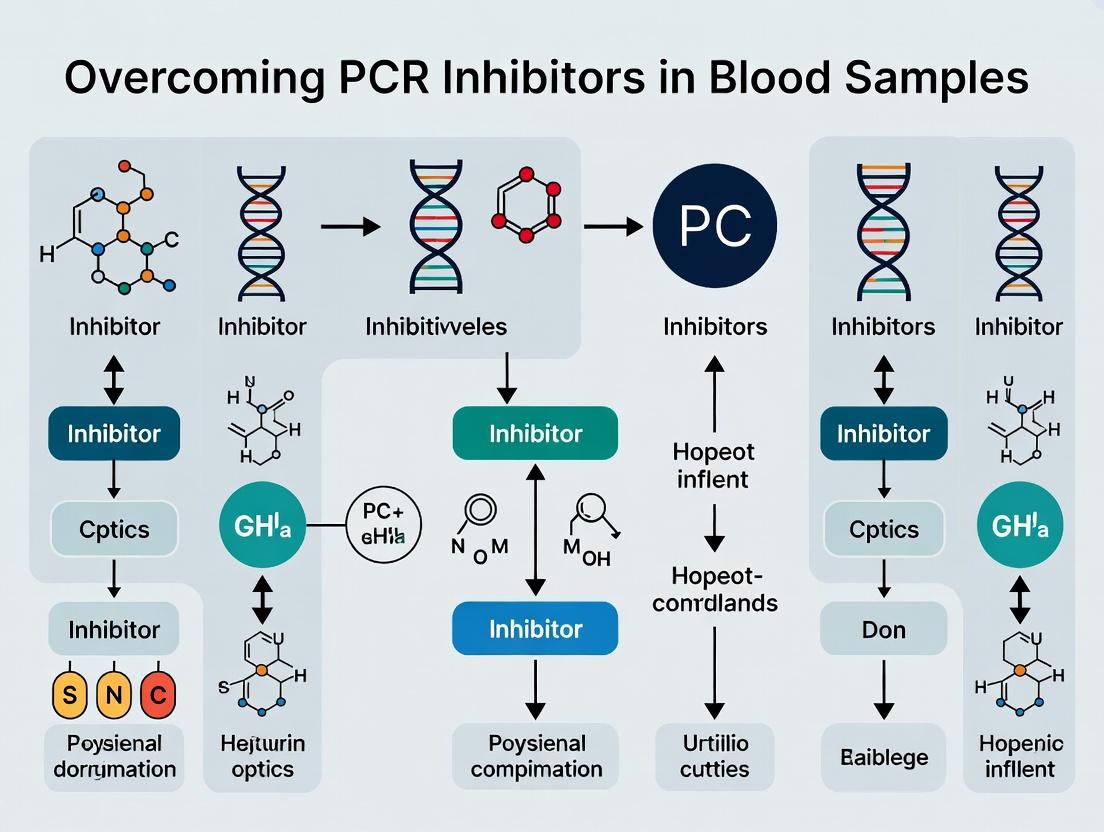
This article provides researchers, scientists, and drug development professionals with a complete framework for overcoming PCR inhibition in blood samples.
Blood Sample PCR Inhibitors: Comprehensive Strategies for Reliable Molecular Diagnostics and Research
Abstract
This article provides researchers, scientists, and drug development professionals with a complete framework for overcoming PCR inhibition in blood samples. It begins by defining the core chemical inhibitors like heme, immunoglobulins, and lactoferrin, and explores their mechanisms of interference with polymerase activity. Methodological sections detail sample preparation techniques, including column-based purification, magnetic bead technology, and dilution strategies. A dedicated troubleshooting guide addresses failed amplifications and suboptimal quantification (Cq shifts). Finally, the article covers validation protocols, internal controls, and comparative analyses of commercial kits to ensure result accuracy and reproducibility in clinical and research settings.
Understanding the Enemy: A Deep Dive into Common PCR Inhibitors in Blood
Troubleshooting Guides & FAQs
Q1: My PCR from whole blood consistently shows no amplification or very low yield. What are the most likely causes?
A1: This is typically due to potent PCR inhibitors present in blood. The primary culprits are:
- Heme: Released from hemoglobin during sample lysis, it inhibits Taq polymerase by catalyzing oxidative degradation of nucleotides and enzymes.
- Immunoglobulin G (IgG): Binds nonspecifically to Taq polymerase, reducing its availability for amplification.
- Lactoferrin & Proteases: Degrade polymerase enzymes.
- Complex Polysaccharides & Lipids: Interfere with the polymerization process. First, run a control reaction spiked with a known quantity of target DNA to confirm inhibition. Then, implement one of the validated purification protocols (see Protocol 1) or use an inhibitor-resistant polymerase blend.
Q2: After extracting DNA from a blood clot, my PCR fails. What specific step should I optimize?
A2: Clots are exceptionally rich in inhibitors, particularly heme and fibrin. Standard silica-column protocols often fail. You must:
- Increase pre-wash steps: Use multiple washes with a high-salt, detergent-based buffer (e.g., Buffer AL from QIAamp kit) before binding DNA to the column to dissolve the clot and remove proteins.
- Increase ethanol concentration: In the binding step, use 2-3 volumes of ethanol (instead of 1-2) to ensure complete DNA precipitation onto the silica membrane in the presence of residual contaminants.
- Perform a double-elution: Elute with 30-50 µL of buffer, then reload the eluate onto the same column and centrifuge again to increase yield. Refer to the specialized protocol for challenging samples below.
Q3: How can I quickly assess if my extracted blood DNA still contains inhibitors?
A3: Perform a spike-in or dilution test.
- Set up two identical PCR master mixes for your target.
- To the first, add your test DNA sample.
- To the second, add an equivalent volume of nuclease-free water.
- Spike both reactions with a known, low-copy number of a non-competitive control template (e.g., from a different species) and its specific primers.
- Run PCR. If the control amplifies in the water sample but fails or is weak in your test sample, inhibitors are present. A 1:5 or 1:10 dilution of your DNA sample that subsequently allows amplification also indicates the presence of inhibitors.
Q4: Are there specific polymerase enzymes better suited for blood-derived DNA?
A4: Yes. Modern inhibitor-resistant polymerases are essential. Key options are summarized in the table below.
Table 1: Comparison of Polymerase Resistance to Blood Inhibitors
| Polymerase Type | Key Feature | Relative Resistance to Heme | Relative Resistance to IgG | Best For |
|---|---|---|---|---|
| Standard Taq | Low cost, standard fidelity | Low (inhibited at >0.1 µM) | Low | Clean templates, controls |
| BSA-Supplemented Taq | BSA binds inhibitors | Moderate | Moderate | Routine blood extracts |
| Iso-Stable Polymerase | Engineered for metabolite-rich samples | High (tolerates ~2 µM) | High | Direct PCR from lysates |
| rTth Polymerase | Reverse transcriptase & DNA polymerase | High | Moderate | Blood RNA/DNA co-analysis |
Detailed Experimental Protocols
Protocol 1: Robust Silica-Column DNA Extraction from Whole Blood for PCR
Objective: To obtain inhibitor-free genomic DNA from 200 µL of fresh or frozen whole blood.
Materials: See "The Scientist's Toolkit" below.
Procedure:
- Lysis: Add 200 µL whole blood to 20 µL Proteinase K in a 1.5 mL microcentrifuge tube. Add 200 µL Buffer AL (containing guanidine HCl). Mix by pulse-vortexing for 15 sec. Incubate at 56°C for 10 min.
- Precipitation: Briefly centrifuge to remove drops from lid. Add 200 µL of 96-100% ethanol. Mix by pulse-vortexing for 15 sec.
- Binding: Apply the entire mixture to a QIAamp MinElute column. Centrifuge at 8,000 x g for 1 min. Discard flow-through.
- Wash 1: Add 500 µL Buffer AW1. Centrifuge at 8,000 x g for 1 min. Discard flow-through.
- Wash 2: Add 500 µL Buffer AW2. Centrifuge at 14,000 x g for 3 min. Discard flow-through.
- Dry: Place column in a clean 2 mL tube. Centrifuge at full speed for 1 min to dry membrane.
- Elution: Place column in a clean 1.5 mL tube. Apply 50-100 µL Buffer AE or nuclease-free water to the center of the membrane. Incubate at room temp for 5 min. Centrifuge at 8,000 x g for 1 min. Store DNA at -20°C.
Protocol 2: Dilution Test for Inhibitor Detection
Objective: To diagnose the presence of PCR inhibitors in a nucleic acid extract.
Procedure:
- Prepare a standard PCR master mix for your target assay.
- Aliquot the master mix into 4 tubes.
- Add template as follows:
- Tube 1: 2 µL of undiluted test DNA.
- Tube 2: 2 µL of test DNA diluted 1:5.
- Tube 3: 2 µL of test DNA diluted 1:10.
- Tube 4: 2 µL of a known, clean positive control DNA.
- Run the PCR under standard cycling conditions.
- Interpretation: If amplification is only observed in the diluted samples (Tubes 2 & 3) or the positive control (Tube 4), but not in the undiluted sample (Tube 1), inhibitors are present in the original extract.
Visualization: Workflow and Inhibition Pathways
Diagram 1: Blood PCR Inhibitor Mechanisms
Diagram 2: Blood DNA Extraction & Inhibition Removal Workflow
The Scientist's Toolkit: Key Research Reagent Solutions
| Item | Function in Overcoming Blood PCR Inhibition |
|---|---|
| Guanidine Hydrochloride (GuHCl) | Chaotropic salt in lysis buffers; denatures proteins (hemoglobin, immunoglobulins), releasing DNA while inactivating inhibitors and nucleases. |
| Proteinase K | Broad-spectrum serine protease; digests hemoglobin, IgG, and other inhibitory proteins during lysis. |
| Bovine Serum Albumin (BSA) | Acts as a competitive "decoy" for non-specific binding, sequestering heme and polysaccharide inhibitors, freeing Taq polymerase. |
| Inhibitor-Resistant Polymerase Blends | Engineered enzymes (e.g., Iso-Stable, Tth) with enhanced stability in the presence of heme, lactoferrin, and IgG. |
| Silica-Membrane Spin Columns | Selective binding of DNA in high-salt conditions, allowing sequential washes to remove protein and metabolite inhibitors. |
| Carrier RNA | Added during lysis of low-volume samples; improves yield by co-precipitating with DNA, minimizing loss during silica binding. |
| Ethanol (96-100%) | Precipitates DNA in the presence of chaotropic salts for binding to silica; used in wash buffers to remove residual salts. |
| Buffer AE (10 mM Tris-Cl, pH 8.5) | Low-ionic-strength elution buffer; stabilizes DNA and is compatible with downstream PCR (unlike EDTA-containing TE buffer). |
Technical Support Center
Welcome to the PCR Inhibition Technical Support Center. This resource provides troubleshooting guides and FAQs for researchers encountering inhibition from heme, immunoglobulins, lactoferrin, and heparin in blood-based PCR assays. These guides are framed within the critical research objective of overcoming PCR inhibitors in blood samples.
Troubleshooting Guide: Common Issues & Solutions
Issue 1: Poor or No Amplification from Whole Blood Lysates
- Likely Culprit: Heme (from erythrocyte lysis) and/or immunoglobulins (IgG).
- Immediate Action: Check DNA extraction method. For heme, ensure complete removal of erythrocyte debris and hemoglobin. For immunoglobulins, add a proteinase K digest step after the initial lysis and wash. Consider diluting the template (1:5, 1:10) to reduce inhibitor concentration.
- Long-term Solution: Switch to a blood-specific DNA/RNA extraction kit with inhibitor removal technology, or incorporate a PCR facilitator like bovine serum albumin (BSA).
Issue 2: Inconsistent Ct Values Between Plasma/Serum Samples
- Likely Culprit: Variable levels of lactoferrin (an innate immune protein) and/or heparin (an anticoagulant).
- Immediate Action: For heparin, treat samples with heparinase I. For lactoferrin, ensure a consistent sample preparation protocol and include a chelating agent like EGTA in the extraction buffer to sequester the iron lactoferrin uses.
- Long-term Solution: Standardize blood collection tubes (e.g., use EDTA tubes instead of heparin tubes). For sensitive assays, implement a post-extraction purification clean-up column.
Issue 3: Inhibition Persists After Column-Based Purification
- Likely Culprit: Co-elution of heme (binds to silica) or carryover of immunoglobulins.
- Immediate Action: Increase the number of wash steps with the recommended ethanol-based buffer. Ensure the final elution buffer is at the correct pH (usually 8.0-9.0). Re-precipitate or re-purify the DNA.
- Long-term Solution: Use a dedicated inhibitor removal resin or switch to magnetic bead-based purification systems designed for complex samples.
Frequently Asked Questions (FAQs)
Q1: Which anticoagulant in blood collection tubes is least inhibitory for PCR? A: EDTA (purple-top tubes) is generally preferred. It chelates Mg2+ but this is compensated for in the PCR master mix. Heparin (green-top) is a strong inhibitor and must be avoided or enzymatically degraded post-collection. Citrate (blue-top) is also acceptable but can be inhibitory at high concentrations.
Q2: How can I quickly test if my sample is inhibited? A: Perform a spiking experiment. Take an aliquot of your purified sample DNA and mix it with a known, clean control DNA template (or a separate successful PCR product). Run PCR for both the control alone and the spiked mix. If the control amplifies but fails in the mix, your sample contains inhibitors.
Q3: What is the most effective additive to overcome these inhibitors in the PCR mix itself? A: There is no universal solution, but BSA (0.1-0.8 µg/µL) is highly effective against heme and immunoglobulin inhibition. For inhibitors that chelate Mg2+ (like lactoferrin via iron binding), increasing MgCl2 concentration (e.g., from 1.5 mM to 3-4 mM) can help. Commercial PCR facilitator cocktails (e.g., T4 Gene 32 protein, trehalose) are also available.
Q4: Does inhibitor effect vary by polymerase? A: Yes, significantly. Standard Taq polymerase is highly susceptible. Engineered, inhibitor-resistant polymerases (often derived from Archaeal species) are much more robust. For challenging blood samples, switching to a polymerase explicitly marketed as "inhibitor-resistant" is one of the most impactful changes you can make.
Quantitative Data on Common PCR Inhibitors from Blood
Table 1: Characterization of Major PCR Inhibitors in Blood Samples
| Inhibitor | Source in Blood | Mechanism of Inhibition | Critical Concentration for 50% Inhibition* |
|---|---|---|---|
| Heme | Hemoglobin from erythrocytes | Degrades the DNA template; inhibits polymerase activity; absorbs fluorescence. | ~ 1-10 µM |
| Immunoglobulin G (IgG) | Plasma, serum, leukocytes | Binds nonspecifically to DNA, preventing polymerase binding and elongation. | ~ 0.5-2 mg/mL |
| Lactoferrin | Neutrophils, mucosal secretions | Sequesters iron and may chelate Mg2+, a critical cofactor for polymerase. | ~ 0.1-1 mg/mL |
| Heparin | Anticoagulant (green-top tubes) | Negatively charged polysaccharide that binds to polymerase and cofactors (Mg2+), blocking the reaction. | ~ 0.05-0.2 IU/µL |
Note: Thresholds vary based on DNA polymerase, target size, and reaction conditions.
Experimental Protocols
Protocol 1: Heparinase Treatment of Blood Samples Objective: Remove heparin from plasma/serum or directly from crude lysates.
- To 50 µL of sample, add 5 µL of Heparinase I buffer (20 mM Tris-HCl, 50 mM NaCl, 4 mM CaCl2, pH 7.5).
- Add 1-2 U of Heparinase I.
- Incubate at 25°C for 1-2 hours.
- Heat-inactivate the enzyme at 65°C for 15 minutes.
- Proceed with nucleic acid extraction or use directly in PCR (with appropriate controls).
Protocol 2: Evaluating Inhibitor Resistance of Polymerases (Spike-In Assay) Objective: Compare the robustness of different DNA polymerases against a known inhibitor.
- Prepare a standard PCR master mix for polymerase A and polymerase B, each with its optimal buffer.
- Spike a known inhibitor (e.g., 5 µM hemin chloride or 0.5 mg/mL IgG) into separate aliquots of each master mix. Include a no-inhibitor control for each.
- Add a consistent amount of a positive control DNA template (e.g., 10^4 copies of a plasmid).
- Run PCR with identical cycling conditions.
- Compare amplification efficiency (Ct value) and yield (band intensity/qPCR curve) between conditions.
The Scientist's Toolkit: Research Reagent Solutions
Table 2: Essential Reagents for Overcoming PCR Inhibition in Blood Research
| Reagent / Kit / Material | Primary Function |
|---|---|
| Inhibitor-Resistant DNA Polymerase | Engineered enzyme with high tolerance to heme, salts, and complex biological samples. |
| Bovine Serum Albumin (BSA), Molecular Grade | Binds and neutralizes inhibitors like heme and immunoglobulins in the PCR mix. |
| Proteinase K | Degrades immunoglobulins and other proteins that may co-purify with DNA. |
| Heparinase I Enzyme | Specifically degrades heparin anticoagulant into non-inhibitory sugars. |
| Magnetic Bead-Based NA Purification Kit | Often provides superior inhibitor removal compared to silica columns due to more stringent wash conditions. |
| Blood-Specific DNA/RNA Extraction Kit | Optimized lysis and wash buffers designed to remove hemoglobin, immunoglobulins, and other blood components. |
| PCR Facilitator Cocktail (Commercial) | Proprietary mixes containing stabilizers, enhancers, and competitor proteins to improve robustness. |
| MgCl2 Solution (Additional) | To compensate for Mg2+ chelation by inhibitors like lactoferrin or EDTA. |
Visualizations
Title: Workflow for Overcoming Blood PCR Inhibitors
Title: Mechanisms of PCR Inhibition by Blood Compounds
Troubleshooting Guides and FAQs
This technical support center addresses common experimental challenges related to PCR inhibitors in blood sample research, framed within the thesis Overcoming PCR inhibitors in blood samples. The FAQs target issues encountered by researchers, scientists, and drug development professionals.
FAQ 1: Why is my PCR from whole blood yielding no product, even with a positive control?
- Answer: This is a classic sign of potent inhibition. Hemoglobin (from erythrocytes) and lactoferrin (from neutrophils) in whole blood are potent inhibitors that bind directly to DNA polymerase, preventing enzyme function. Heparin, a common anticoagulant, can also inhibit PCR by competing with DNA for binding to polymerase. The positive control may fail if the inhibitor is present at a concentration that affects even the optimized control reaction.
- Troubleshooting Steps:
- Dilute the Template: Perform a serial dilution of your DNA extract. Inhibition is often concentration-dependent; diluting the sample may dilute the inhibitor below its effective concentration.
- Change DNA Polymerase: Switch to a polymerase engineered for inhibitor resistance (e.g., Tth polymerase variants or proprietary "hot-start" polymerases with inhibitor-tolerant buffers).
- Purify Again: Re-purify the DNA using a method designed for challenging samples, such as silica-membrane columns with inhibitor-removal wash steps or magnetic bead-based systems.
- Add Adjuncts: Incorporate PCR adjuncts like Bovine Serum Albumin (BSA, 0.1-0.5 µg/µL) or formamide (1-3%) which can bind to or compete with inhibitors.
FAQ 2: After extracting DNA from a blood clot, my PCR is inconsistent. What could be causing this?
- Answer: Inconsistency suggests variable inhibitor carryover. Fibrin clots are dense and can trap inhibitors like heme (from hemoglobin degradation) and porphyrins. These molecules are chelators—they bind magnesium ions (Mg²⁺), which are essential cofactors for DNA polymerase. Fluctuating Mg²⁺ availability causes erratic PCR efficiency.
- Troubleshooting Steps:
- Optimize Mg²⁺: Set up a magnesium chloride (MgCl₂) gradient from 1.5 mM to 4.5 mM in 0.5 mM increments to overcome chelation.
- Use a Chelating Agent: Add 0.1 mM Ethylenediaminetetraacetic acid (EDTA) to your reaction. This may seem counterintuitive, but low EDTA can selectively chelate contaminants more strongly than Mg²⁺, sparing the Mg²⁺ for the polymerase. Caution: Higher EDTA concentrations will inhibit PCR.
- Improve Lysis: Ensure complete clot dissolution using proteinase K with extended incubation (overnight if necessary) and vigorous vortexing.
FAQ 3: My qPCR from plasma shows a high Ct value and poor standard curve efficiency. How do I improve sensitivity?
- Answer: Plasma contains immunoglobulin G (IgG), which can inhibit PCR by binding to single-stranded DNA, preventing primer annealing and polymerase extension. This manifests as reduced sensitivity and poor amplification efficiency.
- Troubleshooting Steps:
- Heat Treat Plasma: Prior to extraction, incubate the plasma sample at 95°C for 5-10 minutes. This can denature and precipitate some interfering proteins, including IgG.
- Implement a Pre-PCR Wash: During nucleic acid extraction, add an extra wash step with an ethanol-based buffer to remove residual salts and proteins.
- Use a DNA-Binding Additive: Include non-acetylated BSA (0.2 µg/µL) in the PCR mix. BSA binds to IgG, preventing it from interacting with the DNA.
FAQ 4: I am using an inhibitor-resistant polymerase, but my amplification from hemolyzed blood is still weak. What else can I try?
- Answer: Inhibitor-resistant polymerases are not universally resistant to all inhibitor classes. Hemolyzed samples release high concentrations of heme, which is both a polymerase inhibitor and a potent chelator. A multi-pronged approach is needed.
- Troubleshooting Steps:
- Combination Therapy (Additives): Use a combination of adjuncts. For example, use an inhibitor-resistant polymerase with added BSA (to bind heme) and a slightly elevated Mg²⁺ concentration (to counteract chelation).
- Switch Extraction Methods: Consider switching to a paramagnetic bead-based extraction system, which often demonstrates superior removal of heme compared to traditional column methods.
- Post-Extraction Purification: Perform a post-extraction cleanup using a size-exclusion column or a precipitation step to further purify the DNA.
Table 1: Common Blood-Derived PCR Inhibitors and Their Mechanisms
| Inhibitor | Source in Blood | Primary Mechanism of Inhibition | Critical Concentration for 50% Inhibition* |
|---|---|---|---|
| Hemoglobin/Heme | Erythrocytes | Polymerase binding & Mg²⁺ chelation | ~1 µM (heme) |
| Lactoferrin | Neutrophils | Polymerase binding | ~0.2 µg/µL |
| Immunoglobulin G (IgG) | Plasma | Single-stranded DNA binding | ~0.15 µg/µL |
| Heparin | Anticoagulant | Competes with DNA for polymerase | ~0.1 IU/µL |
| Fibrinogen/ Fibrin | Clots, Plasma | Entraps DNA, inhibits with degradation products | Variable |
*Approximate values from literature; actual thresholds depend on polymerase and reaction conditions.
Table 2: Efficacy of Common Mitigation Strategies
| Mitigation Strategy | Target Inhibitor(s) | Typical Implementation | Expected Improvement in Ct* |
|---|---|---|---|
| Dilution (1:10) | Heme, Lactoferrin | Diluting DNA extract prior to PCR | ΔCt: -3 to -5 |
| BSA Addition | Heme, IgG, Lactoferrin | 0.2 µg/µL in master mix | ΔCt: -2 to -4 |
| Mg²⁺ Increase | Chelators (Heme) | Increase by 0.5-1.5 mM over standard | ΔCt: -1 to -3 |
| Inhibitor-Resistant Polymerase | Broad-spectrum | Use polymerase with engineered tolerance | ΔCt: -4 to -8+ |
| Silica Column w/ Inhibitor Wash | Heme, Humics | Specific wash buffer (e.g., "IW1" buffer) | ΔCt: -2 to -6 |
*ΔCt: Reduction in Cycle threshold compared to uninhibited control; negative value indicates improvement.
Experimental Protocols
Protocol 1: Evaluating Inhibitor Resistance of Polymerases Objective: To compare the performance of different DNA polymerases in the presence of a known inhibitor (hemin).
- Prepare a standard PCR master mix for a 25 µL reaction, varying only the DNA polymerase. Test 3-4 types (e.g., standard Taq, hot-start Taq, inhibitor-resistant Tth).
- Spike the master mixes with a serial dilution of hemin (0 µM, 0.5 µM, 1 µM, 2 µM, 4 µM) from a stock solution.
- Use a consistent amount of purified, inhibitor-free control DNA template (e.g., 10 ng of human genomic DNA).
- Run PCR with standardized cycling conditions.
- Analyze products via agarose gel electrophoresis. The polymerase yielding the brightest band at the highest hemin concentration is the most resistant.
Protocol 2: Optimizing Mg²⁺ Concentration to Overcome Chelation Objective: To empirically determine the optimal MgCl₂ concentration for PCR on inhibitor-prone extracts.
- Prepare a master mix containing all components except MgCl₂ and template.
- Aliquot the master mix into a PCR plate.
- Add MgCl₂ to each well to create a concentration gradient (e.g., 1.0, 1.5, 2.0, 2.5, 3.0, 3.5, 4.0, 4.5 mM). Include the manufacturer's recommended concentration as a midpoint.
- Add the same volume of your inhibited DNA extract to each well.
- Perform qPCR. The reaction with the lowest Ct value and highest fluorescence amplitude indicates the optimal Mg²⁺ concentration for that sample/inhibitor mix.
Visualizations
Diagram 1: Three Core Inhibition Mechanisms
Diagram 2: PCR Inhibition Troubleshooting Decision Tree
The Scientist's Toolkit: Research Reagent Solutions
| Item | Function in Overcoming Inhibition |
|---|---|
| Inhibitor-Resistant DNA Polymerase | Engineered enzymes (e.g., Tth, Taq HS) that maintain activity in the presence of heme, humic acids, and other common inhibitors. |
| Bovine Serum Albumin (BSA), non-acetylated | Acts as a "competitive inhibitor of inhibitors" by binding to polyphenols, heme, and IgG, preventing them from interfering with the polymerase. |
| Proteinase K | Critical for complete digestion of proteins in blood clots and cellular debris, releasing DNA and degrading nucleases. |
| Magnesium Chloride (MgCl₂) Solution | Essential cofactor for polymerase. A stock solution allows for precise optimization to counteract chelating inhibitors. |
| Silica-Membrane Columns with Inhibitor Removal Wash Buffer | DNA binding columns featuring a specific wash buffer (often containing ethanol and guanidine salts) to remove heme, salts, and other small molecule inhibitors. |
| Polyvinylpyrrolidone (PVP) or PVPP | Binds polyphenols (from co-extracted plant material in forensics/vet samples) which can chelate ions and inhibit polymerase. |
| EDTA (0.1 mM in reaction) | At low concentrations, can sequester metal ions required by contaminating nucleases or preferentially bind inhibitory metal chelators. |
Technical Support Center
Troubleshooting Guides & FAQs
Q1: Our qPCR assays from plasma samples show inconsistent Cq values and poor amplification efficiency. What could be the cause and how can we resolve it? A: This is a common issue often linked to residual PCR inhibitors like heparin, immunoglobulins, or lipids that vary with donor health and plasma preparation. To resolve:
- Verify Sample Preparation: Ensure double centrifugation (e.g., 2,500 x g for 15 mins, then 10,000 x g for 10 mins at 4°C) to remove platelets and microparticles.
- Implement an Inhibition Test: Spike a known amount of exogenous control DNA into your sample lysate and run a separate qPCR. A significant delay (ΔCq > 1) compared to a water control indicates inhibition.
- Apply a Dilution Series: Dilute your template (1:5, 1:10). If Cq values shift linearly with dilution, inhibition is confirmed and dilution may be a valid solution if sensitivity allows.
- Use an Inhibitor-Removal Kit: Employ silica-membrane or bead-based nucleic acid purification kits specifically validated for plasma.
Q2: We observe significant variation in miRNA yield and purity between serum and plasma samples from the same donor cohort. Which is preferable? A: Plasma (EDTA) is generally recommended over serum for miRNA/Nucleic Acid studies. Serum formation involves clotting, which releases platelets-derived miRNAs and cellular degradation products, introducing greater biological variability. Plasma collected with a rapid-processing protocol provides a more consistent profile of circulating nucleic acids. Key steps:
- Use EDTA tubes, process within 30 minutes of collection.
- Centrifuge at 2,500 x g for 15 mins to obtain plasma, then aliquot and store at -80°C.
- Avoid repeated freeze-thaw cycles.
Q3: How does donor health status (e.g., inflammation, hemolysis) impact PCR results from blood derivatives? A: Donor health is a major pre-analytical variable. Inflammation can elevate circulating DNA/RNA levels and introduce immune complexes. Hemolysis, often from difficult draws or certain diseases, releases hemoglobin and heme, which are potent PCR inhibitors, and intracellular RNAs.
- Protocol for Hemolysis Assessment: Visually inspect samples. Quantify hemolysis by measuring absorbance at 414 nm (Hb peak) and 540 nm. A ratio (A414/A540) > 1.0 suggests significant hemolysis. Exclude or flag heavily hemolyzed samples.
- Mitigation: For inflammatory conditions, use normalization to an exogenous spike-in control added during lysis. For mild hemolysis, increase the number of wash steps during nucleic acid purification.
Q4: Our whole blood RNA samples degraded despite using PAXgene tubes. What went wrong? A: PAXgene tubes require specific, immediate incubation post-collection. Follow this protocol precisely:
- Invert the tube 8-10 times immediately after draw.
- Incubate upright at room temperature for a minimum of 2 hours and a maximum of 72 hours before processing. This allows complete cell lysis and RNA stabilization.
- Store at -20°C or -80°C for long-term. Failure to incubate for the full 2 hours is a common cause of poor RNA quality.
Table 1: Common PCR Inhibitors by Sample Type and Source
| Sample Type | Primary Inhibitor Sources | Common Inhibitors | Impact on PCR |
|---|---|---|---|
| Whole Blood | Intact & lysed cells | Hemoglobin, Heparin, Lactoferrin, IgG | High. Can reduce efficiency by >50%. |
| Plasma (EDTA) | Residual cells, platelets, co-purified molecules | Heparin (if used), Immunoglobulins, Lipids | Moderate. Efficiency reduction of 10-40%. |
| Serum | Clotting process, platelet degranulation | Immunoglobulins, Proteases, Fibrinogen | High-Moderate. Variable, efficiency reduction 20-60%. |
Table 2: Quantitative Impact of Sample Handling on Nucleic Acid Yield and Quality
| Variable | Condition 1 | Condition 2 | Effect on DNA Yield | Effect on RNA Integrity Number (RIN) |
|---|---|---|---|---|
| Processing Delay | Plasma sep. <2h | Plasma sep. >4h | ~10% decrease | RIN drops from 8.5 to 7.0 |
| Freeze-Thaw Cycles | 1 cycle | 3 cycles | ~15% decrease | RIN drops from 8.2 to 6.5 |
| Centrifuge Force | 1,500 x g | 2,500 x g (double spin) | Cell-free DNA yield increases ~20% | N/A |
Experimental Protocols
Protocol 1: Assessment of PCR Inhibition via Spiked Exogenous Control Objective: To detect the presence of PCR inhibitors in a purified nucleic acid sample. Materials: Test sample (eluted DNA/RNA), inhibition-free buffer, exogenous control DNA (e.g., from phage lambda), qPCR master mix, primers/probe for control. Method:
- Prepare two reaction mixtures:
- Test Spike: 5 µL sample eluate + known copy number of control DNA.
- Control Spike: 5 µL nuclease-free water + same copy number of control DNA.
- Add identical qPCR master mix volumes to both. Run qPCR in triplicate.
- Calculate ΔCq = Mean Cq(Test Spike) - Mean Cq(Control Spike).
- Interpretation: ΔCq > 1.0 indicates the presence of inhibitors in the sample eluate.
Protocol 2: Optimized Nucleic Acid Extraction from Plasma for cfDNA/cfRNA Objective: Maximize yield and purity of cell-free nucleic acids while removing PCR inhibitors. Materials: 1-4 mL plasma, commercial cfDNA/cfRNA extraction kit (magnetic bead-based), 80% Ethanol, Carrier RNA (if recommended), low-binding tubes. Method:
- Thaw plasma on ice. Centrifuge at 16,000 x g for 10 min at 4°C to remove residual debris.
- Transfer supernatant to a new tube. Add proteinase K and lysis/binding buffer. Incubate.
- Add binding buffer and magnetic beads. Bind for 15 min with rotation.
- Place on magnet. Discard supernatant.
- Wash beads twice with 80% ethanol (freshly prepared).
- Air-dry beads for 5-10 min. Elute in a small volume (20-30 µL) of low-EDTA TE buffer or nuclease-free water.
The Scientist's Toolkit: Research Reagent Solutions
| Item | Function & Rationale |
|---|---|
| EDTA Blood Collection Tubes | Anticoagulant that chelates Ca2+, prevents clotting for plasma. Preferred over heparin for PCR as heparin is a potent inhibitor. |
| PAXgene Blood RNA Tubes | Contains additives that immediately lyses cells and stabilizes RNA, preserving the in vivo gene expression profile. |
| Magnetic Bead-based NA Kits | Selective binding of nucleic acids; efficient removal of proteins, salts, and inhibitors through washing steps. Ideal for automated high-throughput. |
| Carrier RNA (e.g., Poly-A, tRNA) | Added during extraction from low-concentration samples (plasma/serum) to improve nucleic acid binding efficiency and yield. |
| RNase/DNase Inactivators (e.g., RNAlater) | Stabilizes and protects cellular RNA/DNA in whole blood or tissues prior to extraction, inhibiting degradation. |
| Exogenous Internal Control (Spike-in) | A known quantity of non-biological DNA/RNA added to the sample at lysis to monitor extraction efficiency and PCR inhibition. |
| PCR Additives (e.g., BSA, Betaine) | Added to the PCR master mix to help neutralize residual inhibitors, stabilize polymerase, and improve amplification of complex templates. |
Visualizations
Sample Type Influence on PCR Analysis
Workflow of Variation in Blood-Based PCR
Troubleshooting Guide: Questions & Answers
Q1: During qPCR of blood-derived samples, my amplification curves show a significant delay (higher Cq) and reduced endpoint fluorescence compared to my controls. What does this indicate? A1: This is a classic sign of PCR inhibition. Inhibitors present in the nucleic acid extract from blood (e.g., heme, lactoferrin, immunoglobulins) reduce the efficiency of the polymerase enzyme. This causes more cycles to reach the detection threshold (higher Cq) and can lower the maximum fluorescence (∆Rn max) due to reduced amplicon yield.
Q2: My standard curve shows good linearity, but the calculated amplification efficiency is below 90%. Is this inhibition? A2: Yes, suboptimal amplification efficiency (ideally 90-110%) is a key quantitative indicator of inhibition. It suggests the polymerase is not functioning at full capacity across all template concentrations.
Q3: What is a "shoulder" or a concave shape in the amplification curve, and why is it concerning? A3: Non-sigmoidal curve shapes (shoulders, concavity) often indicate late-onset inhibition. As the reaction progresses, inhibitors may disproportionately affect the enzyme as reagents are consumed, causing the curve to flatten prematurely or behave erratically.
Q4: How can I confirm inhibition is the issue and not just low template quality? A4: Perform a spiking experiment (Internal Positive Control, IPC). If the IPC (exogenous template added to all samples) also shows a higher Cq or abnormal curve shape in the problematic samples, inhibition is confirmed. If only the target is affected, the issue may be specific to the template.
Experimental Protocols for Detection & Diagnosis
Protocol 1: Serial Dilution Assay for Inhibition Detection
- Prepare a 1:5 dilution series of the suspected inhibited sample (e.g., neat, 1:5, 1:25).
- Run qPCR on all dilutions alongside a positive control (inhibitor-free template).
- Analysis: Plot the observed Cq value against the log of the dilution factor. In an uninhibited reaction, the plot will be linear. Inhibition is indicated by a non-linear plot where Cq values improve disproportionately upon dilution (as inhibitors are diluted out).
Protocol 2: Internal Positive Control (IPC) Co-amplification
- Select a commercially available or designed exogenous IPC (non-competitive, with a distinct probe).
- Spike a known, low copy number of the IPC into each master mix prior to reaction setup.
- Run the multiplex qPCR (target + IPC).
- Analysis: Compare IPC Cq values across all samples. A significant shift (e.g., ∆Cq > 0.5 cycles) in the suspected samples confirms the presence of broad-spectrum inhibitors.
Data Presentation
Table 1: Quantitative Signatures of PCR Inhibition in Amplification Data
| Indicator | Uninhibited Reaction | Inhibited Reaction | Diagnostic Threshold |
|---|---|---|---|
| Amplification Efficiency (E) | 90-110% | Often < 90% or > 120% | E < 90% |
| ∆Cq (IPC Spike) | ≤ 0.5 cycles | > 0.5 cycles (delay) | ∆Cq (Sample vs Control) > 0.5 |
| ∆Rn Max (Endpoint Fluorescence) | High, consistent | Reduced, variable | > 25% reduction from control |
| Standard Curve R² | > 0.990 | May remain high despite low E | Not a reliable sole indicator |
| Dilution Test Linearity | Linear Cq shift | Non-linear Cq improvement | Visual deviation from linearity |
Table 2: Common Blood-Derived PCR Inhibitors & Their Sources
| Inhibitor Class | Primary Source in Blood | Main Effect on PCR |
|---|---|---|
| Heme / Hemoglobin | Erythrocyte lysis | Degrades heme-group in DNA polymerase |
| Lactoferrin | Neutrophils, plasma | Binds Mg²⁺ ions, essential cofactor |
| Immunoglobulin G (IgG) | Plasma / Serum | Binds to single-stranded DNA, blocking polymerase |
| Heparin | Anticoagulant (collection tubes) | Charged polysaccharide that binds enzymes |
| Urea / Metabolic Byproducts | Plasma | Disrupts hydrogen bonding & enzyme stability |
The Scientist's Toolkit: Research Reagent Solutions
| Reagent / Material | Function in Overcoming Inhibition |
|---|---|
| Inhibitor-Removal Spin Columns (e.g., silica-membrane) | Binds DNA while allowing inhibitors to pass through or be washed away. |
| Polymerase Blends (e.g., Taq + ancillary proteins) | Engineered polymerases with enhanced resistance to heme, lactoferrin, and blood salts. |
| BSA (Bovine Serum Albumin) | Acts as a competitive "decoy" protein, binding non-specific inhibitors like phenolics and heparin. |
| Enhanced Mg²⁺ Buffer Systems | Provides excess cofactor to counteract chelators (e.g., lactoferrin, EDTA). |
| Single-Tube Internal Positive Control (IPC) | Validates each reaction for the presence of inhibitors, distinguishing inhibition from target failure. |
| Dilution Buffers with Carrier RNA/DNA | Dilutes inhibitors below critical concentration; carrier nucleic acid prevents adsorption loss. |
Diagrams
Title: Diagnostic Flow for PCR Inhibition
Title: Inhibition Detection Experimental Workflow
Title: Mechanism of Inhibitor Action in PCR
Sample Preparation Mastery: Proven Techniques to Isolate High-Quality DNA/RNA
FAQs & Troubleshooting Guide
Q1: Why is my DNA yield from a blood sample unexpectedly low after silica membrane purification? A: Low yield is often due to incomplete lysis of white blood cells or nucleated red blood cells, or overloading of the silica membrane. Ensure the sample is thoroughly mixed during lysis. For large-volume blood samples, do not exceed the binding capacity of the column (typically 5-10 µg for a midi column). For 1 mL of fresh whole blood, expect a yield of 20-40 µg of genomic DNA.
Q2: My purified DNA shows poor PCR amplification. Have inhibitors been carried over? A: Residual ethanol or guanidinium salts are common inhibitors. Ensure adequate drying of the silica membrane after wash steps (5-minute open-air drying is recommended). Always perform the final elution in a low-EDTA TE buffer or nuclease-free water, not the original elution buffer from some kits, as EDTA can inhibit some downstream enzymes. A 260/230 ratio below 2.0 indicates organic carryover.
Q3: The eluted DNA has a brownish hue. What does this indicate? A: A brown color indicates carryover of heme, a potent PCR inhibitor. This results from inadequate washing following lysis/binding. Increase the volume of Wash Buffer 1 (which typically contains a chaotropic salt and ethanol) and ensure it is fully dispensed through the membrane. Centrifugation steps must be performed at the correct speed and time.
Q4: How can I optimize elution volume for maximum concentration from small blood volumes (e.g., dried blood spots)? A: For maximum concentration, elute in a small volume (e.g., 30-50 µL) of pre-warmed (55°C) elution buffer. Let the column sit for 2 minutes before centrifugation. A second elution with a fresh batch of buffer can increase yield by 10-20%. Do not use less than 30 µL, as it may not fully hydrate the membrane.
Q5: What is the most critical step for removing PCR inhibitors like lactoferrin or immunoglobulin G from plasma-rich blood samples? A: The protease digestion step is critical. Incubate the lysis mixture with proteinase K at 56°C for at least 1 hour, or overnight for clots. Inadequate digestion leaves these proteinaceous inhibitors intact, allowing them to co-purify with DNA.
Table 1: Expected DNA Yield & Purity from Various Blood Sample Types
| Sample Type | Sample Input Volume | Expected DNA Yield (Avg.) | Optimal A260/A280 Ratio | Acceptable A260/A230 Ratio |
|---|---|---|---|---|
| Whole Blood (EDTA) | 200 µL | 4-8 µg | 1.7-1.9 | 2.0-2.4 |
| Dried Blood Spot (3.2 mm punch) | 1 punch | 0.5-2 µg | 1.6-1.8 | 1.8-2.2 |
| Buffy Coat | 100 µL | 15-30 µg | 1.8-2.0 | 2.1-2.5 |
| Clotted Blood | 200 µL | 3-7 µg | 1.7-1.9 | 1.9-2.3 |
Table 2: Troubleshooting Common Problems & Solutions
| Problem | Possible Cause | Recommended Solution |
|---|---|---|
| Low Yield | Incomplete cell lysis | Extend proteinase K incubation; ensure thorough vortexing after lysis buffer addition. |
| Low A260/A280 (<1.7) | Protein contamination | Add a second wash with Wash Buffer 2; ensure proper preparation of wash buffers (correct ethanol addition). |
| Low A260/A230 (<1.8) | Carryover of chaotropic salts or organics | Use the recommended volume of Wash Buffer 2; extend drying time to 10 minutes. |
| No Elution | Membrane drying out | Ensure elution buffer is applied to the center of the membrane; do not over-dry membrane. |
| Clogged Column | Particulate overload or high viscosity | Pre-centrifuge lysate before loading; for large volumes, split lysate across multiple columns. |
Detailed Protocol: Silica Membrane Purification from Whole Blood for Inhibitor-Free PCR
Objective: To isolate high-quality, PCR-ready genomic DNA from 200 µL of human whole blood.
Materials:
- Whole blood sample (collected in EDTA or citrate).
- Commercial silica-membrane column kit (e.g., QIAamp Blood DNA Mini Kit, DNeasy Blood & Tissue Kit).
- Proteinase K.
- Ethanol (96-100%).
- Microcentrifuge.
- Heating block or water bath (56°C).
- Nuclease-free TE buffer or water.
Workflow:
- Lysis: Pipette 200 µL of whole blood into a 1.5 mL microcentrifuge tube. Add 20 µL Proteinase K and 200 µL of kit-provided lysis buffer (AL). Mix immediately by pulse-vortexing for 15 seconds.
- Incubation: Incubate at 56°C for 10 minutes. Briefly centrifuge to remove droplets from the lid.
- Precipitation: Add 200 µL of 96-100% ethanol to the lysate. Mix again by pulse-vortexing for 15 seconds. Briefly centrifuge.
- Binding: Apply the entire mixture to the silica membrane column placed in a 2 mL collection tube. Centrifuge at 6,000 x g for 1 minute. Discard flow-through and collection tube.
- Wash 1: Place column in a new 2 mL collection tube. Add 500 µL Wash Buffer 1 (AW1). Centrifuge at 6,000 x g for 1 minute. Discard flow-through.
- Wash 2: Place column back. Add 500 µL Wash Buffer 2 (AW2). Centrifuge at full speed (20,000 x g) for 3 minutes. Discard flow-through and collection tube.
- Drying: Place column in a clean 1.5 mL microcentrifuge tube. Open the lid and incubate at room temperature for 5 minutes to dry membrane.
- Elution: Add 50-100 µL of pre-warmed (55°C) Elution Buffer (AE) or TE buffer directly to the center of the membrane. Incubate at room temperature for 2 minutes. Centrifuge at full speed for 1 minute. The eluate contains purified DNA.
Diagrams
Silica Membrane DNA Purification Workflow
Overcoming PCR Inhibitors in Blood Purification
The Scientist's Toolkit: Essential Reagents & Materials
| Item | Function in Purification |
|---|---|
| Lysis Buffer (AL/GB) | Contains guanidinium hydrochloride or similar chaotropic salt. Denatures proteins, releases nucleic acids, and prepares them for binding to silica. |
| Proteinase K | Serine protease. Digests histones and other cellular proteins, inactivating nucleases and breaking down inhibitor proteins like lactoferrin. |
| Silica Membrane Column | The core solid-phase. DNA binds selectively in high-salt, chaotropic conditions. Provides a surface for effective washing. |
| Wash Buffer 1 (AW1) | Contains a chaotropic salt and ethanol. Removes residual proteins, lipids, and salts while keeping DNA bound. Critical for heme removal. |
| Wash Buffer 2 (AW2) | High-salt ethanol buffer. Removes residual chaotropic salts and prepares membrane for elution by removing all traces of ethanol. |
| Elution Buffer (AE/TE) | Low-salt aqueous buffer (10 mM Tris-Cl, pH 8.5) or nuclease-free water. Hydrates the membrane and desorbs pure DNA. |
Troubleshooting Guides & FAQs
Q1: Our automated extraction run on whole blood samples resulted in low nucleic acid yield. What are the most likely causes? A: Low yield is frequently due to incomplete lysis or bead binding issues. Ensure:
- Sample Volume: You are not overloading the system's binding capacity. For typical high-throughput systems, do not exceed 300 µL of whole blood per extraction chamber without protocol optimization.
- Lysis Incubation: Verify the instrument's protocol includes adequate lysis incubation time and temperature (typically 10-15 minutes at room temperature or 56°C). Check for clogged tips that may not be dispensing lysis/binding buffer fully.
- Bead Homogeneity: Vortex the magnetic bead suspension thoroughly before loading onto the instrument to ensure an even suspension. Precipitated beads lead to inconsistent binding.
- Magnet Engagement: Check instrument logs for errors. A faulty magnet or positioning arm can prevent proper bead capture during wash steps, leading to bead and nucleic acid loss.
Q2: The eluted DNA/RNA from blood samples shows poor purity (low A260/A280 ratios) and inhibits downstream PCR. How can we improve purity? A: Poor purity indicates carryover of PCR inhibitors like heme, hemoglobin, or salts. Key troubleshooting steps:
- Wash Buffer Integrity: Ensure wash buffers (usually ethanol-based) are freshly prepared or have not expired. Contamination or evaporation of ethanol alters buffer stringency.
- Complete Wash Buffer Removal: After the final wash step, the system should include a "dry" or "air dry" step (typically 5-10 minutes) to allow residual ethanol to evaporate. Traces of ethanol inhibit PCR.
- Increase Wash Steps: Modify the protocol to include an additional wash cycle. For particularly inhibitor-rich samples like whole blood, a double wash with Buffer AW2 (or equivalent) is recommended.
- Elution Buffer: Use low-EDTA or EDTA-free elution buffers (e.g., 10 mM Tris-HCl, pH 8.5) and ensure it is pre-heated (70-80°C) for higher elution efficiency and purity.
Q3: We observe high cross-contamination between samples on our high-throughput plate-based extractor. What system checks should we perform? A: Cross-contamination is a critical failure mode. Address it immediately:
- Tip Integrity: For liquid handlers using disposable tips, ensure the tip boxes are properly seated and the seal is pierced correctly. For fixed-tip systems, run an extensive decontamination and prime wash protocol as per the manufacturer's instructions.
- Labware Positioning: Confirm deep-well plates and reservoir troughs are seated perfectly level. Tilting can cause splashing.
- Liquid Level Detection: Calibrate the liquid level detection sensors. Faulty sensing can cause probes to dip too deeply, contacting previously processed samples.
- Air Gaps: Verify the method includes an air gap aspiration after each sample aspiration to prevent drips.
Q4: The magnetic beads are not dispersing evenly during the binding step, forming clumps. What is the solution? A: Bead clumping reduces binding surface area. This is often due to:
- Salt Precipitation: Ensure the binding buffer (containing chaotropic salts like guanidinium HCl) and the sample are mixed thoroughly immediately upon combination. Pipette mix if the instrument's mixing is insufficient.
- Protein Overload: Very high protein concentrations from blood can cause bead aggregation. Increase the lysis buffer volume to improve protein denaturation or reduce the input blood volume.
- Bead Stock: The bead stock may have aggregated due to storage conditions. Always store at recommended temperature (usually 4°C) and do not freeze. Sonicate the stock vial for 5 minutes if clumping is observed.
Experimental Protocol: Evaluating PCR Inhibitor Removal Efficiency
This protocol is designed to validate the effectiveness of an automated magnetic bead extraction system in removing PCR inhibitors from whole blood.
1. Objective: To compare the PCR inhibition levels in nucleic acids extracted from spiked whole blood using a standard manual column method vs. an automated magnetic bead method.
2. Materials (Research Reagent Solutions):
| Item | Function |
|---|---|
| Whole Blood Samples (K2EDTA treated) | Source of target nucleic acid and endogenous inhibitors (heme, immunoglobulins). |
| Pathogen Negative Control | Confirms absence of target in reagents. |
| Internal Control (IC) DNA/RNA | Exogenous spike to monitor extraction efficiency and PCR inhibition. |
| Lysis/Binding Buffer (Guanidinium thiocyanate, Detergents) | Disrupts cells/virions, denatures proteins, and creates conditions for nucleic acid binding to silica-coated beads. |
| Wash Buffer 1 (Guanidine HCl, Ethanol) | Removes contaminants while keeping nucleic acids bound. |
| Wash Buffer 2 (Ethanol, Salt) | Further removes salts and inhibitors. |
| Nuclease-Free Water or Tris-EDTA Buffer | Elutes purified nucleic acids from the magnetic beads. |
| Magnetic Silica Beads | Solid phase for selective nucleic acid binding in the presence of chaotropic salts. |
| qPCR Master Mix | Contains polymerase, dNTPs, buffer for amplification. |
| Automated Extraction System (e.g., Thermo KingFisher, QIAGEN QIAcube HT, MagNA Pure) | Executes the binding, washing, and elution steps programmatically. |
3. Methodology:
- Sample Preparation: Spike 200 µL of whole blood with a known quantity of a target organism (e.g., 10^4 copies/mL of a virus) and a known quantity of non-competitive Internal Control (IC).
- Automated Extraction: Load samples onto the automated platform with magnetic beads and reagents. Run the manufacturer's optimized "Whole Blood" protocol.
- Manual Extraction (Control): Process identical samples using a standard spin-column kit per its manual.
- Elution: Elute in 50 µL of elution buffer for both methods.
- qPCR Analysis: Perform quantitative PCR (qPCR) for both the target and the IC in separate reactions. Use a standard curve for absolute quantification.
4. Data Analysis:
- Calculate the Extraction Efficiency (% Recovery) for the target and IC for both methods.
- Calculate the Inhibition Index: (Cq of IC spiked into eluate) - (Cq of IC in water). A shift > 1 Cq indicates significant inhibition.
5. Expected Quantitative Outcomes:
Table 1: Comparison of Extraction Performance Metrics (Hypothetical Data)
| Method | Avg. Target Yield (copies/µL) | Avg. % Recovery (vs. input) | Avg. Inhibition Index (ΔCq of IC) | A260/A280 Ratio |
|---|---|---|---|---|
| Manual Column | 150 ± 25 | 75% | 2.5 ± 0.8 | 1.78 ± 0.05 |
| Automated Magnetic Bead | 165 ± 15 | 82.5% | 0.8 ± 0.3 | 1.85 ± 0.03 |
Visualization: Workflow & Inhibitor Removal Pathway
Technical Support Center
Troubleshooting Guides & FAQs
Q1: My qPCR reaction from a blood sample shows complete inhibition (no Ct value). What is my first step? A: Perform a simple dilution series. This is the most straightforward method to overcome PCR inhibitors present in blood, such as heme, lactoferrin, and immunoglobulin G. Prepare a 1:2, 1:5, and 1:10 dilution of your extracted nucleic acid template with nuclease-free water or low-EDTA TE buffer. Re-run the qPCR. If amplification is recovered in the diluted samples, inhibition is confirmed.
Q2: I recovered signal after dilution, but my quantification is now inaccurate. How do I correct for this? A: Dilution reduces inhibitor concentration but also template concentration. You must incorporate a dilution factor (DF) into your calculation. The corrected target concentration = Calculated concentration from standard curve × DF. For absolute quantification, ensure your standard curve is run with the same diluent as your samples.
Q3: How do I determine the optimal dilution factor to balance inhibitor removal and sensitivity loss? A: Perform a systematic "Dilution Factor Optimization" experiment. Test a range of dilutions (e.g., 1:1, 1:2, 1:5, 1:10, 1:20) and plot the observed Ct value or copy number against the dilution factor. The optimal point is often where the Ct shift plateaus—further dilution yields minimal Ct decrease but continues to lose sensitivity.
Q4: What are the specific inhibitors in blood that dilution helps to mitigate? A: Key inhibitors commonly found in blood samples include:
- Heme: Degrades DNA polymerases and quenches fluorescent signals.
- Lactoferrin: Binds magnesium ions, a crucial cofactor for polymerases.
- Immunoglobulin G (IgG): Binds to single-stranded DNA, blocking polymerase access.
- Heparin: An anticoagulant that inhibits polymerase activity more strongly than EDTA.
Q5: Are there alternatives to simple dilution for removing PCR inhibitors from blood? A: Yes. Dilution is often used in conjunction with or as a benchmark against other methods:
- Improved Nucleic Acid Extraction: Use silica-membrane columns with inhibitor removal wash steps.
- Sample Pre-treatment: Adding bovine serum albumin (BSA) or skim milk can bind inhibitors.
- Polymerase Selection: Use inhibitor-resistant polymerase blends engineered for blood samples.
- Post-extraction Purification: e.g., using bead-based clean-up kits.
Table 1: Impact of Dilution on PCR Inhibition from Spiked Blood Samples
| Dilution Factor | Mean Ct Value (Target Gene) | % Inhibition Relative to Clean Control | Detection Rate (%) |
|---|---|---|---|
| 1:1 (Neat) | Undetermined | 100% | 0% |
| 1:2 | 32.5 ± 0.8 | ~75% | 60% |
| 1:5 | 28.1 ± 0.3 | ~15% | 100% |
| 1:10 | 27.9 ± 0.2 | ~10% | 100% |
| 1:20 | 28.0 ± 0.3 | ~12% | 100% |
| Clean Control | 27.7 ± 0.2 | 0% (Baseline) | 100% |
Table 2: Comparative Efficacy of Blood Inhibition Mitigation Strategies
| Strategy | Cost | Throughput | Sensitivity Loss | Inhibitor Removal Efficacy |
|---|---|---|---|---|
| Simple Dilution (1:5) | Low | High | Moderate | High |
| Column Clean-up Kit | High | Medium | Low | Very High |
| Inhibitor-Resistant Polymerase | Medium | High | Low | Medium-High |
| BSA Addition (0.1 μg/μL) | Very Low | High | Very Low | Low-Medium |
Experimental Protocols
Protocol: Dilution Factor Optimization for Inhibited Blood Samples
- Sample Preparation: Extract nucleic acids from the blood sample using your standard protocol.
- Dilution Series: Prepare a serial dilution of the extracted eluate with nuclease-free water.
- Label tubes: Neat, 1:2, 1:5, 1:10, 1:20.
- For 1:2: Mix 10 μL eluate + 10 μL water.
- For 1:5: Mix 4 μL eluate + 16 μL water.
- For 1:10: Mix 2 μL eluate + 18 μL water.
- For 1:20: Perform a serial dilution from the 1:10 stock.
- qPCR Setup: Include a non-inhibited positive control (target spiked into water) and a no-template control (NTC).
- Master Mix: Use a standard SYBR Green or probe-based master mix.
- Loading: Use 5 μL of each dilution template per 20 μL reaction. Run in triplicate.
- Data Analysis: Calculate the mean Ct for each dilution. Plot Ct (or calculated copy number) vs. Log10(Dilution Factor). The point where the curve inflects toward a plateau indicates the optimal dilution factor.
Protocol: Evaluating Dilution as an Adjunct to Inhibitor-Resistant Polymerases
- Experimental Design: Prepare a 2 x 3 matrix:
- Polymerase Type: Standard Taq vs. Inhibitor-Resistant Blend.
- Template: Blood extract (Neat, 1:5 dilution).
- qPCR Reaction: Set up identical reactions differing only in polymerase and template as per matrix.
- Analysis: Compare Ct values across conditions. Determine if the inhibitor-resistant polymerase eliminates the need for dilution, or if a combined strategy (dilution + resistant enzyme) yields the best robustness.
Visualizations
Dilution Strategy Troubleshooting Workflow
Blood Inhibitor Targets and Dilution Effect
The Scientist's Toolkit: Research Reagent Solutions
Table 3: Essential Materials for Dilution Strategy Experiments
| Item | Function/Benefit | Example/Note |
|---|---|---|
| Nuclease-Free Water | Diluent for samples. Ensures no exogenous nucleases degrade template. | Use certified PCR-grade, not DEPC-treated. |
| Low-EDTA TE Buffer (pH 8.0) | Alternative diluent. Stabilizes DNA but low EDTA avoids polymerase inhibition. | 10 mM Tris-HCl, 0.1 mM EDTA. |
| Inhibitor-Resistant DNA Polymerase Blend | Engineered to withstand heme, humic acid, and other inhibitors. Reduces need for high DF. | e.g., Taq HS, Tth polymerases, proprietary blends. |
| Bovine Serum Albumin (BSA), Molecular Biology Grade | Competes for and binds inhibitors (e.g., polyphenols, heparin). Can be added to master mix. | Typical final concentration: 0.1 - 0.5 μg/μL. |
| Skim Milk Powder | Low-cost alternative to BSA for binding inhibitors during pre-treatment. | Requires validation for PCR compatibility. |
| Silica-Membrane Nucleic Acid Extraction Kit (Blood Specific) | First-line defense. Includes chaotropic salts and wash buffers to remove inhibitors. | Kits with "inhibitor removal" or "pathogen" protocols are best. |
| Internal Control (Exogenous) | Distinguishes between true inhibition and target absence. Spiked into sample at extraction. | MS2 phage, bacteriophage lambda, or artificial sequences. |
| qPCR Plates/Tubes with Low Nucleic Acid Binding | Prevents loss of dilute template due to adsorption to plastic. | Use thin-wall, optically clear plates. |
Troubleshooting Guides & FAQs
Phenol-Chloroform Extraction Issues
Q: I see a thick white interphase after phenol-chloroform extraction of blood. What is it and how do I avoid losing my nucleic acids? A: A thick white interphase typically consists of denatured proteins and genomic DNA. It indicates incomplete protein removal, often due to improper mixing or pH imbalance. To avoid this: Ensure your sample (lysate) is thoroughly mixed with phenol:chloroform:isoamyl alcohol (25:24:1) by vigorous vortexing for at least 20 seconds. After centrifugation, carefully remove the aqueous upper phase without disturbing the interphase. If interphase is present, you can re-extract the aqueous phase with a fresh volume of phenol:chloroform. Do not try to recover liquid from the interphase itself.
Q: My RNA yield is low after phenol-chloroform (TRIzol) extraction from whole blood. What are the likely causes? A: Low RNA yield can result from: 1) Incomplete erythrocyte lysis prior to leukocyte isolation, leading to a low starting cell count. 2) Incomplete homogenization of the cell pellet in the denaturing reagent (e.g., TRIzol). 3) Contamination of the RNA pellet with the organic phase during pipetting. 4) Incomplete drying of the RNA pellet (allowing ethanol to inhibit resuspension) or over-drying (making the pellet difficult to dissolve).
Salting-Out Method Problems
Q: My DNA precipitate after the salting-out step is stringy and difficult to handle. How can I improve recovery? A: Stringy, visible DNA is a sign of high molecular weight genomic DNA, which is good. To improve recovery: Use a glass rod or wide-bore pipette tip to spool the DNA. Do not try to pipette it. Gently dissolve the spooled DNA in a suitable buffer (e.g., TE, nuclease-free water) by rotating at 4°C for several hours or overnight. Avoid vortexing, which will shear the DNA.
Q: I get a brownish tint in my DNA pellet from blood. Does this indicate PCR inhibitors? A: Yes, a brownish pellet often indicates carryover of heme or porphyrin pigments, which are potent PCR inhibitors. To mitigate this: Ensure adequate washing of the protein pellet after high-salt precipitation. Increase the number of 70% ethanol washes (2-3 times) after precipitation to remove residual salts and contaminants. Consider adding an additional purification step, such as a column-based clean-up kit designed to remove inhibitors.
Target-Specific Capture Challenges
Q: The capture efficiency of my target-specific magnetic beads for circulating DNA is low (<60%). How can I optimize it? A: Low capture efficiency can be due to: 1) Incorrect bead-to-sample ratio: Perform a titration experiment to determine the optimal bead volume for your input volume. 2) Suboptimal binding conditions: Ensure proper pH and ionic strength in the binding buffer; magnesium is often crucial. 3) Insufficient mixing: Ensure gentle but continuous rotation during the binding incubation to keep beads suspended. 4) Blocked capture probes: Use an appropriate blocking agent (e.g., tRNA, BSA) in the binding buffer to reduce non-specific adsorption.
Q: I experience high non-specific background in my target-specific capture from plasma. What can I do? A: High background is often from non-specific binding of fragmented genomic DNA. To reduce it: 1) Increase stringency of washes: Incorporate a low-salt or slightly detergent-containing wash buffer after the initial capture. 2) Pre-clear the sample: Incubate the sample with bare magnetic beads (without capture probes) to remove molecules that bind non-specifically to the bead surface. 3) Optimize probe design: Ensure capture probes are specific and avoid repetitive sequences. Check probe melting temperature (Tm) relative to your binding temperature.
Table 1: Comparison of Specialized Nucleic Acid Extraction Methods for Blood
| Method | Average Yield (gDNA from 1mL whole blood) | A260/A280 Purity | Key PCR Inhibitors Removed | Typical Hands-on Time | Suitability for Downstream NGS |
|---|---|---|---|---|---|
| Phenol-Chloroform | 15 - 40 µg | 1.7 - 1.9 | Proteins, lipids | High (2-3 hrs) | Moderate (requires further clean-up) |
| Salting-Out | 10 - 30 µg | 1.6 - 1.8 | Proteins, some heme | Moderate (1-2 hrs) | Low-Moderate |
| Target-Specific Capture | Variable (ng-µg, target-dependent) | 1.8 - 2.0 | Most, including heme, immunoglobulin | Low-Moderate (2 hrs) | High (for targeted sequencing) |
Detailed Experimental Protocols
Protocol 1: Phenol-Chloroform (TRIzol) RNA Extraction from Leukocyte Pellet
- Cell Lysis: Resuspend the leukocyte pellet from 3-5 mL of blood in 1 mL of TRIzol reagent. Vortex vigorously for 1 minute. Incubate for 5 minutes at room temperature.
- Phase Separation: Add 0.2 mL of chloroform per 1 mL of TRIzol. Cap the tube securely. Shake vigorously by hand for 15 seconds. Incubate at room temperature for 2-3 minutes. Centrifuge at 12,000 x g for 15 minutes at 4°C.
- RNA Precipitation: Transfer the colorless upper aqueous phase to a new tube. Add 0.5 mL of 100% isopropyl alcohol per 1 mL of TRIzol used initially. Mix by inversion. Incubate at room temperature for 10 minutes. Centrifuge at 12,000 x g for 10 minutes at 4°C. The RNA pellet will be visible.
- Wash: Remove the supernatant. Wash the pellet with 1 mL of 75% ethanol (in DEPC-treated water). Vortex briefly. Centrifuge at 7,500 x g for 5 minutes at 4°C.
- Redissolution: Air-dry the pellet for 5-10 minutes. Do not over-dry. Dissolve RNA in 20-50 µL of RNase-free water by pipetting and incubating at 55°C for 10 minutes.
Protocol 2: Salting-Out Genomic DNA Extraction from Whole Blood
- Lysis: Mix 300 µL of whole blood with 900 µL of red blood cell (RBC) lysis buffer. Invert gently, incubate on ice for 10 minutes, then centrifuge. Discard supernatant. Repeat RBC lysis if pellet is red.
- Nuclear Lysis: Resuspend the leukocyte pellet in 500 µL of Nuclear Lysis Buffer (10 mM Tris-HCl, 400 mM NaCl, 2 mM EDTA, 1% SDS). Add 10 µL of Proteinase K (20 mg/mL). Mix thoroughly. Incubate at 56°C for 1-2 hours or until clear.
- Protein Precipitation: Cool the lysate to room temperature. Add 200 µL of saturated NaCl solution (~6M). Cap the tube and shake vigorously for 15 seconds. Centrifuge at 12,000 x g for 15 minutes at room temperature.
- DNA Precipitation: Transfer the supernatant to a fresh tube containing 600 µL of room-temperature isopropanol. Mix by gentle inversion until the DNA threads precipitate. Spool the DNA with a glass rod or pipette tip.
- Wash & Hydration: Dip the DNA into a tube of 70% ethanol, then transfer to a clean microcentrifuge tube. Add 500 µL of 70% ethanol, invert gently, and centrifuge briefly. Remove ethanol. Air-dry for 10 minutes. Hydrate in 50-100 µL of TE buffer overnight at 4°C.
Visualizations
Diagram 1: Workflow Comparison of Three Methods
Diagram 2: PCR Inhibitor Removal Pathways
The Scientist's Toolkit
Table 2: Key Research Reagent Solutions for Inhibitor-Free Nucleic Acid Isolation
| Reagent/Material | Function in Overcoming PCR Inhibitors |
|---|---|
| Phenol:Chloroform:Isoamyl Alcohol (25:24:1) | Organic solvent mix that denatures proteins and separates them into an organic/interphase layer, away from the aqueous nucleic acid layer. |
| TRIzol/RNAzol | Mono-phasic guanidinium-thiocyanate-phenol solution that simultaneously lyses cells, denatures proteins, and inhibits RNases during RNA isolation. |
| Saturated NaCl Solution (~6M) | High-salt solution used in salting-out to precipitate proteins and polysaccharides, leaving DNA in solution. |
| Proteinase K | Broad-spectrum serine protease that digests contaminating proteins and nucleases, crucial for "clean" lysis. |
| Glycogen or tRNA | Carrier molecules used during alcohol precipitation to visualize the pellet and improve recovery of low-concentration nucleic acids (e.g., cfDNA). |
| Streptavidin-Coated Magnetic Beads | Solid-phase support for capturing biotinylated nucleic acid probes, enabling stringent washing to remove non-target inhibitors. |
| Binding Buffer (High Salt, Mg2+) | Creates optimal ionic conditions for the hybridization of capture probes to target sequences or for DNA binding to silica columns. |
| Stringent Wash Buffer (Low Salt, Detergent) | Removes weakly bound, non-specific molecules (including inhibitors) from magnetic beads or silica membranes after capture/binding. |
Technical Support & Troubleshooting Center
Troubleshooting Guides
Issue 1: Inconsistent or Poor DNA Yield After Proteinase K Digestion of Blood.
- Potential Cause: Inactive or degraded Proteinase K.
- Solution: Verify storage conditions (-20°C). Aliquot to avoid freeze-thaw cycles. Run a simple activity check using a casein-based assay. Ensure digestion incubation is at 56°C, not higher.
- Protocol (Activity Check): Prepare a 1% casein solution in 0.1M Tris-HCl (pH 7.5). Mix 100 µL casein solution with 10 µL of your Proteinase K solution. Incubate at 37°C for 30 min. Add 500 µL of 5% TCA. Active enzyme will clear the solution; precipitated casein indicates inactivity.
Issue 2: PCR Amplification Failure Despite High-Quality DNA from Blood.
- Potential Cause: Carryover of heme or other inhibitors from incomplete wash buffer steps.
- Solution: Increase wash buffer volumes by 50%. Ensure the wash buffer contains the correct ethanol concentration (typically 70-80%). Let the wash buffer sit on the silica membrane for 1 minute before centrifugation. Perform an extra, final wash step.
- Protocol (Enhanced Wash): After binding, wash with 700 µL Wash Buffer 1 (e.g., GuHCl-based). Centrifuge. Wash with 700 µL Wash Buffer 2 (e.g., ethanol/salt buffer). Centrifuge. Perform a second wash with 500 µL Wash Buffer 2. Dry column thoroughly (5 min centrifugation at max speed).
Issue 3: Additives (BSA/DTT) Not Improving PCR Sensitivity.
- Potential Cause: Degraded additives or suboptimal concentration in the final PCR mix.
- Potential Cause: Inhibitor load too high for additive capacity.
- Solution: Prepare fresh BSA (10 mg/mL) and DTT (1M) stocks. Titrate additives in the presence of a known inhibitor (e.g., 1 µM hemin). Consider combining BSA and DTT.
- Protocol (Additive Titration): Spike purified DNA with 1 µM hemin. Set up PCR reactions with a constant amount of DNA/heme and varying additive concentrations. Use the table below as a guide.
Frequently Asked Questions (FAQs)
Q1: Can I increase the Proteinase K digestion temperature to save time? A: No. Digestion at temperatures >60°C will rapidly inactivate Proteinase K. The standard 56°C for 30-60 minutes is optimal for cell lysis and degrading nucleases without damaging the enzyme.
Q2: My wash buffers precipitated. Are they still usable? A: Do not use if precipitated. Wash buffers, especially those containing guanidine salts or high-percentage ethanol, can precipitate if stored too cold or if components degrade. Warm to room temperature and vortex. If crystals remain, discard and prepare fresh buffer.
Q3: Should I add BSA and DTT to the extraction wash buffers or just the PCR? A: Typically, they are added directly to the PCR master mix. Adding BSA to wash buffers can complicate the protocol and is generally not recommended. DTT is labile and is most effective when fresh in the amplification reaction.
Q4: How do I know if my PCR failure is due to inhibitors vs. poor DNA quality? A: Perform a spike-in control. Take your purified DNA sample and add a known, clean template (e.g., plasmid) with its specific primers. If the control amplifies but your target does not, the issue is likely inhibitors specific to your target amplification. If neither amplifies, general PCR inhibitors are present.
Data Presentation
Table 1: Efficacy of Additives in Counteracting Common Blood-Derived PCR Inhibitors
| Additive | Typical Working Conc. in PCR | Target Inhibitor(s) | % Recovery of Amplification* | Key Mechanism |
|---|---|---|---|---|
| BSA | 0.1 - 0.5 µg/µL | Heparin, Phenolic Compounds, Humic Acid | 60-95% | Binds to inhibitors, steric hindrance, stabilizes polymerase. |
| DTT | 1 - 10 mM | Hemoglobin/Heme, IgGs (disrupts disulfides) | 40-80% | Reduces disulfide bonds, denatures inhibitor proteins. |
| BSA + DTT | 0.2 µg/µL + 5 mM | Complex mixtures, High heme load | 85-99% | Combined action of binding and reduction. |
| Tween-20 | 0.1 - 1% | Polysaccharides, Proteins | 50-75% | Disrupts hydrophobic interactions, solubilizes inhibitors. |
*Recovery compared to inhibitor-free control, using a standardized spiked inhibition model.
Table 2: Optimized Proteinase K Digestion Protocol for Whole Blood
| Parameter | Standard Protocol | Enhanced Protocol (for clot/viscous samples) |
|---|---|---|
| Sample Volume | 200 µL whole blood | 200 µL whole blood |
| Lysis Buffer Volume | 400 µL (containing GuHCl) | 400 µL |
| Proteinase K Volume | 20 µL (20 mg/mL) | 40 µL (20 mg/mL) |
| Incubation Temp/Time | 56°C for 30 min | 56°C for 60 min |
| Optional Agitation | None | Vortex briefly every 15 min |
| Inactivation Step | 70°C for 10 min (optional) | 95°C for 5 min (recommended) |
Experimental Protocols
Protocol: Comprehensive Inhibitor Removal from Whole Blood for Long-Amplicon PCR Objective: Extract inhibitor-free genomic DNA suitable for amplification of fragments >5 kb from 200 µL of fresh or frozen whole blood.
- Lysis & Digestion: Mix 200 µL blood with 400 µL commercially available Lysis Buffer (containing Guanidine HCl, Tris, EDTA, Triton X-100). Add 40 µL Proteinase K (20 mg/mL). Vortex for 15 sec.
- Incubate: Digest at 56°C for 60 min with brief vortexing every 15 min.
- Bind DNA: Add 400 µL of 100% ethanol to the lysate. Mix thoroughly. Transfer mixture to a silica spin column. Centrifuge at 10,000 x g for 1 min. Discard flow-through.
- Wash 1: Add 700 µL Wash Buffer 1 (High-salt, low-pH GuHCl/EtOH solution). Centrifuge at 10,000 x g for 1 min. Discard flow-through.
- Wash 2: Add 700 µL Wash Buffer 2 (80% Ethanol, 10 mM Tris-Cl pH 7.5). Centrifuge at 10,000 x g for 1 min. Discard flow-through. Repeat this step once.
- Dry Membrane: Centrifuge the empty column at max speed for 5 min to dry.
- Elute DNA: Place column in a clean tube. Apply 50-100 µL of pre-warmed (70°C) Elution Buffer (10 mM Tris-Cl, pH 8.5). Let stand 5 min. Centrifuge at max speed for 1 min.
- PCR Setup: For a 50 µL PCR reaction, use 5 µL of eluted DNA. Supplement master mix with 0.4 µg/µL BSA and 5 mM DTT. Use a polymerase with high processivity and inhibitor tolerance.
Mandatory Visualizations
Title: Workflow for Blood DNA Prep and Inhibitor Removal
Title: Mechanism of PCR Inhibitors and Additive Rescue
The Scientist's Toolkit: Research Reagent Solutions
| Item | Function in Inhibitor Removal |
|---|---|
| Proteinase K (Lyophilized) | Serine protease that digests proteins, degrading nucleases and hemoproteins that carry inhibitory heme. Essential for releasing DNA from cells and complexes. |
| Chaotropic Lysis Buffer (Guanidine HCl) | Denatures proteins, inactivates nucleases, and provides the high-ionic-strength conditions needed for DNA to bind to silica membranes. |
| Silica Spin Columns | Provide a solid-phase matrix for selective DNA binding in the presence of chaotropic salts, separating it from inhibitor-containing flow-through. |
| Wash Buffer 1 (GuHCl/EtOH) | Removes residual proteins, salts, and other contaminants while keeping DNA bound. Low pH helps remove carbohydrates. |
| Wash Buffer 2 (Ethanol/Tris) | High-percentage ethanol removes salts and traces of GuHCl. Tris buffer adjusts pH for subsequent elution. |
| BSA (Molecular Biology Grade) | Acts as a non-specific competitor for binding sites on polymerase, absorbing carried-over inhibitors like phenolics and heparin. |
| DTT (Fresh 1M Stock) | Reducing agent that breaks disulfide bonds in inhibitory proteins (e.g., hemoglobin, IgGs), denaturing them and reducing their inhibitory effect. |
| Inhibitor-Tolerant DNA Polymerase | Engineered polymerases with higher binding affinity for DNA, often used as the final defense against trace inhibitors. |
Troubleshooting PCR Failures: A Step-by-Step Guide to Optimization
Troubleshooting Guide & FAQs
Q1: My qPCR amplification curves from blood samples show a significant delay in Cq (quantification cycle) compared to my control reactions, but the final plateau fluorescence is similar. What does this indicate? A: A delayed Cq with a normal plateau typically indicates the presence of non-competitive inhibitors. These inhibitors reduce the reaction efficiency without fully inactivating the polymerase or primers. Common culprits in blood include heme, heparin, or certain plasma proteins that bind reaction components, slowing the early cycles but being out-competed as template concentration increases.
Q2: My reactions from purified blood DNA yield amplification curves that plateau at a significantly lower fluorescence level than my standard curve. What is the cause? A: A depressed plateau is a classic sign of competitive inhibition. This occurs when an inhibitor (e.g., EDTA, high salt concentrations, or residual phenol from extraction) competes with critical reaction components. It often directly inhibits polymerase activity or sequesters magnesium ions, preventing a significant portion of the enzyme from functioning, thus limiting total amplicon yield.
Q3: I observe both a large Cq delay and a lower plateau. What steps should I take? A: This combination suggests severe or mixed inhibition, where multiple inhibitory mechanisms are at play (e.g., a combination of heme and lactoferrin). Immediate actions include:
- Re-assess Nucleic Acid Quality: Check A260/A230 and A260/A280 ratios for carryover of chaotropic salts or organic compounds.
- Dilute the Template: A simple 1:5 or 1:10 dilution of the DNA sample can dilute inhibitors to sub-critical levels. If the Cq shifts proportionally with dilution, inhibition is confirmed.
- Implement an Internal Control (IC): Use a spike-in exogenous control (e.g., a synthetic template not found in your sample) to distinguish between true target inhibition and general reaction failure.
Q4: Are there specific signs in the amplification curve shape itself that point to inhibition? A: Yes, beyond Cq and plateau. Look for:
- Abnormal Curve Sigmoid Shape: A "squished" or less steep exponential phase indicates reduced amplification efficiency.
- Increased Fluorescence Noise in Early Cycles: Can indicate inconsistent polymerase activity due to inhibitor interference.
Experimental Protocol: Inhibition Diagnosis & Mitigation
Protocol 1: Spike-In Recovery Assay Purpose: To quantify the degree of inhibition in a sample by comparing the Cq of a known amount of exogenous control added to the sample vs. a clean buffer.
- Prepare two qPCR master mixes targeting your spike-in control (e.g., a phage DNA sequence).
- To Mix A, add your purified blood DNA sample.
- To Mix B, add an equivalent volume of nuclease-free water or TE buffer.
- Add an identical, known quantity of the spike-in DNA template to both mixes.
- Run qPCR. Calculate the ΔCq (Cqsample – Cqclean).
- Interpretation: A ΔCq > 0.5 cycles suggests significant inhibition in the sample.
Protocol 2: Template Dilution Series for Efficiency Analysis Purpose: To determine if observed Cq delays are due to inhibition or simply low target concentration.
- Create a 5- or 10-fold serial dilution of your problematic blood DNA sample.
- Create an identical dilution series of a standard, inhibitor-free control DNA.
- Run qPCR for both series.
- Plot Cq vs. log(dilution factor). Calculate the slope.
- Clean Sample Slope: Should be near -3.32 (100% efficiency).
- Inhibited Sample Slope: Will be less steep (e.g., -4.0 = 77% efficiency), confirming inhibition.
Table 1: Impact of Common Blood-Derived Inhibitors on qPCR Parameters
| Inhibitor (Typical Source) | Primary Mechanism | Expected Cq Shift (ΔCq)* | Effect on Plateau | Effect on Calculated Efficiency |
|---|---|---|---|---|
| Heme (Hemolyzed blood) | Binds DNA polymerase, ferroprotoporphyrin activity | +2 to +6 cycles | Often normal | Severely reduced |
| Heparin (Anticoagulant) | Binds polymerase & cations, competes with DNA | +3 to +8 cycles | Lowered | Reduced |
| Lactoferrin (Neutrophils) | Sequesters Magnesium ions (Mg²⁺) | +1 to +4 cycles | Lowered | Reduced |
| Immunoglobulin G (IgG) (Serum) | Interacts with single-stranded DNA | +0.5 to +3 cycles | Minimal | Slightly reduced |
| EDTA (Anticoagulant/lysis buffer) | Chelates Magnesium ions (Mg²⁺) | +4 to +10+ cycles | Severely lowered | Eliminated |
*ΔCq compared to an inhibitor-free control, approximate ranges.
Table 2: Efficacy of Common Mitigation Strategies
| Mitigation Strategy | Recommended For Inhibitor Type | Typical Recovery (% Cq Correction)* | Key Consideration |
|---|---|---|---|
| Simple Template Dilution (1:5-1:10) | Mild, non-competitive | 60-90% | May compromise sensitivity for low-abundance targets. |
| Use of Inhibitor-Resistant Polymerase | Heme, IgG, mild heparin | 70-95% | Often the first-line, easiest solution. May not overcome strong chelators. |
| Increased Mg²⁺ Concentration (1-2 mM extra) | Lactoferrin, EDTA, mild chelators | 40-80% | Requires optimization; can reduce specificity. |
| Supplemental BSA (0.1-0.5 μg/μL) | Heparin, polyphenolics, general | 50-70% | Acts as a non-specific competitor; inexpensive. |
| Clean-up with Inhibitor Removal Columns | Mixed, severe, unknown | 80-100% | Adds cost and time; risk of DNA loss. |
*Estimated recovery of the true Cq value.
The Scientist's Toolkit
Table 3: Key Research Reagent Solutions for Inhibitor-Prone Samples
| Item | Function in Overcoming Inhibition |
|---|---|
| Inhibitor-Resistant DNA Polymerase | Engineered polymerases with higher tolerance to heme, humic acids, and salt, maintaining activity in crude samples. |
| Molecular Biology-Grade BSA | Non-specific competitor that binds and neutralizes a wide range of inhibitors (e.g., heparin, polyphenolics). |
| SPRI (Solid Phase Reversible Immobilization) Beads | Paramagnetic beads for rapid post-extraction clean-up, removing salts and small molecule inhibitors. |
| Poly d(I:C) or tRNA | Non-specific nucleic acid competitors that reduce binding of inhibitors to the target DNA. |
| PCR Enhancers (e.g., Betaine, Trehalose) | Stabilize polymerase and DNA denaturation, counteracting effects of variable salt and inhibitor concentrations. |
| Internal Control (IC) DNA Template | Exogenous template spiked into the sample pre-extraction or pre-PCR to monitor inhibition and extraction efficiency. |
| Mg²⁺ Stock Solution (e.g., 25-50 mM) | Allows for precise supplementation to counteract chelators like EDTA or lactoferrin. |
Visualizations
Title: Diagnostic Workflow for PCR Inhibition
Title: Mechanisms of Common PCR Inhibitors
Troubleshooting Guides & FAQs
Q1: My PCR from blood samples consistently shows low yield or complete failure. What are the first steps I should take? A: This is a classic symptom of PCR inhibition from blood components like heme, lactoferrin, and immunoglobulins. First, ensure you are using a validated DNA/RNA extraction method with an inhibitor removal step (e.g., silica-column wash with ethanol or specialized inhibitor removal resins). If inhibition is suspected post-extraction, dilute your template 1:5 or 1:10 and re-run the PCR. Alternatively, increase the amount of polymerase by 25-50% or switch to an inhibitor-resistant polymerase blend.
Q2: How do I select the best polymerase for amplifying targets from inhibitor-prone blood samples? A: Standard Taq polymerases are highly susceptible to inhibitors. For robust amplification from blood, select a polymerase engineered for inhibitor tolerance. Key features to look for include:
- Modified enzyme structure: Polymerases with enhanced binding affinity for DNA template are less likely to be displaced by inhibitors.
- Hot-start capability: Prevents non-specific amplification and improves specificity in complex samples.
- Blended formulations: Many commercial "robust" or "inhibitor-resistant" polymerases contain a mix of enzymes and accessory proteins (e.g., single-stranded DNA-binding proteins) that stabilize the reaction against interferents.
Q3: What specific buffer components help overcome PCR inhibition from blood? A: Optimized buffer formulations are critical. Key components include:
- BSA (Bovine Serum Albumin): Acts as a competitive sink for non-specific binding of inhibitors to the polymerase.
- Betaine: A kosmotropic agent that reduces secondary structure in GC-rich regions and can stabilize polymerase activity.
- DMSO (Dimethyl sulfoxide): Helps denature complex DNA structures but should be titrated (1-5%) as it can inhibit some polymerases at higher concentrations.
- Specialized Additives: Some proprietary buffers include polymers like polyethylene glycol (PEG) or specific detergents that enhance enzyme processivity in the presence of inhibitors.
Q4: Why is Mg2+ concentration so critical for blood-derived samples, and how do I optimize it? A: Mg2+ is a cofactor for polymerase activity and influences primer-template binding fidelity. Hemoglobin and other blood components can chelate Mg2+, effectively reducing its free concentration in the reaction. This leads to inefficient polymerization. An empirical titration is mandatory.
Detailed Protocol: Mg2+ Titration for Blood-Derived DNA
- Prepare a 2X master mix containing all components except Mg2+ and template.
- Aliquot the master mix into separate tubes.
- Add MgCl2 or MgSO4 stock solution to create a concentration series. A standard range is 1.0 mM to 4.0 mM in 0.5 mM increments.
- Add an equal volume of template (e.g., DNA from a blood sample) to each tube.
- Run the PCR using your standard cycling parameters.
- Analyze products on an agarose gel. The optimal concentration yields the brightest, most specific band with the least non-specific amplification.
- Note: The optimal Mg2+ concentration is polymerase- and template-specific. Always titrate when setting up a new assay for blood samples.
Q5: I am getting high molecular weight smears or primer-dimer artifacts in my blood sample PCR. How can I fix this? A: This indicates reduced specificity, often due to suboptimal buffer conditions or inhibitor interference.
- Increase annealing temperature: Use a thermal gradient to find the highest possible annealing temperature that still yields product.
- Use a hot-start polymerase: This is non-negotiable for complex samples.
- Review primer design: Ensure primers have appropriate length (18-25 bp) and GC content (40-60%). Avoid significant secondary structure.
- Reduce primer concentration: Titrate primers from 0.1 µM to 0.5 µM to find the lowest concentration that gives efficient amplification, reducing non-specific binding.
- Implement a touchdown or step-down PCR protocol: Begin with an annealing temperature higher than the calculated Tm and decrease it incrementally over the first cycles to favor specific primer binding early on.
Data Presentation
Table 1: Comparison of Polymerase Performance with Blood-Derived DNA
| Polymerase Type | Inhibitor Resistance (e.g., to Hemin) | Processivity | Error Rate (approx.) | Best For |
|---|---|---|---|---|
| Standard Taq | Low | Moderate | 1 in 10^4 - 10^5 | Routine, clean templates |
| Hot-Start Taq | Low | Moderate | 1 in 10^4 - 10^5 | Improved specificity with clean templates |
| Engineered/Blended Polymerase | High | High | 1 in 10^5 - 10^6 | Inhibitor-rich samples (e.g., blood, soil) |
| High-Fidelity Polymerase | Moderate | High | 1 in 10^6 - 10^7 | Cloning, sequencing from purified samples |
Table 2: Effect of Common Buffer Additives on PCR from Blood Samples
| Additive | Typical Concentration | Proposed Function | Effect on Blood Sample PCR |
|---|---|---|---|
| BSA | 0.1 - 0.5 µg/µL | Binds inhibitors, stabilizes enzyme | Often dramatically improves yield |
| Betaine | 0.5 - 1.5 M | Reduces DNA secondary structure, stabilizes proteins | Can improve amplification of GC-rich targets |
| DMSO | 1 - 5% v/v | Lowers DNA melting temperature, disrupts secondary structure | Use with caution; titrate for each system |
| Formamide | 1 - 3% v/v | Similar to DMSO, denaturant | Can help with difficult templates but may inhibit |
| Tween-20 | 0.1 - 1% v/v | Detergent, prevents enzyme adhesion | Minor improvement, often used in combination |
Experimental Protocols
Protocol: Systematic Optimization of PCR for Inhibitor-Rich Blood Samples
Objective: To establish a robust PCR protocol for a specific target from human whole blood DNA extracts. Materials: Inhibitor-resistant hot-start polymerase, 10X proprietary buffer, 50 mM MgCl2 stock, dNTP mix, target-specific primers, BSA (20 mg/mL stock), DNA template from blood. Procedure:
- Master Mix Setup (25 µL reaction):
- Water, nuclease-free: to 25 µL final volume
- 10X Reaction Buffer (provided): 2.5 µL
- dNTP Mix (10 mM each): 0.5 µL
- Forward Primer (10 µM): 0.5 µL
- Reverse Primer (10 µM): 0.5 µL
- Polymerase (5 U/µL): 0.2 µL
- Variable Components:
- MgCl2 stock: Add volumes to create concentrations of 1.5, 2.0, 2.5, 3.0 mM.
- BSA stock: Add volumes to create final concentrations of 0, 0.2, 0.4 µg/µL.
- Template Addition: Add 2 µL of blood-derived DNA template (or water for no-template control) to each reaction.
- Thermal Cycling:
- Initial Denaturation: 95°C for 2 min.
- 35 Cycles: [95°C for 30 sec, Ta°C (gradient 55-65°C) for 30 sec, 72°C for 1 min/kb].
- Final Extension: 72°C for 5 min.
- Analysis: Run 5 µL of each product on a 1.5% agarose gel. Identify the combination of Mg2+, BSA, and annealing temperature (Ta) that gives the strongest specific signal with the cleanest background.
Mandatory Visualization
Title: PCR Optimization Workflow for Blood Samples
Title: Mg2+ Role and Inhibition in PCR
The Scientist's Toolkit
Table 3: Key Research Reagent Solutions for Inhibitor-Prone PCR
| Reagent | Function & Rationale |
|---|---|
| Inhibitor-Resistant Hot-Start Polymerase | Engineered enzyme with high affinity for DNA, resistant to binding by inhibitory compounds; hot-start prevents non-specific amplification during setup. |
| BSA (Bovine Serum Albumin) | A "carrier protein" that adsorbs phenolic compounds and other inhibitors, preventing them from deactivating the polymerase. |
| Magnesium Chloride/Sulfate (MgCl2/MgSO4) | Essential cofactor for polymerase activity. Must be titrated as blood components chelate Mg2+, reducing its effective concentration. |
| dNTP Mix | Deoxynucleotide triphosphates (dATP, dTTP, dCTP, dGTP) are the building blocks for new DNA strands. Quality and balanced concentration are crucial. |
| Silica-Column Based DNA Purification Kit | For template preparation; includes wash steps with ethanol-based buffers to remove heme, salts, and other PCR inhibitors from blood. |
| Betaine Solution | A chemical chaperone that equalizes the melting temperatures of DNA strands, aiding in the amplification of GC-rich regions often problematic with inhibitors. |
| Nuclease-Free Water | Solvent for all reactions; must be free of nucleases and contaminants to prevent degradation or interference. |
Troubleshooting & FAQs
Q1: Our RT-qPCR results from blood samples show delayed Cq values in both target and reference genes. What is the likely issue? A: This is a classic sign of universal PCR inhibition. Co-amplification of your target and reference genes is equally affected. You must implement an Internal Amplification Control (IAC).
- Troubleshooting Steps:
- Run a SPUD Assay: Use a known quantity of non-human nucleic acid (e.g., plant RNA) spiked into your sample during extraction. A significant shift (ΔCq > 1) in its Cq compared to a no-inhibitor control confirms inhibition.
- Dilute the Template: Perform a 1:5 and 1:10 dilution of your cDNA/PCR product. A proportional decrease in Cq (e.g., Cq decreases by ~2.3 cycles for a 1:5 dilution if efficiency is 100%) suggests inhibition is being mitigated.
- Add an IAC: Introduce a synthetic oligonucleotide or non-competitive template at a known concentration. Monitor its Cq. Deviation from the expected Cq indicates the level of inhibition in that specific reaction.
Q2: Our reference gene stability varies dramatically between whole blood and isolated PBMCs. How do we select a reliable one? A: Reference gene expression is highly context-dependent. You must validate candidate genes for your specific sample type and condition.
- Experimental Protocol: Reference Gene Validation:
- Select Candidates: Choose 3-5 genes from different functional pathways (e.g., GAPDH, β-actin, 18S rRNA, HPRT1, YWHAZ).
- Extract RNA: From at least 8 biological replicates per sample group (e.g., whole blood vs. PBMC, disease vs. control).
- Perform RT-qPCR: Run all samples for all candidate genes in technical triplicate.
- Analyze Stability: Use algorithms like geNorm, NormFinder, or BestKeeper. These calculate a stability measure (M-value); a lower M-value indicates greater stability.
- Result: Select the most stable gene or a geometric mean of the top 2-3 genes for normalization.
Q3: The SPUD assay IAC shows inhibition, but my target gene quantification seems unaffected. Should I be concerned? A: Yes. This indicates non-uniform inhibition or assay-specific effects. The SPUD assay may be more sensitive to certain inhibitors (e.g., heme) than your target assay due to amplicon length or sequence. Rely on a competitive, non-homologous IAC that mimics your target's extraction and amplification characteristics.
Q4: What are the most effective strategies to overcome PCR inhibitors from blood during nucleic acid extraction? A: Implement a multi-pronged approach combining purification chemistry with internal controls.
| Strategy | Mechanism | Quantitative Impact on Yield/Purity |
|---|---|---|
| Silica-Membrane Columns | Selective binding in high-chaotropic salt, wash steps remove impurities. | Can recover >80% of input RNA; A260/A280 purity typically 1.9-2.1. |
| Magnetic Bead-Based | Similar binding principle, amenable to automation. | Comparable yield to columns; can process more samples in parallel. |
| Inhibitor Removal Additives | Addition of BSA (0.1-1 µg/µL) or T4 Gene 32 Protein (0.1-0.5 µg/µL) to PCR mix. | Can restore PCR efficiency from <50% to >90% in inhibited samples. |
| Sample Dilution | Reduces inhibitor concentration below critical threshold. | Simple but reduces sensitivity; a 1:5 dilution reduces copy number by 80%. |
| Alternative Lysis/Binding | Use of poly(A) carrier RNA or specific buffers for heme/hematin binding. | Can increase yield from difficult samples (e.g., hemolyzed blood) by 2-5 fold. |
Detailed Protocols
Protocol 1: SPUD Assay for Detection of PCR Inhibition
- Prepare SPUD Stock: Dilute purified plasmid or synthetic oligonucleotide containing the SPUD amplicon sequence to 10^6 copies/µL.
- Spike Samples: Add a fixed volume (e.g., 2 µL) of SPUD stock to your sample lysate before nucleic acid extraction. Include a no-sample (water) control spiked with the same amount.
- Co-extract & Co-amplify: Proceed with your standard extraction protocol. Perform qPCR for the SPUD target alongside your experimental targets.
- Calculate ΔCq: ΔCq = Cq(extracted sample) - Cq(water control). A ΔCq > 1.0 cycle indicates significant inhibition.
Protocol 2: Implementing a Non-Competitive Synthetic IAC
- Design IAC: Design a primer pair that amplifies a 70-150 bp fragment from a synthetic sequence not found in your sample genome. Use the same primer annealing temperature as your target assay.
- Prepare IAC Template: Clone sequence into a plasmid or order as a gBlock. Quantify precisely.
- Spike Reaction: Add a low copy number (e.g., 10^3 copies/reaction) of the IAC template to your master mix. It will not compete with high-copy native targets.
- Probe Detection: Use a distinct fluorescent dye (e.g., HEX, Cy5) for the IAC probe, different from your target (FAM) and reference gene (VIC).
- Interpretation: The IAC Cq should be constant across all reactions. A delayed Cq in a particular well indicates inhibition specific to that reaction.
Research Reagent Solutions Toolkit
| Item | Function in Overcoming Inhibition |
|---|---|
| Silica Spin Columns | Standardized purification; removes salts, proteins, and many organic inhibitors. |
| Magnetic Beads (e.g., SPRI) | High-throughput, automatable purification with flexible wash steps. |
| Carrier RNA (e.g., poly(A)) | Improves yield of low-concentration RNA by binding non-specifically to silica. |
| RNase Inhibitors | Protects RNA during extraction, crucial for blood samples with high RNase. |
| PCR Enhancers (BSA, GP32) | Binds to and neutralizes common inhibitors like phenolics and heme in the reaction tube. |
| SPUD Assay Kit | Ready-to-use control for universal detection of PCR inhibitors. |
| Synthetic IAC Oligonucleotide | Validated sequence for creating a non-competitive internal control. |
| MultiScribe Reverse Transcriptase | Enzyme robust to common inhibitors in complex samples like blood. |
| Taq Polymerase with Antibody Hot Start | Provides specific, high-efficiency amplification with reduced non-specific binding. |
Diagrams
Title: Workflow for Inhibitor-Resistant Blood PCR Analysis
Title: Three-Pillar Internal Control Strategy
Technical Support & Troubleshooting Center
Frequently Asked Questions (FAQs)
Q1: My qPCR from whole blood shows delayed amplification (high Cq) and reduced efficiency, even after standard silica-column purification. What is the most likely cause and solution? A1: Residual hematin and immunoglobulin G (IgG) are common inhibitors persisting after basic purification. Hematin inhibits Taq polymerase, while IgG binds to single-stranded DNA. Solution: Incorporate Bovine Serum Albumin (BSA, 0.1-0.5 µg/µL) as a PCR facilitator. BSA binds hematin and sequesters IgG, restoring polymerase activity.
Q2: After using an inhibitor-removal additive, my PCR yield is still low. What step should I scrutinize? A2: Review your initial sample input volume. Excess blood (>20 µL for a 200 µL lysis buffer) can overwhelm any additive. Implement a dual strategy: 1) Dilute the extracted DNA (1:5, 1:10) to lower inhibitor concentration, and 2) Add a facilitator like T4 Gene 32 Protein (gp32, 0.5-1.0 µM), which stabilizes ssDNA and improves primer annealing, counteracting residual inhibitors.
Q3: I am working with ancient or heavily degraded blood samples. Which additive combination is recommended? A3: Degraded samples contain humic acids and polyphenols. Use a tandem approach:
- Additive: Polyvinylpyrrolidone (PVP, 0.5-1% w/v) during lysis to co-precipitate polyphenols.
- Facilitator: Use a polymerase blend (e.g., Taq + a high-processivity enzyme) supplemented with Betaine (1-1.5 M). Betaine reduces DNA secondary structure and enhances amplification of degraded templates.
Q4: Are there facilitator additives that can improve SNP detection from inhibitor-prone blood extracts? A4: Yes. For high-fidelity applications, use DMSO (2-5%) to facilitate denaturation of GC-rich regions and improve specificity. Combine with a facilitator like SSB (Single-Stranded Binding Protein, 0.1 µg/µL) to prevent secondary structure formation, ensuring cleaner allele discrimination in assays like ARMS-PCR.
Table 1: Efficacy of Inhibitor-Removal Additives & PCR Facilitators
| Additive/Facilitator | Typical Working Concentration | Primary Target Inhibitor(s) | Key Effect on PCR (ΔCq)* | Notes & Considerations |
|---|---|---|---|---|
| BSA | 0.1 - 0.5 µg/µL | Hematin, IgG, Phenolics | -3.5 to -5.0 | Inexpensive, broad-spectrum. Can affect downstream sequencing if not purified. |
| Betaine | 1.0 - 1.5 M | Heparin, Salts, Degraded DNA | -2.0 to -4.0 | Reduces melting temp, stabilizes polymerase. High conc. can be inhibitory. |
| DMSO | 2% - 5% v/v | Polysaccharides, GC-Rich Structures | -1.5 to -3.0 | Improves specificity and yield. >5% can inhibit Taq polymerase. |
| T4 gp32 | 0.5 - 1.0 µM | IgG, Salts, Humic Acids | -4.0 to -6.0 | Powerful ssDNA stabilizer. Expensive. Optimal concentration is critical. |
| PVP | 0.5% - 1% w/v | Polyphenols, Humic Acids | -2.5 to -4.5 | Added during lysis/binding step. Ineffective if added directly to PCR mix. |
| Commercial PCR Boosters | As per manufacturer | Broad Spectrum (multiple) | -4.0 to -8.0 | Proprietary blends. Highly effective but costly for high-throughput screens. |
*ΔCq: Representative decrease in quantification cycle (improvement) compared to inhibited control, based on published meta-analyses.
Experimental Protocols
Protocol 1: Evaluating Additive Efficacy via Spike-and-Recovery Assay Purpose: To systematically test the ability of an additive to restore PCR amplification from a known inhibitor.
- Prepare Inhibitor Stock: Dissolve hematin (Sigma H3281) in 0.1N NaOH to 1 mM.
- Spike DNA: Aliquot a constant amount of purified human gDNA (e.g., 10 ng) into a series of PCR tubes.
- Create Inhibition Curve: Spike tubes with serial dilutions of hematin stock (e.g., 0, 5, 10, 20 µM final concentration).
- Add Test Compound: To each concentration, add the candidate facilitator (e.g., BSA at 0.3 µg/µL final). Include a no-facilitator control series.
- qPCR Amplification: Perform qPCR targeting a single-copy gene (e.g., RNase P) using a standardized master mix. Run in triplicate.
- Analysis: Plot Cq values vs. inhibitor concentration. The additive that maintains a low Cq across higher inhibitor levels is most effective.
Protocol 2: Integrated Purification & Facilitation for Challenging Whole Blood Samples Purpose: To obtain amplifiable DNA from <20 µL of fresh or hemolyzed whole blood.
- Lysis/Binding: Mix 20 µL whole blood with 200 µL lysis buffer (containing 0.6% w/v PVP-40). Add 20 µL proteinase K. Incubate at 56°C for 10 min.
- Inhibitor Removal: Follow manufacturer's protocol for a silica-membrane column, but add two wash steps with the provided wash buffer.
- Elution: Elute DNA in 50 µL of 10 mM Tris-HCl, pH 8.5 (pre-heated to 65°C).
- Facilitated PCR Setup: For a 25 µL reaction: 5 µL DNA eluate, 1X PCR buffer, 0.2 mM dNTPs, 0.3 µM primers, 0.15 µg/µL BSA, 0.8 M Betaine, 1.25 U of a robust polymerase blend (e.g., Taq + Pfu). Use a hot-start protocol.
- Thermocycling: 95°C for 5 min; 40 cycles of [95°C for 30s, 60°C for 30s, 72°C for 45s]; 72°C for 7 min.
Visualizations
Title: Integrated Workflow for Inhibitor-Prone Blood Samples
Title: Mechanism of Action of Key PCR Facilitators
The Scientist's Toolkit: Research Reagent Solutions
Table 2: Essential Materials for Inhibitor Mitigation in Blood PCR
| Item | Function & Rationale |
|---|---|
| BSA (Fraction V, PCR-grade) | Acts as a "competitive protein," binding hematin and phenolic compounds, preventing them from inhibiting the polymerase. |
| Molecular-grade Betaine | A chemical chaperone that equalizes GC/AT melting stability, prevents secondary structure, and enhances polymerase processivity on difficult templates. |
| T4 Gene 32 Protein (gp32) | A single-stranded DNA binding protein that coats templates, preventing renaturation and inhibitor binding, dramatically improving yield. |
| Polyvinylpyrrolidone (PVP-40) | Added during cell lysis; binds polyphenols via hydrogen bonds, removing them before DNA purification. |
| High-Efficiency Silica Columns | For initial DNA purification; columns with multiple wash buffers are essential for physical removal of heme and salts. |
| Polymerase Blends | Mixes of Taq (for speed) and a proofreading enzyme (for robustness); often more resistant to inhibitors than Taq alone. |
| Commercial PCR Enhancer Tubes | Tubes coated with or containing proprietary additive matrices that passively release facilitators during thermocycling. |
| DMSO (Molecular Biology Grade) | Facilitates strand separation of DNA, particularly beneficial for GC-rich targets often found in genomic regions. |
Technical Support Center
Troubleshooting Guides & FAQs
Q1: Why is my qPCR assay for HIV-1 viral load from plasma yielding inconsistent or undetectable results despite high viral titers expected?
A: This is a classic symptom of PCR inhibition, often from heme, immunoglobulin G, or heparin from the blood collection tube. Perform an inhibition test via dilution or spike-in control.
- Protocol: Internal Positive Control (IPC) Spike-in Test
- Add a known quantity of a non-target nucleic acid (e.g., a synthetic RNA sequence) to your purified sample lysate before nucleic acid extraction.
- Co-extract and co-amplify this IPC alongside your target.
- Compare the Ct value of the IPC in the clinical sample to the Ct value of the IPC in a nuclease-free water (NFW) control.
- A delay (ΔCt > 2) in the sample's IPC indicates the presence of inhibitors carried through purification.
Q2: My ctDNA NGS library prep from plasma shows low complexity and high duplication rates. Could inhibition be a factor, and how can I diagnose it?
A: Yes. Inhibition during the initial PCR amplification steps of library construction can cause preferential amplification of a subset of fragments. Monitor pre-capture and post-capture amplification efficiency.
- Protocol: Pre-Capture Amplification QC
- After adapter ligation and clean-up, split your library prep.
- Amplify one aliquot for the standard number of cycles (e.g., 8-10 cycles).
- Amplify a second aliquot for 2-3 additional cycles.
- Quantify both with a fluorescence-based assay (e.g., Qubit, Picogreen). A disproportionately higher yield in the +cycles sample suggests suboptimal amplification in the standard cycle run, potentially due to residual inhibitors affecting polymerase performance.
Q3: After extracting cfDNA using a silica-column kit, my ddPCR for a rare EGFR mutation is erratic. How can I rule out inhibition?
A: Perform post-extraction purification or use inhibitor-resistant polymerase mixes.
- Protocol: Post-Extraction Clean-Up Test
- Take your eluted cfDNA and perform a 1:2 and 1:5 dilution in NFW.
- Run the original and diluted samples in your ddPCR assay.
- If the mutant concentration (copies/μL) increases proportionally with dilution (i.e., recovers), it confirms the presence of inhibitors in the original eluate. A secondary clean-up using SPRI beads is recommended.
Q4: What are the most common sources of inhibition in blood-based PCR, and how do they act?
A: See the table below.
| Inhibitor Source (Blood) | Common Origin | Primary Mechanism of Inhibition |
|---|---|---|
| Heme/Hemoglobin | Hemolysis during draw or processing | Degrades DNA/RNA, inhibits polymerase activity |
| Heparin | Anticoagulant in green-top tubes | Binds to enzymes, inhibiting their function |
| Immunoglobulin G (IgG) | Serum/plasma component | Binds nonspecifically to DNA or polymerase |
| Lactoferrin | White blood cells | Binds to DNA, interfering with primer binding |
| Urea & Uric Acid | Metabolic waste products | Disrupts DNA denaturation and primer annealing |
| Polysaccharides | From cell lysates | Competes for water, altering reaction kinetics |
Experimental Protocols
Protocol 1: Systematic Assessment of Inhibition in Viral Load Testing
Objective: To identify and characterize inhibition in HIV/HCV viral load PCR from plasma.
- Sample: 200μL patient plasma.
- Extraction: Use a magnetic bead-based kit with an added carrier RNA step to improve low-titer recovery. Include an IPC in the lysis buffer.
- Elution: Elute in 50μL of a low-EDTA buffer (EDTA can inhibit PCR if concentrated).
- QC Assay: Run a single-plex qPCR for the IPC on all eluates. A sample is flagged if IPC ΔCt (vs. NFW control) > 2.5.
- Dilution Test: Prepare 1:2 and 1:5 dilutions of flagged samples in NFW. Re-run the target viral load assay.
- Data Analysis: Calculate the percent recovery at each dilution. Recovery >70% at 1:5 confirms inhibition. Report the result from the dilution giving the highest calculated load.
Protocol 2: Inhibitor-Resistant Workflow for Ultra-Sensitive ctDNA Assays
Objective: To maximize input and minimize inhibition for NGS-based ctDNA mutation detection.
- Sample: 4-5 mL of plasma in EDTA tubes (avoid heparin).
- cfDNA Isolation: Use a high-volume, silica-membrane column kit. Perform two ethanol washes with 80% ethanol.
- Post-Elution Treatment: Treat eluted cfDNA with 1 μL of RNase A (10 mg/mL) for 10 min at room temp to remove carrier RNA, which can interfere with library quantification.
- Clean-Up: Perform a double-sided SPRI bead clean-up (0.6X to remove large fragments >1kb, then 1.4X to bind and wash the cfDNA fragment size range).
- Library Prep: Use an enzyme mix specifically formulated for inhibitor resistance (often containing engineered polymerases and BSA). Keep PCR cycles to a minimum.
- QC: Use a bioanalyzer/fragment analyzer for profile and a fluorometer for concentration. Expect a mononucleosomal peak (~167 bp).
The Scientist's Toolkit: Research Reagent Solutions
| Item | Function in Overcoming Inhibition |
|---|---|
| Magnetic Bead Kits (e.g., SPRI) | Selective binding of nucleic acids; allows for stringent ethanol washes to remove salts and organics. |
| Carrier RNA/DNA | Improves yield of low-concentration viral/ctDNA during silica-based extraction by providing bulk for binding. |
| Inhibitor-Resistant Polymerase Mixes | Engineered polymerases (e.g., rTth, Taq mutants) with enhanced tolerance to heme, IgG, and humic substances. |
| BSA (Bovine Serum Albumin) | Added to PCR mix to bind and neutralize inhibitors like heparin and phenolic compounds. |
| Polymerase Enhancers (e.g., Betaine, T4 Gene 32 Protein) | Stabilize polymerase, prevent secondary structure formation, and displace proteins bound to DNA. |
| SPE Columns (Solid Phase Extraction) | Secondary clean-up post-elution to remove residual contaminants using different chemistry than the primary extraction. |
Visualization: Pathways and Workflows
Diagram Title: Mechanism and Mitigation of PCR Inhibitors from Blood
Diagram Title: Inhibitor-Aware ctDNA NGS Workflow with QC Checkpoints
Ensuring Accuracy: Validation Protocols and Comparative Kit Analysis
Technical Support Center: Troubleshooting PCR Inhibition in Blood Samples
Context: This support center addresses common issues encountered when validating assays designed to overcome PCR inhibitors in blood samples, focusing on spiking experiments, limit of detection/quantification (LoD/LoQ), and linearity assessments.
FAQs & Troubleshooting Guides
Q1: During inhibitor spiking experiments, my standard curve shows significant nonlinearity at high concentrations of blood components. What could be the cause and how can I resolve it?
A: This indicates that the inhibitor load exceeds the assay's resistance capacity.
- Cause: Overwhelming concentrations of heme, immunoglobulin G, or lactoferrin are co-purified and directly inhibit polymerase activity.
- Solution:
- Optimize Sample Dilution: Perform a dilution series of the spiked sample to find the optimal balance between target DNA concentration and inhibitor concentration.
- Enhance Purification: Switch to or optimize a nucleic acid extraction kit specifically validated for inhibitor removal from blood (e.g., kits with silica-membrane technology combined with inhibitor wash buffers).
- Use Robust Enzymes: Incorporate a PCR polymerase mix engineered for high tolerance to inhibitors (e.g., Taq polymerases with added bovine serum albumin or single-chain antibodies).
Q2: My LoD determination is highly variable between replicate runs when using whole blood matrices. How can I improve reproducibility?
A: Variability often stems from inconsistent inhibitor composition or target recovery.
- Cause: Heterogeneity of the blood sample and inefficient/irregular nucleic acid extraction.
- Solution:
- Homogenize Matrix: Use a characterized, pooled blood matrix (e.g., from multiple donors) for all LoD experiments. Ensure consistent anticoagulant use (e.g., EDTA vs. heparin).
- Implement a Digital PCR (dPCR) Confirmatory Step: Use dPCR to absolutely quantify the target copy number in your prepared LoD samples. This provides a ground truth to calibrate your qPCR-based LoD.
- Follow a Statistical Protocol: Use a standardized approach like CLSI EP17-A2. Perform at least 20-24 independent replicate tests at each candidate concentration near the expected LoD.
Q3: My linearity study fails when analyzing extracted DNA from clinical blood samples, but passes with purified DNA in buffer. What steps should I take?
A: The failure points to residual inhibitors or sample processing effects.
- Cause: Co-eluting inhibitors cause amplification efficiency to vary across the dynamic range, or the extraction method's yield is nonlinear.
- Solution:
- Spike-and-Recovery Linearity Test: Use a standardized, inhibitor-free background (e.g., salmon sperm DNA) spiked with your target at known concentrations. Process this through your entire extraction and PCR workflow. Compare the observed concentration to the expected.
- Assess Inhibition with Internal Controls: Spike each sample with a known quantity of an exogenous control (non-human DNA sequence) prior to extraction. Monitor its Cq value. A shift in the control's Cq across the linearity panel indicates variable inhibition.
- Clean-up Post-Extraction: Perform an additional post-extraction purification step (e.g., using an anti-inhibitor binding resin) on a subset of samples to see if linearity is restored.
Experimental Protocols
Protocol 1: Spiking Experiment for Inhibitor Tolerance Assessment
Objective: To determine the maximum allowable concentration of blood-derived inhibitors in your PCR reaction.
Materials: Purified target DNA, PCR master mix, normal human whole blood (or isolated inhibitors like hemin), nuclease-free water.
Method:
- Prepare a series of inhibitor stocks by serially diluting whole blood lysate or a purified inhibitor in nuclease-free water.
- Create a constant concentration of target DNA (e.g., at 100x LoD) in each inhibitor dilution.
- Run the PCR/qPCR assay for all samples in triplicate.
- Compare Cq values and amplification curves to the no-inhibitor control.
Acceptance Criterion: The highest inhibitor concentration that causes a ΔCq ≤ 2 compared to the control is deemed the tolerance limit.
Protocol 2: Determination of LoD and LoQ Using a Blood Matrix
Objective: To statistically establish the lowest concentration of target detectable and quantifiable in the presence of blood inhibitors.
Materials: Target DNA standard, characterized negative whole blood matrix, extraction kit, PCR reagents.
Method (Adapted from CLSI EP17-A2):
- Prepare Panel: Sparsely spike the target into the blood matrix at 5-7 concentrations spanning the expected low limit. Include at least 4 blank (negative) matrix samples.
- Extract and Amplify: Process all samples through the full extraction and assay protocol. Perform a minimum of 20 independent replicates per concentration over multiple days.
- LoD Analysis: Determine the concentration where the detection probability is ≥95%. Often calculated as: LoD = LoB + 1.645*(SD of low concentration sample).
- LoQ Analysis: Determine the lowest concentration where the total error (bias + 2*SD) meets your predefined acceptability criteria (e.g., ≤20% CV for qPCR).
Protocol 3: Establishing Method Linearity in a Blood Matrix
Objective: To verify that the assay provides results directly proportional to the target concentration across the claimed range within the blood matrix.
Materials: Target DNA for spiking, pooled negative blood matrix.
Method (Adapted from CLSI EP06):
- Prepare Linear Series: Spike the target into the blood matrix at a minimum of 5 concentrations evenly spaced across the analytical measurement range (e.g., LoQ to 10^7 copies/mL). Prepare each concentration in triplicate.
- Full Process Testing: Extract nucleic acid from each sample and analyze by qPCR/dPCR.
- Statistical Evaluation: Plot observed concentration vs. expected concentration. Perform polynomial regression analysis. The relationship is linear if the quadratic component is not statistically significant (p > 0.05) and the deviation from linearity is less than your acceptable bias.
Data Presentation
Table 1: Common PCR Inhibitors in Blood & Their Effects
| Inhibitor | Source in Blood | Primary Mechanism of Inhibition | Typical Tolerance Threshold* |
|---|---|---|---|
| Heme / Hemin | Hemolysis of red blood cells | Degrades DNA, inhibits polymerase active site | ~ 50-200 nM in reaction |
| Immunoglobulin G (IgG) | Plasma protein | Binds to single-stranded DNA, blocking primer annealing | ~ 0.2 mg/mL in reaction |
| Lactoferrin | Neutrophils, plasma | Binds to DNA polymerase, sequesters Mg2+ ions | Varies; significant above 0.1 mg/mL |
| Heparin | Anticoagulant | Binds to DNA polymerase, competes with Mg2+ ions | > 0.1 IU/µL in reaction |
| Triglycerides / Lipids | Serum, chylomicrons | Interferes with cell lysis, coats nucleic acids | Visible lactescence in sample |
*Thresholds are assay-dependent; must be empirically determined.
Table 2: Example LoD/LoQ Determination Data for a Mycobacterium tuberculosis PCR Assay in Whole Blood
| Spiked Concentration (CFU/mL) | Replicates Tested (n) | Replicates Detected | Detection Rate (%) | Mean Observed Conc. (CFU/mL) | CV (%) |
|---|---|---|---|---|---|
| 0 (Blank) | 24 | 0 | 0 | 0 | N/A |
| 5 | 24 | 18 | 75 | 6.2 | 45 |
| 10 | 24 | 23 | 95.8 | 11.5 | 32 |
| 15 | 24 | 24 | 100 | 14.8 | 25 |
| 20 | 24 | 24 | 100 | 19.1 | 18 |
| 30 | 24 | 24 | 100 | 28.9 | 15 |
| Provisional LoD (95% prob.): 10 CFU/mL | Provisional LoQ (CV ≤25%): 15 CFU/mL |
Mandatory Visualizations
Title: Troubleshooting PCR Inhibition Workflow
Title: LoD/LoQ Determination Protocol
The Scientist's Toolkit: Research Reagent Solutions
| Item | Function in Overcoming PCR Inhibition |
|---|---|
| Inhibitor-Tolerant Polymerase Mixes | Engineered polymerases (e.g., rTth, Tfl) or mixes containing additives (BSA, trehalose) that resist heme, humic acid, and salt inhibition. |
| Internal Amplification Control (IAC) | A non-target DNA sequence co-amplified with the sample. A shift in its Cq signals the presence of inhibitors, differentiating true negatives from inhibition. |
| Nucleic Acid Extraction Kits for Blood/Bodily Fluids | Kits using silica membranes or magnetic beads with proprietary wash buffers designed to remove heme, proteins, and other common inhibitors. |
| Inhibitor Removal Additives (Post-Extraction) | Reagents like polyvinylpyrrolidone (PVP), activated charcoal, or specific chelating resins used in a clean-up step to remove residual inhibitors. |
| Digital PCR (dPCR) Reagents & Chips | For absolute quantification without a standard curve, which is less affected by inhibitors that alter amplification efficiency. |
| Standardized Inhibitor Spikes (e.g., Hemin, IgG) | Purified inhibitors used in controlled spiking experiments to characterize an assay's tolerance limits. |
Technical Support Center
Troubleshooting Guides & FAQs
Q1: I am consistently obtaining low DNA yields from my blood samples using Kit A. What could be the primary cause and how can I resolve it? A: Low yields with Kit A often stem from incomplete cell lysis or inefficient binding. First, ensure blood samples are thoroughly homogenized before lysis. Increase the proteinase K incubation time to 60 minutes at 56°C. If the issue persists, verify that the binding conditions are optimal by ensuring the ethanol concentration in the lysate is exactly as specified. Adding 5-10% more binding bead volume can also improve recovery.
Q2: After extraction with Kit B, my downstream qPCR shows significant inhibition (delayed Ct values). How can I diagnose and fix this inhibitor carryover? A: This indicates residual inhibitors like heme or immunoglobulins. Perform a 1:2 and 1:5 dilution of your eluted DNA in nuclease-free water and re-run qPCR. If the Ct values normalize with dilution, inhibitor carryover is confirmed. To resolve: 1) Add the optional inhibitor removal wash step (Kit B, Supplementary Protocol 2) with the provided wash buffer II. 2) Ensure you are not overloading the column; for whole blood, do not exceed 200 µL per spin column. 3) Perform a final 80% ethanol wash in addition to the kit's buffers, followed by a 5-minute dry time.
Q3: My extracted DNA from Kit C has a brownish tint. Is this usable for sensitive PCR applications? A: A brownish tint suggests residual heme, a potent PCR inhibitor. We do not recommend using this directly for sensitive PCR. Purify the extract further using a silica-based clean-up kit or by employing a polyvinylpyrrolidone (PVP) spin column. For future extractions, reduce the input blood volume by 25% and add two additional wash steps with the provided Wash Buffer, centrifuging for 1 minute longer each time.
Q4: I am comparing multiple kits and getting variable purity (A260/A280 ratios). What does this indicate about inhibitor removal? A: Variable A260/A280 ratios can indicate differing levels of protein (low ratio) or reagent (high ratio) carryover, which correlate with inhibitory potential. A ratio between 1.8-2.0 is ideal. For ratios below 1.7, add a post-elution purification using a phenol:chloroform step. For ratios above 2.0, ensure the elution buffer is pre-warmed to 70°C and that you are not letting the columns dry completely before elution. See the comparative data table below for typical purity ranges.
Table 1: Performance Metrics of Commercial Blood DNA Extraction Kits
| Kit Name | Chemistry | Avg. Yield (ng/200µL blood) | Avg. A260/A280 | % Inhibition in qPCR (vs. Dilution Control)* | Key Inhibitor Removal Claim |
|---|---|---|---|---|---|
| Kit A | Silica Membrane Spin Column | 450 ± 120 | 1.75 ± 0.15 | 45% ± 12% | Heme & Salt Removal |
| Kit B | Magnetic Beads (SPRI) | 380 ± 90 | 1.95 ± 0.05 | 15% ± 5% | Broad-Spectrum Inhibitor Adsorption |
| Kit C | Precipitation & Wash | 600 ± 150 | 1.65 ± 0.20 | 60% ± 18% | High Molecular Weight DNA Recovery |
| Kit D | Modified Silica Glass Fiber | 420 ± 80 | 1.85 ± 0.10 | 25% ± 8% | Humic Acid & Heparin Removal |
*Measured by delta Ct increase in a 40-cycle SYBR Green assay for a single-copy gene.
Experimental Protocols
Protocol 1: Standardized Inhibition Test (qPCR-based)
- Extract DNA: Use identical 200 µL aliquots of fresh, EDTA-treated human whole blood with each kit, following respective manuals. Elute in 50 µL.
- Quantify: Measure DNA concentration and purity (A260/A280).
- Prepare Dilution Series: For each eluate, create a 1:5 dilution series in nuclease-free water (1:1, 1:5, 1:25).
- qPCR Setup: Use a validated, sensitive human-specific TaqMan assay (e.g., RNase P). Each 20 µL reaction contains 1X master mix, 1X assay, and 2 µL of template (from neat or diluted eluate).
- Run & Analyze: Perform qPCR (40 cycles). Plot Ct values vs. log dilution for each kit. The slope deviation from the theoretical -3.32 indicates inhibition. Calculate % inhibition as:
[1 - (Efficiency_sample / Efficiency_control)] * 100, where control is DNA in pure water.
Protocol 2: Post-Extraction Clean-up for Inhibitor-Prone Samples
- Materials: Glycogen (20 mg/mL), Sodium Acetate (3M, pH 5.2), Absolute Ethanol, 70% Ethanol.
- Procedure: To the 50 µL eluate, add 2 µL glycogen, 5 µL sodium acetate, and 150 µL absolute ethanol. Mix and incubate at -20°C for 30 min.
- Centrifuge: At 4°C, >12,000 g for 20 min. Carefully discard supernatant.
- Wash: Add 500 µL of 70% ethanol. Centrifuge at >12,000 g for 5 min. Discard supernatant.
- Dry & Resuspend: Air-dry pellet for 10 min. Resuspend in 30 µL of low-EDTA TE buffer or nuclease-free water.
Visualizations
Diagram Title: Workflow for Evaluating Extraction Kit Inhibition
Diagram Title: Common PCR Inhibitors in Blood & Their Effects
The Scientist's Toolkit
Table 2: Essential Research Reagent Solutions for Inhibitor Studies
| Item | Function/Benefit | Key Consideration |
|---|---|---|
| Proteinase K | Digests histones and other proteins that bind DNA, releasing nucleic acids and degrading nucleases. | Use a high-quality, RNAse-free version. Incubation temperature (56°C) is critical for activity. |
| RNase A | Degrades co-extracted RNA to prevent overestimation of DNA yield via A260 and to reduce viscosity. | Add after lysis but before binding. Verify it is DNAse-free. |
| Carrier RNA (e.g., Poly-A) | Improves recovery of low-concentration DNA by providing a binding scaffold during precipitation. | Essential for dilute samples or post-clean-up steps. |
| Inhibitor Removal Buffers (e.g., with PVP or PTB) | Selective adsorption or chelation of polyphenolic compounds (heme), humic acids, and salts. | Kit-specific; compatibility with downstream binding chemistry must be validated. |
| Magnetic Silica Beads | Provide a high-surface-area, mobile solid phase for DNA binding, allowing stringent washing. | Bead size impacts yield and purity. Optimal PEG/NaCl concentration is crucial. |
| Low-EDTA TE Buffer (pH 8.0) | Ideal storage buffer for eluted DNA. TE stabilizes DNA; low EDTA prevents Mg2+ chelation in PCR. | Avoid using water for long-term storage as DNA degrades faster. |
| Internal PCR Control (IPC) | Distinguishes between true target-negative results and PCR failure due to inhibition. | Must be non-competitive and amplified with same primers as target. |
The Role of Digital PCR (dPCR) and Droplet Digital PCR (ddPCR) in Overcoming Inhibition
Technical Support Center: Troubleshooting ddPCR/dPCR Inhibition in Blood Samples
Frequently Asked Questions (FAQs)
Q1: My ddPCR assay on blood cDNA shows low or zero positive droplets, but my qPCR shows a late Ct. Is inhibition still occurring? A: Yes. This is a classic sign of residual inhibition. qPCR can amplify through moderate inhibitors, resulting in a delayed Ct, but dPCR/ddPCR's binary endpoint (positive/negative droplet) is more sensitive to reaction inefficiency. An inhibitor prevents amplification in a subset of partitions, effectively "erasing" those positive signals, leading to an undercount.
Q2: How do I know if my nucleic acid extraction from blood failed to remove inhibitors? A: Run an inhibition test. Spike a known, moderate quantity of your target (or a synthetic control) into your eluted sample and into a clean buffer. Compare the measured concentrations (ddPCR) or the number of positive partitions. A significant drop in the sample indicates persistent inhibitors.
Q3: Can I dilute my blood-derived DNA/RNA to overcome inhibition in ddPCR? A: Dilution (typically 1:5 or 1:10) is a primary and effective strategy. It reduces inhibitor concentration below a critical threshold while the target nucleic acid remains detectable due to dPCR's high sensitivity and absolute quantification. You must re-calculate the final concentration accounting for the dilution factor.
Q4: Which blood-derived inhibitors are most problematic for PCR? A: Common inhibitors include:
- Heme (from lysed erythrocytes): Degrades DNA/RNA and inhibits polymerase.
- Immunoglobulin G (IgG): Binds to single-stranded DNA and polymerase.
- Lactoferrin: Cheletes magnesium ions, a critical cofactor for polymerase.
- Heparin: Commonly used anticoagulant; inhibits polymerase more strongly than EDTA.
Q5: My ddPCR quantification is inconsistent between replicates of the same blood sample. What could be the cause? A: Inconsistent partitioning due to viscous samples. Residual contaminants or high nucleic acid concentration can affect droplet generation uniformity. Ensure your input DNA/RNA is within the recommended concentration range (typically <100 ng/µL for DNA in ddPCR) and consider dilution or additional cleanup.
Troubleshooting Guide: Addressing Specific Issues
| Symptom | Possible Cause | Recommended Action |
|---|---|---|
| Low/No Positive Droplets | 1. Severe inhibition.2. Failed droplet generation.3. Incorrect thermal cycling. | 1. Dilute template 1:5, 1:10.2. Check droplet generator seals and oil.3. Verify thermocycler block calibration. |
| Rain (Droplets in intermediate fluorescence zone) | 1. Partial reaction inhibition.2. Suboptimal primer/probe design.3. Enzyme inefficiency. | 1. Use a robust, inhibitor-resistant polymerase mix.2. Re-design assay for higher efficiency.3. Add supplemental MgCl₂ (0.5-1mM final) or BSA (0.1-0.5 µg/µL). |
| Poor Droplet Resolution | 1. Sample viscosity too high.2. Incompatible reagents in sample. | 1. Dilute sample pre-partitioning.2. Ensure use of DG-compatible buffers. Clean up sample with silica-column or SPRI beads. |
| Negative Control Shows Positive Droplets | 1. Contamination during setup.2. Non-specific amplification. | 1. Use dedicated pre-PCR areas, filter tips, UV irradiation.2. Increase annealing temperature, optimize probe concentration. |
Quantitative Data Summary: Impact of Inhibitors on qPCR vs. ddPCR
Table 1: Comparative Recovery of Target DNA Spiked into Inhibitor-Spiked Samples (Theoretical Concentration: 1000 copies/µL)
| Inhibitor | Concentration | qPCR Measured Conc. (copies/µL) | qPCR % Recovery | ddPCR Measured Conc. (copies/µL) | ddPCR % Recovery |
|---|---|---|---|---|---|
| Hemin | 0.5 µM | 850 | 85% | 990 | 99% |
| Hemin | 2.0 µM | 220 | 22% | 650 | 65% |
| IgG | 0.1 mg/mL | 910 | 91% | 995 | 99.5% |
| IgG | 0.5 mg/mL | 400 | 40% | 920 | 92% |
| Heparin | 0.01 U/µL | 150 | 15% | 30* | 3%* |
| Heparin | 0.001 U/µL | 700 | 70% | 950 | 95% |
*Note: Heparin at high concentrations can disrupt droplet stability, affecting both partitioning and amplification.
Experimental Protocol: Testing Inhibition Resistance in Blood DNA Extracts
Title: Protocol for Inhibition Spike-and-Recovery ddPCR Assay.
Purpose: To evaluate the efficiency of an extraction protocol or the robustness of a ddPCR assay against blood-derived inhibitors.
Materials:
- Purified DNA from whole blood (test sample).
- Inhibitor-resistant ddPCR Supermix (e.g., Bio-Rad ddPCR Supermix for Probes, QIAGEN dPCR Mastermix).
- Target-specific primer/probe set.
- DG32 cartridge and gaskets (Bio-Rad) or appropriate chip.
- Droplet Generation Oil (or chip reader oil).
- 96-well PCR plate, foil seals.
- Thermal cycler, droplet reader.
Procedure:
- Prepare Dilution Series: Dilute the blood-derived DNA sample 1:2, 1:5, and 1:10 in nuclease-free water.
- Assay Setup: For each dilution (including neat), prepare a 20 µL reaction containing:
- 10 µL of 2x ddPCR Supermix.
- 1 µL of 20x primer/probe assay.
- X µL of diluted template DNA (targeting ~10,000-100,000 copies/reaction).
- Nuclease-free water to 20 µL.
- Droplet Generation: Follow manufacturer instructions. For droplet systems: Transfer 20 µL reaction + 70 µL Droplet Generation Oil into cartridge wells. Generate droplets.
- Transfer & Seal: Carefully transfer ~40 µL of generated droplets to a 96-well PCR plate. Heat-seal with foil.
- PCR Amplification: Run optimized thermal cycling protocol (e.g., 95°C for 10 min, 40 cycles of 94°C for 30s / 60°C for 60s, 98°C for 10 min, 4°C hold).
- Droplet Reading: Place plate in droplet reader. Analyze using manufacturer's software (QuantaSoft, etc.).
- Data Analysis: Calculate measured concentration (copies/µL) for each dilution. Plot measured concentration vs. dilution factor. A linear relationship with a slope near 1 indicates successful mitigation of inhibition. A plateau or curve at higher concentrations (less dilution) indicates persistent inhibition.
The Scientist's Toolkit: Research Reagent Solutions
Table 2: Essential Materials for Inhibitor-Resistant ddPCR on Blood Samples
| Item | Function & Rationale |
|---|---|
| Inhibitor-Resistant Polymerase Mix | Contains engineered polymerases (e.g., Goudet or rBst variants) and stabilizers that withstand heme, IgG, and humic acids. Critical for robust amplification in partitioned samples. |
| Carrier RNA (for RNA work) | Improves recovery of low-abundance viral RNA or mRNA during extraction from blood by competing for binding sites on silica columns, reducing inhibitor co-elution. |
| Proteinase K | Essential for thorough lysis of white blood cells and degradation of nucleases and inhibitory proteins (e.g., IgG) during the initial extraction phase. |
| Silica-Membrane Columns (or SPRI Beads) | Selective binding of nucleic acids over inhibitors like heme and polysaccharides. Washing steps with ethanol-based buffers are key to purity. |
| BSA (Bovine Serum Albumin) | Additive (0.1-0.5 µg/µL) that can be added to the PCR mix. Binds to and neutralizes certain inhibitors like phenolics and tannins, and stabilizes the polymerase. |
| Droplet Generation Oil / Evaporation Seal | Ensures consistent, uniform droplet formation. Contamination or incorrect oil will cause droplet coalescence or loss, ruoning the digital quantification. |
| Synthetic Internal Positive Control (IPC) | A non-target DNA sequence spiked at a known concentration into every reaction. A drop in IPC recovery specifically signals the presence of amplification inhibitors. |
Visualization: Experimental Workflow & Inhibition Mechanism
Title: ddPCR Workflow for Inhibited Blood Samples
Title: Inhibition Mechanism and ddPCR Mitigation Strategies
Troubleshooting Guides & FAQs
FAQ: General Principles
Q1: Why are both A260/A280 and fluorometric assays recommended for nucleic acid quantification from blood? A: The A260/A280 ratio assesses purity by detecting common contaminants like proteins or phenol, but is less accurate for low-concentration samples. Fluorometric assays, using DNA-binding dyes, are highly specific and sensitive, crucial for quantifying low-yield extracts typical from inhibitor-rich blood samples. Both are needed to confirm both purity (spectrophotometry) and accurate concentration (fluorometry) for downstream PCR success.
Q2: What is an acceptable A260/A280 ratio for "pure" DNA, and why might blood-derived DNA deviate? A: An A260/A280 ratio of ~1.8 is ideal for pure DNA. Blood-derived DNA often shows lower ratios (~1.6-1.7) due to residual heme, hemoglobin, or iron ions from lysis, which absorb near 280 nm and are potent PCR inhibitors.
Q3: My fluorometric assay shows a much lower DNA yield than my spectrophotometric (NanoDrop) reading. Which is correct? A: The fluorometric assay is almost certainly correct. Spectrophotometers overestimate concentration in the presence of common blood contaminants (e.g., heme, salts, RNA) that absorb at 260 nm. Fluorometric dyes bind specifically to dsDNA or ssDNA, ignoring these contaminants.
Troubleshooting Guide: Common Problems & Solutions
Problem: Low A260/A280 Ratio (<1.6)
- Potential Cause: Residual protein or phenol from extraction.
- Solution: Perform an additional clean-up step using a column-based purification kit or ethanol precipitation. Re-elute in a clean, neutral pH buffer (e.g., TE, not water).
- Potential Cause: Hemoglobin/heme contamination from incomplete red blood cell lysis.
- Solution: Optimize the initial wash steps in your protocol. For whole blood, ensure sufficient red cell lysis buffer volume and mixing. Consider a specialized blood DNA kit.
Problem: High A260/A280 Ratio (>2.0)
- Potential Cause: Residual RNA in the DNA sample.
- Solution: Treat sample with RNase A, followed by a clean-up step to remove RNase and RNA fragments.
- Potential Cause: Degraded DNA or excessive fragmentation.
- Solution: Run an agarose gel to check integrity. Minimize violent pipetting or vortexing. Ensure samples are not subjected to repeated freeze-thaw cycles.
Problem: Inconsistent Fluorometric Readings (High Variation)
- Potential Cause: Inaccurate standard curve or use of the wrong standard (e.g., using lambda DNA standard for gDNA quantification).
- Solution: Always use a standard that matches your sample type (e.g., genomic DNA standard for blood gDNA). Prepare a fresh standard curve for each assay.
- Potential Cause: Insufficient mixing of dye with sample.
- Solution: Vortex the dye working solution thoroughly and mix the assay plate thoroughly after addition. Allow incubation time for dye binding (e.g., 2-5 minutes) before reading.
Problem: Successful Quantification but PCR Inhibition Persists
- Potential Cause: Co-purified non-absorbing inhibitors (e.g., polysaccharides, heparin).
- Solution: Use a fluorometric assay designed to detect inhibitors (e.g., Qubit with a separate "Iodide Channel" for inhibitor detection). Dilute the template (1:5, 1:10) to reduce inhibitor concentration, or use a PCR additive like BSA or Taq inhibitor-relief buffers.
Data Presentation
Table 1: Comparison of Nucleic Acid Quantification Methods
| Method | Principle | Optimal Sample | Detects Contaminants? | Sensitivity | Key Limitation for Blood Samples |
|---|---|---|---|---|---|
| UV Spectrophotometry (A260/A280) | Absorbance of UV light by nitrogenous bases (260 nm) and contaminants like proteins (280 nm). | High-concentration, pure DNA/RNA. | Yes, via A260/A280 & A260/A230 ratios. | Low (~2-5 ng/µL) | Overestimates yield in presence of heme, RNA, and other UV-absorbing impurities. |
| Fluorometry (e.g., Qubit, PicoGreen) | Fluorescence emission from dye selectively intercalated into DNA/RNA. | Low-concentration or contaminated samples. | No, dye is specific. | Very High (~0.1-1 pg/µL) | Requires specific dye/standard; does not assess purity. |
| qPCR-based Quantification | Amplification of a known target sequence against a standard curve. | Any sample intended for PCR. | Indirectly, via inhibition of amplification efficiency. | Extremely High (single copy) | Most labor-intensive; requires specific primers. |
Table 2: Impact of Common Blood-Derived Inhibitors on Quantification & PCR
| Inhibitor | Source in Blood | Effect on A260/A280 | Effect on Fluorometry | Mechanism of PCR Inhibition |
|---|---|---|---|---|
| Heme/Hemoglobin | Erythrocyte lysis. | Lowers ratio (absorbs at 280nm). | Minimal interference. | Binds to Taq polymerase, also degrades DNA via iron catalysis. |
| Lactoferrin/IgG | Plasma/white cells. | Lowers ratio (protein absorbs at 280nm). | No effect. | Unknown, possibly enzyme binding or chelation. |
| Heparin | Anticoagulant (some tubes). | No direct effect. | No effect. | Binds to polymerase and nucleic acids, preventing interaction. |
| EDTA | Anticoagulant (some tubes). | No direct effect. | No effect. | Chelates Mg2+, a critical cofactor for polymerase. |
Experimental Protocols
Protocol 1: Integrated Assessment of DNA Recovery and Purity from Whole Blood This protocol is designed for the context of evaluating inhibitor removal efficiency.
1. Sample Preparation:
- Collect whole blood in EDTA tubes. Perform DNA extraction using two parallel methods: a standard silica-column kit and an inhibitor-optimized kit (e.g., with additional wash steps or chaotropic salts).
- Elute DNA in 50-100 µL of TE buffer (pH 8.0).
2. Spectrophotometric Analysis (Purity & Rough Estimate):
- Blank the spectrophotometer with your elution buffer.
- Apply 1-2 µL of each extracted sample. Record:
- Concentration (ng/µL) from A260.
- Purity Ratios: A260/A280 and A260/A230.
- Interpretation: A260/A280 ~1.8 and A260/A230 >2.0 indicate good purity.
3. Fluorometric Analysis (Accurate Concentration):
- Prepare DNA standard dilutions as per kit instructions (e.g., 0 ng/µL, 1 ng/µL, 10 ng/µL, 100 ng/µL).
- Prepare working solution of dsDNA dye.
- Mix 1-20 µL of sample (depending on expected yield) with working solution to a total of 200 µL in assay tubes or plate.
- Incubate for 2-5 minutes at room temperature, protected from light.
- Read fluorescence on the fluorometer. Calculate sample concentration from the standard curve.
4. Inhibitor Detection Assay (e.g., Qubit Ion Channel Assay):
- For samples showing purity issues or PCR failure, run the "Iodide Channel" assay as per manufacturer protocol.
- A significant shift from the DNA channel reading indicates the presence of ionic inhibitors.
Protocol 2: Dilution Test for PCR Inhibition
- Prepare a dilution series (1:1, 1:5, 1:10, 1:20) of the problematic DNA sample in nuclease-free water.
- Use a constant volume (e.g., 2 µL) of each dilution as template in identical 25 µL PCR reactions.
- Compare amplification (gel band intensity or Cq value) across dilutions. Improved amplification at higher dilution confirms inhibitor presence.
Mandatory Visualization
Title: Workflow for Assessing DNA Recovery & Purity
Title: Pathways of PCR Inhibition from Blood Samples
The Scientist's Toolkit
Table 3: Research Reagent Solutions for Blood DNA QC
| Item | Function & Rationale |
|---|---|
| TE Buffer (pH 8.0) | Optimal elution/storage buffer. EDTA chelates metals to inhibit nucleases; slightly basic pH stabilizes DNA. Avoids acidic pH which can hydrolyze DNA and skew A260/A280. |
| Fluorometric dsDNA HS Assay Kit (e.g., Qubit) | Provides highly specific, sensitive quantification of low-abundance DNA in the presence of contaminants like RNA, heme, or salts common in blood extracts. |
| RNase A | Digests contaminating RNA, which can cause overestimation of DNA concentration via A260 and lead to abnormal A260/A280 ratios (>2.0). |
| PCR Inhibitor-Resistant Polymerase Mix | Contains engineered polymerase and buffer additives (e.g., BSA, trehalose) to tolerate residual levels of heme, humic acid, and other inhibitors, increasing PCR robustness. |
| Solid-Phase Reversible Immobilization (SPRI) Beads | Enable scalable, post-extraction clean-up to remove salts, solvents, and small molecule inhibitors via size-selective binding in polyethylene glycol (PEG) solutions. |
| Spin Column with Additional Wash Buffers (e.g., PW2 from Qiagen) | High-salt and ethanol-containing wash buffers efficiently remove polysaccharides and other ionic impurities that can co-precipitate with DNA. |
Technical Support Center: Troubleshooting PCR Inhibition in Blood-Derived Samples
FAQs & Troubleshooting Guides
Q1: My qPCR assay from purified blood DNA shows delayed Ct values, poor amplification efficiency, or complete amplification failure. What is the likely cause and how do I confirm it? A: This is strongly indicative of PCR inhibition. Blood components like heme, lactoferrin, immunoglobulin G, and anticoagulants (e.g., heparin) are common inhibitors. Confirm inhibition via a spiking experiment:
- Prepare a known concentration of a control DNA template (e.g., a plasmid).
- Run two parallel qPCR reactions: one with the control DNA alone, and one with the control DNA spiked into your purified blood DNA sample (use a 1:1 ratio by volume).
- Compare Ct values. A significant delay (typically >2 cycles) in the spiked sample confirms the presence of inhibitors in your nucleic acid preparation.
Q2: I've confirmed inhibition in my DNA extract. What are my next steps for remediation? A: Follow this tiered troubleshooting guide:
| Symptom | Potential Cause | Immediate Action | Long-term Solution |
|---|---|---|---|
| Slight Ct shift (2-3 cycles) | Mild carryover of heme/porphyrins | Dilute template (1:5, 1:10). Re-run. | Optimize blood volume input to lysis buffer; use an inhibitor-resistant polymerase. |
| Severe Ct shift or plateau | Heparin, humic acid, high salt | Re-purify using a silica-column kit with inhibitor wash buffers (see Protocol 1). | Change anticoagulant (use EDTA over heparin); implement a pre-lysis wash step for crude lysates. |
| Complete failure | High concentration of heme or denatured proteins | Use a chelating resin (e.g., Chelex) or add bovine serum albumin (BSA, 0.1-0.5 μg/μL) to the PCR mix. | Switch to a magnetic-bead based purification system designed for whole blood; incorporate a proteinase K digestion step. |
Q3: Which DNA polymerase is most resistant to common blood-derived inhibitors? A: Polymerase resistance varies. Quantitative data from recent comparative studies is summarized below:
| Polymerase Type | Relative Resistance to Heme (IC50) | Relative Resistance to Heparin (IC50) | Recommended Use Case |
|---|---|---|---|
| Standard Taq | Low (≤ 0.1 μM) | Low | Clean templates, not recommended for direct blood protocols. |
| Hot-Start Taq | Moderate (0.2 μM) | Moderate | Routine purified samples with mild inhibition. |
| Polymerase Blend (with accessory proteins) | High (≥ 1.0 μM) | High | Recommended for challenging blood samples. |
| rBst family (e.g., Bst 2.0, 3.0) | Very High (>5 μM) | Moderate | Excellent for heme-rich samples, ideal for isothermal amplification (LAMP). |
IC50 = approximate molar concentration causing 50% inhibition of amplification. Values are illustrative from recent literature.
Q4: Can I bypass purification to avoid inhibitor introduction, and perform direct PCR from blood? A: Yes, but with strict protocol standardization. Direct PCR requires specialized lysis buffers and polymerases. See Protocol 2 below.
Experimental Protocols
Protocol 1: Silica-Column Based DNA Purification with Enhanced Inhibitor Removal Method: This protocol modifies standard kit procedures to maximize inhibitor removal from whole blood or buffy coat.
- Lysis: Mix 100-200 μL of blood with 400 μL of commercial lysis buffer containing Proteinase K. Incubate at 56°C for 15 minutes.
- Inhibitor Wash: Add 200 μL of 100% ethanol, mix, and load onto column. Critical Step: After the first wash buffer spin, add 500 μL of the kit's "inhibitor removal" or "wash buffer II" (typically containing ethanol and salt). Let it sit on the column membrane for 2 minutes before centrifuging. This extended incubation improves removal of heparin and salts.
- Second Wash: Perform the standard second wash (wash buffer with ethanol).
- Elution: Dry column completely by a 2-minute empty spin. Elute with 50-100 μL of nuclease-free water or low-EDTA TE buffer, pre-heated to 65°C. Let column sit for 3 minutes before centrifuging.
Protocol 2: Standardized Protocol for Direct PCR from Whole Blood Method: This method uses a specialized lysis buffer and inhibitor-tolerant polymerase for rapid screening.
- Prepare Lysis Buffer: 10 mM Tris-HCl (pH 8.0), 0.05% Tween-20, 0.05% Nonidet P-40, 100 μg/mL Proteinase K. Prepare fresh.
- Lysis: In a PCR tube, combine 1-5 μL of EDTA-anticoagulated whole blood with 20 μL of lysis buffer.
- Incubate: Place in a thermal cycler: 56°C for 15 min, then 95°C for 10 min to inactivate Proteinase K.
- PCR Setup: Use this lysate directly as template. For a 25 μL PCR reaction, use 2-5 μL of lysate. Mandatory: Use a high-tolerance polymerase blend (see Q3). Increase primer concentration by 20% compared to standard protocols.
The Scientist's Toolkit: Key Research Reagent Solutions
| Reagent / Material | Function & Rationale |
|---|---|
| Inhibitor-Resistant Polymerase Blends | Engineered polymerases coupled with aptamers or accessory proteins that bind and neutralize inhibitors (e.g., heme), allowing amplification in impure samples. |
| Magnetic Beads (Carboxylated) | Bind nucleic acids in high-salt conditions; efficient separation from inhibitory contaminants via washing on a magnetic rack. |
| Bovine Serum Albumin (BSA, Molecular Biology Grade) | Acts as a competitive protein to bind inhibitors (e.g., phenolics, humic acids), preventing them from inactivating the polymerase. |
| Polyvinylpyrrolidone (PVP) | Binds polyphenolic inhibitors commonly found in plant/soil; also useful for certain complex blood samples. |
| Chelex 100 Resin | Chelating resin that binds metal ions required for nuclease activity and can also sequester heme, useful for rapid crude purification. |
| Carrier RNA (e.g., Poly-A, tRNA) | Added during silica-column purification to improve binding efficiency of low-concentration DNA, offsetting losses from aggressive inhibitor wash steps. |
| Guanidine Thiocyanate (GuSCN) | A potent chaotropic salt used in lysis buffers to denature proteins (including hemoglobins) and inhibit RNases/DNases, while promoting nucleic acid binding to silica. |
Visualizations
Decision Workflow for Managing PCR Inhibitors in Blood
Mechanism of PCR Inhibition by Direct Binding
Conclusion
Successfully navigating PCR inhibition in blood samples requires a holistic strategy that integrates fundamental knowledge of inhibitory substances, meticulous sample preparation, systematic troubleshooting, and rigorous validation. By understanding inhibitor mechanisms, researchers can select and optimize appropriate extraction and amplification methods. The implementation of internal controls and comparative validation of kits are non-negotiable for ensuring data integrity, especially in sensitive applications like low-abundance target detection and quantitative analysis. Future directions point towards the increased adoption of inhibitor-resistant polymerases, integrated microfluidic sample-to-answer systems, and the standardization of protocols across laboratories. Mastering these elements is paramount for advancing reliable molecular diagnostics, accelerating drug development research, and ensuring the translational fidelity of biomarkers from bench to bedside.