Bio-Optical Sensors for Water Quality Monitoring: Advanced Technologies and Biomedical Applications
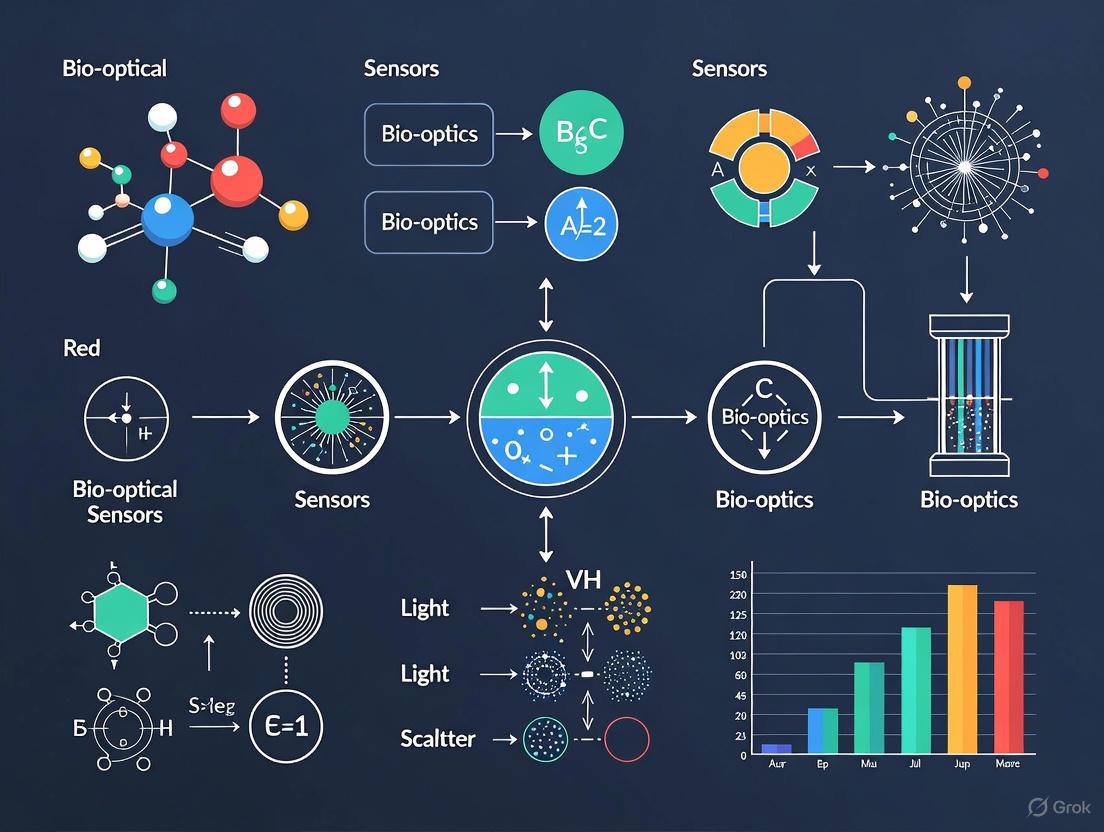
This article explores the transformative role of bio-optical sensors in water quality monitoring, with a specific focus on implications for biomedical research and drug development.
Bio-Optical Sensors for Water Quality Monitoring: Advanced Technologies and Biomedical Applications
Abstract
This article explores the transformative role of bio-optical sensors in water quality monitoring, with a specific focus on implications for biomedical research and drug development. It covers the foundational principles of optical biosensing technologies—including fluorescence, surface plasmon resonance (SPR), and fiber-optic sensors—and their specific applications in detecting waterborne pathogens, emerging contaminants, and pharmaceutical residues. The content provides a critical analysis of current performance metrics, addresses key challenges in real-world deployment such as biofouling and calibration, and offers a comparative evaluation of sensing methodologies. Aimed at researchers and drug development professionals, this review synthesizes recent technological advances to highlight how improved water monitoring directly supports public health initiatives, antimicrobial resistance studies, and ensures water quality in biomedical manufacturing.
Principles and Evolution of Bio-Optical Sensing Technologies
Bio-optical sensors represent a transformative approach in analytical science, leveraging the interactions between light and matter to detect and quantify biological and chemical substances. Within the specific application of water quality monitoring, these sensors provide the rapid, sensitive, and real-time analysis essential for safeguarding water resources. The core optical principles of fluorescence, absorbance, and light scattering form the foundation of many advanced biosensing platforms. Their integration into sensor design enables the detection of a wide range of water quality parameters, from chemical contaminants and nutrient levels to biological agents, with minimal sample preparation and without generating secondary pollutants [1] [2]. This document details the fundamental operating principles, experimental protocols, and key reagents associated with these techniques, framed within the context of developing robust bio-optical sensors for water quality research.
Theoretical Foundations
Fluorescence
The principle of fluorescence involves the emission of light from a substance that has absorbed photons of a higher energy (shorter wavelength). A photon excites a fluorophore's electron to a higher energy state; upon returning to its ground state, a photon is emitted at a longer wavelength. The difference between the excitation and emission wavelengths is known as the Stokes shift [3].
The efficiency of this process is quantified by the quantum yield, which is the ratio of photons emitted to photons absorbed. A high quantum yield is critical for sensitive detection. In sensing, the target analyte can directly influence the fluorophore's intensity, lifetime, or spectral position. Common transduction mechanisms include photobleaching (irreversible loss of fluorescence) and Förster Resonance Energy Transfer, a non-radiative energy transfer between two light-sensitive molecules that is highly dependent on their proximity, enabling the sensing of molecular binding events [3].
Absorbance
Absorbance spectroscopy measures the attenuation of a light beam as it passes through a sample. Molecules absorb photons of specific wavelengths, exciting their electrons. The extent of absorption is quantitatively described by the Beer-Lambert Law: [ A = \epsilon l c ] where ( A ) is the measured absorbance, ( \epsilon ) is the molar absorptivity, ( l ) is the optical path length, and ( c ) is the analyte concentration [3] [4].
This relationship allows for the direct quantification of analyte concentration. In water quality monitoring, absorbance measurements in various spectral ranges can identify and quantify specific pollutants, such as nitrates or organic matter, based on their unique absorption fingerprints [1] [5].
Light Scattering
Light scattering encompasses phenomena where light is redirected by particles or molecules in a medium. For particles much smaller than the light's wavelength, Rayleigh scattering occurs, where the scattering intensity is proportional to the sixth power of the particle diameter and the fourth power of the light frequency [6].
Static Light Scattering can be used to determine the size and concentration of particles in suspension. When combined with machine learning algorithms, it provides a high-throughput method for analyzing parameters like microplastic concentration in water samples [7]. Interference-based detection is a highly sensitive derivative of scattering where the weak scattered light from a small particle interferes with a reference light wave. The resulting interference pattern provides a powerful signal for detecting nanoparticles and even single biomolecules, functioning as an optical analog of mass spectrometry [6].
Experimental Protocols & Applications in Water Quality
Protocol 1: Heavy Metal Detection using a Fluorescence-Based Fiber Optic Sensor
This protocol details the detection of mercury ions in water using a quantum dot-based fiber optic fluorescence sensor [2] [4].
- Principle: Mercury ions quench the fluorescence of quantum dots immobilized on an optical fiber. The degree of fluorescence quenching is proportional to the concentration of Hg²⁺.
- Key Reagents & Materials: See Table 1 in the "Research Reagent Solutions" section.
- Procedure:
- Sensor Preparation: Taper a multimode optical fiber to create an evanescent wave sensing region. Immerse the tapered region in a solution containing functionalized quantum dots to allow for surface immobilization.
- System Setup: Connect the proximal end of the fiber to a laser source and the distal end to a spectrometer via an optical filter to block the excitation wavelength.
- Calibration: Immerse the sensor probe in a series of standard Hg²⁺ solutions with known concentrations. Measure the fluorescence intensity at 670 nm after a 3-minute exposure for each standard.
- Sample Measurement: Immerse the sensor probe in the untreated water sample for 3 minutes. Record the fluorescence intensity.
- Data Analysis: Calculate the Hg²⁺ concentration in the sample by comparing the fluorescence intensity to the calibration curve. The reported limit of detection for this method is 1 nM [4].
Diagram: Workflow for Fluorescence-Based Mercury Detection.
Protocol 2: Turbidity and Total Suspended Solids (TSS) via Light Scattering
This protocol describes a method for determining microplastic size and concentration using Static Light Scattering enhanced with machine learning [7].
- Principle: Particles in suspension scatter incident light. The angular distribution and intensity of the scattered light are functions of the particle size, shape, and concentration.
- Key Reagents & Materials:
- Standard polystyrene microplastic suspensions (0.5 - 20 µm).
- SLS instrument with a laser source and multi-angle detectors.
- Computer with machine learning algorithms for data processing.
- Procedure:
- System Calibration: Use a series of monodisperse polystyrene microsphere standards of known size and concentration to calibrate the SLS instrument.
- Data Collection: Introduce the water sample into the flow cell. Illuminate with a laser and collect scattering intensity data at multiple angles.
- Model Training: Train a machine learning model using the scattering data from known standards to recognize the patterns associated with specific sizes and concentrations.
- Sample Analysis: Pass the scattering data from an unknown sample through the trained model to determine the size distribution and concentration of suspended particles.
- Validation: Validate the method by comparing results with established techniques, such as filtration and microscopy.
Protocol 3: Chemical Oxygen Demand (COD) Estimation via UV-Vis Absorbance
This protocol uses ultraviolet-visible spectroscopy to estimate COD, a key indicator of organic pollution in water.
- Principle: Organic matter in water absorbs UV light, particularly at wavelengths around 254 nm. This absorbance has been correlated with traditional COD measurements, providing a rapid, non-chemical alternative.
- Key Reagents & Materials:
- UV-Vis spectrophotometer with a quartz cuvette.
- Potassium hydrogen phthalate for standard preparation.
- Procedure:
- Standard Curve Generation: Prepare COD standard solutions using potassium hydrogen phthalate. Measure the absorbance of each standard at 254 nm using the spectrophotometer.
- Sample Measurement: Filter the water sample to remove large particulates. Measure its absorbance at 254 nm.
- Calculation: Determine the sample's COD value by interpolating its absorbance from the standard curve.
Research Reagent Solutions
Table 1: Key reagents and materials for bio-optical sensing in water quality applications.
| Reagent/Material | Function/Description | Example Application |
|---|---|---|
| Quantum Dots | Nanoscale semiconductor particles with high quantum yield and tunable emission; serve as fluorescent probes. | Detection of heavy metal ions via fluorescence quenching [4]. |
| Concanavalin A (ConA) | A lectin protein that reversibly binds glucose and mannose; used in competitive binding assays. | Fluorescent glucose biosensing for organic pollution tracking [2]. |
| Isoxazolidine (IXZD) | A molecular probe embedded in a polymer film; acts as a "turn-on" optical chemosensor. | Selective detection of mercury ions and pH in water samples [2]. |
| Citizen Science Test Kits | Affordable, portable kits for measuring parameters like pH, ammonia, and nitrate. | Enabling broad-scale, contributory water quality data collection [8]. |
| Ormosil Nanoparticles | Organically modified silica nanoparticles used as a matrix for hosting multiple sensing probes. | Simultaneous sensing of pH and dissolved oxygen [2]. |
| Functionalized Nanomaterials | Low-dimensional nanomaterials enhance sensitivity via plasmonic or fluorescent effects. | Core component in advanced optical biosensors for trace contaminant detection [9]. |
Table 2: Performance comparison of optical sensing techniques for water quality monitoring.
| Detection Principle | Target Analyte | Limit of Detection (LOD) / Sensitivity | Key Advantages |
|---|---|---|---|
| Fluorescence | Hg²⁺ Ions | 1 nM [4] | High sensitivity, suitability for remote sensing via optical fibers. |
| Fluorescence | Biothiols (Cys, Hcy, GSH) | 0.02 μM, 0.42 μM, 0.92 μM respectively [2] | Capable of differential detection of similar compounds. |
| Interferometric Scattering | Single Proteins | Demonstrated for proteins in the tens of kilodalton range [6] | Label-free, quantitative mass measurement at the single-molecule level. |
| SERS | Ethanol/Methanol in spirits | Below legal thresholds [2] | Provides molecular "fingerprint"; resistant to water interference. |
| Absorbance | General Organic Matter | Correlation with COD [1] | Rapid, no chemical reagents required, easy to implement. |
| Static Light Scattering | Microplastics (0.5-20 µm) | High-throughput size and concentration analysis [7] | Can be combined with ML for automated analysis. |
The principles of fluorescence, absorbance, and light scattering provide a versatile and powerful toolkit for addressing the complex challenges of modern water quality monitoring. The experimental protocols and data outlined herein demonstrate the potential of these bio-optical sensing strategies to achieve high sensitivity, specificity, and real-time capability. Future trends are focused on the integration of these optical modalities with low-dimensional nanomaterials and artificial intelligence to develop feasible, miniaturized, and commercially viable biosensor systems for comprehensive water security [9] [1] [5].
Bio-optical sensors represent a transformative technological advancement for environmental monitoring, combining biological recognition elements with optical transduction mechanisms to detect water contaminants with high specificity and sensitivity. These devices are particularly valuable for detecting emerging contaminants (ECs) and pathogens in water, addressing critical limitations of traditional analytical methods like chromatography and mass spectrometry, which are often time-consuming, labor-intensive, and require sophisticated laboratory equipment [10]. The core principle of a biosensor involves the integration of a bioreceptor, which specifically binds to the target analyte, with a transducer that converts this biological interaction into a quantifiable optical signal [10]. This capability for rapid, sensitive, and selective detection makes biosensors ideal for real-time, on-site water quality assessment, a crucial need for safeguarding public health and aquatic ecosystems [10] [11].
The relevance of these sensors is underscored by the growing global water crisis, intensified by climate change, population growth, and the release of persistent pollutants such as pharmaceuticals, personal care products, and industrial chemicals into water bodies [10]. In this context, bio-optical sensors offer significant advantages, including minimal sample preparation, short measurement times, high specificity and sensitivity, and the potential for low detection limits [11]. This article provides a detailed examination of three principal types of bio-optical sensors—Surface Plasmon Resonance (SPR), Fiber-Optic, and Photonic Crystal Biosensors—framed within the practical requirements of water quality research. It includes structured performance comparisons, detailed experimental protocols, and essential resource guides to facilitate their application in cutting-edge environmental monitoring research.
Operating Principles and Performance Comparison
Fundamental Sensing Mechanisms
Surface Plasmon Resonance (SPR) Biosensors: SPR is a label-free optical phenomenon that occurs at a metal-dielectric interface [12]. When polarized light strikes a thin metal film (such as gold) under conditions of total internal reflection, it excites surface plasmons—collective oscillations of free electrons. This excitation leads to a characteristic dip in the reflected light intensity at a specific resonance angle or wavelength. Any change in the refractive index near the metal surface, such as that caused by the binding of a target analyte (e.g., a pollutant) to a bioreceptor immobilized on the surface, shifts the resonance condition. This shift provides a highly sensitive, real-time measurement of the binding event [12]. The integration of SPR with photonic crystal fibers (PCFs) has opened new avenues for highly sensitive, miniaturized biosensing platforms [12].
Fiber-Optic Biosensors: These sensors use optical fibers as the transduction platform, guiding light to and from a sensing region. The biological recognition element is immobilized on or near the fiber. An interaction with the target analyte modulates the light's properties (e.g., intensity, wavelength, phase, or polarization) [13]. A prominent subtype is the whole-cell fiber-optic biosensor, where genetically engineered microorganisms (bioreporters) are immobilized on the fiber tip. These bioreporters produce a quantifiable signal, such as bioluminescence, in response to specific toxicants or environmental stressors, enabling effect-based toxicity assessment of water and sediments [13].
Photonic Crystal (PC) Biosensors: Photonic crystals are materials with a periodic dielectric structure that creates a photonic bandgap, preventing the propagation of specific wavelengths of light [12]. Photonic crystal fibers (PCFs) are a specialized class of optical fibers featuring a microstructured arrangement of air holes running along their length [12] [14]. This structure offers exceptional control over light propagation. When the air holes of a PCF are infiltrated with an analyte, the change in the effective refractive index alters the fiber's transmission properties. This allows for the detection of specific chemical and biological molecules, as many exhibit distinct spectral 'fingerprints' in ranges like the terahertz (THz) band [14]. PCF sensors can be engineered for ultra-high sensitivity and negligible confinement loss by optimizing the geometry of the air holes and the core design [14].
Comparative Performance Analysis
The table below summarizes key performance metrics and applications of the three bio-optical sensor types in water quality monitoring, synthesized from recent research.
Table 1: Performance Comparison of Bio-Optical Sensors for Water Quality Monitoring
| Sensor Type | Key Performance Metrics | Target Analytes in Water | Advantages | Limitations |
|---|---|---|---|---|
| SPR Biosensors | High sensitivity; Real-time, label-free detection [12]. | Biomolecules, chemicals, bacterial cells (e.g., E. coli, cancer cells, DNA, proteins, excess cholesterol) [12]. | Exceptional sensitivity; Suitable for biomolecular interaction studies; Can be integrated with PCFs [12]. | Can require complex setup; Sensor surface may be prone to fouling [12]. |
| Fiber-Optic Biosensors | Rapid response (minutes); High sensitivity to general toxicity [13]. | General cytotoxicity, genotoxicants, heavy metals, organic pollutants [13]. | Effect-based measurement; On-site, direct sediment/water toxicity assessment; Portable field kits [13]. | Bioreporter requires culturing and maintenance; Signal stability over long deployments [13]. |
| Photonic Crystal Biosensors | Ultra-high relative sensitivity (e.g., >96%), extremely low confinement loss (e.g., 10⁻¹¹ dB/m) [14]. | Chemical pollutants, aquatic pathogens (e.g., Vibrio cholerae, E. coli), refractive index changes [14]. | Ultra-high sensitivity and low loss; Design flexibility; Can be used for THz fingerprinting [14]. | Complex fiber fabrication; Can be sensitive to multiple environmental parameters [15]. |
Experimental Protocols and Methodologies
Protocol: Development of a Whole-Cell Fiber-Optic Biosensor
This protocol details the construction and use of a biosensor for direct, on-site assessment of bioavailable toxicity in water and sediment samples, based on the work described by [13].
Principle: Genetically modified E. coli bacteria, bearing a bioluminescence reporter gene fusion (e.g., the grpE promoter from the heat shock regulon fused to the luxCDABE operon), are immobilized on an optical fiber tip. Upon exposure to cytotoxic stressors in the sample, the bacteria produce a dose-dependent bioluminescent response, which is captured by the optical fiber connected to a photon-counting device [13].
Diagram 1: Whole-cell biosensor workflow.
Materials:
- Bioreporter Strain: E. coli TV1061 (or other relevant stress-responsive strain) [13].
- Optical Fibers: Multimode optical fibers with polished ends.
- Immobilization Matrix: Sodium alginate (low viscosity), Calcium chloride (CaCl₂) solution.
- Culture Media: Luria-Bertani (LB) broth and LB agar, with appropriate antibiotics.
- Equipment: BenchTop orbital shaker incubator, centrifuge, spectrophotometer, photon counter/light measurement system embedded in a portable, light-proof case [13].
Procedure:
- Cell Culturing and Preparation:
- Inoculate E. coli TV1061 from a glycerol stock or a fresh colony into LB broth supplemented with the appropriate antibiotic (e.g., 100 µg/mL ampicillin). Incubate at 37°C with shaking at 220 RPM for 24 hours.
- Prepare a secondary culture by diluting the primary culture 1:50 into fresh, antibiotic-free LB medium. Incubate at 37°C with shaking until the optical density at 600 nm (OD₆₀₀) reaches 0.6–0.8 (mid-exponential phase) [13].
- Centrifuge the bacterial suspension at 4000 rpm for 10 minutes. Discard the supernatant and resuspend the cell pellet in the remaining small volume (~5 mL) to achieve a concentrated cell suspension with an OD₆₀₀ of approximately 1.2–1.4 [13].
Fiber Tip Functionalization and Cell Immobilization:
- Mix the concentrated bacterial suspension thoroughly with a sterile, low-viscosity sodium alginate solution to form a homogeneous cell-alginate mixture.
- Carefully dip the tip of the optical fiber into this mixture to coat it.
- Subsequently, dip the coated fiber tip into a 0.1 M CaCl₂ solution for several minutes to cross-link the alginate, forming a stable hydrogel matrix that entraps the bacteria. The hydrogel acts as a semi-permeable membrane, allowing toxicants to diffuse in while retaining the cells [13].
- Gently rinse the functionalized fiber tip with a buffer solution to remove excess CaCl₂ and non-immobilized cells.
Toxicity Measurement and Signal Acquisition:
- For on-site measurement, directly submerge the functionalized fiber tip into a vial containing the water or sediment sample.
- For lab-based analysis, the sample can be extracted first, and the fiber tip submerged in the extract.
- Connect the proximal end of the optical fiber to a photon counter (e.g., a photomultiplier tube module) housed within a light-proof portable case.
- Acquire the bioluminescence signal over a predetermined exposure time (e.g., 5-15 minutes). The light intensity, measured in relative light units (RLU), is proportional to the level of cellular stress induced by the bioavailable toxicants in the sample [13].
Protocol: PCF-SPR Sensor for Specific Pollutant Detection
This protocol outlines the design and numerical analysis of a photonic crystal fiber sensor based on surface plasmon resonance for identifying water pollutants, leveraging advanced computational modeling.
Principle: A PCF is designed with a specific microstructure (e.g., a hybrid cladding with rectangular and elliptical air holes) to guide light efficiently. A plasmonic material (e.g., gold) is deposited on selected surfaces or channels within the fiber. When the fiber's core or channels are infiltrated with an analyte (e.g., polluted water), the change in the refractive index alters the phase-matching condition between the core mode and the surface plasmon polariton mode, leading to a shift in the loss spectrum's resonance wavelength [12] [14].
Diagram 2: PCF-SPR sensor analysis.
Materials (for Simulation):
- Software: COMSOL Multiphysics with Wave Optics Module, or similar Finite Element Method (FEM) software [14] [15].
- Material Libraries: Optical properties of Zeonex (a common PCF substrate), silica, gold, and other plasmonic materials.
- Analytes: Refractive index data for pure water (≈1.33) and target polluted water with specific contaminants (refractive index can range to ~1.46) [14].
Procedure (Computational Analysis):
- Sensor Geometry Definition:
- Using the simulation software, create a 2D cross-sectional model of the PCF. A typical design might include a rectangular core for analyte infiltration, surrounded by a unique hybrid cladding with inner "mode-shaping" rectangular air holes and an outer "confinement" ring of elliptical air holes [14].
- Define the geometric parameters: pitch (Λ), air-hole diameters, core dimensions, and the thickness of any plasmonic metal layers (e.g., 40 nm gold) [14] [15].
Material Assignment and Meshing:
- Assign the correct material properties to each domain: Zeonex (n≈1.53) for the background, air (n=1) for the holes, and the complex refractive index for gold (from material libraries) [14].
- Define the analyte by setting the refractive index of the core region to that of the target sample (e.g., 1.33 for pure water, 1.41 for polluted water) [14].
- Generate a sufficiently fine mesh, particularly at the metal-dielectric interfaces, to ensure computational accuracy.
Mode Analysis and Loss Calculation:
- Set the operating frequency range (e.g., 0.5 to 3.0 THz) [14].
- Run an eigenfrequency or mode analysis study to find the effective mode index (n_eff) of the fundamental core mode and the surface plasmon polariton (SPP) mode.
- The confinement loss is calculated from the imaginary part of the complex effective mode index using the formula [12] [15]:
Confinement Loss (dB/cm) = 8.686 × (2π / λ) × Im(n_eff) × 10^4
Sensitivity Calculation:
- The relative sensitivity is a key performance metric and is often calculated as [14]:
S = (n_analyte / n_eff) × FWhereFis the fraction of the total power flowing in the analyte-filled region. A well-designed sensor can achieve relative sensitivities exceeding 96% [14]. - To simulate sensing performance, vary the analyte's refractive index in the core and re-run the simulation. The wavelength shift of the confinement loss peak per unit change in refractive index (nm/RIU) quantifies the sensor's sensitivity.
- The relative sensitivity is a key performance metric and is often calculated as [14]:
The Scientist's Toolkit: Essential Research Reagents and Materials
Successful development and deployment of bio-optical sensors require a suite of specialized materials and reagents. The following table itemizes key components for the featured experimental protocols.
Table 2: Essential Research Reagents and Materials for Bio-Optical Sensor Development
| Item Name | Function/Application | Examples / Specifications |
|---|---|---|
| Bioreporter Strains | Genetically engineered microorganisms that produce a detectable signal in response to target analytes or general stress. | E. coli TV1061 (for general cytotoxicity) [13]. |
| Plasmonic Materials | Thin metal films used to generate the Surface Plasmon Resonance effect. | Gold (Au), Silver (Ag) [12]. |
| PCF Substrate Materials | Low-loss background materials for fabricating photonic crystal fibers, especially for THz applications. | Zeonex (cyclic olefin copolymer) [14]. |
| Immobilization Matrix | A hydrogel used to entrap and maintain the viability of bioreporter cells on sensor surfaces. | Calcium alginate hydrogel [13]. |
| Optical Fibers | The platform for guiding light in fiber-optic biosensors; can be standard or microstructured (PCF). | Multimode optical fibers; custom PCFs [13]. |
| Spectroscopic Components | Light sources and detectors for optical interrogation and signal detection. | Mini-spectrometers, photodiodes (e.g., for UV-Vis spectroscopy) [16]. |
| Simulation Software | For modeling and optimizing sensor designs before fabrication. | COMSOL Multiphysics (Finite Element Method) [14] [15]. |
Bio-optical sensors represent a powerful analytical technology that integrates a biological recognition element with an optical transducer, converting a specific biological interaction into a quantifiable signal. [17] [18] The core of these devices is the biorecognition element, which defines the sensor's selectivity and partially determines its sensitivity. [17] [19] Within the specific application of water quality monitoring, the selection of an appropriate biorecognition element is paramount for developing robust, accurate, and field-deployable sensors. [19] [5] This application note details the key characteristics, applications, and experimental protocols for four principal biological recognition elements—antibodies, enzymes, DNA, and whole cells—framed within the context of advancing bio-optical sensor research for aquatic environments.
Characteristics and Comparative Analysis of Biorecognition Elements
The performance of a bio-optical sensor is heavily influenced by the inherent properties of its chosen biorecognition element. [17] Key characteristics to consider include sensitivity, selectivity, stability, and the nature of the binding event (catalytic vs. affinity-based). [19] The table below provides a structured comparison of these elements to guide selection for water quality monitoring applications.
Table 1: Comparative Analysis of Key Biorecognition Elements for Bio-Optical Sensors
| Biorecognition Element | Type of Interaction | Key Advantages | Key Limitations | Exemplary Water Quality Targets |
|---|---|---|---|---|
| Antibodies [17] [19] | Affinity-based (Binding) | High specificity and binding affinity; wide range of available targets. | Production can be costly and time-consuming; susceptible to denaturation; batch-to-batch variation. | Pathogens (E. coli, Legionella), algal toxins (microcystin), pesticides. |
| Enzymes [17] [19] | Catalytic (Conversion) | High catalytic turnover can amplify signal; well-characterized. | Specificity may be for a functional group rather than a single compound; stability can be limited. | Organophosphate pesticides, heavy metals (as enzyme inhibitors), phenolic compounds. |
| DNA / Nucleic Acids [17] | Affinity-based (Hybridization) | High predictability and designability; high stability; complementary base pairing. | Primarily limited to nucleic acid targets; requires sample preprocessing for non-nucleic acid analytes. | Specific pathogenic bacteria (via 16S rRNA), toxic algal species (via DNA barcodes). |
| Whole Cells [19] | Varies (Catalytic or Affinity) | Can report on functional toxicity; low cost; can be genetically engineered. | Longer response times; less specific than molecular elements; maintenance of cell viability. | Broad-range toxicity, bioavailable nutrient status, specific metabolic pollutants. |
Detailed Element Analysis and Experimental Protocols
Antibodies
Antibodies are ~150 kDa proteins that form a three-dimensional "Y"-shaped structure, with analyte binding domains located on the arms. [17] They function as affinity-based elements, where the specific binding event forms an immunocomplex. [17] For biosensing, antibodies are typically immobilized via covalent linkage to a sensor surface. [17]
Protocol: Antibody Immobilization for a Surface Plasmon Resonance (SPR) Optical Sensor
This protocol outlines the functionalization of a gold-coated SPR chip for the detection of microcystin-LR, a common cyanotoxin.
- Chip Pre-treatment: Clean the gold sensor chip with a sequence of piranha solution (3:1 H₂SO₄:H₂O₂), deionized water, and absolute ethanol. Dry under a stream of nitrogen.
- Self-Assembled Monolayer (SAM) Formation: Incubate the chip overnight in a 1 mM solution of 11-mercaptoundecanoic acid in ethanol. This forms a carboxyl-terminated SAM.
- Surface Activation: Rinse the chip with ethanol and water. Place it in the SPR instrument flow cell. Activate the carboxyl groups by injecting a mixture of 0.4 M EDC (1-Ethyl-3-(3-dimethylaminopropyl)carbodiimide) and 0.1 M NHS (N-hydroxysuccinimide) in water for 10 minutes.
- Antibody Immobilization: Dilute the anti-microcystin monoclonal antibody to 50 µg/mL in 10 mM sodium acetate buffer (pH 5.0). Inject the solution over the activated surface for 20 minutes, leading to covalent amide bond formation.
- Surface Capping: Inject 1 M ethanolamine-HCl (pH 8.5) for 10 minutes to deactivate any remaining NHS-esters.
- Sensor Validation: Perform a binding kinetics experiment by injecting known concentrations of microcystin-LR over the functionalized surface to establish a calibration curve.
Diagram 1: Workflow for antibody-based sensor fabrication.
Enzymes
Enzymes are biological catalysts that achieve specificity through binding cavities within their 3D structure. [17] Enzymatic biosensors are biocatalytic; the enzyme captures and converts the target analyte into a measurable product (e.g., a fluorescent or chromogenic compound). [19]
Protocol: Detection of Organophosphorus Pesticides via Acetylcholinesterase (AChE) Inhibition
This protocol uses the enzyme acetylcholinesterase, whose inhibition by organophosphates can be measured optically.
- Sensor Preparation: Immobilize AChE onto a glass fiber membrane or a waveguide surface using glutaraldehyde cross-linking.
- Baseline Measurement: Place the sensor in a cuvette with phosphate buffer (pH 7.4). Add the substrate acetylthiocholine and the chromogen DTNB (5,5'-dithio-bis-(2-nitrobenzoic acid)). Monitor the increase in absorbance at 412 nm for 2 minutes due to the production of yellow 2-nitro-5-thiobenzoate. This establishes the uninhibited reaction rate (V₀).
- Inhibition Phase: Incubate the sensor for 10 minutes in a water sample suspected to contain organophosphates. Rinse gently with buffer.
- Post-Inhibition Measurement: Repeat Step 2. Measure the new reaction rate (Vᵢ).
- Data Analysis: Calculate the percentage of enzyme inhibition: % Inhibition = [(V₀ - Vᵢ) / V₀] × 100%. The inhibition percentage is proportional to the pesticide concentration in the sample.
DNA (Genosensors)
Nucleic acid biosensors, or genosensors, rely on the complementary base-pairing of DNA. [17] A single-stranded DNA (ssDNA) probe is immobilized on the sensor surface to hybridize with a specific target sequence. [17] Advances include the use of Peptide Nucleic Acids (PNA), which are uncharged synthetic oligonucleotides that yield higher stability in nucleic acid binding. [17]
Protocol: Fluorometric Detection of a Pathogen-Specific Gene Sequence using a PNA Probe
This protocol describes the detection of a unique 16S rRNA sequence from E. coli.
- Probe Design and Immobilization: Design a PNA probe complementary to the target sequence. Synthesize it with a 5' amino linker. Immobilize the PNA probe on an epoxy-coated glass slide by spotting and incubating overnight in a humid chamber.
- Sample Preparation and Lysis: Collect a water sample and filter it to concentrate cells. Lyse the cells to release genetic material.
- Target Labeling and Hybridization: Amplify the target gene sequence using PCR with primers that incorporate a fluorescent label (e.g., Cy5). Denature the PCR product to produce ssDNA. Incubate the labeled ssDNA target with the PNA-functionalized slide at a specific temperature for 1 hour to allow hybridization.
- Stringency Wash: Wash the slide with a saline-sodium citrate (SSC) buffer at a carefully controlled temperature to remove non-specifically bound DNA.
- Signal Detection: Scan the slide using a microarray scanner or a fluorescence microscope. The fluorescence intensity at the probe spot is proportional to the amount of hybridized target.
Diagram 2: DNA hybridization detection principle.
Whole Cells
Whole microbial cells (e.g., bacteria, yeast) or bacteriophages can be used as recognition elements. [19] They can be genetically engineered to produce a signal (e.g., bioluminescence) in response to a target analyte or to report on general toxicity. [19]
Protocol: Bioluminescence-Based Whole-Cell Sensor for Water Toxicity Screening
This protocol uses recombinant bacteria that produce bioluminescence constitutively. A decrease in light output indicates metabolic toxicity.
- Strain Preparation: Use a freeze-dried aliquot of a bioluminescent bacterial strain, such as Vibrio fischeri or a recombinant E. coli.
- Cell Hydration and Recovery: Rehydrate the cells according to the manufacturer's instructions in a non-toxic recovery medium. Incubate until a stable baseline luminescence is achieved.
- Exposure to Sample: Mix a consistent volume of the bacterial suspension with an equal volume of the water sample in a multi-well plate.
- Signal Measurement: Immediately place the plate in a luminometer or a optical plate reader equipped with a sensitive CCD camera. Measure the luminescence intensity every 5 minutes for a period of 30 minutes.
- Data Analysis: Calculate the percentage inhibition of bioluminescence relative to a negative control (e.g., clean water) at the 15-minute time point: % Inhibition = [1 - (Lsample / Lcontrol)] × 100%.
The Scientist's Toolkit: Research Reagent Solutions
The table below lists essential materials and reagents commonly used in the development and application of bio-optical sensors for water quality research.
Table 2: Essential Research Reagents for Bio-Optical Sensor Development
| Reagent / Material | Function / Application | Example in Context |
|---|---|---|
| EDC & NHS [17] | Carboxyl group activators for covalent immobilization of biomolecules (e.g., antibodies, DNA). | Forming amide bonds between a sensor surface and proteins or aminated DNA. |
| Glutaraldehyde | A homobifunctional crosslinker for immobilizing biomolecules, particularly on aminated surfaces. | Crosslinking enzymes like AChE to a chitosan-coated sensor surface. |
| Peptide Nucleic Acid (PNA) Probes [17] | Uncharged synthetic DNA analogs used as highly stable and specific hybridization probes. | Detecting specific bacterial rRNA sequences with high specificity and sensitivity. |
| Gold Nanoparticles | Signal amplification tags; used in colorimetric or surface-enhanced Raman scattering (SERS) assays. | Conjugating with antibodies for visual detection of contaminants in lateral flow assays. |
| Bioluminescent Bacterial Strains [19] | Whole-cell bioreporters that produce light as a functional signal of metabolic activity or stress. | Vibrio fischeri for broad-spectrum toxicity monitoring in wastewater. |
| Chromogenic Substrates | Enzyme substrates that yield a colored product upon catalytic conversion. | DTNB with AChE for spectrophotometric detection of enzyme activity and inhibition. |
Optical biosensors have emerged as a transformative technology for water quality monitoring, addressing critical limitations of traditional methods. Conventional techniques, which rely on manual sample collection, preservation, and laboratory analysis, are associated with low sampling efficiency, long response times, and high economic costs, and they cannot guarantee the accuracy and real-time determination of monitoring data [5]. Optical biosensors overcome these challenges by providing rapid, accurate, and cost-effective solutions for detecting biological materials, pathogens, and specific chemical substances in water [20]. The global biosensors market, valued at $26.75 billion in 2022, reflects this technological shift and is projected to reach $45.95 billion by 2030, growing at a Compound Annual Growth Rate (CAGR) of 7.00% [20].
The integration of optical biosensors into environmental monitoring represents a convergence of biochemistry, material science, and photonics. These devices operate by converting a biological response into a quantifiable optical signal—such as changes in absorbance, fluorescence, luminescence, or refractive index—when a target analyte binds to a biological recognition element [21]. This capability for real-time data acquisition and continuous monitoring makes them particularly valuable for protecting water resources, maintaining ecological balance, and safeguarding human health [5]. As concerns about water pollution and freshwater scarcity intensify globally, optical biosensors are transitioning from specialized laboratory tools to essential environmental sentinels deployed in diverse aquatic environments.
Key Optical Biosensing Technologies and Principles
The operational principle of all optical biosensors involves the detection of an optical signal change resulting from the interaction between a biological recognition element and the target analyte. The choice of optical technique depends on the specific application, required sensitivity, and the nature of the target contaminant.
Table 1: Fundamental Types of Optical Biosensors for Water Quality Monitoring
| Technology | Transduction Principle | Typical Measurands | Advantages |
|---|---|---|---|
| Colorimetric | Measures change in absorbance or color intensity | Heavy metals, nutrients, pesticides | Simple instrumentation, cost-effective, suitable for field use |
| Fluorescence | Measures change in fluorescence intensity or lifetime | Organic pollutants, bacteria, toxins | High sensitivity, potential for multiplexing |
| Surface Plasmon Resonance (SPR) | Measures change in refractive index near a metal surface | Pathogens, toxins, small molecules | Label-free, real-time monitoring |
| Chemiluminescence | Measures light emission from a chemical reaction | Specific ions, enzyme activities | High signal-to-noise ratio, simple equipment |
| Optical Fiber-Based | Utilizes optical fibers to guide light to and from sensing region | pH, dissolved oxygen, various contaminants | Remote sensing capability, small size |
Recent advancements in nanotechnology and material science have significantly enhanced the performance of these biosensors. The use of nanomaterials improves sensitivity and allows for faster, more accurate measurements at lower concentrations of target substances [20]. Furthermore, the miniaturization of biosensors has enabled the development of portable, wearable devices that can monitor water quality in real-time, moving analysis from the central laboratory directly to the field [20].
Application Notes: Optical Biosensors as Environmental Sentinels
Monitoring Parameters in Various Water Matrices
Optical biosensors have been successfully deployed across diverse aquatic environments, each with distinct monitoring requirements and challenges.
Table 2: Key Water Quality Parameters Monitored with Optical Biosensors
| Parameter Category | Specific Parameters | Significance for Water Quality | Common Biosensing Approaches |
|---|---|---|---|
| Biological | Chlorophyll-a (Chl-a) | Indicator of algal biomass and eutrophication | Fluorescence, colorimetric |
| Physical | Turbidity, Total Suspended Solids (TSS) | Measures water clarity and suspended particles | Scattering, optical absorption |
| Chemical | pH, Dissolved Oxygen (DO) | Fundamental indicators of water health | Fluorescence quenching, colorimetric |
| Chemical | Colored Dissolved Organic Matter (CDOM) | Natural organic matter affecting light absorption | Fluorescence spectroscopy |
| Chemical | Nutrients (Nitrate, Phosphate) | Indicators of potential eutrophication | Colorimetric, fluorescence |
| Chemical | Specific Pollutants (heavy metals, pesticides) | Direct measurement of toxic contaminants | Various competitive and inhibition assays |
For instance, in surface water monitoring, a study utilized GF-4 geosynchronous optical satellite data to establish a Chl-a reversal model (PGS-C) for analyzing distribution in the Yangtze River estuary. The results demonstrated a remarkable correlation coefficient of 0.9123, indicating high consistency between modeling values and field measurements [5]. This showcases the powerful application of remote sensing technologies complemented by ground-truthed biosensor data for large-scale water quality assessment.
System Architecture for Remote Monitoring
The implementation of optical biosensors as effective environmental sentinels requires integration into a comprehensive remote monitoring system. These systems typically consist of four distinct layers:
- Data Acquisition Layer: Comprises the optical biosensors themselves, which can be deployed as fixed stations, mobile systems on vehicles or ships, or underwater drones [5].
- Data Transmission Layer: Utilizes Internet of Things (IoT) technology, including protocols like LoRaWAN (Long Range Wide Area Network), to transmit data from the field to central systems [5].
- Data Storage Layer: Employs cloud platforms or dedicated servers for secure data storage and management.
- Data Processing Layer: Involves analytics platforms, increasingly enhanced by artificial intelligence (AI), for data interpretation, visualization, and decision support [5] [21].
Figure 1: System Architecture for Remote Water Quality Monitoring Using Optical Biosensors
Experimental Protocols
Protocol 1: Deployment and Operation of a Multi-Parameter Optical Biosensor System
Objective: To continuously monitor key water quality parameters (turbidity, pH, dissolved oxygen, chlorophyll-a) in a freshwater body using an integrated optical biosensor system.
Materials and Reagents:
- Multi-parameter optical biosensor platform (e.g., YSI EXO2 or equivalent)
- Sensor calibration standards:
- pH buffer solutions (pH 4.01, 7.00, 10.01)
- Turbidity calibration standards (0, 10, 100, 1000 NTU)
- Dissolved oxygen calibration solution (zero oxygen solution, water-saturated air)
- Deionized water for rinsing
- Isopropyl alcohol and soft cloth for cleaning
- Anti-fouling guards or copper alloy components
Procedure:
Pre-Deployment Calibration:
- Power on the biosensor platform and allow it to initialize.
- Calibrate the pH sensor:
- Rinse the pH sensor with deionized water.
- Immerse the sensor in pH 7.00 buffer solution, wait for readings to stabilize, and confirm calibration.
- Repeat with pH 10.01 or 4.01 buffer for a two-point calibration.
- Calibrate the turbidity sensor:
- Ensure the sensor window is clean and dry.
- Using a uniform suspension of formazin or equivalent standard, follow the manufacturer's instructions for multi-point calibration across the expected measurement range (e.g., 0-1000 NTU).
- Calibrate the dissolved oxygen sensor:
- Perform a zero-oxygen calibration by placing the sensor in a zero-oxygen solution and adjusting the reading to zero.
- Perform a saturated air calibration by exposing the moistened sensor to water-saturated air and setting the value to 100% saturation (adjust for atmospheric pressure and temperature as per manufacturer's instructions).
- Verify all calibrations and secure the sensor guard.
Field Deployment:
- Select a deployment site that is representative of the water body, with consideration for depth, flow conditions, and accessibility.
- Securely mount the sensor platform to a fixed structure (e.g., pier, buoy, or dedicated mounting pole) ensuring sensors are at the desired depth (typically 0.5-1 meter below the surface for most applications).
- Verify the secure connection of all communication cables (if applicable) and power supply.
- Configure the data logging interval (e.g., 15-minute intervals for continuous monitoring) and activate remote data transmission.
- Record the GPS coordinates, deployment time, and initial readings in the field log.
Data Collection and Maintenance:
- Data is automatically collected, transmitted via IoT protocols (e.g., LoRaWAN, cellular) to a cloud gateway, and stored in a centralized database [5].
- Perform routine maintenance every 2-4 weeks:
- Visually inspect for biofouling, debris, or physical damage.
- Gently clean optical surfaces with soft cloth and isopropyl alcohol if necessary.
- Verify sensor accuracy against a portable reference instrument if available.
- Replace anti-fouling components as required.
- Re-calibrate sensors according to the manufacturer's recommended schedule or when data drift is observed (typically every 1-3 months).
Protocol 2: AI-Enhanced Detection of Contaminants Using Surface Plasmon Resonance (SPR)
Objective: To detect and quantify specific waterborne pathogens (e.g., E. coli) using an AI-enhanced SPR biosensor.
Materials and Reagents:
- SPR biosensor instrument
- Carboxylated or amine-functionalized gold sensor chips
- N-ethyl-N'-(3-dimethylaminopropyl)carbodiimide (EDC) and N-hydroxysuccinimide (NHS)
- Specific antibody against target pathogen (e.g., anti-E. coli antibody)
- Ethanolamine hydrochloride solution (1.0 M, pH 8.5)
- Phosphate buffered saline (PBS, 10 mM, pH 7.4) with 0.005% Tween 20 (PBST)
- Glycine-HCl solution (10 mM, pH 2.5) for regeneration
- Standard solutions of target pathogen for calibration
- Water samples (filtered through 0.45 μm membrane)
Procedure:
Sensor Chip Functionalization:
- Dock a clean gold sensor chip in the SPR instrument.
- Prime the flow system with PBST at a flow rate of 5 μL/min until a stable baseline is achieved.
- Activate the carboxylated dextran surface by injecting a fresh mixture of EDC (0.4 M) and NHS (0.1 M) for 7 minutes.
- Dilute the specific antibody in sodium acetate buffer (10 mM, pH 5.0) to a concentration of 50 μg/mL.
- Inject the antibody solution for 15 minutes to achieve covalent immobilization via amine coupling.
- Block any remaining activated ester groups by injecting ethanolamine solution (pH 8.5) for 7 minutes.
- Wash the system with PBST until a stable baseline is achieved. The functionalized sensor chip is now ready for use.
Sample Analysis with AI-Enhanced Data Processing:
- Establish a calibration curve by injecting a series of standard pathogen solutions (e.g., 10^2 to 10^6 CFU/mL) in PBST. The SPR response (resonance unit shift, RU) is recorded for each concentration.
- Inject filtered water samples (unknowns) using the same flow conditions (contact time: 5 minutes, dissociation time: 3 minutes).
- Regenerate the sensor surface after each sample injection using a 1-minute pulse of glycine-HCl (pH 2.5) to dissociate the antibody-pathogen complex, followed by re-equilibration with PBST.
- The response data (sensograms) for both standards and unknowns are processed by a machine learning algorithm (e.g., a hybrid model like Genetic Algorithm-Support Vector Machine, GA-SVM) [5]. The AI model is trained on the calibration dataset to recognize the binding pattern and quantify the pathogen concentration in the unknown samples with high accuracy and reliability.
- The AI model outputs the predicted concentration along with a confidence score for each measurement.
The Scientist's Toolkit: Essential Research Reagent Solutions
Successful implementation of optical biosensor technologies requires specific reagents and materials to ensure optimal performance and accurate results.
Table 3: Essential Research Reagents and Materials for Optical Biosensing
| Reagent/Material | Function/Application | Key Considerations |
|---|---|---|
| Biological Recognition Elements (Antibodies, Aptamers, Enzymes, Whole Cells) | Provides specificity for the target analyte; the core of the biosensor's selectivity. | Stability in environmental conditions, binding affinity (Kd), specificity (cross-reactivity), and shelf life are critical. |
| Fluorescent Dyes/Labels (e.g., Fluorescein, Rhodamine, Quantum Dots) | Tags for generating or enhancing optical signals in fluorescence-based biosensors. | High quantum yield, photostability, compatibility with excitation/emission hardware, and minimal non-specific binding. |
| Sensor Chip Substrates (Gold for SPR, Functionalized Glass, Polymers) | Physical platform for immobilizing biological recognition elements. | Surface chemistry, optical properties, reproducibility, and cost. Functional groups (e.g., carboxyl, amine) must match immobilization strategy. |
| Immobilization Chemistry Kits (e.g., EDC/NHS, SAM formation reagents) | Covalently attaches recognition elements to the sensor surface. | Reaction efficiency, stability of the formed bond, and ability to maintain biorecognition element activity post-immobilization. |
| Buffer and Calibration Standards | Provides a controlled chemical environment for assays and enables sensor calibration. | Ionic strength, pH, and absence of contaminants that could interfere with the assay or foul the sensor. |
| Anti-Fouling Agents/Coatings (e.g., PEG, Zwitterionic polymers, Copper alloys) | Prevents non-specific adsorption and biofilm growth on sensor surfaces. | Effectiveness against local biofouling communities, longevity, and compatibility with the sensing mechanism. |
Future Outlook and Integration with Emerging Technologies
The future trajectory of optical biosensors is intimately linked with advancements in artificial intelligence (AI), Internet of Things (IoT), and cloud computing. The integration of AI, particularly machine learning and deep learning algorithms, is revolutionizing data analysis from optical biosensors by improving sensitivity, specificity, and multiplexing capabilities through intelligent signal processing, pattern recognition, and automated decision-making [21]. For example, AI models like the Genetic Algorithm-Support Vector Machine (GA-SVM) have demonstrated extremely high prediction accuracy (RMSE = 0.04474, R² = 0.96580) in forecasting water quality trends, providing an effective technical tool for proactive water resource management [5].
The convergence of biosensors with IoT technology offers immense growth potential, particularly in the development of comprehensive environmental monitoring networks for smart cities and watershed management [20]. These integrated systems enable real-time data transmission to cloud platforms, where information becomes accessible via web-based and mobile dashboards, allowing researchers and water managers to monitor water quality parameters remotely using internet-connected devices [5].
Figure 2: AI-Enhanced Data Processing Workflow for Optical Biosensors
However, several challenges must be addressed to fully realize the potential of next-generation optical biosensors. Data security remains a significant concern as biosensors become more integrated with digital health and environmental monitoring systems [20]. Additionally, issues related to technological standardization, regulatory hurdles, and the complexity of integration with existing monitoring infrastructure present barriers to widespread adoption [20]. The high initial costs of advanced biosensor technology can also be prohibitive for some markets, particularly in developing regions [20]. Ongoing research focuses on overcoming these limitations through the development of more robust, cost-effective, and user-friendly biosensing platforms that can operate reliably in diverse environmental conditions.
Optical biosensors have unequivocally transitioned from sophisticated laboratory tools to indispensable environmental sentinels, fundamentally reshaping our approach to water quality monitoring. This trajectory is propelled by their unparalleled capabilities for real-time, sensitive, and specific detection of waterborne contaminants across diverse matrices. The integration of these biosensors with AI-powered analytics and IoT connectivity creates a powerful paradigm for comprehensive water resource management, enabling early warning systems, predictive analytics, and data-driven decision-making [5] [21]. As advancements in nanotechnology, material science, and data analytics continue to converge, optical biosensors are poised to become even more pervasive, affordable, and integral to global efforts aimed at safeguarding water resources, ensuring ecosystem health, and protecting public health for future generations.
Detection of Waterborne Pathogens and Emerging Contaminants
Within the broader research on bio-optical sensors for water quality monitoring, the rapid and specific detection of pathogenic microorganisms in complex water matrices remains a critical challenge. Traditional microbial detection methods, such as culture-based techniques, are often inadequate for modern needs, typically requiring 18 to 72 hours to provide results and struggling to detect low concentrations of pathogens or viable but non-culturable (VBNC) organisms [22] [23]. These limitations hinder effective response to contamination events and outbreak management.
The emergence of advanced molecular methods and biosensing technologies has initiated a paradigm shift in waterborne pathogen surveillance. These innovative approaches leverage biological recognition elements (e.g., antibodies, DNA, aptamers) coupled with transducers that convert biological interactions into quantifiable signals [24] [22]. When integrated with bio-optical sensing platforms—which utilize optical phenomena such as absorbance, fluorescence, and scattering—these systems enable sensitive, specific, and rapid detection of bacterial and viral targets directly in complex water environments, providing a powerful tool for ensuring water safety [25].
Current Technologies for Pathogen Detection in Water
A spectrum of technologies is available for detecting waterborne pathogens, each with distinct operational principles, advantages, and limitations. The transition from conventional to modern methods represents a significant advancement in the capability to monitor water quality effectively.
Traditional and Molecular Methods
Conventional culture-based methods, such as multiple-tube fermentation and membrane filtration, are considered the historical "gold standard." They are simple and cost-effective but are characterized by being highly laborious, time-consuming (taking up to several days), and unable to detect non-culturable pathogens [22] [23]. Their low sensitivity for detecting contaminants present at low concentrations poses a health risk, as many waterborne pathogens remain infectious even at minimal levels [22].
Molecular-based methods overcome several of these limitations by targeting specific genetic material (DNA or RNA) or proteins of the target analyte. These methods provide faster, highly sensitive, and specific detection, with the ability to detect viable but non-culturable cells [22] [23].
Table 1: Comparison of Major Pathogen Detection Method Categories
| Method Category | Key Examples | Typical Detection Time | Key Advantages | Major Limitations |
|---|---|---|---|---|
| Culture-Based | Membrane Filtration, Multiple-Tube Fermentation | 18 - 72 hours [22] | Low cost; considered "gold standard" [22] | Time-consuming; misses VBNC cells; low sensitivity [22] [23] |
| Molecular | qPCR, LAMP, ELISA | 2 - 8 hours [23] | High sensitivity & specificity; detects VBNC cells [22] [23] | Requires specialized equipment & trained personnel; susceptible to inhibitors [22] |
| Biosensors | Optical, Electrochemical, Microfluidic chips | Minutes - 1 hour [24] [22] | Rapid, portable, highly sensitive, potential for on-site use [24] [22] | Requires calibration; biofouling can be an issue in long-term deployment [5] |
Key molecular tools include:
- Quantitative Polymerase Chain Reaction (qPCR): This technique allows for the quantitative detection of specific pathogen DNA sequences with high sensitivity, often detecting as few as 2-10 gene copies per reaction [23]. For example, it can detect enteroviruses at concentrations as low as 2 copies per liter in surface water [23].
- Loop-Mediated Isothermal Amplification (LAMP): An isothermal nucleic acid amplification technique that is rapid and can be more robust to inhibitors than PCR, making it suitable for field-deployable applications [24].
- Microarrays (e.g., PhyloChip, ViroChip): High-density platforms that enable the simultaneous interrogation of thousands of microbial taxa in a single assay via nucleic acid hybridization, useful for broad pathogen surveillance and discovery [23].
Despite their advantages, molecular methods often require extensive sample pre-treatment, specialized equipment, and highly trained personnel. Their reproducibility can also be impacted by inhibitors present in complex water samples [22].
The Rise of Biosensors
Biosensors address many hurdles in traditional pathogen monitoring. A biosensor comprises a biological recognition element (e.g., antibody, DNA probe, aptamer, enzyme) that specifically binds to the target pathogen and a transducer (e.g., optical, electrochemical) that converts the binding event into a measurable signal [24] [22].
Compared to conventional methods, biosensors offer detection without extensive sample pre-concentration, which significantly reduces analysis time. They are characterized by high specificity and sensitivity, low cost, ease of use, and potential for miniaturization, making them attractive for on-site, real-time monitoring [22]. Optical biosensors, in particular, align with the theme of bio-optical sensing by exploiting changes in light properties (e.g., absorbance, fluorescence, refractive index) upon pathogen capture.
Table 2: Performance of Selected Detection Methods for Key Waterborne Pathogens
| Pathogen | Disease Association | qPCR Detection Limit | Culture-Based Detection |
|---|---|---|---|
| Campylobacter jejuni | Gastroenteritis | 10 gene copies [23] | Culture-based, time-consuming [23] |
| Escherichia coli O157 | Gastroenteritis, HUS | 7 CFU [23] | Culture-based, time-consuming [23] |
| Adenoviruses | Gastroenteritis, Respiratory illness | 8 gene copies [23] | Not applicable |
| Noroviruses | Gastroenteritis | <10 gene copies [23] | Not applicable |
| Cryptosporidium parvum | Cryptosporidiosis | 1.65 oocysts [23] | Microscopy, difficult [23] |
Advanced Bio-Optical Sensing Platforms
Innovative sensor designs are enhancing the capabilities for in-situ water quality monitoring. These platforms integrate multiple optical techniques to provide comprehensive water quality assessment.
Multiparameter Optical Sensor Probe
A recent development is a submersible sensor probe that combines UV/Vis and fluorescence spectroscopy with a flexible, open-data processing platform [25]. This design overcomes the limitation of many commercial sensors, which have fixed configurations and static data processing.
Key features of this integrated platform include:
- Synchronous Data Acquisition: Absorbance (in a 180° configuration) and fluorescence (in a 90° geometry) measurements are taken simultaneously on a water sample pumped through a 10 mm pathlength flow cell, minimizing external interference [25].
- Adaptable Hardware: A miniaturized deuterium-tungsten light source (200-1100 nm) enables broad-spectrum UV/Vis measurements. An LED array with four slots allows excitation at different wavelengths for fluorescence, with a miniature spectrometer (225-1000 nm) capturing full emission spectra [25].
- Modular Software: An open data processing platform allows users to adapt quantification algorithms, turbidity compensation, and data fusion methods for specific applications [25].
This sensor can be deployed directly in water bodies and groundwater wells, enabling high-resolution spatiotemporal monitoring essential for pinpointing contamination sources and tracking dynamic pollution events [25].
Detectable Parameters and Their Optical Signatures
This multi-method approach allows for the detection of various parameters indicative of microbial contamination and water quality.
Table 3: Optical Parameters for Water Quality and Pathogen Indicator Monitoring
| Parameter | Optical Method | Wavelength (Ex/Em or Abs) | Proxy For / Significance |
|---|---|---|---|
| Tryptophan-like Fluorescence (TLF) | Fluorescence | λex = 280 nm / λem = 365 nm [25] | Biological activity, microbial contamination [25] |
| Humic-like Fluorescence (HLF) | Fluorescence | λex = 280 nm / λem = 450 nm [25] | Dissolved organic matter (allochthonous & autochthonous) [25] |
| Chlorophyll a | Fluorescence | λex = 430 nm / λem = 675-750 nm [25] | Algal biomass [25] |
| Phycocyanin | Fluorescence | λex = 590 nm / λem = 640-690 nm [25] | Cyanobacterial biomass [25] |
| Nitrate | UV/Vis Absorbance | A~217-240 nm [25] | Eutrophication, nutrient loading [25] |
| Spectral Absorption (SAC254) | UV/Vis Absorbance | A~254 nm [25] | Organic load in water [25] |
| Turbidity | Scattered Light / Abs | A~>800 nm [25] | Suspended particulate matter, water clarity [25] |
Experimental Protocols
This section provides detailed methodologies for setting up and applying bio-sensing and molecular techniques for pathogen detection in water.
Protocol: Detection of Microbial Contamination via Tryptophan-like Fluorescence
Principle: Tryptophan-like fluorescence (TLF) is an effective indicator of recent biological activity and microbial contamination, often correlating with the presence of fecal bacteria in water bodies [25]. This protocol utilizes a submersible fluorescence sensor for in-situ monitoring.
I. Equipment and Reagents
- Submersible sensor probe with UV/Vis and fluorescence capability (e.g., design per [25])
- L-Tryptophan standard for calibration [25]
- Deionized water
- Sampling bottles
II. Sensor Calibration
- Prepare a series of L-Tryptophan standard solutions in deionized water (e.g., 0, 10, 50, 100, 500 µg/L).
- Submerge the sensor probe in each standard solution or pump standards through the flow cell.
- Record the fluorescence intensity at an excitation of 280 nm and emission of 365 nm for each standard [25].
- Generate a calibration curve (Fluorescence Intensity vs. Tryptophan Concentration).
III. Field Measurement and Data Collection
- Deploy the sensor at the monitoring site (river, lake, well).
- Allow water to flow through the internal measurement cell using the integrated pump.
- Initiate measurement cycle: record synchronous UV/Vis (200-1100 nm) and fluorescence spectra.
- The internal processor converts the fluorescence signal at λex/λem = 280/365 nm to a TLF value based on the calibration curve.
- Data can be transmitted in real-time to a cloud platform for visualization and alert generation.
IV. Data Interpretation
- Elevated TLF levels above a site-specific baseline indicate potential microbial contamination.
- TLF should be correlated with other parameters (e.g., HLF, nitrate) to distinguish contamination sources.
Protocol: qPCR-Based Detection of Specific Bacterial Pathogens
Principle: This protocol uses quantitative PCR (qPCR) to detect and quantify a specific bacterial pathogen, E. coli O157, by targeting a unique segment of its DNA with high sensitivity (down to 7 CFU per reaction) [23].
I. Equipment and Reagents
- qPCR instrument
- Water sample collection kits
- DNA extraction kit (for water samples)
- Primers and probes specific for E. coli O157 [23]
- qPCR master mix
- Nuclease-free water
- Positive control (E. coli O157 DNA) and negative control (no-template water)
II. Sample Collection and Concentration
- Collect a sufficient volume of water (often 100 mL to several liters).
- Concentrate bacterial cells from water via membrane filtration or immunomagnetic separation (IMS) to enhance detection sensitivity.
III. DNA Extraction
- Extract genomic DNA from the concentrated sample or filter using a commercial DNA extraction kit, following the manufacturer's instructions.
- Elute the DNA in a small volume (e.g., 50-100 µL) of nuclease-free water.
- Quantify DNA purity and concentration using a spectrophotometer.
IV. qPCR Setup and Amplification
- Prepare the qPCR reaction mix on ice:
- 10 µL of 2x qPCR Master Mix
- 1 µL of Forward Primer (10 µM)
- 1 µL of Reverse Primer (10 µM)
- 0.5 µL of TaqMan Probe (10 µM)
- 2.5 µL of Nuclease-free water
- 5 µL of DNA template
- Total Reaction Volume: 20 µL
- Load the reactions into the qPCR instrument.
- Run the following thermocycling program:
- Initial Denaturation: 95°C for 3 minutes (1 cycle)
- Amplification: 95°C for 15 seconds, 60°C for 1 minute (40 cycles) [23]
- Data Collection: Acquire fluorescence signal during the 60°C annealing/extension step of each cycle.
V. Data Analysis
- Analyze the amplification curves and determine the Cycle Threshold (Ct) value for each sample.
- Quantify the pathogen concentration by comparing the Ct values to a standard curve generated from samples with known concentrations of E. coli O157.
The Scientist's Toolkit: Essential Research Reagents and Materials
Successful implementation of rapid pathogen detection methods relies on a suite of specialized reagents and materials.
Table 4: Essential Research Reagents and Materials for Pathogen Detection
| Category / Item | Specific Example | Function / Application | Key Characteristics |
|---|---|---|---|
| Biological Recognition Elements | |||
| Antibodies | Anti-E. coli O157 antibody [24] | Specific capture and detection of target pathogen | High affinity and specificity |
| DNA Probes | Oligonucleotides for 16S rRNA or virulence genes [23] | Hybridization for detection and identification | Target-specific sequence |
| Aptamers | Synthetic ssDNA/RNA for Campylobacter [24] | Synthetic recognition element | High stability, tunable affinity |
| Molecular Assay Components | |||
| Primers & Probes | E. coli O157-specific TaqMan assay [23] | Target amplification and detection in qPCR | Defines assay specificity and sensitivity |
| PCR Master Mix | Contains DNA polymerase, dNTPs, buffer | Enzymatic amplification of DNA | High efficiency and robustness |
| Calibration Standards | |||
| Fluorescence Standards | L-Tryptophan, Quinine Sulfate [25] | Calibration of fluorescence sensors | Known quantum yield, stable |
| Nucleic Acid Standards | GBlocks, Plasmid DNA with target sequence [23] | qPCR standard curve generation | Accurate quantification |
| Sample Preparation | |||
| Immunomagnetic Beads | Beads coated with specific antibodies [23] | Pathogen concentration from large volumes | Improves detection limits |
| DNA Extraction Kits | Commercial kits for water samples | Isolation of PCR-quality DNA | Removes PCR inhibitors |
The integration of advanced bio-optical sensors and molecular detection technologies is revolutionizing the monitoring of pathogens in complex water matrices. Moving from slow, lab-bound culture methods to rapid, in-situ, and often multiplexed sensing platforms enables a more proactive approach to safeguarding public health.
Key advancements include the development of flexible, multi-parameter optical probes that provide real-time data on both specific pathogen indicators and general water quality [25], and the refinement of molecular techniques like qPCR that offer exceptional sensitivity and specificity for target organisms [23]. The future of this field lies in the continued miniaturization and integration of these technologies, the development of more robust and stable biorecognition elements, and the creation of intelligent, networked sensor systems that can provide early warning of contamination events across water infrastructure. By leveraging these advanced tools, researchers and water quality professionals can better address the persistent and evolving challenge of waterborne pathogens.
Application Notes: Biosensor Platforms for Emerging Contaminants
Biosensors represent a promising biotechnological alternative to conventional analytical techniques for monitoring emerging contaminants (ECs) in water environments, offering advantages such as low cost, simplicity, fast processing, sensitivity, and portability [26]. These devices employ a biological recognition element to selectively capture an analyte and a signal transduction element to convert the recognition event into detectable output signals [27]. The following sections detail the application and performance of major biosensor types for EC detection.
Performance Comparison of Biosensor Types
The table below summarizes the key characteristics of the main biosensor classes used for detecting pharmaceuticals, endocrine disrupting chemicals (EDCs), and pesticides in water samples.
Table 1: Comparison of Biosensor Platforms for Emerging Contaminant Monitoring
| Biosensor Type | Biorecognition Element | Typical Transduction Mechanism | Key Advantages | Example Contaminant & Detection Limit |
|---|---|---|---|---|
| Enzyme-Based | Enzyme (e.g., acetylcholinesterase) | Electrochemical, Optical, Thermal | High specificity and sensitivity; Rapid and portable electrochemical systems [26] | Pesticides (organophosphates) - Varies by compound |
| Antibody-Based (Immunosensor) | Antibody (Immunoglobulin) | Label-free (impedance, refractive index) or Labeled (fluorescence, enzymes) [26] | High specificity and affinity for targets; Versatile platform | Ciprofloxacin (antibiotic) - 10 pg/mL [26] |
| Nucleic Acid-Based (Aptasensor) | DNA or RNA aptamer (selected via SELEX) [26] [27] | Optical, Electrochemical, Piezoelectric | Chemical synthesis simplicity; High stability and affinity [26] | Various EDCs and pharmaceuticals - Varies by aptamer |
| Whole Cell-Based | Microbial cells (e.g., E. coli), fungi, algae | Optical, Electrochemical | Self-replicating, robust, easily engineered [26] | Pyrethroid insecticide - 3 ng/mL [26] |
| Toxicity Testing Biosensor | Nuclear receptors (ER, AR, TR) or Transport proteins | Fluorescence (FP, FRET), SPR, QCM [27] | Provides biological activity/toxicity data, not just chemical identity [27] | Endocrine disruptors (via receptor binding) - Varies by assay |
Advanced Optical Sensing Mechanisms
The integration of functionalized low-dimensional nanomaterials has advanced optical biosensing techniques, enhancing their sensitivity and specificity. Key mechanisms include Localized Surface Plasmon Resonance (LSPR), photoluminescence (PL), Surface Enhancement Raman Scattering (SERS), and nanozyme-based colorimetric strategies [9]. These optical biosensors are gaining popularity due to their portability, miniaturization, and rapid responsiveness, making them suitable for at-home diagnostics and continuous molecular monitoring [9].
Experimental Protocols
This section provides detailed methodologies for fabricating and applying different biosensor types for the detection of ECs in water samples.
Protocol: Impedimetric Immunosensor for Antibiotic Detection
This protocol outlines the steps for developing a label-free impedimetric immunosensor for the detection of ciprofloxacin (CIP) antibiotics, based on the work of Ionescu et al. [26].
- Objective: To quantify ciprofloxacin concentrations in water samples via specific antigen-antibody binding measured by electrochemical impedance spectroscopy.
- Principle: The formation of an antigen-antibody complex on an electrode surface alters the interfacial properties, triggering a measurable change in impedance.
- Materials:
- Working Electrode: Gold or Screen-printed carbon electrode.
- Anti-CIP Antibody: Monoclonal or polyclonal specific to ciprofloxacin.
- Blocking Agent: Bovine Serum Albumin (BSA).
- Electrochemical Cell: Potentiostat with impedance capability.
- Buffer Solutions: Phosphate Buffered Saline (PBS, pH 7.4) for washing and dilution.
- Procedure:
- Electrode Pretreatment: Clean the working electrode according to manufacturer's protocols (e.g., electrochemical cycling in sulfuric acid for gold electrodes).
- Antibody Immobilization: Incubate the electrode with a solution of anti-CIP antibody for 1 hour at room temperature. Wash thoroughly with PBS buffer to remove unbound antibodies.
- Surface Blocking: Incubate the electrode with a 1% BSA solution for 30 minutes to block non-specific binding sites. Wash again with PBS.
- Sample Incubation: Expose the functionalized electrode to the standard or sample solution containing CIP for 20-30 minutes.
- Impedance Measurement: Measure the electrochemical impedance spectrum in a suitable redox probe solution (e.g., 5mM K₃[Fe(CN)₆]/K₄[Fe(CN)₆] in PBS). Apply a small sinusoidal potential (e.g., 10 mV amplitude) over a frequency range (e.g., 0.1 Hz to 100 kHz) at a fixed DC potential.
- Data Analysis: The charge transfer resistance (Rₜ), derived from the impedance data, is proportional to the CIP concentration. Plot Rₜ vs. log[CIP] to generate a calibration curve.
- Performance: This method achieved a detection limit as low as 10 pg/mL for CIP [26].
Protocol: Aptamer-Based Biosensor using Fluorescence Polarization
This protocol describes a toxicity testing biosensor that detects the binding of EDCs to nuclear receptors, using fluorescence polarization (FP) as a readout [27].
- Objective: To identify chemicals that bind to the Thyroid Hormone Receptor (TR) as a potential mechanism of endocrine disruption.
- Principle: FP measures the change in the rotational speed of a small fluorescent tracer molecule. When a fluorescently-labeled thyroid hormone (Tracer) is bound by a large receptor (TR), its rotation is slow, and FP is high. If an EDC in the sample displaces the Tracer from the receptor, the free Tracer rotates rapidly, resulting in a low FP signal.
- Materials:
- Recombinant Nuclear Receptor: Thyroid Hormone Receptor beta (TRβ) ligand binding domain.
- Fluorescent Tracer: Fluorescently-labeled T3 (Thyronine).
- Assay Buffer: Optimized buffer (e.g., containing salts, DTT, glycerol).
- Microplate: Black, low-volume, 384-well microplate.
- FP Reader: Plate reader capable of measuring fluorescence polarization/anisotropy.
- Procedure:
- Solution Preparation: Prepare the receptor and tracer in assay buffer. Pre-titrate to determine optimal concentrations.
- Assay Setup: In each well, add:
- Assay buffer (to bring to total volume).
- Test compound (EDC) or control.
- Recombinant TRβ.
- Fluorescent Tracer.
- Incubation: Incubate the plate in the dark for 2 hours at room temperature to reach binding equilibrium.
- FP Measurement: Read the plate using the FP reader. Excitation is typically in the 480-490 nm range, and emission is measured at 520-530 nm for a FITC-labeled tracer.
- Data Analysis: Calculate the % displacement of the tracer by the test compound relative to controls (vehicle only for 100% binding, unlabeled T3 in excess for 0% binding). A dose-response curve can be generated to estimate the potency (IC₅₀) of the EDC.
- Application: This method is suitable for high-throughput screening of environmental samples or chemical libraries for thyroid hormone disruption potential [27].
Protocol: Whole-Cell Biosensor for Pyrethroid Insecticide
This protocol is based on the development of a label-free, cell-based biosensor using Escherichia coli for monitoring pyrethroid insecticides [26].
- Objective: To detect pyrethroid insecticides via a microbial whole-cell response.
- Principle: Microbial cells are engineered to produce a detectable signal (e.g., optical) in response to a specific stressor or contaminant, such as the presence of an insecticide that triggers a specific cellular response pathway [26].
- Materials:
- Engineered Biosensor Strain: E. coli strain genetically modified with a plasmid containing a reporter gene (e.g., GFP) under the control of a promoter responsive to pyrethroid-induced stress.
- Growth Medium: Lysogeny Broth (LB) with appropriate antibiotics.
- Inducer: Positive control inducer for the specific pathway.
- Microplate Reader: For fluorescence or luminescence measurement.
- Procedure:
- Cell Culture: Grow the engineered biosensor strain in LB medium to mid-logarithmic phase.
- Sample Exposure: Dilute the bacterial culture and dispense into a microplate. Add the water sample or pyrethroid standard. Include a negative control (buffer only) and a positive control (known inducer).
- Incubation and Induction: Incubate the plate with shaking at the optimal growth temperature (e.g., 37°C for E. coli) for several hours to allow gene expression.
- Signal Measurement: Measure the optical density (OD) of the culture to monitor cell growth. Measure the fluorescence (if using GFP) or luminescence of the reporter signal using a microplate reader.
- Data Analysis: Normalize the reporter signal (e.g., fluorescence) to the cell density (OD). The normalized signal is correlated with the pyrethroid concentration. A calibration curve is constructed using known standards.
- Performance: The referenced biosensor achieved a detection limit of 3 ng/mL for pyrethroid insecticide [26].
Visualization of Biosensor Mechanisms
The following diagrams, generated using Graphviz DOT language, illustrate the core signaling pathways and experimental workflows for the biosensors described in the protocols.
Biosensor Core Mechanism
Fluorescence Polarization Assay
Impedimetric Immunosensor Workflow
The Scientist's Toolkit: Essential Research Reagents
The following table catalogs key reagents and materials essential for developing and deploying biosensors for emerging contaminant monitoring, as derived from the cited protocols and application notes.
Table 2: Essential Research Reagents for Biosensor Development
| Reagent/Material | Function in Biosensing | Application Examples |
|---|---|---|
| Specific Antibodies | Biorecognition element; binds target analyte with high affinity and specificity [26]. | Immunosensors for antibiotics like ciprofloxacin [26]. |
| DNA/RNA Aptamers | Synthetic nucleic acid bioreceptor; selected via SELEX to bind diverse targets [26] [27]. | Aptasensors for EDCs, metals, and organic compounds [26]. |
| Recombinant Nuclear Receptors | Key element in toxicity testing biosensors; provides mechanism-based detection of EDCs [27]. | Assays for estrogenic (ER), androgenic (AR), or thyroid (TR) activity [27]. |
| Engineered Microbial Cells | Whole-cell bioreceptor; responds to contaminants via metabolic or stress pathways [26]. | Detection of pesticides, heavy metals, and organic contaminants [26]. |
| Functionalized Nanomaterials | Enhances signal transduction; provides high surface area for bioreceptor immobilization [9]. | LSPR, SERS, and electrochemical sensors for improved sensitivity [9]. |
| Electrochemical Transducers | Converts biological binding event into a quantifiable electrical signal (current, impedance) [26]. | Impedimetric immunosensors; enzyme-based amperometric sensors. |
| Fluorescent Dyes & Labels | Labels for bioreceptors or generates optical signal upon binding/activation. | Fluorescence polarization (FP) and FRET-based assays [27]. |
Application Notes
The integration of microfluidic technology with smartphone-based platforms represents a transformative advancement in the field of on-site water quality monitoring. These systems combine the precision of microfluidics—the manipulation of small fluid volumes in micro-scale channels—with the accessibility, processing power, and connectivity of modern smartphones [28]. This synergy creates portable, cost-effective, and user-friendly diagnostic tools capable of performing complex chemical and biological analyses outside traditional laboratory settings [28] [29]. For researchers and environmental professionals, this enables real-time, on-site detection of pathogens and contaminants of emerging concern (CECs), significantly reducing the time between sample collection and actionable results [29].
The operational principle relies on the miniaturization of analytical processes. Water samples are introduced into the microfluidic chip, where they undergo specific preparations such as filtration, mixing with reagents, or incubation. The interaction between the target analyte (e.g., a pathogen or chemical contaminant) and a bio-recognition element within the chip produces a measurable signal—optical, electrochemical, or colorimetric [29]. The smartphone's hardware, particularly its camera and processing capabilities, then captures and analyzes this signal, providing a quantitative readout of the target's concentration [28].
Table 1: Smartphone-Microfluidic Detection Modalities for Water Quality
| Detection Modality | Measured Signal | Typical Analytes | Smartphone Function Used | Limit of Detection (Typical) |
|---|---|---|---|---|
| Colorimetric | Color intensity/change | Nutrients (e.g., Nitrates), pH, Heavy Metals | Camera, Color Analysis App | Low ppm range [28] |
| Fluorescence | Fluorescence intensity/ quenching | Chlorophyll-a, Organic Pollutants, Specific Pathogens | Camera (with filter), LED flash | Potentially single bacteria [29] |
| Electrochemical | Current, Voltage, or Impedance change | Pathogens (E. coli), CECs, Ionic contaminants | Onboard processing, dongle interface | ~1-100 CFU/mL for pathogens [29] |
| Chemiluminescence | Light emission from chemical reaction | Toxins, Peroxides | Camera in dark conditions | Varies by analyte [28] |
A significant application is the detection of pathogens and microbial contaminants. Nanosensors within microfluidic devices can identify pathogens like Escherichia coli at extremely low concentrations, sometimes in real-time, by converting a specific biological interaction into a quantifiable electrical or optical signal [29]. Similarly, these platforms are being developed to monitor Contaminants of Emerging Concern (CECs), which include pharmaceuticals, personal care products, and pesticides. These contaminants are increasingly detected in water bodies and pose significant risks to public and environmental health. Functionalized nanosensors achieve high specificity for these analytes through surface engineering, which allows for the isolation of specific pollutants even in complex water matrices [29].
The design of these systems often follows a modular "lab-on-a-chip" approach, integrating separate modules for sample filtration, genetic amplification (e.g., PCR, LAMP), and optical or electrochemical detection into a single, compact device. This modularity allows the same platform to be adapted for different types of water analyses, enhancing its versatility for comprehensive water quality assessment [29].
Experimental Protocols
Protocol 1: Operation of a Smartphone-Based Microfluidic Sensor for Bacterial Detection (e.g.,E. coli)
Principle: This protocol utilizes a microfluidic chip integrated with immunoaffinity-based nanosensors. Target bacteria are selectively captured and labeled, generating an optical (colorimetric or fluorescent) signal proportional to their concentration, which is quantified by a smartphone camera.
Materials:
- Smartphone-based microfluidic analyzer (commercial or custom-built).
- Disposable, sterile microfluidic chip (often polymer-based, e.g., PDMS or PMMA).
- Pre-packaged reagent kit (includes labeled antibodies, buffers, wash solutions).
- Sample collection vials (sterile).
- Syringe or micropipette for sample introduction.
- Power bank (for field operation).
Procedure:
Chip Priming:
- Remove the microfluidic chip from its sterile packaging and insert it into the smartphone reader module.
- Using a syringe, prime the microfluidic channels with the provided assay buffer (approx. 100-200 µL) to remove air bubbles and prepare the surface for analysis. Follow manufacturer's instructions for specific priming steps.
Sample Preparation and Loading:
- Collect a water sample using a sterile vial. If immediate analysis is not possible, store the sample on ice.
- If necessary, pre-filter the sample using a provided coarse filter to remove large particulate matter that could clog the microchannels.
- Draw the prepared sample into a syringe and connect it to the chip's inlet port.
- Introduce the sample (typically 50-200 µL) into the microfluidic chip at a controlled flow rate, as specified in the assay protocol.
On-Chip Assay and Signal Generation:
- The sample flows through the microchannels, which are functionalized with capture molecules (e.g., antibodies specific to E. coli). The target bacteria are immobilized.
- A wash buffer is introduced to remove unbound materials and reduce background signal.
- A detection reagent (e.g., fluorescently or enzymatically labeled secondary antibodies) is introduced, binding to the captured bacteria and forming a "sandwich" complex.
- After a second wash step, the signal is developed. For fluorescent detection, the smartphone's LED flash may excite the fluorophores, and the camera (often with an added optical filter) captures the emitted light.
Smartphone Data Acquisition and Analysis:
- Launch the dedicated smartphone application.
- Position the chip in the reader and use the app to capture an image of the detection zone. The app may provide a live preview to assist with alignment.
- Initiate the analysis within the app. The software quantifies the signal intensity (e.g., mean pixel intensity for fluorescence, RGB values for colorimetry).
- The app compares the signal to an onboard calibration curve and displays the result (e.g., E. coli concentration in CFU/mL) on the smartphone screen within minutes.
Data Management and Disposal:
- Results can be saved locally on the device, exported as a report, or transmitted via cloud services to a central database for further analysis and monitoring.
- Safely dispose of the used microfluidic chip as biohazardous waste according to local regulations.
Protocol 2: Calibration and Validation Against Standard Methods
Principle: To ensure the accuracy and reliability of the smartphone-microfluidic sensor, its performance must be validated against established laboratory-based standard methods.
Materials:
- Smartphone-microfluidic platform.
- Samples with known analyte concentrations (standards).
- Access to standard laboratory equipment (e.g., spectrophotometer, plate reader, culture plates for microbiology).
Procedure:
Calibration Curve Generation:
- Prepare a series of standard solutions with known concentrations of the target analyte (e.g., Chlorophyll-a, a specific pesticide, or cultured E. coli).
- Analyze each standard in triplicate using the smartphone-microfluidic platform, following the standard operating protocol.
- Record the raw signal output (e.g., pixel intensity, voltage) for each standard.
- Use the application's software or external statistical software to plot the signal against the known concentration and generate a calibration curve (e.g., linear or logistic regression).
Method Comparison with Environmental Samples:
- Collect a set of independent environmental water samples (n > 10).
- Split each sample and analyze one portion with the smartphone-microfluidic platform and the other with the reference laboratory method (e.g., HPLC for chemicals, membrane filtration for bacteria).
- Record the results from both methods for all samples.
Data Analysis and Validation:
- Perform a correlation analysis (e.g., linear regression) between the results from the two methods.
- Calculate key performance metrics, including:
- Limit of Detection (LOD): The lowest analyte concentration that can be reliably distinguished from zero.
- Accuracy: Often reported as percent recovery of known standards.
- Precision: The coefficient of variation (%CV) for replicate measurements.
- The platform is considered validated for the intended use if the correlation with the standard method is strong (e.g., R² > 0.9) and the LOD meets the required sensitivity threshold.
System Workflow Visualization
The Scientist's Toolkit: Research Reagent Solutions
Table 2: Essential Materials for Microfluidic-Smartphone Water Sensing
| Item | Function in the Experiment | Key Characteristics & Examples |
|---|---|---|
| Microfluidic Chip Substrates | Serves as the physical platform for miniaturized fluidic operations and sensor integration [28]. | PDMS: Flexible, gas-permeable, ideal for prototyping. PMMA: Rigid, low-cost, mass-producible. Paper: Very low-cost, capillary-driven flow, disposable [28]. |
| Biorecognition Elements | Provides high specificity for the target analyte by binding to it [29]. | Antibodies: For pathogen detection (e.g., E. coli). Aptamers: Synthetic nucleic acids for small molecules (e.g., toxins). Molecularly Imprinted Polymers (MIPs): Synthetic, stable receptors for CECs [29]. |
| Signal Transduction Materials | Converts the biological binding event into a measurable signal [29]. | Gold Nanoparticles: For colorimetric assays. Quantum Dots / Fluorescent Dyes: For high-sensitivity fluorescence detection. Carbon Nanotubes / Graphene: For enhancing electrochemical sensor sensitivity [29]. |
| Assay Buffers & Reagents | Creates the optimal chemical environment for the specific assay and ensures its stability and performance. | Blocking Buffers: (e.g., BSA) to minimize non-specific binding. Wash Buffers: (e.g., PBS with Tween) to remove unbound material. Enzyme Substrates: For chemiluminescent or colorimetric signal amplification. |
| Calibration Standards | Allows for the quantification of the target analyte by establishing a reference curve. | Pure Analytic Standards: For chemical contaminants (e.g., atrazine, glyphosate). Cultured Microorganisms: For pathogen sensors (e.g., quantified E. coli stocks). |
The transition of bio-optical sensors from controlled laboratory settings to diverse, real-world aquatic environments represents a critical frontier in water quality monitoring research. These technologies leverage biological recognition elements coupled with optical transducers to offer advantages in specificity, sensitivity, and potential for real-time analysis. This document provides a detailed overview of recent field deployments, structured experimental protocols, and essential methodological considerations for researchers and scientists deploying these systems in municipal, industrial, and natural water contexts. Framed within a broader thesis on bio-optical sensing, the content emphasizes practical applications, data validation techniques, and solutions to the pervasive challenge of energy autonomy in sustained field operations.
Technical Foundation of Bio-Optical Sensing
Bio-optical sensors for water quality monitoring integrate a biological recognition element with an optical transducer that converts a molecular interaction into a quantifiable signal. The performance and suitability of a sensor for field deployment are largely determined by the choices made in these two core components.
Biological Recognition Elements form the basis of the sensor's selectivity. A range of elements are employed, each with distinct advantages and limitations for environmental monitoring [30]:
- Antibodies: These proteins offer high affinity and stability, making them the most common recognition element, used in approximately 43% of published optical biosensing works. They can be produced for a wide array of target molecules.
- Enzymes: Their scalable production makes them attractive; however, their activity can be compromised by environmental fluctuations in temperature and pH, challenges often addressed through immobilization on substrates or within polymer networks.
- Nucleic Acids (DNA/RNA): Known as genosensors, these can offer high selectivity by interacting with complementary chains. A limitation for field use is that hybridization processes can be time-consuming.
- Whole Cells and Other Elements: Whole-cell biosensors and non-enzymatic proteins provide versatility. Whole-cell bioreporters (WCBs), in particular, are emerging as a low-cost, specific, and sensitive alternative, using genetically modified microorganisms to produce a detectable signal upon encountering a target analyte.
Optical Transduction Mechanisms define how the biological event is measured. The selection of a transduction mechanism impacts the sensor's sensitivity, detection limits, and feasibility for miniaturization [30] [9]:
- Surface Plasmon Resonance (SPR): This label-free technique detects changes in the refractive index at a sensor surface. SPR biosensors are among the most sensitive, achieving the lowest detection limits reported in the literature.
- Fluorescence: The most frequently used mechanism (33% of publications), it measures the light emitted by a molecule after photon excitation. It is highly sensitive but can require complex labeling.
- Localized Surface Plasmon Resonance (LSPR), Photoluminescence (PL), and Surface-Enhanced Raman Scattering (SERS): These techniques leverage interactions between light and nanomaterials to enhance signal strength and sensitivity.
- Colorimetric, Chemiluminescence, and Electrochemiluminescence: These methods produce measurable light or color changes without the need for an external light source, which can simplify instrument design.
The integration of low-dimensional nanomaterials (0D, 1D, 2D, and 3D) is a key trend, as their functionalization can dramatically improve sensor performance by enhancing signal transduction. Furthermore, the use of smartphone-based optical sensors is a significant breakthrough in miniaturization, utilizing the device's camera and exposure lights for data acquisition and colorimetric, fluorescence, or bright-field analysis [30].
Field Deployment Case Studies
The following case studies illustrate the application of optical sensing technologies across three distinct environmental contexts, highlighting the specific challenges and solutions encountered in real-world monitoring scenarios.
Table 1: Field Deployment Case Studies in Different Water Systems
| Water System | Case Study & Technology | Target Parameter(s) | Key Performance Metrics | Deployment Insights |
|---|---|---|---|---|
| Natural (Inland & Coastal Waters) | BRAZA Bio-Optical Database [31] | Chlorophyll-a (Chl-a), Secchi Disk Depth, Suspended Sediments | 2,895 stations; 1,506 valid Chl-a measurements; covers +128 lakes, rivers, and coastal areas. | Collaborative, multi-institutional data sharing is essential for building representative datasets to train and validate remote sensing algorithms for optically complex waters. |
| Natural (Small Lakes) | Satellite Monitoring (Planet SuperDoves) [32] | Chlorophyll-a (algal blooms) | R² = 0.64, RMSE = 0.93 μg L⁻¹ (Ocean Colour 3 algorithm); F1-score of 0.89 for bloom detection. | Metre-scale spatial resolution enables monitoring of small water bodies (<1 km²) previously considered too small for satellite-based monitoring. Citizen science data (e.g., Bloomin' Algae app) is a valuable validation tool. |
| Industrial & Municipal | AI-Enabled Spectroscopic System [33] | General water quality (clean, contaminated, UV-disinfected) | High accuracy in real-time classification using Random Forest, SVM, and Neural Networks. | The system demonstrates precision in detecting water quality variations and verifying UV disinfection efficacy, showcasing the synergy between AI and spectroscopic sensing. |
| Industrial (Offshore) | Optical Sensor Development for Offshore Applications [34] | Turbidity | N/A (Focused on sensor R&D) | Highlights the need to develop and implement robust optical sensors for harsh offshore industrial environments, focusing on critical parameters like turbidity. |
Natural Water Systems: Large-Scale Bio-Optical Characterization and Small Lake Monitoring
BRAZA Bio-Optical Database [31]: This large-scale initiative addresses the critical challenge of monitoring Brazil's vast and diverse aquatic systems, which range from organic-matter-rich Amazonian waters to eutrophic reservoirs. The BRAZA dataset is a curated compilation of concurrent in situ measurements of Apparent Optical Properties (AOPs), primarily Remote Sensing Reflectance (Rrs), and water quality parameters like Chlorophyll-a and suspended sediments. This data is crucial for "ground-truthing" and developing accurate semi-analytical and machine learning algorithms for satellite-based water quality monitoring. The key deployment insight is that collaborative, open-data sharing across 17 institutions was fundamental to creating a dataset with the bio-optical variability needed to produce reliable remote-sensing products for such a large and complex region.
Satellite Monitoring of Small Lakes [32]: This research demonstrates a significant advancement in spatial resolution by utilizing the Planet SuperDoves satellite constellation to monitor phytoplankton chlorophyll-a in a small eutrophic lake (0.069 km²). The study successfully retrieved Chl-a concentrations with high accuracy and effectively detected algal blooms. A notable aspect of the deployment was the integration of citizen science data from the "Bloomin' Algae" mobile application for validation. This approach not only provided essential ground-truthing data but also fosters public engagement in environmental monitoring. The case confirms that metre-scale satellite imagery enables a step-change in the number of monitorable inland water bodies, which is vital for global environmental management and public health protection.
Industrial and Municipal Water Systems
AI-Enabled Spectroscopic Monitoring [33]: This system represents the cutting edge of industrial and municipal water quality assessment. It employs spectroscopic analysis combined with advanced machine learning models (Random Forest, Support Vector Machines, and Neural Networks) to classify water samples in real-time. The system was effective at distinguishing between clean, contaminated, and UV-disinfected water, with the spectral changes from UV treatment providing a verifiable marker of the process's efficacy. This integration of AI allows for rapid, precise classification, highlighting the potential for such systems in ensuring the safety of water supplies and the effectiveness of treatment processes in industrial or municipal settings.
Optical Sensor Development for Offshore Applications [34]: This research opportunity focuses on the development and implementation of optical sensors specifically for an industrial offshore context. It aims to research and develop an optical sensor for evaluating turbidity in marine environments, a critical parameter for assessing water quality and the impact of industrial activities. This case study underscores the specific R&D requirements for deploying sensors in challenging offshore conditions, where robustness and reliability are paramount.
Experimental Protocols for Field Deployment
Adhering to standardized protocols is essential for generating reliable, comparable, and high-quality data from field-deployed bio-optical sensors. The following sections outline critical workflows and procedures.
Workflow for Satellite-Based Water Quality Monitoring and Validation
The following diagram illustrates the end-to-end process for monitoring water quality in small lakes using high-resolution satellite imagery, from data acquisition to validation with citizen science.
Title: Satellite Monitoring Workflow
Protocol Steps:
- Acquire Satellite Imagery: Download Level-1 data from the SuperDoves or Sentinel-2 platforms for the area and time period of interest. The high spatial (3 m) and temporal (daily) resolution of SuperDoves is particularly suited for small water bodies [32].
- Apply Atmospheric Correction (AC): Process the imagery using a suitable AC algorithm to retrieve accurate water-leaving radiance or reflectance (Rrs). This step is critical and challenging for inland waters. For SuperDoves, evaluate available AC approaches (e.g., those adapted from Vanhellemont, 2023). For Sentinel-2, a wider range of algorithms (e.g., ACOLITE, C2RCC) may be available [32].
- Chlorophyll-a Retrieval: Apply a Chl-a inversion model to the atmospherically corrected imagery. The Ocean Colour 3 algorithm has shown good performance (R² = 0.64, RMSE = 0.93 μg L⁻¹) with SuperDoves data. Other empirical, semi-analytical, or machine learning models should be tested for the specific water body [32].
- Generate Maps and Identify Blooms: Create spatial distribution maps of Chl-a concentration. Define a bloom threshold (e.g., 40 μg L⁻¹) to classify pixels as "bloom" or "no-bloom" for subsequent analysis [32].
- Validation with Ground Truth: Validate the satellite-derived Chl-a values and bloom maps against in situ data.
- Regulatory Data: Use data collected by environmental agencies (e.g., the Scottish Environment Protection Agency - SEPA) where available [32].
- Citizen Science: Incorporate data from citizen science initiatives. For algal blooms, reports and images from applications like the "Bloomin' Algae" app can provide widespread coverage and temporal alignment with satellite overpasses [32].
- Data Analysis: Analyze the validated data to understand the spatial and temporal dynamics of phytoplankton, correlating bloom events with environmental drivers like temperature or nutrient loads.
General Protocol for In-Situ Optical Biosensor Deployment
This protocol provides a general framework for deploying and validating in-situ optical biosensors, such as those based on SPR or fluorescence, in various water systems.
Phase 1: Pre-Deployment Laboratory Calibration
- Sensor Preparation: If reusable, clean and regenerate the sensor surface according to the manufacturer's or established protocol. For disposable sensors, ensure integrity and sterile packaging.
- Calibration Curve: Generate a multi-point calibration curve by exposing the sensor to standard solutions of the target analyte across a concentration range relevant to the field environment. Plot the sensor response (e.g., shift in resonance wavelength, fluorescence intensity, color change) against the logarithm of concentration.
- Determine Analytical Figures of Merit: Calculate the limit of detection (LOD), limit of quantification (LOQ), dynamic range, and reproducibility from the calibration data.
Phase 2: Field Deployment and Sampling
- Site Selection: Identify deployment locations that are representative of the water body, considering flow dynamics, potential point sources of pollution, and accessibility for maintenance.
- Sensor Deployment: Securely install the sensor in the water body using a fixed mount, buoy, or drone, ensuring the sensing element is at the correct depth and is free from obstruction.
- Continuous or Interval Monitoring: Initiate data logging according to the programmed schedule. For continuous monitoring, the frequency should be high enough to capture dynamic events.
- Grab Sample Collection: Periodically collect discrete water samples in parallel with sensor readings. Collect samples in clean, appropriate containers, preserve them as necessary (e.g., on ice, in the dark, or with chemical preservatives), and transport them to the laboratory for confirmatory analysis.
Phase 3: Post-Deployment Validation and Data Analysis
- Confirmatory Analysis: Analyze the grab samples using standard reference methods (e.g., HPLC-MS for pharmaceuticals, ICP-MS for heavy metals, traditional microbiological methods for pathogens) to obtain reference concentrations [30].
- Data Correlation: Statistically compare the sensor response data with the reference laboratory data. Calculate correlation coefficients (R²), root mean square error (RMSE), and slope to assess the sensor's accuracy and precision in the field.
- Interference Assessment: Evaluate potential false positives or negatives by cross-referencing sensor anomaly events with other known environmental conditions (e.g., turbidity spikes, algal blooms, precipitation events).
The Scientist's Toolkit: Research Reagent Solutions
The development and deployment of effective bio-optical sensors rely on a suite of specialized reagents and materials. The following table details key components and their functions in the sensing process.
Table 2: Essential Research Reagents and Materials for Bio-Optical Sensing
| Research Reagent / Material | Function in Bio-Optical Sensing |
|---|---|
| Biological Recognition Elements | Provides the mechanism for specific binding to the target analyte. |
| ∙ Antibodies [30] | High-affinity proteins that bind to specific antigens (e.g., toxins, pathogens). |
| ∙ Enzymes [30] | Catalyze a reaction involving the target analyte, often producing a measurable product. |
| ∙ DNA/RNA Probes [30] | Bind to complementary genetic sequences for detecting waterborne pathogens or specific genetic markers. |
| ∙ Whole-Cell Bioreporters [30] | Genetically modified microorganisms that produce a detectable optical signal (e.g., bioluminescence) in response to a target compound or stress. |
| Low-Dimensional Nanomaterials [9] | Enhances the optical signal and improves sensor performance. |
| ∙ Gold Nanoparticles (0D) | Commonly used for LSPR transduction due to their strong plasmonic effects. |
| ∙ Quantum Dots (0D) | Provide bright, stable, and tunable photoluminescence for fluorescence-based sensing. |
| ∙ Graphene & MXenes (2D) | Offer high surface area and unique optoelectronic properties for signal amplification. |
| Signal Generation and Enhancement Reagents | Facilitates or amplifies the optical signal for detection. |
| ∙ Fluorescent Dyes/Labels [30] | Tags for antibodies or DNA probes, allowing detection via fluorescence-based transducers. |
| ∙ Enzyme Substrates (e.g., for HRP) [30] | Converted by enzyme labels to produce a colored, fluorescent, or chemiluminescent product. |
| Immobilization Matrices | Secures the biological element to the transducer surface. |
| ∙ Self-Assembled Monolayers (SAMs) | Create a well-defined, functionalized surface for attaching biomolecules. |
| ∙ Hydrogels & Polymers [30] | Entrap biomolecules in a porous, biocompatible network, often improving stability. |
| Sensor Platform Components | Forms the physical structure of the sensor system. |
| ∙ Optical Fibers [30] | Act as the transducer, guiding light to and from the sensing region; enable remote sensing. |
| ∙ Smartphone-Based Optics [30] | Utilize the camera and flash as a low-cost, portable detector and light source for colorimetric or fluorescence measurements. |
Addressing the Field Deployment Energy Challenge
A primary obstacle to the long-term, autonomous deployment of environmental sensors is power consumption, particularly for data transmission. Research is converging on two complementary strategies to achieve energy autonomy [35].
Passive Sensing and Transmission Strategies: These approaches minimize or eliminate the need for internal power by leveraging ambient energy.
- Optical Passive Sensors: These devices exploit changes in a material's reflectivity in response to an environmental stimulus. The measurement is performed by an external reader (e.g., a drone or satellite) that illuminates the sensor and detects the reflected light, requiring no power at the sensor node itself. This mirrors the principle of using "sentinel plants" like rose bushes for environmental indication [35].
- RFID and Backscatter Communication: Battery-free RFID tags or minimal-circuitry sensors can modulate and reflect ambient radio frequency (RF) signals to transmit data, drastically reducing the energy required for communication [35].
Active Sensing Aided by Energy Harvesting (EH): When active sensing is necessary, integrating EH systems can enable self-sustained operation.
- Solar (Photovoltaic) Energy: The most mature and widely used EH technique for outdoor deployments. Under full sunlight, PV cells can generate 10–100 mW/cm², making them suitable for powering sensor nodes and their communication systems [35].
- Mechanical Energy Harvesting: Piezoelectric, electromagnetic, or electrostatic mechanisms can convert ambient vibrations (e.g., from water flow, machinery, or waves) into electrical energy. Piezoelectric materials can achieve power outputs from 102 μW/cm³ to several mW/cm³ [35].
- Thermal Energy Harvesting: Thermoelectric generators can produce continuous power from temperature gradients (e.g., between air and water). For a ΔT of 5–10°C, power densities around 100 μW/cm³ can be expected [35].
The choice between passive and active strategies involves a trade-off between data complexity, transmission range, and operational lifetime. A critical design principle is that energy harvesting and power management must be co-designed with the sensor's operational duty cycle to ensure that the energy budget aligns with the application's data reporting needs [35].
Overcoming Deployment Challenges and Enhancing Sensor Performance
Bio-optical sensors are fundamental tools for modern water quality monitoring, enabling high-frequency, in-situ measurement of critical parameters across diverse aquatic environments. However, the accuracy and long-term reliability of these sensors are consistently challenged by three key environmental interferences: turbidity, temperature, and biofouling. These factors can significantly compromise data integrity, leading to erroneous conclusions in research and environmental management. Turbidity affects light path and scattering properties, temperature influences biochemical reaction rates and sensor electronics, while biofouling directly obstructs optical surfaces and alters local chemistry. This application note provides a structured framework of protocols and solutions to identify, quantify, and mitigate these interferences, specifically contextualized within bio-optical sensor research for water quality monitoring. The guidance synthesizes current technological and methodological advances to empower researchers in maintaining data quality across extended deployment periods in challenging environments.
Turbidity Interference: Measurement and Compensation
Understanding Turbidity and Its Impact on Bio-optical Sensors
Turbidity, the measurement of water clarity, represents an optical property caused by suspended particles that scatter and absorb light—including silt, algae, plankton, and sewage [36]. For bio-optical sensors, this scattering effect introduces significant measurement interference by altering the expected light path and detection parameters. The fundamental operating principle of many bio-optical sensors (e.g., fluorometers, turbidity sensors themselves) relies on specific light transmission, absorption, and scattering characteristics. Elevated turbidity levels can cause overestimation in scattering-based measurements and underestimation in fluorescence and absorption measurements due to increased attenuation of both excitation and emission light signals. This interference is particularly problematic when turbidity fluctuates rapidly, as occurs during storm events, dredging operations, or algal blooms [36] [37].
Turbidity Measurement Standards and Units
Turbidity measurements are standardized under different methodological guidelines, each with specific application domains and unit designations. Understanding these standards is crucial for selecting appropriate sensors and ensuring data comparability.
Table 1: Turbidity Measurement Standards and Characteristics
| Standard Method | Primary Unit | Light Source | Detection Angle | Typical Application Context |
|---|---|---|---|---|
| EPA Method 180.1 [37] | NTU (Nephelometric Turbidity Units) | Tungsten lamp (polychromatic, 400-600 nm) | 90° | Regulatory compliance monitoring; drinking water |
| ISO 7027 [37] | FNU (Formazin Nephelometric Units) | 860 nm IR LED (monochromatic) | 90° | Environmental monitoring; high organic content waters |
| ASTM D7315 [37] | N/A | Varies | Multiple angles | High turbidity environments; ratio metric techniques |
The distinction between NTU and FNU is particularly important in research applications. While often used interchangeably, they represent different measurement methodologies with distinct advantages. FNU measurements using infrared light are less affected by colored dissolved organic matter, making them preferable in humic-rich waters, while NTU measurements with white light may provide superior sensitivity to finer particles [36] [37].
Experimental Protocol: Turbidity Compensation and Correlation Development
Objective: Establish a site-specific correlation between turbidity measurements and total suspended solids (TSS) to enable accurate compensation in bio-optical sensor data.
Materials:
- Calibrated turbidity sensor (specify NTU or FNU capability)
- Water sampling equipment (Van Dorn or similar sampler, clean bottles)
- Filtration apparatus (filtration flask, vacuum pump)
- Pre-weighed glass fiber filters (0.7 μm pore size)
- Analytical balance (±0.0001 g sensitivity)
- Drying oven (103-105°C)
- Desiccator
Methodology:
- Field Sampling: Collect concurrent turbidity measurements and water samples across the expected turbidity range. Record turbidity values immediately upon collection.
- Laboratory TSS Analysis:
- Filter a known volume of water (typically 100-1000 mL depending on sediment load) through pre-weighed glass fiber filters.
- Dry filters at 103-105°C for at least 1 hour.
- Cool in desiccator and weigh to constant mass (±0.5 mg).
- Calculate TSS (mg/L) = [(Final filter weight - Initial filter weight) / Sample volume] × 10⁶.
- Regression Analysis:
- Plot paired turbidity (x-axis) and TSS (y-axis) measurements.
- Perform least-squares regression to establish the relationship: Log₁₀(SSC) = a × Log₁₀(Turbidity) + b [37] where SSC is suspended sediment concentration, and a and b are regression coefficients.
- Apply Duan's bias correction factor for retransformation of log-transformed data.
- Model Validation: Validate the regression model with an independent dataset not used in model development.
- Implementation: Apply the established correlation to continuous turbidity data for TSS estimation, with periodic validation.
Quality Control:
- Maintain consistent sampling and analytical techniques across all samples.
- Analyze samples within 24 hours of collection, storing at 4°C in the interim.
- Include duplicate samples (10% of total) to assess analytical precision.
- Recalibrate the correlation when environmental conditions change significantly (e.g., seasonal shifts, major storm events) [37].
Temperature Effects: Compensation and Control
Temperature Interference Mechanisms in Bio-optical Sensors
Temperature influences bio-optical measurements through multiple mechanisms: directly affecting sensor electronics and detector response; altering biochemical reaction rates in biological assays; changing the viscosity and refractive index of water; and modifying phytoplankton fluorescence efficiency. The temperature coefficient for fluorescence yield is approximately -1.3% per °C for chlorophyll-a, while conductivity measurements exhibit strong temperature dependence of approximately 2% per °C [38]. These effects compound when temperature fluctuates diurnally or seasonally, creating dynamic biases in continuous monitoring data.
Experimental Protocol: Temperature Characterization and Compensation
Objective: Characterize and correct for temperature-induced measurement artifacts in bio-optical sensors.
Materials:
- Bio-optical sensor(s) under investigation
- Temperature-controlled water bath (±0.1°C stability)
- Reference thermometer (NIST-traceable)
- Standard solutions relevant to sensor type (e.g., fluorescence standards, turbidity standards)
- Data logging system
Methodology:
- Sensor Instrumentation: Place the sensor in the temperature-controlled bath with reference thermometer.
- Temperature Ramping: Systematically vary temperature across the expected environmental range (e.g., 0-30°C for temperate waters) while maintaining constant optical properties in standard solutions.
- Data Collection: Record sensor output and actual temperature at regular intervals (e.g., 1°C increments) after allowing sufficient equilibration time.
- Response Characterization: Plot sensor response versus temperature for each standard to determine temperature coefficients.
- Compensation Model Development: Develop mathematical corrections based on characterized temperature dependencies:
- For linear responses: Corrected Value = Raw Value / [1 + α(T - T₀)]
- For exponential responses: Corrected Value = Raw Value × exp[-β(T - T₀)] where α or β is the temperature coefficient, T is measurement temperature, and T₀ is reference temperature.
- Field Validation: Deploy temperature compensation in parallel with laboratory characterization using control measurements.
Biofouling Interference: Prevention and Mitigation
Biofouling Impact on Sensor Performance
Biofouling presents a critical challenge for long-term bio-optical sensor deployments, particularly in productive coastal waters. The biofouling process occurs through four sequential stages: (1) creation of a conditioning film with basic organic compounds, (2) biofilm formation with bacterial species, (3) micro-fouling settlement, and (4) macro-fouling with marine invertebrates [38]. This progression directly interferes with optical measurements through multiple mechanisms: microbial films and macrofouling organisms directly obstruct optical paths, alter light scattering properties, and consume oxygen in dissolved oxygen measurements [39]. The impact is particularly severe for conductivity sensors, where fouling changes flow cell geometry, and for optical instruments measuring chlorophyll fluorescence, turbidity, and dissolved oxygen, where fouling introduces signal attenuation and biological interference [39] [38]. Studies indicate biofouling can increase wave buoy data errors by over 30%, and some Conductivity-Temperature-Depth (CTD) sensors have failed within two weeks during peak fouling seasons [39].
Biofouling Prevention Technologies
Multiple approaches exist for mitigating biofouling on bio-optical sensors, each with distinct mechanisms and application considerations.
Table 2: Biofouling Prevention Technologies for Bio-optical Sensors
| Technology | Mechanism | Efficacy Duration | Advantages | Limitations |
|---|---|---|---|---|
| UVC Radiation [38] | DNA damage at 260-265 nm prevents biofilm formation | 237+ days (demonstrated for CTDs) | Non-chemical, configurable duty cycles | Energy intensive, limited penetration |
| Electrochemical Systems [40] | Chlorine generation via seawater electrolysis | Continuous with power | Automated, no moving parts | Requires conductive water, power demands |
| Antifouling Surfaces [39] | Physical or chemical prevention of attachment | Varies with surface type | Passive operation, no power required | Limited long-term efficacy, coating degradation |
| Wiper Systems [40] | Mechanical cleaning of sensor surface | Deployment duration | Direct physical removal | Moving parts failure risk, additional complexity |
| Biocidal Treatments [39] | Toxic compounds prevent organism growth | Limited by leaching rate | Proven efficacy | Environmental concerns, regulatory restrictions |
UVC Antifouling Protocol for Optical Sensors
Objective: Implement and optimize UVC-based antifouling protection for extended bio-optical sensor deployments.
Materials:
- UVC LED array (275-280 nm peak wavelength)
- Bio-optical sensor platform (e.g., CTD, fluorometer, turbidity sensor)
- Programmable controller for duty cycle adjustment
- Power supply (battery or continuous)
- Radiometer for UVC intensity verification
Methodology:
- System Configuration:
- Duty Cycle Optimization:
- Program initial duty cycle based on environmental conditions: 5-10% for temperate coastal waters, increasing to 50% for highly productive tropical waters [38].
- Implement variable dosing schedules that increase frequency during known fouling seasons.
- Deployment Protocol:
- Measure pre-deployment sensor baselines in controlled conditions.
- Deploy with concurrent unprotected control sensors if possible.
- Monitor sensor performance metrics (e.g., signal stability, background levels) for early fouling detection.
- Performance Validation:
- Conduct regular in-situ verification checks against control measurements.
- Document fouling progression on non-critical surfaces.
- Retrieve for laboratory verification if performance degrades beyond acceptable thresholds.
Optimization Considerations:
- Energy efficiency can be improved twentyfold through optimized UVC focusing designs [38].
- Balance UVC intensity and duty cycle against power constraints in moored applications.
- Adjust protocols seasonally based on water temperature and historical fouling pressure.
Diagram Title: Biofouling Progression and Intervention Points
Integrated Sensor Deployment and Data Quality Assurance
Comprehensive Deployment Protocol for Bio-optical Sensors
Objective: Establish end-to-end procedures for deploying bio-optical sensors in interference-prone environments to ensure data quality throughout deployment periods.
Pre-deployment Phase:
- Sensor Selection and Configuration:
- Select sensors with appropriate measurement standards (e.g., ISO 7027 for turbidity in colored waters)
- Verify calibration certificates and expiration dates
- Configure logging intervals appropriate for phenomenon of interest (e.g., 15-60 minutes for diel cycles)
Anti-fouling Strategy Implementation:
- Install and test selected anti-fouling systems (UVC, wipers, or electrochemical)
- Verify power requirements align with deployment power budget
- Establish baseline sensor readings in controlled conditions
Field Deployment:
- Deploy sensors at target depth with consideration of stratification and fouling gradients
- Ensure proper mounting to minimize vibration and debris accumulation
- Document initial conditions with photographs and environmental observations
In-situ Quality Assessment:
- Continuous Monitoring:
- Implement automated data quality flags for anomalous readings
- Monitor sensor diagnostic parameters (e.g., internal temperature, supply voltage)
- Track fouling indicators (e.g., gradual signal drift in optical sensors)
- Periodic Validation:
- Conduct periodic manual measurements adjacent to sensors for comparison
- Perform visual inspections using underwater cameras or during maintenance
- Document environmental events (storms, blooms, etc.) that may affect sensor performance
Post-deployment Phase:
- Sensor Recovery and Assessment:
- Document fouling extent photographically before cleaning
- Carefully remove fouling organisms for taxonomic analysis if relevant
- Perform post-deployment calibration checks
- Data Processing and Correction:
- Apply temperature and turbidity compensations developed in pre-deployment characterization
- Flag periods of potential interference for qualified use
- Apply fouling correction algorithms where appropriate
- Document all processing steps in metadata
The Researcher's Toolkit: Essential Materials and Reagents
Table 3: Essential Research Reagents and Materials for Interference Management
| Item | Specification | Primary Function | Application Context |
|---|---|---|---|
| Formazin Standard [37] | 4000 NTU stock solution | Turbidity sensor calibration | Establishing primary turbidity reference |
| Glass Fiber Filters [37] | 0.7 μm pore size, pre-weighed | Total Suspended Solids analysis | Correlating turbidity to particulate mass |
| UVC LED Array [38] | 275-280 nm peak wavelength | Biofouling prevention | Inhibiting biofilm formation on optical surfaces |
| Optical Sensor Cleaning Kit [40] | Soft cloth, deionized water, mild detergent | Sensor maintenance | Removing fouling without damaging optical surfaces |
| Temperature Standard Bath | ±0.1°C stability | Temperature response characterization | Quantifying thermal coefficients of sensors |
| Conductivity Standard | IAPSO Standard Seawater or equivalent | Conductivity calibration | Reference for salinity measurements |
| Fluorescence Standards | Solid state or liquid standards | Fluorometer calibration | Quantifying chlorophyll-a sensor response |
Effectively addressing environmental interferences is paramount for collecting reliable data from bio-optical sensors in water quality monitoring applications. A systematic approach combining appropriate sensor selection, pre-deployment characterization, proactive anti-fouling strategies, and comprehensive data quality assurance protocols enables researchers to maintain measurement integrity across extended deployments. The protocols outlined herein provide a framework for managing turbidity, temperature, and biofouling interferences through technological solutions and methodological rigor. Implementation of these practices will enhance data quality, reduce measurement uncertainty, and strengthen conclusions drawn from bio-optical sensor networks in diverse aquatic environments. As sensor technologies continue to evolve, particularly with integration of artificial intelligence for real-time monitoring and predictive maintenance [40], the fundamental principles of interference management remain essential for advancing water quality research.
Strategies for Improving Sensitivity and Specificity in Complex Samples
The accurate detection of analytes in complex samples is a cornerstone of effective environmental monitoring and clinical diagnostics. For bio-optical sensors applied to water quality monitoring, achieving high sensitivity and specificity is particularly challenging due to the diverse interferents present in environmental matrices such as pigments, proteins, and lipids [41]. These components can cause nonspecific adsorption, significantly reducing the signal-to-background ratio and compromising assay reliability. This application note details strategic frameworks and practical protocols designed to overcome these limitations, enhancing the performance of optical biosensors in real-world applications. We focus on innovations across the entire detection chain—from signal generation and amplification to recognition—providing researchers with methodologies to improve detection limits and analytical specificity for waterborne contaminants, including pathogens, toxins, and heavy metals.
High-Sensitivity Strategies: Signal Amplification Systems
Enhancing the signal transduction and amplification mechanisms is crucial for detecting trace-level contaminants in complex samples. The following strategies have demonstrated significant improvements in sensitivity.
Nanomaterial-Based Signal Enhancement: The strategic use of advanced nanomaterials increases the signal loading capacity of labeling probes. For instance, optimizing the size of nanogold particles in colorimetric assays enhances the marker loading capacity, directly improving the signal intensity [41]. Similarly, core–satellite-structured magnetic nanozymes have been employed in lateral flow immunoassays to enable the ultrasensitive colorimetric detection of multiple drug residues, significantly lowering the limit of detection (LoD) [41].
Fluorescence and Time-Resolved Techniques: Employing markers such as quantum dots (QDs) or fluorescent microspheres enables highly quantitative analysis. A key advantage of time-resolved fluorescent labels is their ability to inhibit interference from substrate autofluorescence, a common issue in complex environmental samples [41]. Near-infrared (NIR) fluorescence-based assays further reduce background interference from the sample matrix [41].
Surface-Enhanced Raman Scattering (SERS): SERS labels achieve exponential signal amplification through the "hot spot" effect generated by plasmonic nanostructures, such as Au/SnO₂ nanorope arrays [41] [42]. This method provides a unique molecular fingerprint, allowing for ultrasensitive and multiplexed detection. When combined with machine learning algorithms, SERS can distinguish subtle spectral features to classify samples with high accuracy, as demonstrated by a platform achieving 97% accuracy in detecting colorectal precancerous lesions in serum [42].
Magnetic Separation and Enrichment: Integrating magnetic nanoparticles allows for the enrichment of target analytes from a complex sample matrix by applying an external magnetic field. This process helps overcome diffusive mass transfer limitations and reduces background interference, thereby improving the signal-to-noise ratio [41].
Asymmetric CRISPR Cleavage Assays: For nucleic acid detection, engineered Cas12a ribonucleoproteins (RNPs) with multiple guide RNAs (gRNAs) that favor trans-cleavage activity over cis-cleavage can significantly enhance sensitivity. This approach, as seen in the ActCRISPR-TB assay, attenuates amplicon degradation during amplification, achieving a detection limit as low as 5 copies/μL for Mycobacterium tuberculosis DNA [43].
Table 1: Comparison of High-Sensitivity Signal Strategies
| Strategy | Mechanism | Reported Performance | Best Suited For |
|---|---|---|---|
| SERS with Machine Learning [42] | Signal amplification via plasmonic "hot spots"; pattern recognition with PCA-OCDCO. | 97% Accuracy, 95% Sensitivity, 97% Specificity for serum biomarkers. | Quantifying biomarkers in complex biological fluids. |
| Asymmetric CRISPR (ActCRISPR-TB) [43] | Attenuates amplicon degradation via gRNAs favoring trans-cleavage. | LoD of 5 copies/μL; 93% sensitivity in respiratory samples. | Ultrasensitive pathogen DNA detection. |
| Core-Satellite Magnetic Nanozymes [41] | Nanozyme catalysis combined with magnetic enrichment. | Ultrasensitive colorimetric detection of multiple drug residues. | Multiplexed detection of small molecules. |
| Time-Resolved Fluorescence [41] | Delayed measurement to suppress autofluorescence. | Improved signal-to-background ratio in pigmented samples. | Detection in matrices with high autofluorescence. |
High-Specificity Strategies: Recognition Elements and Assay Design
Specificity ensures that the sensor responds only to the target analyte, minimizing false positives. The choice of biological recognition element and assay architecture is paramount.
Advanced Biorecognition Elements:
- Antibodies and Nanobodies: Antibodies remain widely used due to their high affinity and stability. Their performance can be enhanced through careful immobilization protocols to maintain activity [30]. Nanobodies (single-domain antibodies) offer superior stability and can be used to create magnetofluorescent nanoprobes for highly specific multiplexed detection [41].
- Molecularly Imprinted Polymers (MIPs): MIPs serve as synthetic antibody mimics, offering high specificity and resistance to harsh matrix interferences. They are promising for detecting small molecules like glyphosate, where they provide a robust and stable alternative to biological receptors [41] [30].
- Nucleic Acid Probes (Genosensors): DNA or RNA probes provide high selectivity for complementary sequences. Their sensitivity can be improved by increasing the chain length of the genetic material, and they are particularly useful for detecting waterborne pathogens through specific genetic markers [30].
Multiplexed Assay Structures: Deploying multi-line or multi-channel test strips allows for the simultaneous detection of multiple targets. This not only increases throughput but also provides internal controls that can enhance result reliability. For example, a multiplex lateral flow immunoassay (MLFIA) can be designed with separate test lines for different mycotoxins, each employing a specific antibody to avoid cross-reactivity [41].
Whole-Cell Bioreporters (WCBs): These are genetically modified microorganisms that produce a detectable signal (e.g., fluorescence) in response to a specific chemical or environmental stressor. Class I and II WCBs are valuable for detecting bioavailable contaminants and general toxicity in water samples [30].
Experimental Protocols
Protocol: SERS-based Serum Detection Platform with Machine Learning
This protocol outlines the steps for detecting disease biomarkers in complex serum using a SERS microarray chip and machine learning classification [42].
1. Materials and Reagents
- Substrate Fabrication: Tin(IV) chloride (SnCl₄), Polystyrene microsphere suspension (500 nm), Gold plating solution.
- Microarray Chip: Polydimethylsiloxane (PDMS) and curing agent.
- Instrumentation: Magnetic stirrer, Box furnace, Constant current electroplating instrument, Field emission scanning electron microscope (SEM), Raman spectrometer (785 nm laser).
2. Fabrication of Au/SnO₂ Nanorope Arrays (NRAs) Substrate a. Configure a 0.05 M SnCl₄ solution. b. Use the gas-liquid interface self-assembly method to create a monolayer template of PS microspheres. c. Anneal the template at 400°C for 2 hours to form SnO₂ nanobowl arrays (NBAs). d. Perform Au deposition on the SnO₂ NBAs at a current of 30 mA for 8 minutes to form the final Au/SnO₂ NRAs.
3. Fabrication of SERS Microarray Chip a. Design the microwell chip layout using SolidWorks. b. Create a mold using soft lithography. c. Pour a 12:1 mixture of PDMS and curing agent into the mold and cure at 75°C for 2 hours. d. Peel off the cured PDMS, perforate wells, and clean via ultrasonication. e. Treat the PDMS and a glass slide with plasma. f. Integrate the Au/SnO₂ NRAs substrate into the hydrophilic PDMS chip to finalize the SERS microarray chip.
4. SERS Measurement and Data Acquisition a. Dispense 2 μL of serum sample into each microwell of the chip. b. Acquire SERS spectra using a Raman spectrometer with a 785 nm laser, 5 mW power, and 10 s acquisition time over the 600–1800 cm⁻¹ range. c. Collect spectra from five distinct random locations on each SERS-active substrate to account for spatial heterogeneity.
5. Data Analysis with Machine Learning a. Pre-process spectra (e.g., cosmic ray removal, baseline correction). b. Perform Principal Component Analysis (PCA) to reduce dimensionality and extract key features. c. Train the Optimal Class Discrimination and Compactness Optimization (OCDCO) model on the PCA-reduced data to build a classifier (e.g., Healthy vs. Disease). d. Validate the model using a separate test set to determine accuracy, sensitivity, and specificity.
Protocol: One-Pot Asymmetric CRISPR Assay for Pathogen DNA
This protocol describes a one-pot assay for sensitive detection of pathogen DNA, such as Mycobacterium tuberculosis, by favoring trans-cleavage activity [43].
1. Reagents
- Cas12a Protein: Purified LbCas12a or similar.
- gRNA Design: Design multiple gRNAs tiled across the target sequence (e.g., IS6110 for TB). Prioritize non-canonical PAM sites to favor trans- over cis-cleavage (e.g., gRNA-5 from the study).
- Amplification: Recombinase Polymerase Amplification (RPA) primers targeting the pathogen DNA.
- Reporter: Fluorescently quenched ssDNA reporter (e.g., FAM-TTATTATT-BHQ1).
2. Assay Optimization and Setup a. gRNA Screening: Test individual gRNAs in a one-pot RPA-CRISPR reaction. Monitor real-time fluorescence to identify gRNAs with strong trans-cleavage but weak cis-cleavage (e.g., gRNA-4, gRNA-5). b. Multi-guide RNP Formation: Combine optimal gRNAs (e.g., gRNA-2, gRNA-3, gRNA-5 at a specific molar ratio) with Cas12a protein to form the RNP complex. c. One-Pot Reaction Assembly: In a single tube, mix: * Sample DNA (5-10 μL). * RPA dry powder pellet. * Forward and reverse primers (500 nM final concentration). * Multi-guide RNP complex (40 nM final concentration). * ssDNA reporter (600 nM final concentration). * Mg²⁺ solution (16.8 mM final concentration) to initiate the reaction.
3. Incubation and Detection a. Incubate the reaction tube at 37–40 °C for 45–60 minutes. b. Monitor fluorescence in real-time or measure endpoint fluorescence. A positive sample will generate a significant increase in fluorescence signal compared to the negative control. c. For field application, the assay can be adapted to a lateral flow strip format, where cleavage of the reporter produces a visible test line.
Visualization of Workflows and Signaling Pathways
SERS-ML Detection Workflow
Asymmetric CRISPR Assay Principle
The Scientist's Toolkit: Research Reagent Solutions
Table 2: Essential Reagents and Materials for High-Performance Bio-optical Sensing
| Reagent/Material | Function | Key Consideration |
|---|---|---|
| Au/SnO₂ Nanorope Arrays [42] | SERS substrate; creates "hot spots" for massive signal enhancement. | High density of nanopores and gaps between nanorods is critical for maximizing plasmonic enhancement. |
| Molecularly Imprinted Polymers (MIPs) [41] [30] | Synthetic antibody mimic; provides high specificity and stability against small molecules. | Template molecule and functional monomer selection dictate affinity and selectivity in complex matrices. |
| Quantum Dots (QDs) / Time-Resolved Fluorophores [41] | Fluorescent label; enables quantitative analysis and suppresses matrix autofluorescence. | QDs offer high photostability; time-gated detection is key for reducing background in environmental samples. |
| Magnetic Nanozymes [41] | Dual-function label; provides magnetic enrichment and peroxidase-like catalytic activity for signal amplification. | Core-satellite structure optimizes both magnetic properties and catalytic activity. |
| Cas12a-gRNA RNP Complex [43] | CRISPR-based recognition and signal generation; cleaves reporter upon target DNA binding. | Selection of gRNAs with asymmetric (trans > cis) cleavage activity is crucial for one-pot assay sensitivity. |
| Polyclonal/Monoclonal Antibodies [30] | Biological recognition element; provides high affinity for antigens (proteins, toxins, whole cells). | Immobilization method must preserve antibody orientation and activity; cross-reactivity must be minimized. |
Maintaining data accuracy and reliability over time is a fundamental challenge in environmental monitoring. For bio-optical sensors used in water quality research, establishing robust quality assurance (QA) protocols for calibration and long-term stability is paramount. These protocols ensure that measurements of parameters like chlorophyll-a, colored dissolved organic matter (CDOM), and total suspended solids (TSS) are consistent, comparable, and valid for scientific analysis and policy decisions [31]. This document outlines detailed procedures for calibrating bio-optical sensors and implementing long-term stability measures, specifically framed within water quality monitoring research.
The optical complexity of aquatic systems, especially in inland and coastal waters, demands rigorous calibration. These environments are characterized by a mixture of various optically active constituents (OACs), and sensors originally designed for open ocean often require significant recalibration to perform accurately [31]. Furthermore, the drive towards low-cost sensor systems for widespread deployment makes the implementation of reliable correction factors and stability checks even more critical [44].
Calibration Protocols
Calibration is the process of relating a sensor's output to a known, standardized reference. The following protocols cover the essential steps for calibrating typical bio-optical sensors used in water quality studies.
Pre-Calibration Procedures
Sensor Preparation and Inspection:
- Visual Inspection: Examine the sensor housing, optical windows, and any connectors for physical damage, fouling, or condensation. Clean optical windows with approved solvents and lint-free wipes.
- Dark Offset Measurement: Record the sensor's output in a perfectly dark environment (e.g., using a light-tight cap). This value is subtracted from subsequent measurements to account for electronic noise.
- Stabilization: Allow the sensor and any internal lamps to stabilize at the operating temperature for the time specified by the manufacturer.
Wavelength and Radiometric Calibration
Objective: To ensure the sensor is detecting light at the correct wavelength and that the radiometric response is accurate.
Methodology:
- Wavelength Calibration: Use a monochromator or laser sources with known, discrete emission lines (e.g., 435.8 nm, 546.1 nm). Record the sensor's output across its spectral range and adjust the internal calibration to align reported wavelengths with the known sources [31].
- Radiometric Calibration: This establishes the relationship between the incoming radiance and the sensor's digital output. The sensor should be exposed to a National Institute of Standards and Technology (NIST)-traceable calibrated radiance source in an integrating sphere. The calibration equation is derived as: ( L(\lambda) = G(\lambda) \times (DN(\lambda) - D(\lambda)) ) where ( L(\lambda) ) is the spectral radiance, ( G(\lambda) ) is the gain factor, ( DN(\lambda) ) is the digital number, and ( D(\lambda) ) is the dark offset [31].
In-Situ Parameter Calibration and Correction
Objective: To correlate the sensor's optical reading (e.g., reflectance) with the concentration of a specific water quality parameter.
Methodology:
- Concurrent Sampling: Deploy the sensor alongside the collection of discrete water samples. The water samples must be collected, preserved, and analyzed in an accredited laboratory using standardized methods (e.g., for Chlorophyll-a, TSS) [45].
- Model Development: Establish an empirical relationship between the laboratory-measured constituent concentration and the sensor's output, often a derived spectral band ratio or a reflectance value. For complex environments, machine learning models (e.g., Random Forest) have shown high predictive performance [45] [46].
- Application of Correction Factors: For low-cost sensors, apply linear or non-linear correction factors to improve accuracy against reference instruments. For instance:
Table 1: Key Calibration Parameters and Reference Standards
| Parameter | Calibration Standard / Method | Target Uncertainty | Primary Application |
|---|---|---|---|
| Spectral Radiance | NIST-traceable integrating sphere source | < 5% | Remote Sensing Reflectance (Rrs) [31] |
| Chlorophyll-a | Laboratory ethanol extraction & fluorometry | < 15% | Phytoplankton biomass [31] [46] |
| Total Suspended Solids | Laboratory gravimetric analysis (Standard Method 2540 D) | < 10% | Turbidity/Sediment load [31] [46] |
| pH | NIST-traceable pH buffer solutions (4, 7, 10) | < 0.1 pH unit | Acidity/Alkalinity [44] |
Long-Term Stability Measures
Long-term stability ensures that a sensor's performance does not drift significantly over its deployment period, which is critical for trend analysis.
Routine Stability Checks
Post-Deployment Validation: After each deployment cycle, the sensor should be re-measured against the calibration standards used in Section 2.2. Any drift should be quantified and documented. The sensor should be re-calibrated if the drift exceeds pre-defined thresholds (e.g., >5% change in gain for critical wavelengths).
In-Situ Stability Monitoring:
- Deployment of Reference Targets: In fixed monitoring stations, deploy stable, calibrated reflectance targets within the sensor's field of view. Periodic measurements of these targets can track system-level drift [31].
- Cross-Comparison with Laboratory Data: Regularly compare sensor readings with concurrent grab samples analyzed in the lab. This is a direct way to validate the in-situ calibration and detect biofouling or drift [45].
Data Workflow and Quality Control
A standardized workflow is essential for maintaining data integrity from collection to analysis. The following diagram outlines the key stages and quality control checkpoints.
Mitigation of Drift and Fouling
Biofouling Mitigation: Biofouling is a primary cause of sensor drift. Effective strategies include:
- Mechanical Wipers: Automated wipers to clean the optical surface periodically.
- Copper Alloys: Using anti-fouling copper shutters or sensor housings.
- Chlorination: For in-pipe systems, intermittent chlorination can prevent biological growth.
Drift Compensation:
- Algorithmic Correction: Implement algorithms that use internal reference measurements or dual-beam optical designs to compensate for changes in light source intensity or detector sensitivity.
- Periodic Recalibration: Establish a fixed schedule for factory or standards-lab recalibration based on the sensor's observed stability performance.
Table 2: Long-Term Stability Monitoring Schedule
| Activity | Frequency | Acceptance Criteria | Corrective Action |
|---|---|---|---|
| Dark Offset Check | Pre/Post-deployment | Change < 1% of full scale | Sensor service/replacement |
| Reference Target Measurement | Daily (for fixed stations) | Reflectance change < 3% | Clean target; inspect sensor for fouling |
| Laboratory Validation | Bi-weekly to Monthly | R² > 0.8, RMSE within limits | Re-calibrate sensor model [45] |
| Full Radiometric Recalibration | Annually or as per drift | Performance to original specs | Return to manufacturer or accredited lab |
The Scientist's Toolkit: Research Reagent Solutions
Table 3: Essential Materials for Bio-optical Sensor Calibration and Validation
| Item | Function / Description | Application Example |
|---|---|---|
| NIST-Traceable Radiance Source | Provides a known, stable light source for calibrating the radiometric response of sensors. | Calibrating radiometers for remote sensing reflectance (Rrs) measurements [31]. |
| Formazin Stock Solution | A standardized suspension used as a primary standard for calibrating turbidity sensors. | Establishing a calibration curve for nephelometric sensors. |
| Spectralon or Similar Target | A diffuse reflectance target with known, stable reflectance properties across a broad spectral range. | Vicarious calibration; checking field instrument drift [31]. |
| Certified pH Buffer Solutions | Solutions with precisely defined pH values (e.g., 4.01, 7.00, 10.01) at 25°C. | Calibrating the electrode response of pH sensors [44]. |
| Potassium Hydrogen Phthalate (KHP) | A primary standard used for determining the chemical oxygen demand (COD) in water. | Validating sensors that correlate optical properties to COD. |
| Chlorophyll-a Standard | Purified Chl-a from cyanobacteria or spinach for fluorometer calibration. | Calibrating in-situ fluorometers to ensure accurate phytoplankton biomass estimates [31]. |
| Glass Fiber Filters (0.7 μm) | Used in the laboratory for filtering water samples to determine total suspended solids (TSS) gravimetrically. | Collecting in-situ samples for validating optical backscatter sensor readings [31]. |
Miniaturization, Cost-Reduction, and Power Management for Field Use
The transition of bio-optical sensors from laboratory instruments to robust, field-deployable tools for water quality monitoring is a critical research frontier. This shift is driven by the growing need for in-situ, real-time detection of pollutants, including heavy metals, pesticides, pharmaceuticals, and waterborne pathogens, in diverse aquatic environments [30]. Miniaturization, cost-reduction, and effective power management are the three interdependent pillars enabling this transformation. By integrating advances in microtechnology, nanotechnology, and new materials, researchers can develop compact systems that minimize reagent use, lower production costs, and operate efficiently in remote locations, thereby making comprehensive water quality assessment more accessible and actionable [47] [48].
Core Technological Strategies
The miniaturization of bio-optical sensors relies on several key technological approaches that also contribute significantly to reducing costs and power consumption.
Microfluidic and Optofluidic Integration
Microfluidic technology, which manipulates small fluid volumes (nanoliters to microliters) in microfabricated channels, is a cornerstone of sensor miniaturization [47]. Its extension, optofluidics, integrates optical components directly into these fluidic systems, creating lab-on-a-chip (LOC) platforms [48]. These platforms consolidate multiple analytical functions—such as sample preparation, reaction, and detection—onto a single, compact chip. This consolidation drastically reduces the consumption of often-expensive biological reagents and samples, which is a major factor in cost-reduction [47]. Furthermore, the small dimensions of microchannels enable rapid mixing and analysis via short diffusion paths, leading to faster assay times and lower energy requirements per analysis [48].
Advances in Transducer Miniaturization
A significant trend in optical biosensing is the move toward miniaturized and energy-efficient transducers [49]. Key developments include:
- Localized Surface Plasmon Resonance (LSPR): Unlike conventional Surface Plasmon Resonance (SPR) that uses a continuous metal film, LSPR utilizes metallic nanostructures (e.g., gold or silver nanoparticles) [50]. These nanostructures can be fabricated with specific shapes and sizes to control their optical properties, enabling highly sensitive, label-free detection in a much smaller and more adaptable format than traditional SPR systems [50].
- Smartphone-Based Sensing: The high-resolution cameras, powerful processors, and consistent light sources in modern smartphones are being leveraged as portable optical detection systems. This approach utilizes a smartphone's ability to capture colorimetric, fluorescence, or bright-field images, which can then be analyzed with integrated algorithms, offering a dramatic reduction in cost and size for the readout component [30].
- Miniaturized Photonic Components: The use of micro- and nanopatterning technologies allows for the creation of ultra-compact optical elements like waveguides, interferometers, and resonators directly on a sensor chip. This minimizes the need for bulky external optics and aligns with the goals of portability and low power consumption [47].
Table 1: Quantitative Analysis of Miniaturized Optical Biosensing Platforms for Water Monitoring
| Technology Platform | Key Miniaturization Feature | Reported Power Consumption | Target Analytes (in Water) | Approx. Detection Limit |
|---|---|---|---|---|
| Optofluidic LOC [48] | Microscale channels for nL-µL sample handling | 1-2 W (for portable devices) | Nutrients, pH, Dissolved Oxygen, Heavy metals | Varies by analyte (e.g., sub-µM for nutrients) |
| LSPR [50] | Metallic nanostructures (e.g., Au/Ag nanoparticles) | Not specified (inherently low) | Viruses, toxins, heavy metals (e.g., As(III)) | ~1.0 nM (for As(III)) |
| Fiber-Optic Biosensors [30] [51] | Thin optical fibers (tip diameters ~50 µm) | Low (LED light source) | Bisphenol A, pH, O₂, CO₂ | Varies by analyte (e.g., nM for bisphenol A) |
| Smartphone-Based [30] | Utilizes smartphone camera/processor as detector | Smartphone battery | Bisphenol A, pathogens, general contaminants | Varies by assay (e.g., fluorescence for bisphenol A) |
Experimental Protocols for Development and Validation
Protocol: Fabrication of a Microfluidic Optofluidic Chip via Soft Lithography
This protocol outlines the creation of a Polydimethylsiloxane (PDMS)-based microfluidic chip, a common substrate for miniaturized optical sensors [48].
1. Master Mold Fabrication:
- Materials: Silicon wafer, SU-8 photoresist, photomask with desired channel design.
- Procedure: Clean a silicon wafer and spin-coat it with SU-8 photoresist. Soft-bake the wafer, then expose it to UV light through the photomask to define the channel patterns. Post-exposure bake and develop the wafer to reveal the relief structure, which will serve as the master mold.
2. PDMS Replica Molding:
- Materials: PDMS oligomer and cross-linker (e.g., Sylgard 184).
- Procedure: Mix the PDMS oligomer and cross-linker at a recommended ratio (e.g., 10:1), degas the mixture in a vacuum desiccator to remove bubbles. Pour the PDMS over the master mold and cure it in an oven (e.g., 65°C for 2 hours). Once cured, peel off the solidified PDMS block, which now contains the negative imprint of the microchannels.
3. Sealing and Integration:
- Materials: PDMS block, glass slide, oxygen plasma cleaner.
- Procedure: Treat the PDMS block and a clean glass slide with oxygen plasma. This activates the surfaces, allowing them to form an irreversible seal when brought into contact. Finally, integrate optical components (e.g., optical fibers for light input/output) by embedding them into pre-designed ports or aligning them externally with the microchannels.
The workflow for this fabrication process is summarized in the diagram below:
Protocol: Performance Evaluation of a Miniaturized Optical Biosensor
This protocol describes standard methods for characterizing a newly developed miniaturized biosensor's analytical performance.
1. Sensitivity and Limit of Detection (LOD) Determination:
- Procedure: Prepare a series of standard solutions with known concentrations of the target analyte. Introduce each standard into the sensor and record the optical response (e.g., wavelength shift, intensity change, fluorescence intensity). Plot the response versus analyte concentration to generate a calibration curve. The LOD is typically calculated as the concentration corresponding to the signal from a blank sample plus three times the standard deviation of the blank.
2. Selectivity Testing:
- Procedure: Challenge the sensor with solutions containing potential interfering substances that may be present in the real water matrix (e.g., other ions, organic matter). Compare the sensor's response to the interferents against its response to the target analyte. A high selectivity is demonstrated by a significantly weaker response to interferents.
3. Stability and Reusability Assessment:
- Procedure: For stability, continuously operate the sensor or store it under simulated field conditions while periodically measuring its response to a standard. For reusability, perform multiple measurement cycles (analyte binding followed by a regeneration step) and monitor the recovery of the baseline signal. A minimal signal degradation indicates good stability and reusability.
4. Real Sample Validation:
- Procedure: Test the sensor using authentic environmental water samples (e.g., lake, river, or wastewater). Validate the results against a standard reference method (e.g., chromatography or mass spectrometry) to determine the sensor's accuracy and reliability in complex matrices.
The following diagram illustrates the logical sequence for the comprehensive evaluation of a sensor:
Power Management for Field Deployment
Effective power management is critical for enabling long-term, autonomous operation of bio-optical sensors in the field.
Low-Power Design and Operation Strategies
- Energy-Efficient Components: Selecting low-power components is fundamental. This includes using Light-Emitting Diodes (LEDs) as light sources instead of lasers where possible, and employing low-power microcontrollers and detectors [52] [53].
- Duty Cycling: Instead of operating continuously, the sensor system can be programmed to wake up, perform a measurement, transmit data, and then return to a low-power "sleep" mode. This dramatically reduces the average power consumption, extending battery life significantly.
- Energy Harvesting: For truly autonomous systems, integrating energy harvesting technologies can provide a supplementary or primary power source. Depending on the deployment environment, this could include small solar panels, thermal energy generators, or kinetic energy harvesters that convert ambient vibrations into electrical energy.
Table 2: Power Management Strategies and Their Impact on Field Use
| Strategy | Technical Approach | Impact on Field Deployment | Considerations |
|---|---|---|---|
| Duty Cycling | Microcontroller-programmed intermittent operation (measure-sleep cycles). | Extends operational lifetime from days to weeks or months on a single battery. | Requires optimization of measurement frequency vs. data resolution. |
| Low-Power Components | Use of LEDs, low-power processors, and efficient photodetectors (e.g., photodiodes). | Reduces base power requirements, enabling use of smaller, lighter batteries. | May involve trade-offs in light intensity or processing speed. |
| Energy Harvesting | Integration of solar cells or micro-vibration harvesters. | Enables near-perpetual operation in suitable environments, reduces maintenance. | Dependent on environmental conditions (sunlight, vibration sources). |
| System Integration | Combining microfluidics (low fluidic power) with optimized electronics. | Minimizes total system power for sample handling and analysis. | Increases design complexity. |
The Scientist's Toolkit: Essential Research Reagents and Materials
The development and implementation of miniaturized bio-optical sensors rely on a suite of specialized materials and reagents.
Table 3: Essential Research Reagent Solutions for Bio-Optical Sensor Development
| Item/Category | Function | Example Specifics |
|---|---|---|
| PDMS (Polydimethylsiloxane) | An elastomeric polymer used for rapid prototyping of microfluidic and optofluidic chips via soft lithography. | Biocompatible, optically transparent, gas-permeable (e.g., Sylgard 184) [48]. |
| SU-8 Photoresist | A negative, epoxy-based photoresist used to create high-aspect-ratio master molds for microfluidic devices. | Forms durable, well-defined microstructures on silicon wafers [48]. |
| Biological Recognition Elements | Provides specificity by binding to the target analyte, generating a measurable signal change. | Includes enzymes, antibodies, DNA/RNA strands, whole cells, and aptamers [30]. |
| Fluorescent Dyes & Indicators | The active element in many optical sensors; its optical properties (e.g., fluorescence intensity, lifetime) change in response to the analyte. | Embedded in a polymer matrix to prevent leaching (e.g., for O₂, pH, CO₂ sensing) [51]. |
| Gold & Silver Nanoparticles | Used as transducers in LSPR biosensors; their collective electron oscillations are sensitive to the local refractive index. | Can be functionalized with biorecognition elements (e.g., antibodies, DNA) [50]. |
| Functionalization Chemistry | Chemistries used to immobilize the biological recognition element onto the sensor surface. | Includes NHS/EDC chemistry for covalent bonding of proteins to dextran matrices [50]. |
| Optical Fibers | Flexible waveguides used to transmit light to and from the sensing region in a miniaturized format. | Can be bare fibers or part of dipping probes; distal end can be coated with sensing dye [30] [51]. |
The concerted advancement of miniaturization, cost-reduction, and power management strategies is fundamentally transforming the capabilities of bio-optical sensors for water quality monitoring. The integration of microfluidic and optofluidic principles allows for the creation of compact, low-reagent-consumption analytical systems [47] [48]. Meanwhile, the adoption of miniaturized transducers like LSPR and smartphone-based detectors paves the way for highly portable and affordable platforms [50] [30]. When combined with intelligent power management through duty cycling and energy harvesting, these technologies enable a new generation of robust, autonomous sensors. These tools promise to provide researchers and environmental professionals with unprecedented access to high-quality, real-time data from the field, ultimately supporting more effective water resource management and protection.
Performance Benchmarking and Future Technological Landscape
Water quality monitoring is essential for managing aquatic ecosystem health and ensuring public safety. The field is characterized by a diverse array of detection technologies, each with distinct operational principles and application profiles. This analysis provides a systematic comparison of optical biosensors against established electrochemical and traditional methods, focusing on their deployment in modern water quality research. The evaluation is structured around critical performance parameters including sensitivity, selectivity, operational complexity, and cost-effectiveness to guide researchers in selecting appropriate methodologies for specific monitoring objectives.
The emergence of advanced sensing technologies addresses significant limitations inherent to conventional methods, particularly their limited temporal resolution and inability to provide real-time data for dynamic water systems. Remote sensing technologies offer synoptic coverage but require robust in-situ validation datasets like the BRAZA bio-optical database, which consolidates 2,895 stations across Brazilian waters [31]. Concurrently, point-of-care applications leveraging optical and electrochemical techniques demonstrate promising alternatives for rapid, on-site detection of water contaminants [54].
Fundamental Operating Principles
Optical Biosensors: These devices transduce biological interactions into measurable optical signals. Techniques include fluorescence, surface plasmon resonance (SPR), colorimetric detection, and interferometry [55]. For water quality, they often exploit the interaction between light and optically active water constituents (OACs) like chlorophyll-a, colored dissolved organic matter (CDOM), and suspended sediments to determine water quality parameters [31] [56].
Electrochemical Sensors: These function by detecting changes in electrical properties (current, potential, or impedance) resulting from chemical reactions at an electrode surface. They are gaining popularity for environmental monitoring due to their sensitivity, selectivity, and rapid operation [54].
Traditional/Laboratory Methods: This category includes standard laboratory techniques such as gravimetric analysis for total suspended solids, laboratory-based nutrient analysis (e.g., for nitrates and phosphates), and conventional microbiological culturing for pathogen detection. These are often considered reference methods but can be time-consuming and resource-intensive [57].
Quantitative Performance Comparison
The table below summarizes the key characteristics of each technology class based on current research and implementation data.
Table 1: Performance comparison of water quality monitoring technologies
| Parameter | Optical Biosensors | Electrochemical Sensors | Traditional Methods |
|---|---|---|---|
| Typical Sensitivity | Moderate to High (e.g., SPR, fluorescence) [55] | High [54] | High (laboratory precision) |
| Selectivity | High (with specific biorecognition elements) [55] | High [54] | High (reference standards) |
| Measurement Speed | Rapid (seconds to minutes) [54] | Rapid (seconds to minutes) [54] | Slow (hours to days) |
| Multi-analyte Capability | High (e.g., hyperspectral sensing) [56] | Moderate | Typically low |
| Cost (Equipment & Operation) | Moderate to High [52] | Low to Moderate [54] | Low per sample, but high labor |
| Suitability for Field Use | Good (portable systems available) [52] | Excellent (inherently portable) [54] | Poor (requires lab transport) |
| Temporal Resolution | High (enables continuous monitoring) [57] | High (enables continuous monitoring) [54] | Low (discrete sampling) |
| Examples in Water Monitoring | Chlorophyll-a, turbidity, CDOM sensing [31] [56] | Nitrate, heavy metals, pesticide detection [54] [58] | Secchi disk, lab-based TSS, nutrient analysis [57] |
Detailed Methodological Workflows
To illustrate the practical implementation of these technologies, the following diagrams and protocols outline standard experimental workflows for key water quality monitoring applications.
Protocol for Bio-Optical Water Quality Assessment
This protocol details the process for deriving water quality parameters from remote sensing reflectance (Rrs), a key optical property.
Diagram 1: Bio-optical data acquisition and modeling workflow
Experimental Protocol:
- Field Setup and Calibration: Deploy a hyperspectral radiometer system. Perform calibration using a standard reflectance panel prior to in-situ measurements [31].
- In-Situ Data Collection: Measure above-water radiance (L~sky~, L~surface~) and downwelling irradiance (E~s~) following established hydro-optical protocols [31]. Concurrently, collect water samples for laboratory analysis of Chlorophyll-a (Chl-a), Total Suspended Sediments (TSS), and Secchi Disk Depth (SDD) [31].
- Laboratory Analysis:
- Chl-a: Filter water samples, extract pigments in solvent (e.g., acetone), and quantify concentration using fluorometry or HPLC [31].
- TSS: Filter a known volume of water through a pre-weighed filter membrane. Dry the filter and determine the mass of suspended solids gravimetrically [31].
- SDD: A traditional method where a Secchi disk is lowered into the water, and the depth at which it disappears from view is recorded [56].
- Data Processing: Calculate Remote Sensing Reflectance (R~rs~) as R~rs~ = (L~surface~ - L~sky~) / E~s~ [31]. Compile R~rs~ spectra with corresponding lab-analyzed WQ parameters into a curated database (e.g., the BRAZA model) [31].
- Algorithm Development and Application: Develop statistical or machine learning models (e.g., regression, neural networks) to relate R~rs~ spectral features to WQ parameters [31]. Validate model performance using an independent subset of the data.
- Product Generation: Apply the validated algorithm to satellite or UAV-derived R~rs~ data to generate spatially continuous maps of WQ parameters [31].
Protocol for Electrochemical Detection of Water Contaminants
This protocol outlines a general workflow for using electrochemical biosensors to detect specific hazardous elements in water, such as heavy metals or pesticides [54] [58].
Diagram 2: Electrochemical biosensor detection workflow
Experimental Protocol:
- Sensor Fabrication and Modification:
- Select a working electrode (e.g., glassy carbon, gold, screen-printed carbon).
- Modify the electrode surface with a biorecognition element (e.g., antibodies, enzymes, aptamers, or whole microorganisms) specific to the target contaminant [58]. This can be achieved via drop-casting, electrodeposition, or covalent binding.
- Electrochemical Measurement:
- Connect the modified electrode to a potentiostat.
- Immerse the electrode in a buffer solution or a filtered, pre-treated water sample.
- Apply a specific electrochemical technique:
- Amperometry: Measures current at a fixed potential.
- Potentiometry: Measures potential at zero current.
- Electrochemical Impedance Spectroscopy (EIS): Measures impedance across a frequency range.
- Calibration and Quantification:
- Record the electrochemical signal (e.g., current, potential shift, charge transfer resistance) after introducing standard solutions of the target analyte at known concentrations.
- Construct a calibration curve (signal vs. concentration).
- Measure the signal for the unknown water sample and interpolate the concentration from the calibration curve.
- Validation: Confirm the accuracy and selectivity of the sensor by comparing results with those obtained from traditional laboratory methods (e.g., ICP-MS for metals, GC-MS for pesticides) [58].
The Researcher's Toolkit: Essential Materials and Reagents
Successful implementation of advanced water quality monitoring methods requires specific reagents and materials. The following table catalogs key components for developing and deploying optical and electrochemical biosensors.
Table 2: Essential research reagents and materials for sensor development
| Item | Function/Description | Example Applications |
|---|---|---|
| Hyperspectral Radiometer | Measures upwelling radiance and downwelling irradiance to calculate Remote Sensing Reflectance (R~rs~). | In-situ validation of satellite data; building bio-optical models [31]. |
| Biorecognition Elements | Provides specificity to the target analyte. | Antibodies (immunosensors), enzymes, aptamers, whole cells (microbial biosensors) [58]. |
| Electrochemical Potentiostat | Applies potential and measures current in electrochemical cells. Core instrument for electrochemical biosensors. | Performing amperometric, potentiometric, and impedance measurements [54]. |
| Noble Metal Nanoparticles | Enhances optical signals via plasmonic effects (e.g., Localized Surface Plasmon Resonance - LSPR). | Gold nanoparticles (AuNPs) in colorimetric and SERS-based sensors [59] [55]. |
| Functionalization Reagents | Chemically links biorecognition elements to transducer surfaces. | EDC/NHS chemistry for carboxyl-amine coupling; thiol-gold chemistry [59]. |
| Microfluidic Chips | Manipulates small fluid volumes (nL-µL); enables automation and miniaturization of assays. | Lab-on-a-chip devices for portable, low-consumable water analysis [52]. |
| Fluorescent Dyes/Substrates | Generates fluorescent signal upon biological binding or catalytic reaction. | Used in fluorescence-based bioassays and biosensors (e.g., molecular beacons) [55]. |
The comparative analysis reveals a clear trend toward integrated monitoring strategies. Optical biosensors excel in providing broad spatial and temporal coverage for parameters like chlorophyll-a and suspended sediments, especially when leveraging remote sensing platforms [31] [56]. Electrochemical sensors offer superior sensitivity and portability for specific chemical contaminants, making them ideal for point-of-care testing and early warning systems [54] [58]. Traditional methods, while less dynamic, remain crucial for ground-truthing and validating data from automated sensors [57].
The future of water quality monitoring lies in multi-platform frameworks that synergistically combine the strengths of each technology. Research should focus on overcoming barriers to implementation, including biofouling management, sensor calibration drift, and data integration from in-situ sensors to satellite platforms. Advancements in machine learning for data analysis, the development of more robust and selective biorecognition elements, and the miniaturization of sensor systems will further solidify the role of biosensors in comprehensive water quality assessment, ultimately leading to more responsive and informed water resource management.
This application note provides a detailed examination of three pivotal performance metrics—limits of detection, sensitivity, and dynamic range—within the context of bio-optical sensors for water quality monitoring. Aimed at researchers and scientists, the document synthesizes current literature to present standardized definitions, experimental protocols for metric determination, and a comparative analysis of prevalent optical transducer technologies. The guidance herein is intended to facilitate the rigorous characterization and benchmarking of biosensors, thereby accelerating their development for environmental applications.
Bio-optical sensors represent a powerful analytical tool for environmental monitoring, leveraging the interaction between light and a biological recognition element to detect specific analytes in water samples. Their utility in detecting pollutants, pathogens, and other water quality parameters is well-documented [30] [60]. The performance and reliability of these sensors are quantitatively described by several key metrics. A precise understanding and evaluation of the Limit of Detection (LOD), sensitivity, and dynamic range is critical for selecting appropriate sensor technology for a given application, comparing research findings, and driving innovation toward more powerful detection systems [30] [61]. This note outlines the theoretical underpinnings and practical methodologies for evaluating these core metrics.
Theoretical Foundations and Definitions
- Limit of Detection (LOD): The lowest concentration of an analyte that can be reliably distinguished from a blank sample. It is a critical parameter for assessing a sensor's capability to trace ultralow concentrations of pollutants, such as emerging contaminants or heavy metals in water [30]. For optical biosensors, LOD is frequently determined statistically from the response of blank samples, often calculated as the mean blank signal plus three times its standard deviation [30] [61].
- Sensitivity: In the context of optical biosensors, sensitivity refers to the magnitude of the transducer's output signal change per unit change in analyte concentration or refractive index. For label-free sensors that track resonance shifts, this is often expressed as a wavelength shift per refractive index unit (RIU), for example, nm/RIU [61]. A higher sensitivity enables the detection of smaller concentration changes and typically contributes to a lower LOD.
- Dynamic Range: The span of analyte concentrations over which the sensor provides a quantifiable response. It is bounded at the lower end by the LOD and at the upper end by signal saturation. A wide dynamic range is essential for monitoring water quality parameters that can exhibit significant concentration fluctuations, from trace-level pharmaceuticals to algal blooms [60].
Performance Comparison of Optical Biosensor Transducers
The choice of transducer fundamentally influences the key metrics of a biosensor. The following table summarizes the typical performance characteristics of various optical biosensing platforms as reported in recent literature for water monitoring applications [30] [61].
Table 1: Key Metrics for Optical Biosensor Transducers in Water Monitoring
| Transducer Type | Typical LOD Range | Reported Sensitivity | Common Biological Elements | Primary Application in Water Analysis |
|---|---|---|---|---|
| Surface Plasmon Resonance (SPR) | Very Low (Top performer) | High (e.g., ~10^4 nm/RIU for phase-sensitive) [61] | Antibodies, DNA [30] | Pesticides, pharmaceuticals, pathogens [30] |
| Localized SPR (LSPR) | Low | Moderate | Antibodies, aptamers | Heavy metals, small molecules [30] [61] |
| Optical Resonators & Interferometers | Very Low | Very High | Antibodies, enzymes | Emerging contaminants, toxins [30] |
| Fluorescence-Based | Moderate | High | Antibodies, whole cells [30] | Pathogens, organic pollutants [30] [60] |
| Fiber-Optic Biosensors | Low to Moderate | Moderate to High | Antibodies, enzymes [30] | Heavy metals, bacteria [30] |
Experimental Protocols for Metric Evaluation
General Calibration and Measurement Workflow
A standardized experimental workflow is essential for consistent and comparable evaluation of biosensor performance. The following diagram outlines the key stages from sensor preparation to data analysis.
Protocol 1: Determining Sensitivity and Dynamic Range
Objective: To construct a calibration curve for the quantitative determination of sensor sensitivity and dynamic range.
Materials:
- Functionalized optical biosensor (e.g., SPR chip, optical fiber probe)
- Stock solution of the target analyte at a known, high purity
- Buffer solution (appropriate for the biological element, e.g., PBS)
- Serial dilution apparatus (micropipettes, volumetric flasks)
- Optical measurement instrumentation (e.g., spectrometer, interferometer)
Procedure:
- Solution Preparation: Perform a serial dilution of the stock analyte solution to prepare at least 5-10 standard solutions covering a broad concentration range (e.g., from pM to µM). Include a blank sample (pure buffer).
- Baseline Acquisition: Introduce the blank buffer solution to the sensor and record the stable baseline signal for at least 60-120 seconds.
- Sample Measurement: For each standard solution, in order of increasing concentration:
- Introduce the solution to the sensor surface.
- Allow the binding reaction to reach equilibrium, monitoring the signal in real-time (e.g., resonance wavelength shift, intensity change).
- Record the steady-state signal value.
- Regenerate the sensor surface if possible (e.g., using a low-pH glycine buffer) to remove bound analyte and re-establish the baseline. If regeneration is not feasible, use a fresh sensor surface for each concentration.
- Data Analysis:
- Plot the steady-state signal (ΔResponse) against the logarithm of the analyte concentration ([Analyte]).
- Fit the data points with an appropriate model (e.g., 4-parameter logistic (4PL) model for sigmoidal curves, linear regression for a portion of the range).
- The dynamic range is the concentration interval between the LOD and the point where the curve saturates.
- The sensitivity is derived from the slope of the linear portion of the calibration curve (ΔResponse/Δlog[Analyte]).
Protocol 2: Calculating the Limit of Detection (LOD)
Objective: To statistically determine the lowest concentration of analyte that can be confidently detected.
Materials:
- Functionalized optical biosensor
- Buffer for blank measurements
Procedure:
- Blank Measurement: Repeatedly measure (n ≥ 10) the blank solution (buffer with no analyte) using the same procedure as for analyte samples.
- Data Analysis:
- Calculate the mean (μblank) and standard deviation (σblank) of the blank response signals.
- The LOD is typically calculated as: LOD = μblank + 3σblank.
- To express the LOD as a concentration, interpolate this signal value (μblank + 3σblank) onto the calibration curve obtained in Protocol 1.
The Scientist's Toolkit: Research Reagent Solutions
The performance of a bio-optical sensor is contingent on the quality and appropriateness of its core components.
Table 2: Essential Materials for Bio-Optical Sensor Development
| Reagent/Material | Function | Key Considerations |
|---|---|---|
| Biological Recognition Element | Binds the target analyte with high specificity. Forms the core of molecular recognition. | Select for high affinity and stability. Antibodies are common; aptamers and molecularly imprinted polymers (MIPs) are emerging alternatives [30]. |
| Optical Transducer Chip | Converts the biorecognition event into a measurable optical signal. | Material (e.g., gold for SPR, silicon for resonators) and nanostructure define baseline sensitivity and probe depth [61]. |
| Immobilization Chemistry | Tethers the biological element to the transducer surface. | Critical for maintaining bioactivity and orientation. Common methods include amine-coupling, thiol-gold bonding, and streptavidin-biotin interactions [30]. |
| Running Buffer | Carries the sample and maintains optimal pH and ionic strength. | Must preserve biological activity and minimize non-specific binding. Common choices are PBS or HEPES [30]. |
| Regeneration Solution | Removes bound analyte from the surface without damaging the biological element. | Enables sensor reuse and multi-cycle calibration. Low-pH buffers or mild surfactants are often used [30]. |
Advanced Considerations and Technological Frontiers
The field of bio-optical sensing is rapidly advancing, pushing the boundaries of traditional performance metrics.
- Phase-Sensitive Interrogation: Moving beyond tracking resonance intensity or position, techniques that measure the phase of light can achieve a singular jump at points of darkness, enabling ultra-sensitive detection, potentially at the single-molecule level [61].
- Novel Materials: The integration of metamaterials, hyperbolic metamaterials, and hybrid plasmonic-2D material heterostructures can create regions of highly concentrated optical energy, drastically enhancing sensitivity and lowering LODs [61].
- Smartphone and Portable Platforms: The use of smartphone cameras and built-in lights as detectors and sources is a key trend for miniaturization. These systems often rely on colorimetric or fluorescence imaging and require sophisticated data processing, including machine learning, to achieve low LODs in the field [30] [62].
- Machine Learning for Data Analysis: AI and machine learning algorithms are being deployed to directly estimate water quality parameters from complex optical signals, bypassing traditional analytical models and improving accuracy, particularly for multi-parameter sensing [60].
The logical progression of these technologies and their impact on key metrics is summarized below.
Validation frameworks are fundamental to ensuring the reliability, accuracy, and reproducibility of water quality monitoring data. For researchers developing bio-optical sensors, a rigorous validation process bridges the gap between experimental prototypes and field-deployable technologies. Validation establishes traceability to internationally recognized standards and provides the scientific confidence needed for environmental decision-making, regulatory compliance, and public health protection.
The core principles of validation—specificity, accuracy, precision, sensitivity, and robustness—apply across the development lifecycle, from initial laboratory characterization under controlled conditions to performance verification with complex, real-water matrices. This document outlines structured frameworks and detailed protocols to guide the validation of bio-optical sensing technologies for detecting pathogens and emerging contaminants (ECs) in water.
Core Validation Frameworks and Regulatory Standards
A robust validation strategy must align with established quality standards and regulatory requirements. The following frameworks provide a structured pathway from initial system design to operational deployment.
Phased Process Validation for Water Systems
A widely adopted framework in regulated industries involves a structured, multi-phase approach to validation [63]:
- Phase I (Provisional Validation): This initial phase spans 2 to 4 weeks and involves intensive system testing. Key activities include: thorough system examination, daily sampling from all points of use and after each purification step, development and refinement of Standard Operating Procedures (SOPs), and establishment of provisional alert and action levels. The system must operate continuously without failure [63].
- Phase II (Intensive Monitoring): Typically conducted over 2 to 4 weeks (30 days), this phase demonstrates consistent production and delivery of water of the required quantity and quality under routine SOPs. The sampling plan from Phase I is maintained, and water produced during this phase can be released for production purposes [63].
- Phase III (Long-Term Stability): This final phase runs for one year to demonstrate long-term reliability and capture the impact of seasonal variations. Sampling locations and frequencies are reduced to routine monitoring levels established during earlier phases. A systematic review upon completion qualifies the system for ongoing use [63].
The 6-Phase Validation Roadmap for Regulatory Compliance
A complementary, detailed roadmap ensures alignment with standards from the U.S. Food and Drug Administration (FDA) and United States Pharmacopeia (USP) [64]. This roadmap provides full traceability from user requirements to operational performance.
Diagram 1: Water System Validation Roadmap. This workflow outlines the six-phase process for validating water systems according to FDA and USP guidelines [64].
- User Requirements Specification (URS): Define all critical water quality specifications (e.g., target analytes, detection limits), required flow rates, sanitization methods, and alert levels. Cross-functional collaboration between QA, engineering, and research teams is essential. Every requirement must be testable and linked to a verification method [64].
- Functional Design and Risk Assessment: Translate URS into a detailed system design. Conduct structured risk assessments (e.g., Failure Mode and Effects Analysis - FMEA) to identify potential contamination risks and failure points. A traceability matrix connecting design elements to URS criteria and qualification protocols is a critical output [64].
- Installation Qualification (IQ): Verify and document that all system components are installed correctly according to design specifications. This includes component serial numbers, pipe routing, utility hookups, and calibration certificates for all instruments. Vendor documentation and manuals are archived [64].
- Operational Qualification (OQ): Confirm the system operates as intended across its specified parameter ranges. Testing includes alarms, flow rates, sensor response, and sanitization cycles. Testing should establish performance under worst-case and boundary conditions using pre-approved scripts with clear pass/fail criteria [64].
- Performance Qualification (PQ): Challenge the system under realistic production conditions, including full process loads and expected usage variations. For bio-optical sensors, this involves testing with real-water samples to monitor key parameters (e.g., TOC, specific contaminants, microbial counts) over a sustained period to demonstrate consistent performance and capability [64].
- Ongoing Monitoring & Change Control: Establish robust SOPs for routine system monitoring, trend analysis, and alarm response. A formal change control system is mandatory to assess and document the validation impact of any modifications to the system or its operation [64].
Key Accreditation and Regulatory Standards
Compliance with international standards and regulations is critical for the acceptance of water quality data. The following table summarizes the most relevant standards for water testing laboratories and sensor validation.
Table 1: Key Standards and Regulations for Water Quality Testing Laboratories [65].
| Standard/Regulation | Governing Body | Scope and Key Requirements |
|---|---|---|
| ISO/IEC 17025 | International Organization for Standardization (ISO) | Framework for quality management and technical competence. Requires a quality management system, equipment calibration, staff competency training, and participation in proficiency testing [65]. |
| Safe Drinking Water Act (SDWA) | U.S. Environmental Protection Agency (EPA) | Regulates public drinking water. Establishes Maximum Contaminant Levels (MCLs), requires regular monitoring, and mandates the use of EPA-approved testing methods [65]. |
| 21 CFR Part 11 | U.S. Food and Drug Administration (FDA) | Governs electronic records and signatures. Requires system validation, secure record preservation, and access controls for electronic data [65]. |
| NELAP | The NELAC Institute (TNI) | Sets consensus standards for environmental laboratory accreditation. Requires an unbroken chain of custody, equipment calibration, internal audits, and external proficiency testing [65]. |
| ASTM Standards | ASTM International | Provides detailed methods for water sampling and analysis of physical, chemical, and biological properties. Covers a wide range of water sources and contaminants [65]. |
| 40 CFR Part 141 | U.S. EPA | Outlines National Primary Drinking Water Regulations. Specifies MCLs, monitoring requirements, and public notification procedures for non-compliance [65]. |
Validation Protocols for Bio-Optical Sensors
Biosensor Components and Signaling Pathways
Bio-optical sensors integrate a biological recognition element with an optical transducer. Understanding the core components and signal generation pathway is essential for designing validation experiments.
Diagram 2: Bio-optical Sensor Signal Pathway. The target analyte binds to the bioreceptor, generating a physicochemical change that the transducer converts into a measurable signal [10].
Experimental Protocol: Laboratory Validation of a Biosensor for Emerging Contaminants
This protocol provides a detailed methodology for the initial laboratory-based validation of a bio-optical sensor designed to detect a specific emerging contaminant (e.g., a pharmaceutical) in a controlled buffer.
1. Aim: To determine the key analytical performance characteristics (sensitivity, specificity, working range) of a bio-optical sensor for a target emerging contaminant in a laboratory matrix.
2. Research Reagent Solutions and Materials Table 2: Essential Research Reagents and Materials for Biosensor Validation [10].
| Item | Function / Specification | Notes for Validation |
|---|---|---|
| Bioreceptor | Aptamer or antibody specific to the target EC. | Define source, clone, lot number, and concentration. Stability under assay conditions must be verified. |
| Target Analyte | Pharmaceutical standard or other EC of interest. | Prepare a high-purity stock solution for spiking. Document source and purity. |
| Optical Transducer | Functionalized surface (e.g., gold film, optical fiber). | The surface chemistry and immobilization method must be consistent and documented. |
| Signal Reporter | Fluorescent dye or nanoparticle label. | The label should not interfere with the bioreceptor-analyte binding interaction. |
| Buffer System | Defined pH and ionic strength (e.g., PBS). | The matrix must be consistent to avoid non-specific binding or signal drift. |
| Reference Sensor | A second validated method (e.g., HPLC). | Used for comparative analysis to establish accuracy. |
3. Procedure: 1. Sensor Calibration and Dose-Response Curve: - Prepare a series of standard solutions of the target analyte in a clean buffer across a concentration range that spans the expected detection limit (e.g., 0.1 pM to 100 nM). - For each standard concentration, expose the sensor and record the optical response (e.g., shift in wavelength, change in fluorescence intensity, etc.). - Plot the sensor response against the logarithm of the analyte concentration. - Fit the data with a 4- or 5-parameter logistic model to generate a calibration curve. 2. Limit of Detection (LOD) and Quantification (LOQ) Determination: - Measure the sensor response for a blank (analyte-free) buffer solution a minimum of 10 times. - Calculate the mean and standard deviation (SD) of the blank response. - The LOD is typically defined as the mean blank response + 3SD, and the LOQ as the mean blank response + 10SD. Use the calibration curve to convert these response values into concentration units. 3. Specificity and Cross-Reactivity Testing: - Challenge the sensor with structurally similar compounds (analogues, metabolites) and common potential interferents (e.g., salts, natural organic matter) at concentrations expected in real samples. - The sensor response to these non-target agents should be negligible compared to the response for the target analyte. 4. Precision and Accuracy Assessment: - Precision: Analyze replicates (n=5) of quality control samples at low, medium, and high concentrations within the same day (repeatability) and over different days (intermediate precision). Calculate the % Coefficient of Variation (%CV). - Accuracy: Spike the target analyte at known concentrations into the buffer matrix and measure the recovery using the sensor. Compare results with those from a reference method (e.g., HPLC-MS). Recovery should typically be within 80-120%.
4. Data Analysis:
- Report the linear dynamic range of the calibration curve and the coefficient of determination (R²).
- Document the calculated LOD and LOQ.
- Present the % recovery for accuracy and %CV for precision studies.
- Detail any observed cross-reactivity.
Advanced Validation with Real-Water Matrices
Protocol for Validating Sensor Performance in Real-Water Samples
Transitioning from clean buffers to complex environmental samples is a critical validation step. This protocol assesses the impact of the sample matrix on sensor performance.
1. Aim: To evaluate the accuracy, precision, and robustness of a bio-optical sensor for the detection of a target analyte in real-water samples.
2. Sample Collection and Preparation: 1. Collect real-water samples from relevant sources (e.g., wastewater effluent, surface water, drinking water). Adhere to standard sampling protocols, including the use of appropriate containers, preservation methods, and documentation of chain of custody [66] [65]. 2. Characterize the baseline of each water matrix by measuring key physical-chemical parameters (pH, conductivity, turbidity, TOC). 3. Split each sample into two aliquots. One will be analyzed directly ("unfiltered"), and the second will be filtered (e.g., 0.45 µm filter) to assess the impact of particulate matter. 4. Prepare spiked samples by adding a known quantity of the target analyte to the real-water matrix. Prepare spikes at a minimum of two concentrations (e.g., near the LOQ and near the mid-range of the calibration curve).
3. Procedure for Matrix Effect Evaluation: 1. Analyze the unspiked real-water samples to determine the background signal. 2. Analyze the spiked real-water samples and calculate the analyte concentration from the calibration curve generated in the clean buffer. 3. Compare the measured concentration from the spiked sample to the known added concentration to determine the % recovery in the complex matrix. 4. A significant deviation from 100% recovery indicates a matrix effect (e.g., suppression or enhancement), which may necessitate sample pre-treatment or a standard addition calibration method.
4. Comparison with Reference Method: 1. Analyze all samples (unspiked and spiked) in parallel using the bio-optical sensor and a certified reference method (e.g., LC-MS/MS). 2. Use statistical tests (e.g., paired t-test, Bland-Altman analysis) to determine if there is a significant difference between the two methods.
Hybrid Human-Machine Analysis for Colorimetric Validation
For validation workflows that involve colorimetric outputs (e.g., paper-based sensors or test strips), a hybrid human-machine methodology can significantly improve accuracy and reproducibility, bridging the gap between subjective visual assessment and complex laboratory analysis [66].
Table 3: Methodology for Hybrid Human-Machine Colorimetric Analysis [66].
| Step | Procedure | Validation Purpose |
|---|---|---|
| 1. Standardized Imaging | Capture images of reacted test strips alongside a reference chart using a smartphone or web camera under consistent lighting with a gray/white reference card for color calibration. | Ensures reproducible data acquisition and minimizes variability from lighting and device differences. |
| 2. RGB Value Extraction | Use a web-based platform or algorithm to extract the Red, Green, and Blue (RGB) color values from both the test strip and the reference chart within the image. | Converts subjective color perception into objective, quantifiable data. |
| 3. Data Interpolation | Calculate the Euclidean distance between the test strip's RGB values and the known reference values. Apply Inverse Distance Weighting (IDW) to interpolate continuous concentration estimates from the closest reference matches. | Overcomes the limitation of discrete reference charts, enabling more precise concentration readings without complex machine learning models. |
| 4. Validation | Correlate the interpolated results with data obtained from standard laboratory methods (e.g., spectrophotometry). Strong correlations (r > 0.85) validate the reliability of the approach for a given analyte [66]. | Confirms the method's accuracy and establishes its fitness-for-purpose in resource-limited or field settings. |
A comprehensive validation framework is non-negotiable for the successful translation of bio-optical sensor research from the laboratory to real-world application. By adhering to structured, phased approaches—from User Requirements and risk-based design through to rigorous Performance Qualification in real-water matrices—researchers can generate data with the integrity and reliability required for scientific acceptance, regulatory compliance, and informed environmental management. The integration of innovative methods, such as hybrid human-machine analysis and advanced biosensor technologies, into these established validation paradigms further enhances their potential for delivering accurate, actionable water quality intelligence.
Application Note: Next-Generation Bio-Optical Sensing Platforms
The field of water quality monitoring is undergoing a transformative shift, driven by the convergence of novel nanomaterials, the Internet of Things (IoT), and artificial intelligence (AI). These technologies are collectively addressing critical limitations of traditional monitoring methods, such as delayed data acquisition, limited spatial resolution, and the inability to perform real-time, on-site analysis [67]. Bio-optical sensors, which utilize light to probe biological and chemical interactions at the sensor interface, are at the heart of this revolution. Their performance is being dramatically enhanced through strategic nanomaterial engineering and AI-driven design, leading to unprecedented levels of sensitivity, specificity, and operational autonomy [68] [69].
The integration of these systems into scalable IoT networks allows for continuous, spatially dense data collection, providing a dynamic understanding of water quality that is essential for safeguarding public health and ensuring environmental sustainability [67] [70]. This application note details the current trends, provides experimental protocols for evaluation, and outlines the key reagents and computational tools that constitute the modern researcher's toolkit for developing advanced bio-optical sensing systems.
Table 1: Quantitative Overview of Emerging Sensor Technologies for Water Quality Monitoring.
| Technology Trend | Example System/Material | Key Performance Metric | Reported Value/Impact |
|---|---|---|---|
| Novel Nanomaterials | ReSURF (Triboelectric Nanogenerator) | Response Time | ~6 milliseconds [71] |
| Graphene-based Immunosensor | Detection Limit for Lead (Pb) | 0.01 ppb [68] | |
| Gold Nanoparticle-based Sensor | Detection Limit for Mercury (Hg) | 0.005 ppb [68] | |
| IoT Integration | General IoT-based Systems | Dominant Cost Range for Sensing Systems | USD 50 - 500 (46% of systems) [70] |
| Most Common Processing Platform | Arduino (29%), Raspberry Pi (20%) [70] | ||
| Primary Deployment Challenge | Biofouling (32% of systems) [70] | ||
| AI-Enhanced Analysis | AI-Optimized Surface Functionalization | Publication Growth (2010-2024) | Increase from 60 to 217 publications [69] |
Experimental Protocols
Protocol: Fabrication and Testing of a Nanomaterial-Enhanced Optical Biosensor
This protocol outlines the procedure for creating a biosensor interface functionalized with nanomaterials, such as gold nanoparticles (AuNPs) or graphene, for the detection of heavy metal ions in water [68] [69].
1. Materials and Reagents
- Sensor Substrate: Glass cover slip or silicon wafer with a 50 nm gold coating.
- Nanomaterial: Colloidal suspension of gold nanoparticles (e.g., 20 nm diameter) or a graphene oxide solution.
- Bioreceptor: Thiolated single-stranded DNA (ssDNA) aptamer or antibody specific to the target heavy metal ion (e.g., lead or mercury).
- Cross-linker: (3-Aminopropyl)triethoxysilane (APTES) or EDC/NHS chemistry kit.
- Washing Buffer: Phosphate Buffered Saline (PBS), pH 7.4.
- Blocking Agent: Bovine Serum Albumin (BSA) or ethanolamine.
- Target Analyte: Standard solutions of heavy metal ions (e.g., Pb²⁺, Hg²⁺) at known concentrations.
2. Procedure Step 1: Substrate Cleaning
- Immerse the gold-coated substrate in a piranha solution (3:1 mixture of concentrated H₂SO₄ and 30% H₂O₂) for 30 minutes. (Caution: Piranha solution is highly corrosive and must be handled with extreme care.)
- Rinse the substrate thoroughly with deionized water and absolute ethanol.
- Dry under a stream of nitrogen gas.
Step 2: Surface Functionalization
- For AuNPs: Immerse the clean substrate in the colloidal AuNP suspension for 12-16 hours at room temperature to form a self-assembled monolayer. Rinse with deionized water to remove loosely bound particles [69].
- For Graphene: Deposit graphene onto the substrate via chemical vapor deposition (CVD) or drop-casting. For drop-casting, apply the graphene oxide solution and then reduce it thermally or chemically to form reduced graphene oxide (rGO).
Step 3: Bioreceptor Immobilization
- Incubate the nanomaterial-functionalized substrate with a 1 µM solution of the thiolated ssDNA aptamer in PBS for 2 hours. This allows the thiol group to bind covalently to the gold surface or nanoparticles.
- Rinse with PBS to remove unbound aptamers.
Step 4: Surface Blocking
- Treat the sensor with a 1% BSA solution or 1M ethanolamine for 1 hour to passivate any remaining active sites on the surface, thereby minimizing non-specific binding.
- Rinse with PBS.
Step 5: Optical Measurement and Detection
- Mount the functionalized sensor in a flow cell or a custom optical setup.
- Establish a baseline measurement using a buffer solution. The optical readout can be based on Surface Plasmon Resonance (SPR) shift, fluorescence, or light absorption.
- Introduce the heavy metal ion solution to the flow cell.
- Monitor the optical signal (e.g., resonance wavelength shift, fluorescence intensity change) in real-time. The signal change correlates with the concentration of the target analyte, as the binding of the metal ion induces a conformational change in the aptamer or a binding event with the antibody.
Step 6: Data Analysis
- Plot the sensor response (e.g., wavelength shift) against the analyte concentration to generate a calibration curve.
- Calculate the limit of detection (LOD) based on three times the standard deviation of the baseline signal.
Protocol: Deployment and Data Workflow for an IoT-Enabled Sensor Node
This protocol describes the setup for a field-deployable sensor node that transmits bio-optical sensor data to a central server for AI-enhanced analysis [67] [70].
1. Materials and Hardware
- Microcontroller: Arduino MKR series or Raspberry Pi.
- Optical Sensor: Miniaturized spectrometer, photodiode, or LED-photodetector pair configured for the specific bio-optical assay.
- Communication Module: GSM/4G shield or LoRaWAN module for long-range data transmission.
- Power Supply: Li-ion battery pack connected to a solar panel.
- Housing: Waterproof enclosure with anti-fouling membrane protecting the sensor face.
2. Procedure Step 1: System Integration
- Connect the bio-optical sensor to the microcontroller's analog or digital input pins.
- Connect the communication module to the microcontroller.
- Program the microcontroller to read the sensor at a predefined sampling frequency (e.g., every 5 minutes), packetize the data with a timestamp and GNSS-derived location coordinates, and transmit it via the communication module [67].
Step 2: Field Deployment and Calibration
- Deploy the sensor node in the target water body (river, lake, reservoir).
- Perform an in-situ calibration by measuring the sensor's response to a standard solution, if applicable. Note that regular/periodic calibration is required for 34% of deployed systems to mitigate sensor drift [70].
Step 3: Data Transmission and Cloud Storage
- The sensor node transmits data packets to a cloud server via a cellular or LoRaWAN network.
- The cloud server ingests the data and stores it in a structured database (e.g., using a time-series database like InfluxDB).
Step 4: AI-Enhanced Data Analysis
- Implement a machine learning model (e.g., a convolutional neural network) on the cloud platform to analyze the incoming data stream.
- The model can be trained to:
- Classify Pollutants: Identify specific contaminants based on their unique optical signature [72] [69].
- Predict Trends: Forecast water quality degradation based on historical and real-time data [69].
- Correct for Drift: Identify and compensate for signal drift caused by biofouling or environmental factors [70].
The Scientist's Toolkit: Research Reagent Solutions
Table 2: Essential Research Reagents and Materials for Bio-Optical Sensor Development.
| Item Name | Function/Application | Key Characteristics |
|---|---|---|
| Gold Nanoparticles (AuNPs) | Transducer interface for signal amplification in optical (e.g., SPR, LSPR) and electrochemical biosensors [68] [69]. | High surface-to-volume ratio, tunable plasmonic properties, facile functionalization via thiol chemistry. |
| Graphene & Derivatives | Sensing interface for high-sensitivity detection of ions and molecules; used in electrochemical and optical platforms [68] [69]. | Excellent electrical conductivity, high mechanical strength, large specific surface area. |
| Triboelectric Nanogenerator (TENG) | Self-powered sensing element that harvests energy from water movement to detect contaminants like oils and fluorinated compounds [71]. | Ultrafast response, self-healing, stretchable, and recyclable (e.g., ReSURF material). |
| Thiolated Aptamers | Biorecognition elements for specific detection of target analytes (e.g., heavy metals) [69]. | High specificity and stability; form self-assembled monolayers on gold surfaces. |
| Micro-ring Resonators (MRRs) | Chip-scale optical biosensors; can be scaled into large arrays for high-throughput, multi-analyte detection [72]. | High Q-factor, label-free detection, compatible with photonic integrated circuits (PICs). |
| AI/ML Modeling Software | For predictive optimization of surface architectures and analysis of complex optical signal data [72] [69]. | Enables design of novel sensor materials and extraction of signals from noisy data. |
Advanced Integration and Outlook
The frontier of bio-optical sensing lies in the deep integration of its component technologies. AI is no longer just a data analysis tool but is being applied to the fundamental design of sensors and their interfacial chemistry, marking a paradigm shift from traditional trial-and-error approaches [69]. For instance, machine learning models, including neural networks and genetic algorithms, can analyze complex relationships between surface properties and sensor performance to predict optimal material compositions and bioreceptor configurations [69]. Furthermore, the concept of "smart" biosensors is emerging, where platforms integrated with IoT and AI can perform self-diagnosis, autonomously trigger recalibration, and adapt their measurement strategies based on incoming data [69].
Future research will focus on enhancing the specificity of multi-analyte detection, integrating wireless capabilities more seamlessly into low-power devices, and scaling up the production of novel nanomaterials like the ReSURF sensor for long-term, large-scale environmental monitoring [71]. The continued co-advancement of nanomaterials science, IoT infrastructure, and artificial intelligence promises to deliver a new generation of intelligent, responsive, and sustainable water quality monitoring systems.
Conclusion
Bio-optical sensors represent a paradigm shift in water quality monitoring, moving from periodic, lab-bound analyses toward continuous, real-time, and on-site detection. Their exceptional sensitivity and specificity are critical for safeguarding water resources, which is a foundational concern for public health and the biomedical industry. For researchers and drug development professionals, the advancements in detecting trace-level pharmaceuticals, pathogens, and emerging contaminants directly support efforts in understanding environmental impacts on health and ensuring the quality of water used in biomedical processes. Future progress hinges on overcoming deployment challenges through robust sensor design, intelligent data integration, and the development of standardized validation protocols. The convergence of bio-optical sensing with IoT, AI, and nanotechnology promises a new era of intelligent water monitoring networks that will profoundly benefit clinical research, antimicrobial stewardship, and global health security.
References
- 1. Algorithm for monitoring water quality parameters in optical ... [https://www.nature.com/articles/s41598-024-76700-7]
- 2. Editorial to the Special Issue “Advances in Optical ... [https://www.mdpi.com/2079-6374/14/9/447]
- 3. New Trends in Fluorescent Nanomaterials-Based Bio ... [https://pmc.ncbi.nlm.nih.gov/articles/PMC9520559/]
- 4. Optical fiber sensors for water and air quality monitoring [https://www.spiedigitallibrary.org/journals/optical-engineering/volume-63/issue-03/031004/Optical-fiber-sensors-for-water-and-air-quality-monitoring/10.1117/1.OE.63.3.031004.full]
- 5. Advances in Remote Sensing and Sensor Technologies for ... [https://www.mdpi.com/2073-4441/17/20/3000]
- 6. Label-free single-molecule optical detection | npj Biosensing [https://www.nature.com/articles/s44328-025-00048-9]
- 7. Optical Sensors 2025, Conference Details [https://spie.org/EOO/conferencedetails/optical-sensors]
- 8. Citizen Science for Water Quality Monitoring: Analyzing Key ... [https://pmc.ncbi.nlm.nih.gov/articles/PMC12457559/]
- 9. Recent advances in nanomaterial-based optical ... [https://www.sciencedirect.com/science/article/pii/S2095177925001662]
- 10. Biosensor Technologies for Water Quality: Detection of ... [https://www.mdpi.com/2079-6374/15/3/189]
- 11. The Future of Water Quality: Biosensors for Real-Time ... [https://www.niagara-project.eu/news/future-water-quality-biosensors-real-time-pollutant-detection]
- 12. Recent Advances in Photonic Crystal Fiber-Based SPR ... [https://pmc.ncbi.nlm.nih.gov/articles/PMC12298052/]
- 13. Whole-Cell Fiber-Optic Biosensor for Real-Time, On-Site ... [https://pmc.ncbi.nlm.nih.gov/articles/PMC12293957/]
- 14. Design and Analysis of a Photonic Crystal Fiber Sensor for ... [https://www.mdpi.com/2304-6732/12/11/1136]
- 15. Photonic Crystal Fiber Based on Surface Plasmon ... [https://www.mdpi.com/2304-6732/11/9/784]
- 16. Real-Time Water Quality Monitoring through UV-Vis ... [https://www.hamamatsu.com/eu/en/news/featured-products_and_technologies/2025/real-time-water-quality-monitoring-through-uv-vis-spectroscopy.html]
- 17. Guide to Selecting a Biorecognition Element for Biosensors [https://pmc.ncbi.nlm.nih.gov/articles/PMC6416154/]
- 18. Biosensors | Research Starters [https://www.ebsco.com/research-starters/engineering/biosensors]
- 19. Biorecognition Element - an overview [https://www.sciencedirect.com/topics/engineering/biorecognition-element]
- 20. Biosensors Market: Comprehensive Analysis and Forecast ... [https://www.pharmiweb.com/press-release/2025-02-13/biosensors-market-comprehensive-analysis-and-forecast-2025-2035]
- 21. Emerging trends in AI-integrated optical biosensors for point ... [https://pubs.rsc.org/en/content/articlehtml/2025/cc/d5cc04899k]
- 22. Recent developments in waterborne pathogen detection ... [https://pmc.ncbi.nlm.nih.gov/articles/PMC11794368/]
- 23. Detection of pathogens in water: from phylochips to qPCR to ... [https://pmc.ncbi.nlm.nih.gov/articles/PMC7126744/]
- 24. Biosensors for rapid detection of bacterial pathogens in ... [https://www.sciencedirect.com/science/article/pii/S0160412022002847]
- 25. In Situ Water Quality Monitoring Using an Optical ... [https://www.mdpi.com/1424-8220/23/23/9545]
- 26. A Review on the Application of Biosensors for Monitoring ... [https://pmc.ncbi.nlm.nih.gov/articles/PMC12390133/]
- 27. Biosensors for the identification of endocrine disrupting ... [https://www.sciencedirect.com/science/article/abs/pii/S0010854525006691]
- 28. Microfluidic Sensors Integrated with Smartphones for ... [https://pmc.ncbi.nlm.nih.gov/articles/PMC12298308/]
- 29. Microfluidics and nanosensors for the detection of ... [https://www.sciencedirect.com/science/article/abs/pii/S0026265X25033120]
- 30. Biosensors and Their Applications for the Detection of Optical ... Water [https://pmc.ncbi.nlm.nih.gov/articles/PMC10046542/]
- 31. A bio-optical database for the remote sensing of water ... [https://www.nature.com/articles/s41597-025-05609-1]
- 32. Frontiers | Widespread phytoplankton monitoring in small lakes... [https://www.frontiersin.org/journals/remote-sensing/articles/10.3389/frsen.2025.1549119/full]
- 33. Real-time water quality monitoring using AI-enabled ... [https://www.sciencedirect.com/science/article/pii/S1018364724003215]
- 34. and development of Study for optical ... sensors monitoring water [https://www.inesctec.pt/en/opportunities/study-and-development-of-optical-sensors-for-monitoring-water-quality-AE2025-0062]
- 35. Toward Field Deployment: Tackling the Energy Challenge ... [https://www.mdpi.com/1424-8220/25/18/5618]
- 36. Turbidity measurement and monitoring in water quality ... [https://www.ysi.com/parameters/turbidity?srsltid=AfmBOooBmQPcrxx5vP96W7QdsGMGHpIkcB5MT3fFuzsUN_il9tUx50Ru]
- 37. Measuring Turbidity, TSS, and Water Clarity [https://www.fondriest.com/environmental-measurements/measurements/measuring-water-quality/turbidity-sensors-meters-and-methods/]
- 38. Optimized UVC-based antifouling system for moored ... [https://www.frontiersin.org/journals/marine-science/articles/10.3389/fmars.2025.1625587/full]
- 39. Biofouling prevention and control technology for marine ... [https://www.sciencedirect.com/science/article/abs/pii/S0025326X25014006]
- 40. Biofouling Control Clean Sensor Market Size 2025 to 2034 [https://www.precedenceresearch.com/biofouling-control-clean-sensor-market]
- 41. The high-throughput and high-sensitivity strategies of ... [https://www.sciencedirect.com/science/article/abs/pii/S0165993625003231]
- 42. Machine learning‐based SERS serum detection platform ... [https://pmc.ncbi.nlm.nih.gov/articles/PMC12478330/]
- 43. Sensitive pathogen DNA detection by a multi-guide RNA ... [https://www.nature.com/articles/s41467-025-63094-x]
- 44. Integrated Low-Cost Water Quality Monitoring System ... [https://www.mdpi.com/2079-9292/14/5/857]
- 45. Spatiotemporal Analysis of Water Quality and Optical ... [https://www.mdpi.com/2073-4441/17/15/2195]
- 46. Characterising the spatio-temporal patterns of water quality ... [https://www.frontiersin.org/journals/remote-sensing/articles/10.3389/frsen.2025.1631403/full]
- 47. Applying the miniaturization technologies for biosensor ... [https://www.sciencedirect.com/science/article/abs/pii/S0956566316300343]
- 48. Miniaturization of Ocean Sensors Based on Optofluidic ... [https://pmc.ncbi.nlm.nih.gov/articles/PMC12609310/]
- 49. Photonic Sensor Market Size, Share | Growth Report [2032] [https://www.fortunebusinessinsights.com/photonic-sensor-market-114342]
- 50. Optical biosensors - PMC [https://pmc.ncbi.nlm.nih.gov/articles/PMC4986466/]
- 51. Using Optical Sensors for Bioprocess Monitoring [https://www.bioprocessintl.com/bioreactors/using-optical-sensors-for-bioprocess-monitoring-a-measurement-technique-for-bioprocessors]
- 52. How Optical Bio Sensors Works — In One Simple Flow ... [https://www.linkedin.com/pulse/how-optical-bio-sensors-works-one-simple-flow-2025-powercircuit-zkvof/]
- 53. Technological Trends in Optical Sensors for Biological ... [https://techtimes.dexerials.jp/en/photonics/application-to-optical-sensor-biosensing/]
- 54. Optical and electrochemical techniques for Point-of-Care ... [https://www.sciencedirect.com/science/article/pii/S2211715622004295]
- 55. Optical biosensors for diagnosing neurodegenerative ... [https://www.nature.com/articles/s44328-025-00040-3]
- 56. Advances in Water Transparency Research: Mechanistic ... [https://www.sciencedirect.com/science/article/abs/pii/S1001074225006242]
- 57. High Frequency Water Quality Monitoring Guidance [https://niwa.co.nz/freshwater/high-frequency-water-quality-monitoring-guidance]
- 58. A review on biosensor approaches for the detection of ... [https://www.sciencedirect.com/science/article/pii/S2666831925001389]
- 59. Biosensors, Volume 15, Issue 9 (September 2025) [https://www.mdpi.com/2079-6374/15/9]
- 60. Advancing Water with Photonic Quality Tech Monitoring Sensing [https://www.azooptics.com/Article.aspx?ArticleID=2614]
- 61. Label-free optical biosensing: going beyond the limits - Chemical... [https://pubs.rsc.org/en/content/articlehtml/2023/cs/d3cs00155e]
- 62. Introduction to Accessible Contrast and Color for Data ... [https://observablehq.com/@frankelavsky/chartability-contrast-series]
- 63. Water System Validation in Pharmaceutical Industry [https://industrialpharmacist.com/2024/03/water-system-validation-in-pharmaceutical-industry/]
- 64. Validate a Water System for FDA and USP Compliance [https://puretecwater.com/resources/validate-a-water-system-for-fda-and-usp-compliance/]
- 65. Navigating Compliance and Quality Standards ... [https://www.technologynetworks.com/informatics/articles/navigating-compliance-and-quality-standards-requirements-with-a-lims-for-water-testing-labs-394206]
- 66. Accessible water quality monitoring through hybrid human ... [https://pmc.ncbi.nlm.nih.gov/articles/PMC12000188/]
- 67. The Integration of IoT (Internet of Things) Sensors and ... [https://www.mdpi.com/1424-8220/25/6/1918]
- 68. Next-generation nanomaterials-based biosensors: Real- ... [https://www.sciencedirect.com/science/article/pii/S2589234724004044]
- 69. AI-Enhanced Surface Functionalization in Biosensors [https://www.sciencedirect.com/science/article/abs/pii/S0165993625003887]
- 70. IoT Sensor Technologies for Monitoring Trace Elements in ... [https://www.preprints.org/manuscript/202508.1681]
- 71. NUS Researchers Develop Novel Material for Water ... [https://statnano.com/news/74887/NUS-Researchers-Develop-Novel-Material-for-Water-Quality-Monitoring-Device]
- 72. Optical Biosensors enabled by integrated optics and AI [https://www.lightcounting.com/research-note/may-2025-optical-biosensors-enabled-by-integrated-optics-and-ai-400]