Beyond the Basics: A Comprehensive Guide to PCR Master Mix Additives and Enhancers for Optimal Amplification
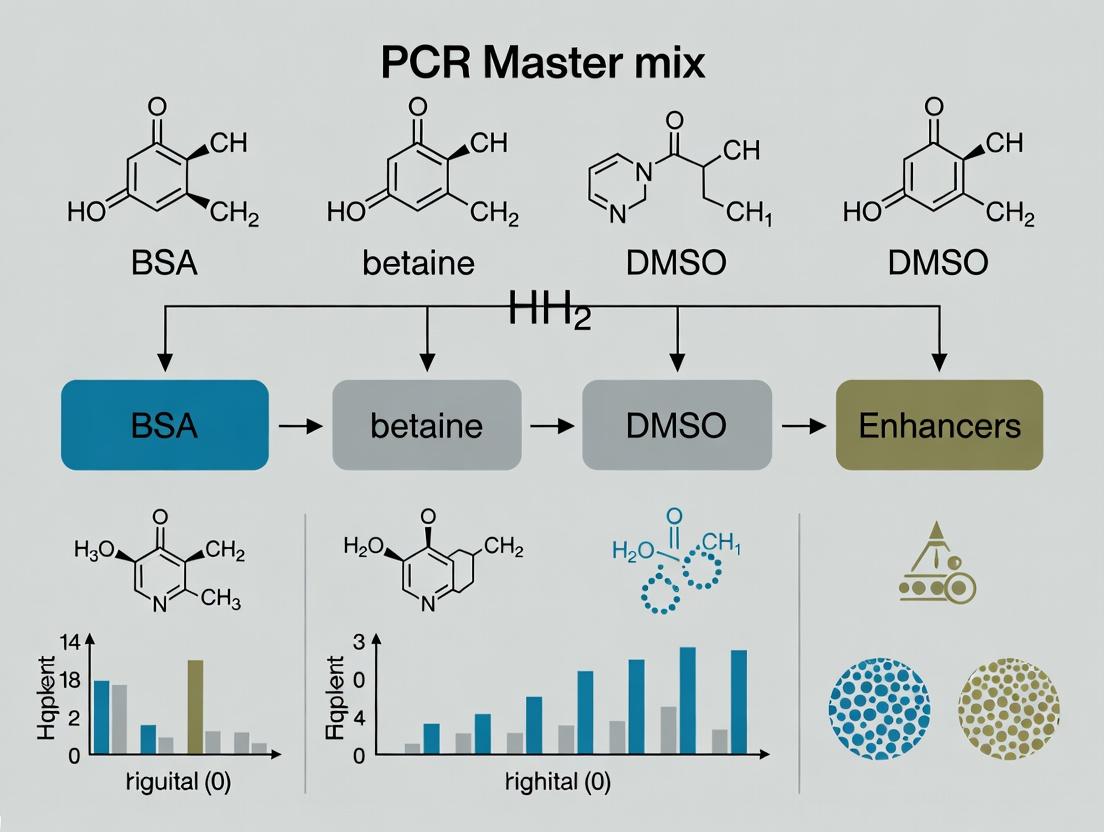
This definitive guide provides researchers, scientists, and drug development professionals with a comprehensive analysis of PCR master mix additives and enhancers.
Beyond the Basics: A Comprehensive Guide to PCR Master Mix Additives and Enhancers for Optimal Amplification
Abstract
This definitive guide provides researchers, scientists, and drug development professionals with a comprehensive analysis of PCR master mix additives and enhancers. The article explores the foundational chemistry and mechanisms of action for various additives, details precise methodologies for their application in challenging PCR scenarios (including GC-rich, long-range, and multiplex assays), and offers systematic troubleshooting strategies for common amplification failures. Furthermore, it delivers a comparative analysis of commercial enhancer formulations and best practices for experimental validation, equipping professionals with the knowledge to significantly improve PCR specificity, yield, and reliability in biomedical research and diagnostics.
The Chemistry Behind the Boost: Understanding How PCR Additives and Enhancers Work
Within the context of Polymerase Chain Reaction (PCR) optimization, the terms "additive" and "enhancer" are frequently used interchangeably, leading to conceptual ambiguity. This whitepaper, framed within a broader thesis on PCR master mix research, aims to delineate these terms based on their core biochemical functions and mechanisms of action. Precise terminology is critical for researchers, scientists, and drug development professionals to design robust, reproducible assays and troubleshoot amplification challenges effectively.
Core Definitions and Functional Distinctions
Additives are chemical compounds added to a PCR master mix to modify the physical or chemical environment of the reaction. They often act by neutralizing inhibitors, stabilizing reaction components, or altering melting temperatures (Tm) of nucleic acids. Their function is generally corrective or stabilizing.
Enhancers are specific additives that actively and directly improve the efficiency and/or fidelity of the DNA polymerase enzyme itself. They function by interacting with the polymerase-template complex, increasing processivity, or improving nucleotide incorporation kinetics. Their function is primarily catalytic.
The relationship is hierarchical: all enhancers are additives, but not all additives are enhancers.
Quantitative Comparison of Common Agents
The following table summarizes key quantitative data for common agents, compiled from current literature and vendor technical sheets.
Table 1: Functional Classification and Properties of Common PCR Additives and Enhancers
| Agent | Classification | Typical Concentration | Primary Proposed Mechanism | Primary Effect |
|---|---|---|---|---|
| Dimethyl Sulfoxide (DMSO) | Additive | 1-10% (v/v) | Reduces secondary structure in GC-rich templates by lowering DNA Tm; disrupts base pairing. | Improves amplification of GC-rich targets; can inhibit polymerase at >10%. |
| Betaine | Additive/Enhancer | 0.5 – 1.5 M | Equalizes the contribution of GC and AT base pairs to duplex stability (isostabilizer); can also enhance polymerase processivity. | Improves amplification of GC-rich, complex templates; reduces strand separation temperature. |
| Formamide | Additive | 1-5% (v/v) | Denaturant that lowers DNA Tm, similar to DMSO but more potent. | Aids in denaturing complex secondary structures; inhibitory above optimal range. |
| Glycerol | Additive | 5-10% (v/v) | Stabilizes enzymes, lowers DNA Tm, increases solution viscosity. | Stabilizes polymerase; aids in amplifying long or difficult templates. |
| BSA (Bovine Serum Albumin) | Additive | 0.1-0.8 µg/µL | Binds and sequesters common inhibitors (e.g., phenolics, humic acids); stabilizes polymerase. | Increases reaction tolerance to inhibitors present in crude samples (blood, plant). |
| T4 Gene 32 Protein (gp32) | Enhancer | 10-100 nM | Binds single-stranded DNA, preventing secondary structure formation and coating ssDNA. | Dramatically improves yield and consistency of long-range and difficult PCRs. |
| PCR Enhancer Cocktails (e.g., Q-Solution) | Enhancer | As per vendor | Proprietary blends often containing betaine, trehalose, or other stabilizing/osmolyte agents. | Broad-spectrum improvement in specificity and yield for suboptimal templates. |
| DMSO with Tetramethylene sulfoxide | Enhancer | Variable | Synergistic combination that enhances polymerase activity and DNA duplex stability. | Reported to significantly improve amplification efficiency and fidelity vs. DMSO alone. |
Mechanistic Pathways and Experimental Workflows
Diagram: Mechanism of Action for Key Additives and Enhancers
Experimental Protocol: Systematic Screening of Additives/Enhancers
Objective: To empirically determine the optimal additive/enhancer for a specific difficult PCR template.
Materials: See "The Scientist's Toolkit" below.
Methodology:
- Master Mix Preparation: Prepare a standardized master mix containing buffer, dNTPs, primers, polymerase, and template DNA. Omit Mg²⁺ if its optimization is part of the screen.
- Additive/Enhancer Stock Solutions: Prepare fresh or thaw aliquots of each candidate agent at the highest concentration to be tested (e.g., 100% DMSO, 5M Betaine, 1mg/mL BSA, 10µM gp32).
- Reaction Setup: Set up a matrix of 25µL reactions. For each additive/enhancer, create a dilution series in the final master mix. A standard matrix might include:
- Negative Control: Master mix with water instead of additive.
- DMSO: 1%, 3%, 5%, 10% (v/v).
- Betaine: 0.5 M, 1.0 M, 1.5 M.
- BSA: 0.1, 0.4, 0.8 µg/µL.
- gp32: 25 nM, 50 nM, 100 nM.
- Combinations: e.g., 3% DMSO + 1.0 M Betaine.
- Commercial Enhancer: As per manufacturer's recommendation.
- Thermocycling: Run the PCR using a touchdown or gradient cycling protocol, especially if the optimal annealing temperature is uncertain.
- Analysis: Analyze products by agarose gel electrophoresis (e.g., 1.5-2% gel). Quantify band intensity and specificity using gel imaging software.
- Validation: Re-optimize Mg²⁺ concentration around the top 2-3 additive conditions. Perform replicate reactions (n≥3) and assess yield via qPCR or fluorometric assay for final validation.
Diagram: Additive Screening Experimental Workflow
The Scientist's Toolkit
Table 2: Essential Research Reagent Solutions for Additive/Enhancer Studies
| Item | Function in Research | Key Considerations |
|---|---|---|
| High-Fidelity DNA Polymerase | The core enzyme whose activity is being modulated. Essential for fidelity studies. | Use a consistent, well-characterized source (e.g., Phusion, Q5, KAPA HiFi). |
| Challenging Template DNA | The substrate for optimization (e.g., high GC%, long amplicon, crude prep). | Characterize template purity (A260/280) and known inhibitor content. |
| Ultra-Pure Water (Nuclease-Free) | Solvent for all stocks and reactions. Prevents contamination and degradation. | Essential for reproducibility. Use molecular biology grade. |
| Additive Stock Solutions | Provide consistent starting points for screening (e.g., 100% DMSO, 5M Betaine). | Filter sterilize (0.22µm), aliquot, and store per chemical stability guidelines. |
| Recombinant T4 gp32 Protein | A defined, single-component enhancer for mechanistic studies. | Titrate carefully; high concentrations can inhibit PCR. |
| Commercial PCR Enhancer Cocktail | A proprietary, multi-component benchmark for performance comparison. | Use according to vendor protocol; note potential incompatibilities. |
| Gradient or Touchdown Thermocycler | Allows simultaneous testing of multiple annealing temperatures alongside additives. | Critical for deconvoluting temperature and additive effects. |
| Capillary Electrophoresis System or High-Resolution Gel Imager | For precise sizing and quantification of amplicons, assessing specificity and yield. | Superior to standard gel electrophoresis for quantitative comparison. |
| Fluorometric DNA Quantification Kit | Accurately measures final PCR product yield for validation. | More precise than gel-based intensity measurements. |
Within the broader thesis of PCR master mix optimization, chemical additives and enhancers serve as critical tools for modulating reaction dynamics to overcome specific biochemical challenges. This guide details the primary inhibitors of efficient amplification and the chemical agents engineered to counteract them.
Core Challenges and Corresponding Chemical Modifiers
The efficacy of standard PCR is frequently compromised by template complexity, primer design limitations, and suboptimal reaction conditions. The following table categorizes the principal challenges and the mechanisms of their corresponding chemical solvers.
Table 1: Common PCR Challenges and Additive Solutions
| Challenge Category | Specific Problem | Example Chemical Modifier(s) | Primary Mechanism of Action | Typical Working Concentration |
|---|---|---|---|---|
| High GC Content | Secondary structure formation; high melting temperatures | DMSO, Betaine, Formamide, 7-deaza-dGTP | Reduces DNA melting temperature; destabilizes secondary structures; base analog prevents reassociation. | DMSO: 1-10%; Betaine: 0.5-1.5 M; Formamide: 1-5% |
| Long Amplicons | Premature polymerase dissociation; low processivity | Glycerol, PEG, Trehalose | Stabilizes polymerase; reduces DNA template melting. | Glycerol: 5-10%; PEG 8000: 5-10% |
| Inhibitor-rich Samples | Polymerase inhibition (e.g., by humic acid, heparin, hematin) | BSA, T4 Gene 32 Protein, Non-ionic detergents (Tween-20, NP-40) | Binds and sequesters inhibitors; coats polymerase. | BSA: 0.1-0.8 µg/µL; Tween-20: 0.1-1% |
| Primer-Dimer/ Non-specific Binding | Mis-priming at low temperatures | Q-Solution, DMSO, Touchdown PCR additives | Alters DNA duplex stability; promotes specific primer binding. | Q-Solution (as per kit) |
| Low Yield/ Efficiency | Suboptimal Mg²⁺ or dNTP conditions; enzyme inefficiency | Mg²⁺ optimization, TMAC, PCR Enhancers (commercial blends) | Cofactor optimization; stabilizes primer-template binding. | Mg²⁺: 1.5-4.0 mM; TMAC: 15-100 µM |
| Multiplex PCR | Primer competition; spurious amplification | Betaine, (NH₄)₂SO₄-based buffers | Equalizes primer Tm; suppresses background. | Betaine: 0.5-1.5 M |
Experimental Protocol: Evaluating Additives for GC-Rich Amplification
Objective: To systematically test the efficacy of chemical modifiers (DMSO, Betaine, Formamide) in amplifying a high-GC (>70%) target.
Materials:
- Template: Genomic DNA with known high-GC target region.
- Primers: Validated primers for the GC-rich target.
- PCR Master Mix: Standard Taq polymerase, dNTPs, MgCl₂, buffer.
- Test Additives: 100% DMSO, 5M Betaine, 100% Formamide.
- Thermocycler, electrophoresis system.
Method:
- Reaction Setup: Prepare a master mix containing all core components except additives and template. Aliquot equal volumes into 8 tubes.
- Additive Spiking: To tubes 2-7, add the test additives to achieve the final concentrations outlined in Table 1 (e.g., 3%, 5%, 10% DMSO; 0.5M, 1.0M Betaine; 1%, 3% Formamide). Tube 1 is a no-additive control. Tube 8 is a no-template control (NTC).
- Amplification: Use a standard thermocycling protocol with an elevated extension temperature (72°C) and a prolonged denaturation step (98°C for 10-30 seconds).
- Analysis: Resolve PCR products on a 1.5% agarose gel. Quantify yield via densitometry or qPCR Cq values.
Expected Outcome: Optimal additive concentrations will yield a single, intense band of the expected size, while the control may show no product or smearing.
Mechanism and Workflow Visualization
Diagram 1: Mechanism of Additives in GC-Rich PCR
Diagram 2: Systematic Additive Screening Workflow
The Scientist's Toolkit: Essential Reagent Solutions
Table 2: Key Research Reagents for PCR Enhancement Studies
| Reagent | Primary Function in PCR | Key Consideration |
|---|---|---|
| Betaine (N,N,N-trimethylglycine) | Homogenizes base stacking energies; equalizes Tm of primers in multiplex PCR; reduces secondary structure. | Use at high molar concentrations (0.5-1.5M). Can be combined with DMSO. |
| Dimethyl Sulfoxide (DMSO) | Disrupts base pairing, lowering Tm and destabilizing secondary structures in GC-rich regions. | Can inhibit Taq polymerase at >10%. Optimal range is typically 3-5%. |
| Bovine Serum Albumin (BSA) | Binds phenolic compounds and other inhibitors present in crude samples (e.g., plant, blood). Acts as a stabilizer. | Use nuclease-free, acetylated BSA for best results. Does not interfere with electrophoresis. |
| T4 Gene 32 Protein | Single-stranded DNA binding protein that coats template, preventing reannealing and polymerase blocking. | Effective for long or complex templates. Adds significant cost to reaction. |
| Q-Solution (Commercial) | Proprietary reagent that alters DNA melting characteristics, facilitating priming on difficult templates. | Used specifically with Qiagen polymerases; mechanism is not fully disclosed. |
| PCR Enhancer Blends (e.g., GC Enhancer) | Proprietary multi-component mixes designed to address multiple challenges simultaneously. | Simplifies optimization but reduces mechanistic understanding. Vendor-dependent efficacy. |
| dNTPs with 7-deaza-dGTP | Guanine analog that weakens hydrogen bonding, reducing stability of GC-rich duplexes. | Must replace a portion (e.g., 50%) of standard dGTP. May require adjusted cycling. |
This whitepaper, framed within a broader thesis on PCR master mix additives, details the mechanisms by which dimethyl sulfoxide (DMSO), betaine, and GC-rich enhancers modulate DNA denaturation and primer annealing thermodynamics. These compounds are critical for amplifying problematic templates, particularly those with high GC-content, secondary structure, or high melting temperatures (Tm). Understanding their precise biochemical interactions enables the optimization of PCR for applications in gene cloning, diagnostics, and drug development.
Polymerase Chain Reaction (PCR) efficiency is often compromised by template DNA with complex secondary structures or high GC-content, leading to incomplete denaturation, nonspecific primer annealing, and polymerase stalling. The inclusion of enhancers in master mixes is a standard strategy to overcome these hurdles. This guide provides a technical dissection of the molecular mechanisms of three key additives: DMSO, betaine, and proprietary GC-rich enhancers.
Mechanistic Analysis of Key Additives
DMSO (Dimethyl Sulfoxide)
Primary Mechanism: DMSO is a polar aprotic solvent that interferes with hydrogen bonding and base stacking interactions in DNA.
- Action on Denaturation: It destabilizes double-stranded DNA (dsDNA) by reducing its thermal stability, effectively lowering the Tm. This facilitates complete strand separation at standard denaturation temperatures (e.g., 94-95°C), crucial for GC-rich regions.
- Action on Annealing: By reducing the Tm of both the template and the primer, DMSO can improve specificity by preventing primer binding to imperfectly matched sequences at lower annealing temperatures. However, excessive concentrations inhibit Taq polymerase activity.
Betaine (Trimethylglycine)
Primary Mechanism: Betaine acts as a universal osmolyte and is a potent helix destabilizer.
- Action on Denaturation: Betaine equilibrates the base-pairing stability of GC and AT-rich regions. It penetrates the DNA helix and neutralizes the excess negative charge on the phosphate backbone, reducing the energy required for strand separation. This promotes uniform denaturation across sequences of varying composition.
- Action on Annealing: By reducing the difference in stability between matched and mismatched primer-template duplexes, betaine can enhance the specificity of annealing, especially for templates with high secondary structure.
Commercial GC-Rich Enhancers
Primary Mechanism: These are often proprietary formulations but typically consist of a combination of agents.
- Common Components: May include mixtures of betaine, DMSO, formamide, glycerol, or specialized crowding agents like polyethylene glycol (PEG).
- Synergistic Action: They work in concert to lower DNA Tm, disrupt secondary structures (e.g., hairpins, G-quadruplexes), and stabilize the polymerase enzyme. Some contain engineered proteins or single-stranded DNA-binding proteins that transiently coat denatured DNA, preventing re-annealing of problematic regions.
Table 1: Comparative Effects of PCR Additives on DNA Thermodynamics and Reaction Efficiency
| Additive | Typical Working Concentration | Effect on DNA Tm (ΔTm) | Effect on Polymerase Activity | Primary Best-Use Case |
|---|---|---|---|---|
| DMSO | 1-10% (v/v), often 3-5% | Lowers by ~0.5-1.5°C per % | Inhibitory above ~10% | GC-rich templates (>65%), reduces nonspecific bands |
| Betaine | 0.5 - 2.0 M (often 1.0 M) | Lowers GC-rich Tm, raises AT-rich Tm | Mildly stabilizing at ≤1.5 M | High secondary structure, very high GC content, long amplicons |
| 7-Deaza-dGTP | 50-200 µM (partial substitution for dGTP) | Lowers Tm of GC pairs | Compatible with most polymerases | Templates prone to G-quadruplex formation |
| GC-Rich Enhancer Solution | As per mfr. (e.g., 1X final) | Varies; significant Tm reduction | Often contains stabilizing agents | Complex, recalcitrant templates where single agents fail |
Table 2: Experimental Optimization Results for a Model 85% GC-Rich Amplicon
| Condition | Denaturation Efficiency (% ssDNA) | Primer Annealing Specificity (ΔΔCq vs mismatch) | Final Amplicon Yield (ng/µL) |
|---|---|---|---|
| No Additive | 45% | 2.1 | 5.2 |
| 5% DMSO | 78% | 3.5 | 18.7 |
| 1M Betaine | 92% | 4.8 | 32.5 |
| 1X GC Enhancer | 95% | 5.2 | 41.0 |
| DMSO + Betaine | 88% | 4.1 | 28.3 |
Key Experimental Protocols
Protocol 1: Assessing Additive Efficacy via Thermal Denaturation Profiling
Objective: To quantitatively measure the Tm-lowering effect of an additive on a target dsDNA fragment. Methodology:
- Prepare DNA samples (e.g., 100 ng of a 500bp GC-rich fragment) in PCR buffers containing serial concentrations of the test additive (DMSO: 0%, 2%, 5%, 8%; Betaine: 0M, 0.5M, 1.0M, 1.5M).
- Use a UV-Vis spectrophotometer equipped with a thermal cuvette holder or a dedicated melting curve instrument.
- Heat samples from 25°C to 99°C at a slow, constant rate (e.g., 0.5°C/min) while monitoring absorbance at 260 nm.
- Plot the first derivative of absorbance vs. temperature to determine the Tm for each condition. The shift in Tm (ΔTm) is calculated relative to the no-additive control.
Protocol 2: PCR Optimization Screen for Recalcitrant Templates
Objective: To empirically determine the optimal additive type and concentration for a specific problematic amplicon. Methodology:
- Set up a matrix of 25µL PCR reactions with a fixed amount of template and primers.
- The master mix variable will be the enhancer: a) None (control), b) DMSO (1%, 3%, 5%, 7%), c) Betaine (0.5M, 1.0M, 1.5M), d) Commercial GC enhancer (1X), e) Combination (e.g., 3% DMSO + 1M Betaine).
- Use a touchdown or gradient PCR protocol to simultaneously screen annealing temperatures.
- Analyze products via high-resolution gel electrophoresis (e.g., 2% agarose) or capillary electrophoresis. Score reactions based on yield, specificity (single band), and absence of primer-dimer.
Visualizations
Diagram 1: Additive Action Pathways for GC-Rich PCR
Diagram 2: PCR Additive Optimization Workflow
The Scientist's Toolkit: Research Reagent Solutions
Table 3: Essential Materials for PCR Enhancement Research
| Reagent / Solution | Primary Function in Research | Example Product/Cat. No. (Illustrative) |
|---|---|---|
| Molecular Biology Grade DMSO | High-purity solvent for destabilizing dsDNA; must be sterile and nuclease-free. | Sigma-Aldrich D8418 |
| Betaine Monohydrate (Molecular Grade) | Universal osmolyte for neutralizing base-pairing stability; prepared as a concentrated stock (e.g., 5M). | Sigma-Aldrich B0300 |
| Commercial GC-Rich Enhancer | Proprietary, pre-optimized blend of agents for the most challenging templates. | TaKaRa GC Rich Solution |
| 7-Deaza-2’-deoxyguanosine 5’-triphosphate | dGTP analog that reduces Hoogsteen bonding, preventing G-quadruplex formation. | Jena Bioscience NU-809S |
| High-Fidelity DNA Polymerase | Thermostable enzyme with proofreading, often more sensitive to additives; used for validation. | NEB Q5 Polymerase |
| Melting Curve Analysis Kit | For precise Tm determination (e.g., using SYBR Green or EvaGreen dyes). | Bio-Rad Precision Melt Supermix |
| Capillary Electrophoresis System | For high-resolution analysis of PCR product size, purity, and yield. | Agilent Fragment Analyzer |
| Touchdown/Thermal Gradient Thermocycler | Essential hardware for empirical optimization of annealing/denaturation temperatures. | Bio-Rad C1000 Touch |
| Nuclease-Free Water | Solvent for all reagent preparations to prevent enzymatic degradation. | Invitrogen AM9937 |
Within the ongoing research into PCR master mix additives and enhancers, the optimization of reaction fidelity and yield extends far beyond the core nucleotides, polymerase, and buffer. This technical guide explores the critical, yet often under-characterized, roles of three additive classes: Bovine Serum Albumin (BSA), non-ionic detergents, and specialized chemical stabilizers. We detail their mechanisms of action, present comparative efficacy data, and provide robust experimental protocols for their evaluation, framing this within the broader thesis that master mix formulation is a multi-parameter optimization problem critical for modern diagnostic and research applications.
The pursuit of robust, sensitive, and specific Polymerase Chain Reaction (PCR) underpins advancements in genomics, molecular diagnostics, and drug development. While the core enzymatic components are vital, the chemical environment defined by additives is equally crucial. Standard master mixes provide a foundation, but challenging templates (e.g., GC-rich, long amplicons) or suboptimal samples (inhibitor-containing) necessitate advanced formulations. This whitepaper examines the synergistic and individual contributions of protein stabilizers (BSA), surface-active agents (non-ionic detergents), and novel stabilizing chemicals, providing a framework for rational master mix design.
Mechanisms of Action & Comparative Analysis
Bovine Serum Albumin (BSA)
BSA acts as a molecular stabilizer and inhibitor scavenger. It binds nonspecifically to tube walls, preventing polymerase adhesion and loss. More importantly, it sequesters phenolic compounds, humic acids, and other inhibitors commonly found in environmental or biological samples (e.g., blood, plant extracts).
Non-Ionic Detergents (e.g., Tween-20, NP-40, Triton X-100)
These agents reduce surface tension, promoting reagent miscibility and preventing polymerase denaturation at interfaces. They aid in cell lysis in direct PCR protocols and help destabilize secondary structures in DNA templates by minimizing intermolecular interactions.
Chemical Stabilizers (e.g., Trehalose, DMSO, Betaine, Glycerol)
This heterogeneous group addresses specific challenges:
- Trehalose: A kosmotropic disaccharide that stabilizes enzyme structure via the "preferential exclusion" model, enhancing thermostability.
- DMSO: Disrupts base pairing, aiding in the denaturation of GC-rich templates and reducing secondary structure.
- Betaine (Trimethylglycine): Acts as a PCR enhancer by equalizing the stability of AT and GC base pairs, promoting uniform melting of DNA strands.
- Glycerol: A cryoprotectant and viscosity modifier that stabilizes proteins in storage but can lower the effective melting temperature of DNA.
Table 1: Quantitative Comparison of Common PCR Additives
| Additive | Typical Working Concentration | Primary Function | Key Benefit | Potential Drawback |
|---|---|---|---|---|
| BSA (Fraction V) | 0.1 - 0.8 µg/µL | Protein stabilizer, inhibitor scavenger | Improves robustness with crude samples | Can be a source of contaminating DNA/RNase. |
| Tween-20 | 0.1 - 1.0% (v/v) | Non-ionic detergent | Reduces surface adsorption, aids lysis | High concentrations can inhibit polymerase. |
| Triton X-100 | 0.1 - 1.0% (v/v) | Non-ionic detergent | Effective for difficult lysis applications | Light-sensitive; environmental/health concerns. |
| DMSO | 1 - 10% (v/v) | Secondary structure destabilizer | Excellent for GC-rich targets (>60% GC) | Inhibitory at >10%; can reduce specificity. |
| Betaine (5M stock) | 0.5 - 1.5 M | Denaturant, base-pair equalizer | Aids in amplification of complex templates | Optimization required; may reduce yield. |
| Trehalose | 0.2 - 0.6 M | Thermodynamic stabilizer | Enhances polymerase shelf-life & thermotolerance | High viscosity at elevated concentrations. |
Experimental Protocols for Additive Evaluation
Protocol: Systematic Additive Titration for Inhibitor-Rich Samples
Objective: To determine the optimal concentration of BSA and/or detergent for PCR from samples known to contain inhibitors (e.g., soil DNA, whole blood).
- Master Mix Formulation: Prepare a base master mix lacking BSA/detergent but containing all other components (polymerase, dNTPs, buffer, primers, water).
- Additive Stocks: Prepare sterile stocks of BSA (10 µg/µL) and Tween-20 (10% v/v).
- Titration Setup: Create a 2D matrix in a 96-well PCR plate. Vary BSA (0, 0.2, 0.4, 0.6, 0.8 µg/µL final) across rows and Tween-20 (0, 0.1, 0.5, 1.0% v/v final) across columns.
- Sample Addition: Spool a constant amount of purified target DNA (positive control) and inhibitor-spiked DNA (test sample) into duplicate wells for each condition.
- PCR Amplification: Run under standard cycling conditions for the target.
- Analysis: Quantify yield via gel electrophoresis densitometry or qPCR Cq. The optimal condition maximizes yield for the inhibitor-spiked sample without suppressing the positive control.
Protocol: Evaluating Stabilizers for High-Fidelity, Long-Amplicon PCR
Objective: To assess the impact of betaine, DMSO, and glycerol on the amplification efficiency of a long (>5 kb) or GC-rich target.
- Base Mix: Use a high-fidelity polymerase mix with extended elongation time capabilities.
- Additive Conditions: Prepare separate master mixes supplemented with:
- Condition A: 1 M Betaine
- Condition B: 3% DMSO
- Condition C: 5% Glycerol
- Condition D: 1 M Betaine + 3% DMSO
- Condition E: No additive (Control)
- Amplification: Use a touchdown or slow-ramping cycling protocol to promote specific annealing.
- Assessment: Analyze products on a high-percentage agarose gel or bioanalyzer. Assess yield, specificity (single band), and fidelity (via subsequent sequencing).
Visualization of Mechanisms & Workflows
Title: Mechanism of PCR Additive Action
Title: Workflow for Optimizing PCR Additives
The Scientist's Toolkit: Essential Research Reagents
Table 2: Key Reagent Solutions for PCR Additive Research
| Reagent / Material | Function in Research | Notes for Experimental Design |
|---|---|---|
| Molecular Biology Grade BSA | Provides a nuclease-free, standardized protein source for scavenging studies. | Use fraction V, low DNA content. Avoid non-acetylated if using BSA in downstream assays. |
| PCR-Inhibitor Spike-in Kits | Contains quantified amounts of common inhibitors (humic acid, heparin, etc.) for controlled challenge studies. | Essential for generating reproducible, challenging test samples. |
| High-Fidelity DNA Polymerase Mix | Enzyme system for testing additives in long or complex amplicon amplification. | Often more sensitive to additive effects than standard Taq. |
| Gel-Based DNA Quantitation Standard | Provides accurate yield measurement post-amplification for non-qPCR workflows. | Critical for comparative analysis of additive efficacy on final product mass. |
| qPCR SYBR Green Master Mix (Additive-Free) | Base mix for qPCR-based additive titration, allowing real-time efficiency (Cq) and melt curve analysis. | Enables precise quantification of enhancement/inhibition kinetics. |
| GC-Rich Control Template | Standardized DNA template with known high GC content (>70%) for destabilizer testing (DMSO, Betaine). | Removes template variability as a confounding factor. |
| Low-Binding Microcentrifuge/PCR Tubes | Minimizes nonspecific adsorption of polymerase and template, reducing background noise in adsorption studies. | Crucial for experiments focusing on detergent/BSA effects on surface interaction. |
Within the ongoing research on PCR master mix additives and enhancers, the role of metal ion cofactors remains foundational. While magnesium (Mg²⁺) is the canonical cofactor for DNA polymerases, a growing body of evidence suggests that alternative or supplementary metal ions can profoundly modulate polymerase activity, fidelity, processivity, and specificity. This whitepaper provides an in-depth technical guide on the mechanistic role of Mg²⁺ and explores the potential of "beyond magnesium" strategies to optimize polymerase performance for specialized PCR applications in research and drug development.
The Central Role of Magnesium Ions
Magnesium serves as an essential cofactor for all DNA polymerases used in PCR. Its primary functions are twofold:
- Catalytic Role: Mg²⁺ coordinates with the phosphate groups of incoming dNTPs, stabilizing the transition state and facilitating the nucleophilic attack by the 3'-OH primer terminus.
- Structural Role: Mg²⁺ helps maintain the correct conformation of the polymerase active site and the DNA template-primer complex.
The optimal concentration is a critical variable, as it influences enzyme activity, primer-template specificity, and product yield. Deviations from the optimum can lead to increased error rates or primer-dimer formation.
Table 1: Effects of Magnesium Chloride Concentration on a StandardTaqPolymerase PCR
| [MgCl₂] (mM) | Product Yield (ng/µL) | Non-Specific Products | Relative Fidelity (Error Rate x 10⁻⁵) |
|---|---|---|---|
| 0.5 | 15.2 | High | 2.4 |
| 1.0 | 28.5 | Moderate | 2.1 |
| 1.5 (Std.) | 52.1 | Low | 2.5 |
| 2.0 | 50.3 | Low | 3.8 |
| 3.0 | 41.7 | Moderate | 6.5 |
| 5.0 | 22.8 | High | 12.1 |
Metal Ions Beyond Magnesium
Alternative divalent cations can substitute for Mg²⁺, often with altered biochemical outcomes. Manganese (Mn²⁺) is the most studied alternative, known to reduce fidelity while enabling reverse transcription and amplification of damaged templates. Other ions like cobalt (Co²⁺), calcium (Ca²⁺), and zinc (Zn²⁺) play more regulatory or inhibitory roles.
Table 2: Properties of Divalent Cations in Polymerase Reactions
| Cation | Relative Activity (%) vs. Mg²⁺ | Effect on Fidelity | Primary Application/Effect |
|---|---|---|---|
| Mg²⁺ | 100 (Reference) | Standard | Standard PCR |
| Mn²⁺ | 45-75 | Greatly Reduced | Error-prone PCR, RT activity |
| Co²⁺ | 30-50 | Reduced | Sometimes increases specificity |
| Ca²⁺ | <1 | N/A | Inhibitor; used in hot-start |
| Zn²⁺ | <1 | N/A | Potent inhibitor of many polymerases |
| Ni²⁺ | ~10 | Variable | Alters primer extension rate |
Experimental Protocol: Titration of Mg²⁺ and Mn²⁺ for Error-Prone PCR
Objective: To establish optimal conditions for error-prone PCR using a mixture of Mg²⁺ and Mn²⁺ to achieve a targeted mutation rate.
Materials:
- Template DNA (1-10 ng/µL)
- Forward and Reverse Primers (10 µM each)
- Taq DNA Polymerase (5 U/µL)
- 10X Reaction Buffer (without Mg²⁺)
- dNTP Mix (10 mM each)
- MgCl₂ Stock Solution (25 mM)
- MnCl₂ Stock Solution (10 mM)
- Nuclease-free water
Methodology:
- Prepare a master mix for n+1 reactions containing:
- 2.5 µL 10X Buffer (Mg²⁺-free)
- 1.0 µL dNTP Mix (10 mM)
- 0.5 µL Forward Primer (10 µM)
- 0.5 µL Reverse Primer (10 µM)
- 0.2 µL Taq Polymerase (5 U/µL)
- 1.0 µL Template DNA
- X µL MgCl₂ Stock (variable)
- Y µL MnCl₂ Stock (variable)
- Nuclease-free water to a final volume of 25 µL per reaction.
- Set up a matrix of 9 reactions with final concentrations:
- Mg²⁺: 1.0 mM, 1.5 mM, 2.0 mM.
- Mn²⁺: 0.05 mM, 0.10 mM, 0.15 mM.
- Run the following thermocycling protocol:
- Initial Denaturation: 95°C for 3 min.
- 30 Cycles: [95°C for 30 sec, 55°C for 30 sec, 72°C for 1 min/kb].
- Final Extension: 72°C for 5 min.
- Analyze 5 µL of each product by agarose gel electrophoresis.
- Purify the remaining product and submit for Sanger sequencing of the entire amplicon to calculate error frequency.
Mechanistic Pathways and Workflows
Diagram 1: Divalent Cation Modulation of Polymerase Activity
Diagram 2: Metal Ion Optimization Workflow for PCR
The Scientist's Toolkit: Research Reagent Solutions
| Reagent / Material | Function in Cofactor Research |
|---|---|
| Mg²⁺-Free 10X PCR Buffer | Provides core reaction components (Tris, KCl, etc.) without Mg²⁺, allowing precise, independent manipulation of cation concentration. |
| Ultra-Pure MgCl₂ Solution (25-100 mM) | The standard cofactor source. High purity is essential to avoid contaminants that may inhibit polymerase activity. |
| MnCl₂ Solution (5-10 mM) | Used to reduce polymerase fidelity for error-prone PCR or to enhance amplification of damaged/ difficult templates. |
| dNTP Mix (with Mg²⁺ chelator consideration) | dNTPs chelate Mg²⁺. The concentration must be accounted for in Mg²⁺ titration (total [Mg²⁺]free = [Mg²⁺]added - [dNTP]). |
| Cation-Specific Polymerases (e.g., Mn²⁺-tolerant mutants) | Engineered polymerases with altered active sites that can efficiently incorporate nucleotides with alternative cations. |
| Calcium Acetate (Ca²⁺) | A non-activating divalent cation used in hot-start formulations to reversibly inhibit polymerase until a high-temperature denaturation step. |
| EDTA or EGTA (0.5M, pH 8.0) | Metal ion chelators used to quench reactions or to create precisely defined, metal-free starting conditions for titration experiments. |
| ICP-MS Standard Solutions | Used for Inductively Coupled Plasma Mass Spectrometry to quantitatively measure trace metal ion concentrations in reaction buffers or enzyme stocks. |
Precision Protocols: Strategic Application of Additives for Specific PCR Applications
Within the broader thesis of PCR master mix optimization, additives and enhancers are not mere supplementary components; they are critical modulators of reaction specificity, efficiency, and yield. This whitepaper posits that a systematic, empirical approach to additive selection and titration is paramount for overcoming the complex inhibition profiles of challenging templates, such as those with high GC-content, complex secondary structure, or derived from inhibitory samples. The following guide provides a rigorous framework for researchers to tailor their mix, moving beyond standard formulations to achieve robust and reproducible results in diagnostic and drug development applications.
The Additive Toolkit: Mechanisms and Applications
Common PCR additives function through distinct biochemical mechanisms. Selection begins with understanding the primary challenge.
Table 1: Common PCR Additives: Mechanisms and Initial Concentrations
| Additive | Primary Mechanism | Typical Working Concentration Range | Primary Use Case |
|---|---|---|---|
| DMSO | Disrupts base pairing, reduces Tm | 1–10% (v/v) | GC-rich templates, secondary structure |
| Betaine | Equalizes base stability, reduces Tm | 0.5–1.5 M | GC-rich templates, prevents strand separation |
| Formamide | Denaturant, lowers Tm | 1–5% (v/v) | Highly specific amplification, complex templates |
| BSA | Binds inhibitors, stabilizes enzyme | 0.1–0.8 µg/µL | Samples with phenolic/humic acid inhibitors |
| TMA Oxalate | Binds divalent cations (Fe²⁺) | 10–40 mM | Blood-derived samples (hemoglobin inhibition) |
| Glycerol | Stabilizes enzymes, affects Tm | 5–15% (v/v) | Long amplicons, enhances enzyme processivity |
| Non-ionic Detergents | Prevents enzyme aggregation, binds inhibitors | 0.1–1% (v/v) | General enhancer, sample-specific inhibition |
Step-by-Step Titration Protocol
A systematic titration is required to identify the optimal concentration for your specific template-primer system.
Protocol: Additive Titration Matrix
I. Materials (Research Reagent Solutions)
- Master Mix Core: Taq or high-fidelity DNA polymerase, buffer, dNTPs, MgCl₂ solution.
- Template DNA: Challenging target (e.g., high-GC genomic DNA).
- Primers: Validated primer pair for the target.
- Additive Stocks: Filter-sterilized solutions of the additive(s) under test (e.g., 100% DMSO, 5M Betaine).
- Nuclease-free Water: To adjust reaction volume.
- PCR Plates/Tubes & Seals: Compatible with your thermocycler.
II. Experimental Workflow
Diagram Title: Additive Titration Experimental Workflow
III. Detailed Methodology
- Prepare Master Mix Core: For N reactions, prepare a master mix containing buffer, dNTPs, MgCl₂ (at a standard concentration), polymerase, and primers. Multiply all volumes by (N + 10%) to account for pipetting error.
- Set Up Titration Matrix: Aliquot equal volumes of the master mix into separate tubes or a PCR plate. Design a two-dimensional matrix if testing two additives simultaneously (e.g., DMSO vs. Betaine).
- Spike Additives: Add varying volumes of the additive stock solution to each aliquot to create the desired concentration gradient (e.g., 0%, 2%, 4%, 6%, 8% DMSO).
- Complete Reaction Assembly: Add a constant amount of template DNA to each reaction. Adjust the final volume to the target (e.g., 25 µL) with nuclease-free water. Include a no-additive and a no-template control (NTC).
- Thermocycling: Run the following initial thermocycling protocol:
- Initial Denaturation: 95°C for 3 min.
- 35 Cycles:
- Denature: 95°C for 30 sec.
- Annealing: Use a gradient (e.g., 55–65°C) for 30 sec to test additive interaction with Tm.
- Extension: 72°C for 60 sec/kb.
- Final Extension: 72°C for 5 min.
- Analysis: Resolve products by agarose gel electrophoresis or capillary electrophoresis. Score reactions for yield (band intensity) and specificity (single, correct band vs. primer dimers/non-specific bands).
IV. Data Interpretation & Iteration Create a results table from the titration experiment. The optimal condition maximizes yield and specificity while minimizing non-specific amplification. This concentration should then be used to re-optimize other parameters like Mg²⁺ concentration or annealing temperature in a subsequent round.
Table 2: Example Titration Results for a GC-Rich Target
| [DMSO] (%) | [Betaine] (M) | Annealing Temp. (°C) | Product Yield (RFU) | Specificity (1-5 Scale) | Notes |
|---|---|---|---|---|---|
| 0 | 0 | 58 | 150 | 2 | Weak, non-specific bands |
| 4 | 0 | 58 | 850 | 4 | Strong, specific band |
| 8 | 0 | 58 | 600 | 5 | Specific, slightly reduced yield |
| 0 | 1.0 | 58 | 720 | 3 | Strong, but minor smearing |
| 4 | 1.0 | 58 | 950 | 5 | Optimal: Highest yield & specificity |
| 4 | 1.0 | 62 | 1020 | 5 | Best Overall: Enables higher Ta |
Advanced Application: Pathway to Overcome Specific Inhibition
For complex samples, a logical decision pathway informs additive selection.
Diagram Title: Decision Pathway for Additive Selection
The Scientist's Toolkit: Essential Research Reagent Solutions
Table 3: Core Reagents for Additive Optimization Experiments
| Reagent Solution | Function & Rationale |
|---|---|
| High-Purity Taq Polymerase | Core enzyme; some formulations are more responsive to enhancers than others. |
| MgCl₂ Stock (25-50 mM) | Critical co-factor; its concentration must be re-optimized after additive addition. |
| Molecular Biology Grade DMSO | Reduces secondary structure; must be sterile and free of nucleases. |
| 5M Betaine Monohydrate | Homogenizes base-pair stability; prepared in nuclease-free water, filter sterilized. |
| Acetylated BSA (10 µg/µL) | Binds ionic inhibitors and stabilizes polymerase; acetylated form is PCR-inert. |
| Tetramethylammonium Oxalate | Chelates heme-derived Fe²⁺; specific for overcoming blood inhibition. |
| PCR-Grade Formamide | Powerful denaturant; used at low concentrations to increase stringency. |
| Qubit dsDNA HS Assay Kit | For precise template quantification, critical for titration accuracy. |
Tailoring a PCR master mix via systematic additive selection and titration is a cornerstone of advanced assay development. By understanding mechanistic principles, employing structured titration protocols, and interpreting results within the context of the sample-template system, researchers can definitively overcome amplification barriers. This empirical, data-driven approach directly supports the broader thesis that master mix composition is a dynamic variable, essential for achieving the sensitivity, specificity, and robustness required in modern research and diagnostic pipelines.
Amplifying guanine-cytosine (GC)-rich DNA sequences (typically >60% GC content) remains a persistent challenge in polymerase chain reaction (PCR). These templates form stable secondary structures and exhibit high melting temperatures (Tm), leading to incomplete denaturation, premature reannealing, and polymerase stalling. This results in poor yield, nonspecific amplification, or complete PCR failure. Within the broader thesis on PCR master mix additives and enhancers, this guide details the mechanistic action and optimized application of three principal agents—betaine, dimethyl sulfoxide (DMSO), and 7-deaza-2’-deoxyguanosine-5’-triphosphate (7-deaza-dGTP)—to overcome these obstacles.
Mechanistic Rationale and Molecular Action
Betaine (N,N,N-trimethylglycine): Acts as a universal destabilizer of base stacking. It is a kosmotrope that equalizes the stability of AT and GC base pairs by reducing the differential in melting temperature. It does not lower the Tm uniformly but rather promotes more cooperative DNA melting, aiding in the complete denaturation of GC-rich regions.
Dimethyl Sulfoxide (DMSO): A polar aprotic solvent that disrupts hydrogen bonding and reduces DNA secondary structure formation. It lowers the overall Tm of the DNA template, facilitating strand separation during the denaturation step. However, it can also inhibit Taq polymerase activity at concentrations >10%.
7-deaza-dGTP: A guanosine analog where nitrogen at the 7-position is replaced by carbon. This modification prevents the formation of Hoogsteen base pairs and reduces the stability of GC-rich regions by eliminating a major groove hydrogen bond donor. It is incorporated into the nascent DNA strand by many DNA polymerases, decreasing template strand reannealing and secondary structure.
Quantitative Comparison of Additive Effects
The following table summarizes the typical working concentrations, primary mechanisms, and key considerations for each additive, based on aggregated experimental data.
Table 1: Core Additives for GC-Rich PCR Optimization
| Additive | Typical Final Concentration | Primary Mechanism | Key Benefit | Potential Drawback |
|---|---|---|---|---|
| Betaine | 0.5 M – 1.5 M | Equalizes AT/GC stability, promotes cooperative melting | High compatibility, no significant polymerase inhibition | Can reduce specificity in non-GC-rich targets |
| DMSO | 3% – 10% (v/v) | Disrupts H-bonding, lowers DNA Tm | Effective against secondary structures | Inhibitory to Taq at >10%, can reduce fidelity |
| 7-deaza-dGTP | 1:3 to 1:1 ratio with dGTP (e.g., 150 µM:50 µM) | Replaces dGTP, reduces Hoogsteen bonding & base pair stability | Directly destabilizes GC-rich duplexes | Increased cost, may require polymerase titration |
Table 2: Synergistic Combination Protocols & Outcomes
| Protocol Name | Additive Combination | Recommended Template GC% | Reported Yield Improvement* | Optimal Annealing Temp Adjustment |
|---|---|---|---|---|
| Standard Betaine | Betaine 1.0 M | 60-70% | 5-10x | -2°C to +2°C |
| DMSO-Betaine Dual | DMSO 5% + Betaine 1.0 M | 70-80% | 10-50x | -3°C to -5°C |
| Full Replacement | 7-deaza-dGTP (100%) + DMSO 3% + Betaine 1.2 M | >80% or highly structured | 50-100x (or from failure to success) | -5°C to -7°C |
*Yield improvement is relative to a standard PCR with no additives for the same problematic template.
Detailed Experimental Protocols
Protocol 4.1: Initial Screening of Single Additives
Objective: To determine the individual efficacy of betaine, DMSO, or 7-deaza-dGTP for a specific GC-rich target. Master Mix (50 µL reaction):
- 1X High-Fidelity Polymerase Buffer
- dNTPs: 200 µM each (for 7-deaza-dGTP condition, use 200 µM dATP, dCTP, dTTP; 150 µM 7-deaza-dGTP + 50 µM dGTP)
- Forward/Reverse Primer: 0.5 µM each
- DNA Template: 1 – 100 ng
- High-Fidelity DNA Polymerase: 1.25 units
- Additive Variants:
- Control: No additive.
- Betaine: Add from 5M stock to final 0.5 M, 1.0 M, 1.5 M.
- DMSO: Add to final 3%, 5%, 10% (v/v).
- 7-deaza-dGTP: Use dNTP mix as specified above. Thermocycling Parameters:
- Initial Denaturation: 98°C for 30 sec.
- 35 Cycles:
- Denaturation: 98°C for 10 sec.
- Annealing: Use a gradient from calculated Tm -5°C to +5°C for 15 sec.
- Extension: 72°C for 30 sec/kb.
- Final Extension: 72°C for 2 min. Analysis: Analyze products by agarose gel electrophoresis. Identify the additive and annealing temperature providing the strongest, most specific band.
Protocol 4.2: Optimized Synergistic Protocol for >80% GC Templates
Objective: To amplify extremely GC-rich or structured templates using a combination of all three enhancers. Master Mix (25 µL reaction):
- 1X Enhanced High-Fidelity Buffer (provided with polymerase)
- dNTPs: 200 µM dATP, dCTP, dTTP; 150 µM 7-deaza-dGTP; 50 µM dGTP.
- Forward/Reverse Primer: 0.3 µM each (lower primer conc. can increase specificity)
- DNA Template: 10 – 50 ng
- Betaine (5M stock): To final 1.2 M
- DMSO: To final 3% (v/v)
- High-Fidelity/GC-Tolerant Polymerase: 1.0 unit (e.g., KAPA HiFi, Q5, PrimeSTAR GXL)
- Nuclease-free water to volume. Thermocycling Parameters (Touchdown):
- Initial Denaturation: 98°C for 2 min (prolonged for complete denaturation).
- 5 Cycles of Touchdown:
- Denaturation: 98°C for 10 sec.
- Annealing: Start at Tm+5°C for 15 sec, decrease by 1°C per cycle.
- Extension: 72°C for 45 sec/kb.
- 30 Cycles of Standard Amplification:
- Denaturation: 98°C for 10 sec.
- Annealing: Tm-2°C for 15 sec.
- Extension: 72°C for 45 sec/kb.
- Final Extension: 72°C for 5 min. Post-Processing: For cloning applications, note that 7-deaza-dGTP-containing amplicons may be resistant to cleavage by some restriction enzymes. Consider using blunt-end or TA cloning strategies.
The Scientist's Toolkit: Research Reagent Solutions
Table 3: Essential Reagents and Materials for GC-Rich PCR
| Item | Function/Description | Example Product/Catalog Consideration |
|---|---|---|
| High-Fidelity/GC-Tolerant Polymerase | Enzymes with high processivity and strand displacement activity for structured DNA. | KAPA HiFi HotStart, Q5 High-Fidelity, PrimeSTAR GXL |
| Molecular Biology Grade Betaine | Kosmotropic additive; use high-purity, PCR-tested solution (5M stock). | Sigma B0300, Thermo Fisher Scientific AM9780 |
| PCR Grade DMSO | Ultra-pure, nuclease-free DMSO to avoid polymerase inhibition by impurities. | Sigma D8418, Thermo Fisher Scientific BP231-100 |
| 7-deaza-dGTP Solution | Deaza-guanine nucleotide analog; purchase as ready-to-use 100mM solution. | Jena Bioscience NU-403S, Sigma 9886 |
| dNTP Mix (100mM) | For preparing custom dNTP blends including 7-deaza-dGTP. | Thermo Fisher Scientific R0181 |
| Gradient Thermal Cycler | Essential for empirical optimization of annealing temperatures. | Applied Biosystems Veriti, Bio-Rad C1000 Touch |
| PCR Tubes/Plates with Secure Seals | Prevents evaporation of volatile components like DMSO during cycling. | Axygen PCR-0208-C, Thermo Fisher Scientific AB-0600 |
Visualizing Workflows and Mechanisms
Title: Decision Workflow for GC-Rich PCR Optimization
Title: Molecular Mechanisms of PCR Additives on GC-DNA
This whitepaper serves as a focused exploration within a broader thesis on the systematic optimization of PCR master mixes. While core components like Taq DNA polymerase are fundamental, the strategic inclusion of specific additives and enhancers is critical for overcoming barriers in long-range (>5 kb) and high-fidelity PCR. These barriers include polymerase stalling, premature dissociation, and misincorporation errors. This guide provides a technical deep-dive into the additives that enhance processivity and accuracy, presenting current data, protocols, and practical workflows for research and development applications.
Key Additives: Mechanisms and Quantitative Data
Additives function by stabilizing polymerase-template interactions, competing with inhibitors, or directly modulating enzyme kinetics. The following table summarizes the core enhancers, their mechanisms, and quantitative impacts on PCR performance.
Table 1: Key PCR Additives for Long-Range and High-Fidelity Amplification
| Additive Category | Specific Example(s) | Primary Mechanism of Action | Quantitative Impact on Processivity/Length | Quantitative Impact on Fidelity (Error Rate Reduction) |
|---|---|---|---|---|
| Processivity Enhancers | Betaine (1-1.3 M) | Reduces DNA secondary structure by equalizing base-pair stability; osmolyte. | Increases successful amplification length by 0.5-2 kb for GC-rich or complex templates. | Indirect; enables use of higher-fidelity enzymes on difficult templates. |
| Polymerase-Stabilizing Agents | Non-ionic detergents (e.g., Tween-20, 0.1-0.5%) | Prevents polymerase adsorption and aggregation; enhances enzyme solubility/stability. | Can improve yield of long amplicons by 20-50% by maintaining active enzyme concentration. | Negligible direct effect. |
| PCR-Compatible Solvents | DMSO (1-5%), Formamide (1-3%) | Lowers DNA melting temperature (Tm); disrupts secondary structures. | Critical for amplifying templates >10 kb; optimal concentration is template-dependent. | Can be slightly mutagenic at high concentrations (>5% DMSO). |
| Cofactor Stabilizers | Mg2+ with stabilizing agents (e.g., 1-3 mM) | Mg2+ is an essential cofactor; additives help maintain its free availability. | Deficiency reduces processivity; excess increases nonspecific binding. Optimized concentration is vital for long PCR. | Mg2+ concentration directly influences fidelity; optimal window is narrow for high-fidelity enzymes. |
| Crowding Agents | PEG 6000-8000 (1-5%) | Macromolecular crowding increases effective enzyme concentration, promoting reassociation. | Can dramatically improve yield and length of amplicons by enhancing primer annealing and polymerase binding. | May slightly decrease fidelity by promoting mis-extension of mismatched primers. |
| High-Fidelity Enzyme Systems | Polymerase blends (e.g., Pfu + Taq, engineered chimeric enzymes) | Combines high processivity of one enzyme with proofreading (3'→5' exonuclease) activity of another. | Engineered enzymes (e.g., Phi29-derivatives, Q5) can amplify fragments >20 kb. | Reduces error rate from ~10^-4 (Taq) to ~10^-6 - 10^-7 errors/base. |
| dNTP Optimizers | Balanced dNTP mixes (e.g., 200 µM each) | Ensures equal availability of substrates to prevent misincorporation and stalling. | Imbalance halts processivity. Critical for long amplifications. | Directly impacts fidelity; balanced ratios minimize substitution errors. |
Experimental Protocols for Additive Evaluation
Protocol 1: Systematic Screen of Additive Combinations for Long-Range PCR Objective: To identify the optimal cocktail for amplifying a 12 kb genomic target from human DNA. Master Mix Setup (50 µL reaction):
- Template: 100 ng human genomic DNA.
- Buffer: 1X commercial long-range PCR buffer (often provided with enzyme).
- Polymerase: 2.5 units of a high-fidelity blend (e.g., Q5 High-Fidelity or PrimeSTAR GXL).
- Primers: 0.5 µM each, designed for long amplicons (Tm ~68°C).
- dNTPs: 200 µM each.
- Additive Test Matrix: Prepare separate reactions supplementing with:
- A: 1 M Betaine
- B: 3% DMSO
- C: 1 M Betaine + 2% DMSO
- D: 5% PEG 8000
- E: Control (no additive)
- Thermocycling Parameters:
- Initial Denaturation: 98°C for 30 sec.
- 35 Cycles:
- 98°C for 10 sec (denaturation)
- 68°C for 45 sec/kb (extension) – Total ~9 min/cycle
- Final Extension: 72°C for 10 min. Analysis: Run 10 µL of product on a 0.8% agarose gel. Compare band intensity, specificity, and size accuracy.
Protocol 2: Assessing Fidelity via lacI Assay or Sequencing Objective: Quantify error rates of a PCR reaction optimized with processivity additives. PCR Step:
- Amplify a standard plasmid or genomic target (3-5 kb) containing a selectable marker gene (like lacI) using the optimized master mix from Protocol 1.
- Include a side-by-side reaction with a standard, non-optimized mix. Cloning & Analysis (lacI Assay):
- Clone the PCR products into a suitable vector using a blunt-end or TA-cloning strategy.
- Transform into an appropriate E. coli host strain.
- Plate transformations on indicator plates (e.g., X-gal/IPTG).
- Calculate Error Rate: Fidelity (error rate) is calculated as: (Number of mutant plaques or colonies / Total number of plaques or colonies) / (Number of bases in the amplicon). Alternative (NGS-based): Purify PCR products and subject to next-generation sequencing. Use variant calling analysis against the known reference sequence to calculate the per-base error frequency.
Visualizing Experimental Workflows and Mechanisms
Title: PCR Additive Optimization and Validation Workflow
Title: PCR Challenge, Additive Solution, and Outcome Map
The Scientist's Toolkit: Research Reagent Solutions
Table 2: Essential Materials for Advanced PCR Optimization
| Item/Category | Example Product/Brand | Function in Long-Range/High-Fidelity PCR |
|---|---|---|
| High-Fidelity Polymerase Blends | Q5 High-Fidelity (NEB), PrimeSTAR GXL (Takara), KAPA HiFi HotStart (Roche) | Engineered for superior accuracy (proofreading) and ability to amplify long, complex templates. |
| Optimized Long-Range Buffers | Commercial 5X Long-Range Buffer, GC Buffer | Often pre-formulated with stabilizing agents and optimized salt/pH for processive synthesis. |
| Chemical Additive Stocks | Molecular biology grade Betaine, DMSO, PEG 8000 | Used to create screening stocks (e.g., 5M Betaine, 50% PEG) for master mix supplementation. |
| High-Purity dNTP Mix | PCR-grade dNTP set, 100mM each | Balanced, high-purity nucleotides are critical for both yield and fidelity. Contaminants inhibit long PCR. |
| Thermostable PCR Plates/Tubes | Low-retention, thin-walled plates (e.g., Axygen, Bio-Rad) | Ensure efficient and uniform heat transfer during rapid cycling, crucial for long extension steps. |
| PCR Product Preservation Reagent | EDTA, Stop Solution, or specialized stabilizers | Halts any residual polymerase/exonuclease activity post-PCR to preserve product integrity for cloning. |
| Gel Extraction/PCR Cleanup Kits | Magnetic bead-based kits (e.g., SPRIselect) | Essential for purifying long, fragile amplicons away from primers, enzymes, and additives before downstream steps. |
| Fidelity Assessment System | lacI assay kits (e.g., from Agilent) or NGS library prep kits | Gold-standard methods for quantitatively measuring polymerase error rates under specific conditions. |
This whitepaper is framed within a broader doctoral thesis investigating the systematic formulation of advanced PCR master mixes. The core hypothesis posits that rationally designed, synergistic additive cocktails can overcome the fundamental thermodynamic and kinetic trade-offs in multiplex PCR, thereby pushing the limits of assay multiplexing while maintaining robust performance in complex genomic backgrounds. This guide delves into the empirical strategies for achieving this balance.
Core Principles and Challenges
Multiplex PCR requires the simultaneous amplification of multiple target sequences in a single reaction. Key challenges include:
- Primer-Dimer Formation: Non-specific interactions between numerous primer pairs.
- Amplification Bias: Differential amplification efficiency due to primer Tm mismatches, amplicon length, and GC content.
- Reduced Sensitivity and Specificity: Increased competition for reagents and enzyme, leading to false negatives or nonspecific products.
Additive cocktails function by modulating the chemical environment of the reaction to address these points collectively.
Quantitative Analysis of Common Additives and Their Effects
The following table summarizes key additive classes, their mechanisms, and optimal concentration ranges based on current literature and experimental data from the thesis research.
Table 1: Common PCR Additives: Mechanisms and Optimization Ranges for Multiplexing
| Additive Class | Specific Example(s) | Primary Mechanism | Typical Working Concentration (Multiplex) | Effect on Specificity | Effect on Yield | Key Consideration |
|---|---|---|---|---|---|---|
| Betaines | Trimethylglycine (Betaine) | Reduces DNA melting temp (Tm), homogenizes Tm of heterogenous templates, prevents secondary structure. | 0.8 - 1.6 M | ++ | ++ | Can inhibit PCR at very high concentrations. |
| Cosolvents | DMSO, Formamide, Glycerol | Destabilizes DNA duplex, lowers Tm, disrupts secondary structure. | DMSO: 3-10% v/v Formamide: 1-5% v/v | + to ++ | Variable (can decrease) | Concentration is critical; often inhibitory above optimum. |
| Salts | TMAC (Tetramethylammonium chloride), Ammonium Sulfate | Stabilizes primer-template binding, suppresses non-specific priming (TMAC). | TMAC: 15-100 µM (NH₄)₂SO₄: 15-30 mM | ++ (TMAC) | + (with specificity) | TMAC specifically suppresses low-Tm priming events. |
| Proteins & Polymers | BSA, T4 Gene 32 Protein, PEG | Binds polymerase, stabilizes enzyme. SSB proteins melt secondary structures. Polymers crowd reactants. | BSA: 0.1-0.8 µg/µL PEG-8000: 2-8% | + | ++ | BSA is crucial for inhibiting sample contaminants (e.g., humic acid). |
| Commercial Enhancers | Q-Solution, GC Melt, PCRx | Proprietary blends often containing combinations of the above. | Per manufacturer (e.g., 1X) | ++ | ++ | Optimized for specific polymerases; empirical testing required. |
Experimental Protocol: Systematic Cocktail Optimization
This protocol outlines a stepwise matrix approach to formulate an optimal additive cocktail for a novel 8-plex assay targeting viral pathogens, as performed in the thesis research.
Objective: To identify the synergistic combination of Betaine, DMSO, and BSA that maximizes yield and specificity for all 8 amplicons.
Materials: Target genomic DNA, 8 primer pairs (designed for uniform Tm ~60°C), standardized hot-start DNA polymerase master mix (without additives), additive stock solutions (5M Betaine, 100% DMSO, 10 µg/µL BSA), qPCR or capillary electrophoresis instrument.
Methodology:
Baseline Run: Perform the 8-plex reaction with the base master mix and no additives. Analyze via capillary electrophoresis for peak height (yield) and purity (specificity). This is the negative control.
Single-Additive Titration:
- Prepare separate reaction series titrating each additive individually.
- Betaine: 0.0 M, 0.4 M, 0.8 M, 1.2 M, 1.6 M, 2.0 M.
- DMSO: 0%, 2%, 4%, 6%, 8%, 10%.
- BSA: 0, 0.1, 0.2, 0.4, 0.8 µg/µL.
- Run all reactions in triplicate. Quantify yield (total amplicon fluorescence) and specificity (ratio of correct amplicon signal to primer-dimer/intermediate product signal).
Data Analysis & Cocktail Design: Plot yield and specificity versus concentration for each additive. Identify the "sweet spot" concentration for each that provides the best balance. For example, results may indicate optimal single-agent points: Betaine at 1.2 M, DMSO at 5%, BSA at 0.4 µg/µL.
Fractional Factorial Matrix: Design a 3-component, 2-level (high/low) factorial experiment around the identified optimal points.
- Low/High Levels: Betaine (1.0 M / 1.4 M), DMSO (4% / 6%), BSA (0.2 / 0.6 µg/µL).
- Prepare and run all 8 possible combinations (2³ = 8 cocktails).
- Include a "no additive" and a "best single additive" control.
Validation: Run the top 2-3 performing cocktails from the matrix against a panel of samples including varying input DNA quality (e.g., extracted from different sample matrices) and concentration (10-10⁴ copies). Assess robustness by calculating inter-assay CV for each amplicon's Ct and yield.
Diagram Title: Workflow for Systematic Additive Cocktail Optimization
The Scientist's Toolkit: Essential Research Reagent Solutions
Table 2: Essential Toolkit for Multiplex PCR Additive Research
| Item | Function in Optimization | Key Consideration for Selection |
|---|---|---|
| Hot-Start DNA Polymerase | Provides reaction specificity by preventing non-specific extension during setup. Crucial for multiplex. | Choose one with proven multiplex capability and compatibility with a range of additives. |
| Molecular Biology Grade Water | Serves as the reaction solvent. Impurities can severely inhibit PCR. | Must be nuclease-free, low in ions and organics. Use for all stock solutions. |
| Additive Stock Solutions | High-purity, filter-sterilized concentrates of Betaine, DMSO, BSA, etc. | Prepare stocks at high concentration (e.g., 5M Betaine) to minimize volume impact on reaction. |
| Capillary Electrophoresis System | (e.g., Agilent Bioanalyzer, Fragment Analyzer). Gold standard for analyzing multiplex amplicon size, yield, and purity. | Essential for visualizing all products simultaneously, not just total fluorescence. |
| Real-Time PCR Instrument | For monitoring amplification kinetics (Ct) and efficiency during titration steps. | Enables high-throughput screening of additive conditions in 96- or 384-well format. |
| Standardized DNA Template | A well-characterized, high-quality genomic DNA or synthetic construct containing all targets. | Critical for controlled optimization; removes template variability as a confounding factor. |
| Nuclease-Free Tubes & Plates | To prevent degradation of primers, template, and reaction components. | Use low-binding tubes for high-concentration DNA/primers to avoid adsorption losses. |
Mechanistic Pathways of Additive Synergy
The efficacy of a cocktail lies in the synergistic interaction of components addressing different limiting factors simultaneously. The diagram below illustrates this conceptual framework.
Diagram Title: Synergistic Action of Additive Cocktails on PCR Challenges
Optimizing multiplex PCR through additive cocktails is a non-linear, empirical process that requires a systematic approach. As demonstrated within the broader thesis framework, there is no universal "best" formulation. Success depends on a rational, stepwise screening process that identifies synergistic interactions specific to the primer-template system. The use of structured experimental designs, such as factorial matrices, coupled with precise analytical tools like capillary electrophoresis, is essential for efficiently navigating this complex parameter space to achieve the critical balance between specificity and yield.
Within the broader thesis on PCR master mix additives and enhancers research, this technical guide explores specialized applications for overcoming three persistent challenges in modern polymerase chain reaction (PCR): enabling direct amplification from crude samples, mitigating the effects of potent inhibitors, and facilitating the amplification of complex, difficult amplicons. The efficacy of standard PCR is often compromised by sample-derived inhibitors, complex secondary structures, or low template quality. Strategic incorporation of specialized additives into master mix formulations provides a targeted biochemical approach to restore amplification efficiency and specificity, advancing fields from point-of-care diagnostics to next-generation sequencing library preparation.
Additives for Direct PCR
Direct PCR aims to amplify nucleic acids from minimally processed samples (e.g., blood, tissue, plant material, forensic swabs), bypassing time-consuming and costly purification steps. This approach, however, introduces a milieu of potential PCR inhibitors.
Key Additives and Mechanisms
- BSA (Bovine Serum Albumin): A multi-functional additive that binds to and neutralizes phenolic compounds and other inhibitors commonly found in plant and forensic samples. It also stabilizes the DNA polymerase.
- Betaine (Trimethylglycine): A kosmotrope that reduces DNA secondary structure formation (e.g., hairpins) and equalizes the melting temperatures of GC- and AT-rich regions by disrupting base stacking. This is crucial for direct amplification from GC-rich genomes.
- Single-Stranded DNA-Binding Proteins (SSBs): Proteins like T4 gp32 or E. coli SSB bind to single-stranded template DNA, preventing the formation of secondary structures and primer-dimers, thereby improving yield and specificity from complex lysates.
Experimental Protocol: Direct PCR from Whole Blood
Objective: To amplify a 500 bp human genomic target directly from 1 µL of whole blood. Master Mix Formulation:
| Component | Final Concentration/Amount |
|---|---|
| PCR Buffer (10X) | 1X |
| Hot-Start DNA Polymerase | 1.25 U/50 µL rxn |
| dNTP Mix | 200 µM each |
| Forward/Reverse Primer | 0.5 µM each |
| BSA (Molecular Biology Grade) | 0.4 µg/µL |
| Betaine | 1.0 M |
| Whole Blood (Chelex-100 treated) | 1 µL |
| Nuclease-free Water | to 50 µL |
Thermocycling Conditions:
- Initial Denaturation: 95°C for 5 min.
- 35 Cycles: 95°C for 30 sec, 60°C for 30 sec, 72°C for 45 sec.
- Final Extension: 72°C for 5 min.
Note: Treatment of blood with Chelex-100 resin prior to addition sequesters heme and metal ions, which is often combined with additive-enhanced master mixes for optimal results.
Additives for Inhibitor-Rich Samples
Environmental, clinical, and food samples often contain substances that inhibit polymerase activity. Key inhibitor classes include hematin (blood), humic acids (soil), heparin (tissue), and polysaccharides (plants).
Additive Strategies for Common Inhibitors
| Inhibitor Class | Source | Primary Mechanism of Inhibition | Recommended Additive(s) | Typical Working Concentration |
|---|---|---|---|---|
| Hemin/Hematin | Blood, Tissue | Degrades DNA, binds Mg²⁺, inhibits polymerase | BSA, T4 gp32 | BSA: 0.2-0.5 µg/µL; gp32: 50-100 nM |
| Humic/Humic Acids | Soil, Sediment | Binds to DNA/ polymerase, chelates Mg²⁺ | BSA, PTA (Polyvinylpyrrolidone) | BSA: 0.4-1.0 µg/µL; PVP: 0.5-1% (w/v) |
| Polysaccharides | Plants, Feces | Increases viscosity, sequesters reaction components | TMA Oxalate (Tetramethylammonium oxalate), DMSO | TMA Oxalate: 10-40 mM; DMSO: 2-5% (v/v) |
| Heparin | Clinical Samples | Binds to polymerase, competes with DNA | Heparinase I, Li Salt-based Buffers | Heparinase: 0.1-0.3 U/µL |
| Urea & Guanidinium | Lysates, FFPE | Denatures polymerase, disrupts H-bonding | Trehalose, Enhanced Polymerase Blends | Trehalose: 0.3-0.6 M |
Experimental Protocol: PCR from Soil Extracts Containing Humic Acids
Objective: To amplify a bacterial 16S rRNA gene from a soil DNA extract high in humic acids. Sample Pre-treatment: Dilute crude soil extract 1:10 in nuclease-free water to reduce inhibitor concentration. Master Mix Formulation:
| Component | Final Concentration/Amount |
|---|---|
| High-GC Buffer (10X) | 1X |
| Robust Hot-Start Polymerase | 1.5 U/50 µL rxn |
| dNTP Mix | 200 µM each |
| Primers | 0.4 µM each |
| BSA | 0.8 µg/µL |
| PVP-40 | 0.8% (w/v) |
| DMSO | 3% (v/v) |
| Diluted Soil DNA Extract | 2 µL |
| Nuclease-free Water | to 50 µL |
Thermocycling Conditions (Touchdown):
- Initial Denaturation: 95°C for 5 min.
- 10 Cycles (Touchdown): 95°C for 30 sec, 65°C (-1°C/cycle) for 30 sec, 72°C for 60 sec.
- 25 Cycles: 95°C for 30 sec, 55°C for 30 sec, 72°C for 60 sec.
- Final Extension: 72°C for 7 min.
Additives for Difficult Amplicons
Difficult amplicons include long targets (>5 kb), high-GC content regions (>70%), and sequences with pronounced secondary structure. These challenges cause polymerase stalling, nonspecific priming, and low yield.
Additive Cocktails for Complex Amplicons
| Amplicon Challenge | Key Additive(s) | Mechanism of Action | Synergistic Combinations |
|---|---|---|---|
| High GC Content (>70%) | Betaine, DMSO, 7-deaza-dGTP | Reduces secondary structure, lowers Tm, reduces base stacking | Betaine (1-1.5M) + DMSO (3-5%) |
| Long Amplicons (>10 kb) | Trehalose, Polymerase Blends (e.g., Taq + Pfu), Additional Mg²⁺ | Stabilizes enzymes, enhances processivity & fidelity, optimizes cofactor | Trehalose (0.4 M) + Blend + Mg²⁺ (up to 3.5 mM) |
| Pronounced Secondary Structure | SSBs (T4 gp32), DMSO, Betaine | Binds ssDNA, prevents reannealing, destabilizes duplexes | gp32 (50 nM) + DMSO (2-3%) |
| High-Fidelity Requirements | Proofreading Polymerase, dNTP Optimizer | Enables 3'→5' exonuclease activity, balances dNTP pools | Pfu or Q5 + dNTP mix at 200-250 µM each |
Experimental Protocol: Amplification of a High-GC, Long Target
Objective: To amplify a 8 kb genomic fragment with 72% GC content. Master Mix Formulation:
| Component | Final Concentration/Amount |
|---|---|
| Specialized Long-Range Buffer (10X) | 1X |
| High-Fidelity Polymerase Blend | 2.0 U/50 µL rxn |
| dNTP Mix | 250 µM each |
| Primers | 0.3 µM each |
| MgSO₄ | 2.5 mM (adjust from stock) |
| Betaine | 1.3 M |
| DMSO | 5% (v/v) |
| Trehalose | 0.4 M |
| Template DNA (High Quality) | 100 ng |
| Nuclease-free Water | to 50 µL |
Thermocycling Conditions:
- Initial Denaturation: 98°C for 2 min.
- 30 Cycles: 98°C for 20 sec, 68°C for 30 sec, 72°C for 8 min.
- Final Extension: 72°C for 10 min. Note: Extension time is calculated as 1 min/kb for this polymerase blend under additive-enhanced conditions.
The Scientist's Toolkit: Research Reagent Solutions
| Reagent Solution | Primary Function & Rationale |
|---|---|
| Molecular Biology Grade BSA | Non-specific inhibitor binding; stabilizes polymerase in crude lysates. |
| Betaine (5M Stock Solution) | Reduces DNA secondary structure; essential for high-GC and direct PCR. |
| UltraPure DMSO | Lowers DNA melting temperature; improves strand separation for complex templates. |
| T4 Gene 32 Protein (SSB) | Coats single-stranded DNA; prevents primer-dimer formation and polymerase stalling. |
| PCR Enhancer Cocktails (Commercial) | Pre-optimized blends of polymers, solvents, and proteins for specific sample types. |
| Trehalose (Sigma Grade) | Chemical chaperone that stabilizes polymerase during long extension cycles. |
| Tetramethylammonium Oxalate | Specifically neutralizes polysaccharide inhibitors from plant tissues. |
| 7-deaza-2'-deoxyguanosine (7-deaza-dGTP) | Partially substitutes for dGTP to reduce Hoogsteen base pairing in GC-rich regions. |
| Heparinase I Enzyme | Degrades heparin and heparin sulfate in clinical samples (e.g., from blood draws). |
| Polyvinylpyrrolidone (PVP-40) | Binds polyphenols and tannins, common in plant and soil extracts. |
Visualizations
Direct PCR Workflow with Additives
Mechanism of Inhibitor Neutralization by Additives
Additive Selection Logic for PCR Challenges
Solving Amplification Failures: A Troubleshooting Guide with Additive-Based Fixes
Within the broader context of advancing PCR master mix additives and enhancers research, the optimization of polymerase chain reaction (PCR) remains foundational to molecular biology, diagnostics, and drug development. Despite its widespread application, researchers frequently encounter three persistent issues: non-specific amplification, low yield, and complete amplification failure. This whitepaper provides an in-depth technical guide for diagnosing these problems, emphasizing the role of specialized reagents and reaction condition optimization.
Non-specific Bands
Non-specific amplification results in multiple, unintended bands on an agarose gel. This often stems from suboptimal primer-template interactions and insufficient reaction stringency.
Primary Causes & Solutions
- Low Annealing Temperature: This reduces primer specificity. Solution: Increase annealing temperature incrementally (e.g., 0.5–2°C steps) or use a gradient PCR thermal cycler.
- Excessive Primer Concentration: High primer levels promote off-target binding. Solution: Titrate primers within a standard range (0.1–0.5 µM each).
- Magnesium Ion (Mg²⁺) Concentration: Mg²⁺ is a critical cofactor for Taq polymerase; excess concentration reduces fidelity and specificity. Solution: Optimize MgCl₂ concentration (typical range 1.5–4.0 mM).
- Additive/Enhancer Application: Specific additives can increase stringency. Solution: Incorporate DMSO (1–3%), formamide (1–5%), or betaine (0.5–1.5 M) to destabilize secondary structures and promote specific primer binding.
Experimental Protocol: Annealing Temperature Gradient
Objective: To empirically determine the optimal annealing temperature for a primer pair.
- Prepare a standard PCR master mix with template DNA, primers, dNTPs, buffer, and polymerase.
- Aliquot the mix into a PCR tube strip.
- Program the thermal cycler with a gradient across the annealing step, spanning a range of 5–10°C around the primer's calculated Tm.
- Run the PCR and analyze products via agarose gel electrophoresis.
- Select the temperature yielding the strongest specific product with minimal background.
Low Yield
Low product yield compromises downstream applications. Causes often relate to reaction component limitations or suboptimal cycling conditions.
Primary Causes & Solutions
- Insufficient Template Quality/Quantity: Degraded or inhibitory template or concentrations outside the optimal range. Solution: Re-purify template; titrate template amount (e.g., 10 pg–1 µg genomic DNA).
- Limited Cycle Number: Too few cycles for low-abundance targets. Solution: Increase cycle number cautiously (typically up to 40 cycles; beyond may increase artifacts).
- Inadequate Denaturation/Efficiency: Incomplete denaturation or short extension times. Solution: Ensure denaturation at 94–98°C for 5–30 sec; calculate and adjust extension time (1 min/kb for standard polymerases).
- Additive/Enhancer Application: Enhancers can improve efficiency on difficult templates. Solution: Include GC-rich enhancers (e.g., 1 M betaine) for high-GC targets, or single-stranded binding proteins (e.g., T4 Gene 32 protein) for complex secondary structures.
Experimental Protocol: Template & Mg²⁺ Titration
Objective: To optimize template and Mg²⁺ concentrations for maximum yield.
- Prepare a master mix lacking template and Mg²⁺.
- Create a 2D grid of reactions: vary template DNA (e.g., 0.1 ng, 1 ng, 10 ng, 50 ng) and MgCl₂ (e.g., 1.0 mM, 1.5 mM, 2.0 mM, 2.5 mM, 3.0 mM).
- Run PCR with otherwise standard conditions.
- Analyze gel results to identify the combination yielding the highest product intensity.
No Amplification
Complete amplification failure indicates a fundamental breakdown in the PCR process and requires systematic troubleshooting.
Primary Causes & Solutions
- Primer Design Flaws: Primers with self-dimers, hairpins, or mis-matched to template. Solution: Re-design primers using specialized software, ensuring Tm compatibility, length (18–25 bp), and 40–60% GC content.
- Polymerase Inactivation: Enzyme degraded by improper storage or thermal block malfunction. Solution: Test polymerase activity with a control template and primer set.
- Incorrect Thermal Cycling Parameters: Critical temperatures or times not met. Solution: Verify cycler calibration, ensure denaturation temperature is sufficient, and check for block uniformity.
- Additive/Enhancer Application: Certain additives can rescue failed reactions. Solution: For suspected inhibitory contaminants, add bovine serum albumin (BSA, 0.1–0.5 µg/µL) or non-ionic detergents (e.g., 0.1% Tween-20). For complex templates, use specialized polymerases or polymerase blends.
Experimental Protocol: Comprehensive Control Experiment
Objective: To isolate the failed component in a reaction.
- Set up the following separate reactions:
- Full Test: Complete reaction with target primers and template.
- Positive Control: Reaction with control primers and a known, good template.
- Template Control: Reaction with target primers but no template.
- Polymerase Control: Reaction with all components except polymerase.
- Run all reactions simultaneously under the same cycling conditions.
- Analyze by gel electrophoresis. Interpretation:
- Positive Control fails: Indicates problem with master mix, cycling, or polymerase.
- Only Template Control shows bands: Indicates contamination.
- Polymerase Control shows bands: Implies reagent contamination.
- Only Full Test fails: Indicates problem with primer-template combination.
Table 1: Optimization Ranges for Key PCR Components
| Component | Typical Range | Optimization Purpose |
|---|---|---|
| Primer Concentration | 0.1 – 0.5 µM (each) | Balance specificity and yield |
| MgCl₂ Concentration | 1.5 – 4.0 mM | Adjust polymerase fidelity/activity |
| dNTP Mix | 0.2 mM (each) | Provide nucleotide substrates |
| Template DNA | 10 pg – 1 µg (genomic) | Ensure sufficient, non-inhibitory target |
| Annealing Temperature | Tm ± 5°C | Maximize specific primer binding |
| Cycle Number | 25 – 40 | Generate sufficient product |
Table 2: Common PCR Additives/Enhancers and Their Functions
| Additive | Typical Working Concentration | Primary Function | Problem Addressed |
|---|---|---|---|
| DMSO | 1 – 3% (v/v) | Reduces secondary structure, lowers Tm | Non-specific bands, high GC content |
| Betaine | 0.5 – 1.5 M | Equalizes DNA melting temps, stabilizes polymerase | High GC content, low yield |
| Formamide | 1 – 5% (v/v) | Destabilizes DNA duplexes, increases stringency | Non-specific bands |
| BSA | 0.1 – 0.5 µg/µL | Binds inhibitors, stabilizes polymerase | No amplification (inhibited reactions) |
| T4 Gene 32 Protein | 10 – 100 ng/µL | Binds ssDNA, prevents secondary structure | Low yield, no amp (complex templates) |
Visualizing PCR Troubleshooting Pathways
Title: Decision Tree for Diagnosing Common PCR Issues
Experimental Workflow for Optimizing PCR with Additives
Title: Stepwise Workflow for PCR Enhancement Using Additives
The Scientist's Toolkit: Research Reagent Solutions
Essential Materials for PCR Troubleshooting and Optimization
| Item | Function in Troubleshooting |
|---|---|
| High-Fidelity or Blend Polymerase Mixes | Enzyme blends often contain proofreading polymerases and enhancers for complex targets, improving yield and specificity. |
| Gradient Thermal Cycler | Allows empirical determination of optimal annealing/elongation temperatures in a single run. |
| PCR-Grade Water (Nuclease-Free) | Ensures reactions are not contaminated by nucleases or ions that could affect Mg²⁺ concentration. |
| Commercial PCR Enhancer/Premix Solutions | Pre-formulated mixes (e.g., GC enhancer, inhibitor removal) provide standardized starting points for problematic reactions. |
| Qubit Fluorometer or Spectrophotometer | Accurately quantifies template DNA and primer concentrations, critical for reliable optimization. |
| Hot-Start Polymerase | Reduces non-specific amplification during reaction setup by inhibiting polymerase activity until the first denaturation step. |
| BSA (Molecular Biology Grade) | A versatile additive that binds phenolic compounds and other common inhibitors found in purified DNA samples. |
| Optimized Primer Design Software | Tools that calculate Tm, check for dimers and hairpins, and ensure exon/intron spanning are fundamental for successful assay design. |
This whitepaper provides a technical guide for the systematic optimization of Polymerase Chain Reaction (PCR) master mixes through additive screening, framed within a broader thesis on enhancing PCR efficiency and specificity for challenging templates. We present a structured approach to Design of Experiments (DOE), execution, and analysis, tailored for researchers and drug development professionals seeking to overcome amplification barriers in diagnostic and research applications.
The performance of PCR—specifically its yield, specificity, and robustness—is critically dependent on the composition of the master mix. While core components (polymerase, dNTPs, buffer) are foundational, a suite of potential additives and enhancers can modulate reaction dynamics. These include compounds that stabilize enzymes, alter melting behavior of nucleic acids, or mitigate the effects of inhibitors. Systematic screening is required to identify optimal, synergistic combinations, moving beyond one-factor-at-a-time (OFAT) approaches which are inefficient and prone to missing interactions.
Core Principles of Screening Design
A screening experiment aims to efficiently identify the most influential factors from a large set of potential additives.
2.1 Selecting Factors and Levels: Begin with a literature and mechanistic review to identify candidate additives. Common classes include:
- Cosolvents: Dimethyl sulfoxide (DMSO), glycerol, formamide.
- Betaine: A homarine compound that equalizes DNA melting temperatures.
- Salts: (NH4)2SO4, KCl.
- Proteins: Bovine Serum Albumin (BSA), gelatin.
- Polymerase Enhancers: Single-stranded DNA binding proteins.
- Detergents: Tween-20, Triton X-100.
For initial screening, each additive is typically tested at two levels: absent (0x) and present at a predetermined, literature-supported concentration (1x).
2.2 Choosing a Design: Fractional Factorial and Plackett-Burman A full factorial design for k additives requires 2^k runs, which becomes impractical beyond 5-6 factors. Fractional factorial (2^(k-p)) or Plackett-Burman designs are preferred for screening. These designs require a minimal number of runs (a multiple of 4) to estimate main effects, assuming interaction effects are negligible initially.
Table 1: Example 8-Run Plackett-Burman Design for 7 Additives
| Experiment | DMSO | Betaine | BSA | (NH4)2SO4 | Tween-20 | Glycerol | Enhancer Protein | Response (Cq) |
|---|---|---|---|---|---|---|---|---|
| 1 | + | + | + | - | + | - | - | 24.1 |
| 2 | - | + | + | + | - | + | - | 25.3 |
| 3 | - | - | + | + | + | - | + | 22.8 |
| 4 | + | - | - | + | + | + | - | 26.5 |
| 5 | - | + | - | - | + | + | + | 23.5 |
| 6 | + | - | + | - | - | + | + | 25.9 |
| 7 | + | + | - | + | - | - | + | 21.7 |
| 8 | - | - | - | - | - | - | - | 30.2 |
Key: "+" = additive present at screening concentration; "-" = additive absent.
2.3 Response Variables: Primary responses include Quantification Cycle (Cq) for efficiency, amplicon yield (e.g., via fluorescence or gel electrophoresis), and specificity (e.g., melt curve analysis or gel band sharpness). A composite score may be derived.
Experimental Protocol: Executing the Screening Array
Protocol 1: Preparation of Additive Stock Solutions
- Prepare stock solutions for each additive in nuclease-free water or recommended solvent at 10-100x of the final intended screening concentration. Filter-sterilize (0.22 µm).
- Example: 10M Betaine stock (for 1M final), 40% DMSO stock (for 4% final), 20 mg/mL BSA (for 0.2 mg/mL final).
- Aliquot and store at recommended temperatures (-20°C typically).
Protocol 2: Assembly of Screening Reactions via Master Mixes
- Create a base master mix containing all invariant components: polymerase, buffer, dNTPs, primers, template, and water. Scale for n + 10% extra reactions.
- For each condition in the design matrix (e.g., Table 1), prepare a separate additive cocktail from the stocks.
- Combine the base master mix with the respective additive cocktail. Mix thoroughly by gentle vortexing and brief centrifugation.
- Dispense equal volumes into appropriately labeled reaction vessels (e.g., 96-well plate).
- Run PCR using a standardized thermal cycling protocol relevant to the target application.
- Perform post-PCR analysis (real-time monitoring, capillary electrophoresis, etc.).
Protocol 3: Data Analysis for Factor Effects
- Calculate the average response for all runs where a given additive was present (+) and where it was absent (-).
- The main effect of an additive = Average(Response+) - Average(Response-).
- A negative effect on Cq (or positive effect on yield) suggests a beneficial enhancer. Statistical significance (p-value) can be estimated using a t-test or normal probability plotting of effects.
- Identify 2-4 top candidates for subsequent, more detailed optimization (e.g., using a Response Surface Methodology like Central Composite Design).
Visualizing the Workflow and Mechanistic Pathways
Diagram Title: Systematic Additive Screening Experimental Workflow
Diagram Title: Mechanisms of PCR Additives in Overcoming Inhibition
The Scientist's Toolkit: Research Reagent Solutions
Table 2: Essential Materials for Additive Screening Experiments
| Item/Category | Example Product/Specification | Primary Function in Screening |
|---|---|---|
| Thermostable DNA Polymerase | Hot-start, proofreading, or standard Taq. | Enzyme catalyst for DNA synthesis; choice depends on fidelity and template requirements. |
| dNTP Mix | Aqueous solution, PCR-grade, 10mM each. | Provides nucleotide building blocks for nascent DNA strands. |
| PCR Buffer (10X) | Often supplied with polymerase; may contain MgCl2. | Provides optimal pH, ionic strength, and co-factors (Mg2+) for polymerase activity. |
| Candidate Additives | Molecular biology grade (e.g., DMSO, Betaine, BSA). | Factor variables in the DOE; potential enhancers of amplification. |
| Nuclease-free Water | DEPC-treated or ultrapure filtered. | Solvent for all reactions; prevents RNA/DNA degradation. |
| Template DNA & Primers | Quantified (e.g., Nanodrop), validated sequences. | The target to be amplified; primer design is critical for success. |
| Real-time PCR Instrument | Systems from Bio-Rad, Thermo Fisher, Roche. | Enables kinetic monitoring of amplification (Cq, yield). |
| Microplate or Tube Setup | 96-well PCR plates, optical seals, strip tubes. | Reaction vessel compatible with thermocycler and detector. |
| Statistical Software | JMP, Minitab, R, or Python (with SciPy/Statsmodels). | For design generation and analysis of main effects/interactions. |
Systematic screening via fractional factorial designs is a powerful, resource-efficient strategy for navigating the complex formulation space of PCR master mix additives. By applying the structured DOE principles and protocols outlined here, researchers can objectively identify key enhancers, thereby accelerating the development of robust assays for demanding applications in genomics, diagnostics, and therapeutic development. Subsequent optimization of concentration and interactions among "hit" additives is the logical next step in building a superior master mix formulation.
This whitepaper constitutes a core chapter in a broader thesis investigating the systematic formulation of PCR master mixes. The focus is on empirical analysis of chemical and biological additives designed to mitigate two fundamental obstacles to primer specificity: primer-dimer (PD) formation and primer/template secondary structure. Optimizing specificity is non-negotiable for high-fidelity applications in clinical diagnostics, NGS library prep, and quantitative gene expression analysis.
Mechanisms of Specificity Failure and Additive Intervention
Primer-Dimer Formation
Primer-dimers are spurious amplification products arising from 3'-end complementarity between primers, often extended by polymerase activity. They consume reagents, compete with the target amplicon, and generate false-positive signals.
Secondary Structure Interference
Stable secondary structures (hairpins, G-quadruplexes) within primers or the template at the annealing site can block primer binding, reduce efficiency, and promote off-target priming.
Additive Mechanisms of Action
Enhancers function via distinct physicochemical mechanisms:
- Thermodynamic Stabilization/Destabilization: Modifying duplex melting behavior.
- Physical Blocking: Occupying primer 3'-ends to prevent extension.
- Cosolvent Effects: Altering solution properties to favor specific interactions.
Quantitative Analysis of Common Additives
The following table summarizes key additives, their mechanisms, optimal concentrations, and primary applications based on current literature and product formulations.
Table 1: PCR Additives for Improving Primer Specificity
| Additive | Typical Working Concentration | Primary Mechanism | Target Issue | Key Considerations |
|---|---|---|---|---|
| Dimethyl Sulfoxide (DMSO) | 3-10% (v/v) | Disrupts base pairing, reduces Tm, denatures secondary structure. | Template/Primer secondary structure. | Can inhibit Taq polymerase at >10%. |
| Betaine (TMAC) | 0.5-1.5 M | Equalizes GC/AT bond stability, reduces secondary structure. | High GC content, stable secondary structures. | Also stabilizes polymerase. |
| Formamide | 1-5% (v/v) | Denaturant, lowers overall Tm. | Severe secondary structure, high Tm templates. | Inhibitory above 5%; requires optimization. |
| Guanidine Hydrochloride | 10-30 mM | Disrupts hydrogen bonding, denatures secondary structure. | Problematic templates (e.g., collagen). | Potent inhibitor; narrow optimal range. |
| Non-ionic Detergents (e.g., Tween-20) | 0.1-1% (v/v) | Prevents nonspecific adsorption, stabilizes polymerase. | General nonspecific background. | Often used in combination. |
| BSA | 0.1-1 µg/µL | Binds inhibitors, stabilizes polymerase. | Inhibitor-rich samples (blood, soil). | Not a direct specificity enhancer. |
| Commercial Enhancers (e.g., Q-Solution, GC-RICH) | As per manufacturer | Proprietary blends often containing betaine, DMSO, or other agents. | Multiplex PCR, difficult templates. | Optimized for specific polymerases. |
Experimental Protocol: Systematic Additive Screening
This protocol is designed to empirically determine the optimal additive cocktail for a problematic primer set.
Materials & Reagents
- Standard PCR reagents: polymerase, dNTPs, MgCl₂, buffer.
- Test primers and template (known challenging target).
- Stock solutions of additives (DMSO, Betaine, Formamide, etc.).
- Gel electrophoresis or capillary electrophoresis system for product analysis.
Procedure
- Prepare Master Mix Base: Create a master mix containing all standard components except additives, primers, and template. Aliquot into separate tubes.
- Spike Additives: Add individual additives (and combinations) to aliquots at their mid-range concentration (e.g., 5% DMSO, 1M Betaine).
- Setup Reaction: Add primers and template to each aliquot. Include a no-additive control and a no-template control for each condition.
- Thermocycling: Run a standard PCR protocol. An initial touchdown or graduated annealing program is recommended for screening.
- Analysis: Resolve products on a high-resolution agarose gel or Bioanalyzer. Quantify target band intensity and score primer-dimer background.
Data Interpretation
- The optimal condition maximizes target amplicon yield while minimizing or eliminating primer-dimer bands and spurious products.
- Synergistic effects between additives (e.g., Betaine + DMSO) are common.
Diagram Title: Additive Screening and Optimization Workflow
Advanced Solutions: Sequence-Specific Additives
PCR-Enhancing Oligonucleotides (PEOs)
Short, neutral oligonucleotides that bind primer 3'-ends during early cycles, preventing primer-dimer extension, then melt away at higher product concentrations.
Protocol for PEO Design and Use:
- Design PEOs complementary to the 3'-end (last 5-7 bases) of each primer with no 3'OH group.
- Synthesize with a modified backbone (e.g., 2'-O-Methyl RNA) for nuclease resistance.
- Incorporate PEOs into the master mix at a 2-5X molar excess relative to primers.
- Use a standard thermocycling protocol. No modifications are typically needed.
Table 2: The Scientist's Toolkit for Specificity Enhancement
| Reagent / Solution | Function in Specificity Enhancement | Example / Note |
|---|---|---|
| High-Fidelity DNA Polymerase | 3'→5' exonuclease activity reduces mispriming and extension of PDs. | Phusion, Q5. Essential for cloning. |
| Hot-Start Polymerase | Inactive until initial denaturation, prevents room-temperature mispriming. | Antibody, chemical, or aptamer-based. |
| dNTP Mix (Balanced) | Prevents misincorporation and premature termination that can spur PDs. | Use high-quality, pH-verified stocks. |
| MgCl₂ Solution | Critical cofactor; fine-tuning (1.5-3.5mM) dramatically impacts specificity. | Titrate for every new primer set. |
| Betaine (5M Stock) | Homogenizes melting temperatures, disrupts secondary structure. | Useful for GC-rich targets (>60%). |
| DMSO (Molecular Biology Grade) | Disrupts hydrogen bonding, lowers Tm, prevents secondary structure. | Avoid plasticware; use glass or certified tubes. |
| Commercial Enhancer Blends | Optimized, proprietary mixes for specific challenges (multiplex, GC-rich). | Titanium Taq Enhancer, GC Melt. |
| PCR-Enhancing Oligos (PEOs) | Block primer 3' ends during setup and early cycles to prevent PD formation. | Custom synthesis required. |
Pathway Diagram: Additive Action on PCR Components
Diagram Title: How Additives Block Specificity Failure Pathways
This systematic review of specificity-enhancing additives provides a formulary for master mix optimization, a central pillar of the overarching thesis. The data demonstrates that a mechanistic understanding of failure modes—be it intermolecular (PD) or intramolecular (secondary structure)—guides rational additive selection. Future work, as outlined in the thesis, will involve high-throughput screening of novel biomimetic polymers and deep learning-driven additive design for next-generation multiplex assays. The empirical protocol provided serves as a core methodology for this continued research.
This technical guide addresses a critical component of a broader thesis on PCR master mix additives and enhancers. The central premise posits that while robust master mix formulations are foundational for modern qPCR and digital PCR, they remain insufficient for overcoming the diverse inhibitory substances present in complex biological and environmental samples. Targeted additive strategies, tailored to sample matrix chemistry, are required to neutralize inhibition and restore assay fidelity, sensitivity, and accuracy.
Inhibition arises from compounds that interfere with polymerase activity, nucleic acid denaturation/renaturation, or fluorescence detection.
- Blood/Serum/Plasma: Hemoglobin, heparin, lactoferrin, immunoglobulin G (IgG), and hematin.
- Soil/Sediment: Humic acids, fulvic acids, polysaccharides, phenolic compounds, clay particles, and heavy metal ions.
- Plant Extracts: Polyphenols (e.g., tannins), polysaccharides, latex, alkaloids, and secondary metabolites.
Additive Mechanisms and Experimental Validation
Additives function via binding, sequestration, competitive displacement, or structural modification of inhibitory agents.
Protein-Based Additives
BSA (Bovine Serum Albumin): Binds to phenolic compounds and fatty acids, sequesters polymerase-nonspecific inhibitors, and stabilizes the polymerase enzyme. Experimental Protocol (BSA Titration for Humic Acid Inhibition):
- Sample Prep: Spike a constant amount of target DNA (e.g., 10^4 copies) into serial dilutions of a humic acid solution (0-500 µg/mL).
- Master Mix Prep: Prepare a standard Taq-based qPCR master mix. Create parallel mixes supplemented with BSA at 0, 0.1, 0.2, 0.4, and 0.8 µg/µL final concentration.
- qPCR Run: Amplify all samples in triplicate. Use a no-template control (NTC) and an inhibition-free positive control.
- Analysis: Compare Cq (Quantification Cycle) delay and amplification efficiency. Optimal BSA concentration minimizes Cq shift and restores efficiency to near 100%.
Non-Ionic Detergents
Tween-20, Triton X-100: Disrupt hydrophobic interactions between inhibitors and polymerase/DNA, solubilize membranes, and reduce surface adhesion. Experimental Protocol (Detergent Evaluation in Blood PCR):
- Sample: Use purified DNA from whole blood extracted via a silica-column method.
- Master Mix: Standard SYBR Green master mix with added Tween-20 (0%, 0.1%, 0.5%, 1% v/v) or Triton X-100 (0%, 0.05%, 0.1%, 0.2% v/v).
- Run & Analyze: Perform qPCR. Monitor for changes in Cq, endpoint fluorescence (reflecting yield), and curve shape. High detergent concentrations may inhibit; identify the optimal low concentration that improves signal.
Organic Polymers and Solvents
PVP (Polyvinylpyrrolidone) & PEG (Polyethylene Glycol): Bind polyphenols via hydrogen bonding, forming complexes that can be removed by precipitation. DMSO (Dimethyl Sulfoxide): Aids in DNA denaturation, reduces secondary structure, and may disrupt inhibitor-enzyme interactions.
Chelating Agents & Specialized Enhancers
EDTA: Chelates divalent cations like Mg2+, which can co-precipitate with inhibitors. Use with caution as it can chelate Mg2+ required by polymerase. Betaine: A kosmotrope that reduces DNA secondary structure, equalizes GC/AT melting temperatures, and can counteract PCR inhibitors. Guanidine Thiocyanate: A potent chaotropic agent that denatures proteins (including inhibitory enzymes like nucleases) and can enhance cell lysis during direct PCR.
Table 1: Efficacy of Common Additives Against Specific Inhibitors
| Additive | Typical Working Concentration | Target Inhibitor Class (Sample) | Mechanism of Action | Key Performance Metric Improvement* |
|---|---|---|---|---|
| BSA | 0.1 - 0.5 µg/µL | Phenolics, Humics (Soil, Plant) | Sequestration, Stabilization | ΔCq Reduction: 3-8 cycles |
| Tween-20 | 0.1 - 0.5% (v/v) | Proteins, Lipids (Blood, Tissue) | Disrupt hydrophobic interactions | Efficiency Recovery: 85% to 98% |
| PVP-40 | 0.5 - 2% (w/v) | Polyphenols (Plant, Wood) | Binding & Complexation | Yield Increase: 10-100 fold |
| DMSO | 2 - 5% (v/v) | Polysaccharides, GC-rich DNA | Improved denaturation, disrupts binding | Cq Improvement: 1-4 cycles |
| Betaine | 0.5 - 1.5 M | Secondary Structure, Humics | Reduces DNA melt temp, stabilizes polymerase | Efficiency Recovery: 80% to 95% |
| Guanidine HCl | 10 - 50 mM | Proteases, Nucleases (Fecal) | Chaotropic denaturation of proteins | False Negative Rate Reduction |
*Improvements are matrix and inhibitor concentration-dependent.
Table 2: Additive Cocktail Formulations for Sample Types
| Sample Type | Suggested Additive Cocktail (Final Concentration) | Primary Objective |
|---|---|---|
| Forensic Blood (Direct PCR) | 0.4 µg/µL BSA + 0.1% Tween-20 + 0.5 U/µL additional Taq | Neutralize heme/IgG, enhance lysis |
| Humic-Rich Soil Extract | 0.3 µg/µL BSA + 1% PVP-40 + 0.5M Betaine | Bind humics/fulvics, stabilize reaction |
| Polyphenol-Rich Leaf Extract | 1% PVP-40 + 0.2 µg/µL BSA + 3% DMSO | Precipitate tannins, improve DNA availability |
| Inhibitor-Neutralization Buffer (Post-Extraction) | 0.5 µg/µL BSA + 0.5% Tween-20 + 10mM Guanidine HCl | Broad-spectrum neutralization for downstream PCR |
Experimental Workflow for Additive Screening
Title: Workflow for Screening PCR Additives
Mechanism of Inhibitor Neutralization by Additives
Title: How Additives Neutralize PCR Inhibitors
The Scientist's Toolkit: Research Reagent Solutions
| Reagent / Material | Function in Inhibition Mitigation | Key Considerations |
|---|---|---|
| Molecular-Biology Grade BSA (Fraction V) | Non-specific inhibitor binding; polymerase stabilization. | Ensure it is PCR-grade, DNase/RNase-free. |
| PCR Enhancer/PCR Booster Commercial Products | Proprietary blends of polymers, proteins, and buffers for broad-spectrum inhibition relief. | Useful for initial screening; composition may be undisclosed. |
| Silica Bead Matrix (for SPRI) | Binds DNA in high [chaotrope], washing away inhibitors; used in clean-up post-extraction. | Critical for purifying DNA from crude extracts (soil, plant) before PCR. |
| Inhibitor-Binding Magnetic Beads (e.g., carboxylate-modified) | Selectively bind humic substances/polyphenols from solution. | Can be used in automated extraction workflows. |
| Hot-Start Polymerase (Modified) | Reduces non-specific amplification & primer-dimer formation, improving tolerance to some inhibitors. | Not a direct inhibitor binder, but improves overall robustness. |
| Internal Amplification Control (IAC) | Non-target DNA spiked into reaction to distinguish true target negativity from PCR inhibition. | Essential for diagnostic/forensic applications to confirm result validity. |
| Guanidine Hydrochloride (GuHCl) | Chaotropic agent that denatures inhibitory proteins and nucleases. | Can inhibit polymerase at high concentrations; requires optimization. |
Within the broader thesis of PCR master mix additives and enhancers research, a critical but often underappreciated principle emerges: the maximization of assay performance is not a linear function of additive concentration. The pursuit of enhanced specificity, yield, or amplification of difficult templates frequently leads to the incorporation of various chemical enhancers. However, this practice carries an inherent risk of additive-induced inhibition or the introduction of analytical artifacts that can compromise data integrity. This whitepaper provides an in-depth technical guide for researchers and drug development professionals on identifying, troubleshooting, and correcting these counterproductive effects, emphasizing that optimal performance often requires a precise, minimalist balance.
The Dual Nature of Common PCR Additives
PCR additives are employed to overcome specific challenges: high GC content, secondary structure, low yield, or nonspecific amplification. Their mechanisms are diverse, including destabilization of DNA secondary structure, alteration of DNA melting temperature, stabilization of polymerase, or binding of inhibitors. Yet, each mechanism can become a source of inhibition or artifact when the additive is used outside its optimal window.
Table 1: Common PCR Additives, Their Mechanisms, and Potential Artifacts
| Additive | Typical Working Concentration | Primary Mechanism | Potential Inhibitory/Artifact Effects at High Concentration |
|---|---|---|---|
| DMSO | 1-10% (v/v) | Lowers DNA melting temperature (Tm), disrupts secondary structure. | Inhibits Taq polymerase activity (>10%); reduces primer Tm excessively. |
| Betaine | 0.5 - 2.5 M | Equalizes stability of AT and GC base pairs; destabilizes secondary structure. | Can inhibit polymerase (>2.5 M); may alter sequence specificity. |
| Formamide | 1-5% (v/v) | Destabilizes double-stranded DNA, lowers Tm. | Strong inhibition of Taq polymerase (>5%). |
| Glycerol | 5-15% (v/v) | Stabilizes polymerase, lowers DNA Tm. | Increases non-specific priming; inhibits polymerization (>20%). |
| BSA | 0.1 - 0.8 µg/µL | Binds polymerase inhibitors, stabilizes enzyme. | Can introduce nucleic acid contaminants; may inhibit at high levels. |
| Non-ionic detergents (e.g., Tween-20) | 0.1-1% (v/v) | Prevents polymerase adhesion, stabilizes reaction. | Disrupts enzyme activity (>1%); can interfere with downstream applications. |
| MgCl₂ | 1.0 - 4.0 mM | Cofactor for DNA polymerase. | Increases non-specific product formation; inhibits at very high levels. |
Recognizing Inhibition and Artifacts: Diagnostic Protocols
Protocol 1: Additive Titration and Amplification Efficiency Analysis
Objective: To determine the optimal and inhibitory concentration range for an additive in a specific assay.
Methodology:
- Prepare a standard PCR master mix containing all core components (buffer, dNTPs, primers, template, polymerase).
- Aliquot the master mix into a series of tubes.
- Spike each tube with an increasing concentration of the target additive (e.g., 0%, 2%, 5%, 10%, 15% DMSO).
- Perform amplification under standard thermal cycling conditions.
- Analyze products via quantitative PCR (for Cq shift) or agarose gel electrophoresis (for yield and specificity).
- Calculate amplification efficiency for each condition using qPCR standard curve or band intensity quantification.
Expected Outcomes: A bell-shaped curve of performance vs. concentration is typical. Inhibition is indicated by a significant increase in Cq (>2 cycles), decrease in RFU (Relative Fluorescence Units), or complete absence of product. Artifacts appear as smearing, spurious bands, or altered amplicon size on gels.
Protocol 2: The "Additive-Spike" Inhibition Test
Objective: To diagnose if a failed or suboptimal reaction is due to additive overdose.
Methodology:
- Set up two identical reactions with the suspected inhibitory additive at its current concentration.
- To one reaction, add a 10-20% volume increase of pure water or standard buffer. To the other, add nothing (control).
- Run PCR.
- If the diluted reaction shows significantly improved yield or specificity, additive inhibition is confirmed.
- Follow with a formal titration (Protocol 1) to re-optimize.
Corrective Strategies and Experimental Design
Once inhibition or an artifact is identified, systematic correction is required.
Strategy 1: Interdependent Parameter Re-optimization The effective concentration of additives is highly interdependent with other PCR parameters, most notably Mg²⁺ concentration and annealing temperature. A protocol for re-optimization is essential.
Protocol 3: Cross-Titration of Additive and Mg²⁺
Methodology:
- Design a two-dimensional matrix: vary additive concentration (e.g., 0, 1, 3, 5% DMSO) along one axis and MgCl₂ concentration (e.g., 1.5, 2.0, 2.5, 3.0 mM) along the other.
- Perform PCR for all combinations.
- Analyze for yield and specificity. The optimal pairing often reveals a compensatory relationship (e.g., less additive may require less Mg²⁺, or vice versa).
Strategy 2: Additive Cocktail vs. Single-Agent Approach Combining additives can have synergistic or antagonistic effects. A minimalist approach is recommended.
Protocol 4: Systematic Additive Cocktail Deconstruction
Methodology:
- Begin with the full cocktail of additives from a published or previously used protocol.
- Prepare a series of master mixes, each omitting one additive from the cocktail.
- Include a positive control (full cocktail) and a negative control (no additives).
- Compare performance. Any reaction that performs as well as or better than the full cocktail indicates that the omitted additive is non-essential or inhibitory.
- Iterate to find the minimal, effective set.
Visualizing Additive Interactions and Effects
Title: Workflow for Diagnosing and Correcting Additive Inhibition
Title: Mechanisms and Side Effects of PCR Additives
The Scientist's Toolkit: Research Reagent Solutions
Table 2: Essential Reagents for Investigating Additive Effects
| Item | Function in This Context | Key Consideration |
|---|---|---|
| High-Purity Additive Stocks (DMSO, Betaine, Formamide) | For precise titration without introducing contaminants. | Use molecular biology grade, aliquot to prevent degradation (e.g., oxidation of DMSO). |
| MgCl₂ Solution (Variable Concentration) | To perform cross-titration experiments with additives. | Use a chelator-free stock solution; concentration must be verified. |
| Hot-Start DNA Polymerase | Reduces non-specific amplification at setup, providing a clearer baseline to judge additive effects. | Choose one compatible with your target additives (some enzymes are more resistant to DMSO than others). |
| qPCR Master Mix (Additive-Free) | Allows quantitative measurement of amplification efficiency (Cq, RFU) across additive conditions. | Enables precise detection of inhibitory shifts (<2 cycles). |
| Internal Control Template/Assay | Distinguishes between general inhibition and target-specific effects. | A validated, robust assay run in multiplex or parallel to test for systemic inhibition. |
| Gel Extraction & Sequencing Kit | To isolate and identify spurious bands (artifacts) generated by additive conditions. | Confirms if secondary bands are primer-dimers, non-specific products, or template contaminants. |
| Commercial "Enhancer" Blends (e.g., GC Enhancers, PCR Boosters) | Serves as a benchmark; deconstructing these can reveal active components. | Treat as a starting point for optimization, not an endpoint. |
The judicious use of PCR additives demands a mindset that prioritizes diagnostic rigor over optimistic supplementation. As posited in the broader research thesis, the true enhancement of PCR is achieved through systematic optimization that acknowledges the nonlinear, often paradoxical, dose-response relationships of these reagents. For the researcher and drug developer, the most powerful tool is not the additive itself, but a disciplined protocol to test its necessity. In mastering the recognition and correction of additive-induced inhibition, we affirm that in the complex biochemistry of amplification, less is frequently more.
Benchmarking Performance: Validating and Comparing Commercial Enhancer Formulations
Within the critical field of PCR master mix additives and enhancers research, the systematic validation of novel formulations is paramount. The drive to overcome PCR inhibitors, amplify low-copy-number targets, or achieve multiplex detection hinges on the development of advanced reagent mixes. This technical guide delineates the core validation metrics—Specificity, Sensitivity, Yield, and Robustness—that form the objective framework for evaluating the performance of these formulations, ensuring their reliability in research, diagnostics, and drug development pipelines.
Core Validation Metrics: Definitions and Significance
Specificity: The ability of the PCR assay to amplify only the intended target sequence, minimizing off-target amplification (e.g., primer-dimers, mis-priming). In additive research, enhancers should not compromise specificity. Sensitivity: Often defined as the Limit of Detection (LoD), it is the lowest concentration of target nucleic acid that can be reliably detected (e.g., with ≥95% probability). Additives aim to improve sensitivity, especially in challenging samples. Yield (Amplification Efficiency): The percentage of template molecules copied per cycle. Ideal PCR has 100% efficiency (E=2.0). Additives strive to maintain or restore high efficiency in suboptimal conditions. Robustness: The capacity of the PCR assay to remain unaffected by small, deliberate variations in method parameters (e.g., annealing temperature, Mg²⁺ concentration, presence of mild inhibitors). Robust formulations are essential for reproducible results across labs.
Experimental Protocols for Metric Determination
Protocol for Assessing Specificity and Sensitivity (LoD)
- Objective: To determine the lowest copy number detectable while confirming absence of non-specific products.
- Method:
- Prepare a 10-fold serial dilution of purified target DNA (e.g., from 10⁶ to 10⁰ copies/μL) in a background of non-target DNA (e.g., 100 ng/μL human genomic DNA).
- Test each dilution in replicates (n≥8) using the candidate master mix with additives and a standard mix. Include a no-template control (NTC).
- Perform qPCR or end-point PCR followed by gel electrophoresis/melt curve analysis.
- Specificity Analysis: Inspect melt curves for single peaks or gel images for single bands. Analyze NTC for any amplification.
- Sensitivity/LoD Analysis: Determine the concentration at which 95% of replicates are positive (probit analysis is standard). The Cq value at the LoD should be precise (low standard deviation).
Protocol for Determining Amplification Efficiency and Yield
- Objective: To calculate the PCR efficiency of the reaction using the candidate master mix.
- Method:
- Amplify the same serial dilution series (at least 5 orders of magnitude) in triplicate via qPCR.
- Plot the mean Cq value against the logarithm of the starting template concentration.
- Determine the slope of the resulting standard curve.
- Calculate efficiency using the formula: Efficiency (E) = [10^(-1/slope) - 1] x 100%. Ideal efficiency is 100% (slope = -3.32).
- Relative yield can be inferred from Cq differences at a given concentration; a lower Cq indicates higher effective yield.
Protocol for Testing Robustness
- Objective: To evaluate performance consistency under varied thermal cycling and reaction conditions.
- Method:
- Design a factorial experiment varying key parameters: Annealing temperature (±2°C from optimal), Mg²⁺ concentration (±0.5 mM), cycle number (±2 cycles), and concentration of a common inhibitor (e.g., humic acid, heparin, EDTA).
- Test a mid-range target concentration (e.g., 1000 copies) in triplicate for each condition using both candidate and standard master mixes.
- Measure outputs: Cq, endpoint fluorescence (ΔRn), and specificity.
- Robustness is demonstrated by minimal variation in these outputs across the tested parameter ranges compared to the standard mix.
Data Presentation: Quantitative Comparisons
Table 1: Comparative Performance of Standard vs. Enhanced Master Mix
| Validation Metric | Standard Master Mix | Master Mix + Additive A | Master Mix + Additive B |
|---|---|---|---|
| Specificity | Single peak in melt curve; faint primer-dimer in NTC | Single, sharp melt peak; clean NTC | Single melt peak; clean NTC |
| Sensitivity (LoD) | 10 copies/reaction | 5 copies/reaction | 2 copies/reaction |
| Amplification Efficiency | 92% (Slope = -3.53) | 98% (Slope = -3.37) | 101% (Slope = -3.29) |
| Robustness (ΔCq over ±2°C Ta) | 2.1 Cq variation | 0.8 Cq variation | 1.5 Cq variation |
| Yield (Cq at 100 copies) | Cq = 28.5 ± 0.4 | Cq = 27.8 ± 0.2 | Cq = 27.2 ± 0.3 |
Table 2: Impact of Inhibitors on PCR Performance (Cq Shift)
| Inhibitor Added | Concentration | Standard Mix (ΔCq) | Master Mix + Additive B (ΔCq) |
|---|---|---|---|
| Humic Acid | 0.1 ng/μL | +3.5 | +0.8 |
| Heparin | 0.05 U/mL | +6.2 | +1.2 |
| EDTA | 0.5 mM | PCR Failure | +2.1 |
| Hemoglobin | 5 μM | +4.8 | +1.5 |
Visualizing the Validation Workflow and Impact of Enhancers
Title: Master Mix Validation Core Workflow
Title: Mechanism of PCR Additives Against Inhibitors
The Scientist's Toolkit: Key Research Reagent Solutions
Table 3: Essential Materials for PCR Additive Validation Studies
| Item/Reagent | Function in Validation | Example Product/Category |
|---|---|---|
| High-Fidelity DNA Polymerase | The core enzyme whose performance is being enhanced; provides baseline for comparison. | Hot-start, recombinant Taq or Pfu polymerases. |
| Standard PCR Master Mix | The control formulation without novel additives. | Commercial mixes (e.g., from Thermo Fisher, Bio-Rad). |
| Candidate Additives | The test substances intended to improve mix performance. | Betaine, DMSO, TMAC, BSA, Trehalose, proprietary commercial enhancers. |
| Quantified Nucleic Acid Standards | Provides known copy number templates for LoD, efficiency, and yield calculations. | Linearized plasmid DNA, gBlocks, digital PCR-quantified genomic DNA. |
| Inhibitor Panels | Used to challenge the master mix and test robustness. | Purified humic acid, heparin, hemoglobin, immunoglobulin G, EDTA, bile salts. |
| Intercalating Dye or Probe Chemistry | Enables real-time monitoring of amplification for qPCR metrics. | SYBR Green I, EvaGreen, TaqMan hydrolysis probes. |
| Instrument Calibration Kits | Ensures accuracy of thermal cycler temperature blocks and optical detection. | Vendor-specific thermal and optical calibration kits. |
1. Introduction & Thesis Context Within the broader research thesis on PCR master mix additives and enhancers, this whitepaper provides a critical, head-to-head analysis of leading commercial PCR enhancer products. The core thesis posits that while all enhancers aim to overcome amplification inhibitors and difficult template secondary structures, their chemical compositions and mechanisms of action vary significantly, leading to product-specific performance profiles in complex applications. This analysis directly tests that hypothesis by comparing empirical data on efficacy, specificity, and yield across challenging PCR scenarios.
2. Featured Commercial Products & Core Mechanisms Based on current market analysis, five leading commercial PCR enhancer products were selected for comparison. Their purported active components and primary mechanisms are summarized below.
Diagram 1: PCR Enhancer Mechanisms of Action
3. Experimental Protocol for Head-to-Head Comparison Objective: To quantitatively compare the performance of selected enhancers under standardized, challenging PCR conditions. Template: Human genomic DNA (high GC-rich region: BRCA1 exon 11) and E. coli DNA spiked with common inhibitors (humic acid, heparin, IgG). PCR Setup: A standard Taq polymerase master mix was used as the baseline. Each enhancer was added at the manufacturer's recommended concentration. Cycling Conditions: Standard 3-step cycling with an optimized annealing temperature. A gradient block was used for melt curve analysis. Analysis: qPCR for Cq and amplification efficiency; endpoint PCR analyzed by gel electrophoresis for yield and specificity; melt curve analysis for amplicon uniformity. Replicates: All reactions were performed in technical triplicate across three independent experimental runs (n=9).
4. Quantitative Performance Data Summary
Table 1: Amplification Efficiency & Sensitivity (qPCR Data)
| Product | Active Component Class | Avg. ΔCq (vs. No Enhancer)* | Amplification Efficiency (%) | Max Inhibitor Tolerance (Humic Acid ng/µL) |
|---|---|---|---|---|
| None (Control) | N/A | 0.0 | 92.1 ± 3.2 | 0.5 |
| Product A | Chemical (Betaine/DSMO) | -2.8 ± 0.4 | 98.5 ± 1.5 | 2.0 |
| Product B | Chemical (Betaine derivative) | -3.1 ± 0.3 | 99.0 ± 1.1 | 2.5 |
| Product C | Enzyme-based | -4.5 ± 0.6 | 102.3 ± 2.0 | 5.0 |
| Product D | Protein-based | -3.8 ± 0.5 | 96.7 ± 1.8 | 10.0 |
| Product E | Multi-component Protein | -4.0 ± 0.4 | 97.2 ± 1.6 | 15.0 |
Negative ΔCq indicates improved sensitivity (lower detection limit). Measured on inhibited *E. coli template. Efficiency >100% may indicate artifact; requires melt curve verification.
Table 2: Specificity & Yield in Challenging Templates
| Product | High-GC Amplification Success (% replicates) | Non-Specific Product Formation (Gel Analysis) | Average Endpoint Yield (ng/µL) |
|---|---|---|---|
| None (Control) | 22% | High | 15.2 ± 5.1 |
| Product A | 89% | Low-Moderate | 42.8 ± 6.7 |
| Product B | 92% | Low | 45.1 ± 7.2 |
| Product C | 100% | Very Low | 68.3 ± 8.9 |
| Product D | 100% | Moderate | 58.5 ± 7.5 |
| Product E | 100% | Low | 62.1 ± 7.8 |
5. The Scientist's Toolkit: Essential Research Reagents
| Reagent / Solution | Function in Enhancer Evaluation |
|---|---|
| High GC Human Genomic DNA | Challenging template to test melt-capability of enhancers. |
| Purified Inhibitor Stocks (Humic Acid, Heparin, IgG) | Standardized inhibitors to benchmark enhancer resistance. |
| Standard Taq Polymerase Master Mix (No enhancer) | Consistent reaction backbone for additive comparison. |
| SYBR Green I qPCR Dye | For real-time monitoring of amplification efficiency and kinetics. |
| High-Resolution DNA Gel Stain (e.g., GelRed) | For visualizing endpoint yield and non-specific bands. |
| Molecular Grade BSA (Bovine Serum Albumin) | Common protein-based additive used as a baseline comparison. |
| DNA Ladder (100bp & 1kb) | Essential for sizing amplicons and byproducts on gels. |
Diagram 2: Experimental Workflow for Enhancer Testing
6. Conclusion & Thesis Support The data robustly supports the core thesis, demonstrating clear mechanistic categories with distinct performance profiles. Chemical enhancers (A, B) effectively reduce secondary structure but offer moderate inhibitor resistance. The enzyme-based enhancer (C) showed superior efficiency and specificity for high-GC targets but may introduce cost and stability complexities. Protein-based enhancers (D, E) provided the highest tolerance to potent inhibitors like humic acid, making them ideal for forensic or environmental samples, albeit sometimes with reduced specificity. The selection of an optimal enhancer is therefore not generic but must be dictated by the specific challenge (inhibitor type, template complexity) inherent to the sample and application, a fundamental principle of modern PCR master mix additive research.
Within the broader thesis of optimizing polymerase chain reaction (PCR) for challenging templates (e.g., high GC, complex secondary structure), the formulation of the master mix is paramount. A critical research question arises: should one employ proprietary, pre-formulated commercial mixes or develop laboratory-specific, do-it-yourself (DIY) additive cocktails? This analysis provides a technical framework for evaluating this decision, focusing on cost, performance, customization, and experimental rigor.
Quantitative Cost & Performance Data
Table 1: Cost Analysis per 50 µL Reaction (Representative Market Data, 2024)
| Component | DIY Cocktail (Cost/Reaction) | Proprietary Mix (Cost/Reaction) | Notes |
|---|---|---|---|
| Core Polymerase | $0.15 - $0.40 | $0.50 - $1.50 | DIY: Bulk enzyme purchase. Proprietary: Bundled cost. |
| dNTPs | $0.03 - $0.08 | Included | |
| Buffer (MgCl₂) | $0.01 - $0.03 | Included | |
| Additive 1 (e.g., DMSO) | $0.005 - $0.02 | Included | Proprietary mixes often contain undisclosed enhancers. |
| Additive 2 (e.g., Betaine) | $0.01 - $0.05 | Included | |
| ROX/Tracer Dyes | $0.005 - $0.015 | Often Included | For real-time PCR instrumentation. |
| Research & QC Labor | $0.10 - $0.30 | $0.00 | Significant hidden cost for DIY optimization. |
| Total Direct Cost | $0.31 - $0.91 | $0.50 - $1.50 | DIY is typically 30-50% cheaper in direct costs. |
Table 2: Performance & Operational Factor Comparison
| Factor | DIY Additive Cocktail | Proprietary Commercial Mix |
|---|---|---|
| Performance Consistency | Lab-dependent; requires strict QC | High; guaranteed by manufacturer QC |
| Optimization Flexibility | Very High; full control over components | Low to Moderate; limited to recommended protocols |
| Time-to-Result | Long; extensive optimization needed | Short; "just-add-template" convenience |
| Technical Expertise Required | High | Low |
| Reproducibility Across Labs | Low unless protocols are meticulously shared | High |
| Scalability | High once optimized; bulk prep reduces cost | High but at a consistent premium cost |
| Intellectual Property | Owned by the lab; publishable details | Black box; proprietary formulations |
Experimental Protocols for DIY Cocktail Optimization
Protocol 1: Systematic Additive Screening for GC-Rich Amplicons Objective: To identify the optimal enhancer combination for amplifying a >80% GC-rich target. Workflow:
- Prepare a base master mix: 1X Buffer, 200 µM each dNTP, 1.5 mM MgCl₂, 0.05 U/µL thermostable polymerase.
- Create a matrix of common additives:
- DMSO: 0%, 2%, 4%, 6% (v/v)
- Betaine: 0 M, 0.5 M, 1.0 M, 1.5 M
- 7-Deaza-dGTP: 0%, 25%, 50% substitution for dGTP
- Assemble 25 µL reactions using the matrix design, keeping template amount constant.
- Run PCR with a touchdown or slow-ramping cycling protocol.
- Analyze results via gel electrophoresis (band intensity, specificity) and qPCR (Cq value, amplification efficiency).
Protocol 2: Determining Optimal Mg²⁺ Concentration in a Custom Mix Objective: To titrate Mg²⁺ in the presence of a fixed additive cocktail. Workflow:
- Prepare a Mg²⁺-free base mix: 1X Buffer, dNTPs, polymerase, finalized additive concentrations (e.g., 3% DMSO, 1M Betaine).
- Spike in MgCl₂ to final concentrations of: 0.5, 1.0, 1.5, 2.0, 2.5, 3.0, 3.5, 4.0 mM.
- Run real-time PCR on a standard template dilution series (e.g., 10⁶ to 10¹ copies).
- Calculate amplification efficiency for each [Mg²⁺]. Plot efficiency vs. [Mg²⁺] to identify the optimum.
- Verify specificity with endpoint PCR and gel analysis at the optimal [Mg²⁺].
Visualizations of Experimental Workflows & Pathways
The Scientist's Toolkit: Research Reagent Solutions
Table 3: Essential Reagents for DIY PCR Cocktail Research
| Reagent | Typical Concentration Range | Primary Function | Key Consideration |
|---|---|---|---|
| Thermostable DNA Polymerase | 0.02 - 0.1 U/µL | Catalyzes DNA synthesis. | Choose based on fidelity, processivity, and tolerance to inhibitors. |
| MgCl₂ Solution | 0.5 - 5.0 mM (optimize) | Essential polymerase cofactor. | Concentration critically affects specificity and yield. |
| dNTP Mix | 50 - 200 µM each | Building blocks for new DNA strands. | Quality impacts fidelity; avoid freeze-thaw cycles. |
| PCR Buffer (10X) | 1X final | Provides optimal pH, ionic strength. | Often comes with the enzyme; may contain (NH₄)₂SO₄ or KCl. |
| Dimethyl Sulfoxide (DMSO) | 1 - 10% (v/v) | Reduces secondary structure, lowers Tm. | Can inhibit polymerase at high concentrations (>10%). |
| Betaine (Monohydrate) | 0.5 - 2.0 M | Homogenizes base-pair stability; denaturant. | Beneficial for GC-rich targets and long amplicons. |
| 7-Deaza-2'-deoxyguanosine 5'-triphosphate (7-Deaza-dGTP) | Substitute 25-100% of dGTP | Reduces hydrogen bonding in GC-rich regions. | May require polymerase compatibility check. |
| Bovine Serum Albumin (BSA) or Single-Stranded Binding Protein (SSB) | 0.1 - 0.8 µg/µL (BSA) | Binds PCR inhibitors, stabilizes polymerase. | Useful for crude samples (e.g., blood, plant extracts). |
| Commercial "Enhancer" Pods | As per manufacturer | Proprietary blends of polymers/solutes. | Used as a benchmark or final component in DIY mixes. |
| Nuclease-Free Water | N/A | Reaction assembly. | Critical for preventing enzymatic degradation. |
Within the broader scope of a thesis on PCR master mix additives and enhancers, this case study validates a robust protocol for genotyping a clinically relevant Single Nucleotide Polymorphism (SNP). The research investigates how specific reagent formulations enhance assay performance, directly impacting the reliability of data used in pharmacogenomics and personalized medicine.
Experimental Protocols
2.1 SNP Selection and Primer/Probe Design
- SNP: rs9923231 (VKORC1, relevant for warfarin dosing).
- Assay Type: TaqMan 5'-nuclease assay (allelic discrimination).
- Primer/Probe Design:
- Primers and allele-specific, dual-labeled probes (FAM/VIC) were designed using NCBI Primer-BLAST and Thermo Fisher Scientific's Custom Assay Design Tool.
- Amplicon length: 67 bp.
- Probes contained a minor groove binder (MGB) moiety to increase specificity and Tm.
- QC: All oligonucleotides were subjected to BLAT analysis against the human genome build GRCh38 to ensure specificity.
2.2 Sample Preparation and DNA Quantification
- Samples: 96 human genomic DNA samples (Coriell Institute), pre-characterized for the target SNP. Concentrations ranged from 2.5 ng/µL to 50 ng/µL.
- Quantification: DNA was quantified using a Qubit 4.0 Fluorometer with the dsDNA HS Assay Kit. All samples were normalized to a working concentration of 5 ng/µL in nuclease-free water.
2.3 PCR Master Mix Formulation & Cycling Three master mix formulations were compared:
- Mix A (Standard): Contains standard buffer, MgCl₂, dNTPs, Hot Start DNA polymerase, UNG.
- Mix B (Enhanced + Additive 1): Mix A supplemented with 1X final concentration of a commercial PCR enhancer (e.g., containing trehalose and non-ionic detergents).
- Mix C (Enhanced + Additive 2): Mix A supplemented with 0.5 M final concentration of betaine.
Final 20 µL Reaction Setup:
- 1X PCR Master Mix (A, B, or C)
- 1X TaqMan SNP Genotyping Assay (primers/probe mix)
- 10 ng DNA template (2 µL of 5 ng/µL)
- Nuclease-free water to volume.
Cycling Conditions (QuantStudio 7 Pro):
- Hold: 50°C for 2 min (UNG incubation), 95°C for 10 min.
- PCR (45 cycles): 95°C for 15 sec (denaturation), 60°C for 1 min (annealing/extension).
- Hold: 4°C.
2.4 Data Acquisition & Analysis
- Endpoint fluorescence (FAM/VIC) was measured at the 60°C anneal/extension step of cycle 45.
- Data analyzed with Thermo Fisher Cloud Genotyping App. Cluster separation was assessed by calculating the Inter-Cluster Distance (ICD) as the Euclidean distance between homozygous (Cluster A, Cluster B) and heterozygous (Cluster AB) genotype cluster means in 2D allele space.
Results & Data Presentation
Table 1: Performance Metrics of Different Master Mix Formulations
| Metric | Mix A (Standard) | Mix B (Enhanced + Additive 1) | Mix C (Enhanced + Betaine) |
|---|---|---|---|
| Call Rate (%) | 93.8 | 100 | 100 |
| Mean ICD (Arb. Units) | 2.15 | 3.84 | 3.41 |
| SD of Cluster A (FAM Signal) | 0.121 | 0.078 | 0.095 |
| SD of Cluster B (VIC Signal) | 0.154 | 0.082 | 0.101 |
| Inconclusive Results | 6 | 0 | 0 |
Table 2: Cost-Benefit Analysis per 96-Well Reaction Plate
| Component | Mix A (Standard) | Mix B (Enhanced) | Mix C (Enhanced) |
|---|---|---|---|
| Master Mix Cost ($) | 48.00 | 57.60 | 52.80 |
| Reagent Prep Time (min) | 15 | 15 | 18* |
| Data Analysis Time (min) | 25 | 10 | 12 |
| Total Effective Cost (Time + Reagent) | High | Low | Medium |
*Includes time for betaine stock solution preparation.
The Scientist's Toolkit: Research Reagent Solutions
Table 3: Essential Materials for Robust SNP Genotyping
| Item | Function & Rationale |
|---|---|
| Commercial Hot Start Master Mix | Provides standardized buffer, Mg²⁺, dNTPs, and a heat-activated polymerase to minimize non-specific amplification and primer-dimer formation. |
| PCR Enhancer (Trehalose/Detergent) | Stabilizes polymerase, reduces secondary structure in GC-rich regions, and improves reaction uniformity across difficult templates. |
| Betaine | A chemical chaperone that equalizes the stability of AT and GC base pairs, mitigating the impact of sequence-specific Tm disparities. |
| Minor Groove Binder (MGB) Probes | Increases probe Tm and specificity, allowing for the use of shorter probes ideal for discriminating single-base mismatches. |
| UNG/dUTP System | Incorporates dUTP in place of dTTP, allowing pre-PCR carryover contamination to be degraded by Uracil-N-Glycosylase (UNG), crucial for clinical assays. |
| Digital Droplet PCR (ddPCR) Master Mix | For absolute quantification and rare allele detection; provides a partitioned endpoint for ultra-sensitive SNP detection validation. |
Visualizations
Title: SNP Assay Validation Workflow
Title: PCR Challenges and Additive Solutions
Best Practices for Documenting and Reporting Additive Use in Peer-Reviewed Publications
Within the critical field of PCR master mix additives and enhancers research, rigorous documentation and transparent reporting in peer-reviewed literature are paramount. These reagents, often small molecules, proteins, or proprietary formulations, can dramatically alter polymerase fidelity, specificity, yield, and the amplification of difficult templates (e.g., GC-rich regions). Incomplete reporting undermines reproducibility, hampers meta-analyses, and obscures the mechanistic understanding of enhancement. This guide provides a technical framework for documenting additive use, framed as an essential component of advancing robust, replicable science in molecular biology and drug development.
Core Reporting Elements: The MINIMUM Checklist
Every publication utilizing PCR additives must explicitly report the following elements in the Materials and Methods section.
Table 1: Mandatory Reporting Elements for PCR Additives
| Element | Details Required | Example |
|---|---|---|
| Additive Identity | Chemical name, common synonym, and catalog number. For proprietary mixes, the commercial name and supplier. | "Betaine (Sigma-Aldrich, catalog #B0300)" or "Q-Solution (Qiagen, catalog #203203)". |
| Stock Concentration | The concentration of the additive in its provided or prepared stock solution. | "5 M betaine stock solution in nuclease-free water." |
| Final Working Concentration | The precise concentration in the final PCR reaction volume. | "1 M final concentration." |
| Supplier & Purity | Full supplier details (company, location) and stated purity or grade. | "Thermo Fisher Scientific, Waltham, MA, USA, molecular biology grade." |
| Solvent/Buffer | The vehicle solution for the additive stock. | "Dimethyl sulfoxide (DMSO, Sigma-Aldrich D8418)." |
| Position in Protocol | When the additive was introduced (e.g., in master mix, with template, post-denaturation). | "Betaine was added to the master mix prior to aliquotting." |
| Rationale | Brief justification for its use (e.g., "to ameliorate amplification of GC-rich region >70%"). | "To enhance amplification through a 500 bp region with 80% GC content." |
Experimental Protocols for Additive Characterization
To move beyond simple use and contribute to the mechanistic thesis of additive research, controlled characterization experiments are recommended.
Protocol 1: Additive Titration for Optimization
Objective: To determine the optimal final concentration of an additive for a specific amplicon or polymerase system.
- Prepare a standard PCR master mix containing all core components (buffer, dNTPs, primers, polymerase, template) at 1X final concentration.
- Aliquot the master mix into a series of tubes (e.g., 8).
- Spike each tube with a variable volume of the additive stock to create a concentration series (e.g., 0, 0.25, 0.5, 1.0, 1.5, 2.0, 2.5, 3.0 M for betaine). Adjust solvent volume to keep constant across all reactions.
- Run PCR using the standard thermocycling protocol.
- Analyze products via agarose gel electrophoresis or capillary electrophoresis. Quantify yield (band intensity) and assess specificity (single band vs. primer-dimer).
- Plot yield vs. concentration to identify the optimal range.
Protocol 2: Additive Efficacy on Challenging Templates
Objective: To quantitatively compare the performance of different additives on defined "difficult" templates.
- Select a panel of challenging templates (e.g., plasmids or gDNA with known high-GC regions, secondary structure, or long amplicons).
- For each additive (e.g., Betaine, DMSO, Formamide, proprietary enhancer), prepare a master mix containing its pre-determined optimal concentration (from Protocol 1).
- Include a no-additive control.
- Perform PCR in triplicate for each additive-template combination.
- Quantify product yield using fluorescence-based methods (e.g., qPCR, Qubit, Picogreen) for precision.
- Calculate fold-enhancement relative to the no-additive control for each template.
Table 2: Example Quantitative Results from Additive Efficacy Testing
| Additive (Final Conc.) | GC-Rich Amplicon Yield (ng/µL) | Fold-Change vs. Control | Specificity (1-5 scale) | Long Amplicon (>5kb) Success |
|---|---|---|---|---|
| Control (No Additive) | 5.2 ± 0.8 | 1.0 | 2 | No |
| Betaine (1.0 M) | 42.7 ± 3.5 | 8.2 | 5 | Yes |
| DMSO (3%) | 28.1 ± 2.1 | 5.4 | 4 | No |
| Proprietary Enhancer X (1X) | 38.9 ± 4.0 | 7.5 | 5 | Yes |
| Formamide (1%) | 15.3 ± 1.7 | 2.9 | 3 | No |
Visualizing Mechanisms and Workflows
Diagram Title: Proposed Mechanisms of PCR Additive Action on Challenging Templates
Diagram Title: Experimental Workflow for Additive Concentration Titration
The Scientist's Toolkit: Research Reagent Solutions
Table 3: Essential Materials for PCR Additive Research
| Item | Function & Rationale |
|---|---|
| High-Fidelity DNA Polymerase (e.g., Phusion, Q5) | Often more sensitive to additive effects; standard for demanding applications. |
| Challenging DNA Template Panel | Genomic DNA with high-GC loci, plasmid with secondary structure, long amplicon (>10kb) target. Required for efficacy tests. |
| Gradient or Verifiable Thermocycler | To fine-tune annealing/extension temperatures in conjunction with additive use. |
| Fluorescent Nucleic Acid Stain (e.g., SYBR Green, PicoGreen) | For precise, gel-free quantification of PCR product yield in optimization assays. |
| Capillary Electrophoresis System (e.g., Fragment Analyzer, Bioanalyzer) | Provides high-resolution analysis of product size, specificity, and primer-dimer formation. |
| Molecular Biology Grade Solvents (DMSO, Glycerol, Water) | Critical for preparing additive stocks; impurities can inhibit PCR. |
| Standardized gDNA or Control Plasmid | A well-characterized template for inter-laboratory reproducibility comparisons. |
Integrating these documentation practices and experimental protocols ensures that the use of PCR additives transitions from an anecdotal "lab trick" to a well-defined, reproducible component of the experimental design. For the broader thesis on master mix enhancers, such rigor allows for meaningful cross-study comparisons, facilitates the elucidation of structure-function relationships for additives, and accelerates the rational design of next-generation formulations. Ultimately, comprehensive reporting underpins the reliability of downstream applications, from clinical diagnostics to drug target validation, making it a non-negotiable standard for publication.
Conclusion
PCR master mix additives and enhancers represent a powerful, yet often underutilized, toolkit for overcoming the most stubborn amplification challenges. From foundational chemistry to advanced troubleshooting, their strategic application can transform failed experiments into robust, reproducible assays. The key takeaway is a shift from a one-mix-fits-all approach to a bespoke, template- and application-specific strategy. Future directions point toward the development of next-generation, smart additive formulations for emerging techniques like digital PCR and ultra-long read sequencing, as well as standardized panels for rapid diagnostic assay development. By mastering these chemical modifiers, researchers and drug developers can significantly enhance data quality, accelerate project timelines, and improve the translational potential of their PCR-based work in both biomedical research and clinical settings.