10 Advanced PCR Sensitivity Improvement Techniques: From Fundamentals to Cutting-Edge Applications in Research & Diagnostics
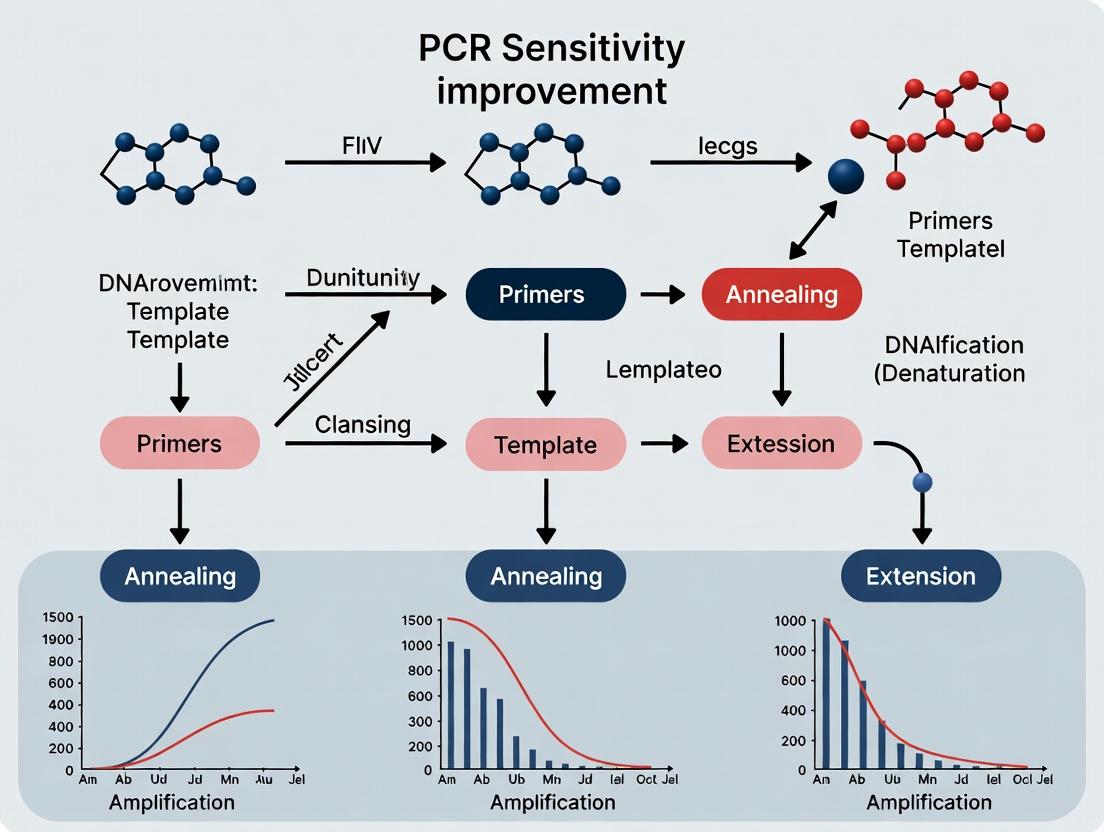
This comprehensive guide explores advanced methodologies for maximizing Polymerase Chain Reaction (PCR) sensitivity, a critical parameter for researchers, scientists, and drug development professionals.
10 Advanced PCR Sensitivity Improvement Techniques: From Fundamentals to Cutting-Edge Applications in Research & Diagnostics
Abstract
This comprehensive guide explores advanced methodologies for maximizing Polymerase Chain Reaction (PCR) sensitivity, a critical parameter for researchers, scientists, and drug development professionals. We cover the foundational principles defining sensitivity and detection limits, delve into practical laboratory techniques—including template, enzyme, and cycling optimizations—and address common troubleshooting pitfalls. The article provides a comparative analysis of validation strategies and novel technologies, such as digital PCR and multiplex assays, equipping readers with a holistic framework to enhance detection of low-abundance targets in fields like oncology, microbiology, and early disease diagnostics.
Understanding PCR Sensitivity: Core Principles, Detection Limits, and Why It Matters
Defining Analytical Sensitivity (Limit of Detection) vs. Diagnostic Sensitivity
Technical Support Center: Troubleshooting PCR Sensitivity Experiments
Welcome to the PCR Sensitivity Improvement Technical Support Center. This resource, framed within ongoing research into PCR sensitivity enhancement techniques, provides troubleshooting guidance for common experimental challenges.
FAQs & Troubleshooting Guides
Q1: Our standard curve shows high efficiency, but we consistently fail to detect low-copy targets near the claimed Limit of Detection (LoD). What are the primary areas to investigate? A: This discrepancy between theoretical and practical analytical sensitivity is common. Follow this systematic guide:
- InhibitOR Check: Perform a spike-recovery experiment. Spike a known low quantity of target (near the LoD) into your sample matrix and extract/amplify it alongside a neat standard. Recovery of <90% suggests inhibition.
- Master Mix Homogeneity: Ensure the master mix is thoroughly mixed before aliquoting. Small pipetting variations in component concentration are magnified at the limit.
- Thermocycler Calibration: Verify well-to-well temperature uniformity using a thermal gradient block with a probe-based dye. Variation >0.5°C can significantly impact low-copy amplification.
- Nuclease Contamination: Use dedicated, UV-treated workspaces and RNase/DNase inactivation reagents for one-step RT-PCR.
Q2: How should we validate a new assay's Diagnostic Sensitivity for a pathogen when reference samples with very low viral loads are scarce? A: Use a Probit Analysis protocol with a characterized reference material.
- Protocol: Prepare a serial dilution of the target nucleic acid (e.g., from a plasmid or synthetic oligonucleotide) in a matrix mimicking clinical sample (e.g., saliva, blood). Run a minimum of 20 replicates per dilution across the expected LoD. Record the positive/negative result for each replicate.
- Analysis: Use statistical software (e.g., R, SPSS) to perform Probit regression. The dilution at which 95% of replicates are positive is the validated LoD. This analytically derived LoD informs the diagnostic sensitivity study's minimum inclusion threshold.
Q3: Our diagnostic sensitivity is lower than expected based on analytical studies. What sample-specific factors should we consider? A: Diagnostic sensitivity is affected by pre-analytical variables. Key checks:
- Sample Collection & Storage: Validate the type of swab, transport medium, and storage temperature/time. Some media inhibit PCR.
- Extraction Efficiency: Compare extraction yields from your sample type versus a clean standard using a spiked exogenous control (e.g., MS2 phage for RNA assays).
- Sequence Variability: Re-evaluate primer/probe binding regions against current strain databases. Mismatches, especially at the 3'-end of primers, disproportionately affect sensitivity.
Q4: When implementing a new polymerase for sensitivity improvement, the reaction fails entirely. What is the first-step troubleshooting? A: This points to buffer/component incompatibility. Re-optimize the following in a checkerboard assay:
- Magnesium ion concentration (typical range: 1.5–5.0 mM).
- Annealing/Extension temperature (adjust based on polymerase's optimal processivity).
- Primer concentration (range: 100–900 nM each). Start with the manufacturer's recommended buffer and modify one variable at a time.
Table 1: Comparison of Analytical vs. Diagnostic Sensitivity
| Feature | Analytical Sensitivity (Limit of Detection) | Diagnostic Sensitivity |
|---|---|---|
| Definition | The lowest concentration of analyte that can be consistently detected (≥95% hit rate) in an ideal matrix. | The proportion of individuals with a disease who test positive (True Positive / (True Positive + False Negative)). |
| Primary Concern | Assay chemistry, instrument capability, technical precision. | Complete clinical workflow: sample collection, storage, extraction, and assay performance. |
| Matrix | Clean, defined buffer or synthetic sample. | Complex, variable clinical samples (e.g., blood, sputum, tissue). |
| Key Influencing Factors | PCR efficiency, polymerase fidelity, inhibitor absence, detector sensitivity. | Pre-analytical variability, pathogen integrity, host inhibitors, sequence variants, sample volume. |
| Typical Validation | Probit analysis with ≥20 replicates of serial dilutions. | Testing on well-characterized clinical panels from infected individuals. |
Table 2: Example Probit Analysis Data for LoD Determination
| Target Copy Number (per reaction) | Replicates Tested (n) | Positive Replicates | Detection Rate (%) |
|---|---|---|---|
| 100 | 20 | 20 | 100 |
| 50 | 20 | 20 | 100 |
| 20 | 20 | 19 | 95 |
| 10 | 20 | 15 | 75 |
| 5 | 20 | 8 | 40 |
| 1 | 20 | 3 | 15 |
| Calculated LoD (95% hit rate) | 18 copies/reaction |
Experimental Protocols
Protocol: Probit Analysis for Determining Analytical Sensitivity (LoD)
- Material Preparation: Prepare a stock solution of target nucleic acid with concentration verified by digital PCR or spectrophotometry. Serially dilute in the desired background matrix (e.g., nuclease-free water, negative human plasma) to cover a range from 100% to 0% expected detection.
- Replicate Testing: For each dilution level, perform a minimum of 20 independent PCR reactions. Each reaction should use freshly aliquoted dilution to avoid freeze-thaw artifacts.
- Run & Analyze: Perform amplification according to established assay conditions. Record CT values or positive/negative calls based on a predefined threshold.
- Statistical Analysis: Input the data (concentration vs. binary result) into a Probit analysis tool. The effective concentration at which 95% of responses are positive is the LoD.
Protocol: Evaluating Extraction Efficiency for Diagnostic Sensitivity
- Spike-In Control: Use a non-competitive exogenous control (e.g., Armored RNA, synthetic alien sequence) at a known concentration (C0).
- Sample Processing: Spike the control into your clinical sample matrix prior to extraction. Process through the full extraction protocol.
- Quantification: Quantify the recovered control (C1) using a separate, validated qPCR assay.
- Calculation: Calculate efficiency as (C1 / C0) * 100%. Consistent recovery >5% below the control's known LoD indicates extraction is a limiting factor for diagnostic sensitivity.
Visualizations
Diagram 1: PCR workflow with sensitivity factors
Diagram 2: Relationship between LoD and diagnostic sensitivity
The Scientist's Toolkit: Research Reagent Solutions
| Item | Function in Sensitivity Improvement |
|---|---|
| High-Fidelity Hot-Start Polymerase | Reduces non-specific amplification and primer-dimer formation, improving signal-to-noise ratio for low-copy targets. |
| Inhibitor-Resistant Polymerase Blends | Contains enhancers to withstand common clinical sample inhibitors (e.g., heparin, humic acid), preserving diagnostic sensitivity. |
| UNG/dUTP System | Prevents carryover contamination from previous amplicons, critical for maintaining assay integrity in high-throughput settings. |
| Synthetic Positive Control Templates | Precisely quantified molecules for robust standard curve generation and accurate LoD determination via Probit analysis. |
| Exogenous Internal Controls (IC) | Non-competitive spike-ins to monitor extraction efficiency and detect PCR inhibition in each individual reaction. |
| GC-Rich Enhancers/Betaine | Stabilizes DNA melting, aiding amplification through difficult secondary structures that can block polymerization. |
| Locked Nucleic Acid (LNA) Probes/Primers | Increases binding affinity and specificity for challenging targets, potentially lowering the detectable copy number. |
Technical Support Center: Troubleshooting PCR Performance
FAQs & Troubleshooting Guides
Q1: My PCR reaction consistently shows low yield. What are the primary factors to investigate?
A: Low yield is governed by the fundamental equation: Yield = [Template] × (1 + Efficiency)^(Cycles). Investigate these core factors:
- Template Integrity & Concentration: Degraded or insufficient template is a common cause. Verify concentration via spectrophotometry (A260/A280 ~1.8) and integrity via gel electrophoresis.
- Reaction Efficiency (< 90%): Primers (design, annealing temperature), Mg²⁺ concentration, and polymerase fidelity/processivity are key. Use a standardized optimization protocol.
- Cycle Number: Excessive cycles can plateau reactions and increase nonspecific products.
Q2: How do I diagnose and fix poor amplification efficiency?
A: Efficiency (E), calculated from a standard curve slope (E = 10^(-1/slope) - 1), is compromised by:
- Suboptimal Primer Design: Secondary structure, self-dimers, or mispriming. Use design software and validate with melting temperature (Tm) gradient PCR.
- Inhibitors in Template Prep: Heparin, phenol, or high salt. Re-purify template or dilute.
- Incorrect Annealing Temperature: Perform a thermal gradient (e.g., 50–65°C) to determine optimal Ta.
- Insufficient MgCl₂ Concentration: Mg²⁺ is a co-factor for polymerase. Titrate from 1.5 to 4.0 mM.
Table 1: Impact of Key Variables on PCR Efficiency and Yield
| Variable | Optimal Range | Effect on Efficiency (E) | Effect on Final Yield | Notes for Thesis Context |
|---|---|---|---|---|
| Mg²⁺ Concentration | 1.5 - 2.5 mM | Critical; ±0.5 mM can alter E by >20% | Exponential impact via E | Titration is essential for sensitivity in complex samples. |
| Annealing Temp (Ta) | Tm - 3°C to Tm +2°C | ~2% change in E per °C deviation from optimum | High impact on specificity/yield | Gradient optimization required for novel targets in drug dev. |
| Cycle Number | 25-40 cycles | Indirect; E decreases in later cycles due to [dNTP] depletion | Linear then plateau | Minimizing cycles preserves template for nested/sensitivity assays. |
| Polymerase Type | Hot-start, high-fidelity | Can improve E by 5-15% over standard Taq | Up to 10-fold yield increase | Key reagent for sensitive detection of low-frequency variants. |
| Template Quality | A260/A280 = 1.7-1.9 | Degraded template reduces effective [template] | Directly proportional | Foundational for all downstream sensitivity improvements. |
Table 2: Troubleshooting Common PCR Problems
| Symptom | Possible Cause 1 | Possible Cause 2 | Diagnostic Experiment | Fix |
|---|---|---|---|---|
| No Product | Template degradation | Primer binding site mismatch | Run positive control & template QC gel | Redesign primers; use fresh, high-integrity template |
| Low Yield | Low efficiency (E<0.9) | Suboptimal Mg²⁺ or Ta | Run standard curve for E; perform Mg²⁺/Ta gradient | Optimize reaction buffer; use touchdown PCR |
| Non-specific Bands | Ta too low | Primer dimers | Run no-template control (NTC); gradient PCR | Increase Ta; use hot-start polymerase; redesign primers |
| Smear | Excess template | Too many cycles | Titrate template (10^2-10^6 copies); reduce cycles | Optimize input; limit cycles to 30-35 |
Experimental Protocols
Protocol 1: PCR Efficiency Calculation via Standard Curve Objective: To quantitatively determine reaction efficiency (E) for sensitivity optimization.
- Prepare Template Dilutions: Create a 5-point, 10-fold serial dilution of a known positive template (e.g., 10^6 to 10^2 copies/µL).
- Run PCR: Amplify each dilution in triplicate using the candidate primer set and standard cycling conditions.
- Analyze Cq Values: Plot the log10(Template Concentration) against the mean Cq value for each dilution.
- Calculate Efficiency: Determine the slope of the linear regression line. Calculate E = 10^(-1/slope) - 1. Target E = 0.90-1.10 (90-110%).
Protocol 2: Magnesium Chloride (Mg²⁺) Optimization Titration Objective: To identify the optimal Mg²⁺ concentration for maximum specificity and yield.
- Master Mix Setup: Prepare a master mix containing all components except MgCl₂.
- Create Titration Series: Aliquot the master mix into 8 tubes. Add MgCl₂ from a stock solution to create final concentrations of: 1.0, 1.5, 2.0, 2.5, 3.0, 3.5, 4.0, and 5.0 mM.
- Run PCR: Amplify using a mid-range annealing temperature.
- Analysis: Run products on a 2% agarose gel. Identify the concentration yielding the brightest specific band with minimal background.
Visualizations
Title: Core Factors in the PCR Yield Equation
Title: PCR Efficiency & Yield Troubleshooting Logic
The Scientist's Toolkit: Research Reagent Solutions
Table 3: Essential Reagents for PCR Sensitivity Optimization
| Reagent / Material | Primary Function | Role in Thesis Context (Sensitivity Improvement) |
|---|---|---|
| Hot-Start DNA Polymerase | Inhibits activity until initial denaturation, reducing primer-dimer formation & non-specific amplification. | Critical. Enhances specificity and yield in early cycles, directly improving detection of low-abundance targets. |
| Ultra-Pure dNTP Mix | Provides balanced, contaminant-free nucleotide substrates for polymerization. | Reduces error rates and stochastic failure in limiting-template reactions, ensuring reliable sensitivity thresholds. |
| MgCl₂ Solution (Optimization Grade) | Essential co-factor for polymerase activity; concentration directly modulates enzyme fidelity and processivity. | Key optimization variable. Fine-tuning is required for each primer-template system to maximize efficiency (E). |
| PCR Additives (e.g., DMSO, Betaine) | Reduce secondary structure in GC-rich templates, lower strand separation temperature. | Enables robust amplification of difficult genomic regions (e.g., promoter regions) often encountered in drug target research. |
| Nuclease-Free Water | Solvent free of RNases, DNases, and PCR inhibitors. | Fundamental baseline control. Eliminates a major source of unexplained reaction failure and variable sensitivity. |
| qPCR Standard Curve Template | Known-copy-number template for generating a standard curve to calculate precise efficiency (E). | Provides the quantitative foundation for all sensitivity comparisons and absolute quantification claims in the thesis. |
Technical Support Center: Troubleshooting PCR Sensitivity
This support center is designed within the context of ongoing research into PCR sensitivity improvement techniques. The following guides address key bottlenecks that impact assay reliability, limit of detection (LOD), and quantitative accuracy.
FAQs & Troubleshooting Guides
Q1: Our qPCR standard curve shows high efficiency but poor replicate consistency at low template concentrations (<10 copies/µL). What is the cause and how can we mitigate it? A: This is a classic symptom of stochastic effects, where the Poisson distribution of template molecules leads to variable amplification. At very low copy numbers, the probability of a template molecule being present in any given reaction is not guaranteed.
- Mitigation Protocol:
- Increase Reaction Volume: Perform the reaction in a larger volume (e.g., 50 µL vs. 20 µL) to sample a larger portion of the nucleic acid extract.
- Technical Replicates: Perform a minimum of 8-10 technical replicates for low-concentration samples. Statistical analysis (e.g., using Poisson distribution models) can then provide a more accurate estimate of the true concentration.
- Digital PCR (dPCR): For absolute quantification at the limit of detection, consider using dPCR, which partitions the sample into thousands of individual reactions, effectively overcoming Poisson noise.
Q2: We suspect our sample extracts contain PCR inhibitors (e.g., heparin, humic acid, heme). How can we diagnose and remove them? A: Inhibition manifests as a reduction in amplification efficiency, increased Cq values, or complete amplification failure. A spike-recovery assay is the gold standard for diagnosis.
- Diagnostic & Clean-up Protocol:
- Spike-Recovery Assay:
- Prepare a known concentration of a control template (e.g., a synthetic oligonucleotide).
- Run two sets of reactions: one with the control template in water, and one with the control template spiked into your sample extract at the same concentration.
- A significant delay (ΔCq > 1) in the spiked sample indicates inhibition.
- Inhibitor Removal: Based on the inhibitor type, select one:
- Dilution: The simplest method. Diluting the sample reduces inhibitor concentration but also dilutes the target.
- Solid-Phase Reversible Immobilization (SPRI) Beads: Use a modified bead:buffer ratio (e.g., increase bead volume) to remove impurities more aggressively.
- Column-Based Purification with Inhibitor Removal Wash Buffers: Use kits specifically formulated for your sample type (e.g., soil, blood).
- Polymerase Selection: Use inhibitor-resistant polymerases (e.g., those engineered for forensic or plant applications).
- Spike-Recovery Assay:
Q3: How does template degradation (low quality) specifically affect different PCR assay types (e.g., long amplicon vs. short amplicon qPCR)? A: Template integrity is critical. Degradation (e.g., from nuclease activity or freeze-thaw cycles) fragments the DNA/RNA, affecting assays disproportionately.
Table 1: Impact of Template Degradation on PCR Assays
| Assay Type | Optimal Amplicon Length | Effect of Degraded Template | Diagnostic Signal |
|---|---|---|---|
| Standard qPCR | 80-150 bp | Moderate. Shorter amplicons are more tolerant. | Reduced yield, slightly elevated Cq. |
| Long-Amp PCR | >5 kb | Severe. Requires intact template. | Amplification failure or smeared bands. |
| Multiplex PCR | Varies | Severe. Differential degradation of targets skews results. | Dropout of larger amplicons in the multiplex. |
| Reverse Transcription PCR (RT-PCR) | N/A | Critical for RNA. Fragmented RNA leads to loss of primer binding sites. | Failed RT step, no Cq detectable. |
- Quality Assessment Protocol: Always check template quality prior to sensitive assays.
- DNA: Run on a 1% agarose gel. High-quality genomic DNA should appear as a single, high-molecular-weight band with minimal smearing.
- RNA: Use capillary electrophoresis (e.g., Bioanalyzer, TapeStation). The RNA Integrity Number (RIN) should be >7 for gene expression studies.
Q4: What are the best practices for handling low-abundance templates to minimize stochastic loss and contamination? A: Pre-PCR procedures are crucial. Implement a single-direction workflow.
(Title: Single-Direction PCR Workflow to Prevent Contamination)
- Key Protocol Steps:
- Physical Separation: Maintain separate rooms/areas for pre- and post-PCR work.
- Dedicated Equipment: Use separate pipettes, tips, and lab coats for each area.
- UV Irradiation: Irradiate benches and instruments with UV light before setup.
- Aliquot Reagents: Prepare master mix in a clean, UV-irradiated hood. Use Uracil-DNA Glycosylase (UDG) to carryover from previous PCR products.
- Include Controls: Always run a No-Template Control (NTC) and a positive control.
The Scientist's Toolkit: Research Reagent Solutions
Table 2: Essential Reagents for Overcoming PCR Bottlenecks
| Reagent / Material | Primary Function | Role in Mitigating Bottlenecks |
|---|---|---|
| Inhibitor-Resistant DNA Polymerase | Enzyme catalyzing DNA synthesis. | Tolerates common inhibitors (hemoglobin, humics, heparin) found in complex samples, improving reliability. |
| Single-Stranded Carrier RNA/DNA | Inert nucleic acids added to dilution buffers. | Prevents adsorption of low-concentration target to tube walls, reducing stochastic loss during sample handling. |
| UDG (Uracil-DNA Glycosylase) + dUTP | Enzymatic carryover prevention system. | Degrades PCR products from previous runs containing dUTP, preventing false positives from contamination. |
| SPRI (Solid-Phase Reversible Immobilization) Beads | Magnetic beads for nucleic acid purification. | Efficiently removes salts, proteins, and many inhibitors; ratio can be optimized for stringent clean-up. |
| PCR Grade BSA (Bovine Serum Albumin) | Protein additive to master mix. | Binds to and neutralizes a variety of inhibitors, stabilizing the polymerase and improving amplification efficiency. |
| Digital PCR (dPCR) Partitioning Reagents | Oil-surfactant mixes or chip-based systems. | Physically partitions sample to end-run Poisson noise, enabling absolute quantification at the single-molecule level. |
| RNase Inhibitors (e.g., Recombinant RNasin) | Proteins that inhibit RNase activity. | Protects low-abundance RNA templates from degradation during reverse transcription, preserving template quality. |
The Critical Role of Sensitivity in Low-Template Applications (ctDNA, Single-Cell, Pathogens)
Technical Support Center
Troubleshooting Guide: Common Low-Template PCR Issues
Q1: My ddPCR assay for ctDNA detection shows high rates of failed or inconclusive wells. What could be the cause and how can I resolve it? A: This is often due to suboptimal droplet generation or template input issues.
- Primary Cause: Improper sample viscosity or surfactant concentration affecting droplet stability.
- Solution: Ensure your sample is properly diluted in the recommended buffer (e.g., 1X TE, pH 8.0). Avoid high concentrations of salts, alcohols, or detergents. Vortex and centrifuge the droplet generation oil thoroughly before use. Verify droplet generator gaskets are clean and properly seated.
- Protocol: Droplet Quality Check: Generate droplets with a no-template control (NTC) and a known positive control. Analyze on the droplet reader. Acceptable droplets should be uniform in size (>10,000 events) and show clear separation between positive and negative populations for the positive control. Failed wells typically have <8,000 total events.
Q2: In single-cell whole genome amplification (WGA), I am observing high allele dropout and extreme coverage bias. What steps can improve uniformity? A: This points to inefficiencies in the initial cell lysis and strand displacement amplification steps.
- Primary Cause: Incomplete cell lysis or degradation of the genomic template during processing.
- Solution: Implement a two-step lysis process: first, a mild alkaline lysis to release DNA, followed by neutralization. Use a single-cell-specific polymerase with high processivity and strong strand displacement activity. Reduce the number of amplification cycles if possible.
- Protocol: Optimized Single-Cell WGA:
- Cell Lysis: Transfer single cell into 4 µL of lysis buffer (0.4 M KOH, 10 mM EDTA, 10 mM DTT). Incubate at 65°C for 10 min.
- Neutralization: Add 4 µL of neutralization buffer (0.4 M HCl, 0.6 M Tris-HCl, pH 7.5).
- Amplification: Add 12 µL of master mix containing isothermal amplification polymerase, dNTPs, and random primers. Incubate at 30°C for 4 hours, then 65°C for 10 minutes to inactivate the enzyme.
Q3: When detecting low-abundance pathogens via qPCR, my standard curve has poor efficiency and high Cq values, limiting sensitivity. How can I optimize it? A: This suggests PCR inhibition and/or primer-dimer formation are competing with the target amplicon.
- Primary Cause: Co-purified inhibitors from the sample matrix or non-specific primer interactions.
- Solution: Include an internal amplification control (IAC) to detect inhibition. Purify template using silica-membrane columns designed for inhibitor removal. Optimize primer annealing temperature using a gradient PCR and switch to a hot-start, inhibitor-resistant polymerase blend.
- Protocol: Inhibition Testing & Removal:
- Spike a known quantity of the IAC (a synthetic non-target sequence with primer binding sites) into every reaction.
- If the IAC Cq is delayed by >2 cycles compared to the NTC spike-in, inhibition is present.
- Perform a 1:5 and 1:10 dilution of the template to see if Cq improves (dilutes inhibitors). If yes, re-purify the sample using a column with a wash step containing an inhibitor-removal solution (e.g., based on guanidine thiocyanate).
Frequently Asked Questions (FAQs)
Q: What is the minimum input requirement for reliable ctDNA detection using NGS-based assays? A: While assays vary, most commercial ultra-deep sequencing panels require a minimum of 20-50 ng of circulating free DNA (cfDNA), derived from approximately 2-5 mL of plasma. The critical factor is the number of mutant molecules input, not just total mass. For a variant at 0.1% allele frequency, 50 ng of cfDNA (~16,000 haploid genomes) provides ~16 mutant molecules, which is near the practical limit for confident calling.
Q: How do I choose between digital PCR and targeted NGS for a low-template application? A: The choice depends on the need for absolute quantification vs. discovery.
Table 1: dPCR vs. Targeted NGS for Low-Template Analysis
| Feature | Digital PCR (ddPCR, cdPCR) | Targeted NGS (Ultra-Deep Sequencing) |
|---|---|---|
| Primary Strength | Absolute quantification, high precision for known variants | Multi-plexing, discovery of unknown variants |
| Sensitivity (LoD) | Can detect down to 0.001% AF (with sufficient input) | Typically 0.1% - 0.01% AF |
| Throughput | Lower (1-10 plex per well) | High (hundreds of targets per run) |
| Cost per Sample | Lower for single/few targets | Higher, but cost per target decreases with plex |
| Best For | Validating known low-frequency variants, rare pathogen detection | Screening for unknown mutations, complex resistance profiles |
Q: What are the key controls in a single-cell RNA-seq experiment to assess sensitivity? A: Essential controls include:
- External RNA Controls Consortium (ERCC) Spike-Ins: Known concentrations of synthetic RNAs added to the lysis buffer to calculate absolute sensitivity and technical noise.
- Empty Wells / No-Cell Controls: Identifies ambient RNA contamination.
- Bulk RNA Controls: A sample of many cells processed in parallel to benchmark data quality.
- Housekeeping Gene Expression: Check for consistent detection of genes like GAPDH, ACTB across cells.
Thesis Context: PCR Sensitivity Improvement Techniques
The troubleshooting scenarios above are directly addressed by ongoing research in PCR sensitivity, which focuses on three pillars:
- Pre-Amplification Fidelity: Maximizing template integrity and accessibility (e.g., optimized lysis, reduced degradation).
- Amplification Efficiency: Minimizing allelic bias and non-specific amplification through engineered enzymes and refined cycling.
- Background Suppression: Lowering systemic noise via partitioning (dPCR), improved optics, and advanced bioinformatics for NGS.
Experimental Protocols
Featured Protocol: Ultra-Sensitive Detection of Pathogens via Two-Stage Nested Digital PCR This protocol minimizes contamination risk while maximizing sensitivity for targets with extremely low copy numbers (e.g., latent viral DNA).
Materials:
- Purified sample DNA.
- Outer and inner primer sets, designed with >100 bp separation.
- Supermix for probe-based digital PCR.
- Droplet generator and reader.
- Thermal cycler with a heated lid.
Method:
- First-Round PCR (in tube):
- Set up a 20 µL reaction in a standard tube with outer primers only. Use 15-20 cycles.
- Purpose: To enrich the specific target region without pushing into the plateau phase.
- Dilution:
- Dilute the first-round product 1:100 in 1X TE buffer. This minimizes carryover of primers.
- Second-Round Digital PCR (in droplets):
- Use 1-5 µL of the diluted product as template for a standard probe-based ddPCR assay using the inner primers.
- Generate droplets and run PCR with an optimized annealing temperature.
- Analysis:
- Analyze droplets to determine the absolute copy number of the original target. Apply Poisson correction based on the dilution factor.
Visualization: Workflows and Pathways
Title: Nested Digital PCR Workflow
Title: Key Factors Affecting PCR Sensitivity
The Scientist's Toolkit: Research Reagent Solutions
Table 2: Essential Reagents for Low-Template PCR Applications
| Reagent / Material | Function in Low-Template Applications | Key Consideration |
|---|---|---|
| High-Fidelity, Hot-Start Polymerase | Reduces misincorporation errors and prevents primer-dimer formation during setup, critical for amplifying rare templates. | Look for blends with proofreading activity and high processivity for complex templates. |
| Single-Cell Lysis Buffer | Efficiently ruptures the cell and nuclear membrane while inactivating nucleases, without fragmenting DNA. | Should be compatible with downstream amplification; often contains detergent, proteinase K, or alkaline agents. |
| ERCC RNA Spike-In Mix | A set of synthetic RNAs at known concentrations used in single-cell RNA-seq to calibrate sensitivity, quantify technical noise, and detect amplification bias. | Must be added during cell lysis before any reverse transcription step. |
| Droplet Generation Oil & Surfactant | Creates a stable water-in-oil emulsion for digital PCR, partitioning individual template molecules. | Requires low viscosity and high uniformity for consistent droplet size and stability during thermal cycling. |
| Inhibitor-Resistance PCR Additives | Compounds (e.g., BSA, trehalose, specialized commercial blockers) that bind to or neutralize common PCR inhibitors found in clinical/environmental samples. | Can improve amplification efficiency but may require titration to avoid inhibiting the reaction itself. |
| Unique Molecular Identifiers (UMIs) | Short random nucleotide tags added to each template molecule before amplification. Enables bioinformatic correction of PCR duplication bias and errors in NGS. | Essential for quantifying absolute molecule counts in ultra-deep sequencing of ctDNA or single cells. |
Proven Laboratory Techniques to Boost PCR Signal: A Step-by-Step Guide
Troubleshooting Guides & FAQs
FAQ Section
Q1: My nucleic acid yield after a column-based clean-up is lower than expected. What are the common causes? A: Low recovery can stem from: 1) Incomplete Elution: Ensure elution buffer is pre-warmed (37-50°C) and incubated on the membrane for ≥1 minute. 2) Ethanol Carryover: Residual ethanol from wash steps inhibits elution. Centrifuge the empty column for an additional 1 minute prior to elution. 3) Overloading: Exceeding the column's binding capacity causes nucleic acid loss in the flow-through. 4) Sample Composition: High salt or EDTA in the starting sample can impede binding. Use a pre-wash or dilute the sample.
Q2: How do I choose between glycogen, linear polyacrylamide (LPA), and carrier RNA for my concentration protocol? A: The choice depends on downstream applications:
- Glycogen: Inert, cost-effective. Suitable for PCR, cloning, sequencing. Avoid if using spectrophotometry (absorbs at 230 nm) or enzymatic reactions sensitive to polyols.
- Carrier RNA (e.g., poly-A, MS2 RNA): Ideal for miRNA or low-abundance RNA studies, as it co-precipitates small RNAs efficiently. Must be RNase-free. Interferes with RNA quantification.
- Linear Polyacrylamide (LPA): Highly effective for precipitating very short fragments (<100 bp) and single-stranded DNA/RNA. Purified LPA does not inhibit PCR.
Q3: During ethanol precipitation, I cannot see a pellet. How should I proceed? A: An invisible pellet is common with low-concentration samples (<100 ng). Always mark the tube orientation before centrifugation. Carefully aspirate the supernatant without disturbing the presumed pellet location. Perform a 70-80% ethanol wash with the tube in the same orientation. After air-drying, resuspend in an appropriate, small-volume buffer.
Q4: My concentrated DNA shows inhibition in downstream PCR. How can I troubleshoot this? A: Inhibition often arises from carryover of contaminants. Steps include: 1) Assess Purity: Check A260/A230 ratio (<1.8 indicates guanidine, phenol, or glycogen carryover). 2) Perform a Dilution Test: Running PCR on a diluted template can overcome mild inhibition. 3) Use a Alternative Clean-up Method: Switch to silica column or SPRI bead-based clean-up for higher purity. 4) Change Carriers: Switch from glycogen to purified LPA.
Q5: What is the impact of different nucleic acid concentration methods on the limit of detection (LOD) in qPCR? A: The method critically impacts LOD. Inefficient recovery (<50%) of low-input templates can degrade LOD by over a cycle (2-fold loss). Carrier molecules can cause variable qPCR inhibition if not purified or standardized. Consistency in pre-processing is key for reproducible sensitivity.
Table 1: Recovery Efficiency of Common Concentration Methods
| Method | Typical Input Range | Average Recovery | Time (min) | Suitability for Low Abundance (<10 ng) |
|---|---|---|---|---|
| Ethanol Precipitation (with Carrier) | 1 ng - 1 mg | 50-85% | 60-90 | Moderate (Pellet loss high) |
| Isopropanol Precipitation | 1 ng - 1 mg | 40-70% | 60-90 | Poor (More salt co-precipitation) |
| Silica Column Clean-up | 10 ng - 100 µg | 70-90% | 15-20 | Good (Binding capacity limit) |
| SPRI Bead Clean-up | 100 pg - 10 µg | 80-95% | 20-30 | Excellent (Optimized buffers) |
| Centrifugal Filtration | 1 µg - 1 mg | 60-80% | 30-45 | Poor (Non-specific binding) |
Table 2: Impact of Carrier Molecules on Downstream Applications
| Carrier Type | Recommended Use | Potential Interference | Effect on qPCR (ΔCt)* |
|---|---|---|---|
| Glycogen (Molecular Grade) | DNA precipitation, cloning | Spectrophotometry (A230), some enzymes | +0.5 to +1.5 |
| Linear Polyacrylamide (Purified) | ssDNA, RNA, microRNAs | None if highly purified | +0.2 to +0.8 |
| Carrier RNA (e.g., Poly-A) | miRNA isolation, viral RNA | RNA-seq, quantification | +1.0 to +3.0 (inhibits) |
| Pellet Paint (Co-precipitant) | Visualizing pellets | Protein-binding assays | +0.5 to +1.0 |
*ΔCt = Increase in Ct value vs. no carrier control; can vary by formulation and concentration.
Experimental Protocols
Protocol 1: High-Efficiency Carrier-Enhanced Ethanol Precipitation for Trace Nucleic Acids Objective: Recover nucleic acids from dilute solutions (<10 ng/µL) for maximum yield in sensitivity-critical applications. Reagents: Sodium acetate (3M, pH 5.2), glycogen (20 mg/mL), absolute ethanol (ice-cold & room temp), 70% ethanol (ice-cold), nuclease-free water. Procedure:
- In a nuclease-free microcentrifuge tube, combine the nucleic acid sample, 1/10th volume sodium acetate, and 1 µL of glycogen (20 µg).
- Add 2.5 volumes of ice-cold absolute ethanol. Mix thoroughly by vortexing for 10 seconds.
- Incubate at -80°C for 30 minutes or -20°C overnight for maximum recovery.
- Centrifuge at ≥16,000 x g for 30 minutes at 4°C. Mark tube orientation.
- Carefully aspirate supernatant. Do not disturb the pellet (may be invisible).
- Add 500 µL of ice-cold 70% ethanol. Centrifuge at 16,000 x g for 5 minutes at 4°C.
- Aspirate supernatant completely. Air-dry pellet for 5-10 minutes (do not over-dry).
- Resuspend in desired volume of appropriate elution buffer (e.g., TE, nuclease-free water). Incubate at 55°C for 5 minutes to aid dissolution.
Protocol 2: Dual-Silica Column Clean-up for Inhibitor Removal Prior to Ultrasensitive PCR Objective: Remove PCR inhibitors (humic acids, heparin, phenol) from extracted nucleic acids to improve amplification efficiency. Reagents: High-salt binding buffer (e.g., guanidine HCl), wash buffer (ethanol-based), elution buffer (10 mM Tris-Cl, pH 8.5), two silica membrane columns. Procedure:
- Adjust nucleic acid sample volume to 100 µL with nuclease-free water.
- Add 500 µL of high-salt binding buffer and mix by pipetting.
- Load mixture onto the first silica column. Centrifuge at 11,000 x g for 1 minute. Discard flow-through.
- Add 700 µL of wash buffer to the column. Centrifuge at 11,000 x g for 1 minute. Discard flow-through.
- Centrifuge the empty column at 16,000 x g for 2 minutes to dry membrane.
- Elute DNA/RNA with 50 µL of warm elution buffer (65°C for DNA, 37°C for RNA) into a fresh tube.
- Repeat steps 2-6 using the eluate as the starting sample and the second fresh column.
- The final eluate is now highly purified and suitable for demanding downstream assays.
Visualization: Workflow Diagrams
Title: Nucleic Acid Pre-Processing Decision & Action Workflow
Title: Mechanism of Carrier Molecules in Improving Yield
The Scientist's Toolkit: Research Reagent Solutions
Table 3: Essential Reagents for Template Pre-Processing
| Item | Function & Rationale | Key Consideration for Sensitivity |
|---|---|---|
| Glycogen (Molecular Biology Grade) | Acts as an inert carrier to precipitate trace nucleic acids, providing a visible pellet. | Use only nuclease-free, highly purified forms to prevent PCR inhibition. |
| Linear Polyacrylamide (LPA) | Synthetic, highly effective co-precipitant for both short and long nucleic acids; does not interfere with enzymes. | Preferred over glycogen for miRNA, ssDNA, or when spectrophotometric quantification is needed. |
| Carrier RNA (e.g., Yeast tRNA, Poly-A) | Improves recovery of RNA, especially small RNAs, during alcohol precipitation. Protects against RNases. | Must be RNase-free. Can interfere with RNA quantification and some NGS library preps. |
| SPRI (Solid Phase Reversible Immobilization) Beads | Magnetic beads that bind nucleic acids in PEG/High-Salt; enable clean-up, size selection, and concentration. | Bead-to-sample ratio is critical for optimal recovery and size exclusion. |
| Silica Membrane Spin Columns | Bind nucleic acids under high-salt conditions; wash away impurities; elute in low-ionic strength buffer. | Elution buffer volume and temperature significantly impact final concentration. |
| 3M Sodium Acetate (pH 5.2) | Provides monovalent cations (Na+) necessary for ethanol precipitation of nucleic acids. | pH is critical for DNA/RNA integrity and optimal precipitation efficiency. |
| RNase/DNase-Inhibiting Elution Buffers | Low-EDTA TE buffer or Tris-based buffers stabilize nucleic acids post-purification. | For long-term storage of RNA, use RNase-free buffers at slightly acidic pH. |
Technical Support Center: Troubleshooting & FAQs
Context: This support content is part of a broader thesis research on PCR sensitivity improvement techniques, focusing on enzyme and additive optimization to overcome amplification barriers.
Frequently Asked Questions (FAQs)
Q1: My high-fidelity PCR yields are consistently low, even with ample template. What is the primary cause and solution? A: The 3’→5’ exonuclease proofreading activity of high-fidelity polymerases can mediate primer degradation, especially during slow ramp times or setup. Solution: Prepare reactions on ice, use a hot-start version of the high-fidelity enzyme, and initiate cycling immediately after placing the tube in the pre-heated (≥95°C) thermal cycler block. Adding BSA (0.1-1 µg/µL) can stabilize the enzyme.
Q2: I am amplifying a GC-rich target (>70%). Which polymerase and additives should I prioritize? A: For GC-rich targets, the primary challenge is secondary structure and high melting temperatures. Solution: Use a specialized GC-rich polymerase blend, which often includes a hot-start high-fidelity enzyme. Mandatory additives include Betaine (1-1.5 M final concentration) to lower strand separation temperature and DMSO (3-10%) to disrupt secondary structures. See Table 1 for a protocol.
Q3: How do I choose between a standard hot-start and a high-fidelity hot-start polymerase for sensitive detection (e.g., rare allele detection)? A: Sensitivity requires balancing fidelity with robust amplification from low-copy templates. Solution: For maximum sensitivity where sequence accuracy is critical (e.g., NGS library prep), use a high-fidelity hot-start polymerase. For maximum sensitivity with complex or difficult templates where ultimate fidelity is less critical, a standard robust hot-start polymerase may provide higher yields. Incorporate BSA and Betaine as universal enhancers. See Table 2 for comparison.
Q4: Non-specific bands and primer-dimer are persistent problems in my multiplex assay. I'm already using a hot-start enzyme. What next? A: Hot-start prevents premature activity, but non-specificity can persist from primer design or suboptimal cycling. Solution: 1) Optimize primer concentrations (typically 0.1-0.5 µM each). 2) Increase annealing temperature stepwise by 2°C increments. 3) Use a touchdown PCR protocol. 4) Add Betaine (0.5-1 M) to equalize primer-template melting temperatures. 5) Ensure Mg²⁺ concentration is optimized (often 1.5-3.0 mM).
Q5: Can I combine BSA and Betaine in the same reaction with any polymerase? A: Generally, yes. These additives work through different, non-interfering mechanisms. BSA stabilizes enzymes and sequesters inhibitors. Betaine is a kosmotrope that homogenizes DNA melting temperatures. Protocol: Start with standard polymerase buffer, then supplement with 0.1 µg/µL BSA and 0.5 M Betaine. Titrate upwards (Betaine to 1.5 M) if needed, as very high Betaine can inhibit some polymerases. Always refer to the manufacturer's guidelines.
Table 1: Optimized Protocol for GC-Rich Amplification
| Component | Final Concentration/Amount | Notes |
|---|---|---|
| Template DNA | 1-100 ng (genomic) | |
| High-Fidelity Hot-Start Polymerase | 1.25 units/50 µL | |
| dNTPs | 200 µM each | |
| Forward/Reverse Primer | 0.3 µM each | HPLC-purified |
| MgSO₄ (or MgCl₂) | 2.0 mM | Adjust per enzyme |
| Betaine (5M stock) | 1.0 M | Add 10 µL of 5M stock to 50 µL rxn |
| DMSO | 5% (v/v) | Add 2.5 µL to 50 µL rxn |
| BSA (20 mg/mL stock) | 0.2 µg/µL | Add 0.5 µL to 50 µL rxn |
| Cycling: Initial Denaturation | 98°C for 30 sec | |
| 35 cycles: Denature | 98°C for 10 sec | |
| Anneal/Extend | 72°C for 30 sec/kb | Use a combined step |
Table 2: Polymerase & Additive Performance Comparison
| Parameter | Standard Hot-Start Taq | High-Fidelity Hot-Start Polymerase | Notes |
|---|---|---|---|
| Fidelity (Error Rate) | ~1 x 10⁻⁵ errors/bp | ~1 x 10⁻⁶ errors/bp | Hifi is ~10x more accurate |
| Amplification Speed | Fast (1-4 kb/sec) | Moderate (15-30 sec/kb) | |
| Sensitivity (Low Copy) | High | Moderate to High | Standard Taq often more robust |
| GC-Rich Performance | Poor without additives | Good with additives | Betaine critical for both |
| Inhibitor Tolerance | Moderate | Low to Moderate | BSA dramatically improves both |
| Best Use Case | Routine PCR, genotyping | Cloning, sequencing, NGS | |
| Key Additive | BSA for inhibitor-rich samples | Betaine for complex templates | Use together for maximal effect |
Experimental Protocols
Protocol 1: Systematic Additive Titration for Difficult Templates Objective: To empirically determine the optimal concentration of BSA and Betaine for a specific problematic PCR assay.
- Prepare a master mix containing buffer, dNTPs, primers, polymerase, template, and water.
- Aliquot the master mix into 8 PCR tubes.
- Spike in additives to create the following matrix:
- Tubes 1-2: No additives (positive & negative control).
- Tubes 3-4: BSA only (0.1 µg/µL and 0.5 µg/µL).
- Tubes 5-6: Betaine only (0.5 M and 1.0 M).
- Tubes 7-8: BSA (0.1 µg/µL) + Betaine (0.5 M) and BSA (0.5 µg/µL) + Betaine (1.0 M).
- Run the optimized thermal cycling program.
- Analyze results via agarose gel electrophoresis for yield and specificity.
Protocol 2: Comparing High-Fidelity vs. Standard Hot-Start Sensitivity Objective: To establish the limit of detection (LOD) for each enzyme class in the context of rare variant detection.
- Prepare a serial dilution of target DNA (e.g., plasmid or genomic DNA) in a background of non-target DNA (e.g., 10⁶ to 10⁰ copies).
- For each dilution point, set up two identical reaction sets differing only in the polymerase: Set A (Standard Hot-Start Taq) and Set B (High-Fidelity Hot-Start).
- Include a fixed concentration of BSA (0.1 µg/µL) in all reactions.
- Perform amplification with 40-45 cycles.
- Use a sensitive detection method (e.g., SYBR Green qPCR) to determine the Cq value for each reaction. The LOD is the lowest copy number yielding a consistent Cq value.
Visualizations
Title: Decision Tree for Polymerase and Additive Selection
Title: PCR Optimization Workflow for Sensitivity Improvement
The Scientist's Toolkit: Research Reagent Solutions
| Reagent | Primary Function | Key Consideration for Sensitivity |
|---|---|---|
| High-Fidelity Hot-Start Polymerase | Provides 3’→5’ exonuclease proofreading for accurate amplification; hot-start mechanism prevents non-specific priming. | Essential for downstream sequencing. May have slower extension rates. |
| Standard Hot-Start Polymerase | Robust amplification with minimal non-specific product formation at start. | Often higher processivity and yield from difficult/low-copy templates than HiFi enzymes. |
| Molecular Biology Grade BSA | Stabilizes polymerase, binds inhibitors (e.g., polyphenols, humic acids) common in extracted samples. | Critical for sensitivity with crude templates (e.g., blood, soil). Use nuclease-free, acetylated BSA. |
| Betaine (5M stock solution) | Equalizes melting temperatures of DNA by destabilizing GC pairs and stabilizing AT pairs. Reduces secondary structure. | Enables amplification of high-GC targets. Can inhibit some polymerases at very high (>1.5M) concentrations. |
| DMSO | Disrupts secondary structure in DNA templates and primers by interfering with hydrogen bonding. | Use at 3-10%. Can reduce polymerase activity; requires titration. |
| Mg²⁺ Solution (MgCl₂/MgSO₄) | Essential cofactor for polymerase activity. Concentration dramatically affects primer annealing and product specificity. | Optimal concentration is enzyme and template-specific. Titrate from 1.0-4.0 mM in 0.5 mM steps. |
| PCR Enhancer Cocktails | Commercial blends often containing proprietary combinations of stabilizing agents, crowding agents, and co-solvents. | Useful for standardized workflows with persistently difficult templates. Can be expensive. |
Primer/Probe Design Optimization for Specificity and Efficiency
Troubleshooting Guides & FAQs
Q1: My qPCR assay has high fluorescence in the No-Template Control (NTC). What could be the cause and how do I fix it? A: This indicates primer-dimer formation or non-specific amplification. Remedies include:
- Increase annealing temperature: Raise by 2-3°C increments.
- Optimize primer concentration: Lower primer concentration (e.g., from 500 nM to 100-200 nM) to reduce dimer likelihood.
- Redesign primers: Check for 3'-end complementarity. Use design software to evaluate dimer and hairpin formation.
- Use a hot-start polymerase: Prevents enzyme activity during reaction setup.
Q2: My amplification curve has a late Ct (low efficiency). How can I improve it? A: Low efficiency (<90% or >110%) suggests poor primer/probe binding or reaction conditions.
- Verify primer specificity: Perform an in silico PCR/BLAST search against the target genome to ensure no off-target binding.
- Check amplicon length: Optimal length for qPCR is 80-150 bp. Longer products amplify less efficiently.
- Optimize Mg²⁺ concentration: Titrate MgCl₂ (1.5 mM to 4 mM) as it critically affects polymerase fidelity and yield.
- Check probe integrity: Ensure the probe is not degraded and its Tm is 8-10°C higher than the primers.
Q3: How do I resolve inconsistent replicate results (high variation between technical replicates)? A: This points to pipetting errors, template quality, or inhibitor presence.
- Centrifuge all tubes before use: Ensures reagents are at the bottom.
- Prepare a master mix: Minimizes pipetting variation.
- Check template purity: Assess A260/A280 ratio (ideal: ~1.8 for DNA, ~2.0 for RNA). Re-purify if contaminated.
- Dilute template: Dilution can minimize the impact of PCR inhibitors present in the sample.
Q4: What steps ensure my primers/probes are specific to my target splice variant or SNP? A: Specificity is critical for the thesis research on sensitivity improvement.
- Place the probe over the exon-exon junction or SNP site: This prevents amplification of genomic DNA or non-target variants.
- Design primers spanning junctions: For splice variants, place one primer across an exon-exon junction.
- Utilize locked nucleic acid (LNA) probes: Incorporate LNA bases into probes or primers to increase Tm and discriminatory power for SNPs.
- Validate with BLAST: Use the "Search for short, nearly exact matches" option in NCBI BLAST.
Experimental Protocols
Protocol 1: In Silico Specificity Validation
- Obtain the target sequence (FASTA format).
- Input sequences into design software (e.g., Primer-BLAST, NCBI).
- Set parameters: Tm 58-60°C, length 18-22 bp, GC% 40-60%, amplicon size 80-150 bp.
- Run the primer-BLAST function against the appropriate genomic database (e.g., RefSeq mRNA).
- Analyze output. Reject any primer pair with significant off-target homology (>80% over >10 bp, especially at 3' end).
Protocol 2: Primer/Probe Concentration Optimization Matrix
- Prepare a master mix containing all reagents except primers and probe.
- Vary forward/reverse primer concentrations (50, 100, 200, 400 nM) and probe concentrations (50, 100, 200 nM) in a matrix.
- Run qPCR with a standardized template (e.g., 10⁴ copies).
- Analyze results for the combination yielding the lowest Ct and highest ΔRn (fluorescence), with minimal NTC signal.
Table 1: Example Optimization Matrix Results (Ct Values)
| Probe (nM) | Primer 50 nM | Primer 100 nM | Primer 200 nM | Primer 400 nM |
|---|---|---|---|---|
| 50 nM | 28.5 | 27.1 | 26.8 | 26.9 |
| 100 nM | 27.9 | 26.3 | 26.5 | 26.7 |
| 200 nM | 27.8 | 26.5 | 26.6 | 27.0 |
Optimal combination highlighted.
Diagrams
Title: Primer/Probe Design Optimization Workflow
Title: Common PCR Inhibition Pathways
The Scientist's Toolkit: Research Reagent Solutions
| Item | Function in Primer/Probe Optimization |
|---|---|
| Hot-Start DNA Polymerase | Prevents non-specific amplification and primer-dimer formation prior to thermal cycling, improving specificity. |
| dNTP Mix | Provides the nucleotide building blocks for DNA synthesis. Balanced concentrations are critical for fidelity. |
| MgCl₂ Solution | Cofactor for polymerase activity. Optimal concentration is crucial for efficiency and specificity; requires titration. |
| qPCR Probe (e.g., TaqMan) | Sequence-specific oligonucleotide labeled with fluorophore/quencher. Provides real-time detection and enhances specificity. |
| LNA (Locked Nucleic Acid) Probes | Modified nucleotides that increase probe Tm and binding affinity, allowing for shorter, more discriminatory probes for SNPs. |
| PCR Grade Water (Nuclease-Free) | Solvent for all reagents; ensures no contaminating nucleases degrade primers/probes. |
| Universal qPCR Master Mix | Pre-mixed optimized solution containing buffer, polymerase, dNTPs, and Mg²⁺. Reduces variability and setup time. |
| Standardized DNA Template (GDNA) | High-quality genomic DNA with known target copy number, used as a positive control and for efficiency calculations. |
Technical Support Center
Troubleshooting Guides & FAQs
Q1: My touchdown PCR yields no product or smeared bands. What could be wrong? A: This is often due to an insufficient starting annealing temperature or too rapid a decrement per cycle. Ensure your highest initial annealing temperature is 1-2°C above the calculated Tm of your primers. The decrement should typically be 0.5-1°C per cycle for the first 10-15 cycles. Also, verify template quality and concentration.
Q2: During nested PCR, I get a strong product after the first round, but nothing after the second. A: This usually indicates carryover inhibition. Dilute the first-round product 1:100 to 1:1000 before using it as template for the second round. This reduces the concentration of primers, dNTPs, and polymerase inhibitors from the first reaction. Also, ensure the second-round primer binding sites are intact and that you are using a fresh, optimized master mix.
Q3: How do I implement heuristic PCR when I have no prior information about primer annealing conditions? A: Start with a broad thermal gradient PCR (e.g., 45-65°C) using a standard protocol. Analyze the results to identify the temperature range where product formation initiates. Then, design a heuristic protocol that starts 5°C below the lowest temperature where product was observed and increases by 0.5°C every other cycle for 10-12 cycles, followed by standard cycling.
Q4: All my advanced PCR protocols show high non-specific background. How can I improve specificity? A: Consider incorporating a "hot-start" polymerase to prevent primer-dimer formation during reaction setup. Increase the annealing temperature in the final cycling phase of your touchdown protocol. For nested PCR, ensure the inner primers are highly specific and consider using a different buffer formulation with additives like DMSO (3-5%) or betaine (1-1.5 M) to enhance stringency.
Q5: My PCR sensitivity is inconsistent between replicates with heuristic cycling. A: Heuristic PCR is sensitive to small variations in thermal block uniformity. Calibrate your thermocycler block regularly. Ensure master mix is thoroughly homogenized before aliquoting. Switch to a polymerase with proven high processivity and fidelity for difficult templates. Implement careful positive and negative controls for every run.
Table 1: Comparison of Advanced PCR Protocol Performance Metrics
| Protocol | Typical Sensitivity Increase vs. Standard PCR | Optimal Use Case | Key Risk |
|---|---|---|---|
| Touchdown PCR | 10-100 fold | Amplification of known templates with suboptimal primers; multiplex PCR | Primer-dimer formation if initial T_a is too low. |
| Nested PCR | 100-10,000 fold | Detection of low-abundance targets (e.g., pathogens, rare transcripts). | High contamination risk from amplicon carryover. |
| Heuristic PCR | 50-1000 fold (target-dependent) | Novel template amplification with unknown optimal annealing conditions. | Protocol optimization is empirical and time-consuming. |
Table 2: Recommended Reagent Additives for Specific Issues
| Issue | Additive | Typical Concentration | Mechanism |
|---|---|---|---|
| High GC Content | DMSO | 3-10% | Reduces secondary structure, lowers DNA melting T. |
| Betaine | 1-1.5 M | Equalizes base-stacking contributions, prevents hairpins. | |
| Long Amplicons (>5kb) | PCR Enhancers (e.g., PEG) | Varies by product | Stabilizes polymerase, crowds reaction. |
| Low Specificity | Formamide | 1-5% | Increases stringency, destabilizes mismatched primers. |
| Difficult Templates | Single-Stranded Binding Protein (SSB) | 0.1-0.5 µg/µL | Binds ssDNA, prevents reannealing, blocks polymerase stalling. |
Experimental Protocols
Protocol 1: Standard Touchdown PCR Setup
- Prepare a 25-50 µL reaction mix containing: 1x reaction buffer, 200 µM each dNTP, 0.2-0.5 µM each primer, 1-2 units of hot-start DNA polymerase, and template DNA.
- Initial Denaturation: 95°C for 3-5 min.
- Touchdown Cycles (10-15 cycles): Denature at 95°C for 30 sec. Anneal starting at 65°C (or 2°C above calculated Tm) for 30 sec, decreasing by 0.5°C per cycle. Extend at 72°C for 1 min/kb.
- Standard Cycles (20-25 cycles): Denature at 95°C for 30 sec. Anneal at the final touchdown temperature (e.g., 55°C) for 30 sec. Extend at 72°C for 1 min/kb.
- Final Extension: 72°C for 5-10 min.
Protocol 2: Two-Step Nested PCR for Low-Copy Detection Round 1:
- Use outer primer pair (20-25 bp, designed to amplify a larger region).
- Perform 25-30 cycles of standard PCR with annealing temperature optimized for the outer primers.
- Analyze 5 µL of product on a gel. If a band of expected size is visible (even faint), proceed. Round 2:
- Dilute the first-round product 1:100 in nuclease-free water.
- Use 1-2 µL of the dilution as template in a fresh reaction mix containing the inner primer pair (designed to bind within the first amplicon).
- Perform 25-30 cycles of standard PCR with annealing temperature optimized for the inner primers (typically higher stringency than round 1).
Protocol 3: Heuristic PCR Protocol Development
- Initial Gradient Scan: Perform a standard PCR with a thermal gradient from 40°C to 68°C over 12 wells. Use 35 cycles.
- Analysis: Identify the "critical annealing temperature" (Tc) – the lowest temperature that produces the correct specific product.
- Heuristic Program Design:
- Initial Denaturation: 95°C for 3 min.
- Phase 1 (Search): 10 cycles of [95°C for 30 sec, (Tc - 5°C) + (0.5°C * cycle number) for 45 sec, 72°C for 1 min/kb].
- Phase 2 (Amplify): 25 cycles of [95°C for 30 sec, Tc for 45 sec, 72°C for 1 min/kb].
- Final Extension: 72°C for 5 min.
The Scientist's Toolkit: Research Reagent Solutions
| Item | Function in Advanced PCR |
|---|---|
| Hot-Start DNA Polymerase | Polymerase is inactive until a high-temperature step, preventing non-specific priming and primer-dimer formation during reaction setup. Essential for touchdown and heuristic PCR. |
| High-Fidelity Polymerase Mix | Contains a proofreading enzyme to reduce error rates during amplification. Critical for cloning applications post-nested or heuristic PCR. |
| PCR Additive Kits (e.g., GC Enhancer) | Pre-mixed formulations of DMSO, betaine, or other agents to overcome amplification obstacles like high secondary structure or GC-rich regions. |
| Nuclease-Free Water & Tubes | Eliminates RNase and DNase contamination, which is paramount for sensitive nested PCR to prevent template degradation and false negatives. |
| dNTP Mix (25 mM each) | Provides balanced, high-quality nucleotide substrates for efficient elongation, crucial for reliable amplification in low-template scenarios. |
| Molecular Grade Bovine Serum Albumin (BSA) | Stabilizes the polymerase, neutralizes common inhibitors (e.g., phenols, polyphenols) often found in complex biological samples. |
Visualizations
Title: Touchdown PCR Temperature Cycling Logic
Title: Nested PCR Two-Round Amplification Workflow
Title: Heuristic PCR Protocol Development Path
Troubleshooting Guides & FAQs
Q1: My PCR yield is consistently low despite using recommended protocols. Where should I start troubleshooting the reaction chemistry? A1: Begin with a systematic check of the three core pillars: Mg²⁺ concentration, dNTP quality, and enhancer presence. Perform a Mg²⁺ titration (e.g., 1.0 mM to 4.0 mM in 0.5 mM increments) as it is the most common variable. Concurrently, verify the age and storage conditions (-20°C, pH 7.0) of your dNTP stock. Low yield is frequently linked to suboptimal Mg²⁺ or hydrolyzed dNTPs.
Q2: How do I determine the optimal MgCl2 concentration for a novel PCR assay? A2: Execute a titration experiment. Prepare a master mix containing all components except Mg²⁺. Aliquot the master mix and supplement with MgCl₂ to final concentrations spanning 1.0 mM to 5.0 mM. Include a no-template control for each concentration. Analyze the amplicon yield and specificity via gel electrophoresis. The optimal concentration provides the highest specific yield with minimal non-specific products.
Q3: What are the definitive signs of degraded dNTPs, and how does this impact PCR sensitivity? A3: Signs include: 1) Failed PCR even with previously working primers/template, 2) High molecular weight smearing on gels due to misincorporation, and 3) Reduced amplification efficiency quantified by qPCR (e.g., a >2 cycle delay in Cq). Degraded dNTPs (e.g., from repeated freeze-thaw cycles or neutral pH shift) directly reduce the effective concentration of available, correct nucleotides, starving the polymerase and drastically lowering sensitivity and fidelity.
Q4: When should I consider adding PCR enhancers, and which one should I choose? A4: Consider enhancers when troubleshooting Mg²⁺ and dNTPs does not resolve issues with: 1) GC-rich targets (>70%), 2) Long amplicons (>5 kb), 3) Complex genomic DNA templates, or 4) Consistent primer-dimer formation. Choice is empirical. Start with DMSO (2-10% v/v) for GC-rich regions or betaine (1-1.5 M) for secondary structure resolution. Test singly before combining.
Q5: My positive control works, but my sample reactions fail. Could this be due to dNTP-Mg2+ interplay? A5: Yes. Sample impurities (e.g., EDTA, heparin, salts) can chelate Mg²⁺ ions or alter reaction pH, effectively reducing free Mg²⁺ concentration below the optimal window. This underscores the need for sample cleanup or adjusting Mg²⁺ concentration specifically for complex samples, as the optimal level may be higher than for your clean control reaction.
Table 1: Effect of MgCl2 Concentration on PCR Yield and Fidelity
| [MgCl2] (mM) | Relative Yield (%) | Non-specific Banding | Recommended Use Case |
|---|---|---|---|
| 1.0 | 15 | None | Very simple templates, risk of primer-dimer |
| 1.5 | 65 | Low | Standard protocols, high-fidelity mixes |
| 2.0 | 100 (Optimal) | Minimal | Most common optimal point |
| 3.0 | 90 | Moderate | For samples with chelators |
| 4.0 | 50 | High | Not generally recommended |
| 5.0 | 10 | Very High | Avoid; inhibits Taq polymerase |
Table 2: Impact of dNTP Quality on qPCR Efficiency
| dNTP Condition | Freeze-Thaw Cycles | Cq Value Shift (ΔCq) | Calculated Efficiency (%) | Observation |
|---|---|---|---|---|
| Fresh Aliquot | 0 | 0.0 | 98.5 | Optimal, sharp curve |
| Improper Storage | >5 | +1.8 | 85.2 | Reduced slope, lower RFU |
| Contaminated/Hydrolyzed | N/A | >+3.0 or Failure | <75 | Curve plateau low, often fails |
Experimental Protocols
Protocol 1: Mg²⁺ Optimization Titration
- Prepare a 2X Master Mix (without Mg²⁺): Combine per reaction: 1X Buffer (Mg²⁺-free), 0.2 mM of each dNTP, 0.5 µM forward/reverse primers, 0.5 U/µL DNA polymerase, nuclease-free water.
- Prepare MgCl₂ Stocks: Dilute 25 mM MgCl₂ stock to create working solutions that will yield final concentrations of 1.0, 1.5, 2.0, 2.5, 3.0, 3.5, 4.0, and 5.0 mM when added.
- Set Up Reactions: Aliquot 15 µL of the 2X master mix into each tube. Add 10 µL of the respective MgCl₂ working solution. Add 5 µL template DNA (10-50 ng). Include a no-template control for one Mg²⁺ level.
- Run PCR: Use standard cycling conditions for your target.
- Analyze: Perform agarose gel electrophoresis (2%) or use qPCR analysis to quantify yield and specificity.
Protocol 2: dNTP Quality Control Check
- Spectrophotometric Analysis: Measure the absorbance of the dNTP stock solution at 260 nm (A₂₆₀) and 280 nm (A₂₈₀). The A₂₆₀/A₂₈₀ ratio should be ~0.8. A significantly higher ratio suggests hydrolysis.
- Functional PCR Test: Set up identical PCR reactions using a standard, robust control template and primer set. Compare performance of the suspect dNTP stock against a freshly purchased, validated dNTP stock. Use optimized Mg²⁺ conditions.
- pH Check (Critical): Use a pH strip (range 6.0-8.0). Spot 1 µL of dNTP stock. The color should indicate a pH of ~7.0. A shift towards acidic (yellow) indicates significant degradation.
Diagrams
PCR Chemistry Troubleshooting Logic Flow
Mg²⁺ and dNTP Biochemical Interplay in PCR
The Scientist's Toolkit: Research Reagent Solutions
Table 3: Essential Reagents for PCR Chemistry Optimization
| Reagent | Function in Optimization | Key Consideration |
|---|---|---|
| MgCl₂ (25 mM stock) | The essential cofactor for Taq polymerase. Optimal concentration is template- and primer-specific. | Use a certified nuclease-free, PCR-grade stock. Titration is mandatory for new assays. |
| PCR-Grade dNTP Mix | Provides the nucleotide building blocks. Quality directly impacts fidelity and efficiency. | Aliquot upon arrival, store at -20°C in neutral pH buffer. Avoid >5 freeze-thaw cycles. |
| DMSO (100%) | Enhancer that reduces secondary structure in GC-rich templates by lowering melting temperature. | Typical working range 2-10%. Higher concentrations can inhibit polymerase. |
| Betaine (5M stock) | Enhancer that equalizes the melting temperature of AT and GC base pairs, aiding in denaturation. | Common final concentration is 1-1.5 M. Can be combined with DMSO for tough templates. |
| Mg²⁺-Free PCR Buffer (10X) | Provides the core ionic environment (Tris, KCl) without locking in Mg²⁺ concentration. | Enables precise, independent optimization of Mg²⁺ levels. |
| High-Fidelity DNA Polymerase | Enzyme with proofreading (3'→5' exonuclease) activity for long or high-fidelity amplification. | Often requires different, specific Mg²⁺ and buffer conditions than standard Taq. |
| qPCR Master Mix (with ROX) | For quantitative analysis of optimization results (Cq, efficiency, curve shape). | Choose a mix compatible with your instrument. ROX is a passive reference dye for normalization. |
Diagnosing and Solving Common PCR Sensitivity Problems
Identifying and Eliminating PCR Inhibitors (Phenols, Heparin, Humic Acids)
Technical Support Center & Troubleshooting Hub
This resource, part of a thesis on PCR sensitivity improvement techniques, provides targeted solutions for common PCR inhibition issues.
Troubleshooting Guides & FAQs
Q1: My PCR yields no product or a faint smear on the gel. I suspect phenol contamination from a manual nucleic acid extraction. What is the fastest diagnostic test? A: Perform a dilution series of your template. Prepare PCR reactions with undiluted, 1:10, and 1:100 template dilutions. If the higher dilutions produce a strong amplicon while the undiluted does not, inhibition (e.g., by phenol or chaotropic salts) is confirmed. Phenol co-precipitates with nucleic acids in ethanol-based precipitations if the pH is acidic (<7.8).
Q2: My patient plasma samples, collected in heparinized tubes, consistently fail in qPCR. How can I reverse heparin inhibition? A: Heparin is a strong polyanionic inhibitor. Treat your nucleic acid extract with heparinase I. Protocol: Add 1 µL of heparinase I (1 U/µL) per 10 µL of DNA/RNA eluate. Incubate at 25°C for 2 hours, followed by enzyme inactivation at 65°C for 15 minutes. Use the treated eluate directly in PCR. Alternatively, use a silica-column based purification kit designed for plasma, which effectively removes heparin.
Q3: I am working with soil/extreme environment samples. Humic acids give my DNA extract a brownish tint and inhibit PCR. What purification methods are most effective? A: Standard silica columns often fail. Use inhibitors-commercial kits containing adsorption polymers like polyvinylpyrrolidone (PVP) or chitosan. A lab-effective method is gel filtration: Protocol: Pack a column with Sephadex G-200. Load your DNA extract (≤10% of column volume). Elute with TE buffer or nuclease-free water. Collect the first clear fraction (contains DNA), leaving the colored humic acids in the column matrix.
Q4: I added Bovine Serum Albumin (BSA) to my reactions, but my amplification efficiency in sensitive assays dropped. Why? A: While BSA (0.1-0.8 µg/µL) often neutralizes inhibitors by binding them, commercial BSA can be contaminated with trace nucleases or IgG. Always use molecular biology-grade, PCR-tested, acetylated BSA. If efficiency drops, titrate the BSA concentration (test 0.1, 0.4, 0.8 µg/µL) and ensure it is added before the polymerase during master mix assembly.
Table 1: Common PCR Inhibitors and Mitigation Strategies
| Inhibitor | Common Source | Primary Mechanism | Diagnostic Test | Primary Remediation Method | Optimal Additive/Reagent |
|---|---|---|---|---|---|
| Phenolic Compounds | Plant tissues, manual extraction | Denature polymerase, disrupt DNA | Template dilution series (see Q1) | Re-purify with silica column at pH >7.8; Chloroform wash | PVP (1-2%), BSA (0.4 µg/µL) |
| Heparin | Clinical plasma/serum (green-top tubes) | Binds polymerase and cations | Spiking with internal control | Heparinase I treatment; Ion-exchange column | Spermidine (0.1-1 mM) |
| Humic Acids | Soil, sediment, peat | Mimics DNA, intercalates polymerase | Absorbance A230/A260 ratio >2 | Gel filtration (Sephadex); Kit with adsorption polymer | T4 Gene 32 Protein (0.5-1 µg/µL) |
| Hemoglobin/Heme | Blood, tissue lysates | Binds Mg2+, inhibits polymerase | Visual pink color in extract | Dilution (1:10-1:50); Silica column wash with ethanol >80% | BSA (0.8 µg/µL), Mg2+ boost (0.5-1 mM extra) |
| IgG | Serum, monoclonal preps | Binds single-stranded DNA | Inhibition persists after column purification | Proteinase K digest post-extraction; Heat treatment (95°C, 10 min) | Proteinase K (post-extraction), Lambda T4 SSB |
Detailed Experimental Protocols
Protocol 1: Diagnostic Dilution Assay for Inhibition
- Prepare a standard PCR master mix.
- Aliquot equal volumes into four tubes.
- Add (1) no template (NTC), (2) undiluted test DNA, (3) test DNA diluted 1:10, (4) test DNA diluted 1:100.
- Run PCR. If amplification is strong only in diluted samples, inhibition is present.
Protocol 2: Heparinase I Treatment for Plasma-Derived DNA
- To 10 µL of eluted DNA, add 1.2 µL of 10x heparinase I buffer and 1 µL of heparinase I (1 U/µL).
- Incubate at 25°C for 2 hours.
- Heat-inactivate at 65°C for 15 minutes.
- Use up to 10 µL of this mixture per 25 µL PCR.
Protocol 3: Sephadex G-200 Spin Column for Humic Acid Removal
- Hydrate Sephadex G-200 in TE buffer overnight at 4°C.
- Pack a 1 mL syringe barrel with glass wool, then fill with hydrated Sephadex.
- Centrifuge column in a 15 mL tube at 500 x g for 2 min to pack.
- Place column in a clean 1.5 mL tube. Load DNA sample (≤100 µL).
- Centrifuge at 500 x g for 2 min. The eluate in the tube is purified DNA.
Visualization: Workflow for Diagnosing and Overcoming PCR Inhibition
Title: PCR Inhibition Diagnostic and Remediation Workflow
The Scientist's Toolkit: Research Reagent Solutions
Table 2: Essential Reagents for Inhibitor Mitigation
| Reagent | Primary Function | Typical Working Concentration | Notes |
|---|---|---|---|
| Acetylated BSA | Binds phenolic compounds & ionic inhibitors; stabilizes polymerase. | 0.1 - 0.8 µg/µL | Must be PCR-grade, acetylated. Titrate for each assay. |
| Polyvinylpyrrolidone (PVP) | Binds polyphenols (humics, tannins) via hydrogen bonding. | 0.5% - 2% (w/v) | Add to extraction buffer or master mix. Use high molecular weight. |
| Heparinase I | Enzymatically degrades heparin into non-inhibitory oligosaccharides. | 0.1 U/µL final | Incubate with nucleic acid extract pre-PCR. |
| Spermidine (HCl) | Counteracts polyanionic inhibitors (heparin, DSS); stabilizes DNA. | 0.1 - 1.0 mM | Can inhibit PCR if concentration is too high. |
| T4 Gene 32 Protein | Single-stranded DNA binding protein, prevents inhibitor binding. | 0.5 - 1.0 µg/µL | Effective against humics, melanin, heparin. |
| Sephadex G-200 | Size-exclusion matrix for separating DNA from small organic inhibitors. | Packed column | Removes humic acids, phenols, excess dyes. |
| PCR Enhancer Cocktails | Proprietary mixes of betaine, trehalose, and competitor proteins. | As per manufacturer | Reduces secondary structure, stabilizes enzymes. |
Optimizing Annealing Temperature and Cycle Number to Reduce Background
This technical support center provides troubleshooting guidance for optimizing PCR specificity by minimizing non-specific background amplification. The content is framed within a thesis research project focused on systematic PCR sensitivity improvement techniques.
Troubleshooting Guides & FAQs
Q1: How do I systematically determine the optimal annealing temperature for my primer set? A: Perform a temperature gradient PCR. Use the following protocol:
- Reaction Setup: Prepare a master mix for 12 identical reactions containing your template, primers, dNTPs, buffer, and polymerase.
- Gradient Setup: Program your thermal cycler with an annealing temperature gradient from 50°C to 70°C across the 12 tubes.
- Cycle Parameters: Use 30 cycles initially. Include a final hold at 4°C.
- Analysis: Run the products on an agarose gel. The optimal temperature (Ta) yields the brightest specific band with the least smearing or extra bands.
Q2: I see a strong specific band but also significant smearing. Should I increase or decrease the annealing temperature? A: Increase the annealing temperature in 1-2°C increments. Higher Ta increases stringency, promoting primer binding only to perfectly complementary sequences and reducing non-specific priming.
Q3: How does cycle number contribute to background, and how do I optimize it? A: Excessive cycles amplify low-level non-specific products and primer-dimers to detectable levels. Use the minimal number of cycles that yields sufficient product for downstream analysis.
- Protocol: Set up identical reactions and run them for 25, 30, 35, and 40 cycles.
- Analysis: Identify the cycle number where the specific product band is clear but background amplification is minimal. This is your optimal cycle number.
Q4: My negative control shows amplification after optimization of Ta and cycles. What else can I do? A: Consider "Touchdown PCR" or "Hot-Start PCR."
- Touchdown PCR Protocol: Start with an annealing temperature 5-10°C above your estimated Ta. Decrease the annealing temperature by 1°C every cycle (or every 2 cycles) for the first 10-20 cycles, then continue for another 15-20 cycles at the final, lower Ta. This early high-stringency phase preferentially enriches the specific target.
Data Presentation
Table 1: Effect of Annealing Temperature and Cycle Number on Specificity & Yield
| Annealing Temp (°C) | Cycle Number | Specific Band Intensity (0-5) | Background Score (0-5, 5=high) | Recommended Use Case |
|---|---|---|---|---|
| 55 | 25 | 2 | 4 | Not recommended |
| 55 | 30 | 4 | 5 | High background risk |
| 60 | 25 | 3 | 2 | Low template abundance |
| 60 | 30 | 5 | 1 | Optimal for standard assay |
| 60 | 35 | 5 | 3 | May increase background |
| 65 | 30 | 2 | 1 | High specificity, low yield |
| 65 | 35 | 4 | 2 | For high-GC targets |
Table 2: Key Reagent Solutions for Background Reduction
| Reagent/Material | Function in Reducing Background |
|---|---|
| Hot-Start DNA Polymerase | Remains inactive until initial denaturation, preventing primer-dimer formation and non-specific extension during setup. |
| High-Fidelity PCR Buffer (with MgCl₂) | Provides optimal Mg²⁺ concentration; too much Mg²⁺ reduces stringency and increases background. |
| PCR-Grade Nucleotides (dNTPs) | Pure dNTPs prevent incorporation errors that can lead to spurious products. |
| Specific Primer Pairs (Optimal GC%, length) | Well-designed primers with minimal self-complementarity are the primary factor for specificity. |
| Template DNA (Pure, quantified) | Clean template free of contaminants avoids inhibition and non-target amplification. |
Experimental Workflow & Pathway Diagrams
PCR Background Troubleshooting Decision Tree
Pathway to High Background Amplification
Troubleshooting Guides & FAQs
FAQ 1: I am seeing high background or false-positive signals in my no-template controls (NTCs). What are the primary causes and solutions?
- A: Contamination is the most likely cause. Implement a dual-approach:
- Enzymatic Barrier (UDG): Use dUTP instead of dTTP in all PCR master mixes. Then, include a UDG pre-incubation step (e.g., 50°C for 2-10 minutes) before the main PCR activation. This will degrade any contaminating uracil-containing amplicons from previous reactions.
- Physical Barriers: Use aerosol-resistant filter pipette tips for all liquid handling. Dedicate separate workspaces and equipment for pre-PCR (reagent setup) and post-PCR (analysis) activities. Use clean, disposable lab coats and gloves, and regularly decontaminate surfaces with 10% bleach or DNA-degrading solutions.
FAQ 2: My UDG treatment seems to be reducing my overall PCR yield. Am I damaging my target DNA?
- A: UDG does not damage natural (thymine-containing) genomic DNA or cDNA. Yield reduction can stem from:
- Overly long UDG incubation or high temperature: Standard incubation is 37-50°C for 2-10 minutes. Excessive time/temperature can lead to residual UDG activity during PCR, degrading new dUTP-containing amplicons. Solution: Use a heat-labile UDG (often supplied as UNC or HK-UNG) and ensure a complete inactivation step (e.g., 95°C for 2-5 minutes) before cycling begins.
- Carryover of UDG inhibitors: Ensure reagents are pure. Solution: Perform a UDG efficiency test with contaminated and clean templates.
FAQ 3: I am using dUTP/UDG, but I still get contamination. What did I miss?
- A: UDG only degrades uracil-containing DNA. It is ineffective against:
- Contamination from initial sample processing (pre-PCR contamination with natural DNA).
- Primer-dimers or amplicons from systems that do not use dUTP.
- Solution: Combine UDG with rigorous physical barriers. Ensure all labs in your workflow (sample prep, PCR setup, analysis) have adopted the dUTP system. Consider implementing UNG/UDG carryover prevention as summarized in the protocol below.
Experimental Protocols
Protocol 1: Standard dUTP/UDG Carryover Prevention Protocol
This protocol is integrated into the PCR setup to prevent amplicon contamination.
- PCR Mix Preparation: In a pre-PCR clean hood, prepare master mix using dATP, dCTP, dGTP, and dUTP as the nucleotide set. Include a heat-labile UDG enzyme (e.g., 0.1 - 1.0 units/reaction).
- Pre-PCR Incubation: Program your thermal cycler with an initial step of 50°C for 2-10 minutes. This allows UDG to excise uracil from any contaminating DNA, rendering it non-amplifiable.
- UDG Inactivation & PCR Activation: Program an immediate step at 95°C for 2-5 minutes. This inactivates the UDG and activates the hot-start DNA polymerase.
- Proceed with Standard PCR Cycles.
Protocol 2: Testing UDG Efficacy
This protocol validates the enzymatic barrier's function.
- Sample Setup: Prepare four reactions:
- Tube A: Clean template + dUTP master mix with UDG.
- Tube B: Contaminated (with old dUTP-amplicons) template + dUTP master mix with UDG.
- Tube C: Contaminated template + dUTP master mix without UDG.
- Tube D: No-template control (NTC) with UDG.
- Run PCR: Use the program from Protocol 1.
- Analysis: Run products on an agarose gel. Expected results:
- A: Strong target band.
- B: Strong target band (UDG removed contamination).
- C: Multiple non-specific bands or smearing (contamination amplified).
- D: No bands.
Data Presentation
Table 1: Impact of Contamination Prevention Methods on PCR Sensitivity (Thesis Context: False Positive Rate & Ct Value Shift)
| Prevention Method | False Positive Rate in NTCs (%) | Average Ct Delay vs. Control | Contaminant Type Addressed |
|---|---|---|---|
| No Prevention | 85 - 100 | 0 | N/A |
| Physical Barriers Only | 15 - 30 | 0 - 0.5 | All nucleic acids, particulates |
| UDG/dUTP Only | 5 - 15 | 0.5 - 1.5 | Uracil-containing amplicons |
| Combined (UDG + Physical) | < 1 | 1.0 - 2.0 | Comprehensive |
Data synthesized from current literature on PCR optimization and contamination control. Ct delay is attributed to potentially slightly lower incorporation efficiency of dUTP by some polymerases and the enzymatic digestion time.
Diagrams
Title: UDG Mechanism for Degrading Contaminating Amplicons
Title: Physical Barrier: Unidirectional PCR Workflow
The Scientist's Toolkit: Research Reagent Solutions
| Item | Function in Contamination Prevention |
|---|---|
| Heat-Labile UDG (e.g., UNC, HK-UNG) | Enzymatically degrades uracil-containing DNA prior to PCR; heat-inactivated to prevent degradation of new amplicons. |
| dUTP Nucleotide Mix | Replaces dTTP in PCR, making all amplicons susceptible to future UDG degradation, enabling carryover prevention. |
| Aerosol-Resistant Filter Tips | Physical barrier preventing aerosol carryover from pipettes into samples and reagents. |
| DNA-Decontaminating Solution (e.g., 10% bleach, commercial DNA-ExitusPlus) | Used to wipe down surfaces and equipment to hydrolyze and degrade contaminating DNA strands. |
| Dedicated Pre-PCR Reagent Kit | Includes aliquoted, high-purity nucleotides, polymerases, and buffers used only in the clean setup area. |
| UV PCR Workstation/Cabinet | Provides a clean, HEPA-filtered air environment for master mix assembly; UV light can decontaminate surfaces between uses. |
FAQs & Troubleshooting Guide
Q1: My PCR reaction consistently yields a low concentration of the desired amplicon, even with established primers. What are the primary culprits in the reaction setup?
A1: Low yield in PCR, especially within the context of sensitivity-critical experiments, is often due to suboptimal reaction component quality or concentration. Use this primary checklist:
- Template Quality/Degradation: Degraded or contaminated template is a leading cause. Verify integrity via gel electrophoresis.
- Primer Issues: Primers may have degraded, have incorrect concentrations, or form secondary structures. Check spectrophotometric readings (A260/280) and consider a BLAST check for specificity.
- Mg²⁺ Concentration: Mg²⁺ is a co-factor for Taq polymerase. Its concentration critically affects primer annealing and enzyme fidelity.
- Taq Polymerase Activity: Enzyme may be inactive due to improper storage or repeated freeze-thaw cycles.
- Inhibitors in Template: Co-purified contaminants from sample preparation (e.g., heparin, phenol, salts) can inhibit polymerization.
Q2: How can I definitively diagnose poor template quality as the source of low yield?
A2: Implement the following parallel control experiment.
Protocol: Diagnostic PCR for Template & Primer Integrity
- Prepare two identical master mixes containing all components except the template.
- Tube A: Add your test template.
- Tube B (Positive Control): Add a known, high-quality template (e.g., a plasmid or cDNA known to amplify with your primers or a control set).
- Tube C (No-Template Control - NTC): Add nuclease-free water instead of template.
- Run PCR using your standard thermocycling protocol.
- Analyze products on a high-resolution agarose gel (2-3%).
Interpretation:
- If B works but A doesn't: Your test template is degraded or contains inhibitors.
- If A & B show low yield: The issue is with primers, PCR components, or cycling conditions.
- If C shows a band: Your reaction is contaminated with amplicon or primer-dimer.
Q3: My template and primers are verified, but yield is still low. Which reaction component concentrations should I optimize systematically?
A3: Perform a matrix optimization of Mg²⁺ and primer concentrations. Quantitative data from a typical optimization experiment is summarized below.
Table 1: Optimization Matrix for Mg²⁺ and Primer Concentrations (Relative Yield measured via band intensity on gel: - = none, + = low, ++ = moderate, +++ = high)
| [Mg²⁺] (mM) / [Primers] (nM) | 100 nM | 200 nM | 300 nM | 500 nM |
|---|---|---|---|---|
| 1.0 mM | - | + | + | ++ |
| 1.5 mM | + | ++ | +++ | ++ |
| 2.0 mM (Standard) | ++ | +++ | +++ | + |
| 3.0 mM | + | ++ | ++ | - |
Protocol: Component Optimization
- Prepare a master mix containing buffer (without Mg²⁺), dNTPs, Taq, template, and water.
- Aliquot the master mix into 12 tubes.
- Add MgCl₂ stock to achieve the final concentrations in the table rows.
- Add primer stocks to achieve the final concentrations in the table columns.
- Run PCR. Analyze products by gel electrophoresis and quantify yield.
Q4: What advanced technique can I use to improve sensitivity and yield for rare templates in drug development assays?
A4: Nested or Semi-Nested PCR dramatically improves sensitivity and specificity by reducing non-specific amplification.
Diagram Title: Nested PCR Two-Round Specificity Workflow
Protocol: Semi-Nested PCR
- Primary PCR: Perform 20-25 cycles using the outer forward (F1) and outer reverse (R1) primers.
- Product Dilution: Dilute the primary PCR product 50- to 100-fold to minimize carryover of primers and non-specific products.
- Secondary PCR: Use 1-2 µL of the dilution as template. Perform 20-30 cycles using the inner forward (F2) primer and the original outer reverse (R1) primer (semi-nested), or both inner primers (F2 & R2) for full nested PCR.
- Analysis: Run the secondary product on a gel. The inner primer set will only amplify the correct, smaller fragment, significantly boosting target signal over background.
The Scientist's Toolkit: Research Reagent Solutions
Table 2: Essential Reagents for High-Yield, Sensitive PCR
| Reagent / Material | Function & Critical Role in Yield | Notes for Optimization |
|---|---|---|
| Hot-Start Taq DNA Polymerase | Reduces non-specific amplification and primer-dimer formation during reaction setup by remaining inactive until the first high-temperature denaturation step. | Crucial for sensitivity. Choose chemically modified or antibody-inactivated versions for robust performance. |
| MgCl₂ Stock (25-50 mM) | Essential co-factor for polymerase activity. Concentration directly affects primer annealing efficiency, product specificity, and yield. | Requires empirical optimization (see Table 1). Start with 1.5 mM if standard 2.0 mM fails. |
| PCR-Grade Nucleotides (dNTPs) | Building blocks for DNA synthesis. Imbalanced or degraded dNTPs lead to misincorporation and early termination. | Use a balanced mix (equal [dATP, dCTP, dGTP, dTTP]). Avoid >5 freeze-thaw cycles. |
| Nuclease-Free Water | Solvent for all components. Contaminating nucleases can degrade primers/template; RNases can degrade RNA templates for RT-PCR. | Always use certified nuclease-free water. Do not use DEPC-treated water with Taq polymerase. |
| PCR Additives (e.g., DMSO, BSA, Betaine) | Assist in amplifying difficult templates (high GC%, secondary structure) by lowering melting temperatures or stabilizing the enzyme. | DMSO (3-10%): Helps denature GC-rich templates. BSA (0.1 mg/mL): Binds inhibitors in crude samples. |
| Quantitative Standards (Plasmid/GDNA) | Positive control template of known concentration. Essential for diagnosing failed reactions and for generating standard curves in qPCR for absolute quantification. | Serial dilute across expected target range to assess reaction efficiency and sensitivity limit. |
Software and In Silico Tools for Assay Design and Optimization
Troubleshooting Guides and FAQs
Q1: My qPCR assay designed in silico shows high efficiency but inconsistent Ct values and poor replicate agreement. What could be the cause and how do I fix it?
A: This is commonly caused by in silico predicted primer-dimer artifacts or off-target binding not caught by the design algorithm.
- Troubleshooting Steps:
- Re-analyze specificity: Use a BLAST search against the relevant genome or transcriptome database to confirm target specificity. Do not rely solely on the software's internal check.
- Perform a melt curve analysis: A single peak confirms specificity. Multiple peaks indicate primer-dimers or non-specific amplification.
- Run a gel electrophoresis: Visualize the PCR product. A single, clean band at the expected amplicon size confirms a good assay.
- Optimize annealing temperature: Use a thermal gradient PCR (e.g., from 55°C to 65°C) to determine the optimal temperature that maximizes specific product yield.
- Protocol for Annealing Temperature Gradient Optimization:
- Prepare a master mix with primers, template, and hot-start polymerase.
- Aliquot the mix into 8 PCR tubes.
- Run the cycler with an annealing temperature gradient across the 8 tubes.
- Analyze products by gel electrophoresis or melt curve to select the temperature yielding the highest specific product and lowest background.
Q2: The digital PCR (dPCR) assay I designed shows low Poisson confidence, making absolute quantification unreliable. How can I improve this?
A: Low Poisson confidence is often due to an inappropriate template concentration or poor partitioning efficiency.
- Troubleshooting Steps:
- Quantify template accurately: Use a fluorometric method (e.g., Qubit) for precise nucleic acid quantification before dilution.
- Optimize template loading concentration: Aim for an optimal number of copies per partition (λ ~0.1-1.0 for rare targets, up to 4 for high precision). See Table 1.
- Check partition quality: Ensure the droplet generator or chip is functioning correctly. Inspect droplets/chambers under recommended imaging.
- Protocol for Template Concentration Optimization for dPCR:
- Prepare a 5-step serial dilution (e.g., 1:10) of your template.
- Run each dilution in triplicate on your dPCR platform.
- Calculate the copies/μL and the Poisson confidence intervals (provided by software).
- Select the concentration that yields the highest precision (tightest CI) for your expected copy number range.
Q3: My multiplex assay designed with software shows significant signal bleed-through/crosstalk between channels. How do I resolve this?
A: This is typically due to suboptimal fluorophore selection or spectral overlap that wasn't adequately compensated for in the software setup.
- Troubleshooting Steps:
- Review fluorophore spectra: Use your instrument's spectrum viewer or a tool like FPbase.org. Ensure the selected dye combinations have minimal direct overlap.
- Perform a single-plex calibration: Run each assay alone with its designated dye to collect pure spectral data for compensation.
- Apply/optimize spectral compensation: In your analysis software, use the single-plex data to calculate and apply a compensation matrix.
- Redesign with different dyes: If compensation is insufficient, use assay design software with a built-in dye compatibility checker to select a better fluorophore set.
Q4: The in silico-predicted PCR efficiency does not match my empirical standard curve results. Why is there a discrepancy?
A: In silico predictions (e.g., using nearest-neighbor thermodynamics) are theoretical. Empirical results are affected by reaction conditions, enzyme performance, and secondary structures.
- Troubleshooting Steps:
- Verify secondary structure: Re-analyze your template sequence (especially the amplicon region) using tools like mFold or the UNAFold module in Primer3. Avoid regions with high ΔG.
- Check for inhibitors: Dilute your template or add a purification step. Run a standard curve with a control template to confirm enzyme performance.
- Validate the standard curve: Ensure the standard is pure, accurately quantified, and covers at least 5 orders of magnitude. The R² should be >0.99.
Table 1: Optimal Template Concentration Ranges for Different PCR Modalities
| PCR Modality | Optimal Target Copies per Reaction | Key Parameter for Optimization | Typical Efficiency/Efficacy Range |
|---|---|---|---|
| Standard qPCR | 10^2 - 10^6 copies | Amplification Efficiency (E) | 90-110% (Slope: -3.6 to -3.1) |
| Digital PCR (dPCR) | 10^0 - 10^5 copies (total load) | Copies per Partition (λ) | λ = 0.1-4.0 for optimal Poisson |
| High-Resolution Melt (HRM) | 10^2 - 10^4 copies | Heteroduplex Detection | ≥99% Genotype Call Confidence |
| Multiplex PCR (4-plex) | 10^3 - 10^5 copies per target | ΔCt between Targets | ≤4 cycles for balanced amplification |
Table 2: Comparison of Common In Silico Assay Design Software Features
| Software Tool | Primary Use Case | Key Strength | Common Limitation in Sensitivity Context |
|---|---|---|---|
| Primer-BLAST | Basic & specific primer design | Integrates specificity check via BLAST | Does not optimize for secondary structure or multiplexing |
| Primer3 | Highly customizable primer design | Extensive parameter control | Requires external tools for advanced analysis (e.g., dimer check) |
| IDT OligoAnalyzer | Oligo property analysis | Excellent for Tm, dimer, hairpin calc | Stand-alone tool, not integrated into full workflow |
| UCSC In-Silico PCR | Genomic amplicon prediction | Fast, whole-genome context | No primer quality evaluation |
| Thermo Fisher Multiple Primer Analyzer | Multiplex assay design | Fluorophore compatibility checking | Proprietary to Assay Design System |
Experimental Protocols
Protocol 1: Empirical Validation and Optimization of an In Silico Designed qPCR Assay for Sensitivity Research Objective: To empirically determine the optimal annealing temperature (Ta) and confirm the limit of detection (LOD) for a primer pair designed using in silico tools. Materials: See "The Scientist's Toolkit" below. Method:
- Template Dilution Series: Prepare a 10-fold serial dilution of a known positive control template (e.g., gDNA, cDNA) spanning 6 orders of magnitude (e.g., from 10^6 to 10^1 copies/μL).
- Gradient PCR Setup: For each template concentration, prepare a reaction master mix. Aliquot into a 8-well strip. Program the thermal cycler with a gradient across the strip (e.g., 55.0°C to 65.0°C in ~1.3°C increments).
- Run and Analyze: Perform qPCR with SYBR Green I detection. Analyze the results:
- Optimal Ta: Select the temperature yielding the lowest Ct with the highest RFU (fluorescence) and a single peak in the melt curve.
- Standard Curve: Using data from the optimal Ta, plot Ct vs. log10(copy number). Calculate amplification efficiency: E = (10^(-1/slope) - 1) * 100%.
- LOD: The lowest concentration where 95% of replicates are detected.
Protocol 2: Establishing a Spectral Compensation Matrix for Multiplex qPCR Objective: To generate and apply a spectral compensation matrix to eliminate bleed-through in a multiplex assay. Method:
- Single-Plex Reactions: For each fluorophore (FAM, HEX/VIC, ROX, Cy5) in your multiplex, run a reaction containing only that probe/dye. Use a template that gives a strong, clear signal.
- No-Template Control (NTC): Run an NTC for each channel to measure background.
- Data Collection: In your qPCR instrument software, designate these runs as "single-plex calibration" runs. The software will record the pure signal in each channel.
- Matrix Calculation: The software calculates a spillover matrix showing how much signal from each fluorophore leaks into every other detector.
- Application: Apply this calculated matrix to your multiplex experiment data during analysis. Re-analyze the data; the crosstalk should be mathematically subtracted.
Visualizations
Assay Design and Optimization Workflow
dPCR Workflow for Absolute Quantification
The Scientist's Toolkit: Research Reagent Solutions
| Item | Function in Assay Optimization |
|---|---|
| Hot-Start DNA Polymerase | Reduces non-specific amplification and primer-dimer formation by requiring heat activation, improving sensitivity and specificity. |
| SYBR Green I Dye | Intercalating dye for qPCR that fluoresces when bound to double-stranded DNA, used for melt curve analysis and monitoring amplification. |
| Hydrolysis (TaqMan) Probes | Sequence-specific probes labeled with a fluorophore and quencher; cleavage during amplification generates signal, enabling multiplexing. |
| dNTP Mix | Deoxynucleotide triphosphates (dATP, dCTP, dGTP, dTTP) are the building blocks for DNA synthesis by the polymerase. |
| MgCl2 Solution | Magnesium ions are a critical cofactor for polymerase activity; optimal concentration is essential for efficiency and specificity. |
| PCR Inhibitor Removal Kit | Purification columns or reagents designed to remove contaminants (e.g., heparin, humic acid) that can reduce PCR efficiency. |
| Nuclease-Free Water | Solvent for master mix preparation, guaranteed free of RNases and DNases to prevent template degradation. |
| Synthetic gDNA/Ctrl Template | Quantified, pure synthetic nucleic acid used as a positive control and for generating standard curves for absolute quantification. |
Beyond Standard qPCR: Validating Sensitivity with Digital PCR and Emerging Platforms
Technical Support Center: Troubleshooting Guides & FAQs
This support center addresses common experimental challenges in validation frameworks for PCR sensitivity research.
Frequently Asked Questions (FAQs)
Q1: My standard curve shows poor linearity (R² < 0.98). What are the primary causes and solutions? A: Poor linearity often stems from template degradation, pipetting inaccuracies, or inhibitor carryover. First, verify template integrity via gel electrophoresis. Second, calibrate pipettes and use low-binding tips for serial dilutions. Third, include a purification step or increase dilution factor to mitigate inhibitors. Always prepare fresh dilution series for each run.
Q2: How do I determine if my Limit of Detection (LOD) study is statistically rigorous enough for publication? A: A rigorous LOD requires a probit or logistic regression analysis from at least 20 replicates per concentration around the expected LOD. Use a minimum of 5 concentration levels. The accepted detection rate at the LOD is typically 95%. Confirm with a different statistical model (e.g., Poisson) for cross-validation.
Q3: I am getting high variability in Ct values for my low-concentration replicates. How can I improve precision? A: High variability at low concentrations is common. Implement the following: 1) Use a master mix designed for low-copy targets. 2) Increase replicate number to at least 10 for near-LOD concentrations. 3) Ensure homogeneous template mixing before aliquoting. 4) Switch to a digital PCR platform for absolute quantification if variability persists.
Q4: What are the best practices for selecting a statistical model for LOD/LOQ calculation? A: The model depends on your data distribution. For normally distributed data with homogeneous variance, linear regression on the standard curve is sufficient. For binary detection data (positive/negative), use non-linear models like probit. Always perform residual analysis to validate model fit. See Table 2 for a comparison.
Q5: How do I validate that my assay is specific and not detecting non-target sequences? A: Specificity validation requires wet-lab and in-silico steps. 1) Test against a panel of non-target nucleic acids that are phylogenetically related or commonly co-occur. 2) Use melt curve analysis post-qPCR to check for single products. 3) Perform sequencing of amplicons from near-LOD samples. 4) Use BLAST to check primer/probe specificity in-silico.
Detailed Methodologies for Key Experiments
Protocol 1: Construction of a Precise Standard Curve
- Template Preparation: Use a validated, high-purity plasmid or synthetic oligonucleotide containing the target sequence. Quantify via UV-Vis spectrophotometry (A260/280 ~1.8-2.0) and fluorometry for double-stranded DNA.
- Serial Dilution: Perform a 10-fold serial dilution in a suitable buffer (e.g., TE pH 8.0) containing carrier RNA (e.g., 10 ng/μL) to stabilize low concentrations. Prepare a minimum of 5 dilutions spanning the expected dynamic range (e.g., from 10^6 to 10^1 copies/μL).
- qPCR Setup: Run each dilution in at least 6 replicates. Include a no-template control (NTC). Use a master mix with a passive reference dye.
- Data Analysis: Plot Log10(Starting Quantity) vs. Ct value. Perform linear regression. The slope, y-intercept, and R² are calculated. Efficiency (E) is derived from the slope: E = [10^(-1/slope) - 1] * 100%. Acceptable criteria: R² ≥ 0.99, Efficiency between 90-110%.
Protocol 2: Determining Limit of Detection (LOD) via Probit Analysis
- Sample Preparation: Identify a concentration range where detection probability falls from 100% to 0%. Prepare 6-8 concentration levels within this range.
- Replicate Testing: Run a minimum of 20 independent replicates at each concentration level. Each replicate must come from an independent dilution or sample preparation to capture total variability.
- Binary Scoring: For each replicate, score a "1" for detection (Ct ≤ a predefined cutoff) or "0" for non-detection.
- Statistical Modeling: Input data (concentration vs. positive/total) into statistical software (e.g., R, SPSS). Fit a probit (or logit) regression model. The LOD is defined as the concentration at which 95% of samples are detected (with the lower bound of the 95% confidence interval typically used for conservative estimates).
Data Presentation
Table 1: Common Standard Curve Performance Issues & Solutions
| Issue | Potential Cause | Diagnostic Step | Corrective Action |
|---|---|---|---|
| Low Efficiency (>110%) | PCR inhibitors, primer-dimer, poor assay design | Check melt curve for non-specific peaks. Review primer design (length, Tm, secondary structure). | Re-purify template. Redesign primers/probe. Increase annealing temperature. |
| High Efficiency (<90%) | Pipetting error, template degradation, poor reaction mix homogeneity | Check template integrity on gel. Calibrate pipettes. | Use fresh template aliquots. Vortex and centrifuge master mix. Use digital pipettes for dilutions. |
| Poor Linearity (R² < 0.99) | Inconsistent dilution series, limited dynamic range | Re-plot data; check for outliers. | Prepare fresh serial dilutions. Extend the range of dilutions tested. |
| High NTC Signal | Contamination, primer-dimer | Run melt curve on NTC. Check lab cleanliness. | Use uracil-N-glycosylase (UNG) carryover prevention. Redesign primers. Decontaminate workspaces. |
Table 2: Comparison of Statistical Models for LOD Determination
| Model | Data Type Required | Key Assumptions | Output (LOD) | Best For |
|---|---|---|---|---|
| Linear Regression (from Std Curve) | Continuous Ct values | Normal distribution of Ct, constant variance across concentrations. | Concentration at Ct = max cycle - 3*SD of intercept. | Well-behaved assays with high copy numbers and low background. |
| Probit Regression | Binary (Positive/Negative) | Monotonic dose-response, normally distributed tolerance. | Concentration at 95% detection probability. | Formal, publication-ready LOD studies, especially for clinical diagnostics. |
| Logistic Regression | Binary (Positive/Negative) | Monotonic dose-response, logistically distributed tolerance. | Concentration at 95% detection probability. | Robust alternative to probit; less sensitive to outliers. |
| Poisson Distribution | Count data (e.g., from dPCR) | Events are independent, average rate is constant. | Copy number with >95% probability of ≥1 detectable molecule. | Digital PCR assays, single-molecule detection. |
Visualizations
Standard Curve Construction & Validation Workflow
Statistical LOD Determination via Probit Analysis
The Scientist's Toolkit: Research Reagent Solutions
Table 3: Essential Materials for PCR Validation Studies
| Item | Function & Rationale |
|---|---|
| Digital Micropipettes (e.g., 0.5-10 μL) | Ensumes highly accurate and reproducible liquid handling for critical serial dilutions, minimizing manual error. |
| Low-Binding/Filter Pipette Tips | Prevents nucleic acid adsorption to tip walls, crucial for maintaining accuracy in low-concentration dilutions. |
| Nuclease-Free Water (Certified) | Serves as a pure, contaminant-free diluent for standards and reactions, preventing enzyme degradation. |
| Carrier RNA (e.g., poly-A, tRNA) | Stabilizes dilute nucleic acid standards by preventing adsorption to tube surfaces, improving recovery and consistency. |
| Plasmid or gBlock Gene Fragment | Provides a stable, quantifiable, and consistent standard for curve generation, traceable to copy number. |
| Master Mix with UNG | Contains Uracil-N-glycosylase to prevent carryover contamination from previous PCR products, ensuring result integrity. |
| qPCR Plates with Optical Seals | Ensures uniform thermal conductivity and an effective seal to prevent well-to-well contamination and evaporation. |
| Statistical Software (e.g., R, SPSS) | Performs advanced regression analyses (probit, logistic) for statistically robust LOD/LOQ determination. |
Troubleshooting Guides and FAQs
Q1: During dPCR setup, I observe poor partition uniformity. What could be the cause and solution? A: Poor partition uniformity, often seen as varied droplet sizes or uneven chamber filling, typically stems from improper handling of the partitioning oil or a contaminated/chipped chip cartridge. Ensure the sample-oil mixture is thoroughly vortexed and immediately loaded. For droplet systems, verify the oil is at room temperature and not expired. Clean the cartridge loading area and use fresh, manufacturer-recommended consumables.
Q2: In my qPCR assay, I have a high coefficient of variation (CV) between replicates. How can I improve precision? A: High CV in qPCR is frequently due to pipetting errors of small volumes or inconsistent master mix preparation. Implement the following protocol: 1) Use calibrated, positive-displacement pipettes for volumes < 5 µL. 2) Prepare a bulk master mix for all replicates plus 10% extra to account for pipetting loss. 3) Vortex all components thoroughly before mixing, then centrifuge briefly. 4) Use the same thermal cycler block for all samples in a comparative experiment.
Q3: My dPCR experiment shows a high rate of false-positive partitions in the negative control. What should I do? A: This indicates contamination or non-specific amplification. First, decontaminate workspaces with UV and bleach. Check primer design for dimer formation using an oligo analyzer tool and redesign if necessary. Increase the annealing temperature in 2°C increments. Implement a pre-amplification PCR clean room if possible. Finally, verify the integrity of your probe; degradation can lead to loss of specificity.
Q4: The dynamic range in my qPCR standard curve is suboptimal. How can I optimize it? A: A compressed dynamic range (R² < 0.98, efficiency outside 90-110%) suggests inhibitor carryover or primer limiting conditions. Purify the template nucleic acid using a column-based clean-up kit. Titrate primer concentrations between 50-900 nM to find the optimal concentration. Ensure the standard dilution series spans at least 6 orders of magnitude (e.g., from 10^6 to 10^1 copies/µL) and is prepared in the same matrix as the unknown samples.
Q5: During dPCR data analysis, how do I handle data with a high concentration of targets leading to saturation (too many positive partitions)? A: Partition saturation violates the Poisson correction assumption. You must dilute your sample and re-run the assay. As a rule of thumb, the number of positive partitions should not exceed 80% of the total partitions for accurate quantification. Pre-dilute the sample based on qPCR estimate or a prior dPCR run, aiming for a final concentration that yields 100-400 positive partitions per µL of partitioned sample.
Quantitative Data Comparison
Table 1: Core Performance Comparison of qPCR vs. dPCR
| Feature | Quantitative PCR (qPCR) | Digital PCR (dPCR) |
|---|---|---|
| Quantification Type | Relative or Comparative (requires standard curve) | Absolute (no standard curve needed) |
| Precision (Typical CV) | 10-25% (for low copy numbers) | 5-10% (even at low copy numbers) |
| Effective Dynamic Range | 5-7 logs | 4-5 logs per run |
| Sensitivity (Theoretical) | ~10 copies/reaction | Can detect single copies |
| Tolerance to PCR Inhibitors | Moderate (shifts Cq, affects efficiency) | High (impact localized to affected partitions) |
| Multiplexing Capacity | High (4-6 colors with advanced systems) | Moderate (typically 2-3 colors) |
| Sample Throughput | Very High (96/384-well plates) | Lower (microfluidic chips or droplets) |
| Cost per Sample | Low to Moderate | High |
Table 2: Common Error Sources and Mitigation
| Error Source | Impact on qPCR | Impact on dPCR | Mitigation Strategy |
|---|---|---|---|
| Pipetting Inaccuracy | High. Directly affects Cq and standard curve. | Moderate. Affects overall concentration but not Poisson accuracy if consistent. | Use calibrated pipettes, master mixes, and digital liquid handlers. |
| PCR Inhibition | High. Reduces efficiency, shifts Cq across entire reaction. | Low. Inhibits only a subset of partitions; remainder amplify correctly. | Dilute sample or use inhibitor-resistant polymerases. |
| Template Quality Degradation | Medium. Affects amplification efficiency. | Low to Medium. May reduce amplitude but not binary call. | Standardize extraction protocols; use integrity assessment (e.g., RIN, DV200). |
| Partition Variation | Not Applicable. | High. Skewed sizes affect Poisson statistics. | Use manufacturer-validated consumables; check partition QC metrics. |
Experimental Protocols
Protocol 1: Absolute Quantification of a Rare Mutation using Droplet Digital PCR (ddPCR) Context: This protocol is central to research on detecting low-abundance variants for cancer biomarker studies, directly contributing to sensitivity improvement techniques.
- Assay Design: Design TaqMan probe-based assays for both wild-type and mutant alleles. Ensure amplicon size is < 120 bp.
- Sample Preparation: Digest genomic DNA (100 ng/µL) with a restriction enzyme (e.g., EcoRI) for 1 hour to reduce viscosity. Heat-inactivate the enzyme.
- Reaction Mix Setup: In a clean, DNA-free tube, prepare a 20 µL reaction mix: 10 µL of 2x ddPCR Supermix for Probes (no dUTP), 1 µL of 20x wild-type assay (FAM), 1 µL of 20x mutant assay (HEX), 3 µL of nuclease-free water, and 5 µL of digested template DNA (total 50 ng). Vortex for 45 seconds, then centrifuge.
- Droplet Generation: Load 20 µL of reaction mix into the middle well of a DG8 cartridge. Load 70 µL of Droplet Generation Oil into the bottom well. Place the gasket and run in the droplet generator. Transfer the emulsified sample (~40 µL) to a semi-skirted 96-well PCR plate.
- Thermal Cycling: Seal the plate with a foil heat seal. Use the following cycling protocol: 95°C for 10 min (enzyme activation); 40 cycles of 94°C for 30 sec and 58-60°C (annealing temp) for 60 sec; 98°C for 10 min (enzyme deactivation); 4°C hold. Ramp rate: 2°C/sec.
- Droplet Reading: Place plate in the droplet reader. The software will quantify the number of FAM-positive (wild-type), HEX-positive (mutant), double-positive, and negative droplets.
- Data Analysis: Apply Poisson statistics using the manufacturer's software: Concentration (copies/µL) = -ln(1 - p) / partition volume, where p = (number of positive partitions / total partitions). The mutant allele frequency is calculated as [mutant] / ([mutant] + [wild-type]).
Protocol 2: Establishing a Standard Curve for qPCR Sensitivity Limit Testing Context: This protocol defines the empirical sensitivity baseline, against which partitioning advantages of dPCR can be measured.
- Standard Preparation: Clone the target sequence into a plasmid. Linearize the plasmid with a single-cut restriction enzyme. Precisely quantify the linearized plasmid using UV-Vis spectrometry (A260).
- Calculation: Calculate the copy number concentration using the formula: Copies/µL = ( [DNA] (ng/µL) * 6.022x10^23 ) / ( Length (bp) * 660 g/mol/bp * 1x10^9 ).
- Serial Dilution: Perform a 10-fold serial dilution in 10 mM Tris-HCl, pH 8.0, containing 10 µg/mL carrier RNA (to stabilize low concentration standards). Create a dilution series from 10^7 down to 10^0 copies/µL.
- qPCR Reaction: Prepare a master mix containing SYBR Green I or TaqMan probe chemistry. Aliquot 18 µL of master mix into each well of a 96-well plate. Add 2 µL of each standard dilution in triplicate. Include no-template controls (NTC).
- Run: Perform qPCR with an optimized thermal profile. Ensure the run includes a melt curve analysis if using SYBR Green.
- Analysis: The software generates a standard curve (Cq vs. log10 concentration). The limit of detection (LoD) is defined as the lowest concentration where 95% of positive replicates are detected. The limit of quantification (Loq) is the lowest concentration with a CV < 35% and efficiency within 80-120%.
Visualizations
Diagram 1: Quantification Pathway Comparison
Diagram 2: dPCR Partitioning Reduces Inhibitor Impact
The Scientist's Toolkit: Research Reagent Solutions
| Item | Function in dPCR/qPCR Research |
|---|---|
| ddPCR EvaGreen Supermix | A DNA-binding dye supermix optimized for droplet digital PCR, providing bright fluorescence in positive partitions with low background. |
| TaqMan Gene Expression Master Mix | A robust, ubiquitinase-enabled master mix for probe-based qPCR, providing high efficiency and reproducibility for standard curve generation. |
| Microfluidic Chip (BioMark) | A nano-fluidic chip used in array dPCR to physically partition a sample into 770 individual reactions for precise counting. |
| Droplet Generation Oil for Probes | A specialized oil formulation used to create stable, monodisperse water-in-oil droplets for droplet-based dPCR platforms. |
| Nuclease-Free Water (PCR Grade) | Ultrapure water certified free of RNases, DNases, and PCR inhibitors, used for diluting standards and preparing master mixes. |
| gBlocks Gene Fragments | Synthetic double-stranded DNA fragments of precise sequence and concentration, used as quantifiable standards for assay development and validation. |
| UDG (Uracil-DNA Glycosylase) | An enzyme incorporated into master mixes to prevent carryover contamination by degrading PCR products from previous runs containing dUTP. |
| Digital PCR Passive Reference Dye | A dye that fluoresces in a channel distinct from the reporter dyes, used to normalize for droplet volume variation and identify failed partitions. |
Technical Support Center: Troubleshooting & FAQs
Q1: We consistently observe poor amplification of one or more targets in our multiplex assay, while others work fine. What are the primary causes and solutions?
A: This is commonly due to primer dimer formation or competitive inhibition. Key solutions include:
- Primer Re-design: Use software to ensure all primer pairs have matched annealing temperatures (within 2°C) and minimal inter-primer complementarity, especially at the 3' ends.
- Thermal Cycling Optimization: Implement a "Touchdown" PCR protocol (see below) or a three-step cycling program to increase stringency.
- Reagent Re-balancing: Titrate primer concentrations individually (typical range 0.1–0.5 µM) and increase magnesium chloride concentration (e.g., from 1.5 mM to 2.0–3.0 mM) to counteract chelation by multiple dNTP sets.
Q2: How can we mitigate non-specific amplification and high background in multiplex PCR products?
A: This often stems from low annealing stringency or enzyme mis-priming.
- Increase Annealing Temperature: Optimize by performing a gradient PCR.
- Use Hot-Start Polymerases: These are essential to prevent activity during setup and the initial denaturation, reducing primer-dimer artifacts.
- Add Enhancers: Include additives like Betaine (1–1.3 M) or DMSO (2–5%) to destabilize secondary structures and improve specificity, especially for GC-rich targets.
Q3: What are the best practices for converting a singleplex assay to a robust multiplex assay?
A: Follow a systematic validation workflow:
- Validate Singleplexes: Confirm each primer pair works independently under identical buffer conditions.
- Combine Gradually: Combine targets in pairs, then trios, monitoring for efficiency drop.
- Limit Multiplex Degree: Start with 3-5 plexes; highly optimized assays can reach 10-15 plex. Consider nested or semi-nested approaches for higher plexing.
- Use Probe-Based Detection: If moving to qPCR, ensure fluorophore spectra do not overlap and quenchers are compatible.
Key Experimental Protocols
Protocol 1: Touchdown PCR for Multiplex Optimization
This protocol enhances specificity by starting with a high annealing temperature and gradually decreasing it.
Materials:
- Multiplex PCR Master Mix (Hot-Start DNA Polymerase, dNTPs, MgCl2)
- Primer Mix (combined primers, equimolar or titrated)
- Template DNA (1–50 ng)
- PCR-grade water
- Thermal cycler
Procedure:
- Prepare a 25 µL reaction: 2X Master Mix (12.5 µL), Primer Mix (2.5 µL, final conc. 0.2 µM each), Template (2 µL), water to volume.
- Thermal Cycling:
- Initial Denaturation: 95°C for 3 min.
- Touchdown Phase: 10 cycles: Denature at 95°C for 30 sec, Anneal at 65°C (decrease by 0.5°C per cycle) for 30 sec, Extend at 72°C for 1 min per kb.
- Standard Phase: 25 cycles: 95°C for 30 sec, 60°C for 30 sec, 72°C for 1 min per kb.
- Final Extension: 72°C for 5 min.
- Hold at 4°C.
Protocol 2: Post-PCR Purification for Fragment Analysis
Purpose: Clean multiplex products before capillary electrophoresis for SNaPshot or fragment analysis.
- Combine 5 µL of PCR product with 2 µL of ExoSAP-IT or similar enzyme mix (Shrimp Alkaline Phosphatase and Exonuclease I).
- Incubate at 37°C for 15 minutes, followed by 80°C for 15 minutes to inactivate enzymes.
- Dilute purified product 1:10–1:50 in molecular grade water before electrophoresis.
Table 1: Comparison of Common Multiplex PCR Polymerase Master Mixes
| Master Mix | Hot-Start? | Additives Included | Max Recommended Plexity | Optimal Mg²⁺ Range | Suitability for GC-Rich Targets |
|---|---|---|---|---|---|
| Mix A (Standard) | Yes | None | 4-6 plex | 1.5 - 2.5 mM | Moderate |
| Mix B (High Fidelity) | Yes | Betaine, DMSO | 6-10 plex | 2.0 - 3.0 mM | Excellent |
| Mix C (Fast Cycling) | Yes | Proprietary enhancer | 3-5 plex | Fixed (1.8 mM) | Low |
Table 2: Impact of Primer Concentration Titration on Amplicon Yield (ΔCq)
| Target Gene | 0.1 µM Primer | 0.2 µM Primer | 0.3 µM Primer | 0.5 µM Primer |
|---|---|---|---|---|
| Gene A | ΔCq +3.5 | ΔCq +1.2 | ΔCq 0.0 (Ref) | ΔCq -0.1 |
| Gene B | ΔCq +4.1 | ΔCq +0.5 | ΔCq 0.0 (Ref) | ΔCq +0.1 |
| Gene C | ΔCq +2.8 | ΔCq 0.0 (Ref) | ΔCq -0.3 | ΔCq -0.4 |
Visualizations
Title: Multiplex PCR Optimization Workflow from Sample to Data
Title: Reaction Component Competition in Multiplex PCR
The Scientist's Toolkit: Key Research Reagent Solutions
Table 3: Essential Reagents for Advanced Multiplex PCR
| Reagent | Function in Multiplex PCR | Key Consideration |
|---|---|---|
| Hot-Start DNA Polymerase | Prevents non-specific amplification during reaction setup by requiring heat activation. | Essential for plexity >2. Choose blends with high processivity. |
| dNTP Mix | Provides nucleotide substrates for DNA synthesis. | Use balanced, high-purity mixes. Increased total concentration may be needed (e.g., 400 µM each). |
| Magnesium Chloride (MgCl₂) | Essential cofactor for polymerase activity; stabilizes primer-template binding. | Critical variable. Optimize concentration (often 2.0–3.5 mM) to offset chelation by multiple primer sets. |
| Betaine (or DMSO) | PCR enhancer that equalizes DNA melting temperatures by reducing secondary structure. | Improves amplification of GC-rich targets and reduces background. Typical use: 1 M Betaine. |
| BSA or PCR Enhancer | Binds inhibitors that may be co-extracted with template, stabilizing the polymerase. | Particularly important for challenging samples (e.g., FFPE, soil, blood). |
| Multiplex-Compatible Buffer | Provides optimal pH, ionic strength, and often includes proprietary enhancers. | Use manufacturer-recommended buffer for the polymerase; avoid mixing systems. |
Isothermal Amplification (LAMP, RPA) as Complementary Sensitivity Tools
Troubleshooting Guide & FAQ
Frequently Asked Questions
Q1: My LAMP reaction yields no product or faint bands on gel. What are the primary causes? A: This is often due to suboptimal primer design, magnesium concentration, or temperature. LAMP requires six primers targeting eight distinct regions. Verify primer specificity and secondary structures using software (e.g., PrimerExplorer). Ensure the use of strand-displacing DNA polymerase (e.g., Bst polymerase) and an optimal MgSO₄ concentration (typically 4-8 mM, see Table 1). Temperature must be held steady between 60-65°C; use a calibrated heat block.
Q2: In RPA, I observe high background or non-specific amplification. How can I improve specificity? A: RPA is highly sensitive and can amplify off-targets if reaction conditions are not stringent. First, titrate the probe (if using fluorescent detection) and primer concentrations (see Table 1). Ensure the recombinase and crowding agent (e.g., PEG) are fresh. For fluorescent probes, ensure the quencher is intact. Include recommended negative controls (no-template and no-enzyme). Optimization of incubation time (do not exceed 40 minutes) can also reduce background.
Q3: How do I quantify isothermal amplification results for sensitivity comparison with qPCR? A: Quantification is typically endpoint-based. For fluorescent assays (using dyes like SYTO-9 for LAMP or exo-probes for RPA), use real-time fluorimeters designed for isothermal amplification (e.g., Genie II, CFX96 with isothermal block). Record time-to-positive (Tp) values. Generate standard curves using serial dilutions of known target concentration. The limit of detection (LoD) can be determined via probit analysis (see Table 2).
Q4: My sample contains inhibitors that affect PCR. Will LAMP/RPA work better? A: Both LAMP and RPA generally exhibit higher tolerance to common biological inhibitors (e.g., heparin, hematin, humic acids) compared to conventional PCR due to different enzyme systems. However, they are not universally inhibitor-resistant. For complex samples (blood, soil), use a validated sample preparation method. A simple dilution of the template (1:5 or 1:10) can often mitigate inhibition without significant sensitivity loss, leveraging the high robustness of these methods.
Q5: Can I use LAMP or RPA for multiplex detection? A: Multiplexing is challenging due to the high primer complexity but is possible with careful design. In LAMP, loop primers can be tagged with different fluorophores. In RPA, multiple exo-probes with distinct fluorophore-quencher pairs can be used. The key is to ensure primers/probes do not interact and that all targets amplify with similar efficiency. Experimental validation with singleplex controls is mandatory.
Key Experimental Protocols
Protocol 1: Determining LoD for LAMP Assay
- Template Preparation: Prepare a 10-fold serial dilution of purified target DNA (e.g., from 10^6 to 10^0 copies/µL) in nuclease-free water or TE buffer.
- Reaction Setup: For each dilution, prepare a 25 µL LAMP master mix containing: 1X Isothermal Amplification Buffer, 6-8 mM MgSO₄, 1.4 mM each dNTP, 1.6 µM each FIP/BIP primer, 0.2 µM each F3/B3 primer, 0.8 µM each LoopF/LoopB primer, 8 U Bst 2.0/3.0 DNA polymerase, 1X fluorescent DNA intercalating dye (e.g., SYTO-9).
- Amplification: Aliquot 23 µL of master mix into tubes/wells. Add 2 µL of template dilution (include no-template control). Incubate at 65°C for 30-60 minutes in a real-time fluorimeter, measuring fluorescence every 30 seconds.
- Analysis: Determine Tp for each dilution. The LoD is the lowest concentration where 95% of replicates (e.g., 19/20) give a positive Tp value.
Protocol 2: Side-by-Side Sensitivity Comparison: qPCR vs. RPA
- Sample Set: Use a standardized genomic DNA sample with known copy number. Prepare 8-10 serial dilutions spanning the expected LoD of both methods.
- qPCR Run: Perform qPCR in triplicate using a validated TaqMan assay. Use standard cycling conditions (e.g., 50°C for 2 min, 95°C for 10 min, followed by 45 cycles of 95°C for 15 sec and 60°C for 1 min).
- RPA Run: Perform RPA in triplicate using an exo-probe assay kit. Prepare a 50 µL master mix per manufacturer's instructions (typically containing rehydrated pellets, primers, probe, magnesium acetate). Initiate reactions by adding template and MgOAc, then incubate at 39°C for 20-40 minutes in a real-time fluorimeter.
- Data Processing: For qPCR, record Cq values. For RPA, record Tp values. Plot Cq/Tp vs. log10(starting quantity) to generate standard curves. Calculate amplification efficiency and LoD for each method.
Data Tables
Table 1: Typical Reaction Components for LAMP and RPA
| Component | LAMP (25 µL rxn) | RPA (50 µL rxn) | Function/Note |
|---|---|---|---|
| Polymerase | 8 U Bst 2.0/3.0 | Proprietary blend (Recombinase, SSB, Pol) | Strand-displacing activity. |
| Primers | 6 primers (F3/B3, FIP/BIP, LF/LB), 0.2-1.6 µM each | Forward/Reverse, 10-50 nM each (probe 5-10 nM) | RPA primers are longer (~30-35 nt). |
| dNTPs | 1.4 mM each | Included in pellet/mix | Standard nucleotides. |
| Buffer | 20 mM Tris-HCl, 10 mM (NH4)2SO4, 50 mM KCl, 0.1% Tween 20 | Proprietary crowding agents (PEG) | Provides optimal ionic conditions. |
| Mg2+ | 4-8 mM MgSO₄ | ~14 mM Magnesium acetate (starter) | Critical cofactor. Added last in RPA. |
| Probe/Dye | SYTO-9 (0.5-2 µM) | exo-probe (FAM/THF/BHQ1, Tet/THF/BHQ2) | For real-time detection. |
| Temperature | 60-65°C | 37-42°C | Isothermal incubation. |
| Time | 30-60 minutes | 10-40 minutes |
Table 2: Comparative Sensitivity Data (Thesis Context: Model Pathogen Detection)
| Method | Target | Reported LoD (Copies/rxn) | Average Tp/Cq at LoD | Key Advantage for Sensitivity | Reference Year |
|---|---|---|---|---|---|
| Quantitative PCR | Mycobacterium tuberculosis rpoB gene | 5-10 | Cq ~36-38 | Gold standard, high precision. | 2023 |
| LAMP | M. tuberculosis IS6110 | 1-5 | Tp ~15-20 min | Faster signal generation, tolerant to inhibitors. | 2024 |
| RPA | M. tuberculosis gyrB gene | 1-10 | Tp ~5-10 min | Ultra-rapid, works at lower temperatures. | 2023 |
Visualization: Experimental Workflows
Title: LAMP Assay Experimental Workflow
Title: PCR vs Isothermal Amplification Pathways
The Scientist's Toolkit: Research Reagent Solutions
| Item | Function in LAMP/RPA | Example Product/Brand |
|---|---|---|
| Strand-Displacing DNA Polymerase | Essential for LAMP; displaces strands during synthesis without heat denaturation. | Bst 2.0/3.0 WarmStart (NEB) |
| Recombinase Polymerase Amplification Kit | All-in-one mix for RPA containing recombinase, polymerase, SSB, and nucleotides. | TwistAmp Basic/Exo (TwistDx) |
| Isothermal Amplification Buffer | Optimized buffer with betaine, salts, and crowding agents to promote primer annealing and strand displacement. | WarmStart LAMP Kit Buffer (NEB) |
| Fluorescent Intercalating Dye | Binds dsDNA for real-time monitoring of LAMP amplification. | SYTO 9 green fluorescent dye |
| exo-probe | For specific, real-time detection in RPA; cleaved by nuclease upon hybridization. | TwistAmp exo probe (FAM/BHQ1) |
| Magnesium Source (MgSO₄/MgOAc) | Critical cofactor for polymerase activity; concentration optimization is vital. | Separate vial in kits |
| Portable Fluorimeter | Real-time, isothermal quantification of fluorescent assays outside traditional thermocyclers. | Genie II / III (OptiGene) |
| Rapid Visualization Dye | For endpoint colorimetric detection (e.g., pH change or metal indicator). | Phenol Red, Hydroxy Naphthol Blue (HNB) |
Technical Support Center
Troubleshooting Guide & FAQs
Q1: Our CRISPR-Cas9 enriched NGS library shows high background noise and low on-target read counts. What are the primary causes and solutions? A: High background is often due to inefficient Cas9 cleavage or guide RNA (gRNA) off-target activity. First, verify gRNA specificity using tools like CRISPRscan or ChopChop. Experimentally, optimize the Cas9:gRNA molar ratio. A common protocol is to incubate 50 nM of purified Cas9 protein with 100 nM of synthesized gRNA at 37°C for 10 minutes to form the ribonucleoprotein (RNP) complex before adding to your target DNA. Increase the stringency of post-capture washes. Use 500 μL of 0.1X SSC buffer at 65°C for 15 minutes, repeated twice.
Q2: When using Cas12a for target enrichment prior to qPCR, we observe inconsistent ΔCq values between replicates. How can we improve reproducibility? A: Inconsistent amplification often stems from variable Cas12a collateral cleavage activity. Ensure the trans-cleavage reporter probe (e.g., 6-FAM/TAMRA quenched ssDNA) is in at least 10-fold molar excess. Use a master mix for all replicates. Protocol: Combine 25 nM purified LbCas12a, 50 nM crRNA, and 10 nM target dsDNA in 1X NEBuffer 2.1. Incubate at 37°C for 30 minutes to allow cleavage. Then, add the reporter probe to a final concentration of 250 nM and immediately commence qPCR cycling. Use a hot-start polymerase to prevent pre-amplification.
Q3: Our CRISPR-Cas13a detection assay (SHERLOCK) has poor sensitivity, failing to detect low viral RNA copies. How can we enhance the limit of detection (LOD)? A: Sensitivity loss can occur during the initial recombinase polymerase amplification (RPA) step. Key reagent solutions: 1) Use fresh, lyophilized RPA pellets to prevent nuclease contamination. 2) Include 10 U of RNase Inhibitor in the Cas13a detection step. An optimized protocol: Perform RPA at 42°C for 25 minutes. For the Cas13a detection, use 100 nM LwCas13a, 120 nM crRNA, and a 500 nM FAM/IBFQ reporter RNA in 1X Reaction Buffer. Incubate the detection mix at 37°C for 30 minutes on a plate reader for real-time fluorescence measurement. Pre-purifying the RPA product with magnetic beads can also reduce inhibitors.
Q4: Integrated CRISPR-Cas and NGS workflow yields low library conversion rates. Which step is most critical for optimization? A: The ligation step after Cas9-mediated enrichment is most critical. Use a high-efficiency DNA ligase (e.g., NEB HiFi T4 DNA Ligase) and ensure the adapter has the correct overhang. Protocol: After Cas9 cleavage and bead-based size selection, purify DNA with >1.8X AMPure XP beads. For ligation, use a 15:1 molar ratio of adapter to insert in a 20 μL reaction. Incubate at 20°C for 30 minutes, then heat-inactivate at 65°C for 10 minutes. Avoid over-cycling in the subsequent PCR amplification (keep cycles ≤ 12).
Q5: What are common sources of false positives in multiplexed CRISPR-dCas9-based diagnostic assays using lateral flow strips? A: False positives often arise from non-specific aggregation of gold-conjugated antibodies or incomplete blocking of the nitrocellulose strip. Ensure the running buffer contains 0.1% Tween-20 and 1% BSA. Use distinct, validated antibody pairs for the test and control lines. Always run a no-template control (NTC) containing only the Cas9/crRNA complex and detection antibodies.
Table 1: Performance Comparison of CRISPR-Cas Systems for Pre-NGS Enrichment
| Cas System | Typical Enrichment Factor (vs. Input) | Average On-Target Rate | Optimal Input DNA | Key Limitation |
|---|---|---|---|---|
| Cas9 (Streptavidin pull-down) | 500–1,000x | 30–50% | 200 ng – 1 µg | High off-target binding |
| dCas9 (Biotinylated) | 200–500x | 40–60% | 100–500 ng | Lower enrichment efficiency |
| Cas12a (Direct capture) | 1,000–5,000x | 50–70% | 50–200 ng | Requires PAM sequence "TTTV" |
Table 2: Impact of CRISPR Pre-Enrichment on PCR/qPCR Sensitivity Metrics
| Pre-Enrichment Method | ΔCq Improvement* | LOD Improvement Fold | Assay Time (hrs) | Cost Increase (%) |
|---|---|---|---|---|
| None (Direct qPCR) | 0 | 1x | 2 | 0 |
| Cas9-mediated Pull-down | 4 – 6 | 10 – 50x | 6 – 8 | 120 |
| Cas12a trans-cleavage coupled | 6 – 8 | 100 – 500x | 3 – 4 | 80 |
| Cas13a (SHERLOCK) | 8 – 10 | 1,000 – 5,000x | 1.5 – 2 | 60 |
*ΔCq Improvement: Reduction in quantification cycle compared to direct assay.
Experimental Protocols
Protocol 1: Cas9-Targeted Enrichment for Low-Frequency Variant Detection by NGS
- Complex Formation: Combine 50 nM HiFi Cas9, 100 nM target-specific sgRNA (with 5' biotin modification), and 500 ng sheared genomic DNA (200–500 bp) in 1X CutSmart Buffer. Total volume: 50 μL. Incubate 37°C, 60 min.
- Capture: Add 50 μL of pre-washed MyOne Streptavidin C1 Dynabeads. Rotate at RT for 30 min.
- Wash: Place tube on magnet. Discard supernatant. Wash beads sequentially with: 200 μL 1X B&W Buffer (2x), 200 μL 1X Wash Buffer (1 mM EDTA, 10 mM Tris-HCl, pH 7.5) at 55°C (2x), and 200 μL 1X TE Buffer (1x).
- Elution: Resuspend beads in 50 μL 1X TE with 1% SDS. Heat at 95°C for 10 min. Immediately place on magnet and transfer supernatant to a new tube.
- Library Prep: Use eluted DNA as input for standard double-stranded NGS library preparation (end-repair, A-tailing, adapter ligation, index PCR).
Protocol 2: Cas12a-mediated Pre-amplification for Ultrasensitive qPCR (CPA)
- Cleavage Reaction: Prepare a 20 μL reaction containing: 25 nM AsCas12a, 45 nM crRNA, 1X NEBuffer r2.1, and 5 μL of extracted sample DNA. Incubate at 37°C for 15 min.
- Reaction Stop: Heat-inactivate at 80°C for 10 min.
- qPCR Setup: Add 5 μL of the cleavage reaction to 20 μL of qPCR master mix containing SYBR Green or a TaqMan probe specific to the cleaved end of the target. Run on a real-time cycler with the following program: 95°C for 3 min; 45 cycles of (95°C for 15 sec, 60°C for 1 min).
The Scientist's Toolkit: Research Reagent Solutions
Table 3: Essential Reagents for CRISPR-Cas Integrated Sensitivity Assays
| Reagent | Function | Example & Notes |
|---|---|---|
| High-Fidelity Cas9 Protein | Target-specific dsDNA cleavage for enrichment. | Alt-R S.p. HiFi Cas9 Nuclease V3; reduces off-target effects. |
| Chemically Modified sgRNA | Guides Cas protein to target locus; modifications enhance stability. | Synthego or IDT, with 2'-O-methyl 3' phosphorothioate at first 3 nucleotides. |
| Recombinant Cas12a (Cpfl) | dsDNA cleavage with sticky ends; possesses trans-cleavage activity for signal amplification. | NEB LbCas12a, used in DETECTR assays. |
| Recombinant Cas13a (C2c2) | ssRNA cleavage with trans-cleavage activity; used for RNA detection. | LwCas13a, used in SHERLOCK assays. |
| trans-Cleavage Reporter Probes | Fluorescent or colorimetric signal generation upon Cas12/13 activation. | 6-FAM/UU/IBFQ ssDNA (for Cas12) or 6-FAM/rUrUrU/IBFQ (for Cas13). |
| MyOne Streptavidin C1 Beads | Solid-phase capture of biotinylated CRISPR-DNA complexes. | Thermo Fisher; low non-specific binding. |
| Hybridase Thermostable RNase H | Critical for removing RNA in DNA templates for Cas9 assays, preventing gRNA degradation. | Lucigen; used at 0.1 U/μL. |
| AMPure XP Beads | Size selection and purification of DNA fragments post-enrichment and pre-NGS. | Beckman Coulter; use 1.8X ratio for >150 bp fragments. |
Visualizations
Title: Cas9-Mediated Target Enrichment Workflow for NGS
Title: Cas12a trans-Cleavage Signal Amplification Mechanism
Title: PCR Sensitivity Enhancement Strategies & Applications
Conclusion
Enhancing PCR sensitivity is a multifaceted endeavor requiring a synergy of optimized template preparation, meticulous reagent selection, refined cycling conditions, and rigorous validation. From foundational principles to advanced dPCR and isothermal methods, the techniques discussed empower researchers to push detection boundaries for critical applications in liquid biopsies, microbial detection, and rare allele discovery. Future directions point towards fully integrated, automated systems combining microfluidics, CRISPR-based detection, and AI-driven assay design. As the demand for detecting minute genetic signals grows, mastering these sensitivity improvement techniques will remain indispensable for breakthroughs in precision medicine, diagnostics, and fundamental biological research.